Smith-Robinson Approach | Disc Excision | Interbody Fusion | Plate Fixation
- Smith-Robinson approach is standard anterior cervical exposure
- Longus colli dissection protects vertebral artery and sympathetic chain
- Recurrent laryngeal nerve is at risk on right side (loops around subclavian)
- Dysphagia is commonest complication (transient in most)
- Anterior plate increases fusion rate especially in multilevel
- “Left RLN has the longer, more constant course around the aortic arch - the classic rationale for a left-sided approach; comparative series show no clear difference in RLN injury by side
- “Oesophagus lies behind trachea - retract together medially
- “Vertebral artery lies in transverse foramen from C6 upward
- “Superior laryngeal nerve at risk with retraction above C3
Overview and Epidemiology
Anterior cervical discectomy and fusion (ACDF) is one of the most commonly performed spinal procedures. Robinson and Smith described it in 1955, and it changed cervical spine surgery by giving anterior access for neural decompression.
How it developed. The milestones:
- 1955 - Smith and Robinson describe the anterior approach with an iliac crest graft
- 1958 - Cloward describes the cylindrical dowel graft technique
- 1970s-80s - anterior cervical plating
- 1990s-2000s - cage technology
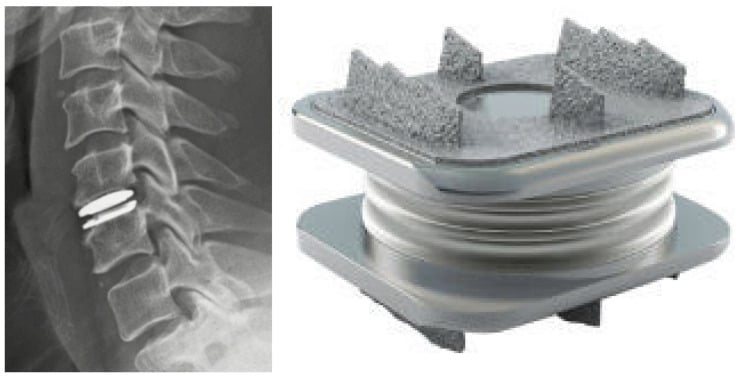
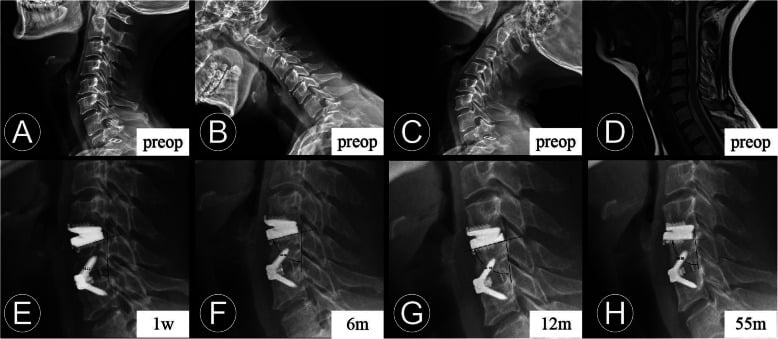
- 2000s-present - total disc replacement as an alternative
Who needs it. Cervical radiculopathy that has failed conservative treatment, any progressive or significant cervical myelopathy, and symptomatic disc herniation, soft or hard. ACDF also serves traumatic or degenerative cervical instability and tumour or infection of the anterior column. Axial neck pain on its own is not an indication; it needs correlating instability.
Where. The levels operated mirror the pattern of degenerative disease:
- C5-6 - 55-65%
- C6-7 - 25-30%
- C4-5 - 5-10%
- C3-4 - rare
Pathophysiology and Mechanisms
The route to the disc passes between the carotid sheath laterally and the trachea and oesophagus medially. What follows is the anatomy in the order it is met.
The layers. Skin and platysma, then the superficial cervical fascia, with the medial border of sternocleidomastoid as the lateral landmark. Deep to it the carotid sheath (carotid artery, internal jugular vein, vagus nerve) is retracted laterally while the trachea and oesophagus, the oesophagus lying behind the trachea, are retracted together medially. The pretracheal fascia is divided to reach the spine, where the longus colli muscles cover the anterior vertebral bodies.
The disc space. From front to back:
- Anterior longitudinal ligament
- Annulus fibrosus
- Nucleus pulposus
- Posterior longitudinal ligament
- Uncovertebral joints (joints of Luschka) at the lateral margin
Longus colli and what lies beyond it. The muscle is elevated as far as the uncovertebral joints, and no further, because the vertebral artery and the sympathetic chain lie lateral to it. The sympathetic chain sits lateral on longus colli, and injuring it produces a Horner syndrome.
The vertebral artery enters the transverse foramen at C6 (variable, C5 to C7) and runs in the foramen from there upward. During lateral dissection and foraminotomy, stay medial to the uncovertebral joint.
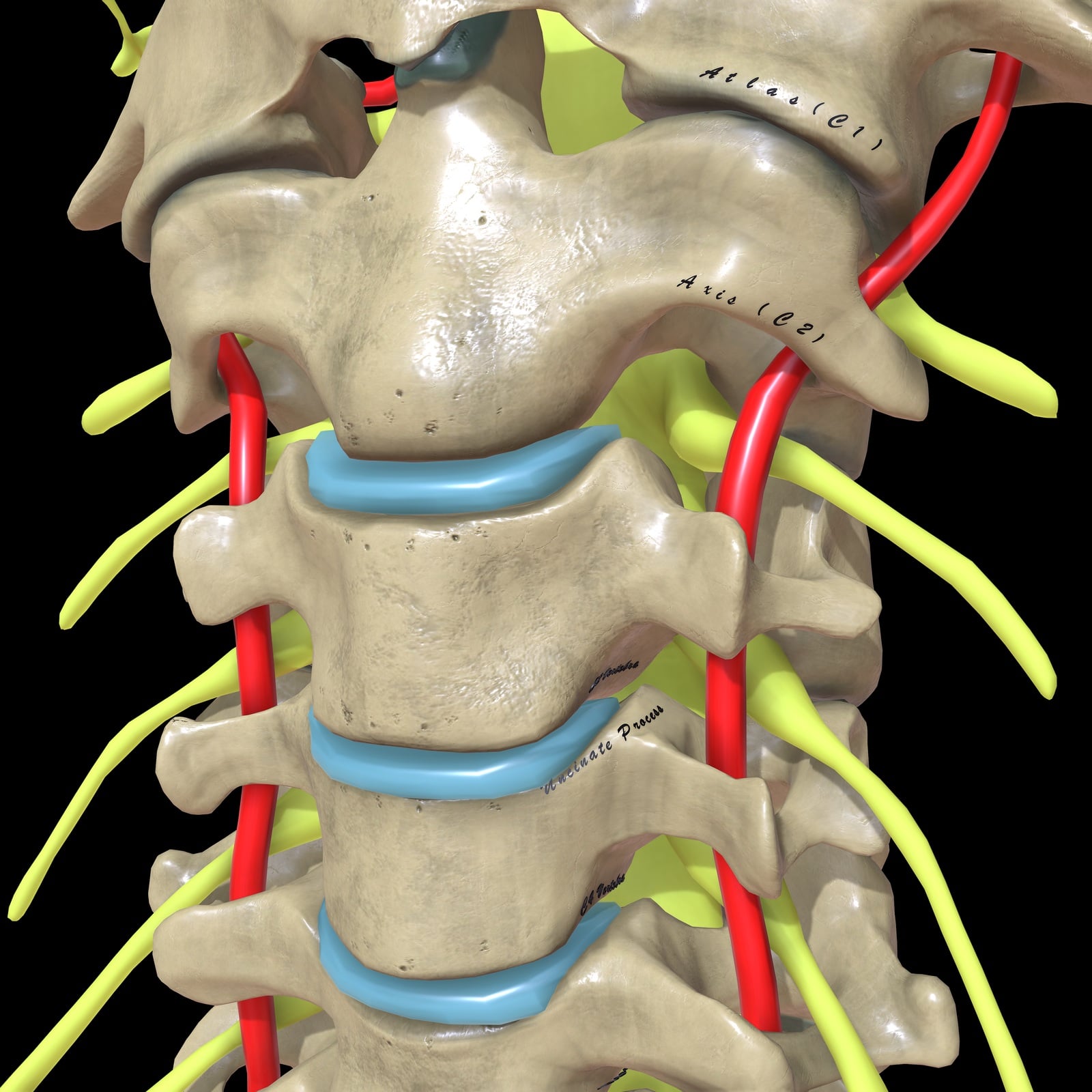
The recurrent laryngeal nerve. It supplies all the intrinsic laryngeal muscles except cricothyroid, so injury causes hoarseness and aspiration. On the left it loops around the aortic arch and ascends in the tracheo-oesophageal groove, a longer and more constant protected course; on the right it loops around the subclavian artery, runs more obliquely, is more variable and more vulnerable, and is non-recurrent in about 1 in 200.
Which side. The classic teaching is a left-sided approach to protect the nerve, and a slight leftward deviation of the oesophagus helps access from that side; the thoracic duct is on the left but is at risk only below C7, which is rarely relevant. The comparative evidence does not confirm the anatomical argument: in Beutler's 328 procedures there were 5 injuries after left-sided and 4 after right-sided approaches, no association with side. Surgeon familiarity and the side of the pathology are legitimate reasons to go right, and some surgeons prefer the right for a better angle to right-sided pathology.
The superior laryngeal nerve. Its external branch supplies cricothyroid and is at risk with retraction above C3. Injury affects voice quality and projection.
Classification Systems
ACDF is an operation for a compressed root or cord whose imaging matches the symptoms. The timing depends on the indication:
- Key Features
- Dermatomal arm pain, motor/sensory deficit
- Timing
- After failed conservative treatment
- Key Features
- Long tract signs, gait disturbance, hand dysfunction
- Timing
- Urgent - avoid delay
- Key Features
- Acute or subacute, may be single level
- Timing
- Failed conservative or significant deficit
- Key Features
- Hard disc, osteophytes, foraminal stenosis
- Timing
- Failed conservative treatment
- Key Features
- Flexion-distraction, facet dislocation
- Timing
- Urgent
Clinical Assessment
History. Axial neck pain, dermatomal arm pain with numbness or tingling, and myotomal weakness point to a root. Hand clumsiness and gait disturbance point to the cord, and bladder or bowel symptoms mark severe myelopathy. Record the duration, the progression and the response to conservative treatment.
Examination. Radiculopathy is examined root by root, and the findings should agree with the level on the MRI:
- Motor
- Deltoid, biceps
- Sensory
- Lateral arm
- Reflex
- Biceps
- Motor
- Wrist extensors, biceps
- Sensory
- Lateral forearm, thumb
- Reflex
- Brachioradialis
- Motor
- Triceps, wrist flexors
- Sensory
- Middle finger
- Reflex
- Triceps
- Motor
- Finger flexors, intrinsics
- Sensory
- Medial forearm, ring/little finger
- Reflex
- None reliable
- Motor
- Intrinsics
- Sensory
- Medial arm
- Reflex
- None reliable
Myelopathy signs. Look for upper motor neuron signs:
- Hyperreflexia, clonus and a Babinski response
- Lhermitte sign - an electric shock down the spine with neck flexion
- Hoffmann sign - thumb and index flexion when the middle fingertip is flicked
- A broad-based, spastic gait
- Hand dysfunction on the grip-and-release test
- Inverted radial reflex
The C5-6 disc compresses the C6 nerve root, and the C6-7 disc the C7 root. In the cervical spine the root exits above the pedicle of the same-numbered vertebra, the reverse of the lumbar spine, where the root exits below.
What else it could be. Neck and arm symptoms have mimics from the brain to the wrist, and the table gives the discriminator for each:
- Distinguishing Features
- Dermatomal arm pain, myotomal weakness, reflex loss
- Key Discriminator
- Spurling test positive; MRI root compression matches level
- Distinguishing Features
- Night pain, thumb/index/middle numbness, thenar wasting
- Key Discriminator
- Tinel/Phalen positive; NCS shows median neuropathy at wrist
- Distinguishing Features
- Ring/little finger numbness, intrinsic wasting
- Key Discriminator
- Sensory loss spares forearm (vs C8/T1); NCS localises to elbow
- Distinguishing Features
- Positional arm symptoms, vascular or lower-trunk pattern
- Key Discriminator
- Provocative manoeuvres; vascular studies; often normal MRI
- Distinguishing Features
- Severe shoulder pain then patchy weakness, often post-viral
- Key Discriminator
- Multifocal/non-dermatomal; MRI spine normal
- Distinguishing Features
- Pain with shoulder movement, no distal neurology
- Key Discriminator
- Reproduced by shoulder, not neck, examination
- Distinguishing Features
- Bilateral UMN signs, cranial nerve or cerebellar signs
- Key Discriminator
- Brain MRI; cord signal absent or beyond cervical level
- Distinguishing Features
- Mixed UMN and LMN signs, fasciculations, no sensory loss
- Key Discriminator
- No sensory level; EMG diffuse denervation
The most dangerous trap is operating on imaging that does not match the clinical picture. Painless progressive weakness with fasciculations and no sensory loss suggests motor neurone disease; decompression will not help, and the diagnosis may be missed. Confirm clinico-radiological correlation before committing to ACDF.
Investigations
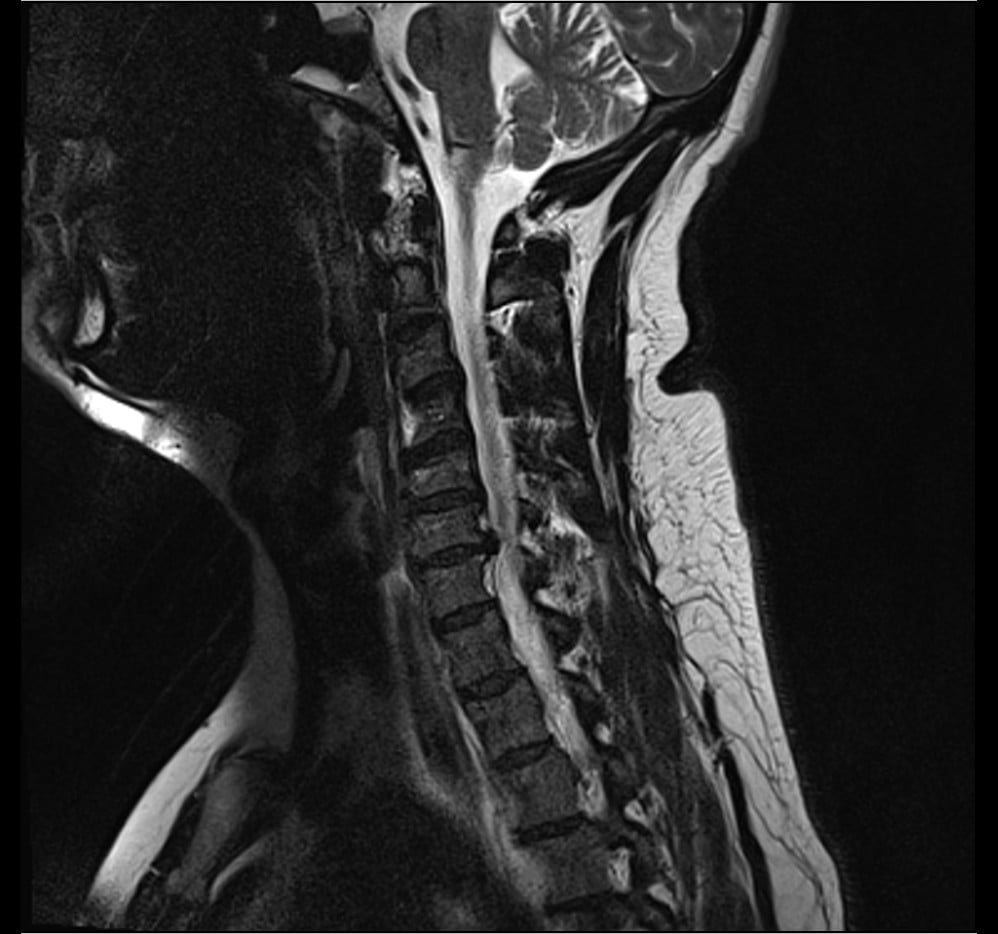
MRI is the gold standard. T1-weighted images show the anatomy and bone marrow changes, T2-weighted images show cord signal (myelomalacia) and disc pathology, and gradient echo (T2*) reduces metal artefact and shows the disc better. It demonstrates the soft disc herniation, the osteophyte complex of the hard disc, cord compression, foraminal stenosis and any signal change within the cord, which is a poor prognostic sign. The MRI findings must correlate with the clinical findings to confirm the surgical level.
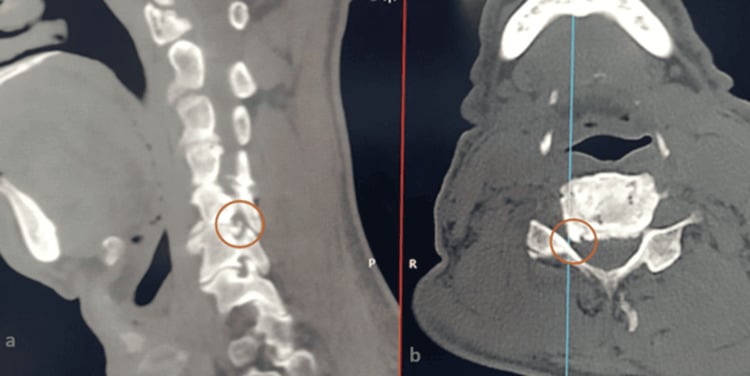
CT gives the bone detail: bone quality, OPLL, trauma, and the cage and plate sizing before surgery. CT myelography is the substitute when MRI is contraindicated (pacemaker, claustrophobia); it is sometimes better than MRI for foraminal stenosis, at the price of a lumbar puncture.
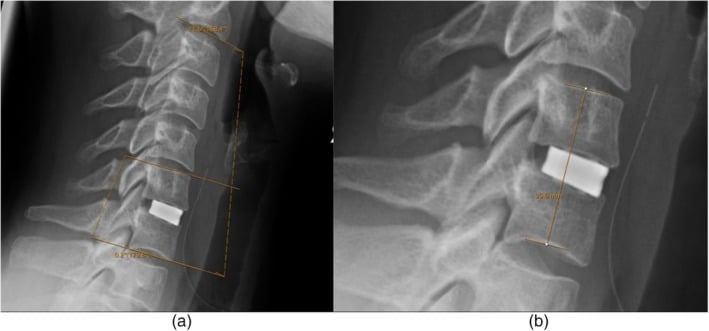
Plain radiographs. AP, lateral and oblique views, with flexion-extension views when instability is suspected. Look for disc space narrowing, osteophytes, foraminal narrowing on the obliques and the alignment (lordosis or kyphosis); the dynamic views can reveal instability not seen on static imaging.
Electrodiagnostics. EMG and nerve conduction studies help when the level is unclear, to separate radiculopathy from a peripheral neuropathy, as a baseline before surgery, and when a brachial plexopathy is suspected. Radiculopathy shows fibrillations and positive sharp waves with reduced motor unit recruitment, and these changes take 2-3 weeks to develop.
Management Algorithm
Radiculopathy without myelopathy. The natural history is generally favourable: 50-70% improve with conservative treatment, so an adequate trial of 6-12 weeks comes first unless there is a progressive deficit. The trial draws on:
- Medications - NSAIDs, a short course of oral corticosteroids in the acute phase, neuropathic agents (gabapentin, pregabalin), muscle relaxants
- Physiotherapy - strengthening exercises, postural training, activity modification, and cervical traction, which remains controversial
- Injections - cervical epidural steroid injection or selective nerve root block, by a transforaminal or interlaminar route
Myelopathy. Cord compression with long tract signs goes to early surgical referral without a conservative trial, because progression may be irreversible.
When conservative care fails. Confirm that the clinical picture matches the imaging, then plan the operation. ACDF is the workhorse for 1-3 levels of anterior cervical pathology; beyond that, consider the alternatives, chosen on the pathology and the patient:
- Indications
- 1-3 level disease
- Advantages
- Direct decompression, fusion
- Disadvantages
- ASD risk, loss of motion
- Indications
- One- AND two-level disc disease with preserved motion - not restricted to single level
- Advantages
- Motion preservation; at 7 years single-level TDR was non-inferior to ACDF (success 55.2% vs 50%) and TWO-level TDR was clinically superior (60.8% vs 34.2%, p less than 0.0001)
- Disadvantages
- Cost; contraindicated by significant facet arthrosis, kyphosis or instability; not for myelopathy
- Indications
- 2+ levels, vertebral body pathology
- Advantages
- Wide decompression
- Disadvantages
- Higher risk, longer construct
- Indications
- Multilevel, lordotic spine
- Advantages
- Indirect decompression
- Disadvantages
- Instability if facets removed
- Indications
- Multilevel myelopathy
- Advantages
- Motion preserving, indirect
- Disadvantages
- Neck pain, axial symptoms
Surgical Technique
Positioning. Supine with the neck neutral or in slight extension, the head on a gel ring or in a Mayfield, the arms tucked at the sides, and fluoroscopy ready to confirm the level.
Approach Steps
A transverse skin-crease incision for cosmesis, or a longitudinal incision for multilevel work, on the side chosen as discussed under the recurrent laryngeal nerve. Incise platysma in line with the skin.
Identify the medial border of sternocleidomastoid. Develop the plane between the carotid sheath laterally and the trachea and oesophagus medially, by blunt dissection down to the pretracheal fascia.
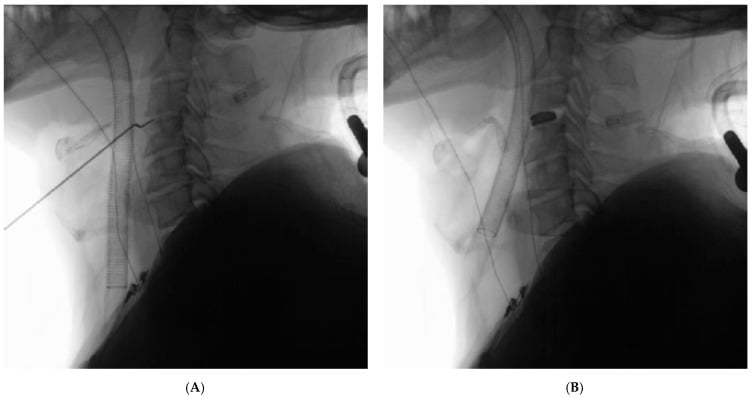
Divide the pretracheal fascia and identify the anterior spine under its cover of longus colli. Confirm the level on fluoroscopy with a needle in the disc.
Elevate longus colli subperiosteally off the anterior vertebral bodies, as far as the uncovertebral joints, which are the lateral limit of the dissection. Seat the self-retaining retractor blades under the muscle.
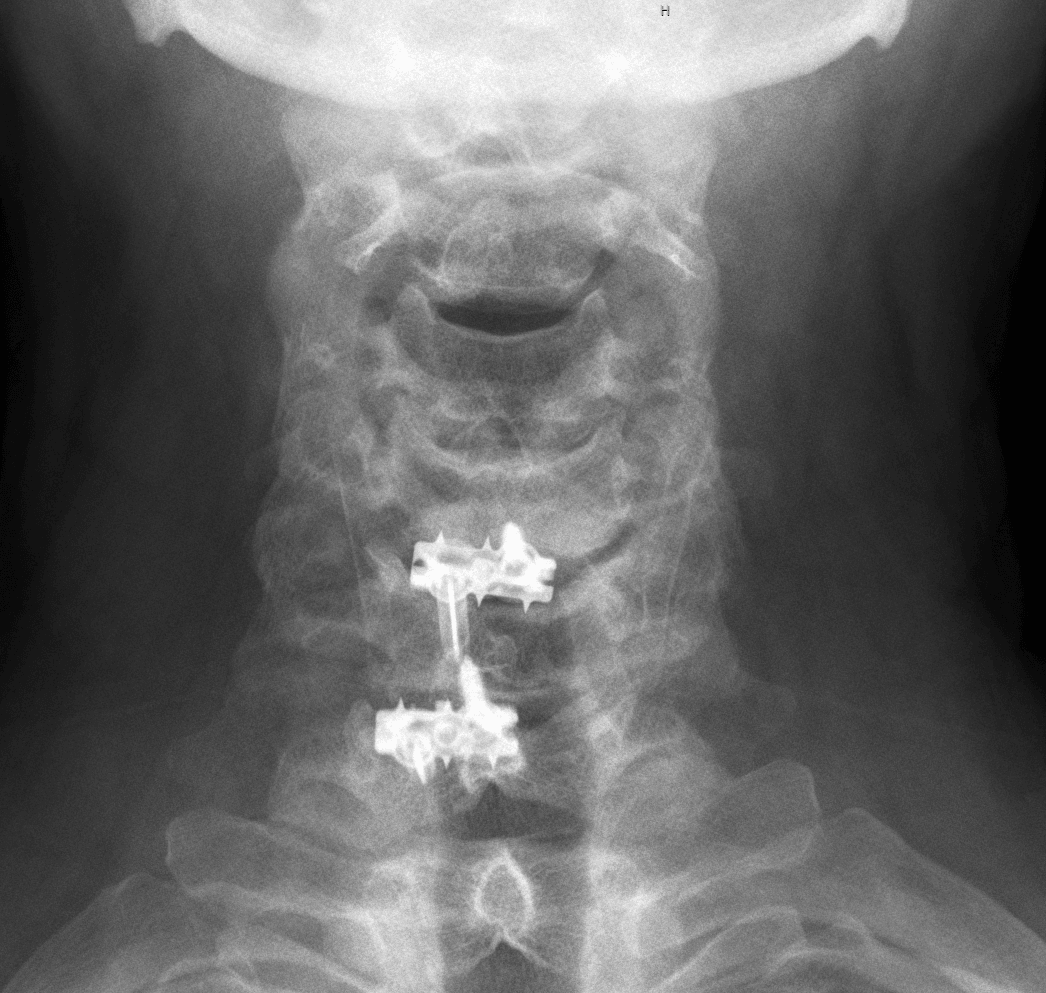
Complications
Most of the common complications are transient; the permanent ones are rare but serious:
- Incidence
- 30-50% transient, 2-5% persistent
- Prevention/Management
- Limit retraction pressure, shorter surgical time, avoid high retractor blade placement, deflate the ETT cuff during retraction
- Incidence
- 2-5% transient, 0.2-1% permanent
- Prevention/Management
- ETT cuff deflation during retraction (VCP 6% to 2% in Tan's review), gentle retraction; approach side not proven to matter
- Incidence
- 1-2%
- Prevention/Management
- Meticulous haemostasis, consider drain
- Incidence
- 5% single level, 15% multilevel
- Prevention/Management
- Use plate, cage with bone graft, no smoking
- Incidence
- ~2.9% per year
- Prevention/Management
- Include all symptomatic levels; consider disc replacement in suitable candidates
Dysphagia is the most common complication, and patients want "usually resolves" quantified. Prospective swallowing assessment in 249 patients found dysphagia in 50.2% at 1 month, 32.2% at 2 months, 17.8% at 6 months and 12.5% at 12 months: near-universal early, halved by two months, and still noticed by a residual minority at a year. What makes that tolerable to hear is the severity split, since only 4.8% had moderate or severe dysphagia at 6 months. Female sex and multilevel surgery were the risk factors, so warn those patients more firmly; vocal-cord paresis persisted in 1.3% at 12 months (prospective longitudinal study, Level II).
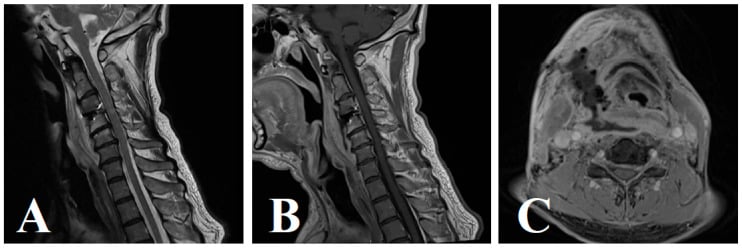
Haematoma causing airway obstruction is a surgical emergency. Most present within 24-48 hours; the bedside response is set out under Postoperative Care.
Oesophageal injury is very rare (0.02-0.25%) and may present late, and if it is missed the result is mediastinitis. Treatment is nil by mouth, antibiotics, and repair or diversion.
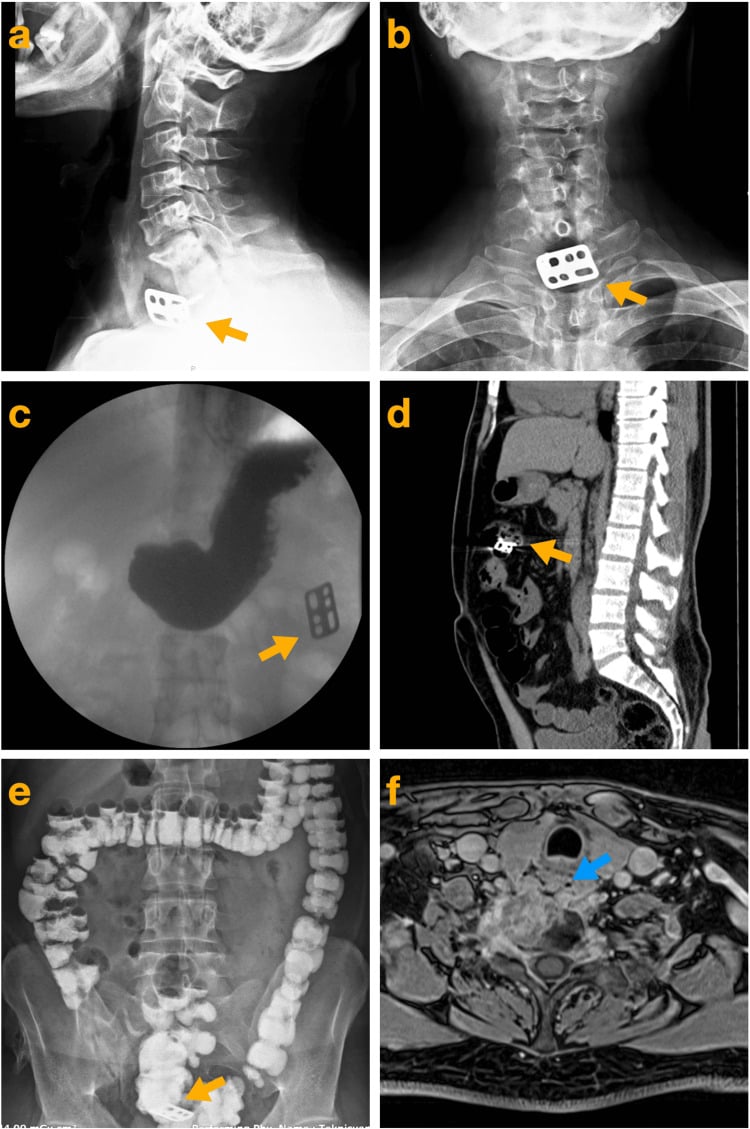
Vertebral artery injury is very rare and produces massive bleeding, controlled with packing and intervention. Spinal cord injury is rare with careful technique, may occur during dissection of OPLL, and is devastating.
Late problems declare themselves at follow-up:
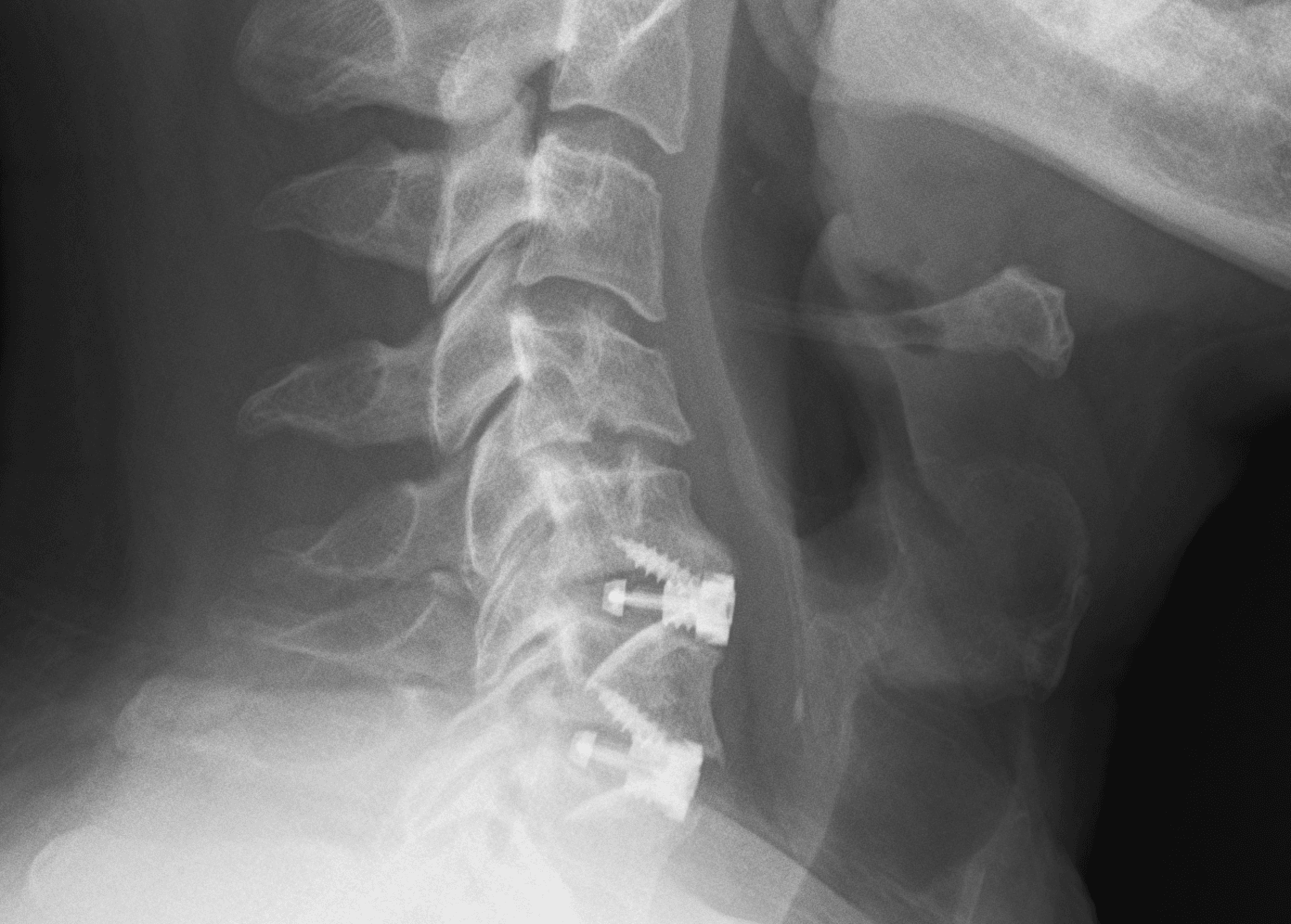
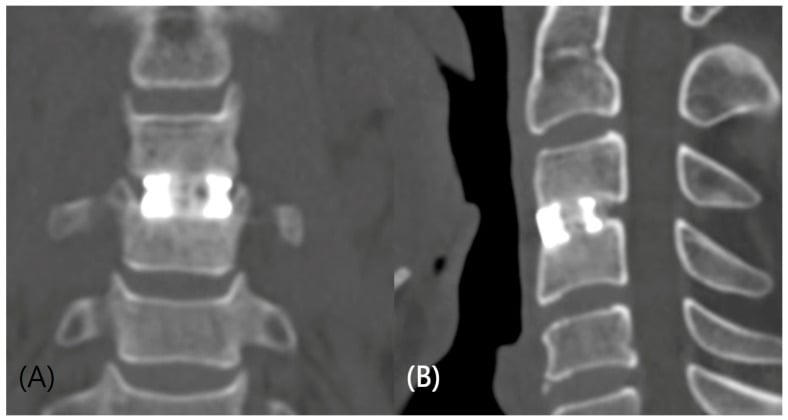
- Graft or cage - subsidence, dislodgement (anterior or posterior) requiring revision, pseudarthrosis
- Hardware - screw loosening or pullout, plate malposition
- Persistent symptoms - wrong-level surgery, inadequate decompression, recurrent stenosis
- Adjacent segment disease, which may require extension of the fusion
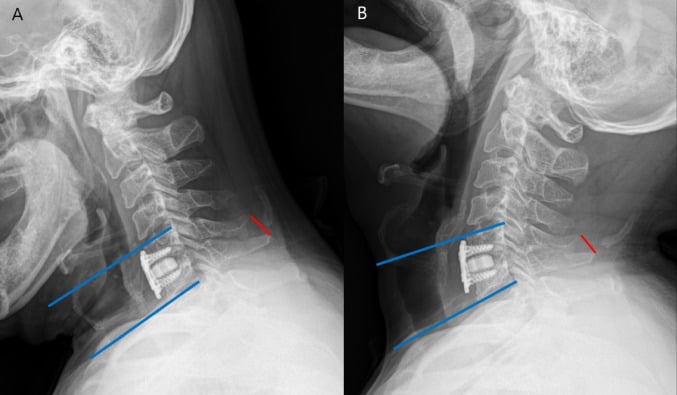
Pseudarthrosis is worse in smokers and after multilevel fusion, but the examinable substance is diagnosis and revision strategy.
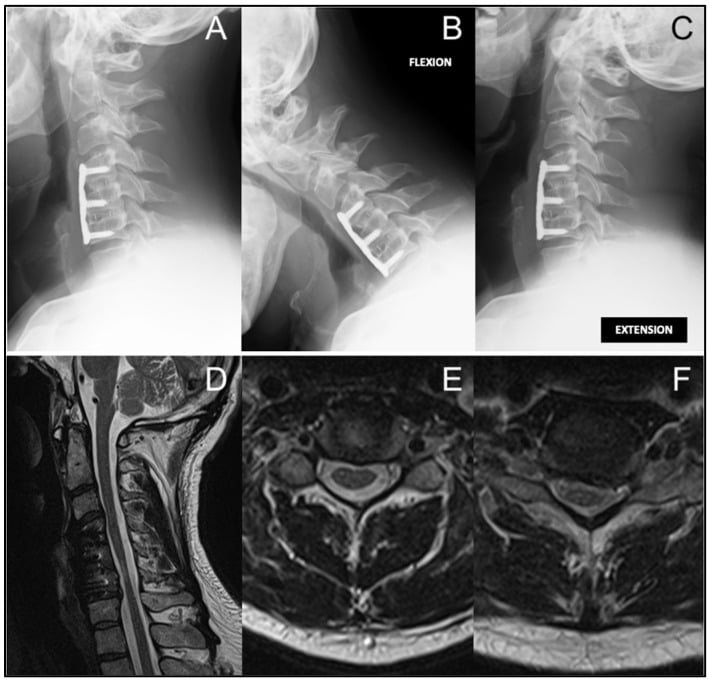
Diagnosis is often the hard part. Dynamic flexion-extension radiographs are the workhorse: interspinous motion, commonly cited as more than about 1-2 mm between the spinous processes, or motion at the graft, indicates a nonunion. Fine-cut CT with reconstructions looks for bridging trabecular bone across the graft, and a lucent halo around the screws or graft, or hardware loosening and backout, support nonunion. Many radiographic pseudarthroses are asymptomatic, so treat the symptomatic patient with recurrent axial or radicular pain, not the film alone.
Revision. For a symptomatic ACDF pseudarthrosis, posterior cervical instrumented fusion is generally more reliable than revision anterior surgery, which faces scar, recurrent laryngeal nerve and oesophageal risk and a lower union rate. Revision from the front is chosen when there is also residual anterior compression, graft extrusion or deformity to address. Optimise the biology first: smoking cessation and metabolic and bone health.
Adjacent segment disease needs a cumulative number rather than an annual one. Across 374 patients and 409 arthrodeses followed for up to 21 years, symptomatic adjacent-segment disease developed at a relatively constant 2.9% per year, and Kaplan-Meier survivorship predicted 25.6%, roughly one in four, within 10 years; two-thirds of those affected ultimately needed further surgery, and the risk was highest at C5-6 and C6-7. This is the cervical spine's own figure, not an extrapolation from lumbar data.
The risk pattern inverts the natural assumption: single-level fusion carried a higher adjacent-level risk than multilevel fusion. The likely explanation is selection, since the levels left unfused after a single-level procedure are often already degenerate, whereas a multilevel fusion has already incorporated them. The corollary is not to fuse more levels; it is to include all symptomatic degenerate levels rather than leave a marginal one out, and to consider a motion-preserving option in suitable candidates. Disc replacement does reduce it, on Level I data: in a 599-patient randomised FDA IDE trial followed to 7 years, adjacent-level secondary surgery ran at 4.4% with two-level TDR against 11.3% with ACDF, and index-level reoperation at 4.4% against 16.2%, though the trial was industry-sponsored and restricted to carefully selected patients without facet arthrosis, kyphosis or instability.
Postoperative Care
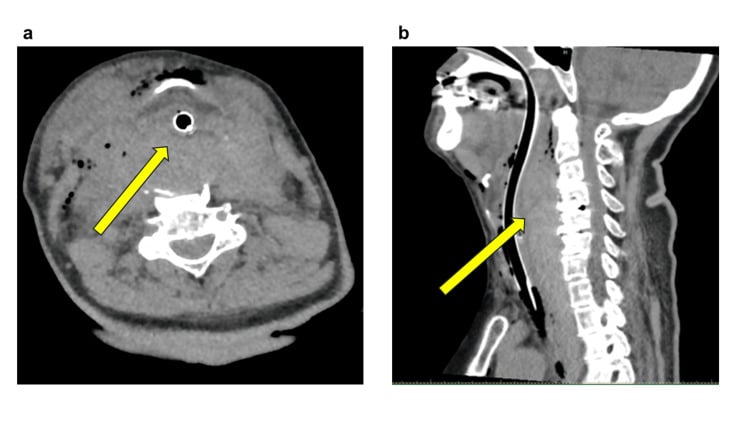
The first 48 hours are critical for haematoma detection. Monitor the airway, run neurological checks, manage pain, and screen for dysphagia before oral intake; a soft collar is optional, for 2-6 weeks if used, and mobilisation is early. Three findings are red flags:
- Increasing neck swelling
- Stridor or respiratory distress
- A new neurological deficit
If airway compromise is developing, open the wound at the bedside to decompress it. Emergency intubation may be needed and can be very difficult or impossible, and the patient returns to theatre for evacuation once the airway is secure.
Recovery. Most patients return to sedentary work within 2-4 weeks:
Recovery Phases
Soft diet if dysphagia. Soft collar if prescribed. Activity as tolerated. Wound care.
Resume normal diet. Wean collar if used. Light activities. Avoid heavy lifting.
Radiographs to assess fusion. Progressive activity. May begin physiotherapy.
Full activity if fusion progressing. Sports and heavy work when solid fusion. Long-term follow-up.
Outcomes and Prognosis
ACDF has excellent outcomes for radiculopathy; myelopathy outcomes depend on severity and duration:
- Success Rate
- 85-95%
- Recovery Timeline
- Arm pain improves within days/weeks
- Factors Affecting Outcome
- Duration of symptoms, motor deficit
- Success Rate
- 70-80% stabilise/improve
- Recovery Timeline
- May take 6-12 months
- Factors Affecting Outcome
- Preop severity, cord signal change
- Success Rate
- 90-95%
- Recovery Timeline
- Rapid improvement typical
- Factors Affecting Outcome
- Soft disc better than hard disc
What predicts the result. Duration, pathology, the state of the cord, the number of levels and the patient:
- Better Prognosis
- Short (less than 6 months)
- Worse Prognosis
- Prolonged (greater than 2 years)
- Better Prognosis
- Soft disc
- Worse Prognosis
- Hard disc, severe spondylosis
- Better Prognosis
- Mild, recent onset
- Worse Prognosis
- Severe, long-standing, cord signal change
- Better Prognosis
- Single level
- Worse Prognosis
- Multiple levels
- Better Prognosis
- Non-smoker, no diabetes
- Worse Prognosis
- Smoker, diabetic, workers comp
Guidelines, Registries & Global Practice
ACDF is one of the most frequently performed spine operations worldwide and is a core procedure in fellowship curricula worldwide. Evidence and recommendations are drawn from international guidelines and registries to give a global picture rather than any single country's practice.
Global epidemiology
- Cervical radiculopathy has an annual incidence of roughly 80-100 per 100,000, peaking in the fifth and sixth decades; the great majority improve with non-operative care.
- Degenerative cervical myelopathy is the commonest cause of non-traumatic spinal cord dysfunction in adults worldwide, and its prevalence is rising with ageing populations.
- C5-6 and C6-7 are consistently the most commonly operated levels across all regions, mirroring the distribution of degenerative load.
Major guidelines, side by side
- Radiculopathy
- Trial of non-operative care first if no progressive deficit
- Myelopathy
- Operate for moderate-severe DCM; offer surgery or structured non-op for mild DCM
- Arthroplasty vs ACDF
- Both acceptable for 1-2 level disease without instability
- Radiculopathy
- Surgery superior for short-term relief of refractory radiculopathy
- Myelopathy
- Decompression recommended for symptomatic myelopathy
- Arthroplasty vs ACDF
- TDR non-inferior to ACDF for selected 1-2 level disease
- Radiculopathy
- Conservative care first; refer if red flags or persistent deficit
- Myelopathy
- Urgent referral for suspected myelopathy
- Arthroplasty vs ACDF
- Arthroplasty an option in appropriately selected patients
- Radiculopathy
- Emphasis on clinico-radiological correlation before surgery
- Myelopathy
- Early decompression to limit irreversible cord injury
- Arthroplasty vs ACDF
- Motion preservation favoured in young, single-level, no facet arthrosis
Registry and outcome evidence
- FDA IDE randomised trials (Mobi-C, Prestige, ProDisc-C, Bryan) underpin the global acceptance of cervical arthroplasty as non-inferior to ACDF for selected 1-2 level disease, with lower index-level reoperation in long-term follow-up.
- Spine registries and large administrative datasets (for example the Quality Outcomes Database in North America and national spine registries in Europe and Australasia) consistently report high patient-reported improvement and low major-complication rates after ACDF, supporting its status as a workhorse procedure.
High- vs limited-resource practice variation
- In well-resourced settings, PEEK/titanium cages, anterior plating, intra-operative fluoroscopy and (increasingly) arthroplasty are routine.
- In limited-resource settings, structural allograft or autograft (Smith-Robinson tricortical iliac crest) without a plate remains a valid, low-cost technique with good single-level fusion rates; intra-operative imaging and disc replacement may be unavailable.
- Across all settings the principles are identical: confirm clinico-radiological correlation, decompress adequately, restore disc height and alignment, and do not delay surgery for progressive myelopathy.
Controversies and Areas of Uncertainty
These are high-yield discussion points where an examiner probes judgement rather than recall - state both sides and where the evidence currently sits.
Long-term IDE data show TDR is non-inferior at one level and clinically superior at two levels with lower reoperation, yet ACDF remains the default in many systems on grounds of cost, surgeon familiarity and concerns about heterotopic ossification and long-term implant behaviour. The debate is about patient selection, not whether TDR works.
The left-versus-right RLN argument is anatomically logical but not consistently supported by clinical series. Defensible positions exist for both sides; the unwary candidate who states left is "always safer" can be pushed.
For mild degenerative cervical myelopathy (mJOA 15-17), AOSpine permits either surgery or structured non-operative care with close monitoring. The uncertainty is which mild patients will progress - cord signal change, large cord compression and clinical deterioration push toward surgery.
Anterior plating improves lordosis and multilevel stability but contributes to early dysphagia; zero-profile and stand-alone cages reduce early dysphagia with comparable fusion. The trade-off is alignment/stability versus swallowing morbidity.
Routine drainage after ACDF is not evidence-based for preventing airway-threatening haematoma (which is usually arterial and rapid); meticulous haemostasis and vigilant post-op monitoring matter more. Practice varies widely.
For multilevel myelopathy, anterior (ACDF/corpectomy), posterior (laminoplasty, laminectomy and fusion) and combined approaches all have advocates. Sagittal alignment (kyphosis favours anterior), number of levels, OPLL and bone quality drive the decision.
MCQ Practice Points
Q: Which side is preferred for the anterior cervical approach and why?
A: The anatomical rationale favours the left: the left RLN loops under the aortic arch and ascends in the tracheoesophageal groove, a longer and more constant protected course, while the right RLN loops around the subclavian, runs more obliquely and is non-recurrent in about 1 in 200. But say what the evidence shows: comparative series find no consistent difference in RLN injury by side - Beutler's 328 procedures had 5 left-sided and 4 right-sided injuries. The proven risk factor is reoperative anterior surgery (9.5%), and the proven protective measure is ETT cuff deflation during retraction. Surgeon familiarity and the side of pathology are acceptable reasons to go right.
Q: A C5-6 disc herniation will compress which nerve root?
A: C6 nerve root. In the cervical spine, the nerve root exits ABOVE the pedicle of the same-numbered vertebra, so the C5-6 disc affects the C6 root. This is opposite to the lumbar spine pattern.
Q: What is the recommended timing for surgical intervention in cervical myelopathy?
A: Early surgery is recommended - do not delay for conservative treatment. Evidence shows better outcomes when surgery is performed within 6 months of symptom onset. Myelopathy with progressive symptoms is urgent.
Q: What is the rate of dysphagia after ACDF?
A: 50% transient dysphagia (usually resolves within weeks), with 2-5% persistent dysphagia. Dysphagia is the most common complication of ACDF.
Q: What is the annual rate of adjacent segment disease after cervical fusion?
A: ~2.9% per year, cumulating to about 25% of patients by 10 years (Hilibrand: 374 patients, 409 arthrodeses). Two-thirds of those affected needed further surgery. Disc replacement reduces adjacent-level surgery on Level I data - in the 7-year Mobi-C IDE trial, adjacent-level secondary surgery was 4.4% with two-level TDR versus 11.3% with ACDF - though in highly selected patients.
Q: What is the immediate management of suspected postoperative hematoma with airway compromise?
A: Open the wound at the bedside to evacuate hematoma and relieve pressure on the airway. This should be done before or while attempting intubation, as intubation may be extremely difficult due to swelling.
Exam Cheat Sheet
Key Numbers
- C5-6 most common level (55-65%)
- Fusion rate: 95% single, 85% multilevel
- Dysphagia: 50% transient, 2-5% persistent
- Adjacent segment disease: ~2.9%/year, ~25% by 10 years
Approach Anatomy
- Left approach: anatomic rationale (RLN course) - comparative evidence shows no clear side difference
- Carotid sheath retracted laterally
- Trachea/esophagus retracted medially
- Longus colli protects vertebral artery
Nerve Root Levels
- C5-6 disc = C6 root compression
- C6-7 disc = C7 root compression
- Root exits ABOVE pedicle of same number
- Different from lumbar spine pattern
Complications
- Dysphagia (most common)
- Hematoma (airway emergency)
- RLN injury (hoarseness)
- Pseudarthrosis (especially multilevel)
Exam Traps
- Not knowing left vs right approach rationale
- Wrong nerve root level correlation
- Delaying surgery for myelopathy
- Not recognizing hematoma emergency
Exam Viva Scenarios
Practise clinical reasoning and management decisions out loud
“A 45-year-old man presents with 8 weeks of right arm pain radiating to the thumb with numbness. He has weakness of wrist extension. MRI shows a C5-6 disc herniation compressing the C6 nerve root.”
“A 62-year-old woman presents with difficulty writing and buttoning clothes, unsteady gait, and electric shocks down her spine when she flexes her neck. Examination shows hyperreflexia and Hoffmann sign bilaterally. MRI shows multilevel stenosis C4-C7 with cord compression and T2 signal change in the cord at C5-6.”
“You are called to see a patient 6 hours after ACDF who is developing stridor and has increasing neck swelling. The patient is becoming increasingly distressed.”
“A fit 38-year-old non-smoker has single-level C5-6 soft-disc radiculopathy that has failed three months of conservative care. He asks whether he should have a fusion or a disc replacement. How do you counsel him and decide?”
Evidence Base
Surgery vs Physiotherapy vs Collar for Radiculopathy (Persson RCT)
- Surgery gave faster relief of pain, sensory loss and weakness at 4 months
- All three arms converged by 1-year follow-up
- Conservative care has a generally favourable natural history
- Reserve surgery for failed conservative care or progressive deficit
Cervical Disc Arthroplasty vs ACDF - 7-Year IDE Trial (Mobi-C)
- Single-level TDR non-inferior; two-level TDR superior at 7 years
- Lower index-level and adjacent-level reoperation with TDR
- Motion preserved with TDR
- TDR contraindicated in significant facet arthrosis, kyphosis or instability
Zero-Profile Spacer vs Cage-Plate - Dysphagia (Meta-analysis)
- Anterior plates contribute to early dysphagia
- Zero-profile/low-profile devices lower early dysphagia rates
- No difference in fusion, function or late dysphagia
- Plate still favoured where lordosis correction or maximal multilevel stability is needed
Surgery for Cervical Spondylotic Myelopathy (AOSpine North America)
- Surgery improves function and quality of life at all severity grades
- Benefit seen even in moderate and severe myelopathy
- Complication rate ~19%, comparable to historical series
- Do not delay - myelopathy is progressive and recovery is duration-dependent
Adjacent-Segment Disease After Anterior Cervical Arthrodesis (Hilibrand)
- Adjacent-segment disease ~2.9% per year, ~25% at 10 years
- Highest risk at C5-6 and C6-7
- Single-level fusion carried higher adjacent-level risk than multilevel
- Two-thirds of affected patients ultimately required further surgery
Incidence and Natural History of Dysphagia After Anterior Cervical Surgery (Bazaz)
- Dysphagia is common early (~50% at 1 month) but largely resolves
- Persistent moderate/severe dysphagia uncommon (~5% at 6 months)
- Female sex and multilevel surgery increase risk
- Most dysphagia is self-limiting and managed expectantly
The classic teaching of a left-sided approach to protect the recurrent laryngeal nerve rests on the more constant, longer left RLN course around the aortic arch (the right RLN loops around the subclavian and may run non-recurrently in roughly 1 in 200). The comparative evidence does not confirm a difference: Beutler (PMID 11426148; 328 procedures, 173 right and 155 left) found 5 injuries after left-sided and 4 after right-sided approaches - no association with side - and the significant risk factor was REOPERATIVE anterior surgery (9.5% vs 2.7% overall). Tan's systematic review (PMID 24632183; 34 studies) found vocal-cord palsy rates of 2.3-24.2% depending on how hard you look, good evidence that reoperation raises risk, only ONE moderate-strength study suggesting the right side is riskier - and the one intervention with supporting data is endotracheal cuff deflation during retraction (6% to 2%). Quote the anatomical rationale in the viva, then say the comparative evidence shows no consistent difference, so surgeon familiarity and the side of pathology are legitimate determinants.