Talus Tibia Fibula | Urgent Reduction | Associated Fractures
- Ankle dislocations = talus displaced from mortise (tibia-fibula) - usually associated with fractures, urgent reduction required
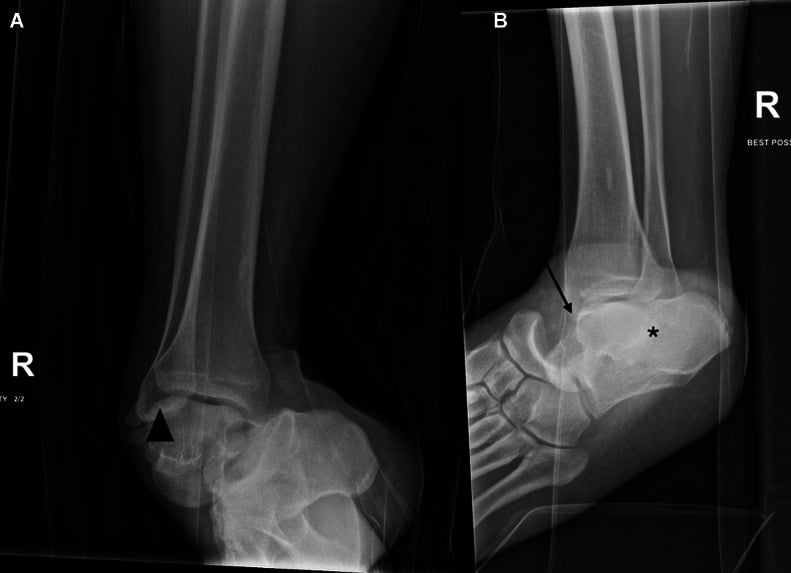
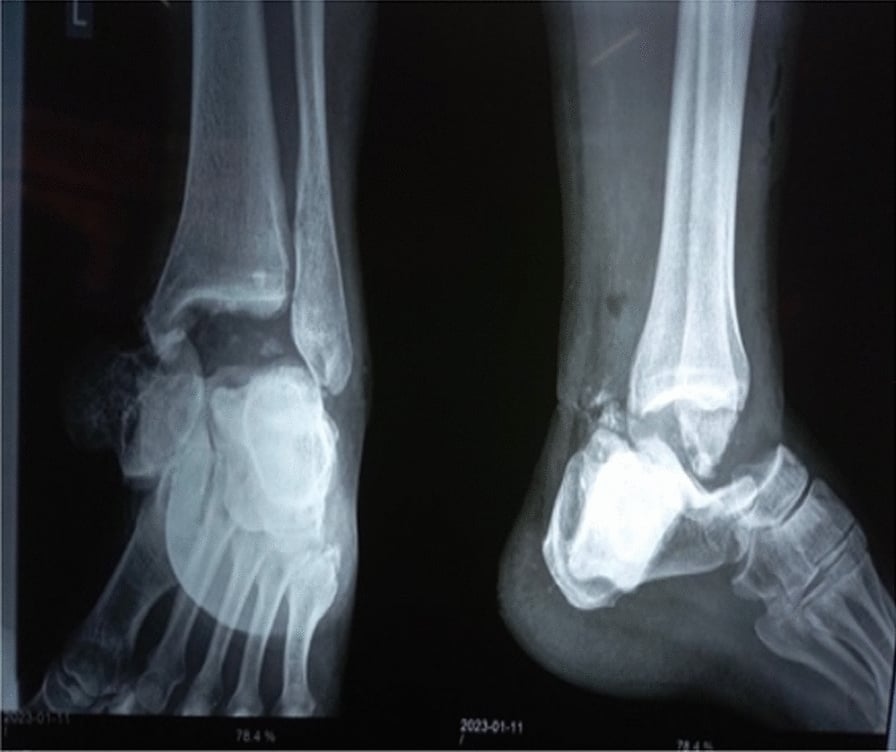
- Posterior most common - Talus displaced posteriorly, usually with posterior malleolus fracture
- Urgent reduction required - Skin tension causes necrosis, neurovascular compromise, reduce within hours
- Usually associated fractures - Ankle fractures (malleoli), talus fractures, or both
- ORIF if fractures present - After reduction, address associated fractures with ORIF
- “Posterior most common, usually with fractures
- “Urgent reduction required
- “Usually associated fractures
- “ORIF if fractures present
Overview and Epidemiology
An ankle dislocation displaces the talus from the mortise formed by the tibia and fibula, at the tibiotalar joint. It is rare, less than 1% of ankle injuries, and serious: fractures usually come with it, and it needs urgent reduction. With proper treatment the outcome is good.
Who and how. High-energy trauma, from motor vehicle accidents and falls from height, in the trauma population, with a peak at 20-40 years. Sports injuries also cause it. Both Wight's review and the Vosoughi series in the Evidence Base are predominantly male.
What comes with it. 80-90% have associated fractures: malleolar fractures, talar fractures, or both.
Anatomy and Pathophysiology
The mortise. The tibia contributes the medial malleolus and the plafond, the fibula the lateral malleolus, and the talus fits between them. Its ligaments are the deltoid, the lateral ligaments and the syndesmosis.
The neurovascular structures. The posterior tibial artery runs behind the medial malleolus with the tibial nerve. The anterior tibial artery runs anteriorly with the deep peroneal nerve. These are the vessels a grossly displaced talus puts at risk.
The mechanism. High-energy trauma, a motor vehicle accident or a fall from height, delivers axial loading, rotation and translation to the ankle. The same energy causes the fractures that usually accompany the dislocation, and those fractures contribute to its instability. After reduction they are addressed by ORIF.
Why reduction is urgent. Skin tension over the displaced talus causes necrosis within hours. The neurovascular structures are compromised, with a risk of ischaemia, and the soft-tissue damage is progressive with time.
Classification Systems
The direction is named for where the talus has gone, and it guides the reduction technique. Posterior dislocation is the most common; the other three are rare. Each is usually accompanied by the fracture in the table, and each is treated by closed reduction, then ORIF of the fractures.
- Frequency
- Most common
- Usual associated fracture
- Posterior malleolus
- Outcome
- 75-85% good results
- Frequency
- Rare
- Usual associated fracture
- Anterior tibial margin (anterior lip)
- Outcome
- 75-85% good results
- Frequency
- Rare
- Usual associated fracture
- Lateral malleolus
- Outcome
- 70-80% good results
- Frequency
- Rare
- Usual associated fracture
- Medial malleolus
- Outcome
- 70-80% good results
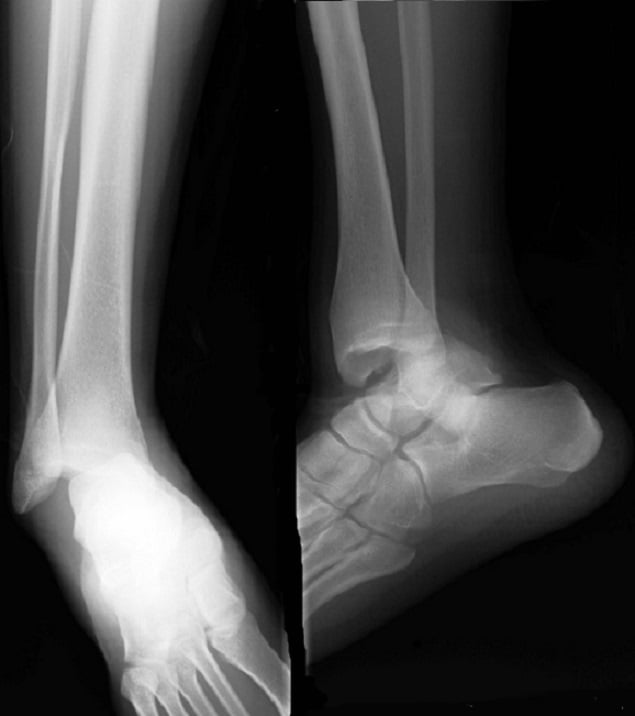
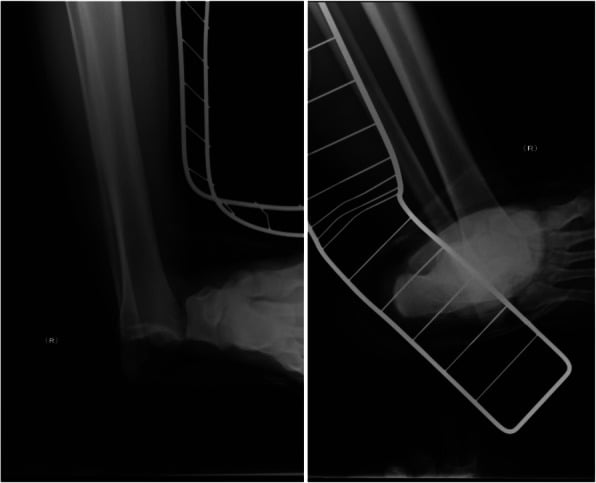
Clinical Assessment
History. Severe pain, obvious deformity and an inability to bear weight after high-energy trauma: a motor vehicle accident, a fall from height or a sports injury.
Examination. The deformity and swelling are obvious. Look for skin tenting, which calls for urgent reduction, and for an open wound, which makes the injury open. The ankle is tender, crepitus suggests fractures, and ankle movement is limited and too painful to test.
The neurovascular examination. Document it before reduction, for clinical and medicolegal reasons, and repeat it after.
- Pulses - dorsalis pedis and posterior tibial
- Sensation - dorsal and plantar foot
- Motor - ankle dorsiflexion and plantarflexion
The Pulseless Foot: Managing Vascular Compromise
Reduce first. A dysvascular foot before reduction is an indication for immediate reduction. Gross displacement kinks, stretches or tents the anterior and posterior tibial vessels, so restoring alignment is itself the first-line vascular treatment, and it usually returns perfusion. That is why a deformed, pulseless ankle is reduced at the point of care before definitive imaging.
Then reassess. Check perfusion immediately after reduction: pulses (dorsalis pedis, posterior tibial), capillary refill, colour and Doppler signals. If perfusion returns, splint in the reduced position and monitor closely.
Anticipate reperfusion. After a period of ischaemia or a high-energy mechanism, keep a low threshold for leg and foot compartment syndrome and monitor accordingly.
A foot that remains pulseless or ischaemic despite confirmed anatomic reduction is a limb-threatening emergency. Do not attribute it to spasm and wait: involve vascular surgery urgently, obtain on-table angiography (or CT angiography if it will not delay revascularisation), and exclude an intimal tear, arterial entrapment or transection. Warm-ischaemia time drives the salvage window.
Investigations
Radiographs. Three views, each also searched for fractures:
- AP - shows the dislocation and the mortise
- Lateral - the direction of dislocation and the position of the talus
- Mortise - mortise alignment and the syndesmosis
If the skin is compromised, do not delay reduction for imaging.
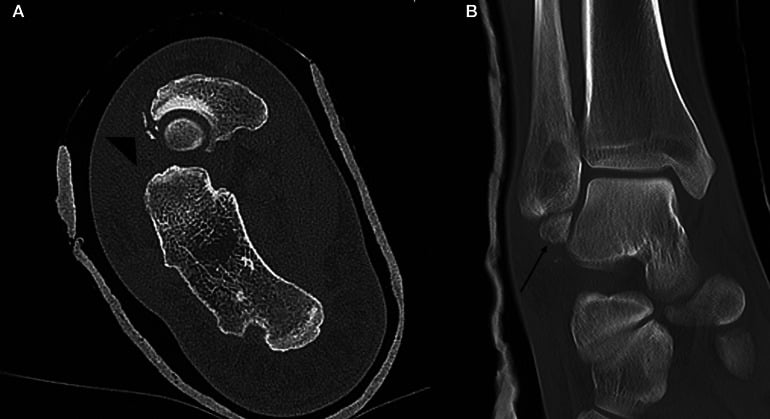
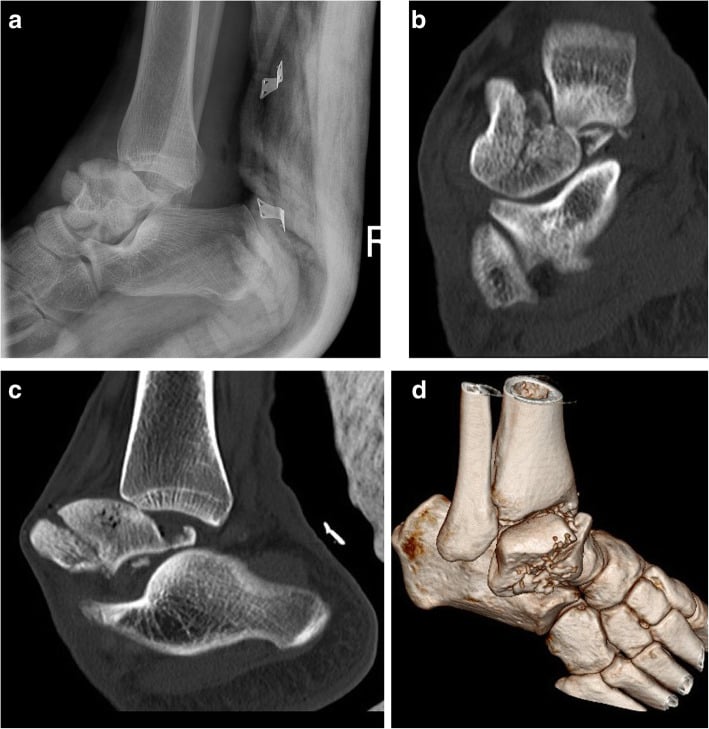
CT after reduction. Recommended after reduction to assess the associated fractures, check the quality of the reduction and plan ORIF. It shows the fracture pattern, the displacement and joint congruity, and it is the definitive search for occult fractures, loose bodies and residual incongruity.
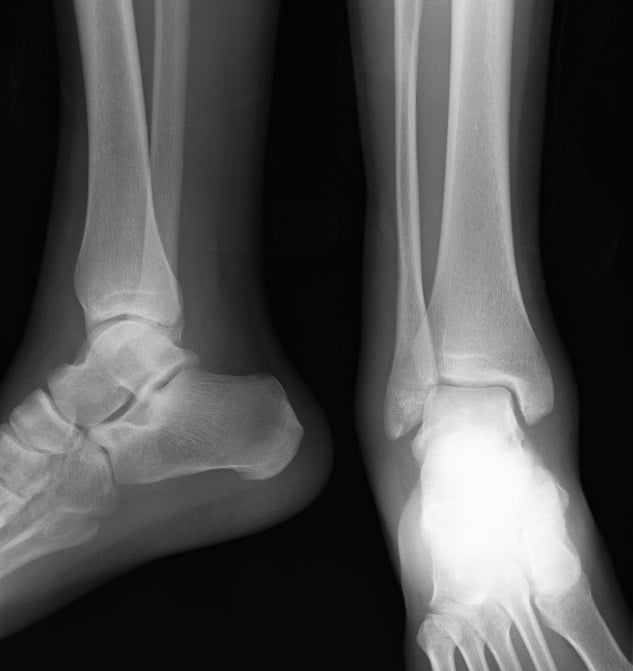
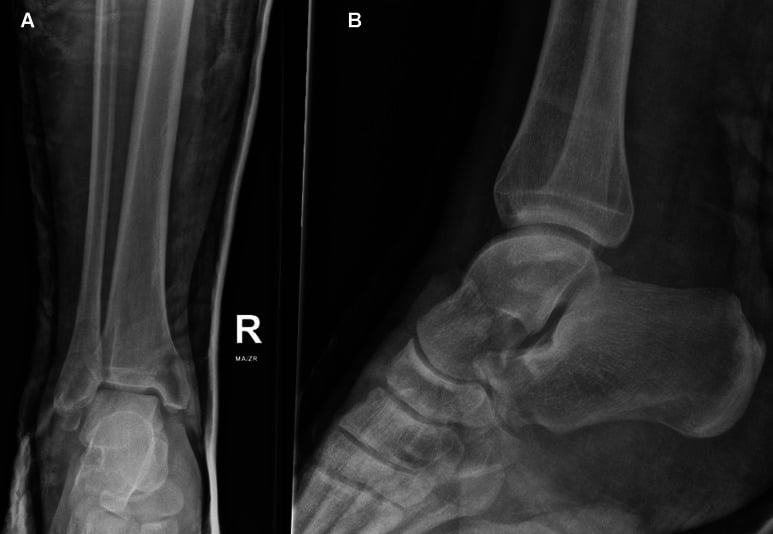
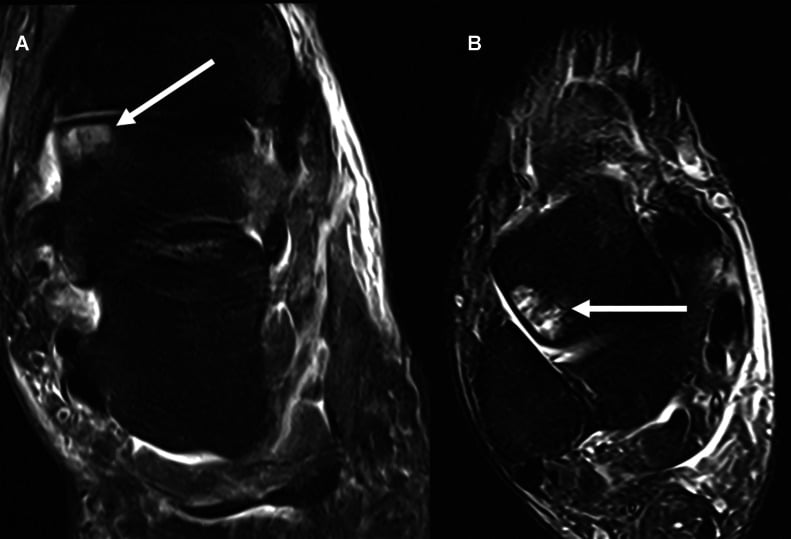
MRI. Selective rather than routine: it is useful when osteochondral or ligament injury remains clinically important.
Differential Diagnosis
The deformed, painful hindfoot has several mimics. Distinguishing them changes the reduction manoeuvre and the structure at risk.
- Key distinguishing feature
- Talus displaced within/from the mortise, malleoli usually fractured
- Imaging clue
- Talus malaligned to plafond on lateral; widened mortise
- Pitfall
- Most are fracture-dislocations - search every malleolus
- Key distinguishing feature
- Talus stays in mortise; calcaneus/navicular displaced beneath it
- Imaging clue
- Talonavicular/subtalar incongruity, normal tibiotalar joint
- Pitfall
- Beware locked medial dislocation needing open reduction
- Key distinguishing feature
- Whole talus dislocated out of all three joints, often open
- Imaging clue
- Empty talar bed
- Pitfall
- High AVN and infection risk; preserve and replant where feasible
- Key distinguishing feature
- Mortise broadly maintained, talus congruent
- Imaging clue
- Malleolar fracture without gross talar displacement
- Pitfall
- Subtle talar shift still needs anatomic reduction
- Key distinguishing feature
- Fracture line through talus; may coexist with dislocation
- Imaging clue
- Hawkins lines, fracture through talus on CT
- Pitfall
- Misreading as pure dislocation delays AVN-relevant fixation
Management Algorithm
Ankle Dislocation Management
Diagnose the dislocation clinically and radiographically, and document the neurovascular status. Reduce within hours, and do not delay reduction for imaging.
Closed reduction under sedation or general anaesthesia, by the technique under Surgical Technique. Document the neurovascular status again afterwards.
CT to assess the associated fractures (malleoli, talus, or both), measure their displacement and plan ORIF if indicated.
ORIF of displaced malleolar or talar fractures, restoring mortise stability.
Surgical Technique
Anterolateral approach. Exposes the lateral malleolus, the talar neck and the anterolateral joint, through a longitudinal incision over the fibula that curves anteriorly. The internervous plane lies between the superficial peroneal nerve and the sural nerve (distally). The superficial peroneal nerve and the intermediate dorsal cutaneous nerve are at risk.
Posterolateral approach. For fixation of the posterior malleolus and syndesmotic stabilisation. The incision lies midway between the Achilles tendon and the posterior border of the fibula, and the plane is between peroneus brevis (superficial peroneal nerve) and flexor hallucis longus (tibial nerve). The sural nerve and the small saphenous vein are at risk.
The Dimple Sign and the Irreducible Dislocation
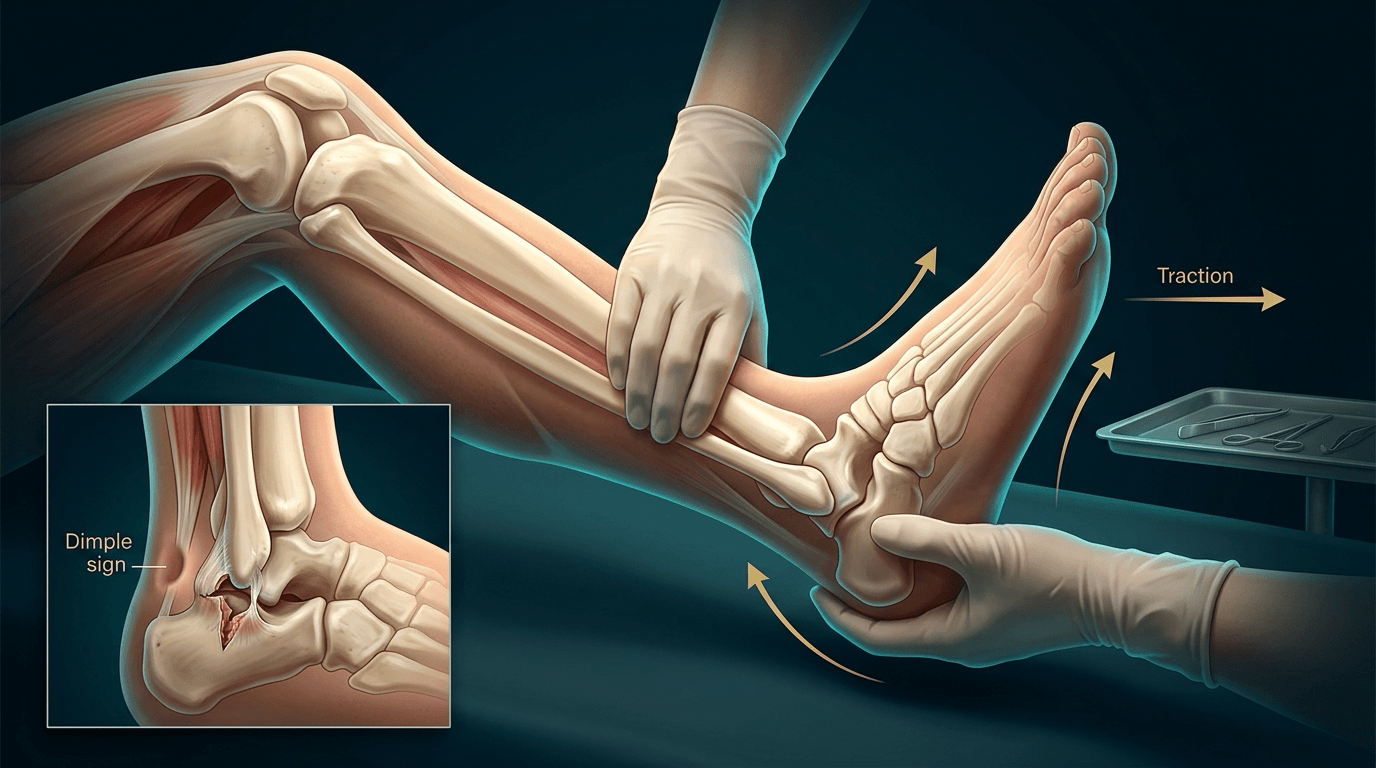
What it is. The dimple sign is a persistent puckering or dimpling of the skin over the deformity, classically over the antero- or infero-lateral ankle, that fails to efface with longitudinal traction. The displaced talus or its head has buttonholed through a rent in the capsule or retinaculum and tethered the invaginated overlying skin into the joint.
Why it matters. A dimple that persists after a controlled closed attempt is a sign of an irreducible dislocation. It predicts a blocked reduction and warns that continued forceful manipulation will cause pressure necrosis of the tethered skin, converting a closed injury to an open one, and further chondral or neurovascular damage.
What blocks the reduction. The culprit tends to lie on the side opposite the direction of talar displacement. The recognised interposed structures are:
- The posterior tibial tendon
- The flexor tendons, flexor hallucis longus and flexor digitorum longus
- The deltoid ligament
- An interposed osteochondral fragment
A persistent dimple or a failed single gentle attempt mandates prompt open reduction, through an approach directed at the likely block, releasing the entrapped structure under direct vision. Do not repeat forced closed manipulation.
Complications
The incidence figures below are conventional teaching ranges from the ankle fracture-dislocation literature, not measurements from a single cited cohort. The sourced anchors on this page are Wight 2017 (pure dislocation outcomes), Sculco 2016 (worse reduction and function with dislocation) and Lehtola 2021 (moderate OA common at 7 years even after well-reduced high-energy injuries).
- Incidence
- 30-40%
- Risk Factors
- Displacement, inadequate reduction
- Prevention/Management
- Anatomic reduction, adequate fixation
- Incidence
- 10-15%
- Risk Factors
- Talus fractures, delayed reduction
- Prevention/Management
- Early reduction, anatomic fixation
- Incidence
- 20-30%
- Risk Factors
- Prolonged immobilisation
- Prevention/Management
- Early motion, adequate fixation
- Incidence
- 5-10%
- Risk Factors
- Displacement, inadequate fixation
- Prevention/Management
- Rigid fixation
Post-traumatic arthritis. Joint damage adds to displacement and inadequate reduction as a cause. When the arthritis is severe, the options are ankle fusion or arthroplasty.
AVN of the talus. The 10-15% figure applies when the talus is fractured. Talar fracture, delayed reduction and the talus's tenuous blood supply are the causes. Monitor with serial imaging, and fuse if the talus collapses.
Postoperative Care
Immobilisation. A short leg cast or boot, with no weight bearing for 6-8 weeks, until CT confirms healing. Ankle movement starts within that period only if the ankle is stable; otherwise range of motion and strengthening begin with physiotherapy after the cast comes off.
Rehabilitation.
- Weeks 0-6 - short leg cast, non-weight bearing, elevation to reduce swelling, ankle range-of-motion exercises if stable
- Weeks 6-8 - CT to confirm healing; if healing, remove the cast and move to a walking boot with progressive weight bearing
- Weeks 8-12 - full weight bearing and progressive activity, with return to sport at 3-4 months
Outcomes and Prognosis
The success, return-to-function and arthritis percentages below are conventional teaching ranges rather than single-study measurements. The verified sourced figures on this page are the Wight 2017 pure-dislocation data (reduced ROM 18%, instability 2.6%) and the Sculco 2016 and Lehtola 2021 cohorts.
- Success rate
- 80-85% (stability, pain relief)
- Return to pre-injury level
- 75-80%
- Arthritis
- 20-30%
- Success rate
- 75-85% (union, pain relief)
- Return to pre-injury level
- 70-75%
- Arthritis
- 30-40%
- Success rate
- 60-70% (union, pain relief)
- Return to pre-injury level
- 60-70%
- Arthritis
- 40-50%
Long-term. Without treatment, 50-60% develop arthritis. The risk factors for progression are displacement, inadequate reduction and an open injury.
Guidelines, Registries & Global Practice
Global Epidemiology
- Pure ankle (tibiotalar) dislocation without fracture is exceptionally rare - approximately 0.46% of ankle dislocations and 0.065% of all ankle injuries (Wight et al, Injury 2017).
- High-energy talar and ankle dislocation-fractures cluster in young men (over 80% male, mean age early 30s) after motor-vehicle accidents and falls (Vosoughi et al, BMC MSD 2021).
- Around half of pure dislocations present as open injuries, reflecting the high energy and thin soft-tissue envelope.
Side-by-Side Guidance
- Emphasis
- Open fracture & soft-tissue pathways, urgent realignment
- Practical message
- Realign and splint deformed/dysvascular limbs immediately; photograph and cover open wounds, early IV antibiotics
- Emphasis
- Anatomic mortise restoration, staged fixation
- Practical message
- Span with external fixator if soft tissues are compromised; definitive ORIF once swelling settles
- Emphasis
- Ankle fracture management, syndesmosis assessment
- Practical message
- Restore fibular length/rotation and syndesmosis; intra-operative stress testing
- Emphasis
- Limb-threatening emergency
- Practical message
- Reduce a dislocated, dysvascular ankle at point of care before definitive imaging
Registry & Resource-Setting Notes
- No dedicated dislocation registry exists; long-term implant and OA data come from ankle-fracture and syndesmosis cohorts (e.g. the Oulu RCT, Lehtola et al 2021) and national fracture audits.
- High-resource settings: prompt theatre access enables early definitive ORIF; CT is routine after reduction.
- Limited-resource settings: closed reduction with splint/external fixation and delayed or definitive cast management may be the pragmatic pathway; the universal, transferable principle is immediate reduction to protect skin and the neurovascular bundle.
Ankle dislocations are a common viva topic. Know that urgent reduction is required (within hours, skin necrosis risk), that they are usually associated with fractures (most series 80-90%), that posterior displacement is most common, that ORIF follows for displaced fractures, and that neurovascular status must be documented before and after reduction. Be prepared to discuss the reduction technique and the management of associated fractures.
Controversies and Areas of Uncertainty
Ligament repair in pure dislocation. Whether to repair the lateral and deltoid ligament complex acutely after a pure dislocation is debated. The largest systematic review found instability was rare and was not reduced by acute repair, supporting functional treatment for most stable injuries.
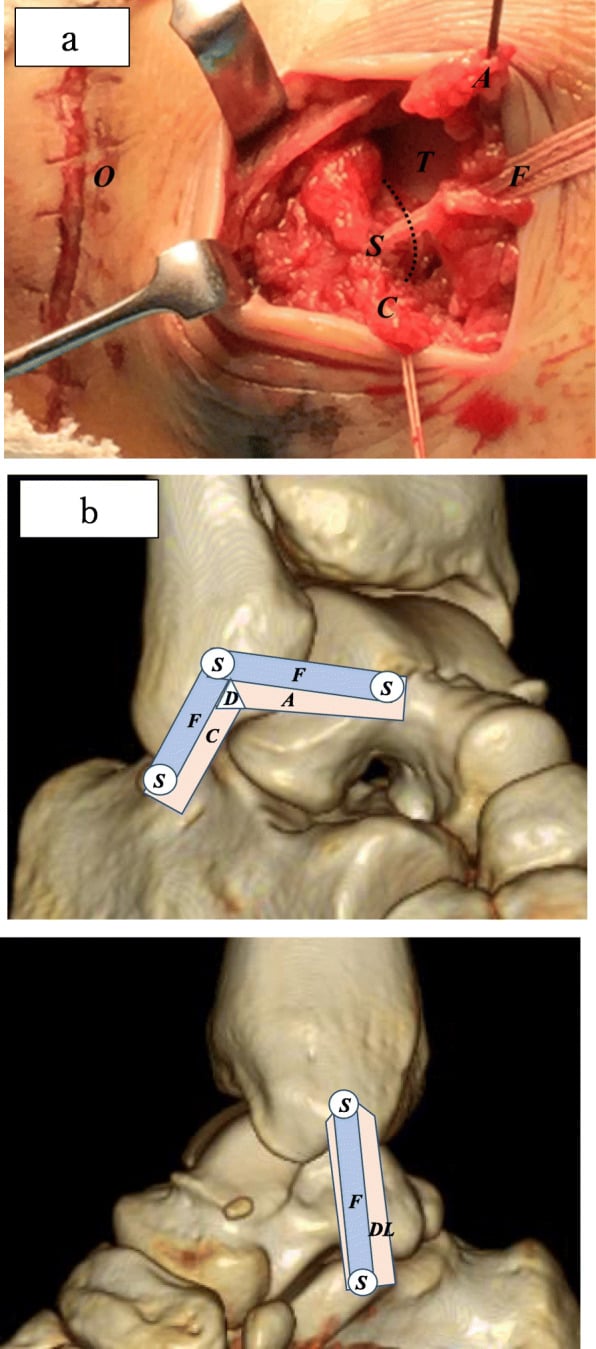
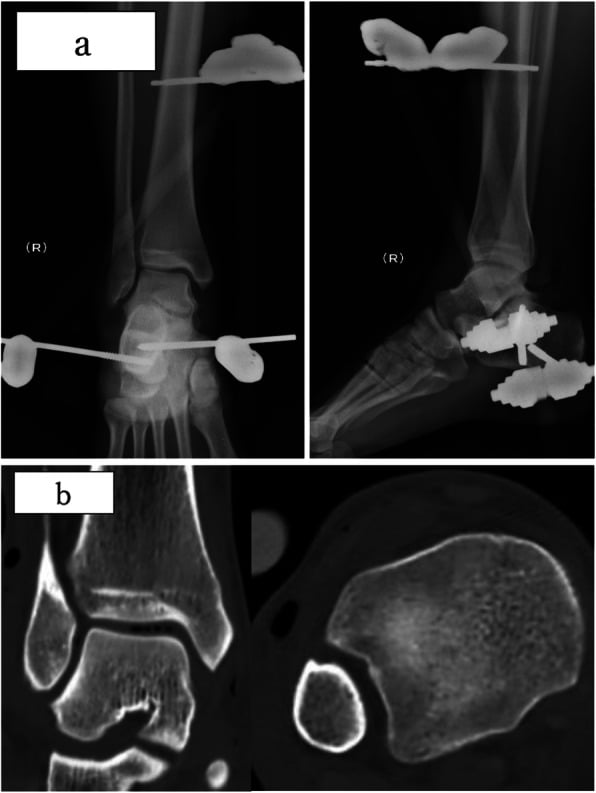
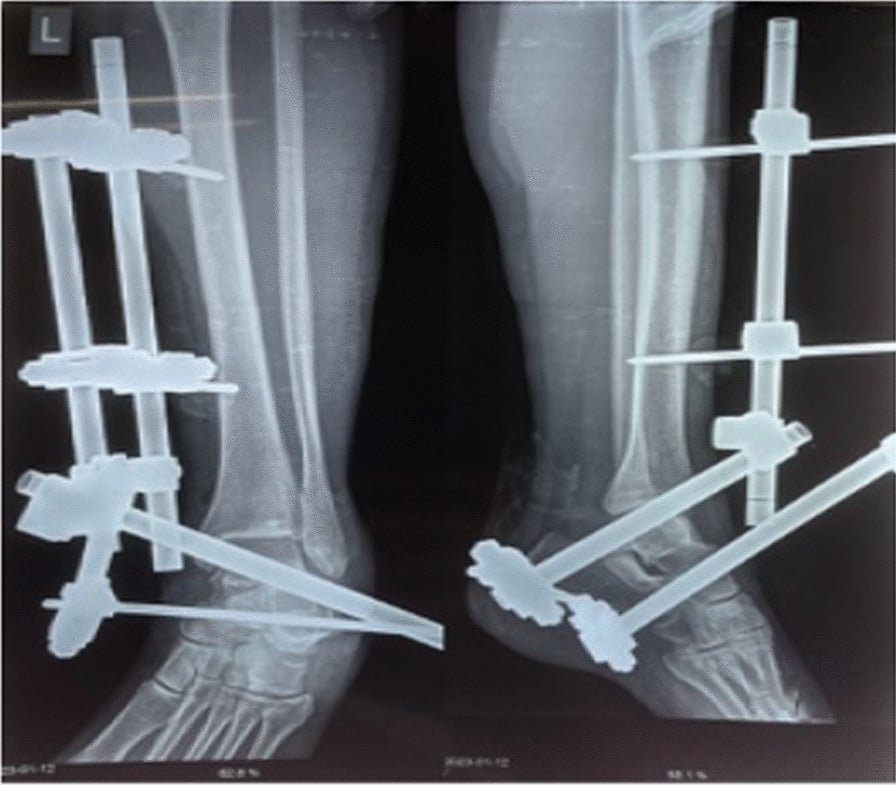
External fixation or immediate ORIF. In dislocation-fractures with a compromised soft-tissue envelope, the trade-off between spanning external fixation, which protects the skin and stages the definitive surgery, and immediate ORIF is a matter of judgement. Skin condition and swelling guide it, rather than fixed rules.
Timing thresholds. "Reduce within hours" is universally accepted, but no high-level human data establish a precise time beyond which chondral and skin injury becomes irreversible. Hence the principle of immediate point-of-care reduction.
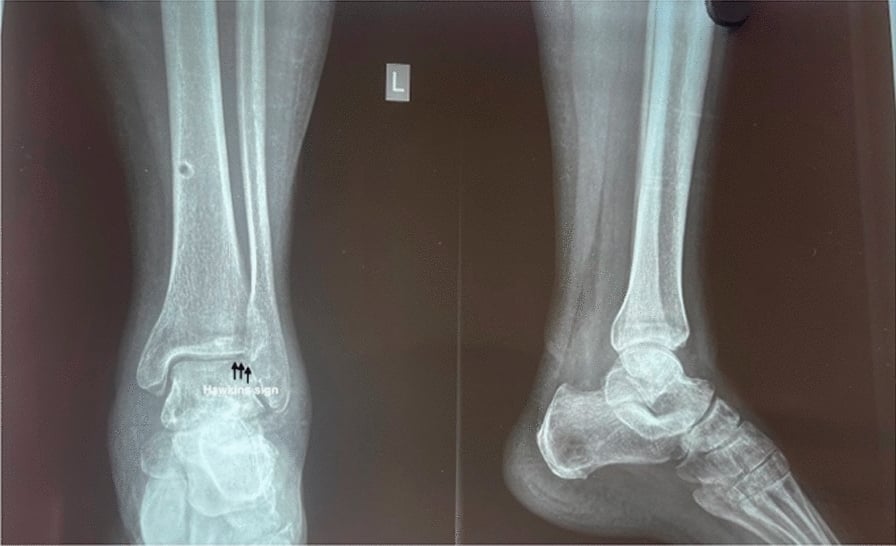
Predicting and managing AVN. When a talar fracture coexists, the AVN risk is real, but the value of restricted weight-bearing and the reliability of the Hawkins sign for predicting revascularisation remain debated. Serial imaging guides the decisions.
MCQ Practice Points
Q: Why is urgent reduction required for ankle dislocations? A: Skin tension causes necrosis within hours, neurovascular compromise - Reduce within hours, do not delay for imaging if skin compromised. Document neurovascular status before and after reduction.
Q: Are ankle dislocations usually associated with fractures? A: Yes, 80-90% have associated fractures - Malleolar fractures most common, talus fractures less common. After reduction, assess fractures with CT and perform ORIF if displaced.
Q: What is the most common type of ankle dislocation? A: Posterior dislocation is most common - Talus displaced posteriorly, usually with posterior malleolus fracture. Reduction: traction, plantarflex, then dorsiflex. Success rate 80-85%.
Q: What is the treatment for ankle dislocations? A: Urgent closed reduction, then ORIF if fractures present - Reduce within hours, document neurovascular status, CT after reduction to assess fractures, ORIF if displaced. Success rate 75-85% with proper treatment.
Q: What are the complications of ankle dislocations? A: Post-traumatic arthritis (30-40%), AVN talus (10-15% if talus fractures), stiffness (20-30%) - Prevent with anatomic reduction and adequate fixation. Success rate 75-85% with proper treatment.
Exam Viva Scenarios
Practise clinical reasoning and management decisions out loud
“A 35-year-old patient presents with ankle deformity after high-energy trauma. X-rays show posterior ankle dislocation with associated posterior malleolus fracture. Skin is tented but intact.”
“A 40-year-old patient has an open ankle dislocation with exposed talus. The examiner asks you to explain your management approach.”
“You are in the ED attempting to reduce a lateral ankle dislocation. Despite adequate sedation and correct technique, the talus will not 'clunk' back into the mortise. What are your next steps?”
Key Concepts
- Rare but serious injuries (less than 1% of ankle injuries)
- Urgent reduction required within hours (skin necrosis risk)
- Usually associated with fractures (80-90%)
- ORIF if fractures present (75-85% good results)
Classification
- Posterior: Most common, talus posterior - closed reduction (80-85% good results)
- Anterior: Rare, talus anterior - closed reduction (75-85% good results)
- Lateral: Rare, talus lateral - closed reduction (70-80% good results)
- Medial: Rare, talus medial - closed reduction (70-80% good results)
Treatment
- Urgent closed reduction: Within hours, document neurovascular status
- CT after reduction: Assess associated fractures (80-90% have fractures)
- ORIF if fractures displaced: Malleoli or talus (75-85% good results)
- Pure dislocation: Conservative if stable (80-85% good results)
Surgical Technique
- Reduction: Flex knee, traction, reverse deformity
- ORIF malleoli: Medial, lateral, or posterior approach
- ORIF talus: Anterior, medial, or lateral approach
- Verify reduction fluoroscopically
Complications
- Post-traumatic arthritis: 30-40% (prevent with anatomic reduction)
- AVN talus: 10-15% if talus fractures (prevent with early reduction)
- Stiffness: 20-30% (prevent with early motion)
- Nonunion: 5-10% (prevent with rigid fixation)
Evidence Base
Dislocation is a risk factor for poor outcome after SER ankle fractures
- 32% of operative SER IV fractures presented with dislocation
- Dislocation significantly reduced accuracy of articular reduction (p=0.003)
- Higher rates of open fracture and external fixator use in the dislocation group
- Worse ankle and subtalar ROM and FAOS scores at follow-up; infection rates not increased
Patterns and characteristics of talar injuries at two trauma centres
- 86.4% male, mean age 31.8 years - a young high-energy trauma population
- MVA (46.1%) and falls (43.3%) were the leading mechanisms
- Talar body fractures (21.9%) slightly more common than neck (19.2%)
- Medial malleolus, fibula and calcaneus were the commonest associated fractures