Osteonecrosis | Progressive Collapse | Joint-Preserving vs Arthroplasty
- Bilateral in 50-80% - always image contralateral hip, counsel about second hip
- MRI gold standard - detects Stage I (pre-radiographic) disease before collapse
- Core decompression best for Ficat I-II (pre-collapse), controversial for Stage III
- Crescent sign (subchondral fracture) = collapse imminent, poor outcomes with joint preservation
- THA outcomes worse than primary OA: younger age, higher dislocation, more osteolysis
- “Stage I-II = joint preservation window (core decompression ± grafting)
- “Stage III-IV = arthroplasty preferred in most patients over 40 years
- “Steinberg adds lesion size (under 15%, 15-30%, over 30% of head) to staging
- “ARCO classification most comprehensive: adds location (medial/central/lateral columns)
Overview and Epidemiology
Avascular necrosis of the femoral head is sterile bone death from a vascular insult, not infection. The osteocytes die, the head keeps its shape for a time, and then the weakened subchondral bone fractures and the head collapses. It can present like hip osteoarthritis, but in a different patient: someone aged 30-50 with decades of use ahead of the joint and a devastating functional impact.
Who. Peak incidence is at 30-50 years, productive working age, and men are affected 4-8 times more often than women, reflecting patterns of alcohol and steroid use. The economic cost follows from the age: decades of disability, multiple revisions and high healthcare costs.
Natural history. Untreated, 80-90% of hips collapse within 2-5 years. The disease is bilateral in 50-80%, the contralateral hip becoming involved within 2 years, so both hips are imaged at diagnosis and the patient is counselled about the second hip from the start.
Causes. Steroids are the most common non-traumatic cause, and two of the causes, steroids and alcohol, are modifiable:
- Steroid-induced - 30-40% of cases
- Alcohol-related - 20-30%
- Idiopathic - 30-40%, no cause found despite work-up
- Traumatic - after femoral neck fracture or hip dislocation
- Sickle cell disease - 10-50% of patients develop AVN by age 35
The window. MRI finds the disease before the radiograph changes (Stage I), and that pre-radiographic window is where joint-preserving surgery has its chance. Once the head has collapsed, marked by the crescent sign, arthroplasty is inevitable, and arthroplasty in this group does worse than for primary osteoarthritis because the patients are young and the bone is poor.
Osteonecrosis elsewhere. Osteonecrosis is not confined to the adult femoral head, and the differences matter in a viva: the same process in the growing hip is Perthes disease, which remodels in a way the adult head cannot; spontaneous osteonecrosis of the knee is now understood largely as subchondral insufficiency fracture rather than true infarction; and transient osteoporosis of the hip is the self-limiting mimic that shares the MRI oedema pattern and must not be drilled. The two aetiologies with the most distinct behaviour have their own accounts in sickle cell disease and dysbaric osteonecrosis. Beyond the hip, the humeral head is the second commonest site, with the same steroid and alcohol aetiology, so a new hip AVN warrants a shoulder history and vice versa.
Pathophysiology and Vascular Anatomy
The blood supply. The medial circumflex femoral artery, from the profunda femoris, supplies 70-80% of the femoral head. It runs to the posterior neck, joins the lateral circumflex femoral artery in an extracapsular ring at the base of the neck, the trochanteric anastomosis, and sends its deep branch up the posterior neck beneath the capsule as the posterosuperior retinacular vessels. Injury to this artery is injury to the head's supply, and these retinacular vessels are the ones at risk in a displaced femoral neck fracture.
The lateral circumflex femoral artery, also from the profunda femoris, contributes under 20%, mostly to the anterior neck and metaphysis. The artery of the ligamentum teres, from the obturator artery, enters at the fovea centralis and is present in only 20-30% of heads; its contribution is variable (0-30%), minimal in adults, and never enough to sustain the head on its own.
Tenuous perfusion through extracapsular vessels is the whole story. The head depends on retinacular vessels ascending the posterior neck, and they are disrupted by:
- Intracapsular fracture - haemarthrosis and vessel kinking
- Hip dislocation - vessel stretch
- Intraosseous pressure over 30mmHg - venous outflow obstruction
- Thrombosis - hypercoagulable states, sickle cell disease
- Fat emboli - steroids, alcohol, Gaucher disease
Once flow stops, osteocytes die within 12-48 hours; the trabeculae fail over the years that follow.
Pathophysiological Mechanisms
Trauma. A femoral neck fracture displaces the head and stretches or tears the retinacular vessels: 30% go on to AVN. A posterior hip dislocation stretches the branches of the medial circumflex artery: 10-25% develop AVN, more if reduction is delayed. Surgery can do the same damage, through hip pinning, osteotomy or excessive retractor pressure.
Radiation. Vessel fibrosis and obliteration after cancer treatment.
Why it matters. The mechanism is the argument for urgent reduction of a dislocated hip and anatomic reduction of a femoral neck fracture.
Histopathological Progression
Natural History of Untreated AVN
The vascular insult stops blood flow and the osteocytes die within 12-48 hours. The bone matrix is intact at this point, and the only sign is marrow oedema on MRI (dark on T1, bright on T2) before any structural change.
Dead osteocytes leave empty lacunae on histology, with no acute inflammation because the process is sterile. The surrounding viable bone attempts revascularisation and an interface zone forms; new bone laid down at that interface appears on the radiograph as the sclerotic rim of Stage II.
Granulation tissue invades from the periphery and osteoclasts resorb the dead bone, which weakens the trabeculae. New bone forms on the dead trabecular scaffold, the process called creeping substitution. The head is still spherical but mechanically weakened.
The weakened trabeculae fail mechanically and a subchondral fracture appears as the crescent sign on radiograph or MRI. The fracture propagates, the segment collapses and the head loses its sphericity. The cartilage is still viable at first, but shear forces develop across it.
The incongruent joint degrades its cartilage: joint space narrowing, osteophytes and acetabular change. Secondary osteoarthritis now involves both the femoral and the acetabular surfaces.
Classification Systems
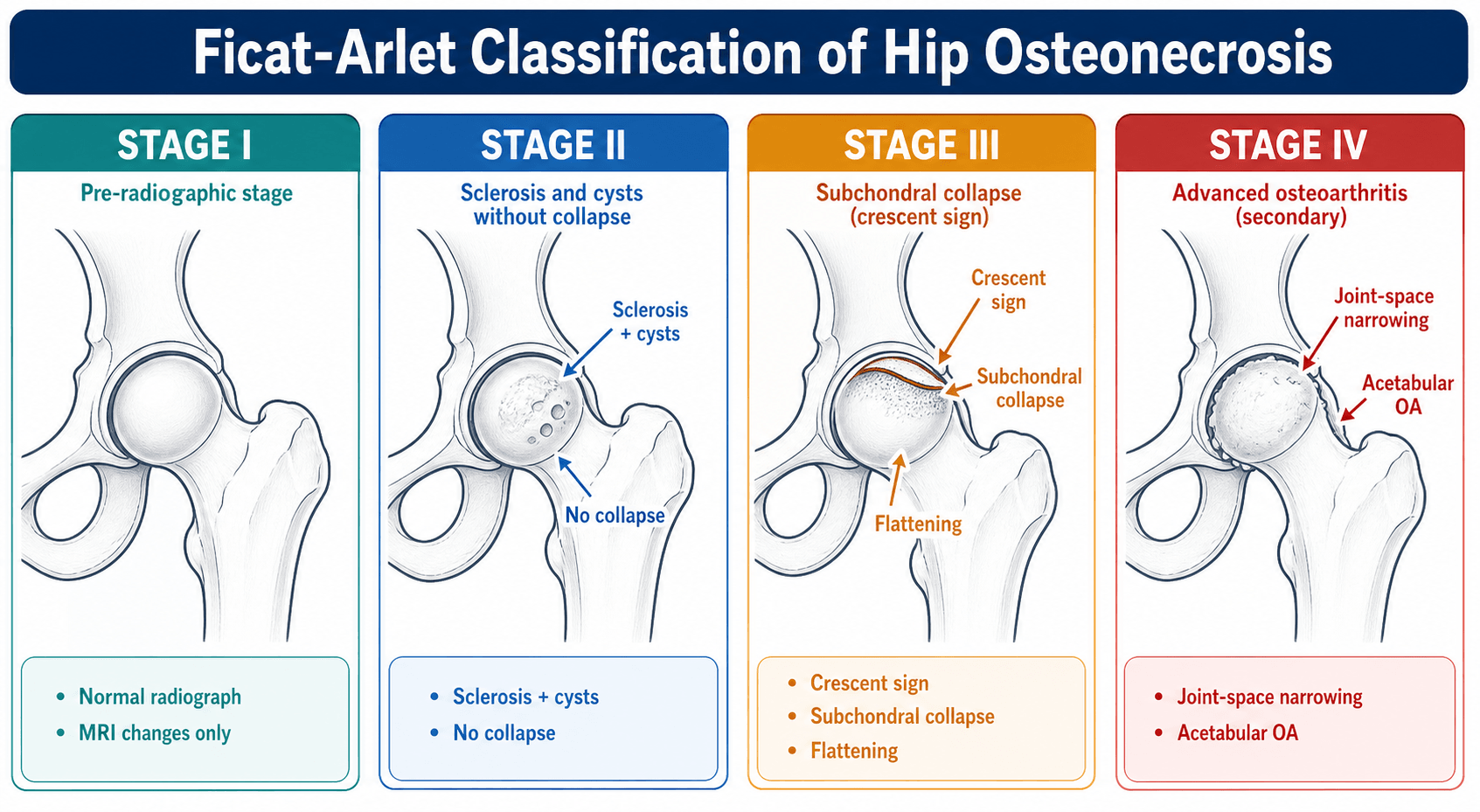
Original 1985, modified by Steinberg in 1995. The stage is read from the radiograph and the MRI, and it sets the treatment:
- Symptoms
- Pain or asymptomatic
- XR Findings
- Normal
- MRI Findings
- Positive (band sign)
- Treatment Options
- Core decompression ± NVBG
- Prognosis
- Success rates are conventional estimates - modern evidence less certain
- Symptoms
- Pain with activity
- XR Findings
- Sclerosis, cysts, no collapse
- MRI Findings
- Positive, demarcated lesion
- Treatment Options
- Core decompression ± grafting/osteotomy
- Prognosis
- 60-70% success, depends on lesion size
- Symptoms
- Pain at rest and activity
- XR Findings
- Crescent sign, collapse
- MRI Findings
- Subchondral fracture, fluid
- Treatment Options
- Osteotomy (young) or THA
- Prognosis
- Poor with preservation, THA preferred
- Symptoms
- Severe pain, limp
- XR Findings
- Collapse + acetabular changes
- MRI Findings
- Arthritis, joint effusion
- Treatment Options
- Total hip arthroplasty
- Prognosis
- THA definitive, revision risk 15-20% at 10 years
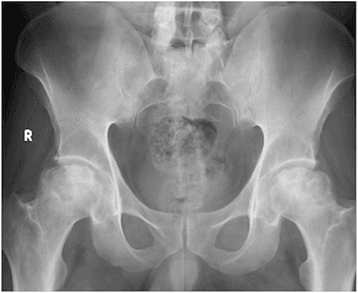
The crescent sign is a subchondral fracture, and a subchondral fracture is Stage III. Before it, the trabecular architecture is intact and decompression has something to save. Once it appears, the subchondral bone has fractured, collapse is under way and joint preservation conventionally fails in the majority; in a patient over 40 the answer at Stage III is arthroplasty.
Quantifying Collapse Risk: The Kerboul Combined Necrotic Angle
Lesion size and location (Steinberg extent, ARCO zones) predict collapse, but the most widely quoted single number is the Kerboul combined necrotic angle, a simple way to express how much of the weight-bearing head is dead. It complements Steinberg lesion size and ARCO location rather than replacing them, and it is the quantitative threshold examiners look for when you justify offering or withholding joint preservation.
How it is measured. The arc of the necrotic segment is measured on the mid-coronal image and on the mid-sagittal image, and the two angles are added together. The original description used plain radiographs (AP and lateral); the modified Kerboul angle measures the same two arcs on MRI, which is now the standard.
- Risk category
- Low risk
- Implication
- Head likely to survive; joint preservation favourable
- Risk category
- Moderate risk
- Implication
- Intermediate; weigh lesion size, location and patient factors
- Risk category
- High risk
- Implication
- Collapse likely despite isolated core decompression; consider grafting or arthroplasty
JIC classifies by the location of the necrotic area on the mid-coronal slice, relative to the weight-bearing surface and the lateral acetabular edge:
- Type A - medial third or less; low collapse risk
- Type B - central, up to the medial two-thirds
- Type C1 - occupies more than the medial two-thirds but stays medial to the lateral acetabular edge
- Type C2 - extends laterally beyond the acetabular edge; the highest collapse risk
The recurring theme across Kerboul and JIC is that the lateral, weight-bearing extent of the necrosis drives collapse, which is why two hips at the same Ficat-Arlet stage can carry opposite prognoses. Quote the location, not just the stage.
Clinical Assessment
History. Insidious groin pain over weeks to months, in contrast to the acute pain of trauma. It begins as a dull ache and becomes sharp with weight-bearing; it radiates from the groin to the anterior thigh and knee (L3 referred pain); stairs, rising from a chair and internal rotation aggravate it, and rest, non-weight-bearing and analgesia relieve it. Ask about the limp, the walking distance and difficulty with shoes and socks.
Risk factors. Take them systematically, with dose and duration for steroids and the weekly quantity for alcohol:
ASEPTICRisk Factors for AVN
Hook:ASEPTIC necrosis = sterile bone death from vascular insult, not infection!
Examination. The gait is antalgic, with a shortened stance phase on the affected side, and Trendelenburg once the disease is chronic. The hip usually looks normal, with no swelling short of Stage IV arthritis, though chronic collapse produces a leg length discrepancy. There is groin tenderness and no palpable effusion.
- Active movement is painfully limited, especially internal rotation and abduction
- Loss of internal rotation is the earliest sign; flexion-adduction-internal rotation (FADIR) is painful
- The log roll test is painful and FABER is positive
- The neurovascular examination is intact unless chronic disease has produced nerve compression
- Examine the shoulders and knees: multifocal disease is common in sickle cell disease and steroid use
Examine both hips and image both sides, every time. The second hip is often asymptomatic at first and may already show MRI-positive Stage I disease that needs surveillance or prophylactic treatment. Missing it is a medicolegal risk: the patient who develops AVN in the second hip two years later will ask why it was not found earlier.
Differential Diagnosis
- Key Distinguishing Features
- Older age (over 60), gradual onset, no risk factors, unilateral
- Imaging Findings
- Joint space narrowing, osteophytes, subchondral sclerosis
- Key Distinguishing Features
- Third trimester pregnancy or middle-aged men, self-limiting (6-12 months)
- Imaging Findings
- Diffuse marrow oedema on MRI, NO band sign, XR normal or osteopenic
- Key Distinguishing Features
- Athletes, military recruits, acute pain, no risk factors
- Imaging Findings
- MRI shows fracture line (not band), XR may show cortical break
- Key Distinguishing Features
- Older age, night pain, weight loss, no trauma
- Imaging Findings
- MRI shows mass lesion, XR shows lytic/blastic lesion
- Key Distinguishing Features
- Mechanical symptoms (clicking, catching), younger athletic patients
- Imaging Findings
- MRI arthrogram shows labral tear, no bone marrow oedema
Investigations
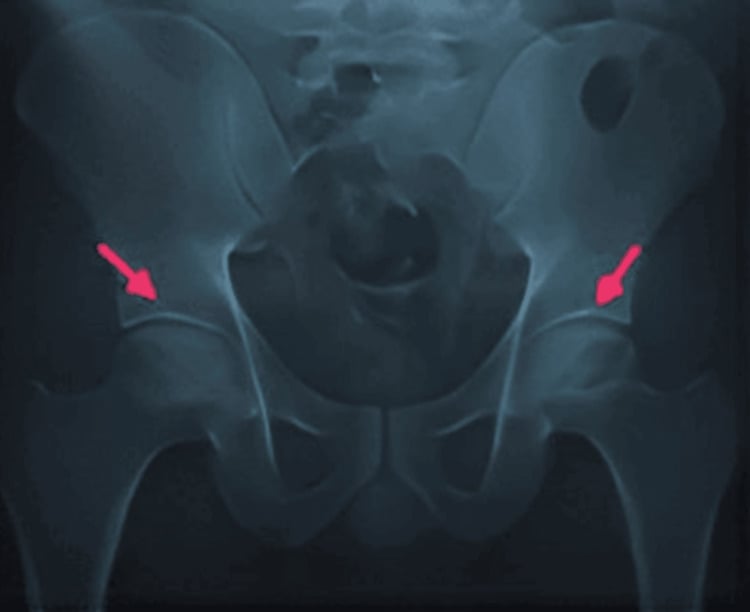
Radiographs. AP pelvis (both hips, for comparison), a lateral of the affected hip and a frog-leg lateral. The film stages the disease, monitors progression and excludes other pathology, but it is normal in Stage I:
- Stage I - normal; MRI is needed
- Stage II - sclerosis (increased density at the interface), cystic change, sphericity preserved
- Stage III - the crescent sign, a subchondral lucency that is the fracture, and flattening of the head
- Stage IV - collapse with secondary osteoarthritis: joint space narrowing, osteophytes, acetabular sclerosis
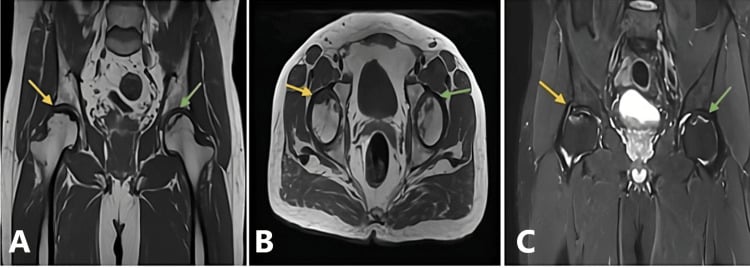
MRI. The gold standard, and the test that finds Stage I disease before the radiograph changes. Quoted sensitivity is 99% for early AVN and specificity 95% when the band sign is present; the ARCO guideline's pooled estimate is sensitivity 0.91 and specificity 0.96 (see Evidence Base), and MRI has the highest accuracy of any test by either measure. Image both hips, coronal and axial, with T1, T2 and STIR sequences:
- Band sign - a low-signal line on T1 and T2 at the interface between necrotic and viable bone
- Double line sign - a low-signal outer rim with a high-signal inner rim on T2, the granulation tissue
- Geographic pattern - a wedge-shaped or band-like lesion in the anterosuperior head
Beyond diagnosis, MRI sizes the lesion for Steinberg substaging, finds bilateral disease and monitors the response to treatment.
CT and bone scan. Second line, when MRI is unavailable or contraindicated (pacemaker, severe claustrophobia). CT shows sclerosis, cysts and the crescent sign but is less sensitive than MRI for Stage I; it is useful for surgical planning, measuring the lesion's location for a valgus osteotomy. Bone scan is cold in the centre, where necrotic bone takes up no tracer, with a hot reparative rim; it is less specific than MRI, carries a radiation dose and gives no anatomical detail.
Laboratory work-up. The blood tests look for the cause, because a cause can sometimes be modified (steroids ceased if possible, alcohol stopped), a systemic disease may need treatment in its own right, and the answer shapes counselling about the other hip:
- Baseline: FBC (sickle cell, Gaucher), ESR and CRP (to exclude infection), LFTs (alcohol-related liver disease), lipid profile
- Coagulation screen, in the young patient with idiopathic, bilateral disease: protein C, protein S, antithrombin III, Factor V Leiden, lupus anticoagulant, anticardiolipin antibodies
- Specific tests: haemoglobin electrophoresis (sickle cell), Gaucher enzyme assay, HIV serology
A normal-radiograph hip with marrow oedema on MRI is not automatically early AVN, and two mimics change management completely:
- Transient osteoporosis of the hip (bone marrow oedema syndrome). Typically a middle-aged man or a woman in late pregnancy, with diffuse marrow oedema of the head and neck (high T2/STIR, low T1) but no focal geographic necrotic segment and no double-line sign. It is self-limiting, resolving over months with protected weight-bearing and analgesia (a migratory or regional form exists), so it should not be core-decompressed as if it were AVN.
- Subchondral insufficiency fracture (SIF). An older, osteoporotic patient, often a woman, with acute pain and no preceding necrosis. MRI shows a subchondral low-signal line roughly parallel to the cortex with surrounding oedema, but without the demarcating serpiginous necrotic interface of AVN; here any necrosis is secondary to the fracture. It can progress to rapid collapse, so it needs recognition and offloading.
The discriminator is the well-demarcated geographic necrotic segment with a double-line sign: present in AVN, absent in transient osteoporosis, and not the primary lesion in SIF.
Management Algorithm
The decision. Stage, lesion size and the patient's age. Pre-collapse disease (Ficat I-II) is the window for joint preservation. After the crescent sign the choice is between salvage in a young, motivated patient and arthroplasty in everyone else.
- Ficat Stage
- I-II (pre-collapse)
- Lesion Size
- Under 30% head
- Treatment
- Core decompression ± NVBG
- Key Pearl
- Conventional Ficat-era figures (~80% Stage I) - modern trial evidence less certain
- Ficat Stage
- III (early collapse)
- Lesion Size
- Any size
- Treatment
- Valgus osteotomy or THA
- Key Pearl
- Osteotomy rotates necrotic segment - needs intact medial column
- Ficat Stage
- III (collapse) or IV
- Lesion Size
- Over 30% head
- Treatment
- Total hip arthroplasty
- Key Pearl
- Cementless fixation preferred, beware osteolysis in young
- Ficat Stage
- Any stage
- Lesion Size
- Any size
- Treatment
- THA with special considerations
- Key Pearl
- Exchange transfusion pre-op, cemented femoral stem
The goal is to prevent collapse, promote revascularisation and keep the native joint.
Observation. Reserved for very small medial lesions, because observation alone carries an 80% progression rate in Stage I-II. The criteria:
- Small lesion, under 15% of the head (Steinberg A)
- Medial location, out of the weight-bearing zone
- Asymptomatic or minimal symptoms
- Patient declines surgery
The asymptomatic contralateral hip is the case where this matters most, and stage alone will not decide it. A systematic review of 16 studies and 664 untreated asymptomatic hips found 59% progressed to symptoms or collapse, but the risk is not evenly spread: small, medially located lesions collapsed in under 10%, while medium and especially large lesions progressed in a substantial majority. Sickle cell disease carried the highest rate of progression and systemic lupus the most benign course (PMID 20844158; systematic review of prognostic studies, 664 hips, level 4 evidence pooled).
So a Stage I lesion found on the screening MRI of a painless hip is not automatically an indication to drill it. Measure the lesion and locate it before offering surgery: a small medial lesion in a lupus patient is watched, a large lateral lesion in sickle cell disease is the one where prophylactic decompression is defensible. There is still no trial comparing observation with intervention in asymptomatic disease, so this is a risk-stratified judgement rather than an evidence-based rule, and the patient should be told which of the two they are getting. If both hips need decompression, the operations are staggered, for the infection and anaesthetic risk.
What observation involves. Reduce impact loading, with crutches if symptomatic; NSAIDs for pain; bisphosphonates (alendronate) may slow progression, though the later multicentre trial did not confirm it (see Evidence Base); stop alcohol and reduce or taper steroids where possible; MRI every 6 months for 2 years, then annually if stable. The patient is told that 80% progress without surgery: observation is a decision, not benign neglect.
Core decompression. The standard operation for Stage I-II. It lowers intraosseous pressure from over 30mmHg to under 10mmHg, opens a drill track along which granulation tissue and new vessels grow, removes necrotic marrow and relieves venous congestion, and stimulates remodelling. The quoted success rates are Ficat-era conventions: 80% in Stage I, 60-70% in Stage II depending on lesion size, under 30% once the head has collapsed. Modern trial evidence is less certain: the network meta-analysis found no significant difference between joint-preserving surgery and non-operative care for conversion to arthroplasty (see Evidence Base), so the operation is offered with realistic counselling rather than as a cure.
Success means no progression of collapse, resolution of pain and revascularisation on MRI, checked on radiographs at 6 weeks, 3 months and 6 months, then annually for 2 years. Failure declares itself as a crescent sign, increasing pain or progression to Stage III, and at that point the conversation turns to arthroplasty. The technique is in Surgical Technique.
Adding bone graft. For a large Stage II lesion (over 30% of the head, Steinberg C), significant cystic change, or where the weakened subchondral bone needs structural support, a non-vascularised graft goes in through the tract: a cortical strut from the fibula or iliac crest, passed down the drill tract to contact the subchondral plate. A porous tantalum rod is the alternative, inert and promoting bone ingrowth. The strut is quoted at 80-90% success in Stage II B-C against 60% with core decompression alone.
Biologic Augmentation: Bone Marrow Aspirate Concentrate (Cell Therapy)
A major refinement of core decompression is to add bone marrow aspirate concentrate (BMAC) to the drill tract. The rationale is that osteonecrosis, particularly steroid- and alcohol-related disease, may involve a depleted or impaired pool of marrow osteoprogenitor cells; concentrating autologous iliac-crest marrow re-delivers mesenchymal stem cells, osteoprogenitors and growth factors to the necrotic segment to support repair and revascularisation. The underlying cell biology is covered in the dedicated mesenchymal stem cell topic.
Technique. Aspirate marrow from the iliac crest, concentrate it by centrifugation, and deliver the concentrate down the core-decompression channel into the necrotic zone, often combined with small or multiple percutaneous drill channels rather than a single large tract.
Evidence. Core decompression plus bone marrow concentrate reduced femoral-head collapse compared with core decompression alone (relative risk roughly 0.55 over short-term follow-up in the ARCO systematic review), and core decompression plus cell therapy ranked best for limiting radiographic progression in the network meta-analysis (SUCRA 96.4%). The certainty of that evidence remains low, so counsel honestly rather than overpromise: the decompression relieves pressure and opens a channel, the concentrate adds the biology, and the combination appears to slow collapse in pre-collapse disease more than decompression alone.
Surgical Technique
Consent. This is a joint preservation attempt, not a guarantee against collapse. The stage-specific success rates are in Management; the specific risks:
- Femoral neck fracture under 1%, the reason for protected weight-bearing for 6-8 weeks
- Infection under 1%, with prophylactic antibiotics
- Neurovascular injury under 0.5% (sciatic nerve, femoral vessels)
- Progression despite surgery: 20-40% come to arthroplasty in the future
- DVT and PE, the standard surgical risk, with LMWH prophylaxis
Equipment. A radiolucent table (fracture table or standard operating table), C-arm fluoroscopy for AP and lateral views, an 8-10mm cannulated drill system with guidewire, a variable-speed power drill, a standard hip tray, and a bone graft harvesting set if a non-vascularised graft is planned. Optional adjuncts are a tantalum rod, iliac crest bone graft instruments and fibular strut instruments.
Positioning. Supine on a radiolucent table; a fracture table is not essential but helps with traction control. The hip in neutral or slight internal rotation opens the lateral cortex; the knee flexed 10-20 degrees relaxes iliopsoas and improves the fluoroscopy; the contralateral leg is abducted and externally rotated for C-arm access; the arms are across the chest or on arm boards, out of the field. Check the full range of C-arm movement for AP and lateral views before draping.
Preparation. Chlorhexidine or iodine from umbilicus to knee and lateral to the midline; standard hip draping exposing the proximal femur to mid-thigh; a sterile cover on the intensifier. Palpate the greater trochanter and mark the entry point 2-3cm distal to it on the lateral thigh. Confirm an AP pelvis showing both hips and a perfect lateral of the affected hip before the incision.
Step-by-Step Core Decompression
A 3-4cm longitudinal incision on the lateral thigh, 2-3cm distal to the tip of the greater trochanter and at the level just above the lesser trochanter, parallel to the femoral shaft, through skin and subcutaneous tissue to the fascia lata. Confirm the level on fluoroscopy.
Incise the fascia lata in line with the skin incision and split the fibres of vastus lateralis bluntly: there is no intermuscular plane here, it is a direct muscle split. Hohmann retractors on the anterior and posterior edges expose the lateral femoral cortex. Strip as little periosteum as possible.
The entry point must be distal to the greater trochanter but proximal to the lesser trochanter. Too distal puts a stress riser at the narrowest part of the femoral neck and risks a fracture. Confirm the position on AP and lateral fluoroscopy before drilling; malposition is common without it.
Aim for the centre of the femoral head on both views: bisecting the head diameter on the AP, the anterior-posterior midpoint on the lateral. The target is subchondral bone 5mm deep to the articular cartilage, which is never breached.
- A 2.4-2.8mm guidewire through the cannulated system, hand-drilled through the lateral cortex under careful control
- Advance under fluoroscopy to the centre-centre position
- Stop 5mm short of the subchondral plate on the lateral view and measure the guidewire depth before drilling
- Confirm on AP and lateral before proceeding
Multiple passes to find the trajectory waste bone and weaken the neck; plan the trajectory before drilling.
The 8-10mm cannulated drill over the guidewire, slowly (100-200 RPM) with copious saline irrigation to cool the bit, clear debris and avoid thermal necrosis. Advance to 5mm from the subchondral plate, measured on fluoroscopy, and take final AP and lateral images to confirm the centre-centre position and the 5mm margin. Suction through the drill removes necrotic marrow and blood and decompresses the intraosseous pressure.
Do not drill multiple tracts (a weakened neck fractures), breach the lateral cortex widely (stress riser), or penetrate the subchondral plate (articular cartilage damage and intra-articular communication).
The indications for adding graft are in Management. For a non-vascularised graft, harvest corticocancellous bone from the ipsilateral iliac crest through a 2-3cm incision, as morselised cancellous bone or a cortical strut (fibula or iliac crest), and pack it through the drill tract to contact the subchondral plate; it provides structural support and osteogenic cells.
The alternative is a 10mm porous tantalum rod, 100-120mm long, inserted through the tract to contact the subchondral plate. Its porous structure promotes bone ingrowth, it is inert, and it is radiopaque, so follow-up is easy; it costs more than a bone graft but is easier to insert and spares the donor site. Confirm the graft or rod position on final fluoroscopy.
Fascia lata with absorbable suture (Vicryl 1 or 0), interrupted or continuous; subcutaneous 2-0 Vicryl to close the dead space; skin with subcuticular 3-0 Monocryl or staples; a standard sterile dressing. No drain, as there is minimal dead space. Confirm the swab and instrument counts and save the fluoroscopy images for the record.
Complications
- Incidence
- 80-90% at 5 years
- Risk Factors
- Large lesion (over 30%), lateral location, Stage II, no treatment
- Prevention/Management
- Early diagnosis (MRI), core decompression in Stage I-II, risk factor modification
- Incidence
- 50-80% within 2 years
- Risk Factors
- Systemic cause (steroids, alcohol, sickle cell, coagulopathy)
- Prevention/Management
- MRI both hips at diagnosis, surveillance imaging, prophylactic treatment if Stage I contralateral
- Incidence
- Under 1%
- Risk Factors
- Multiple drill tracts, lateral cortex violation, early weight-bearing
- Prevention/Management
- Single central tract, avoid lateral cortex, protected weight-bearing 6-8 weeks
- Incidence
- 20-40% (Stage I-II)
- Risk Factors
- Large lesion (over 30%), Stage III, lateral location, delayed diagnosis
- Prevention/Management
- Patient selection (Stage I-II only), add bone grafting if large lesion, realistic expectations
- Incidence
- 15-20% at 10 years
- Risk Factors
- Age under 40, high activity, poor bone quality, polyethylene wear
- Prevention/Management
- Counsel about revision risk, cross-linked poly, large head size, activity modification
- Incidence
- 2-5%
- Risk Factors
- Young active patients, posterior approach, component malposition
- Prevention/Management
- Optimise component position, repair posterior capsule, large head (36mm+), patient education
Decompression guarantees nothing, and follow-up is where failure is caught. The signs are increasing pain after an initial improvement, a crescent sign on the radiograph, or progression of the necrosis on MRI. Caught before major collapse, the options are salvage with a vascularised fibular graft or arthroplasty; left until severe collapse, the arthroplasty is harder for the bone loss and acetabular involvement.
Postoperative Care and Rehabilitation
Core decompression is a slow recovery, 3-6 months to full activity, and the patient is told so at the outset; the reward is a native joint.
Rehabilitation After Core Decompression
- Analgesia by PCA or oral opioids, stepping down to paracetamol and NSAIDs
- DVT prophylaxis with LMWH (enoxaparin 40mg daily) for 14 days, and TED stockings
- Physiotherapy from day 1, non-weight-bearing on crutches
- Wound check; a drain, if used, comes out at 24 hours; dry dressing
- Discharge on day 1-2 once mobile on crutches and safe at home
- Touch weight-bearing (10-20kg) on two crutches
- Quadriceps isometrics, ankle pumps and hip abduction to prevent stiffness
- No pivoting, twisting or impact activities
- Expect groin discomfort from the surgery for 2-4 weeks
- Clinic at 6 weeks with a radiograph, checking for fracture and for progression
- Weight-bearing increases to 50% at 6 weeks and to full weight-bearing by 12 weeks
- Wean from two crutches to one crutch, to a stick, to unaided
- Progressive resistance (hip abduction and flexion), stationary bike, pool
- Return to sedentary work at 6 weeks and manual work at 12 weeks
- Radiograph at 3 months to assess healing and progression
- Gradual return to impact activities (running, sport) at 6 months if pain-free
- Radiographs at 6, 12 and 24 months, then annually for 5 years
- Success is no pain, no progression on the radiograph and a return to activities
- Increasing pain, a crescent sign or progression on MRI means failure, and arthroplasty is considered
Outcomes and Prognosis
- Success Definition
- No collapse, pain relief
- 5-Year Outcome
- 80%
- 10-Year Outcome
- 70%
- Failure Predictors
- Large lesion (over 30%), lateral location, delayed diagnosis
- Success Definition
- No progression to THA
- 5-Year Outcome
- 65-70%
- 10-Year Outcome
- 60%
- Failure Predictors
- Lesion over 30%, crescent sign present, lateral location
- Success Definition
- Hip preservation, no THA
- 5-Year Outcome
- 60-70%
- 10-Year Outcome
- 40-50%
- Failure Predictors
- Age over 40, collapse over 2mm, inadequate intact arc (under 90 degrees)
- Success Definition
- Implant survival, no revision
- 5-Year Outcome
- 95%
- 10-Year Outcome
- 85-90%
- Failure Predictors
- Age under 40, cementless stem in poor bone, high activity level
Predictors of poor outcome. Large lateral lesions in young patients carry the highest risk of progression. The combination of a lesion over 30% of the head (Steinberg C), a lateral location under maximal weight-bearing load, age under 40 with its high activity, and Stage II or worse at diagnosis predicts 80-90% progression to collapse despite core decompression; a free vascularised fibular graft is considered in this group if the patient refuses arthroplasty. At the other extreme, a small (under 15%) medial lesion caught at Stage I has 80-90% success with core decompression, which is the argument for early diagnosis.
What joint preservation buys. Native anatomy and proprioception, no implant-related complications (dislocation, wear, loosening), no lifelong activity restriction, and an arthroplasty delayed or avoided along with its future revisions. The price is the failure rate that still ends in arthroplasty, a prolonged recovery of 6-12 months to full activity, the risk of collapse during the healing period, and the fact that it is not suitable for every patient, by age, lesion size or stage.
What arthroplasty buys. Predictable pain relief (95% at 2 years), rapid functional recovery to normal activities at 6 weeks, durability at 10 years, and a definitive answer for failed joint preservation. The price is a lifelong ban on high-impact sport, the revision and dislocation risks of the young AVN patient, and the psychological weight of an artificial joint at that age.
Guidelines, Registries & Global Practice
Worldwide Burden and Demographics
United States: ONFH underlies roughly 3-12% of all total hip arthroplasties; an estimated greater than 20,000 patients are treated surgically each year [PMID 31483399, 37001624]
Germany: estimated 5,000-7,000 new cases of non-traumatic AVN per annum (national S3 guideline) [PMID 26667621]
East Asia: disproportionately high non-traumatic burden, partly reflecting alcohol-related and idiopathic disease and large nationwide cohorts [PMID 38830431]
Age: predominantly the third to fifth decades - far younger than primary osteoarthritis
Corticosteroids: a Korean nationwide nested case-control study found ONFH risk rose sharply once cumulative prednisolone reached 1,800mg or more [PMID 38830431]
Alcohol: heavy intake (more than 3-7 standard drinks per week) independently associated with ONFH in the same cohort [PMID 38830431]
Other: sickle cell disease and haemoglobinopathies (a major cause in sub-Saharan Africa, the Caribbean and India), Gaucher disease, dysbaric exposure (caisson disease), thrombophilias and post-traumatic disruption
MCQ Practice Points
Q: What is the main blood supply to the adult femoral head? A: Medial circumflex femoral artery (MFCA) provides 70-80% of blood to the femoral head via posterosuperior retinacular vessels. The MFCA arises from the profunda femoris artery, forms an extracapsular ring with the lateral circumflex femoral artery at the femoral neck base, then sends deep branches (retinacular vessels) that ascend the posterior femoral neck under the capsule to reach the femoral head. The artery of ligamentum teres (from obturator artery) contributes minimally in adults (under 20%). This anatomy explains why intracapsular femoral neck fractures and posterior hip dislocations cause AVN (retinacular vessels are disrupted).
Q: What is the significance of the crescent sign in AVN? A: Crescent sign = subchondral fracture = Ficat Stage III = poor prognosis for joint preservation. The crescent sign appears as a radiolucent line beneath the subchondral plate on XR or MRI, representing a fracture through weakened necrotic bone. Once present, the femoral head has begun to collapse, trabecular architecture is irreversibly damaged, and joint preservation surgery (core decompression) fails in 70-80% of cases. The crescent sign is the critical inflection point between pre-collapse disease (Stages I-II where core decompression has 60-80% success) and post-collapse disease (Stages III-IV where arthroplasty is preferred). In patients over 40 years with crescent sign, THA is recommended over attempted joint preservation.
Q: What cumulative steroid dose increases AVN risk? A: Over 2000mg cumulative prednisone equivalent or over 20mg/day for over 3 months. Steroid-induced AVN is the most common non-traumatic cause (30-40% of all AVN cases). The mechanism involves adipocyte hypertrophy causing increased intraosseous pressure (over 30mmHg normal under 10mmHg) and venous outflow obstruction, leading to ischemia. Risk is dose-dependent and time-dependent. Other high-risk factors include chronic alcohol use (over 400mL ethanol per week), sickle cell disease (10-50% develop AVN by age 35), and coagulopathies (Factor V Leiden, Protein C/S deficiency). Idiopathic AVN accounts for 30-40% despite extensive workup.
Q: What is the success rate of core decompression for Stage I AVN? A: Success rates are conventionally quoted (Ficat-era series quote ~80% for early disease); modern trial evidence is less certain. Core decompression reduces intraosseous pressure (from over 30mmHg to under 10mmHg), creates a drill tract for revascularization, and removes necrotic marrow. Success rates decline with advancing stage: Stage I (pre-radiographic) 80%, Stage II (sclerosis/cysts, no collapse) 60-70%, Stage III (collapse/crescent sign) under 30%. Adding non-vascularized bone graft or tantalum rod improves outcomes in Stage II large lesions (over 30% of head) to 75-80%. The procedure involves a lateral approach, fluoroscopy-guided drilling from above the lesser trochanter to center-center position, leaving 5mm of subchondral bone intact. Postoperative protected weight-bearing (touch weight-bearing for 6-8 weeks) is essential to prevent iatrogenic femoral neck fracture.
Q: How do THA outcomes in AVN patients compare to primary OA? A: Worse outcomes - 15-20% revision rate at 10 years (vs 5-10% in OA). AVN patients are younger (mean age 50 vs 70 in OA), more active, have poorer bone quality (necrotic sclerotic bone), and higher complication rates. Specific risks: (1) Dislocation 2-5% (vs under 1% in OA) due to younger age and higher activity, (2) Aseptic loosening and osteolysis from polyethylene wear (high activity, long life expectancy), (3) Periprosthetic fracture (osteoporotic or sclerotic bone), (4) Infection (immunosuppression from steroids, SLE, or underlying disease). Registry data shows implant survival at 10 years is 85-90% for AVN vs 94-95% for OA. Counsel extensively about revision burden, activity restrictions, and realistic expectations. Use highly cross-linked polyethylene, large femoral heads (36mm or larger), and optimize component position to minimize complications.
Q: What percentage of AVN cases are bilateral? A: 50-80% develop contralateral hip involvement within 2 years. Bilateral disease is the rule, not the exception, in AVN (especially with systemic causes like steroids, alcohol, sickle cell, coagulopathy). This has important management implications: (1) Always MRI both hips at diagnosis even if contralateral hip is asymptomatic (may detect Stage I disease amenable to prophylactic core decompression), (2) Counsel patients about risk of second hip requiring treatment, (3) Stratify the asymptomatic contralateral Stage I hip by lesion size and location before choosing between prophylactic core decompression and surveillance - 59% of untreated asymptomatic hips progress overall, but small medial lesions collapse in under 10% (PMID 20844158), (4) Stage bilateral surgeries if both hips need intervention (infection risk, anesthetic burden, mobilization challenges). Idiopathic AVN has lower bilateral rate (30-40%) compared to steroid-induced (70-80%) or sickle cell disease (over 80%).
Exam Viva Scenarios
Practise clinical reasoning and management decisions out loud
“A 38-year-old man presents with a 4-month history of right groin pain. He is on long-term steroids for Crohn's disease (prednisolone 20mg daily for 18 months). Examination reveals painful internal rotation. Plain XR of the hip is normal. What is your assessment and management?”
“A 35-year-old woman with bilateral hip AVN (Ficat Stage IIIA on right, Stage II on left) secondary to SLE and long-term steroids presents with severe right hip pain and collapse on XR. She is desperate to avoid hip replacement. Walk me through your management options and preferred approach.”
“A 42-year-old man underwent core decompression for Stage II AVN 18 months ago. He presents with worsening groin pain over the last 3 months. How do you assess and manage this?”
Key Anatomy
- Medial circumflex femoral artery = 70-80% of femoral head blood supply
- Posterosuperior retinacular vessels ascend posterior neck (at risk in displaced #NOF)
- Artery of ligamentum teres = minimal contribution in adults (under 20%)
- Extracapsular vessels vulnerable to trauma, thrombosis, and compression
Classification (Ficat-Arlet)
- Stage I = Normal XR, MRI positive (band sign), 80% core decompression success
- Stage II = Sclerosis/cysts, no collapse, 60-70% core decompression success
- Stage III = Crescent sign (subchondral fracture), collapse started, under 30% core decompression success
- Stage IV = Secondary OA, acetabular involvement, THA definitive treatment
Treatment Algorithm
- Stage I-II small lesion (under 30%) = Core decompression ± grafting
- Stage II large lesion (over 30%) = Core decompression + NVBG or tantalum rod
- Stage III under 40 years = Valgus osteotomy or vascularized fibular graft (consider THA)
- Stage III over 40 years or Stage IV any age = Total hip arthroplasty
Surgical Pearls
- Core decompression: Lateral entry 2-3cm distal to GT, center-center position, leave 5mm subchondral bone
- Protected weight-bearing (touch WB) for 6-8 weeks post-decompression (prevent femoral neck fracture)
- THA in AVN: Cementless fixation, large head (36mm+), cross-linked poly, counsel about 15-20% revision at 10 years
- Valgus osteotomy: Requires intact medial column, rotates lateral necrotic segment out of weight-bearing
Complications
- Bilateral disease in 50-80% within 2 years (always MRI both hips)
- Core decompression failure in 20-40% of Stage II (progression to collapse despite surgery)
- Femoral neck fracture under 1% (avoid multiple tracts, lateral cortex, early weight-bearing)
- THA revision in 15-20% at 10 years (young age, high activity, poor bone quality)
Evidence Base and Key Trials
ARCO Clinical Practice Guideline: Diagnosis and Treatment of ONFH
- 36 studies synthesised to inform the ARCO guideline for ARCO stage I-III nontraumatic ONFH
- MRI had the highest pooled sensitivity (0.91, 95% CI 0.87-0.94) and specificity (0.96, 95% CI 0.87-0.99) for diagnosis
- CT and MRI detected subchondral fractures better than plain radiography
- Lower collapse with core decompression plus bone marrow concentrate vs core decompression alone (RR 0.55, 95% CI 0.36-0.83) and with vascularised vs non-vascularised bone grafting (RR 0.35, 95% CI 0.14-0.84) at 5 years or less
Core Decompression for ONFH: Systematic Review
- Systematic review of core decompression for hip osteonecrosis (4 studies meeting criteria, 139 hips)
- Overall 25.8% of hips required conversion to total hip arthroplasty
- Best outcomes in hips with a necrotic lesion under 50% of the head
- No rigorous studies providing long-term outcome measures were identified
Joint-Preserving Surgery vs Non-Operative Treatment: Network Meta-Analysis
- Network meta-analysis of 17 RCTs (784 patients, 918 hips) across 7 interventions for ONFH
- No statistically significant difference between joint-preserving methods and non-surgical treatment for conversion to THA
- Core decompression plus cell therapy ranked best for limiting radiographic progression (SUCRA 96.4%)
- No significant between-group difference in Harris Hip Score overall
Free Vascularised Fibular Graft in Precollapse ONFH: Long-Term Survivorship
- 61 patients (65 hips) with precollapse ONFH, minimum 10.5-year follow-up (mean 14.4 years)
- 49 of 65 hips (75%) had a surviving graft for at least 10 years
- 39 of 65 hips (60%) had a surviving graft at last follow-up; 26 of 65 (40%) converted to THA at a mean of 8 years
- Patients with a surviving graft were more likely to return to impact sport than those converted to THA
THA with Highly Cross-Linked Polyethylene: Osteonecrosis vs Osteoarthritis
- 461 osteonecrosis hips matched 1:1 to 461 osteoarthritis hips, median 10-year follow-up
- 15-year cumulative revision 6.6% (osteonecrosis) vs 4.5% (osteoarthritis), HR 1.8 (p=0.09)
- 15-year cumulative reoperation 10.5% vs 6.4%, HR 2.2 (p=0.008)
- Reoperation varied by aetiology: 0% radiation-induced, 6.3% alcohol, 12.1% steroid, 25% idiopathic
Alendronate to Prevent Femoral Head Collapse: RCT and Its Refutation
- Single-centre RCT (Lai 2005, PMID 16203877): in Steinberg II-IIIC necrosis over 30% of the head, only 2 of 29 alendronate hips collapsed vs 19 of 25 controls (p under 0.001)
- THA was needed in 1 alendronate hip vs 16 control hips in that trial (p under 0.001)
- Multicentre double-blind RCT (Chen 2012, PMID 22127729): alendronate did NOT reduce collapse, THA conversion, or improve function vs placebo
- The early single-centre benefit was not reproduced in the later multicentre placebo-controlled trial