The Sentinel of the Shoulder
- Originates from Posterior Cord (with Radial nerve)
- Passes through Quadrangular Space with PCHA
- Divides into Anterior (Motor) and Posterior (Mixed) branches
- Anterior Branch wraps horizontally around humerus (5-7cm from acromion)
- Sensory: 'Regimental Badge' area (Upper Lateral Cutaneous Nerve of Arm)
- “Most commonly injured nerve in shoulder dislocation
- “Teres Minor is the first muscle recovered (Posterior Branch)
- “Deltoid extension lag is a sign of Axillary palsy (often missed)
- “Nerve Transfer: Triceps branch to Axillary is the gold standard salvage
Overview
The axillary nerve is a terminal branch of the posterior cord. It carries the motor supply to the deltoid and teres minor, the muscles of shoulder abduction and external rotation, and its course around the surgical neck of the humerus makes it highly vulnerable in trauma. It is the most commonly injured nerve in shoulder dislocation.
How it is injured. The settings are trauma, compression, the surgeon and neuritis, and each has its own management:
- Trauma - anterior shoulder dislocation, proximal humerus fracture or a direct blow: reduce, then observe
- Compression - quadrangular space syndrome: decompression
- Iatrogenic - the deltoid-splitting approach or arthroscopy: repair or transfer
- Neuritis - Parsonage-Turner syndrome: medical treatment and physiotherapy
Neurovascular
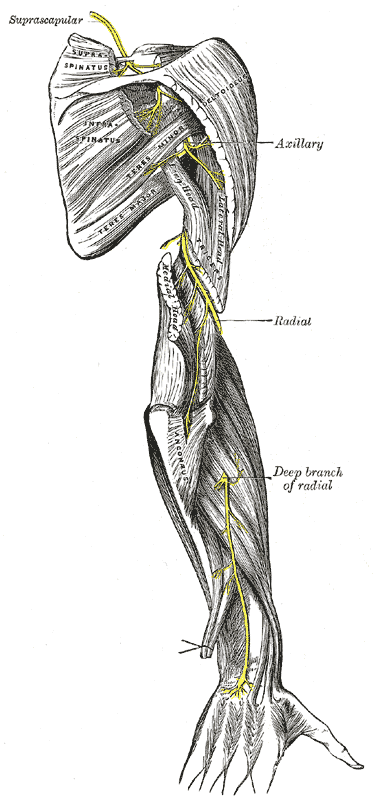
Origin. The nerve arises from the posterior cord of the brachial plexus, roots C5 and C6, sharing the cord with the radial nerve. In the axilla it lies posterior to the axillary artery, on the surface of subscapularis.
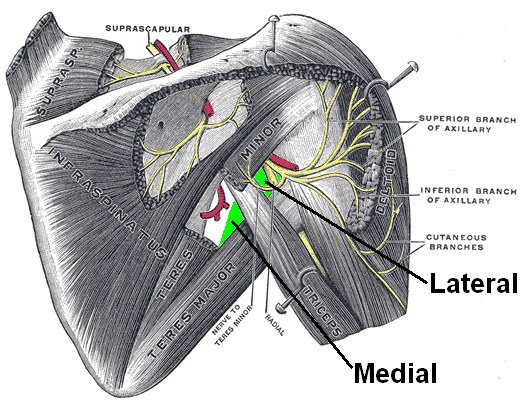
Course. It runs inferiorly and laterally, leaves the axilla through the quadrangular space, and winds posteriorly around the surgical neck of the humerus.
The space itself, and the triangular space medial to it, are set out in quadrangular and triangular spaces; the nerve's parent trunk in brachial plexus anatomy. The two injuries that put it at risk most often are anterior shoulder instability and proximal humerus fractures, and the reconstructive options once it is lost are developed in nerve transfers.
Classification Systems
Seddon's three grades are universally used for nerve injuries; Sunderland's five subdivide axonotmesis by the connective-tissue layer that is disrupted.
Seddon (1943). Neuropraxia is a conduction block with no structural damage, and full recovery is expected. Axonotmesis interrupts the axon but leaves the sheath intact; Wallerian degeneration follows and recovery proceeds at 1 mm/day. Neurotmesis is complete transection, and there is no recovery without surgery.
Clinical Assessment
Motor. Test the deltoid by abduction beyond 90 degrees, since supraspinatus does the first 0-30, and by extension for the posterior deltoid. Test teres minor by external rotation: Hornblower's sign is the patient who cannot externally rotate the arm in 90 degrees of abduction, so the hand falls towards the mouth. Look for the "swallow tail" sign on extension, a lag of the posterior deltoid.
Sensory. The regimental badge area over the middle deltoid is the territory of the superior lateral cutaneous nerve. Sensation may be preserved even when there is a motor injury, an incomplete palsy.
Differential diagnosis. The conditions that mimic an axillary palsy, and what separates them:
- Weakness
- Deltoid/Teres Minor
- Sensory Loss
- Regimental Badge
- Key Feature
- Hx of Trauma/Dislocation
- Weakness
- Deltoid + Biceps
- Sensory Loss
- C5 Dermatome (Thumb)
- Key Feature
- Neck Pain, Biceps Reflex loss
- Weakness
- Supraspinatus (Abd)
- Sensory Loss
- None (usually)
- Key Feature
- Painful Arc, Weak ER
- Weakness
- Patchy / Severe Pain
- Sensory Loss
- Variable
- Key Feature
- Viral prodrome, profound waste
Investigations
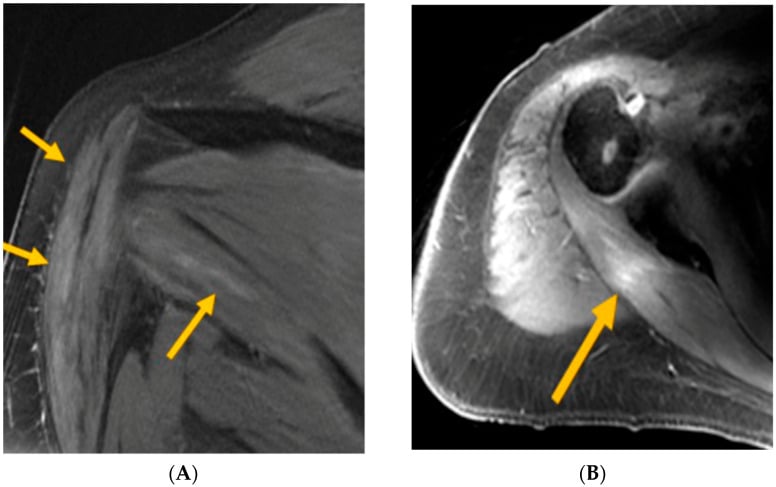
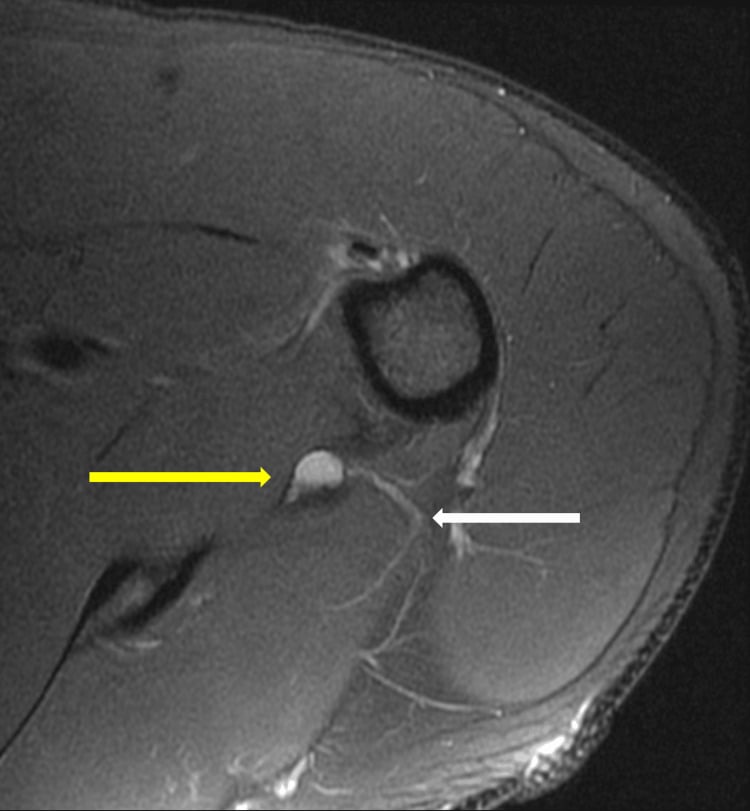
What MRI shows. In the acute injury, denervation oedema in the deltoid and teres minor; in the chronic injury, fatty infiltration and atrophy. It also shows the quadrangular space and any space-occupying lesion, a paralabral cyst or a lipoma, compressing the nerve, and it is crucial for excluding a rotator cuff tear in the elderly patient.
Teres minor hypertrophy is a different finding: it is a sign of chronic rotator cuff tear, a compensation, and not of axillary nerve pathology.
Management Algorithm
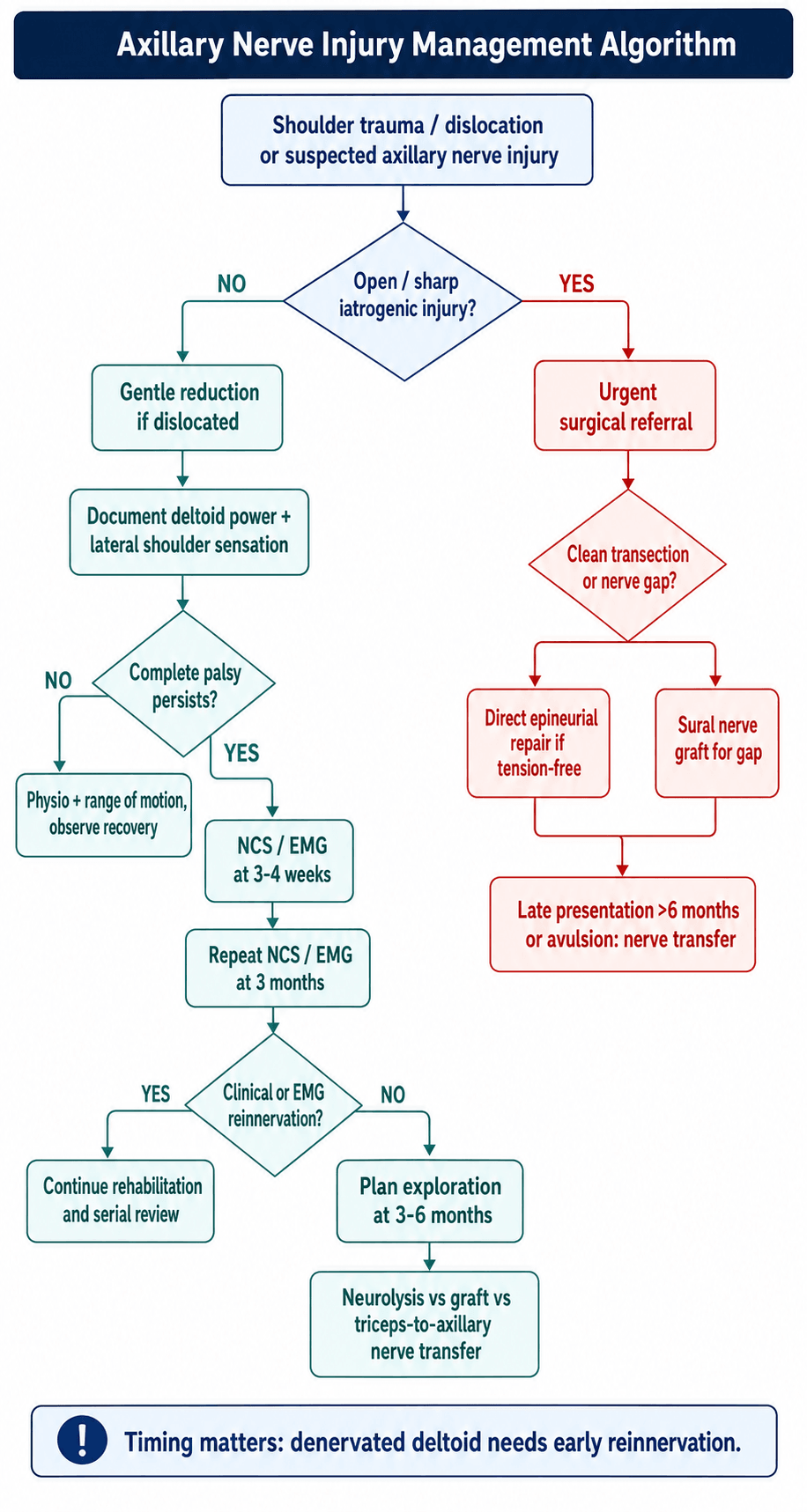
Trauma, dislocation or fracture. 80-90% of closed injuries are neuropraxia and recover spontaneously, by 3-6 months. Reduce the shoulder gently, re-examine the nerve, and start physiotherapy for range of motion. Nerve conduction studies are obtained at 3-4 weeks if the palsy is complete and repeated at 3 months. If there is no recovery by 3-6 months the nerve is explored, grafted or transferred, and timing is critical for successful re-innervation.
Treatment Summary
- Timeframe
- Day 0
- Action
- Reduce, Confirm Neuro status
- Timeframe
- Week 3-4
- Action
- EMG to baseline. Physio.
- Timeframe
- Month 3-4
- Action
- Repeat EMG. If denervation + no MUAPs → Plan Surg
- Timeframe
- Month 4-6
- Action
- Neurolysis vs Graft vs Transfer
Surgical Technique
Posterior approach. A vertical incision over the posterior border of the deltoid opens the interval between deltoid (axillary nerve) and triceps (radial nerve). The landmark is the belly of teres major, the inferior border of the quadrangular space, and the axillary nerve is identified as it emerges from the space. Neurolysis, releasing bands, or a sural nerve graft follows.
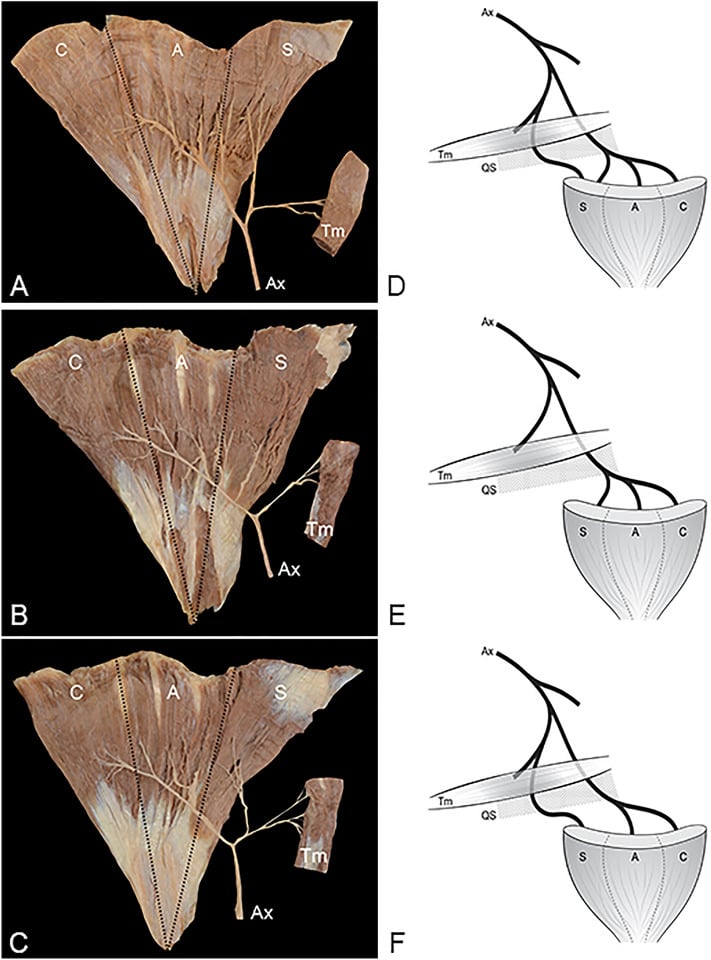
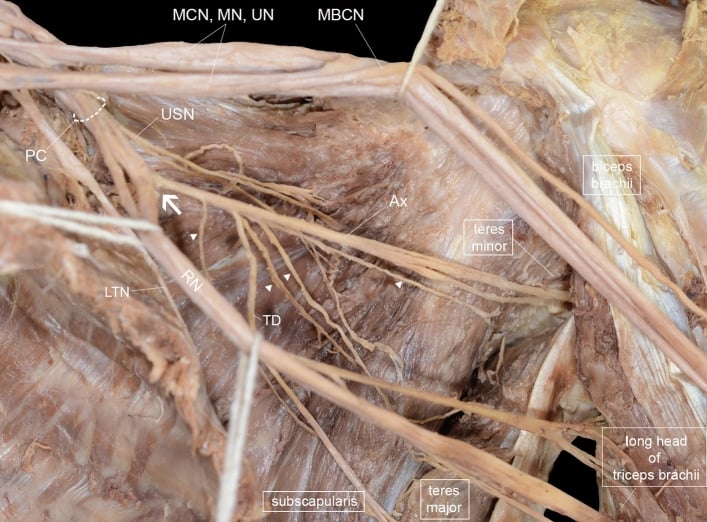
In the lateral deltoid-splitting approach the axillary nerve runs horizontally about 5-7 cm distal to the acromion. Stay within 5 cm of the acromion. If the split must extend distally, palpate the nerve or peel the deltoid from its insertion, and remember that the safe zone is shorter in smaller patients.
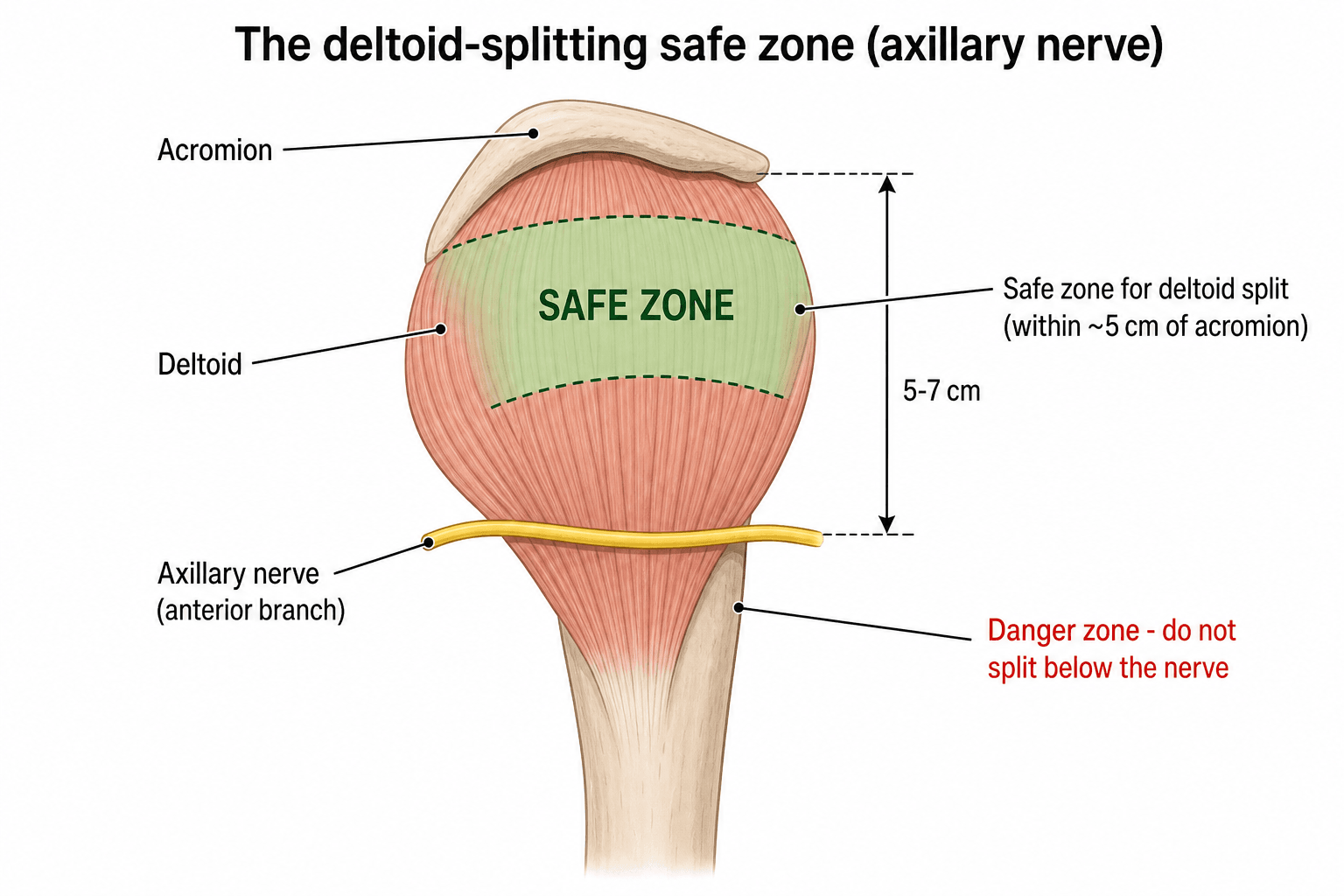
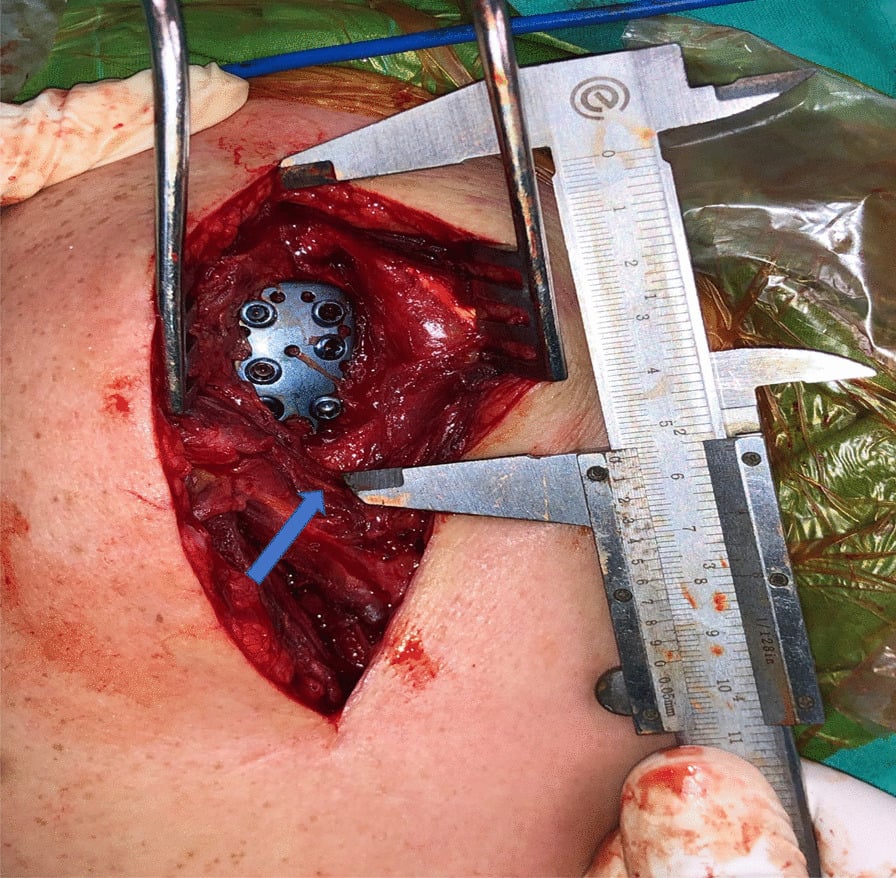
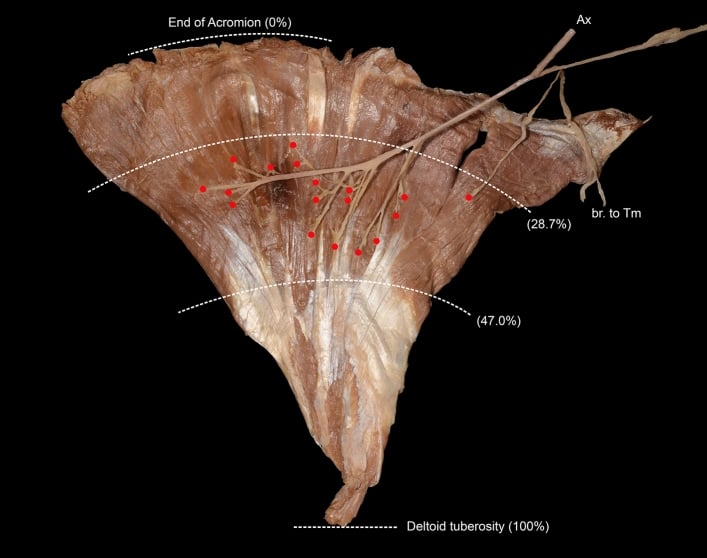
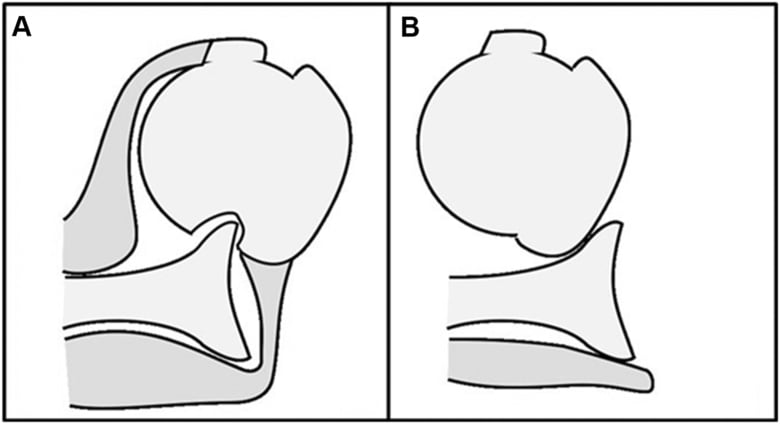
Beyond the deltoid-splitting safe zone, the axillary nerve is the structure most at risk during inferior glenohumeral surgery, because it runs immediately beneath the inferior capsule, the axillary pouch. It lies closest to the glenoid rim at the 5- to 7-o'clock position, only about 10 to 15 mm from the capsule and labrum: the danger zone for Bankart suture-anchor placement, inferior capsular shift and capsular release.
Thermal or electrocautery capsulorrhaphy of the inferior capsule has caused axillary nerve injury, as heat conducts through the thin pouch; the nerve is more vulnerable here than anywhere else arthroscopically. Arm position changes the gap, abduction increasing the capsule-to-nerve distance, so stay intracapsular, place inferior anchors with care and limit thermal energy near the 6-o'clock position.
Complications
Stiffness. Adhesive capsulitis follows prolonged immobilisation, and early identification of stiffness is key. Failure to recover leaves permanent deltoid wasting, and a painful neuroma in continuity can form.
Donor site morbidity. A sural nerve graft leaves a numb foot; triceps weakness after the transfer is rare (grade 4).
Rehabilitation Protocol
- Timeframe
- 0-3 Weeks
- Goals
- Sling, Pendulums
- Precautions
- No Active Abduction
- Timeframe
- 3-8 Weeks
- Goals
- Gravity eliminated abduction
- Precautions
- Observe Scapular rhythm
- Timeframe
- 8+ Weeks
- Goals
- Deltoid strengthening
- Precautions
- Full ROM
Exercises. Gravity-eliminated abduction is done lying supine or on the side, sliding the arm. Scapular setting is crucial to prevent the "hitching" compensation.
Prognosis
After surgery. Direct repair outcomes are better than graft. Triceps-to-axillary transfer yields M4 strength in over 85% of patients.
Living with the deficit. Persistent deltoid weakness is well tolerated if the rotator cuff is intact, supraspinatus compensating.
Guidelines, Registries & Global Practice
Global Epidemiology
- Anterior glenohumeral dislocation has an incidence of roughly 15-25 per 100,000 person-years, with a bimodal distribution (young athletic males, older females after falls).
- In a prospective electrophysiological study of primary shoulder dislocations and humeral neck fractures, evidence of nerve injury was found in 45% of patients, most involving the axillary, suprascapular, radial and musculocutaneous nerves; injury was significantly more common in older patients and those with a haematoma. The axillary nerve is the single most frequently injured.
- Most lesions are traction neuropraxia or axonotmesis; the large majority recover partially or completely within four months, with persistent motor loss in a small minority.
Side-by-Side Guidance
- Emphasis
- Document neurovascular status pre- and post-reduction; baseline EMG at 3-4 weeks
- Practical Point
- Early referral for nerve transfer if no recovery by 3-6 months
- Emphasis
- Reduce promptly; structured rehab; MRI in over-40s to exclude associated cuff tear
- Practical Point
- Peripheral nerve injury MDT referral for persistent palsy
- Emphasis
- Anterolateral deltoid-splitting approach with axillary-nerve protection; stay near the acromion
- Practical Point
- Identify and protect the nerve when extending distally for plating
- Emphasis
- Neurophysiology-guided timing; reconstruction (transfer or graft) before end-plate degeneration
- Practical Point
- Favour distal nerve transfer for proximal/avulsion lesions
Registry & Resource-Setting Notes
- There is no dedicated peripheral-nerve-injury registry comparable to arthroplasty registries; outcome data come from specialist brachial-plexus and peripheral-nerve units, which concentrate volume and expertise.
- High-resource settings: access to MR neurography, high-resolution nerve ultrasound, intra-operative nerve stimulation and microsurgical transfer; earlier, protocolised decision-making.
- Limited-resource settings: diagnosis is largely clinical with EMG where available; emphasis on prompt reduction, documented serial examination and timely referral to a regional microsurgical centre, since delayed reconstruction (beyond roughly 12 months) markedly reduces the chance of useful deltoid recovery.
Special Scenarios
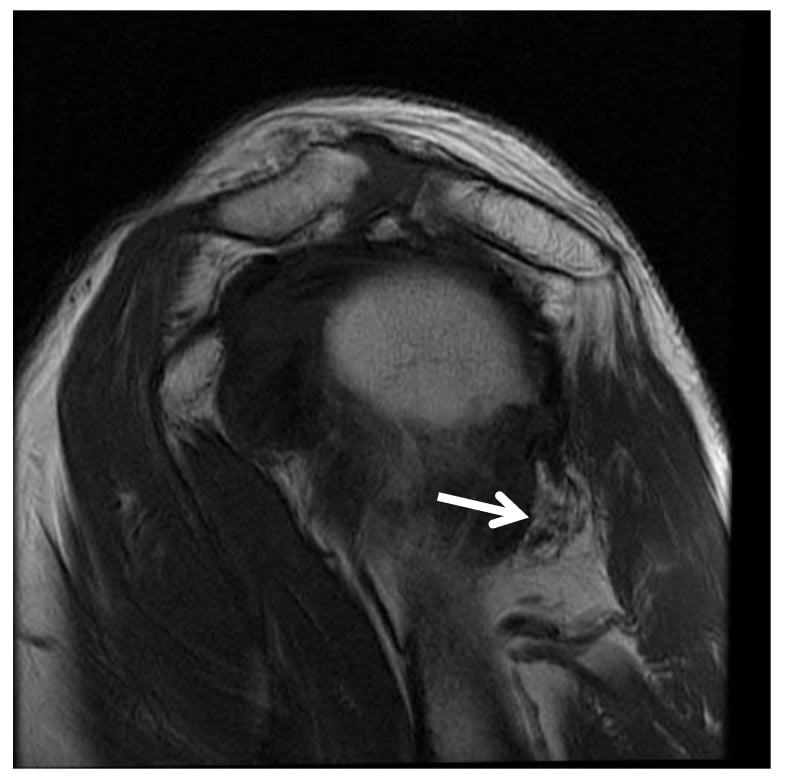
Quadrangular space syndrome. Compression of the axillary nerve and the PCHA within the space, by muscle hypertrophy in pitchers and swimmers, by fibrous bands, or by a paralabral cyst. It presents as vague posterior shoulder pain, paraesthesia in the badge area, and weakness of external rotation and abduction with fatigue.
Diagnosis. MRI shows the atrophy and angiography shows PCHA occlusion on abduction. The images show the limits of each:
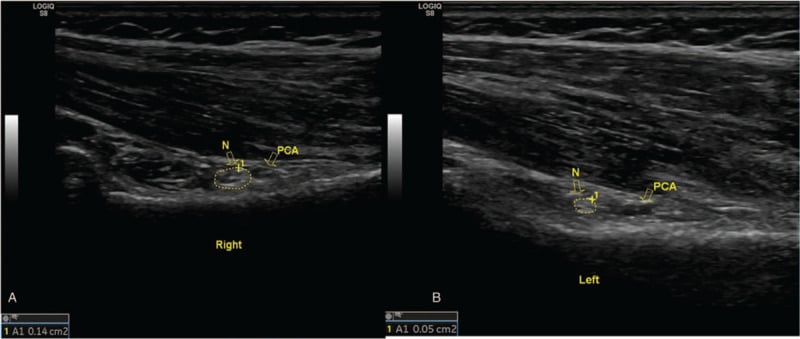
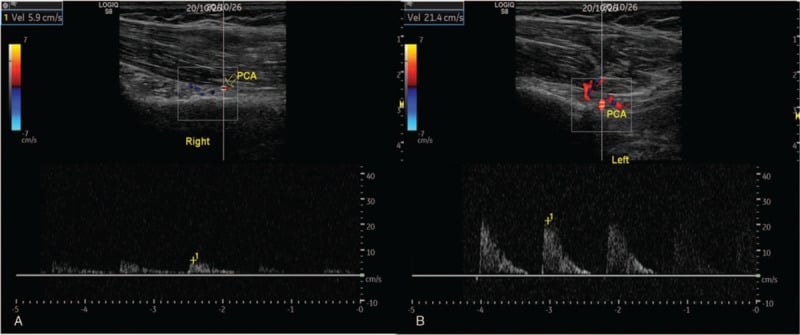
Treatment. Surgical decompression, releasing the fibrous bands in the space, from in front or from behind:
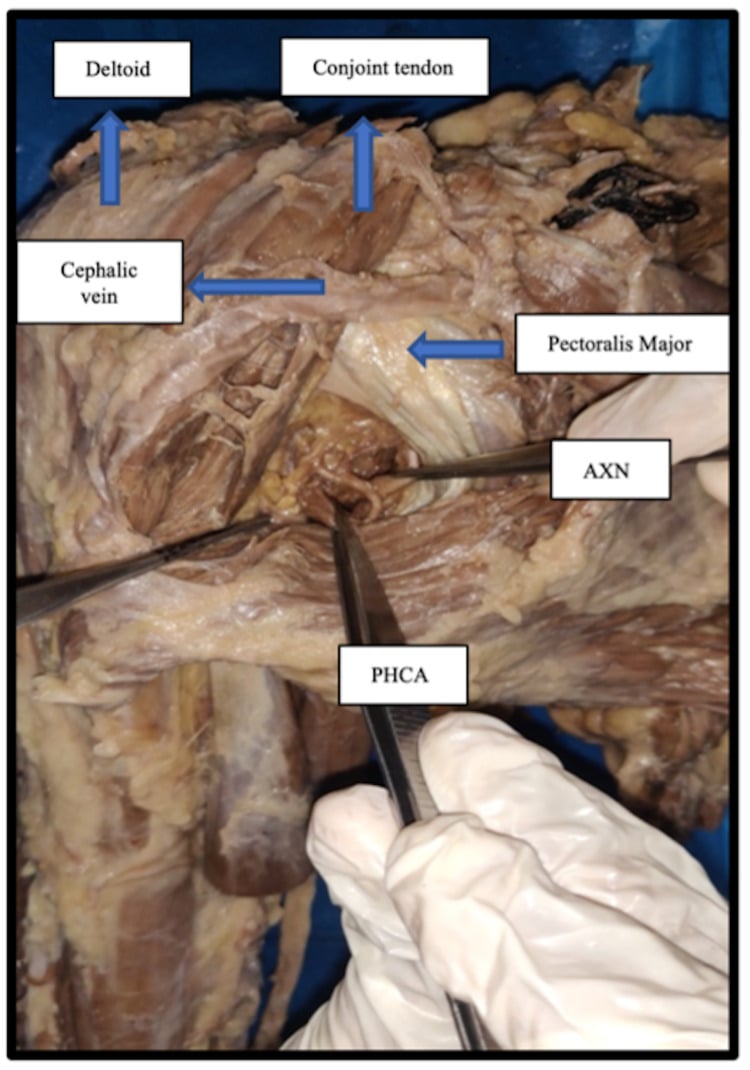
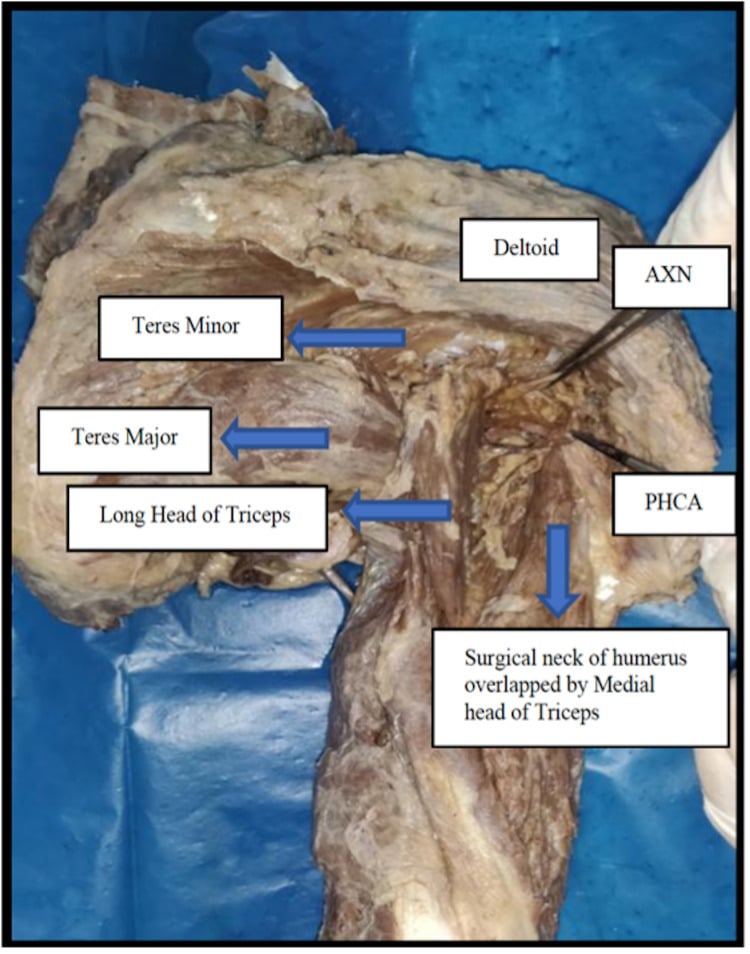
The axillary nerve is the single most important nerve in shoulder replacement, above all in reverse total shoulder arthroplasty (RTSA), where the deltoid is the prime mover that substitutes for the deficient rotator cuff. An intact axillary nerve, a functioning deltoid, is a prerequisite for RTSA; a pre-existing axillary palsy or deltoid dysfunction is a relative contraindication, because the prosthesis depends on deltoid power and tension.
The nerve is vulnerable during the deltopectoral or anterosuperior approach, with inferior glenoid and humeral retraction, and from arm over-lengthening: RTSA lowers and lateralises the humerus, which stretches the nerve and is a recognised cause of post-operative neuropraxia. Document deltoid and axillary function before and after every shoulder arthroplasty, since a new post-operative deltoid palsy after RTSA is functionally devastating, with no cuff to compensate.
Controversies & Areas of Uncertainty
- Timing of exploration in closed traumatic palsy. There is no Level 1 trial defining the exact cut-off. Most centres explore at 3-6 months if there is no clinical or electrophysiological recovery, applying the "1 mm/day" regeneration principle so that the motor end-plate is reached before irreversible atrophy (commonly cited as roughly 12-18 months from injury). Some advocate earlier exploration in complete high-energy injuries and avulsions, where spontaneous recovery is unlikely.
- Nerve transfer versus interpositional grafting. Distal triceps-branch-to-axillary transfer shortens regeneration distance and avoids a graft donor, and is increasingly preferred for proximal or late injuries. However, comparative data are largely retrospective Level III-IV case series; no randomised comparison exists, and graft remains valid for short, accessible gaps with a healthy proximal stump.
- Single versus double fascicular / dual neurotisation. Adding a posterior-branch (teres minor) target to the anterior-branch transfer may improve external rotation and abduction endurance, but evidence is limited and the optimal donor combination is unsettled.
- Quadrangular space syndrome diagnosis. QSS is a clinical-radiological diagnosis of exclusion. Dynamic posterior circumflex humeral artery occlusion on angiography is described in asymptomatic individuals, so a positive arteriogram is supportive rather than diagnostic; over-diagnosis and unnecessary decompression are recognised risks.
- Routine MRI / nerve ultrasound after dislocation. High-resolution ultrasound and MR neurography can demonstrate nerve continuity early, but their role in changing management before the 3-month electrophysiology window remains debated.
MCQ Practice Points
Q: What accompanies the Axillary nerve in the Quadrangular Space? A: Posterior Circumflex Humeral Artery (PCHA). The Circumflex Scapular Artery is in the Triangular Space. The Profunda Brachii is in the Triangular Interval.
Q: What is the average distance of the axillary nerve from the acromion? A: 5-7 cm. The distance is shorter in smaller patients, so stay within 5 cm of the acromion unless the nerve has been identified.
Q: Which muscle recovers first after a proximal axillary nerve injury? A: Teres Minor. It is supplied by the posterior branch and is closer to the origin than the deltoid branches. Recovery of external rotation often precedes abduction.
Q: What does Hornblower's sign test for? A: Teres Minor dysfunction. The patient cannot externally rotate the arm in 90 degrees of abduction. The hand falls towards the mouth (like blowing a horn).
Q: Which nerve is most commonly used as a donor for Axillary Nerve reconstruction? A: Radial Nerve (Branch to Long Head Triceps). It is anatomically close, has redundant innervation to the triceps, and provides excellent motor axon match.
Viva Scenarios
Practise clinical reasoning and management decisions out loud
“A 25-year-old male has an anterior shoulder dislocation. Reduced in ED. You see him next day. He has numbness over the deltoid. What do you do?”
“A patient had a rotator cuff repair via a mini-open lateral approach. Now has no active abduction. Cuff appears intact on Ultrasound. Diagnosis?”
“A 19-year-old elite swimmer complains of vague posterior shoulder pain and fatigue during late laps. MRI shows isolated atrophy of Teres Minor. Proximal humerus is normal.”
Anatomy High Yield
- Roots: C5-C6
- Cord: Posterior
- Space: Quadrangular
- Vessel: PCHA
Clinical Signs
- Badge: Sensory loss
- Square Shoulder: Wasting
- Swallow Tail: Post Delt Lag
- Hornblower: Teres Minor (ER)
Key Numbers
- 5.5cm: Safe zone from anterolateral acromion
- 45%: Nerve injury on EMG (dislocation/neck #)
- 3-4 weeks: Baseline EMG timing
- 1mm/day: Nerve regrowth rate
Differentials
- Rotator Cuff Tear (Pain/Weakness)
- C5 Radiculopathy (Biceps involved)
- Parsonage Turner (Pain +++)
- Frozen Shoulder (Stiffness)
Evidence Base
Triceps Long Head to Axillary Transfer - Anatomic Basis
- Cadaveric study (36 shoulder girdles) establishing the anatomic feasibility of transferring the nerve to the long head of triceps to the anterior branch of the axillary nerve via a posterior approach
- Anterior branch of axillary nerve averaged 2.1 mm diameter with ~2704 axons; nerve to long head of triceps averaged 1.1 mm with ~1233 axons
- Using the acromial angle as landmark, the combined nerve lengths exceeded the gap, allowing tension-free direct coaptation without a graft
Combined Nerve Transfers for C5-C6 Avulsion (Deltoid Outcomes)
- 15 patients with C5-C6 avulsion treated with combined transfers including nerve to long head of triceps to the anterior branch of the axillary nerve
- All patients recovered deltoid function: 13 scored M4 and 2 scored M3; mean shoulder abduction 115 degrees
- No clinical donor-nerve deficits; rapid recovery attributed to short regeneration distance without a graft
Triceps Medial Head and Anconeus to Deltoid Transfer
- 9 patients with isolated axillary nerve injury; radial branch to lower triceps medial head and anconeus transferred to the anterior division of the axillary nerve
- All recovered deltoid function and retained full elbow extension; abduction strength improved from ~40% to ~60% of the normal side
- Abduction endurance improved from ~25% to ~65% of normal, eliminating reported shoulder pain and fatigability
Nerve Lesions in Shoulder Dislocation & Humeral Neck Fracture
- Prospective clinical and EMG study of 101 patients with primary shoulder dislocation or humeral neck fracture
- Electrophysiological evidence of nerve injury in 45%, most often axillary, suprascapular, radial and musculocutaneous nerves
- Significantly more injuries in older patients and those with a haematoma; most recovered within four months, with only eight retaining persistent motor loss
Acromion-Axillary Nerve Distance & Safe Zone (Clinical)
- Intra-operative measurement in 37 patients undergoing proximal humerus plating
- Mean acromion-to-axillary-nerve distance 6.0 cm (range 5.5-6.6); nerve location predictable from arm length in only 18% of patients
- Authors recommend treating 5.5 cm from the anterolateral acromion as the safe zone in the deltoid-splitting approach
Quadrilateral (Quadrangular) Space Syndrome - Original Series
- Original description: compression of the posterior humeral circumflex artery and axillary nerve in the quadrilateral space
- Symptoms aggravated by abduction and external rotation; arteriography shows PCHA occlusion in abduction/external rotation with point tenderness over the space
- Of 18 operated patients, 8 had complete relief and 8 improved after posterior decompression
Axillary Nerve Risk in Percutaneous Proximal Humeral Plating
- Cadaveric study (20 shoulders) of the Synthes PHILOS aiming guide via a lateral deltoid-splitting approach
- The axillary nerve traversed row D in every shoulder and crossed row C in 11 and row E in 16 shoulders; closest distance to a screw was 4.5 mm
- Demonstrated for the first time that the nerve crosses row C of the plate, with left-sided screws closer to the nerve