The Anterior Shield of the Shoulder
- Largest and strongest of the Rotator Cuff muscles (53% of total cuff mass).
- Originates from the Subscapular Fossa (Anterior Scapula).
- Inserts onto the Lesser Tuberosity (Comma Sign).
- Innervated by Upper and Lower Subscapular Nerves (Posterior Cord, C5/6).
- The Lower Subscapular Nerve also innervates Teres Major.
- “The 'Comma Sign' is the confluence of the Subscapularis and the SGHL/CHL complex.
- “Isolated Subscapularis tears are rare; usually associated with Biceps pulley lesions.
- “Upper 60% of insertion is tendinous; Lower 40% is muscular (directly onto bone).
- “Roller Wringer Effect: Coracoid impingement on the subscapularis during internal rotation.
Overview
The subscapularis is the largest and strongest muscle of the rotator cuff, approximately 50% of total cuff muscle mass. It fills the subscapular fossa on the anterior surface of the scapula, is the principal internal rotator, and acts as the primary anterior stabiliser of the glenohumeral joint.
The transverse (axial) force couple. The subscapularis anteriorly is balanced by the infraspinatus and teres minor posteriorly. Their equal and opposite pull compresses and centres the humeral head on the glenoid during elevation, and an intact transverse couple keeps a stable fulcrum even when the supraspinatus is torn.
The coronal force couple. The superiorly directed pull of the deltoid is balanced by the inferior rotator cuff, the subscapularis together with infraspinatus and teres minor. This stops the deltoid from simply shrugging the head upward.
Why it matters. An isolated subscapularis tear unbalances the transverse couple: the unopposed posterior cuff and deltoid pull the head antero-superiorly, and large anterosuperior cuff loss produces anterosuperior escape and pseudoparalysis. That is the rationale for restoring the anterior arm of the couple (repair, pectoralis major transfer) or changing the fulcrum (reverse arthroplasty).
Anatomy
Origin. The muscle arises from the medial two-thirds of the subscapular fossa on the anterior (costal) surface of the scapula. Some fibres arise from tendinous intramuscular septa attached to ridges on the bone.
Insertion. The fibres converge into a broad tendon that passes anterior to the joint capsule and inserts on the lesser tuberosity, extending inferiorly to the surgical neck. It is the only rotator cuff muscle to insert on the lesser tuberosity and the only anterior one; supraspinatus, infraspinatus and teres minor insert on the superior, posterior and inferior greater tuberosity. Some fibres extend over the bicipital groove to the greater tuberosity, forming the roof of the transverse humeral ligament.
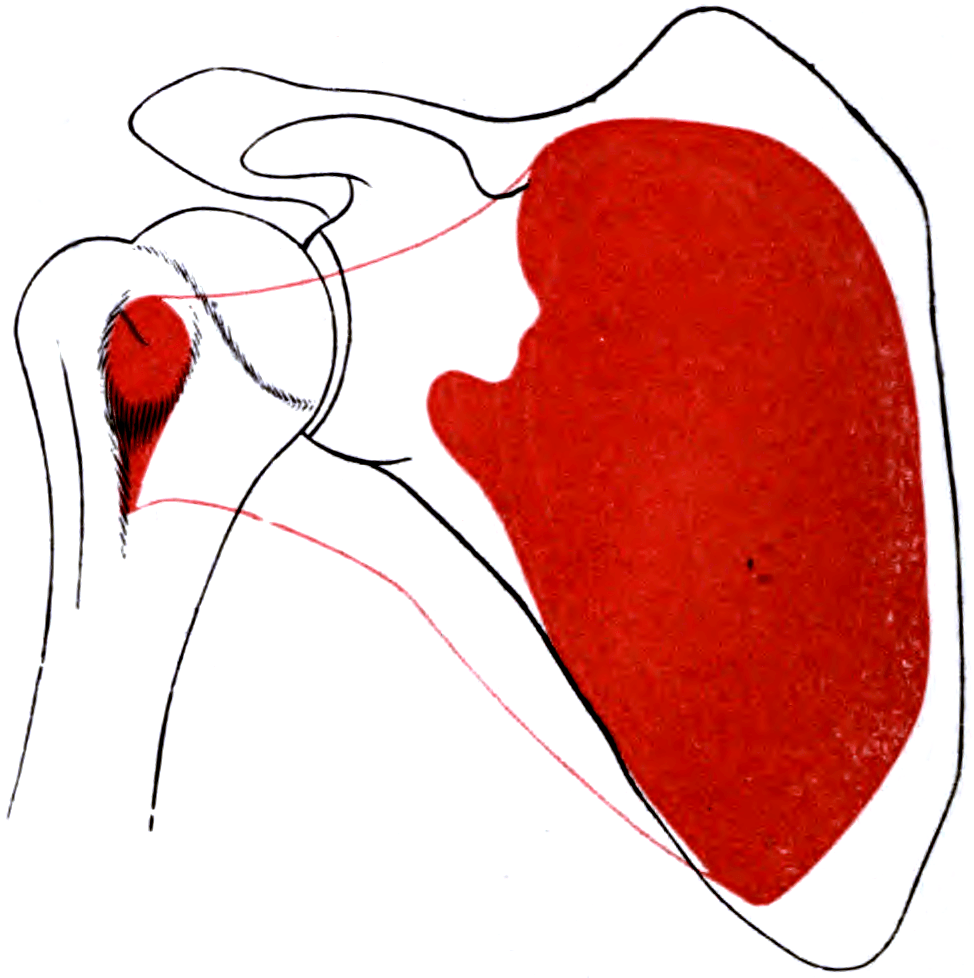
Innervation. Unlike the other cuff muscles, subscapularis has a dual supply from the posterior cord.
- The upper subscapular nerve (C5, C6) enters the muscle superiorly and medially and supplies the upper fibres
- The lower subscapular nerve (C5, C6) enters inferiorly, supplies the lower fibres and continues to supply teres major
The redundancy means total paralysis is rare unless the posterior cord itself is injured.
- Roots
- C5, C6
- Supply
- Superior Subscapularis
- Course
- Direct entry from Post Cord
- Roots
- C5, C6
- Supply
- Inf Subscapularis + Teres Major
- Course
- Descends along lateral border
- Roots
- C5, C6
- Supply
- Deltoid + Teres Minor
- Course
- Through Quadrangular Space
- Roots
- C6, C7, C8
- Supply
- Latissimus Dorsi
- Course
- Between Upper/Lower Nerves
ULTRAPosterior Cord Branches
Hook:The branches of the Posterior Cord.
Relations. Anteriorly the muscle glides on serratus anterior in the scapulothoracic plane, with coracobrachialis and the short head of biceps (the conjoined tendon) in front of it. Posteriorly the tendon is intimately adherent to the anterior glenohumeral capsule and reinforces it together with the glenohumeral ligaments. Laterally the long head of biceps runs in its groove, and the subscapularis forms the medial wall of the bicipital sheath.
The inferior border. The axillary nerve and posterior circumflex humeral artery run along the inferior border to the quadrangular space. The nerve lies about 1-2 cm from the lower edge and is at high risk during an inferior release or subscapularis slide.
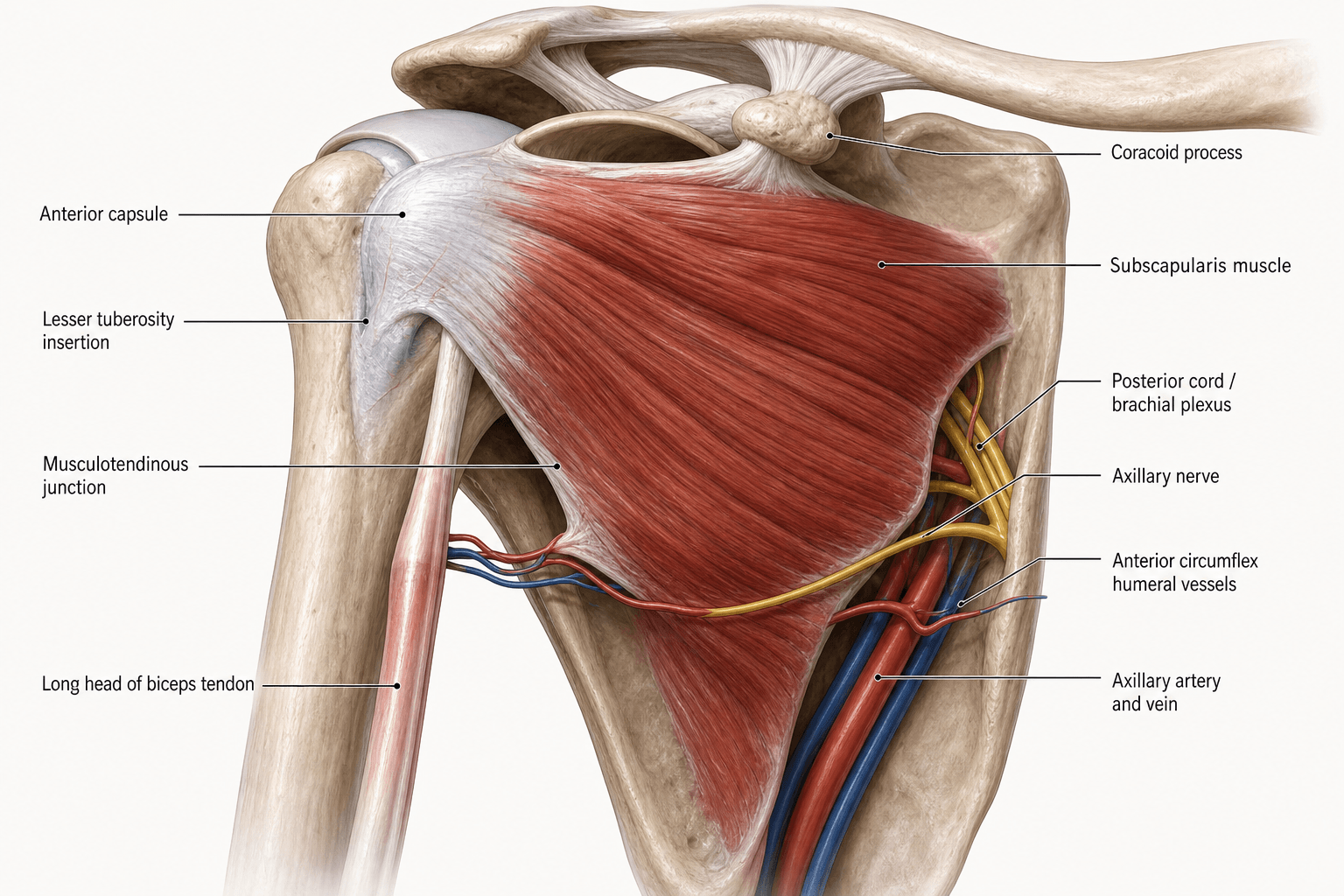
The rotator interval. The subscapularis forms the inferior margin of the rotator interval, the triangular gap between its superior border below and the anterior border of supraspinatus above, with the coracoid at its base. The interval contains the coracohumeral ligament (CHL), the superior glenohumeral ligament (SGHL) and the intra-articular long head of biceps. Interval laxity contributes to inferior and multidirectional instability, and interval closure is a recognised adjunct in instability surgery.
The biceps pulley. The reflection sling that keeps the biceps in its groove is formed by the SGHL and CHL medially, reinforced by the superior border of subscapularis (the medial wall) and by supraspinatus (the lateral wall). A subscapularis tear disrupts this medial sling, so the biceps subluxates medially. That is the imaging hallmark that should always trigger a search for a subscapularis tear, and the same tissue, pulled off the humerus, becomes the arthroscopic comma sign.
Surface Anatomy
Landmarks. The coracoid process is the "lighthouse" of the shoulder, palpable 2 cm inferior to the clavicle in the deltopectoral groove. The groove carries the cephalic vein and is the interval for the open approach. The lesser tuberosity is palpable lateral to the coracoid when the arm is externally rotated, because external rotation brings it out from under the coracoid.
Palpation. The tendon is difficult to palpate directly, as it lies deep to the coracoid and conjoined tendon. In abduction the lower border of the muscle can be palpated in the axilla, at the anterior fold.
Classification Systems
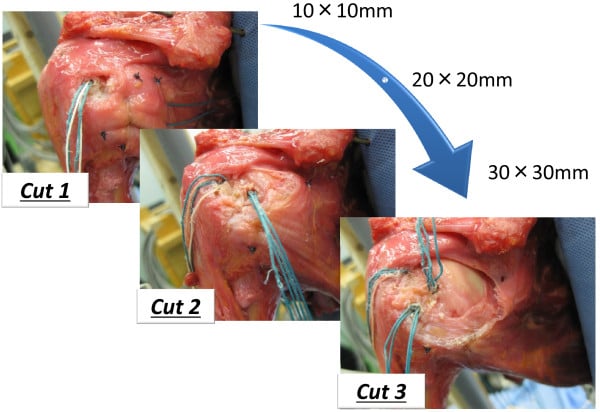
In a cadaver model, enlarging a superior defect from 10 to 30 mm illustrates the continuum behind extent-based classifications and the loss of anterior force-couple restraint.
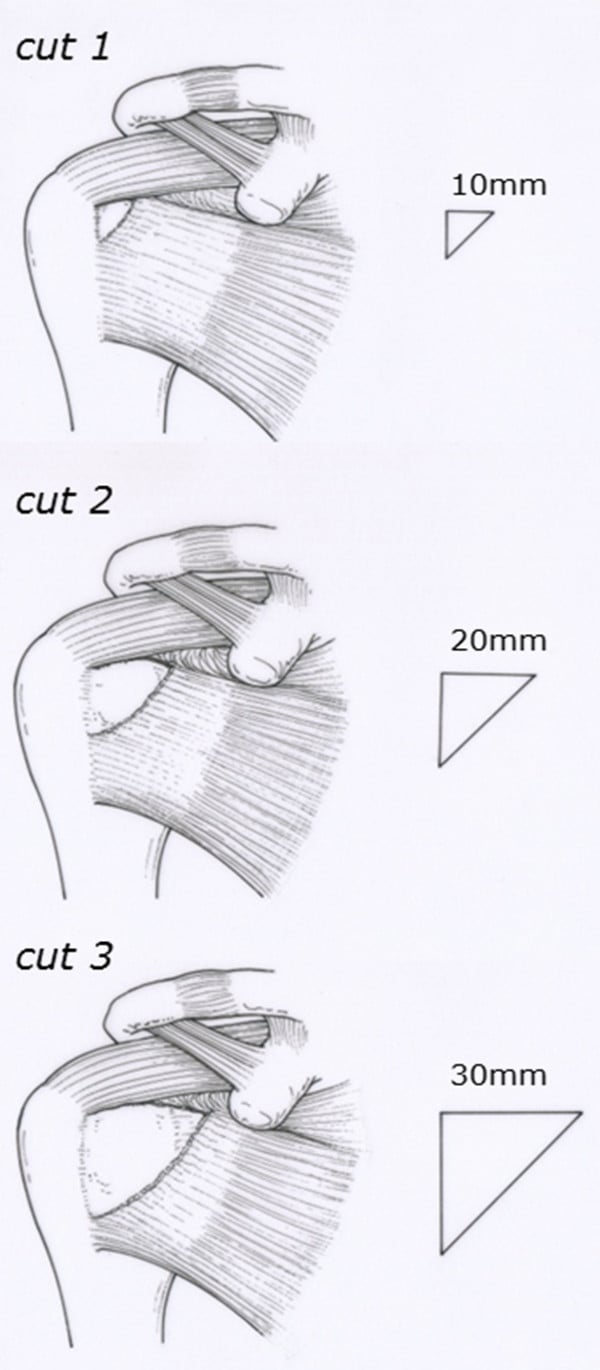
Lafosse. An arthroscopic classification based on the extent of the tear from superior to inferior (the rolled edge). It guides the approach, arthroscopic or open, and the rehabilitation protocol.
- Lesion
- Partial lesion of the superior third (leading edge)
- Implication
- Can be repaired through standard portals
- Lesion
- Complete lesion of the superior third
- Implication
- Can be repaired through standard portals
- Lesion
- Complete lesion of the superior two-thirds
- Implication
- Often requires accessory portals or an open approach
- Lesion
- Complete lesion of the entire tendon, head centred
- Implication
- Often requires accessory portals or an open approach
- Lesion
- Complete lesion with anterosuperior escape (head migrates up and forward)
- Implication
- Needs reverse arthroplasty or complex reconstruction
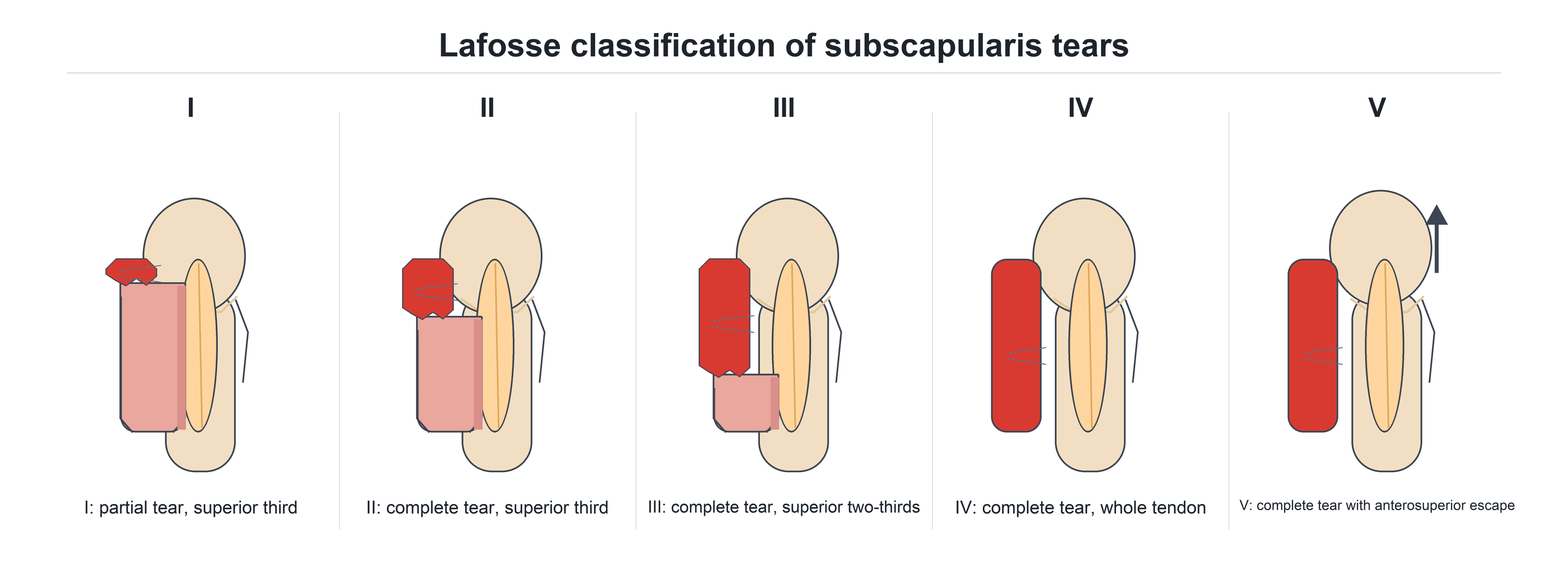
Fox and Romeo. The grade correlates with the likelihood of finding the comma sign in Type III and IV tears.
- Tear
- Partial thickness
- Tear
- Complete tear of the upper 25%
- Tear
- Complete tear of the upper 50%
- Tear
- Complete rupture of the entire tendon
Clinical Assessment
Passive external rotation. Increased passive external rotation compared with the normal side suggests rupture, and is a hallmark of complete rupture. It is the key bedside discriminator from adhesive capsulitis, which reduces passive external rotation.
The specific tests. Pain, substitution and weakness must be separated when reading any of them.
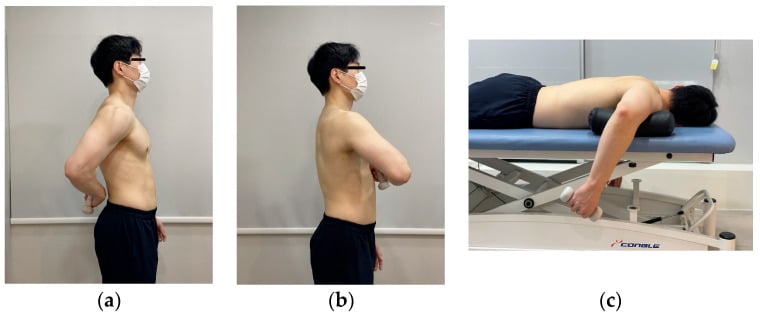
- Lift-off test (Gerber). The hand rests on the lumbar spine, palm out, and the patient lifts it away from the back. It tests the lower subscapularis; extension of the elbow or shoulder can substitute and give a false negative.
- Belly-press test (Napoleon sign). With the hand on the belly and the elbow forward, the patient presses into the belly without letting the elbow drop back. It tests the upper subscapularis, and it is positive when the elbow drops posteriorly (extension) to compensate.
- Bear-hug test. With the hand on the opposite shoulder, the patient resists lift-off. It has high sensitivity for upper tears.
- Subscapularis lag sign. The hand is placed passively in internal rotation behind the back. If the patient cannot hold it away and it drops back to the spine, that is a lag.
- Key Discriminator
- Positive belly-press / lift-off; increased passive ER
- Confirmatory Finding
- Tendon discontinuity at lesser tuberosity on MRI; biceps medial subluxation
- Key Discriminator
- Anterior pain, click; often coexists with subscap tear
- Confirmatory Finding
- Medial biceps subluxation on axial MRI
- Key Discriminator
- Pain on adduction + internal rotation + flexion
- Confirmatory Finding
- Reduced coracohumeral distance under 6 mm
- Key Discriminator
- Apprehension in abduction-external rotation
- Confirmatory Finding
- Bankart lesion / labral tear on MRA
- Key Discriminator
- Global loss of passive AND active ER
- Confirmatory Finding
- Restricted passive motion in all planes
- Key Discriminator
- Pseudoparalysis, proximal humeral migration
- Confirmatory Finding
- High-riding head, acromiohumeral narrowing on radiograph
Subcoracoid impingement. Anterior shoulder pain is provoked by adduction, internal rotation and flexion, as in the follow-through of a throw. Stenosis of the subcoracoid space abrades the subscapularis tendon, the "roller-wringer" effect, and cross-arm adduction triggers anterior pain distinct from the AC joint.
Investigations
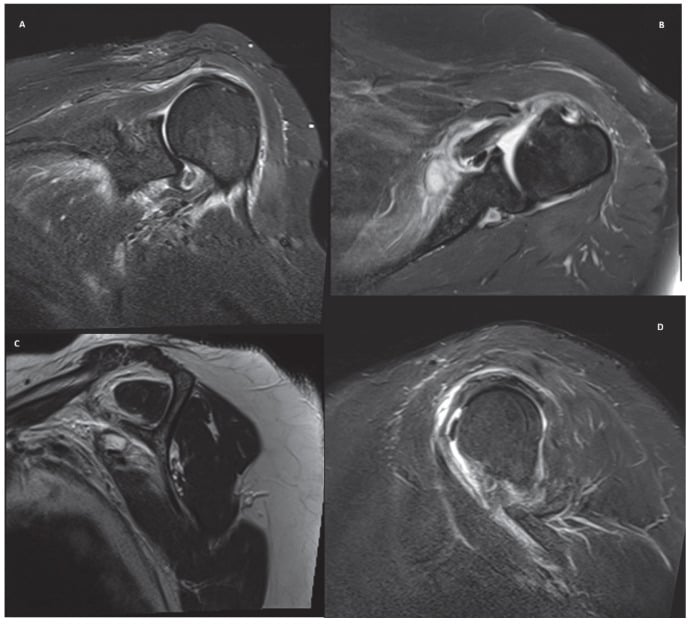
MRI. The "hidden" tear is often missed on MRI, and the subscapularis has been called "the forgotten cuff". The axial view is best for assessing the insertion and retraction; coronal and sagittal views establish extent, retraction and muscle quality. Look for:
- Tendon discontinuity
- Medial subluxation of the biceps, which indicates a subscapularis tear through loss of the pulley
- Subcoracoid oedema or fat effacement
- The comma sign, evaluated on the sagittal oblique images
- Fatty infiltration of the muscle belly, graded by Goutallier on the scapular Y view
- Subcoracoid stenosis: a coracohumeral distance less than 6 mm predicts impingement
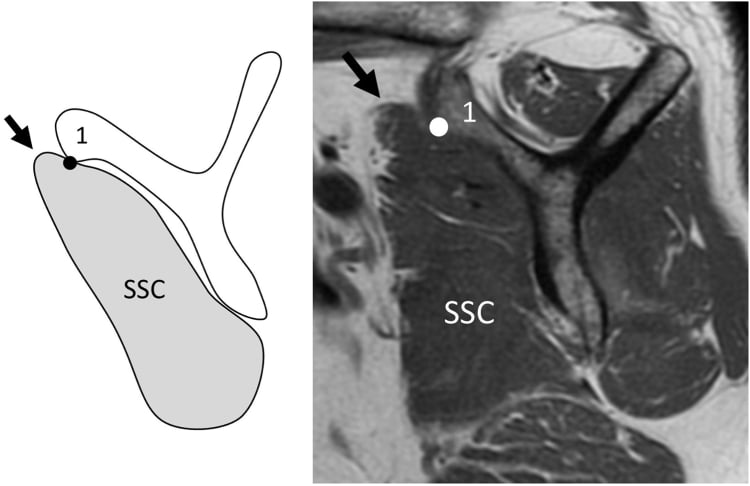
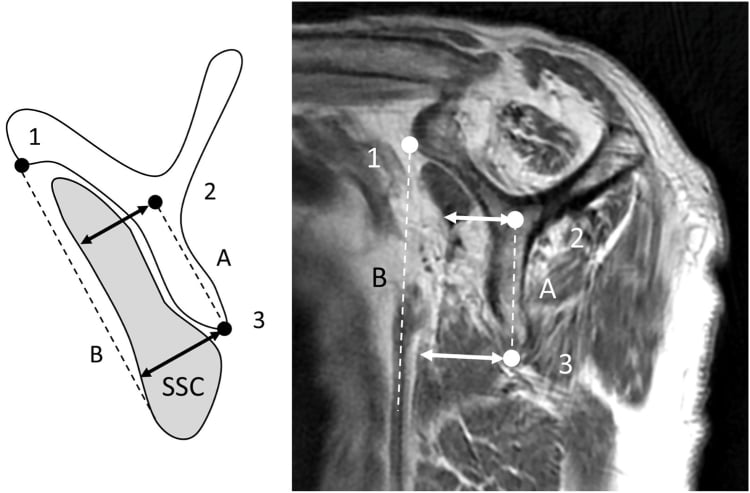
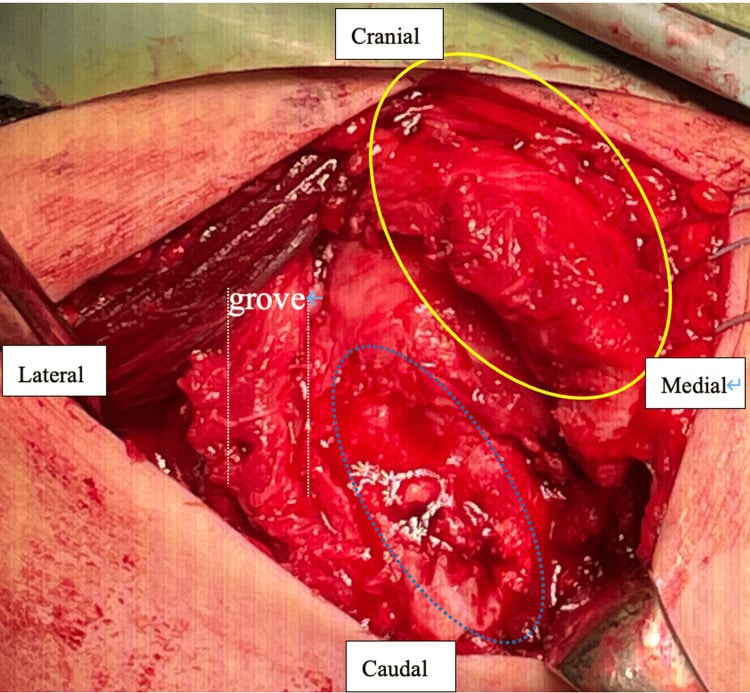
Grading atrophy on the scapular Y. Muscle bulk is judged against a reference point at the anteroinferior coracoid base: the normal subscapularis contour remains cranial to it, and caudal shift or anterior-posterior volume loss is called against that baseline. In severe diffuse atrophy the anterior margin of the muscle lies posterior to the reference line at both cranial and caudal levels, a poor-prognosis sign that changes repairability and reconstruction planning.
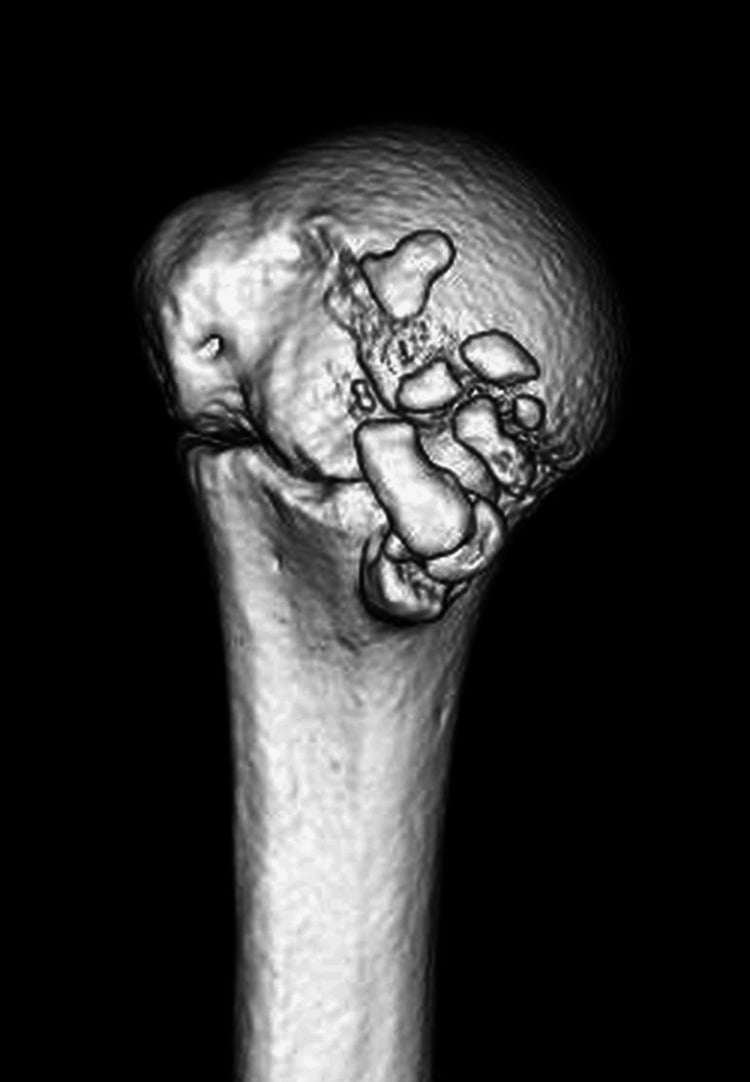
CT. CT arthrography is the historical gold standard, still useful if MRI is contraindicated or for a bony avulsion of the lesser tuberosity. Apparently subtle radiographs can hide such an avulsion, and three-dimensional definition of the number and displacement of the fragments changes fixation planning.
Ultrasound. Dynamic assessment can visualise the tendon "rolling" under the coracoid when checking for impingement. Accuracy is lower than for supraspinatus, often because the insertion lies deep to the coracoid, and the scan should ideally be performed by a musculoskeletal radiologist.
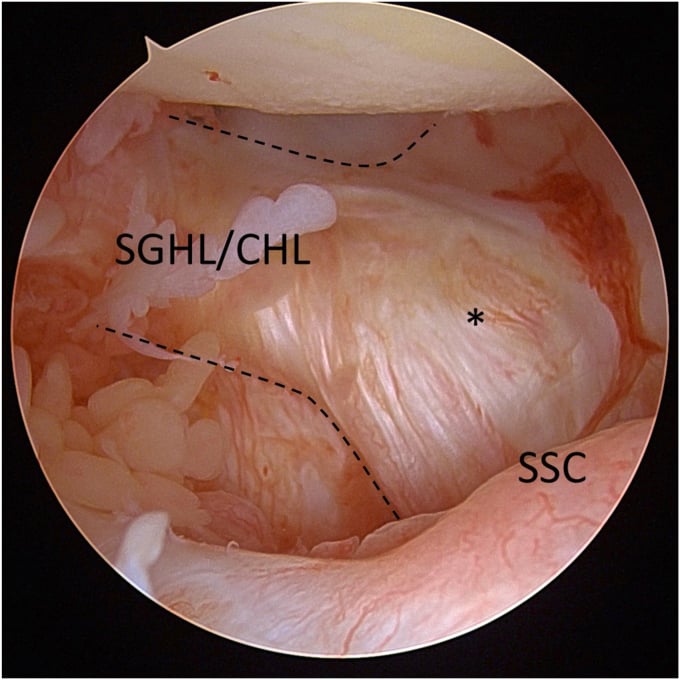
Diagnostic arthroscopy. With a 30-degree scope in the posterior portal, only the upper portion of the tendon is visible in neutral; a "lever push" or internal rotation of the arm is required to see the insertion footprint. The comma sign is a comma-shaped arc of tissue at the superolateral border, formed by the disrupted SGHL/CHL complex still attached to the torn subscapularis edge. It is the single most important landmark for finding a retracted tear: follow the arc to find and control a medially retracted tendon.
Management Strategy
- Treatment
- Physiotherapy
- Rationale
- Compensated by Pect Major/Lat Dorsi
- Treatment
- Repair (Arthroscopic/Open)
- Rationale
- Prevents fatty atrophy (rapid in Subscap)
- Treatment
- Pect Major Transfer
- Rationale
- Restores muscle tendon unit force couple
- Treatment
- Reverse TSA
- Rationale
- Restores fulcrum
Timing. Subscapularis tears are taught to retract and undergo fatty atrophy faster than supraspinatus tears, which is why early repair is advocated; how firmly that time course is established is taken up under Controversies. Young patients with acute tears should be prioritised for surgery within 2 weeks to optimise outcomes.
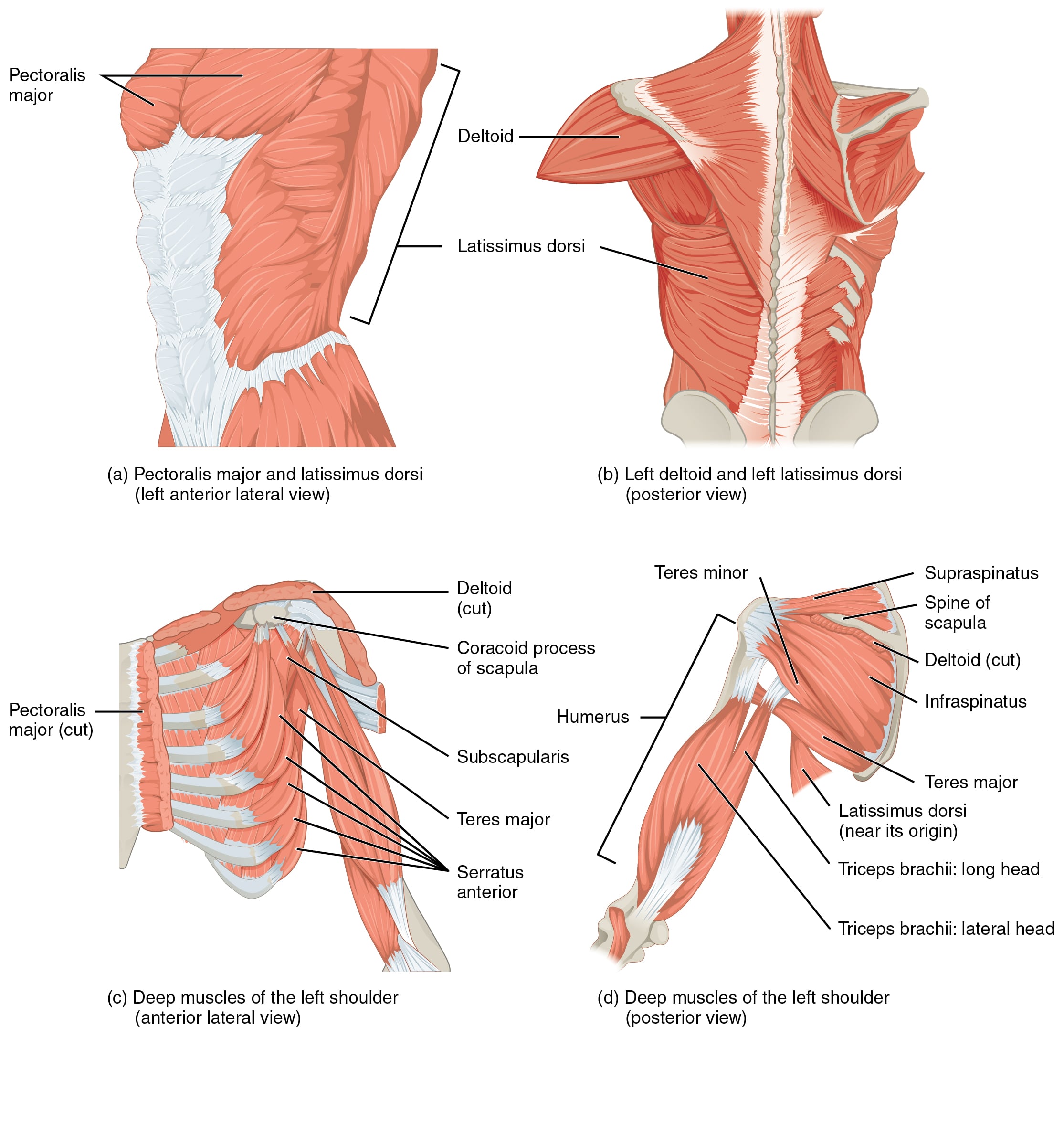
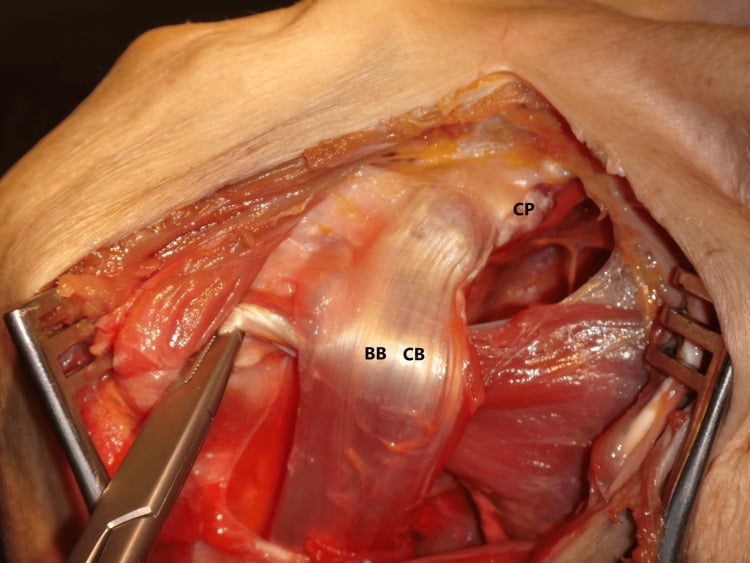
Transfer anatomy. Recognising the donor muscles is essential before choosing and mobilising a transfer for an irreparable tear: the broad bilaminar insertion of pectoralis major is distinct from pectoralis minor, latissimus dorsi and teres major. In a pectoralis minor transfer the tendon is detached from the coracoid and delivered beneath the conjoint tendon toward the lesser tuberosity. Length, rotation and clearance of the musculocutaneous and axillary nerves must be checked before fixation.

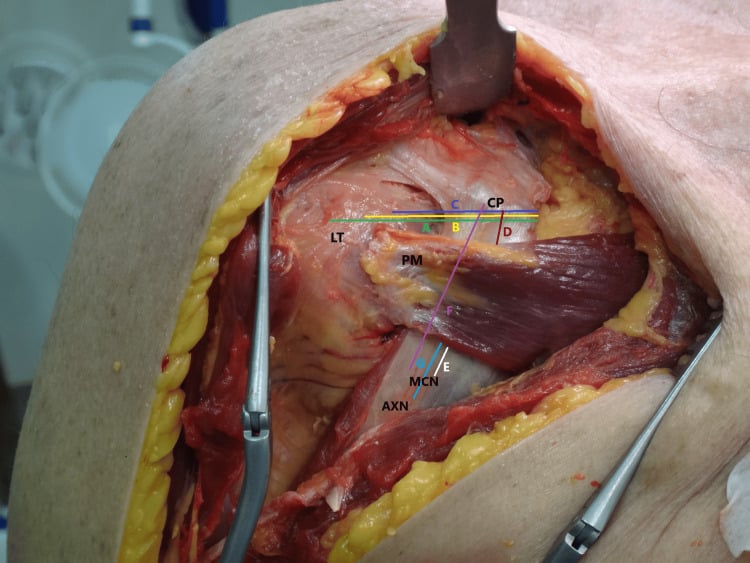
Surgical Technique
Deltopectoral approach. The steps of the open exposure:
- Incise from the coracoid to the deltoid insertion
- Develop the interval between pectoralis major (medial) and deltoid (lateral), preserving the cephalic vein, usually taken laterally
- Incise the clavipectoral fascia and retract the conjoined tendon medially
- Ligate the anterior circumflex humeral vessels, "the three sisters", a leash that marks the inferior border of the subscapularis
Tendon management in arthroplasty. There are three ways to take down the tendon:
- A peel is a subperiosteal release, for repair
- A tenotomy divides the tendon 1 cm from its insertion and is easy to close
- A lesser tuberosity osteotomy gives bone-to-bone healing and is rare now. It has a high union rate, but rehabilitation is slower because of bone-healing precautions
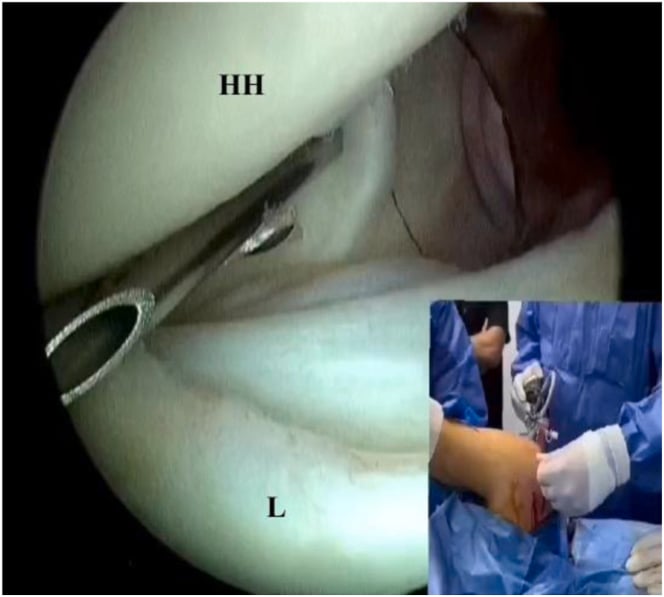
Arthroscopic repair. The scope views from the posterior portal, with an anterior working portal and an anterosuperior portal for access. A low anterior working portal (five o'clock) can be created outside-in through the subscapularis; the needle trajectory is confirmed under posterior-portal vision before dilation, protecting the humeral head, labrum and neurovascular structures. The steps:
- Biceps tenotomy or tenodesis is usually required
- Coracoplasty resects the lateral coracoid tip if impingement is present
- A three-sided release (anterior, posterior, superior); beware the axillary nerve inferiorly
- Mobilisation, for which traction sutures are key
- Fixation with suture anchors in the lesser tuberosity, restoring the tendon to its anterior footprint
Double-row repair is biomechanically superior but technically more demanding in the tight subscapular space.
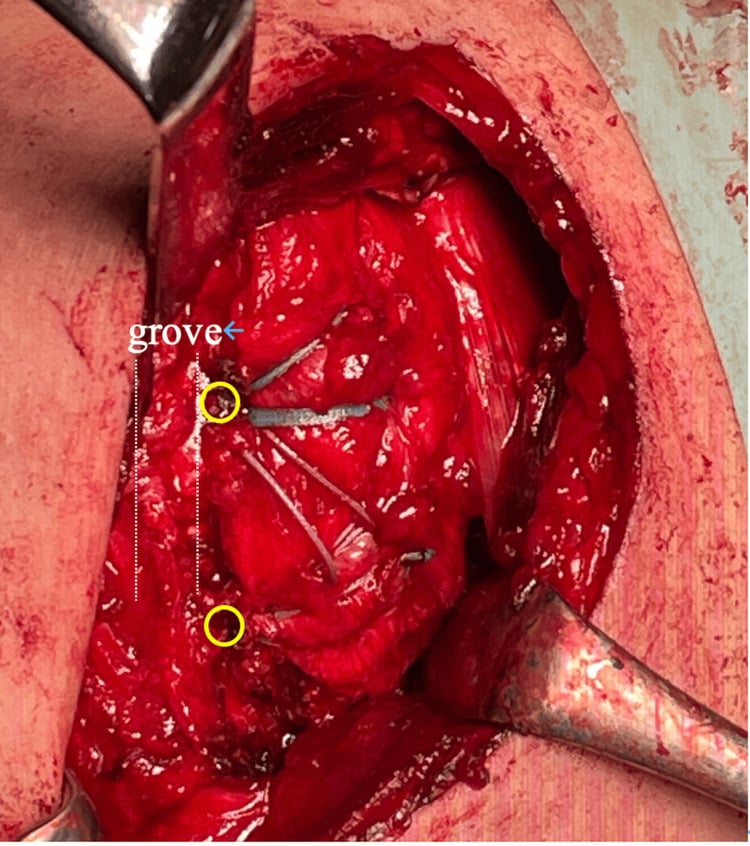
Bony avulsion. In a chronic bony avulsion of the lesser tuberosity the tendon remains attached to the fragments, and the footprint must be prepared while preserving viable bone and tendon. Suture-bridge fixation compresses across the reconstructed footprint, coupling bone union to restoration of the subscapularis insertion.
Complications
- Failure of healing. The re-tear rate is 5-10%.
- Nerve injury. The axillary nerve is at risk inferiorly, and the musculocutaneous nerve from retraction of the conjoined tendon.
- Stiffness. Over-tightening, or excessive medialisation of the repair, risks loss of external rotation.
- Biceps pathology. Failure to address biceps instability leads to pain.
Rehabilitation and Prognosis
Rehabilitation. The protocol after repair:
- 0-6 weeks. Sling. Passive external rotation limited to 0° (neutral) to protect the repair; active internal rotation prohibited
- 6-12 weeks. Active-assisted motion, with full range as the goal
- 3-6 months. Strengthening, with internal rotation bands
Return to sport is at 6 months, and satisfaction is high if the repair has healed.
Prognosis. Goutallier grade 3 or 4 fatty infiltration is irreversible and predicts failure, and retraction of the tendon to the glenoid rim implies difficulty in mobilisation. For isolated tears, arthroscopic results now match those of open repair.
Guidelines, Registries & Global Practice
Global Epidemiology
- Isolated subscapularis tears are uncommon, comprising a minority of all rotator cuff tears, and are frequently under-recognised ("the forgotten cuff").
- Tears affecting the subscapularis become more prevalent with anterosuperior cuff disease and with anterior glenohumeral instability surgery.
- Traumatic tears classically follow a forced external rotation or hyperextension injury, whereas degenerative tears accompany age-related global cuff degeneration.
Side-by-Side Guidance
- Position on Cuff/Subscapularis Tears
- Evidence-based cuff guidance supports surgical repair for acute, traumatic, full-thickness tears in active patients; shared decision-making for chronic degenerative tears.
- Position on Cuff/Subscapularis Tears
- Recommend early specialist referral for suspected acute traumatic cuff tears; structured non-operative trial appropriate for many chronic atraumatic tears.
- Position on Cuff/Subscapularis Tears
- Emphasises anatomic footprint restoration and protection of the axillary nerve at the inferior border during release.
- Position on Cuff/Subscapularis Tears
- Supports arthroscopic repair where expertise exists; tendon transfer or reverse arthroplasty reserved for irreparable tears.
Registry and Outcome Signals
- Reverse total shoulder arthroplasty (used for cuff-deficient and pseudoparalytic shoulders) shows strong implant survivorship in national joint registries (AOANJRR, NJR, AJRR), supporting its role in irreparable anterosuperior cuff insufficiency in older patients.
- Subscapularis management during anatomic shoulder arthroplasty (tenotomy vs peel vs lesser tuberosity osteotomy) remains debated, with registry and cohort data showing no single technique clearly superior for healing.
High- vs Limited-Resource Practice
- Well-resourced settings: Arthroscopic repair with 70-degree scopes, suture anchors, and routine MRI; reverse arthroplasty readily available for irreparable disease.
- Limited-resource settings: Open deltopectoral repair is a safe, reliable, equipment-light alternative; ultrasound substitutes for MRI; physiotherapy-led non-operative care is the default for low-demand chronic tears.
Instability Surgery Relevance
- The Latarjet (Bristow-Latarjet) coracoid transfer requires a subscapularis split; performing the split at the junction of the upper two-thirds and lower one-third minimises risk to the nerves entering the muscle and to the axillary nerve at the inferior border.
Controversies & Areas of Uncertainty
Subscapularis handling in anatomic arthroplasty. Tenotomy, subscapularis peel and lesser tuberosity osteotomy each have advocates. No technique has been shown to be clearly superior for tendon healing or functional internal rotation, and the clinical relevance of imaging-detected non-healing is debated.
Speed of fatty degeneration. It is widely taught that the subscapularis atrophies and fatty-infiltrates rapidly after rupture, motivating early repair, but the precise time course relative to the posterosuperior cuff is not firmly established in high-level prospective data.
Overlap between the tests. Belly-press, lift-off and bear-hug tests each preferentially load different portions of the tendon, but they overlap and can be confounded by pain, stiffness and substitution, so no single test reliably excludes a partial tear.
Persistent test positivity after healing. Even with greater than 90% MRI healing, belly-press and lift-off tests frequently remain incompletely corrected, raising questions about how well tendon continuity restores true internal-rotation strength.
The irreparable tear in younger patients. The choice between pectoralis major transfer, pectoralis minor or latissimus-based transfers, and (rarely) reverse arthroplasty in younger patients with isolated irreparable subscapularis loss remains unsettled.
MCQ Practice Points
Q: Which part of the Subscapularis tears most commonly? A: The funny thing is... It tears from Superior to Inferior. The insertion at the lesser tuberosity acts like a 'zipper'.
Q: What is the distance of the Axillary Nerve from the inferior border of Subscapularis? A: 1-2 cm. But in adduction, the nerve moves closer to the muscle significantly.
Q: Is the Subscapularis insertion tendon or muscle? A: Upper 60% = Tendoid. Lower 40% = Muscular. This is why 'footprint' repair usually focuses on the upper 2/3.
Q: On a Scapular Y view X-ray, where is the Subscapularis? A: Anterior to the scapula body. It fills the costal surface.
Q: Which structure forms the MEDIAL wall of the Biceps Pulley? A: SGHL and Subscapularis Tendon. Loss of the medial wall leads to medial subluxation of the biceps.
Viva Scenarios
Practise clinical reasoning and management decisions out loud
“You are performing a shoulder arthroscopy for a suspected supraspinatus tear. The posterior cuff looks fine. Biceps is frayed. How do you assess the subscapularis?”
“65M, chronic massive anterior cuff tear. Subscapularis is retracted to glenoid, Goutallier 4. He has pain and pseudoparalysis (cannot lift hand off belly). Management?”
“Patient 3 months post open Latarjet procedure. Complains they cannot tuck their shirt in behind their back. No pain. Diagnosis?”
Anatomy
- Origin: Subscap Fossa
- Insert: Lesser Tuberosity
- Nerve: Upper/Lower Subscap (Post Cord)
- Action: Internal Rotation
Clinical
- Lift-Off: Best for Lower
- Belly-Press: Best for Upper
- Bear-Hug: Sensitive
- Lag Sign: Specific
Pathology
- Comma Sign: Torn SGHL/Subscap
- Hidden Lesion: Missed on Scope
- Pulley Lesion: Biceps instability
- Goutallier: Fatty atrophy
Evidence Base
Arthroscopic Repair of Isolated Subscapularis Tears
- Prospective series of 17 consecutive patients (13 men, 4 women, mean age 47) undergoing all-arthroscopic isolated subscapularis repair, mean follow-up 29 months
- Read the tear distribution before generalising: 7 involved the superior THIRD, 6 the superior two-thirds and only 4 were complete separations from the lesser tuberosity - 13 were traumatic and 4 degenerative
- Average relative Constant score improved from 58% to 96%
- CT arthrography showed intact repair in 15 of 17; 2 partial re-ruptures
- No progression of fatty infiltration after anatomic repair
- Mean interval from symptom onset to surgery was 24 months
Comma Sign as an Arthroscopic Guide
- The comma sign is an arc of the SGHL/CHL complex attached to the superolateral corner of the torn subscapularis
- Reliable intra-operative marker of the retracted subscapularis stump
- Especially useful in chronic tears scarred to the deltoid fascia
- Guides anatomic repair back to the lesser tuberosity footprint
Pectoralis Major Transfer for Irreparable Tears
- 30 consecutive pectoralis major transfers in 28 patients (mean age 53) for irreparable subscapularis tears - 12 isolated and 18 with an associated supraspinatus or supraspinatus-plus-infraspinatus tear, mean follow-up 32 months
- Mean relative Constant score improved from 47% to 70%
- Pain and activities-of-daily-living scores improved reliably
- Subjective shoulder value rose from 23% to 55%; 23 of 28 patients were satisfied or very satisfied
- Outcomes were markedly worse when an associated supraspinatus tear was also IRREPARABLE (relative Constant 49% versus 79%, p=0.002), and the authors go further than a caution - they conclude the transfer MAY NOT BE WARRANTED in that situation
Arthroscopic vs Open Repair of Isolated Subscapularis Tears
- Prospective two-centre cohort: 18 arthroscopic versus 16 open single-row anchor repairs
- Constant-Murley score rose from 54 to 86 (arthroscopic) and 50 to 85 (open) at minimum 48 months
- MRI tendon healing exceeded 90% in both groups with no significant difference
- Belly-press and lift-off tests both improved SIGNIFICANTLY in each group (p less than 0.05), yet incomplete correction of these specific tests remained a frequent finding despite tendon healing - improvement and normalisation are not the same thing
Three-Dimensional Rotator Cuff Footprint Anatomy
- 28 cadaveric shoulders analysed by 3D CT reconstruction
- Five distinct tuberosity facets identified, including two on the lesser tuberosity
- Lesser tuberosity inferior facet inclined 77.8 degrees, superior facet 50.3 degrees
- Facet angular positions were highly consistent between specimens
Interdigitated Insertion of the Rotator Cuff
- 20 shoulders (16 cadaveric, 4 fresh) dissected to map cuff insertions
- Cuff tendons interdigitate into a continuous hood around the greater and lesser tuberosities
- Tendons and the joint capsule behave as one inseparable unit
- Function of one cuff muscle is influenced by its neighbours
- Footprint area measured by AutoCAD showed NO significant left-right difference (p=0.424) but a highly significant difference between males and females (p=0.000) - anchor and footprint assumptions should not be sex-neutral