Secondary to Intra-articular Pathology | Semimembranosus-Gastrocnemius Bursa | Rupture Mimics DVT
- Almost always secondary to intra-articular knee pathology (meniscal tear, OA, inflammatory arthritis)
- Communication with knee joint via one-way valve mechanism at semimembranosus-gastrocnemius interval
- Location: Between medial head of gastrocnemius and semimembranosus tendon
- Rupture presents with calf pain and swelling mimicking DVT (pseudothrombophlebitis)
- Treatment focuses on addressing underlying knee pathology, not the cyst itself
- “Baker's cyst is a distension of the gastrocnemius-semimembranosus bursa
- “Foucher sign: cyst becomes more prominent with knee extension
- “MRI shows fluid-filled cyst in popliteal fossa with connection to joint
- “Most resolve with treatment of underlying knee pathology
Overview and Epidemiology
A Baker's cyst, or popliteal cyst, is a fluid-filled synovial cyst in the popliteal fossa: a distension of the gastrocnemius-semimembranosus bursa that communicates with the knee joint. William Morrant Baker described it in 1877 and took it for a primary disorder of the bursa. It is now recognised as almost always secondary to intra-articular knee pathology, which is why the knee, not the cyst, is what gets investigated and treated.
How common. Popliteal cysts are seen in approximately 5-32% of knees imaged, depending on the population and the imaging technique, with two age peaks at 4-7 years and 35-70 years (Handy, Semin Arthritis Rheum 2001, PMID 11590580). There is a slight female predominance. Cysts can be bilateral, especially in inflammatory arthritis.
Primary or secondary. In adults the cyst is secondary in 95%: something inside the joint is producing an effusion, and the cyst is its marker. In children Baker's cysts are rare, with a prevalence of about 6.3% on knee MRI (De Maeseneer 1999, PMID 10415188); they are usually primary, with no underlying knee pathology, and usually resolve spontaneously, so observation is appropriate and intervention is rarely needed.
What drives it. On MRI, joint effusion, meniscal tear and degenerative arthropathy are each independently associated with a Baker's cyst, and the probability of a cyst rises with the number of these features present (Miller, Radiology 1996, PMID 8816552). The recognised secondary causes:
- Meniscal tears, the most common, especially the posterior horn of the medial meniscus
- Osteoarthritis, through degenerative change and synovitis
- Rheumatoid arthritis and the other inflammatory arthropathies (psoriatic, reactive, gout), through chronic synovitis
- ACL tears, through chronic effusion, although Miller found no independent association with ACL injury
- Chondral injuries (chondral defects, osteochondritis dissecans), through synovial reaction
- Pigmented villonodular synovitis (PVNS)
- Post-infectious synovitis after septic arthritis
Because the cyst is a symptom rather than the disease, the pages that matter most are the ones covering what is driving it, most often a meniscal tear or knee osteoarthritis. Its dangerous mimic, and the reason a painful calf here is never assumed to be a burst cyst, is set out in venous thromboembolism; the tendinopathy that shares its anatomy in semimembranosus tendinopathy; and the solid lesion that can present as a popliteal swelling in tenosynovial giant cell tumour.
Pathophysiology and Mechanisms
The popliteal fossa. A diamond-shaped space behind the knee, roofed by the deep fascia and floored by the posterior capsule, popliteus, and the posterior femur and tibia. Its boundaries:
- Superomedially, semimembranosus and semitendinosus
- Superolaterally, biceps femoris
- Inferomedially, the medial head of gastrocnemius
- Inferolaterally, the lateral head of gastrocnemius and plantaris
Its contents:
- Popliteal artery, the deepest structure
- Popliteal vein, superficial to the artery
- Tibial nerve, the most superficial
- Common peroneal nerve, laterally
- Small saphenous vein, in the superficial fascia
- Popliteal lymph nodes
- Fat
The bursa. The gastrocnemius-semimembranosus bursa lies in the posteromedial part of the fossa, between the medial head of gastrocnemius anteriorly and the semimembranosus tendon posteriorly. A communication between the bursa and the knee joint may exist as a normal anatomical variant in some individuals, while in others the bursa arises primarily without a joint connection (Handy 2001, PMID 11590580).
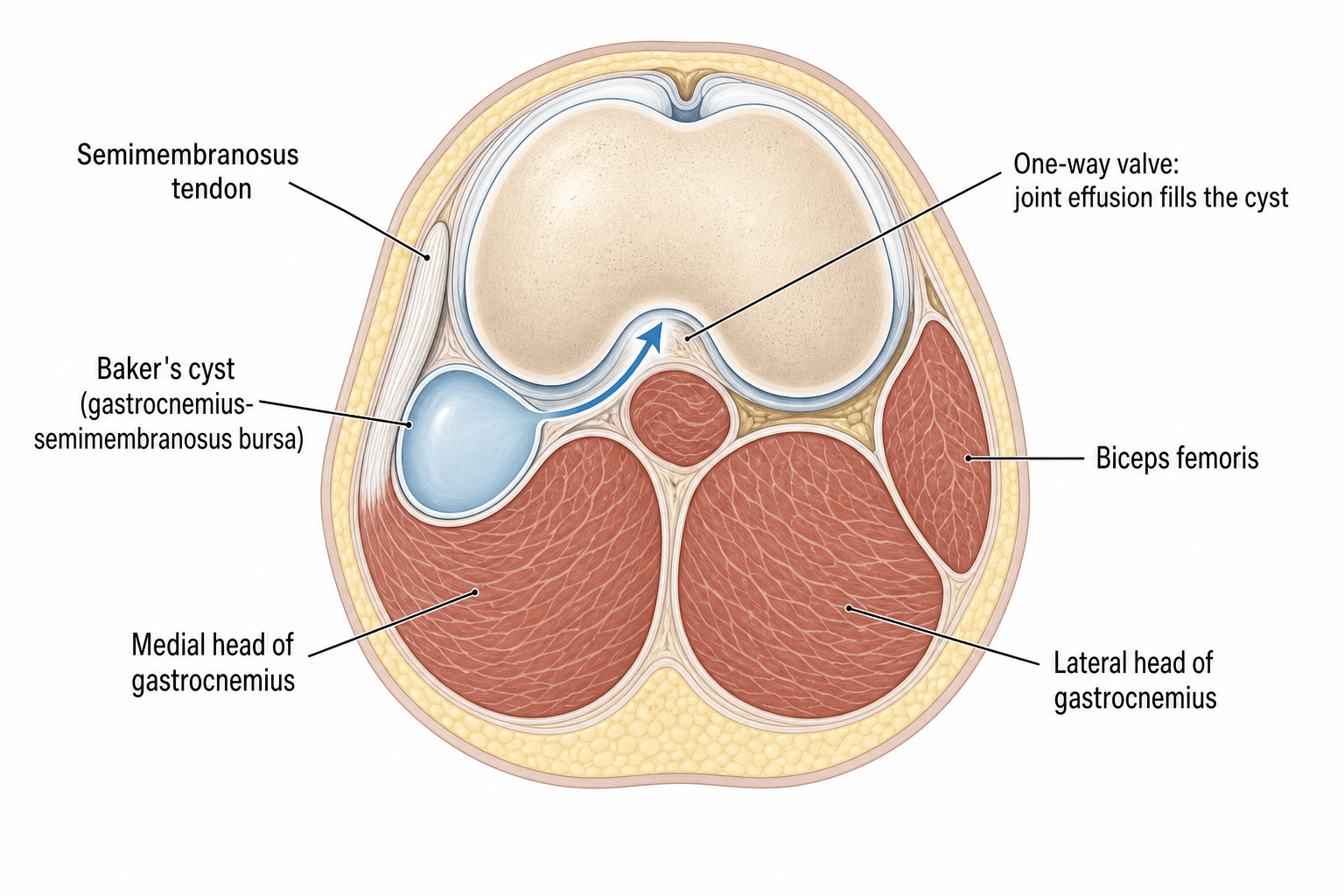
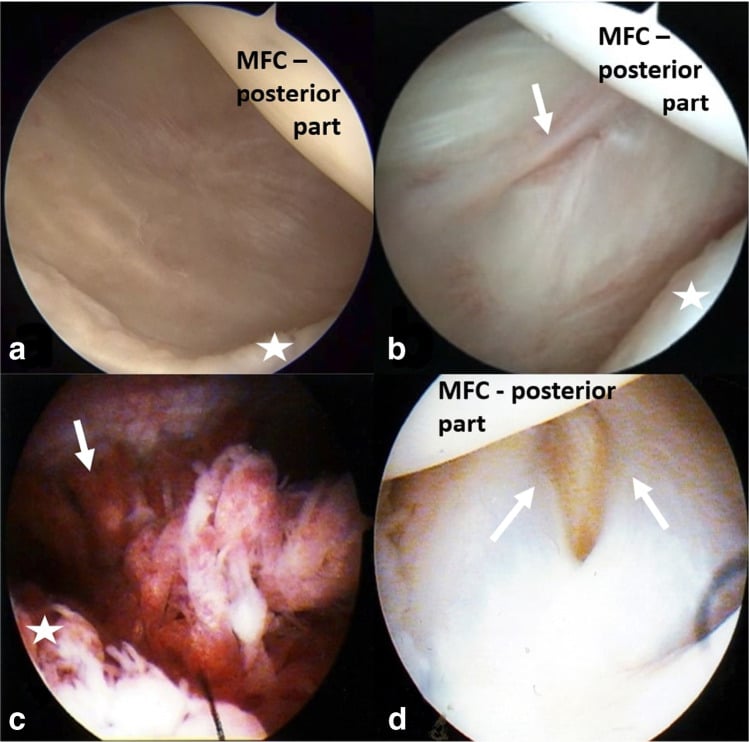
How the cyst forms. Intra-articular pathology produces a chronic effusion and intra-articular pressure rises. Fluid dissects through the posterior capsule at an area of weakness, and at the communication site, the posteromedial capsule, typically between the medial head of gastrocnemius and the joint capsule, a flap of tissue comes to act as a one-way valve. Intra-articular pressure during knee motion forces fluid into the bursa, the pressure in the bursa cannot overcome the valve to send it back, and the bursa progressively distends.
A Baker's cyst is a true synovial cyst: its wall is lined by synovial cells and it communicates with the joint, so its contents are genuine synovial fluid. A ganglion has no synovial or epithelial lining, contains thick mucinous, gelatinous material, and arises from myxoid degeneration of joint capsule or tendon sheath without a true synovial-lined wall. The distinction is why a Baker's cyst reflects intra-articular disease, in continuity with the synovial cavity through the one-way valve, and why excised specimens go to histology: a synovial lining confirms the diagnosis, whereas atypical wall thickening or solid, nodular tissue raises concern for synovial proliferative disease (PVNS) or, rarely, a cystic-appearing tumour.
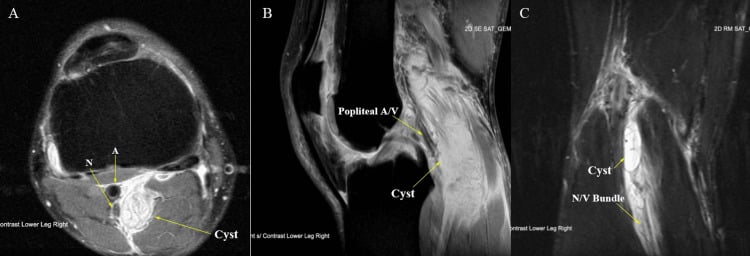
Neurovascular relationships. The tibial nerve lies lateral to the cyst, the popliteal vessels deep and lateral, and the common peroneal nerve lateral again, around the fibular head. Large cysts can compress any of these.
Classification
A cyst is described by its cause, by what it is doing to the patient, and by its size and how far it has travelled. Each answers a different question about treatment.
- Description
- No underlying knee pathology
- Typical context
- More typical in children
- Clinical Note
- Often resolves spontaneously (paediatric prevalence ~6.3% on MRI; De Maeseneer 1999, PMID 10415188)
- Description
- Associated with intra-articular pathology
- Typical context
- The usual pattern in adults
- Clinical Note
- Requires treatment of underlying condition (older patients usually have coexistent joint pathology; Handy 2001, PMID 11590580)
The aetiology guides treatment: a primary cyst can be observed, a secondary cyst means the knee needs assessment.
Beyond aetiology and size, examiners expect the Rauschning-Lindgren clinical grading, which scores the cyst by symptoms and functional restriction rather than by imaging:
- Grade 0: no symptoms
- Grade I: slight swelling or fullness with no functional limitation
- Grade II: swelling with mild pain and slight restriction of flexion
- Grade III: marked swelling with significant pain and substantial restriction of movement
It tracks the patient's actual disability and the response to treatment. Grades II-III are the ones that tend to come to aspiration or surgery, whereas grade 0-I cysts are typically observed while the underlying knee pathology is addressed.
Clinical Presentation and Assessment
History. The usual story is a gradual onset of fullness or a mass behind the knee, an aching discomfort in the popliteal fossa, and a sensation of tightness or pressure that is worse with prolonged standing or activity. Ask about previous knee injury or arthritis. An acute onset of calf pain and swelling is the story of a ruptured cyst.
- Symptoms
- Painless or mild aching mass
- Key Features
- Gradual onset, worse with activity
- Symptoms
- Acute calf pain, swelling, ecchymosis
- Key Features
- Mimics DVT, crescent sign pathognomonic
- Symptoms
- Paraesthesias, numbness in foot
- Key Features
- Tibial or peroneal nerve compression
- Symptoms
- Claudication, swelling
- Key Features
- Rare, popliteal vein or artery compression
Differential diagnosis. The alternatives for a mass in the popliteal fossa, and how to tell them apart:
- Distinguishing features
- Soft, fluctuant, posteromedial, transilluminates, Foucher sign positive, communicates with joint
- Key investigation
- Ultrasound (anechoic cyst); MRI for joint pathology
- Distinguishing features
- Pulsatile, expansile mass, possible bruit; risk of distal embolisation/thrombosis
- Key investigation
- Duplex ultrasound / CT angiography - do NOT aspirate
- Distinguishing features
- Acute calf pain and swelling; the two can coexist
- Key investigation
- Doppler ultrasound (mandatory before treating either)
- Distinguishing features
- Firm, enlarging, deep mass; may be non-fluctuant; constitutional features
- Key investigation
- MRI with contrast; biopsy via specialist sarcoma unit
- Distinguishing features
- Semimembranosus or pes anserine bursa, peri-articular ganglion
- Key investigation
- Ultrasound / MRI
- Distinguishing features
- Soft, mobile, slow-growing, non-tender
- Key investigation
- Ultrasound / MRI (fat signal)
- Distinguishing features
- Firm nodes; consider infection or malignancy
- Key investigation
- Ultrasound; investigate underlying cause
- Distinguishing features
- Tinel-positive mass, neurological symptoms (tibial/peroneal)
- Key investigation
- MRI; specialist referral
Popliteal artery entrapment, inflammatory (rheumatoid) synovitis, and a septic bursitis or abscess also belong on the list.
A popliteal artery aneurysm can masquerade as a Baker's cyst. Always assess for pulsatility and a bruit, and confirm any suspicious mass with duplex ultrasound or CT angiography before considering aspiration. Aspirating an aneurysm risks catastrophic haemorrhage and limb-threatening ischaemia.
Inspection. Look for fullness in the popliteal fossa, better seen in extension, and compare with the other side; ecchymosis suggests rupture. The Foucher sign is pathognomonic: the cyst becomes more prominent and tense with the knee in extension, as fluid is pushed posteriorly, and less prominent in flexion, as gastrocnemius relaxes and the space increases. That behaviour distinguishes it from a solid tumour.
Palpation. A soft, fluctuant mass with smooth borders in the posteromedial fossa, non-tender unless ruptured or infected, and it may be compressible. Transillumination confirms a fluid-filled structure, and gentle compression may reduce the size temporarily. Warmth suggests inflammation or infection.
Range of motion and the knee. Movement is usually full, with perhaps mild flexion discomfort from a large cyst. The knee examination is essential, because it is the knee that will be treated:
- McMurray test and joint line tenderness (meniscal tear)
- Lachman and anterior drawer (ACL)
- Varus and valgus stress (collateral ligaments)
- Crepitus (arthritis)
- Effusion
Neurovascular examination. Test the tibial nerve (ankle plantar flexion, toe flexion, plantar sensation) and the common peroneal nerve (ankle dorsiflexion, toe extension, first web space sensation), feel the popliteal and pedal pulses, and examine the veins if DVT is suspected.
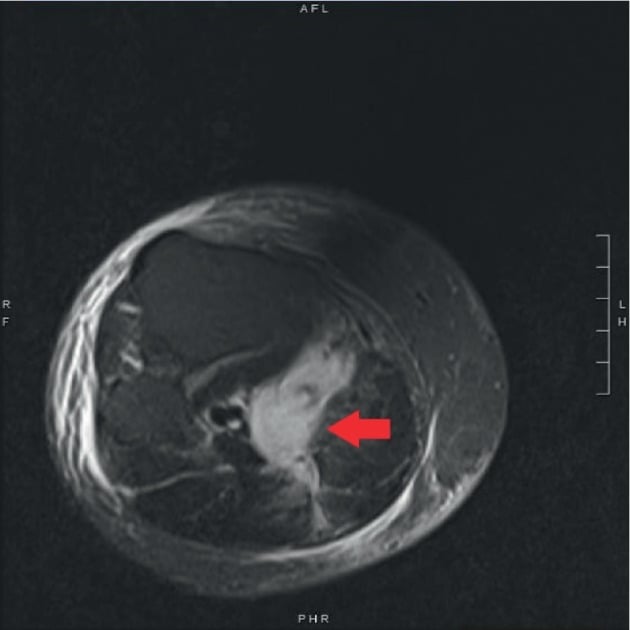
The ruptured cyst (pseudothrombophlebitis syndrome). Acute calf pain, swelling and calf tenderness, presenting identically to a DVT. The crescent sign, ecchymosis below the medial malleolus, is pathognomonic for a ruptured cyst. Homan's sign may be positive but is non-specific. DVT and a ruptured cyst can coexist, so a Doppler ultrasound is mandatory even when the crescent sign is present.
Investigations
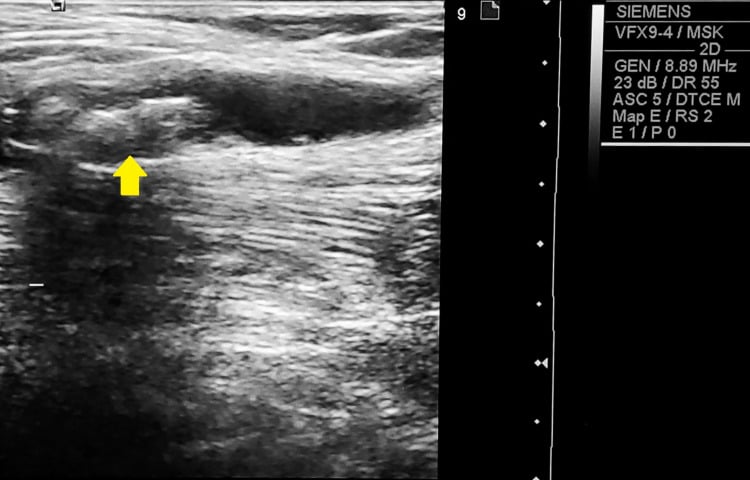
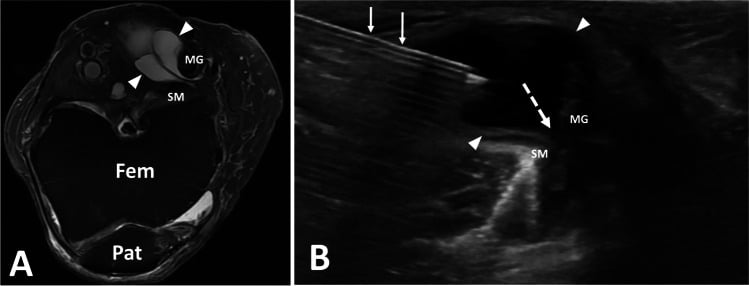
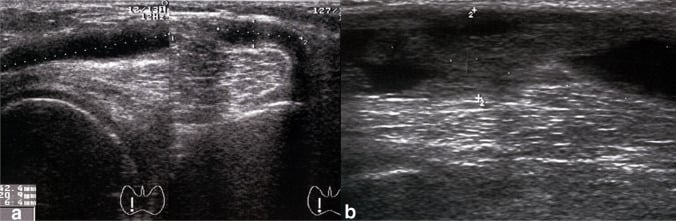
Ultrasound first. It confirms an anechoic, fluid-filled cyst between the medial head of gastrocnemius and semimembranosus, may show the neck communicating with the joint, and measures the size accurately. It is non-invasive, involves no radiation, is relatively inexpensive, and is dynamic, so the Foucher sign can be tested under the probe; it shows fluid tracking into the calf after rupture and guides aspiration if needed. Its limits are the joint: assessment of intra-articular pathology is limited, small meniscal tears may be missed, and it is operator dependent.
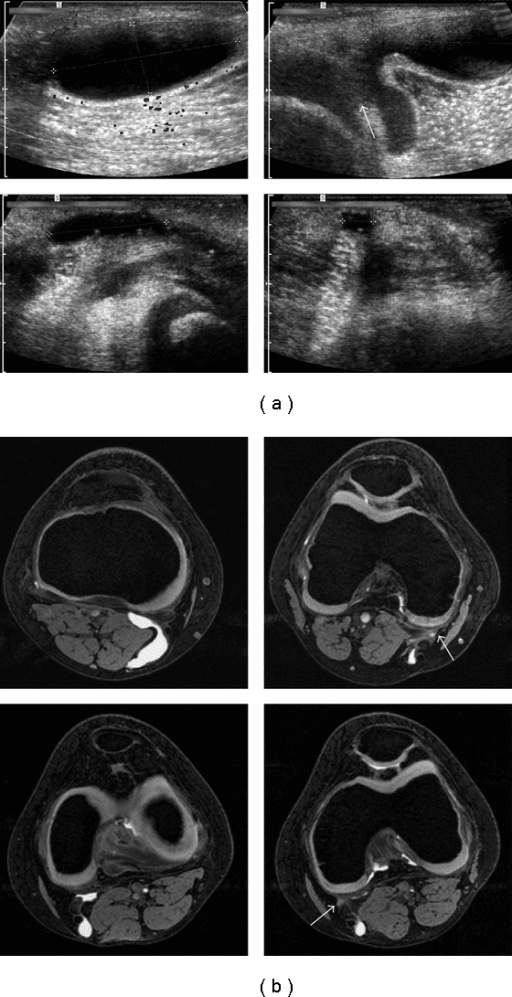
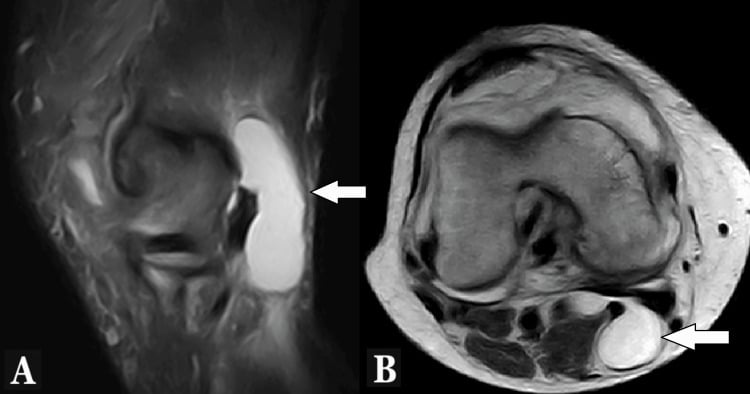
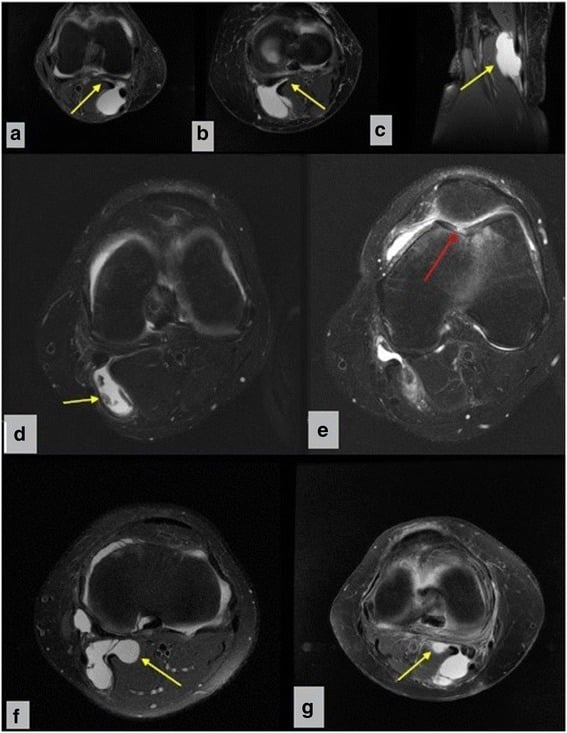
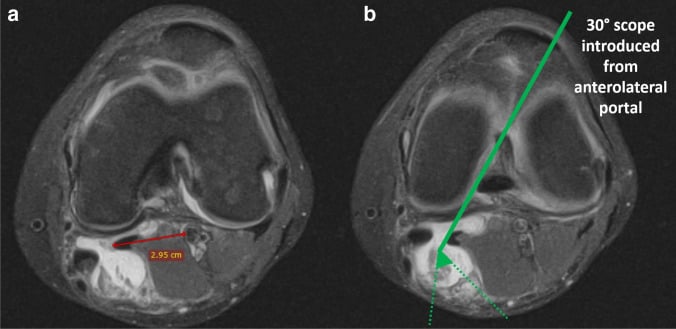
MRI for the joint. MRI is the gold standard for comprehensive assessment, and its real value is not the cyst but the pathology behind it: it identifies the underlying knee pathology in 95% of cases. The cyst is a well-defined fluid-signal mass, low on T1 and high on T2, in the posteromedial fossa between gastrocnemius and semimembranosus, with a neck or stalk to the joint. The same study shows the meniscal tear (especially the posterior horn of the medial meniscus), cartilage defect, ligament tear or synovitis that will drive treatment. Request it to:
- Identify the underlying knee pathology (meniscal tears, ligament injuries)
- Characterise a complex or large cyst
- Look for complications (dissection, compression)
- Plan surgery
- Assess atypical features (solid components, septations)
It measures the cyst accurately in all planes, shows proximal or distal extension, multiloculation and septations, and maps the relationship to the neurovascular structures.
Plain radiographs have a limited role. They assess for osteoarthritis, exclude calcified masses and show bony abnormalities; the cyst itself appears at most as a posterior soft tissue shadow, and calcification is rare and suggests chronicity or another diagnosis. They cannot show the cyst well, its internal structure, or the soft tissue pathology behind it.
CT is rarely indicated. It shows the cyst as a low-density mass, is useful when there is concern about vascular pathology or bone involvement, and contrast shows the enhancement pattern.
Doppler ultrasound is essential when there is concern about DVT, which means the ruptured cyst presenting as pseudothrombophlebitis. It also assesses the popliteal artery to exclude an aneurysm and looks for venous compression.
Arthrography is historical: contrast injected into the knee joint filled the cyst and demonstrated the communication. It has been superseded by MRI and ultrasound.
Aspiration as a test. Clear, yellow synovial fluid confirms the diagnosis; send it for cell count, culture and crystal analysis if infection or inflammatory arthritis is a concern. As a treatment it gives temporary relief with a high recurrence rate and is not definitive, for the reasons and figures set out in Management.
Management Algorithm
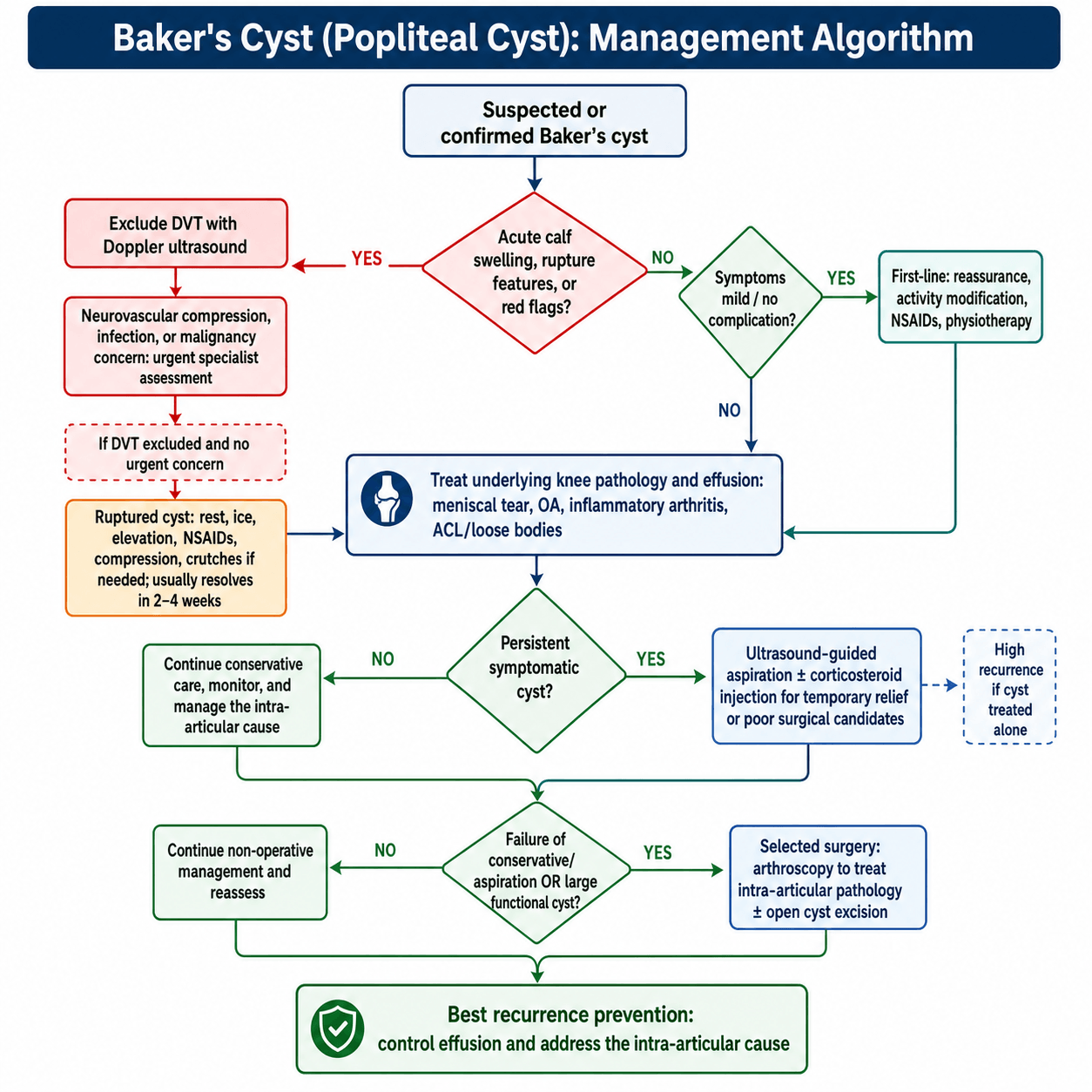
The principle. The cyst is a manifestation of the knee, and simply treating the cyst is inadequate. Treatment is directed at the intra-articular condition, and the cyst often resolves once the effusion is controlled. Everything below is ordered around that: conservative measures and treatment of the joint first, aspiration to buy time, and surgery on the cyst reserved for specific indications.
Who. Conservative management is first-line for most Baker's cysts: the asymptomatic or minimally symptomatic cyst, with no rupture, compression or infection, and the patient who prefers it after counselling.
Observation. Many cysts are asymptomatic. Monitor size and symptoms; the cyst may resolve spontaneously if the underlying pathology is treated.
Activity, NSAIDs and physiotherapy. Avoid the activities that increase the effusion, limit prolonged standing and favour low-impact exercise (swimming, cycling). NSAIDs at standard anti-inflammatory doses reduce inflammation and synovitis and may decrease fluid production; consider gastroprotection if use is prolonged. Physiotherapy (quadriceps strengthening, range of motion exercises, proprioceptive training) may help reduce the effusion.
Treat the knee. This is the most important aspect of conservative care:
- Meniscal tear: consider arthroscopic repair or meniscectomy
- ACL tear: reconstruction if indicated
- Osteoarthritis: optimise medical management, consider injections
- Inflammatory arthritis: optimise DMARD therapy
Surgical Technique
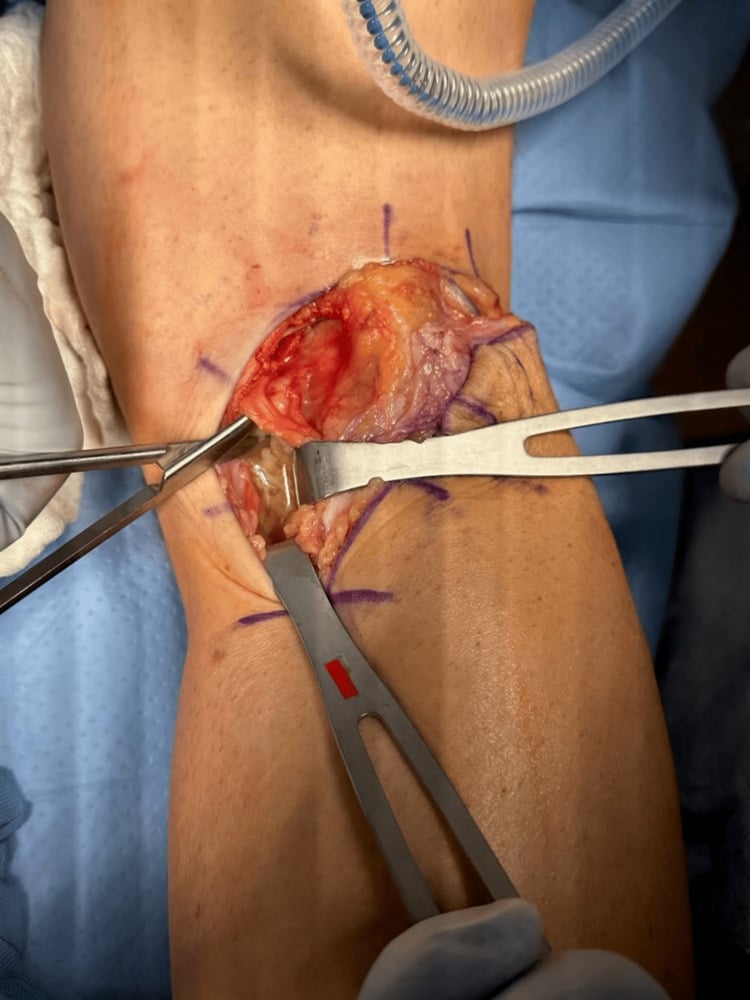
Positioning. Prone, with padded supports under the chest and hips and the foot elevated on a bolster or otherwise supported. A tourniquet is optional and generally not needed.
Incision. Transverse or S-shaped in the popliteal fossa crease, centred over the palpable mass, typically 5-8 cm and adjusted to the size of the cyst. The landmarks are the crease, the medial and lateral heads of gastrocnemius and the cyst itself. Divide the skin and subcutaneous tissue, identify and protect the small saphenous vein (ligate it if necessary), and divide the deep fascia in line with the incision. Safe exposure requires the neurovascular structures to be identified before going any further.
Complications
- Incidence
- 10-15%
- Prevention/Management
- Exclude DVT with Doppler, treat conservatively
- Incidence
- Less than 5%
- Prevention/Management
- Large cysts - consider excision if symptomatic
- Incidence
- Less than 2%
- Prevention/Management
- Rare, may need urgent excision
- Incidence
- Less than 1%
- Prevention/Management
- Antibiotics, drainage, may need joint washout
- Incidence
- 5-10% of ruptured cysts
- Prevention/Management
- Always exclude with Doppler, anticoagulate if present
- Incidence
- Less than 2%
- Prevention
- Careful dissection, identify and protect nerve
- Incidence
- Less than 1%
- Prevention
- Understand anatomy, meticulous dissection
- Incidence
- 2-5%
- Prevention
- Sterile technique, careful closure, avoid haematoma
- Incidence
- Variable (see Management)
- Prevention
- Ligate communication, address knee pathology
- Incidence
- 5-10%
- Prevention
- Early ROM exercises, physiotherapy
- Incidence
- Less than 2%
- Prevention
- DVT prophylaxis, early mobilisation
Rare complications. Compartment syndrome (very rare, from massive dissection), foot drop from mass effect on the peroneal nerve, and popliteal artery thrombosis (very rare).
Postoperative Care
Most patients recover fully within 6-8 weeks of cyst excision, with low recurrence if the knee pathology has been addressed.
- Posterior splint or knee brace at 30 degrees flexion
- Elevation to minimise swelling
- Ice for comfort and inflammation control
- DVT prophylaxis (mechanical compression, pharmacological based on risk)
- Multimodal pain control (oral analgesics, ice, elevation)
- Wound check at 2 weeks (suture removal if non-absorbable)
- Begin gentle ROM exercises
- Weight bearing as tolerated with crutches for support
- Continue elevation when resting
- Monitor for signs of infection or DVT
- Progress ROM exercises (goal: full range by 6 weeks)
- Begin gentle strengthening of quadriceps and hamstrings
- Wean off crutches as comfort allows
- Return to desk work at 2-3 weeks typically
- Continue physiotherapy
- Full activities as tolerated
- Return to sports at 8-12 weeks (depending on sport demands and underlying knee pathology)
- Follow-up MRI if recurrence suspected or symptoms persist
- Gradual return to high-demand activities
Follow-up. Review at 2 weeks for the wound, at 6 weeks for range of motion and clinical examination, at 3 months to confirm resolution without recurrence, and thereafter as needed if symptoms recur or concerns arise.
What the patient is told. Treatment of the underlying knee pathology continues after the cyst has gone, and any return of posterior knee swelling should be reported. Strengthening and weight management keep the knee working, and the arthritis or meniscal problem behind the cyst still needs addressing.
Outcomes and Prognosis
Left alone. Many cysts remain stable or resolve spontaneously, 30-40% increase in size over time, and a proportion rupture (the incidence is in Complications). Symptoms vary, and many patients tolerate the cyst well.
With conservative treatment. 80-90% improve symptomatically if the underlying knee pathology is addressed; the cyst may shrink or stay the same size, and recurrence is common if the pathology is not treated.
After surgery. 85-90% report good to excellent symptom relief, the complication rate is low in experienced hands, and recurrence is low when the knee pathology has been addressed. Return to full activity follows the timeline under Postoperative Care.
What predicts the outcome. The factors that matter:
- Underlying pathology: treatable causes (a meniscal tear) do better than degenerative disease (advanced osteoarthritis)
- Size: smaller cysts respond better to conservative treatment
- Duration: longstanding cysts are more likely to need surgery
- Age: younger patients may be more active and more symptomatic
- Treatment of the knee: the single most important factor
Guidelines, Registries & Global Practice
Global epidemiology (PubMed-sourced):
- Evidence
- Narrative review
- Source
- Handy, Semin Arthritis Rheum 2001 (PMID 11590580)
- Evidence
- Retrospective cohort
- Source
- Miller et al, Radiology 1996 (PMID 8816552)
- Evidence
- Retrospective cohort
- Source
- De Maeseneer et al, Pediatr Radiol 1999 (PMID 10415188)
- Evidence
- Case-control (210 patients)
- Source
- Han et al, Eur Radiol 2019 (PMID 31811432)
Guidelines and practice variation:
There is no dedicated international society guideline (AAOS, NICE, BOA-BOAST, AO or EFORT) specific to Baker's (popliteal) cyst; management is guided by the evidence above and by guidelines for the underlying knee disorder (e.g. osteoarthritis, meniscal pathology, inflammatory arthritis). Likewise, popliteal cyst is a soft-tissue condition rather than an implant procedure, so it is not tracked by arthroplasty registries (NJR, AJRR, AOANJRR, SHAR, NZJR). Globally consistent principles are:
- Ultrasound first, MRI for the joint - sonography is the imaging method of choice; MRI characterises associated intra-articular pathology (Handy 2001, PMID 11590580; Miller 1996, PMID 8816552).
- Treat the cause, not the cyst - because adult cysts are usually secondary, recurrence is high after isolated excision (~63%; Rauschning & Lindgren 1979, PMID 525326) and far lower when the joint pathology and valve are corrected arthroscopically (~95% good/optimal; Sansone & De Ponti 1999, PMID 10355711).
- Image-guided aspiration/injection is a recognised, lower-morbidity option for symptomatic cysts (Smith et al 2015, PMID 26502415).
- Children differ - paediatric cysts are usually primary and self-limiting, so observation is the default (De Maeseneer 1999, PMID 10415188).
Practice variation: first contact and access to ultrasound/MRI differ by health system (primary-care vs direct specialist referral; publicly funded vs insurance-based imaging), but the diagnostic and treatment hierarchy above is broadly uniform across high-income settings.
Be prepared to discuss the differential diagnosis of popliteal fossa masses (Baker's cyst, popliteal aneurysm, soft-tissue tumour, lymphadenopathy). Know the one-way valve mechanism of communication with the joint. Understand that treatment focuses on the underlying knee pathology, not the cyst itself, and that there is no implant registry or single society guideline for this condition.
MCQ Practice Points
Q: Where is a Baker's cyst located anatomically? A: Between the medial head of gastrocnemius (anteriorly) and the semimembranosus tendon (posteriorly) in the posteromedial popliteal fossa. It represents distension of the gastrocnemius-semimembranosus bursa that communicates with the knee joint.
Q: What percentage of Baker's cysts in adults are associated with underlying intra-articular knee pathology? A: 95% of Baker's cysts in adults are secondary to intra-articular pathology (meniscal tears, OA, inflammatory arthritis). Only 5% are primary. This is opposite to children, where most are primary.
Q: What is Foucher sign? A: The Baker's cyst becomes more prominent and tense with knee extension and less prominent with knee flexion. This occurs because extension pushes fluid posteriorly and tightens the gastrocnemius, while flexion relaxes the muscle and increases space.
Q: What is pseudothrombophlebitis syndrome and what is the pathognomonic sign? A: Pseudothrombophlebitis is acute calf pain and swelling from ruptured Baker's cyst that mimics DVT clinically. The crescent sign (ecchymosis below the medial malleolus) is pathognomonic. DVT must be excluded with Doppler as they can coexist.
Q: What is the recurrence rate after isolated Baker's cyst excision without treating underlying knee pathology? A: High recurrence after isolated cyst excision - a recurrent cyst was found in 63% of knees on follow-up arthrography in Rauschning's classic series (1979). Recurrence falls substantially when the underlying knee pathology and the one-way valve are addressed arthroscopically (optimal/good results in ~95%; Sansone & De Ponti, 1999). The cyst is a symptom, not the disease.
Q: What is the first-line imaging modality for suspected Baker's cyst? A: Ultrasound - confirms fluid-filled cyst, can assess size, exclude vascular pathology, and guide aspiration if needed. MRI is the gold standard for identifying underlying knee pathology and surgical planning.
Clinical Decision Scenarios
Practise clinical reasoning and management decisions out loud
“A 52-year-old woman presents with a painless lump behind her knee that has been gradually increasing in size over 6 months. She has a history of medial knee pain for the past year. On examination, you palpate a soft, fluctuant 4 cm mass in the posteromedial popliteal fossa that becomes more prominent when the knee is extended. What is your diagnosis and management?”
“A 45-year-old man presents to ED with acute onset right calf pain and swelling that started suddenly yesterday. He has a history of right knee pain and had noticed a lump behind his knee previously. On examination, there is calf swelling, tenderness, and you notice some bruising around his medial ankle. The ED team are concerned about DVT. How would you assess and manage?”
“A 55-year-old man with rheumatoid arthritis has a large Baker's cyst that has been present for 18 months. He has tried NSAIDs, had two aspirations (recurred within weeks both times), and is now developing numbness in his foot. MRI shows an 8 cm multiloculated cyst compressing the tibial nerve and some posterior horn medial meniscus degeneration. His rheumatologist has optimized his RA medications. He asks about surgery. What is your approach?”
KEY ANATOMY
- Distension of gastrocnemius-semimembranosus bursa
- Location: posteromedial popliteal fossa
- Between medial head of gastrocnemius and semimembranosus tendon
- Communicates with knee joint via one-way valve (posteromedial capsule)
- Tibial nerve lateral to cyst, popliteal vessels deep and lateral
PATHOPHYSIOLOGY
- 95% secondary to intra-articular knee pathology in adults
- Causes: meniscal tear (40%), OA (30%), RA (15%), ACL tear (10%)
- One-way valve allows fluid to enter bursa but not exit
- Progressive distension from chronic knee effusion
- Primary cysts rare in adults (common in children)
CLINICAL FEATURES
- Gradual onset painless or aching mass behind knee
- Foucher sign: prominent with extension, less with flexion
- Soft, fluctuant, transilluminates
- May have symptoms of underlying knee pathology
- Complications: rupture (10%), nerve compression (less than 5%)
INVESTIGATIONS
- First-line: Ultrasound (confirms cyst, excludes vascular)
- Gold standard: MRI (identifies underlying knee pathology)
- If ruptured: Doppler ultrasound to exclude DVT (mandatory)
- Plain X-rays limited (assess for OA)
- Aspiration: clear yellow synovial fluid
MANAGEMENT
- Conservative first-line: NSAIDs, activity modification, treat knee
- Aspiration ± steroid: temporary relief, 50-80% recurrence
- Surgery indications: nerve/vascular compression, failed conservative
- Isolated excision: 40-60% recurrence
- Combined (arthroscopy + excision): less than 10% recurrence
- Ruptured cyst: exclude DVT, rest, ice, elevation, NSAIDs
SURGICAL TECHNIQUE
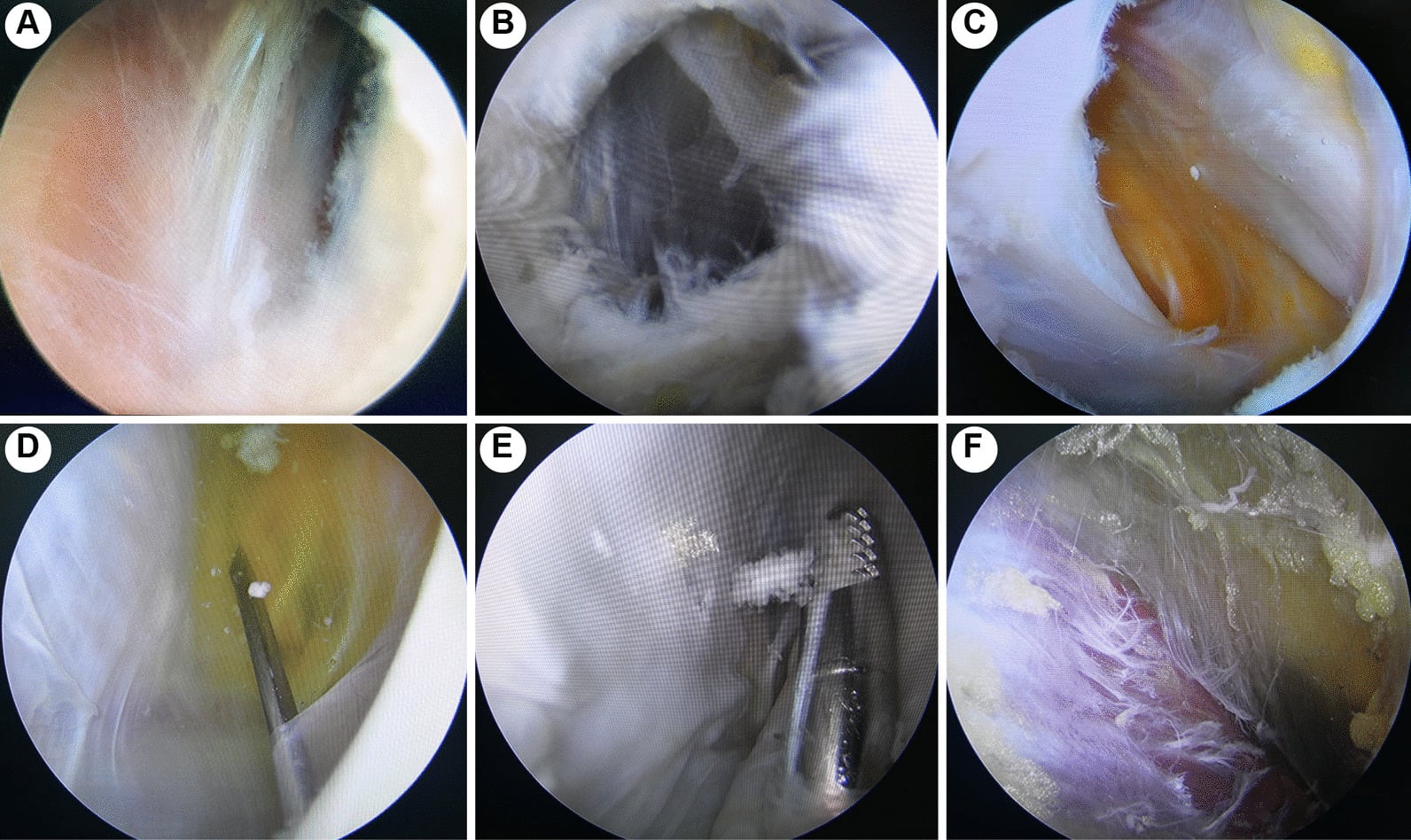
- Stage 1: Arthroscopy (treat meniscal tear, synovectomy, loose bodies)
- Stage 2: Posterior approach prone position
- Identify and protect tibial nerve (lateral to cyst)
- Excise cyst completely
- Ligate communication with joint (prevent recurrence)
- Careful hemostasis and layered closure
PEARLS AND TRAPS
- Treat underlying knee pathology, not just cyst (key principle)
- Foucher sign is pathognomonic (prominent in extension)
- Crescent sign (ecchymosis at ankle) = ruptured cyst
- Always exclude DVT in suspected rupture (Doppler)
- Isolated cyst excision not recommended (high recurrence)
- Tibial nerve most at risk during surgery
Evidence Base
Hill CL et al. Knee effusions, popliteal cysts, and synovial thickening: association with knee pain in osteoarthritis
- Directly addresses the question this page turns on - does the cyst cause the pain? MRI in 381 subjects with knee pain AND radiographic osteoarthritis, 52 with radiographic osteoarthritis but NO pain, and 25 with neither.
- Popliteal cysts were present in 33.0 per cent of painful osteoarthritic knees, 28.0 per cent of PAINLESS osteoarthritic knees, and 9.1 per cent of normal knees.
- After adjusting for radiographic osteoarthritis severity, moderate or larger effusions and synovial thickening were significantly more frequent in painful knees (both p less than 0.001) - but the prevalence of POPLITEAL CYSTS WAS NOT.
- Among symptomatic subjects, synovial thickening was associated with the SEVERITY of knee pain. The cyst was not.
Handy JR. Popliteal cysts in adults: a review
- Depending on population and imaging technique, popliteal cysts are seen in approximately 5-32% of knees imaged, with two age peaks (4-7 years and 35-70 years).
- In older patients there is usually coexistent intra-articular joint pathology; pathogenesis depends on a valve-like joint-bursa communication allowing one-way passage of fluid.
- Sonography is the imaging method of choice; cysts extending or rupturing into the calf mimic phlebitis. Most symptomatic cysts respond to intra-articular corticosteroid injection and surgical excision is rarely necessary.
Miller TT et al. MR imaging of Baker cysts: association with internal derangement, effusion, and degenerative arthropathy
- Review of 400 knee MRI examinations showed significant associations between Baker cyst and joint effusion, meniscal tear, and degenerative arthropathy, each independent of one another.
- No association was found with ACL or medial collateral ligament injury.
- Probability of a Baker cyst rose with the number of co-existing features: approximately 0.08-0.10 with one feature, 0.19-0.21 with two, and 0.38 with all three.
Rauschning W, Lindgren PG. Popliteal cysts (Baker's cysts) in adults: clinical and roentgenological results of operative excision
- 40 patients re-examined a mean of 4 years (range 6 months to 15 years) after popliteal cyst excision.
- A recurrent cyst was found in 63% of knees on follow-up arthrography, yet most patients had fewer symptoms than before operation.
- Authors concluded Baker's cysts are usually secondary and should be treated as a manifestation of the underlying joint disorder; isolated excision with tight closure of the communication should be reserved for incurable knee disease with troublesome symptoms.
Sansone V, De Ponti A. Arthroscopic treatment of popliteal cyst and associated intra-articular knee disorders in adults
- 30 adults treated arthroscopically by addressing the intra-articular pathology and correcting the valvular mechanism, with mean follow-up of 32 months.
- A connection between the joint space and the cyst was found in every case, and the popliteal cyst was almost invariably associated with other knee disorders.
- Optimal or good clinical results were achieved in 95% of patients.
Smith MK et al. Treatment of popliteal (Baker) cysts with ultrasound-guided aspiration, fenestration, and injection: long-term follow-up
- 47 patients had ultrasound-guided aspiration, fenestration, and triamcinolone/bupivacaine injection (UGAFI) as sole treatment.
- Mean WOMAC score improved significantly from 48.55 to 17.15 (p less than 0.0001), with significant gains in pain, stiffness, and physical function.
- 6 patients (12.7%) required re-aspiration for recurrence; there were no infections or other complications.
Mizumoto J. The crescent sign of ruptured Baker's cyst
- Ruptured Baker's cyst is easily misdiagnosed as deep vein thrombosis.
- The crescent sign - ecchymosis appearing around the malleoli/distal calf as synovial fluid dissects distally - helps identify a ruptured cyst.
- Recognising this sign supports rapid, correct diagnosis and avoids unnecessary anticoagulation, though DVT must still be excluded.