Anterior-Inferior Labral Tear | Gold Standard: Arthroscopic Repair | Assess Bone Loss
- Bankart lesion is an anterior-inferior labral tear from traumatic anterior dislocation
- 90% of anterior dislocations result in a Bankart lesion (Perthes variant if periosteum intact)
- Glenoid bone loss assessment is mandatory - over 20% (inverted pear) needs Latarjet
- ISIS score predicts instability risk: higher score = greater likelihood of failure with arthroscopic repair
- Arthroscopic repair is gold standard for soft tissue Bankart with minimal bone loss
- “Bankart = anterior-inferior labral tear from anterior dislocation
- “ALPSA = labral tear with periosteum intact but medially displaced
- “Perthes = labral tear with intact periosteum (partial Bankart)
- “Critical bone loss = over 20% of the glenoid (inverted pear), which requires bone augmentation
Overview and Epidemiology
A Bankart lesion is a tear of the anterior-inferior glenoid labrum and its attached inferior glenohumeral ligament (IGHL) complex. It is the essential lesion of traumatic anterior shoulder instability and is found in over 90% of anterior dislocations.
The eponym. Arthur Sidney Blundell Bankart described the lesion in 1923 and called it the "essential lesion" because it is the pathoanatomic basis for recurrent anterior instability. He treated it by open repair, and the Bankart repair keeps his name; arthroscopic techniques now dominate. Whichever route is used, the goal of surgery is the same: restore the labral bumper and tension the anterior capsule.
Mechanism. The typical injury is a traumatic anterior dislocation with the shoulder forced into abduction, extension and external rotation (the ABER position). The anterior capsulolabral structures exceed their tensile strength and the labrum avulses from the anterior-inferior glenoid rim, typically the 3-to-6 o'clock position.
Who. Shoulder dislocation runs at 23.9 per 100,000 person-years in US emergency-department data (Zacchilli and Owens), with the peak in the 20-29 year decade (47.8 per 100,000) and 46.8% of dislocations between ages 15 and 29. Males predominate (incidence rate ratio 2.64; 71.8% of dislocations), and almost half (48.3%) happen during sport or recreation, contact codes such as rugby and Australian football and overhead sports among them.
Natural history. Recurrence is inversely related to age. Each recurrent dislocation increases the risk of bone loss and cartilage damage, and chronic instability leads to early glenohumeral arthritis. Without surgery, the recurrence rate after a first dislocation is:
- Under 20: up to 90%
- 20-30: 40-60%
- Over 30: 20-30%
- Over 40: approximately 20%
Pathophysiology and Mechanisms
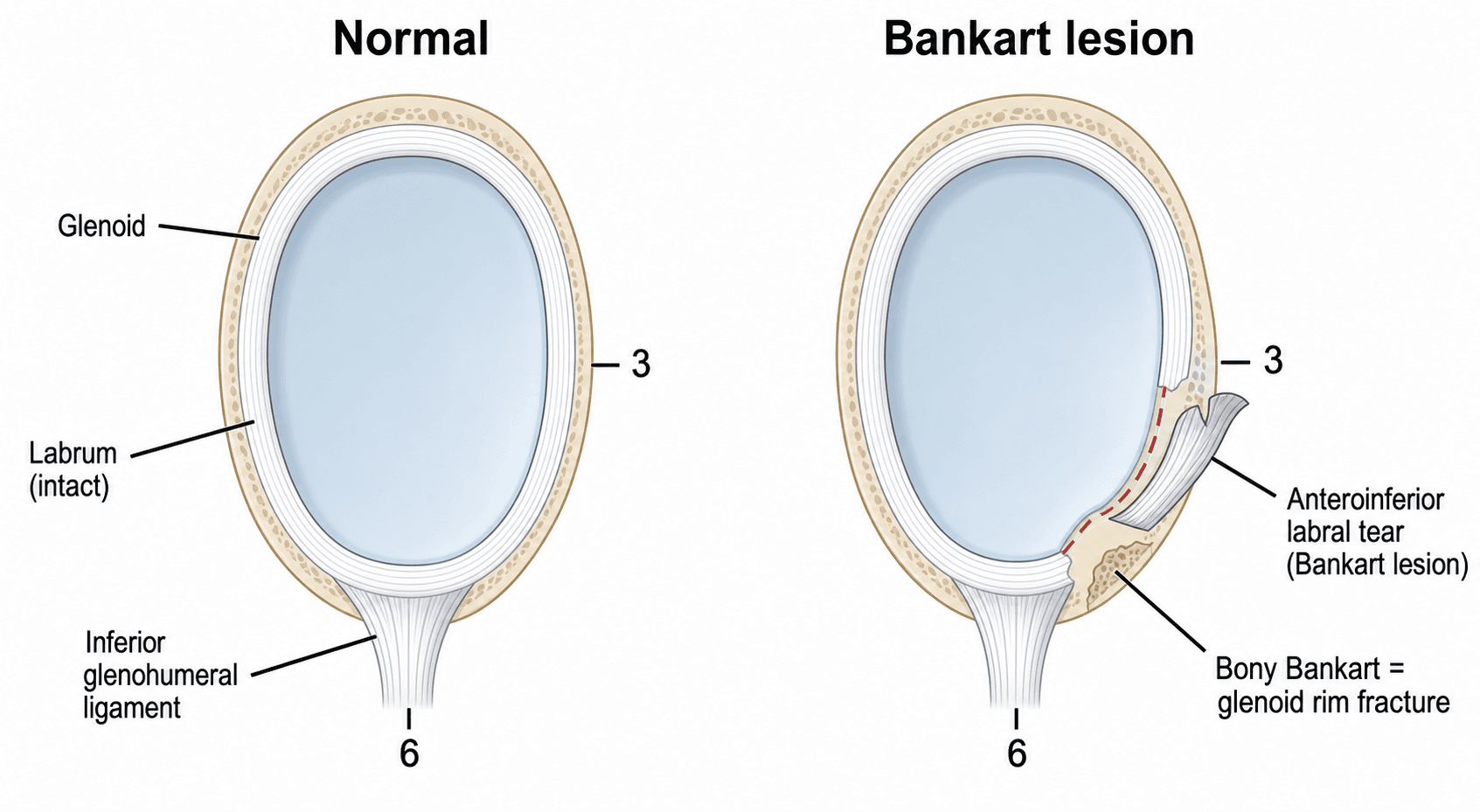
The labrum. A fibrocartilaginous rim that deepens the glenoid socket by 50% and increases the articular surface area by up to 75%. It is the attachment for the glenohumeral ligaments and acts as a bumper, a chock-block against translation of the humeral head.
The anterior-inferior complex. The anterior band of the IGHL is the primary restraint to anterior translation in abduction and external rotation. It inserts into the anterior-inferior labrum (3-to-6 o'clock on a right shoulder) and forms a hammock beneath the humeral head when the arm is abducted. Labrum and ligament work as a single unit, so a Bankart lesion is both a labral tear and a ligamentous avulsion, and disruption of either causes instability. Repairing the labrum restores both.
The glenoid. Normally pear-shaped, with the anteroinferior quadrant the critical zone for stability, and in 5-10 degrees of retroversion. The bare area is the central non-articular zone, a normal finding rather than a lesion.
What is lost when the labrum tears. The consequences:
- The bumper - the humeral head can translate anteriorly without resistance
- Concavity-compression - the labral rim normally deepens the socket
- Capsular tension - the capsule stretches with recurrent instability
- Bone - recurrent dislocations cause progressive glenoid erosion and Hill-Sachs lesions
- Proprioception - the mechanoreceptors in the labrum and capsule are lost
The variants (bony Bankart, Perthes, ALPSA, GLAD) are set out under Classification. The related lesions each have their own account: ALPSA lesions where the labrum heals medialised, Hill-Sachs lesions for the humeral side of the same event, and anterior shoulder instability for the condition of which the Bankart lesion is the commonest pathology.
Not every anterior instability is a Bankart on the glenoid side. A HAGL lesion (Humeral Avulsion of the Glenohumeral Ligament) is avulsion of the IGHL from its humeral attachment rather than the glenoid. It is an important and frequently missed cause of instability and of a "failed Bankart repair": a labral repair performed while a HAGL is overlooked leaves the shoulder unstable.
Suspect it when the apprehension and instability pattern is present but the labrum looks intact, and look specifically for the "J sign" on the MR arthrogram: contrast leaks inferiorly where the ligament has pulled off the humerus, turning the normal U-shaped axillary pouch into a J. A bony variant (BHAGL) carries a fleck of humeral bone. Management is repair of the ligament back to the humeral neck, open or arthroscopic, not a glenoid-sided procedure. In recurrent or atypical instability, always check both the glenoid and the humeral attachment of the IGHL.
Classification Systems
The classic lesion and its four variants:
- Description
- Labral tear from glenoid rim
- MRI Appearance
- Labrum detached, fluid in gap
- Treatment Implication
- Standard arthroscopic repair
- Description
- Labral tear with bone fragment
- MRI Appearance
- Bone fragment visible
- Treatment Implication
- ORIF if large, or Latarjet if over 20%
- Description
- Labral tear, periosteum intact
- MRI Appearance
- Labrum appears attached
- Treatment Implication
- May be subtle, can repair arthroscopically
- Description
- Labrum displaced medially
- MRI Appearance
- Labrum on glenoid neck, intact periosteum
- Treatment Implication
- Mobilise before repair
- Description
- Glenoid cartilage and labral tear
- MRI Appearance
- Cartilage defect visible
- Treatment Implication
- Address cartilage, may affect prognosis
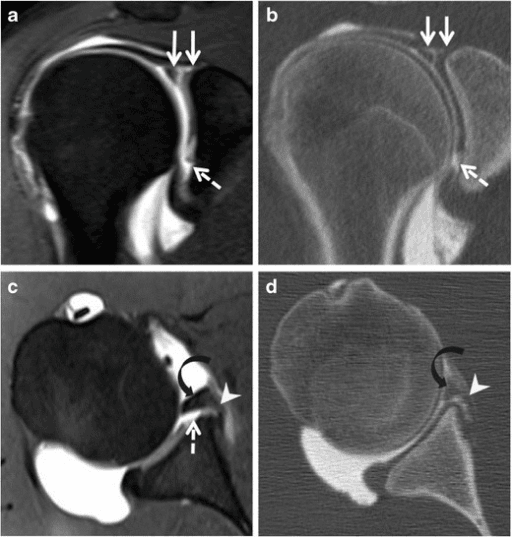
GLAD is a glenoid articular disruption with an anterior labral tear, a cartilage injury. ALPSA (Anterior Labroligamentous Periosteal Sleeve Avulsion) is the one to miss on MRI if you are not looking for it. The labrum appears to be in place but is actually displaced medially onto the glenoid neck within its intact periosteal sleeve, and it must be mobilised before it can be repaired to the rim.
Clinical Presentation and Assessment
History. The mechanism is a traumatic anterior dislocation in the ABER position. The answers that change management:
- Number of dislocations - first-time or recurrent
- Ease of reduction - self-reduction suggests severe instability
- Sports and activity level - contact sports, overhead sports
- Dominant arm and occupation - overhead work, manual labour, high-demand use
- Fear of dislocation - the psychological impact, felt as apprehension
Symptoms. The patient describes an instability sensation, the shoulder "coming out", and apprehension in certain positions, particularly abduction with external rotation. Pain is most marked early after a dislocation. Weakness may follow pain or a rotator cuff tear, and clicking or catching points to a labral tear or a loose body.
Patients may describe a "dead arm" sensation during throwing or overhead activity. This represents a transient subluxation - the shoulder partially dislocates and immediately reduces, causing brief paralysis-like sensation and inability to complete the throwing motion.
Examination. The tests and what a positive result looks like:
- Technique
- 90deg abduction, external rotation applied
- Positive Finding
- Patient feels shoulder will dislocate, guarding
- Technique
- Posterior force applied during apprehension
- Positive Finding
- Relief of apprehension, increased ER range
- Technique
- Release posterior force from relocation
- Positive Finding
- Return of apprehension sensation
- Technique
- Translate humeral head anteriorly with load
- Positive Finding
- Excessive anterior translation (grade 2-3)
- Technique
- Inferior traction on arm
- Positive Finding
- Inferior translation, sulcus below acromion
- Technique
- Generalised laxity assessment
- Positive Finding
- Score over 4 indicates hyperlaxity
The apprehension test is the gold standard and the most reliable test for anterior instability, with a sensitivity of 50-72% and a specificity of 96-98%.
Associated injuries. Look for them at the first assessment:
- Rotator cuff tear - especially in patients over 40 years
- Greater tuberosity fracture - on the initial radiographs
- Nerve injury - the axillary nerve most commonly; check sensation over the deltoid
- Vascular injury - rare; check the pulses
- Distinguishing features
- Traumatic ABER mechanism, anterior apprehension, dead-arm in throwers
- Key test / imaging
- Apprehension/relocation positive; MR arthrogram anteroinferior labral tear
- Distinguishing features
- Seizure, electrocution, axial load on adducted arm; pain in flexion-adduction
- Key test / imaging
- Jerk/Kim test positive; axillary view confirms posterior subluxation
- Distinguishing features
- Overhead athlete, deep-seated pain, clicking; no frank dislocation
- Key test / imaging
- O'Brien and biceps load tests; superior labral signal on MRA
- Distinguishing features
- Atraumatic, bilateral, generalised laxity, voluntary component
- Key test / imaging
- Positive sulcus sign, Beighton over 4; instability in 2 or more directions
- Distinguishing features
- Weakness and night pain rather than apprehension after dislocation
- Key test / imaging
- Drop-arm/Jobe; ultrasound or MRI for cuff integrity
- Distinguishing features
- Older patient, marked pain, limited movement post-reduction
- Key test / imaging
- AP and axillary radiographs; CT for fracture pattern
Investigations
Radiographs. Plain films are the essential first line, and each view answers a different question:
- AP in the scapular plane - glenoid bone loss and the Hill-Sachs lesion
- Axillary lateral - concentric reduction
- West Point axillary - profiles the anterior-inferior glenoid rim
- Stryker notch view - profiles the Hill-Sachs lesion
Never accept an AP view alone. The axillary lateral is mandatory to confirm concentric reduction after a dislocation and to assess posterior shoulder pathology. A missed posterior dislocation is a medicolegal disaster.
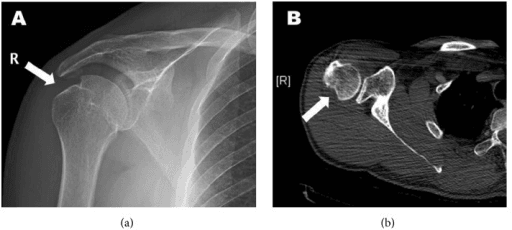
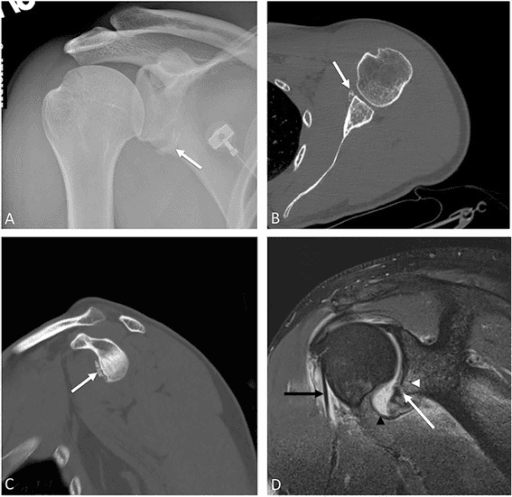
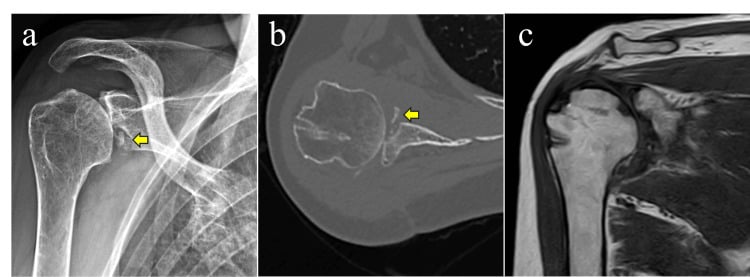
What the films show. A Hill-Sachs lesion is visible on the AP if it is large, otherwise on the Stryker notch view. Glenoid bone loss appears as loss of the pear shape on the AP, an inverted pear if critical. A bony Bankart is a small anterior-inferior glenoid fragment, and a greater tuberosity fracture is more common in older patients.
MR arthrogram. MRI with intra-articular gadolinium is the gold standard for the soft tissues. It shows the labral tear as high-signal fluid between labrum and glenoid, and it separates the variants by the appearances in the classification table. It also assesses capsular stretching (increased capsular volume), a concomitant rotator cuff tear (especially over 40 years), and the size, depth and orientation of the Hill-Sachs lesion. Glenoid bone loss can be measured on it, but CT is superior.
MR arthrogram (intra-articular gadolinium) is superior to non-contrast MRI for labral tear detection. Sensitivity improves from 82% (non-contrast) to 96% (arthrogram). Always request MRA for a suspected Bankart lesion.
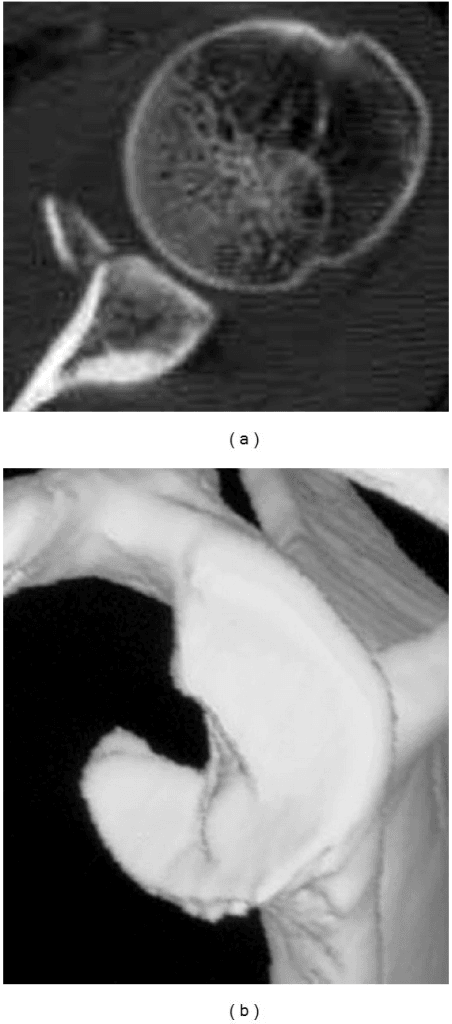
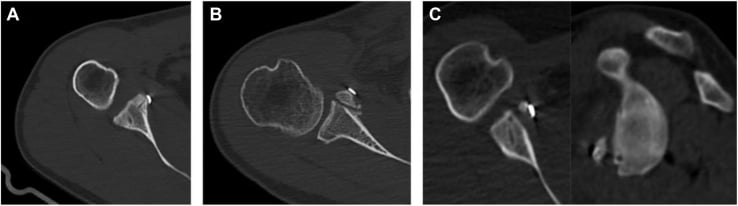
CT with 3D reconstruction. The gold standard for quantifying bone. It gives the glenoid bone loss percentage (best-fit circle method), the size and location of the Hill-Sachs on the en-face view, the on-track or off-track calculation, and the plan for a Latarjet or bone graft. Order it for:
- Every recurrent dislocator, to assess bone loss before surgery
- Any suggestion of a bony Bankart on the radiograph
- The ISIS score, which needs an accurate bone loss measurement
- Pre-operative planning for a Latarjet
Ultrasound. Allows a dynamic assessment of the labrum and may detect a labral tear in experienced hands, but it is operator-dependent and its role is limited compared with MRI.
Management Algorithm
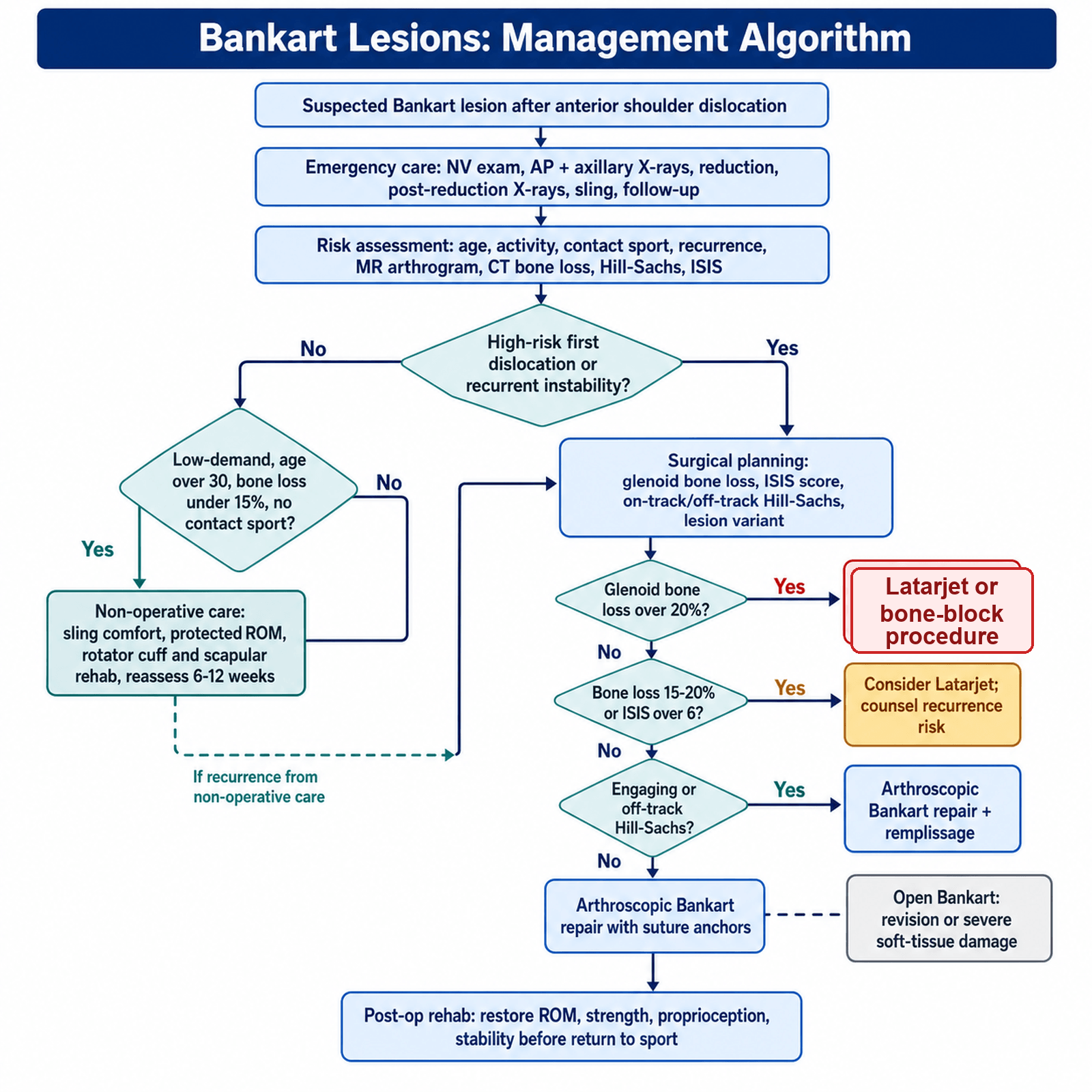
The decision. Bone first, then risk, then the humeral side:
- Assess glenoid bone loss on CT. Under 15%: arthroscopic repair. 15-20%: calculate the ISIS score. Over 20%: Latarjet or bone block.
- Calculate the ISIS score if bone loss is 15-20%. Score 0-6: arthroscopic repair. Score over 6: consider Latarjet.
- Assess the Hill-Sachs lesion. Non-engaging: no additional treatment. Engaging (off-track): add remplissage or choose Latarjet.
- Select the procedure. Arthroscopic Bankart repair for the soft tissue lesion with minimal bone loss; Bankart plus remplissage for the soft tissue lesion with an engaging Hill-Sachs; Latarjet for critical bone loss or a high ISIS score; open Bankart repair for revision cases and severe soft tissue damage.
- Bone Loss
- Under 15%
- Patient Age/Activity
- Any age, non-contact sport
- Treatment
- Arthroscopic repair (3-4 anchors)
- Bone Loss
- 15-20% borderline
- Patient Age/Activity
- Under 20, contact sport
- Treatment
- Consider Latarjet (ISIS over 6)
- Bone Loss
- Over 20% inverted pear
- Patient Age/Activity
- Any age, any sport
- Treatment
- Latarjet or bone block procedure
- Bone Loss
- Under 15%
- Patient Age/Activity
- Any age
- Treatment
- Arthroscopic repair after mobilisation
- Bone Loss
- Minimal bone loss
- Patient Age/Activity
- Over 30, low demand
- Treatment
- Trial of non-operative (3 months rehab)
In the emergency department. The acute dislocation follows a fixed sequence:
- Neurovascular examination - the axillary nerve is most at risk
- Radiographs - AP and axillary lateral
- Closed reduction - several techniques are available
- Post-reduction radiographs - confirm concentric reduction
- Immobilisation in a sling, traditionally in internal rotation
- Orthopaedic follow-up within 1-2 weeks
Reduction techniques. The options:
- Stimson - prone, arm hanging with a weight
- Cunningham - gentle massage of the shoulder girdle muscles
- Milch - overhead abduction with gentle traction
- Traction-countertraction - an assistant holds a sheet around the chest
Traditional immobilisation in internal rotation (sling) versus external rotation (ER brace) has been debated. Although early studies suggested an external-rotation brace might reduce recurrence, larger randomised trials and meta-analyses have not confirmed a clinically meaningful difference. Most surgeons use a standard sling for comfort, since definitive stabilisation is the key decision for high-risk patients: the question is not the position of immobilisation but which patients need surgery.
Surgical Technique
Arthroscopic suture anchor repair is the gold standard for the soft tissue Bankart lesion; K-wires are never used.
Positioning. Beach chair or lateral decubitus, by surgeon preference. Beach chair gives better anatomic orientation and an easier conversion to open; lateral decubitus gives better distraction and a better view of the inferior glenoid.
Portals
- Posterior portal - the viewing portal, 2cm inferior and 2cm medial to the posterolateral acromion
- Anterior superior portal - the working portal, through the rotator interval
- Mid-glenoid portal - the anchor portal at the anterior glenoid rim, at the 5 o'clock position on a right shoulder
The steps
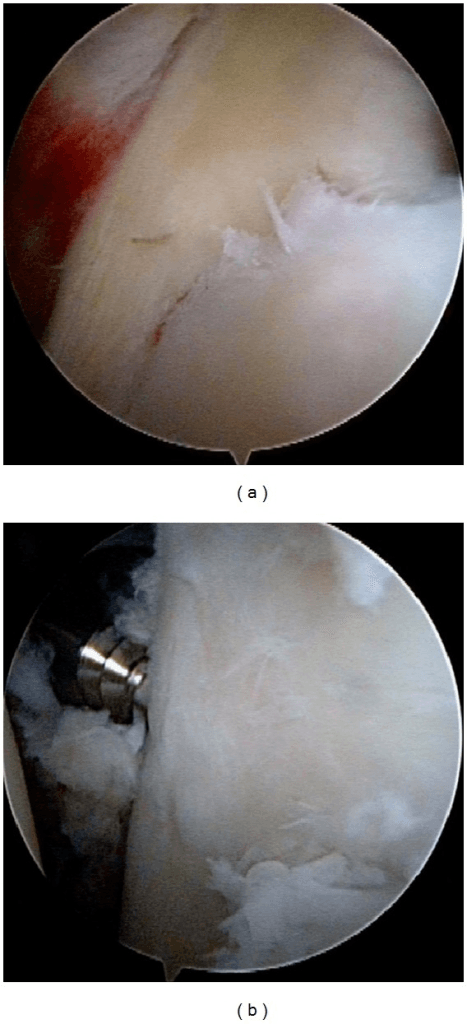
- Diagnostic arthroscopy - confirm the Bankart lesion; look for ALPSA, GLAD and Hill-Sachs
- Prepare the glenoid rim - shaver or rasp to a bleeding bone surface
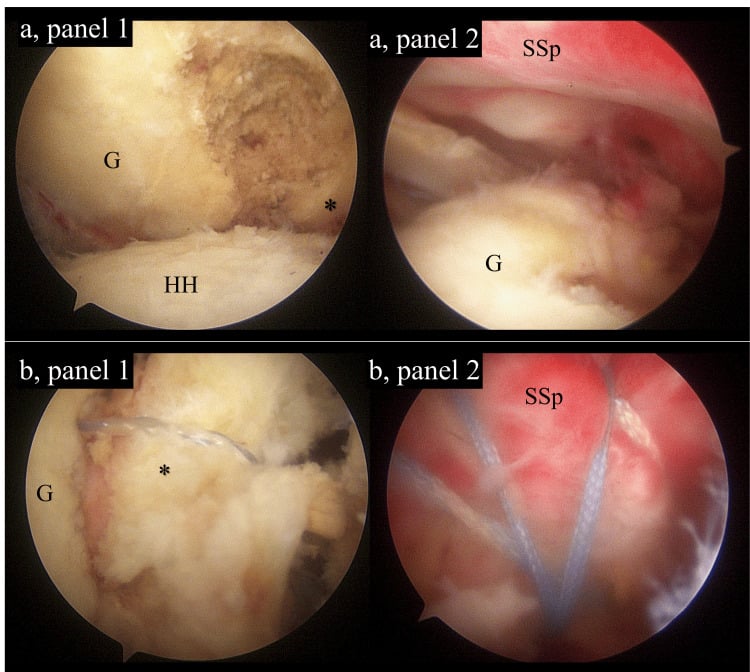
- Mobilise (if ALPSA) - release the medially displaced labrum from the glenoid neck
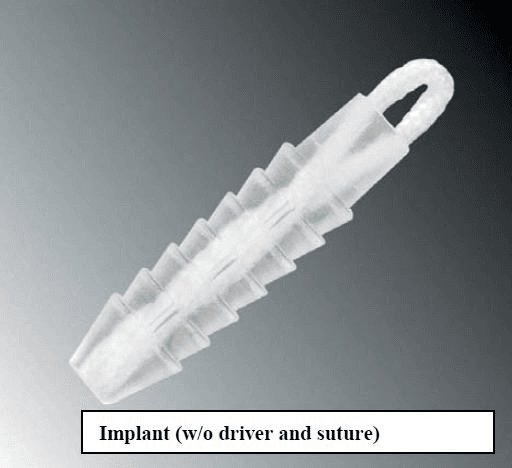
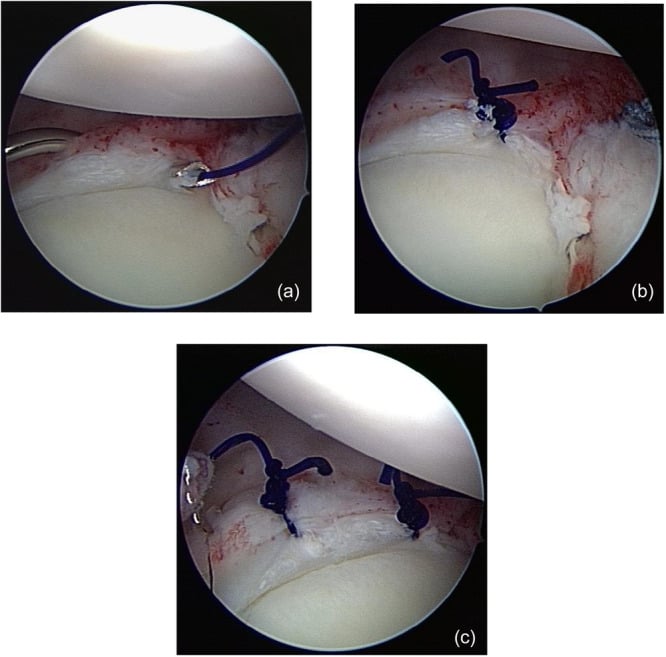
- Place the anchors - 3-4 suture anchors along the anterior-inferior rim, working from inferior to superior:
- 5:30 (posteroinferior)
- 4:30-5:00 (inferior)
- 3:00-3:30 (anteroinferior)
- optional 2:00 (anterosuperior)
- Pass the sutures through labrum and capsule
- Tie the knots to secure the labrum back to the rim
- Capsular shift (if needed) - plicate a stretched capsule
- Close the portals
Anchors go on the articular margin of the glenoid, not medially on the neck. Think "bumper" restoration: an anchor placed medially loses the labral bumper effect.
How many. A minimum of 3 anchors; most surgeons use 4 for better coverage of the anterior-inferior labrum, and studies show the failure rate rises with fewer than 3.
Complications
- Incidence
- 5-10% arthroscopic, 2-5% Latarjet
- Prevention/Management
- Adequate anchor number, assess bone loss preoperatively
- Incidence
- 10-20%
- Prevention/Management
- Early motion protocol, avoid over-tensioning
- Incidence
- 1-2%
- Prevention/Management
- Careful retraction, identify anatomy
- Incidence
- 2-5%
- Prevention/Management
- Proper anchor placement on articular margin
- Incidence
- 10-20%
- Prevention/Management
- Careful repair, preserve tendon quality
- Incidence
- Under 1% arthroscopic, 2-3% open
- Prevention/Management
- Sterile technique, antibiotic prophylaxis
- Incidence
- Rare with current devices
- Prevention/Management
- Avoid excessive thermal devices
Recurrent instability. The most common cause of failure. It is prevented by proper patient selection, an adequate number of anchors and bone augmentation where the bone loss demands it, and a failed arthroscopic repair is revised, with a Latarjet considered.
Stiffness. More common after open than arthroscopic repair, and more likely when the capsule has been over-tensioned. Prevention is early motion: pendulum exercises from the first week and passive range from 6 weeks, as in the protocol below. Established stiffness is treated with aggressive physiotherapy, possibly manipulation under anaesthesia, and capsular release.
Suture anchor pullout is rare (under 2%) with all-suture or PEEK anchors. The risk factors are poor bone quality, an anchor placed in the glenoid neck rather than the rim, and too few anchors. Place anchors on the articular margin with good bone purchase.
Nerve injury. The axillary nerve is at risk during creation of the anterior inferior portal and the inferior capsular dissection; the musculocutaneous nerve is at risk in the conjoint tendon during a Latarjet. Know the anatomy, retract gently and identify the nerves intraoperatively. Most injuries are a neurapraxia and recover within 6 months.
Postoperative Care and Rehabilitation
After arthroscopic Bankart repair. The repair is protected while the anchors heal, then the range is recovered before any strengthening, and the ABER position, the position of injury, is avoided for 3 months.
- Sling immobilisation for 4-6 weeks (sleep in the sling)
- Remove for hygiene and gentle pendulum exercises only
- No active ROM of the shoulder
- Elbow, wrist and hand motion encouraged
- Pain and inflammation control
- Anchor healing phase critical
- Wean from the sling at 6 weeks
- Begin passive ROM exercises with the physiotherapist
- Avoid the combined abduction-external rotation (ABER) position
- Progress to active-assisted ROM by week 10
- No strengthening yet
- Goal: 140 degrees forward elevation, 40 degrees ER by week 12
- Active ROM exercises
- Begin rotator cuff strengthening
- Scapular stabilisation exercises
- Progressive resistance band exercises
- Avoid heavy lifting or contact sports
- Full ROM expected by week 16
- Progressive strengthening programme
- Sport-specific rehabilitation
- Non-contact sports at 4 months
- Contact sports at 6 months
- Throwing athletes may need 9-12 months
- Full unrestricted activity by 6 months
After a Latarjet. The sling stays on for 6 weeks through the bone healing phase, but passive motion starts earlier than after an arthroscopic repair.
- Sling immobilisation for 6 weeks
- Passive ROM allowed after 2-3 weeks (earlier than arthroscopic)
- Bone healing phase
- No active ROM or strengthening
- Active ROM exercises
- Bone healing confirmed on X-ray
- Gentle strengthening begins week 8
- Avoid ABER position
- Progressive strengthening
- Return to non-contact sports at 3-4 months
- Return to contact sports at 6 months
- Full activities by 6 months
The principles behind both. Early passive motion prevents stiffness; delayed active strengthening protects the repair (wait at least 6 weeks, and in the protocols above it begins at week 8 after a Latarjet and week 12 after an arthroscopic repair); a gradual return to sport prevents re-injury. None of it works without the patient's compliance, which is critical to success.
Outcomes and Prognosis
Arthroscopic Bankart repair. Contemporary series put overall recurrence at 5-10%, and the figure tracks the bone loss and the risk score:
- Minimal bone loss (under 15%): 5-8%
- Borderline bone loss (15-20%): 10-15%
- ISIS score over 6: over 70%
Functionally, 80-90% return to the same level of sport and 85-95% of patients are satisfied, with improved range of motion compared with open repair.
Latarjet. Overall recurrence is 2-5%, which is excellent for a high-risk population: 2-4% with critical bone loss and 5-10% in revision cases. Return to sport is 80-90% and satisfaction is over 90%, with minimal loss of motion (5-10 degrees of external rotation). The complication rate is higher than arthroscopic repair, at 10-15% overall. That is the trade: in the high-risk patient, young, in contact sport or with bone loss, the Latarjet has lower recurrence than arthroscopic repair and is the most reliable procedure for high-risk instability with bone loss, and the higher complication risk is accepted for the better stability outcome.
Prognostic factors
- Age - younger patients have higher recurrence
- Bone loss - critical bone loss (over 20%) needs a Latarjet
- Sport level - competitive contact sports carry higher risk
- Number of anchors - 3 or more reduces recurrence
- Capsular quality - a stretched capsule increases risk
- Compliance - adherence to rehabilitation is critical
The long term. Early surgical stabilisation may prevent the arthritis that recurrent instability produces, and a late repair, years after the injury, has worse outcomes.
Guidelines, Registries & Global Practice
Global epidemiology:
- Figure
- 23.9 per 100,000 person-years (US ED data)
- Source
- Zacchilli & Owens, JBJS Am 2010
- Figure
- 20-29 years (47.8 per 100,000); 46.8% aged 15-29
- Source
- Zacchilli & Owens 2010
- Figure
- Male IRR 2.64; 71.8% of dislocations in males
- Source
- Zacchilli & Owens 2010
- Figure
- 48.3% of all dislocations
- Source
- Zacchilli & Owens 2010
- Figure
- 20.7% of instability patients (Hill-Sachs 52.7%)
- Source
- MOON cohort, AJSM 2023
Anterior instability is concentrated in young active men worldwide. Contact and collision codes (rugby union/league, American/Australian football, ice hockey) and overhead/throwing sports dominate, with combat sports and falls contributing in older groups.
Guidance and decision frameworks, side by side:
- Position on first-time dislocation
- Stratify by age/activity; young athletes counselled on high recurrence and early surgical option
- Position on bone loss / recurrence
- Quantify glenoid and humeral bone loss before surgery; bony procedure for critical loss
- Evidence basis
- RCT + cohort (Bottoni/Belk)
- Position on first-time dislocation
- Reduce, confirm with axillary view, early physiotherapy; refer recurrent or high-demand for stabilisation
- Position on bone loss / recurrence
- Specialist imaging (CT/MR) and surgeon-led choice of soft-tissue vs bony repair
- Evidence basis
- Guideline + Level I evidence
- Position on first-time dislocation
- Emphasise glenoid track and ISIS-type risk stratification
- Position on bone loss / recurrence
- Off-track Hill-Sachs and critical glenoid loss favour Latarjet/bone block over isolated repair
- Evidence basis
- Yamamoto track; Burkhart
- Position on first-time dislocation
- Validated pre-op risk score
- Position on bone loss / recurrence
- ISIS over 6 contraindicates arthroscopic repair, recommend Latarjet
- Evidence basis
- JBJS Br 2007 (Level III)
There is broad international agreement on the principles (assess bone loss, risk-stratify, repair the labrum or augment bone) even where named guidelines differ in emphasis.
- The MOON Shoulder Instability prospective multicentre cohort (892 patients) shows recurrent dislocations drive progressive glenoid and humeral bone loss - each additional event raises combined-lesion odds by 95% (AJSM 2023).
- National joint registries (NJR, AOANJRR, AJRR) capture arthroplasty rather than soft-tissue stabilisation, so instability outcome data come chiefly from cohort studies and society registries rather than implant registries.
- High-resource settings: routine CT/MR arthrography, glenoid-track calculation, arthroscopic Bankart +/- remplissage, Latarjet for critical loss.
- Limited-resource settings: open Bankart and open Latarjet remain workhorse procedures where arthroscopy and 3D CT are less available; plain radiographs (AP, axillary, Stryker notch, West Point) carry more diagnostic weight.
- Collision-sport regions (Australasia, South Africa, Europe): lower threshold for early bony stabilisation in elite contact athletes given career impact and high recurrence.
Whatever board you sit, examiners reward the same reasoning chain: confirm reduction on an axillary view, quantify glenoid and humeral bone loss, apply a risk score (ISIS) and the glenoid-track concept, then choose soft-tissue repair vs bony augmentation. Name the evidence (Balg-Boileau, Burkhart, Yamamoto, Bottoni/Belk), not a single country's pathway.
MCQ Practice Points
Q: What is a Bankart lesion? A: A Bankart lesion is a tear of the anterior-inferior glenoid labrum and associated inferior glenohumeral ligament (IGHL) complex, typically occurring at the 3-6 o'clock position (right shoulder). It is the "essential lesion" in traumatic anterior shoulder instability.
Q: What percentage of glenoid bone loss is considered critical and requires bone augmentation rather than isolated arthroscopic repair? A: Over 20% glenoid bone loss is considered critical. This creates an "inverted pear" glenoid shape and predicts high failure rates (over 60%) with isolated arthroscopic Bankart repair. Latarjet or bone block procedures are indicated.
Q: What is the ISIS score and when does it predict high failure with arthroscopic Bankart repair? A: The Instability Severity Index Score (ISIS) predicts recurrence after arthroscopic Bankart based on 6 risk factors: age under 20 (2 points), competitive sports (2 points), contact/overhead sports (1 point), hyperlaxity (1 point), Hill-Sachs on AP (2 points), glenoid bone loss (2 points). Score over 6 predicts over 70% recurrence and suggests Latarjet should be considered.
Q: What is an ALPSA lesion and how does it differ from a classic Bankart? A: ALPSA (Anterior Labroligamentous Periosteal Sleeve Avulsion) is a variant where the labrum is torn but the periosteum remains intact, allowing the labrum to displace medially onto the glenoid neck. Unlike Bankart where labrum is completely avulsed, ALPSA requires mobilization of the medially displaced sleeve before repair to the glenoid rim.
Q: What is the minimum number of suture anchors recommended for arthroscopic Bankart repair? A: Minimum 3 anchors, with most surgeons using 4 anchors for better coverage of the anterior-inferior labrum. Anchors are typically placed at the 2 o'clock, 3 o'clock, 4:30, and 5:30 positions (right shoulder) to restore the labral bumper effect.
Clinical Decision Scenarios
Practise clinical reasoning and management decisions out loud
“An 18-year-old rugby player presents with his third anterior shoulder dislocation. He is a competitive athlete hoping to play at university level. X-rays show a small Hill-Sachs lesion but no obvious glenoid bone loss. He wants surgery. How would you assess and manage this patient?”
“A 25-year-old recreational surfer has his first anterior shoulder dislocation. It was reduced in the ED, post-reduction X-rays show concentric reduction and a small Hill-Sachs lesion. He asks whether he needs surgery. How do you counsel him?”
“A 22-year-old patient had an arthroscopic Bankart repair 18 months ago after recurrent instability. He has now had 2 more dislocations. You obtain a CT scan showing 22% glenoid bone loss and a large engaging Hill-Sachs lesion. How do you approach this complex problem?”
DEFINITION AND KEY FACTS
- Bankart = anterior-inferior labral tear (3-6 o'clock position)
- Essential lesion in traumatic anterior instability (90% of dislocations)
- ALPSA = labrum displaced medially with intact periosteum
- Perthes = labral tear with intact periosteum (partial Bankart)
- Bony Bankart = labral tear with glenoid fracture fragment
BONE LOSS ASSESSMENT (CRITICAL)
- Under 15%: Minimal - arthroscopic Bankart successful
- 15-20%: Borderline - use ISIS score to guide decision
- Over 20%: Critical inverted pear - Latarjet mandatory
- Over 25%: Severe bone loss - may need bulk bone graft
- CT with 3D reconstruction is gold standard for measurement
ISIS SCORE (PREDICTS RECURRENCE)
- Age under 20 years = 2 points
- Competitive sport = 2 points, contact/overhead = 1 point
- Shoulder hyperlaxity = 1 point
- Hill-Sachs on AP radiograph = 2 points
- Anterior glenoid bone loss = 2 points
- Score over 6 = over 70% recurrence with arthroscopy (consider Latarjet)
ARTHROSCOPIC BANKART REPAIR
- Gold standard for soft tissue Bankart with minimal bone loss
- 3-4 suture anchors at 2, 3, 4:30, 5:30 o'clock positions
- Anchors on articular margin (not medial on neck)
- Success rate: 85-95% in low-risk patients
- Recurrence: 5-10% overall, higher in young contact athletes
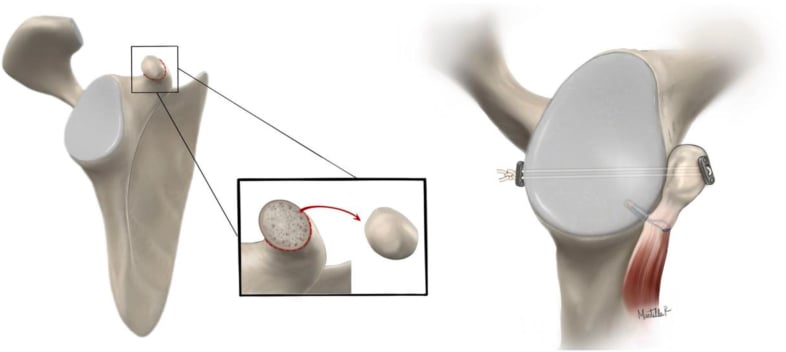
LATARJET PROCEDURE
- Indications: over 20% bone loss, ISIS over 6, failed Bankart
- Triple effect: bone block, sling effect, capsular repair
- Coracoid positioned flush with glenoid rim at equator
- Screws perpendicular to glenoid face (not parallel)
- Success: 95-98%, complications: 10-15% (nerve, hardware)
TRAPS AND PEARLS
- Always assess bone loss with CT before surgery
- ISIS score guides surgical decision in borderline cases
- ALPSA requires mobilization before repair
- Engaging Hill-Sachs needs remplissage or Latarjet
- First-time under 20 = 90% recurrence without surgery
- Apprehension test: 96-98% specificity for instability
Evidence Base
Balg & Boileau - Instability Severity Index Score (ISIS)
- Prospective case-control study of 131 patients undergoing arthroscopic Bankart repair with suture anchors; 14.5% recurrent instability at mean 31 months. Identified 6 pre-operative risk factors (age under 20, competitive/contact/overhead sport, hyperlaxity, Hill-Sachs on AP radiograph, loss of glenoid contour) compiled into a 10-point score. A score over 6 carried a 70% recurrence risk.
Burkhart & De Beer - Inverted-Pear Glenoid & Engaging Hill-Sachs
- Case series of 194 arthroscopic Bankart repairs. With no significant bone defect the recurrence rate was 4%; with an inverted-pear glenoid or engaging Hill-Sachs it rose to 67%. In contact athletes the contrast was 6.5% versus 89%. Defined the inverted-pear glenoid and the engaging Hill-Sachs as the key bony reasons for arthroscopic failure.
Yamamoto & Itoi - Glenoid Track Concept
- Cadaveric study (9 shoulders) mapping glenoid-humeral contact in abduction and external rotation. The zone of contact (glenoid track) had a medial margin 18.4 mm from the rotator-cuff footprint, equivalent to 84% of the glenoid width. A Hill-Sachs lesion that extends medial to this margin risks engagement and dislocation (off-track).
Hettrich et al. (MOON Shoulder Instability) - Predictors of Bone Loss
- Prospective multicentre MOON cohort of 892 anterior-instability patients. Anterior glenoid bone loss was present in 20.7% and Hill-Sachs lesions in 52.7%. An increasing number of dislocations was the factor most strongly associated with glenoid bone loss, Hill-Sachs lesions and combined lesions - each additional dislocation raised the odds of a combined lesion by 95%.
Bottoni, Arciero et al. - Arthroscopic Stabilisation vs Non-operative (first-time)
- Prospective randomised trial in young athletes with a first-time traumatic anterior dislocation. Recurrent instability occurred in 75% (9/12) of non-operatively treated patients versus 11.1% (1/9) after early arthroscopic Bankart repair at mean 36-month follow-up.
Belk et al. - Stabilisation vs Immobilisation (meta-analysis of RCTs)
- Meta-analysis of 5 Level-1 RCTs (259 patients) for first-time anterior dislocation. Recurrent instability was 6.3% after surgical stabilisation versus 46.6% with immobilisation; subsequent instability surgery was needed in 4.0% versus 30.8% (both p under 0.00001), at mean 60-month follow-up.
Ali, Hurley et al. - Revision Open Latarjet (systematic review)
- Systematic review of 16 studies (713 shoulders) of the open Latarjet performed as a revision after failed prior stabilisation. Recurrence was 8.4% (redislocation only 0.9%), return to play 95.1%, mean Rowe score 92.7, with an 11% non-recurrence complication rate (nerve injury and infection each 2.1%).