Rotator Cuff | Calcium Hydroxyapatite | Phases | Self-Limiting
- Calcium hydroxyapatite deposition
- Supraspinatus most common (insertion zone)
- Resorptive phase is most painful
- Self-limiting condition in most cases
- Ultrasound-guided barbotage is effective
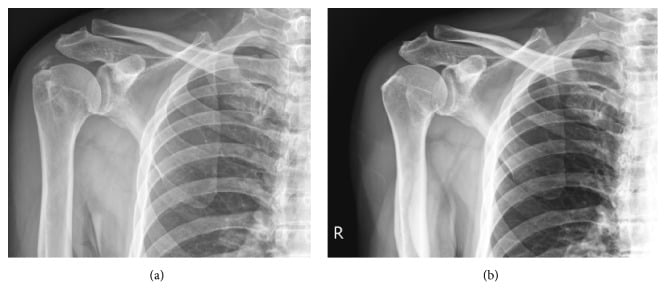
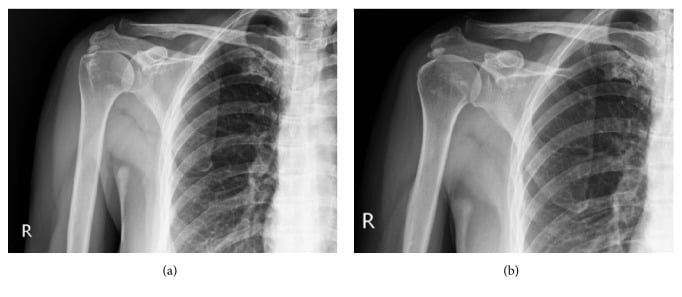
- “Resorptive X-ray: fluffy, ill-defined calcium
- “Formative X-ray: dense, well-defined
- “Needling/barbotage is effective treatment
- “Shock wave therapy has evidence
Overview and Epidemiology
The paradox to hold on to: the most painful phase is the healing one. Resorption is when the body is removing the deposit, and it is when the patient presents in agony - which is why the natural history argues for waiting even when the pain argues for operating. That makes this condition the opposite of the shoulder problems it is mistaken for: rotator cuff tears and subacromial impingement do not resolve by being left alone, and adhesive capsulitis is self-limiting but over years rather than months and is defined by stiffness rather than a deposit. The same crystal deposited elsewhere is calcific periarthritis / hydroxyapatite deposition, which is worth knowing because it shows this is a systemic tendency presenting at one site, not a local injury.
Who gets it. Calcific deposits are found on the radiographs of roughly 3-7% of adults and are often asymptomatic. Peak age is 30-50 years with a female predominance; diabetes carries a strong metabolic association, and hypothyroidism is also recognised.
Natural history. The condition is self-limiting in 80-90% of cases, with the deposit resorbing spontaneously over 1-3 years and symptoms settling before the radiograph clears. That is the counselling the patient needs before any intervention is discussed.
Pathophysiology and Mechanisms
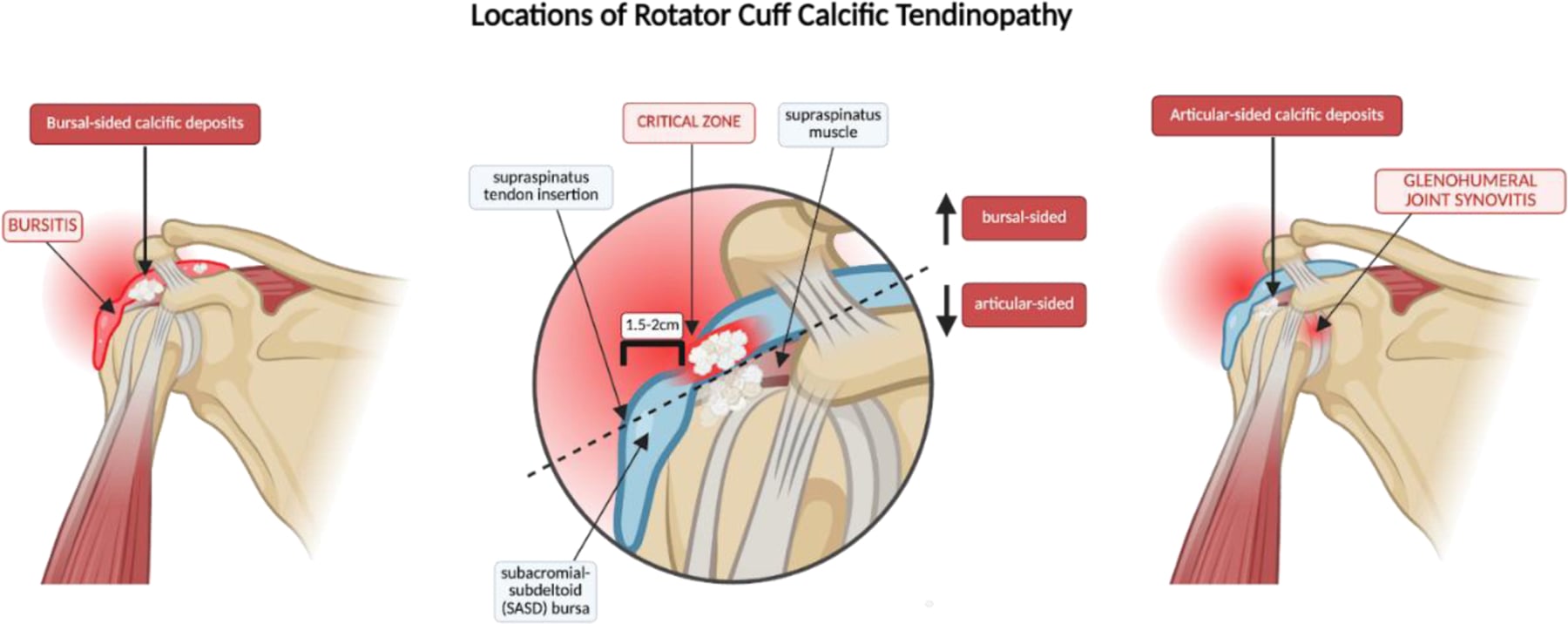
Where the calcium forms. The supraspinatus is affected in 70-80% of cases, the infraspinatus in about 20%, and the teres minor and subscapularis rarely. Within the supraspinatus the deposit sits in the critical zone, 1-2cm from the greater tuberosity insertion, which is the watershed between the osseous and tendinous blood supply and an area of relative hypovascularity.
What the tissue is doing. This is a cell-mediated process, not a degenerative one: tenocytes undergo chondrocyte metaplasia and calcium hydroxyapatite crystals are laid down in the fibrocartilage that results. The trigger is unknown, although the process is associated with hypoxia.
The mechanical context. The tendon is compressed between the acromion and the humeral head and takes repetitive microtrauma, and impingement may coexist. Even so, the pathology is intrinsic tendon metaplasia rather than extrinsic impingement.
Classification Systems
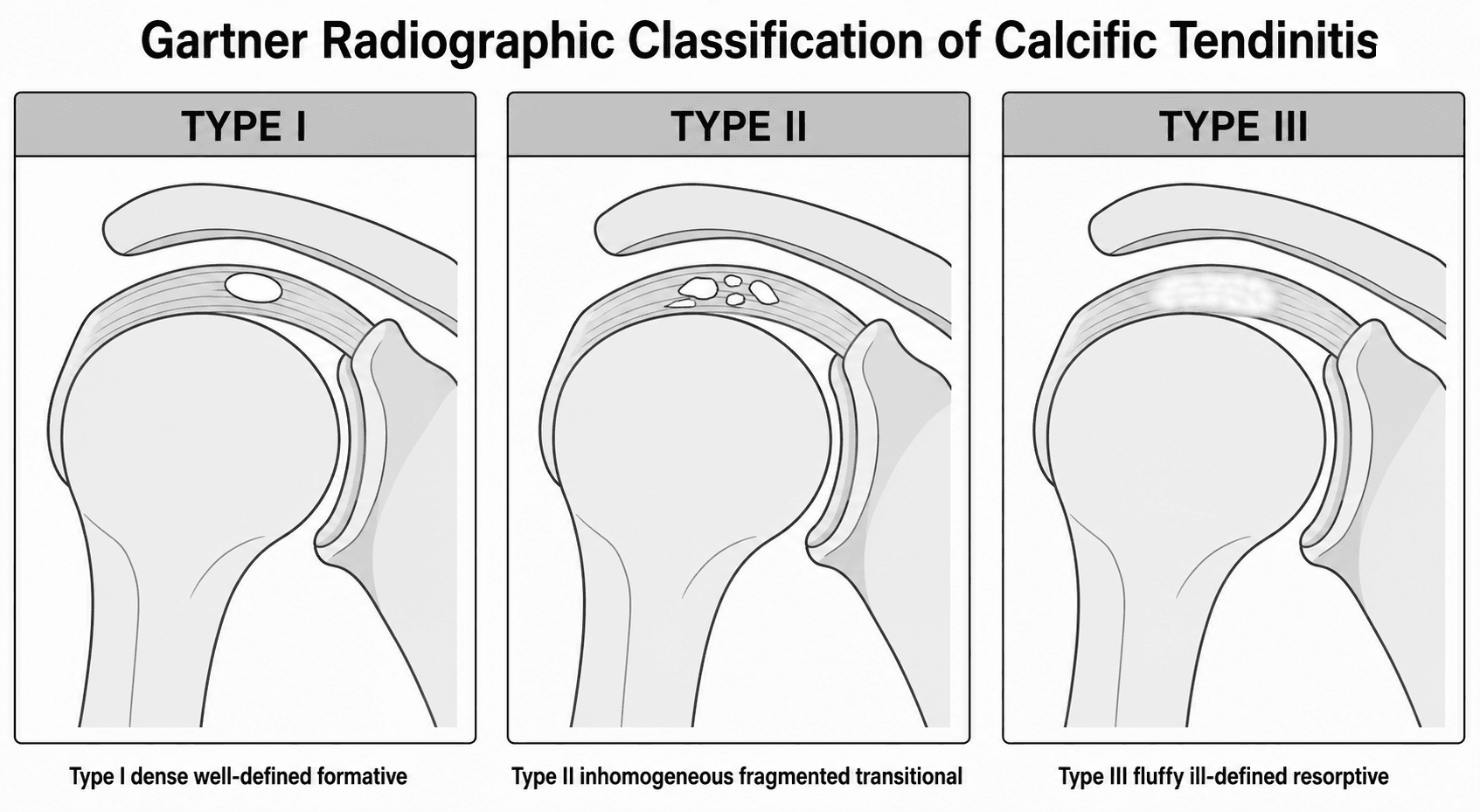
Three systems are in use and each answers a different question. Gartner grades what the radiograph shows, Uhthoff names the pathological phase the tendon is in, and Molé describes the shape of the deposit and separates true calcific tendinitis from degenerative enthesopathy.
Gartner Radiographic Classification
- Description
- Dense, well-defined, homogeneous
- Significance
- Formative phase, chronic
- Description
- Dense but inhomogeneous or fragmented
- Significance
- Transitional
- Description
- Fluffy, ill-defined
- Significance
- Resorptive phase, good prognosis
Gartner classification helps predict natural history and response to treatment.
What the grade buys you. It is the vascular invasion and inflammation of the resorptive phase that makes the shoulder so painful, so a fluffy, ill-defined deposit is the one that hurts most and the one with the best outlook. A resting deposit is static and is monitored; a dense formative deposit may persist unchanged and only earns an intervention if it stays symptomatic.
Clinical Assessment
History. The presentation is variable, and the phase is what varies it. A deposit found on a film taken for something else may be entirely asymptomatic, a formative deposit gives a chronic dull ache, and the resorptive phase gives severe acute pain. Night pain is common in the acute phase and the picture may mimic a frozen shoulder; acute severe pain suggests the resorptive phase.
Examination. A painful arc, tenderness over the greater tuberosity, impingement signs that may be positive, and a range of movement limited by pain; in the acute phase the patient may be unable to move the shoulder at all. The presentation has to be differentiated from a rotator cuff tear.
When a calcific deposit ruptures into the subacromial bursa, it causes an intense inflammatory reaction (Acute Chemical Bursitis). The patient presents with a pseudoparalytic shoulder, severe pain, and warmth—mimicking septic arthritis. Always aspirate if in doubt.
NEVER inject corticosteroid directly into the tendon. Risk of tendon necrosis and rupture. Only inject into the subacromial bursa. Intratendinous injection also impairs the natural healing process.
Investigations
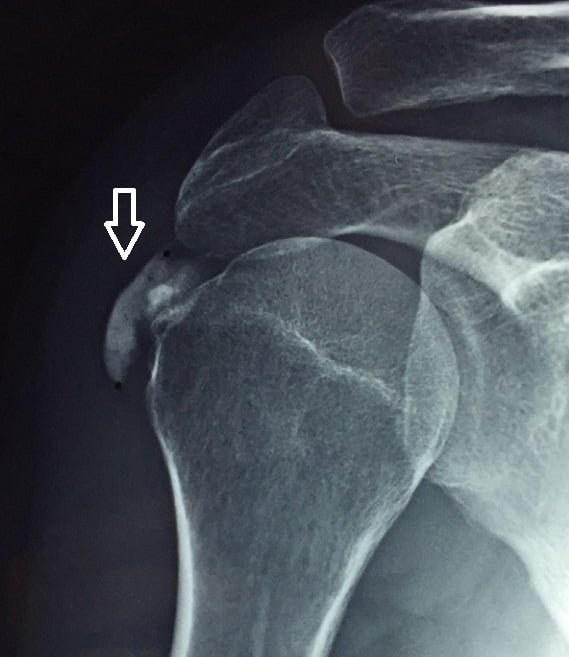
Radiographs. The standard views are AP, supraspinatus outlet and axillary, and the deposit lies in the supraspinatus insertion area. The texture of the deposit is what the Gartner grade records, so a plain film predicts both the phase and the prognosis.
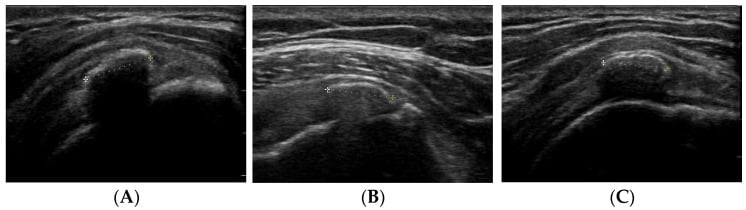
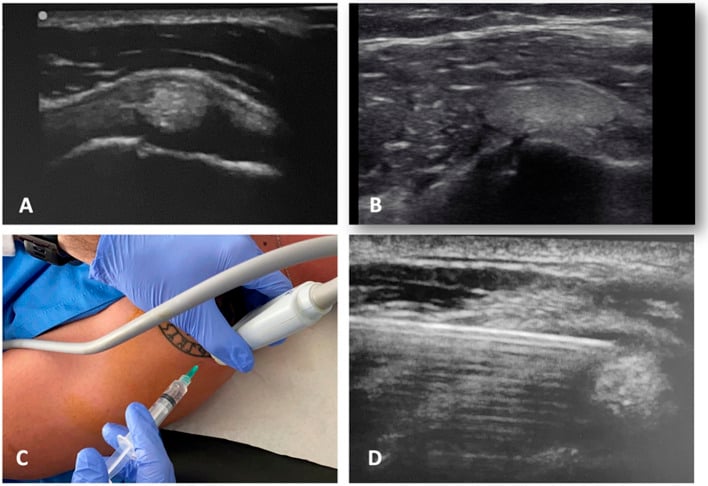
Ultrasound. This is the working tool: real-time and dynamic assessment, associated bursitis shown directly, and needle guidance during barbotage. It is both the diagnostic and the therapeutic instrument.
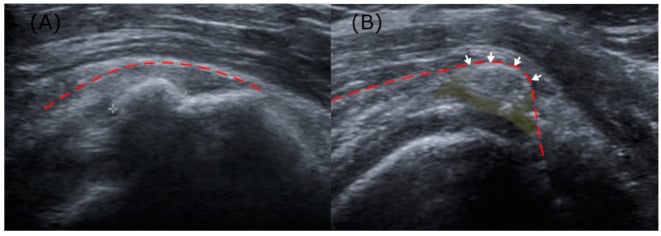
MRI. This is not usually needed. It shows bursal inflammation and bone marrow oedema and rules out other pathology, but it may underestimate the calcific deposit itself.
Calcium Migration: The Imaging Trap
A calcific deposit does not always stay within the tendon. Recognising where it migrates prevents serious misdiagnosis.
Bursal migration. Rupture into the subacromial-subdeltoid bursa produces the acute chemical bursitis described above.
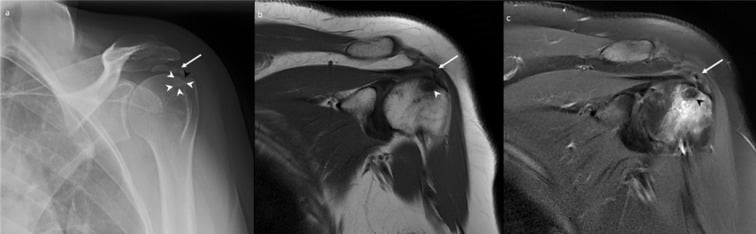
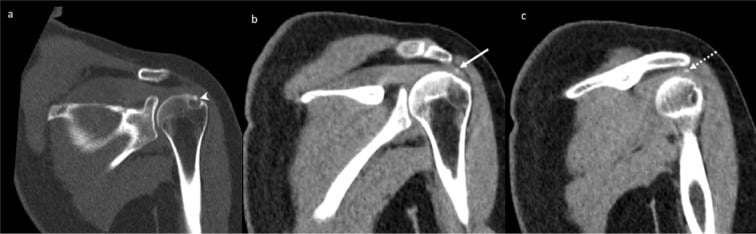
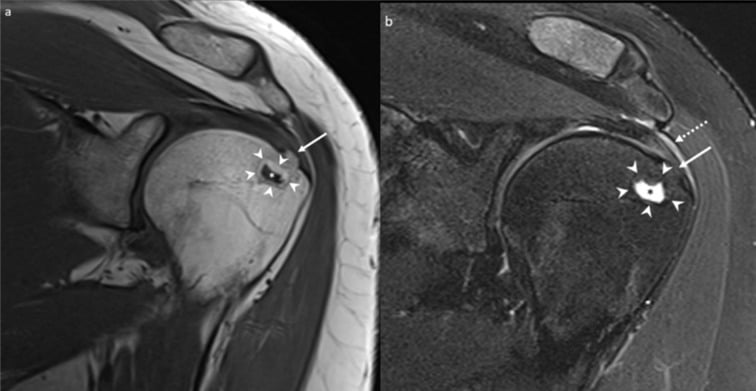
Osseous migration. The deposit can erode through the cortex into the greater tuberosity, producing a lytic or erosive lesion with surrounding bone-marrow oedema. On radiographs, CT or MRI this can convincingly mimic osteomyelitis or a bone tumour, and it has led to unnecessary biopsy.
The clue is the adjacent or residual tendinous calcium, read with the clinical context. Intraosseous migration remains part of the benign, self-limiting calcific process and is managed conservatively, not as a neoplasm or an infection.
TREATTREAT - Treatment Ladder
Hook:TREAT - the treatment ladder for calcific tendinitis!
Differential Diagnosis
- Key Distinguishing Features
- Acute severe pain, pseudoparalysis, afebrile, calcium on X-ray
- Investigation
- Plain X-ray, ultrasound
- Key Distinguishing Features
- Fever, raised CRP/ESR, systemically unwell, effusion
- Investigation
- Aspiration, blood cultures, inflammatory markers
- Key Distinguishing Features
- Weakness rather than pure pain, positive lag signs, no calcium
- Investigation
- Ultrasound or MRI
- Key Distinguishing Features
- Global loss of active AND passive external rotation, gradual onset
- Investigation
- Clinical; X-ray usually normal
- Key Distinguishing Features
- Localised ACJ tenderness, pain on cross-body adduction
- Investigation
- X-ray of ACJ
- Key Distinguishing Features
- Crystal arthropathy, may affect glenohumeral joint
- Investigation
- Joint aspiration and polarised microscopy
Calcific tendinitis is calcium hydroxyapatite deposition - NOT calcium pyrophosphate (CPPD/pseudogout). This distinction is frequently tested.
The Destructive End of the Spectrum: Milwaukee Shoulder
The same crystal family - basic calcium phosphate (BCP), principally hydroxyapatite - that deposits reversibly in calcific tendinitis can, at the other extreme, drive a destructive arthropathy.
- Milwaukee shoulder is a BCP-crystal (hydroxyapatite) associated arthropathy seen typically in elderly women, characterised by a large, often blood-stained but non-inflammatory joint effusion, a massive rotator cuff tear and rapidly progressive glenohumeral destruction (cuff-tear arthropathy).
- BCP crystals are not birefringent under polarised light (unlike the negatively-birefringent urate of gout or the weakly-positively-birefringent CPPD of pseudogout), so they are easily missed - alizarin red staining or electron microscopy is needed to identify them.
- Management is largely supportive (analgesia, aspiration, activity modification); a reverse total shoulder arthroplasty is the reconstructive option for end-stage cuff-tear arthropathy, because the deficient cuff makes an anatomic replacement fail.
Q: How is Milwaukee shoulder related to calcific tendinitis, and how do their crystals appear on microscopy? A: Both involve basic calcium phosphate / hydroxyapatite crystals, but calcific tendinitis is a localised, self-limiting reactive deposition whereas Milwaukee shoulder is a destructive cuff-tear arthropathy of the elderly. BCP crystals are non-birefringent (invisible on standard polarised microscopy, demonstrated with alizarin red), distinguishing them from the birefringent crystals of gout and pseudogout.
Management
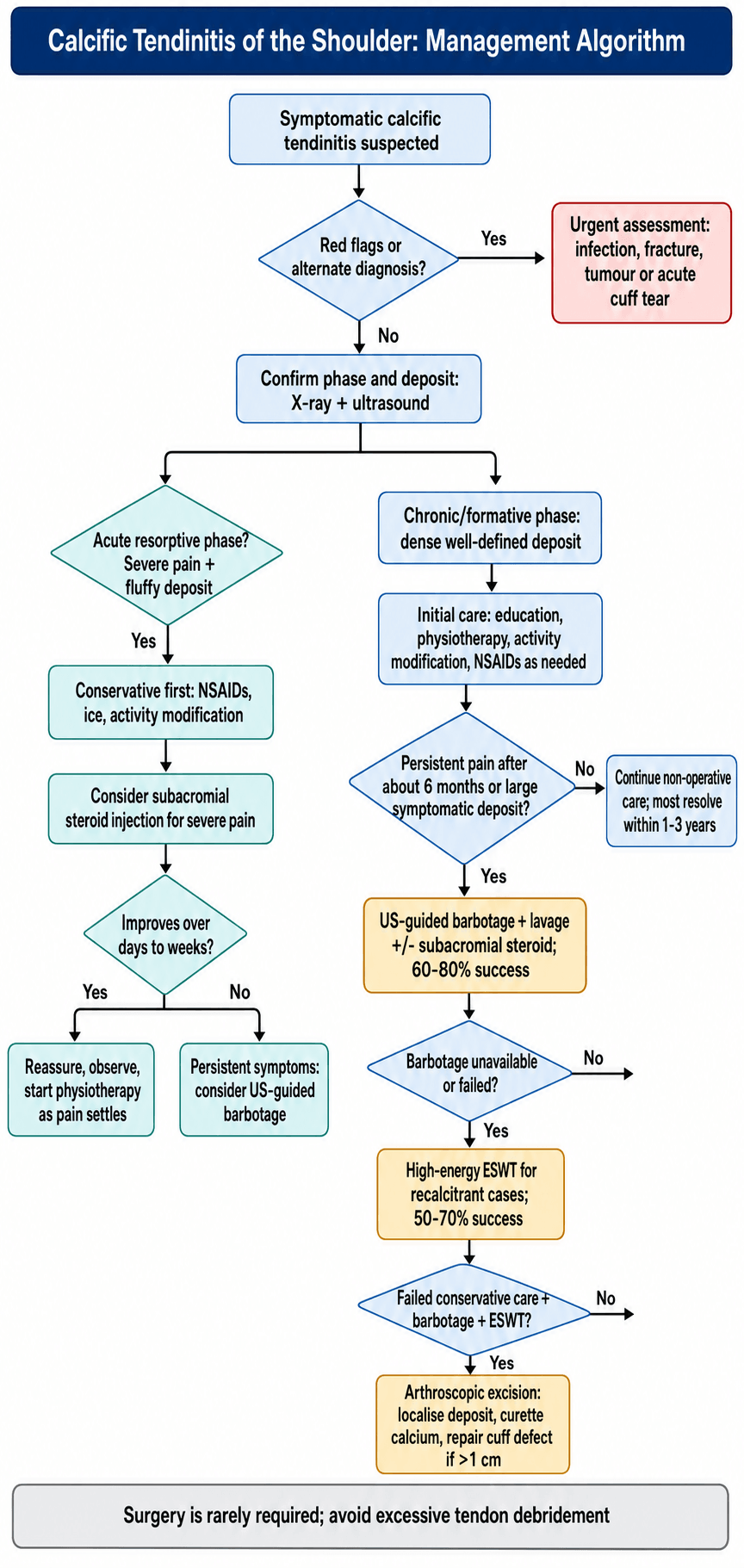
Start with the phase. The acutely painful resorptive deposit is the one to treat conservatively and wait out, because the pain is resorption happening; the dense formative deposit that stays symptomatic is the one that comes to intervention.
Conservative treatment is first-line in both phases. The acute resorptive phase is treated with NSAIDs, ice, activity modification and a subacromial steroid injection; the chronic formative phase with physiotherapy, NSAIDs as needed, and time.
Barbotage is the most effective non-surgical intervention. An ultrasound-guided needle is placed in the deposit, the calcium is aspirated and lavaged, and local anaesthetic and steroid are given; the success rate is 60-80%, and it works best on a formative deposit with soft calcium.
Extracorporeal shock wave therapy is effective for recalcitrant cases and can fragment the calcium, with a success rate of 50-70%. High-energy ESWT is the superior form, and the modality is a good option to exhaust before considering surgery.
Surgery is for genuine failure: conservative treatment for six months or more without relief, a failed barbotage and a failed course of ESWT, or a large symptomatic deposit. It is rarely required and the results are excellent.
Surgical Technique
Ultrasound-guided barbotage. Position the patient supine or seated and identify the deposit on ultrasound. The two-needle technique sets up a circuit, one needle in and one out:
- Insert an 18G needle into the deposit under ultrasound guidance
- Place a second 18G needle as the lavage outflow
- Inject saline and aspirate the calcium, fragmenting the deposit with the needle as required
- Inject corticosteroid into the subacromial bursa
The single-needle technique does the same work in cycles: an 18G needle into the deposit, saline injected, a wait, then aspiration of the calcium-saline mixture, repeated several times.
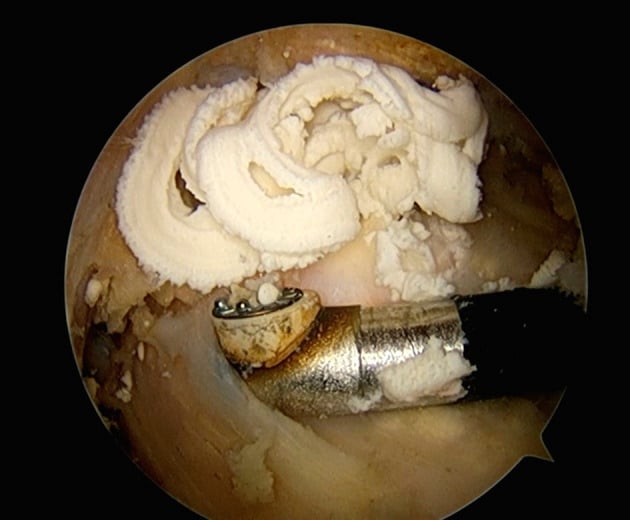
Arthroscopic excision. Beach chair or lateral position, a standard posterior viewing portal, and a diagnostic arthroscopy first to assess the cuff, labrum and biceps. Then:
- Locate the deposit with a spinal needle under fluoroscopy
- Incise the bursal surface over the deposit
- Curette and evacuate the calcium, which is paste-like
- Avoid excessive debridement of healthy tendon
- Add a subacromial decompression only where impingement is present
- Consider a side-to-side repair if the defect is large
Finding it and closing it. The calcium may lie deep within the tendon, which is what makes needle localisation worth the extra minutes. Small defects heal spontaneously and are left alone; repair defects greater than 1cm in transverse dimension.
Why decompression is not routine. Adding a subacromial decompression to the excision does not improve the outcome and lengthens the time to pain-free activity (Marder). Reserve it for the shoulder with genuine coexisting impingement, as in step 5 above.
Minimise debridement of healthy tendon tissue. The goal is to evacuate calcium, not remove tendon. Small defects heal without repair.
Complications
After conservative care. Prolonged symptoms are rare in a condition that is usually self-limiting. The other recognised problems are secondary stiffness amounting to a frozen shoulder, and chronic pain if resorption does not occur.
After barbotage. A pain flare is common. The other recognised complications are:
- Infection - rare, less than 0.1%
- Neurovascular injury - rare with proper technique
- Incomplete calcium removal
After arthroscopic excision. The recognised complications are:
- Rotator cuff tear from debridement
- Incomplete excision leaving residual calcium
- Infection - less than 1%
- Stiffness or frozen shoulder - 2-5%
- Failure to improve symptoms
Recurrence after complete resolution is rare, under 10%, and is commoner when the calcium was incompletely removed at surgery.
Warn patients that pain may temporarily worsen after barbotage or surgery due to inflammatory response to calcium crystal release. This typically settles within 48-72 hours.
Postoperative Care
After barbotage. A sling is used for comfort only for 24-48 hours, with ice and NSAIDs, normal activities as tolerated, and physiotherapy for range and strength. Review at 6-8 weeks with repeat imaging.
After arthroscopic excision. The rehabilitation is staged, protecting the tendon before loading it.
Rehabilitation Protocol
Protection phase: Sling for comfort, pendulum exercises, gentle passive ROM
Motion phase: Progressive active ROM, no resistance, avoid impingement positions
Strengthening phase: Rotator cuff strengthening, scapular stabilisation, progressive resistance
Return to activity: Sport-specific training, full activities when strength recovered
If the cuff was repaired, the standard rotator cuff repair protocol takes over: a sling for 4-6 weeks and no active elevation for 6 weeks.
Outcomes
What predicts a good result. A resorptive-phase deposit is the favourable one because it is going to resolve, and soft and smaller deposits do better. Dense formative deposits, large deposits and an associated cuff tear are the less favourable group.
Guidelines, Registries & Global Practice
Global epidemiology
- Radiographic calcific deposits are found in roughly 3-8% of adults, the majority asymptomatic.
- Peak incidence is in the 30-60 year age group, with a female predominance in most cohorts (around 60-65%).
- The supraspinatus is involved in the large majority of cases; bilateral disease occurs in roughly 10-20% and is a negative prognostic marker (Ogon et al, Arthritis Rheum 2009, PMID 19790063).
- Associations reported across populations include diabetes mellitus, thyroid disorders and a possible genetic/metabolic predisposition, although causation is unproven.
- First-line
- Education, analgesia, physiotherapy, activity modification
- Refractory deposit
- US-guided barbotage and/or ESWT
- Surgery
- Arthroscopic removal after failed non-operative care
- First-line
- Reassurance about self-limiting course, analgesia, physiotherapy
- Refractory deposit
- Barbotage; high-energy ESWT where available
- Surgery
- Arthroscopic excision reserved for true failure
- First-line
- Conservative with staged escalation per Uhthoff phase
- Refractory deposit
- Barbotage plus subacromial steroid; ESWT
- Surgery
- Arthroscopic excision; avoid routine acromioplasty
- First-line
- Conservative first - most resolve
- Refractory deposit
- Barbotage + subacromial steroid favoured by pooled RCT data
- Surgery
- Last resort; do NOT routinely add decompression
Registry and evidence notes
- Calcific tendinitis is a soft-tissue disorder, so it is not tracked by arthroplasty/implant registries (NJR, AJRR, AOANJRR). The strongest evidence base is from RCTs and meta-analyses rather than registries.
- Pooled RCT evidence (network meta-analysis, PMID 27554465) ranks US-guided needling plus subacromial corticosteroid as the preferred non-surgical option, with high-energy ESWT (PMID 14625334) a reasonable alternative.
High- vs limited-resource practice variation
- In well-resourced settings, ultrasound-guided barbotage and high-energy ESWT are widely available and used early for refractory deposits.
- Where musculoskeletal ultrasound or ESWT machines are scarce, management leans on plain radiographs, analgesia, physiotherapy, and image-free subacromial injection, reserving referral for arthroscopy in persistent cases.
- Across all settings the message is the same: counsel patients on the strongly self-limiting natural history before escalating to any intervention.
Controversies & Areas of Uncertainty
High-energy ESWT outperforms low-energy and placebo (PMID 14625334), but the ideal energy flux density, number of sessions and use of imaging guidance remain debated.
Single- vs two-needle technique, optimal needle gauge, and whether to add a subacromial steroid are not standardised, though pooled data favour adding steroid.
After complete excision, evidence is split between leaving small defects to heal and routine repair (PMID 20151109). Most surgeons repair only structurally significant defects.
The trigger for fibrocartilaginous metaplasia and hydroxyapatite deposition is still unknown; hypoxia and a cell-mediated reactive process are favoured over simple degeneration.
MCQ Practice Points
Q: Which phase of calcific tendinitis is most painful? A: Resorptive phase. Vascular invasion and inflammation cause severe pain.
Q: What is the X-ray appearance of resorptive phase? A: Fluffy and ill-defined. Formative phase is dense and well-defined.
Q: What is the most effective non-surgical intervention? A: Ultrasound-guided barbotage (needling). 60-80% success rate.
Q: Which Gartner type has the best prognosis? A: Type III (fluffy, ill-defined) - indicates resorptive phase with active resolution.
Q: What is the most common location for calcific tendinitis? A: Supraspinatus tendon (70-80%), specifically in the critical zone 1-2cm from insertion.
Q: Why should you avoid intratendinous steroid injection? A: It increases the risk of tendon necrosis and rupture and impairs healing. Only inject into the subacromial bursa.
Q: How do you differentiate acute calcific tendinitis from septic arthritis? A: Both present with severe pain and pseudoparalysis, but calcific tendinitis patients are typically afebrile with normal inflammatory markers (CRP/ESR). Aspiration is definitive if in doubt.
Q: Does adding subacromial decompression improve outcomes in surgical excision of calcific tendinitis? A: No. Comparative evidence (Marder et al., JSES 2011) shows no benefit and actually slower recovery; the pathology is intrinsic tendon metaplasia, not extrinsic impingement.
Exam Viva Scenarios
Practise clinical reasoning and management decisions out loud
“A 45-year-old woman presents with sudden severe shoulder pain starting last night. She cannot move her shoulder. X-ray shows a fluffy, ill-defined calcific deposit at the supraspinatus insertion with surrounding soft tissue swelling. What is your diagnosis and management?”
“A 50-year-old male desk worker has chronic shoulder pain for 18 months. X-ray shows a dense, well-defined calcific deposit in the supraspinatus. He has had physiotherapy and two steroid injections without relief. What is your management?”
“A 42-year-old woman had a shoulder X-ray for trauma (normal result). Incidentally, a 1cm dense calcific deposit is seen in the supraspinatus. She has no shoulder pain. How do you manage this?”
Phases
- Pre-calcific: fibrocartilage metaplasia of tenocytes
- Calcific (formative): calcium deposition, may be asymptomatic
- Resorptive: MOST PAINFUL phase, vascular invasion
- Post-calcific: healing and tendon reconstitution
- Phase determines prognosis and treatment approach
X-ray Appearance
- Formative: dense, well-defined, homogeneous
- Resorptive: fluffy, ill-defined, irregular
- Gartner Type I = formative, Type III = resorptive
- X-ray appearance predicts phase and prognosis
- Ultrasound shows soft vs hard calcium consistency
Natural History
- Self-limiting in 80-90% of cases
- Resolves spontaneously in 1-3 years
- Resorptive phase = resolution coming (good sign)
- Symptoms resolve before radiographic changes
- 3-7% adult prevalence, often asymptomatic
Treatment Ladder
- Conservative first: NSAIDs, ice, physio, injection
- Barbotage: 60-80% success (most effective)
- ESWT: 50-70% success, good before surgery
- Arthroscopic excision: 90%+ success, last resort
- Rarely need surgery if barbotage/ESWT offered
Key Exam Points
- Supraspinatus most common (70-80%), critical zone
- Acute severe pain = resorptive = GOOD prognosis
- Dense deposit = chronic, may need intervention
- Counsel about self-limiting nature of condition
- Calcium hydroxyapatite crystals (not CPPD)
Evidence Base
Prognostic Factors in Non-operative Therapy (Ogon)
- Prospective cohort of 420 patients (488 shoulders), mean age 51 years, 64% female
- Failure of non-operative therapy in 114 patients (27%)
- Negative prognostic factors: bilateral disease, anterior acromial localisation, medial (subacromial) extension, large deposit volume
- Positive prognostic factors: Gärtner type III deposit and lack of sonographic sound extinction
Barbotage + Subacromial Steroid vs Injection Alone (de Witte 1-year RCT)
- RCT of 48 patients: US-guided barbotage plus subacromial steroid (group 1) vs isolated subacromial steroid (group 2)
- 1-year Constant score 86.0 vs 73.9 in favour of barbotage (P = .005)
- Mean calcification size reduced 11.6 mm vs 5.1 mm (P = .001)
- More patients in the injection-only group needed additional procedures
Barbotage vs Injection at 5 Years (de Witte midterm RCT)
- 5-year follow-up of the same RCT (48 patients)
- Constant scores converged: 90 (barbotage) vs 87 (injection), no significant difference (P = .58)
- Total resorption 62% vs 73% (P = .45)
- Far fewer additional treatments after barbotage: 4 vs 16 patients (P less than .001)
ESWT for Chronic Calcifying Tendinitis (Gerdesmeyer RCT)
- Double-blind RCT of 144 patients: high-energy vs low-energy ESWT vs sham
- 6-month Constant-Murley improvement 31 (high-energy) vs 15 (low-energy) vs 6.6 (sham), P less than .001
- High-energy ESWT significantly superior to low-energy (P less than .001)
- Improved function, reduced pain and diminished deposit size; no serious adverse events
Arthroscopic Excision - Midterm Results (Balke)
- Case series of 70 shoulders (62 patients), mean 6-year follow-up
- ASES scores improved significantly after surgery but remained below the healthy contralateral shoulder
- Partial supraspinatus tears more frequent on the operated side (11 vs 3 contralateral on ultrasound)
- Additional subacromial decompression did not improve overall scores but reduced postoperative pain
Network Meta-analysis of Non-operative Treatments (Arirachakaran)
- Network meta-analysis of 7 RCTs comparing ESWT, US-guided lavage (barbotage), subacromial injection and combinations
- Combined US-guided needling plus subacromial corticosteroid most improved Constant score and pain VAS and most reduced deposit size
- ESWT significantly better than placebo for pain and function
- No clinically important difference in adverse events between treatments
Subacromial Decompression Adds No Benefit (Marder)
- Comparative study of 50 patients: debridement of the deposit alone (25) vs debridement plus subacromial decompression (25)
- Final QuickDASH and UCLA scores equal in both groups (both high function) at mean 5-year follow-up
- Time to pain-free unrestricted activity shorter WITHOUT decompression (11 vs 18 weeks, P less than .006)
- Adding decompression delayed recovery without improving outcome
Complete Removal + Cuff Repair After Excision (Yoo)
- 35 patients undergoing arthroscopic COMPLETE removal of the calcific deposit
- 18 had a resulting full-thickness defect repaired with suture anchors; 17 had side-to-side repair or debridement
- Pain relief within 6 months in 30 of 35; good clinical outcomes at median 31 months
- 10 of 35 developed secondary stiff shoulder