High Arch | Hindfoot Varus | CMT Most Common | Coleman Block Test Essential
- Coleman block test differentiates flexible vs fixed hindfoot varus - critical for surgical planning
- CMT (Charcot-Marie-Tooth) accounts for 66% of adult cavovarus - rule out neurological causes first
- Plantar-flexed 1st ray is the primary driver - forefoot pronates to get heel to ground, creating hindfoot varus
- Staged reconstruction: soft tissue balancing first, then bony correction if needed
- Posterior tibial tendon transfer for dynamic correction when peroneus brevis is weak
- “Viva question: Walk me through the Coleman block test - what does it tell you?
- “Distinguish idiopathic from neurological causes - CMT, spinal dysraphism, polio
- “Sequential surgery: plantar fascia release → 1st MT osteotomy → calcaneal osteotomy → midfoot osteotomy if needed
- “Complications: overcorrection to valgus, peroneal nerve injury, nonunion after calcaneal osteotomy
Overview and Epidemiology
Cavovarus foot is a complex three-dimensional deformity: a high medial longitudinal arch (cavus), hindfoot varus and forefoot adduction. It is progressive, and early recognition and staging prevent the severe fixed deformity that requires triple arthrodesis.
Causes. In adults the commonest cause is Charcot-Marie-Tooth disease (CMT), a hereditary motor and sensory neuropathy that accounts for 66% of adult cavovarus. Across all causes:
- Neurological, 75%: CMT, spinal dysraphism, residual polio, cerebral palsy
- Idiopathic, 20%: no underlying cause identified
- Traumatic, 5%: compartment syndrome, malunion, neuroma
CMT type 1A is the most common subtype. It is autosomal dominant, results from duplication of the PMP22 gene, and makes up 70% of CMT cases.
Natural history. The deformity worsens over years as the muscle imbalance continues. It leads to lateral ankle instability, with recurrent sprains from varus heel strike, and to peroneal tendinopathy and stress fractures.
Pressure and wear. The plantar-flexed first ray and claw toes concentrate pressure and cause metatarsalgia, and the midfoot and ankle degenerate, with arthritis by the fifth to sixth decade.
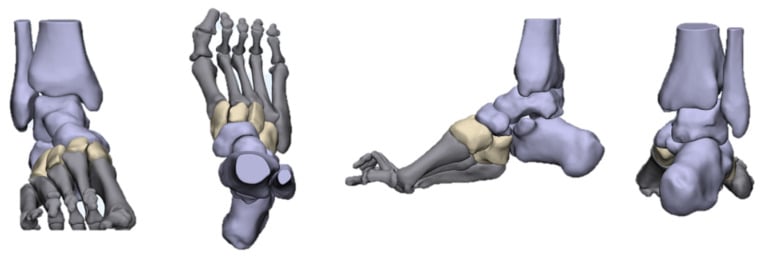
Pathophysiology and Biomechanics
The muscle imbalance in CMT. Peroneal nerve dysfunction selectively weakens peroneus brevis (eversion) and tibialis anterior (dorsiflexion), and with them the long toe extensors, EHL and EDL. Posterior tibialis, supplied by the tibial nerve, stays strong and overpowers the weak peroneals, pulling the hindfoot into varus. The process is dynamic and progressive.
The intrinsics and the toes. Weak intrinsic foot muscles lead to claw toes and an elevated arch. The clawing is flexor overpull against intrinsic weakness, and plantar fascia release helps it. The high arch comes from first-ray plantar flexion and intrinsic imbalance, and a tight Achilles from posterior muscle overactivity adds an equinus component that may need lengthening.
- Innervation
- Superficial peroneal nerve
- CMT Status
- WEAK - overpowered
- Resultant Deformity
- Hindfoot varus (unopposed PT)
- Innervation
- Tibial nerve
- CMT Status
- STRONG - dominant
- Resultant Deformity
- Pulls hindfoot into varus
- Innervation
- Deep peroneal nerve
- CMT Status
- WEAK - drop foot risk
- Resultant Deformity
- Forefoot equinus, steppage gait
- Innervation
- Superficial peroneal nerve
- CMT Status
- WEAK but still fires
- Resultant Deformity
- Plantar-flexes 1st MT, worsens cavus
- Innervation
- Tibial and peroneal nerves
- CMT Status
- WEAK - atrophy
- Resultant Deformity
- Claw toes, loss of arch control
The tripod. The standing foot rests on three points: the first metatarsal head, the fifth metatarsal head and the heel. The weak peroneals cannot resist the pull of peroneus longus, so the first metatarsal plantar-flexes and, when the patient stands, its head is too low. The forefoot pronates to bring it to the ground, and that forefoot pronation forces the hindfoot into functional varus.
Primary and secondary deformity. In most cases the plantar-flexed first ray is the primary driver and the hindfoot varus is secondary to it. If the hindfoot is flexible on the Coleman block, correcting the first ray often corrects the hindfoot without a calcaneal osteotomy; only fixed hindfoot varus needs one. Dynamic gait data have since questioned how universal this model is (see Controversies).
Classification Systems
The deformity is classified by its components, by its cause and by its severity.
- Clinical Findings
- Plantar-flexed 1st MT, claw toes
- Surgical Target
- Correct 1st ray position
- Procedure Options
- Dorsiflexion osteotomy, plantar fascia release
- Clinical Findings
- Heel inverted, lateral ankle instability
- Surgical Target
- Realign calcaneus under tibia
- Procedure Options
- Calcaneal lateralising osteotomy, tendon transfer
- Clinical Findings
- Elevated longitudinal arch
- Surgical Target
- Reduce arch height
- Procedure Options
- Cole midfoot osteotomy if severe
- Clinical Findings
- Tight Achilles, limited dorsiflexion
- Surgical Target
- Lengthen posterior structures
- Procedure Options
- Gastrocnemius recession or TAL
Clinical Assessment
History. CMT is autosomal dominant, so ask whether parents or siblings are affected, and whether the foot has been this shape since childhood or has changed recently and is getting worse.
The complaint. Recurrent lateral ankle sprains are very common. Ask where it hurts: the lateral foot (peroneal tendinopathy), the plantar forefoot (metatarsalgia) or the ankle (arthritis). Ask about difficulty on uneven ground, running or balancing, and about footwear: can they fit standard shoes with the high arch?
Neurological symptoms. Ask about stocking-glove numbness from the sensory neuropathy, and about anterior compartment weakness with foot drop or a steppage gait. CMT also affects the hands, so ask about fine motor difficulty. Loss of proprioception increases the risk of falls.
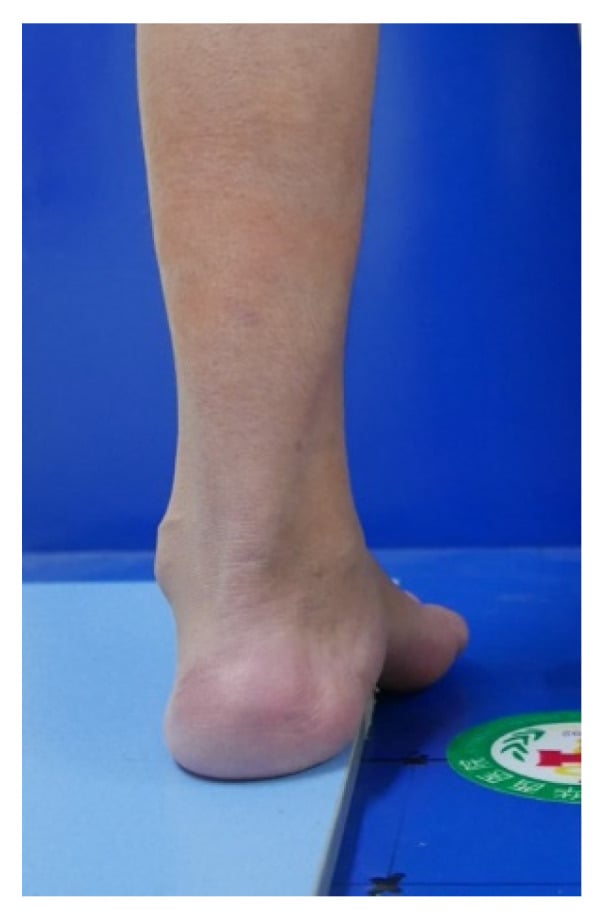
Standing. From behind, look at hindfoot varus, medial arch height and forefoot adduction. From the front, with the feet pointing straight ahead, a visible medial heel pad is the peek-a-boo heel sign of hindfoot varus. Watch the gait for lateral foot strike, ankle instability and a steppage gait if tibialis anterior is weak.
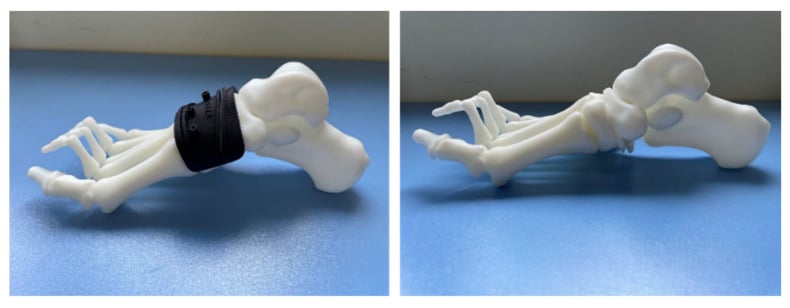
The Coleman block test. This is the single most important clinical examination in the cavovarus foot and the gold standard for assessing flexibility. The patient stands with the lateral foot, the fourth and fifth metatarsals, on a 1-inch block, so that the first and second rays hang free off its edge, and the examiner watches the calcaneus from behind. With the plantar-flexed rays off the block, the test shows whether the hindfoot varus is driven by the forefoot or fixed.
If the hindfoot corrects to neutral or valgus, the varus is flexible and forefoot-driven (Coleman negative), and soft-tissue procedures with a first metatarsal dorsiflexion osteotomy correct it.
If the hindfoot stays in varus, there is a fixed component (Coleman positive), which needs a calcaneal lateralising osteotomy.
Misreading the test leads to undercorrection (persistent varus) or overcorrection (iatrogenic valgus).
Seated. With the foot unloaded, test flexibility and power:
- Passively correct the hindfoot varus: does it reach neutral, or go beyond?
- Can the first metatarsal be dorsiflexed to neutral?
- Ankle dorsiflexion with the knee extended and then flexed, the Silverskiöld test, separates isolated gastrocnemius tightness from combined gastrocnemius-soleus tightness
- Grade power 0-5: in CMT peroneus brevis is weak, tibialis anterior is weak with a possible drop foot, posterior tibialis is overactive and gastrocnemius is usually normal
Neurological examination. Anterior and lateral compartment weakness follows the peroneal nerve distribution, sensory loss is in a stocking-glove pattern, and the Achilles and patellar reflexes are often absent in CMT. Wasting of the anterior and lateral leg gives the stork leg, or inverted champagne bottle, a diagnostic sign. Look too for claw toes and, in the hand, intrinsic wasting (ape hand deformity).
Ankle stability. Chronic lateral instability is common, so perform the anterior drawer and talar tilt tests.
Always examine the spine and screen neurologically. Spinal dysraphism (tethered cord, diastematomyelia) can present as a cavovarus foot. Look for midline skin stigmata (hairy patch, dimple, lipoma), an asymmetric lower limb and bladder dysfunction, and obtain an MRI of the spine if any red flag is present. Missing it leads to progressive neurological deterioration.
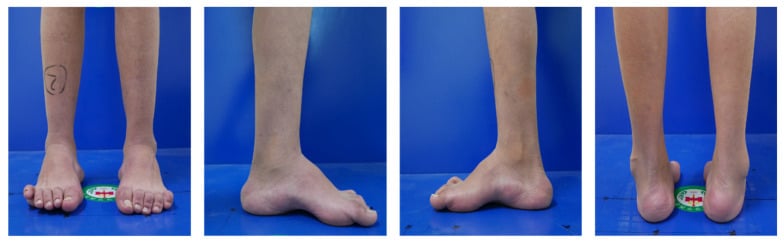
Investigations
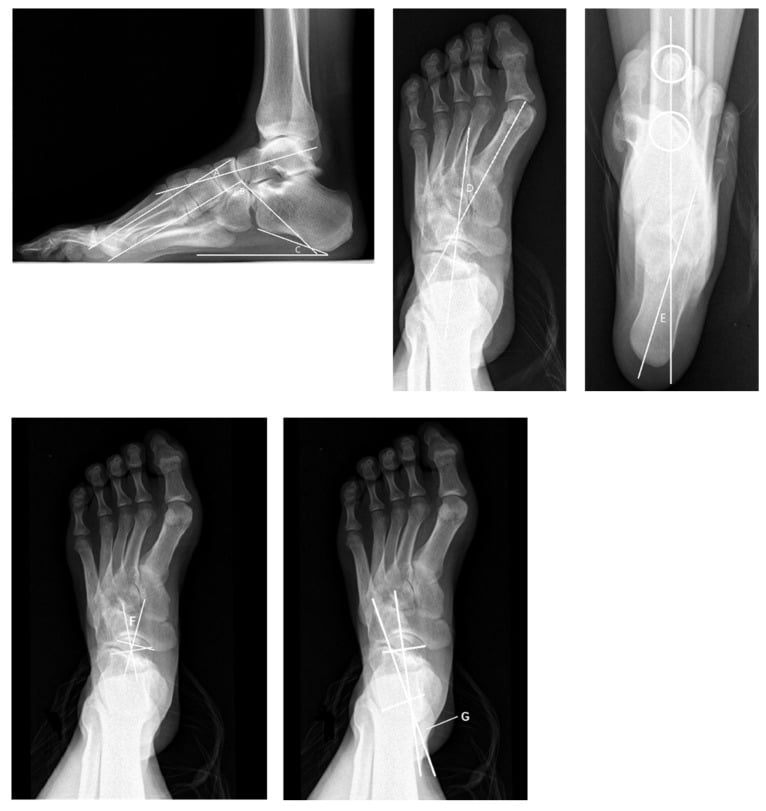
Weight-bearing radiographs come first, and each view answers its own question:
- AP foot: forefoot adduction, the metatarsal break pattern and degenerative change
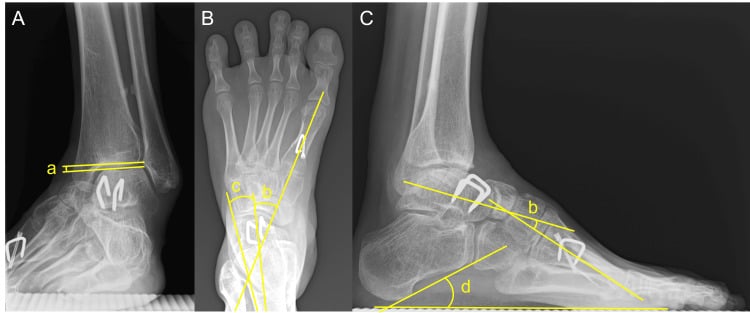
- Lateral foot: calcaneal pitch, the Meary and Hibbs angles, and first metatarsal plantar flexion
- AP ankle: ankle arthritis, and talar tilt from chronic instability
- Hindfoot alignment (Saltzman) view: a weight-bearing coronal view that quantifies the varus or valgus position of the calcaneus under the tibia, a plumb line falling medial to the heel indicating varus. It is essential for planning and for confirming neutral alignment intraoperatively after a calcaneal osteotomy.
The lateral angles. Three are measured on the weight-bearing lateral:
- Calcaneal pitch (calcaneal inclination angle), between the plantar surface of the calcaneus and the floor. Normal is about 20 degrees (roughly 20-30); a pitch over about 30 degrees indicates a calcaneocavus (hindfoot-driven) high arch.
- Meary's angle (talo-first metatarsal angle), between the long axes of the talus and the first metatarsal. Normally these are colinear, about 0 degrees. In cavus the line breaks with its apex pointing dorsally, and the level of that apex (forefoot, midfoot or a smooth curve) localises the deformity.
- Hibbs angle (calcaneal-first metatarsal angle), between the long axes of the calcaneus and the first metatarsal. Normal is roughly 150-175 degrees; under about 150 degrees reflects an elevated arch, and the more acute the angle, the higher the arch.
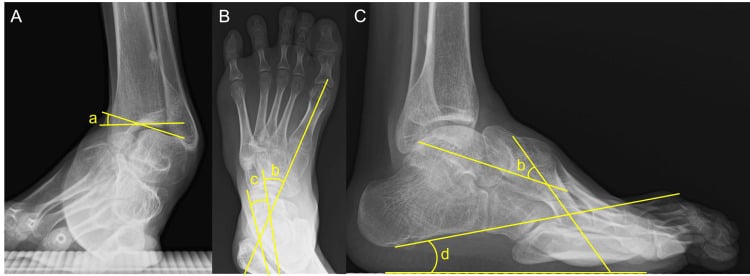
MRI of the foot and ankle is for surgical planning. It shows the peroneal tendons, where split tears and subluxation are common with a varus hindfoot; the lateral ligament complex, with chronic ATFL and CFL injury from recurrent sprains; the ankle articular cartilage; and the quality of the plantar fascia and posterior tibial tendon.
Neurological work-up, when CMT is suspected:
- Nerve conduction studies: reduced motor and sensory conduction velocities in CMT type 1, the demyelinating form
- Electromyography: a denervation pattern in the affected muscles
- Genetic testing: PMP22 duplication for CMT1A
- MRI of the spine: if there is any suspicion of spinal dysraphism or a tethered cord
Dynamic assessment is optional. Pedobarography on a pressure mat demonstrates lateral column overload and forefoot pressure concentrated under the first metatarsal, and gait analysis quantifies ankle instability, varus thrust and the lateral foot contact pattern.
Differential Diagnosis
The first fork is neurological or not. A bilateral, symmetric, progressive cavovarus with a family history is CMT until proven otherwise. A unilateral or rapidly progressive cavovarus mandates spinal imaging to exclude a tethered cord or intraspinal lesion before any foot surgery; missing this leads to relentless recurrence.
- Key Distinguishing Features
- Bilateral, family history, peroneal-pattern wasting (stork leg), absent reflexes, hand involvement
- Decisive Test
- Nerve conduction studies + PMP22 genetic testing
- Key Distinguishing Features
- Unilateral or asymmetric, midline skin stigmata, bladder/bowel symptoms, rapid progression
- Decisive Test
- MRI of whole spine
- Key Distinguishing Features
- Mild, often unilateral, normal neurological exam, non-progressive
- Decisive Test
- Diagnosis of exclusion after full neurological work-up
- Key Distinguishing Features
- History of congenital clubfoot/treatment, midfoot cavus, internal rotation
- Decisive Test
- History + standing radiographs
- Key Distinguishing Features
- Unilateral, prior leg trauma or ischaemia, fixed contracture, normal contralateral foot
- Decisive Test
- History + MRI showing muscle fibrosis
- Key Distinguishing Features
- Recurrent sprains with mild hindfoot varus, no neuropathy
- Decisive Test
- Hindfoot alignment (Saltzman) view + stress radiographs
Non-Operative Management
Who. Non-operative treatment is indicated for:
- Mild deformity with minimal symptoms
- A patient unfit for surgery because of medical comorbidities
- A stable, non-progressive neurological condition
- A patient who refuses surgery or wants to delay it
- Elderly, low-demand patients with acceptable function
Orthoses and footwear. The mainstay is a custom foot orthosis with a lateral heel wedge, which shifts weight medially and unloads the lateral column. High-backed shoes or ankle braces help lateral ankle instability, accommodative padding (plantar metatarsal pads) eases metatarsalgia, rocker-bottom soles reduce forefoot pressure, and an ankle-foot orthosis (AFO) supports severe drop foot in CMT.
The protocol runs in three phases:
- Weeks 1-6, symptom control: NSAIDs, activity modification and ice for acute exacerbations; orthotic fitting; footwear with extra depth, a wide toe box and a rigid shank.
- Weeks 6-12, strengthening: resistance-band eversion exercises for the peroneals, which will not reverse CMT but maintain function; towel curls and marble pick-up for the intrinsics, to slow claw toe progression; single-leg balance and wobble-board work for ankle proprioception.
- Ongoing, monitoring: annual reassessment, with radiographs to monitor progression and examination for worsening varus, and orthoses replaced or modified as the deformity progresses.
When it fails. Non-operative management is temporising, not curative. Offer surgery if the deformity worsens, pain increases or function declines significantly, and in particular for:
- Progressive deformity despite orthoses
- Recurrent ankle sprains, more than two a year
- Severe metatarsalgia affecting walking
- Lateral foot pain from peroneal overload
- Developing ankle arthritis
- Inability to fit into shoes
Management Algorithm
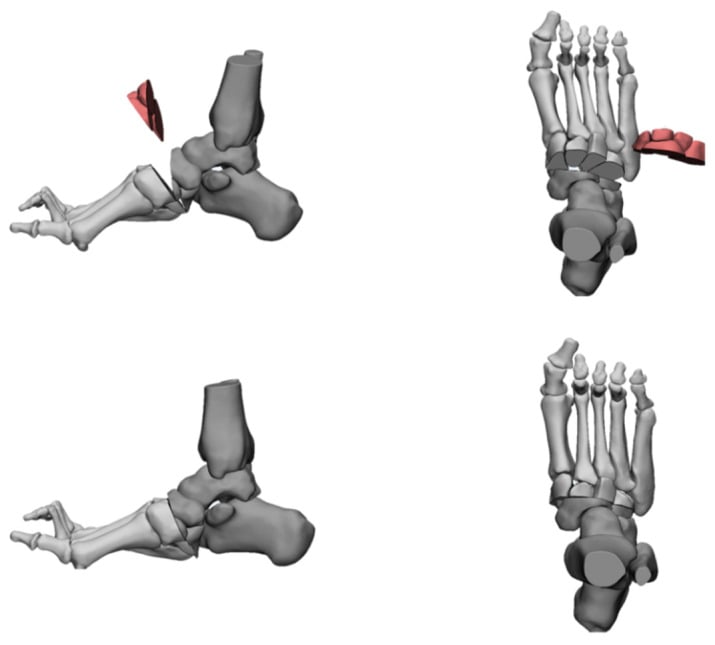
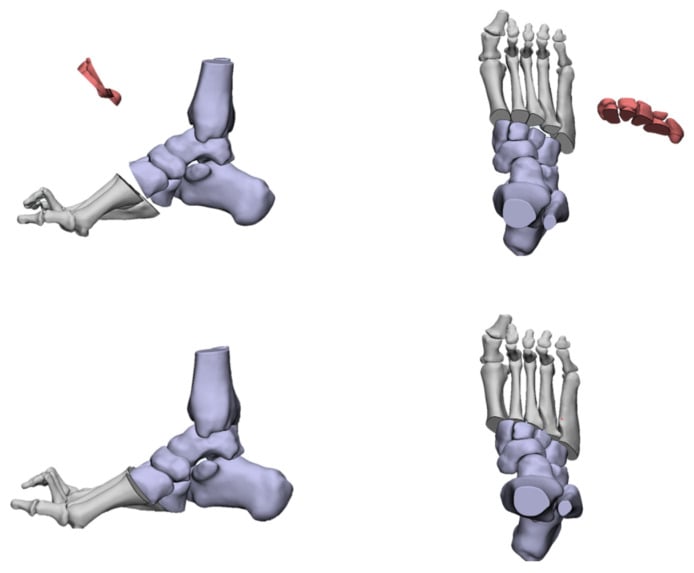
The Coleman block result sets the plan. A flexible hindfoot is corrected through the forefoot, a fixed hindfoot also needs the calcaneus realigned, and a rigid, arthritic foot is a salvage problem. Severe deformity is never corrected all at once: single-stage correction carries a high complication rate, and staging allows assessment after each stage to avoid overcorrection.
The goal is to correct the plantar-flexed first ray. That removes the forefoot pronation and with it the functional hindfoot varus, so the hindfoot corrects to neutral without a calcaneal osteotomy, as the preoperative Coleman block predicted. For a flexible deformity, soft-tissue procedures and the first metatarsal osteotomy are sufficient.
- Plantar fascia release from the calcaneus, with release of the intrinsic origin. It drops the arch and reduces the plantar force on the first metatarsal. Do not over-release: that can create a flatfoot.
- First metatarsal dorsiflexion osteotomy, a dorsal closing wedge at the base (preferred) or a Cotton opening wedge of the medial cuneiform, fixed with a plate and screws or staples. The aim is to bring the first metatarsal to neutral and eliminate the tripod effect.
- Peroneus longus to brevis transfer. Peroneus longus plantar-flexes the first metatarsal; dividing it removes that deforming force, and weaving it into the weak brevis (the CMT pattern) improves eversion strength.
- Claw toe correction, if needed. A Girdlestone-Taylor flexor-to-extensor transfer moves FDL or FHL to the dorsal hood to extend the toes; severe fixed clawing needs fusion of the PIP or DIP joints. The clawed hallux is corrected by the Jones procedure.
- Gastrocnemius recession, if needed. A positive Silverskiöld test, ankle dorsiflexion of less than 5 degrees with the knee extended that improves with the knee flexed, indicates isolated gastrocnemius tightness, treated by a Strayer recession at the musculotendinous junction.
- Coleman Block Result
- N/A - observation
- Primary Procedure
- Custom orthotics with lateral wedge
- Key Pearl
- Many patients never need surgery
- Coleman Block Result
- Hindfoot corrects to neutral on block
- Primary Procedure
- Plantar fascia release + 1st MT osteotomy
- Key Pearl
- Forefoot-driven deformity - fix the 1st ray
- Coleman Block Result
- Hindfoot stays varus on block
- Primary Procedure
- Add calcaneal lateralising osteotomy
- Key Pearl
- Fixed deformity needs bone realignment
- Coleman Block Result
- Fixed hindfoot, weak eversion
- Primary Procedure
- Staged: soft tissue first, then calcaneal osteotomy + tendon transfers
- Key Pearl
- CMT pattern - transfer posterior tibial to dorsum or peroneals
Surgical Technique: Key Procedures
Consent. Discuss each of these before any reconstruction:
- Infection: 2-3% superficial, 1% deep
- Nerve injury: the sural nerve with the lateral approach, the medial plantar nerve with plantar fascia release
- Nonunion of a calcaneal or midfoot osteotomy
- Overcorrection to valgus, which is difficult to salvage and may need revision
- Recurrence, if the underlying cause (CMT) is progressive
- The need for staged procedures: severe deformity may require 2-3 operations
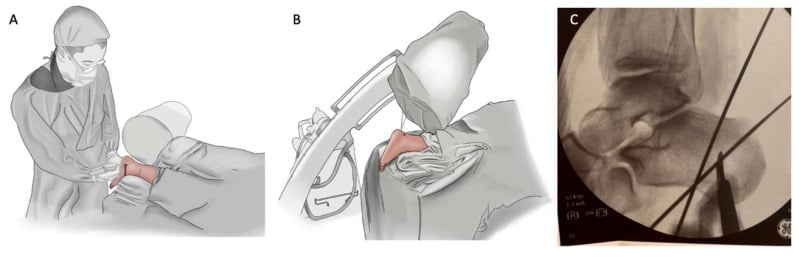
Equipment. An oscillating saw and osteotomes; small-fragment plates and screws for the first metatarsal and cannulated screws for the calcaneus; a tendon passer and whipstitch sutures (FiberWire) for the transfers; K-wires for temporary fixation during correction; and a C-arm, which is essential for the bone cuts.
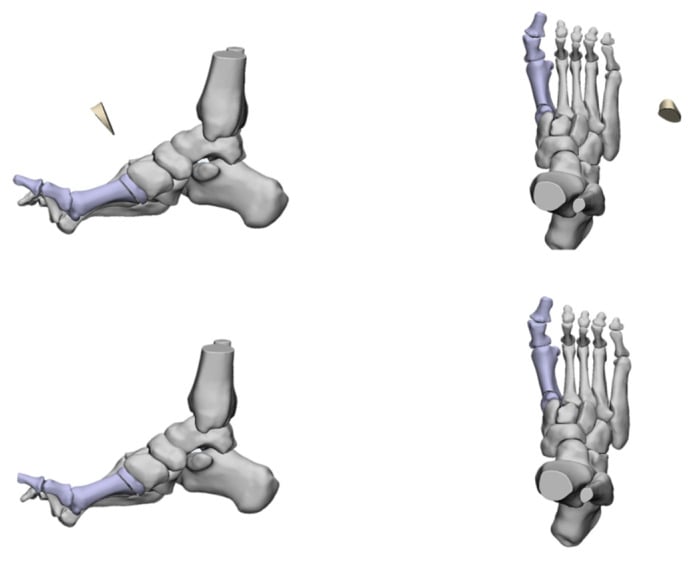
Plantar fascia release is the cornerstone of soft-tissue correction: it drops the arch and reduces tension on the plantar structures. The approach is plantar medial (Steindler stripping) or plantar lateral (endoscopic). For the plantar medial approach:
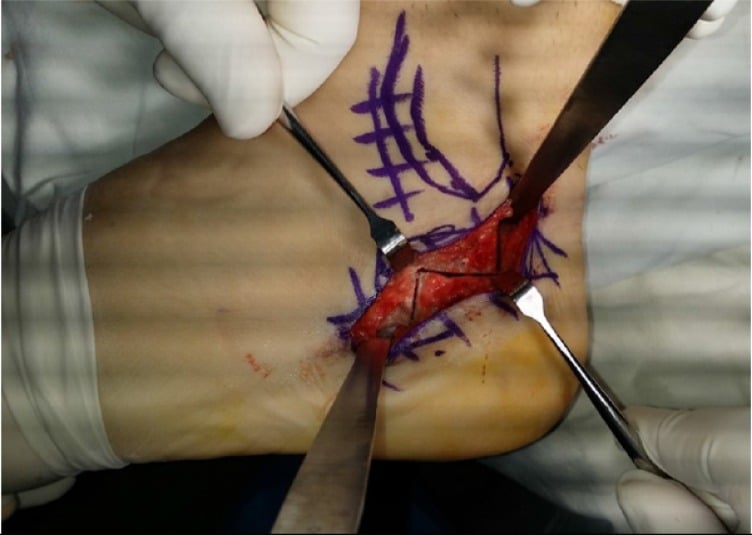
- Position and incision. Supine with a bump under the ipsilateral hip and the foot externally rotated. Make a 3-4 cm longitudinal incision over the plantar medial foot, centred on the medial calcaneal tuberosity; palpate the tuberosity and stay medial to avoid the lateral plantar nerve.
- Release. Identify the plantar fascia, a thick white band, and the origins of abductor hallucis and flexor digitorum brevis. Release the fascia sharply from its calcaneal origin, then strip the intrinsic origins (Steindler stripping) to drop the arch maximally, staying on bone.
- Closure. Irrigate, close the deep fascia with absorbable suture and the skin with nylon, and apply a compression dressing to prevent haematoma.
The medial plantar nerve runs deep to abductor hallucis and is at risk in the plantar medial approach; staying on bone during the release avoids it. Injury causes permanent plantar numbness and a painful neuroma. Test sensation before discharge.
- Cause
- Fixed component underestimated, Coleman block misinterpreted
- Solution
- Add calcaneal lateralising osteotomy - stage if necessary
- Cause
- Excessive lateral translation (greater than 10mm)
- Solution
- Remove screws, reduce translation to 8mm, re-fix with fluoroscopy confirmation
- Cause
- Inadequate fixation, osteoporotic bone
- Solution
- Add dorsal plate (not just screws), consider bone graft or substitute
- Cause
- Soft tissue tethering, incomplete osteotomy
- Solution
- Complete osteotomy with osteotome plantarly, release periosteum circumferentially
The Jones Procedure (Clawed Hallux Correction)
The problem. In cavovarus, especially CMT, a weak tibialis anterior recruits extensor hallucis longus (EHL) to help dorsiflex the ankle. The over-recruited EHL cocks up the hallux into a clawed great toe, the MTP joint hyperextended and the IP joint flexed. Because its distal pull acts on the toe rather than the metatarsal, it also indirectly depresses (plantarflexes) the first metatarsal and worsens the cavus.
The operation (Robert Jones, 1916). The EHL is detached distally and transferred into the neck of the first metatarsal, and the hallux IP joint is fused (or tenodesed). This achieves three things at once:
- It removes the deforming plantarflexion force on the first ray
- It converts EHL into a first metatarsal dorsiflexor, augmenting correction of the plantarflexed first ray
- It straightens the clawed hallux, the IP fusion preventing recurrent clawing
Where it fits. It is a soft-tissue adjunct performed with the plantar fascia release and first metatarsal osteotomy during the forefoot-correction stage: the hallux equivalent of the Girdlestone-Taylor flexor-to-extensor transfer used for the clawed lesser toes.
Complications
- Incidence
- 5-10%
- Risk Factors
- Excessive calcaneal lateralisation, weak PT tendon
- Management
- Difficult to salvage - may need medialising osteotomy, PT augmentation, or arthrodesis
- Incidence
- 10-15%
- Risk Factors
- Inadequate correction, fixed component underestimated
- Management
- Revision calcaneal osteotomy, add tendon transfer, consider triple arthrodesis
- Incidence
- 5-10% (calcaneal), 10-15% (midfoot)
- Risk Factors
- Smoking, osteoporosis, inadequate fixation
- Management
- ORIF with bone graft, revision fixation, consider bone stimulator
- Incidence
- 5-10%
- Risk Factors
- Lateral calcaneal approach, nerve not identified
- Management
- Numbness permanent, neuroma may require excision and nerve burial
- Incidence
- 5-8%
- Risk Factors
- Lateral foot surgery, thin skin, smoking
- Management
- Local wound care, VAC therapy if deep, flap coverage if severe
- Incidence
- 20-30% (CMT patients)
- Risk Factors
- Progressive neurological disease (CMT), inadequate initial correction
- Management
- Revision surgery, counsel about progression with CMT, may need multiple revisions over lifetime
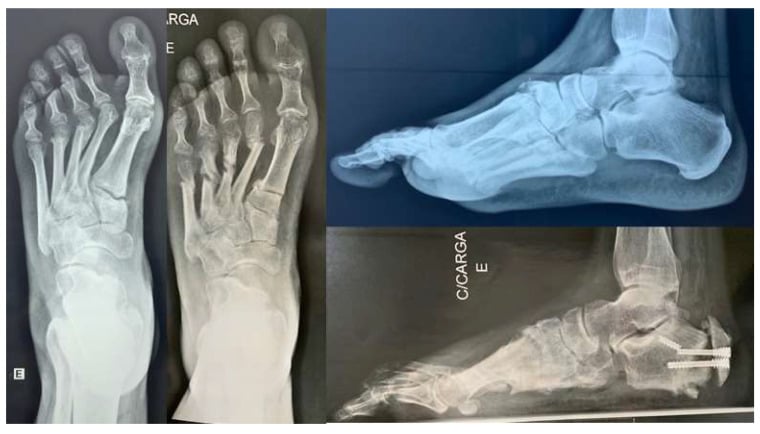
Overcorrecting the hindfoot into valgus is the most difficult complication to salvage. Patients develop medial ankle pain, medial column overload, posterior tibial tendon dysfunction and a progressive planovalgus deformity. Prevention is intraoperative: confirm on fluoroscopy (Saltzman view) that alignment is neutral or in slight valgus, not excessive valgus, and limit calcaneal translation to 8-10mm at most. If in doubt, undercorrect slightly, since varus is easier to revise than valgus.
Recurrence in CMT. The 20-30% recurrence of deformity in CMT patients is quoted over 10-15 years.
Postoperative Care and Rehabilitation
After plantar fascia release and first metatarsal osteotomy, full recovery takes 3-6 months, and patients can usually walk comfortably in shoes by 8-10 weeks.
Recovery Timeline
Non-weight-bearing in a posterior splint or CAM boot, with the leg elevated above the heart to reduce swelling. DVT prophylaxis with aspirin or LMWH if high risk. Remove the dressing at 2 weeks and check the wound for infection.
Progress to weight-bearing as tolerated in the CAM boot, with gentle ankle pumps and toe curls, and no running, jumping or pivoting. Radiographs at 6 weeks check osteotomy healing and that alignment is maintained.
Wean from the boot to supportive shoes with custom orthoses; peroneal and intrinsic strengthening and proprioception training; return to low-impact activity such as walking, swimming and cycling.
Radiographs at 3 months confirm union, then a gradual return to running and jumping sports. Custom orthoses continue indefinitely, especially in CMT.
Outcomes and Prognosis
- Success Rate
- 85-90% correction maintained at 5 years
- Patient Satisfaction
- High (greater than 80%)
- Common Residual Complaints
- Mild stiffness, continued need for orthoses
- Success Rate
- 75-85% correction at 5 years
- Patient Satisfaction
- Good (70-80%)
- Common Residual Complaints
- Lateral foot numbness (sural nerve), hindfoot stiffness
- Success Rate
- 90-95% pain relief, 100% correction
- Patient Satisfaction
- Good (75-85%)
- Common Residual Complaints
- Complete hindfoot stiffness, gait abnormality, ankle arthritis risk
- Success Rate
- 70-80% avoid arthrodesis long-term
- Patient Satisfaction
- Moderate (65-75%)
- Common Residual Complaints
- Prolonged recovery (12-18 months), multiple surgeries, recurrence risk
Predictors of a poor outcome. In the patient, they are:
- CMT type 1A, which has a higher recurrence rate than idiopathic cavovarus
- Severe preoperative deformity, with a calcaneal pitch over 40 degrees
- Fixed deformity that cannot be passively corrected to neutral
- Age over 50: lower activity demands but more medical comorbidity
- Smoking, which doubles the nonunion risk and triples the wound complication risk
In the surgery. Inadequate correction leaves residual varus and recurrent lateral ankle instability, while overcorrection to valgus creates new problems. Single-stage correction of severe deformity has a high complication rate compared with a staged approach. Failing to address every component, such as correcting the hindfoot but not the first ray, predicts a poor result, as does nonunion of an osteotomy, which requires revision and delays recovery.
Counselling in CMT. Surgery delays progression and improves function, but it does not cure the underlying neuropathy, and revision surgery may be needed. Lifelong custom orthoses are essential. Even so, most CMT patients report significant improvement in pain, ankle stability and the ability to wear shoes, and operating while the deformity is moderate, before severe fixed changes, gives the best long-term results.
Guidelines, Registries & Global Practice
- CMT prevalence: approximately 1 in 2,500 worldwide - the commonest inherited neuromuscular disorder, and the dominant neurological cause of adult cavovarus
- CMT1A (PMP22 duplication) is the single most common genetic subtype globally
- Over half of CMT patients develop foot/ankle deformity, of which cavovarus is by far the commonest
- Idiopathic cavovarus and residual/overcorrected clubfoot account for most non-neurological cases
- Bilateral, slowly progressive presentation is typical of a hereditary cause; unilateral or rapidly progressive deformity should prompt spinal cord imaging
- High-resource settings: nerve conduction studies, genetic testing, gait/pedobarography, weight-bearing CT, and staged joint-sparing reconstruction are routine
- Limited-resource settings: diagnosis often clinical; tendon transfers and osteotomies favoured over implant-dependent techniques; custom orthoses may be unavailable
- Triple arthrodesis remains an important, durable salvage where staged reconstruction or long follow-up is not feasible
- Lifelong orthotic supply and neurology follow-up are the main access barriers for CMT patients globally
- Emphasis
- Identify neurological cause; flexibility-based algorithm
- Practical Recommendation
- Coleman block test drives surgery; joint-sparing osteotomy/tendon transfer before arthrodesis
- Emphasis
- Multidisciplinary work-up with neurology and genetics
- Practical Recommendation
- Exhaust orthotic management; stage soft tissue then bone; reserve fusion for rigid/arthritic feet
- Emphasis
- Deformity-component analysis and fixation principles
- Practical Recommendation
- Correct apex of deformity; protect sural and plantar nerves; confirm hindfoot alignment with fluoroscopy
- Emphasis
- Early intervention in flexible deformity
- Practical Recommendation
- Operate while deformity is flexible to delay fixed changes and arthritis, especially in progressive CMT
Document discussion of the following with every cavovarus reconstruction patient:
- Overcorrection to valgus - the hardest complication to salvage; must be specifically discussed
- Recurrence in CMT - radiographic recurrence of hindfoot varus is common over the long term because the underlying neuropathy is progressive; this is not a surgical failure
- Staged surgery - severe deformity often needs 2-3 procedures, planned not failed
- Nerve injury - sural nerve (lateral calcaneal approach) and medial plantar nerve (plantar fascia release), with risk of permanent numbness or neuroma
- Nonunion - higher for midfoot than calcaneal osteotomy; smoking markedly increases risk
- Prolonged recovery and impact on work - months of restricted weight-bearing after bony procedures
- CMT1A is autosomal dominant: roughly 50% transmission risk to each child - offer genetics/neurology referral for confirmed or suspected CMT and at-risk relatives
- Genetic confirmation (e.g. PMP22 duplication testing) supports diagnosis, prognostic counselling and family screening
- Lifelong multidisciplinary follow-up: neurology, orthotics/AFO provision, physiotherapy for gait and falls prevention, and orthopaedic surveillance for deformity progression
Controversies and Areas of Uncertainty
Is the deformity truly forefoot-driven? The classic teaching, a plantarflexed first ray driving hindfoot varus through the tripod effect, underpins the Coleman block test. Dynamic pedobarography (Ferguson et al., 2024) found first-ray-first contact in only about 40% of varus CMT feet, suggesting that many feet are pre-positioned in varus by progressive muscle imbalance rather than purely forefoot-driven. The block test remains useful but may oversimplify a multifactorial deformity.
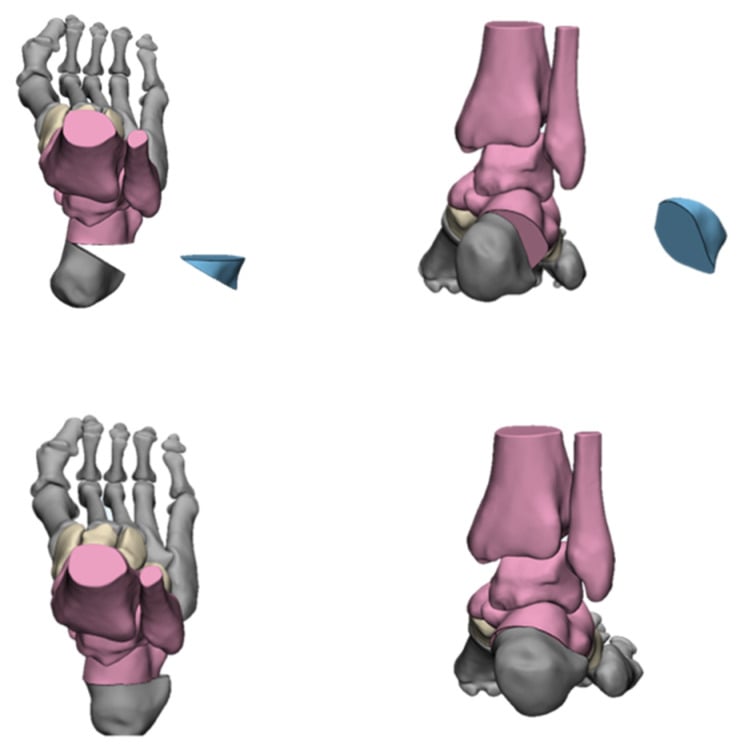
Which calcaneal osteotomy? No high-level trial defines the optimal hindfoot osteotomy. The lateral translation (slide) and the Z (Malerba) osteotomy are now generally preferred over the classic Dwyer lateral closing wedge because they correct alignment without shortening the calcaneus or altering the Achilles moment arm. Comparative outcome data remain limited and largely retrospective.
Joint-sparing reconstruction or triple arthrodesis? Long-term data favour joint-sparing surgery in flexible deformity, with lower arthritis and reoperation rates than historical fusion series. The threshold of rigidity and arthritis at which to abandon reconstruction for triple arthrodesis is not precisely defined, and remains a judgement call.
Timing and transfer selection. Whether to operate early in flexible CMT to delay fixed changes, and which tendon transfers best balance a progressive neuropathy, are debated. Because CMT continues to progress, no transfer fully prevents recurrence, and revision over a lifetime is common.
MCQ Practice Points
Q: What is the most common cause of cavovarus foot deformity in adults? A: Charcot-Marie-Tooth disease (CMT) accounts for 66% of adult cavovarus cases. CMT is a hereditary motor and sensory neuropathy causing peroneal nerve dysfunction, leading to weak peroneals (eversion) and overactive posterior tibialis (inversion), creating hindfoot varus. Idiopathic cavovarus accounts for 20%, with the remainder due to spinal dysraphism, polio, or trauma.
Q: What does the Coleman block test assess, and how do you interpret it? A: The Coleman block test differentiates flexible (forefoot-driven) from fixed (structural) hindfoot varus. The patient stands on a 1-inch block under the lateral foot (4th and 5th MTs), allowing the plantar-flexed 1st and 2nd rays to hang free. Interpretation: If the hindfoot corrects to neutral or valgus, the varus is flexible and forefoot-driven - soft tissue procedures and 1st MT osteotomy are sufficient. If the hindfoot stays in varus, there is a fixed component requiring calcaneal lateralizing osteotomy. This test is the gold standard for surgical planning.
Q: Explain the tripod effect and how it creates hindfoot varus in cavovarus foot. A: The foot normally bears weight on three points: 1st MT head, 5th MT head, and calcaneus (tripod). In cavovarus, the plantar-flexed 1st ray creates an imbalance - the 1st MT head is too low. When the patient stands, the forefoot pronates (medial arch drops) to get the 1st MT to the ground and maintain the tripod. This forefoot pronation forces the hindfoot into functional varus alignment. By correcting the plantar-flexed 1st ray (dorsiflexion osteotomy), you eliminate the forefoot pronation and the hindfoot spontaneously corrects to neutral - proven by Coleman block test.
Q: What is the most common complication of calcaneal lateralizing osteotomy and how do you prevent it? A: The most common nerve complication is sural nerve injury (5-10% incidence), causing permanent lateral foot numbness and potentially painful neuroma. The sural nerve runs along the lateral border of Achilles and courses behind the lateral malleolus - at high risk during lateral calcaneal approach. Prevention: Identify the sural nerve early in the dissection, protect it with retraction, and stay anterior to the nerve during periosteal elevation. The most devastating surgical complication is overcorrection to valgus from excessive lateral translation, which is very difficult to salvage. Prevention: Use intraoperative fluoroscopy (Saltzman view), limit translation to 8-10mm maximum, aim for neutral alignment not valgus.
Q: Why is staged surgical reconstruction preferred over single-stage correction for severe cavovarus foot? A: Staged reconstruction reduces complications and allows assessment after each stage to avoid overcorrection. Stage 1: Soft tissue procedures (plantar fascia release, peroneus longus to brevis transfer) and 1st MT dorsiflexion osteotomy to correct the forefoot. Reassess at 3-6 months with weight-bearing X-rays. Stage 2 (if needed): Calcaneal lateralizing osteotomy if hindfoot varus persists. Stage 3 (rare): Midfoot dorsal closing wedge osteotomy for severe residual cavus. Single-stage correction of severe deformity has high rates of overcorrection, undercorrection, wound complications, and nonunion. Staged approach takes longer (12-18 months total) but has more predictable outcomes.
Q: What is the recurrence rate of cavovarus deformity after surgical correction in CMT patients, and why does it occur? A: Recurrence of deformity is common in CMT - long-term series (e.g. Ward et al., JBJS 2008) show that most feet develop some radiographic recurrence of hindfoot varus over 10-26 years, far more than in idiopathic cavovarus. Reason: CMT is a progressive neurological disease - the muscle imbalance (weak peroneals, overactive posterior tibialis) continues to worsen over time despite surgical correction. Surgery delays progression and improves function but does not cure the underlying neuropathy. Management: Counsel patients preoperatively about recurrence risk, lifelong custom orthoses, and possible need for revision surgery in the future. Timing surgery when deformity is moderate (before severe fixed changes) gives best long-term results.
Exam Viva Scenarios
Practise clinical reasoning and management decisions out loud
“A 28-year-old woman presents with bilateral high-arched feet, recurrent lateral ankle sprains (3-4 per year), and difficulty finding comfortable shoes. Her father has similar foot shape. On examination, you note high medial arches, hindfoot varus, and muscle wasting in the anterior and lateral compartments of both legs. What is your assessment and how do you proceed?”
“You have performed a Coleman block test on a patient with moderate cavovarus foot deformity. The hindfoot corrects to neutral when the 1st and 2nd rays are allowed to hang free off the block. The patient has failed orthotic management and wishes to proceed with surgery. Walk me through your surgical plan and technique for the primary procedure.”
“You performed a calcaneal lateralizing osteotomy for fixed hindfoot varus in a cavovarus foot patient 6 months ago. The patient returns complaining of new medial ankle pain and feeling like they are walking on the inside of their foot. On examination, the hindfoot appears to be in valgus alignment. X-rays show the calcaneal osteotomy has healed with 15mm of lateral translation. How do you manage this?”
Key Pathophysiology
- CMT 66% of adult cavovarus - peroneal nerve dysfunction, weak peroneals, overactive PT = varus
- Plantar-flexed 1st ray = primary deformity, forefoot pronates to get heel down = functional hindfoot varus
- Coleman block test = gold standard for flexibility: corrects on block = flexible (1st MT osteotomy sufficient), stays varus = fixed (needs calcaneal osteotomy)
- Tripod effect: 1st MT too low → forefoot pronates → hindfoot varus to compensate
Clinical Assessment Essentials
- Coleman block test: Stand on 1-inch block under lateral foot (1st/2nd rays off) - does hindfoot correct?
- Peek-a-boo heel sign: Medial heel pad visible from the front with feet straight ahead = hindfoot varus
- Muscle testing: Weak peroneus brevis (eversion), weak TA (dorsiflexion), strong PT (inversion)
- Stork leg appearance: Muscle wasting anterior/lateral leg in CMT
- Calcaneal pitch angle: greater than 30 degrees = cavus (normal 20 degrees)
Surgical Algorithm
- Flexible hindfoot (Coleman negative): Plantar fascia release + 1st MT dorsiflexion osteotomy + PL to PB transfer
- Fixed hindfoot (Coleman positive): Stage 1 forefoot correction, Stage 2 calcaneal lateralizing osteotomy if varus persists
- Severe deformity: Staged approach over 12-18 months (soft tissue → bone → midfoot if needed)
- End-stage (arthritis): Triple arthrodesis salvage
Surgical Pearls
- Plantar fascia release: Stay on bone to protect medial plantar nerve (runs deep to abductor hallucis)
- 1st MT osteotomy: 5-8mm dorsal closing wedge at base, plate fixation
- Calcaneal osteotomy: Limit lateral translation to 8-10mm max, use fluoroscopy (Saltzman view) to avoid overcorrection
- PL to PB transfer: Removes 1st MT plantar flexion force, augments weak eversion
Complications and Management
- Overcorrection to valgus (5-10%): Worst complication, needs calcaneal medializing revision, hard to salvage
- Sural nerve injury (5-10%): Lateral calcaneal approach, permanent lateral foot numbness
- Nonunion (5-10% calcaneal, 10-15% midfoot): Revision ORIF with bone graft
- Recurrence in CMT (20-30%): Progressive neuropathy, may need revision at 10-15 years
Evidence Base and Key Studies
Coleman & Chesnut: The Original Hindfoot Flexibility Test (Landmark)
- Original description of the block test for assessing hindfoot flexibility in the cavovarus foot
- Patient stands on a block under the lateral border of the foot, allowing the plantarflexed first ray to drop free
- If the heel varus corrects, the hindfoot is flexible and the deformity is forefoot-driven
- If the heel remains in varus, a fixed hindfoot component is present requiring bony hindfoot correction
- Established the principle that surgical planning hinges on whether hindfoot varus is flexible or fixed
Ward et al: 26-Year Outcomes of Flexible Cavovarus Reconstruction in CMT
- Retrospective study of 25 patients (41 feet) with CMT-related flexible cavovarus, operated 1970-1994
- Algorithmic reconstruction: first metatarsal dorsiflexion osteotomy, peroneus longus to brevis transfer, plantar fascia release, EHL transfer, selective tibialis anterior transfer
- Mean follow-up 26.1 years (mean age 41.5 years at review)
- Cavus correction well maintained, though most feet showed some radiographic recurrence of hindfoot varus
- No patient required a triple arthrodesis; 7 patients (8 feet) underwent 11 subsequent foot or ankle operations, and moderate-to-severe osteoarthritis was present in 11 of the 41 feet; smokers had significantly worse Foot Function Index pain and disability scores (p less than 0.0001)
Ferguson et al: Is the Plantarflexed First Ray Really the Primary Deformity?
- Dynamic pedobarographic analysis of 118 feet in 60 children with CMT (68 varus vs 50 non-varus feet)
- Tested the classic forefoot-driven (tripod) hypothesis underlying the Coleman block test
- First ray contacted the ground before the fifth ray in only 39.7% of varus feet vs 34.0% of non-varus feet (P=0.526, not significant)
- About 60% of varus feet landed in varus BEFORE the first ray made contact, suggesting the foot is pre-positioned in varus
- Challenges the assumption that first ray plantarflexion is always the single primary driver of CMT hindfoot varus
Chen et al: Calcaneal Z-Osteotomy for Hindfoot Cavovarus
- Retrospective series of 14 feet in 12 adults treated with the Malerba calcaneal Z-osteotomy for hindfoot varus
- At mean 80 months, VAS pain improved 7.86 to 1.64, Foot Function Index 57.78% to 18.11%, AOFAS 39.57 to 80.71 (all statistically significant)
- Hindfoot alignment corrected from 19.83 degrees varus to 8.50 degrees varus; Meary angle and calcaneal pitch also improved
- Complications: 1 nonunion and 1 sural nerve neuralgia, both ultimately doing well; no tarsal tunnel syndrome
- Every patient stated they would undergo the procedure again
Saltzman et al: 25- and 44-Year Outcomes of Triple Arthrodesis (Landmark)
- 67 feet in 57 young patients reviewed at average 25 and 44 years after triple arthrodesis for hindfoot deformity
- Most common indication was neuromuscular imbalance (poliomyelitis 55%, CMT 9%, spinal cord 6%, cerebral palsy 4%)
- By the second follow-up, ALL ankles had developed degenerative changes and 55% of feet/ankles were painful
- Pseudarthrosis occurred in 13 feet; need for walking support rose from 32% to 68% over time
- Despite progressive adjacent-joint arthritis, 54 patients (95%) remained satisfied with the operation
Rosenbaum et al: The Cavus Foot - Contemporary Review
- Narrative review framing cavus deformity as a consequence of muscle imbalance presenting in childhood or adulthood
- Neurologic, traumatic, idiopathic and residual clubfoot causes identified; CMT emphasized as the dominant neurologic cause
- Stresses thorough history and examination (Coleman block test, peek-a-boo sign, Meary angle) to identify the underlying cause
- Conservative measures (orthoses, bracing) used first, with surgery reserved for refractory cases
- Surgical goal is to rebalance muscle forces via tendon transfers and osteotomies, with fusion reserved for the most severe deformity