Osteoporotic Most Common | Anterior Column Failure | Usually Non-Operative
- Osteoporotic VCFs are anterior column failures - PLC is intact, therefore stable
- Non-operative management is first-line for most compression fractures
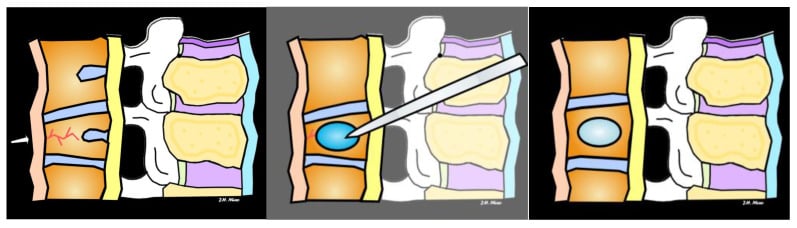
- Kyphoplasty vs Vertebroplasty: Kyphoplasty uses balloon to restore height before cement
- Red flags: Neurological deficit, PLC injury, retropulsed bone = NOT simple compression
- INVEST trial: No benefit of vertebroplasty over sham procedure
- “Compression fractures are STABLE (anterior column only, PLC intact)
- “Kyphotic deformity greater than 30 degrees may warrant surgery
- “Pathologic fracture workup: myeloma, metastasis, lymphoma
- “Cement augmentation controversial - INVEST and VERTOS trials showed mixed results
Overview and Epidemiology
Definition. A vertebral compression fracture (VCF) is failure of the anterior column under compressive load, with loss of vertebral body height. The middle and posterior columns remain intact, which is what separates it from a burst fracture and what makes it an inherently stable injury.
Who, and why. Three groups, and the first dominates:
- Osteoporotic (75%) - post-menopausal women and elderly men with a T-score below -2.5 on DEXA, after a minimal-trauma mechanism such as bending, coughing or lifting. Most common at the thoracolumbar junction, T12-L1.
- Pathological (10-15%) - metastatic disease (breast, prostate, lung, renal, thyroid), multiple myeloma, primary bone tumours and metabolic bone disease.
- Traumatic (10-15%) - a high-energy mechanism in a young patient, a fall from height or a motor vehicle accident, often with other injuries.
Global burden. VCFs are the most common osteoporotic fracture worldwide: roughly 1.4 million are clinically diagnosed each year, and the lifetime risk in a 50-year-old woman approaches 16%. Around two-thirds are never clinically recognised and are found incidentally on imaging, so prevalence vastly exceeds diagnosed incidence.
Anatomy and Biomechanics
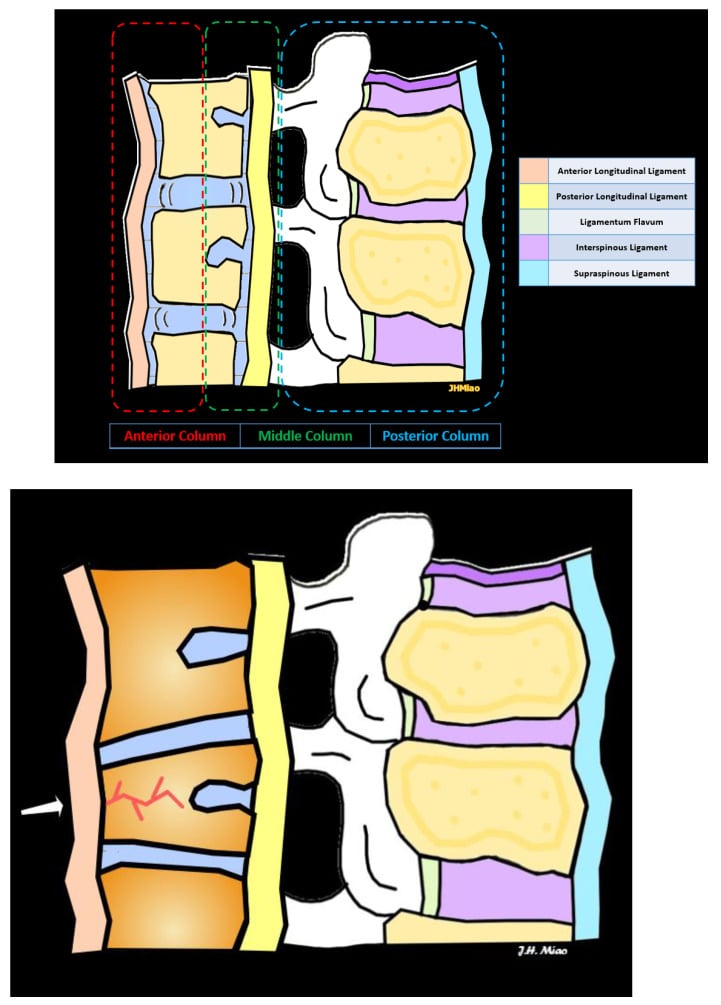
The three columns (Denis). The anterior column is the anterior longitudinal ligament, the anterior two-thirds of the vertebral body and the anterior annulus fibrosus. The middle column is the posterior third of the body, the posterior annulus and the posterior longitudinal ligament. The posterior column is the bony arch, the facet joints and their capsules, and the posterior ligamentous complex (PLC).
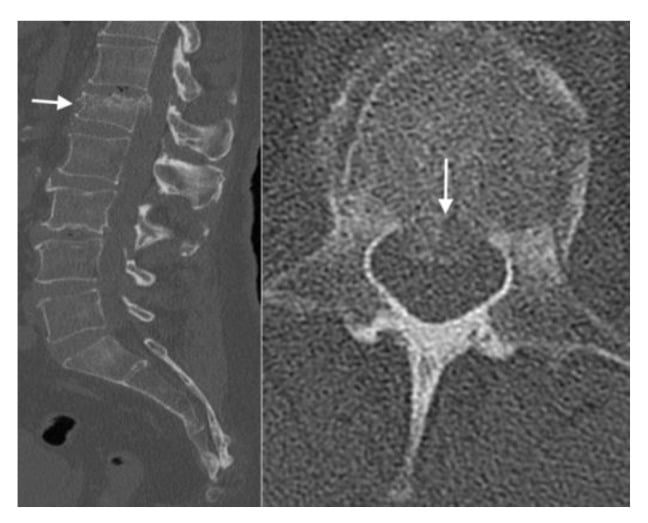
Why a compression fracture is stable. Only the anterior column fails. An intact middle column is what distinguishes compression from burst, and an intact posterior column, above all the PLC, is what keeps the injury stable. If the PLC is disrupted the injury is a flexion-distraction pattern rather than a compression fracture, so posterior column integrity is always confirmed.
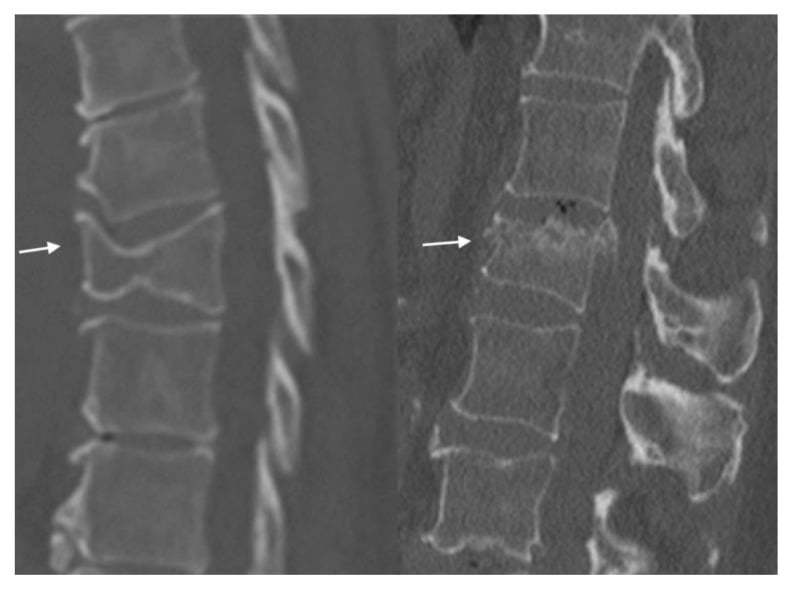
How it fails. The vertebral body is 90% trabecular bone, the tissue osteoporosis preferentially weakens. Under axial compression the anterior cortex fails first, producing the characteristic wedge deformity; the posterior cortex and middle column survive because the neutral axis of the spine lies posterior.
- Compression Fracture
- Anterior only
- Burst Fracture
- Anterior + Middle
- Compression Fracture
- Intact
- Burst Fracture
- Failed (retropulsion possible)
- Compression Fracture
- Intact
- Burst Fracture
- May be intact or disrupted
- Compression Fracture
- Stable
- Burst Fracture
- Potentially unstable
- Compression Fracture
- Low
- Burst Fracture
- Higher (canal compromise)
- Compression Fracture
- 1-2 (compression)
- Burst Fracture
- 2-4 (burst morphology)
Classification
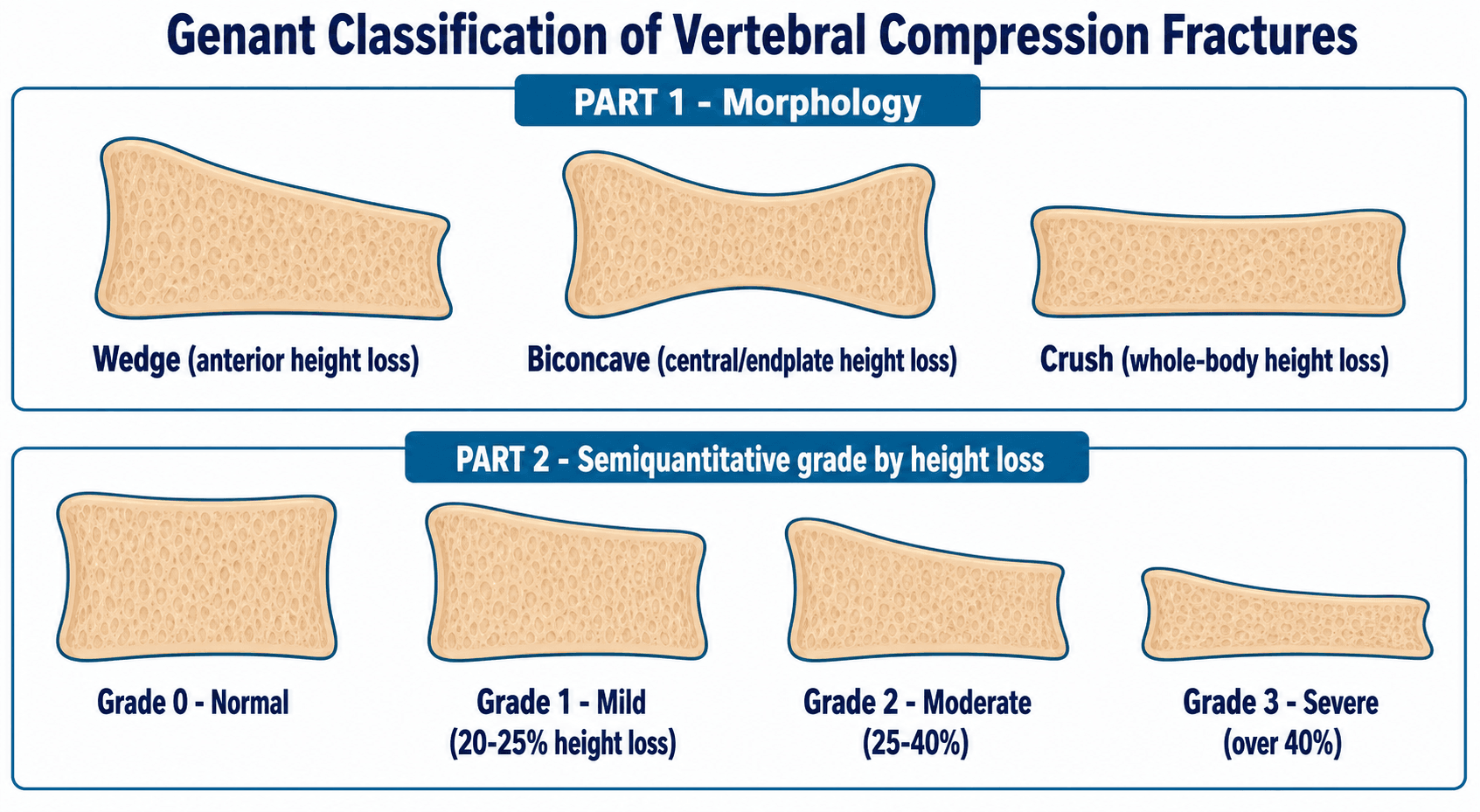
Genant's semiquantitative grading is the standard classification for osteoporotic VCFs. It records two things from the lateral radiograph: the morphology (wedge, biconcave or crush) and the grade, judged by the reduction in anterior, middle or posterior height. It is how an osteoporotic fracture is recorded and its progression tracked.
- Height loss
- None discernible
- Appearance
- Intact vertebral body
- Height loss
- 20-25%
- Appearance
- Mild deformity visible on the lateral radiograph (wedge, biconcave or crush)
- Height loss
- 25-40%
- Appearance
- Clear wedging or biconcavity; may cause localised kyphosis
- Height loss
- Over 40%
- Appearance
- Significant collapse; often symptomatic with localised pain
Grade is not acuity. Compare with prior imaging and date the fracture on MRI: a chronic fracture may be stable and asymptomatic despite severe height loss.
Clinical Assessment
History. Mechanism first: minimal trauma points to an osteoporotic fracture, high energy to a traumatic one. Then the character of the pain (localised, worse with movement), the red flags of night pain, weight loss and prior malignancy, the patient's baseline mobility and activities of daily living, and the osteoporosis risk factors of age, female sex, smoking and steroids.
Examination. Inspection shows loss of lordosis or a kyphotic posture. Palpation finds midline tenderness at the fracture level and percussion over the spinous process is painful; gait is altered in the stance phase by pain. The neurological examination is usually normal.
If neurological deficit is present, this is NOT a simple compression fracture. Consider burst fracture with retropulsed bone, pathologic fracture with epidural extension, or cauda equina syndrome. Urgent MRI and surgical consultation required.
The pain. Acute, localised mid-back pain, exacerbated by trunk flexion and rotation, relieved by recumbency, and sometimes referred to the flanks.
Red flags. Any of these takes the case out of the simple osteoporotic pathway and needs further investigation:
- Neurological deficit (suggests burst, not compression)
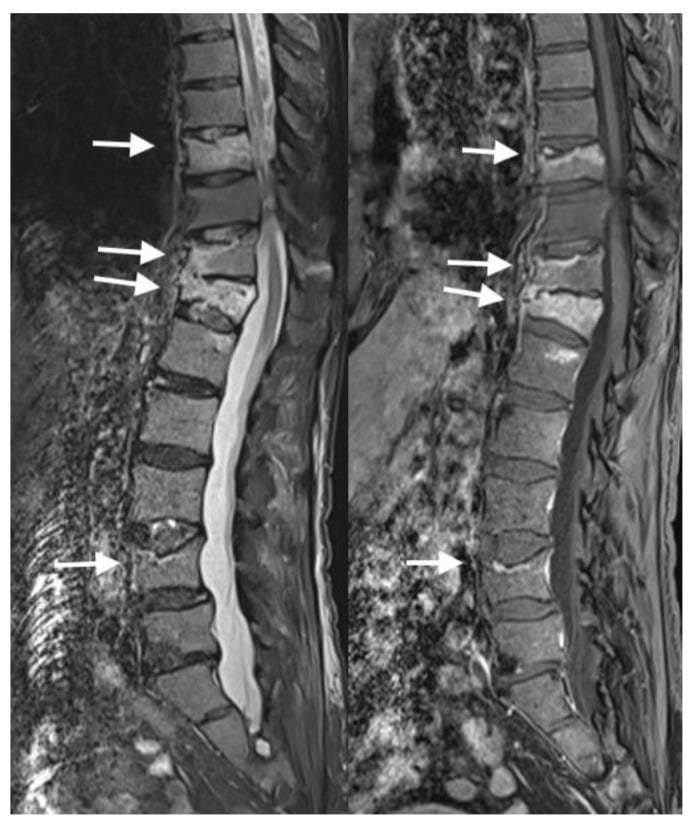
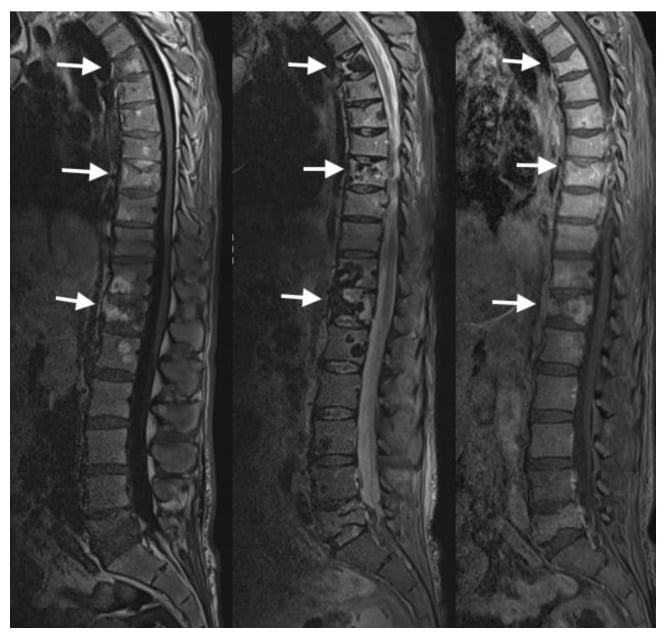
- Multiple levels (myeloma, metastases)
- Age under 55 without trauma
- Known history of malignancy
- Constitutional symptoms
- Discriminating Features
- Low-energy, anterior wedge, pedicles spared, marrow oedema if acute
- Key Investigation
- MRI (oedema), DEXA
- Discriminating Features
- Pedicle destruction, soft-tissue mass, convex posterior wall, multiple levels
- Key Investigation
- MRI with contrast, SPEP, staging CT
- Discriminating Features
- Posterior wall involved, retropulsion, canal compromise, often higher energy
- Key Investigation
- CT (posterior wall)
- Discriminating Features
- PLC disruption, interspinous widening, seatbelt mechanism
- Key Investigation
- MRI (PLC), CT
- Discriminating Features
- Disc herniation into endplate, no acute height loss, asymptomatic
- Key Investigation
- MRI
- Discriminating Features
- Disc-centred destruction, endplate erosion, raised CRP/ESR, fever
- Key Investigation
- MRI with contrast, blood cultures
Investigations
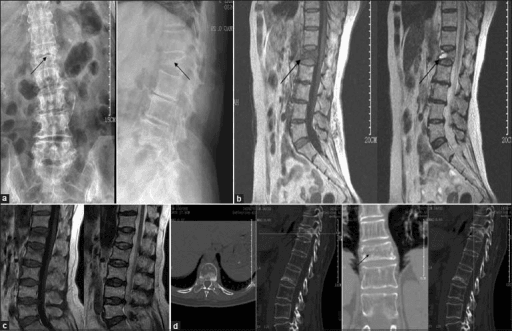
Radiographs. AP and lateral views of the thoracic or lumbar spine are the first-line investigation. Look for height loss and wedging: more than 20% height loss is a fracture.
CT. Bony detail, and its one decisive job is the posterior wall: an intact posterior wall means compression, not burst. Order it when plain films leave the diagnosis unclear.
MRI. Answers three questions: acuity, malignancy and the PLC. It also shows disc pathology and the soft tissues, and it is obtained within 48-72 hours if surgery is being considered. CT and MRI are complementary.
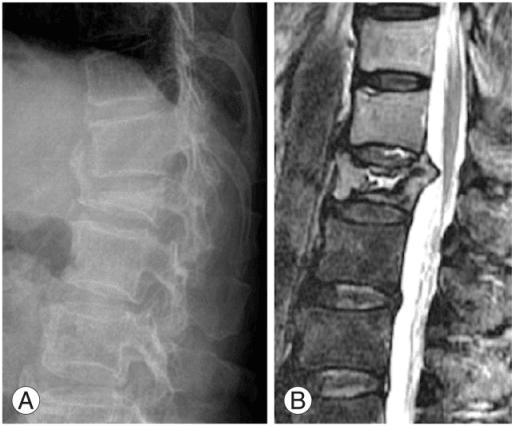
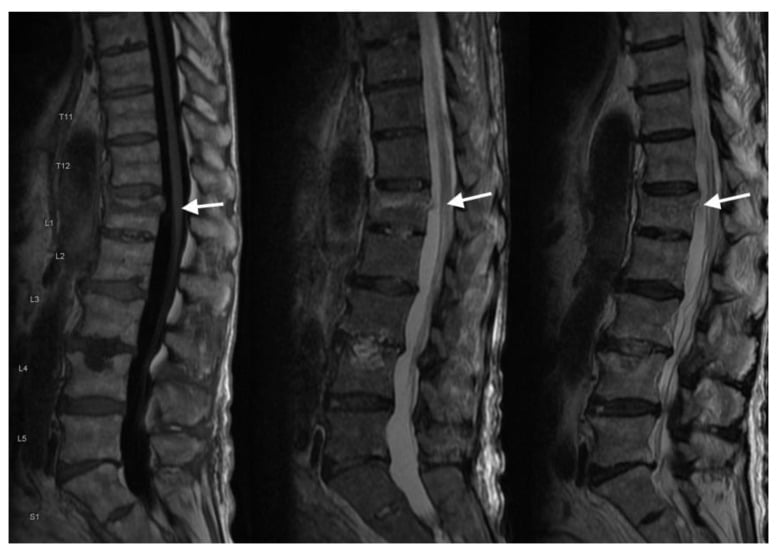
MRI for acuity. Marrow oedema, high on T2 or STIR and low on T1, means the fracture is acute, within about 6-8 weeks. That matters because cement augmentation is only effective for a recent, symptomatic fracture; a chronic healed fracture without oedema will not benefit from vertebroplasty.
MRI for malignancy. Low T1 signal is acute fracture or malignancy. After contrast, focal enhancement in a pedicle means metastasis, and pedicle involvement strongly suggests malignancy rather than osteoporosis; enhancement of the body alone does not, because benign fractures enhance too.
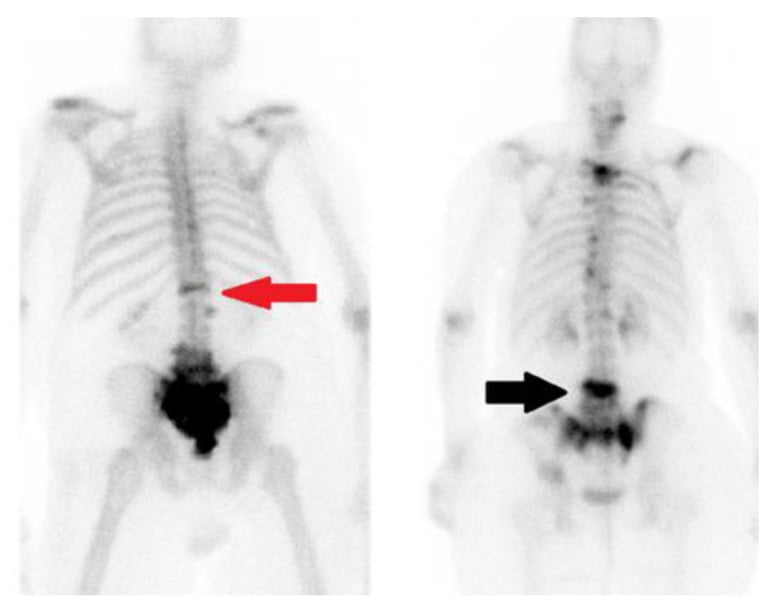
Bone scan. The pattern matters: linear uptake in a compression fracture, diffuse uptake of the whole vertebral body in metastasis. It localises activity, but MRI remains the better test for acuity, marrow replacement and epidural disease.
DEXA. At outpatient follow-up, to make the diagnosis of osteoporosis.
Malignancy screen. Always exclude malignancy before diagnosing an osteoporotic VCF:
- Full blood count, ESR, CRP
- Serum protein electrophoresis (myeloma)
- Calcium, alkaline phosphatase
- Consider CT chest, abdomen and pelvis if red flags are present
Management
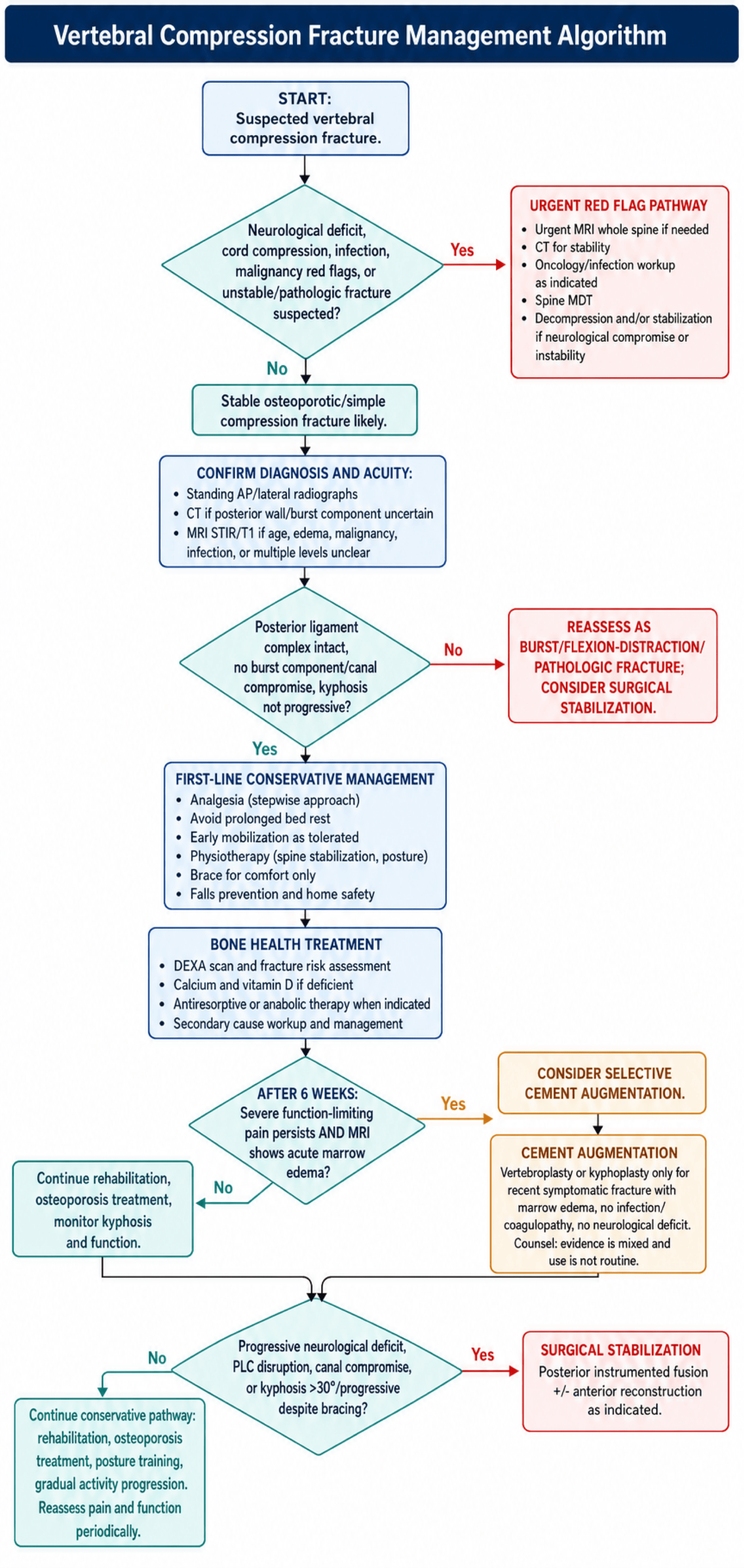
The decision. Three questions settle it. Is this a simple compression fracture, with the anterior column alone failed, the PLC intact and no canal compromise? Is it osteoporotic rather than pathological? Is the patient neurologically intact? When all three answers are reassuring, management is non-operative, and it is first-line for most compression fractures. Cement is a considered option for the minority whose pain has not settled, and surgery is rare.
- Classification
- Genant Grade 1
- Treatment
- Analgesia, early mobilisation
- Key Pearl
- Avoid bed rest - increases bone loss
- Classification
- Genant Grade 2
- Treatment
- TLSO brace 6-12 weeks
- Key Pearl
- Physical therapy essential for outcomes
- Classification
- Genant Grade 3, 6 weeks conservative failed
- Treatment
- Discuss cement augmentation
- Key Pearl
- Controversial - trial of conservative care first
- Classification
- Burst or PLC injury
- Treatment
- Surgical stabilisation
- Key Pearl
- This is NOT a simple compression fracture
Acute phase (0-2 weeks). Adequate analgesia (paracetamol, NSAIDs, short-term opioids), gentle mobilisation as tolerated and a physiotherapy assessment. Prolonged bed rest is avoided: it accelerates bone loss at 1-2% per week, and the goal of early mobilisation is to maintain bone density and prevent deconditioning.
Subacute phase (2-6 weeks). A TLSO or Jewett brace for comfort if needed, a progressive mobilisation programme, physiotherapy for core strengthening and a falls-prevention assessment. Bracing is for comfort; it is not essential for healing a stable fracture.
Chronic phase (6-12 weeks). Gradual return to normal activities, ongoing physiotherapy and a weight-bearing exercise programme, and initiation of osteoporosis treatment.
Treat the bone. Treating the fracture without treating the osteoporosis is incomplete care. Start a bisphosphonate or denosumab, ensure calcium and vitamin D supplementation, and coordinate with endocrinology or a geriatrician.
Surgical Technique
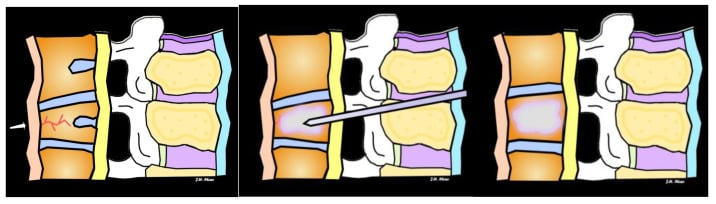
Set-up. Prone on a radiolucent table with bolsters under the chest and pelvis for lordosis, arms forward and the face in a padded rest. Biplanar fluoroscopy is required. Local anaesthesia with sedation, or general anaesthesia.
Approach. Transpedicular or parapedicular, with an 11- or 13-gauge trocar, typically bilateral.
The procedure, in order:
- AP view: align the pedicle at the lateral edge of the vertebral body
- Lateral view: confirm the trocar tip in the anterior third of the body
- Kyphoplasty only: inflate the balloon and restore height
- Mix the PMMA and allow partial polymerisation to a toothpaste consistency
- Inject under live fluoroscopy, watching for extravasation; stop at once if cement approaches the posterior wall or enters a vein or the disc
- Inject 2-4 ml per side
Complications
- Incidence
- 15-25% at 1 year
- Prevention/Management
- Optimise osteoporosis treatment, monitor kyphosis
- Incidence
- 10-30%
- Prevention/Management
- Inject under live fluoro, appropriate cement viscosity
- Incidence
- 5-10%
- Prevention/Management
- Serial imaging, consider fusion if progressing
- Incidence
- 20-30%
- Prevention/Management
- Multimodal pain management, physiotherapy
- Incidence
- Rare (less than 1%)
- Prevention/Management
- Monitor viscosity, small volume injection
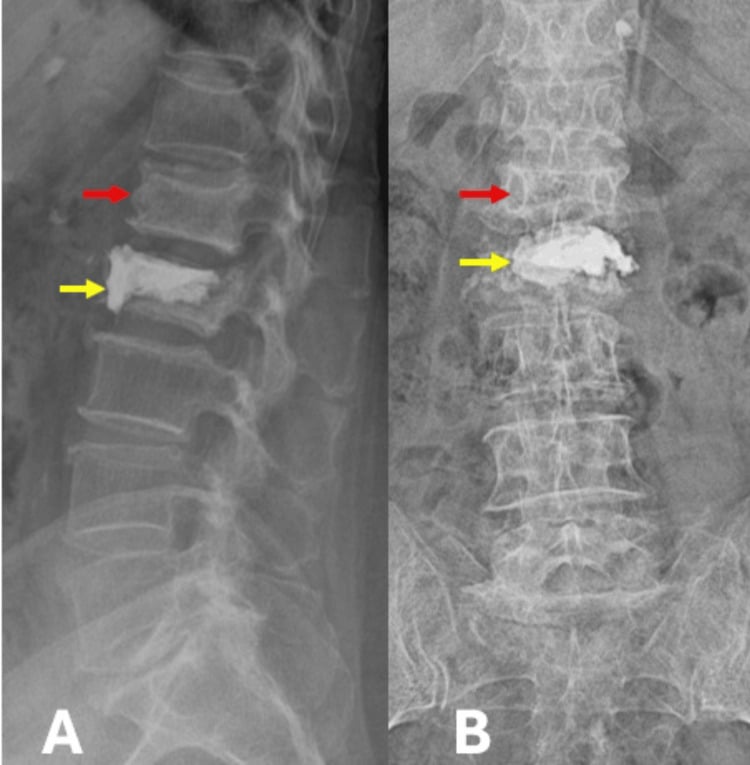
Adjacent-level fracture. 15-25% of patients sustain another vertebral fracture within a year. Whether the stiffer cemented segment alters load transfer to its neighbours, or whether this is simply the natural history of osteoporosis, is controversial; either way, the osteoporosis is treated aggressively.
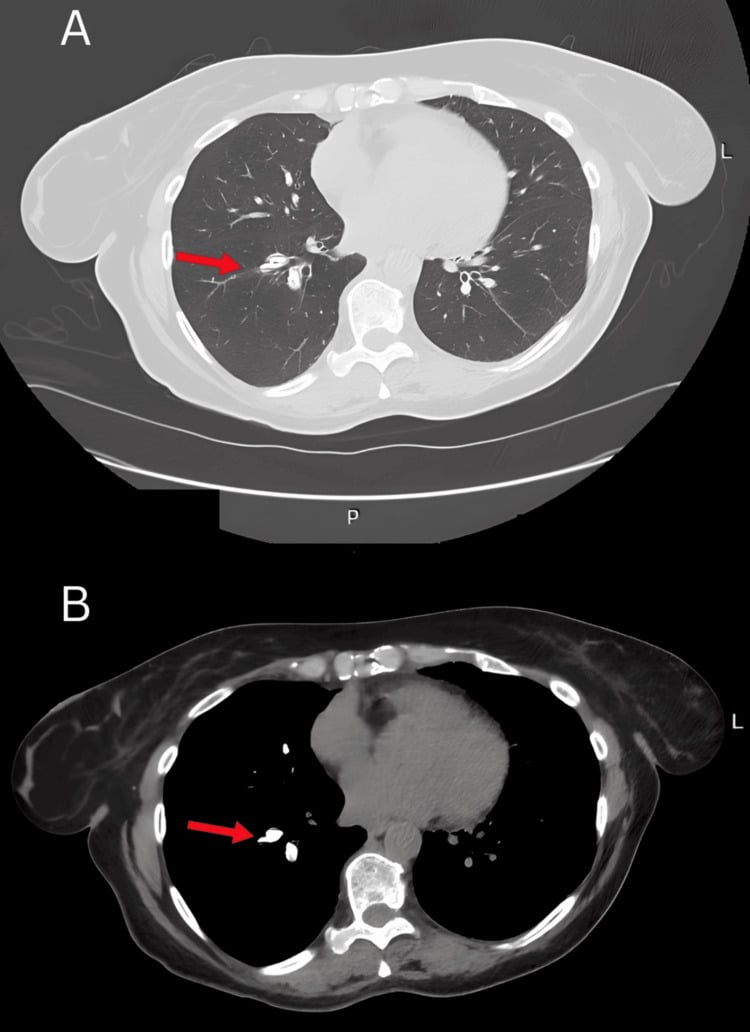
The rarer risks. Pulmonary cement embolism is rare but serious. It is prevented with high-viscosity cement, low-pressure incremental injection and immediate cessation when venous escape is seen, and dyspnoea, hypoxia or chest pain after augmentation is investigated urgently. Infection occurs in fewer than 1%.
Postoperative Care
After cement augmentation the sequence is short:
Outcomes and Prognosis
Natural history. 90% of compression fractures heal with conservative management, and pain typically improves significantly by 6-12 weeks. Residual deformity is common but often asymptomatic. 25% sustain another VCF within a year, the osteoporotic cascade, if the osteoporosis goes untreated, and mortality is four times that of age-matched controls.
Prognosis. A good outcome is predicted by a single level, Genant grade 1-2, minimal pre-fracture functional impairment, good compliance with osteoporosis treatment and access to physiotherapy. A poor one by multiple levels, severe kyphosis over 30 degrees, inadequate osteoporosis treatment, poor baseline function and associated medical comorbidities.
Quality of life. VCFs significantly impair it: chronic pain, reduced mobility, loss of independence and depression. Comprehensive management is therefore not just fracture treatment but pain management, physiotherapy, falls prevention and psychological support.
Guidelines, Registries & Global Practice
- VCFs are the most common osteoporotic fracture worldwide
- Lifetime risk approaches 16% in women, 5% in men over 50
- Around two-thirds are never clinically diagnosed (incidental on imaging)
- A prevalent VCF roughly doubles the risk of further vertebral and hip fracture
- Fracture Liaison Services (FLS) improve assessment and treatment rates internationally (IOF "Capture the Fracture" programme)
- First-line: oral/IV bisphosphonate or denosumab, plus calcium and vitamin D
- Anabolic agents (teriparatide, romosozumab) reserved for very high risk
- DEXA and 10-year risk tools (FRAX) guide therapy globally
- Position on Vertebroplasty/Kyphoplasty
- Recommends AGAINST routine vertebroplasty; kyphoplasty an option (limited evidence)
- Emphasis
- Strong skepticism after sham trials
- Position on Vertebroplasty/Kyphoplasty
- Option for severe ongoing pain despite optimal analgesia after recent VCF
- Emphasis
- Selective use, pain-driven
- Position on Vertebroplasty/Kyphoplasty
- Reasonable option in carefully selected acute, painful fractures
- Emphasis
- Patient selection central
- Position on Vertebroplasty/Kyphoplasty
- Focus on anti-osteoporosis therapy; augmentation secondary
- Emphasis
- Treat the bone, not just the fracture
- Ready access to MRI for acuity, DEXA, and FLS pathways
- Cement augmentation and anabolic agents available where selected
- Multidisciplinary metabolic bone and spine services
- Diagnosis often on plain radiographs alone; MRI/DEXA may be scarce
- Generic oral bisphosphonates and calcium/vitamin D are the affordable, high-value backbone
- Early mobilisation, simple analgesia, and falls prevention remain universally applicable and low-cost
Key documentation requirements (transferable across health systems):
- Document the neurological examination thoroughly at presentation and follow-up
- Record discussion and initiation of osteoporosis treatment
- For cement augmentation, document counseling about the controversial evidence and the risks below
- Document referral to a Fracture Liaison Service or primary care for ongoing bone health
Specific risks to discuss: PMMA extravasation, adjacent level fracture (15-25% at 1 year), no guarantee of pain relief (INVEST and Buchbinder sham trials), pulmonary cement embolism (rare), infection. Explain that the evidence is controversial and conservative management works for most patients.
Controversies and Areas of Uncertainty
The two 2009 blinded sham trials (INVEST, Buchbinder) found no benefit over placebo, yet VAPOUR (2016), the only blinded trial restricted to acute fractures under 6 weeks with severe pain and adequate cement fill, was positive. The unresolved question is whether earlier intervention and better technique, rather than a true class effect, explain the difference.
Adjacent-level fractures occur in 15-25% within a year. Whether the stiffer cemented segment alters load transfer to neighbours, or whether this simply reflects the natural osteoporotic cascade, remains debated. Either way, aggressive bone-health treatment is the agreed response.
Kyphoplasty restores some height and lowers cement-leak rates, but no robust trial shows superior pain outcomes over vertebroplasty, and it costs more. Choice is often institutional rather than evidence-driven.
TLSO/Jewett braces are widely used for comfort, but evidence that bracing improves healing or alignment in stable VCFs is weak, and prolonged rigid bracing may worsen deconditioning. The trend is toward early mobilisation with brief, symptom-led brace use.
MCQ Practice Points
Q: Why are vertebral compression fractures classified as stable injuries? A: The posterior ligamentous complex (PLC) is intact. Compression fractures involve anterior column failure only. If PLC is disrupted, it becomes a flexion-distraction injury requiring different treatment.
Q: What did the INVEST trial (NEJM 2009) demonstrate regarding vertebroplasty? A: No significant difference in pain or disability between vertebroplasty and sham procedure at any time point. This is frequently tested - vertebroplasty evidence is controversial.
Q: What is the risk of subsequent vertebral fracture after an osteoporotic VCF? A: 25% within 1 year (osteoporotic cascade). This emphasizes that treating the underlying osteoporosis is as important as treating the fracture itself.
Q: What MRI finding indicates an acute vs chronic compression fracture? A: Marrow edema on STIR/T2 indicates acute fracture (within 6-8 weeks). Fat signal suggests chronic healed fracture. Only acute fractures with edema may benefit from cement augmentation.
Q: What imaging finding suggests metastatic rather than osteoporotic VCF? A: Pedicle involvement. Osteoporosis affects trabecular bone of the vertebral body; cortical pedicles are relatively spared. Pedicle loss = malignancy until proven otherwise.
Q: What percentage height loss defines a Grade 2 VCF on the Genant classification? A: 26-40% height loss. Grade 1 is 20-25%, Grade 2 is 26-40%, Grade 3 is greater than 40%. Grade 2-3 fractures may warrant closer monitoring.
Clinical Decision Scenarios
Practise clinical reasoning and management decisions out loud
“A 72-year-old woman presents with acute mid-back pain after bending to pick up groceries. Lateral X-ray shows 30% height loss at T12. She is neurologically intact. How would you manage this patient?”
“A 58-year-old man with known prostate cancer presents with new thoracolumbar pain and imaging showing multiple vertebral compression fractures at T10, T11, and L2. Discuss your approach.”
“Discuss the evidence for and against vertebroplasty in osteoporotic compression fractures.”
Key Anatomy
- Anterior column ONLY involved - stable fracture
- PLC intact (distinguishes from burst/distraction)
- Vertebral body is 90% trabecular bone - osteoporosis target
- T12-L1 most common level (thoracolumbar junction)
Genant Classification
- Grade 1 (Mild): 20-25% height loss
- Grade 2 (Moderate): 25-40% height loss
- Grade 3 (Severe): Over 40% height loss
- MRI determines acuity (edema = acute)
Treatment Algorithm
- Most (90%) heal with conservative care
- Avoid bed rest - early mobilization essential
- Cement augmentation if 6 weeks conservative fails
- Surgery rare - reassess diagnosis if considering
Key Evidence
- INVEST trial: Vertebroplasty = sham procedure
- VERTOS II: Open-label benefit, attenuated but still present at 12 months
- VAPOUR: Acute fractures may benefit
- Adjacent level fracture 15-25% at 1 year
Red Flags for Malignancy
- Pedicle involvement (not just body)
- Multiple levels without trauma
- Age under 55 without mechanism
- Night pain, weight loss, known cancer
Global Practice & Guidelines
- AAOS advises against routine vertebroplasty; NICE allows it for severe refractory pain
- Bisphosphonates/denosumab for secondary prevention (FREEDOM, VERT)
- Fracture Liaison Services improve treatment rates worldwide
- 25% will have another VCF within 1 year if osteoporosis untreated
Evidence and Guidelines
INVEST Trial (Investigational Vertebroplasty Safety and Efficacy Trial)
- Multicenter, blinded RCT: 131 patients with 1-3 painful osteoporotic VCFs
- Vertebroplasty vs simulated (sham) procedure without cement
- No significant difference in Roland-Morris disability or pain at 1 month
- Higher crossover to vertebroplasty in the control group by 3 months (51% vs 13%)
VERTOS II Trial
- Open-label RCT: 202 patients with acute VCF (under 6 weeks, marrow edema on MRI, persistent pain)
- THE NUMBER THAT FRAMES THE WHOLE TOPIC: 431 patients were screened and 229 (53%) had SPONTANEOUS pain relief during the assessment period, before any randomisation. The 202 randomised are the minority who did NOT settle
- Vertebroplasty vs conservative care
- Significant pain relief favoring vertebroplasty (VAS difference 2.6 at 1 month)
- Benefit attenuated but still significant at 12 months (VAS difference 2.0)
FREE Trial (Fracture Reduction Evaluation)
- Multicenter RCT across 8 countries: 300 patients with acute VCF
- Balloon kyphoplasty vs non-surgical care (open-label)
- SF-36 physical component improved 5.2 points more with kyphoplasty at 1 month (p<0.0001)
- Quality-of-life benefit maintained at 12 months
VAPOUR Trial
- Multicentre, double-blind, placebo-controlled RCT: 120 patients with acute VCF (under 6 weeks) and severe pain (NRS 7 or more)
- Vertebroplasty (adequate-fill technique) vs simulated placebo procedure
- Primary outcome met: 44% reached NRS pain under 4 at 14 days vs 21% with placebo (difference 23 percentage points, p=0.011)
- Suggests timing and adequate cement fill are critical - acute fractures benefit
Buchbinder Sham-Controlled Trial
- Multicentre, double-blind, placebo-controlled RCT: 78 patients with painful unhealed VCF (under 12 months, MRI-confirmed)
- Vertebroplasty vs sham procedure (needle without cement)
- No significant advantage in any outcome at 1 week or 1, 3, 6 months
- At 3 months mean pain fell 2.6 (vertebroplasty) vs 1.9 (sham), no significant difference