Denosumab
Overview
Denosumab is a fully human monoclonal antibody against RANKL and one of the most important anti-resorptive drugs in metabolic bone disease and orthopaedic oncology. Like bisphosphonates it inhibits osteoclasts, so bone resorption falls, bone mineral density rises and fracture risk drops. It gets there by a completely different route, neutralising a single signalling protein, and it is not stored in the skeleton, so everything it does is reversible.
Reversibility is the central idea. It gives denosumab some advantages (it works in renal impairment, and the effect can be measured cleanly) and also its single most dangerous property: when the drug is stopped, or even just delayed, bone turnover rebounds and a cluster of vertebral fractures can follow. Three threads run through this page: how it works (the RANK / RANKL / OPG system), what it treats (osteoporosis and giant cell tumour of bone, with strong evidence for both), and why it must never simply be stopped.
Where you meet it. In fracture liaison and bone-health clinics it is a key agent for secondary fracture prevention, especially when bisphosphonates are not tolerated or renal function is poor. In orthopaedic oncology it is central to the modern management of giant cell tumour of bone, to downstage tumours before surgery and to treat unresectable disease. Knowing when to start, how to dose, what to check before each injection and how to stop safely is the practical core.
Principles: The RANK / RANKL / OPG System
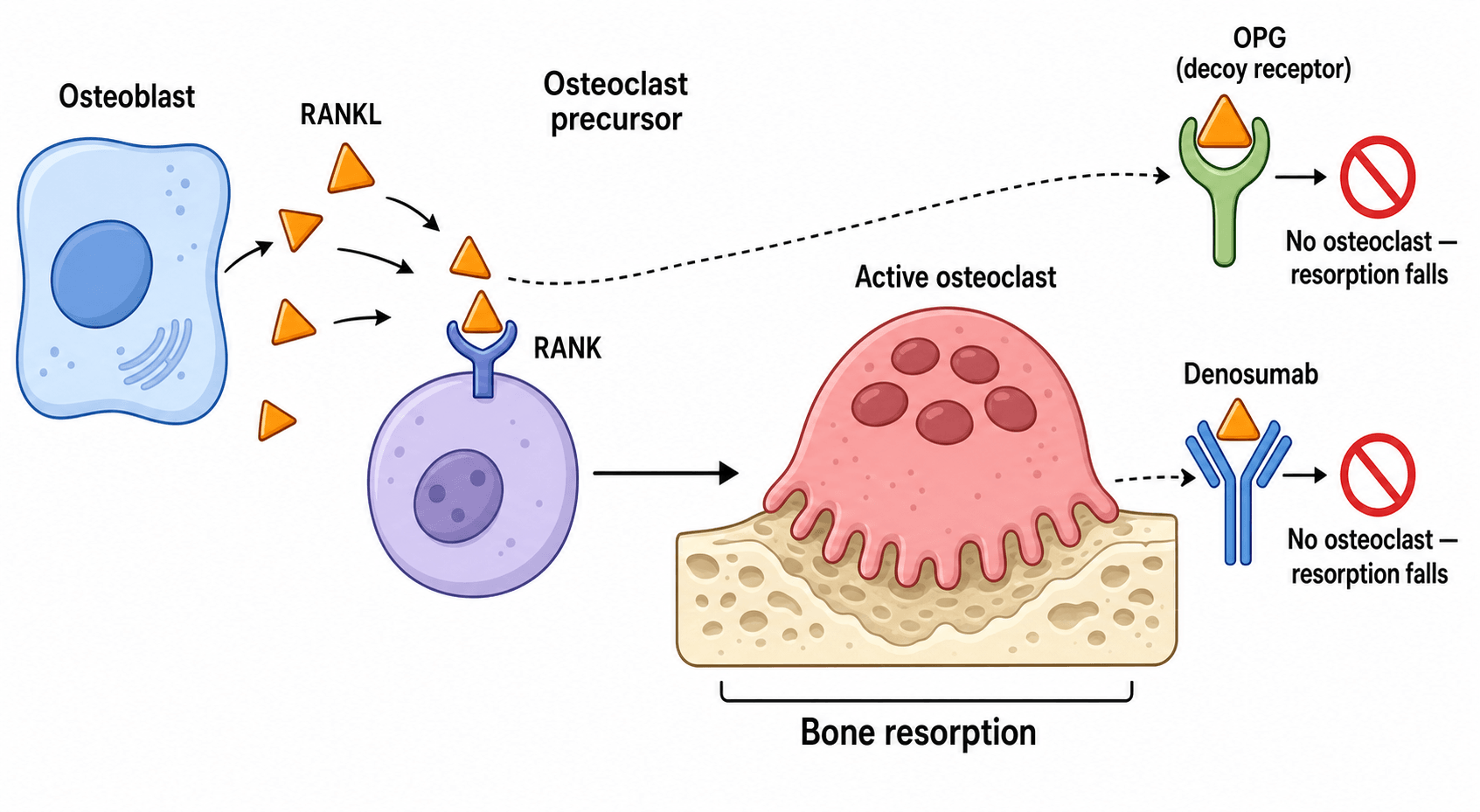
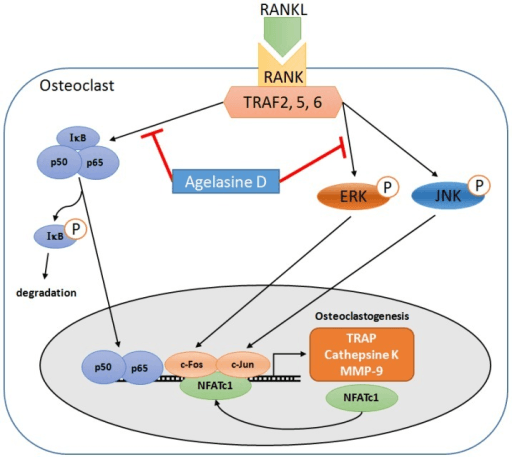
The axis. RANKL (receptor activator of nuclear factor-kappa-B ligand) is produced by osteoblasts and bone marrow stromal cells. Its receptor, RANK, sits on osteoclast precursors and on mature osteoclasts; when RANKL binds it, the precursors mature into active osteoclasts, survive longer and resorb bone. This is the master switch for osteoclast activity, a favourite basic-science viva, and part of normal bone remodelling.
The brake. Osteoblasts also make osteoprotegerin (OPG), a natural decoy receptor that binds RANKL and stops it reaching RANK. The balance of RANKL against OPG therefore sets the rate of bone resorption.
Where denosumab acts. Denosumab works exactly like OPG: an antibody that binds RANKL and prevents it activating RANK. It binds the ligand, not the receptor. With RANKL neutralised, osteoclasts do not form, do not function and do not survive, so resorption falls quickly and bone mineral density rises.
- Denosumab
- Fully human monoclonal antibody (IgG2)
- Bisphosphonates
- Synthetic pyrophosphate analogues
- Denosumab
- Binds and neutralises RANKL (acts like OPG)
- Bisphosphonates
- Bind hydroxyapatite, taken up by osteoclasts; nitrogen agents inhibit farnesyl pyrophosphate synthase
- Denosumab
- No - circulates, not stored in the skeleton
- Bisphosphonates
- Yes - bind avidly to bone mineral and persist for years
- Denosumab
- Fully reversible - effect wears off in months
- Bisphosphonates
- Long-lasting after stopping (basis of the drug holiday)
- Denosumab
- Rebound bone turnover and risk of multiple vertebral fractures
- Bisphosphonates
- Gradual offset; a drug holiday is acceptable in lower-risk patients
- Denosumab
- Not renally cleared - usable in renal impairment (watch hypocalcaemia)
- Bisphosphonates
- Renally cleared - avoid IV zoledronate if eGFR less than 35
The comparison that matters. Denosumab and bisphosphonates reach the same end, less osteoclast resorption, by different means, and they behave very differently when stopped, which is why denosumab must never simply be discontinued. Being an injection, denosumab also does not cause pill oesophagitis. The wider context of who to treat and when sits in osteoporosis.
Indications, Dosing and Routes
Denosumab is given by subcutaneous injection, with the dose and frequency depending on the indication.
- Typical regimen
- 60mg subcutaneously every 6 months
- Notes
- Marketed as Prolia; second-line or first-line where bisphosphonates are unsuitable
- Typical regimen
- 60mg subcutaneously every 6 months
- Notes
- Effective option in patients on long-term steroids
- Typical regimen
- 60mg subcutaneously every 6 months
- Notes
- Adjuvant aromatase inhibitors accelerate bone loss; denosumab both preserves density and reduces fractures in this group
- Typical regimen
- 60mg subcutaneously every 6 months
- Notes
- ADT causes rapid bone loss; the osteoporosis dose is used here, NOT the 120mg oncology dose, which is for established bone metastases
- Typical regimen
- 120mg subcutaneously every 4 weeks, with loading doses on days 8 and 15 of the first cycle
- Notes
- Marketed as Xgeva; for unresectable or morbid surgery, or to downstage before surgery
- Typical regimen
- 120mg subcutaneously every 4 weeks
- Notes
- Reduces skeletal-related events; higher hypocalcaemia and jaw osteonecrosis risk at this dose
- Typical regimen
- 120mg subcutaneously (refractory cases)
- Notes
- Used when bisphosphonates fail or are contraindicated by renal function
The oncology dose is a different safety proposition, and the gap is large enough to quantify. At the osteoporosis dose (60 mg six-monthly) FREEDOM reported no cases of osteonecrosis of the jaw at all across 7,868 women over three years and no excess hypocalcaemia. At the oncology dose (120 mg every 4 weeks) osteonecrosis of the jaw ran at 2.0% in Stopeck's 2,046-patient breast-cancer trial and at 1% (3 of 281) in Chawla's giant cell tumour series, which also recorded hypocalcaemia in 5% and grade 3-4 hypophosphataemia in 3%. Same molecule, twelve times the annual dose, and a categorically different consent conversation.
Renal impairment. Denosumab is not renally cleared, is not removed by dialysis, and needs no dose adjustment for renal function, so it is an option in patients with poor renal function where intravenous zoledronate would be avoided. Hypocalcaemia is then the dominant hazard, and calcium and vitamin D must be corrected and rechecked.
Giant cell tumour of bone
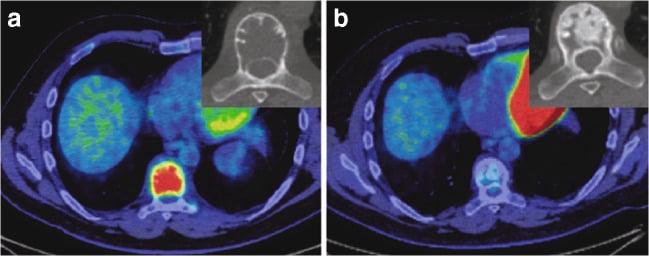
Why it works. The mononuclear stromal cells of the tumour express RANKL, which drives the osteoclast-like giant cells that produce the osteolysis. Blocking RANKL removes that drive, and the lesion ossifies with a sclerotic neocortex.
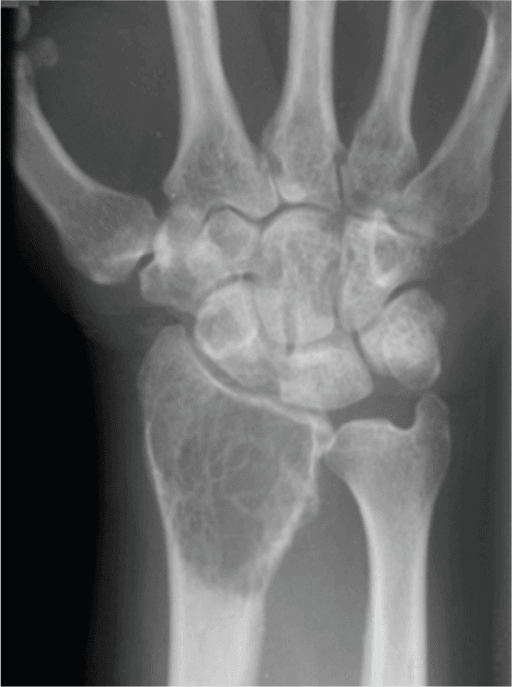
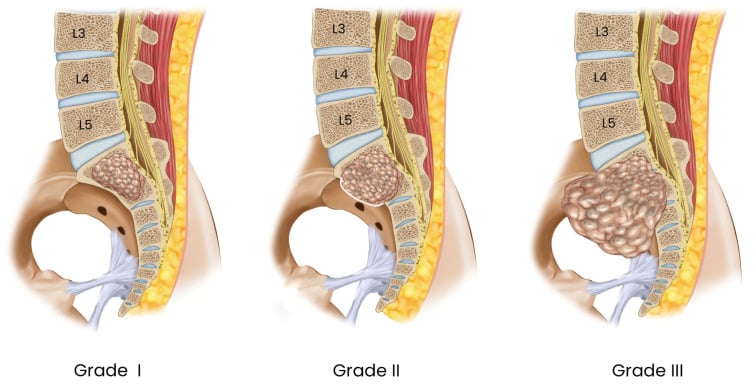
Control rather than cure, but the response rate is striking. In Thomas's phase 2 study of 37 patients with recurrent or unresectable disease, 30 of 35 evaluable patients (86%, 95% CI 70-95) responded, response being elimination of at least 90% of giant cells or no radiological progression by week 25. Chawla's larger 282-patient study then showed what that buys surgically: in the surgically unsalvageable cohort 163 of 169 (96%) had no disease progression at a median 13 months, and among those whose planned surgery would have been severely morbid, 74 of 100 (74%) avoided surgery altogether and 16 of 26 (62%) who were still operated on had a less morbid procedure than originally planned.
Who gets it. Unresectable or axial, sacral or spinal disease, or a lesion to be downstaged before surgery. It is not a routine substitute for surgery in a resectable limb lesion.
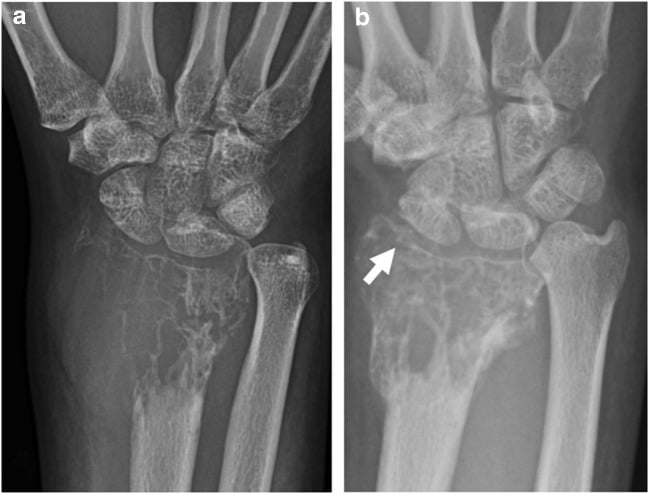
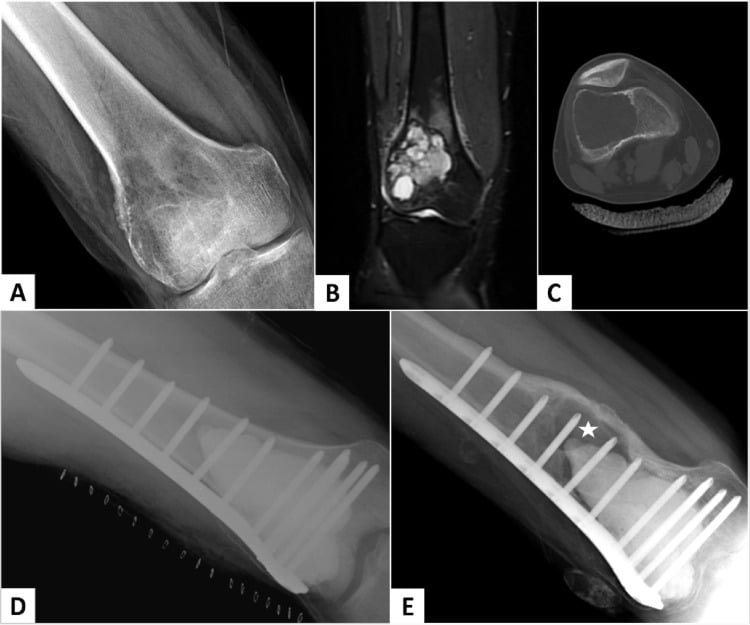
The curettage caveat. Neoadjuvant denosumab lays down a peripheral sclerotic neocortex, a bony shell that can mask viable tumour at the margin, and several series report a higher local recurrence after intralesional curettage in patients pre-treated with denosumab, so its peri-operative use is debated.
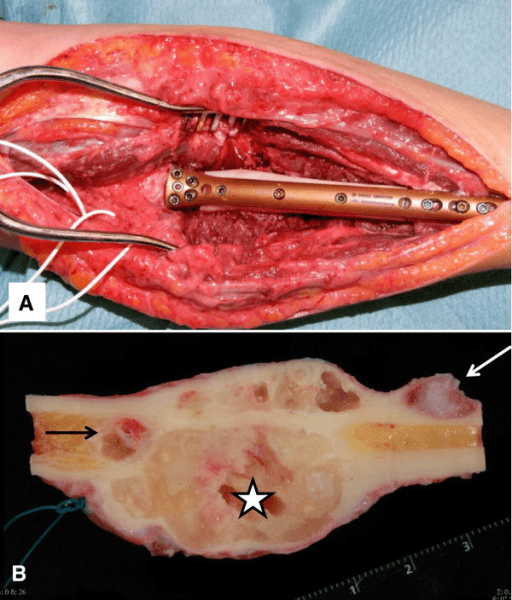
A histological pitfall. Denosumab depletes the osteoclast-like giant cells and induces new woven bone and spindle (stromal) cell proliferation, so a biopsy taken after treatment may lack the characteristic giant cells and mimic another lesion. Secure the diagnosis before starting the drug, and tell the pathologist the treatment history.
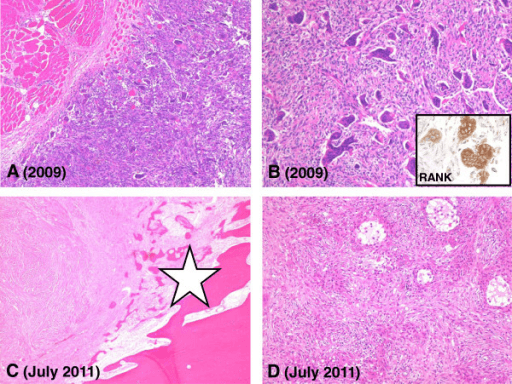
Malignancy and metastasis. Giant cell tumour of bone can produce benign pulmonary "metastases" in a small minority, and rare malignant transformation (secondary sarcoma) is reported, both reasons for specialist follow-up and caution with very long denosumab courses.
Sequencing: What to Give Before and After Denosumab
The order matters more than most people expect. Osteoporosis is increasingly treated as a sequence of drugs rather than one drug. The DATA-Switch study randomised 94 postmenopausal women to 24 months of teriparatide, denosumab, or both, then switched them:
- Teriparatide then denosumab: bone density keeps climbing. Total hip rose 6.6% and femoral neck 8.3% over the four years.
- Denosumab then teriparatide: bone is lost, at least transiently. Total hip rose only 2.8% (P=0.0002 against the other order), femoral neck 4.9%, and the radius fell by 1.8%.
- Combination then denosumab gave the largest hip gain of all, 8.6%.
Anabolic first, antiresorptive after. Giving teriparatide to a patient who has just stopped denosumab is the worst of both worlds: an anabolic agent cannot restrain the resorptive rebound, and bone is lost while you wait for it to work. If an anabolic is needed after denosumab, it is generally given with antiresorptive cover rather than instead of it.
Before denosumab. Prior bisphosphonate exposure appears to blunt the biochemical rebound when denosumab is later stopped, one reason a bisphosphonate is the logical follow-on agent.
How long to continue. The ECTS advises a formal re-evaluation at 5 years. Patients still at high fracture risk continue (efficacy and safety are maintained to 10 years in the FREEDOM Extension); a lower-risk patient may stop, but only onto bisphosphonate cover. There is no drug holiday for denosumab in the sense that exists for bisphosphonates.
Contraindications, Cautions and Special Groups
Hypocalcaemia is an absolute contraindication. Correct it before the first dose and before every subsequent dose, and check renal function. Risk is concentrated in chronic kidney disease, vitamin D deficiency, malabsorption (including after bariatric surgery) and hypoparathyroidism, and it is a more prominent and earlier risk than with oral bisphosphonates.
Pregnancy and women of childbearing potential. RANKL signalling is essential to fetal skeletal and mammary development, and denosumab crosses the placenta, so it is contraindicated in pregnancy. Effective contraception is advised during treatment and for at least 5 months after the last dose. This is not a theoretical concern in orthopaedics: giant cell tumour of bone typically affects patients in their twenties and thirties, and the oncology dose is the one used in that group.
Children and the growing skeleton. Denosumab is not licensed for skeletally immature patients outside specialist use, and RANKL blockade in a growing skeleton risks growth-plate effects. Rebound hypercalcaemia after stopping, covered under complications, is most characteristic in this group.
Dental disease. Assess before starting; the osteonecrosis guidance sits under complications.
Adherence is a safety issue, not a convenience issue. A patient who will not reliably attend for six-monthly injections is a poor candidate for the drug, because a lapsed dose carries the rebound risk.
Complications and Safe Stopping
The Rebound Phenomenon - the must-know safety point
What happens. Because denosumab is not stored in bone, stopping it removes the brake on osteoclasts all at once. Bone turnover markers climb within 3 months of an omitted dose, exceed the pre-treatment level by 6 months, and bone mineral density is back to baseline by 12 months. A subset of patients sustain multiple spontaneous vertebral fractures within months.
Get the numbers right, because the finding is more specific than "fractures go up". In the post hoc analysis of FREEDOM and its Extension (1,001 patients who stopped denosumab), the vertebral fracture rate rose from 1.2 to 7.1 per 100 participant-years, which is essentially the rate in patients who stopped placebo (8.5). The overall fracture rate returns to the untreated level rather than overshooting it. What is distinctive is the pattern: of those who fractured off treatment, 60.7% sustained more than one vertebral fracture after denosumab versus 38.7% after placebo (P=0.049), an absolute risk of multiple vertebral fractures of 3.4% versus 2.2%. Non-vertebral fracture rates were no different (2.8 vs 3.8 per 100 participant-years).
Who is most at risk, from the same analysis:
- Prior vertebral fracture: odds of multiple vertebral fractures 3.9 times higher (95% CI 2.1-7.2)
- Each additional year off treatment: 1.6 times higher (1.3-1.9)
- Each 1% annualised loss of total hip BMD off treatment: 1.2 times higher (1.1-1.3)
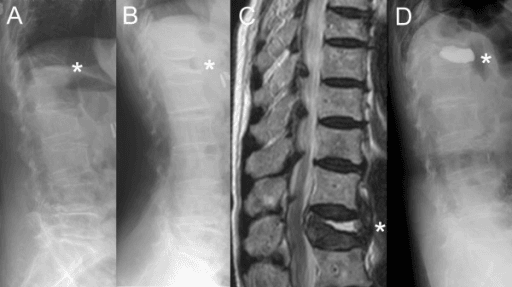
Denosumab should not be discontinued without a plan. If it must be stopped, give a follow-on antiresorptive, usually a bisphosphonate, starting about 6 months after the last injection. That timing is not arbitrary: it is when bone turnover markers cross back above the pre-treatment level, so it is the point at which the rebound needs covering. A missed or delayed dose carries the same danger, so injections must be given on schedule. New back pain after stopping denosumab is a rebound vertebral fracture until proven otherwise, and imaging should cover the whole spine because the fractures are typically multiple.
The cleanest viva line: "Unlike a bisphosphonate, denosumab is not bound to bone, so its effect is reversible. That is why there is no safe drug holiday - stopping it causes a rebound in bone turnover and can trigger multiple vertebral fractures, so I would either continue it long term or bridge with a bisphosphonate when stopping."
Osteonecrosis of the Jaw and Atypical Femoral Fracture
Like all potent antiresorptives, denosumab carries the rare risks of osteonecrosis of the jaw and atypical femoral fracture.
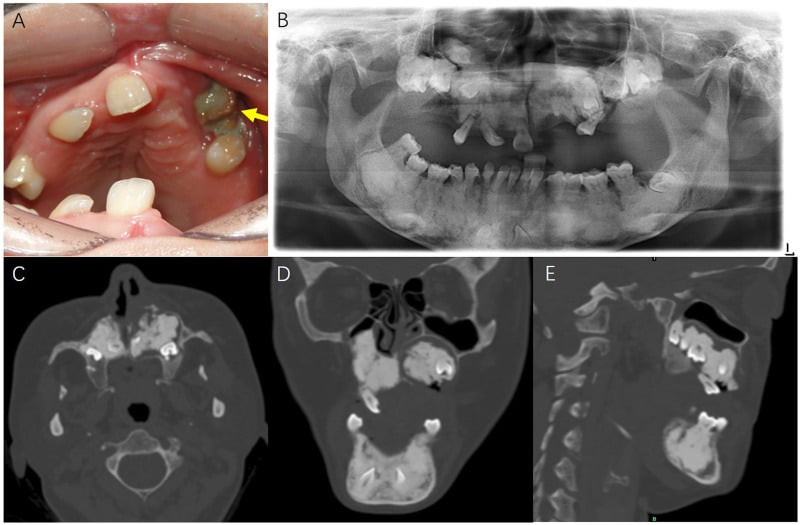
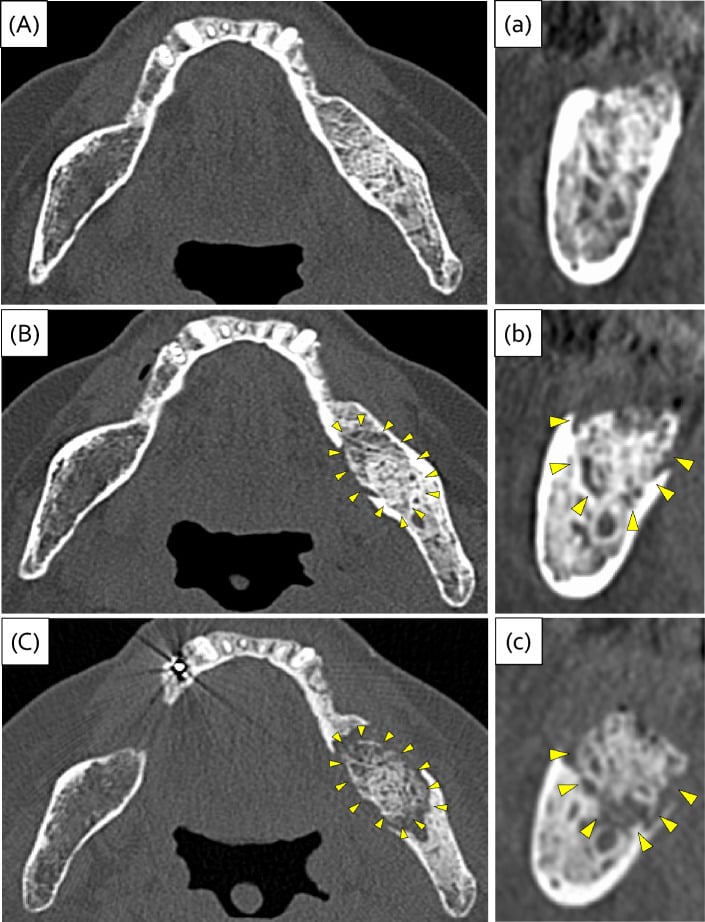
Osteonecrosis of the jaw is not random. Risk rises with dental extraction or other dentoalveolar surgery, denture trauma, pre-existing periodontal disease or abscess, poor oral hygiene, smoking, diabetes, corticosteroids and concurrent antiangiogenic agents. Get dental assessment and any needed extractions done before starting where the clinical situation allows. At osteoporosis doses, guidance does not support interrupting therapy for routine dentistry, because the fracture risk of a lapse outweighs the small osteonecrosis risk; at oncology doses the balance shifts and treatment is planned jointly with the oral surgeons.
Atypical femoral fracture. A class effect of long-duration potent antiresorptive use: a transverse fracture of the subtrochanteric or diaphyseal femur, preceded by a thigh-pain prodrome. Counsel patients to report new thigh pain, which warrants radiographs of both femurs to look for an atypical femoral fracture. The risk is a reason to image the aching thigh, not a reason to withhold treatment.
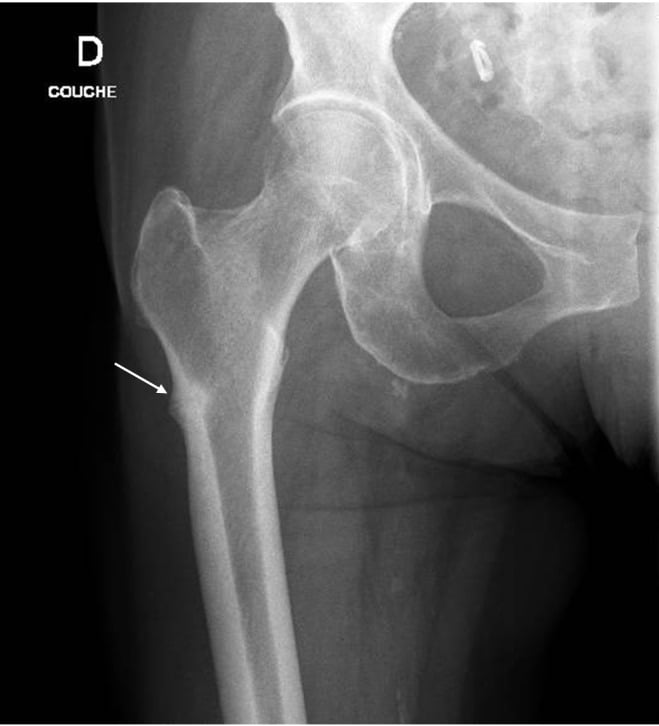
Infection and skin reactions. Cellulitis and eczema are reported in trials.
RANKL is not confined to bone. It is expressed by activated T lymphocytes and has roles in lymph-node development and dendritic-cell survival, which is the mechanistic reason for the excess of cellulitis and other skin infections in denosumab trials, and why an infection signal is looked for at all. The bone-immune overlap ("osteoimmunology") is the underlying concept, and it is the kind of link that turns a factual answer into a strong one.
The rebound after stopping denosumab does not only cause fractures — the same surge in osteoclast activity can release skeletal calcium and produce rebound hypercalcaemia. It is reported weeks to months after a missed or final dose and is most characteristic in children and young adults, particularly those treated for giant cell tumour of bone at the high oncology dose with a growing skeleton. It can be severe and symptomatic (the usual hypercalcaemia picture — confusion, dehydration, renal impairment). Anticipate it: monitor calcium after stopping in at-risk (especially young or oncology) patients, and treat with rehydration and a bisphosphonate, which also blunts the underlying turnover rebound. So denosumab can cause hypocalcaemia during treatment and hypercalcaemia after it is stopped in the at-risk group.
Guidelines, Registries & Global Practice
- Osteoporosis guidelines (for example AAOS/AOA bone-health initiatives, NICE/NOGG in the UK, and endocrine society guidance) position denosumab as an effective antiresorptive, often second-line or for patients in whom bisphosphonates are unsuitable (for example renal impairment or intolerance), given its efficacy and non-renal clearance.
- The rebound phenomenon is now formally recognised across major bodies: the European Calcified Tissue Society and others advise never stopping denosumab without follow-on antiresorptive cover, usually a bisphosphonate started about 6 months after the last dose.
- In orthopaedic oncology, denosumab is established for giant cell tumour of bone - to downstage unresectable or morbid lesions and to control disease - with specialist guidance emphasising close imaging follow-up because the tumour can recur after cessation.
- Global practice variation largely reflects cost, access, and whether a bisphosphonate or denosumab is preferred first-line, rather than disagreement on the underlying biology - but the safety message about not stopping denosumab is universal.
MCQ Practice Points
Q: Denosumab is a monoclonal antibody against which molecule, and why does that mean there is no drug holiday?
A: RANKL, not RANK — it binds the ligand and stops it reaching its receptor, exactly as the natural decoy osteoprotegerin does. Answering "RANK" is the commonest single error candidates make about this drug. Because it is a circulating antibody that is never incorporated into bone, the effect is fully reversible: turnover markers rise within 3 months of a missed dose, exceed pre-treatment levels by 6 months, and bone density is back to baseline by 12 months. Bisphosphonates, by contrast, bind hydroxyapatite and persist for years — which is what makes a drug holiday possible for them and impossible here.
Q: A patient stops denosumab without cover. What is the fracture risk?
A: The vertebral fracture rate rises from 1.2 to 7.1 per 100 participant-years — which is the rate seen after stopping placebo (8.5), so it returns to the untreated level rather than exceeding it. The distinctive feature is multiplicity: 60.7% of those who fracture sustain more than one vertebral fracture, versus 38.7% after placebo. A prior vertebral fracture raises the odds of multiple fractures 3.9-fold.
Q: Why is denosumab an option at eGFR 25 when zoledronic acid is not?
A: It is not renally cleared — it is catabolised like any immunoglobulin, needs no dose adjustment and is not removed by dialysis, whereas intravenous zoledronate is avoided below an eGFR of about 35. The trade-off is hypocalcaemia, which is commoner and more severe in renal impairment, so calcium and vitamin D must be corrected before every dose.
Q: Which order — teriparatide then denosumab, or denosumab then teriparatide?
A: Anabolic first. Teriparatide followed by denosumab raised total hip density 6.6%; the reverse order raised it only 2.8% and the radius actually lost 1.8% (DATA-Switch). An anabolic cannot restrain the resorptive rebound, so teriparatide started after denosumab loses bone.
Q: How does osteonecrosis of the jaw risk differ between the osteoporosis and oncology doses?
A: By roughly two orders of magnitude. FREEDOM reported no cases at all at 60 mg six-monthly over three years; at 120 mg every four weeks it was 2.0% in Stopeck's metastasis trial and 1% in Chawla's giant cell tumour series. The annual dose differs twelve-fold.
Q: Why does denosumab work in giant cell tumour of bone?
A: The mononuclear stromal cells express RANKL, which drives the osteoclast-like giant cells that produce the osteolysis. Blocking RANKL removes that drive: 86% responded in Thomas's phase 2 study, and the lesion ossifies with a sclerotic neocortex. It controls rather than cures, and pre-treatment can make curettage harder and the histology unrecognisable.
Q: A 28-year-old woman with a sacral giant cell tumour asks about pregnancy. What do you advise?
A: Denosumab is contraindicated in pregnancy — RANKL is essential to fetal skeletal and mammary development and the antibody crosses the placenta. Effective contraception is needed during treatment and for at least 5 months after the last dose.
Exam Viva Scenarios
Practise clinical reasoning and management decisions out loud
“A 72-year-old woman with osteoporosis and chronic kidney disease is started on denosumab because a bisphosphonate was unsuitable. The examiner asks how denosumab works, how it differs from bisphosphonates, and what you would check before each dose.”
“A 68-year-old woman stopped denosumab a year ago after several years of treatment because she moved and lost follow-up. She now presents with sudden severe back pain after bending. How do you proceed and what has gone wrong?”
Mechanism
- Fully human monoclonal antibody to RANKL
- Neutralises RANKL, acting like natural osteoprotegerin (OPG)
- Osteoclasts do not form, function, or survive - resorption falls
- Not bound to bone, so the effect is fully reversible
Indications and Dose
- Osteoporosis: 60mg subcutaneously every 6 months (Prolia)
- Giant cell tumour of bone: 120mg monthly (Xgeva)
- Bone metastases / myeloma: 120mg every 4 weeks
- Usable in renal impairment - not renally cleared
Before Each Dose
- Correct calcium and vitamin D - can cause severe hypocalcaemia
- Check renal function (hypocalcaemia risk higher if impaired)
- Arrange dental review (especially at oncology doses)
- Confirm the patient will continue - never let a dose lapse
Red Flags
- Stopping or delaying - rebound multiple vertebral fractures
- If stopping, bridge with a bisphosphonate about 6 months after last dose
- Thigh pain on long-term use - image both femurs for atypical fracture
- Exposed jaw bone for more than 8 weeks - osteonecrosis of the jaw
Evidence Base
FREEDOM is the pivotal fracture-prevention RCT. Cummings 2018 quantifies what happens on stopping and is the source of the multiple-vertebral-fracture teaching. The ECTS position statement turns that into the bridging strategy. DATA-Switch settles the sequencing question. Thomas and Chawla are the giant cell tumour studies, and van Langevelde describes the imaging response. Stopeck is the head-to-head against zoledronic acid in bone metastases.
Denosumab for prevention of fractures in postmenopausal women with osteoporosis (FREEDOM)
- Double-blind RCT, 7868 postmenopausal women, denosumab 60mg subcutaneously every 6 months vs placebo over 3 years
- New radiographic vertebral fracture cut by about 68 percent (2.3 vs 7.2 percent)
- Hip fracture reduced by about 40 percent (0.7 vs 1.2 percent) and nonvertebral fracture by about 20 percent
- No increase in cancer, infection, delayed fracture healing, or hypocalcaemia, and no jaw osteonecrosis in this 3-year study
Vertebral Fractures After Discontinuing Denosumab (FREEDOM post hoc)
- 1001 participants who discontinued denosumab in FREEDOM or its Extension; vertebral fracture rate rose from 1.2 to 7.1 per 100 participant-years
- That off-treatment rate is essentially the same as after stopping placebo (8.5), so the overall rate returns to the untreated level rather than exceeding it
- The distinctive finding is multiplicity: 60.7 percent of those who fractured had more than one vertebral fracture versus 38.7 percent after placebo (P=0.049), an absolute risk of 3.4 versus 2.2 percent
- Odds of multiple vertebral fractures 3.9 times higher with a prior vertebral fracture (2.1-7.2), 1.6 times higher per additional year off treatment, 1.2 times higher per 1 percent annual total hip bone density lost
- Non-vertebral fracture rates were similar off treatment (2.8 vs 3.8 per 100 participant-years)
Sequencing Matters: Teriparatide and Denosumab Transitions (DATA-Switch)
- 94 postmenopausal women given 24 months of teriparatide, denosumab, or both, then switched for a further 24 months
- Teriparatide then denosumab: total hip bone density rose 6.6 percent and femoral neck 8.3 percent over 4 years
- Denosumab then teriparatide: total hip rose only 2.8 percent (P=0.0002) and the radius LOST 1.8 percent - progressive or transient bone loss
- Combination followed by denosumab gave the largest total hip gain (8.6 percent)
Denosumab in Giant Cell Tumour of Bone (Thomas phase 2, and the Chawla expansion)
- Thomas 2010 (n=37, recurrent or unresectable GCTB, 120mg every 4 weeks with loading doses days 8 and 15): tumour response in 30 of 35 evaluable patients (86 percent, 95% CI 70-95)
- Response defined as elimination of at least 90 percent of giant cells, or no radiological progression of the target lesion by week 25
- Chawla 2013 (n=282, PMID 23867211): 163 of 169 (96 percent) with unsalvageable disease had no progression at median 13 months
- Of those facing severely morbid surgery, 74 of 100 (74 percent) avoided surgery entirely and 16 of 26 (62 percent) who were operated on had a less morbid procedure than planned
- Safety at this dose: osteonecrosis of the jaw in 3 of 281 (1 percent) and hypocalcaemia in 15 of 281 (5 percent)
Denosumab versus Zoledronic Acid for Skeletal-Related Events in Bone Metastases
- 2046 patients with breast cancer and bone metastases randomised to denosumab 120mg or zoledronic acid 4mg every 4 weeks
- Denosumab superior for time to first skeletal-related event (HR 0.82, 95% CI 0.71-0.95, P=0.01) and for first plus subsequent events (rate ratio 0.77, P=0.001)
- No difference in overall survival or disease progression - it is a skeletal-morbidity drug, not an anticancer one
- Zoledronic acid caused more renal adverse events and acute-phase reactions; denosumab caused more hypocalcaemia; osteonecrosis of the jaw 2.0 vs 1.4 percent (P=0.39)
Stopping Denosumab Causes Rebound Bone Loss and Vertebral Fractures (ECTS Position Statement)
- Systematic review and European Calcified Tissue Society position statement on stopping denosumab
- Discontinuation drives bone turnover above pre-treatment levels, with rapid bone loss and multiple vertebral fractures in some patients
- Higher risk with prevalent vertebral fractures, longer time off therapy, and larger gains then losses in hip bone density
- If denosumab is stopped, start an antiresorptive (usually a bisphosphonate) about 6 months after the last dose
Imaging Response of Giant Cell Tumour of Bone to Denosumab (Review)
- Denosumab inhibits the RANK / RANKL pathway that drives osteoclast-like giant cells in giant cell tumour of bone
- Imaging response includes a new sclerotic neocortex, matrix osteosclerosis, and reconstitution of subarticular bone
- Reduced FDG-PET avidity is an early sensitive sign of response
- Local recurrence after stopping denosumab and rare malignant transformation mean close specialist follow-up is needed