Bimodal Distribution | Hoffa Fractures | Nail vs Plate Debate
- Hoffa fracture (coronal plane) is often missed on X-ray - CT mandatory for all articular fractures
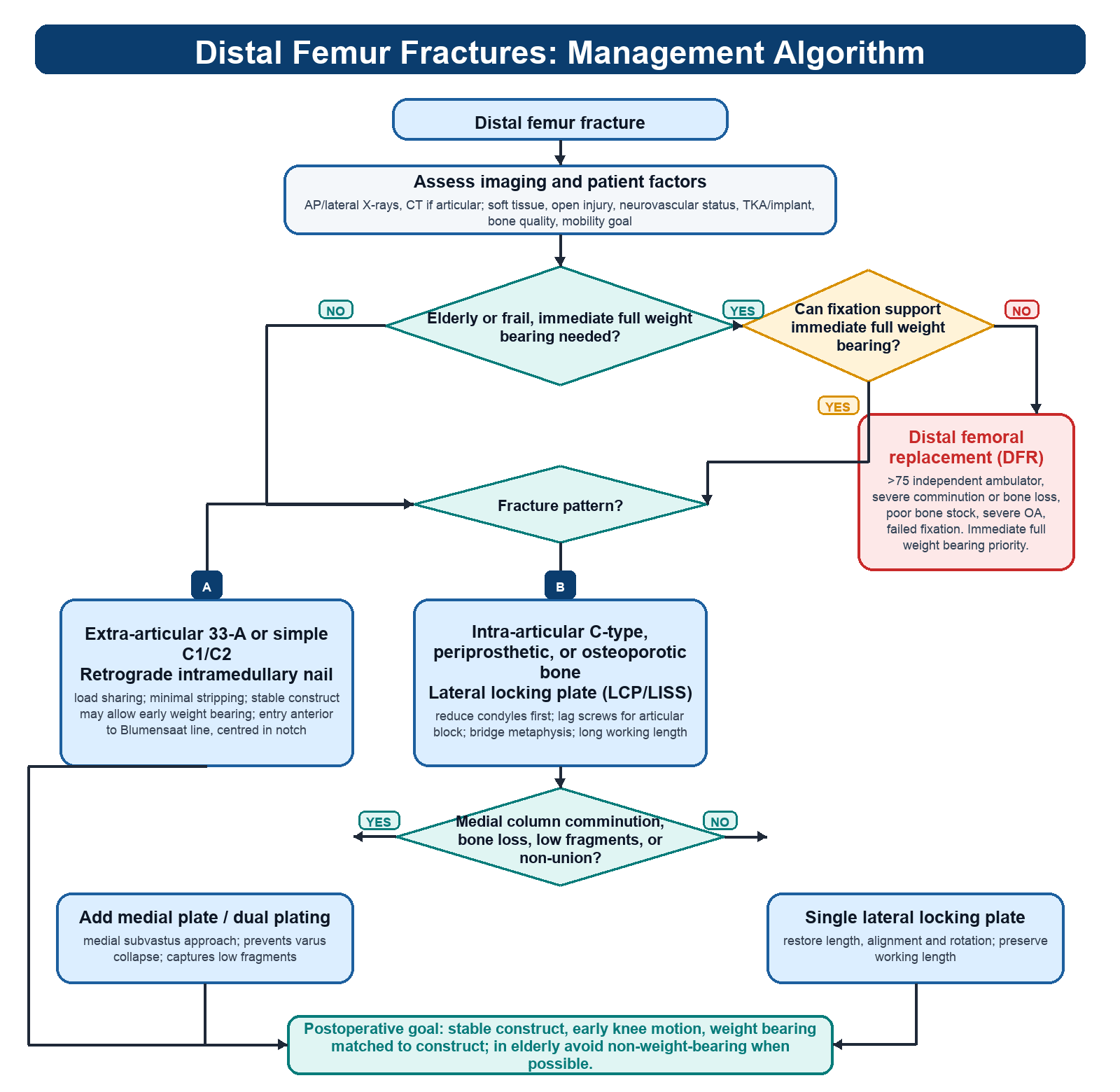
- Retrograde nail preferred for extra-articular (A) types - allows immediate weight bearing
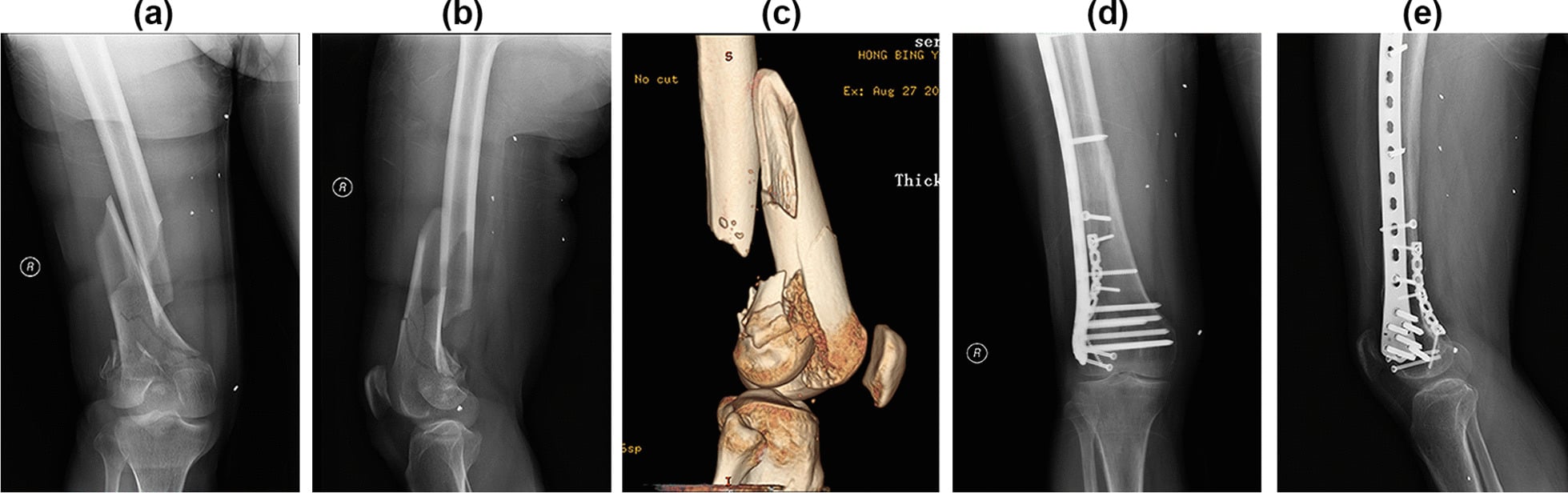
- Lateral locking plate (LISS/LCP) workhorse for intra-articular (C) types
- Dual plating (medial + lateral) needed for comminuted medial column
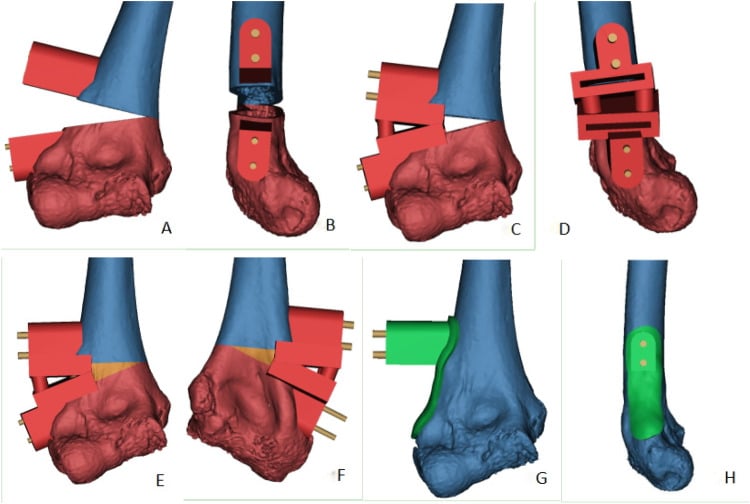
- Distal femoral replacement (megaprosthesis) indicated for elderly independent ambulators with severe comminution
- “Look for the coronal plane fracture (Hoffa) in 33-B and 33-C types
- “Gastrocnemius causes recurvatum deformity (pulls distal fragment posterior)
- “Adductor magnus causes varus deformity
- “Quadriceps/hamstrings cause shortening
Overview and Epidemiology
Distal femur fractures are difficult because of comminution, osteoporosis and intra-articular extension. The examiner will test the decision between nailing the extra-articular fracture, plating the articular one and replacing the joint in the elderly, and whether you can spot and manage the Hoffa fragment.
Who. The distribution is bimodal: young males after high-energy trauma, and elderly females after a low-energy fall, in whom osteoporosis is the major factor. Periprosthetic fractures are increasing with the volume of total knee arthroplasty.
Mechanism. The high-energy injury is an axial load with varus or valgus. The low-energy fall produces a spiral pattern. The dashboard injury is an axial load through a flexed knee.
The elderly patient. One-year mortality is 18-22%, hip-fracture territory. The "30-50%" that is often quoted is Hoellwarth's composite of death or reoperation or loss of mobility, not mortality. Fixation failure is common in osteoporotic bone, which is why the construct chosen for this patient has to carry weight from the start.
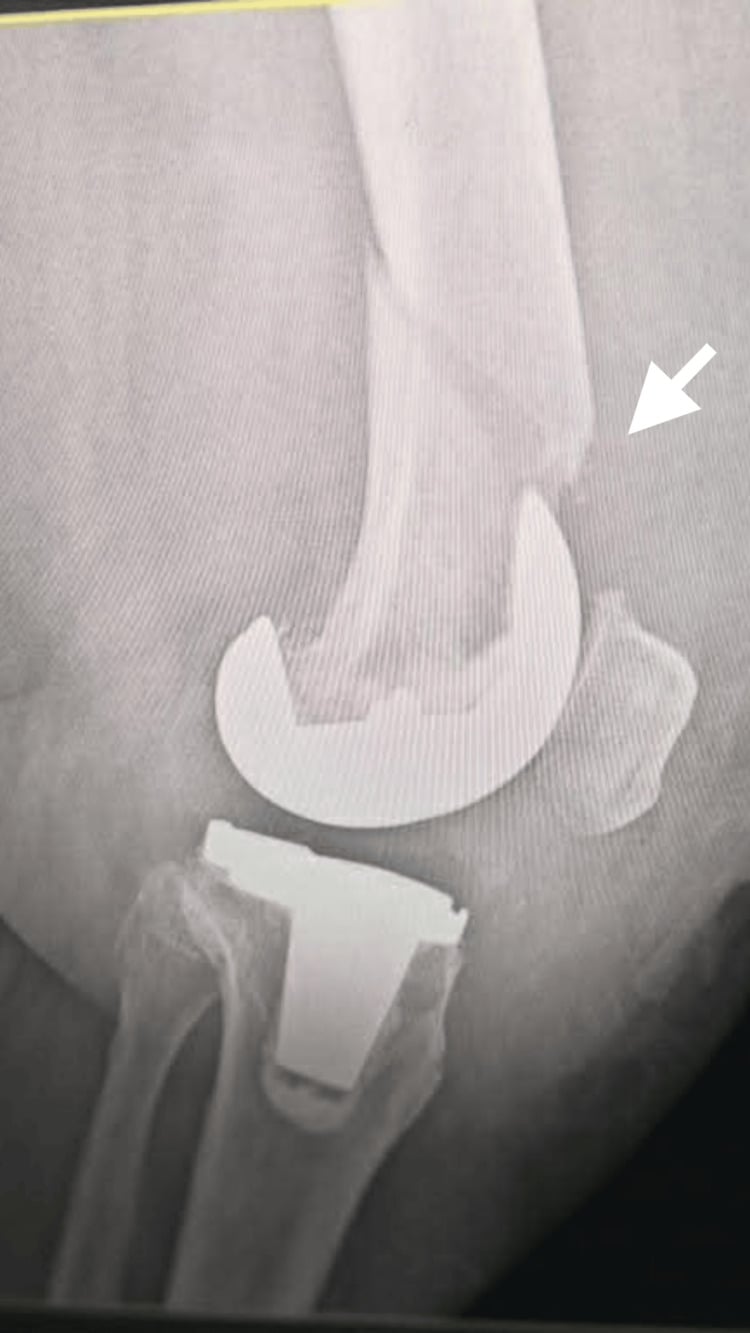
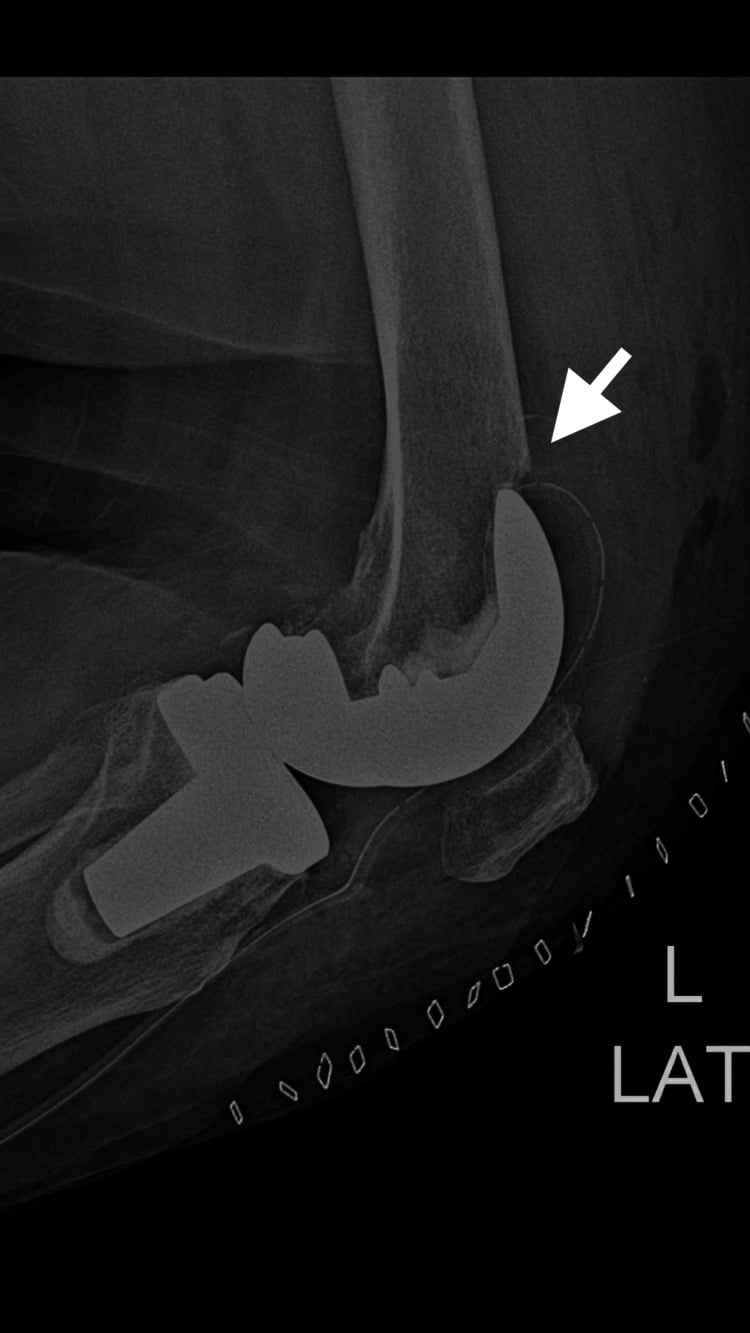
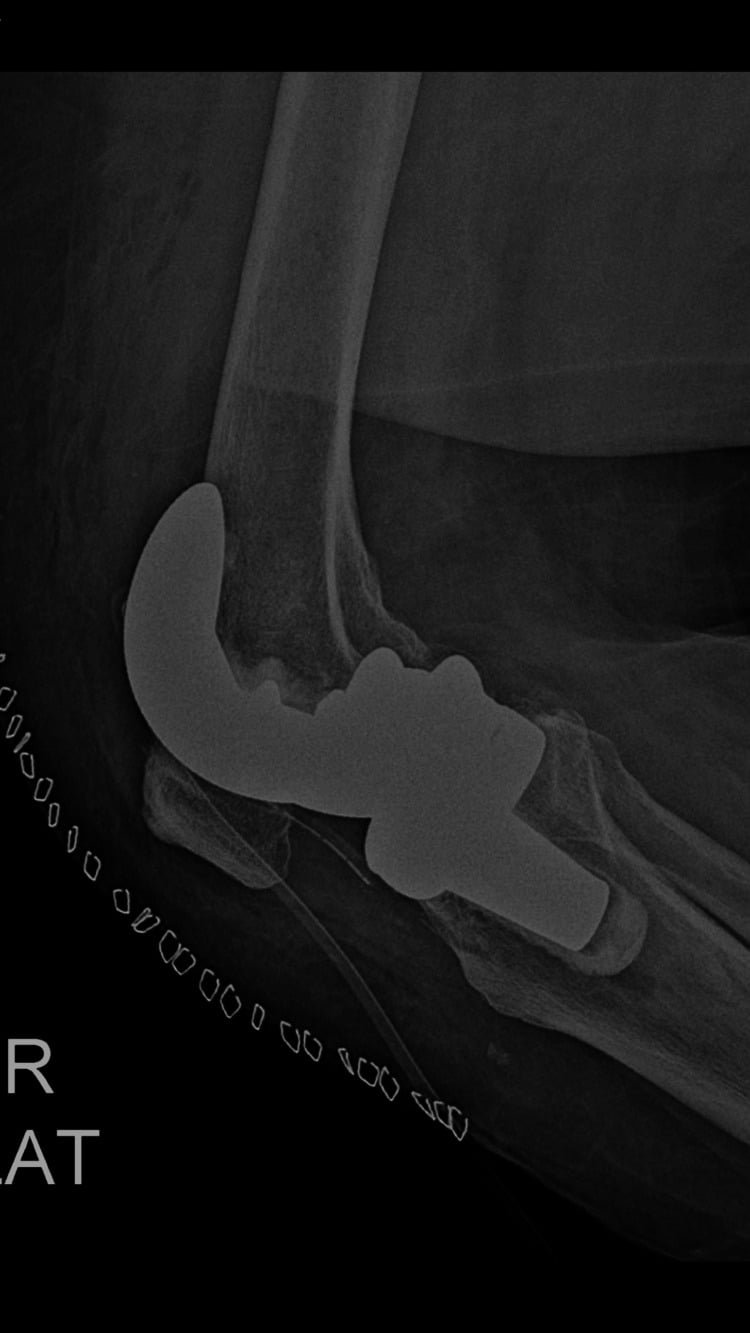
The periprosthetic fracture. A classic, examinable and modifiable risk factor for the supracondylar fracture around a knee replacement is anterior femoral cortical notching: inadvertent violation of the anterior femoral cortex when the femoral component is placed, by an oversized, flexed or anteriorly translated component, or by femoral undersizing. The notch is a stress riser at the metaphyseal-diaphyseal junction, and a notch deeper than about 3 mm is commonly cited as significantly raising the fracture risk. When you see a supracondylar periprosthetic fracture, examine the anterior cortex on the lateral film for a notch, and remember the surgical lesson of not creating one when implanting the knee in the first place.
- Other recognised risk factors: osteoporosis, rheumatoid arthritis, chronic corticosteroid use, revision surgery, female sex, and neurological disorders that increase falls
Anatomy
Shape. The distal femur flares from a cylinder into the condyles and is trapezoidal in section, wider posteriorly. The lateral wall is inclined 10 degrees, sloping medially rather than standing vertical, and the anterior wall, the trochlea, is inclined 25 degrees; a plate has to match the lateral inclination or risk malalignment. The medial condyle extends further distally, which is reflected in the distal joint angle. On the lateral film, Blumensaat's line marks the slope of the intercondylar notch.
Alignment. The mechanical (weight-bearing) axis passes through the centre of the knee and the anatomic axis of the shaft lies 6 degrees in valgus to it. Restoring that axis is critical to the longevity of the joint, because malalignment overloads one compartment. The normal values are the targets of reduction:
- Normal Value
- 81 degrees (valgus)
- Relevance
- Goal of reduction to standard
- Normal Value
- 0-2 degrees
- Relevance
- Knee joint line parallel
- Normal Value
- 5-7 degrees Valgus
- Relevance
- Shaft to joint line relationship
Muscles and the deforming forces. Gastrocnemius arises from the posterior condyles and tilts the distal fragment posteriorly into extension: apex-posterior angulation, the apex pointing into the popliteal fossa. It is a knee flexor producing an extension deformity, because it acts on the fragment and not across the joint, and that contradiction is why the deformity is so often described backwards. Adductor magnus, through the adductor tubercle, pulls the shaft into varus; quadriceps, through the patella, and the hamstrings, at the proximal tibia, shorten the limb. Flex the knee to relax the gastrocnemius when reducing, because traction alone will not correct the recurvatum.
Vessels. The popliteal artery lies directly behind the femur, tethered proximally at the adductor hiatus and distally at the soleal arch and trifurcation, so a displaced fracture, above all one in hyperextension (recurvatum), stretches it like a bowstring. The superior genicular arteries wrap around the metaphysis and are the source of the fracture haematoma; the inferior geniculars run at joint level and bleed during an arthrotomy.
Implant mechanics. A nail is load-sharing and sits close to the centre of rotation. A plate is load-bearing, offset from the axis, and works as a cantilever beam, so in bridge plating the working length is what sets the stiffness of the construct; far cortical locking reduces that stiffness to promote callus.
Classification Systems
The AO/OTA scheme (33) is the shared language, and the letter points to the implant: extra-articular fractures are nailed or plated, partial articular fractures are fixed with screws and a buttress, and complete articular fractures are plated.
- Description
- Extra-articular
- Subtypes
- A1: Simple, A2: Wedge, A3: Comminuted
- Treatment
- Retrograde Nail or Plate
- Description
- Partial Articular
- Subtypes
- B1: Lateral condyle, B2: Medial condyle, B3: Coronal (Hoffa)
- Treatment
- Screw fixation + Buttress
- Description
- Complete Articular
- Subtypes
- C1: Simple/Simple, C2: Simple/Multi, C3: Multi/Multi
- Treatment
- Lateral Locking Plate
The Hoffa fracture. Type B3 is the coronal-plane shear of a condyle, an intra-articular fragment that occurs with the knee in flexion and is often hidden on the plain film. It is usually one condyle, and the lateral far more often than the medial: 85% of single-condyle coronal fractures in Nork's series were lateral. Fix it with countersunk screws perpendicular to the fracture line, and fix it before the condyles are locked to the shaft.
Letenneur classification. Letenneur grades the coronal fracture by the plane and level of the fracture line on the lateral film or CT, and the grade carries prognostic weight:
- Type I: a fracture line vertical and parallel to the posterior femoral cortex, detaching the whole posterior condyle. The commonest and the most amenable to fixation, because the large fragment takes screws well
- Type II: a fragment of variable size detached at the base of the condyle in a more horizontal plane (IIa large through IIc small). The small-fragment variants are harder to fix and more prone to displacement
- Type III: an oblique fracture line, with the worst prognosis and the highest risk of avascular necrosis and fixation failure, because the fragment is small and its blood supply is compromised
Type I takes lag screws readily. Small Type II and III fragments may need a posterior buttress plate or headless compression screws. Posterior-to-anterior screws are biomechanically stronger than the technically easier anterior-to-posterior screws.
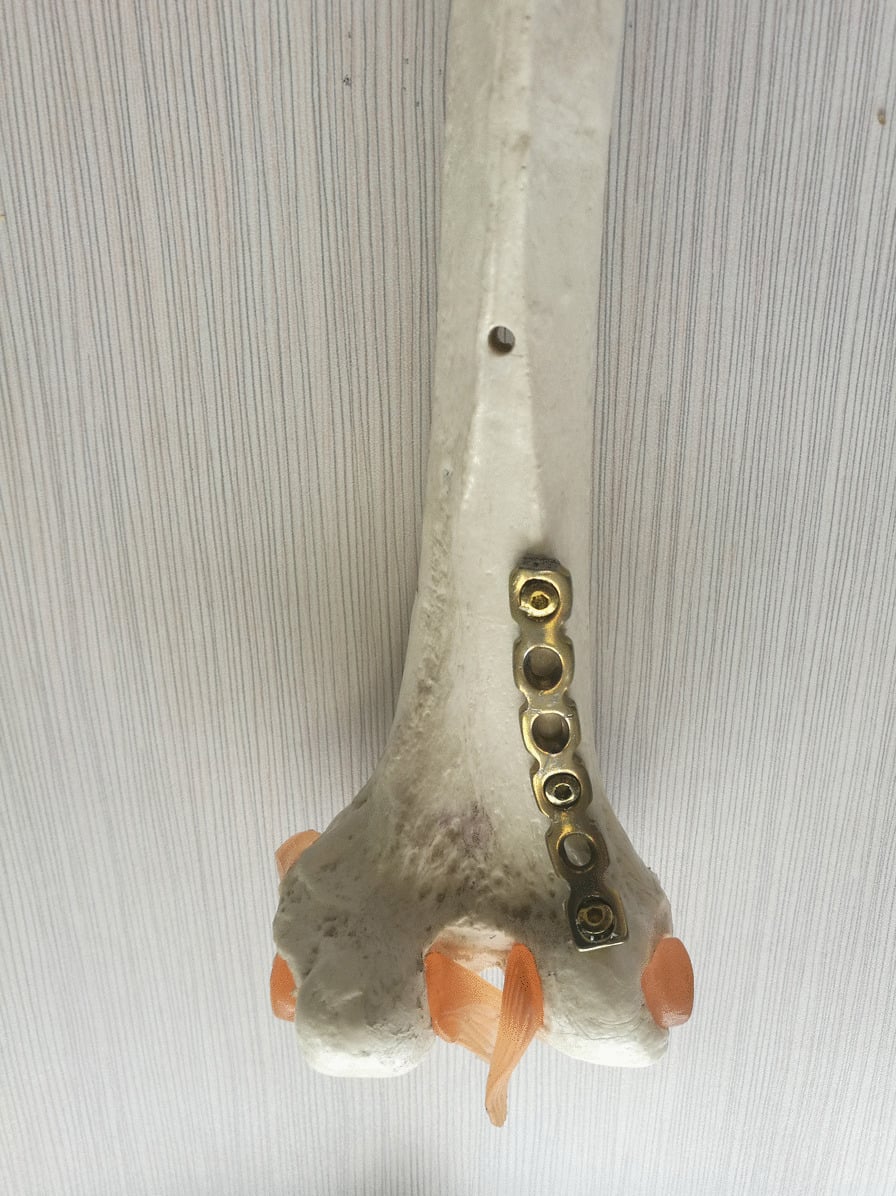
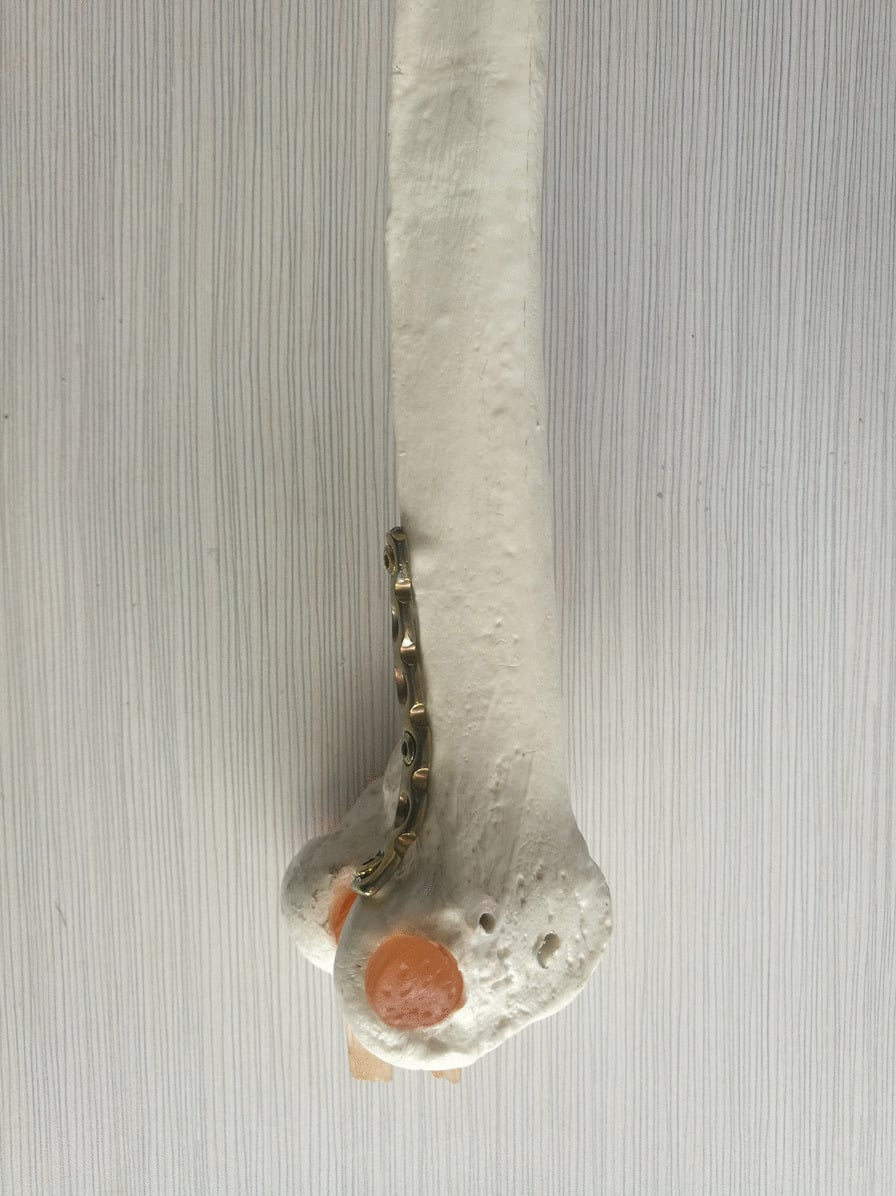
Periprosthetic fractures (Rorabeck and Lewis). Two questions decide the treatment: is the femoral component still fixed, and is there bone to fix.
- Implant Status
- Stable
- Bone Stock
- Good
- Treatment
- Locking Plate or Nail
- Implant Status
- Stable
- Bone Stock
- Poor/Comminuted
- Treatment
- Locking Plate or DFR
- Implant Status
- Loose
- Bone Stock
- Any
- Treatment
- Revision Arthroplasty (DFR)
Clinical Assessment
History. What changes the plan is pre-injury function, independent or housebound, because it guides the arthroplasty decision; any previous knee replacement, with the implant type and the time since surgery; and the comorbidities that need optimising before theatre.
Examination. The limb is usually shortened and externally rotated. Check the skin posterolaterally for open spikes and anteriorly for contusion. Check the pulses and the ABI with a high index of suspicion, and examine the peroneal and tibial nerves.
Look for an ipsilateral tibial shaft or plateau fracture ("floating knee"). This is a high-energy injury with significantly increased complications (fat embolism, vascular injury, compartment syndrome). Fix the femur first, usually.
Differential diagnosis. The painful, swollen distal thigh and knee has a short list, and each entry has a discriminating finding and a confirming test:
- Distinguishing Features
- Supracondylar deformity, recurvatum, crepitus, axial pain
- Confirming Investigation
- AP/lateral radiograph plus CT for articular extension
- Distinguishing Features
- Tenderness below joint line, valgus/varus instability, effusion
- Confirming Investigation
- Knee radiograph and CT; check for floating knee
- Distinguishing Features
- Anterior tenderness, palpable gap, loss of active extension
- Confirming Investigation
- Lateral knee radiograph, skyline view
- Distinguishing Features
- Prior TKA, fracture above femoral component
- Confirming Investigation
- Radiograph; assess implant fixation status
- Distinguishing Features
- Low-energy mechanism, prior pain, lytic lesion, known primary
- Confirming Investigation
- Radiograph, MRI, bloods, staging if no known primary
- Distinguishing Features
- Gross instability, dimple sign, high vascular risk
- Confirming Investigation
- Reduction, ABI/CTA, examination under anaesthesia
Investigations
Radiographs. AP and lateral of the femur and knee, with a full-length femur film to rule out an ipsilateral hip or shaft fracture. A traction view, with traction applied manually in the emergency department, often reveals the pattern better than the initial comminuted mess and helps decide whether the articular block is reconstructable.
CT. The current standard of care for all distal femur fractures. 38% of supracondylar-intercondylar (33-C) fractures carry a coronal (Hoffa) component, and the argument for scanning is not that the plane is subtle: in Nork's series ten were found only after the skin was open, and not one of those patients had been scanned first. Scanning lifted detection from 29% to 47%. The scan also plans the trajectory of the articular reduction screws.
CTA. When the pulses are asymmetric or the ABI is below 0.9. The threshold is low because of the popliteal tethering.
Management Algorithm
The decision. Pattern and patient. An extra-articular fracture is nailed; an intra-articular one is plated after anatomic reconstruction of the joint; a Hoffa component is fixed separately; the comminuted osteoporotic fracture in an elderly patient may be better replaced than fixed; and a periprosthetic fracture over a loose component is a revision arthroplasty, because fixation over a loose implant fails. Whatever the implant, the goals run in order: restore length, restore alignment (rotation and axis), then fix it stably enough for early motion.
In the elderly the goal is immediate full weight bearing. Fixation that requires restricted weight bearing has high mortality and failure rates. If the fixation cannot support full weight bearing, choose a distal femoral replacement.
- Fracture Type
- Extra-articular (33-A)
- Treatment
- Retrograde IM Nail
- Pearl
- Allows immediate load bearing, less soft tissue strip
- Fracture Type
- Intra-articular (33-C)
- Treatment
- Lateral Locking Plate (LCP)
- Pearl
- Anatomic articular reduction is priority
- Fracture Type
- Hoffa Fracture (33-B)
- Treatment
- AP Screws + Buttress Plate
- Pearl
- Must fix coronal component separately
- Fracture Type
- Comminuted Intra-articular
- Treatment
- Distal Femoral Replacement
- Pearl
- Immediate WB, avoid non-union/failure
- Fracture Type
- Loose Implant
- Treatment
- Revision Arthroplasty
- Pearl
- Fixation will fail if implant loose
Who. Extra-articular (33-A) fractures, and simple intra-articular ones (C1 and C2) where the articular screws do not block the nail. The nail also earns its place in the polytrauma patient with a same-side femur and tibia, in ipsilateral hip pathology, and in bilateral fractures.
For. It is a load-sharing construct that permits immediate weight bearing, through a minimally invasive approach that strips little soft tissue, with high union rates in the A types.
Against. The entry point damages the articular surface and carries a risk of knee sepsis and anterior knee pain; distal fixation options are limited; a coronal fracture can be propagated by the nail; a complex articular fracture is not suitable; and a total knee replacement blocks the entry unless the box is open.
Surgical Technique
Each approach is chosen for the work it has to expose, and each puts a named structure at risk:
- Indication
- Standard for ORIF
- Interval
- Vastus lateralis / Rectus
- Structure at Risk
- Superior lateral genicular artery
- Indication
- Complex articular
- Interval
- Lat parapatellar + Snip
- Structure at Risk
- Superior medial genicular
- Indication
- Medial plate
- Interval
- Vastus medialis / Adductors
- Structure at Risk
- Saphenous nerve
- Indication
- Nail entry
- Interval
- Split patellar tendon
- Structure at Risk
- Infrapatellar branch saphenous
The Swashbuckler. A modified lateral parapatellar approach with a lateral quadriceps snip. It lets the patella subluxate medially, giving complete exposure of the articular surface while preserving the blood supply.
Complications
- Rate
- 5-10%
- Risk Factors
- Bridge plating too stiff, smoking, open
- Management
- Dual plating + Bone graft
- Rate
- 10-20%
- Risk Factors
- Poor intra-op alignment
- Management
- Osteotomy if symptomatic
- Rate
- 3-5%
- Risk Factors
- Open fracture, OR time, Obesity
- Management
- Debridement, hardware removal
- Rate
- Common
- Risk Factors
- Prolonged immobilisation
- Management
- Arthroscopic lysis of adhesions
- Rate
- 5%
- Risk Factors
- Early WB on weak fixation
- Management
- Revision to DFR or nail
- Rate
- 10-20%
- Risk Factors
- Iliotibial band irritation
- Management
- Removal after union
Postoperative Care and Rehabilitation
Weight bearing follows the construct. After a nail, weight bearing as tolerated is usually allowed; after a distal femoral replacement, weight bearing as tolerated is allowed; after a plate, touch-down or partial weight bearing (15 kg) for 6-12 weeks until callus. That restriction is why plating is less ideal for the frail elderly patient.
Rehab Protocol
Immediate ROM is critical to prevent adhesions. CPM machine often used.
X-ray check. Advance weight bearing if callus visible.
Full weight bearing. Quad strengthening. Returns to baseline 6-12 months.
Outcomes and Prognosis
- Union Rate
- 85-95%
- Time to Union
- 12-16 weeks
- Key Considerations
- Early WB, good for extra-articular
- Union Rate
- 85-90%
- Time to Union
- 16-20 weeks
- Key Considerations
- Protected WB needed, versatile
- Union Rate
- 80-90%
- Time to Union
- 16-24 weeks
- Key Considerations
- For unstable medial column
- Union Rate
- N/A
- Time to Union
- N/A
- Key Considerations
- Salvage or severe comminution in elderly
Prognosis. The favourable fracture is extra-articular, in good bone, anatomically reduced, moved early and in a non-smoker. The unfavourable one has complex articular involvement (C3), severe osteoporosis, a varus malreduction, delayed surgery or infection, or an open wound.
Function. Most patients achieve functional independence and return to baseline mobility. Knee stiffness is the most common functional problem, particularly after prolonged immobilisation, and arthrofibrosis may require manipulation or arthroscopic lysis of adhesions. Post-traumatic arthritis is common in the long term after intra-articular injury, and some patients come to arthroplasty.
Guidelines, Registries & Global Practice
- Account for roughly 3-6% of all femoral fractures
- Bimodal: high-energy injuries in young men; low-energy fragility fractures in older women
- Incidence is rising with an ageing population and increasing total knee arthroplasty volume (periprosthetic fractures)
- 1-year mortality in elderly/periprosthetic cohorts is substantial (commonly reported 18-30%), comparable to hip fracture
- Anatomic articular reduction, then restore length/axis/rotation of the metaphysis
- Biological (soft-tissue sparing) fixation to protect union
- In frail elderly, prioritise constructs allowing immediate weight bearing
- Orthogeriatric co-management and early mobilisation (within 24-48 hours) reduce mortality
- Region
- Global
- Key Emphasis
- Articular-block-then-shaft sequence; nail for extra-articular, locked plate/MIPO for articular; medial column support when deficient
- Region
- USA
- Key Emphasis
- Evidence-based perioperative optimisation; CT for articular extension; shared decision-making on fixation vs arthroplasty
- Region
- UK
- Key Emphasis
- Senior decision-making, early definitive fixation, orthogeriatric input for fragility fractures, mobilisation by next day
- Region
- Europe
- Key Emphasis
- Acute distal femoral replacement as a valid option for comminuted osteoporotic and periprosthetic fractures
Registry & systematic-review signals (arthroplasty for fracture):
- Distal femoral replacement (DFR) for acute fracture carries a higher revision rate than DFR for oncological reconstruction, with infection and aseptic loosening the leading failure modes.
- For periprosthetic fractures around a total knee replacement, fixation reliably fails if the femoral component is loose - revision arthroplasty is then mandatory regardless of bone stock.
- Pooled data (Senthilkumaran 2019) support acute knee arthroplasty in selected osteoporotic comminuted fractures, with 1-year mortality 18.4% and revision 3.4%.
- Routine CT, anatomic locking plates, retrograde nails and modular DFR readily available
- Increasing use of dual plating and acute arthroplasty for the comminuted elderly fracture
- Orthogeriatric pathways and early-mobilisation protocols standard
- CT may be unavailable - higher risk of missing the Hoffa fragment; rely on traction and stress views plus careful intra-operative assessment
- Conventional plates / condylar blade plates and SIGN-type nails used where premium locking implants are unaffordable
- DFR megaprostheses often inaccessible; fixation (even with restricted weight bearing) remains the default
Controversies and Areas of Uncertainty
Meta-analysis favours the nail for lower non-union and infection in amenable patterns, while plating gives better ROM and handles complex articular fractures. No adequately powered definitive RCT exists (Cochrane, TrAFFix) - the choice remains pattern- and surgeon-driven.
For the comminuted osteoporotic or periprosthetic fracture, DFR allows immediate weight bearing but carries higher infection/loosening risk; locked plating preserves bone but may demand protected weight bearing. Mortality is broadly equivalent (Hoellwarth).
When and how aggressively to add a medial plate is debated. Over-stiff lateral constructs (short working length) cause asymmetric callus and non-union; far-cortical locking and titanium plates aim to tune stiffness, but optimal screw density is unsettled.
Posterior-to-anterior screws are biomechanically stronger for the coronal fragment, but anterior-to-posterior (countersunk) screws are technically easier and avoid posterior dissection. The trade-off remains contested.
MCQ Practice Points
Q: Which femoral condyle is most commonly involved in a Hoffa fracture? A: Lateral Condyle - The lateral condyle is involved in 70-85% of cases due to the valgus vector of force in a flexed knee.
Q: Which muscle is responsible for the recurvatum (hyperextension) deformity of the distal fragment? A: Gastrocnemius. It originates on the posterior femoral condyles, so its pull tilts the distal fragment posteriorly into extension - apex-posterior angulation, with the apex driven towards the tethered popliteal artery. Note the trap in the wording: the gastrocnemius is a knee flexor, but here it acts on a bone fragment rather than across the joint, so it produces an extension deformity. Reduce by flexing the knee to relax it; a bump under the distal fragment or a femoral distractor holds the correction while you fix.
Q: On current evidence, what advantages does retrograde nailing have over locking plate fixation for amenable distal femur fractures? A: Lower non-union and infection rates - meta-analysis (Aggarwal 2023) found significantly fewer non-unions and deep infections with the nail, although locking plates achieved better knee range of motion. No adequately powered RCT has settled the debate (Cochrane 2015, TrAFFix 2019).
Q: A medial locking screw placed too long is at risk of injuring which structure? A: Femoral Vessel (at Hunter's canal) - If placed in the proximal part of the plate. Distally, the popliteal vessels are posterior and central.
Q: What defines an AO 33-C3 distal femur fracture? A: Complete articular fracture with multifragmentary articular component - The 33 designates distal femur, C indicates complete articular involvement, and 3 denotes comminution of the articular surface.
Q: In an AO 33-C fracture, what is the correct order of reduction? A: Articular first, then metaphyseal - First reconstruct the articular surface anatomically, then reduce the articular block to the shaft. "Fix the joint to the shaft."
Exam Viva Scenarios
Practise clinical reasoning and management decisions out loud
“A 78-year-old female presents after a fall on stairs. Knee is swollen and painful. X-ray shows distal femur fracture (33-A2).”
“A 30-year-old motorcyclist has a C3 distal femur fracture. CT shows a displaced coronal plane (Hoffa) fracture of the lateral condyle.”
“45-year-old male, 6 months post-LISS plating of open distal femur fracture. Pain on WB. X-ray shows broken plate.”
Key Anatomy
- Trapezoidal shape (wider posterior)
- Lateral wall inclined 10 degrees
- Popliteal artery tethered posteriorly
- Gastrocnemius causes Extension (Recurvatum)
Classification
- Type A: Extra-articular → Nail or Plate
- Type B: Partial articular → Screws
- Type C: Complete articular → Plate
- Hoffa: Coronal shear (Lateral more common than Medial)
Surgical Rules
- Reconstruct articular block first (anatomical)
- Attach block to shaft (functional alignment)
- Bridge plating for length/rotation
- Compression for articular surface
Implants
- Retrograde Nail: Load sharing, Early WB
- Lateral Locking Plate: Fixed angle, Buttress
- Dual Plate: For medial comminution
- DFR: For elderly/salvage
Complications
- Non-union (Medial instability)
- Malunion (Varus/Recurvatum)
- Infection (Open fracture)
- Knee Stiffness
Key Studies
- Nork 2005: 38% of 33-C have a coronal (Hoffa) fracture - CT mandatory
- Aggarwal 2023 meta-analysis: nail fewer non-unions/infections, plate better ROM
- Sanders 1991: dual plating for deficient medial buttress
- Hoellwarth 2018: DFR vs plating - equivalent mortality (periprosthetic)
Evidence Base and Key Trials
Femur-LISS vs Distal Femoral Nail (Prospective Comparative)
- Prospective comparison of LISS plate vs distal femoral nail (two groups of 16, n=32)
- No significant difference in epidemiology, fracture type, infection or malalignment
- Lysholm-Gillquist scores equivalent at 1 year (plate 110 vs nail 103 degrees ROM)
- Both minimally invasive implants superior to the condylar blade plate for infection and axial malalignment
Retrograde Nail vs Locking Plate (Meta-analysis)
- Systematic review and meta-analysis of 16 studies (6 RCTs), 936 patients (467 nail, 477 plate)
- Significantly fewer non-unions and deep infections in the retrograde nail group
- Locking plate group achieved better postoperative knee range of motion
- No difference in union time, overall complications, re-operation rate or surgical duration
Cochrane Review: Interventions for Distal Femur Fractures
- Seven trials, 444 adults; all small and at substantial risk of bias
- Largest trial (n=126) found no significant difference between nail and locking plate at 1 year
- Trend toward better function (SMFA) and quality of life (EQ-5D) favouring nail, confidence intervals crossed null
- Evidence graded very low; a definitive pragmatic multicentre RCT is the stated priority