Cervical Extensor Weakness | Chin-on-Chest Deformity | Multifactorial Etiology
- Chin-on-chest deformity with inability to extend neck against gravity
- INEM (isolated neck extensor myopathy) is non-inflammatory myopathy of elderly
- MRI shows fatty infiltration of paraspinal muscles, especially semispinalis cervicis
- Rule out MG and ALS before diagnosing INEM - these require different treatment
- Surgery indicated when conservative care fails and fixed deformity develops
- “Check for ptosis, diplopia, limb weakness to exclude MG/ALS
- “EMG shows myopathic changes in neck extensors with normal limbs in INEM
- “Muscle biopsy shows non-inflammatory myopathy with fiber size variation
- “Posterior-only fusion may fail - often need combined anterior-posterior approach
Overview and Epidemiology
What it is. Dropped head syndrome is severe weakness of the neck extensor muscles, so that the head can no longer be held up against gravity. The posture that results is the chin-on-chest deformity, and its cost to the patient is horizontal gaze.
The names. Dropped head syndrome, or head drop, is the clinical syndrome of neck extensor weakness whatever its cause. Isolated neck extensor myopathy (INEM) is the primary, idiopathic form within it, and the most common cause. Anterocollis is the similar deformity seen in Parkinson disease.
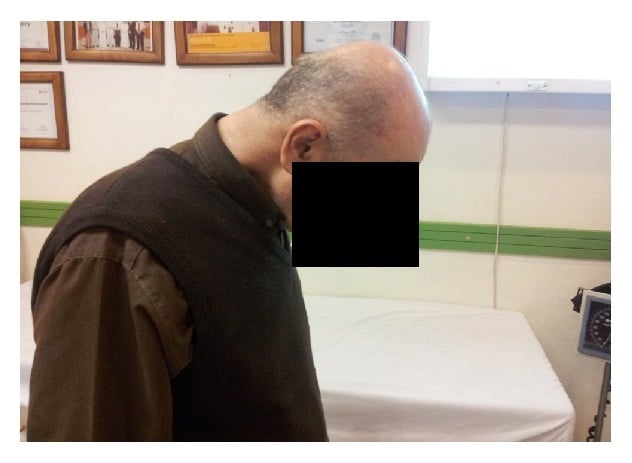
Who gets it. The syndrome is uncommon but increasingly recognised in an ageing population. INEM itself typically begins over the age of 65-70, with a female predominance of approximately 2:1 and no racial predilection identified.
Why it matters. Impaired horizontal gaze, difficulty eating and swallowing, respiratory compromise and social embarrassment together make a large dent in quality of life. Progressive cervical kyphosis adds the neurological risk: cord compression, and with it myelopathy.
Isolated Neck Extensor Myopathy (INEM) was defined by Katz et al. (1996) as a non-inflammatory myopathy restricted to the paraspinal muscles of the neck. It is a diagnosis of exclusion after ruling out systemic neuromuscular disease.
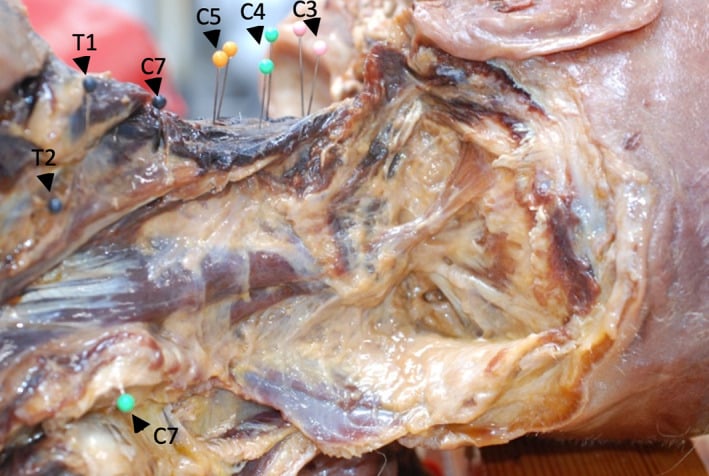
Anatomy of Cervical Extensors
The workhorse. The semispinalis group does most of the work of holding the head up, and it is the group that fails in INEM.
- Origin
- T1-T6 transverse processes
- Insertion
- C2-C5 spinous processes
- Action
- Extends cervical spine
- Origin
- C7-T7 transverse processes
- Insertion
- Occipital bone
- Action
- Extends head
Semispinalis cervicis is the primary muscle affected in INEM and the most important single muscle for head extension. Everything else assists it.
- Function
- Extends and rotates head
- Function
- Extends and rotates cervical spine
- Function
- Extends head, lateral flexion
- Function
- Extends head, elevates scapula
- Function
- Assists extension when scapula fixed
Three layers. The extensors lie in three layers, back to front:
- Superficial - trapezius, splenius capitis and cervicis
- Intermediate - erector spinae (longissimus capitis and cervicis, iliocostalis)
- Deep - semispinalis cervicis and capitis, multifidus, rotatores
Innervation is by the posterior rami of the cervical nerves:
- Suboccipital nerve (C1) - the suboccipital muscles, including rectus capitis posterior
- Greater occipital nerve (C2) - semispinalis capitis
- Posterior rami C2-C7 - the deep extensors
Biomechanics. The head weighs approximately 4-5 kg, and the extensors must generate enough force to counteract that weight and maintain horizontal gaze. Once they weaken the centre of gravity shifts forward, which creates a progressive kyphotic moment.
Pathophysiology
INEM. A non-inflammatory myopathy confined to the neck extensors, in which semispinalis cervicis is preferentially affected and the muscle is progressively replaced by fat. There is no immune infiltrate on biopsy, and the fatty replacement is what the MRI shows.
Why these muscles. Several mechanisms have been proposed:
- Evidence
- Prolonged forward head posture (computer use)
- Evidence
- Watershed zone between vertebral and occipital arteries
- Evidence
- Ragged red fibres on biopsy in some cases
- Evidence
- Accelerated in neck extensors
Systemic disease, the same posture. In myasthenia gravis the neuromuscular junction fatigues, the neck extensors may be selectively vulnerable, and the weakness responds to cholinesterase inhibitors. In amyotrophic lateral sclerosis (ALS) the motor neurone degenerates, and neck weakness may be the early presentation; it is progressive and has no specific treatment. Inflammatory myopathy destroys muscle by immune attack and may overlap with INEM.
Iatrogenic and mechanical. Extensive cervical laminectomy removes the posterior tension band and may denervate the extensors that cross the exposure. Radiation fibroses the paraspinal muscles, usually declaring itself late, months to years afterwards, and may be progressive.
The cascade. Left alone, weakness becomes deformity and deformity becomes disability:
- Initial weakness - the head becomes difficult to hold up, at first only at the end of the day
- Compensatory postures - hand support, chin on chest
- Fixed kyphosis - soft tissue contracture develops
- Secondary myelopathy - cord compression from the kyphosis
- Functional decline - dysphagia, respiratory compromise
The third step is the one that changes the operation. DHS typically progresses from a flexible to a fixed deformity over 3-6 months, early intervention during the flexible phase may prevent a fixed deformity, and once fixed, anterior release may be required to correct it.
When an inflammatory myopathy causes dropped head in the elderly, the single most important one to recognise is inclusion body myositis (IBM) - and it behaves completely differently from polymyositis and dermatomyositis. IBM is the commonest acquired myopathy over the age of 50 and a leading myopathic cause of both head drop and dysphagia, so the blanket statement that "inflammatory myopathy responds to immunosuppression" is a trap.
How to recognise it:
- Insidious, often asymmetric weakness with characteristic early involvement of the deep finger and wrist flexors (weak grip) and the quadriceps (knee buckling, falls); dysphagia is common
- CK only mildly raised, unlike the markedly elevated CK of polymyositis and dermatomyositis
- Biopsy shows endomysial inflammation with rimmed vacuoles and protein aggregates, plus mitochondrial changes; anti-cN1A (anti-NT5C1A) antibodies may be positive
The crucial point. IBM is largely refractory to corticosteroids and immunosuppression - misdiagnosing it as steroid-responsive polymyositis leads to futile, harmful treatment.
Other myopathic causes of head drop to remember: facioscapulohumeral dystrophy (FSHD), myotonic dystrophy, mitochondrial myopathy, and late-onset nemaline myopathy (sometimes with a monoclonal gammopathy). The exam point: recognise the finger-flexor-plus-quadriceps pattern and rimmed vacuoles, and do not assume immunosuppression will work.
Classification
Classified by cause, because the cause dictates the treatment. Four groups organise the causes, and the tabs below take them in turn. Endocrine disease - hypothyroidism and Cushing syndrome - sits alongside them.
Katz's criteria (1996) define the primary form:
- Weakness limited to neck extensors
- No evidence of systemic neuromuscular disease
- EMG shows myopathic changes in neck muscles only
- Muscle biopsy: non-inflammatory myopathy
- Normal serum CK
- Negative autoantibodies
The course. Gradual onset over weeks to months, after which the weakness may stabilise or progress slowly.
Prognosis. Generally better than the secondary causes. Some spontaneous improvement has been reported, and conservative management is effective in early or mild cases.
Then classify by flexibility, because this is what the operation turns on:
- Definition
- Passively correctable
- Clinical Implication
- May respond to conservative care
- Definition
- Some passive correction possible
- Clinical Implication
- Soft tissue release may help
- Definition
- No passive correction
- Clinical Implication
- Anterior release required
Clinical Presentation
The story. Weakness progressing over weeks to months, with a characteristic set of complaints:
- Difficulty holding the head up, especially at the end of the day
- Need to use a hand to support the chin
- Impaired horizontal gaze
- Difficulty with eating and drinking
- Social embarrassment
The history does the triage. Each answer points somewhere:
- Significance
- Morning improvement suggests MG
- Significance
- Suggests systemic myopathy
- Significance
- Suggests MG
- Significance
- Common in DHS, also suggests MG
- Significance
- Post-surgical DHS
- Significance
- Post-radiation myopathy
- Significance
- Statins, steroids
Inspection. The chin rests on the chest and the patient props it up with a hand - the chin-on-hand sign, pathognomonic - while lumbar hyperlordosis and shoulder elevation supply the rest of the passive support. Dysphagia is common.
Movement. Extend the neck gently and passively first, to see how much of the deformity corrects and whether a fixed contracture has developed. Then ask for active extension, which is where the syndrome declares itself: the patient cannot extend the neck against gravity. The prone head lift tests that directly, and the sustained gaze test asks the patient to hold horizontal gaze for 60 seconds.
Neurological examination is where the systemic causes declare themselves:
- Assessment
- Ptosis, diplopia, facial weakness (MG)
- Assessment
- Atrophy, fasciculations (ALS)
- Assessment
- Proximal weakness (myopathy), fasciculations (ALS)
- Assessment
- Weakness, hyperreflexia (ALS)
- Assessment
- Hyperreflexia, Hoffman sign, gait
Two bedside tests for myasthenia. The ice pack test - ptosis improving with cooling - and a fatigability test using repeated arm abduction.
INEM is what is left. The diagnosis is made by working down this table and excluding everything else on it:
- Key Features
- Elderly, isolated to neck, non-inflammatory
- Investigations
- EMG myopathic in neck, normal limbs, muscle biopsy
- Key Features
- Ptosis, diplopia, fatigability, fluctuating
- Investigations
- AChR antibodies, repetitive nerve stimulation, Tensilon test
- Key Features
- Fasciculations, hyperreflexia, tongue atrophy
- Investigations
- EMG widespread denervation, normal sensory
- Key Features
- Proximal weakness, elevated CK, rash (dermatomyositis)
- Investigations
- CK, ANA, muscle biopsy with inflammation
- Key Features
- Myelopathy signs, radiculopathy, mechanical
- Investigations
- MRI cord compression, CT osteophytes
- Key Features
- Rigidity, tremor, bradykinesia, anterocollis
- Investigations
- Clinical diagnosis, response to L-dopa
Rapidly progressive weakness, limb involvement, respiratory difficulty, bulbar symptoms (dysarthria, aspiration), or hyperreflexia require urgent neurology referral to exclude ALS or MG crisis. These conditions require different management than INEM.
Investigations
Two jobs. Exclude the systemic causes that are treated medically, then measure the deformity for anyone who may need surgery.
First line. The tests that exclude a treatable systemic cause:
- Purpose
- Elevated in inflammatory myopathy
- Purpose
- Inflammatory markers
- Purpose
- Hypothyroidism can cause myopathy
- Purpose
- Myasthenia gravis
- Purpose
- Seronegative MG
Second line, directed by what the first line and the examination suggest:
- Indication
- Inflammatory myopathy
- Indication
- Suspected muscular dystrophy
- Indication
- Suspected paraneoplastic syndrome
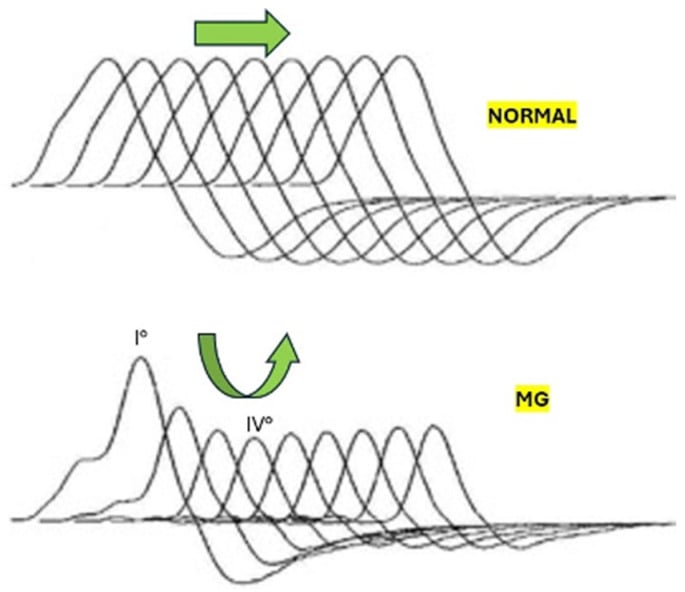
EMG (electromyography) is the study that localises the problem, which is why the limbs are sampled as well as the neck:
- Interpretation
- Small, short, polyphasic
- Interpretation
- Supports INEM
- Interpretation
- Suggests systemic disease
- Interpretation
- Denervation (ALS, radiculopathy)
Nerve conduction studies are normal in INEM, show a decremental response in myasthenia gravis, and help to exclude a neuropathy.
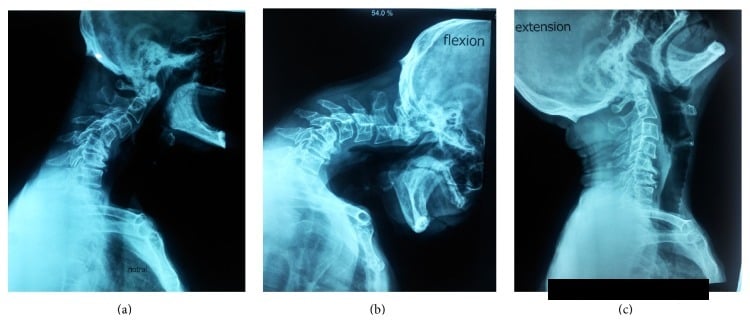
Radiographs. A lateral film assesses the degree of kyphosis, allows the chin-brow vertical angle (CBVA) to be measured, and shows fracture or spondylosis.
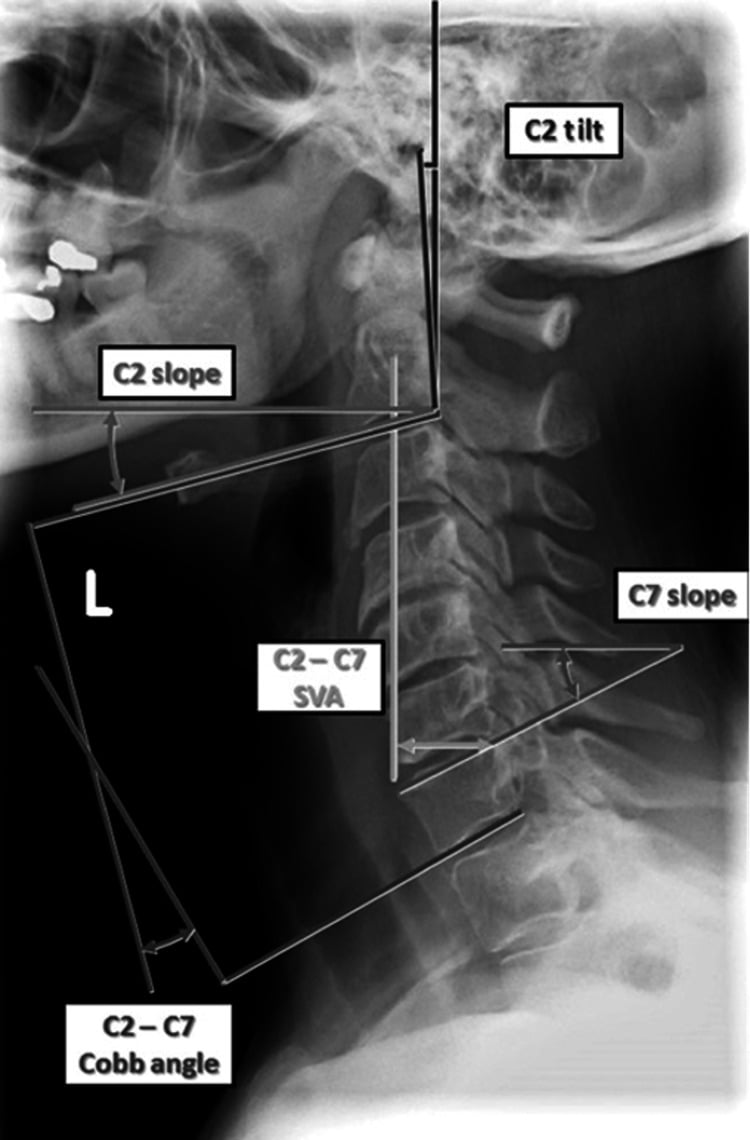
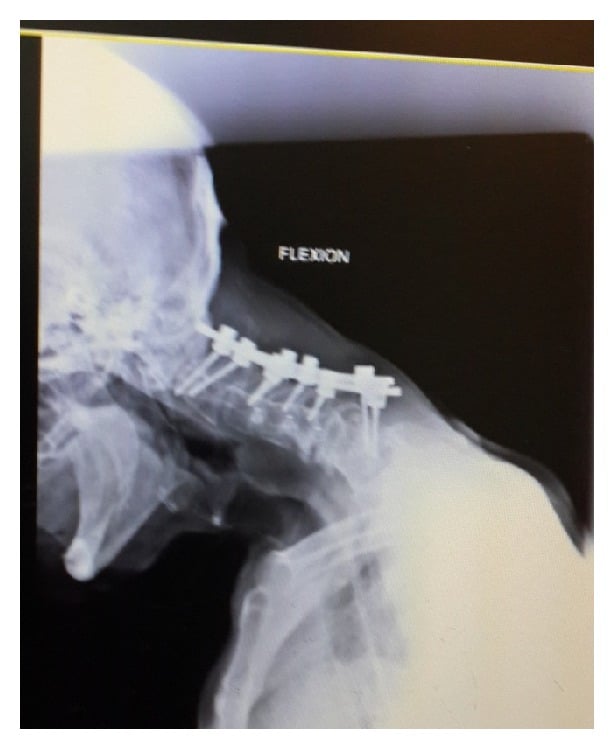
Flexion and extension views answer the question the static film cannot: whether the deformity is flexible or fixed.
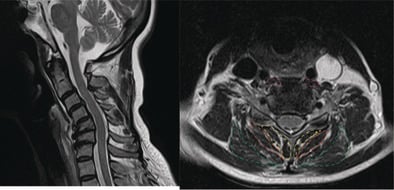
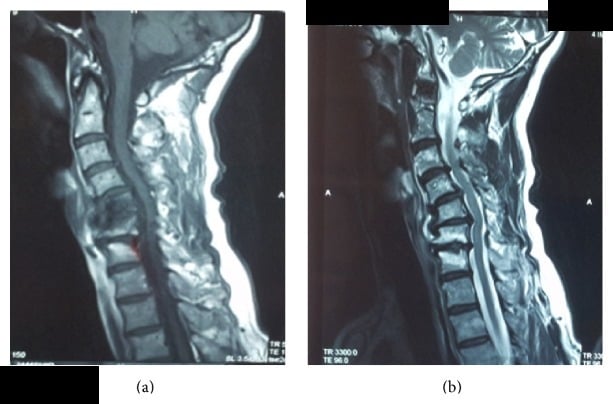
MRI. On T1, fatty infiltration is hyperintense, and fat replacing semispinalis cervicis and capitis is the characteristic finding; T2 shows oedema in the acute phase. The same study assesses secondary cervical kyphosis, cord compression and cord signal (myelomalacia).
CT gives the bone detail for surgical planning, assesses a previous fusion, and detects fracture.
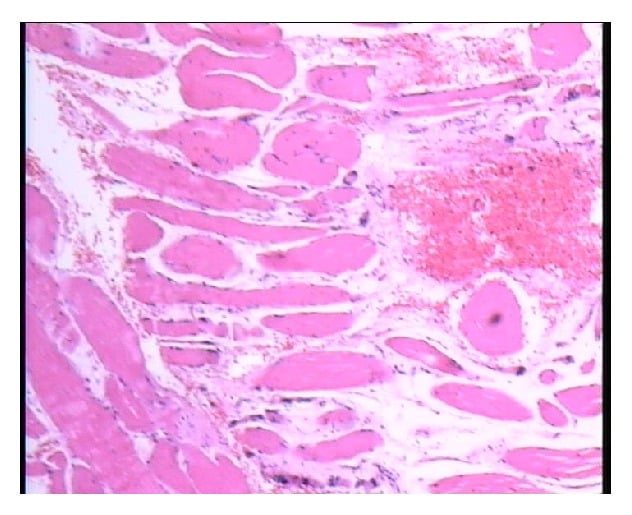
Muscle biopsy is reserved for a diagnosis that is still uncertain after the non-invasive workup, for suspected inflammatory myopathy, and for an atypical presentation. It is an open biopsy of paraspinal muscle, usually semispinalis cervicis, taking enough tissue for histology and special stains. In INEM it shows:
- Fibre size variation
- Type 2 fibre atrophy
- No inflammation
- No necrosis
- Possible fatty replacement
Management
Two questions run the pathway. Is there a neurological red flag, and is the deformity flexible or fixed? A red flag - myelopathy, cord compression, or a rapidly progressive fixed deformity - brings urgent spine and neurology review, MRI, and a plan for decompression and stabilisation. Everything else starts with the cause: history and examination, exclusion of systemic neuromuscular disease, imaging, EMG and laboratory studies before a treatment is chosen.
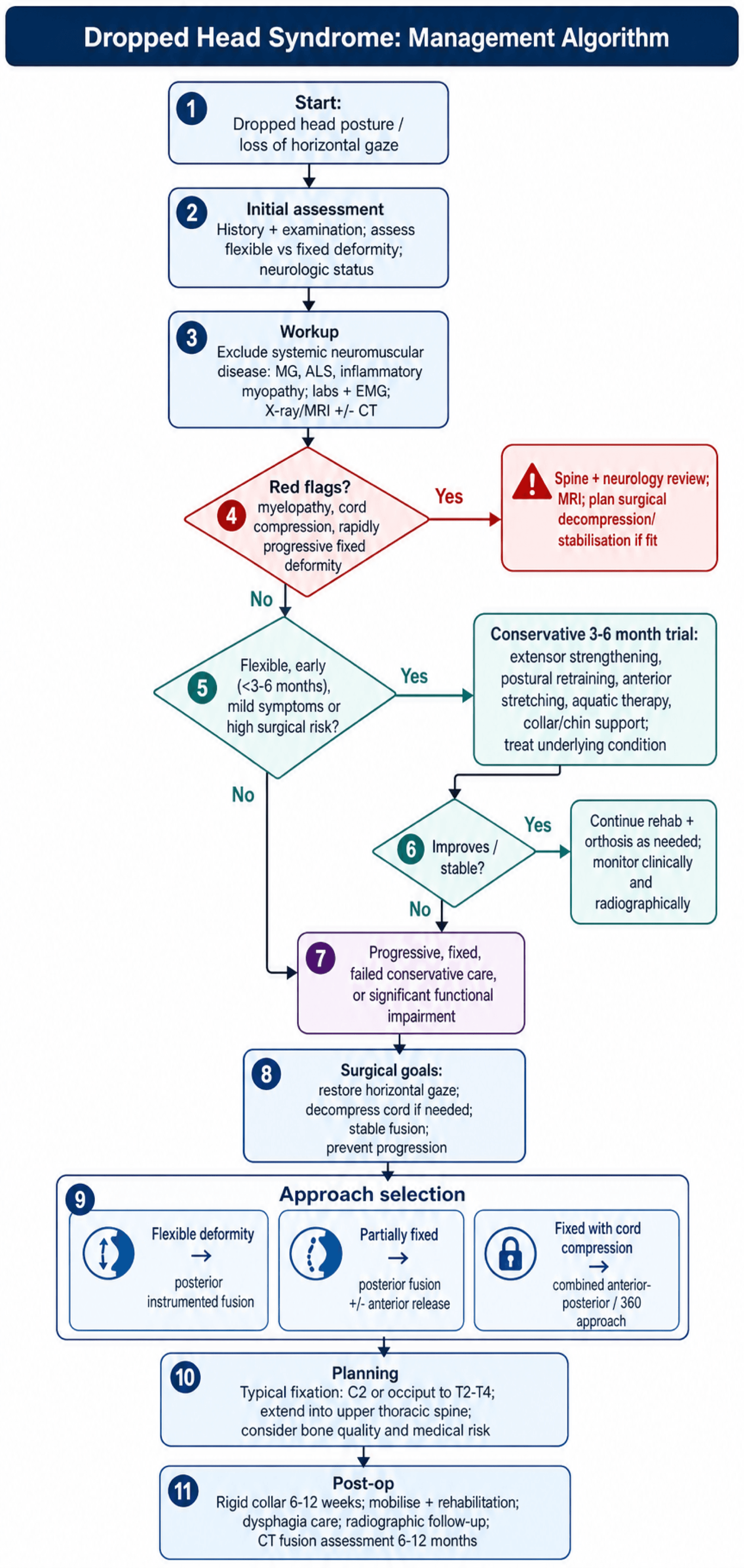
Who. A flexible deformity, an early presentation (less than 3-6 months), mild symptoms, or a patient at high surgical risk.
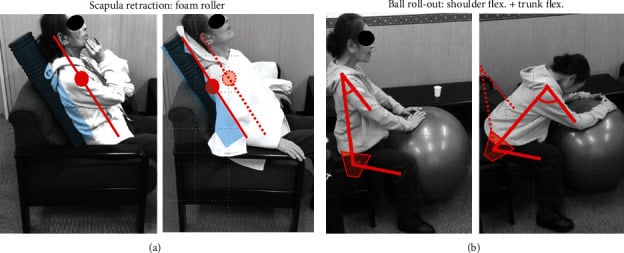
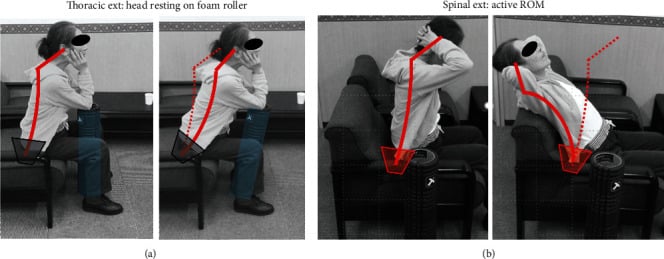
Physiotherapy is the core of it: neck extensor strengthening, postural retraining, stretching of the anterior structures, and aquatic therapy.
Orthoses. A soft or rigid cervical collar, or a custom orthosis for chin support. It may not halt progression, but it provides comfort.
Medication treats the underlying condition rather than the posture - steroids for an inflammatory myopathy, pyridostigmine for myasthenia. There is no specific medication for INEM.
How long. A trial of 3-6 months. If the deformity progresses or becomes fixed, surgery is indicated.
Surgical Technique
Posterior Cervical Fusion for Dropped Head Syndrome
Selection, beyond the indications. Fixation needs bone, so confirm adequate bone quality and an acceptable surgical risk profile, and agree what the patient wants from the operation - horizontal gaze, eating, ambulation - before offering it.
Preoperative workup. Full-length standing spine radiographs, CT of the cervical spine for bone quality and anatomy, MRI if myelopathy is suspected, a neurological assessment, and cardiopulmonary optimisation.
Positioning. Prone on a Jackson frame or table with the head held in Mayfield pins and the arms tucked, positioned in as much correction as is safely tolerated and no more, taking care not to increase the kyphosis. Neuromonitoring (SSEP, MEP) is essential and fluoroscopy confirms the alignment.
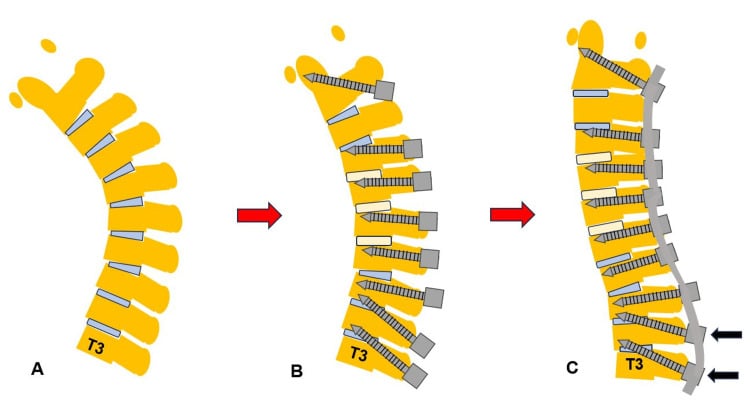
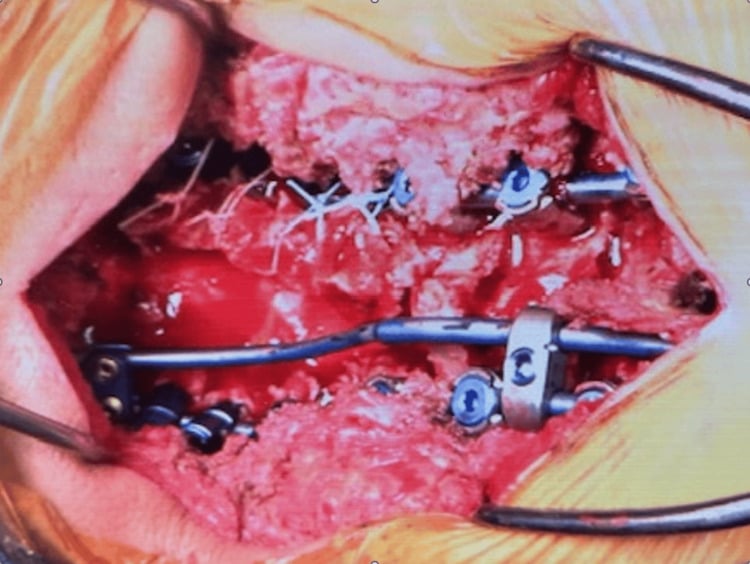
Exposure. Posterior midline incision from C2, or the occiput if an occipitocervical fusion is planned, extending to the upper thoracic spine for a long construct. Subperiosteal dissection exposes the lateral masses and transverse processes.
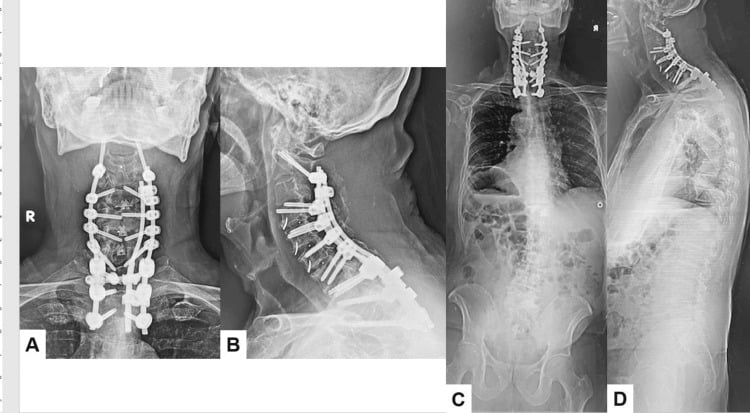
Sequence. Start distally and work proximally. Correct the kyphosis with rod contouring and compression across the posterior elements, and temporary distraction may be used to correct the deformity.
A core peri-operative examinable point: a fixed chin-on-chest deformity is a PREDICTED DIFFICULT AIRWAY, and the plan must be made before the patient reaches the table.
Why laryngoscopy fails. The fixed cervical flexion prevents the neck extension and oral-pharyngeal-laryngeal axis alignment needed for direct or video laryngoscopy, and restricts access to the mouth. Standard laryngoscopy may be impossible, and forced neck manipulation is dangerous.
The airway plan. Awake fibreoptic intubation is the technique of choice, maintaining spontaneous ventilation and the patient's own protective tone; have a difficult-airway trolley and a surgical-airway backup ready. Pre-existing dysphagia raises aspiration risk, which must be balanced against the difficult airway when planning induction.
Positioning. The same fixed flexion makes safe prone positioning difficult. Support and pad the head in its tolerated (often still kyphotic) position with Mayfield/Gardner-Wells fixation, do NOT force correction before instrumentation, and accept that some patients need staged or traction-assisted correction because they cannot lie flat or prone.
Around surgery. Optimise this elderly, comorbid (cardiopulmonary) population pre-operatively, use neuromonitoring during correction, and watch post-operatively for airway oedema and worsening dysphagia.
Exam point: anticipate the difficult airway - awake fibreoptic intubation and an explicit positioning/airway plan are essential before correcting a fixed chin-on-chest deformity.
Complications
Conservative care has its own failures. The deformity may become fixed, myelopathy may follow, dysphagia brings aspiration, and the skin under the chin breaks down. An orthosis adds pressure sores, discomfort and poor compliance, and may not prevent progression.
Intraoperatively, four risks and the answer to each:
- Prevention/Management
- Careful positioning, neuromonitoring
- Prevention/Management
- Anatomic knowledge, image guidance
- Prevention/Management
- Primary repair, dural sealant
- Prevention/Management
- Image guidance, careful technique
Early after surgery, the one to counsel for in advance is the C5 palsy:
- Management
- Speech therapy, swallow evaluation
- Management
- Antibiotics, debridement if deep
- Management
- Revision if symptomatic
- Management
- Evacuation if neurological compromise
- Management
- Deltoid and biceps weakness, typically 2-5 days post-op, after posterior decompression or correction. Usually a traction or reperfusion phenomenon in the root, not a technical error. Confirm the cord and foramina are decompressed on urgent MRI/CT, then supportive care and physiotherapy - most recover over weeks to months, a minority incompletely. Warn about it before surgery, because unexpected arm weakness in a patient who already has neuromuscular disease is otherwise read as their disease progressing.
Late, the construct is the problem:
- Management
- Revision fusion, extend levels
- Management
- Monitor, extend fusion if symptomatic
- Management
- Revision, address pseudarthrosis
- Management
- The characteristic failure of this operation - the head levers forward again below a construct that stopped too high. Do not end at C7 or T1; carry the fusion into the upper thoracic spine so the distal anchor is below the cervicothoracic junction. Established DJK needs revision with extension, not observation.
- Management
- Expected due to underlying myopathy
Bone and muscle are both against you. The population is elderly, so the bone is often poor: consider cement augmentation and longer constructs for load sharing. The muscle is poor by definition, which reduces the posterior tension band, raises the demand on the construct, and may mean the anterior column has to carry some of the load.
How often. Complications are common, up to 30% in some series and quoted overall as 20-40%, and the rate is related to patient age and comorbidities. That is what makes careful patient selection important.
Postoperative Care
Neurological watch. Hourly neurological observations with upper and lower limb motor assessment, any new deficit documented immediately, and urgent imaging if the patient deteriorates. New weakness or numbness, respiratory compromise, swallowing difficulty from airway oedema, and wound haematoma are the four that matter.
Immobilisation. A rigid collar (Miami-J or Aspen type) worn at all times except for wound care, for 6-12 weeks until radiographic fusion, custom-made if the alignment demands it, with a halo vest for severe cases or poor bone. Elevate the head of the bed 30 degrees, log-roll, avoid excessive neck flexion or extension, and allow a soft collar over the rigid one for sleeping comfort.
Wound and pain. Check the wound daily for haematoma and drainage, remove the drain at 24-48 hours once the output is minimal, and take out sutures or staples at 2-3 weeks. Analgesia is multimodal, avoiding excessive opioids because of respiratory depression; muscle relaxants may help spasm.
Getting moving. Sit upright on day 1 if stable, walk with assistance on day 1-2, physiotherapy for gait and balance, and no lifting over 2 kg for 6 weeks.
- Key Activities
- Neurological monitoring, drain removal, mobilisation
- Precautions
- Log-roll, rigid collar, dysphagia screening
- Follow-Up
- Daily wound checks
- Key Activities
- Suture removal, resume light activities
- Precautions
- Collar continues, no lifting
- Follow-Up
- Wound review
- Key Activities
- Radiographic assessment, consider collar wean
- Precautions
- Continued activity modification
- Follow-Up
- X-ray for alignment, early fusion signs
- Key Activities
- CT scan for fusion assessment
- Precautions
- Progress activities if fusing
- Follow-Up
- CT + clinical review
- Key Activities
- Return to full activities if fused
- Precautions
- Monitor for adjacent segment disease
- Follow-Up
- Final outcome assessment
Review clinically and radiographically at 6 weeks, 3 months, 6 months and 1 year, watching for adjacent segment disease, and assess fusion on CT at 6-12 months.
Dysphagia is a common issue after cervical fusion. Pre-operative dysphagia may persist, and airway oedema from retraction adds to it where an anterior approach was used. Keep the patient nil by mouth until a swallow assessment if there is any concern, thicken fluids for mild dysphagia and feed by nasogastric tube if it is severe; speech pathology guides the diet, and most resolve within weeks.
Collar care and weaning. Clean the skin under the collar daily, rotate between two collars for hygiene, check the fit is neither tight nor loose, and pad the pressure points. Once fusion is progressing at 6 weeks or more, the collar comes off for hygiene and then for gradually longer periods; it is discontinued when CT confirms fusion, typically at 3-6 months. Some patients keep a soft collar for comfort.
Rehabilitation. Physiotherapy covers the neck and the core: maintain range of motion in the unfused segments, strengthen the shoulder girdle, work on posture and balance, and retrain gait where the patient is deconditioned. Occupational therapy supplies adaptive equipment, energy conservation, and a route back to daily activities.
Seek immediate medical attention for:
- New neurological symptoms (weakness, numbness, urinary retention)
- Increasing neck pain or wound swelling
- Fever greater than 38°C (possible infection)
- Difficulty breathing or swallowing
- Wound breakdown or discharge
Outcomes
- Improvement Expected
- 75-85% achieve improved forward gaze
- Factors Affecting Outcome
- Severity and flexibility of deformity preoperatively
- Improvement Expected
- Variable - 60-70% improvement
- Factors Affecting Outcome
- Underlying cause (INEM vs secondary DHS)
- Improvement Expected
- Often improves if due to chin-on-chest
- Factors Affecting Outcome
- May persist if unrelated cause
- Improvement Expected
- Improved eating, ambulation, social interaction
- Factors Affecting Outcome
- Patient goals and expectations
- Improvement Expected
- Significant improvement in most
- Factors Affecting Outcome
- Preoperative functional status
What surgery achieves. It restores the ability to look forward and see the horizon, improves eating and swallowing where the chin-on-chest position was the cause, allows eye contact again, and reduces the neck pain of chronic flexion.
What it does not. It does not cure the underlying neuromuscular disease, does not restore normal neck motion, may not prevent progression of the underlying condition, and does not guarantee a pain-free outcome. The counselling has to say so.
- Surgical Success Rate
- 80-90%
- Fusion Rate
- 75-85%
- Prognosis
- Best outcomes, localized disease
- Surgical Success Rate
- 60-75%
- Fusion Rate
- 70-80%
- Prognosis
- Variable, underlying disease progresses
- Surgical Success Rate
- 70-85%
- Fusion Rate
- 70-80%
- Prognosis
- Good if addressed early
- Surgical Success Rate
- Variable
- Fusion Rate
- 60-75%
- Prognosis
- Depends on disease control
- Surgical Success Rate
- Variable
- Fusion Rate
- 70-80%
- Prognosis
- Medical treatment may avoid surgery
- Surgical Success Rate
- 60-70%
- Fusion Rate
- 60-70%
- Prognosis
- Poor bone quality, high complication rate
Early complications, surgical and medical:
- Wound infection 5-10%, wound haematoma 2-5%, neurological injury 2-5%
- CSF leak, if the dura is injured: rare
- Dysphagia: common, usually transient
- Respiratory 5-15%, DVT or PE 2-5%, cardiac events depending on comorbidities
- Delirium: common in the elderly
Late complications are mostly the construct and the fusion:
- Pseudarthrosis 10-25%, hardware failure 5-15%, loss of correction 5-10%
- Adjacent segment disease 10-20% at 5 years, more with longer constructs, and it may need the fusion extended
- Revision surgery in 10-20%
- Persistent neck stiffness, which is expected, and chronic pain in some patients
Fusion. Overall fusion is 75-90%. The risk of pseudarthrosis rises with poor bone quality, long constructs and systemic disease, and a symptomatic nonunion may need revision with bone grafting.
In the long run the underlying disease decides. Patients with Parkinson disease continue to decline neurologically, patients with INEM keep better long-term function, and quality of life is generally maintained after surgery.
- Poor Prognosis
- Progressive systemic neuromuscular disease
- Poor Prognosis
- Rigid, fixed kyphosis
- Poor Prognosis
- Osteoporosis, poor bone stock
- Poor Prognosis
- Elderly with multiple comorbidities
- Poor Prognosis
- Significant preoperative disability
- Poor Prognosis
- Unrealistic expectations
Guidelines, Registries & Global Practice
Global Epidemiology
Dropped head syndrome (DHS) is rare and predominantly affects older adults. The largest pooled cohort to date (systematic review of 129 patients across 74 studies) reports a mean age of 63.6 years and a 63% female predominance, with four diagnoses accounting for most cases.
- Pooled estimate
- 63.6 years
- Source
- Drain 2019 (PMID 30844858)
- Pooled estimate
- ~63%
- Source
- Drain 2019 (PMID 30844858)
- Pooled estimate
- 31.8% of cases
- Source
- Drain 2019 (PMID 30844858)
- Pooled estimate
- 20.2% of cases
- Source
- Drain 2019 (PMID 30844858)
- Pooled estimate
- 12.4% of cases
- Source
- Drain 2019 (PMID 30844858)
- Pooled estimate
- 7.0% of cases
- Source
- Drain 2019 (PMID 30844858)
Guidance Landscape (No Disease-Specific CPG)
There is no dedicated DHS clinical practice guideline from AAOS, NICE, BOA, AO Spine or EFORT. Practice is therefore derived from narrative reviews, consensus on cervical sagittal alignment and the underlying-disease guidelines that drive treatment.
- Relevant guidance
- CBVA (horizontal gaze), C2-7 SVA, TS-CL as planning/correction targets
- Evidence basis
- Expert Delphi, moderate reliability (PMID 26273762)
- Relevant guidance
- Restore horizontal gaze and sagittal balance; instrument to a stable caudal foundation (cervicothoracic junction)
- Evidence basis
- Expert consensus / review (PMID 23203936)
- Relevant guidance
- Treat the causative neuromuscular disorder first; DHS often improves with disease control
- Evidence basis
- Disease-specific guidelines
- Relevant guidance
- Medical/immunomodulatory therapy first; surgery for non-responders
- Evidence basis
- Systematic review, Level V (PMID 30844858)
Registry Evidence
No national joint or spine registry captures DHS as a discrete diagnosis; arthroplasty registries (AOANJRR, NJR, AJRR) are not applicable to this cervical extensor disorder. The evidence base is limited to single-centre series, the pooled systematic review above and narrative updates (PMID 32105239), all Level IV-V. This evidentiary weakness should temper any strong treatment claims.
Practice Variation
- First-line emphasis varies by referral pathway: neurology-led services prioritise antibody/EMG-guided medical therapy, whereas spine-led referrals more readily consider deformity surgery.
- Surgical extent differs between centres, from subaxial constructs to occiput/C2-to-upper-thoracic fusions; extension across the cervicothoracic junction is increasingly favoured to limit junctional failure.
- Anterior release / circumferential surgery is reserved for fixed or biplanar deformity and is concentrated in high-volume deformity units (PMID 36106864).
- Decision-making and rehabilitation for complex correction is typically multidisciplinary (spine surgeon, neurologist, radiologist); postoperative care routinely includes physiotherapy together with swallow/speech-pathology assessment for dysphagia.
MCQ Practice Points
Q: What is INEM and why is it a diagnosis of exclusion?
A: Isolated Neck Extensor Myopathy (INEM) is a non-inflammatory myopathy affecting only cervical extensors, predominantly in elderly patients. It is a diagnosis of exclusion because systemic causes (myasthenia gravis, ALS, inflammatory myopathy) must be ruled out first. EMG shows myopathic changes in neck extensors but normal limb muscles.
Q: What is the characteristic MRI finding in dropped head syndrome due to INEM?
A: T1 hyperintensity (fatty infiltration) of the paraspinal muscles, especially semispinalis cervicis and capitis. This indicates chronic muscle degeneration with fat replacement. The splenius, multifidus, and deep extensors may also be involved.
Q: What clinical features help differentiate myasthenia gravis from INEM as a cause of dropped head?
A: Myasthenia gravis:
- Fatigability (symptoms worsen with activity/end of day)
- Ptosis and diplopia (ocular involvement)
- Fluctuating weakness
- Positive AChR antibodies
INEM: Isolated to neck extensors, non-fatiguing, no ocular symptoms, negative antibodies.
Q: Why is a combined anterior-posterior approach often needed for surgical correction of dropped head syndrome?
A: Posterior-only fusion has high failure rates (up to 30-50%) due to poor extensor muscle quality and high mechanical demands. A 360-degree approach provides:
- Anterior release if fixed kyphosis
- Anterior structural support
- Posterior instrumented fusion for correction
- Better biomechanical stability
Clinical Decision Scenarios
Practise clinical reasoning and management decisions out loud
“A 72-year-old woman presents with 3-month history of progressive difficulty holding her head up. She uses her hand to support her chin. No limb weakness, diplopia, or swallowing difficulty. No medication history. MRI shows fatty infiltration of the semispinalis cervicis.”
“The same patient returns after 4 months of physical therapy and collar use. Her deformity is now partially fixed, with only 50% passive correction. She has difficulty eating and is socially isolated. MRI shows no cord compression.”
“A 68-year-old man with dropped head syndrome now develops progressive hand numbness and gait difficulty. Examination shows hyperreflexia, positive Hoffman sign, and difficulty with tandem gait. MRI shows severe cervical kyphosis with cord compression at C4-5.”
“A 45-year-old woman presents with 6-week history of dropped head syndrome. She also reports fatigue, double vision at the end of the day, and difficulty swallowing solids. Examination shows mild bilateral ptosis that worsens with sustained upgaze.”
Definition & Etiology
- Severe weakness of neck extensors causing chin-on-chest deformity
- INEM = Isolated Neck Extensor Myopathy (diagnosis of exclusion)
- Must exclude: MG, ALS, inflammatory myopathy
- Secondary causes: post-surgical, radiation, Parkinson
Clinical Features
- Hand-to-chin support (pathognomonic)
- Impaired horizontal gaze
- Dysphagia common
- Worse at end of day = think MG
- Assess flexibility of deformity
Key Investigations
- AChR antibodies - rule out MG
- CK - elevated in inflammatory myopathy
- EMG - myopathic in neck, normal limbs for INEM
- MRI - fatty infiltration of semispinalis cervicis
- X-ray - measure kyphosis
Management Principles
- Conservative trial 3-6 months for flexible deformity
- Physical therapy, collar, treat underlying cause
- Surgery if failed conservative or fixed deformity
- Posterior fusion for flexible, 360° for fixed
- Extend to T2-T4 to prevent junctional kyphosis
Surgical Technique
- C2 pars/pedicle screws superiorly
- Lateral mass screws C3-C6
- Pedicle screws upper thoracic
- Anterior release if fixed
- Consider cement augmentation
Exam Pearls
- INEM = elderly, isolated to neck, non-inflammatory
- MG = young/middle-age, fatigability, ptosis, diplopia
- Semispinalis cervicis is KEY muscle affected
- High complication rate (20-30%) - counsel appropriately
- Posterior-only often insufficient - plan for combined
Evidence Base
INEM Definition and Characterization (Landmark)
- Four patients with a non-progressive myopathy of severe neck extensor weakness
- Coined the term isolated neck extensor myopathy (INEM), preferred to dropped head syndrome
- INEM distinguished from more ominous neuromuscular disorders by electrophysiology, imaging and histology
- Muscle biopsy shows fibre-size variation without inflammation
DHS Case Series and Literature Review
- Seven patients with DHS presenting to a UK spinal unit (4 acute, 3 gradual onset)
- Six of seven were managed conservatively; one underwent surgery
- The single operated patient was dissatisfied with the surgical outcome
- Highlights that surgery must be considered cautiously, especially in elderly patients
DHS Etiology and Management Review
- DHS is most commonly associated with neuromuscular disorders; INEM is used when EMG/biopsy are unrevealing
- Most reports favour non-surgical interventions to stabilise the deformity initially
- Surgical outcomes in the literature are limited and mixed, ranging from poor to excellent
- Prevalence is expected to rise with increasing life expectancy
The Dropped Head Syndrome (Original Description)
- Four patients with relatively isolated neck extensor weakness
- EMG and muscle biopsy suggested a restrictive, non-inflammatory myopathy
- Cervical paraspinal muscles predominantly affected
- One of the earliest formal characterisations of the syndrome
Dropped Head Syndrome: A Systematic Review (Largest Pooled Cohort)
- 129 patients across 74 studies; mean age 63.6 years, 63% female
- Four diagnoses account for most cases: INEM 31.8%, Parkinson disease 20.2%, myasthenia gravis 12.4%, ALS 7.0%
- Overall positive response to treatment 64.3%; combined medical plus immunosuppression 87.5%
- Surgery reported successful in 93.8% - but the operated patients are a small subgroup pooled from published case reports, not a cohort
Cervical Spine Deformity Classification (Horizontal Gaze / CBVA)
- Expert Delphi-derived classification for cervical spine deformity with a deformity descriptor and five modifiers
- Chin-brow vertical angle (CBVA) formalised as the horizontal-gaze modifier, central to DHS planning
- Incorporates C2-7 SVA, T1 slope minus cervical lordosis, mJOA myelopathy and SRS-Schwab parameters
- Moderate inter- and intra-observer reliability across 20 deformity surgeons
DHS: Update on Etiology and Surgical Management
- DHS is a heterogeneous group with diverse etiologies producing a flexible anterior cervical curvature
- Causes include myasthenia gravis, ALS, Parkinson disease, radiotherapy, age-related change and idiopathic forms
- Non-operative care comprises orthotic bracing and physical therapy
- Surgical fusion carries a higher complication rate but most achieve favourable long-term outcomes
References
- Katz JS, Wolfe GI, Burns DK, Bryan WW, Fleckenstein JL, Barohn RJ. Isolated neck extensor myopathy: a common cause of dropped head syndrome. Neurology. 1996;46(4):917-21. PMID 8780064. doi:10.1212/wnl.46.4.917
- Suarez GA, Kelly JJ Jr. The dropped head syndrome. Neurology. 1992;42(8):1625-7. PMID 1641161. doi:10.1212/wnl.42.8.1625
- Petheram TG, Hourigan PG, Emran IM, Weatherley CR. Dropped head syndrome: a case series and literature review. Spine (Phila Pa 1976). 2008;33(1):47-51. PMID 18165748. doi:10.1097/BRS.0b013e31815e38ec
- Sharan AD, Kaye D, Charles Malveaux WMS, Riew KD. Dropped head syndrome: etiology and management. J Am Acad Orthop Surg. 2012;20(12):766-74. PMID 23203936. doi:10.5435/JAAOS-20-12-766
- Drain JP, Virk SS, Jain N, Yu E. Dropped head syndrome: a systematic review. Clin Spine Surg. 2019;32(10):423-429. PMID 30844858. doi:10.1097/BSD.0000000000000811
- Brodell JD, Sulovari A, Bernstein DN, Mongiovi PC, Ciafaloni E, Rubery PT, Mesfin A. Dropped head syndrome: an update on etiology and surgical management. JBJS Rev. 2020;8(1):e0068. PMID 32105239. doi:10.2106/JBJS.RVW.19.00068
- Ames CP, Smith JS, Eastlack R, et al. Reliability assessment of a novel cervical spine deformity classification system. J Neurosurg Spine. 2015;23(6):673-83. PMID 26273762. doi:10.3171/2014.12.SPINE14780
- Li Y, Basil G, Vanni S. Dropped head syndrome in a patient with Parkinson's disease and inflammatory myopathy, treated with sternocleidomastoid release and circumferential cervical fusion. Br J Neurosurg. 2025;39(1):104-109. PMID 36106864. doi:10.1080/02688697.2022.2123892