Wells Score | D-dimer + Ultrasound | Anticoagulation 3-6 Months
- Wells score stratifies pretest probability - guides D-dimer use
- D-dimer has HIGH sensitivity but LOW specificity - rules OUT if negative + low Wells
- Compression ultrasound is the first-line diagnostic test (95% sensitive for proximal DVT)
- Proximal DVT (popliteal and above) MUST be treated - high PE risk
- Anticoagulate 3 months if provoked (surgery), 3-6 months if unprovoked
- “D-dimer useless if high Wells score - go straight to ultrasound
- “Calf vein DVT (distal) controversial - some treat, some serial ultrasound
- “Postoperative DVT is PROVOKED - lower recurrence risk than unprovoked
- “Rivaroxaban and apixaban do NOT need LMWH lead-in (unlike warfarin)
Overview and Clinical Significance
Orthopaedic surgery is very high risk for venous thromboembolism, and the endpoint that is feared is pulmonary embolism. Surgery supplies stasis, endothelial injury and hypercoagulability at the same sitting, which is why a swollen calf a week after arthroplasty is investigated rather than explained away.
How common. VTE affects 1-2 per 1000 of the population each year. After major orthopaedic surgery with modern prophylaxis, 1-3% develop symptomatic VTE, and the postoperative peak is days 7-14.
Where the clot sits. 80% of DVT is in the lower limb and 20% in the upper limb. Taking DVT as a whole, 60% is proximal and 40% is calf-only, and that division drives almost every treatment decision on this page.
What an untreated DVT costs. The conventional figure is a 10-30% risk of PE, with death from massive PE in 1-5%; anticoagulation is what prevents it. That 10-30% could not be traced to a primary source and derives from pre-anticoagulation-era observation, so treat it as an order of magnitude rather than a measurement.
The natural history after a first symptomatic DVT comes from Prandoni's 355-patient cohort, and the shape of the figures matters as much as their size.
- Post-thrombotic syndrome 22.8% at 2 years (95% CI 18.0-27.5), rising only to 29.1% by 8 years
- Recurrent VTE 17.5% at 2 years, 24.6% at 5 years, 30.3% at 8 years
Chronic venous insufficiency is the other long-term consequence.
Pathophysiology and Virchow's Triad
Virchow's triad. Thrombosis needs venous stasis, endothelial injury and hypercoagulability, and a patient having a hip replaced has all three at once.
Stasis follows anything that keeps the leg still.
- Immobility from surgery, anaesthesia and bed rest
- Tourniquet use during surgery
- Cast immobilisation
- Long-haul flights (economy class syndrome)
- Paralysis (stroke, spinal cord injury)
Endothelial injury comes from the operation itself and from anything sitting inside a vein.
- Surgical trauma to vessels
- Positioning pressure during surgery
- Central venous catheters
- Previous DVT (vessel damage)
- Inflammatory conditions
Hypercoagulability is partly the patient and partly the response to being operated on.
- Surgical stress response (tissue factor release)
- Cancer (procoagulant factors)
- Inherited thrombophilias (factor V Leiden, prothrombin mutation)
- Acquired states (pregnancy, OCP, HRT)
- Dehydration
Why orthopaedic surgery sits at the top of the list. Every feature of a major joint operation pushes in the same direction.
- Prolonged immobility before, during and after surgery
- Direct vascular trauma in hip and knee surgery
- Cement polymerisation (heat, emboli)
- Tourniquet ischaemia-reperfusion
- Inflammatory response activating coagulation
Risk by procedure without prophylaxis. These are venographic rates from historical screening studies, where every patient was imaged and most detected thrombi were asymptomatic distal clots:
- THA: 40-60% DVT, 2-5% PE
- TKA: 40-70% DVT, 2-5% PE
- Hip fracture surgery: 40-50% DVT
- Spine surgery: 15-40% DVT
- Arthroscopy: 2-5% DVT
The modern equivalent is not comparable. Arthroplasty registries deliberately track symptomatic VTE and 90-day readmission rather than venographic endpoints, and on that measure the rate with prophylaxis is around 1-3%. Those two numbers must never be set side by side as though prophylaxis cut the same quantity twentyfold; if an examiner asks how much prophylaxis reduces DVT, the honest answer names the endpoint before the number.
Orthopaedic surgery involves ALL THREE components of Virchow's triad - stasis (immobility), endothelial injury (surgery), and hypercoagulability (inflammatory response). This is why VTE prophylaxis is mandatory - agent choice, duration and the aspirin debate are covered in thromboprophylaxis.
VTE Prophylaxis in Orthopaedic Surgery
Because the unprophylaxed risk is so high, prophylaxis - not just treatment - is the dominant orthopaedic VTE exam theme. It combines mechanical and pharmacological measures with early mobilisation, risk-stratified against bleeding.
- Examples
- Intermittent pneumatic compression (IPC), graduated compression stockings, venous foot pumps
- Duration / note
- Start peri-operatively; useful when bleeding risk is high or as an adjunct; combine with early mobilisation
- Examples
- Enoxaparin
- Duration / note
- Standard pharmacological agent; renally cleared (caution in renal impairment)
- Examples
- Rivaroxaban, apixaban, dabigatran
- Duration / note
- Oral; first-line in many guidelines after hip/knee arthroplasty
- Examples
- Aspirin 81-150 mg
- Duration / note
- Non-inferior extended prophylaxis after THA/TKA (EPCAT II); low cost
- Examples
- TKA vs THA/hip fracture
- Duration / note
- TKA: ~10-14 days; THA and hip fracture: EXTENDED to ~28-35 days
Guidelines differ in emphasis: ACCP/CHEST and NICE favour pharmacological prophylaxis (LMWH or a DOAC) for major lower-limb arthroplasty and hip fracture, with extended duration (~35 days) for hip procedures, whereas the AAOS is more permissive and accepts aspirin (and mechanical methods) as reasonable in standard-risk patients. All agree on risk-stratifying VTE against bleeding, using mechanical methods when bleeding risk is high, and early mobilisation. Hip fracture and THA warrant longer prophylaxis than TKA.
Clinical Assessment - Wells Score
What the clinical signs are worth. Pain, swelling and warmth have low specificity, because many conditions produce them, so examination alone neither makes nor excludes the diagnosis. The Wells score estimates pretest probability and decides which test comes next; it is not itself diagnostic, and D-dimer or imaging is still required.
One leg or two. DVT is usually unilateral. Bilateral leg swelling with no other features should prompt assessment for heart failure or hypoalbuminaemia rather than a hunt for clot.
- Points
- +1
- Clinical Notes
- Treatment within 6 months or palliative
- Points
- +1
- Clinical Notes
- Plaster cast or bedridden with lower limb paresis
- Points
- +1
- Clinical Notes
- Most ortho patients score this
- Points
- +1
- Clinical Notes
- Palpation of deep veins
- Points
- +1
- Clinical Notes
- Thigh and calf both swollen
- Points
- +1
- Clinical Notes
- Measure 10cm below tibial tuberosity
- Points
- +1
- Clinical Notes
- Confined to symptomatic leg
- Points
- +1
- Clinical Notes
- Non-varicose
- Points
- +1
- Clinical Notes
- Prior confirmed DVT
- Points
- -2
- Clinical Notes
- Cellulitis, Baker cyst, muscle strain
CAPSBEDWells Score for DVT
Hook:Remember CAPSBED to calculate Wells score - Cancer, Active immobility, Prior DVT, Swelling, Bedridden, Enlarged calf, and Deduct 2 if alternative diagnosis!
Interpretation. The score sorts patients into three groups, and each group gets a different first test.
- Probability
- Low (unlikely)
- DVT Prevalence
- 3% (10 of 329 in Wells 1997)
- Next Step
- D-dimer - if negative, stop; if positive, ultrasound
- Probability
- Moderate
- DVT Prevalence
- 17% (32 of 193)
- Next Step
- D-dimer AND ultrasound
- Probability
- High (likely)
- DVT Prevalence
- 75% (53 of 71) - three in four
- Next Step
- Proceed directly to ultrasound (skip D-dimer)
These are the figures from Wells' original 593-patient cohort, and the spread is the point: a high score means three patients in four actually have the clot, which is why a negative D-dimer cannot be allowed to reassure you there and why empirical anticoagulation while awaiting the scan is reasonable. At the other end, a low score carries a 3% prevalence - low enough that a negative D-dimer closes the episode.
Quote the safety figure alongside them, because it is what justifies the whole strategy: of the 501 patients this pathway labelled DVT-negative, only 3 (0.6%, 95% CI 0.1-1.8) had a thromboembolic event over three months. The pathway also spared imaging - only 5.6% needed venography and serial testing fell to 28%.
The minus-two rule. An alternative diagnosis judged as likely as or more likely than DVT subtracts 2 points, and that single item can lift a patient out of the imaging pathway. Chronic venous insufficiency, which is bilateral and comes with varicosities and skin changes, belongs on that list alongside the conditions below.
- Discriminating Features
- Spreading erythema, warmth, fever, raised inflammatory markers
- Key Test
- Clinical; ultrasound to exclude DVT
- Discriminating Features
- Sudden calf pain, popliteal fullness, crescent bruise at ankle
- Key Test
- Ultrasound (fluid tracking)
- Discriminating Features
- Trauma/exertion history, focal tenderness, bruising
- Key Test
- Ultrasound/clinical
- Discriminating Features
- Tender palpable cord over superficial vein, no deep involvement
- Key Test
- Ultrasound
- Discriminating Features
- Prior DVT, chronic swelling, skin changes, varicosities
- Key Test
- History plus ultrasound
- Discriminating Features
- Non-pitting, chronic, often bilateral, dorsal foot involvement (positive Stemmer sign)
- Key Test
- Clinical
- Discriminating Features
- Bilateral pitting oedema, raised JVP and pulmonary oedema, or low albumin
- Key Test
- Echo, bloods
Diagnostic Investigations
The pathway. Calculate Wells first, because the score decides the next test. A low score (0-1) earns a D-dimer, negative stopping the episode and positive leading to ultrasound; a moderate score (2) takes both tests; a high score (3 or more) goes straight to compression ultrasound, with empirical anticoagulation if the scan will be delayed.
D-dimer. A fibrin degradation product, raised in VTE. Sensitivity is 95-98% and specificity only 40-60%, which makes it a rule-out test and never a diagnostic one: a negative result with a low Wells score excludes DVT with a 99% negative predictive value and spares the patient an unnecessary scan, while a positive result earns an ultrasound and nothing more.
When it is not worth sending. With a high Wells score the answer is imaging whatever the assay says. The test is also raised by trauma, surgery and inflammation, so in postoperative orthopaedic patients it is often falsely elevated and of limited utility, and the same applies in cancer, pregnancy and the elderly.
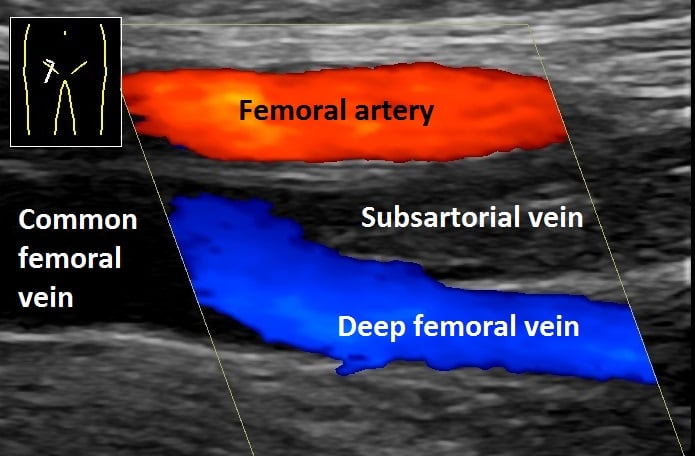
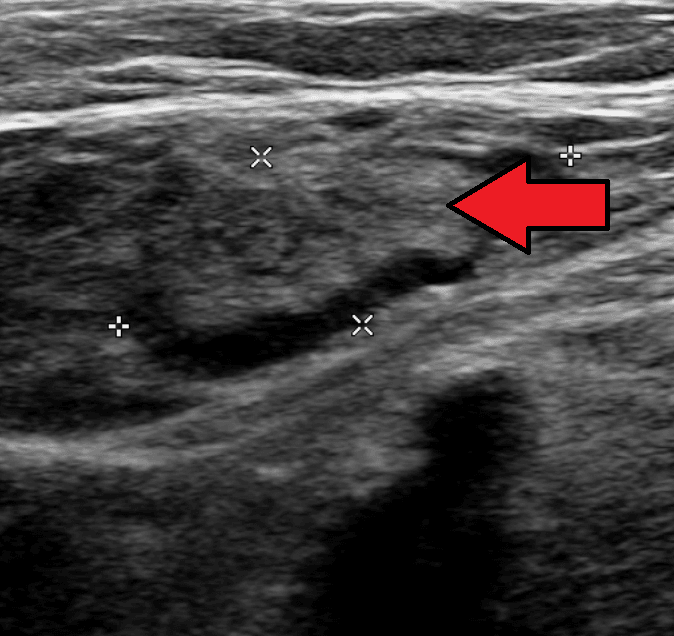
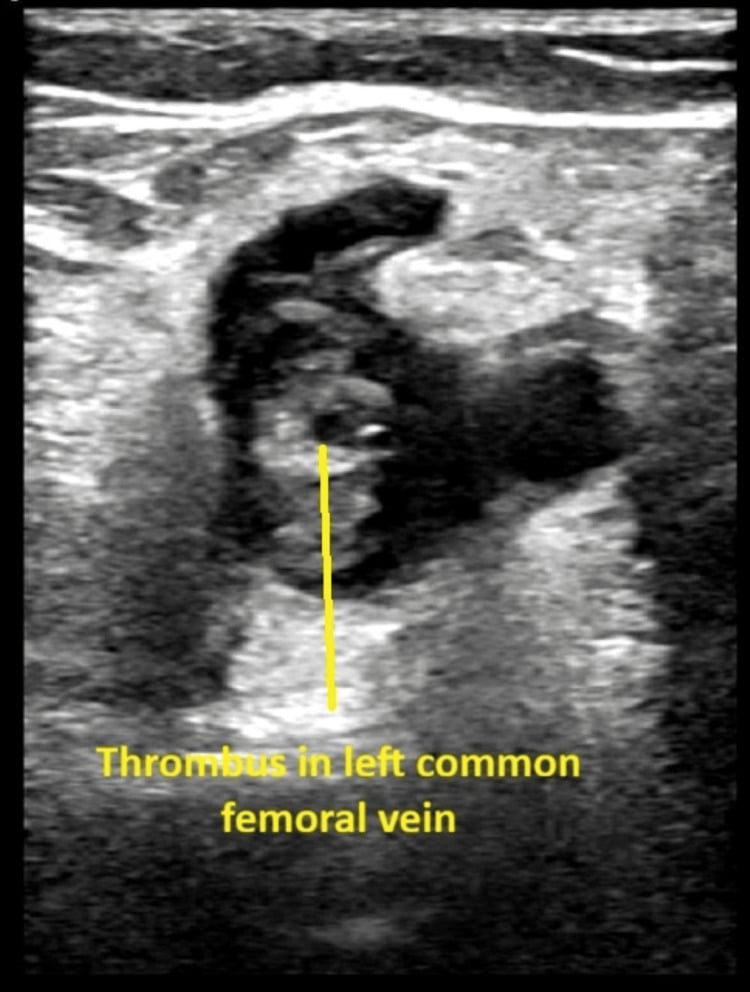
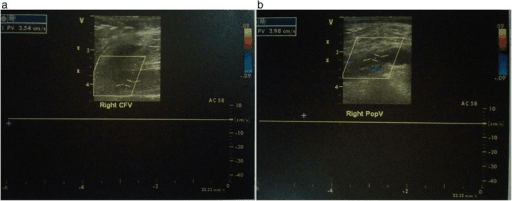
Compression ultrasound is the first-line diagnostic test. Failure of the vein to compress under the probe is what makes the diagnosis; scan from the common femoral vein down to the popliteal vein.
- Interpretation
- DVT present
- Sensitivity
- 95% for proximal DVT
- Interpretation
- No DVT
- Sensitivity
- High negative predictive value
- Interpretation
- Thrombus visualization
- Sensitivity
- Confirmatory if seen
- Interpretation
- Occlusion
- Sensitivity
- Supportive finding
Limitations. The scan is good at what it is asked to do and poor beyond it.
- Less sensitive for calf vein DVT (60-70% sensitivity)
- Operator-dependent
- Difficult in oedematous or obese patients
- Cannot assess the iliac veins well
A negative scan against strong suspicion is not the end. Repeat the ultrasound in 7 days, because a distal thrombus may propagate proximally in the interval.
Other modalities answer questions the leg scan cannot.
- Indication
- Suspected pelvic/IVC thrombus
- Advantage
- Visualizes central veins
- Limitation
- Radiation, contrast
- Indication
- Pregnancy, contrast allergy
- Advantage
- No radiation
- Limitation
- Expensive, time-consuming
- Indication
- Rarely used now
- Advantage
- Most accurate
- Limitation
- Invasive, contrast, phlebitis risk
Contrast venography remains the most accurate test and the standard the others are measured against, but it is invasive and has been displaced in practice: ultrasound is first-line, and CT or MR venography is reserved for the specific situations above.
Treatment - Anticoagulation
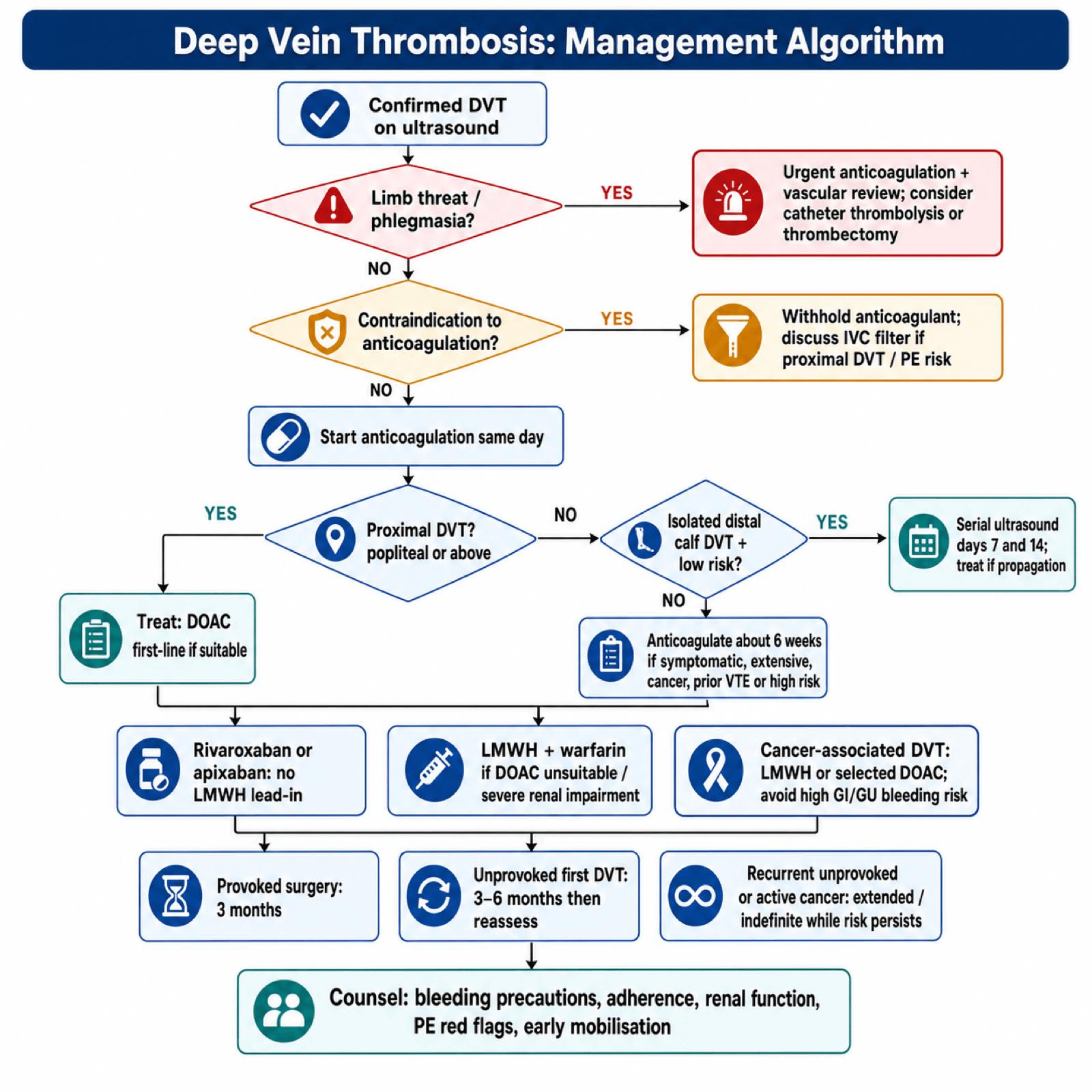
Once DVT is diagnosed, start anticoagulation immediately (same day). Delays increase PE risk. Choice of anticoagulant depends on patient factors, renal function, and bleeding risk.
- Advantages
- Oral from day 1, no monitoring, no LMWH lead-in
- Disadvantages
- Cost, renal impairment, limited reversal options
- Practice Note
- Globally first-line for non-cancer VTE
- Advantages
- Cheap, reversible, familiar
- Disadvantages
- LMWH injections, INR monitoring, drug interactions
- Practice Note
- Still used where DOAC cost/access is limiting
- Advantages
- No monitoring, safe in cancer
- Disadvantages
- Daily injections, expensive long-term
- Practice Note
- Cancer-associated VTE (CLOT); DOACs now an option (Caravaggio)
- Advantages
- Oral, predictable
- Disadvantages
- Need 5-10d LMWH lead-in, renal clearance
- Practice Note
- Used less than rivaroxaban/apixaban
DOAC dosing. Both first-line agents start high and step down, and neither needs an LMWH lead-in, so treatment is oral from day one without monitoring.
- Rivaroxaban: 15mg twice daily for 21 days, then 20mg daily; reduce to 15mg daily if CrCl 30-50
- Apixaban: 10mg twice daily for 7 days, then 5mg twice daily; reduce to 2.5mg twice daily if two of age over 80, weight less than 60kg, creatinine greater than 133
When a DOAC is the wrong drug. CrCl less than 30, active bleeding, a mechanical valve, or antiphospholipid syndrome.
Warfarin with LMWH bridging is the traditional approach and is still used when a DOAC is contraindicated.
Warfarin Initiation
Start LMWH (enoxaparin 1mg/kg BD or 1.5mg/kg daily) AND warfarin 5-10mg daily. Check baseline INR.
Check INR daily. Adjust warfarin dose to target INR 2-3. Continue LMWH until INR greater than 2 for 2 consecutive days.
Once INR therapeutic (2-3) for 2 days, stop LMWH. Continue warfarin long-term with regular INR monitoring.
Thereafter the INR is checked weekly until stable, then monthly.
Cancer-associated VTE is the one setting where LMWH, not a DOAC, was the standard. The CLOT trial established it by cutting recurrent VTE to 9% with dalteparin against 17% with a coumarin, and practice has moved only recently.
- Caravaggio showed apixaban non-inferior to dalteparin without excess major bleeding, and Hokusai-VTE Cancer showed edoxaban non-inferior with more GI bleeding
- Treat for a minimum of 3-6 months, and consider indefinite treatment while the cancer is active
- Prefer LMWH (or apixaban) over edoxaban or rivaroxaban in luminal GI or GU malignancy, because of the higher mucosal bleeding risk
LMWH remains a safe default, but oral apixaban is a reasonable choice in many solid tumours; choose on bleeding-site risk, drug interactions and patient preference.
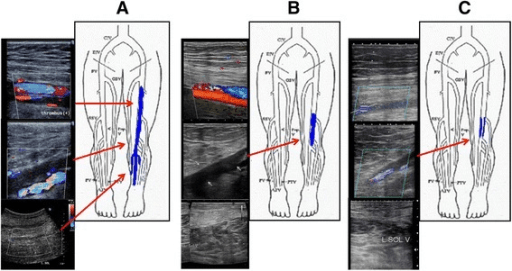
Treatment Duration
- Duration
- 3 months
- Rationale
- Transient risk factor removed
- Recurrence Risk
- 1-3% annual recurrence
- Duration
- 3-6 months minimum
- Rationale
- Assess bleeding vs recurrence risk
- Recurrence Risk
- 10% first year, 5% annual after
- Duration
- Indefinite
- Rationale
- High recurrence risk (15% annual)
- Recurrence Risk
- 15% annual if stopped
- Duration
- Indefinite (while cancer active)
- Rationale
- Ongoing hypercoagulable state
- Recurrence Risk
- High recurrence
- Duration
- Variable, often indefinite
- Rationale
- Persistent increased risk
- Recurrence Risk
- Depends on thrombophilia type
A postoperative DVT is a provoked DVT. The provoking factor has gone by the time treatment ends, recurrence runs at 1-3% a year against 10% in the first year after an unprovoked event, and 3 months is enough. Do not anticoagulate such a patient indefinitely by reflex.
A first unprovoked DVT runs for 3-6 months as a minimum, and indefinite anticoagulation is considered where the risk is high, the recurrence risk weighed against the bleeding risk.
The awkward middle. Where a transient provoking factor coexists with a persisting one such as obesity or prior VTE, the optimal duration is not firmly defined, and the decision is increasingly individualised using D-dimer and risk scores.
In unprovoked DVT, positive D-dimer 1 month after stopping anticoagulation predicts higher recurrence risk. May guide decision for extended anticoagulation.
Complications of DVT and Anticoagulation
Post-thrombotic syndrome is the common long-term cost, and the strongest predictor of it is an ipsilateral recurrent DVT (hazard ratio 6.4). Preventing a second clot in the same leg is therefore the lever that matters: routine graduated compression stockings to prevent post-thrombotic syndrome are no longer recommended after the negative SOX trial, which leaves early ambulation and recurrence prevention.
Chronic venous insufficiency is managed with compression and elevation once it is established.
Phlegmasia cerulea dolens is a rare, massive iliofemoral DVT causing limb-threatening ischemia. Features: severely swollen, blue, painful leg with absent pulses. Emergency treatment: anticoagulation +/- surgical thrombectomy or catheter-directed thrombolysis. Fasciotomy if compartment syndrome develops.
The complications of the treatment are the other half of every duration decision.
- Risk
- 1-3% annually
- Management
- Reversal agents, hold anticoagulant
- Risk
- 0.5-1% annually
- Management
- Stop anticoagulation, reversal agent, neurosurgical review
- Risk
- 2-4% annually
- Management
- Endoscopy, reversal, PPI
- Risk
- 1-5% with UFH
- Management
- Stop heparin, use alternative (argatroban, fondaparinux)
- Risk
- Rare (Protein C deficient)
- Management
- Bridge with heparin when initiating warfarin
Reversal of Anticoagulation
When major bleeding occurs (or urgent surgery is needed), each agent has a specific reversal strategy - examiners expect you to name them.
- Specific reversal
- Idarucizumab (monoclonal antibody fragment)
- Alternative / adjunct
- Haemodialysis (dabigatran is dialysable); activated PCC
- Specific reversal
- Andexanet alfa (recombinant decoy factor Xa)
- Alternative / adjunct
- 4-factor prothrombin complex concentrate (PCC) where andexanet unavailable
- Specific reversal
- 4-factor PCC + intravenous vitamin K
- Alternative / adjunct
- FFP if PCC unavailable (slower, volume load)
- Specific reversal
- Protamine sulfate (full reversal)
- Alternative / adjunct
- Stop infusion (short half-life)
- Specific reversal
- Protamine (partial, ~60% reversal)
- Alternative / adjunct
- Andexanet not standard; supportive measures
Whatever the agent: stop the anticoagulant, apply local haemostasis and resuscitation, check renal function and the timing of the last dose (DOAC effect falls with time and rises in renal impairment), and consider tranexamic acid as an adjunct. Reserve the specific reversal agents above for life-threatening or critical-site bleeding (e.g. intracranial) or emergency surgery that cannot wait for drug clearance.
Guidelines, Registries & Global Practice
Global Epidemiology
- Population incidence of VTE: approximately 1-2 per 1000 adults annually, rising sharply with age (over 5 per 1000 above age 80).
- DVT-to-PE ratio: roughly two-thirds of incident VTE presents as DVT alone, one-third as PE with or without DVT.
- Surgical attributable risk: without prophylaxis, venographic DVT after major lower-limb arthroplasty reaches 40-60%; symptomatic VTE with modern prophylaxis is approximately 1-3%.
- Ethnic variation: VTE incidence is reported lower in East Asian and South Asian populations than in European-ancestry populations, though prophylaxis is still indicated after major orthopaedic surgery.
Side-by-Side Guideline Comparison
- First-line treatment
- DOAC over VKA for non-cancer VTE (Grade 2B)
- Provoked DVT duration
- 3 months
- Compression stockings
- Not routine for preventing PTS (Grade 2B)
- First-line treatment
- Apixaban or rivaroxaban first-line
- Provoked DVT duration
- 3 months (3-6 if active cancer)
- Compression stockings
- Not offered solely to prevent PTS
- First-line treatment
- DOAC preferred unless contraindicated
- Provoked DVT duration
- 3 months for transient provoking factor
- Compression stockings
- Considered for persistent symptoms, not routine
- First-line treatment
- DOAC over VKA; DOAC acceptable in many cancers
- Provoked DVT duration
- 3 months for surgery-provoked
- Compression stockings
- Suggests against routine use
Across ACCP/CHEST, NICE, ESC and ASH the message is consistent: DOACs are first-line for most non-cancer DVT, provoked (surgery-related) DVT is treated for 3 months, and graduated compression stockings are no longer recommended purely to prevent post-thrombotic syndrome. Differences are mostly in emphasis, not direction.
Registry and Surgical-Context Notes
- Arthroplasty registries (NJR England/Wales, AOANJRR Australia, AJRR US, Swedish/Norwegian registries) track symptomatic VTE and 90-day readmission as quality metrics rather than venographic endpoints, reflecting the move to clinically relevant outcomes.
- Aspirin as extended prophylaxis after hip/knee arthroplasty (following a short DOAC lead-in) is supported by EPCAT II and is increasingly reflected in registry-era practice and AAOS/ICM consensus.
High- vs Limited-Resource Practice Variation
- Well-resourced settings: same-day compression ultrasound, age-adjusted D-dimer, and DOAC-based outpatient treatment are standard; many proximal DVTs are managed without admission.
- Limited-resource settings: ultrasound access may be delayed, so empirical LMWH while awaiting imaging is more common; warfarin remains widely used where DOAC cost or INR-monitoring infrastructure dictates, and LMWH may be the only practical option for cancer-associated VTE.
Special Situations
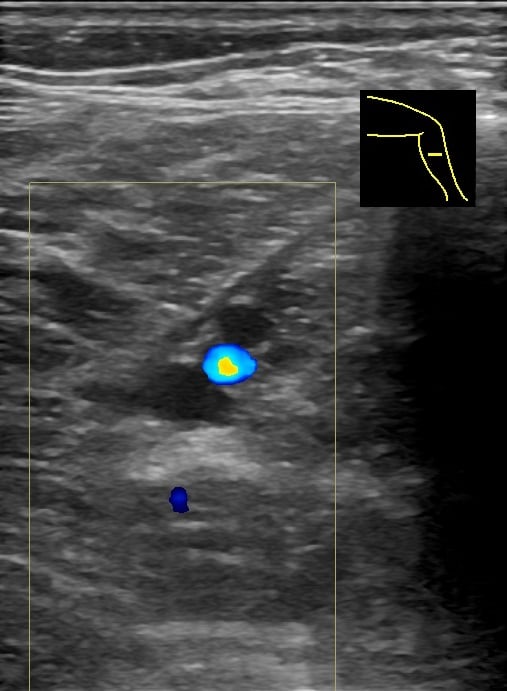
Isolated distal (calf) DVT is the genuine controversy on this page, and both answers are defensible.
- Rationale
- Prevent propagation (20-30% propagate to proximal veins)
- Recommendation
- If symptomatic, high risk patients
- Rationale
- Treat only if propagates to proximal veins
- Recommendation
- If asymptomatic, low bleeding risk
Trial data - the CACTUS study - found limited benefit from anticoagulation in low-risk patients, and the current trend is serial ultrasound unless there are high-risk features: extensive thrombus, severe symptoms, active cancer, or prior VTE. Whichever route is taken, the proximal veins must be documented as patent before the DVT is called distal at all.
The iliac vein. Whole-leg swelling raises the question of thrombus above the groin, which the leg scan images poorly. May-Thurner syndrome is one cause: compression of the left common iliac vein between the overlying right common iliac artery and the lumbar spine.
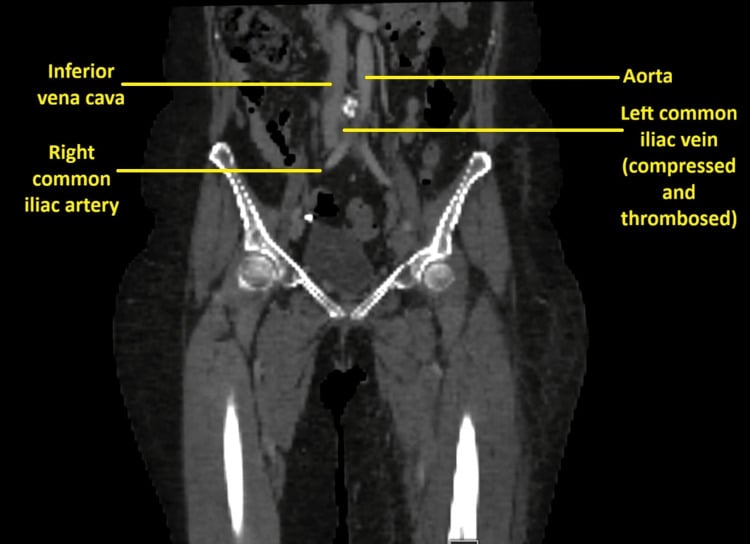
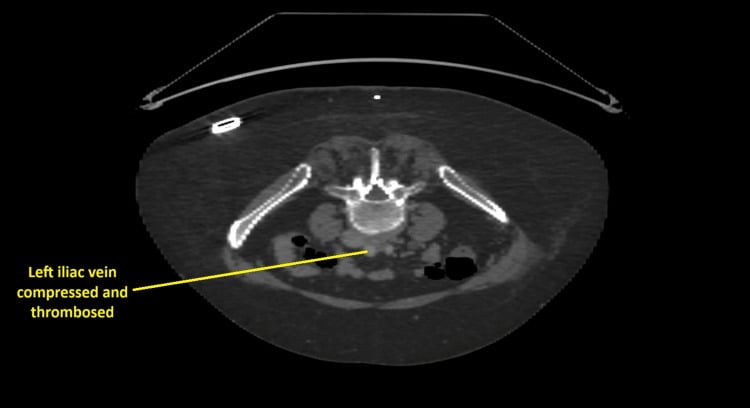
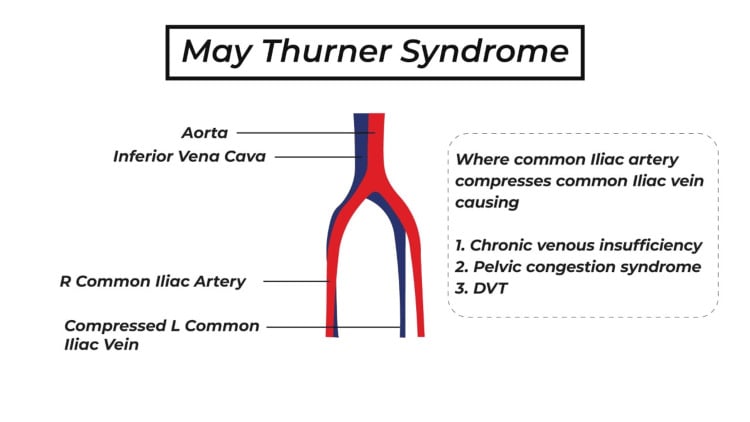
Catheter-directed thrombolysis for extensive iliofemoral DVT was tested in ATTRACT, and its role is limited to selected younger patients with severe symptoms.
Upper limb DVT is usually caused by something sitting in the vein or something compressing it.
- Central venous catheter (most common)
- Thoracic outlet syndrome (Paget-Schroetter syndrome)
- Malignancy
- Effort thrombosis (repetitive upper limb use)
Treatment follows the lower limb: anticoagulation for 3-6 months, removal of the catheter if it is catheter-related, and consideration of thoracic outlet decompression in effort thrombosis.
Breakthrough VTE on therapeutic anticoagulation is a sequence, not a single decision, and the first step explains many of them.
- Confirm compliance - many "failures" are non-adherence
- Check anti-Xa level (if on LMWH) or INR (if on warfarin)
- Switch anticoagulant - for example DOAC to LMWH
- Increase dose if subtherapeutic
- Consider IVC filter if recurrent despite adequate anticoagulation
- Investigate for cancer if unprovoked and recurrent
MCQ Practice Points
Q: A patient has Wells score of 1. What is the next appropriate step? A: D-dimer. Low Wells (0-1) = check D-dimer. If negative, DVT excluded. If positive, proceed to ultrasound.
Q: What is the main difference in management between proximal and distal DVT? A: Proximal DVT (popliteal and above) MUST be treated due to 10-30% PE risk. Distal (calf) DVT can be managed with serial ultrasound OR anticoagulation depending on symptoms and risk factors.
Q: What is the main advantage of rivaroxaban and apixaban over warfarin for DVT treatment? A: No LMWH lead-in needed. Rivaroxaban and apixaban can be started orally from day 1, whereas warfarin requires 5-10 days of LMWH bridging.
Q: How long should a post-surgical (provoked) DVT be anticoagulated? A: 3 months. Provoked VTE has low recurrence risk (1-3% annually) after transient risk factor removed.
Exam Viva Scenarios
Practise clinical reasoning and management decisions out loud
“A 65-year-old woman presents 10 days after total knee arthroplasty with new onset left calf pain and swelling. Her right leg (operated) is also swollen but that is unchanged. Wells score is 2 (surgery less than 12 weeks, calf swelling). How would you investigate and manage?”
“A 72-year-old man with known metastatic prostate cancer presents with entire left leg swelling and pain. He had a previous DVT 2 years ago. Wells score is 5. What is your diagnostic and management approach?”
“A fit 40-year-old man returns 8 days after day-case knee arthroscopy with mild calf discomfort. Ultrasound shows an isolated, non-occlusive thrombus confined to the peroneal (calf) veins, with patent popliteal and femoral veins. He has no prior VTE, no cancer, and no bleeding risk factors. How do you manage him?”
Wells Score (CAPSBED)
- Cancer active +1, Paralysis +1, Prior DVT +1
- Swelling entire leg +1, Bedridden greater than 3d/surgery less than 12wks +1
- Enlarged calf greater than 3cm +1, Differential diagnosis unlikely -2
- Score 0-1 Low, 2 Moderate, 3+ High
Diagnostic Algorithm
- Low Wells (0-1): D-dimer - if negative stop, if positive ultrasound
- High Wells (3+): Skip D-dimer, go to ultrasound
- Ultrasound: Non-compressible vein = DVT
- D-dimer: High sensitivity, low specificity (useless if postop)
Treatment - Anticoagulation
- First-line: DOACs (rivaroxaban 15mg BD x21d then 20mg, OR apixaban 10mg BD x7d then 5mg BD)
- No LMWH lead-in with rivaroxaban/apixaban
- Alternative: LMWH + warfarin (5-10d overlap until INR 2-3)
- Cancer VTE: LMWH preferred (CLOT trial)
Duration of Treatment
- Provoked (surgery): 3 months
- Unprovoked first: 3-6 months minimum
- Recurrent unprovoked: Indefinite
- Active cancer: Indefinite while cancer active
Special Situations
- Distal (calf) DVT: Serial ultrasound OR treat (controversial)
- CrCl less than 30: Cannot use DOACs - use LMWH + warfarin
- Proximal DVT MUST be treated (10-30% PE risk)
- IVC filter: Only if anticoagulation contraindicated
Evidence Base
Wells Clinical Prediction Rule - Pretest Probability for DVT
- Prospective cohort of 593 outpatients with suspected DVT
- DVT prevalence rose with clinical score: 3% (low), 17% (moderate), 75% (high)
- Structured pretest probability plus proximal ultrasound was safe and feasible
- Only 0.6% of those classified as DVT-negative had VTE events over 3 months