Acute Confusion | CAM Assessment | HELP Protocol | Multimodal Intervention
- Delirium is acute brain failure - disturbed attention and awareness developing over hours to days and fluctuating, and it is a symptom demanding a cause, not a diagnosis in itself
- CAM requires acute onset AND inattention, PLUS either disorganised thinking OR altered consciousness. 4AT scores 4 or more for possible delirium and needs no training
- Prevention beats treatment: multicomponent care prevents about a third of cases but does NOT reduce severity once delirium has started
- Hip fracture carries the highest risk (35-65%); orthogeriatric co-management has an NNT of 5.6, and the 48-hour surgical target rests on observational data, not RCT evidence
- Avoid benzodiazepines, anticholinergics and pethidine - but do not undertreat pain either, because pain itself is deliriogenic
- “The 3 Ds are the differential: Delirium, Dementia and Depression - separate them on onset, course and attention
- “Hypoactive delirium is the commonest pure subtype and the one that gets missed; mixed is the commonest overall pattern
- “Antipsychotics neither prevent delirium nor shorten it - they are for severe agitation with a safety risk, nothing else
- “Orthogeriatric co-management reduces delirium by ~19% (RR 0.81) and cuts in-hospital mortality by 28%
Overview and Epidemiology
Delirium is an acute disturbance in attention, awareness and cognition that develops over hours to days and fluctuates in severity through the day. It is acute brain dysfunction and a medical emergency: the confusion is a symptom demanding a cause, and the cause needs immediate investigation and treatment.
The DSM-5 criteria. Five things must be true, and the fifth is the one that turns a diagnosis into a search:
- A disturbance in attention (reduced ability to direct, focus, sustain and shift it) and awareness (reduced orientation to the environment)
- Acute onset over hours to days, representing a change from baseline
- A course that fluctuates during the day
- An additional cognitive disturbance: memory, orientation, language, visuospatial ability or perception
- Evidence that it is the direct physiological consequence of a medical condition, substance intoxication or withdrawal, a medication side effect, or several causes together
It is not diagnosed when a pre-existing dementia or a psychiatric condition explains the picture better, nor when arousal is so reduced (coma) that attention cannot be assessed.
Who gets it. Incidence tracks the population, and hip fracture sits at the top:
- Hip fracture: 35-65%, the highest-risk orthopaedic population
- Elective hip or knee arthroplasty: 4-10%
- Spinal surgery: 10-15%
- General orthopaedic trauma: 15-25%
- ICU admission after trauma: 50-80%
Risk rises with age over 65 (each decade doubles it), pre-existing cognitive impairment or dementia, multiple comorbidities, emergency surgery, prolonged anaesthesia and postoperative complications.
Hip fracture patients have the perfect storm for delirium: advanced age, pre-existing cognitive impairment, surgical stress, pain, anaemia from blood loss, medications (opioids, anticholinergics), immobility, and medical comorbidities. This is why orthogeriatric co-management is so effective.
Risk Factors and Assessment
Vulnerability and insult. Delirium risk is the product of predisposing factors, the patient's baseline vulnerability, and precipitating factors, the acute insult. A highly vulnerable patient needs only a minor precipitant; a robust one needs a major insult.
Predisposing factors. Some are modifiable, some are not:
- Non-modifiable: age over 65, pre-existing dementia or cognitive impairment, a history of delirium, severe illness or comorbidity burden, stroke or neurological disease
- Modifiable: sensory impairment (vision, hearing), malnutrition or dehydration, functional dependence, depression, alcohol use
Precipitating factors. These are the insults the admission adds, and several are ours to withhold:
- Surgical: hip fracture surgery, emergency surgery, anaesthesia lasting over 3 hours, significant blood loss
- Medical: infection (UTI, pneumonia), hypoxia, hypotension, metabolic disturbance, severe pain
- Iatrogenic: high-risk medications, physical restraints, a urinary catheter, sleep deprivation
Predicting risk. Each of these high-risk features increases risk 2-5 fold:
- Age over 70
- Cognitive impairment (MMSE under 24)
- Severe illness (ASA III-IV)
- Sensory impairment (vision or hearing)
- Depression
- Dehydration or malnutrition
- Alcohol use disorder
Hip fracture adds its own: an intertrochanteric rather than an intracapsular fracture, a delay to surgery over 48 hours, intraoperative hypotension, postoperative anaemia (Hb under 90 g/L) and inadequate analgesia.
- Predisposing Factors
- 0-1 factors
- Delirium Risk
- 5-10%
- Prevention Strategy
- Standard care, early mobilisation
- Predisposing Factors
- 2-3 factors
- Delirium Risk
- 15-30%
- Prevention Strategy
- Targeted interventions, daily screening
- Predisposing Factors
- 4 or more factors
- Delirium Risk
- 40-65%
- Prevention Strategy
- Intensive multimodal prevention (HELP), orthogeriatric comanagement
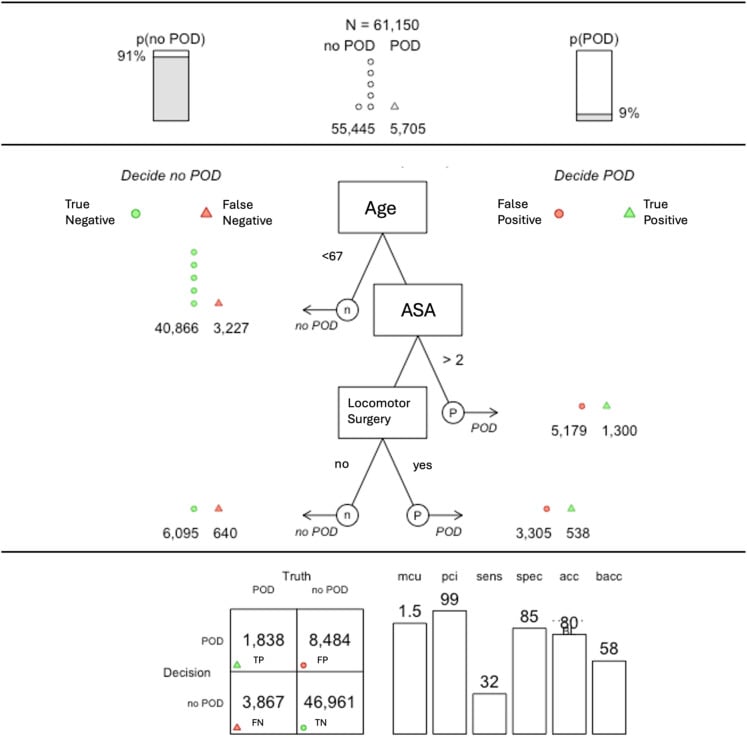
Frailty. The single concept that best captures predisposing vulnerability is frailty: diminished physiological reserve across multiple systems, leaving the patient unable to withstand the stress of surgery. It operationalises the vulnerable-brain idea, since a frail patient becomes delirious after only a minor precipitant, and it is the strongest single predictor of postoperative delirium. It is measured, not estimated by eye:
- Clinical Frailty Scale (CFS, Rockwood): a judgement-based 9-point scale from 1 (very fit) through 4 (vulnerable), 5 (mildly frail) and 7 (severely frail) to 9 (terminally ill). Higher scores predict delirium, complications, loss of independence and mortality, guide treatment intensity and shared decision-making, and it is quick and the most widely used scale in fracture pathways
- Fried physical phenotype: frail if 3 or more of unintentional weight loss, exhaustion, weak grip strength, slow gait speed and low physical activity (1-2 criteria is pre-frail)
- FRAIL scale: a brief 5-item questionnaire screen - Fatigue, Resistance (stair climbing), Ambulation, Illnesses and Loss of weight
Frailty screening therefore flags exactly the patients who most need the HELP bundle and orthogeriatric co-management, and it predicts the same outcomes delirium does: mortality, loss of function and institutionalisation.
Assessment tools. The CAM is the diagnostic reference, the 4AT the ward screen, the DRS-R-98 the research instrument, and none of them replaces a collateral history.
Confusion Assessment Method (CAM)
The CAM is the most widely validated bedside tool for delirium diagnosis, with sensitivity 94% and specificity 89%. It needs brief training and takes 5 minutes. Delirium is present if (Feature 1 AND Feature 2) AND (Feature 3 OR Feature 4).
- Acute onset and fluctuating course: is there evidence of an acute change in mental status from baseline, and does the abnormal behaviour fluctuate during the day?
- Inattention: does the patient have difficulty focusing, is the patient easily distracted or unable to keep track of the conversation?
- Disorganised thinking: is the thinking disorganised or incoherent, with rambling, irrelevant conversation and an unclear flow of ideas?
- Altered level of consciousness: alert (normal), vigilant (hyperalert), lethargic, stupor or coma; any answer other than "alert" is abnormal
In practice Features 1 and 2 are almost always present in delirium, so the work is identifying either disorganised thinking (rambling, illogical speech) or altered consciousness (drowsy or hyperalert). Inattention is tested by asking the patient to recite the months backwards or spell WORLD backwards.
Pathophysiology and Subtypes
Mechanisms. The pathophysiology remains incompletely understood, and several mechanisms are implicated at once. One is neurotransmitter imbalance: a cholinergic deficiency, from reduced acetylcholine availability or an increased anticholinergic drug burden, alongside dopaminergic excess in the mesolimbic pathways, with dysregulation of serotonin, GABA, glutamate and noradrenaline.
Neuroinflammation. Systemic inflammation from surgery or infection releases cytokines (IL-1, IL-6, TNF-alpha), which cross the blood-brain barrier, activate microglia and disrupt neurotransmission. In critical illness the barrier itself becomes more permeable and admits neurotoxic substances into the CNS.
Oxidative stress and neuroendocrine dysfunction. Reactive oxygen species and mitochondrial dysfunction injure neurons. The HPA axis is dysregulated, cortisol rises, and melatonin disruption upsets the sleep-wake cycle.
Patients with pre-existing brain vulnerability (dementia, previous stroke, chronic disease) have reduced brain reserve and cognitive reserve, making them susceptible to delirium from even minor insults. This is why delirium often unmasks underlying cognitive impairment.
Subtypes. There are three, and the frequencies are the ones to remember: hypoactive is the commonest pure subtype, and mixed the commonest pattern overall.
- Frequency
- 15-20%
- Clinical Features
- Agitated, restless, hypervigilant, hallucinations, delusions, combative, pulling at lines and tubes
- Management Challenges
- Safety risk, medication often requested, disruptive to care; obvious, so staff attention is drawn quickly
- Frequency
- 25-30%
- Clinical Features
- Withdrawn, lethargic, reduced alertness, quiet, apathetic, slow responses, poor oral intake
- Management Challenges
- Appears sedated or depressed; worse prognosis
- Frequency
- 50-55%
- Clinical Features
- Fluctuates between hyperactive and hypoactive states during the same day
- Management Challenges
- Most common pattern, unpredictable course, monitor closely
Hypoactive delirium is the most commonly MISSED subtype because patients appear calm and do not disrupt care. However, it carries the highest mortality risk because underlying medical problems (sepsis, stroke, metabolic derangement) go unrecognised. Always actively screen for delirium - do not assume quiet means well.
Severity. Severity sets the intensity of management.
- Features
- Subtle inattention, mild confusion, oriented
- Management Intensity
- Non-pharmacological, monitor
- Features
- Disoriented, fluctuating, some agitation
- Management Intensity
- Intensive non-pharm, consider meds
- Features
- Combative, hallucinations, safety risk
- Management Intensity
- May need pharmacology, 1:1 care
Duration. Acute delirium lasts under a week; most cases resolve quickly once the cause is treated, and the prognosis is good if it is managed. Persistent delirium lasts more than a week, is associated with dementia, resolves incompletely, carries worse long-term outcomes and may never fully clear.
The three Ds. Delirium, dementia and depression are the differential for the confused older patient, and they separate on onset, course and attention.
- Delirium
- Acute (hours-days)
- Dementia
- Chronic, insidious (months-years)
- Depression
- Weeks to months
- Delirium
- Fluctuating throughout day
- Dementia
- Stable day-to-day, progressive
- Depression
- Persistent
- Delirium
- Altered (hyper/hypoalert)
- Dementia
- Normal until late stages
- Depression
- Normal
- Delirium
- Impaired (cannot focus) - the hallmark
- Dementia
- Normal early, impaired late
- Depression
- Distractible but can focus
- Delirium
- Common (especially visual)
- Dementia
- Uncommon until late
- Depression
- Rare
- Delirium
- Potentially reversible
- Dementia
- Progressive, irreversible
- Depression
- Treatable
Delirium is acute and fluctuating, worse at night ("sundowning") and lasts days to weeks; dementia is chronic, stable from one day to the next and permanent. The two are not mutually exclusive.
Delirium can be superimposed on dementia, and commonly is after hip fracture. Patients with dementia are at high risk, so any acute change from baseline warrants investigation even when dementia is known.
Investigations
The investigation is a search for a cause, targeted by the clinical assessment rather than ordered as a panel. The bedside tests come first because they identify reversible causes rapidly, and hypoxia, hypoglycaemia and retention are common.
At the bedside
- Vital signs: temperature, heart rate, blood pressure, respiratory rate (fever, hypotension, tachycardia)
- Oxygen saturation
- Finger-prick blood glucose
- Bladder scan for urinary retention
- Abdominal examination for constipation or ileus
- ECG for arrhythmia, ischaemia or a silent MI
Bloods. The standard panel is FBC (infection, anaemia), U&E (renal function, sodium, potassium), LFTs, calcium, CRP or ESR and a formal glucose. Add blood cultures if febrile, urinalysis and culture if there are symptoms or a catheter, thyroid function if indicated, B12 and folate for chronic confusion, and troponin for cardiac symptoms.
- Indication
- Respiratory symptoms, fever
- Looking For
- Pneumonia, heart failure
- Indication
- Suspected UTI, catheter
- Looking For
- Infection, haematuria
- Indication
- Focal neurology, fall, anticoagulated
- Looking For
- Stroke, SDH, tumour
- Indication
- Source of sepsis unclear
- Looking For
- Source of sepsis
- Indication
- Fever with neck stiffness or meningism, immunocompromised
- Looking For
- Meningitis, encephalitis
When to CT the head. Focal neurological signs, a history of a fall, anticoagulation, head trauma or an unexplained neurological change. It is not routine for every delirium: metabolic and infectious causes are far more common.
Extended workup. Reserved for the patient whose first round is unrevealing or whose history points somewhere specific.
- When to Consider
- Suspected non-convulsive status epilepticus
- Notes
- Diffuse slowing in delirium
- When to Consider
- Liver disease, unexplained encephalopathy
- Notes
- Hepatic encephalopathy
- When to Consider
- Suspected intoxication
- Notes
- Urine toxicology
- When to Consider
- Suspected adrenal insufficiency
- Notes
- Addisonian crisis
The drug review. Read the whole chart against the BAD MEDS list, and add muscle relaxants, metoclopramide and the tricyclics to the suspects. Identify recent additions or dose changes, deprescribe where possible and use the Beers Criteria.
Medication-induced delirium is common and preventable. Many post-operative deliriums relate to high-dose opioids or anticholinergic medications.
I WATCH DEATHPrecipitating Factors Assessment
Hook:I WATCH DEATH for the precipitating cause. Delirium is a symptom, not a diagnosis - the mnemonic exists to stop you sedating a patient whose real problem is hypoxia, sepsis or thiamine deficiency.
Surgical Timing and Anaesthetic Considerations
Early Surgery Within 48 Hours Reduces Mortality and Complications
- Surgery within 48h: 20% lower 12-month mortality (RR 0.80)
- Fewer perioperative complications (8% vs 17%)
- HIP ATTACK RCT did NOT show a mortality benefit for ultra-early (6h) surgery
The target. Operate within 36 hours of admission ideally and within 48 hours at most; NICE, ANZHFR and the BOA all set that ceiling. Beyond the mortality and complication figures in Klestil's meta-analysis above, early surgery brings earlier mobilisation, less pain and a shorter stay. Be precise about delirium, though: its reduction is driven mainly by multicomponent and orthogeriatric care rather than by surgical timing alone, and the one large randomised trial of ultra-early surgery, HIP ATTACK, was negative for mortality.
Reasons for delay. A delay is only acceptable for reversible medical optimisation, and the list of causes is short:
- Medical optimisation (cardiac, respiratory)
- Anticoagulation reversal
- Theatre availability, which is a system failure
- Out-of-hours staffing
The evidence shows that delaying surgery for "medical optimisation" often does more harm than good. Patients sitting in bed in pain with ongoing blood loss and immobility accumulate complications. Only delay for reversible acute issues (active MI, pulmonary oedema, severe electrolyte disturbance). Do not delay for "stable" chronic conditions like AF, CCF, COPD - optimise concurrently and proceed to surgery.
Anaesthesia. Four questions: which technique, how deep, what to control on the table, and how to manage pain afterwards.
Regional vs General Anaesthesia for Delirium Prevention
The argument for regional. A spinal or epidural avoids volatile anaesthetics and deep sedation, leaves the patient awake and oriented, and gives better early cognitive function. The argument for general anaesthesia is complete control of the airway, better haemodynamic control and a patient unaware of the surgery, against a concern about volatile agents and cognitive effects.
What the trials show. Multiple meta-analyses have compared the two for delirium and the results conflict, but most high-quality RCTs show no difference in delirium rates. The 2021 Cochrane review found no significant difference in postoperative delirium, mortality, cognitive outcomes or complications, so the choice rests on patient factors, surgical factors and the anaesthetist's preference.
When regional may be preferred
- Frail patient with multiple comorbidities
- Difficult airway
- Severe respiratory disease
- Continuation as postoperative epidural analgesia
When general anaesthesia may be preferred
- Patient preference or anxiety
- Coagulopathy or antiplatelet use
- Prolonged surgery expected
- Neuraxial contraindications
The key message: technique matters less than perioperative care, meaning early surgery, pain control, mobilisation and delirium prevention.
Management of Established Delirium
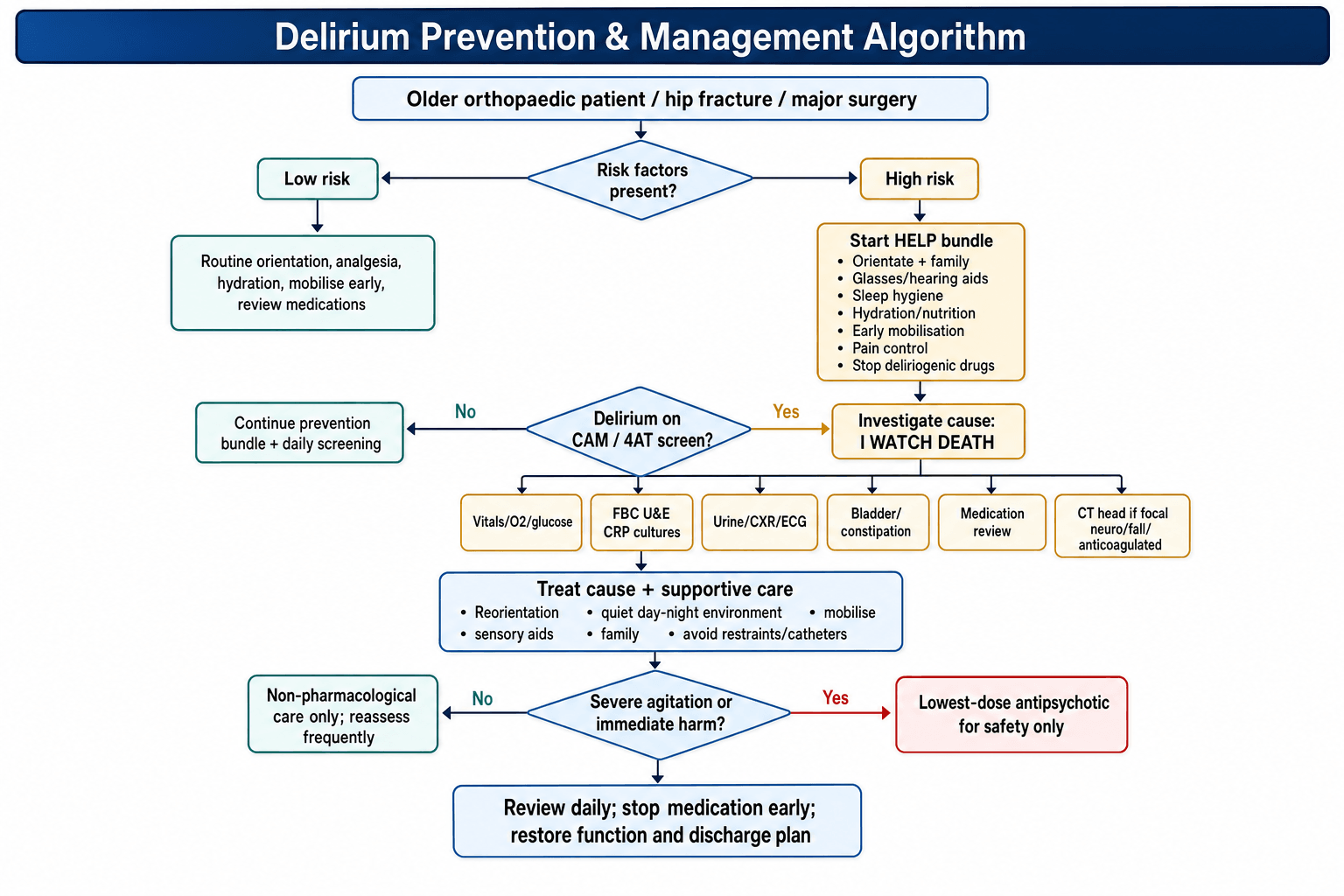
The order of business. Once delirium is identified the approach has four steps, in this order: investigate and treat the underlying cause (the I WATCH DEATH workup above), then supportive care and safety, then non-pharmacological management, and only then, for severe agitation or a safety risk, a drug.
The temptation when faced with an agitated delirious patient at 2am is to give sedation. Resist this. Delirium is a symptom, not a diagnosis. There is an underlying cause (infection, hypoxia, MI, stroke, drug effect) that needs identification and treatment. Sedating a delirious patient with undiagnosed pneumonia or MI can be fatal.
Non-pharmacological management is first-line for every delirium.
- Reassurance and reorientation: a calm manner, frequent reorientation to person, place and time, procedures explained simply, familiar objects and photos, and continuity of care with the same nurses where possible
- Environment: a well-lit room by day with natural light, quiet at night, unnecessary equipment removed, a clock and calendar visible
- Mobilisation: early, even if only sitting in a chair, with physiotherapy, no bed rest and minimal restraint
- Sensory aids: glasses and hearing aids in, background noise down
- Sleep: night-time interruptions minimised, care activities grouped, excessive daytime sleep avoided
- Family: presence reduces agitation, familiar voices help, and the family need information
When a drug is justified. Only for severe agitation endangering the patient or staff, a risk of harm (pulling lines, falling), distressing hallucinations or delusions, or after non-pharmacological measures have failed. Two principles govern the prescription: no medication has proven efficacy for delirium, they only manage symptoms; and there is no role for prophylactic antipsychotics, HOPE-ICU and MIND-USA having shown no benefit. Use the lowest effective dose for the shortest duration and reassess the need frequently.
Antipsychotic Medications for Delirium
Haloperidol is the most studied and the first-line drug for severe agitation: a typical (first-generation) antipsychotic that blocks D2 receptors and is less sedating, with fewer anticholinergic effects, than the atypicals.
Dosing. Start with 0.5 mg orally, IM or IV in the elderly and repeat in 20-30 minutes if the response is inadequate. The usual range is 0.5-2 mg, the maximum 3-5 mg in 24 hours in the elderly, with dose reduction in renal or hepatic impairment. Haloperidol 0.5-1 mg is the standard first-line prescription; document the indication and review it daily.
Monitoring. An ECG before starting, for QTc prolongation; torsades de pointes is rare but serious, and extrapyramidal side effects are rare at low doses.
Atypical alternatives
- Quetiapine 12.5-50 mg: more sedating, useful at night
- Risperidone 0.25-0.5 mg: similar efficacy to haloperidol
- Olanzapine 2.5-5 mg: more sedating, with anticholinergic effects
The evidence. Multiple RCTs show antipsychotics reduce agitation but do not shorten delirium or improve outcomes, with no difference between typical and atypical agents. They are for symptom control, not to "treat" delirium.
Antipsychotics carry a black box warning for increased mortality in elderly patients with dementia. Use only when necessary for safety, after a risk-benefit discussion. QTc prolongation risk: check a baseline ECG, and avoid in QTc over 500 ms or in combination with other QT-prolonging drugs.
Hypoactive delirium. Often no medication is needed at all: treat the cause, mobilise and stimulate, and engage the family.
Hyperactive delirium with safety concerns. Try redirection and one-to-one observation first; if a drug is needed, haloperidol 0.5 mg. Physical restraints are the absolute last resort, because they increase both delirium and injury.
Delirium in ICU. Incidence is higher (50-80%), and it is tied to mechanical ventilation, sedation and critical illness. The ABCDEF bundle (Awakening, Breathing, Coordination, Delirium monitoring, Early mobility, Family engagement), light sedation targets and daily sedation interruption are the response.
Delirium in dementia. Harder to diagnose, because the change from baseline is harder to see; the risk is higher, the patient more prone to medication side effects, and the family's account of baseline function is essential.
Complications and Outcomes
On the ward. Falls and injuries (a 2-3 fold increased risk during the admission), self-removal of lines, drains and catheters, aspiration pneumonia, pressure injuries from immobility, and injuries to staff from agitated patients. Medically, the stay lengthens by a mean of 2.5 days, postoperative complications are more frequent, and nosocomial infection, venous thromboembolism from immobility, malnutrition, dehydration and medication-related adverse events all rise.
- Impact
- In-hospital and 6-month mortality increased
- Magnitude
- 3-5 fold increase
- Time Course
- Persistent at 1 year
- Impact
- Prolonged hospitalisation
- Magnitude
- Mean 2.5 extra days
- Time Course
- Immediate
- Impact
- Loss of independence in ADLs
- Magnitude
- 60% vs 30% in controls
- Time Course
- 3-6 months
- Impact
- New nursing home placement
- Magnitude
- 2-3 fold increase
- Time Course
- At discharge and 6 months
- Impact
- Accelerated dementia trajectory
- Magnitude
- Doubles risk of dementia
- Time Course
- Persistent at 1 year
- Impact
- Increased fall risk
- Magnitude
- 2-3 fold increase during admission
- Time Course
- During delirium episode
- Impact
- Increased costs
- Magnitude
- Higher per-admission cost vs no delirium
- Time Course
- Immediate and follow-up
Mortality. Delirium multiplies mortality 3-5 fold, and the effect persists at a year:
- In-hospital: 10-26% against 5% without delirium
- 30 days: 15-30%
- 6 months: 25-40%
- 1 year: 35-50%
Function. Recovery is delayed or incomplete: 60% have declined in ADL function at discharge and 40% still have functional impairment at 6 months; fewer return home, new nursing-home placement is 2-3 times more likely, and caregiver burden rises. The cost to the family is real: 75% report significant stress, and post-traumatic stress affects patients and families both. The healthcare cost is driven by the longer stay, the complications and institutionalisation.
Cognition. Delirium accelerates cognitive decline in those with dementia and doubles the risk of developing dementia in those without. 30-40% have persistent cognitive impairment at 6 months, and some never return to their baseline.
Delirium as brain injury. Recent evidence suggests delirium is not simply transient and fully reversible; it may cause permanent injury. The proposed mechanisms are neuroinflammation with neuronal apoptosis, blood-brain barrier disruption, amyloid deposition of the Alzheimer type, white matter change on MRI and hippocampal atrophy. Clinically, delirium may unmask a subclinical dementia or may directly cause one, and either way the case for prevention hardens.
We now understand that delirium is not just "temporary confusion" but represents acute brain injury. It can have permanent consequences. This shifts the paradigm from "it will resolve" to aggressive prevention is essential. Think of delirium like stroke - a brain injury that we must prevent, not just an expected nuisance in elderly surgical patients.
Delirium versus postoperative cognitive dysfunction. Persistent cognitive impairment after surgery overlaps with, but is distinct from, postoperative cognitive dysfunction (POCD), now folded into the 2018 consensus nomenclature of perioperative neurocognitive disorders (PND) (Evered et al). The PND umbrella spans a pre-existing preoperative neurocognitive disorder; postoperative delirium, the acute, fluctuating, attention-disturbed bedside syndrome of days 0-7; delayed neurocognitive recovery, cognitive decline up to 30 days; and postoperative neurocognitive disorder (POCD), decline detected from about 30 days up to 12 months.
How POCD differs. POCD is subtle and detected only on formal neuropsychological testing of memory and executive function, with no disturbance of attention or consciousness and no acute fluctuation: the patient looks normal at the bedside. Postoperative delirium is itself a risk factor for subsequent POCD and long-term decline; the two lie on one spectrum of perioperative brain injury, which is why preventing delirium, and avoiding deliriogenic drugs, intraoperative hypotension and hypoxia, plausibly also reduces longer-term cognitive harm.
Do not conflate the two perioperative cognitive entities: postoperative delirium is the acute, fluctuating, attention-/consciousness-disturbed bedside syndrome (days 0-7), whereas POCD (postoperative neurocognitive disorder, part of the 2018 perioperative neurocognitive disorders framework) is a subtle, neuropsychological-test-detected decline weeks to months later with a normal bedside examination. Delirium is a risk factor for POCD; they sit on one spectrum of perioperative brain injury.
HELP Protocol (Inouye 1999): Multicomponent Prevention Reduces Delirium
- Delirium 9.9% (intervention) vs 15.0% (usual care), OR 0.60
- Fewer delirium days (105 vs 161) and episodes (62 vs 90)
- No effect on severity or recurrence once delirium developed
Proactive Geriatrics Consultation After Hip Fracture (Marcantonio 2001)
- Delirium 32% vs 50%, RR 0.64, NNT 5.6 - the key orthopaedic prevention trial
- Severe delirium more than halved (12% vs 29%, RR 0.40)
- No reduction in length of stay; least effective in those with established dementia
Multicomponent Interventions Prevent Delirium (Cochrane)
- Multicomponent interventions: delirium RR 0.69 (0.59-0.81)
- No clear benefit from antipsychotics, cholinesterase inhibitors or melatonin
- BIS-guided anaesthesia reduces postoperative delirium (RR 0.71)
Antipsychotics Do Not Shorten Delirium (HOPE-ICU; MIND-USA)
- HOPE-ICU: haloperidol no effect on delirium/coma-free days (5 vs 6, p=0.53)
- MIND-USA: haloperidol and ziprasidone no better than placebo
- Reserve antipsychotics for severe agitation, not prevention
Regional vs General Anaesthesia - No Difference in Delirium (RAGA)
- Delirium 6.2% (regional) vs 5.1% (general), not significant
- No difference in severity, length of stay, or 30-day mortality
- Choose technique on patient factors and local expertise
Orthogeriatric Co-Management Reduces Delirium and Mortality
- 19% lower risk of delirium (RR 0.81)
- 28% lower in-hospital and 14% lower 1-year mortality
- Length of stay shortened by ~1.55 days
Postoperative Care
The first 24-48 hours. Reorient frequently to person, place and time; assess and control pain without oversedating; mobilise as soon as it is safe; return glasses and hearing aids at once; encourage oral intake. Avoid unnecessary catheterisation, excessive fluid restriction and prolonged fasting.
On the ward. Consistent nursing staff, family involvement, a promoted sleep-wake cycle, daily cognitive stimulation and monitoring of bowel and bladder function, in an environment with natural light by day, quiet at night, a visible clock and calendar and familiar objects from home.
- Assessment
- CAM or 4AT screen
- Action
- Document in chart
- Assessment
- Full CAM assessment
- Action
- Investigate cause
- Assessment
- Function, pain, sleep
- Action
- Adjust care plan
- Assessment
- More frequent monitoring
- Action
- Lower threshold for assessment
Before discharge. Delirium should be resolved or resolving, the underlying cause treated, the cognitive baseline documented, the discharge environment safe and support services arranged. The GP letter carries a delirium summary, a medication reconciliation and a documented follow-up plan.
What the family are told. Delirium can take weeks to resolve fully, it may recur with future illness or surgery, new confusion should prompt a call, and cognitive rehabilitation strategies help. Give a written delirium fact sheet with emergency contact numbers and the follow-up appointments.
- Focus
- Delirium resolution
- Assessment
- Check cognitive status
- Focus
- Functional recovery
- Assessment
- ADLs, mobility
- Focus
- Cognitive trajectory
- Assessment
- Formal cognitive assessment if needed
- Focus
- Long-term cognitive health
- Assessment
- Dementia screening if concerns
Cognitive follow-up matters most when symptoms persist beyond the expected recovery, because delirium raises the risk of later cognitive decline.
Prevention Strategies
Prevention is far more effective than treatment. Across the trials, multicomponent intervention removes roughly a third of cases, 30-40%: HELP cut incidence from 15.0% to 9.9% (matched OR 0.60), Marcantonio's hip fracture trial from 50% to 32%, and the Cochrane pooled estimate is RR 0.69. Note what that does and does not mean: it is a third of cases prevented, not a third of severity reduced, and no trial has shown benefit once delirium is established.
HELP. The Hospital Elder Life Program is the gold-standard evidence-based intervention for delirium prevention. It targets the key risk factors with non-pharmacological measures delivered by trained volunteers and staff; the components are the mnemonic below.
HELPS MEHELP Protocol Components
Hook:HELP protocol really HELPS ME prevent delirium in my orthopaedic patients!
The details that get asked. Mobilisation means out of bed within 24 hours, walking or a wheelchair three times daily and range-of-motion exercises; physical restraints double delirium risk, and urinary catheters come out as soon as possible. Orientation means a communication board with the date and the day's schedule, orientation to person, place and time, familiar objects from home, and structured therapeutic activities three times daily (reminiscence, word games, discussion of current events).
Sleep is protected without drugs: fewer night-time interruptions, warm milk or herbal tea, relaxation music, unit-wide quiet time, lights down at night and a normal circadian rhythm. Hydration means 1500-2000 mL of fluid a day with help feeding and supplements if needed, and no prolonged fasting, dehydration or electrolyte imbalance. Vision and hearing mean clean glasses to hand, adequate lighting and large-print materials, hearing aids in place and working, amplification devices and less background noise. Pain is managed with regular paracetamol, regional anaesthesia where possible and the lowest effective opioid dose, avoiding pethidine and excessive opioids in the opioid-naive.
What HELP achieves, and its precise limits. In the original trial delirium days fell (105 vs 161) and episodes fell (62 vs 90), but severity and recurrence once delirium had developed were not reduced. That is the single most important thing to know about HELP: it prevents onset and does very little for the patient who is already delirious, which is exactly why prevention is the priority. The absolute reduction was 5.1%, an NNT of about 20 in a general medical population; in hip fracture, where baseline risk is far higher, Marcantonio's trial gives an NNT of 5.6. Health-economic analyses find it cost-effective through fewer delirium days and complications, and the effect is confirmed across settings by Cochrane (multicomponent prevention RR 0.69, PMID 26967259).
Medication review. Every drug on the chart is a candidate precipitant, and a handful of classes do most of the damage.
- Risk
- HIGH - paradoxical agitation
- Alternatives
- Non-pharm for anxiety/sleep
- Action
- AVOID unless alcohol withdrawal
- Risk
- HIGH - central anticholinergic syndrome
- Alternatives
- Alternative antiemetics, antispasmodics
- Action
- STOP if possible
- Risk
- HIGH - neurotoxic metabolite
- Alternatives
- Morphine, oxycodone, regional anaesthesia
- Action
- NEVER use in elderly
- Risk
- HIGH - anticholinergic
- Alternatives
- Second-gen antihistamines (cetirizine)
- Action
- AVOID
- Risk
- MODERATE - CNS effects
- Alternatives
- PPIs if acid suppression needed
- Action
- Use lowest dose
- Risk
- MODERATE - psychosis risk
- Alternatives
- Use only when indicated
- Action
- Lowest effective dose
- Risk
- MODERATE - dose-dependent
- Alternatives
- Multimodal analgesia, regional blocks
- Action
- Titrate to effect
The Beers criteria. The American Geriatrics Society Beers Criteria list potentially inappropriate medications in older adults. The deliriogenic ones to avoid are benzodiazepines (especially the long-acting diazepam and flurazepam), anticholinergics (diphenhydramine, hydroxyzine, promethazine), tricyclic antidepressants (amitriptyline), first-generation antipsychotics in high doses, pethidine and pentazocine.
BAD MEDSHigh-Risk Medications to Avoid
Hook:BAD MEDS cause delirium - avoid these in elderly orthopaedic patients!
International criteria (e.g. AGS Beers / STOPP) flag benzodiazepines as potentially inappropriate medications in older adults and recommend avoiding them for sleep, using non-pharmacological approaches first. If sedation is essential, consider low-dose melatonin or quetiapine 12.5-25mg (off-label use).
Orthogeriatric co-management. Proactive orthogeriatric care means dedicated geriatricians working alongside the orthopaedic team to optimise perioperative medical management, rather than being called when the patient becomes confused. The Van Heghe 2022 meta-analysis (PMID 34591127) found it cuts delirium by about 19% (RR 0.81, 95% CI 0.71-0.92), shortens stay by about 1.55 days, and lowers in-hospital mortality by 28% and 1-year mortality by 14%; it is broadly cost-effective and recommended in major hip fracture guidelines and registries internationally. The service comprises:
- Daily geriatrician review, starting within 24 hours of admission
- Comprehensive geriatric assessment (CGA)
- Medication optimisation
- Delirium screening and prevention protocols
- Management of comorbidities
- Discharge planning and rehabilitation coordination
The registry standard. The Australia and New Zealand Hip Fracture Registry (ANZHFR) asks for orthogeriatric care within 24 hours, surgery within 48 hours of admission, standardised delirium screening and multimodal delirium prevention.
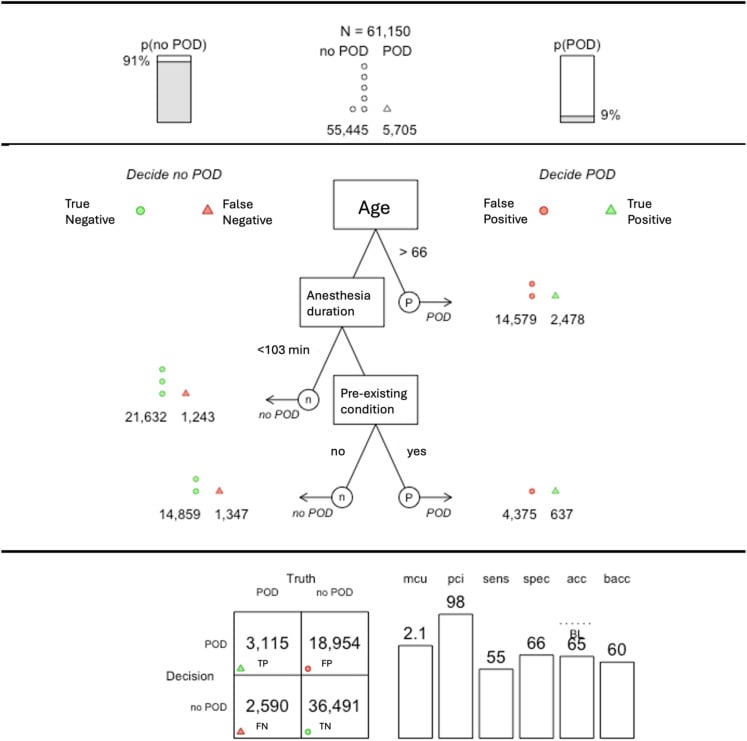
Guidelines, Registries & Global Practice
Global Epidemiology
Delirium is the most common acute neuropsychiatric complication of hospitalisation in older adults worldwide. Reported incidence varies by population: roughly 11-51% across postoperative cohorts, with hip fracture patients at the highest end (commonly 35-65%), elective hip/knee arthroplasty far lower (around 4-10%), and ICU/critically ill patients reaching 48% or more (MIND-USA cohort, PMID 30346242). Predisposing vulnerability (age, baseline cognitive impairment, sensory loss, frailty) and acute precipitants (surgery, sepsis, hypoxia, deliriogenic drugs) interact, so incidence reflects case-mix as much as care quality. Across settings, multicomponent prevention reduces incidence by roughly one-third (Cochrane RR 0.69, PMID 26967259).
Major Guidelines Side by Side
- Screening
- Assess at-risk; clinical diagnosis (DSM/short-CAM)
- Surgical timing
- Hip fracture surgery within 36 hours (day of/after admission)
- Prevention / treatment stance
- Multicomponent non-pharmacological prevention; antipsychotics only short-term for severe distress/risk
- Screening
- 4AT on admission and to detect change
- Surgical timing
- Surgery without delay once medically fit (within 36-48h)
- Prevention / treatment stance
- Orthogeriatric co-management; avoid deliriogenic drugs
- Screening
- CAM as reference standard; routine screening of at-risk elders
- Surgical timing
- Early surgery recommended
- Prevention / treatment stance
- Multicomponent prevention; explicitly recommends AGAINST routine antipsychotic/cholinesterase-inhibitor prophylaxis
- Screening
- Embedded delirium screening
- Surgical timing
- Surgery within 24-48h optimal
- Prevention / treatment stance
- Bundled enhanced-recovery: regional analgesia, early mobilisation, opioid sparing
- Screening
- Perioperative delirium screening for all
- Surgical timing
- Surgery within 48h (ideally 36h); orthogeriatric review within 24h
- Prevention / treatment stance
- Non-pharmacological bundle; haloperidol 0.5-1mg only for severe agitation
Where guidelines genuinely diverge it is on the surgical-timing threshold (NICE/SIGN favour 36 hours, ANZHFR and most ERAS pathways 48 hours) and on the strength of the anti-antipsychotic recommendation (AGS states this most explicitly). All converge on multicomponent non-pharmacological prevention, validated screening, and avoidance of deliriogenic drugs.
Exam Viva Point: "How do international guidelines on delirium prevention differ?" Answer: They agree on multicomponent non-pharmacological prevention, validated screening (CAM/4AT) and avoiding deliriogenic drugs. They differ mainly on the surgical-timing target (NICE/SIGN 36h vs ANZHFR/ERAS 48h) and on how strongly they advise against prophylactic antipsychotics (AGS most explicit).
MCQ Practice Points
Q: What is the most important modifiable risk factor for postoperative delirium in elderly hip fracture patients?
A: Time to surgery. Delayed surgery (over 24-48 hours) significantly increases delirium risk. Other modifiable factors include: untreated pain, polypharmacy (especially anticholinergics, benzodiazepines), sensory deprivation (missing glasses/hearing aids), sleep disruption, dehydration, constipation. Early surgery (within 36-48 hours) is recommended by all major guidelines.
Q: What screening tool is recommended for postoperative delirium assessment in orthopaedic patients?
A: 4AT (4 A's Test) or CAM (Confusion Assessment Method). The 4AT is rapid (under 2 minutes) and assesses: Alertness, AMT4 (age, DOB, place, year), Attention (months backwards), Acute change/fluctuation. Score 4 or greater indicates delirium. CAM requires training but has high specificity. Both should be used twice daily in high-risk patients.
Q: Which medications should be avoided or minimized in elderly patients to reduce delirium risk?
A: High-risk medications (STOPP criteria): benzodiazepines, anticholinergics (oxybutynin, antihistamines), opioids (especially pethidine/meperidine), tramadol (lowers seizure threshold, serotonergic). Use lowest effective opioid dose with regular paracetamol base. Regional anaesthesia may reduce delirium compared to general anaesthesia. Avoid abrupt cessation of regular medications (alcohol, benzodiazepines).
Q: What is the recommended pharmacological management of hyperactive delirium in a postoperative orthopaedic patient?
A: First-line: Haloperidol 0.5-1mg PO/IM/IV (max 5mg/24hr in elderly). Use lowest effective dose for shortest duration. Second-line: risperidone 0.5mg BD or quetiapine 12.5-25mg nocte. Benzodiazepines are ONLY indicated for alcohol/benzodiazepine withdrawal delirium. Non-pharmacological measures (reorientation, family presence, sleep hygiene) are first priority.
Q: What are the key non-pharmacological interventions in a delirium prevention bundle for hip fracture patients?
A: HELP (Hospital Elder Life Program) principles: (1) Orientation protocols (clock, calendar, family photos), (2) Early mobilization (day 1 post-op), (3) Sleep promotion (minimize night-time observations, no night-time medications), (4) Cognitive stimulation, (5) Sensory aids (glasses, hearing aids), (6) Adequate hydration/nutrition, (7) Avoid urinary catheters when possible. These reduce delirium incidence by 30-40%.
Viva Scenarios - Delirium Prevention
Practise clinical reasoning and management decisions out loud
“You are the orthopaedic registrar on call. An 82-year-old woman is admitted with an intertrochanteric hip fracture. She has a history of mild dementia (lives independently with home help). The nursing staff call you at 2am because she is confused, trying to get out of bed, and pulled out her IV cannula. She is shouting and states she needs to go home to feed her cats. Her observations are: HR 95, BP 135/80, RR 18, SpO2 96% on room air, T 37.2�C. What is your approach?”
“You are developing a delirium prevention protocol for your hospital's orthopaedic ward, particularly targeting hip fracture patients who have a 50% delirium rate. The hospital executive has asked you to present an evidence-based protocol. What would you include?”
“You are doing ward rounds on Day 2 post-op following a total hip replacement in a 78-year-old woman for osteoarthritis. She had an uneventful spinal anaesthetic and surgery. The nurses report she has been 'very quiet and sleeping a lot.' Her family says 'she's not herself - she's usually chatty but barely responded when we visited.' Her observations are normal. The physiotherapist notes she was confused about the exercises and couldn't remember the session from yesterday. What is your concern and how would you assess and manage this?”
Definition and Diagnosis
- Delirium = acute disturbance in attention, awareness, cognition developing over hours-days with fluctuating course
- CAM criteria: (Acute onset + Inattention) + (Disorganized thinking OR Altered consciousness)
- 4AT screening: Alertness, AMT4, Attention (months backwards), Acute change - score 4+ indicates delirium
- Subtypes: Hyperactive (15-20%, agitated), Hypoactive (25-30%, withdrawn - OFTEN MISSED), Mixed (50-55%)
- Delirium vs dementia: Delirium is ACUTE and FLUCTUATING, dementia is CHRONIC and STABLE
Epidemiology and Risk
- Hip fracture patients: 35-65% incidence (highest risk orthopaedic population)
- Elective arthroplasty: 4-10% incidence
- Mortality: 3-5x higher in delirium patients
- Predisposing factors: Age over 65, dementia, sensory impairment, comorbidities
- Precipitating factors: Surgery, pain, medications, infection, hypoxia, immobility
HELP Protocol (Evidence-Based Prevention)
- HELPS ME mnemonic: Hydration, Early mobilization, Listen (hearing aids), Pain, Sleep, Medication review, Environment
- Cuts incidence by about a third; NNT roughly 20 in general medical patients and 5.6 after hip fracture, where baseline risk is far higher
- Orientation: clock, calendar, familiar objects, reorientation, family visits
- Mobilization: out of bed within 24 hours, avoid restraints and catheters
- Sleep: minimize nighttime interruptions, warm milk, quiet time, avoid sedatives
- Vision/hearing: glasses and hearing aids in place, adequate lighting
- Nutrition: encourage 1500-2000mL fluids daily, nutritional supplements
BAD MEDS to Avoid
- Benzodiazepines - paradoxical agitation in elderly (except for alcohol/benzo withdrawal)
- Anticholinergics - central anticholinergic syndrome (TCAs, antihistamines, antispasmodics)
- Diphenhydramine (Benadryl) - strongly anticholinergic first-generation antihistamine
- Meperidine (Pethidine) - neurotoxic metabolite normeperidine, NEVER in elderly
- Excessive opioids - especially in opioid-naive, use multimodal analgesia
- Drugs with long half-lives - diazepam, flurazepam accumulate
- Steroids - high-dose can cause psychosis and sleep disturbance
Surgical and Anaesthetic Considerations
- Early surgery within 48 hours (ideally 36 hours) reduces delirium and mortality
- Regional vs GA: NO difference in delirium rates (multiple RCTs)
- Maintain intraoperative MAP over 65 mmHg, avoid hypotension and hypoxia
- Fascia iliaca block for hip fractures - excellent analgesia, reduces opioid use
- Multimodal analgesia: paracetamol + regional blocks + lowest effective opioids
- Transfuse if Hb less than 80 g/L (some advocate less than 90 g/L in elderly)
- Orthogeriatric co-management reduces delirium by ~19% (RR 0.81) and lowers mortality
I WATCH DEATH (Precipitating Causes)
- Infection - UTI, pneumonia, surgical site infection
- Withdrawal - alcohol, benzodiazepines, opioids
- Acute metabolic - hyponatremia, hypoglycemia, hypercalcemia
- Trauma/surgery - hip fracture, major surgery, anaesthesia
- CNS pathology - stroke, subdural, seizure
- Hypoxia - respiratory failure, PE, anaemia
- Drugs - benzodiazepines, anticholinergics, opioids, steroids
- Environmental - ICU, sensory deprivation, restraints
- Acute vascular - MI, stroke, shock
- Toxins - carbon monoxide, heavy metals
- Heavy drinking - alcohol intoxication or withdrawal
Management of Established Delirium
- Investigate underlying cause systematically - bloods (FBC, UEC, CRP), urinalysis, CXR, ECG
- Non-pharmacological first: reassurance, reorientation, mobilization, family presence, sensory aids
- Avoid benzodiazepines (worsen delirium except in alcohol/benzo withdrawal)
- Antipsychotics ONLY for severe agitation or safety risk: haloperidol 0.5-1mg lowest dose
- No role for prophylactic antipsychotics (HOPE-ICU, MIND-USA trials - no benefit)
- Hypoactive delirium: often no medication needed, focus on cause and mobilization
- Always investigate before sedating - delirium is a symptom not a diagnosis
Outcomes and Prognosis
- Mortality: 3-5x increased risk, 10-26% in-hospital mortality vs 5% without delirium
- Length of stay: increased by mean 2.5 days
- Functional decline: 60% lose independence in ADLs, 2-3x increased nursing home placement
- Long-term cognitive: 30-40% have persistent impairment at 6 months, doubles dementia risk
- Delirium is brain injury - may not be fully reversible, prevention critical
- Hypoactive delirium has HIGHEST mortality - often missed, underlying problems unrecognized
Exam Pearls
- About a third of delirium is preventable with multimodal intervention - but severity is not reduced once it starts
- Hypoactive delirium is the commonest pure subtype and the most commonly missed - actively screen all at-risk patients
- NNT 5.6 for orthogeriatric input after hip fracture; about 20 for HELP in general medical patients
- Both inadequate pain AND excessive opioids increase delirium - multimodal analgesia key
- Anaesthetic technique does not matter for delirium (RAGA: 6.2% regional vs 5.1% general) - what matters is orthogeriatric care, not the choice of block
- Delirium in elderly is acute brain injury with potential permanent effects - aggressive prevention essential
Evidence Base
Summary of Key Evidence
- HELP (Inouye 1999, general medical inpatients): delirium 9.9% vs 15.0%, matched OR 0.60 - about a one-third relative reduction, but an absolute reduction of 5.1%, so NNT is roughly 20
- Marcantonio 2001, the hip fracture trial: delirium 32% vs 50%, RR 0.64, and NNT 5.6 - the much lower NNT reflects the far higher baseline risk after hip fracture, not a better intervention
- Cochrane 2016 across 39 RCTs: RR 0.69
- Neither trial reduced the SEVERITY of delirium once it began - the benefit is in preventing onset
- The 48-hour target rests on observational meta-analysis (Klestil 2018, RR 0.80 for 12-month mortality), not on randomised evidence
- HIP ATTACK, the one large RCT, was NEGATIVE: accelerated surgery within 6 hours did not reduce mortality (HR 0.91, P=0.40)
- NICE, BOA and ANZHFR still set a 36-48 hour target, and reduced delirium is attributable mainly to orthogeriatric and multicomponent care rather than to the clock
- HOPE-ICU and MIND-USA are treatment trials in patients who already had delirium, not prophylaxis trials, and both were negative
- Cochrane found no clear benefit from antipsychotics for prevention either
- Reserve them for severe agitation posing a safety risk
- Multiple cohort studies, observational data
- ~19% reduction in delirium (RR 0.81), reduced LOS and mortality
- Multiple registries and cohorts supportive
- Now standard of care
- Multiple RCTs show reduced opioid use
- Trend toward reduced delirium (not always significant)
- Recommended in guidelines
- Observational studies support avoiding anticholinergics
- Beers Criteria, STOPP/START criteria developed
- Limited RCT evidence for medication discontinuation alone
- Multicomponent non-pharmacological interventions (HELP protocol)
- Early surgery for hip fractures (within 48 hours)
- Orthogeriatric co-management
- Avoiding deliriogenic medications
- Fascia iliaca blocks for pain control
- Prophylactic antipsychotics
- Any specific anaesthetic technique (regional vs general equivalent)
- Routine melatonin supplementation (insufficient evidence)
- Single-component interventions (must be multimodal)
Exam Viva Point: "What is the evidence for delirium prevention?" Key answer: multicomponent non-pharmacological care is the only intervention with consistent Level 1 support — HELP cut incidence from 15.0% to 9.9% and Marcantonio's hip fracture trial from 50% to 32% (NNT 5.6), with Cochrane pooling RR 0.69. Say what it does not do: it does not reduce severity once delirium starts. Antipsychotics fail at both prevention and treatment (HOPE-ICU and MIND-USA were treatment trials; Cochrane found nothing for prophylaxis). And be precise about surgical timing — the 48-hour target comes from observational meta-analysis, while the HIP ATTACK RCT of ultra-early surgery was negative.
The evidence strongly supports multicomponent non-pharmacological prevention bundles.