Quadriceps Tendon | Patellar Tendon | Primary Repair vs Allograft
- Diagnosis is clinical plus imaging: inability to straight-leg raise is strongly concerning but intact retinacula may preserve some extension
- Patellar height localises the likely defect: alta suggests patellar-tendon failure; baja suggests quadriceps-tendon failure
- No universal 2 cm or 6-week cut-off dictates reconstruction: chronicity, mobility, tissue, defect, prior surgery and host factors interact
- Primary repair technique follows tear location: transosseous tunnels and suture anchors both have roles; augmentation is case-specific
- Chronic and post-arthroplasty disruption is distinct: reconstruction choice and prognosis cannot be borrowed directly from acute native-knee repair
- “Loss of active extension or a new extensor lag requires urgent assessment, but preserved extension does not exclude a tear
- “Palpate above and below the patella and compare patellar height with the opposite knee
- “Use ultrasound dynamically when expertise is available; MRI defines extent, retraction and associated injury when needed
- “Choose repair, augmentation or reconstruction from tendon mobility, tissue quality, defect and arthroplasty context
Overview and Epidemiology
Extensor mechanism ruptures disrupt the quadriceps tendon, the patellar tendon or both, and take away active knee extension. They may be acute traumatic ruptures or chronic degenerative failures, and treatment depends on timing (acute or chronic), gap size and tissue quality.
Mechanism. Both tendons fail under eccentric contraction. The quadriceps tendon tears with a sudden quadriceps contraction against resistance, as in falling or jumping; the patellar tendon tears with a sudden quadriceps contraction while the knee is flexed.
Who. These are uncommon injuries. Quadriceps tendon rupture occurs in approximately 1.4 per 100,000 per year and patellar tendon rupture is rarer (see the Guidelines section). Both have a male predominance, and age separates them:
- Quadriceps tendon - more common over 40, where tendon degeneration is the age factor; peak age 40-60 years
- Patellar tendon - more common under 40, where athletic activity is the age factor; peak age 20-40 years
Risk factors. Risk factors for rupture are systemic (steroids, diabetes, renal disease, quinolone antibiotics) or local (previous tendonitis, patellar tendinopathy, Osgood-Schlatter disease). Those cited for quadriceps rupture are the systemic ones; those cited for patellar tendon rupture are previous patellar tendonitis, Osgood-Schlatter disease and steroids.
Bilateral rupture. Bilateral rupture is rare (5-10%) and usually associated with systemic disease such as renal failure or steroid use.
Anatomy and Pathophysiology
The extensor mechanism. The quadriceps muscle (vastus medialis, vastus lateralis, vastus intermedius and rectus femoris) forms the quadriceps tendon, which inserts on the superior pole of the patella. The patella is a sesamoid bone that improves mechanical advantage, and the patellar tendon inserts on the tibial tubercle. The medial and lateral retinacula act as secondary extensors. The quadriceps tendon is layered and continuous with the retinacula and the patellar tendon, which is why some extension may persist despite a tendon tear.
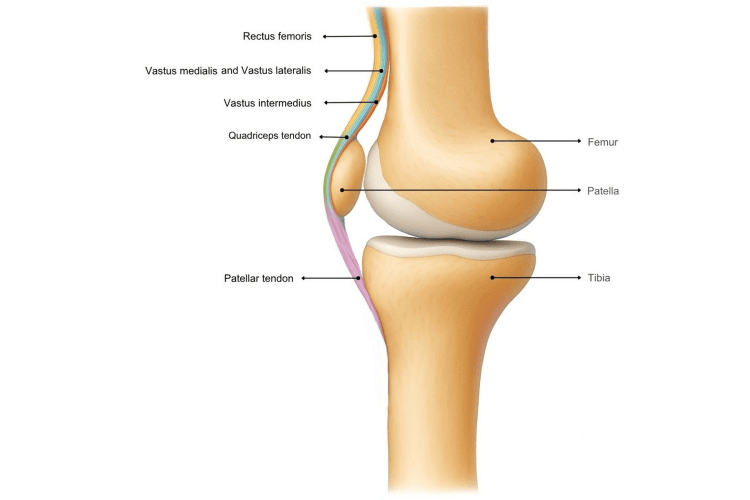
Blood supply. The quadriceps tendon is supplied from above by the descending genicular artery and the patellar tendon from below by the anterior tibial recurrent artery. The patella depends on the peripatellar plexus, which is vulnerable to injury.
The patella has a tenuous blood supply through the peripatellar plexus. Extensive dissection or multiple surgeries can compromise blood supply, leading to avascular necrosis. Preserve retinaculum and minimise dissection when possible.
The acute rupture. The tendon ends may remain mobile and suitable for primary repair. Tear location, retinacular injury, tissue quality and associated injury vary from case to case. Early assessment reduces retraction and facilitates repair, but it does not guarantee any one technique.
The chronic or deficient rupture. Retraction, adhesions, muscle shortening and poor tissue may prevent direct apposition. The defect length must be interpreted after mobilisation and restoration of patellar height, and the options include lengthening, local tissue, autograft, allograft, synthetic augmentation or combinations of these.
Classification Systems
Ruptures are described by location, timing and gap. Location helps guide the surgical approach and reconstruction strategy; timing guides treatment decisions and predicts outcomes.
By location.
- Quadriceps tendon - superior to the patella, usually at its insertion on the superior pole; may extend into the muscle belly (rare)
- Patellar tendon - inferior to the patella, usually at its insertion on the inferior pole or the tibial tubercle; may be midsubstance (rare)
- Combined - both the quadriceps and patellar tendons, usually after high-energy trauma, and requiring extensive reconstruction
By timing.
- Acute or mobile - a recent injury whose tendon ends can be mobilised, whose tissue holds sutures and whose patellar height can be restored. Primary repair is commonly possible.
- Chronic or retracted - delay has produced retraction, scar or muscle shortening, and tissue quality and the residual defect determine whether lengthening or reconstruction is needed. Previous arthroplasty or a failed repair requires a separate reconstructive assessment.
- Subacute, repairability uncertain - examine dynamically, review the MRI or ultrasound and decide after mobilisation. No universal six-week or two-centimetre boundary is validated.
By gap. An apposable defect is one in which the tendon ends meet at an appropriate patellar height without destructive tension; primary repair may then be performed with tunnels, anchors or direct tendon repair according to location. A residual defect after mobilisation needs a length-restoring or bridging strategy, and the choice of graft and augmentation depends on native tissue, bone, prior surgery, infection and surgeon expertise. Post-arthroplasty outcome data should not be presented as the prognosis of acute native-knee repair.
Clinical Assessment
History. The mechanism is an eccentric quadriceps contraction: a fall with the knee flexed, jumping or landing, or a sudden change in direction, and rarely direct trauma. The patient describes immediate pain and swelling, a "pop" or "snap", inability to extend the knee actively or to bear weight, and the knee giving way.
Look. Expect a knee effusion (haemarthrosis), a visible or palpable defect above or below the patella, ecchymosis in acute ruptures, and any previous surgical scars. Patellar position localises the tear: patella alta with a patellar tendon rupture, patella baja with a quadriceps rupture.
Feel. Palpate the whole of both tendons. A quadriceps rupture leaves a gap superior to the patella and a patellar tendon rupture a gap between the patella and the tibial tubercle, each tender at the rupture site. Assess retinacular continuity and compare patellar height with the opposite knee, using an appropriate ratio.
Move. Passive range is usually full, though limited by pain, and flexion may be limited by pain. Actively, the knee cannot extend after a complete rupture unless intact retinacula preserve some extension, and shows an extensor lag after a partial one. Measure the lag actively and compare it with passive extension.
Loss of straight-leg raise or active extension is a red flag for extensor-mechanism disruption. Pain and effusion can inhibit an intact mechanism, while intact retinacula may permit some extension despite tendon rupture. Correlate with the palpable defect, patellar height and imaging, and do not call one finding pathognomonic in isolation.
Differential diagnosis. The "cannot extend the knee" presentation has several causes. The level of the palpable gap, patellar height and radiographs distinguish them.
- Key Distinguishing Feature
- Gap superior to patella; older patient, fall
- Patellar Height
- Patella baja
- Confirmatory Test
- Ultrasound/MRI shows supra-patellar discontinuity
- Key Distinguishing Feature
- Gap inferior to patella; younger athlete
- Patellar Height
- Patella alta
- Confirmatory Test
- Ultrasound/MRI shows infra-patellar discontinuity
- Key Distinguishing Feature
- Bony crepitus, palpable fracture gap
- Patellar Height
- Variable
- Confirmatory Test
- Radiograph shows fracture line
- Key Distinguishing Feature
- Adolescent, distal bony fragment
- Patellar Height
- Patella alta
- Confirmatory Test
- Lateral radiograph (Ogden classification)
- Key Distinguishing Feature
- Extension blocked by pain not anatomy; SLR possible with analgesia
- Patellar Height
- Normal
- Confirmatory Test
- Aspiration and re-examination restores SLR
- Key Distinguishing Feature
- Weak quads but tendons intact; sensory deficit
- Patellar Height
- Normal
- Confirmatory Test
- Neurological exam, EMG; imaging tendons intact
Investigations
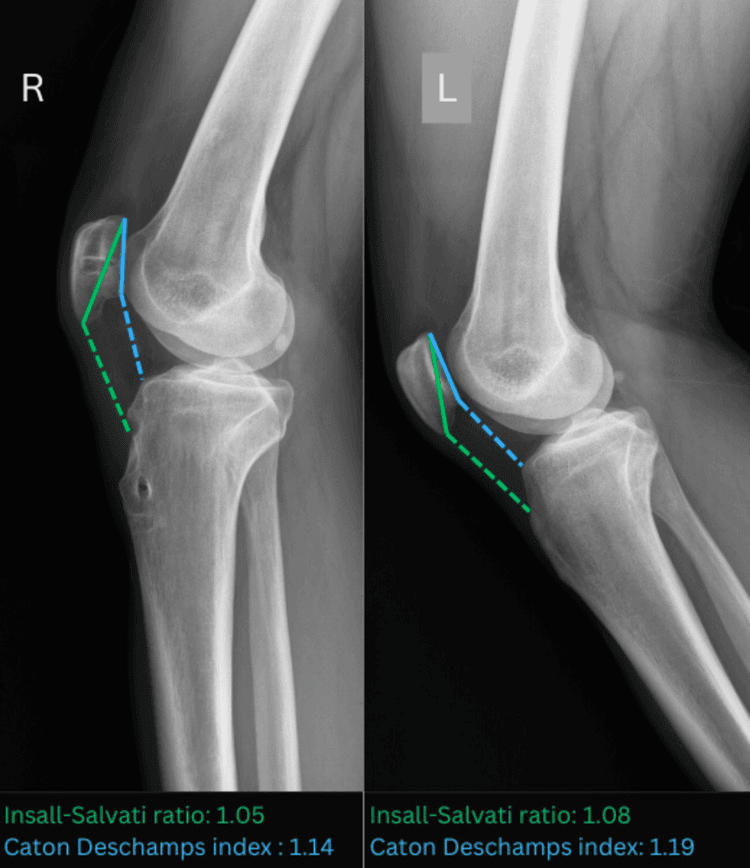
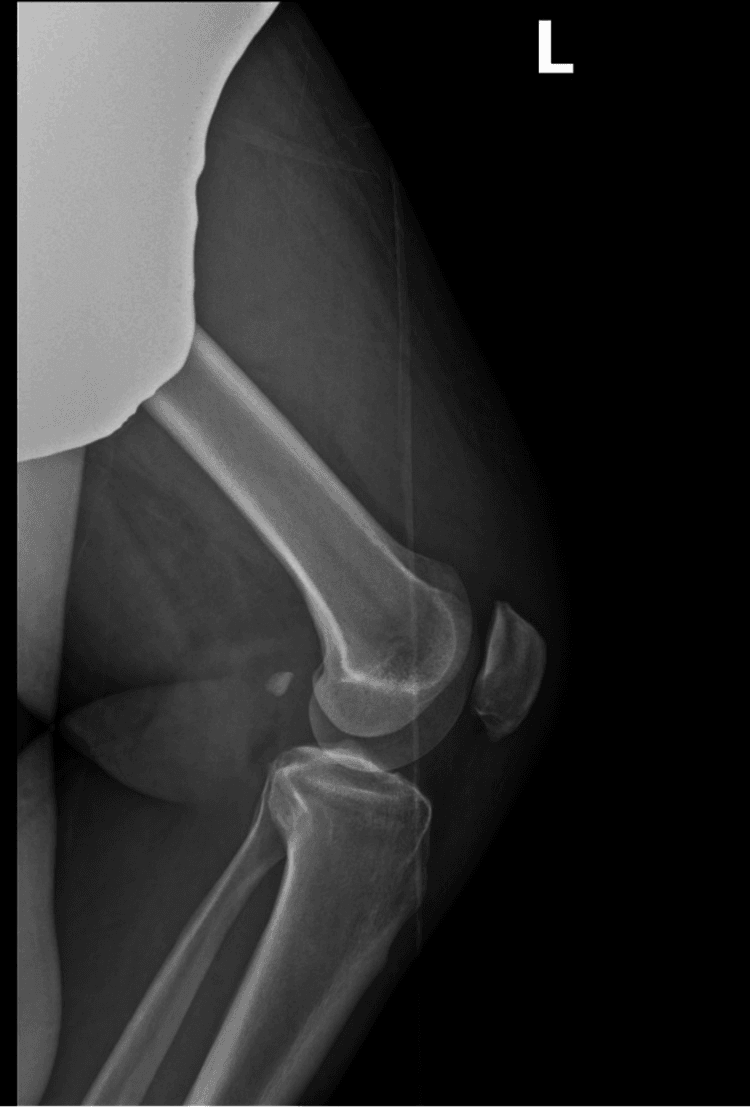
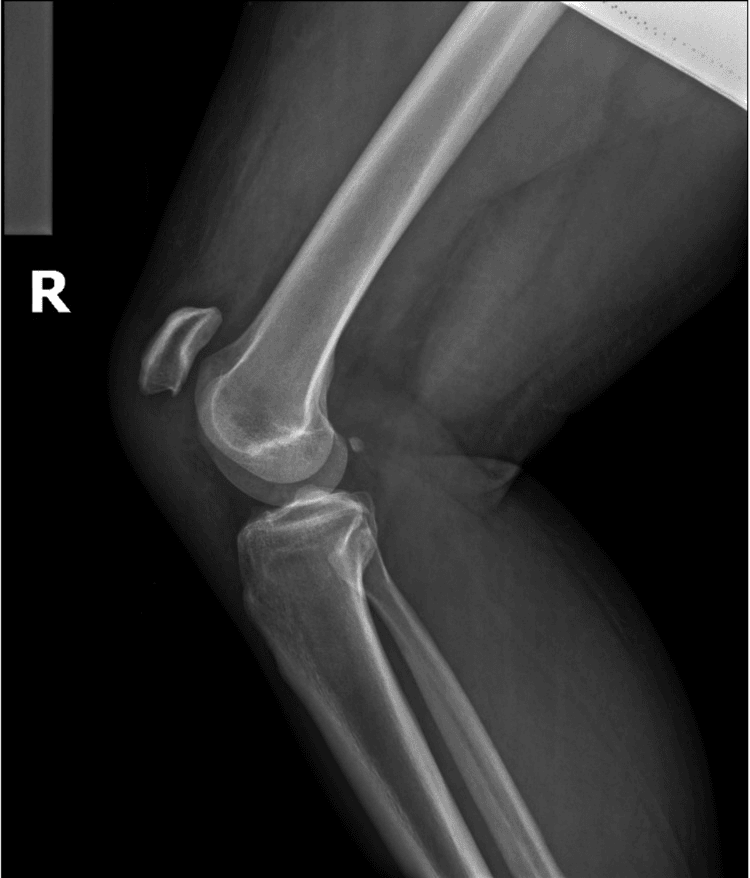
Radiographs. AP and lateral views of the knee. The lateral is the critical view, because it shows patellar height and any avulsion fracture.
- Patellar height - the Insall-Salvati ratio, normal 0.8-1.2, quantifies alta or baja
- Avulsion fractures - bony avulsion at the tendon insertion sites
- Associated fractures - patellar fractures, and tibial tubercle avulsions in children
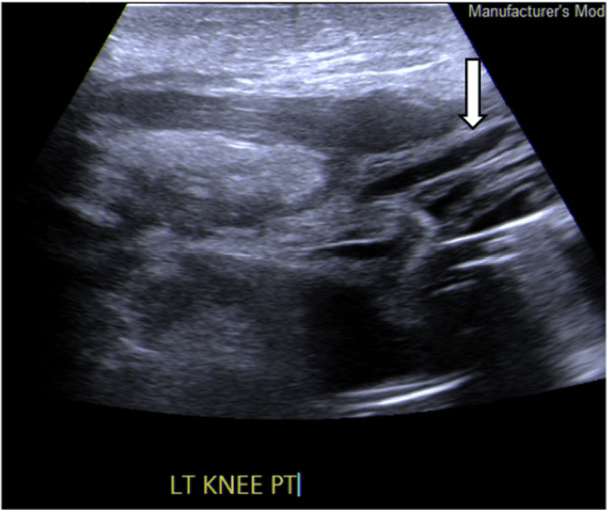
Ultrasound. Quick and inexpensive, it can show tendon discontinuity, measure the gap and evaluate tissue quality, and it can be used dynamically. It is operator dependent, less detailed than MRI and may miss partial ruptures. It is useful for diagnosis, but MRI is preferred for surgical planning.
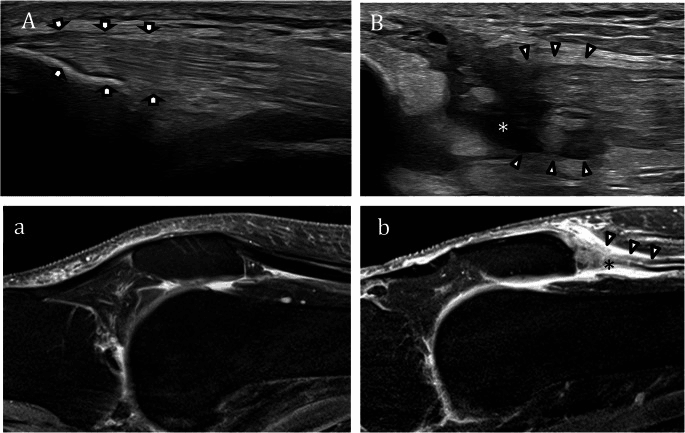
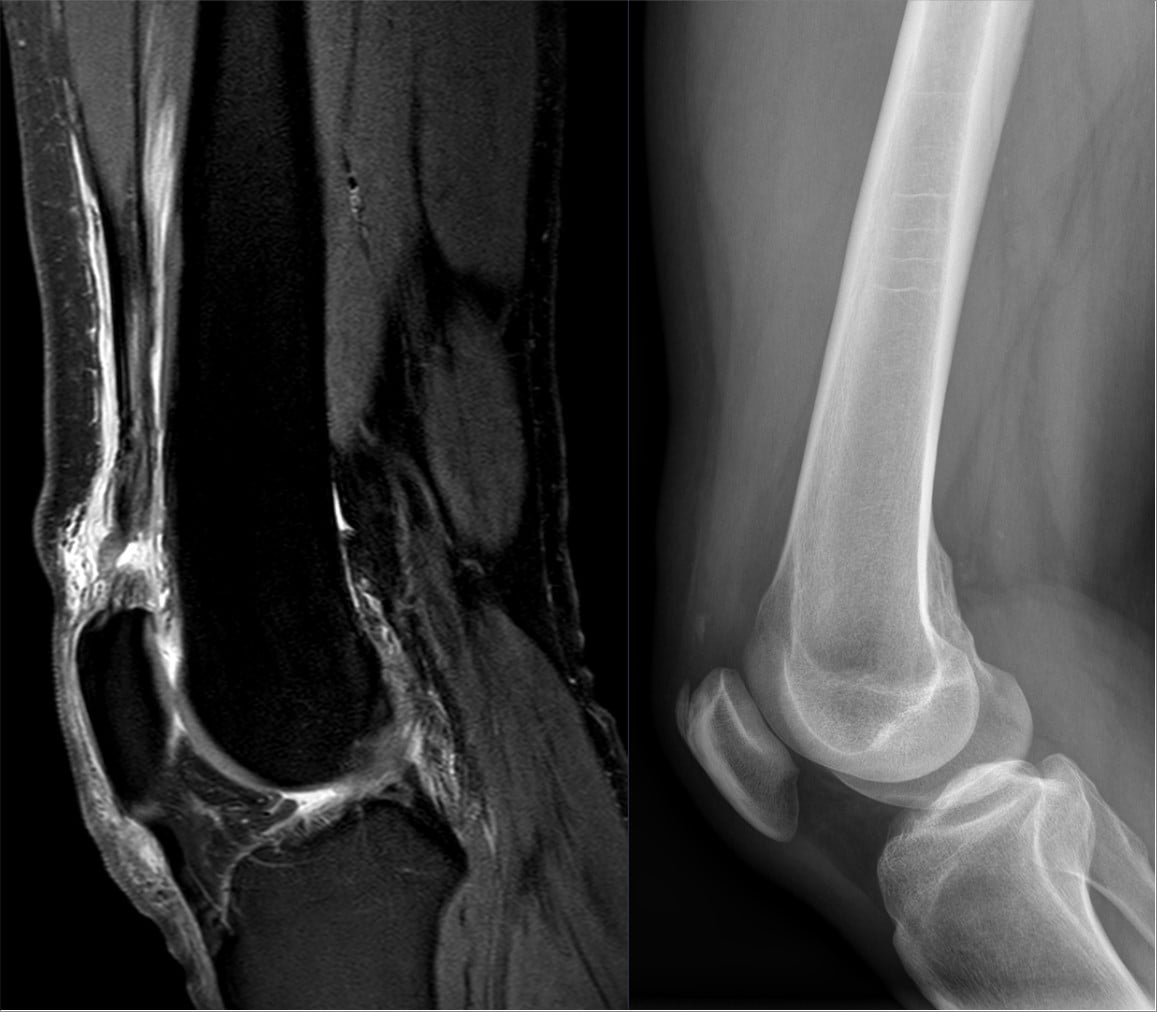
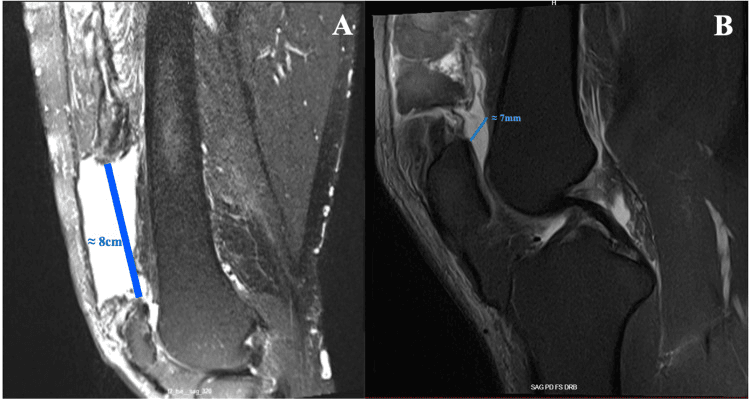
MRI. MRI defines the exact location and extent of the tear, the gap, retraction, tissue quality and associated injuries. It is particularly useful when examination or ultrasound is equivocal or reconstruction is being planned, and it is not required before every clinically obvious acute rupture: a problem-solving and planning tool rather than an obligatory diagnostic gold standard. For planning, it should:
- Measure retraction and defect after positioning and, where relevant, mobilisation
- Evaluate tendon and retinacular tissue quality
- Identify associated injuries and prior operative constraints
- Plan direct repair, augmentation or reconstruction from the actual defect
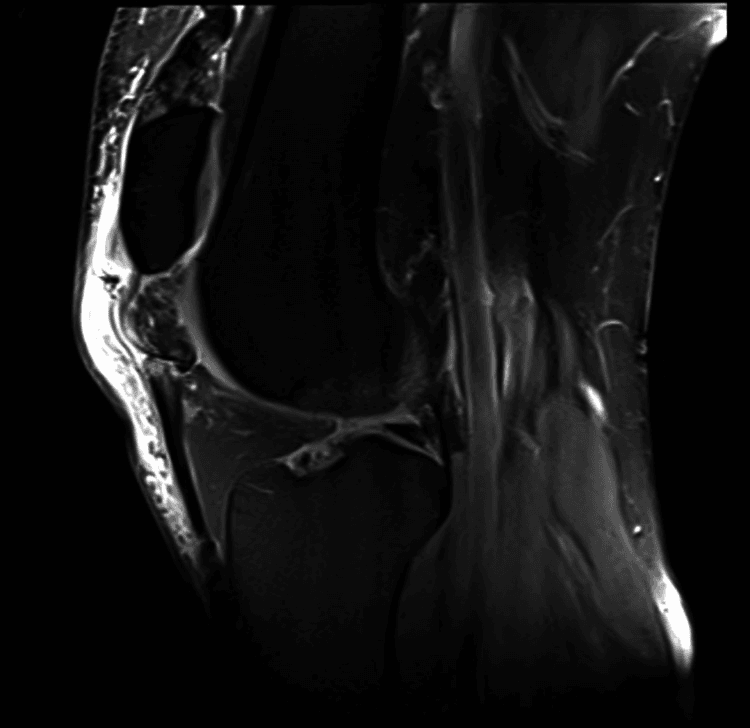
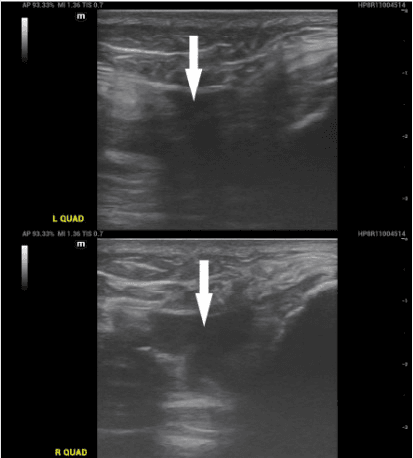
Bilateral and Spontaneous Rupture: the Missed Diagnosis and the Systemic Work-up
The epidemiology flags that bilateral rupture is rare (roughly 5-10% of cases) and "usually associated with systemic disease," and the global-practice section lists the metabolic red flags - but the clinical trap and the mandatory work-up deserve to be spelled out, because this is where bilateral cases are lost.
Why bilateral rupture is missed. When both knees fail symmetrically there is no normal contralateral limb to compare against. The patient presents simply "unable to stand or walk," and is easily mislabelled as neurological weakness, generalised deconditioning, or bilateral knee effusions. A substantial proportion of bilateral ruptures are missed at first presentation for exactly this reason. The discipline is identical to the unilateral case: test the straight leg raise on each side independently - bilateral loss of active extension with palpable supra- or infra-patellar gaps is diagnostic, and radiographs will typically show patella alta or baja on both sides.
The systemic work-up is not optional. A bilateral or truly spontaneous (atraumatic) rupture is a red flag for systemic tendinopathy, and the underlying disease directly predicts poor tendon healing and re-rupture, so it must be sought and optimised around surgery. The recognised associations are chronic kidney disease / dialysis (renal osteodystrophy and secondary hyperparathyroidism weaken the osteotendinous junction), primary hyperparathyroidism, gout and pseudogout, diabetes, SLE and other connective-tissue disease, chronic corticosteroid and anabolic-steroid use, and fluoroquinolone (and, more weakly, statin) exposure. Practically, check renal function, calcium and phosphate, PTH, urate and inflammatory markers, and review the drug history.
Management. Both sides should generally be repaired or reconstructed - usually in the same setting - because leaving one side leaves the patient without a functional extensor on that limb. Counsel that healing is less reliable and re-rupture more likely than after an isolated traumatic tear because the tendon substance is intrinsically diseased, and optimise the modifiable contributors (steroid dose, glycaemic control, smoking cessation) identified in the risk-factor evidence above.
"Bilateral" or "spontaneous" extensor mechanism rupture is systemic disease until proven otherwise, not bad luck. Test each straight leg raise separately (there is no normal side to compare against), and work up renal failure, hyperparathyroidism, gout, corticosteroids and fluoroquinolones before writing it off as a simple tendon injury.
Management Algorithm
Repairability is multidimensional. Time from injury and measured gap are descriptors, not stand-alone treatment thresholds. Tendon-end mobility, tissue quality, location, scar, patellar height, previous operations, infection and the patient's functional needs all count, and so do renal, endocrine, inflammatory, drug and arthroplasty factors in the host.
Extensor Mechanism Rupture Management
Determine rupture site, retinacular continuity, active lag, chronicity, tendon mobility and quality, patellar height, prior surgery and host factors.
Mobilise viable tendon ends and choose transosseous, anchor or direct repair according to tear location; augment only when the anatomy or tissue warrants it.
When length or tissue cannot be restored directly, select lengthening, autograft, allograft, synthetic mesh or a combined construct according to the defect and revision context.
Set weight-bearing, brace and motion milestones from fixation strength, tissue biology and concomitant procedures rather than a universal calendar.
- Location
- Superior to patella
- Age Group
- Often older adults
- Treatment
- Repair if mobile and usable; reconstruct if deficient
- Location
- Inferior to patella
- Age Group
- Often younger adults
- Treatment
- Repair if mobile and usable; augment or reconstruct when deficient
- Location
- Mobile ends and viable tissue
- Age Group
- Any age
- Treatment
- Location-specific primary repair
- Location
- Retraction, scar or tissue loss
- Age Group
- Any age
- Treatment
- Individualised mobilisation and reconstruction
Non-operative treatment. Rarely indicated, and the results are poor compared with surgical repair, usually leaving persistent weakness and extensor lag. The candidates are:
- Partial ruptures with minimal extensor lag (under 10 degrees)
- Low-demand elderly patients
- Medical contraindications to surgery
The protocol is an extension brace or cast for 6-8 weeks, non-weight bearing at first, then progressive weight bearing and range of motion with quadriceps strengthening.
Operative indications. The common ones:
- Complete tendon discontinuity with loss of active extension
- Functionally important extensor lag with a repairable or reconstructible lesion
- Failed non-operative care in a selected partial tear
- Chronic or post-arthroplasty disruption when the expected functional gain justifies reconstruction
Timing. Early repair of an acute complete rupture is generally preferable, before retraction and scar progress. Chronicity increases complexity but does not create a single validated week- or gap-based boundary.
Surgical Technique
Primary repair: when. The tendon ends remain mobile and apposable, the tissue holds sutures well enough for secure fixation, patellar height and continuity can be restored without destructive tension, and the tear location suits direct tendon, transosseous or anchor repair.
Set-up and exposure. Supine on a standard table with a thigh tourniquet, a bump under the ipsilateral hip and the contralateral leg abducted. A midline anterior incision, extended as needed, raises full-thickness flaps. Evacuate the haematoma, identify the rupture edges, assess tissue quality and mobilise the tendon edges.
Repair options.
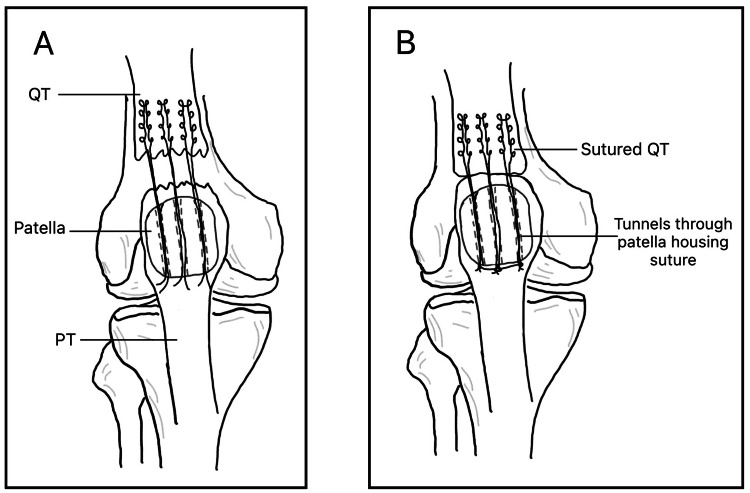
- Transosseous tunnels - tendon sutures passed through patellar bone tunnels, which exit the inferior pole for a quadriceps rupture and the superior pole for a patellar tendon rupture; avoid crossing tunnels and excessive bone removal
- Suture anchors - fixation at the relevant patellar pole
- Direct tendon repair - for selected midsubstance patterns
- Retinacular repair or augmentation - added according to tissue and construct
Sutures. A Krackow weave with 3-4 throws each side for strength, in No. 5 non-absorbable suture (Ethibond or Fiberwire), with side-to-side sutures for additional strength.
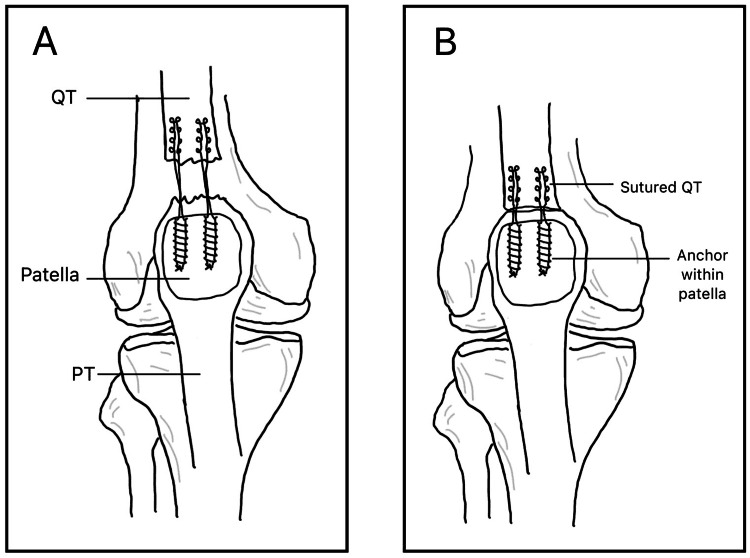
Reconstruction: when. Reconstruction is needed when the tendon cannot be apposed after appropriate mobilisation, when the tissue cannot hold a durable primary repair, and after a failed prior repair, previous arthroplasty or major tissue loss. A prior repair or arthroplasty changes both fixation and prognosis. Assess the components, tunnels and available fixation as well as the remaining tendon and retinacula.
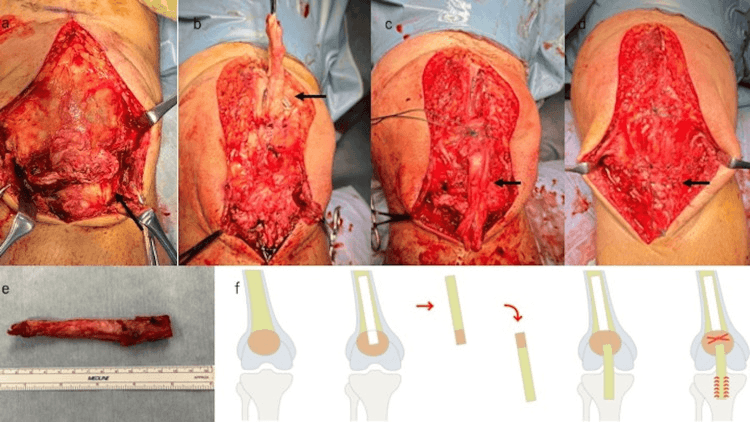
Graft choice. Achilles, whole extensor-mechanism and other allografts, autografts, synthetic meshes and local tissue procedures each have context-specific indications, and no graft is a universal gold standard. Choose from the defect location, available bone and tendon, infection status, implants and host factors.
Allograft technique.
- Expose as for primary repair
- Debride degenerated tissue back to healthy tissue
- Patellar fixation through 3 longitudinal transpatellar tunnels, with the sutures tied over the opposite pole
- Tibial fixation with the bone block in a trough and 2 × 4.5mm screws, for bone-to-bone healing
- Tension with the knee in full extension
- Augment with side-to-side sutures and retinacular repair
Both repair and reconstruction finish with a layered closure and a hinged brace locked in extension.
Tensioning. The aim is functional patellar height, avoiding both over-tensioning and laxity. Compare with the opposite knee and with pre-injury imaging where available, and assess continuity through a controlled range: radiographic ratios support, but do not replace, that intraoperative assessment.
Insall-Salvati ratio must be 0.8-1.2 - this is critical for function. Overtightening causes patella baja and stiffness. Undertightening causes patella alta and weakness. Always set tension with knee in full extension and confirm patellar height on image intensifier before closing.
Complications
- Incidence
- ~2% pooled after acute repair (Ciriello 2012)
- Risk Factors
- Inadequate fixation, early active extension, delayed repair
- Prevention/Management
- Secure fixation, protect for 8-12 weeks
- Incidence
- 10-20%
- Risk Factors
- Overtightening, prolonged immobilisation
- Prevention/Management
- Proper tension, early ROM (2-4 weeks)
- Incidence
- 15-25%
- Risk Factors
- Undertightening, incomplete rehabilitation
- Prevention/Management
- Proper tension, complete rehabilitation
- Incidence
- 5-10%
- Risk Factors
- Improper tension setting
- Prevention/Management
- Confirm Insall-Salvati ratio 0.8-1.2
- Incidence
- 2-5%
- Risk Factors
- Open injury, comorbidities
- Prevention/Management
- Aseptic technique, antibiotics
- Incidence
- Less than 5%
- Risk Factors
- Poor fixation, poor tissue quality
- Prevention/Management
- Secure fixation, good tissue apposition
Re-rupture. The pooled acute-repair figure is low, but teaching ranges quote higher for neglected or poor-tissue cases, and poor tissue quality joins inadequate fixation and early active extension as a cause. Prevention is secure fixation and protection for 8-12 weeks with no active extension; in the rehabilitation protocol below, active extension is begun gradually at weeks 6-8 and becomes full at weeks 8-12. A re-rupture is managed by revision repair or allograft reconstruction.
Stiffness. Arthrofibrosis adds to overtightening and prolonged immobilisation as a cause, and the established case is treated by manipulation under anaesthesia or arthroscopic lysis of adhesions.
Weakness. Muscle atrophy adds to undertightening and incomplete rehabilitation. An undertightened repair may need revision; otherwise rehabilitation continues.
Postoperative Care
The knee goes into a hinged brace locked in extension for 4-6 weeks, non-weight bearing for the first 2-3 weeks, with quadriceps sets and straight-leg raises from the start and passive range of motion begun at 2-4 weeks by unlocking the brace. The management pathway sets these milestones from fixation strength, tissue biology and concomitant procedures rather than a universal calendar, so read the protocol below as a framework.
Brace locked in extension; non-weight bearing; quadriceps sets and straight leg raises; ice and elevation.
Unlock brace for passive ROM (0-90 degrees); progressive weight bearing (partial to full); continue quadriceps strengthening. No active extension - protect the repair.
Full passive ROM; full weight bearing; continue quadriceps strengthening. No active extension - still protecting the repair.
Begin active extension gradually; progressive strengthening; balance and proprioception.
Full active extension; progressive resistance training; sport-specific training; return to sport when strength adequate.
Outcomes and Prognosis
Acute primary repair. Ciriello pooled 319 patients and found a re-rupture rate of 2%; the type of repair did not influence the clinical result, and the worst results were in delayed repairs. Quadriceps atrophy and strength deficit were nonetheless present in most patients. In Coladonato's acute cohort of 191, 18.5% had flexion under 110 degrees, 11.3% an extensor lag over 5 degrees, 8.5% a complication and 3.2% a revision. Heterotopic ossification (6.9%) and venous thromboembolism (2.5%) are the pooled-review figures.
Chronic allograft reconstruction after total knee arthroplasty. Balato found failure in 23% overall and 27% for isolated patellar tendon ruptures, with no difference between Achilles and whole extensor mechanism allograft. Persistent extensor lag of 20 degrees or more was the commonest complication, infection occurred in 7%, and walking aids were still required at latest follow-up by 55% of the Achilles group and 34.5% of the extensor mechanism group.
Stiffness and weakness by procedure. Both are more frequent after reconstruction, which is attributed to chronicity (and, for weakness, muscle atrophy):
- Acute repair - stiffness 10-15%, usually with overtightening; weakness 10-15%, usually with undertightening or incomplete rehabilitation
- Allograft reconstruction - stiffness 15-20%; weakness 20-25%
Return to sport and work. In Rao's series of 38 patients aged 40 or under, 63% of athletes returned to play at a mean of 8.8 months, and return to work took a mean of 3.9 months. 57.9% of that young cohort reported a lower activity level than before injury. Age, sport level and rehabilitation compliance are the quoted factors, but being young was not protective in the only series to examine it.
What predicts the result. Outcome is better with early repair (within 2 weeks), good tissue quality, secure fixation, proper tension and complete rehabilitation. It is worse with delayed repair (over 6 weeks), poor tissue quality, inadequate fixation, improper tension (patella baja or alta) and incomplete rehabilitation.
Prevention and Return to Sport
Primary prevention.
- Proper landing technique (knee flexion, not hyperextension)
- Strength training (quadriceps, hamstrings)
- Flexibility training
- Avoiding sudden eccentric loading
Secondary prevention. After injury, complete the rehabilitation before returning to sport, continue strength and conditioning, and return gradually through sport-specific training.
Return-to-sport criteria.
- Full range of motion, equal to the contralateral side
- Quadriceps strength greater than 90% of the contralateral side
- No extensor lag and no effusion
- Single-leg hop test greater than 90% of the contralateral side
- Agility testing passed and sport-specific drills completed
When. Usually 4-6 months postoperatively, depending on sport and level.
Guidelines, Registries & Global Practice
Global Epidemiology
- Quadriceps tendon rupture incidence approximately 1.4 per 100,000 per year; patellar tendon rupture rarer. Both are far less common than Achilles rupture.
- Strong male predominance (roughly 4-8:1). Quadriceps ruptures cluster in patients over 40 (degenerate insertion, simple fall); patellar tendon ruptures in athletic patients under 40 (eccentric jumping load).
- Bilateral or spontaneous rupture is a red flag for systemic disease: chronic kidney disease/dialysis, hyperparathyroidism, diabetes, gout, SLE, chronic corticosteroid or fluoroquinolone use.
Side-by-Side Society Guidance
No single society publishes a dedicated extensor-mechanism-rupture guideline; practice is consensus- and registry-informed. Points of genuine agreement and divergence:
- Position on Acute Repair
- Early operative repair for complete ruptures; transosseous or anchor fixation acceptable
- Position on Chronic / TKA Failure
- Allograft or autograft reconstruction; counsel on higher failure
- Emphasis
- Functional restoration, return-to-sport metrics
- Position on Acute Repair
- Prompt surgical fixation of acute extensor disruption; early supervised rehab
- Position on Chronic / TKA Failure
- Specialist/revision-arthroplasty referral for periprosthetic failure
- Emphasis
- Timely diagnosis, avoiding missed SLR deficit
- Position on Acute Repair
- Krackow/transosseous repair, tension in full extension, protected early motion
- Position on Chronic / TKA Failure
- Bridging allograft with bone block; fix graft tight in extension
- Emphasis
- Construct biomechanics and tensioning
- Position on Acute Repair
- Operative repair standard; ultrasound widely used first-line for diagnosis
- Position on Chronic / TKA Failure
- Allograft equivalence (Achilles vs full EM) accepted
- Emphasis
- Imaging access, graft selection
Registry & Resource-Setting Notes
- No dedicated tendon-rupture registry exists; the best comparative data on chronic/periprosthetic extensor failure come from arthroplasty registries (NJR, AJRR, AOANJRR) reporting extensor mechanism disruption in roughly 0.1-2.5 percent of TKAs, and from pooled allograft series.
- High-resource settings: MRI/ultrasound on demand, fresh-frozen Achilles allograft available, synthetic mesh/Marlex augmentation for revision, structured physiotherapy.
- Limited-resource settings: diagnosis is clinical (palpable gap, lost straight-leg-raise) supported by plain radiographs showing patella alta/baja; allograft is often unavailable, so autograft (semitendinosus/gracilis loop, fascia lata, contralateral tendon) and primary repair with cerclage/wire augmentation dominate. The diagnostic priority everywhere is the same: do not miss a complete rupture by attributing the SLR deficit to pain.
Controversies and Areas of Uncertainty
Anchors are faster and avoid patellar tunnels, but the pooled evidence (Mehta 2020) shows no functional advantage and more complications with anchors. The "best" construct remains unsettled and largely surgeon preference.
Cerclage wire, suture tape or synthetic augmentation may protect the repair and allow earlier motion, but high-level comparative data are lacking and hardware-related reoperation (wire removal) is a trade-off.
Traditional protocols immobilise in extension for weeks; emerging accelerated/early-motion protocols may reduce stiffness without raising re-rupture, but optimal timing of active extension is not defined by trial evidence.
For isolated patellar tendon rupture the two are statistically equivalent (Balato 2022). Full extensor mechanism allograft may reduce reliance on walking aids but carries graft-availability and sizing limits.
Extensor mechanism ruptures are a common viva topic. Know the pathognomonic sign (inability to perform straight leg raise), acute vs chronic treatment (primary repair vs allograft), gap size threshold (2cm), patellar height (Insall-Salvati 0.8-1.2), and allograft selection (Achilles allograft). Be ready to defend a construct choice and acknowledge the controversies above.
Combined (Simultaneous) Quadriceps and Patellar Tendon Rupture
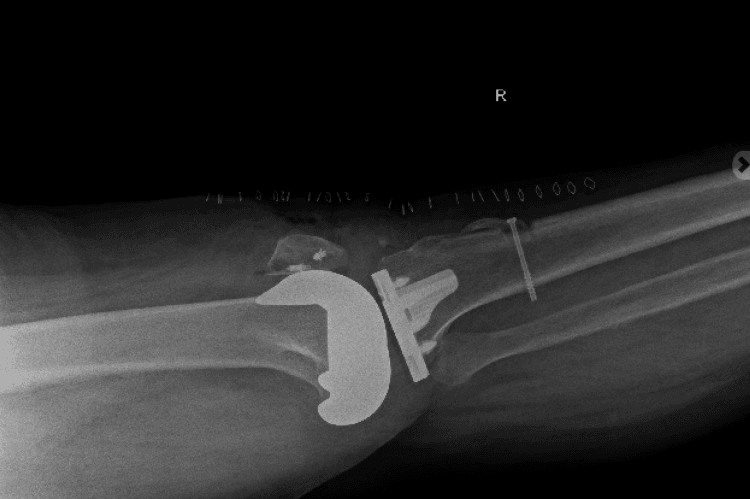
The classification names a combined rupture - simultaneous disruption of the quadriceps tendon (or its patellar insertion) and the patellar tendon in the same limb - but it is worth developing because it behaves quite differently from an isolated single-tendon injury. Here the patella is effectively untethered at both poles, and if a transverse patella fracture coexists the extensor mechanism is completely disconnected.
When it happens. It is genuinely rare and is almost always either high-energy (dashboard injury, motorcycle trauma, fall from height) or occurs in a systemically compromised tendon (chronic corticosteroids, chronic kidney disease, connective-tissue disease). Suspect it when the mechanism is violent or when tissue quality is obviously poor.
Recognition. There is complete loss of active extension with a palpable gap both superior and inferior to the patella, and the patella itself may be abnormally mobile. The usual radiographic shortcut fails: because the patella is anchored at neither end, it does not sit in reliable alta (the patellar-tendon-rupture cue) or baja (the quadriceps-rupture cue) - it simply drifts. Ultrasound or MRI confirms discontinuity above and below.
Reconstruction principles. This is more demanding than a single-tendon repair because there is no intact anchor at either pole to tension against. Establish a stable base first: repair or reconstruct one end (usually the pole with better tissue) to create a fixed point, then tension the second tendon to it. Restore patellar height by templating against the normal contralateral knee (patellar tendon length / Insall-Salvati) rather than relying on the alta/baja rules, which do not apply when both tendons are gone. If native tissue is inadequate at either pole, the salvage is a whole extensor mechanism allograft spanning tibial tubercle to quadriceps in one construct, rather than two separate grafts. As with every construct here, fix in full extension. The single-tendon operative detail is developed in the dedicated quadriceps tendon rupture and patellar tendon rupture topics.
When both tendons rupture, the examiner's favourite shortcut - "alta means patellar tendon, baja means quadriceps" - breaks down, because a patella anchored at neither pole gives no reliable height cue. Template the reconstruction against the normal contralateral knee, build off one repaired pole as a fixed base, and reach for a whole extensor mechanism allograft if tissue is inadequate at either end.
MCQ Practice Points
Q: What does inability to straight-leg raise mean? A: It is a major red flag for extensor-mechanism disruption, but not pathognomonic in isolation. Pain and effusion may inhibit extension, while intact retinacula may preserve some extension despite rupture.
Q: How is primary repair distinguished from reconstruction? A: By whether viable tendon ends can be mobilised and securely apposed at functional patellar height. Chronicity and gap length inform that assessment but do not supply universal six-week or two-centimetre thresholds.
Q: Does one measured gap determine graft use? A: No. Measure after mobilisation and consider tendon quality, retraction, retinacula, patellar height, prior surgery, infection, bone and patient demand.
Q: What is the normal Insall-Salvati ratio and why is it critical? A: 0.8-1.2 - Overtightening causes patella baja and stiffness. Undertightening causes patella alta and weakness. Patellar height is critical for function.
Q: Which graft is used for extensor-mechanism reconstruction? A: Achilles and whole extensor-mechanism allografts, autografts and synthetic mesh are all used. The defect, available fixation, previous arthroplasty, host and surgeon expertise determine the construct; no graft is universally superior.
Q: What is the optimal timing for acute extensor mechanism repair? A: Within 2 weeks - early repair has better outcomes than delayed repair, and the systematic review found the worst results in delayed repairs. Avoid quoting paired success percentages for acute versus chronic: the two are reported in different populations with different endpoints, acute repair by re-rupture (2%) and chronic allograft by failure (23-27%, after arthroplasty).
Exam Viva Scenarios
Practise clinical reasoning and management decisions out loud
“A 55-year-old man presents to ED after falling down stairs. He cannot extend his knee or perform a straight leg raise. Examination shows a palpable defect superior to the patella and patella baja. X-ray shows patella baja. MRI shows complete quadriceps tendon rupture with a 1.5cm gap.”
“A 35-year-old athlete presents 3 months after a patellar tendon rupture that was initially missed. He has persistent extensor lag of 30 degrees and cannot return to sport. Examination shows a palpable defect between patella and tibial tubercle, patella alta, and quadriceps atrophy. MRI shows chronic patellar tendon rupture with a 4cm gap and poor tissue quality.”
“A 68-year-old woman who had a total knee replacement 14 months ago presents with sudden loss of active extension after a stumble. She has an extensor lag of 40 degrees, a palpable infrapatellar gap and patella alta. Components appear well-fixed on radiographs. She has diabetes and is a current smoker.”
Key Anatomy
- Extensor mechanism: Quadriceps → quadriceps tendon → patella → patellar tendon → tibial tubercle
- Insall-Salvati ratio: Normal 0.8-1.2 (patellar length / patellar tendon length)
- Patella alta: Suggests patellar tendon rupture
- Patella baja: Suggests quadriceps rupture
Classification
- By location: quadriceps, patella, patellar tendon or combined
- By chronicity: increasing retraction and scar, without one universal time boundary
- By repairability: mobile apposable ends versus residual tissue or length deficiency
- By tissue and host: native quality, retinacula, previous surgery, infection and systemic disease
- By context: native knee versus post-arthroplasty disruption
Treatment Algorithm
- Repairable tendon: location-specific primary repair
- Deficient tendon: mobilisation, lengthening, augmentation or reconstruction
- Choose graft or mesh from defect, fixation, implants and host
- Protect and progress rehabilitation according to construct and tissue biology
Surgical Pearls
- Krackow weave: No. 5 non-absorbable suture, 3-4 throws each side
- Patellar height critical: Insall-Salvati ratio 0.8-1.2
- Tension setting: Knee in full extension, confirm on image intensifier
- Achilles allograft: Bone block for tibial fixation, adequate length (15-18cm)
Complications
- Re-rupture: 5-10% (prevent with secure fixation, protect 8-12 weeks)
- Stiffness: 10-20% (prevent with proper tension, early ROM)
- Weakness: 15-25% (prevent with proper tension, complete rehabilitation)
- Patella baja/alta: 5-10% (prevent with proper tension setting)
Evidence Base
Primary Repair: Systematic Review of Outcomes
- 319 patients pooled; mean age 57 years, most often after a simple fall
- Overall re-rupture rate 2 percent; most regain good or excellent ROM
- Type of repair did not change outcome; delayed repair gave the worst results
Achilles vs Extensor Mechanism Allograft (Meta-analysis)
- Pooled allograft failure ~23-24 percent (i.e. roughly three-quarters succeed)
- Achilles and whole extensor mechanism allograft equivalent for patellar tendon ruptures
- Persistent extensor lag (over 20 degrees) is the dominant failure mode
Transosseous Tunnel vs Suture Anchor Fixation
- No clinically meaningful functional difference between the two fixation methods
- Suture-anchor repairs had significantly more complications (9.3 vs 1.3 percent)
- Transosseous tunnels remain a safe, low-cost default construct
Risk Factors for Poor Outcome After Repair
- Smoking (OR 15.4) and retinacular involvement (OR 9.6) drive complications
- Older age and higher BMI predict residual extensor lag and stiffness
- Overall revision rate low at 3.2 percent
Outcomes in Younger Patients (40 years and under)
- Even in young patients, return to sport is only ~63 percent at ~9 months
- Youth does not guarantee superior outcome vs older controls
- About one third report persistent pain or stiffness long term
Management of Extensor Mechanism Disruption After TKA
- Extensor mechanism disruption is uncommon after TKA (0.1-2.5% per the literature reviewed by Balato 2023)
- Chronic failure needs flaps or allograft, not primary repair
- Graft must be tensioned in full extension to avoid late lag
Insall-Salvati Ratio (Patellar Height Reference)
- Defines the most widely used radiographic index of patellar height
- Normal 0.8-1.2; alta over 1.2, baja under 0.8
- Used intra-operatively to confirm correct repair tension