Subacromial Impingement | Neer Stages | Cuff Compression
- Subacromial pain syndrome (SAPS) is a clinical umbrella, not proof that the acromion mechanically impinges the cuff
- Neer stages are historical and should not be treated as an inevitable age-linked progression
- Acromial shape is descriptive; association with cuff disease does not establish causation or a surgical target
- Provocative tests are not diagnostic alone - combine history, strength, motion, cervical assessment and selective imaging
- Routine arthroscopic subacromial decompression is not supported over placebo surgery for isolated SAPS
- “Bigliani shape has limited reliability and must not dictate acromioplasty
- “Neer and Hawkins manoeuvres reproduce pain but have limited specificity
- “Differentiate SAPS from cuff tear, instability, frozen shoulder, AC pain and cervical referral
- “A subacromial local-anaesthetic response supports a subacromial pain source but does not prove mechanical impingement
Overview and Epidemiology
External (subacromial) impingement is one of the most common causes of shoulder pain. The name implies a mechanism, the acromion compressing the cuff, and the label is shifting to the broader, mechanism-neutral term subacromial pain syndrome (SAPS).
Who. Symptoms may occur across adult age groups. Repetitive or sudden changes in overhead load may provoke pain, and tendon capacity, sleep, work, sport and psychosocial context influence the disability that follows.
Associated findings. Several structural and functional findings may sit alongside the pain:
- Rotator-cuff tendinopathy or tear
- Subacromial-subdeltoid bursal thickening or fluid
- AC-joint or os acromiale pathology
- Scapular movement variation or glenohumeral stiffness
- Acromial shape, which may coexist but is not a stand-alone diagnosis
External versus internal. SAPS concerns pain arising from the subacromial tissues during elevation. Posterior-superior internal impingement is a different mechanism, seen particularly in throwers in abduction–external rotation.
- External (Subacromial)
- Subacromial space, anterior
- Internal (Posterior-Superior)
- Posterior-superior, articular
- External (Subacromial)
- Bursal side
- Internal (Posterior-Superior)
- Articular side
- External (Subacromial)
- Broad adult population and overhead load
- Internal (Posterior-Superior)
- Throwers/overhead athletes
- External (Subacromial)
- Multifactorial tendon, bursal and load-related pain
- Internal (Posterior-Superior)
- Posterior-superior contact in abduction–external rotation
- External (Subacromial)
- Education and progressive exercise; selective adjuncts
- Internal (Posterior-Superior)
- Kinetic-chain, capsule and instability-specific rehabilitation
Pathophysiology and Mechanisms
The coracoacromial arch. The supraspinatus tendon and the subacromial-subdeltoid bursa lie beneath the arch, which forms the roof of the space. The acromion gives anterior-superior coverage, the coracoid process lies anteriorly, and the coracoacromial ligament connects the two.
The impingement zone. It takes in the critical zone of supraspinatus, 1cm from its insertion, and the watershed area, which is relatively avascular.
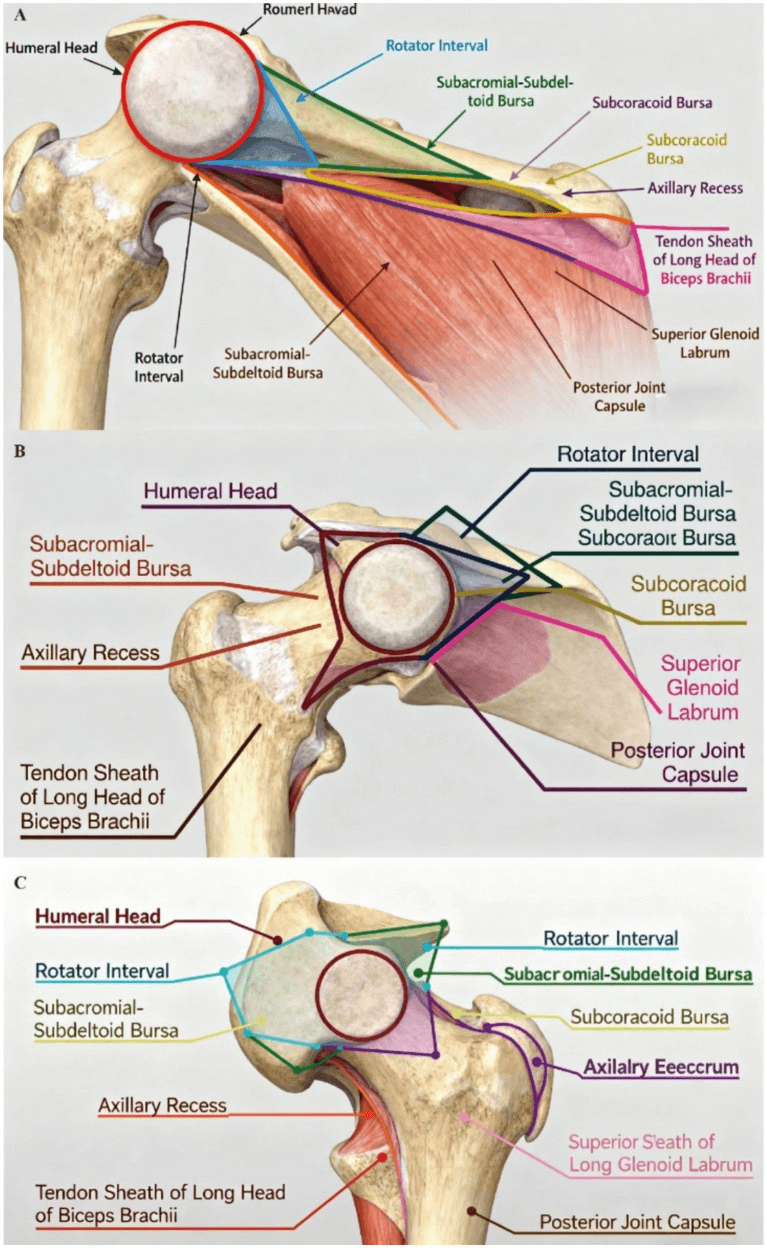
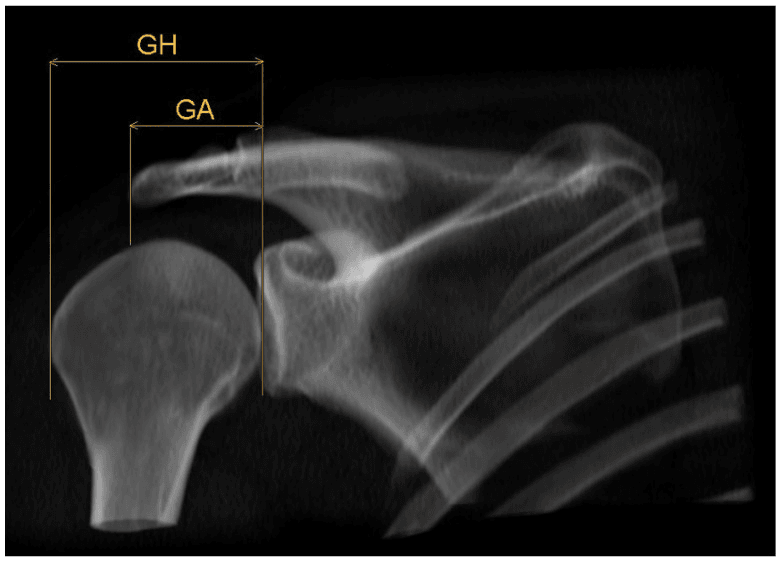
Pain during elevation may arise from tendon, bursa, load sensitivity or other shoulder and cervical disorders. A small measured space or a positive provocative test does not by itself establish damaging mechanical impingement.
Extrinsic and intrinsic. Neer's extrinsic compression model is now balanced against intrinsic tendinopathy (age, vascularity, load), and most contemporary models are multifactorial. The causes of subacromial narrowing divide the same way.
- Intrinsic (Within Tendon)
- Tendon degeneration
- Intrinsic (Within Tendon)
- Tendon calcification
- Intrinsic (Within Tendon)
- Cuff tear (partial/full)
- Intrinsic (Within Tendon)
- Tendon thickening from tendinitis
Structural contributors. Acromial or AC-joint morphology, os acromiale and cuff disease may coexist with symptoms. Association does not prove that a spur is the pain generator.
Functional contributors. Cuff capacity, scapular movement, stiffness, instability, and work and sport load can alter symptoms and motion without a fixed outlet lesion.
Classification Systems
Neer's stages. Neer described impingement in three stages:
- Stage I - oedema and haemorrhage
- Stage II - fibrosis and tendinopathy
- Stage III - rotator-cuff tear
The classification emphasises a progressive syndrome, though progression is not inevitable. It is a classic model, not a validated age-based natural history: tendinopathy, bursal pain and cuff tears overlap and do not inevitably progress through three stages. Do not use the stage as an age-based treatment rule. Treat the clinical syndrome and any defined pathology, and assess a tear separately.
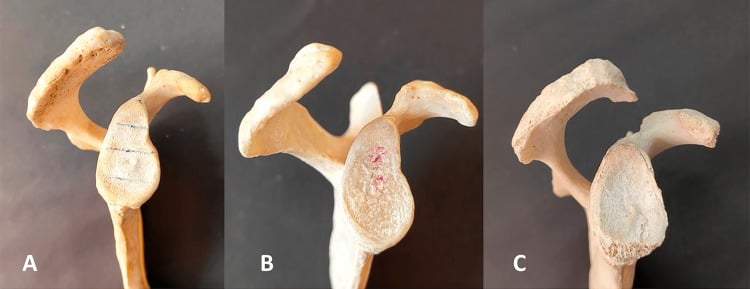
Bigliani acromial morphology. Three undersurface shapes, which may be reported on outlet imaging:
- Type 1 - flat
- Type 2 - curved
- Type 3 - hooked
The classification is descriptive, with poor inter-observer reliability, and causal inference from it is limited. A Type 3 acromion is associated with cuff disease and cuff tears, but causation is unproven: the hook may be a traction enthesophyte, an effect rather than a primary cause. Shape alone should not be used to diagnose SAPS, and is not an indication for acromioplasty or any other bone resection.
Clinical Assessment
History. Anterolateral shoulder pain, classically at night, made worse by overhead activity. There is weakness if the cuff is involved.
Examination. Examine the local shoulder structures, and look for cervical and neurological mimics. The named tests:
- Neer test - forward flexion with the scapula stabilised
- Hawkins test - 90° of flexion, then internal rotation
- Painful arc - pain between 60° and 120° of abduction
- Jobe (empty can) test - supraspinatus strength; not impingement-specific
- Injection test - relief with subacromial local anaesthetic
Neer and Hawkins manoeuvres may reproduce subacromial-region pain but have limited specificity. Interpret them with active and passive motion, cuff strength, lag signs, AC-joint and cervical examination.
Subacromial local anaesthetic may help localise pain to the subacromial tissues, but response does not prove acromial abrasion or identify which tissue is symptomatic.
Investigations
Clinical assessment comes first. Screen for trauma, infection, tumour, inflammatory disease, stiffness, instability, AC-joint pain and cervical or neurological referral. No imaging sign substitutes for this.
Radiographs, when indicated. AP, axillary and scapular-Y/outlet views identify arthritis, calcific deposits, superior migration, os acromiale and other bone pathology.
Do not order an outlet view merely to find a hooked acromion. Image when the result will distinguish a clinically relevant tear, calcific tendinopathy, arthritis, os acromiale or another diagnosis.
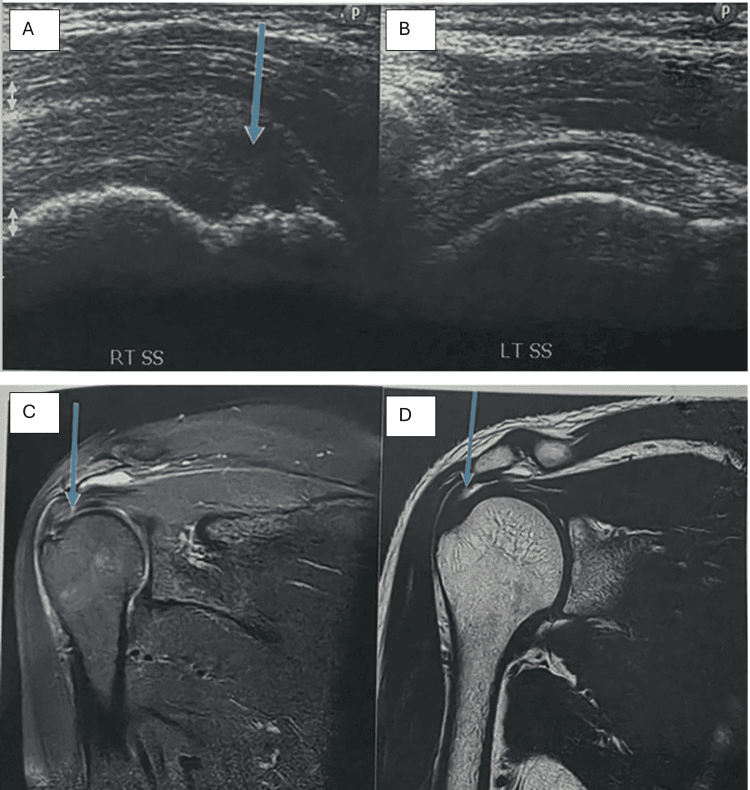
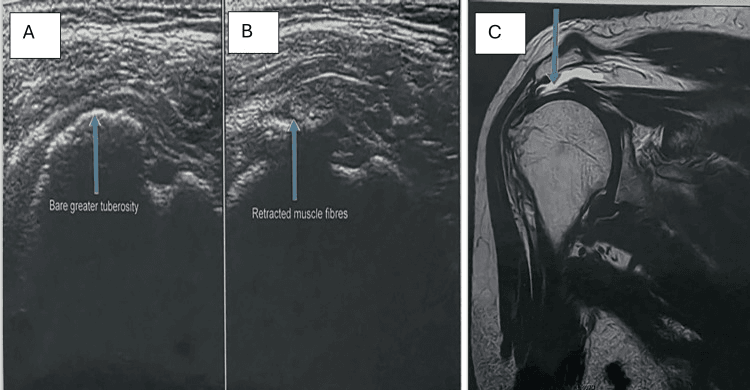
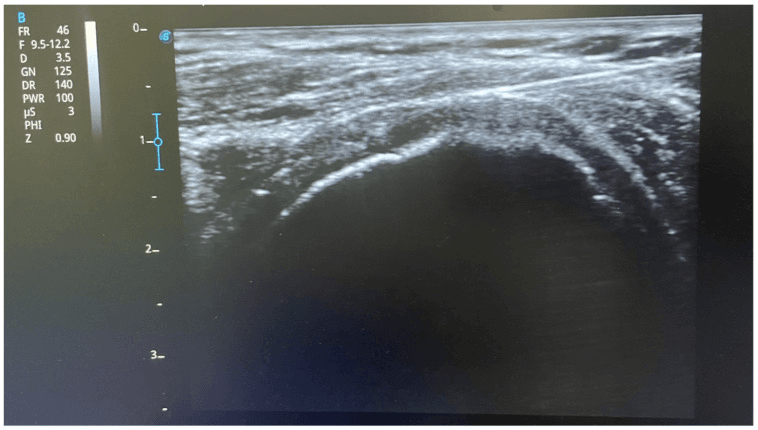
Ultrasound or MRI, for problem solving. Use them when a cuff tear, bursal disorder or alternative pathology would change management. Dynamic ultrasound can assess tendon and bursal motion.
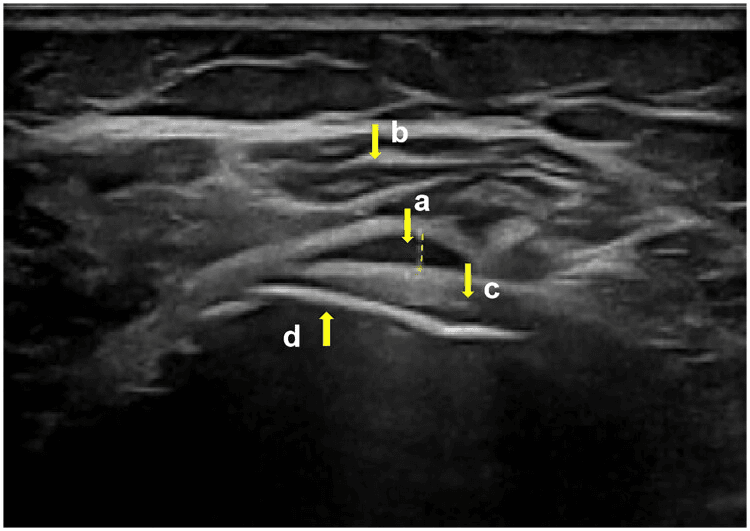
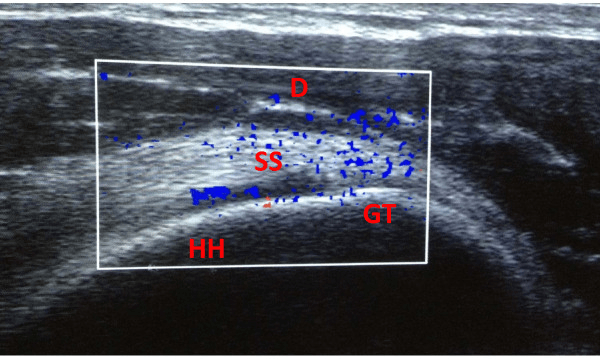
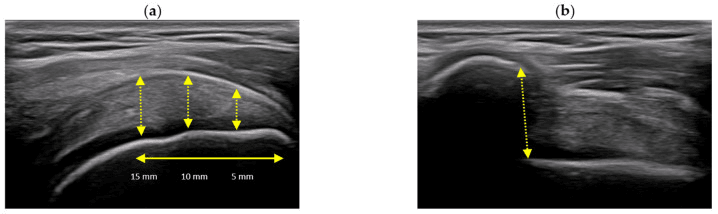
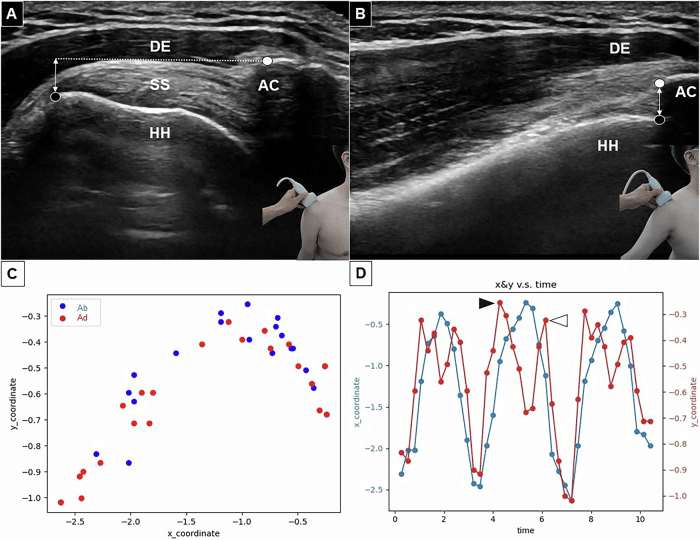
MRI defines the extent of a tear and the quality of the muscle.
Management Algorithm
First line. Non-operative treatment is first-line for SAPS, built from these components:
- Activity modification - avoid aggravating overhead activities; relative rest, not complete immobilisation
- Physiotherapy - rotator-cuff strengthening, scapular stabilisation, posterior capsule stretching and posture correction
- NSAIDs - short-term, for pain relief; they help reduce inflammation
- Subacromial corticosteroid injection - temporary relief that aids participation in physiotherapy; a maximum of 3 injections per year, with diminishing returns on repeated use
Why rehabilitation rather than bone removal. Rehabilitation targets load tolerance, cuff and scapular capacity and the individual movement limitation. Routine bone removal does not address these factors, and placebo-controlled trials show no important benefit for isolated SAPS.
What exercise achieves. No success rate for non-operative treatment is established, and what the evidence supports is narrower. Kuhn's synthesis of eleven randomised trials found that exercise produces statistically and clinically significant improvement in pain and function but no significant effect on range of motion or strength, and that a home programme performed as well as supervised therapy. Manual therapy augmented the effect of exercise. Set expectations around pain and function, and do not promise a percentage.
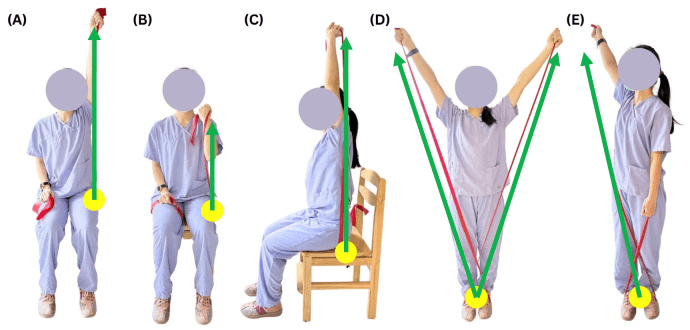
When symptoms persist. Reassess the diagnosis. Treat a defined cuff tear, instability, AC-joint disorder, stiffness or neurological source on its own merits rather than labelling failure of exercise as proof of impingement.
The evidence on decompression. CSAW (UK, 2018; primary endpoint at 6 months, with concordant 1-year data) and FIMPACT (Finland, 24-month follow-up) both found no clinically important benefit of arthroscopic subacromial decompression (ASD) over placebo arthroscopy for impingement with an intact cuff. The 2019 Cochrane review (1062 patients) and the BMJ Rapid Recommendation graded this as high-certainty evidence and recommended against routine ASD. The trials undermine the assumption that acromial contact is the necessary pain generator; the remaining debate is patient selection, and whether a structural cuff tear changes the calculus.
Where surgery still has a place. Surgery is considered for:
- Failure of 3-6 months of conservative treatment
- Stage III disease, a rotator-cuff tear
- Significant functional impairment
- A young patient with mechanical symptoms
Read that list against the trials. Failure of exercise alone is a reason to reassess the diagnosis, not proof of impingement. Surgery may still help a genuine structural lesion, such as a large anterior spur or a symptomatic os acromiale, but not pain alone. Decompression as an adjunct during rotator-cuff repair remains accepted practice. Patients should be told of the trial evidence when they are consented.
Surgical Technique
Planning. Review the imaging first: confirm acromial morphology, assess for a cuff tear (MRI if needed), check the AC joint, evaluate for os acromiale and exclude other pathology. Plan the extent of the bursectomy and the acromioplasty targets, and make sure the consent includes the limited evidence.
Surgical Steps
Beach chair or lateral decubitus. Arm in holder with traction if lateral. Standard portals (posterior viewing, lateral working).
First evaluate the glenohumeral joint. Assess rotator cuff (articular side), biceps, labrum. Enter subacromial space.
Remove inflamed bursal tissue with shaver; a thorough bursectomy aids visualisation. Visualise the undersurface of the acromion, the coracoacromial ligament and the rotator cuff.
Use burr to flatten anterior-inferior acromion. Remove impinging spurs. Aim for Type 1 (flat) morphology and a smooth undersurface. Do not over-resect.
Release coracoacromial ligament if thickened/impinging. Some preserve to maintain coracoacromial arch integrity.
Beyond the acromion. Assess the entire cuff and do not ignore its pathology: if a tear is present, cuff repair is combined with the decompression. Address the AC joint if it is arthritic, and check for an os acromiale. Do not operate without failed conservative care, and do not promise cure.
Excessive acromial resection can cause fracture or deltoid detachment. Remove only enough to create a flat undersurface, and do not detach the deltoid origin. The coracoacromial ligament provides superior restraint - consider preserving it if possible.
The coracoacromial ligament. The arch is the passive roof of the subacromial space. With an intact rotator cuff it is only a minor buttress, but in a cuff-deficient shoulder it becomes the last static restraint against anterosuperior escape of the humeral head.
Over-decompression. Aggressive acromioplasty with coracoacromial-ligament release, in a shoulder that has or later develops a large or massive cuff tear, can precipitate anterosuperior escape: the head subluxes up and forward through the deficient roof. It is a difficult, often effectively irreparable complication.
The corollary. Decompression should be conservative and cuff-status-aware. Release the coracoacromial ligament sparingly, or preserve it, when the cuff is deficient, and remove only enough acromial undersurface to relieve a genuine mechanical spur. Alongside CSAW and FIMPACT, it is a further argument against routine, aggressive bony decompression.
Complications
- Incidence
- 10-30%
- Risk Factors
- Patient selection, technique
- Prevention/Management
- Proper indication, thorough decompression
- Incidence
- Rare
- Risk Factors
- Excessive resection
- Prevention/Management
- Conservative bone removal
- Incidence
- Rare
- Risk Factors
- Aggressive resection
- Prevention/Management
- Protect deltoid origin
- Incidence
- 5%
- Risk Factors
- Inadequate rehab
- Prevention/Management
- Early ROM protocol
Postoperative Care and Rehabilitation
After isolated decompression. Recovery is relatively quick compared with cuff repair.
Recovery Timeline
Sling comfort only. Begin pendulum exercises. Ice for swelling. May remove sling for exercises.
Active-assisted ROM progressing to active. Begin rotator cuff isometrics. Scapular stabilisation.
Progressive strengthening. Rotator cuff and deltoid focus. Return to light activities.
Full return to activity. Sport-specific training. Most recovery by 3 months.
After combined cuff repair. The cuff repair dictates rehabilitation, not the decompression, and its protocol is more restrictive:
- Sling for 4-6 weeks
- No active elevation for 6 weeks
- Full recovery at 4-6 months
Outcomes and Prognosis
Reading the success rates. Improvement after surgery is largely placebo plus rehabilitation, which is how decompression can post the success rate below while giving no clinically important benefit over placebo surgery.
- Success Rate
- 50-70% at 6 weeks
- Notes
- Temporary benefit, aids PT
- Success Rate
- 65-85%
- Notes
- No clinically important benefit vs placebo surgery
- Success Rate
- 75-90%
- Notes
- Benefit from cuff repair
Guidelines, Registries & Global Practice
Global epidemiology. Shoulder pain is among the three most common musculoskeletal presentations worldwide; subacromial pain syndrome (the contemporary umbrella term for external impingement with an intact cuff) accounts for the majority of these consultations. Prevalence rises with age and overhead occupational or sporting load and is broadly similar across high- and limited-resource settings.
- Position on routine ASD for impingement (intact cuff)
- Strong recommendation AGAINST ASD; offer structured exercise first
- Position on routine ASD for impingement (intact cuff)
- Conservative care first-line; surgery not for isolated impingement without clear structural cause
- Position on routine ASD for impingement (intact cuff)
- Emphasises non-operative management; shared decision-making given equivocal surgical evidence
- Position on routine ASD for impingement (intact cuff)
- Reserve decompression for documented mechanical/structural lesions, not pain alone
- Cochrane 2019 (1062 patients): high-certainty no benefit of ASD vs placebo
- Declining ASD rates reported in several health systems post-CSAW/FIMPACT
- Serious harm after shoulder arthroscopy likely under 1%
- Convergent guidance across UK, US and Europe
- Well-resourced settings: MRI access, arthroscopy available but increasingly restrained
- Limited-resource settings: clinical diagnosis plus injection test, supervised/home exercise
- Exercise (supervised or home) performs similarly - key for low-resource equity
- Acromial morphology assessed on plain outlet view where MRI is scarce
Key documentation requirements:
- Document failed conservative treatment (type, duration, compliance)
- Record clinical examination with specific tests
- Note imaging findings (acromial morphology, cuff status)
- Consent must discuss: CSAW/FIMPACT evidence (ASD may not be better than sham), alternatives, expected outcomes, risks
- If proceeding to surgery, document patient's informed decision
MCQ Practice Points
Q: How should Neer's three stages be used now? A: As a historical description of oedema/haemorrhage, fibrosis/tendinopathy and cuff tear—not as an inevitable age-linked sequence or a treatment algorithm.
Q: What does a hooked Type 3 acromion mean? A: It is associated with cuff disease in observational work, but shape has limited reliability and does not prove pain causation or justify acromioplasty by itself.
Q: How is the Neer impingement test performed? A: Forward flex the arm with scapula stabilized - The examiner stabilizes the scapula and passively forward flexes the arm overhead. This compresses the cuff against the anterior acromion. Positive if reproduces the patient's pain.
Q: How is the Hawkins impingement test performed? A: Flex shoulder and elbow to 90°, then internally rotate - The arm is positioned in 90° of forward flexion and elbow flexion, then the forearm is internally rotated. This compresses the cuff against the coracoacromial ligament.
Q: Which X-ray view best demonstrates acromial morphology? A: Outlet view (Supraspinatus outlet/Scapular Y-view) - This view shows the acromial profile and allows classification into Bigliani Types 1, 2, or 3. Also visible on sagittal MRI.
Q: What did the CSAW trial show regarding arthroscopic subacromial decompression? A: ASD was not significantly better than sham surgery at 6 months for isolated subacromial impingement without rotator cuff tear. This has led to debate about routine ASD for impingement.
Exam Viva Scenarios
Practise clinical reasoning and management decisions out loud
“A 45-year-old office worker presents with 6 months of right shoulder pain, worse at night and with overhead activities. How do you assess for subacromial impingement?”
“A 50-year-old has persistent anterolateral shoulder pain after three months of exercise. MRI shows supraspinatus tendinopathy without a tear. How do you proceed?”
“Describe the Bigliani classification of acromial morphology and its clinical significance.”
Definition
- Compression of supraspinatus under acromion
- External = subacromial (vs internal = posterior-superior)
- Bursal side cuff affected
- Degenerative/mechanical etiology
Neer Classification
- Stage I: historical oedema/haemorrhage description
- Stage II: historical fibrosis/tendinopathy description
- Stage III: historical cuff-tear category; assess tear separately
Bigliani Acromion Types
- Type 1: Flat
- Type 2: Curved
- Type 3: Hooked; association is not causation
- Morphology alone does not select decompression
Clinical Tests
- Neer: Forward flex with scapula fixed
- Hawkins: 90° flex, internal rotate
- Painful arc: 60-120° abduction
- Injection test: LA into subacromial space
Treatment
- Non-operative first (exercise improves pain and function; no success rate is established)
- Physio, NSAIDs, injection
- ASD gives no benefit over placebo surgery (CSAW, FIMPACT, Cochrane high-certainty)
- Surgery if cuff tear present
CSAW Trial
- ASD vs sham surgery comparison
- No significant difference at 6 months
- Questions routine ASD for isolated impingement
- Must discuss in consent
Evidence Base and Key Trials
CSAW Trial - ASD vs Placebo Arthroscopy vs No Treatment
- Multicentre UK 3-arm placebo-controlled RCT, 313 patients, 32 hospitals
- Oxford Shoulder Score equivalent for decompression vs arthroscopy-only placebo (mean diff -1.3, NS)
- Both surgical arms beat no treatment by a margin too small to be clinically important
- Difference over no treatment likely placebo effect and/or postoperative physiotherapy
FIMPACT Trial - ASD vs Diagnostic Arthroscopy vs Exercise
- Multicentre Finnish 3-arm RCT, 210 patients, 24-month follow-up
- No clinically relevant difference in pain (VAS) between ASD and diagnostic (placebo) arthroscopy
- ASD vs diagnostic arthroscopy difference under the 15-point MCID at rest and on activity
- Apparent ASD advantage over exercise did not exceed the MCID and was biased by selective dropout
Cochrane Review - Subacromial Decompression for Rotator Cuff Disease
- 8 RCTs, 1062 participants with impingement (full-thickness tears excluded)
- High-certainty evidence: ASD gives no improvement in pain, function or quality of life vs placebo at 1 year
- Mean pain difference 0.26 points (0-10 scale) favouring placebo arm - not clinically important
- Serious adverse-event risk after shoulder arthroscopy likely under 1%
Lähdeoja Meta-analysis - Basis for BMJ Rapid Recommendation
- Systematic review with meta-analysis underpinning the BMJ Rapid Recommendations panel
- High-certainty: no benefit of ASD over placebo surgery for pain at 1 year (MD -0.26, MID 1.5)
- Moderate-to-high certainty: no benefit for function or health-related quality of life
- Approximately 6 serious harms per 1000 patients undergoing ASD
Neer Original Description of Impingement
- Coined the impingement syndrome concept and three progressive stages
- Described anterior acromioplasty as the operative remedy
- Located impingement at the anterior third of the acromion and CA ligament
- Volume 54-A, pages 41-50 - the foundational paper of the field
Bigliani Acromial Morphology Classification
- Defined three acromial undersurface shapes: flat, curved, hooked
- Type 3 (hooked) acromion most strongly associated with full-thickness cuff tears in cadavers
- Best profiled on the supraspinatus outlet (scapular-Y) view
- Widely adopted descriptive classification
Kuhn - Exercise for Rotator Cuff Impingement (Evidence-Based Protocol)
- Systematic review of 11 level 1-2 RCTs of exercise for impingement
- Exercise produces statistically and clinically significant pain reduction and functional gain
- Manual therapy augments exercise; supervised and home programmes perform similarly
- Synthesised into a standard evidence-based rehabilitation protocol