Iliopsoas | Rectus Femoris | Athletic Population
- Rectus femoris injuries MORE COMMON than iliopsoas in athletes
- ASIS avulsion = sartorius; AIIS avulsion = rectus femoris
- Iliopsoas bursa largest in body - can communicate with hip joint
- Hip flexor weakness = antalgic gait with increased lordosis
- Return to sport based on STRENGTH not just pain resolution
- “Thomas test positive = hip flexor contracture
- “Resisted hip flexion at 90 degrees isolates iliopsoas
- “AIIS avulsions common in adolescents (apophysis open)
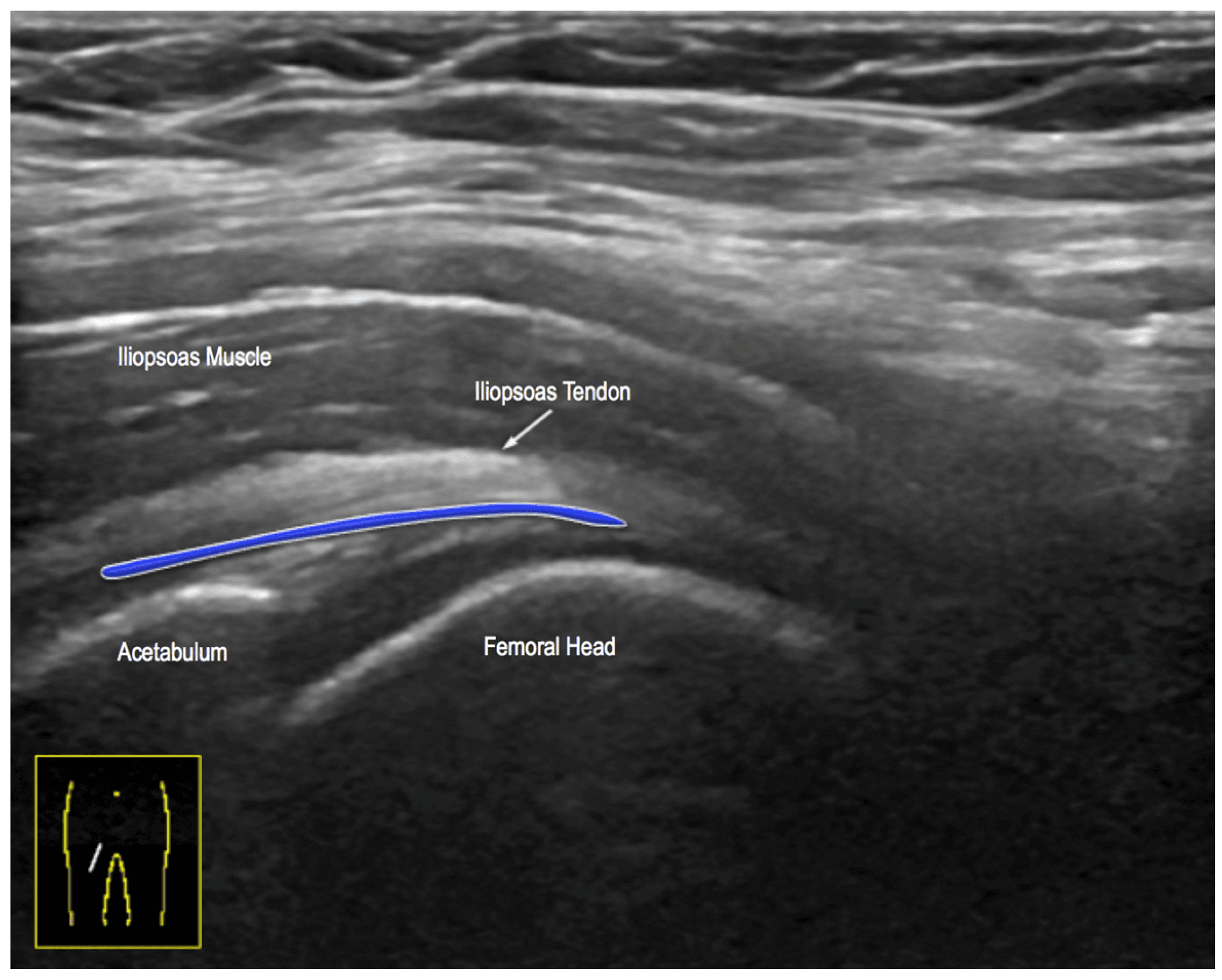
- “Ultrasound can assess dynamic function in real-time
Overview and Epidemiology
Hip flexor strains are common in sports that demand explosive hip flexion: soccer and the other kicking sports, running and sprinting, martial arts, dance and gymnastics, and Australian Rules Football. The primary hip flexors are the iliopsoas and the rectus femoris, and the rectus femoris is affected more often, because it crosses two joints and that increases its eccentric loading during kicking.
Mechanism. The two muscles fail under different loads. The rectus femoris fails under eccentric load while kicking or sprinting, in the leg deceleration phase. The iliopsoas fails under forceful hip flexion against resistance.
Risk factors. A previous strain is the strongest predictor. The others are inadequate warm-up, muscle fatigue, inflexibility or contracture, and strength imbalance.
The adolescent. In adolescents, apophyseal avulsions are common: a different injury wearing the same clinical presentation. They are covered under Classification and Investigations.
Pathophysiology and Mechanisms
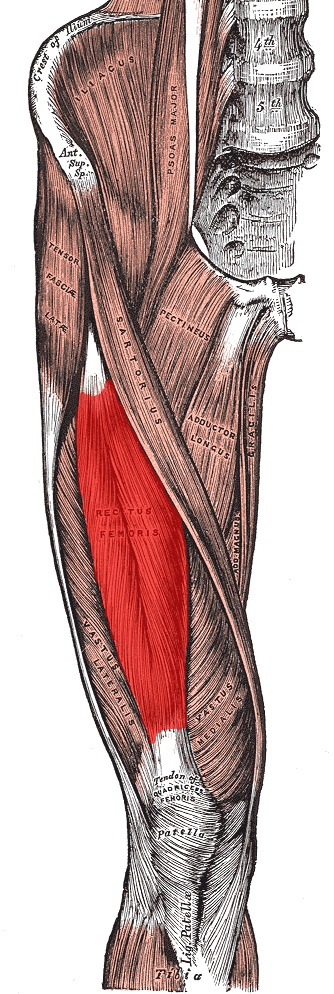
Two primary flexors. The iliopsoas is the most powerful hip flexor, and it lies deep: psoas major, from the T12-L5 vertebral bodies, and iliacus, from the iliac fossa, unite at the pelvis and insert together on the lesser trochanter. The rectus femoris is the only part of the quadriceps that crosses the hip, arising by a straight head from the AIIS and a reflected head from the acetabular rim. Sartorius, the longest muscle in the body, is a weak flexor in its own right; pectineus and tensor fasciae latae are the secondary flexors.
- Origin
- T12-L5 + Iliac fossa
- Insertion
- Lesser trochanter
- Innervation
- Femoral nerve + L1-3
- Clinical Note
- Strongest flexor, deep location
- Origin
- AIIS (straight) + Acetabular rim (reflected)
- Insertion
- Tibial tuberosity via patella
- Innervation
- Femoral nerve (L2-4)
- Clinical Note
- Biarticular = high strain risk
- Origin
- ASIS
- Insertion
- Pes anserinus (tibia)
- Innervation
- Femoral nerve (L2-3)
- Clinical Note
- Longest muscle, weak flexor
- Origin
- ASIS and iliac crest
- Insertion
- ITB to Gerdy tubercle
- Innervation
- Superior gluteal nerve
- Clinical Note
- Flexion, abduction, IR
The dual innervation, the femoral nerve to the rectus femoris and the lumbar plexus to the iliopsoas, has implications for recovery.
Rectus femoris crosses two joints - it is stretched maximally when the hip is extended AND knee is flexed (e.g., late swing phase of sprinting, follow-through of kick). This is when most RF strains occur.
Architecture. The rectus femoris has long fascicles and a high capacity for velocity; the iliopsoas has shorter fascicles and generates high force. Type II (fast-twitch) fibres predominate, and the pennation angle affects strain risk.
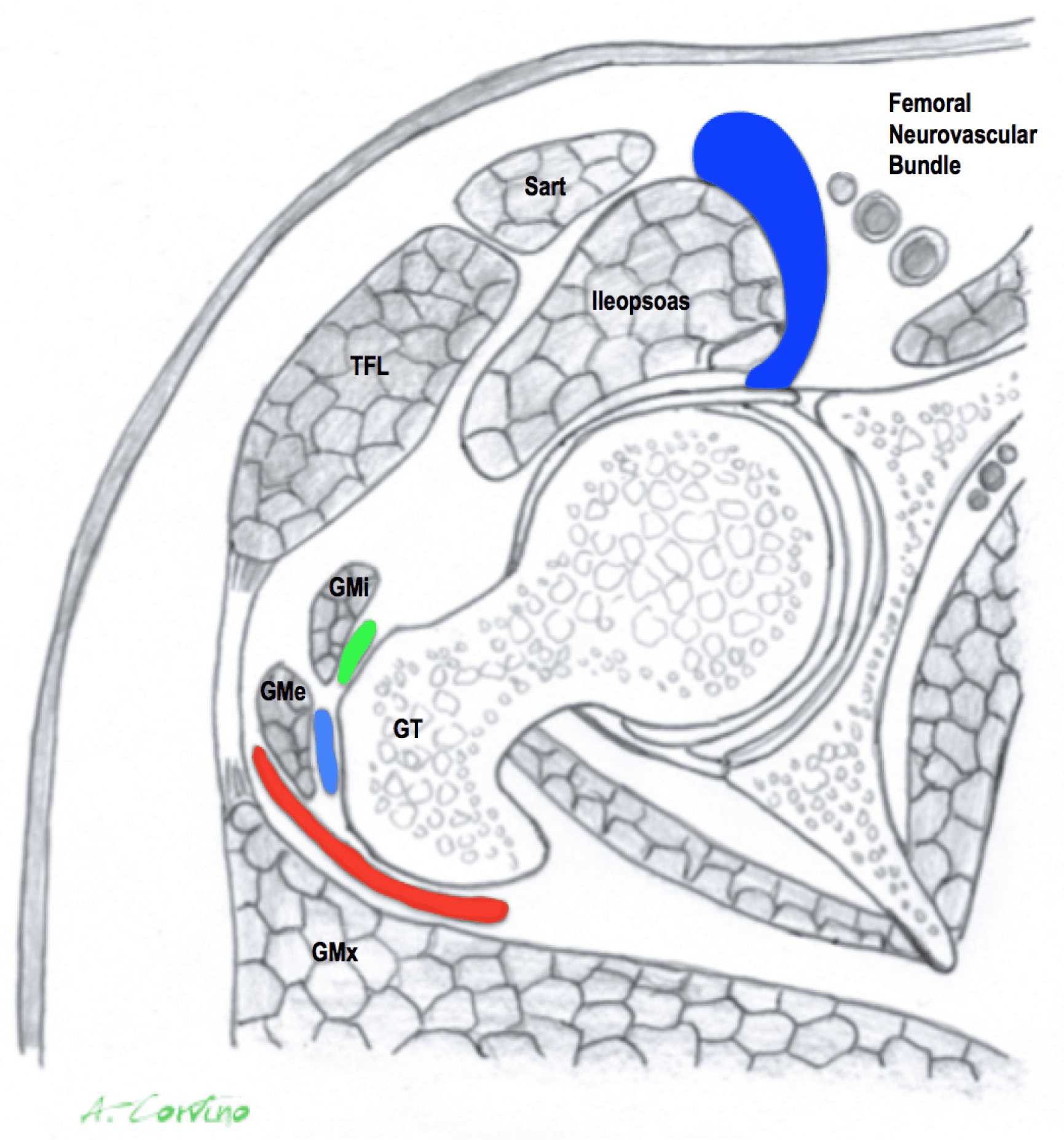
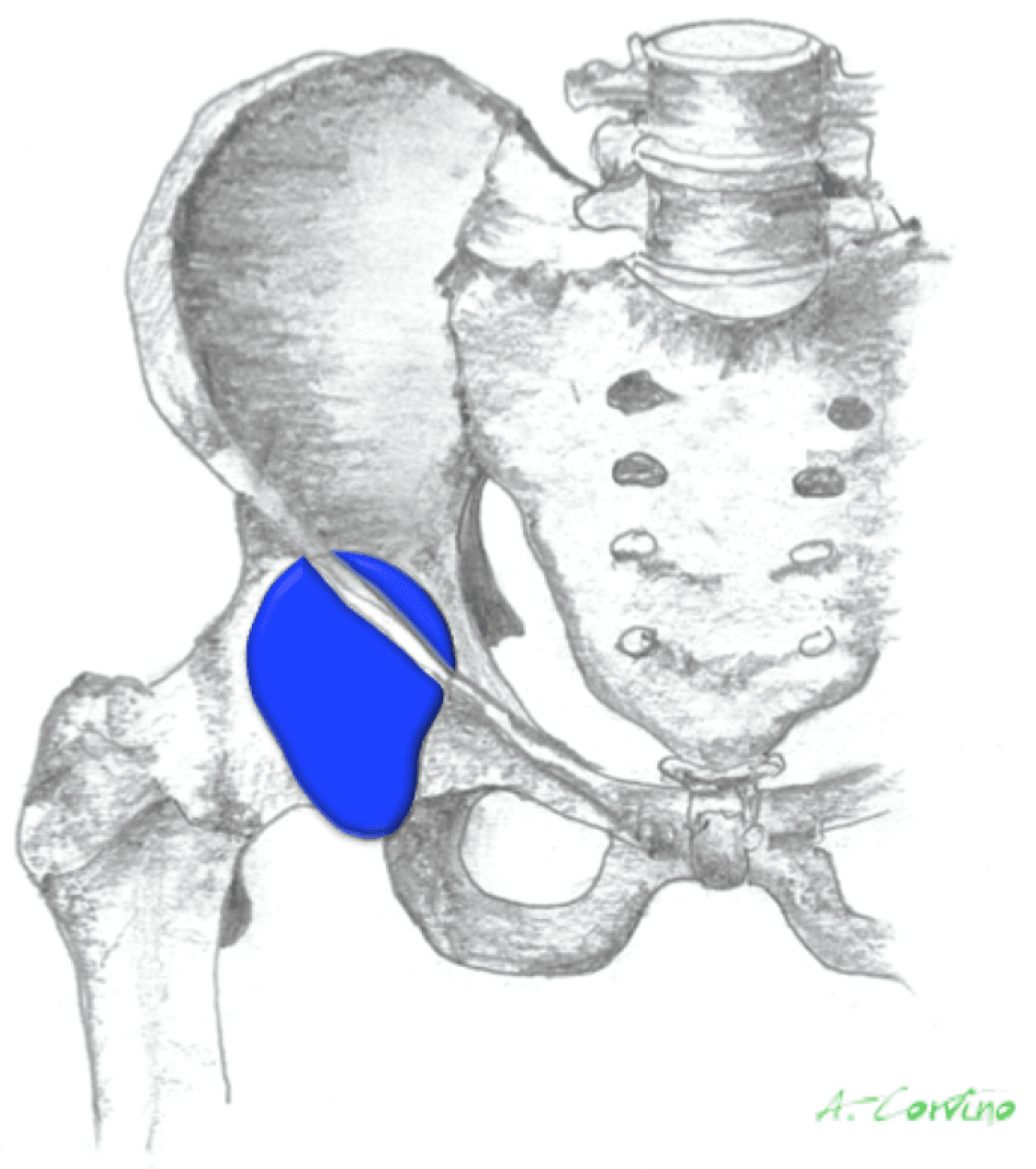
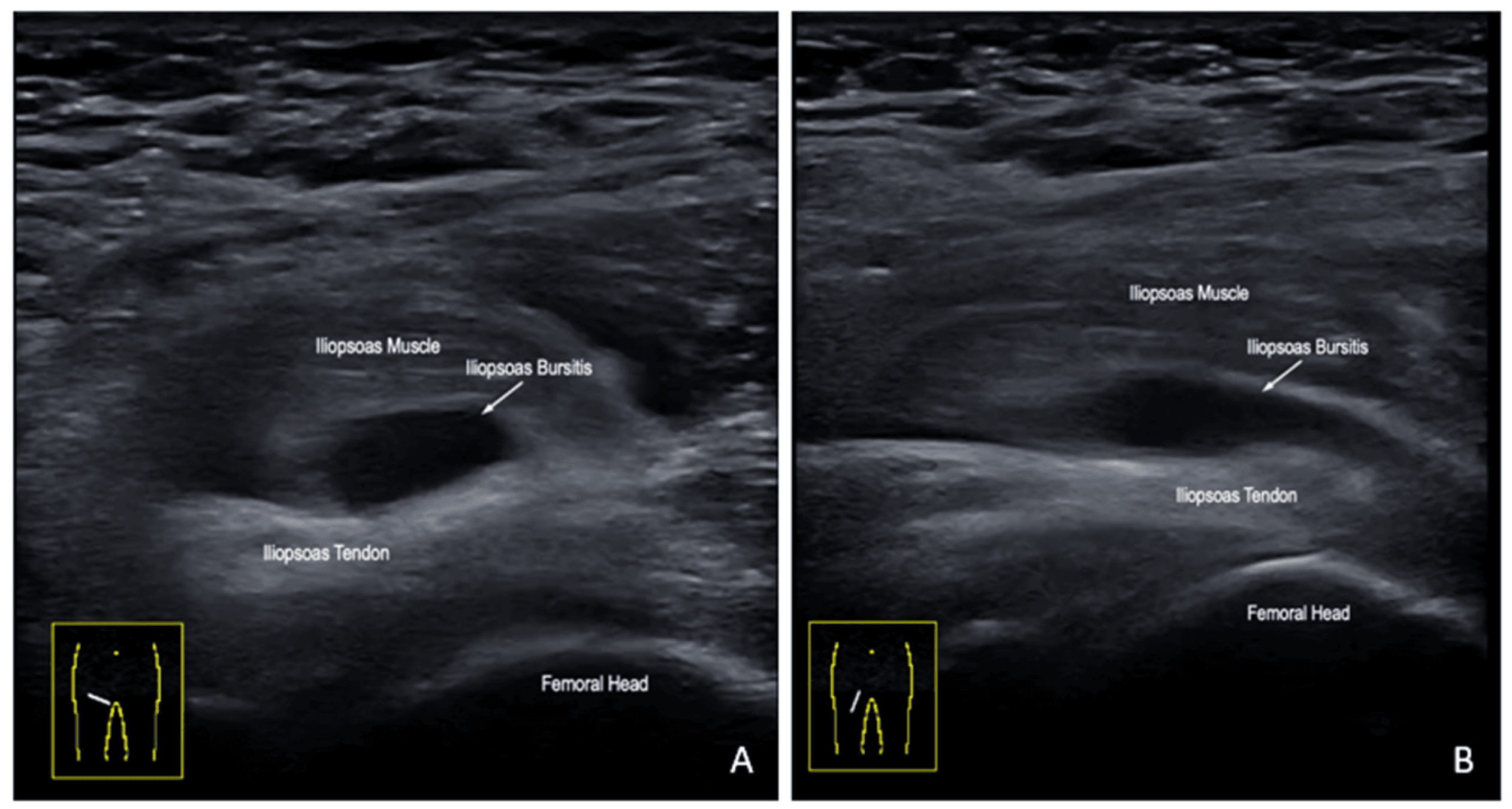
The iliopsoas bursa. The largest bursa in the body lies between the iliopsoas tendon and the anterior hip capsule, over the iliopectineal eminence. It communicates with the hip joint in 15-20%, through the interval between the iliofemoral and pubofemoral ligaments. Bursitis can mimic a hip flexor strain.
Classification Systems
The traditional three grades describe the proportion of fibres disrupted, and they set both the intensity of treatment and the expected recovery. Telling grade I from grade II is often a clinical call; MRI or ultrasound helps quantify the extent of the tear and predict recovery time.
- Pathology
- Less than 5% fibres disrupted
- Clinical Features
- Minimal pain, minimal or no weakness, full ROM
- Imaging
- Normal or minor feathery oedema, fibres intact
- Recovery
- 1-2 weeks
- Pathology
- 5-50% fibres disrupted
- Clinical Features
- Moderate pain, weakness, antalgic gait
- Imaging
- Partial disruption, haematoma
- Recovery
- 4-6 weeks
- Pathology
- Greater than 50% or complete rupture
- Clinical Features
- Severe pain, marked weakness, palpable defect
- Imaging
- Complete disruption, gap, retraction
- Recovery
- 3-6 months
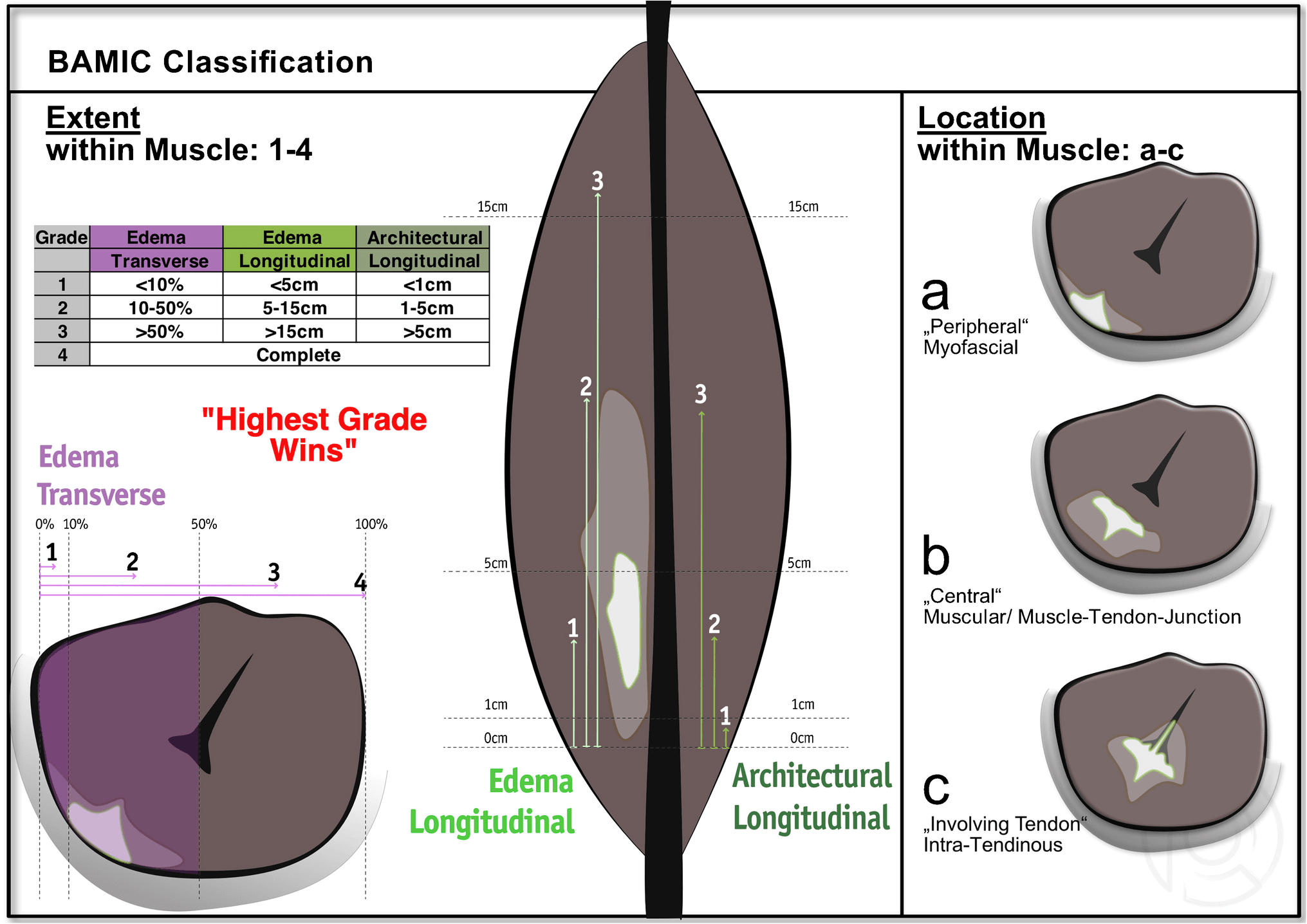
The newer Munich and British Athletics (BAMIC) systems are discussed under Controversies.
Clinical Assessment
History. Establish the mechanism (an explosive kick, a sprint start, a sudden change of direction), whether the onset was an acute pop or snap or a gradual overuse, and what the patient can no longer do: stairs, running or kicking.
Where it hurts localises the muscle. Iliopsoas pain is deep, in the anterior hip and groin, and worse with resisted hip flexion at 90 degrees. Rectus femoris pain sits more in the anterior thigh, often at the AIIS or the muscle belly, and is worse with a resisted straight leg raise or knee extension.
Examination. Hip flexor weakness gives an antalgic gait with a shortened stride and increased lordosis. Look for swelling and for bruising, which is delayed; palpate the AIIS, the lesser trochanter region and the muscle belly; and check hip extension, which is limited if there is a contracture. Then test each muscle in turn.
- Technique
- Supine, flex opposite hip fully
- Positive Finding
- Tested hip rises off bed
- Muscle Tested
- Hip flexor contracture (general)
- Technique
- Supine, hip at 90, resist further flexion
- Positive Finding
- Pain or weakness
- Muscle Tested
- Iliopsoas (primary)
- Technique
- Supine, straight leg, resist elevation
- Positive Finding
- Pain or weakness
- Muscle Tested
- Rectus femoris (primary)
- Technique
- Prone, passive knee flexion
- Positive Finding
- Hip flexes off bed
- Muscle Tested
- Rectus femoris contracture
- Discriminating Feature
- Acute onset, kicking/sprinting, pain on resisted flexion
- Key Test / Investigation
- Resisted hip flexion / SLR; MRI for grade
- Discriminating Feature
- Night/rest pain, female athlete triad, load-related
- Key Test / Investigation
- Urgent MRI
- Discriminating Feature
- Mechanical clicking, deep groin pain, reduced IR
- Key Test / Investigation
- FADIR/impingement positive; MR arthrogram
- Discriminating Feature
- Medial groin, pain on resisted adduction
- Key Test / Investigation
- Squeeze test; Doha classification
- Discriminating Feature
- Pain worse with Valsalva, cough impulse
- Key Test / Investigation
- Dynamic ultrasound; herniography
- Discriminating Feature
- Dermatomal radiation, neurological signs
- Key Test / Investigation
- SLR (neural), lumbar MRI
Femoral neck stress fracture is the critical miss in an athlete with anterior hip/groin pain - night pain, rest pain or the female athlete triad mandate urgent MRI, as a missed tension-side fracture can displace.
Investigations
Radiographs first. An AP pelvis and frog lateral. In adolescents they are essential, and every young athlete with an acute hip flexor injury should have them, to exclude an avulsion of the AIIS, ASIS or lesser trochanter. In a pure muscle strain they are often normal.
MRI is the gold standard for the soft tissue. It quantifies the extent of the tear, places it at the musculotendinous junction or in the muscle belly, and shows oedema, haematoma and retraction. MRI within 5 days is optimal for grading.
What predicts a longer recovery. On MRI, a longer recovery is associated with:
- greater cross-sectional area of tear, which correlates with return-to-play time
- involvement of the central tendon of rectus femoris, a poor prognostic sign
- proximal location, at the musculotendinous junction
- significant retraction
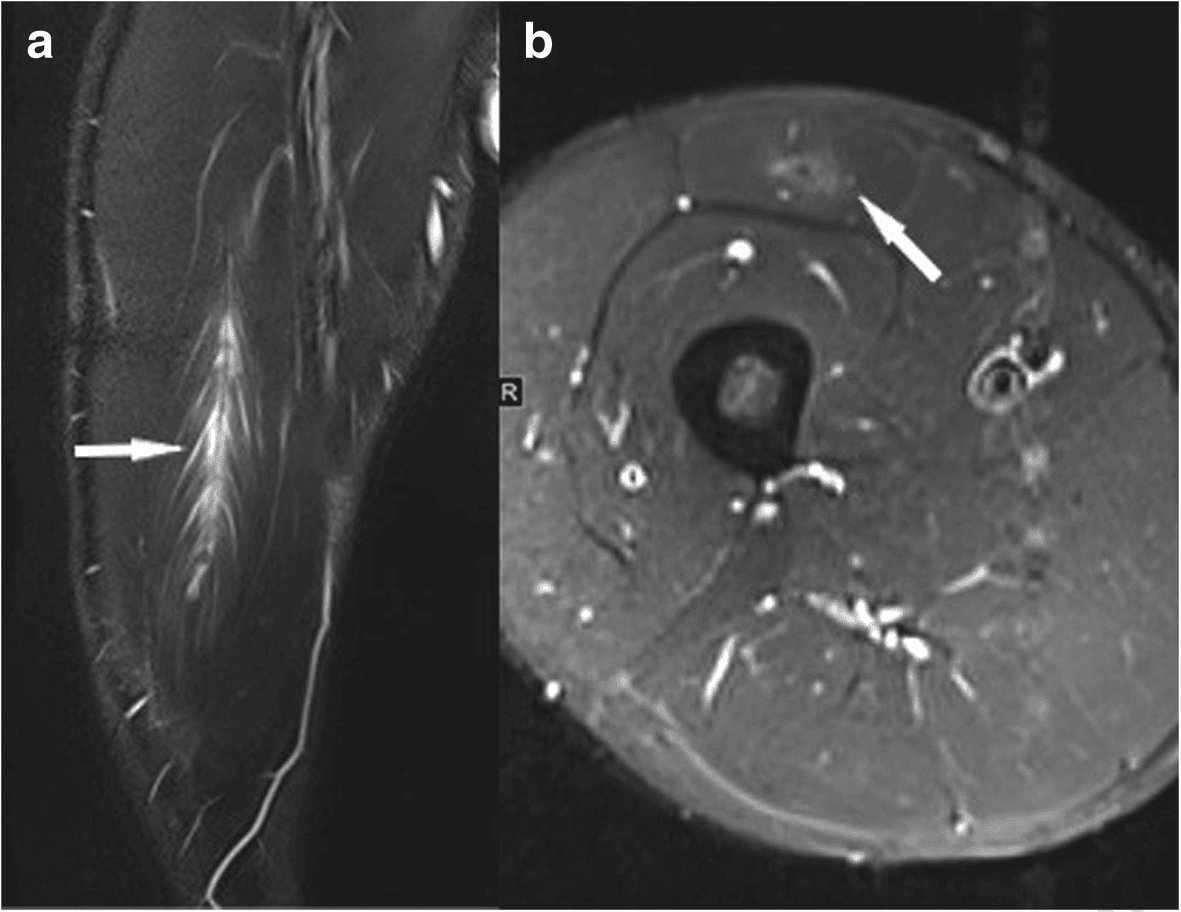
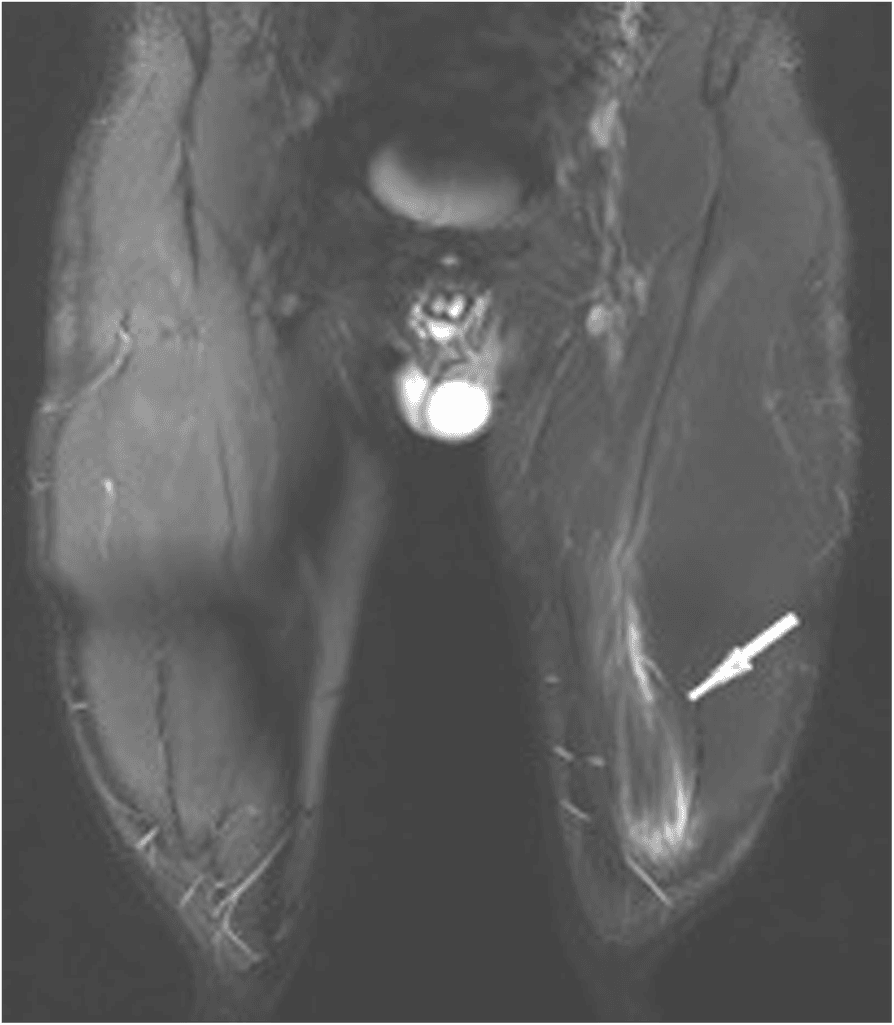
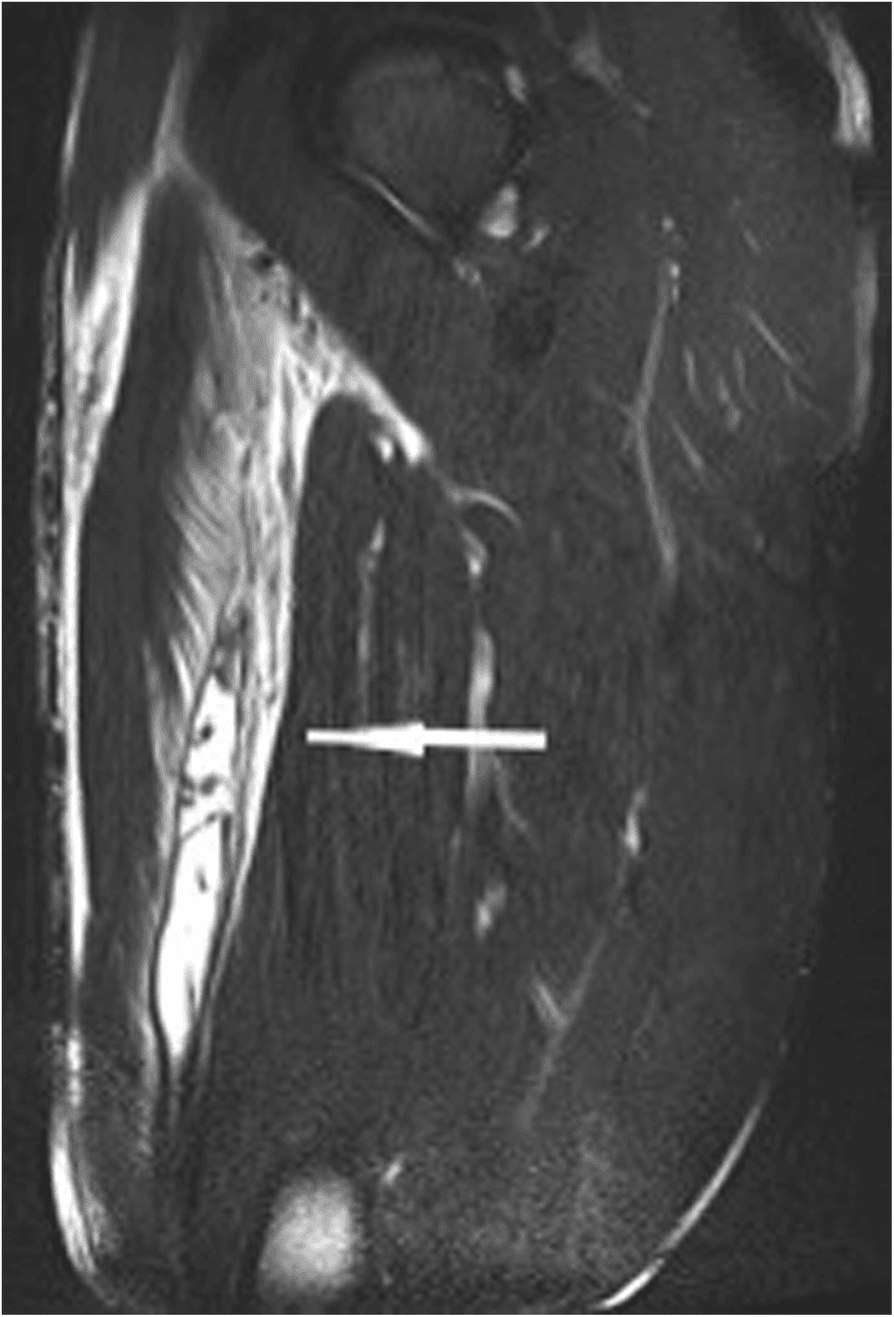
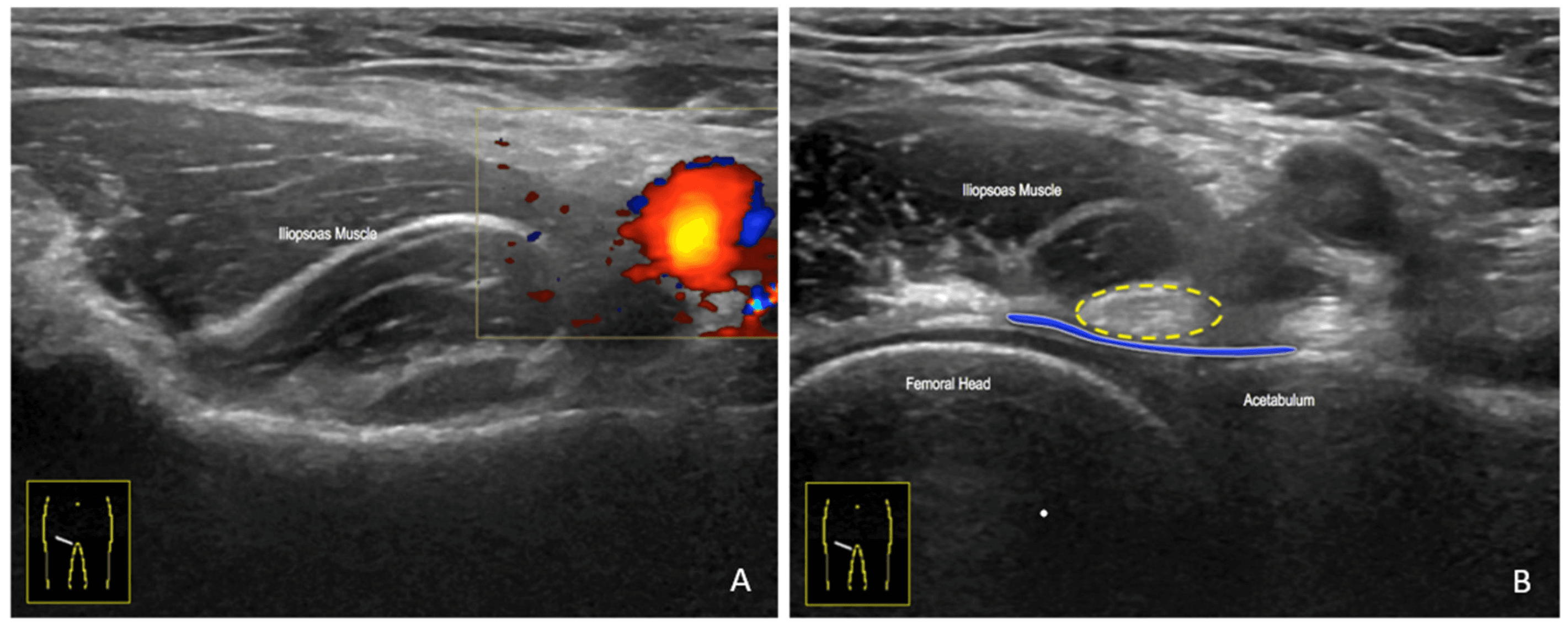
Ultrasound allows dynamic assessment, watching the muscle contract in real time, and suits the superficial rectus femoris. It is operator-dependent but accessible, cost-effective and free of radiation. It can also monitor healing and guide injections into the bursa or a haematoma.
Management Algorithm
The decision. The grade sets the treatment, and in the adolescent the radiograph decides whether it is a strain at all.
- Treatment
- RICE, relative rest, early mobilisation
- Treatment
- Protected activity, progressive rehab
- Treatment
- Immobilisation, consider surgery
- Treatment
- X-ray, possible surgical fixation
The goals are pain control, restored range of motion, progressive strengthening and a sport-specific return.
Rehabilitation Phases
Protection and pain control: RICE principles. NSAIDs for 3-5 days. Crutches if antalgic gait. Gentle ROM as tolerated. Avoid stretching in acute phase.
ROM and isometric loading: Pain-free ROM exercises. Isometric hip flexion progressing through range. Pool therapy for unloading. Address any compensatory patterns.
Progressive resistance: Isotonic exercises. Hip flexion against bands/weights. Eccentric loading introduction. Core stability work.
Return to play preparation: Sport-specific drills. Sprinting, kicking progression. Agility and plyometrics. Meet return-to-sport criteria.
Return to sport. Clearance rests on strength, not just on pain resolving, and premature return carries a 30% recurrence rate. The athlete must achieve:
- strength greater than 90% of the uninjured side
- pain-free sport-specific activity
- full range of motion without contracture
- passed functional testing (hop tests, agility)
- a graduated return to training without a flare
Surgical Technique
The repair restores the anatomic footprint and allows early rehabilitation.
Surgical Steps
Supine on radiolucent table. Bump under ipsilateral hip if needed. Prep from costal margin to mid-thigh.
Anterior approach to AIIS. Bikini incision or longitudinal over AIIS. Develop interval between sartorius (medial) and TFL (lateral).
Identify retracted tendon stump. May need to mobilize from scar. Protect lateral femoral cutaneous nerve. Identify both heads if possible.
Decorticate AIIS footprint. Create bleeding bone bed. Place suture anchors (2-3 typically).
Pass sutures through tendon. Reduce to footprint with hip in flexion to reduce tension. Secure repair. Assess stability through ROM.
Layered closure over drain if haematoma risk. Standard wound care.
Lateral femoral cutaneous nerve runs medial to ASIS, can be injured during approach. Identify and protect. Numbness is common complication if not careful.
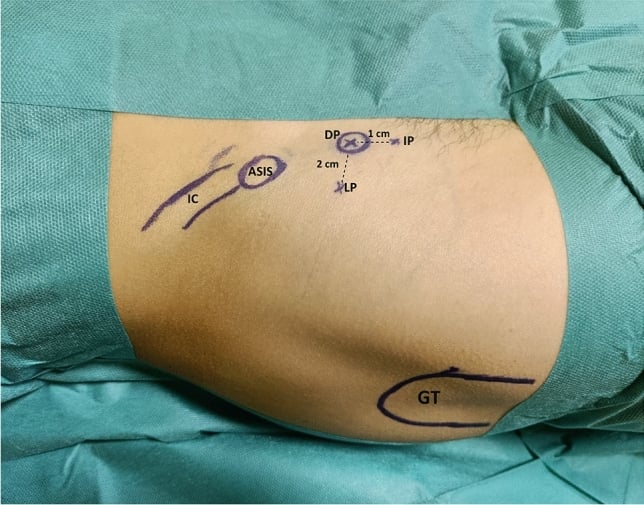
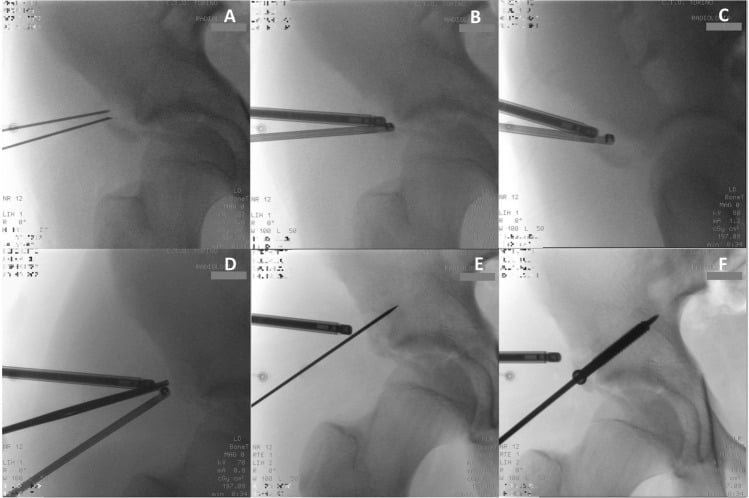
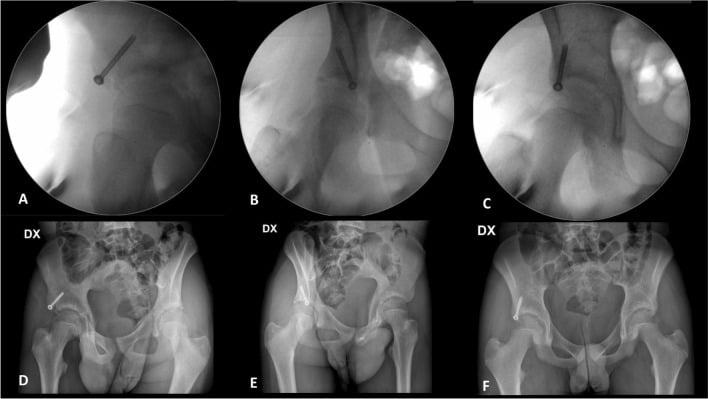
Endoscopic AIIS fixation. A displaced AIIS avulsion can also be fixed endoscopically, as in the sequence below.
Complications
- Incidence
- 15-30%
- Prevention
- Complete rehabilitation, strength-based RTS
- Management
- Extended conservative management
- Incidence
- 10-20% (Grade III)
- Prevention
- Early surgery if complete rupture
- Management
- Surgical repair if functional deficit
- Incidence
- Rare
- Prevention
- Avoid aggressive massage early, no heat
- Management
- Observation, excision if symptomatic
- Incidence
- 5-10%
- Prevention
- Maintain ROM during healing
- Management
- Stretching program, rarely surgical release
Re-injury. The key risk factors are a previous strain, premature return, inadequate strength restoration and poor flexibility. The return-to-sport criteria under Management are the defence against it.
Iliopsoas Bursitis and Post-Arthroplasty Iliopsoas Impingement
Iliopsoas (iliopectineal) bursitis. Where the bursa communicates with the joint, a hip effusion or synovitis can distend it, and an enlarged bursa can present as a groin mass or even compress the femoral vessels. Secondary bursitis is common: in hip OA, in rheumatoid or other inflammatory arthritis, and with overuse in dancers and runners.
The pain is deep and anterior in the groin, worse on resisted flexion and on passive extension, and it often coexists with internal snapping, which is covered in the snapping-hip topic.
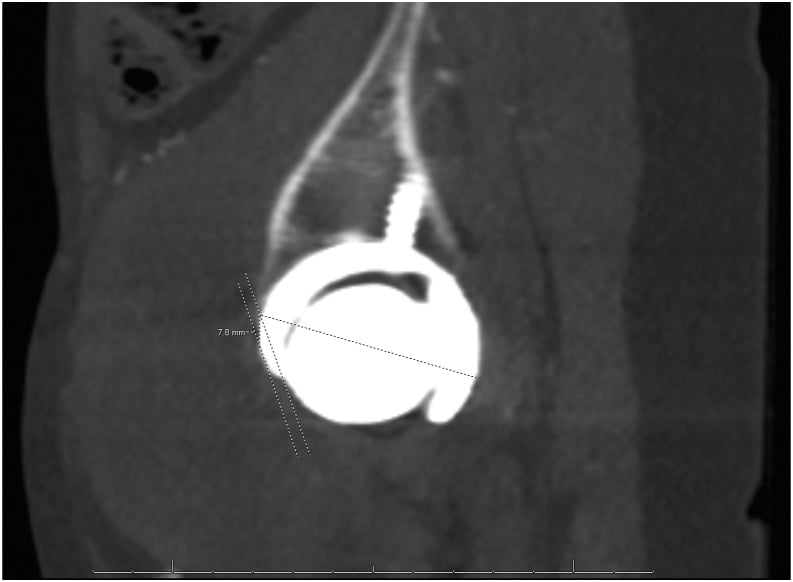
Iliopsoas impingement after THA. A recognised cause of persistent groin pain after total hip arthroplasty, in a small but important minority of painful THAs. The tendon is irritated by:
- an anteriorly prominent or oversized acetabular cup
- an uncovered anterior component
- retained cement
- a protruding screw or long neck
Pain comes on active straight-leg raise, stair climbing and rising from a chair, and resisted hip flexion reproduces it. Cross-sectional imaging (CT) quantifies anterior cup overhang relative to the native acetabular rim.
An image-guided (ultrasound or fluoroscopic) injection of local anaesthetic into the iliopsoas bursa/tendon sheath is both diagnostic and therapeutic - abolition of pain confirms the iliopsoas as the pain generator.
Management. Native-hip bursitis is managed conservatively with activity modification, NSAIDs, stretching and eccentric loading, and a bursal injection for refractory cases. Post-THA impingement escalates stepwise, with activity modification and a diagnostic or therapeutic injection first. If symptoms persist, iliopsoas tenotomy (arthroscopic or open) is appropriate when the acetabular component is well positioned, whereas a malpositioned or grossly oversized or retroverted cup causing the impingement should be revised rather than the tendon simply released.
In an examiner's viva, do not attribute all post-arthroplasty groin pain to iliopsoas impingement - exclude infection, aseptic loosening, and adverse reaction to metal debris first. Iliopsoas impingement is a diagnosis of a well-fixed, but anteriorly prominent, component supported by a positive image-guided injection.
Iliacus/Iliopsoas Haematoma and Femoral Nerve Palsy
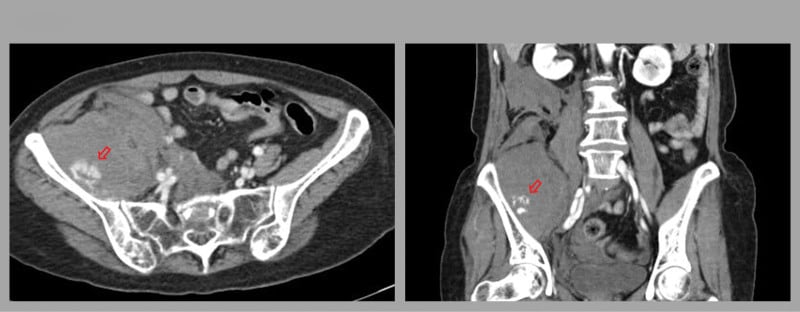
The femoral nerve is tethered against the iliacus by the unyielding iliacus fascia. Blood accumulating in this closed compartment (from a severe iliacus/psoas strain or avulsion, or spontaneously in the anticoagulated or haemophilic patient) rapidly raises pressure and produces a compressive femoral neuropathy - the iliopsoas equivalent of a compartment syndrome.
The clinical picture. Acute groin or iliac-fossa pain, with the hip held flexed and externally rotated because that shortens the compartment and eases the pain (a positive psoas sign). Consider it in any anticoagulated patient with sudden groin pain and a flexed hip. The femoral nerve signs follow:
- quadriceps weakness, with loss of knee extension
- a diminished or absent patellar reflex
- sensory loss over the anterior thigh and medial leg (saphenous distribution)
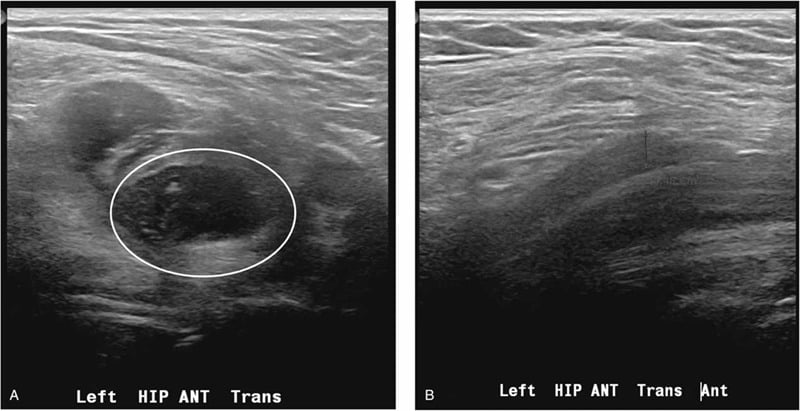
Investigation and management. CT or ultrasound confirms and sizes the iliacus or retroperitoneal haematoma. Check coagulation status (INR, platelets, factor levels) and reverse any coagulopathy; active extravasation on contrast CT supports urgent correction of coagulopathy and consideration of embolisation. Most are managed conservatively, with reversal of anticoagulation, analgesia and observation of the neurology. Surgical or image-guided decompression or evacuation is reserved for a progressive or dense femoral nerve deficit.
A femoral nerve palsy after a hip flexor injury or in an anticoagulated patient is an iliacus haematoma until proven otherwise. Early recognition, coagulopathy reversal and serial neurological assessment protect quadriceps function; delayed decompression of a progressive deficit risks permanent weakness.
Postoperative Care and Rehabilitation
Protect the repair for 6 weeks, with no resisted hip flexion. After that, rehabilitation follows the pattern of tendon repairs elsewhere, progressive loading after the initial protection phase, and return to competitive sport takes 3-6 months.
Rehabilitation After Surgical Repair
Partial weight bearing with crutches. Hip flexion limited to 90 degrees. Brace if needed. Gentle passive ROM. No active hip flexion against resistance.
Progress to full weight bearing. Begin active-assisted hip flexion. Isometric strengthening. Pool therapy. Cycling.
Progressive resistance exercises. Isotonic hip flexion. Eccentric loading. Core stability. Gait normalization.
Return to play preparation. Sport-specific drills. Sprinting progression. Meet RTS criteria before clearance.
Outcomes and Prognosis
In grade III, conservative management often leads to prolonged weakness.
- Conservative Success
- Greater than 95%
- Surgical Success
- N/A
- Conservative Success
- 90-95%
- Surgical Success
- N/A
- Conservative Success
- 50-70%
- Surgical Success
- 85-90%
Prognosis. The poor prognostic factors are the MRI features that predict a longer recovery (see Investigations) and delayed treatment. A muscle belly injury with minimal retraction, early appropriate management and good compliance carry a good prognosis.
Guidelines, Registries & Global Practice
Global Epidemiology
Hip flexor and iliopsoas-related injuries cluster in kicking and change-of-direction sports (soccer, Australian Rules, Gaelic football, rugby, sprinting, dance). In the UEFA Elite Club Injury Study, thigh muscle injuries (quadriceps and hamstring) are among the most common time-loss injuries in professional football. Using the Doha framework, iliopsoas-related groin pain is a recognised distinct entity, though adductor-related pain predominates and multiple causes coexist in roughly 40-45% of athletes presenting with groin pain. Apophyseal avulsions concentrate in adolescents aged 13-17 years before apophyseal fusion, with a strong male predominance.
Side-by-Side Guidance
- Region
- International
- Core Message for Hip Flexor / Muscle Injury
- Separate functional disorders from structural tears; standardise terminology
- Region
- International
- Core Message for Hip Flexor / Muscle Injury
- Classify by clinical entity (iliopsoas-, adductor-, inguinal-, pubic-, hip-related)
- Region
- UK
- Core Message for Hip Flexor / Muscle Injury
- Grade 0-4 with myofascial/musculotendinous/intratendinous (a/b/c) site modifier
- Region
- International
- Core Message for Hip Flexor / Muscle Injury
- Strength- and function-based return to sport, not pain alone
- Early MRI (within 5 days) for grading and prognosis
- Access to ultrasound-guided injection and isokinetic strength testing
- Structured criteria-based return-to-sport pathways
- Orthobiologics (PRP) available but evidence remains mixed
- Clinical grading and plain radiographs drive decisions
- Ultrasound is a cost-effective, radiation-free alternative to MRI
- Hand-held dynamometry or contralateral comparison guides return to sport
- Conservative management is appropriate for nearly all strains and avulsions
Document:
- Mechanism and grade of injury
- Explanation of recovery timeline
- Return-to-sport criteria (strength-based)
- Risks of premature return (30% recurrence)
- For adolescents: X-ray performed, avulsion excluded
Consent for surgery: Recurrence, weakness, nerve injury (LFCN), need for revision.
Controversies and Areas of Uncertainty
PRP and orthobiologics. Platelet-rich plasma for muscle strains shows inconsistent results across trials. There is no robust evidence that it accelerates return to sport in acute hip flexor strains, and it remains adjunctive at best.
Classification choice. The traditional grade I-III scheme is simple but crude. The Munich and BAMIC systems add prognostic detail, separating functional from structural injury and recognising intratendinous involvement, but their inter-rater reliability, and their superiority for the hip flexors specifically, are unproven.
A balanced answer acknowledges that hip flexor strain management is largely evidence-poor and consensus-driven: high-level RCTs are lacking, most data are extrapolated from hamstring and quadriceps literature, and return-to-sport decisions rest on objective strength criteria rather than a single validated protocol.
MCQ Practice Points
Q: Which hip flexor is biarticular, crossing both hip and knee joints? A: Rectus femoris - It originates from AIIS (straight head) and acetabular rim (reflected head), inserting on the tibial tuberosity via the patella. This biarticular nature increases strain risk during activities like kicking.
Q: Which muscle attaches to the AIIS and avulses in adolescent athletes during kicking? A: Rectus femoris (straight head) - AIIS avulsion is common in adolescents before apophyseal fusion (16-18 years). ASIS avulsion = sartorius.
Q: What does a positive Thomas test indicate? A: Hip flexor contracture - With the patient supine and opposite hip fully flexed, if the tested hip rises off the bed, it indicates hip flexor tightness (positive Thomas test).
Q: What is the key criterion for return to sport after hip flexor strain? A: Greater than 90% strength compared to uninjured side - Strength-based criteria reduce recurrence. Pain-free activity alone is insufficient - premature return leads to 30% recurrence rate.
Q: What displacement threshold suggests surgical consideration for apophyseal avulsion? A: Greater than 2cm displacement - While most apophyseal avulsions heal conservatively, significant displacement (over 2cm) may lead to nonunion and functional deficit, particularly in high-demand athletes.
Q: What is the largest bursa in the body and where is it located? A: Iliopsoas bursa - Located between the iliopsoas tendon and hip joint capsule. Communicates with the hip joint in 15-20% of individuals. Bursitis can mimic hip flexor strain.
Exam Viva Scenarios
Practise clinical reasoning and management decisions out loud
“A 24-year-old male soccer player presents with acute anterior hip/groin pain after kicking during a match yesterday. He felt a sudden sharp pain and had to leave the field. Today he has an antalgic gait and pain with resisted hip flexion. What is your assessment and management?”
“A 14-year-old male sprinter presents with sudden anterior hip pain that occurred during a sprint start at athletics training. He heard a pop and couldn't continue. X-rays show a displaced AIIS avulsion fracture with 2.5cm displacement. How would you manage this?”
“A 28-year-old female dancer presents with persistent anterior hip pain for 6 months after an initial strain. She has completed physiotherapy but still has pain with dancing. Examination shows hip flexor weakness and a positive Thomas test. MRI shows chronic changes at the iliopsoas insertion. What is your differential and management?”
Key Anatomy
- Iliopsoas = psoas major + iliacus → lesser trochanter
- Rectus femoris = AIIS → tibial tuberosity (biarticular)
- AIIS avulsion = RF; ASIS avulsion = sartorius
- Iliopsoas bursa = largest bursa in body
Classification
- Grade I = under 5% fibres = 1-2 weeks
- Grade II = 5-50% fibres = 4-6 weeks
- Grade III = over 50% or complete = 3-6 months
- Apophyseal avulsion: surgery if over 2cm displacement
Clinical Tests
- Thomas test = hip flexor contracture
- Resisted hip flexion at 90 deg = iliopsoas
- Resisted SLR = rectus femoris
- Ely test = RF contracture
Return to Sport
- Greater than 90% strength vs uninjured side
- Pain-free sport-specific activity
- Full ROM, no contracture
- Premature RTS = 30% recurrence
Complications
- Recurrent strain: 15-30% (early RTS risk)
- Chronic weakness: 10-20% (Grade III)
- Myositis ossificans: rare, avoid early massage
- LFCN injury: surgical risk
Evidence Base and Key Trials
Munich Consensus: Terminology and Classification of Muscle Injuries
- Survey of 30 elite team doctors confirmed inconsistent use of the term strain
- New system separates functional muscle disorders (types 1-2) from structural injuries (types 3-4)
- Type 3 = partial tear, type 4 = (sub)total tear / tendinous avulsion
- Standardised terminology to enable comparative research
MRI Findings and Return to Play: UEFA Elite Club Injury Study
- Prospective analysis of 255 grade 1-2 hamstring injuries in elite footballers
- Radiological grade and size of oedema correlated with time to return to play
- Grade 2 lay-off longer than grade 1 (24 vs 18 days)
- Injury location and type did NOT independently predict return to play
Incomplete Intrasubstance Strains of the Rectus Femoris
- Described a distinct intrasubstance tear at the deep (indirect/reflected) head tendon
- Located more proximally than the classic distal MTJ strain
- Mechanism typically kicking or sprinting; presents as chronic thigh pain or mass
- MRI shows abnormal signal around the intramuscular tendon of the indirect head
Pelvic Apophyseal Avulsion Fractures: 228 Cases
- 225 patients, 228 avulsions, mean age 14.4 years, 76% male
- AIIS most common (49%); 50% of AIIS avulsions caused by kicking
- Displacement over 20mm increased nonunion risk 26-fold
- 97% managed conservatively; surgery indicated in only 3%
Proximal Rectus Femoris Avulsions in High-Level Athletes
- Critical analysis review of proximal RF ruptures in skeletally mature athletes
- Injury is rare, occurring in soccer and American football during kicking/sprinting
- Operative repair with suture anchors supported to restore strength and enable return to sport
- Key complications: lateral femoral cutaneous nerve injury and haematoma
Doha Agreement Applied: Causes of Groin Pain in 100 Athletes
- First clinical application of the Doha agreement classification of groin pain
- Iliopsoas-related is a defined clinical entity distinct from adductor-related groin pain
- Adductor-related most prevalent (61%); multiple causes coexisted in 44%
- Predominantly male soccer players in kicking and change-of-direction sports