Lateral Hip Pain | Gluteal Tendinopathy | Not Just Bursitis
- Not just bursitis - 90% have gluteal tendinopathy; isolated bursitis is rare (less than 10%)
- Rotator cuff of the hip - gluteus medius/minimus tears analogous to shoulder pathology
- Lateral hip pain with side-lying - distinguishes from hip OA (groin pain) and lumbar radiculopathy
- Trendelenburg gait/test - key examination finding indicating gluteal dysfunction
- Load modification essential - crossing legs, stairs, sleeping on side all provocative
- “Point tenderness over greater trochanter with normal hip ROM suggests GTPS
- “Single leg stance for 30 seconds reproduces lateral hip pain
- “MRI shows tendinopathy in 90% but bursitis alone in less than 10%
- “Female predominance is attributed to a wider pelvis increasing ITB tensile strain, but the mechanism is multifactorial
Overview and Epidemiology
Greater trochanteric pain syndrome (GTPS) is a clinical diagnosis: lateral hip pain with tenderness over the greater trochanter. It is one of the most common causes of hip pain in primary care. The older name, "trochanteric bursitis", is now considered outdated, because modern imaging shows that most patients have gluteal tendinopathy rather than primary bursitis. [1,2]
Who. Peak incidence falls at 40-60 years, women outnumber men 4:1, and the prevalence in the middle-aged population is 10-25%. It is common in runners and in people with sedentary occupations, and it is bilateral in 25-30% of cases.
Tendon, not bursa. On MRI about 90% of patients have gluteal tendinopathy, and isolated bursitis accounts for less than 10%. The landmark ultrasound prevalence study by Long et al. (AJR 2013), of 877 patients with GTPS, points the same way [1]:
- 49.9% had gluteal tendinosis
- 20.2% had trochanteric bursitis, so nearly 80% had no bursitis at all
- 28.5% had a thickened iliotibial band
- Only 0.5% had a frank gluteal tendon tear, a figure that reflects how insensitive ultrasound was to tears in that dataset rather than how often tears occur
Risk factors. Beyond age, GTPS is associated with:
- Female sex
- Metabolic factors: obesity (BMI over 25), diabetes and hypothyroidism
- Low back pathology, associated in 20-35%
- Lower limb OA, ipsilateral knee or hip
- Leg length discrepancy
- Running, especially a sudden increase in mileage, or any sudden increase in load such as stairs
- Sedentary occupation with prolonged sitting
Pathophysiology and Anatomy
The greater trochanter. Three facets receive the gluteal tendons, which lie deep to the iliotibial band, an arrangement that recalls the insertions of the shoulder cuff.
- Location
- Most anterior aspect
- Tendon Insertion
- Gluteus minimus
- Clinical Significance
- First to tear, difficult to visualize
- Location
- Lateral prominence
- Tendon Insertion
- Gluteus medius (main)
- Clinical Significance
- Most common site of tendinopathy
- Location
- Superior-posterior
- Tendon Insertion
- Gluteus medius (secondary)
- Clinical Significance
- Extension tears may involve this
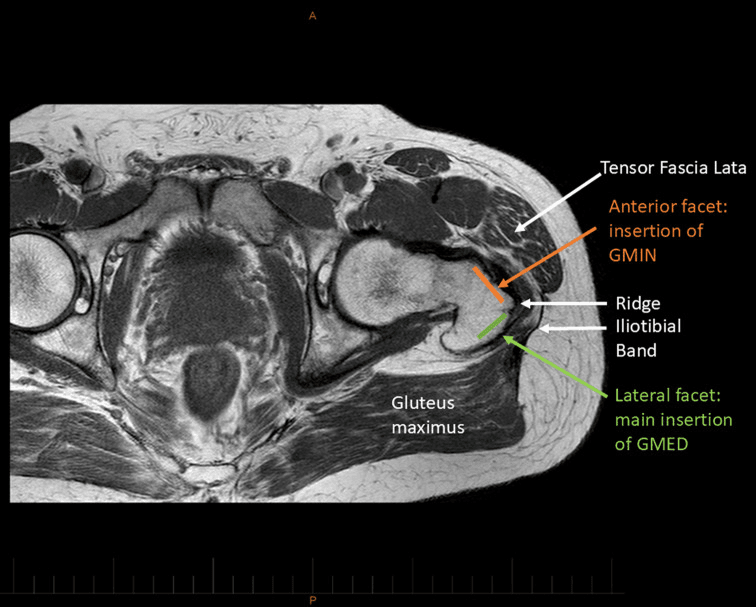
The abductor cuff. Gluteus medius and minimus form the hip abductor mechanism. Because their pathology mirrors shoulder rotator cuff disease, GTPS has been called the "rotator cuff of the hip". Like supraspinatus, gluteus medius is the tendon most commonly affected, and tears follow the same pattern: partial-thickness undersurface tears first, progressing to full thickness with retraction and fatty infiltration.
- Gluteus medius
- External surface of ilium between the anterior and posterior gluteal lines
- Gluteus minimus
- External surface of ilium between the anterior and inferior gluteal lines
- Gluteus medius
- Lateral and superoposterior facets of the greater trochanter
- Gluteus minimus
- Anterior facet of the greater trochanter
- Gluteus medius
- Superior gluteal nerve (L4-S1)
- Gluteus minimus
- Superior gluteal nerve (L4-S1)
- Gluteus medius
- Primary hip abductor; stabilises the pelvis in single-leg stance
- Gluteus minimus
- Hip abduction, internal rotation, pelvic stabilisation
The bursae. Three bursae surround the greater trochanter:
- Subgluteus maximus bursa - the largest, between gluteus maximus and the greater trochanter
- Subgluteus medius bursa - between the gluteus medius tendon and the greater trochanter
- Subgluteus minimus bursa - between the gluteus minimus tendon and the anterior facet
They may become inflamed secondary to tendinopathy, direct compression or friction from the overlying iliotibial band. Each occupies its own layer, so where the fluid lies changes the suspected pain generator, and symptoms labelled bursitis have to be localised against the adjacent gluteal tendon and ITB.
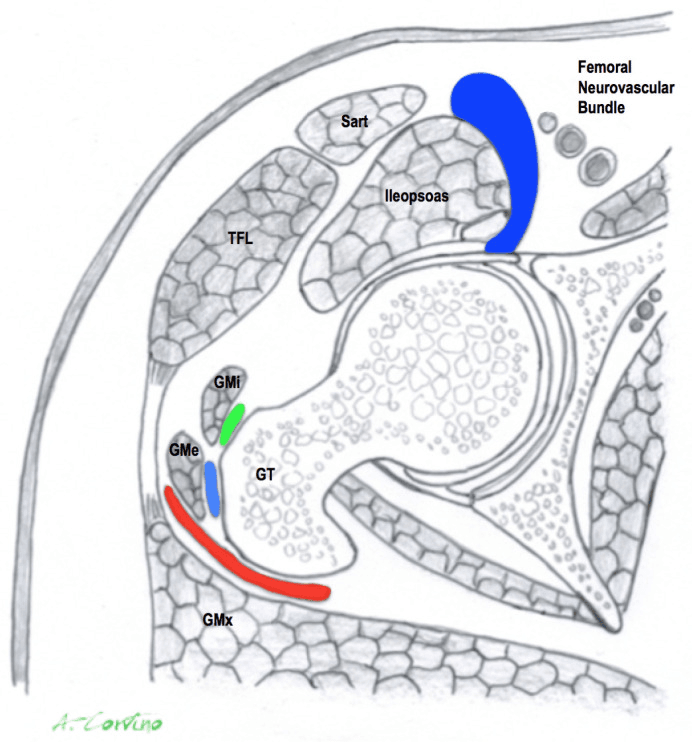
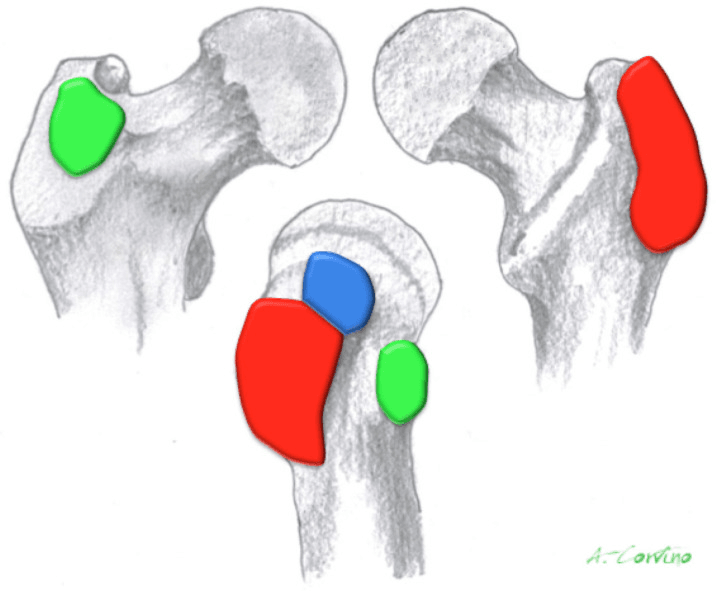
How the tendon fails. GTPS develops through a combination of tensile and compressive load, which together lead to tendon degeneration, as rotator cuff tendinopathy does in the shoulder.
- Tensile overload - repetitive hip abduction loading in running, stair climbing and single-leg activities, and a sudden increase in activity level
- Compressive load - the ITB pressing the tendons against the trochanter in hip adduction, direct compression when sleeping on that side, and crossing the legs (hip adduction and internal rotation)
Biomechanics. A wider female pelvis increases ITB tension and the compressive load on the gluteal tendon insertions, and an increased Q angle in women, valgus knee alignment and leg length discrepancy add to the load. These have been used to explain the female predominance, but that association is multifactorial and should not be reduced to a presumed wider pelvis or knee Q-angle.
Clinical Presentation
The pain. It sits over the greater trochanter and is aching or burning, sometimes sharp. It may radiate down the lateral thigh to the knee, but not below it. Onset is usually gradual and may follow an increase in activity.
Night pain. Difficulty sleeping on the affected side is a hallmark of GTPS, and patients often report waking at night when they roll onto the hip.
What makes it worse. Load and compression provoke the pain:
- Lying on the affected side
- Crossing the legs
- Prolonged sitting, especially on hard surfaces, and prolonged standing
- Stairs, especially descending
- Standing up from a seated position
- Single-leg activities such as putting on shoes and socks
- Walking, especially uphill or on uneven ground
Associated symptoms. Patients describe the hip as weak or giving way, have difficulty with single-leg activities, feel stiff after prolonged sitting, and may have a limp or a Trendelenburg gait.
Look. Watch the gait for a Trendelenburg pattern, note any pelvic obliquity when the patient stands, and look for gluteal wasting in chronic cases.
Feel. Point tenderness over the greater trochanter is the key sign. Check for tenderness at the gluteus medius insertion on the posterosuperior trochanter and at the gluteus minimus insertion anteriorly. The groin is not tender, which distinguishes GTPS from hip OA.
Move. Hip range of motion is typically full and painless, which also separates GTPS from OA. End-range adduction hurts because it compresses the tendons, and end-range internal rotation with the hip flexed hurts too.
- Technique
- Stand on affected leg for 30 seconds
- Positive Finding
- Reproduces lateral hip pain
- Performance
- Rule-IN test: specificity 100%, LR+ ~12 (Grimaldi, n=65)
- Technique
- Palpate over the greater trochanter
- Positive Finding
- Point tenderness
- Performance
- Rule-OUT test: sensitivity ~80% (Grimaldi, n=65)
- Technique
- Stand on affected leg, observe pelvis
- Positive Finding
- Contralateral pelvis drops
- Performance
- Sensitivity 72.7%, specificity 76.9% for a gluteus medius TEAR (Bird 2001, n=24)
- Technique
- Flexion-abduction-external rotation
- Positive Finding
- Lateral hip pain (not groin)
- Performance
- Sensitivity 82%
- Technique
- Side-lying, resist abduction
- Positive Finding
- Pain and/or weakness
- Performance
- Variable
- Technique
- Lie on affected side
- Positive Finding
- Reproduces lateral hip pain
- Performance
- Sensitivity high
Rule in, rule out. GTPS is a clinical diagnosis, and the two most useful bedside tests do different jobs. Grimaldi and colleagues (2017) examined 65 patients with lateral hip pain against MRI-confirmed gluteal tendinopathy: a positive single-leg stance moved a nominal 50% pretest probability to a 98% post-test probability and strongly confirms the diagnosis, while a patient who is not tender on trochanteric palpation is unlikely to have MRI-detected gluteal tendinopathy.
The limits. About a third of MRI-positive patients (20 of 65) were clinically negative, so a normal examination does not fully exclude tendinopathy in a persistently symptomatic patient, and imaging still has a role. Lequesne's 100% sensitivity for the single-leg stance comes from 17 patients who all had MRI disease; do not quote it.
Resisted external derotation. This loaded, confirmatory provocation test, validated by Lequesne et al. (2008), had a sensitivity of 88% and a specificity of 97.3% against MRI in refractory GTPS.
- Patient supine, hip and knee flexed to 90 degrees
- The examiner passively externally rotates the hip to end range
- The patient actively derotates (internally rotates) the leg back to neutral against resistance
- Reproduction of the patient's lateral trochanteric pain is a positive result
A prone variant with the hip extended is also described.
Grimaldi A, Mellor R, Nicolson P, et al. Utility of clinical tests to diagnose MRI-confirmed gluteal tendinopathy in patients presenting with lateral hip pain. Br J Sports Med. 2017;51(6):519-524
- Single-leg stance = rule-in (specificity 100%, LR+ ~12)
- GT palpation = rule-out (sensitivity ~80%)
- 31% of MRI-positive patients had a clinically negative exam
GTPSGTPS Examination - STEPS
Hook:Take STEPS to examine GTPS - systematic approach to lateral hip pain
The following features warrant further investigation:
- Night pain unrelated to position (may indicate tumour)
- Rest pain unrelieved by avoiding compression
- Systemic symptoms (weight loss, fever)
- History of malignancy
- Groin pain (suggests intra-articular hip pathology)
- Pain below the knee (suggests lumbar radiculopathy)
Investigations
GTPS is primarily a clinical diagnosis. Investigations exclude other pathology and confirm the diagnosis in unclear or recalcitrant cases.
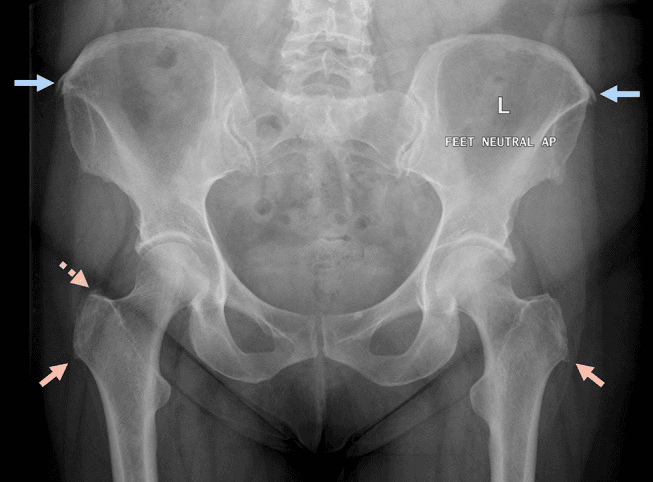
Radiographs. An AP pelvis and lateral hip view are usually normal in GTPS. Their purpose is to exclude hip OA, avascular necrosis and stress fracture, and they may show calcification at the trochanteric insertion (calcific tendinopathy).
Ultrasound is the first-line imaging for GTPS. It shows tendon thickening, hypoechoic change and tears, a bursal fluid collection of more than 2mm, and ITB pathology, and it is useful for guiding injection.
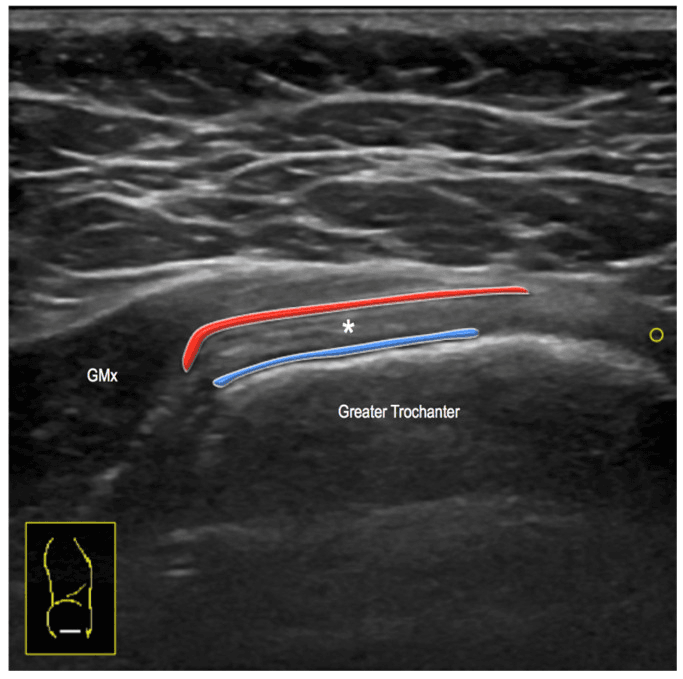
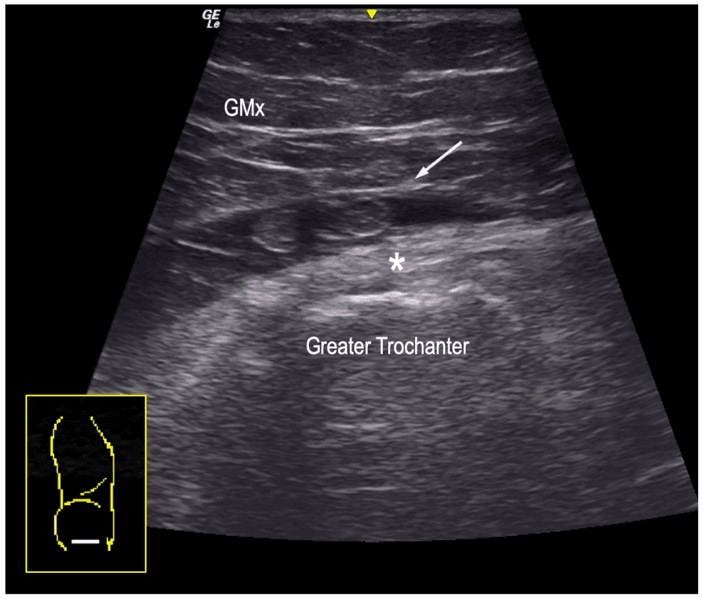
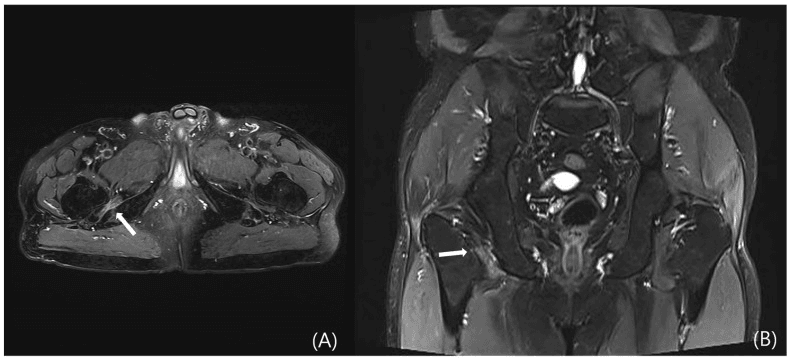
MRI is the gold standard for soft tissue assessment. It shows tendinopathy as increased T2 signal, demonstrates partial and full-thickness tears, and assesses muscle quality through fatty infiltration. It is 91% accurate in diagnosing abductor tears (Cvitanic 2004) [4].
The MRI signs. The single most useful sign of a tear is a focus of T2 hyperintensity superior to the greater trochanter (sensitivity 73%, specificity 95%). Other findings include disruption of tendon continuity, tendon elongation and, in chronic cases, fatty infiltration of the gluteal muscles, directly analogous to rotator cuff assessment.
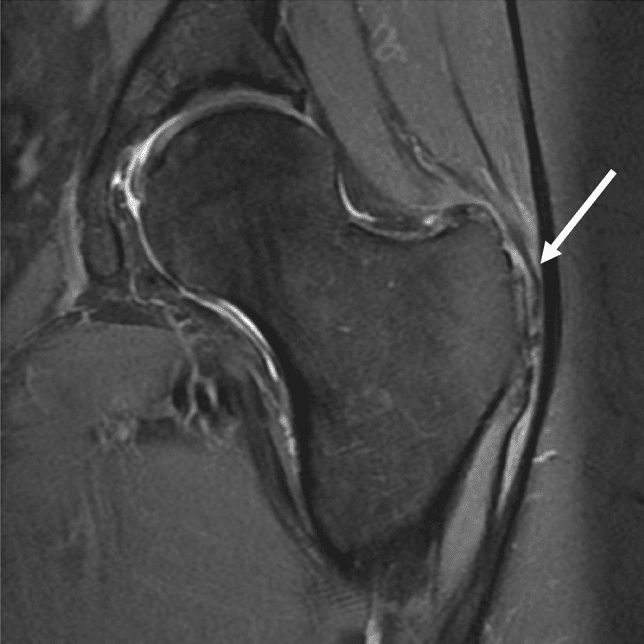
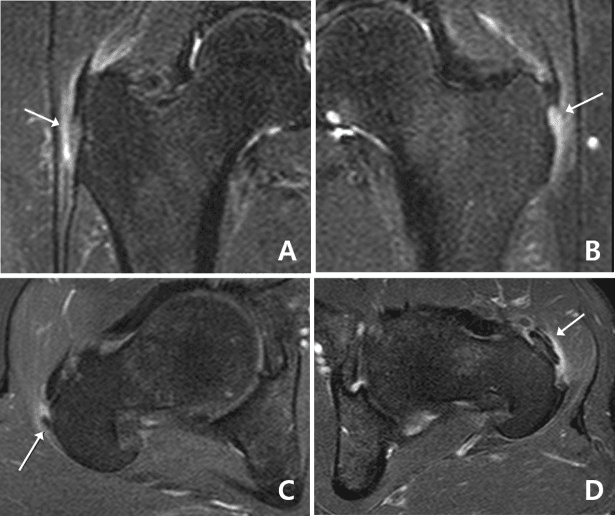
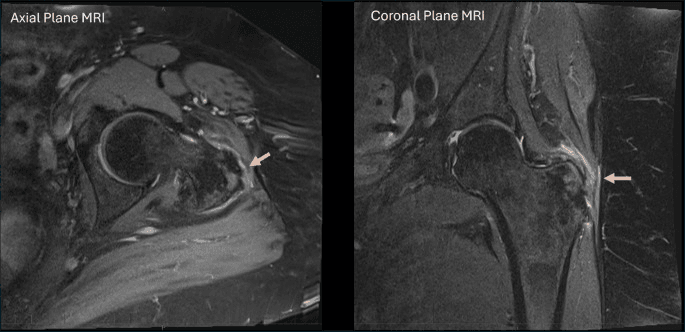
Grading. MRI findings are graded from 1 to 5, and each grade carries its own management implication.
- MRI Findings
- Bursitis with minimal tendon changes
- Management Implication
- Conservative - physio, activity modification
- MRI Findings
- Tendinopathy - increased T2 signal
- Management Implication
- Conservative - physio, may consider injection
- MRI Findings
- Partial thickness tear
- Management Implication
- Prolonged conservative trial, PRP consideration
- MRI Findings
- Full thickness tear without retraction
- Management Implication
- Consider surgical repair if conservative fails
- MRI Findings
- Complete tear with retraction, fatty atrophy
- Management Implication
- Surgical repair vs reconstruction
Blood tests. These are not routinely required, but consider them in atypical presentations:
- ESR and CRP if infection or inflammatory arthritis is suspected
- Rheumatoid factor if inflammatory arthritis is suspected
- HbA1c to screen for diabetes in recurrent cases
Differential Diagnosis
- Pain Location
- Lateral hip over GT
- Key Distinguishing Features
- Point tenderness GT, normal ROM, side-lying pain
- Pain Location
- Groin (C-sign)
- Key Distinguishing Features
- Reduced ROM, crepitus, start-up stiffness, X-ray changes
- Pain Location
- Lateral thigh to below knee
- Key Distinguishing Features
- Back pain, dermatomal distribution, neurological signs
- Pain Location
- Lateral hip, audible snap
- Key Distinguishing Features
- Palpable/visible snap with hip flexion, usually painless
- Pain Location
- Anterolateral thigh
- Key Distinguishing Features
- Sensory symptoms, no motor weakness, LFCN territory
- Pain Location
- Groin, lateral hip
- Key Distinguishing Features
- Activity-related, worse with weight bearing, high index of suspicion
Ask where it hurts. The patient with hip OA demonstrates the "C-sign", cupping the hand around the hip with the thumb posteriorly and the fingers anteriorly in the groin; the patient with GTPS points directly to the lateral hip. This is a key distinguishing feature in the exam setting.
Management
Management follows a stepwise approach, with conservative measures first-line. Surgical intervention is reserved for recalcitrant cases or significant tears. [5,6]
- Patient education about pathology and prognosis
- Avoid sleeping on affected side (pillow between knees)
- Avoid crossing legs and prolonged standing
- Limit stair climbing (use handrail, lead with unaffected leg)
- Activity modification - reduce running, single leg loading
- Weight loss if BMI over 25
- Gluteal strengthening (isometric progressing to isotonic)
- Hip abductor exercises (non-provocative positions)
- Core stability and lumbar spine assessment
- Gait retraining
- ITB stretching (controversial - may increase compression)
- Graduated return to activity
- NSAIDs (topical or oral) for 2-4 weeks
- Corticosteroid injection
- PRP injection
- Shockwave therapy (ESWT)
Exercise. The programme avoids provocative positions, hip adduction and compression, at first, and then progresses the load in phases.
- Exercises
- Isometric hip abduction in neutral
- Key Points
- Pain-free range, avoid compression
- Exercises
- Bridging, clamshells, side-lying abduction
- Key Points
- Progress load gradually, monitor symptoms
- Exercises
- Standing hip abduction, step-ups
- Key Points
- Single leg loading with good control
- Exercises
- Running, stairs, sport-specific
- Key Points
- Full return to activity
When. An injection is indicated for:
- Failed conservative management at 6-8 weeks
- Significant bursitis on imaging
- Severe pain limiting rehabilitation
Technique. The target is the subgluteus maximus bursa.
- Patient lateral, affected side up
- Identify the point of maximum tenderness over the greater trochanter
- Clean the skin with antiseptic
- Insert the needle perpendicular until bone is contacted
- Withdraw 2-3mm and inject 1ml corticosteroid with 2-3ml local anaesthetic
What to expect. Short-term relief in 60-75%, an effect that diminishes at 3-6 months, and no evidence of long-term benefit over placebo [7]. Combine the injection with physiotherapy rehabilitation for sustained benefit.
The limit. A maximum of 3 injections is recommended, because repeated injection risks tendon weakening and atrophy.
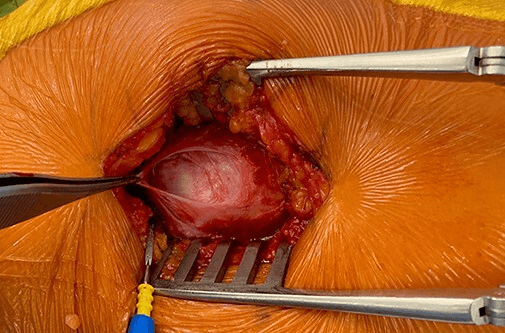
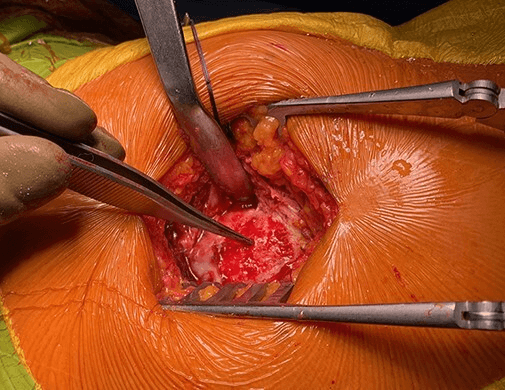
Surgery. Surgical management is considered for:
- Failed comprehensive conservative management (6-12 months)
- Significant gluteal tendon tear (full thickness)
- Refractory symptoms affecting quality of life
- Indication
- Isolated refractory bursitis
- Technique
- Arthroscopic or open excision
- Outcomes
- Good if isolated bursitis (rare)
- Indication
- Partial/full tear with good tissue
- Technique
- Open repair with suture anchors
- Outcomes
- 80-90% good/excellent outcomes
- Indication
- Chronic tear with retraction
- Technique
- Allograft or autograft augmentation
- Outcomes
- Variable - depends on tissue quality
- Indication
- ITB pathology/snapping hip
- Technique
- Arthroscopic or open Z-plasty
- Outcomes
- Good for snapping, uncertain for GTPS
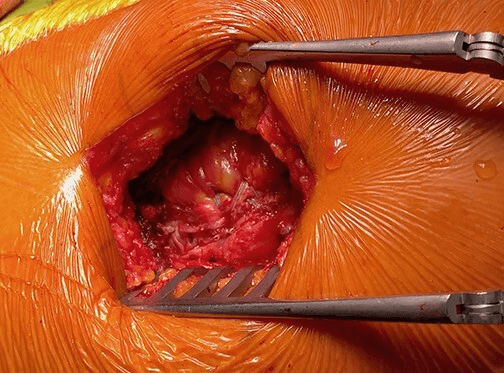
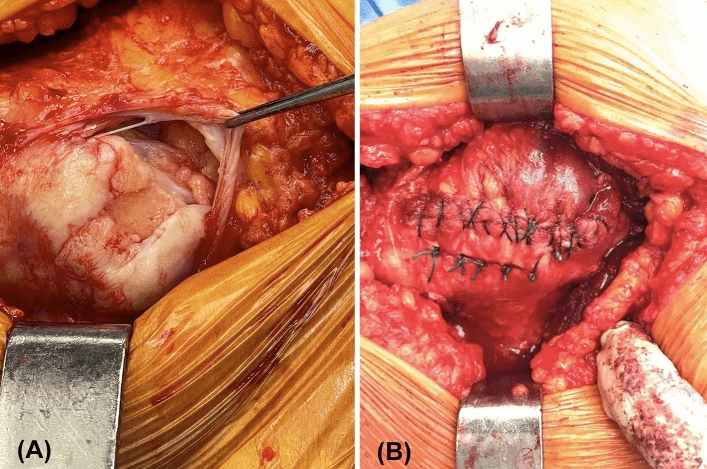
Extracorporeal Shockwave Therapy (ESWT)
ESWT, radial or focused, is one of the few non-injection, non-surgical options with randomised-trial support in GTPS.
Rationale. Shockwaves are thought to stimulate neovascularisation and a controlled inflammatory and healing response in degenerate tendon, analogous to their established use in plantar fasciopathy and in calcific and insertional tendinopathies elsewhere. Radial ESWT is typically delivered as approximately three weekly sessions and is best combined with a home gluteal-loading programme rather than used in isolation.
Rompe (2009): a crossover in time. A trial of 229 patients with refractory unilateral GTPS, reported as randomised although patients were assigned sequentially, compared home training, a single corticosteroid injection (25 mg prednisolone) and radial ESWT:
- 1 month - corticosteroid injection best: 75% success, against 13% for ESWT and 7% for home training
- 4 months - radial ESWT best: 68%, against 51% for injection and 41% for home training
- 15 months - ESWT (74%) and home training (80%) both significantly superior to injection (48%)
What it means. The message mirrors the LEAP trial: steroid gives fast but short-lived relief, whereas loading-based and shockwave strategies give more durable benefit. Frame ESWT as an adjunct for the patient who has failed loading and wants to avoid, or has failed, injection.
Balancing view. Barratt et al. (2016), a systematic review of eight studies (696 patients), found corticosteroid injection superior only up to three months, with radial shockwave and home training supported by only limited evidence and an overall paucity of high-quality trials. That is why guidelines describe the ESWT evidence as moderate and heterogeneous rather than definitive.
Rompe JD, Segal NA, Cacchio A, et al. Home training, local corticosteroid injection, or radial shock wave therapy for greater trochanter pain syndrome. Am J Sports Med. 2009;37(10):1981-90
- Corticosteroid best short-term (1 month) but not durable
- Radial ESWT superior at 4 months
- ESWT and home training beat injection at 15 months
Prognosis and Complications
Prognosis. GTPS generally has a good prognosis with appropriate management, though recovery may be prolonged. 60-80% respond to comprehensive conservative management, with an average time to resolution of 3-6 months. Recurrence is common if load management is not maintained, and chronic cases may persist for years.
- Unfavorable
- Chronic symptoms (greater than 12 months)
- Unfavorable
- Full thickness tear with retraction
- Unfavorable
- Obesity (BMI greater than 30)
- Unfavorable
- Poor engagement with rehabilitation
- Unfavorable
- Ongoing provocative activities
Complications of the condition. Chronic pain affects sleep and function, gluteal weakness produces a Trendelenburg gait, the tendon may progress to a full-thickness tear, and fatty infiltration of the gluteal muscles is irreversible.
Complications of treatment. Corticosteroid injection risks tendon weakening, skin atrophy and infection. Surgery risks infection, wound complications, recurrence and nerve injury.
Unlike rotator cuff tears which may remain asymptomatic, gluteal tears typically cause significant symptoms due to the constant loading during walking. Fatty infiltration develops over time and is associated with poorer surgical outcomes, similar to the shoulder. Early diagnosis and appropriate management is important to prevent progression.
Guidelines, Registries & Global Practice
Global Epidemiology
- Lateral hip pain affects an estimated 10-25% of adults; population-based data (Segal 2007, MOST cohort) report a point prevalence of ~15% in women and ~6.6% in men aged 50-79 years.
- Incidence peaks at 1.8 per 1000 person-years in primary care for those aged 40-60 years.
- Marked female predominance (roughly 3:1 to 4:1) is consistent across populations and is attributed to pelvic morphology (wider pelvis, larger trochanteric offset increasing ITB compressive load).
- Strong associations with low back pain, ipsilateral knee/hip osteoarthritis, obesity, and reduced physical activity are reported worldwide.
Society Guidance Compared
- Diagnosis
- Clinical; imaging only if uncertain or red flags
- First-line
- Load management, analgesia, physiotherapy
- Injection / Surgery
- Corticosteroid for short-term relief; refer if refractory
- Diagnosis
- Clinical with US/MRI for surgical planning
- First-line
- Exercise-based rehabilitation (tendon load management)
- Injection / Surgery
- Endoscopic/open abductor repair for confirmed tears
- Diagnosis
- Clinical; MRI to characterise tears
- First-line
- Activity modification, PT, ESWT
- Injection / Surgery
- Image-guided injection, PRP, surgical repair
- Diagnosis
- Tendinopathy spectrum framing
- First-line
- Progressive loading, education
- Injection / Surgery
- PRP and surgical repair for recalcitrant tears
There is broad international agreement that GTPS is a clinical diagnosis, that exercise-based rehabilitation is first-line, and that corticosteroid injection offers only short-term benefit. No major society endorses injection or surgery as primary therapy.
Registry & Outcome Notes
There is no dedicated GTPS registry. Surgical-outcome evidence comes from systematic reviews (e.g. Chandrasekaran 2015) reporting comparable results for open and endoscopic abductor repair, with retear and persistent weakness more common in chronic tears with fatty infiltration. Differentiating GTPS from referred pain after total hip arthroplasty is a recognised issue in arthroplasty-registry follow-up.
High- vs Limited-Resource Practice Variation
- Well-resourced settings: ready access to ultrasound/MRI, ultrasound-guided injection, supervised physiotherapy, PRP, and endoscopic abductor repair.
- Limited-resource settings: diagnosis is clinical (single-leg stance, palpation); management relies on education, home-based loading programmes, oral/topical NSAIDs, and landmark-guided corticosteroid injection. Surgery and PRP are rarely available, reinforcing the global priority of conservative, low-cost rehabilitation.
Controversies and Areas of Uncertainty
Useful for short-term pain relief but the LEAP RCT (Mellor 2018) showed it underperforms exercise at 1 year. Optimal timing, dose, and whether repeated injections damage tendon remain unsettled - most authors cap injections and pair them with rehabilitation.
Fitzpatrick (2019) showed LR-PRP outperforms corticosteroid at 2 years in tendinopathy without full-thickness tear, but PRP preparation is non-standardised, costly, and not widely funded. Its place relative to a structured loading programme is undefined.
Traditional ITB stretching may increase compressive load on the gluteal tendons against the trochanter and could be counterproductive. Contemporary programmes favour isometric/isotonic abductor loading over aggressive stretching.
Both achieve good results for abductor tears, but high-quality comparative trials are lacking. Indications, the role of tendon augmentation/reconstruction, and outcomes in chronic retracted tears with fatty infiltration remain debated.
Additional open questions include the true prevalence of asymptomatic gluteal tendinopathy, the prognostic value of MRI grading for guiding treatment, and the role of adjuncts such as extracorporeal shockwave therapy, where evidence is moderate and heterogeneous.
MCQ Practice Points
Q: What is the current understanding of "trochanteric bursitis"?
A: Isolated bursitis is rare (less than 10%). Over 90% of GTPS cases involve gluteal tendinopathy with or without tears. The term "trochanteric bursitis" is outdated - Greater Trochanteric Pain Syndrome (GTPS) is preferred as it encompasses the spectrum of pathology.
Q: What is the pathognomonic symptom of GTPS?
A: Inability to sleep on the affected side (lateral decubitus position). This is virtually universal in GTPS and reflects direct pressure on the inflamed trochanteric region. Other features: lateral hip pain with stairs, prolonged sitting, or single-leg stance.
Q: What examination finding indicates abductor weakness in GTPS?
A: Positive Trendelenburg test - pelvis drops on contralateral side during single-leg stance, indicating gluteus medius/minimus weakness or tendinopathy. Single-leg stance for 30 seconds is 100% sensitive for GTPS when positive (pain reproduction).
Q: How do you differentiate GTPS from hip joint pathology on examination?
A: In GTPS, hip range of motion is typically normal with pain localized to the greater trochanter on palpation. Hip joint pathology (OA, FAI, labral tears) causes groin pain, limited ROM (especially internal rotation), and positive impingement tests.
Clinical Decision Scenarios
Practise clinical reasoning and management decisions out loud
“Classic GTPS presentation in typical demographic. The examiner wants you to demonstrate systematic assessment and evidence-based management.”
“The examiner is testing your knowledge of modern concepts in GTPS pathology.”
“Common differential diagnosis question testing clinical reasoning.”
“Testing knowledge of evidence-based management and landmark trials.”
“Testing knowledge of surgical indications and techniques.”
KEY CONCEPT
- NOT JUST BURSITIS - 90% have gluteal tendinopathy
- Isolated bursitis occurs in less than 10% of cases
- Rotator cuff of the hip - gluteus medius/minimus
- Female predominance 4:1 due to wider pelvis biomechanics
CLINICAL FEATURES
- Lateral hip pain over greater trochanter
- Unable to sleep on affected side - pathognomonic
- Pain with stairs (especially down), crossing legs, single leg stance
- Point tenderness over GT with NORMAL hip ROM
- Positive Trendelenburg indicates abductor weakness
EXAMINATION - STEPS
- S = Single leg stance 30 seconds (rule-IN: specificity 100%, LR+ ~12)
- T = Trendelenburg test (72.7% sensitive for a tear, Bird 2001)
- E = External rotation strength in prone
- P = Palpation tenderness over GT
- S = Side-lying reproduces symptoms
DIFFERENTIAL FROM HIP OA
- GTPS = lateral hip pain, OA = groin pain (C-sign)
- GTPS = normal hip ROM, OA = reduced ROM
- GTPS = point tenderness GT, OA = no focal tenderness
- GTPS = worse side-lying, OA = start-up stiffness
IMAGING
- Clinical diagnosis - imaging if refractory or diagnostic uncertainty
- Ultrasound: first-line, shows tendinopathy, bursitis, tears
- MRI: gold standard - 91% accurate for gluteal tears
- MRI grading: tendinopathy to partial to full tear with fatty infiltration
MANAGEMENT
- Education and load modification FIRST (avoid side-lying, crossing legs)
- Physiotherapy - gluteal strengthening, avoid provocative positions
- Exercise SUPERIOR to injection at 1 year (Mellor 2018 RCT)
- Injection only if failing at 6-8 weeks - max 3 injections
- Surgery for failed 6-12 months conservative + significant tear
SURGERY OPTIONS
- Tendon repair with suture anchors - 80-90% good outcomes
- Reconstruction for chronic tears with retraction
- Bursectomy only if isolated bursitis (rare)
- Fatty infiltration predicts poorer surgical outcome
Evidence Base
Long SS, Surrey DE, Nazarian LN. Sonography of GTPS and the rarity of primary bursitis. AJR Am J Roentgenol. 2013;201(5):1083-6
- Gluteal tendinosis in 49.9% - bursitis in only 20.2%
- Nearly 80% had no bursitis on ultrasound
- ITB thickening present in 28.5%
Cvitanic O, Henzie G, Skezas N, et al. MRI diagnosis of tears of the hip abductor tendons. AJR Am J Roentgenol. 2004;182(1):137-43
- MRI 91% accurate for abductor tendon tears
- T2 hyperintensity superior to GT is the key sign
- Tendon elongation and discontinuity are secondary signs
Mellor R, Bennell K, Grimaldi A, et al. Education plus exercise vs corticosteroid injection vs wait-and-see for gluteal tendinopathy (LEAP). BMJ. 2018;361:k1662
- Education plus exercise superior to injection at 8 and 52 weeks
- Corticosteroid benefit not maintained at 1 year
- Load-management education is a core component
Fitzpatrick J, Bulsara MK, O'Donnell J, et al. Leucocyte-rich PRP vs corticosteroid for gluteal tendinopathy: RCT with 2-year follow-up. Am J Sports Med. 2019;47(5):1130-7
- LR-PRP superior to corticosteroid at 12 and 24 weeks
- PRP benefit sustained at 2 years; steroid benefit transient
- Effective in tendinopathy without full-thickness tear
Lequesne M, Mathieu P, Vuillemin-Bodaghi V, et al. Diagnostic value of two clinical tests in refractory GTPS. Arthritis Rheum. 2008;59(2):241-6
- Single-leg stance (30s): sensitivity 100% in 17 patients - an upper bound, not a reliable estimate
- Resisted external derotation: sensitivity 88%
- Specificity measured against pain-free controls, not against other causes of lateral hip pain
Kjeldsen T, Hvidt KJ, Bohn MB, et al. Exercise compared to a control condition or other conservative treatment options in GTPS: systematic review and meta-analysis of randomised controlled trials. Physiotherapy. 2024;123:69-80
- Six RCTs, 733 patients; ROB2 risk-of-bias assessment and GRADE certainty rating; prospectively registered (CRD42021261380)
- In the long term exercise SLIGHTLY reduces hip pain and disease severity and slightly improves physical function and global rating of change versus control
- Versus corticosteroid injection, exercise improves long-term global rating of change
- No serious adverse events reported in any trial
Bird PA, Oakley SP, Shnier R, Kirkham BW. Prospective evaluation of MRI and physical examination findings in patients with greater trochanteric pain syndrome. Arthritis Rheum. 2001;44(9):2138-45
- 24 women with clinical GTPS, all imaged by MRI: gluteus medius TEAR in 45.8% and gluteus medius tendinitis in 62.5%
- Trochanteric bursal distension in only 2 of 24, and never in the absence of gluteus medius pathology
- Trendelenburg's sign was the most accurate of three signs for predicting a tear: sensitivity 72.7%, specificity 76.9%
- Trendelenburg's sign was also the most reproducible: intraobserver kappa 0.676 (95% CI 0.270-1.08)
Suggested Reading
- Long SS, Surrey DE, Nazarian LN. Sonographic pathoanatomy of greater trochanteric pain syndrome. J Ultrasound Med. 2023;42(9):2001-2010. doi:10.1002/jum.16174
- Speers CJ, Bhogal GS. Greater trochanteric pain syndrome: a review of diagnosis and management in general practice. Br J Gen Pract. 2017;67(663):479-480. doi:10.3399/bjgp17X693041
- Barratt PA, Brookes N, Newson A. Greater trochanteric pain syndrome: Evaluation and management of a wide spectrum of pathology. SAGE Open Med. 2021;9:20503121211022582. doi:10.1177/20503121211022582
- Cvitanic O, Henzie G, Skezas N, et al. MRI diagnosis of tears of the hip abductor tendons (gluteus medius and gluteus minimus). AJR Am J Roentgenol. 2004;182(1):137-143. doi:10.2214/ajr.182.1.1820137
- Mellor R, Bennell K, Grimaldi A, et al. Education plus exercise versus corticosteroid injection use versus a wait and see approach on global outcome and pain from gluteal tendinopathy: prospective, single blinded, randomised clinical trial. BMJ. 2018;361:k1662. doi:10.1136/bmj.k1662
- Grimaldi A, Fearon A. Gluteal tendinopathy: integrating pathomechanics and clinical features in its management. J Orthop Sports Phys Ther. 2015;45(11):910-922. doi:10.2519/jospt.2015.5829
- Brinks A, van Rijn RM, Willemsen SP, et al. Corticosteroid injections for greater trochanteric pain syndrome: a randomized controlled trial in primary care. Ann Fam Med. 2011;9(3):226-234. doi:10.1370/afm.1232
- Lequesne M, Mathieu P, Vuillemin-Bodaghi V, et al. Gluteal tendinopathy in refractory greater trochanter pain syndrome: diagnostic value of two clinical tests. Arthritis Rheum. 2008;59(2):241-246. doi:10.1002/art.23354
- Fearon AM, Cook JL, Scarvell JM, et al. Greater trochanteric pain syndrome negatively affects work, physical activity and quality of life: a case control study. J Arthroplasty. 2014;29(2):383-386. doi:10.1016/j.arth.2012.10.016
- Williams BS, Cohen SP. Greater trochanteric pain syndrome: a review of anatomy, diagnosis and treatment. Anesth Analg. 2009;108(5):1662-1670. doi:10.1213/ane.0b013e31819d6562
- Segal NA, Felson DT, Torner JC, et al. Greater trochanteric pain syndrome: epidemiology and associated factors. Arch Phys Med Rehabil. 2007;88(8):988-992. doi:10.1016/j.apmr.2007.04.014
- Fitzpatrick J, Bulsara MK, O'Donnell J, et al. Leucocyte-rich platelet-rich plasma treatment of gluteus medius and minimus tendinopathy: a double-blind randomized controlled trial with 2-year follow-up. Am J Sports Med. 2019;47(5):1130-1137. doi:10.1177/0363546519826969
- Chandrasekaran S, Lodhia P, Gui C, et al. Outcomes of open versus endoscopic repair of abductor muscle tears of the hip: a systematic review. Arthroscopy. 2015;31(10):2057-2067. doi:10.1016/j.arthro.2015.03.042
- Mallow M, Nazarian LN. Greater trochanteric pain syndrome diagnosis and treatment. Phys Med Rehabil Clin N Am. 2014;25(2):279-289. doi:10.1016/j.pmr.2014.01.009
- Redmond JM, Chen AW, Domb BG. Greater trochanteric pain syndrome. J Am Acad Orthop Surg. 2016;24(4):231-240. doi:10.5435/JAAOS-D-14-00406
Key Guidelines
- NICE Clinical Knowledge Summary: Greater trochanteric pain syndrome
- AAOS resources on management of hip pain
Additional Reading
- Grimaldi A, Mellor R, Hodges P, et al. Gluteal tendinopathy: a review of mechanisms, assessment and management. Sports Med. 2015;45(8):1107-1119.
- Albers IS, Zwerver J, Diercks RL, et al. Incidence and prevalence of lower extremity tendinopathy in a general population. Ann Rheum Dis. 2016;75(10):1778-1782.