Persistent or recurrent pain following anatomically successful lumbar spine surgery
- FBSS is a diagnosis of exclusion - must rule out infection, instability, recurrence
- Most common causes: Wrong diagnosis, inadequate decompression, recurrent pathology
- MRI with gadolinium: Scar (peripheral enhancement) vs recurrent disc (central mass)
- Multidisciplinary approach: Pain management, physical therapy, psychological support
- Spinal cord stimulation provides 50% pain reduction in selected patients
- “FBSS is NOT a specific diagnosis - it's a syndrome requiring systematic evaluation
- “Prevention is key: Correct diagnosis, appropriate surgery, proper level verification
- “Psychosocial factors strongly predict FBSS - screen preoperatively
- “Multiple surgeries worsen outcomes - avoid 'the next operation syndrome'
Failed Back Surgery Syndrome
Overview and Definition
Failed back surgery syndrome is one of the most difficult problems in spine practice, and the term covers a heterogeneous group of patients rather than a single disease.
What the term means. Persistent or recurrent low back pain, leg pain or both after lumbar spine surgery, occurring despite an anatomically successful procedure, with symptoms continuing beyond the expected recovery period — typically 3-6 months. The same patient may be labelled as having post-laminectomy syndrome or persistent spinal pain syndrome type 2.
FBSS or surgical failure? In FBSS the operation achieved what it set out to achieve and the pain remains. Surgical failure means the operation itself was at fault: the wrong level, an incomplete decompression, hardware failure. Verify that the surgery was anatomically successful before accepting the syndrome label, because the two need different management.
How often. Reported rates depend on the index procedure and on how extensive it was.
- Rate
- 10-40%
- Notes
- Varies by indication and technique
- Rate
- 5-15%
- Notes
- Lower rate with minimally invasive techniques
- Rate
- 10-30%
- Notes
- Higher with extensive decompressions
- Rate
- 15-40%
- Notes
- Highest rates with multi-level fusion
- Rate
- 20-25% of referrals
- Notes
- Major burden on healthcare system
Who is at risk. The risk factors sit in five groups, and only one of them is the operation.
- Risk factors
- Smoking, obesity, poor conditioning, workers' compensation, litigation
- Risk factors
- Depression, anxiety, catastrophising, poor coping strategies
- Risk factors
- Wrong level, inadequate decompression, excessive tissue damage
- Risk factors
- Multi-level disease, severe degeneration, instability
- Risk factors
- Delayed mobilisation, inadequate rehabilitation, poor compliance
Psychosocial factors are the strongest predictors of FBSS development. Depression, catastrophising, and poor coping predict outcomes more strongly than surgical technique. Preoperative psychological screening is essential!
Pathophysiology
Naming the cause is what makes prevention and management possible. The causes fall into three groups: technical, biological and psychological.
Technical causes
Wrong level surgery. Reported in 5-15% of primary operations, more common in obesity and in anatomical variants, and preventable with proper technique.
- Impact
- Transitional vertebrae, six lumbar vertebrae
- Impact
- Starting from wrong reference point
- Impact
- Failure to verify level intraoperatively
- Impact
- Difficulty palpating landmarks
Wrong-site surgery is a never event. Count from the sacrum upward, which is the most reliable direction. Mark the skin over the planned level with a radiopaque marker, verify with AP and lateral fluoroscopy before the incision, and document the verification in the operative note.
Biological causes
Epidural fibrosis. The most common cause of FBSS, occurring in 5-60% of postoperative patients, in which excessive scar formation tethers the nerve roots. It develops 3-6 months postoperatively and produces radicular pain of burning quality, worse with activity. Management is conservative, with epidural injections and consideration of adhesiolysis; the scar itself enhances peripherally on early gadolinium images.
Recurrent disc herniation. Occurs in 5-15% after discectomy, either early (under 3 months) or late (over 2 years), and the risk is higher with a large annular defect, smoking, young age and heavy labour. The pain is radicular and often starts suddenly during activity, and gadolinium-enhanced MRI separates it from scar.
- Epidural Fibrosis (Scar)
- 3-6 months post-op
- Recurrent Disc Herniation
- Variable, often sudden
- Epidural Fibrosis (Scar)
- Gradual
- Recurrent Disc Herniation
- Often acute with activity
- Epidural Fibrosis (Scar)
- Burning, aching
- Recurrent Disc Herniation
- Sharp, radiating
- Epidural Fibrosis (Scar)
- Intermediate signal
- Recurrent Disc Herniation
- Hypointense
- Epidural Fibrosis (Scar)
- Variable signal
- Recurrent Disc Herniation
- Hyperintense if hydrated
- Epidural Fibrosis (Scar)
- EARLY peripheral enhancement
- Recurrent Disc Herniation
- NO enhancement or DELAYED central
- Epidural Fibrosis (Scar)
- Under 5 minutes
- Recurrent Disc Herniation
- Over 15 minutes or none
- Epidural Fibrosis (Scar)
- Minimal
- Recurrent Disc Herniation
- Moderate to severe
- Epidural Fibrosis (Scar)
- Tethered
- Recurrent Disc Herniation
- Displaced away
- Epidural Fibrosis (Scar)
- Generally ineffective
- Recurrent Disc Herniation
- May benefit from revision
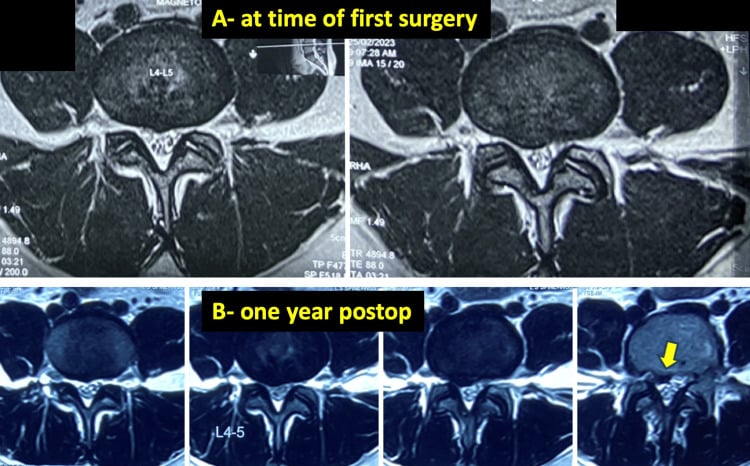
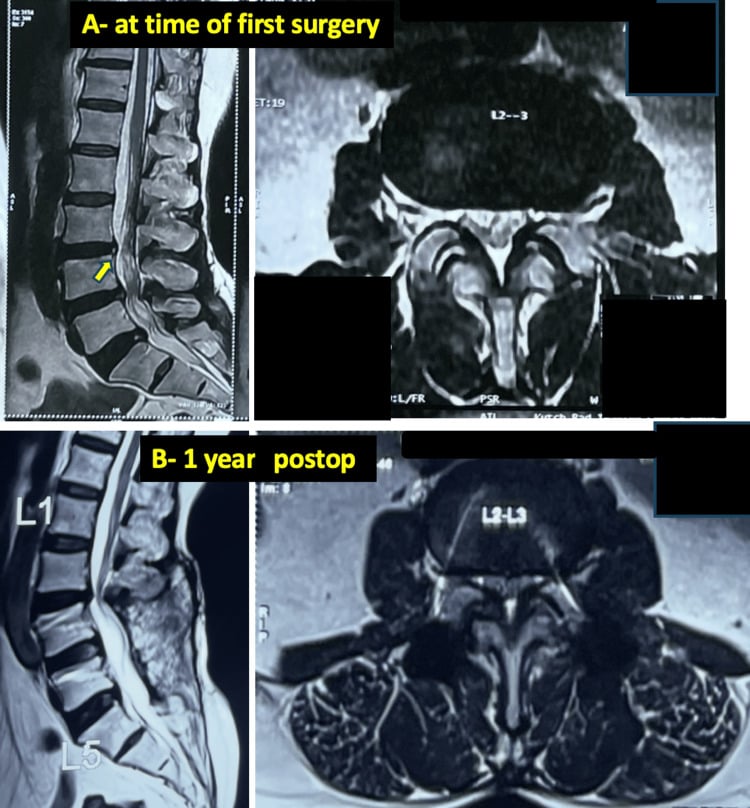
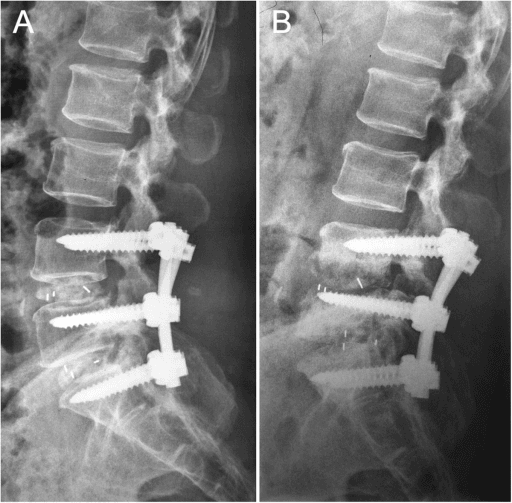
Adjacent segment disease. Degeneration at the levels next to a fusion, in 5-25% by 10 years, driven by the increased stress on the adjacent mobile segments. A long construct, sagittal malalignment and pre-existing degeneration all raise the risk. The patient returns with new back or leg pain in a new dermatomal level, with disc degeneration or stenosis at the adjacent level on imaging; treat conservatively at first and consider extending the fusion if the changes are severe.
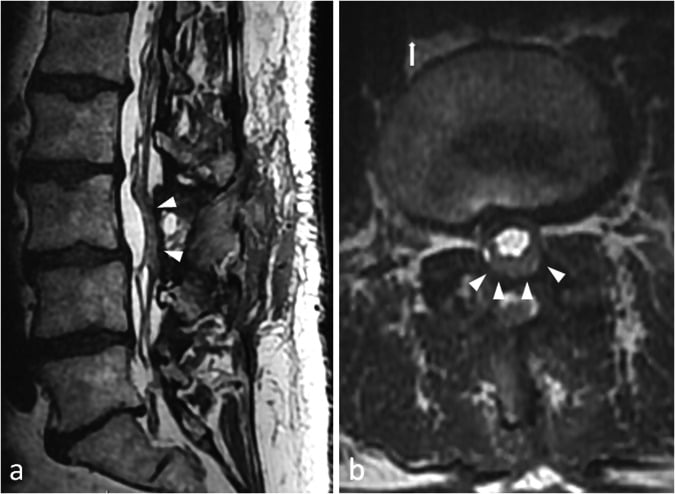
Arachnoiditis. An inflammatory reaction that clumps and scars the nerve roots. It is rare, under 5%, and more common after multiple operations; the recognised causes are intrathecal blood, infection and, historically, myelography contrast. MRI shows clumped nerve roots, the empty thecal sac sign and central cord. The prognosis is generally poor with progressive symptoms, and management is pain control while avoiding further surgery.
Psychological causes
Central sensitisation. Maladaptive neuroplastic change in the central nervous system: altered pain processing with a lowered pain threshold, producing widespread pain, hyperalgesia and allodynia. It is a clinical diagnosis, and the pain is often disproportionate to the pathology. Treatment is a multidisciplinary pain programme with medication and cognitive behavioural therapy.
The yellow flags. These predict a poor outcome, and they are looked for before the operation.
- Depression and anxiety
- Catastrophising and fear-avoidance beliefs
- Poor coping strategies
- Secondary gain (compensation, litigation)
- Job dissatisfaction
- Social isolation
FAILEDFBSS Common Causes
Hook:Why the back surgery FAILED!
Clinical Assessment
Systematic evaluation is essential to identify the treatable causes and guide management.
History
The questions that change management. A pain-free interval before the pain returned points to recurrence rather than residual pathology, and the character of the pain sorts a nerve under pressure from chronic pain.
- Purpose
- When did symptoms start relative to surgery?
- Purpose
- Any relief post-surgery before recurrence?
- Purpose
- Back predominant, leg predominant, or equal?
- Purpose
- Sharp/shooting (nerve) vs aching/burning (scar/chronic)?
- Purpose
- Positional, activity-related, constant?
- Purpose
- Rest, position changes, medications?
Red flags first. These presentations are investigated before anything else on the pathway.
Immediate investigation required:
- New onset bowel/bladder dysfunction (cauda equina)
- Progressive motor weakness
- Fever, wound drainage (infection)
- Severe unremitting pain unresponsive to medications
- New sensory level (thoracic symptoms)
Function and medication. Ask what the pain has cost the patient, and what has already been tried.
- Walking distance and tolerance
- Sleep disruption
- Activities of daily living impact
- Work status and disability
- Medication requirements and escalation
- Previous pain management interventions
Psychosocial screening. Use validated tools rather than impressions: the Oswestry Disability Index, a visual analogue scale for pain, SF-36 for quality of life, PHQ-9 for depression and the Opioid Risk Tool.
Physical examination
Look and feel. Inspect the scar for healing, keloid or drainage, assess coronal and sagittal alignment, watch the gait and note any walking aid, and look for wasting in the affected myotome. Palpate the surgical site for tenderness, the paraspinal muscles for spasm, trigger points and the sacroiliac joint. Record lumbar flexion and extension, which movement reproduces the pain, and any compensation pattern.
The neurological examination is a comparison with the preoperative findings, not a fresh assessment: reflexes may be absent after surgery and a deficit may be old.
- Assessment
- Myotomal strength testing
- Significance
- New weakness vs pre-existing deficit
- Assessment
- Dermatomal mapping
- Significance
- Compare to preoperative examination
- Assessment
- Knee jerk (L4), ankle jerk (S1)
- Significance
- May be absent post-surgery
- Assessment
- Straight leg raise, femoral stretch
- Significance
- Positive suggests neural irritation
- Assessment
- Non-organic signs
- Significance
- Over 3 suggests psychosocial component
Do not forget the vessels. Palpate the peripheral pulses to exclude vascular claudication, look for skin changes, hair loss and temperature difference, and measure the ankle-brachial index if the history points that way.
Differential diagnosis
FBSS is a diagnosis of exclusion. Many conditions mimic persistent post-operative pain, and several arise outside the operated spinal level. Systematically exclude the following before attributing pain to FBSS itself.
- Discriminating Features
- Pain-free interval then acute radicular recurrence, same dermatome, mass effect
- Key Investigation
- Gadolinium MRI (non-enhancing/central-enhancing mass)
- Discriminating Features
- Gradual burning radicular pain, no mass effect
- Key Investigation
- Gadolinium MRI (early peripheral enhancement)
- Discriminating Features
- Fever, raised CRP/ESR, rest and night pain, wound drainage
- Key Investigation
- CRP/ESR, gadolinium MRI, blood cultures
- Discriminating Features
- Mechanical back pain after fusion, worse with load
- Key Investigation
- Fine-cut CT, dynamic radiographs
- Discriminating Features
- New pain at a different dermatome above/below fusion
- Key Investigation
- MRI of adjacent levels
- Discriminating Features
- Pain below L5, positive provocation tests, FABER
- Key Investigation
- Diagnostic SIJ block
- Discriminating Features
- Axial pain, worse on extension/rotation, no true radiculopathy
- Key Investigation
- Diagnostic medial branch block
- Discriminating Features
- Groin pain, limited internal rotation, positive impingement test
- Key Investigation
- Hip radiograph, intra-articular block
- Discriminating Features
- Pain unrelated to spinal posture, absent pulses, relieved by standing still
- Key Investigation
- ABI, arterial duplex
- Discriminating Features
- Stocking distribution, distal symmetrical, metabolic cause
- Key Investigation
- Nerve conduction studies, HbA1c
- Discriminating Features
- New bladder/bowel dysfunction, saddle anaesthesia, bilateral leg symptoms
- Key Investigation
- Urgent MRI
Diagnostic Workup
Imaging and diagnostic blocks have one purpose here: to find pathology that can be treated, and to say which level is responsible.
Imaging protocol
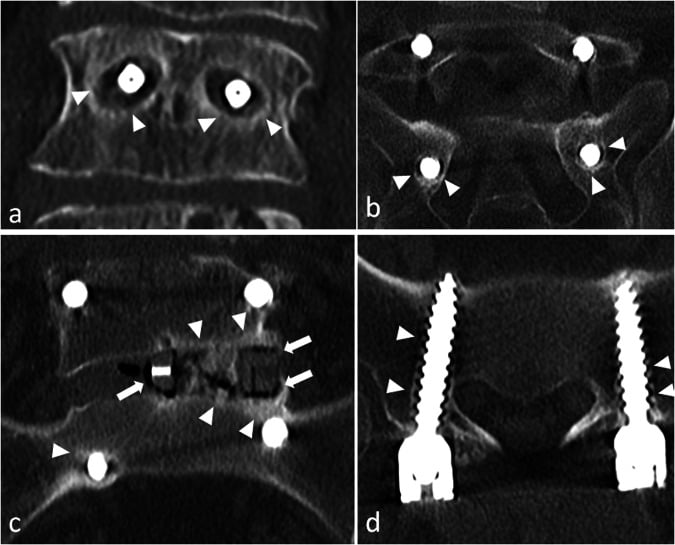
MRI with gadolinium is the gold standard for FBSS evaluation, and the distinction between epidural scar and recurrent disc is the reason. Specify the timing of the post-contrast sequences on the request: scar enhances within 5 minutes, while a recurrent disc either does not enhance or enhances centrally after 15 minutes.
- Purpose
- Baseline anatomy, fat signal
- Purpose
- Disc hydration, stenosis, neural compression
- Purpose
- Distinguish scar vs recurrent disc
- Purpose
- Enhance inflammatory changes
What else the study shows. Read past the operated level and the contrast pattern for the other causes of persistent pain:
- Pseudomeningocele: CSF collection, dural tear
- Infection: disc signal change, endplate oedema, enhancement
- Stenosis: residual or adjacent level canal narrowing
Diagnostic interventions
Selective nerve root block. Local anaesthetic around the suspected root, with over 75% relief confirming that level. Adding steroid makes it therapeutic as well, and may provide temporary or prolonged relief, and in multi-level disease the block is what identifies the level worth decompressing.
Facet joint injection and medial branch block. These identify a facetogenic source and may guide radiofrequency ablation; over 80% relief with local anaesthetic counts as a diagnostic response.
Discography remains controversial. It is used to identify the painful disc in multi-level disease by provocative injection into the nucleus, and a positive test is concordant pain reproduced at low pressure. The false-positive rate is high and the injection may accelerate degeneration, so current use is limited, mostly to fusion planning in young patients.
Diagnostic blocks are valuable but not definitive. Placebo response rates are 30-40%. Confirmatory blocks with different local anaesthetics (e.g., lidocaine then bupivacaine on separate days) increase specificity. Never operate based on blocks alone!
Management Algorithm
Treatment is multidisciplinary and stepwise, and surgery is rarely first-line.
Conservative management (first-line)
Physical therapy. The goals are to restore function and mobility, strengthen the core, improve flexibility and posture, reduce fear-avoidance behaviour, and get the patient back to activity.
- Duration
- Weeks 1-4
- Focus
- Pain control, gentle ROM, posture
- Duration
- Weeks 4-8
- Focus
- Core strengthening, endurance training
- Duration
- Weeks 8-12
- Focus
- Functional activities, work simulation
- Duration
- Ongoing
- Focus
- Home exercise programme, activity pacing
Pharmacotherapy is multimodal, and the class is chosen for the character of the pain and for the side effects the patient can tolerate.
- Examples
- Ibuprofen, naproxen
- Dosing
- As needed or scheduled
- Considerations
- GI protection if chronic use
- Examples
- Paracetamol
- Dosing
- 1g TDS-QID
- Considerations
- Max 4g/day, hepatotoxicity risk
- Examples
- Gabapentin, pregabalin
- Dosing
- Titrate to effect
- Considerations
- Sedation, dizziness common
- Examples
- Duloxetine, amitriptyline
- Dosing
- Start low, increase slowly
- Considerations
- Dual benefit: pain and mood
- Examples
- Cyclobenzaprine
- Dosing
- Short-term use
- Considerations
- Sedation, dependence risk
- Examples
- Lidocaine patches, capsaicin
- Dosing
- Apply to painful area
- Considerations
- Localised effect, fewer systemic side effects
Opioids have LIMITED role in chronic FBSS: Evidence shows minimal benefit and high risk of dependence, hyperalgesia, and worsening outcomes. Avoid chronic opioid therapy when possible. If used, use structured agreement, monitor urine drug screens, assess using Opioid Risk Tool (ORT).
Cognitive behavioural therapy. The components are specific and each carries its own goal.
- Goal
- Challenge catastrophising, negative thoughts
- Goal
- Increase activity despite pain
- Goal
- Reduce muscle tension, anxiety
- Goal
- Avoid boom-bust cycles
- Goal
- Improve sleep quality
The multidisciplinary programme. Intensive programmes that combine physical therapy, psychological therapy, medication optimisation, occupational therapy and vocational rehabilitation show the best long-term functional outcomes in FBSS.
Interventional pain management
Epidural steroid injection. The approach is chosen by the distribution of the pain and by what the previous surgery has left behind.
- Indication
- Central stenosis, broad distribution
- Success rate
- 30-50% improve
- Duration
- 3-6 months
- Indication
- Radiculopathy, specific nerve root
- Success rate
- 50-70% improve
- Duration
- 3-6 months
- Indication
- Multi-level, previous surgery
- Success rate
- 30-40% improve
- Duration
- Variable
Radiofrequency ablation targets the facet joint medial branches or the dorsal root ganglion, is indicated after positive diagnostic blocks, gives 6-12 months of relief, and can be repeated if the first treatment worked.
Neuromodulation
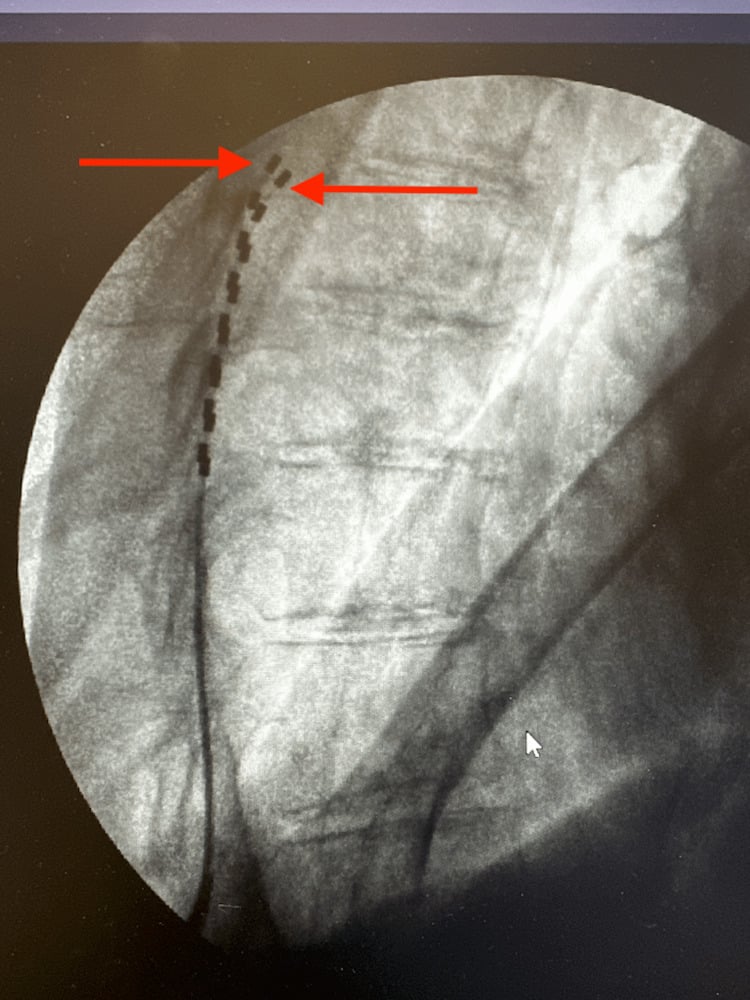
Spinal cord stimulation is the most evidence-based intervention for FBSS with predominant leg pain. The trial comes before the implant, and success at trial means clinically meaningful functional improvement as well as at least 50% pain relief.
Who is a candidate.
- Details
- Predominantly radicular leg pain
- Details
- At least 6 months appropriate treatment
- Details
- No untreated major depression, realistic expectations
- Details
- No correctable structural pathology
- Details
- Over 50% pain reduction during trial period
The evidence.
- Findings
- SCS superior to conventional management at 6 months
- Findings
- 50-70% maintain over 50% pain reduction at 5 years
- Findings
- 70-80% would repeat procedure
- Findings
- Significant improvements in ODI, quality of life
SCS is evidence-based for FBSS: the PROCESS trial showed SCS superior to conventional medical management, and the North trial showed it superior to reoperation for persistent radicular pain. Predominantly leg pain responds better than back pain!
Traditional (low-frequency "tonic") spinal cord stimulation works by replacing pain with a paraesthesia and is best for leg rather than back pain. Newer modalities address its limitations. High-frequency SCS (10 kHz, the SENZA-RCT) and burst stimulation are paraesthesia-free and have shown improved relief of axial low back pain (the historically SCS-resistant component of FBSS), broadening the population that can benefit. Dorsal root ganglion (DRG) stimulation (the ACCURATE RCT) targets the DRG directly and is superior to traditional SCS for focal, dermatomal lower-limb neuropathic pain (including CRPS and a discrete radicular distribution), giving more precise, posture-stable coverage of a single territory. The exam point: SCS is no longer one thing — match the modality to the pain (tonic, high-frequency or burst for diffuse radicular with or without back pain; DRG for a focal dermatomal target), and remember that a successful trial before permanent implantation remains mandatory for all of them.
For the patient with refractory FBSS pain who has exhausted rehabilitation, interventional injections and (often) spinal cord stimulation, intrathecal drug delivery (ITDD) via an implanted pump is the next rung. By delivering analgesia directly into the CSF, it achieves pain control at a tiny fraction of the systemic dose, which is its main attraction in a population where chronic oral opioids do more harm than good. Agents include intrathecal opioids (e.g. morphine), ziconotide (a non-opioid calcium-channel blocker, useful where opioids are undesirable) and baclofen (where spasticity coexists). Like SCS it requires a trial and careful psychological/expectation screening first, and it carries real risks — catheter-tip inflammatory granuloma, infection/meningitis, pump or catheter malfunction, and respiratory depression with opioid dosing errors — so it is managed in a specialist pain service. The exam point: ITDD is a last-line, specialist option that exploits the dose advantage of the intrathecal route, not a routine FBSS treatment.
Surgical management (highly selective)
Surgery is rarely indicated in FBSS. Consider ONLY if ALL criteria met:
- Clear structural pathology on imaging (recurrent disc, stenosis, instability)
- Symptoms correlate with imaging findings
- Failed 6-12 months of appropriate conservative care
- Reasonable surgical target identified
- Favourable psychosocial profile
- Patient has realistic expectations
What revision can achieve. Each target carries its own expected result, and the numbers are the honest basis of the consent conversation.
- Surgery
- Revision discectomy with or without fusion
- Expected success rate
- 60-80% if clear recurrence
- Surgery
- Revision decompression
- Expected success rate
- 50-70% if residual compression
- Surgery
- Revision fusion
- Expected success rate
- 50-60% (decreases with each revision)
- Surgery
- Extension of fusion
- Expected success rate
- 40-60%
- Surgery
- Fusion
- Expected success rate
- 50-70%
The returns fall with every operation.
- Success rate
- 70-90%
- Success rate
- 50-70%
- Success rate
- 30-50%
- Success rate
- Under 30%
The "next operation syndrome": Each subsequent operation has LOWER success rate and HIGHER complication rate. Avoid perpetual surgical cycling - recognise when surgery will not help!
Complications
Every option offered in FBSS has its own complication profile, and knowing them is what makes the counselling honest.
Complications of conservative treatment
Medication. Each class brings its own hazard, and each hazard has a standard mitigation.
- Complication
- GI bleeding, cardiovascular events
- Incidence
- 1-5% with chronic use
- Management
- PPI prophylaxis, lowest effective dose
- Complication
- Sedation, dizziness, falls
- Incidence
- 10-30%
- Management
- Dose titration, fall precautions
- Complication
- Dependence, hyperalgesia, constipation
- Incidence
- 20-40% with chronic use
- Management
- Avoid when possible, bowel regimen
- Complication
- Acute injury, pain flare
- Incidence
- Under 5%
- Management
- Proper screening, gradual progression
Psychological treatment is generally safe with skilled practitioners. The costs are emotional distress during the early phase of cognitive behavioural therapy, resistance to treatment, and the time and money the programme demands.
Complications of interventional procedures
Epidural steroid injection. Dural puncture is the common one; infection and bleeding are rare, and a haematoma with a neurological deficit needs emergency decompression.
- Incidence
- 1-5%
- Management
- Bed rest, blood patch if persistent headache
- Incidence
- Under 1%
- Management
- Emergency MRI, surgical drainage, IV antibiotics
- Incidence
- Under 1%
- Management
- Emergency decompression if neurological deficit
- Incidence
- 2-5%
- Management
- Supportive care, fluids, observation
- Incidence
- 5-10%
- Management
- Usually resolves within 24-48 hours
Spinal cord stimulation. The failures belong to the device: leads migrate, hardware fails, and efficacy is lost in 20-30% over time.
- Incidence
- 10-15%
- Management
- Revision, lead repositioning
- Incidence
- 2-5%
- Management
- Antibiotics; explant if severe
- Incidence
- 5-10%
- Management
- Battery replacement, lead revision
- Incidence
- 20-30% over time
- Management
- Reprogramming, lead revision, explant
- Incidence
- 5-10%
- Management
- Repositioning, smaller device
- Incidence
- Under 1%
- Management
- Conservative management, blood patch
Radiofrequency ablation. Neuritis or dysaesthesia in 5-10% is the usual complaint and is usually temporary, resolving over weeks. Skin burns, infection and motor weakness are each under 1%, and technique guards against each: proper grounding, sterility and careful localisation.
Complications of revision surgery
Scar makes revision harder. The dissection runs through scar tissue that obscures the anatomy, and the intraoperative complication rates rise accordingly.
- Primary surgery
- 3-10%
- Revision surgery
- 10-20%
- Implications
- Higher risk due to scarring, usually repairable
- Primary surgery
- 1-3%
- Revision surgery
- 3-8%
- Implications
- More difficult dissection through scar tissue
- Primary surgery
- Under 1%
- Revision surgery
- 1-3%
- Implications
- Altered anatomy increases risk
- Primary surgery
- 1-3%
- Revision surgery
- 1-2%
- Implications
- Careful imaging verification essential
- Primary surgery
- 5-10%
- Revision surgery
- 10-15%
- Implications
- Scar tissue obscures anatomy
The early problems, in the first 6 weeks after revision:
- Incidence
- 2-5%
- Prevention/management
- Prophylactic antibiotics, sterile technique
- Incidence
- 1-3%
- Prevention/management
- Emergency I&D, long-term IV antibiotics
- Incidence
- 2-5%
- Prevention/management
- Meticulous haemostasis, drain placement
- Incidence
- 2-5%
- Prevention/management
- Watertight dural closure, prone positioning
- Incidence
- 1-3%
- Prevention/management
- Early mobilisation, chemoprophylaxis
- Incidence
- 5-15%
- Prevention/management
- Catheterisation, alpha-blockers
The late problems, beyond 6 weeks:
- Incidence
- 15-30% (revision fusion)
- Time course
- 6-18 months
- Incidence
- 5-10%
- Time course
- Variable, months to years
- Incidence
- 5-25%
- Time course
- 5-10 years post-fusion
- Incidence
- 10-20%
- Time course
- Variable, months to years
- Incidence
- 30-50%
- Time course
- Ongoing
- Incidence
- 5-15% (long fusions)
- Time course
- Years
Specific high-risk scenarios
A third or subsequent revision. Complication rates exceed 40% and success rates are under 30%; each revision adds to the scar burden, and the risk of neurological injury doubles with each procedure. Consider the non-surgical options preferentially.
Revision during active litigation. Outcomes are significantly worse, the psychological factors dominate, and pain scores stay high despite an anatomically successful operation. Consider delaying surgery until the litigation is resolved.
Revision with concurrent opioid dependence. Postoperative pain management is extremely challenging, infection rates are higher and healing is delayed. These patients need a structured tapering programme before surgery.
Complication rates INCREASE with each revision: First revision has 15-25% complication rate. Second revision 25-40%. Third or more over 40%. Always counsel patients about cumulative risk with multiple operations!
Reducing the risk. Patient selection is the single most important factor, and the rest is preoperative optimisation and disciplined technique.
- Impact
- Most important factor
- Impact
- Smoking cessation, weight loss, diabetes control
- Impact
- Minimise tissue trauma, adequate haemostasis
- Impact
- Reduces infection risk
- Impact
- Reduces VTE risk
- Impact
- Addresses all contributing factors
Prevention Strategies
The best treatment for FBSS is prevention, and a systematic approach reduces the incidence.
Before the operation
Get the diagnosis right. The imaging findings have to explain the clinical picture before an operation is offered at all.
- Implementation
- Ensure MRI findings explain clinical picture
- Implementation
- Hip pathology, peripheral neuropathy, vascular
- Implementation
- 6-12 weeks unless red flags
- Implementation
- Poor outcomes without radiculopathy
Screen and counsel. Screen for depression and anxiety (PHQ-9, GAD-7), catastrophising, litigation and compensation status, substance abuse and social support. Then set the expectation: improvement rather than perfection, a recovery timeline of 3-6 months, the risks and the alternatives, and the shared decision documented.
Optimise what can be optimised. Smoking cessation 4-6 weeks preoperatively, weight optimisation if the BMI is over 35, diabetic control to an HbA1c under 7.5%, nutritional status, and NSAIDs and anticoagulants stopped per protocol.
In the operation
Technique. Of the principles below, level verification is the non-negotiable one.
- Implementation
- Imaging confirmation BEFORE incision
- Implementation
- Decompress symptomatic levels completely
- Implementation
- Preserve under 50% of facet joints
- Implementation
- Use retractors judiciously, limit stripping
- Implementation
- Prevent haematoma formation
- Implementation
- Watertight closure if dural tear occurs
Discectomy. Remove the loose fragments completely, avoid aggressive curettage of the disc space, preserve annular integrity where possible, and consider limited annular closure techniques.
Decompression. Decompress the lateral recess adequately, undercut the facet if there is foraminal stenosis, decompress both sides for bilateral symptoms, and preserve the pars interarticularis.
The fusion decision. Fuse for instability (over 3-4mm translation) and where over 50% facet resection is required, consider fusion in degenerative spondylolisthesis, and avoid unnecessary fusion, which increases adjacent segment disease.
After the operation
Move the patient early. Early mobilisation is what prevents deconditioning.
- Activity
- Out of bed, walking with assistance
- Activity
- Independent ambulation, self-care
- Activity
- Progressive walking, light activities
- Activity
- Formal physical therapy, return to work (sedentary)
Control the pain and refer early. Use multimodal analgesia and minimise opioids, with scheduled NSAIDs if there is no contraindication, neuropathic agents if radicular pain persists, and a transition to oral medication by discharge. Refer to physiotherapy at week 2-4 for core strengthening, flexibility, posture and ergonomic education.
Follow up to a schedule. Wound check and pain assessment at week 2, clinical evaluation at week 6 with imaging if there are concerns, functional assessment at 3 months, and long-term outcome evaluation at 6 and 12 months.
PREVENTPrevention Strategies
Hook:How to PREVENT FBSS in the first place!
Guidelines, Registries & Global Practice
FBSS — increasingly termed persistent spinal pain syndrome type 2 — is a global problem whose incidence has not fallen despite improvements in surgical technique. The world standard of care is interdisciplinary, evidence-led and conservative, with reoperation reserved for clearly defined structural targets.
Global epidemiology
- Figure
- ~1 in 5 patients within 2 years
- Source / population
- UK population (HES/CPRD), Weir et al. 2020
- Figure
- Rates of failed back surgery have not declined despite surgical advances
- Source / population
- Narrative review, Chan & Peng 2011
- Figure
- Instrumented fusion did NOT increase persistent pain rate vs decompression/discectomy, but did increase 2-year healthcare costs
- Source / population
- UK case-control, Weir et al. 2020
- Figure
- Considerable impact on patient quality of life and health systems (high cost of illness)
- Source / population
- Chan & Peng 2011
The contemporary population estimate that roughly one in five patients develops persistent post-operative pain within two years comes from a UK Hospital Episode Statistics / CPRD analysis (Weir et al. 2020, DOI), and the observation that failure rates have not declined despite surgical progress is from the standard review (Chan & Peng 2011, DOI).
Major guidance, side by side
- Position on FBSS / persistent radicular pain
- Spinal cord stimulation recommended for chronic neuropathic pain that persists at least 6 months despite conventional medical management, after a successful trial of stimulation
- Evidence basis
- RCT evidence incl. PROCESS (Kumar 2007)
- Position on FBSS / persistent radicular pain
- Multidisciplinary assessment before any revision; SCS for predominant neuropathic leg pain after failed conservative care; reoperation only for clear structural lesion
- Evidence basis
- PROCESS (Kumar 2007), North 2005
- Position on FBSS / persistent radicular pain
- Trial-then-implant SCS pathway; predominant leg pain responds better than axial back pain; mandatory psychological screening
- Evidence basis
- Kumar 2007, North 2005
- Position on FBSS / persistent radicular pain
- Prevention first — correct diagnosis, intra-operative level verification, avoid unnecessary fusion; revision only for recurrent disc, residual stenosis, instability or pseudarthrosis
- Evidence basis
- Papadopoulos 2006, Chan & Peng 2011
Registry and trial evidence
- Two randomised controlled trials anchor neuromodulation practice: PROCESS (Kumar 2007, DOI) showed SCS superior to medical management for neuropathic leg pain, and the North trial (North 2005, DOI) showed SCS superior to repeat surgery for persistent radicular pain.
- Revision discectomy for a clearly identified true recurrence achieves outcomes comparable to primary discectomy in selected patients (Papadopoulos 2006, DOI).
- There is no dedicated international FBSS registry; epidemiology is derived from national administrative datasets (e.g. UK HES/CPRD) and the spine-surgery literature rather than an implant registry.
Global practice variation
- Access to neuromodulation is the dominant source of variation: SCS is widely available in high-income systems but device cost limits use in many limited-resource settings, where multidisciplinary rehabilitation and pharmacological management predominate.
- Terminology is shifting internationally from "failed back surgery syndrome" toward "persistent spinal pain syndrome", reflecting an attempt to remove the blame-laden framing and standardise classification.
- Psychosocial screening before revision surgery is universally endorsed but inconsistently implemented; where compensation or litigation systems exist, outcomes after revision are consistently poorer.
- Opioids have a limited role in chronic FBSS in all major guidance, with international movement toward reduced long-term opioid prescribing and real-time prescription monitoring.
MCQ Practice Points
Q: What are the most common causes of failed back surgery syndrome (FBSS)?
A: Recurrent or residual disc herniation (most common surgically treatable cause); Foraminal stenosis (especially lateral recess); Adjacent segment disease; Pseudarthrosis (failed fusion); Epidural fibrosis/scar tissue; Segmental instability; Wrong level surgery; Unrecognized spinal stenosis. Non-structural causes: Central sensitization, psychological factors, secondary gain, undiagnosed pain generator (SIJ, facet, hip).
Q: How do you evaluate a patient with persistent pain after lumbar spine surgery?
A: History: Pain timing (immediate vs delayed), character (radicular vs axial), response to previous surgery, red flags. Examination: Neurological assessment, provocative tests (SIJ, facet), hip examination. Imaging: MRI with gadolinium (differentiates scar from recurrent disc); CT for bony detail, fusion assessment; Standing X-rays for instability. Diagnostic injections: Selective nerve root blocks, facet blocks, SIJ injection, discography if indicated. Multidisciplinary pain assessment recommended.
Q: How do you differentiate epidural fibrosis from recurrent disc herniation on MRI?
A: Both can cause nerve compression post-discectomy. Recurrent disc herniation: Mass effect with peripheral enhancement on gadolinium (enhancing rim around non-enhancing disc material); Contiguous with disc space. Epidural fibrosis: Diffuse homogeneous enhancement throughout scar tissue; Retracts and conforms to dural sac rather than displacing it; May extend around nerve root. Clinical correlation essential - scar alone rarely causes significant symptoms.
Q: What is the role of spinal cord stimulation in FBSS?
A: Spinal cord stimulation (SCS) is evidence-based treatment for neuropathic leg pain in FBSS when conservative measures fail. Mechanism: Modulates pain transmission via dorsal column stimulation. Best results: Predominant radicular/neuropathic leg pain (greater than axial back pain); Failed conservative therapy; No surgically correctable pathology; Psychological screening passed. Trial stimulator first; Permanent implant if greater than 50% pain reduction. Less effective for predominantly axial back pain.
Q: What are the predictors of poor outcome after revision spine surgery for FBSS?
A: Poor prognostic factors: Multiple prior surgeries (success rate drops with each revision); Predominant axial back pain (vs radicular); Worker's compensation/litigation; Psychological comorbidities (depression, catastrophizing); Smoking; Chronic opioid use; Long duration of symptoms pre-revision; No clear anatomical pain generator identified. Patient selection is critical - multidisciplinary assessment recommended before revision surgery.
Exam Viva Scenarios
Practise clinical reasoning and management decisions out loud
“A 45-year-old male underwent L5-S1 microdiscectomy 6 months ago for right L5 radiculopathy. He had 2 weeks of improvement but now has recurrent right leg pain worse than preoperatively. MRI shows soft tissue in the epidural space at L5-S1. How would you evaluate and manage this patient?”
“A 60-year-old female underwent L4-5 decompression for neurogenic claudication 3 months ago. She has had no improvement in symptoms. Review of her postoperative MRI shows decompression was performed at L3-4, not L4-5. The patient is now consulting you for a second opinion. How do you manage this situation?”
“A 50-year-old male presents with chronic back and leg pain. He has had 3 previous lumbar surgeries: L5-S1 discectomy, then L4-5 decompression, then L4-S1 fusion. His pain never improved. He is on high-dose opioids and is requesting another operation. MRI shows solid fusion with no obvious structural pathology. How would you assess and manage this patient?”
Definition and Epidemiology
- FBSS: Persistent or recurrent pain post-lumbar surgery despite anatomical success
- Incidence: 10-40% depending on procedure (higher for fusion vs discectomy)
- NOT a specific diagnosis - heterogeneous syndrome requiring systematic evaluation
- Strongest predictors: Psychosocial factors (depression, catastrophizing)
Common Causes (Mnemonic: FAILED)
- F - Fibrosis (epidural scar) - most common chronic cause
- A - Adjacent segment disease (5-25% by 10 years post-fusion)
- I - Inadequate decompression (residual stenosis, retained disc fragment)
- L - Level wrong (5-15% incidence - never event)
- E - Epidural hematoma or infection (early complications)
- D - Disc recurrent herniation (5-15% following discectomy)
Diagnostic Imaging - MRI with Gadolinium
- Scar: EARLY enhancement (under 5 min) with PERIPHERAL pattern
- Recurrent disc: NO enhancement or DELAYED CENTRAL enhancement (over 15 min)
- Mass effect: Minimal with scar, present with recurrent disc
- Arachnoiditis: Clumped nerve roots, empty thecal sac sign
- Dynamic X-rays: Instability if over 3-4mm translation or over 10-15 degrees angulation
Management Algorithm
- First-line: Conservative (PT, neuropathic meds, CBT) - 40-60% improve
- Interventional: Epidural injections (50-70% for radicular pain), RFA for facets
- Neuromodulation: SCS for radicular pain - PROCESS trial shows 50% reduction
- Surgery: ONLY if clear structural pathology (recurrent disc, stenosis, instability)
- Success rates decrease: Primary 80%, 1st revision 60%, 2nd revision 40%, 3rd under 30%
Spinal Cord Stimulation
- Indications: Radicular leg pain, failed 6mo conservative care, no surgical lesion
- Trial mandatory: 5-7 days, success defined as over 50% pain reduction
- Evidence: PROCESS trial - SCS superior to conventional management at 6mo
- Outcomes: 50-70% achieve over 50% pain reduction long-term
- Better for leg pain than back pain, best with favorable psych profile
Prevention Strategies (Mnemonic: PREVENT)
- P - Psychosocial screening preoperatively
- R - Right diagnosis (correlate symptoms with imaging)
- E - Expectations managed (realistic goals discussion)
- V - Verify level intraoperatively (AP and lateral imaging BEFORE incision)
- E - Early mobilization (prevent deconditioning)
- N - Nerve protection (minimize retraction, preserve blood supply)
- T - Tissue preservation (limit dissection, preserve under 50% facets)
High-Yield Exam Points
- FBSS vs surgical failure: FBSS = anatomically successful, failure = technical error
- Gadolinium timing CRITICAL: Early peripheral (scar) vs delayed or none (disc)
- Psychosocial factors predict outcomes MORE than surgical technique
- Multidisciplinary pain programs: Best long-term functional outcomes
- Avoid next operation syndrome: Each surgery lower success, higher risk
- SCS evidence-based (PROCESS trial) for radicular pain post-surgery
Evidence Base
PROCESS Trial: SCS vs Conventional Management
- RCT of 100 FBSS patients with predominant neuropathic radicular leg pain randomised to SCS plus conventional medical management (CMM) versus CMM alone
- At 6 months (intention-to-treat): 24 SCS patients (48%) versus 4 CMM patients (9%) achieved 50% or greater leg pain relief (p under 0.001)
- SCS group had superior leg and back pain relief, quality of life, functional capacity and treatment satisfaction
- Between 6 and 12 months, 32 of the CMM patients crossed over to SCS while only 5 SCS patients crossed to CMM
- By 12 months, 27 SCS patients (32%) had experienced a device-related complication
Peridural Scar and Recurrent Radicular Pain (ADCON-L Study)
- Prospective, randomised, double-blind, multicentre trial of 197 patients after first-time single-level unilateral lumbar discectomy
- Gadolinium-enhanced MRI scar score at 6 months correlated with recurrent radicular pain
- Patients with extensive peridural scar were 3.2 times more likely to experience recurrent radicular pain than those with less scar
- Probability of recurrent radicular pain rose as the MRI peridural fibrosis score increased
- Established a quantifiable imaging link between epidural fibrosis and postoperative radicular pain
Outcomes of Revision Lumbar Discectomy for True Recurrence
- Case-control study comparing 27 patients undergoing revision discectomy for true same-level recurrent herniation with 30 matched primary discectomy controls (validated MODEMS outcome instrument)
- Improvement after revision discectomy was not statistically different from improvement after primary discectomy
- Revision patients had more residual leg numbness/tingling and more frequent back/buttock pain than primary patients
- Authors concluded revision discectomy is as efficacious as primary discectomy in carefully selected patients with clear recurrent herniation
- Supports operating only when a true recurrent disc is identified, not for scar alone
Presurgical Psychological Screening Predicts Spine Surgery Outcome
- Presurgical psychological screening (PPS) applied to 204 patients undergoing lumbar laminectomy/discectomy or fusion
- Combined psychological and 'medical' risk levels were significantly related to outcome; worst results in patients with both high psychological and high medical risk
- PPS surgical-prognosis accuracy for overall outcome was 82%
- Only 9 of 53 patients predicted to have a poor outcome actually achieved a fair or good result
- Authors recommend PPS as a routine part of evaluating chronic pain patients considered for spine surgery
SCS vs Reoperation for Persistent Radicular Pain
- Prospective RCT of 50 patients with persistent radicular pain after lumbosacral surgery, randomised to SCS or reoperation, with crossover permitted
- SCS was more successful than reoperation (9 of 19 versus 3 of 26 patients; p under 0.01)
- Patients randomised to SCS were significantly less likely to cross over than those randomised to reoperation (5 of 24 versus 14 of 26; p = 0.02)
- Reoperation patients required increased opioid analgesics significantly more often than SCS patients
- SCS obviated the need for reoperation in the great majority of patients
Failed Back Surgery Syndrome: Comprehensive Review
- Comprehensive narrative review of FBSS epidemiology, aetiology, evaluation and management
- Despite advances in surgical technology, rates of failed back surgery have not declined
- Contributing factors arise in the preoperative, intraoperative and postoperative periods
- Emphasises prevention and interdisciplinary evaluation as the best strategies to reduce incidence and morbidity
- Presents an evidence-based suggested management pathway incorporating spinal cord stimulation
References
-
Chan CW, Peng P. Failed back surgery syndrome. Pain Med. 2011;12(4):577-606. doi:10.1111/j.1526-4637.2011.01089.x
-
Kumar K, Taylor RS, Jacques L, et al. Spinal cord stimulation versus conventional medical management for neuropathic pain: a multicentre randomised controlled trial in patients with failed back surgery syndrome. Pain. 2007;132(1-2):179-188. doi:10.1016/j.pain.2007.07.028
-
Ross JS, Robertson JT, Frederickson RC, et al. Association between peridural scar and recurrent radicular pain after lumbar discectomy: magnetic resonance evaluation. Neurosurgery. 1996;38(4):855-861. doi:10.1097/00006123-199604000-00053
-
Papadopoulos EC, Girardi FP, Sandhu HS, et al. Outcome of revision discectomies following recurrent lumbar disc herniation. Spine (Phila Pa 1976). 2006;31(13):1473-1476. doi:10.1097/01.brs.0000219872.43318.7a
-
Block AR, Ohnmeiss DD, Guyer RD, et al. The use of presurgical psychological screening to predict the outcome of spine surgery. Spine J. 2001;1(4):274-282. doi:10.1016/s1529-9430(01)00054-7
-
Gatchel RJ, Okifuji A. Evidence-based scientific data documenting the treatment and cost-effectiveness of comprehensive pain programs for chronic nonmalignant pain. J Pain. 2006;7(11):779-793. doi:10.1016/j.jpain.2006.08.005
-
North RB, Kidd DH, Farrokhi F, Piantadosi SA. Spinal cord stimulation versus repeated lumbosacral spine surgery for chronic pain: a randomized, controlled trial. Neurosurgery. 2005;56(1):98-107. doi:10.1227/01.neu.0000144839.65524.e0
-
Taylor RS, Ryan J, O'Donnell R, et al. The cost-effectiveness of spinal cord stimulation in the treatment of failed back surgery syndrome. Clin J Pain. 2010;26(6):463-469. doi:10.1097/AJP.0b013e3181daccec
-
Fritsch EW, Heisel J, Rupp S. The failed back surgery syndrome: reasons, intraoperative findings, and long-term results: a report of 182 operative treatments. Spine. 1996;21(5):626-633. doi:10.1097/00007632-199603010-00017
-
Burton CV, Kirkaldy-Willis WH, Yong-Hing K, Heithoff KB. Causes of failure of surgery on the lumbar spine. Clin Orthop Relat Res. 1981;(157):191-199.
-
Slipman CW, Shin CH, Patel RK, et al. Etiologies of failed back surgery syndrome. Pain Med. 2002;3(3):200-214. doi:10.1046/j.1526-4637.2002.02033.x
-
Flum AS, Hickey A, Flum DR. Understanding the psychological factors affecting failed back surgery syndrome: a systematic review. Healthcare (Basel). 2021;9(10):1275. doi:10.3390/healthcare9101275
-
Thomson S, Jacques L. Demographic characteristics of patients with severe neuropathic pain secondary to failed back surgery syndrome. Pain Pract. 2009;9(3):206-215. doi:10.1111/j.1533-2500.2009.00276.x
-
Hussain A, Erdek M. Interventional pain management for failed back surgery syndrome. Pain Pract. 2014;14(1):64-78. doi:10.1111/papr.12035
-
Kumar K, North R, Taylor R, et al. Spinal cord stimulation vs. conventional medical management: a prospective, randomized, controlled, multicenter study of patients with failed back surgery syndrome (PROCESS study). Neuromodulation. 2005;8(4):213-218. doi:10.1111/j.1525-1403.2005.00027.x