Rotator Cuff Attachment Site | Displacement Threshold 5mm | Posterior Displacement Worst
- Three cuff attachments: Supraspinatus (superior), Infraspinatus (middle), Teres minor (inferior)
- 5mm displacement is surgical threshold (3mm for overhead athletes)
- Posterior displacement worst - limits external rotation function
- Axillary view essential - shows posterior displacement (crescent sign)
- Deltoid split must stay within 5cm of acromion to protect axillary nerve
- “GT fracture with dislocation often reduces after glenohumeral reduction
- “Superior malunion causes impingement, posterior causes rotation loss
- “Screw fixation for good bone, suture anchors for osteoporotic bone
- “External rotation strength testing is key clinical assessment
Overview
Greater tuberosity fractures are a clinically important subset of proximal humerus fractures because of their intimate relationship with rotator cuff function. The tuberosity is the attachment point for three of the four cuff tendons, supraspinatus, infraspinatus and teres minor, so a fragment that moves takes the cuff insertion with it.
Who. They account for 15-20% of all proximal humerus fractures, with a bimodal distribution: young males after high-energy injury and elderly females after low-energy falls. The rate is higher in contact sports and falls, and the risk factors are osteoporosis in the elderly, contact sports participation, seizure disorders and alcohol intoxication.
Mechanism. The direct mechanism is a fall onto the lateral shoulder or a direct blow. The indirect mechanisms are forceful abduction with external rotation, avulsion of the tuberosity by the rotator cuff during a dislocation, and hyperabduction injury.
Associated injuries. Look for the injuries that travel with it:
- Anterior shoulder dislocation, in 15-30%
- Rotator cuff tears
- Hill-Sachs lesion
- Bankart lesion
Anatomy and Pathophysiology
The greater tuberosity is the landmark that determines rotator cuff function and shoulder biomechanics, and its anatomy explains the displacement patterns the fracture produces.
The bone. The tuberosity lies lateral to the articular surface and forms the lateral margin of the bicipital groove; the lesser tuberosity, where subscapularis inserts, lies medial to the groove. The anatomical neck runs between the tuberosities and the head, the surgical neck below the tuberosities. Its blood supply comes from the ascending branch of the anterior humeral circumflex artery, the posterior humeral circumflex artery and the vessels of the rotator cuff tendons.
The cuff attachments. Three facets, three tendons, and the fourth cuff tendon pointedly elsewhere:
- Facet
- Superior facet, the most anterior portion
- Function
- Primary abductor and external rotator
- Note
- Most commonly injured cuff tendon
- Facet
- Middle facet, the central portion
- Function
- Primary external rotator
- Note
- Largest footprint on the tuberosity
- Facet
- Inferior facet, the posterior portion
- Function
- External rotation and adduction
- Note
- Often intact in cuff tears
- Facet
- Lesser tuberosity, not the greater
- Function
- Note
The combined footprint is approximately 6cm², which matters when the cuff has to be reconstructed onto it.
The deforming forces. Supraspinatus pulls the fragment superiorly; infraspinatus and teres minor pull it posteriorly. The combined vector is posterior and superior, and posterior-superior displacement is the most common and the most problematic pattern. How far a fragment moves depends on its size, the bone quality, the associated injuries and the degree of rotator cuff involvement.
Why direction matters. A superiorly displaced fragment sits under the acromion and causes subacromial impingement. A posteriorly displaced fragment limits external rotation. Either malunion leaves a functional deficit and pain, which is the primary reason displaced fractures are treated surgically.
Classification
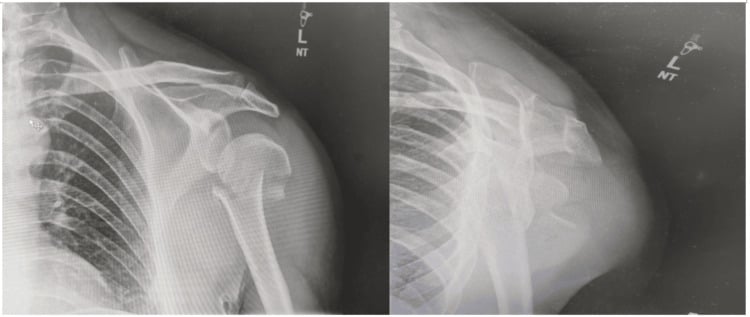
Neer's classification by displacement remains the primary system for clinical decision-making. The morphological classification describes what the fragment looks like and influences the choice of fixation, and the direction of displacement predicts what the patient will lose.
Type I, minimally displaced. The fragment is displaced less than 5mm and the fracture is stable. It is often associated with an undisplaced surgical neck fracture and is treated non-operatively in most patients.
Type II, displaced. The fragment is displaced more than 5mm or angulated over 45°. A significant functional deficit is expected if it is not reduced, and it is a surgical indication in active patients.
Type III, with dislocation. A greater tuberosity fracture with an anterior shoulder dislocation. The fragment often reduces with the glenohumeral reduction, so displacement is re-evaluated after the joint is back in.
Clinical Assessment
History. The mechanism predicts the associated injuries, so ask for it precisely:
- Fall onto the outstretched hand or the shoulder
- Direct blow to the lateral shoulder
- A dislocation event, and whether and how it was reduced
- Seizure activity
- Motor vehicle accident
The patient reports lateral shoulder pain, an inability to lift the arm and weakness with external rotation, sometimes with a history of dislocation. Three findings are red flags: numbness over the deltoid, which is the axillary nerve; severe weakness, which suggests a complete cuff avulsion; and any vascular compromise.
Inspection and palpation. Swelling sits over the lateral shoulder, with ecchymosis that may extend down the arm, the arm held in adduction and internal rotation and the normal shoulder contour lost. There is point tenderness over the greater tuberosity and crepitus with gentle rotation; palpate for the associated injuries as well.
Movement. Active abduction is limited and painful and external rotation is weak and painful, while passive range may be preserved. External rotation strength is the critical assessment and must be compared with the contralateral side.
- External rotation lag sign, which indicates cuff avulsion
- Hornblower's sign, for teres minor function
- Resisted external rotation strength
Neurovascular assessment. The axillary nerve is the most commonly injured nerve: test deltoid motor function and sensation over the regimental badge area, and document both before and after any manipulation. A high-energy mechanism may injure the brachial plexus, so complete the motor and sensory examination of the upper limb. The axillary artery is at risk with dislocation: check the distal pulses and capillary refill, and consider angiography if there is concern. Document the complete neurovascular examination before any reduction attempt.
ALWAYS document axillary nerve function before and after shoulder reduction. The nerve courses around the surgical neck and is vulnerable during both injury and reduction manoeuvres.
- Key Discriminator
- Point tenderness over GT, weak/painful external rotation, fragment on axillary view
- Investigation
- AP, scapular-Y and axillary radiographs; CT for surgical planning
- Key Discriminator
- Weakness without bony fragment; positive lag signs with normal bone
- Investigation
- Ultrasound or MRI - no cortical break
- Key Discriminator
- Squared-off shoulder, empty glenoid, arm held in slight abduction/external rotation
- Investigation
- AP and axillary radiographs showing humeral head out of joint
- Key Discriminator
- Diffuse proximal arm swelling, deformity below the tuberosities
- Investigation
- Radiographs showing fracture line distal to the tuberosities
- Key Discriminator
- Tenderness and step at the AC joint, not over the GT
- Investigation
- AP and zanca views of the AC joint
- Key Discriminator
- Atraumatic or trivial trauma, no fracture line, calcific deposit
- Investigation
- Radiograph shows calcific deposit, no cortical disruption
Investigations
Radiographs. The trauma series is three views, and each answers a different question:
- True AP (Grashey): taken perpendicular to the scapular plane, it shows the glenohumeral joint space and identifies the fracture and its displacement
- Scapular Y: the lateral projection of the scapula; confirms reduction and shows anterior or posterior displacement
- Axillary: shows posterior displacement (the crescent sign), identifies a Hill-Sachs lesion and confirms glenohumeral reduction. It is the most important view for assessing displacement
- Velpeau axillary: the alternative when the arm cannot be abducted; the patient leans back over the cassette, which is useful in the emergency setting
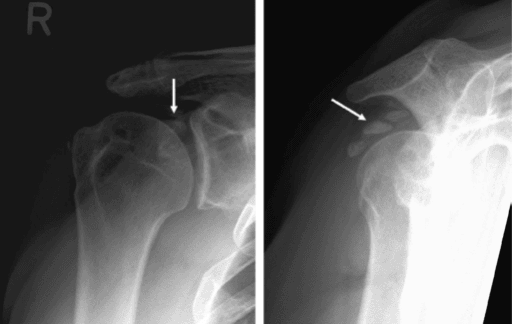
Why the views matter more than it sounds. The whole management algorithm rests on a millimetre measurement, and the commonest view under-reads it. The fragment is pulled posterosuperiorly by supraspinatus and by infraspinatus and teres minor, so a substantial part of the displacement lies in the plane the AP projects along and is foreshortened out of the image. A fracture measured at 3mm on the AP alone can be well beyond 5mm once the posterior component is seen.
The practical consequence. Never accept a below-threshold measurement made on a single AP: the number that decides operation versus sling has to come from an axillary (or Velpeau) view, and from CT where the plain films disagree or the fragment is comminuted.
The "crescent sign" on the axillary radiograph is the displaced greater tuberosity fragment lying posterior to the humeral head. It indicates significant posterior displacement and typically requires surgical intervention.
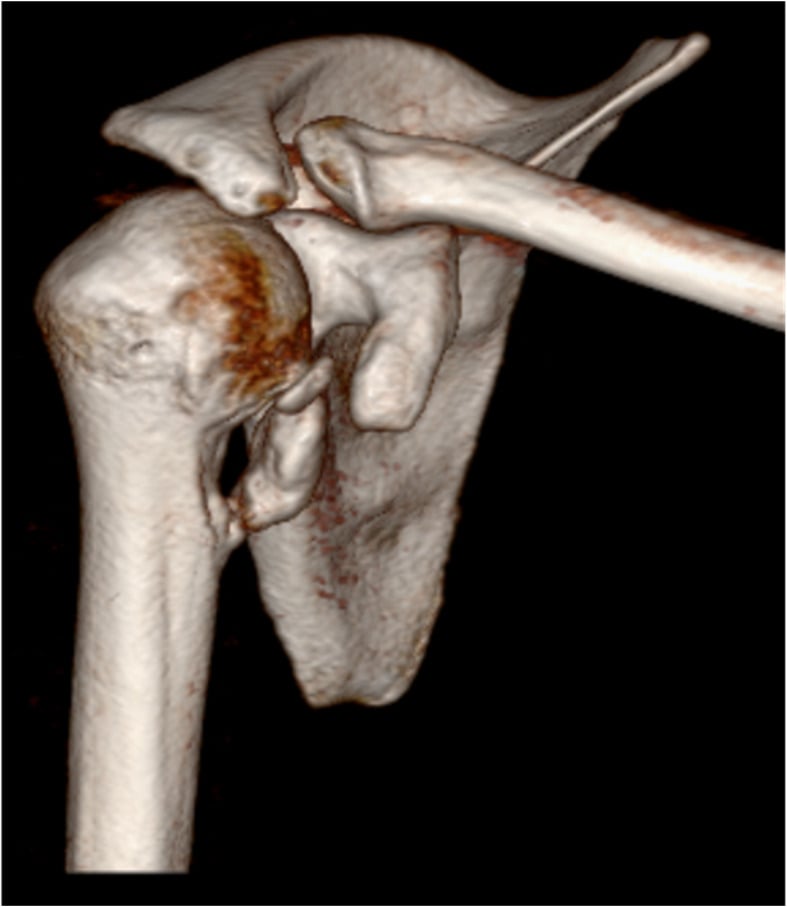
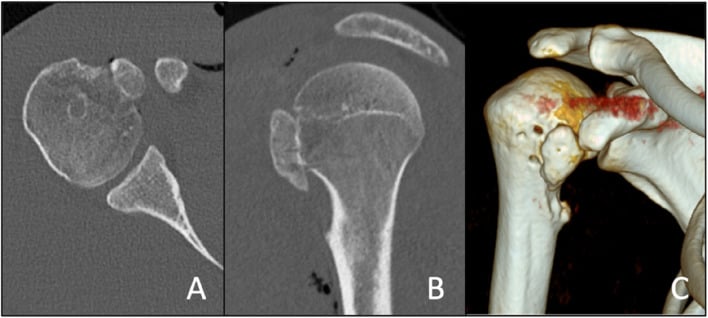
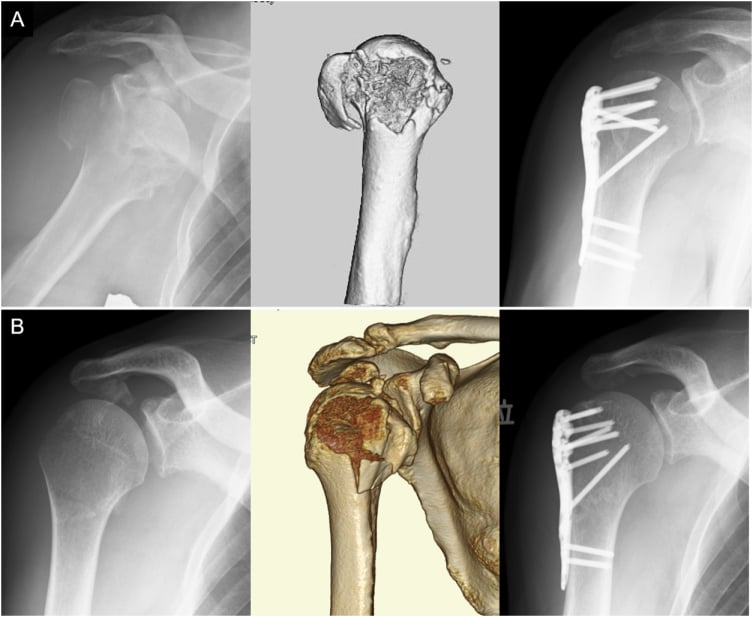
CT. CT is for surgical planning of the displaced fracture, for assessing fragment size and comminution, for evaluating an associated glenoid injury and for assessing a failed closed reduction. It gives the exact displacement measurement, the fragment size for fixation planning, the bone quality, any Bankart or bony Bankart lesion and the size of a Hill-Sachs lesion. The 3D reconstruction shows the fracture geometry, helps plan the approach and is useful for patient education; CT with 3D reconstruction is standard for surgical planning.
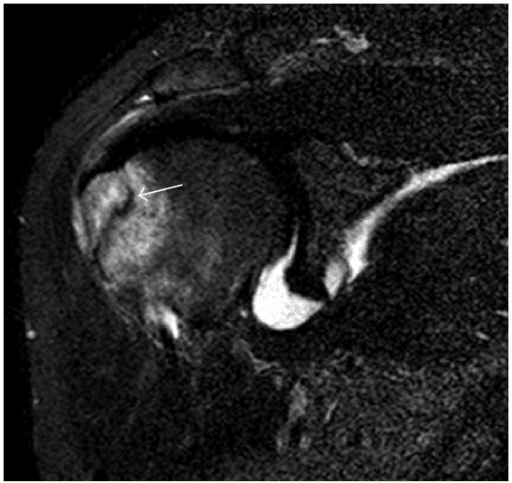
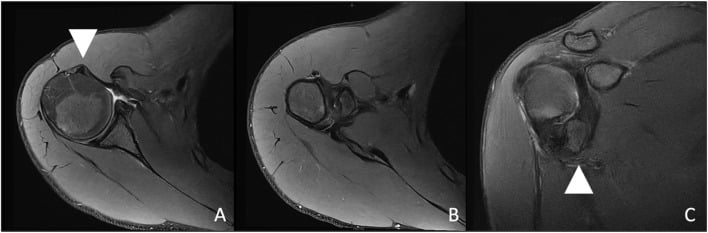
MRI. MRI is not usually needed acutely. It is reserved for suspected rotator cuff pathology, the chronic or delayed presentation, persistent weakness despite a healed fracture, and pre-operative assessment of cuff quality; consider it if non-operative treatment fails, and it is useful at 6-8 weeks if symptoms persist. It shows a partial or complete cuff tear, muscle quality and atrophy, associated labral pathology and cartilage injury.
Management Algorithm
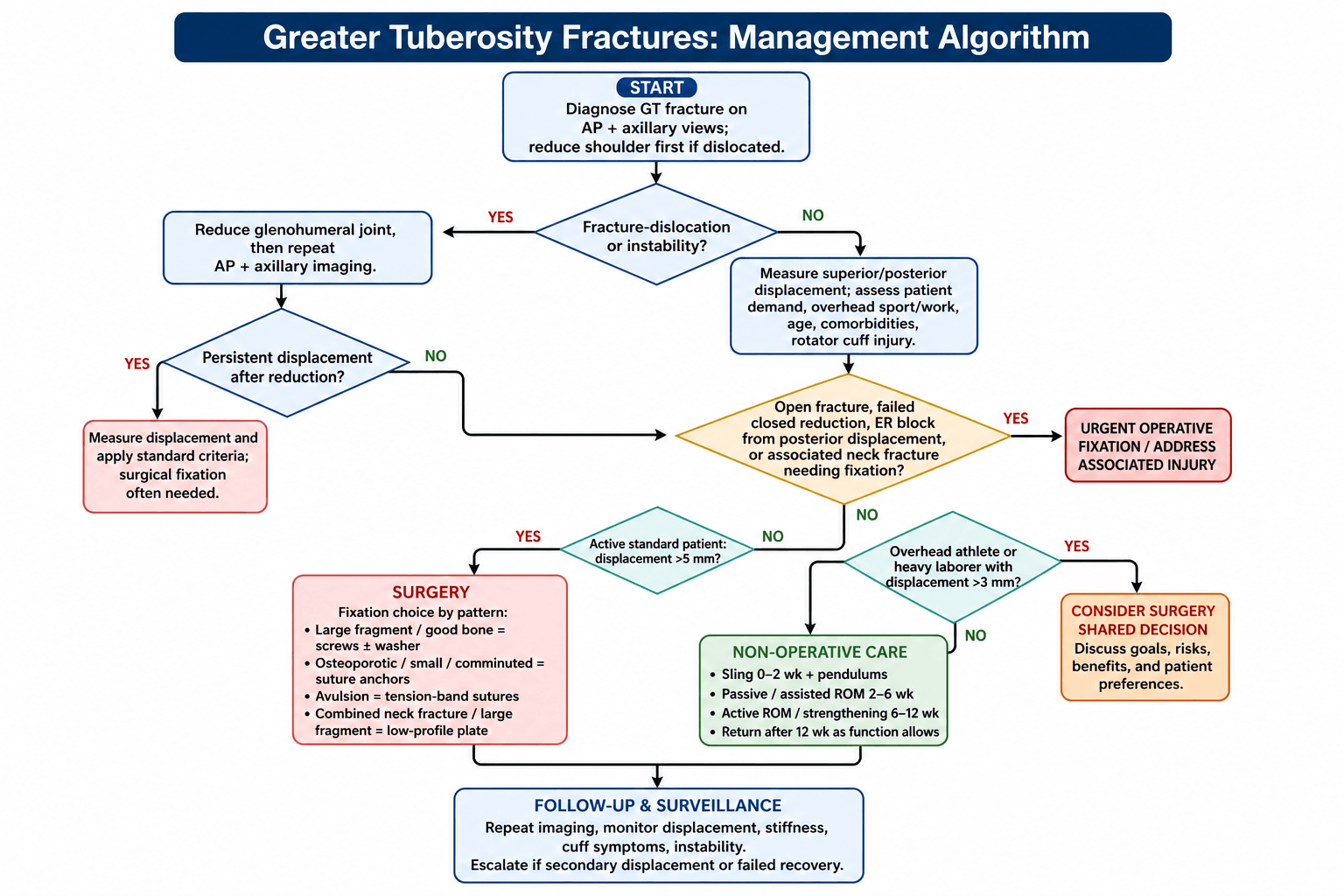
The decision. Displacement, its direction, and what the patient needs from the shoulder. The standard surgical threshold is 5mm of displacement, lowered to 3mm for overhead athletes and labourers who need full shoulder function, and in the active patient a posteriorly displaced fragment is a strong indication whatever the number, because it blocks external rotation. Elderly and low-demand patients may accept greater displacement once comorbidities and functional goals are weighed.
- Displacement
- Under 5mm
- Patient Factors
- Any patient
- Treatment
- Non-operative (sling, early ROM)
- Displacement
- 3-5mm
- Patient Factors
- Overhead athlete/labourer
- Treatment
- Consider surgical fixation
- Displacement
- Over 5mm
- Patient Factors
- Active patient
- Treatment
- Surgical fixation (screw/anchor)
- Displacement
- Variable
- Patient Factors
- Any patient
- Treatment
- Reduce first, reassess displacement
- Displacement
- Any
- Patient Factors
- Active patient
- Treatment
- Strong surgical indication
The threshold is softer than it looks. "Operate over 5mm" is a useful headline that examiners like to probe. Direction matters more than the absolute number, because the functional consequence of the displacement, impingement or a block to external rotation, is what drives the decision: a small superior or posterior displacement in an active or overhead patient can be more significant than a larger displacement tolerated in a low-demand elderly patient. Measurement is unreliable on a single view, which is why the number comes from a true AP plus an axillary, with CT when in doubt, accounting for the cuff's deforming pull. And the threshold is trending down: because even modest superior displacement causes impingement, many authors now use a lower threshold of around 3mm for active patients and reserve the more lenient 5mm tolerance for the elderly and low-demand.
Know what kind of number 3mm is before you defend it. It is a demand-adjusted threshold from expert recommendation, not a displacement at which harm has been demonstrated, and Platzer's 2005 cohort is the reason the general figure stays at 5mm. In 135 non-operatively treated fractures displaced 1 to 5mm, 97% did well, and those over 3mm did only slightly worse with no statistical significance, so the authors recommended non-operative treatment across that whole range. The honest formulation is that 3mm lowers the bar for patients in whom a small loss of external rotation or a little impingement actually costs them something, not that 3mm is where the shoulder starts to fail.
Do not quote "5 mm" as a fixed law: say the threshold is direction-weighted and demand-dependent, measured on AP + axillary (+/- CT), with a lower (~3 mm) threshold in active/overhead patients and more tolerance in the elderly.
Who. Displacement under 5mm (or under 3mm in athletes), elderly low-demand patients with larger displacement, patients with significant medical comorbidities, and the minimally displaced fracture-dislocation once reduced. Non-operative treatment yields excellent results in minimally displaced fractures.
- Sling immobilisation
- Ice, analgesia
- Gentle pendulum exercises
- Progressive passive ROM
- Active-assisted exercises
- Avoid active abduction
- Active ROM when healed
- Strengthening exercises
- Rotator cuff rehabilitation
- Full activities as tolerated
- Sport-specific training
- Return to work or sport based on function
A minimally displaced fracture can still displace. The classic error is to immobilise and forget. The fragment carries the rotator cuff insertion, and that deforming pull can drag an initially acceptable fragment into a surgical position over the first weeks: a fracture under the operative threshold on day 1 can cross it by week 2-3. Non-operative management is therefore active surveillance rather than neglect:
- Obtain interval radiographs, a true AP and an axillary view, at around 1-2 weeks and again at 6 weeks specifically to detect secondary displacement before the fragment malunites
- Protect against the deforming pull in the early phase: sling, and avoid active abduction and external rotation until early union, the same logic as protecting a rotator cuff repair
- If the fragment displaces past the threshold on a follow-up film, convert to fixation while reduction is still achievable; a late-displaced tuberosity that malunites needs the much harder osteotomy or decompression salvage
A non-operatively treated GT fracture needs early interval radiographs (including an axillary view) to catch secondary displacement from cuff pull, plus early activity restriction. Do not assume an acceptable injury film means an acceptable healed position.
Surgical Technique
When. The isolated greater tuberosity fracture, and the most common approach used. It gives direct access to the fragment, minimises soft tissue stripping and can be extended if needed; the risks are the axillary nerve, which is why the split stays proximal, and damage to the deltoid origin.
Technique
- Beach chair or lateral decubitus position
- Incision from the anterolateral edge of the acromion
- Split the deltoid in line with its fibres
- Stay within 5cm of the acromion, for the axillary nerve
- Identify the fracture fragment and the cuff
The axillary nerve emerges approximately 5-7cm distal to the lateral edge of the acromion. The deltoid-splitting approach must stay within 5cm of the acromion to avoid nerve injury.
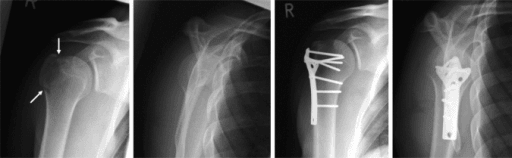
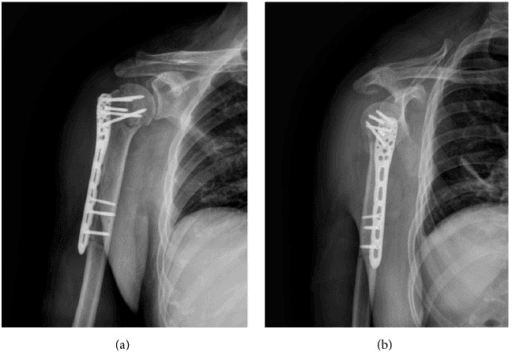
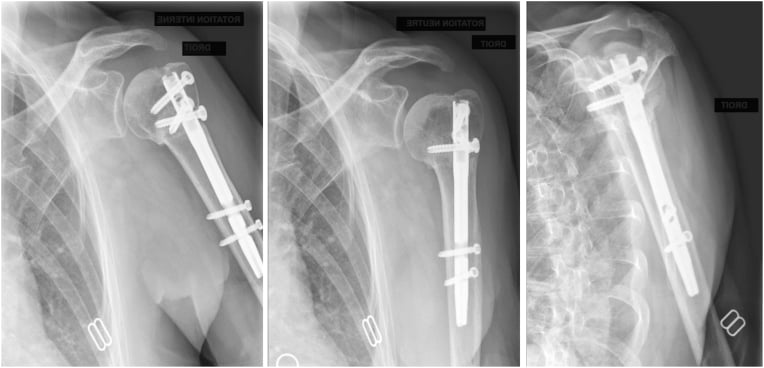
Screw fixation. Reduce the fragment anatomically, hold it with a provisional K-wire and pass the cannulated screw over the wire, adding a washer if the bone quality is poor. Two screws are typical: they control rotation and prevent the fragment toggling. Aim the screws towards the medial calcar, use a lag technique if the bone allows, and bury the head below the cortical surface, because a proud screw head causes impingement.
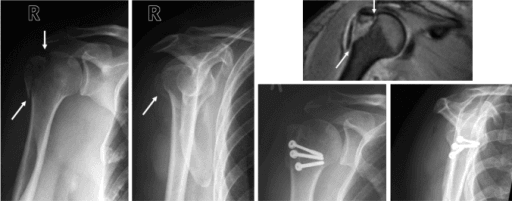
Suture anchor fixation. Place the anchors in the anatomic footprint, in the medial cortex, pass the sutures through the rotator cuff, reduce the fragment with traction and tie the sutures over it in a mattress or simple configuration. The cuff tissue provides the purchase, multiple anchors improve the fixation, and augmentation with transosseous sutures is worth considering.
Tension band. A heavy non-absorbable suture is passed through the rotator cuff tendons and through bone tunnels in the shaft, then tied over a bridge of bone, converting distraction to compression. It works in osteoporotic bone, has a low implant profile and is cost effective.
Plate fixation. The plate must not protrude superiorly, or it will impinge under the acromion. Screws into the tuberosity fragment must capture the rotator cuff tendons through bone, and suture augmentation may be used; the exposure requires more extensive soft tissue dissection than a percutaneous screw technique.
Complications
Malunion. The most common complication of non-operative treatment of a displaced fracture. A superior malunion causes subacromial impingement, a posterior malunion an external rotation block, and a combined malunion both. The patient has pain with overhead activity, weakness of external rotation, catching and clicking, and night pain. Treatment is osteotomy and repositioning, or arthroscopic subacromial decompression in mild cases, and severe cases may require reverse shoulder arthroplasty, which is why achieving an anatomic reduction in the displaced fracture matters so much.
Non-union. Rare with appropriate treatment. The risk factors are large fragment displacement, poor blood supply, osteoporosis and inadequate immobilisation, and it presents with persistent pain, weakness and motion at the fracture site. Treatment is revision fixation with bone graft and a rotator cuff repair if needed; consider arthroplasty if severe.
Stiffness. The most common complication overall. The risk rises with prolonged immobilisation; aggressive early motion protocols prevent it while protecting the repair, and established stiffness may need manipulation or release.
Avascular necrosis. Rare with an isolated greater tuberosity fracture; the risk rises with combined patterns, and it is monitored with serial radiographs.
Hardware prominence. Screw heads may cause impingement and may need removal after healing. Avoid proud hardware at the time of surgery.
Rotator cuff failure. May occur with anchor fixation, related to poor cuff tissue quality, and may require revision repair.
Postoperative Care
Rehabilitation runs in three phases: protect the fixation, restore motion, then restore strength.
The goals are to protect the fixation, control pain and swelling, and maintain passive range of motion. No lifting, sleep in the sling or a recliner, and avoid reaching behind the back.
- Week 0-2: sling immobilisation, pendulum exercises only, ice and analgesia, elbow, wrist and hand motion
- Week 2-6: passive forward flexion and passive external rotation to neutral; no active abduction, no active external rotation
The goals are full passive range, then active-assisted motion, then active range. Milestones: full passive range by week 8, active elevation to 140° by week 12.
- Week 6-8: active-assisted forward flexion and external rotation, isometric rotator cuff exercises, scapular stabilisation
- Week 8-12: active range in all planes, light resistance, proprioceptive training; discontinue the sling if healing is confirmed
The goals are strength, return to activities and sport-specific training. Return to sport requires full range, symmetric strength, pain-free function and a sport-specific assessment, typically at 4-6 months post-operatively.
- Week 12-16: progressive resistance, rotator cuff strengthening, closed chain exercises, swimming if range allows
- Week 16-24: sport-specific training, overhead activities if applicable, return to work progression, impact activities based on healing
Outcomes
Non-operative treatment of the minimally displaced fracture. Union in over 95%, good to excellent outcomes in 85-90% and return to pre-injury function in 80-85%, with a mean Constant score of 85-90, a mean ASES score of 85-90 and return to sport in 85%. Pain resolves by 6-8 weeks, range of motion recovers by 8-12 weeks, strength by 12-16 weeks and full activity is reached at 3-4 months.
Operative treatment of the displaced fracture. Union in over 95% with adequate fixation, good to excellent outcomes in 85-95% and return to pre-injury function in 80-90%, with a mean Constant score of 80-90, a mean ASES score of 85-92 and return to sport in 80-85%. Union takes 8-12 weeks, full range 12-16 weeks and full activity 4-6 months. The complications to quote are stiffness in 5-10%, hardware removal in 10-15% and revision surgery in under 5%.
Prognosis. Patient factors and fracture characteristics both influence the final outcome.
- Favourable: younger age, good bone quality, an anatomic reduction, early surgery within 2 weeks, and compliance with rehabilitation
- Unfavourable: older age, osteoporosis, a delay in treatment over 3 weeks, an associated rotator cuff tear, a comminuted fracture pattern and posterior displacement
Guidelines, Registries & Global Practice
Global Epidemiology
Greater tuberosity fractures are best understood within the wider epidemiology of proximal humeral fractures, which are among the most common osteoporotic fractures worldwide. Court-Brown et al. prospectively studied 1027 proximal humeral fractures and found a unipolar age distribution with peak age-specific incidence in women aged 80-89 years, with roughly half of all fractures minimally displaced (PMID 11580125, DOI). Isolated greater tuberosity fractures account for a minority of this group and show a more bimodal pattern - younger patients sustaining high-energy or sporting injuries (frequently as part of an anterior dislocation) and older patients with low-energy falls on osteoporotic bone (Green and Izzi, PMID 14671536, DOI). Mutch et al. reported a mean age of 58 years across 199 isolated greater tuberosity fractures, with a female predominance (PMID 24788500, DOI).
Guideline & Society Guidance
There is no single high-level (RCT-based) guideline dedicated to isolated greater tuberosity fractures; recommendations are derived from proximal humeral fracture guidance and expert reviews. The table below summarises the position of major bodies and the level of supporting evidence.
- Position on GT fractures
- No mandatory operative criterion; shared decision-making. Limited/inconclusive evidence to favour surgery over non-operative care for most proximal humeral fractures
- Evidence level
- Limited / inconclusive
- Position on GT fractures
- Displaced fragments (commonly greater than 5mm) reduced and fixed to restore cuff footprint; fixation matched to morphology (avulsion/split/depression)
- Evidence level
- Expert consensus / III
- Position on GT fractures
- Process standards for proximal humeral trauma - prompt imaging, neurovascular documentation, early senior decision and physiotherapy
- Evidence level
- Standards of care
- Position on GT fractures
- Endorse displacement-based thresholds (greater than 5mm general, greater than 3mm overhead/active) with early mobilisation
- Evidence level
- Narrative / IV-V
- Position on GT fractures
- No GT-specific criterion; emphasises non-operative care for many proximal humeral fractures and early rehabilitation
- Evidence level
- Guideline (indirect)
The defining decision threshold across all bodies is displacement-based: greater than 5mm in the general population and greater than 3mm in active or overhead patients (George, PMID 17916784). No registry or randomised trial has overturned this.
Registry & Trial Evidence
No national joint registry captures isolated greater tuberosity fracture fixation, because these are bone-and-soft-tissue procedures rather than arthroplasty; registry data (AOANJRR, NJR, AJRR) are relevant only when displaced fracture-dislocations in the elderly proceed to reverse shoulder arthroplasty, where these registries report implant survivorship and revision rates. The randomised-trial evidence base specific to greater tuberosity fractures is sparse; the strongest comparative data remain cohort studies showing better function after fixation of genuinely displaced fragments versus non-operative treatment (Platzer, PMID 18349710, DOI) and excellent non-operative outcomes for minimally displaced (1-5mm) fractures (Platzer, PMID 15963996).
Practice Variation
Practice variation is driven by patient demand and bone quality rather than geography: screw or plate fixation predominates for large split fragments in good bone, whereas suture-anchor or transosseous suture constructs (including arthroscopic suture-bridge techniques) are favoured for comminuted, avulsion-type or osteoporotic fragments (Li et al., PMID 28401278, DOI). Arthroscopic fixation is concentrated in high-volume shoulder units with the requisite expertise. Imaging and specialist access also vary by setting rather than by country: plain radiography and CT are routinely available, whereas MRI access can be more limited outside major centres but is rarely required acutely; telehealth with image transfer increasingly supports regional and rural management with specialist input. In high-income settings, structured falls-prevention programmes help reduce the low-energy osteoporotic fracture burden in the elderly.
MCQ Practice
Self-Assessment Questions
Q: A 35-year-old tennis player sustains a greater tuberosity fracture with 4mm of superior displacement. Which factor would most influence your decision toward surgical management?
- A) Patient age
- B) Occupation as an overhead athlete
- C) Superior direction of displacement
- D) Fragment size
- E) Time from injury
A: B - The patient's occupation as an overhead athlete with high functional demands is the key factor. While the standard threshold is 5mm, many surgeons advocate 3mm threshold for overhead athletes requiring full shoulder function.
Q: Which rotator cuff tendon does NOT attach to the greater tuberosity?
- A) Supraspinatus
- B) Infraspinatus
- C) Teres minor
- D) Subscapularis
- E) All attach to the greater tuberosity
A: D - The subscapularis attaches to the lesser tuberosity, not the greater tuberosity. The three rotator cuff tendons that attach to GT are supraspinatus (superior), infraspinatus (middle), and teres minor (inferior facet).
Q: What is the most important radiographic view for assessing displacement of a greater tuberosity fracture?
- A) True AP (Grashey) view
- B) Scapular Y view
- C) Axillary view
- D) Internal rotation AP view
- E) External rotation AP view
A: C - The axillary view best shows posterior displacement of the GT fragment (the "crescent sign"). Posterior displacement is often the most functionally significant and may be missed on AP views.
Q: When performing a deltoid-splitting approach, how far distal to the acromion must the surgeon stay to avoid axillary nerve injury?
- A) 2cm
- B) 3cm
- C) 5cm
- D) 7cm
- E) 10cm
A: C - The deltoid split must stay within 5cm of the acromion to avoid injury to the axillary nerve, which courses around the surgical neck 5-7cm distal to the lateral acromion.
Q: What is the most common complication following treatment of greater tuberosity fractures?
- A) Non-union
- B) Avascular necrosis
- C) Stiffness
- D) Infection
- E) Hardware failure
A: C - Stiffness is the most common complication following both operative and non-operative treatment of GT fractures. This emphasizes the importance of early motion protocols.
Viva Scenarios
Practise clinical reasoning and management decisions out loud
“A 28-year-old rugby player sustains an anterior shoulder dislocation during a tackle. After closed reduction, X-rays show a greater tuberosity fracture with 8mm of superior displacement. How would you manage this patient?”
“An 82-year-old woman with osteoporosis falls and sustains a greater tuberosity fracture with 7mm of posterior displacement. Her pre-injury Constant score was 70 and she lives independently. What is your approach?”
“At 3 months post-operative following screw fixation of a displaced greater tuberosity fracture, your patient has persistent pain and inability to elevate the arm above 90 degrees. The fracture is united on X-ray. What is your differential and management?”
“Describe the surgical approach and fixation technique you would use for a displaced greater tuberosity fracture in a 45-year-old patient with good bone quality.”
Key Facts
- Displacement threshold: 5mm standard, 3mm for overhead athletes
- Three cuff attachments: Supraspinatus (superior), Infraspinatus (middle), Teres minor (inferior)
- Posterior displacement worst - limits external rotation
- Superior displacement causes impingement
- 15-30% of anterior dislocations have associated GT fracture
- Axillary view shows posterior displacement (crescent sign)
- Deltoid split must stay within 5cm of acromion (axillary nerve)
- Screw fixation for large fragments with good bone
- Suture anchors for osteoporotic bone or comminution
Surgical Steps
- Beach chair position, arm draped free
- Deltoid-splitting approach from anterolateral acromion
- Split deltoid in line with fibers, stay within 5cm of acromion
- Identify fracture and rotator cuff attachment
- Reduce fragment anatomically
- Provisional K-wire fixation
- Place 2 cannulated screws toward medial calcar
- Bury screw heads below cortical surface
- Check fixation with fluoroscopy
Common Pitfalls
- Missing posterior displacement on AP views alone
- Treating displaced fractures non-operatively in active patients
- Extending deltoid split beyond 5cm (axillary nerve)
- Proud hardware causing impingement
- Prolonged immobilization causing stiffness
- Missing associated instability in fracture-dislocations
- Using screw fixation in osteoporotic bone
Examiner Favorites
- Describe rotator cuff attachments to greater tuberosity
- What is the surgical threshold for displacement?
- Why is posterior displacement worse than superior?
- What approach would you use and why?
- How do you protect the axillary nerve?
- How would you fix a GT fracture in osteoporotic bone?
- Management of GT fracture with anterior dislocation
Evidence Base
Key Studies
Platzer et al. - Operative vs Non-operative for Displaced GT Fractures
- Surgical cohort of 52 patients with displaced GT fractures compared with 9 treated non-operatively
- All operatively treated fractures healed with no nonunion; 80% achieved good or excellent shoulder scores
- Operative reduction and fixation gave significantly better function than non-operative treatment of displaced fragments (p less than 0.05)
- Seventeen percent had a minor loss of reduction after fixation (under 5mm, superior) with NO significant effect on shoulder function - a useful counterweight to treating the millimetre threshold as sacred once the fragment is fixed
Platzer et al. - Minimally Displaced GT Fractures (1-5mm)
- 135 patients with minimally displaced (1-5mm) GT fractures treated non-operatively, mean follow-up 3.7 years
- 97% achieved good or excellent results; displacement greater than 3mm gave slightly worse but non-significant outcomes
- Worse results in the eighth and ninth decades; female patients did significantly better than male patients
- The authors' own recommendation is non-operative treatment in ALL patients with 1-5mm displacement, with a Gilchrist bandage or Mitella sling for 3 weeks then intensive rehabilitation
Mutch et al. - Morphological Classification (Avulsion/Split/Depression)
- 199 isolated GT fractures classified as avulsion (39%), split (41%) and depression (20%)
- Inter- and intra-observer reliability (kappa 0.69-0.86) superior to both Neer and AO classifications
- Distinct morphologies carry differing implications for pathophysiology and fixation technique
George - Fractures of the Greater Tuberosity (Review)
- GT fractures occur with anterior dislocation or by impaction against the acromion/superior glenoid
- Surgical fixation recommended for greater than 5mm displacement (general population) or greater than 3mm in active overhead patients
- Associated partial-thickness cuff and labral tears may cause persistent post-healing pain
Green and Izzi - Isolated GT Fractures (Review)
- Comprehensive review of epidemiology, anatomy, classification and treatment of isolated GT fractures
- Highlighted the paucity of outcome studies specific to isolated GT fractures
- Called for more precise diagnostic criteria and treatment selection
Li et al. - Arthroscopic Suture-Bridge Fixation
- 14 displaced/comminuted GT fractures (greater than 3mm) treated arthroscopically with a modified suture-bridge
- Mean ASES 97.5 and UCLA 32 at follow-up, with 13 of 14 rated good or excellent
- Demonstrates arthroscopic fixation as a viable option for avulsion/comminuted fragments
Court-Brown et al. - Epidemiology of Proximal Humeral Fractures
- Prospective 5-year population study of 1027 proximal humeral fractures
- Unipolar age distribution with peak age-specific incidence in women aged 80-89 years
- Roughly half of fractures are minimally displaced; the AO classification captured the spectrum better than Neer