Iliac Crest Contusion | Contact Sports | Functional Recovery Focus
- Direct blow to iliac crest causes subperiosteal hematoma
- Pain with hip flexion/abduction and trunk rotation characteristic
- Rule out avulsion fracture in adolescents with X-ray
- Functional rehabilitation focuses on core and hip stabilizers
- Protective padding essential for return to contact sports
- “Hip pointer is NOT a fracture - it's a contusion with subperiosteal hematoma
- “Adolescents may have apophyseal avulsion - always X-ray if severe
- “Abdominal wall weakness may persist - ensure core strength before RTS
- “Padding placement is critical - must cover entire iliac crest
Overview and Epidemiology
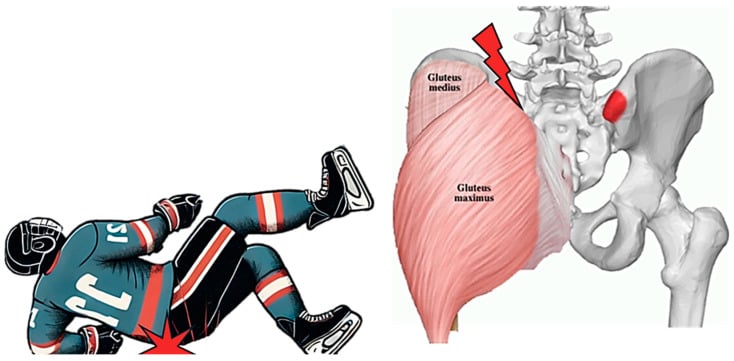
A hip pointer is a contusion of the iliac crest that produces a subperiosteal haematoma and injury to the surrounding soft tissue. The name is a misnomer: the hip joint itself is not involved, and the term likely derives from the crest being a bony prominence that "points out" from the pelvis.
Mechanism. A direct blow to the crest from a helmet, knee or shoulder; a lateral fall onto a hard surface with direct impact; or the tackle or body-check impact of collision sport.
Sports. American football is the most common setting, especially for running backs and linebackers. The injury is also seen in:
- Rugby - high tackle situations
- Ice hockey - board checks
- Australian Rules football - contested marking
- Combat sports - knee strikes to the body
Pathophysiology and Mechanisms
The iliac crest. A subcutaneous bony prominence running from the ASIS to the PSIS, covered only by thin subcutaneous tissue, which is what leaves it vulnerable to direct trauma. It is the attachment of the external oblique, internal oblique, transversus abdominis, latissimus dorsi, gluteus medius and tensor fasciae latae.
The apophysis. In adolescents the iliac crest apophysis appears at 13-15 years, has multiple ossification centres along its length, and fuses to the ilium between 15 and 21 years. Until it fuses it is vulnerable to avulsion.
Why it hurts. The periosteum is highly innervated and sensitive, and the subperiosteal haematoma stretches it, which is why the pain is severe. Several powerful trunk muscles attach to the crest, so any contraction puts tension on the injured periosteum.
How it evolves. The contusion runs a predictable course:
Hip Pointer Evolution
Direct impact causes periosteal disruption. Subperiosteal haematoma forms as bleeding occurs beneath the periosteum. Significant pain with any muscle contraction pulling on the crest.
Haematoma organises. Inflammatory response peaks. Surrounding muscle spasm develops. Maximum swelling and pain typically at 48 hours.
Inflammation begins to resolve. Haematoma absorption starts. Gentle ROM can begin. Muscle function gradually returns.
Progressive healing. Subperiosteal haematoma resolves or calcifies. Return of normal muscle function. Sport-specific rehabilitation progresses.
The posterior variant. A posterior hip pointer, a subperiosteal gluteal detachment at the posterior iliac crest near the PSIS, has been described in elite athletes (Drigny et al., 2025, PMID 40757555).
Classification Systems
Grading is clinical, by pain, swelling, gait and muscle function. It predicts the recovery timeline and guides the intensity of treatment.
Clinical severity grading is the most commonly used scheme.
- Symptoms
- Localised pain, minimal swelling
- Gait
- Normal
- Muscle Function
- Mild weakness with resisted testing
- Recovery
- 1-2 weeks
- Symptoms
- Moderate swelling, ecchymosis
- Gait
- Antalgic
- Muscle Function
- Moderate weakness, pain with activity
- Recovery
- 2-4 weeks
- Symptoms
- Severe pain, significant swelling
- Gait
- Unable to ambulate
- Muscle Function
- Significant weakness, unable to contract
- Recovery
- 4-6+ weeks
History
What to ask. The mechanism, whether a direct blow, a fall or a muscle contraction, and the force and direction: a helmet strike, a knee or the ground. Whether the player was able to continue playing, any associated abdominal pain or hip symptoms, and the age, since an adolescent may have an open apophysis. A thorough history helps separate a contusion from a more serious injury pattern.
Red flags. Any of these points to something other than a simple contusion:
- Abdominal pain or rigidity - intra-abdominal injury
- Hip joint symptoms - intra-articular pathology
- Numbness or weakness in the leg - nerve involvement
- Severe pain out of proportion - compartment syndrome, which is rare
Examination
Inspection. Note the location and extent of swelling and any ecchymosis, which may track to the hip or thigh, and compare with the opposite side. Watch the gait.
Palpation. Point tenderness over the iliac crest and a palpable haematoma or defect, compared with the uninjured side. Palpate the abdominal wall as well.
Movement and strength. Active and passive hip range of motion, then trunk flexion, rotation and side-bending. Test the hip abductors (gluteus medius), the hip flexors (rectus femoris, iliopsoas) and the trunk obliques against the uninjured side. A comprehensive examination rules out associated injury and guides the severity grading.
Special tests. Each provocative test points to a structure:
- Resisted hip abduction - pain indicates gluteal involvement
- Resisted trunk rotation - pain indicates oblique involvement
- Single-leg stance - functional stability
- Thomas test - rules out hip flexor pathology
Beyond the crest. Check the lateral femoral cutaneous nerve (meralgia paraesthetica), the femoral nerve and the sciatic nerve. Examine the abdomen for rigidity, guarding, bowel sounds and referred pain patterns. The hip joint itself should show no signs of intra-articular pathology.
Investigations
Radiographs. Not routinely required for a typical contusion: most mild and moderate adult hip pointers need no imaging. A radiograph is indicated for:
- An adolescent with a significant injury
- A severe (Grade III) injury
- A suspected fracture or avulsion
- Failure to improve after 2-3 weeks
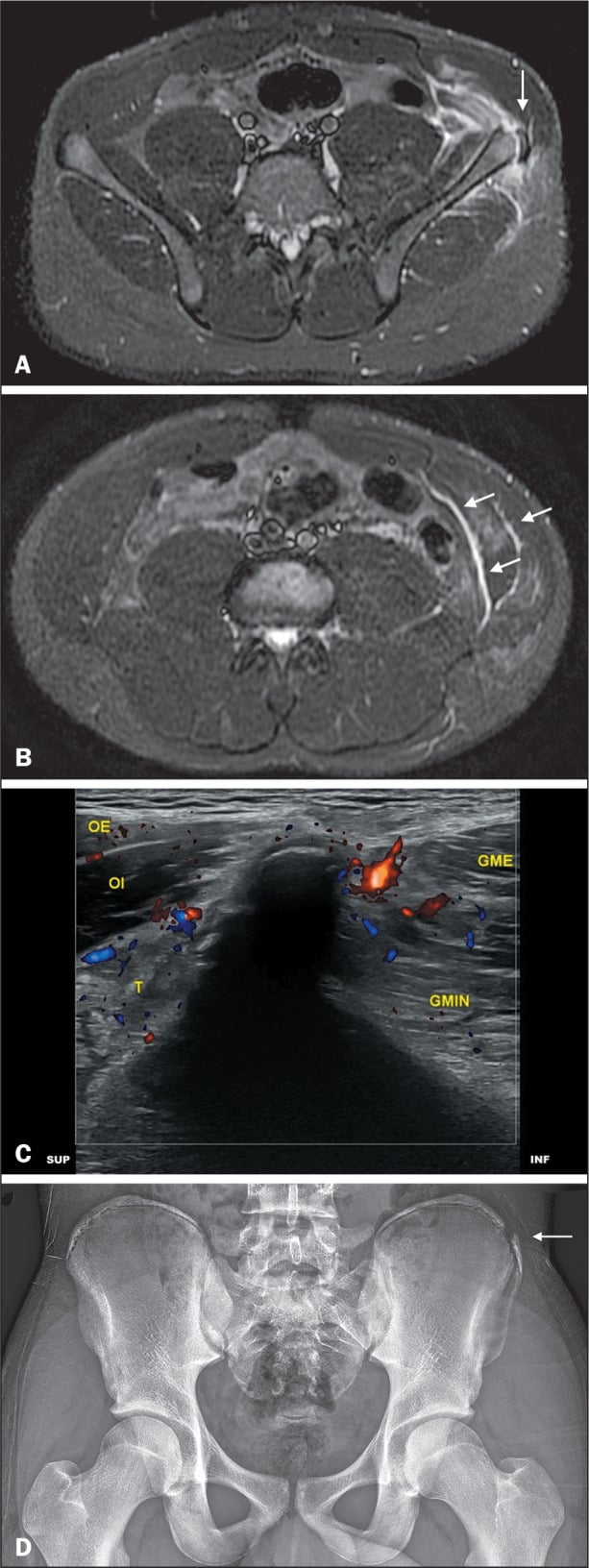
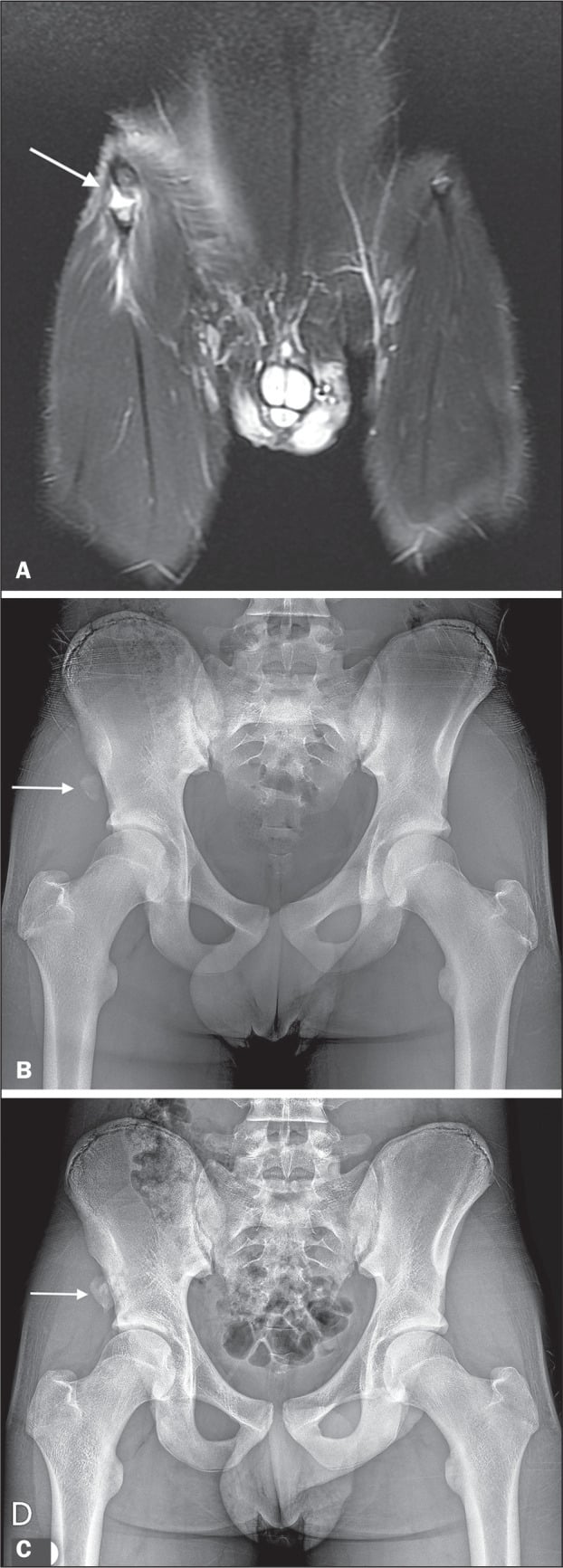
Request an AP pelvis and oblique views of the affected side. Look for a widened or separated apophysis, an avulsion fragment at the ASIS or AIIS, a fracture line through the iliac wing, or the periosteal reaction of a stress fracture, which is also bone-scan positive.
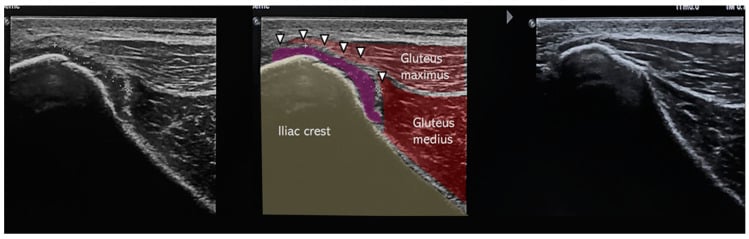
Ultrasound. Shows the subperiosteal fluid collection and sizes the haematoma, can guide aspiration if needed, and allows dynamic assessment of muscle integrity.
MRI. Reserved for diagnostic uncertainty, and useful for persistent symptoms. It shows the extent of the soft-tissue injury and identifies bone marrow oedema. A normal or equivocal radiograph does not exclude an avulsion when clinical suspicion remains high.
Blood tests. Not required for an isolated hip pointer. A full blood count if there are signs of significant blood loss or concern about bleeding, and coagulation studies if a coagulopathy is suspected or the patient is on anticoagulants; laboratory investigations rarely contribute to management.
Differential diagnosis. The conditions that share the presentation, and the finding or test that separates each:
- Discriminating Features
- Direct blow, point tenderness on crest, pain with trunk rotation, normal hip joint
- Key Investigation
- Clinical; ultrasound for haematoma
- Why It Matters
- Benign; conservative care
- Discriminating Features
- Adolescent, sudden forceful contraction (sprint, kick), audible pop, no contact needed
- Key Investigation
- AP pelvis radiograph
- Why It Matters
- Far commoner avulsion than iliac crest; may alter RTS timeline
- Discriminating Features
- Adolescent, severe swelling, unable to weight bear
- Key Investigation
- AP pelvis radiograph
- Why It Matters
- Rare (3 of 203 in Rossi & Dragoni); usually conservative
- Discriminating Features
- High-energy mechanism, diffuse pelvic pain, possible instability
- Key Investigation
- Pelvic radiograph / CT
- Why It Matters
- May indicate higher-energy injury; assess pelvic ring
- Discriminating Features
- Lateral abdominal wall pain, pain on resisted trunk rotation, possible 2cm aponeurotic detachment
- Key Investigation
- MRI
- Why It Matters
- Rare operative variant on the hip pointer spectrum
- Discriminating Features
- Abdominal pain/rigidity, haemodynamic change, referred pain
- Key Investigation
- FAST / CT abdomen
- Why It Matters
- Life-threatening - never miss with flank/pelvic trauma
- Discriminating Features
- Burning/numbness anterolateral thigh, LFCN distribution
- Key Investigation
- Clinical; nerve block if uncertain
- Why It Matters
- Nerve, not bone - different management
- Discriminating Features
- Axial back pain, radicular features, no local crest tenderness
- Key Investigation
- Lumbar examination / MRI
- Why It Matters
- Source is spine, not pelvis
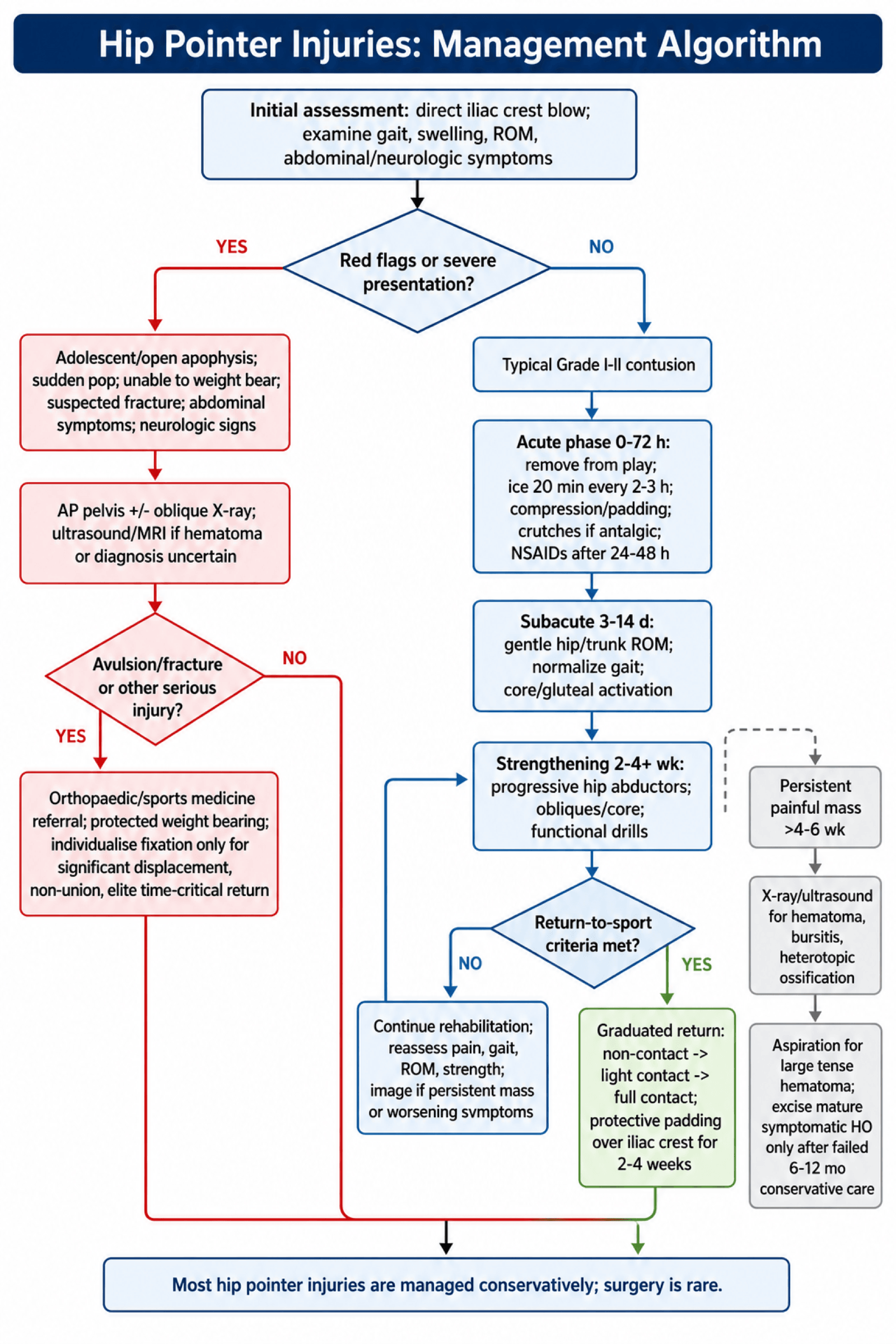
Management Algorithm
The decision. Almost every hip pointer is treated conservatively, and the grade sets the intensity:
- Grade I - ice, NSAIDs, relative rest, progress as tolerated
- Grade II - protected rest, gradual range of motion, core rehabilitation, padding
- Grade III - radiograph to rule out fracture, consider aspiration, structured rehabilitation
- Apophyseal avulsion - radiograph to confirm; mostly conservative; individualised surgery if significantly displaced or non-union
The pathway then runs through four phases, acute, subacute, strengthening and return to sport, each with its own goals.
- 1Initial Assessment
History, examination, grade severity
Determine Grade I, II, or III
- 2Imaging Decision
X-ray if: adolescent, severe, suspected fracture
Rule out avulsion or fracture
- 3Acute Phase (0-72h)
RICE protocol, crutches if needed, NSAIDs after 24-48h
Control pain and swelling
- 4Subacute Phase (3-14d)
Gentle ROM, begin core activation, pain-free activity
Restore basic function
- 5Rehabilitation (2-4wk)
Progressive strengthening, sport-specific drills
Prepare for return to sport
- 6Return to Sport
Full ROM, core strength, functional testing, protective padding
Graduated return to contact
A common sideline question is whether to inject local anaesthetic to let a player return to the same game. This is genuinely controversial and must be handled carefully:
- It is only ever considered after a serious injury has been excluded - in particular intra-abdominal injury, an iliac wing or apophyseal avulsion fracture, and significant neurovascular injury. Injecting before excluding these can mask a dangerous injury.
- Local-anaesthetic infiltration of the contused iliac crest can abolish pain enough to return to play and is described in elite sport, but it removes the protective pain signal, risks aggravating the contusion/haematoma, and carries the usual injection risks.
- It should be a shared, informed and documented decision used selectively, not a routine first-line measure, and should generally be avoided in adolescents with an open apophysis.
For most athletes the safer default is to remove from play, apply ice and compression, and rehabilitate - reserving injection for selected adult elite cases in which serious injury has been excluded.
Proper acute management reduces recovery time and complications. The sequence:
- Remove from play - do not continue with a significant injury
- Ice - 20 minutes every 2-3 hours
- Compression - elastic wrap over padding
- Crutches - for an antalgic gait
- NSAIDs - commenced after 24-48 hours
Position and activity. Side-lying on the unaffected side with a pillow between the knees, avoiding direct pressure on the injured crest. Bed rest is not required: gentle walking as tolerated, avoiding the movements that aggravate it.
Surgical Technique
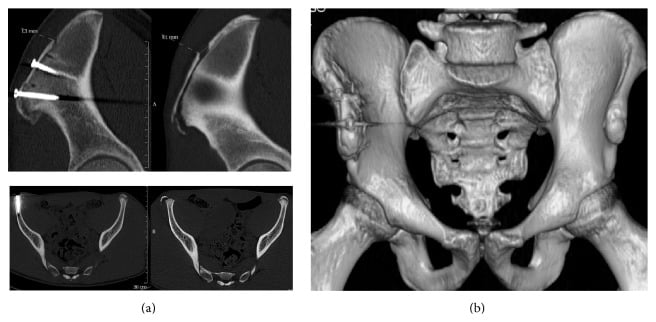
Surgery is almost never needed for a typical hip pointer; the vast majority heal completely with conservative management. What follows is the short list of situations in which an operation or a procedure is considered.
Absolute indications
- Significantly displaced apophyseal avulsion failing conservative care (no validated single displacement threshold - individualised)
- Large symptomatic heterotopic ossification
- Persistent painful bursitis after conservative treatment
- Symptomatic internal oblique aponeurotic avulsion in an elite athlete (rare; transosseous repair reported)
Relative indications
- Non-healing avulsion with displacement
- Elite athlete with time-critical return requirements
- Failed conservative management after 6 months
Complications
Heterotopic ossification. Subperiosteal calcification develops in 10-15% of significant hip pointers. It is benign and usually resolves spontaneously over months, but it may prolong symptoms. The risk is higher with:
- A severe initial injury
- Early aggressive mobilisation
- Repeated trauma to the area
- A large haematoma
It presents as persistent firm swelling or a palpable hard mass, may limit range of motion, and is often asymptomatic. Observe if asymptomatic and continue protected activity; excision is only for a lesion that is symptomatic and mature.
Prevention. Avoid aggressive early mobilisation and repeated trauma: adequate initial rest followed by gradual progression is the key. That is not an argument for immobility, since in muscle contusion generally an early, pain-limited range of motion lowers the likelihood of myositis ossificans (Larson et al., 2002, in the evidence base below).
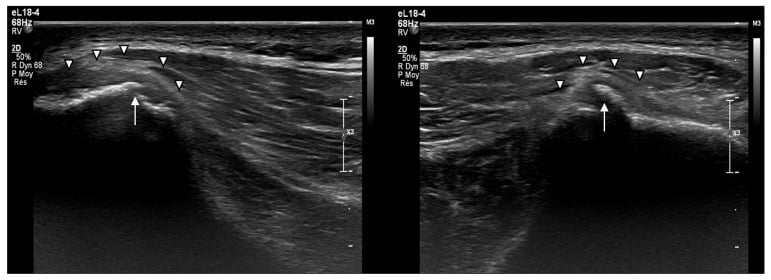
Chronic pain. Persistent pain follows inadequate initial treatment, a premature return to sport, recurrent injury or an undiagnosed associated injury. It shows as pain with specific activities, persistent point tenderness and weakness of the attached muscles. Re-evaluate for missed pathology, image if this has not been done, extend the rehabilitation programme, and consider injection therapy in select cases; most chronic pain resolves with appropriate rest and rehabilitation.
Weakness and recurrence. Abdominal oblique weakness may persist, and gluteal weakness affects hip stability; both need targeted strengthening. Recurrent injury is common if return to sport is too early or the padding inadequate, and may become a chronic issue.
Nerve injury. Rare: compression of the lateral femoral cutaneous nerve produces meralgia paraesthetica, which usually resolves as the haematoma resolves.
Missed fracture. A delayed diagnosis of an apophyseal avulsion or an iliac wing stress fracture. Re-image if the athlete is not improving.
Persistent localised pain after a hip pointer is not always heterotopic ossification. The posterior iliac crest is crossed by the superior cluneal nerves (cutaneous branches of the dorsal rami of L1-L3) as they pass over the crest through a tight osteofibrous tunnel, and the anterolateral crest by the lateral cutaneous branch of the iliohypogastric nerve. A direct blow, scarring, or compression from padding or a belt can entrap these nerves, producing chronic burning or shooting pain over the crest and buttock with a positive Tinel sign at a trigger point a few centimetres lateral to the midline.
This is distinct from meralgia paraesthetica (lateral femoral cutaneous nerve, anterolateral thigh - the nerve does not actually cross the iliac crest). Recognise cluneal nerve entrapment as a treatable cause of post-hip-pointer chronic pain, managed with a diagnostic/therapeutic local nerve block and, in refractory cases, surgical nerve release.
Postoperative Care
Postoperative care is rarely required, since most hip pointers are managed conservatively. The protocols below apply to the uncommon cases that need aspiration or surgery.
Most patients can resume sport-specific training within 2-4 weeks of aspiration.
Immediate (0-24 hours)
- Compression dressing over the aspiration site
- Ice 20 minutes every 2-3 hours
- Rest with elevation
- Monitor for reaccumulation
Days 1-7
- Continue compression
- Gentle range-of-motion exercises from 48-72 hours
- Ultrasound follow-up if there is concern about reaccumulation
- Progress weight bearing as tolerated
Weeks 1-4
- Progressive strengthening
- Core rehabilitation
- Repeat aspiration if significant reaccumulation
Outcomes and Prognosis
The overall prognosis is excellent: the vast majority return to their pre-injury level, and in pooled systematic-review data return to sport was achieved in nearly all avulsion cases (Molina et al., 2026).
- Expected Recovery
- 1-2 weeks
- Return to Sport
- Full return expected
- Long-term Outcome
- Excellent, 99%
- Expected Recovery
- 2-4 weeks
- Return to Sport
- Full return expected
- Long-term Outcome
- Excellent, 95%
- Expected Recovery
- 4-6+ weeks
- Return to Sport
- May have prolonged course
- Long-term Outcome
- Very good, 90%
- Expected Recovery
- 6-12 weeks
- Return to Sport
- Variable
- Long-term Outcome
- Good with appropriate treatment
What changes the outcome. The severity of the initial injury, the adequacy of the initial treatment, compliance with rehabilitation, and whether protective padding is used on return. The size of the subperiosteal haematoma correlates with recovery time, large haematomas may calcify, and involvement of the core muscles prolongs rehabilitation.
In the long term. Chronic pain is uncommon with proper management, heterotopic ossification is usually asymptomatic, and a second injury is possible without proper padding. In the exceptional operative variant, internal oblique avulsion repair, elite soccer players returned to play at 55-122 days with excellent iHOT-12 scores at 9-11 years (Lohrer & Hoferlin, 2023).
Recent advances and areas of uncertainty.
- Shift from RICE toward the PEACE & LOVE soft-tissue framework, with active recovery and caution around early NSAIDs
- Lack of a validated displacement threshold for operating on adolescent pelvic avulsions remains an open question
Guidelines, Registries & Global Practice
Global epidemiology and evidence context:
Hip pointer (iliac crest contusion) is a clinical diagnosis with no dedicated registry; the best epidemiological signal comes from sport injury-surveillance systems and pelvic-avulsion cohorts. In the NCAA Injury Surveillance System (16 seasons of collegiate men's football), contusions were among the injuries most disproportionately concentrated in games versus practice, reflecting the contact mechanism that produces hip pointers; the overall game injury rate was roughly 36 per 1000 athlete-exposures versus about 4 per 1000 in practice (Dick et al., 2007, PMID 17710170). For the adolescent apophyseal injuries that constitute the key differential, the population incidence of pelvic avulsion fractures is approximately 21 per million children per year in pooled multi-centre European data, with the iliac crest being one of the rarer sites (Salasek et al., 2025).
Side-by-side guidance (note: no society has a hip-pointer-specific guideline):
- Position relevant to hip pointer
- Contusion managed conservatively; image only for red flags; injection therapy optional to expedite return to play
- Evidence level
- Level V narrative review
- Position relevant to hip pointer
- Hip contusions treated with RICE and graded rehabilitation; protective padding for return to contact
- Evidence level
- Level V consensus / patient guidance
- Position relevant to hip pointer
- Modern PEACE & LOVE framework favours active recovery over prolonged ice/rest; avoid routine NSAIDs in the earliest phase
- Evidence level
- Level V consensus / expert
- Position relevant to hip pointer
- Apophyseal avulsions: conservative for most; site-specific displacement cut-offs (no validated single threshold)
- Evidence level
- Level III systematic review
- Imaging: Ultrasound (haematoma sizing, dynamic muscle assessment) is favoured in sports-medicine settings with ready point-of-care ultrasound access; plain radiographs remain first-line where apophyseal avulsion is suspected; MRI is reserved for diagnostic uncertainty or the rare avulsion variant.
- Acute care philosophy: North American protocols traditionally emphasise RICE; UK/European sports medicine increasingly follows PEACE & LOVE, de-emphasising prolonged ice and early NSAIDs in favour of optimism, load and active recovery.
- Injection therapy: Local-anaesthetic infiltration to expedite elite return to play is described in sports-medicine literature (Hall & Anderson, 2013) but is used selectively.
- Surgery: Operative reattachment for an internal oblique avulsion variant has been reported in elite European soccer (Lohrer & Hoferlin, 2023) but remains exceptional.
- Hip and iliac crest padding integrated into football protective equipment.
- Rule modifications and tackle-technique education in junior competitions.
- Conditioning of trunk/core musculature to tolerate impact loads.
There is no hip-pointer-specific society guideline anywhere in the world - it is managed under general contusion and soft-tissue injury principles. The examinable controversy is the shift from classic RICE to PEACE & LOVE, and the lack of a validated displacement threshold for operating on the adolescent avulsion differential.
MCQ Practice Points
High-yield MCQ topics for hip pointer injuries:
Q: What structure is involved in a hip pointer injury? A: Iliac Crest. It is a subperiosteal hematoma of the iliac crest, NOT the hip joint itself.
Q: A 15-year-old hears a 'pop' at the hip. What must be ruled out? A: Apophyseal Avulsion. The iliac crest apophysis remains open until age 21. X-ray is mandatory.
Q: What is mandatory for return to contact sports? A: Protective Padding. Hard shell padding over the iliac crest reduces recurrence risk significantly.
Q: What is a potential complication of severe hip pointers? A: Heterotopic Ossification. Occurs in 10-15% of cases. Management is usually conservative unless mature and symptomatic.
Q: What is the primary management for Grade I-II injuries? A: Conservative. RICE, NSAIDs, and progressive rehab. Surgery is rarely indicated except for significant displaced avulsions.
Exam Viva Scenarios
Practise clinical reasoning and management decisions out loud
“A 24-year-old rugby player presents after receiving a knee to the lateral hip during a tackle. He has significant swelling over the iliac crest and an antalgic gait. How would you assess and manage this injury?”
“A 15-year-old football player is brought in after a severe blow to his pelvis during a game. He reports hearing a pop and is unable to bear weight. There is marked swelling over the iliac crest. How does this change your approach?”
“A 28-year-old ice hockey player sustained a hip pointer 6 weeks ago. Despite rest and rehabilitation, he still has persistent pain over the iliac crest and a palpable firm mass. What is your differential diagnosis and management?”
Key Facts
- Iliac crest contusion with subperiosteal hematoma
- NOT a hip joint injury - involves pelvic brim
- Common in football, rugby, ice hockey
- Most recover fully in 2-4 weeks
Severity Grading
- Grade I: Minimal swelling, normal gait - RTS 1-2 weeks
- Grade II: Antalgic gait, moderate swelling - RTS 2-4 weeks
- Grade III: Unable to ambulate - RTS 4-6+ weeks, X-ray
- Adolescent: Check for avulsion
Imaging Indications
- Adolescent with severe injury
- Suspected fracture or avulsion
- Grade III severity
- Not improving after 2-3 weeks
Adolescent Considerations
- Apophysis open until 15-21 years
- Vulnerable to avulsion (iliac crest site is rare; ASIS/AIIS/ischial commoner)
- X-ray mandatory if severe
- No validated displacement threshold - surgery individualised
Management Principles
- RICE protocol acutely
- NSAIDs after 24-48 hours
- Core and hip strengthening rehabilitation
- Protective padding mandatory for RTS
Complications
- Heterotopic ossification in 10-15%
- Usually asymptomatic, resolves over months
- Surgery only for mature, symptomatic lesions
- Prevention: avoid early aggressive mobilization
Evidence Base
Hip Pointers - Defining Narrative Review
- Mechanism is a direct blow to the iliac crest in contact and collision sport
- Conservative management is the standard and is reliably successful
- Local-anaesthetic injection therapy can shorten time lost from play
Pelvic Apophyseal Avulsions - Location and Sport Distribution
- Iliac crest avulsion is rare - only 3 of 203 pelvic avulsions
- Ischial tuberosity, AIIS and ASIS are the common avulsion sites
- Avulsions follow sudden forceful muscle-tendon contraction, not the contact mechanism of a hip pointer
Conservative vs Surgical Avulsion Treatment - Systematic Review
- Both operative and non-operative treatment give favourable outcomes for most avulsions
- No validated displacement cut-off proves surgery superior
- Operative management offered faster return to sport for some ASIS fractures
Pelvic Avulsion Epidemiology and Displacement Cut-offs
- Population incidence approximately 21 per million children per year
- All iliac crest avulsions in the cohort were managed conservatively
- Site-specific displacement cut-offs guide osteosynthesis better than a single 2cm rule
Surgical Repair of Internal Oblique Avulsion at the Iliac Crest
- Internal oblique avulsion is a rare operative variant on the hip pointer spectrum
- Transosseous reattachment gave reliable return to elite sport
- Long-term function (iHOT-12) was excellent at 9-11 years
Muscle Contusion and Myositis Ossificans Prevention
- Avoid corticosteroids in muscle contusion
- Early pain-limited range of motion reduces myositis ossificans risk
- Asymptomatic heterotopic ossification needs no treatment; excise only mature symptomatic lesions