Comprehensive Wrist and Hand Assessment
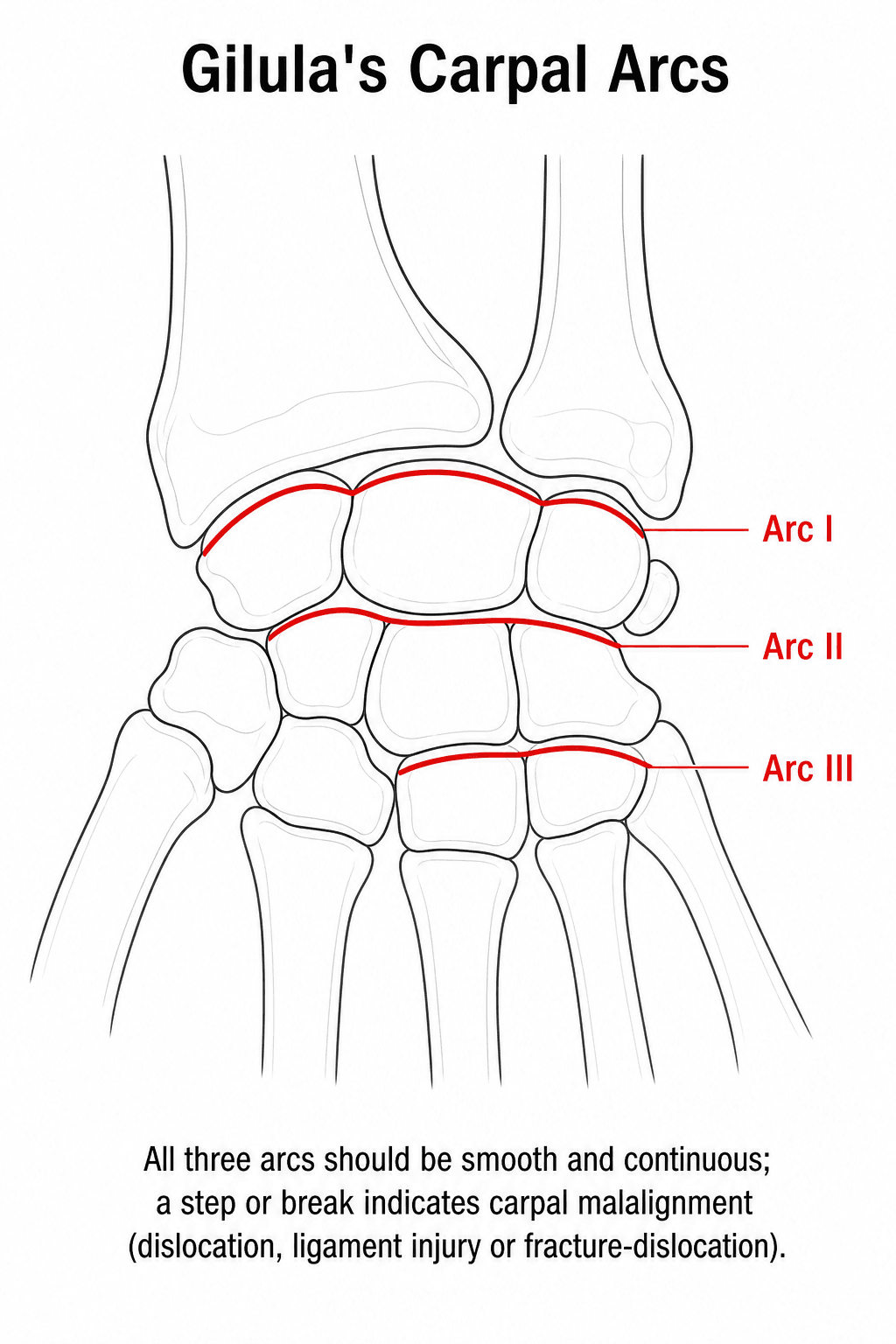
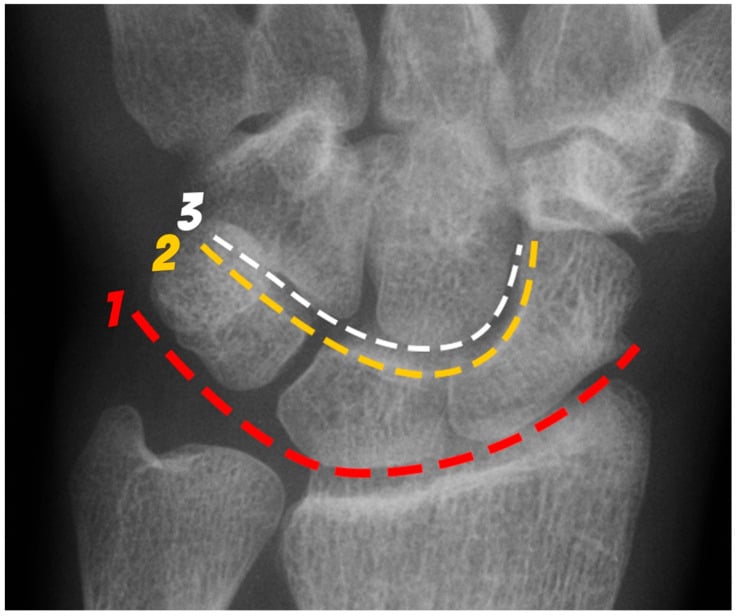
- Gilula lines: Three smooth arcs on PA view. Disruption indicates carpal malalignment.
- Scapholunate angle: 30-60° normal. Greater than 70° = DISI (dorsal lunate tilt).
- Scaphoid views: If scaphoid fracture suspected, standard views insufficient. Add scaphoid series.
- Terry Thomas sign: Widened scapholunate interval greater than 3mm indicates SL ligament injury.
- Occult scaphoid fracture: MRI or CT if X-ray negative but clinical suspicion. MRI within 24h is most sensitive.
- “Capitolunate angle greater than 30° is abnormal (normally co-linear on lateral).
- “DISI: Lunate tilts dorsal, SL angle increased (SL ligament injury). VISI: Lunate tilts volar (LT injury).
- “Perilunate dislocations: Lunate stays with radius, carpus displaces dorsally.
- “Lunate dislocations: Lunate tilts volar into carpal tunnel, carpus aligned with radius.
- “Scaphoid nonunion: Humpback deformity, proximal pole sclerosis, cystic change.
Overview & Principles
Wrist and hand imaging rewards a disciplined, anatomy-led search pattern more than any other extremity. The carpus is a tightly packed three-dimensional structure of eight bones in two rows, and the important injuries (occult scaphoid fracture, scapholunate dissociation, perilunate dislocation) are frequently missed when films are scanned rather than systematically read.
The guiding principles. Four rules run through everything that follows:
- Match modality to the question: radiographs for fractures and alignment, CT for fine bone detail and union, MRI for soft tissue (TFCC, intrinsic ligaments), radiographically occult fractures and avascular necrosis.
- Never accept a single view: a minimum of two orthogonal views, with dedicated scaphoid views whenever a scaphoid fracture is plausible.
- Read alignment before bone: most carpal disasters are alignment problems (disrupted arcs, abnormal angles) visible on a correctly positioned lateral, not isolated fracture lines.
- Clinical suspicion overrides a normal radiograph: the occult scaphoid fracture defines the imaging pathway for the whole region.
Kienbock Disease and the Lichtman Classification
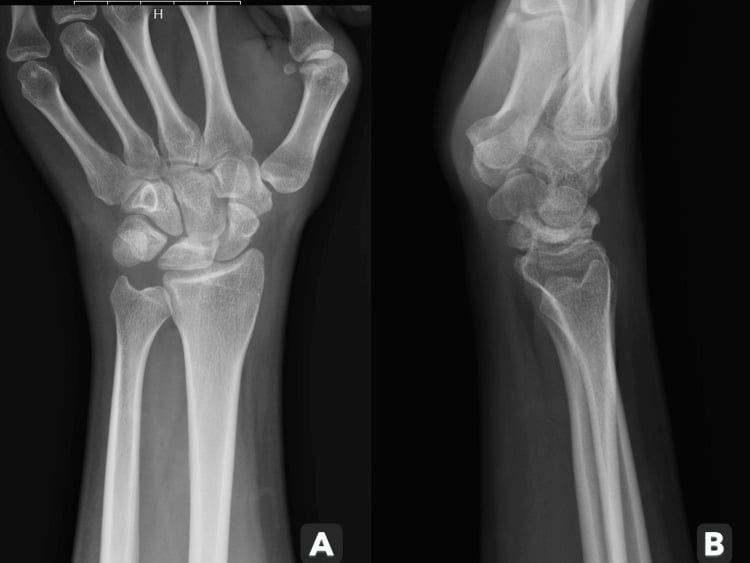
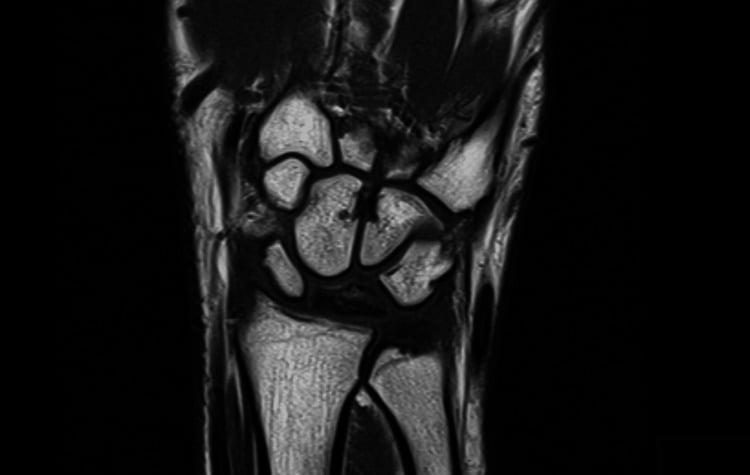
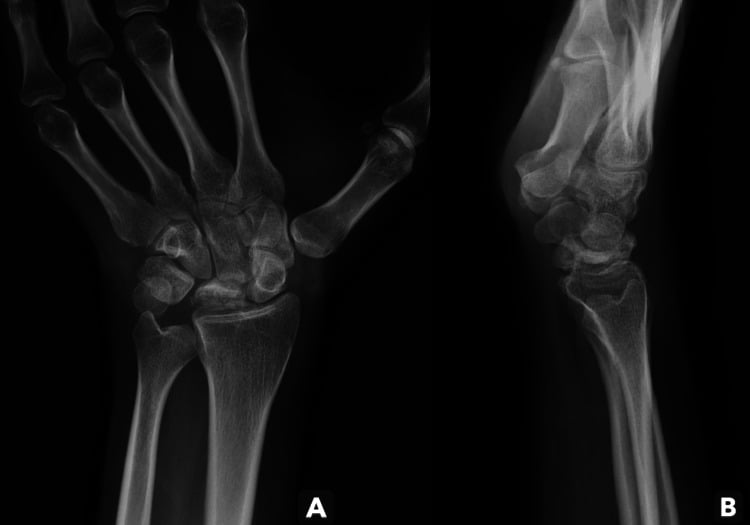
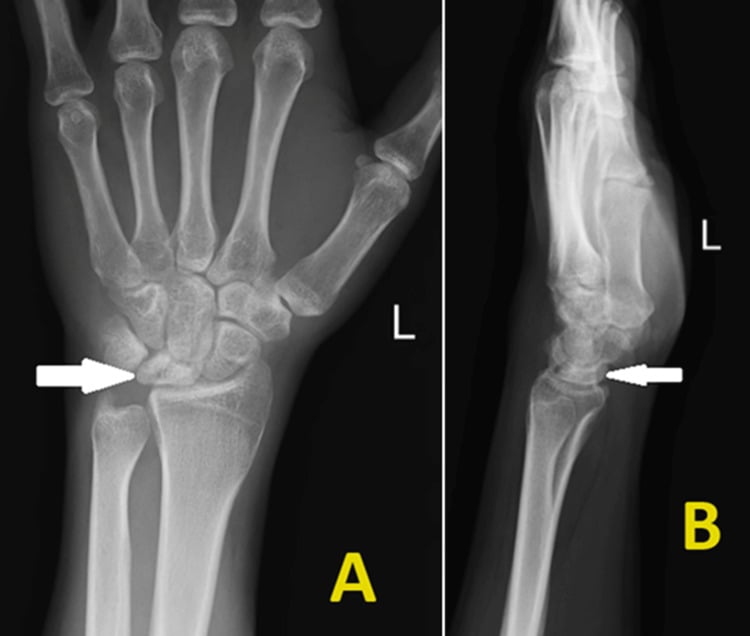
Kienbock disease is osteonecrosis of the lunate, staged by the Lichtman classification: radiographically for most stages, with MRI required to detect the earliest. The stage drives management, so it is worth knowing in full rather than by name alone.
- Radiograph / MRI
- Normal radiograph; MRI shows diffuse low T1 marrow signal
- Key point
- Diagnosed on MRI alone - radiograph is normal
- Radiograph / MRI
- Lunate SCLEROSIS (increased density), no collapse, shape preserved
- Key point
- Density change without loss of height
- Radiograph / MRI
- Lunate COLLAPSE without fixed scaphoid rotation; carpal height maintained
- Key point
- Lunate still potentially salvageable
- Radiograph / MRI
- Lunate collapse WITH fixed scaphoid rotation (ring sign), carpal-height loss, proximal capitate migration
- Key point
- Radioscaphoid angle over about 60 degrees separates IIIB from IIIA (Goldfarb)
- Radiograph / MRI
- Lunate collapse with pancarpal (radiocarpal and midcarpal) osteoarthritis
- Key point
- End-stage - salvage only
Where the decision sits. The IIIA-versus-IIIB distinction is the management-critical one. In IIIA the lunate may be preserved, by joint-levelling for negative variance or by revascularisation; from IIIB onward, fixed scaphoid rotation means the lunate is no longer salvageable and salvage procedures (proximal row carpectomy or limited fusion) are considered. Diffuse low T1 signal through the lunate is the marrow finding that separates Kienbock disease from a simple bone bruise, and cartilage loss on MRI is what pushes the stage toward IV.
Why the angle is quoted. When four reviewers staged radiographs from 39 patients with the traditional Lichtman classification, overall interobserver reliability was substantial (kappa 0.63), but Stage 3A, the one stage where the decision actually changes, was poorly reproduced at kappa 0.38. The classification is most unreliable exactly where it matters most. Adding the radioscaphoid angle to subdivide Stage 3 raised overall reliability to kappa 0.81 and Stage 3A to 0.75, from poor to substantial. Quoting the angle is what converts an unreliable call into a reproducible one, so a report that says "Lichtman IIIA" without an angle should prompt you to measure it yourself before planning a lunate-preserving procedure.
Systematic Approach
The search pattern. Read every wrist film in the same order, alignment first.
ABCSWrist X-ray Systematic Review
Hook:Always Be Checking Systematically
Gilula's arcs. On the PA view, three smooth arcs describe the carpal rows. Arc I follows the proximal articular surface of the proximal row (scaphoid, lunate, triquetrum), Arc II the distal articular surface of the same row, and Arc III the proximal articular surface of the capitate and hamate. All three should be smooth, continuous curves; a step or break in any arc indicates carpal malalignment, whether a perilunate or lunate dislocation, a ligament injury with malalignment, or a fracture-dislocation.
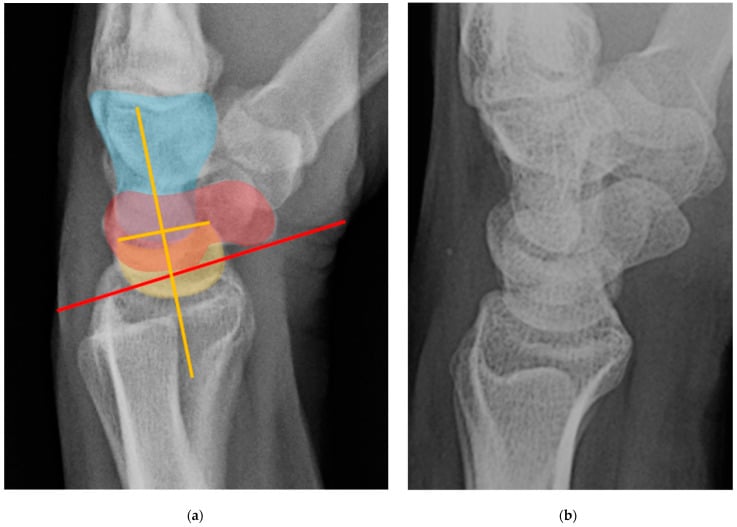
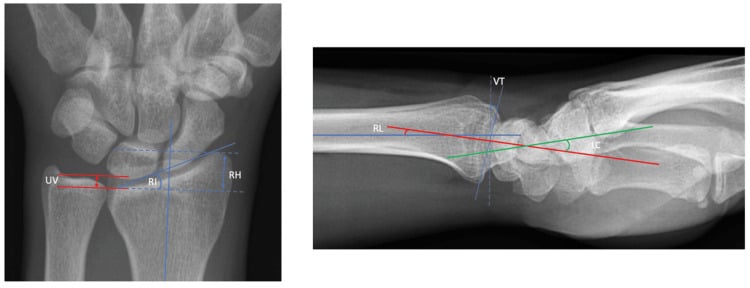
The lateral view. Lines drawn through the long axes of the radius, lunate and capitate should be co-linear: the lunate sits in the lunate fossa and the capitate articulates with the lunate. The two angles that define carpal alignment are measured on this view: the scapholunate angle (normal 30-60°) and the capitolunate angle (normally less than 30°, nearly co-linear).
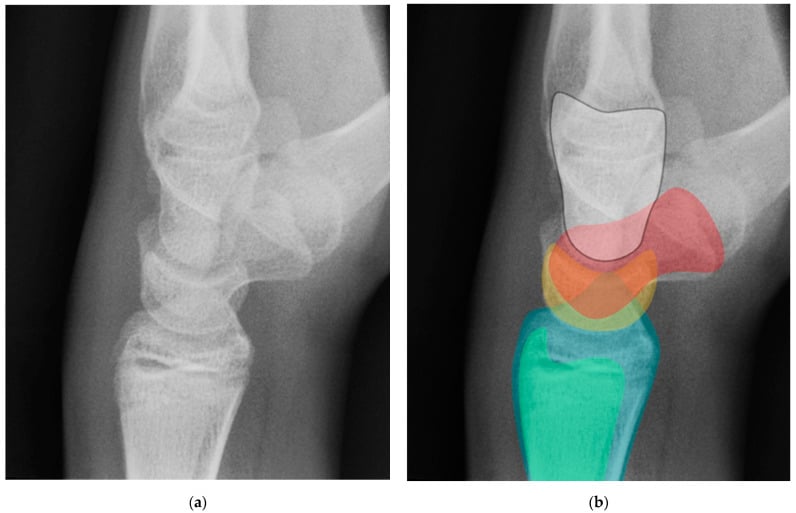
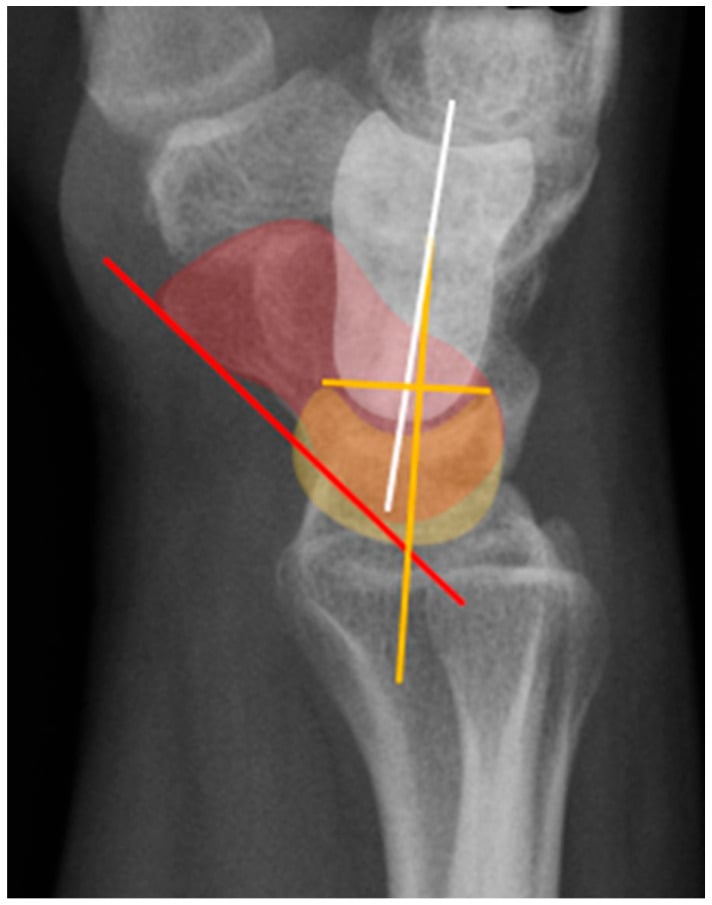
DISI and VISI. The lunate is the intercalated segment between the two rows, and its tilt names the instability. In dorsal intercalated segment instability (DISI) the lunate tilts dorsally and the scapholunate angle rises above 70°; it is associated with scapholunate ligament injury. In volar intercalated segment instability (VISI) the lunate tilts volarly and the angle falls below 30°; it is associated with lunotriquetral ligament injury. A capitolunate angle greater than 30° is the other lateral marker of carpal instability.
Carpal Injuries
Scaphoid Fractures
Initial imaging. The standard wrist series plus scaphoid views; the PA in ulnar deviation elongates the scaphoid and profiles the waist. Even so, 15-20% of fractures are not visible on the initial films, and that single fact shapes the whole pathway.
When the film is normal but the wrist is not. Snuffbox tenderness, scaphoid tubercle tenderness or pain on axial load of the thumb is treated as a fracture: immobilise, and do not discharge without a follow-up plan. Three routes lead to a diagnosis:
- MRI - the most sensitive of these, ideally within 24-48 hours; early MRI within 24 hours is now preferred to detect or exclude the fracture definitively
- CT - good bone detail, slightly less sensitive; either MRI or CT should be obtained within 2 weeks
- Repeat radiographs at 10-14 days - bone resorption at the fracture edges makes the line visible
What the tests actually do. Pooled across 11 studies, CT has sensitivity 0.72 and specificity 0.99; MRI sensitivity 0.88 and specificity 1.00; bone scintigraphy sensitivity 0.99 and specificity 0.86. Bone scan is statistically the most sensitive test available, and is still usually the wrong choice, because its specificity carries a cost that the sensitivity figure conceals: in a cohort of 1000 patients, bone scintigraphy over-treats 112 people versus 8 with CT. That is the number to quote when someone argues for the most sensitive test.
Rule in versus rule out. The clinically decisive asymmetry is between CT and MRI, and it is directional. Across 75 studies, MRI was the most accurate test to both rule in and rule out a scaphoid fracture, whereas CT can rule in but is inadequate to rule out: its 0.72 sensitivity means roughly one in four true fractures is missed. If the question is whether this patient definitely does not have a fracture, CT does not answer it. CT is reserved for characterising a known fracture, its location, humpback deformity and union, which it does better than MRI.
Why examination cannot settle it. The pretest probability of fracture in an adult with a concerning mechanism, radial-sided tenderness and non-diagnostic films is about 25%, and apart from the absence of snuffbox tenderness (negative likelihood ratio 0.15), history and examination can neither rule in nor rule out. That absence is the only examination finding with a meaningful negative likelihood ratio in the pooled literature, so document snuffbox tenderness explicitly: its absence genuinely lowers probability, and its presence with normal films mandates imaging rather than reassurance.
Cost. In a pragmatic randomised trial, immediate ED MRI dominated standard care: it cost less and produced more quality-adjusted life years at 6 months, with a 100% probability of cost-effectiveness at conventional thresholds, and the institution changed its routine practice as a result. Where MRI access is genuinely constrained, decision analysis supports immediate CT as the next-best strategy; what is not supported is waiting two weeks for repeat films.
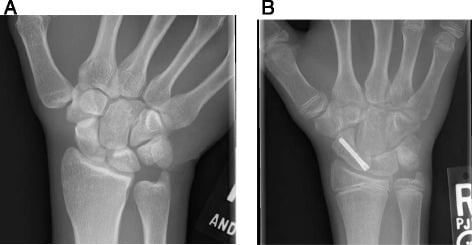
Where they occur and what they look like. The waist accounts for 70% of fractures and carries the highest nonunion risk; the proximal pole for 20%, with the highest AVN risk; the distal pole and tuberosity for 10%. On the radiograph the signs are a cortical break, trabecular disruption and obliteration of the scaphoid fat pad. A nonunion shows sclerosis at the fracture margins, cystic change and a humpback deformity with DISI; the humpback is a flexion deformity with apex-dorsal angulation, and it is the deformity CT must quantify before nonunion reconstruction. Sclerosis of the proximal pole on radiographs is a late sign of osteonecrosis, and MRI is required to see it earlier.
Carpal Dislocations
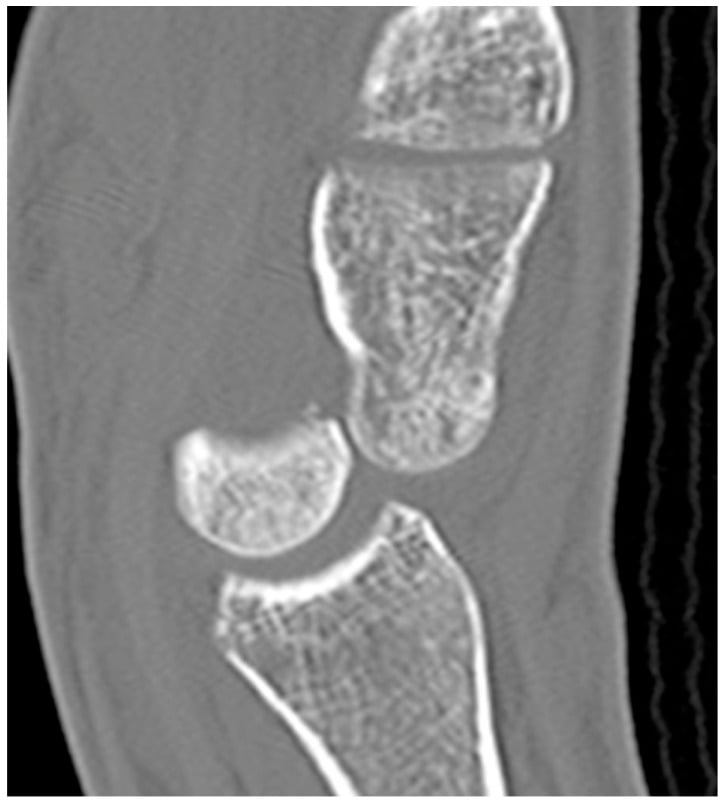
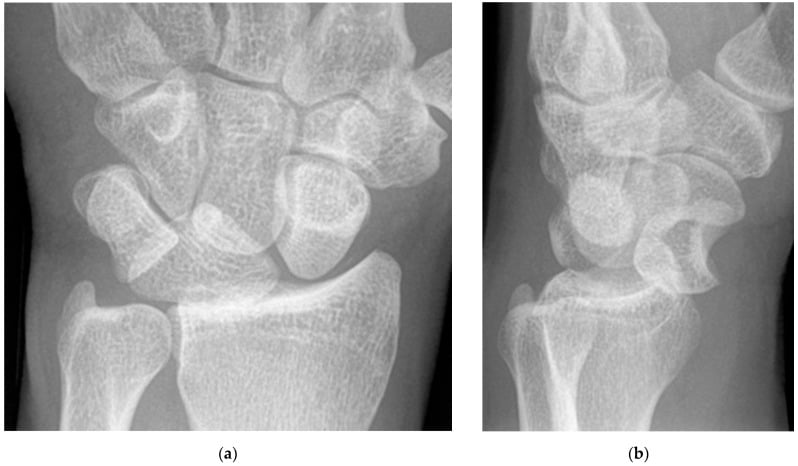
Perilunate versus lunate. Perilunate dislocation is the more common. The lunate remains aligned with the radius while the rest of the carpus, principally the capitate, displaces dorsally, so on the lateral the capitate sits posterior to the lunate. Lunate dislocation is the end stage of the same injury: the lunate tilts volarly and rotates into the carpal tunnel, the spilled teacup on the lateral, while the rest of the carpus aligns with the radius.
Reading the sequence. These are stages of one progressive perilunar injury, the Mayfield sequence: a capitate dislocated dorsal to a still-seated lunate is stage II, and a lunate dislocation is stage IV. On the PA film the dislocated lunate looks triangular, the piece-of-pie sign, and on a true lateral the perilunate injury is the empty-cup or lost co-linearity finding that must not be called a simple sprain. Both may carry associated fractures (a trans-scaphoid perilunate fracture-dislocation is the greater-arc injury), both need a check for median nerve symptoms from carpal tunnel compression, and once any one of these findings is seen the rest of the sequence is searched for.
Scapholunate Ligament Injury
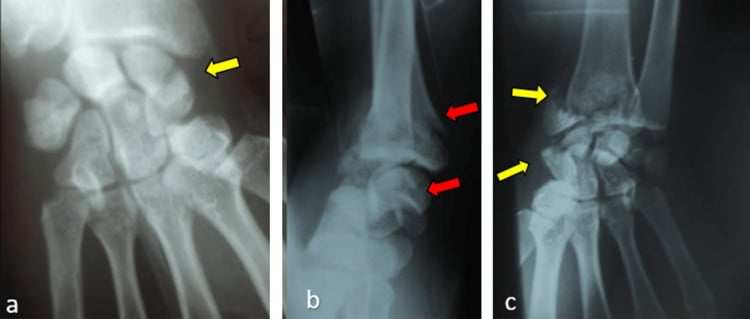
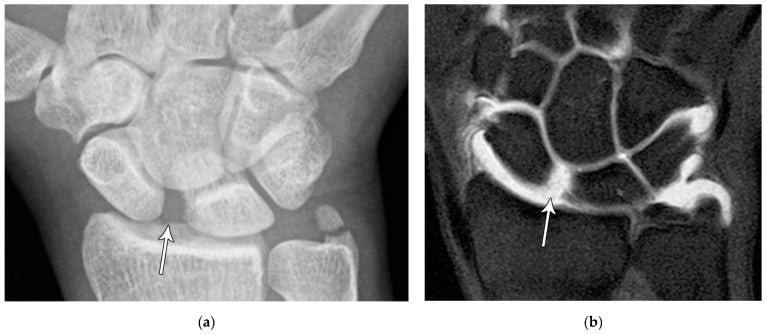
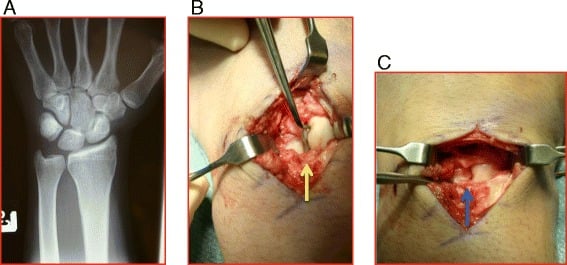
On the PA view. Three signs of scapholunate dissociation: the Terry Thomas sign, a scapholunate gap greater than 3mm; a scaphoid that appears foreshortened because it has rotated into flexion; and the cortical ring sign, the flexed scaphoid seen end-on. Static widening means the secondary stabilisers have also failed, and foreshortening with a ring sign is DISI until a true lateral proves otherwise.
On the lateral view. The DISI pattern: the scaphoid flexed, the lunate tilted dorsally and the scapholunate angle opened beyond 70°. This is the radiographic signature of scapholunate ligament failure.
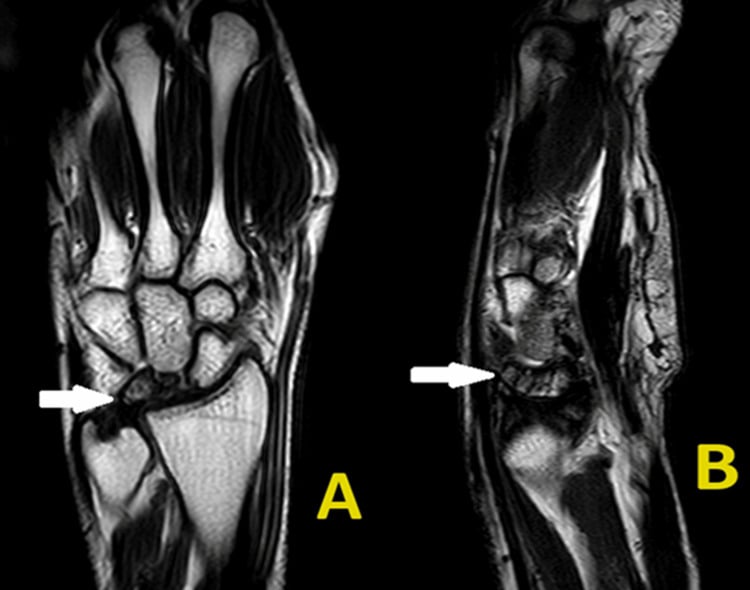
Stress views and MRI. A clenched-fist PA may widen the scapholunate gap. MRI or MR arthrography shows the ligament directly; the arthrogram in the figure below is a coronal T1 fat-suppressed image.
Hand Radiographs
The hand series. Three views, with dedicated thumb views when the thumb is the question.
- Technique
- Hand flat on cassette
- Key Assessment
- Metacarpals, phalanges, joint spaces
- Technique
- 45° pronation
- Key Assessment
- Metacarpal heads, overlapping structures
- Technique
- True lateral
- Key Assessment
- Dorsal/volar displacement, thumb
- Technique
- Isolated thumb views
- Key Assessment
- CMC joint, Bennett fracture
Metacarpal fractures. The boxer's fracture is a fracture of the 5th metacarpal neck; the film is read for apex-dorsal angulation, and the acceptable angulation varies by digit. The Bennett fracture is an intra-articular fracture-dislocation of the 1st metacarpal base: the small volar fragment stays with the trapezium while the shaft displaces dorsally and radially. A Rolando fracture is the comminuted version of the same injury.
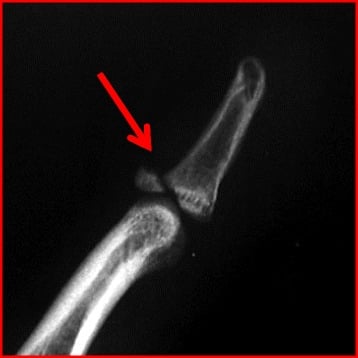
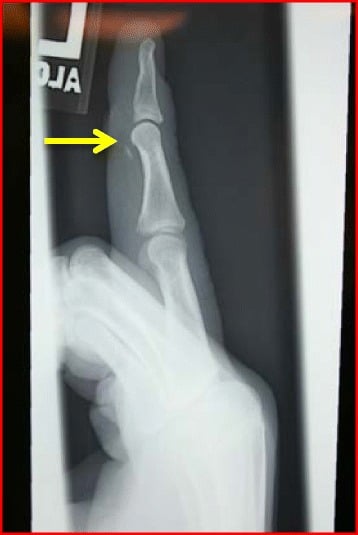
Phalangeal fractures and avulsions. Mallet finger is an avulsion from the dorsal base of the distal phalanx, bony or tendinous; a bony fragment involving more than 30% of the articular surface, or one with palmar subluxation, is considered for fixation rather than extension splinting alone. A volar plate avulsion at the volar base of P2 or P3 follows a hyperextension injury. Jersey finger is a bony avulsion of flexor digitorum profundus: the fragment retracts, and the radiograph both makes the diagnosis and grades the Leddy-Packer type by how far the fragment has travelled. Gamekeeper's (skier's) thumb is an ulnar collateral ligament injury: stress views may show instability, and MRI assesses the soft tissue.
CT and MRI
CT. Thin slices (0.5-1mm) with multiplanar reconstructions give CT its superior bone detail; its limitation is that it cannot assess soft tissue, neither the ligaments nor the TFCC. The indications follow from that:
- Occult scaphoid fracture, if MRI is unavailable
- Characterisation of a carpal fracture
- Union assessment, including scaphoid nonunion
- Hook of hamate fractures
- Carpal boss and coalition
- Surgical planning
The hook of hamate is the case that proves the rule: the PA wrist film misses it, so a carpal-tunnel view or CT is requested when ulnar-palmar tenderness persists.
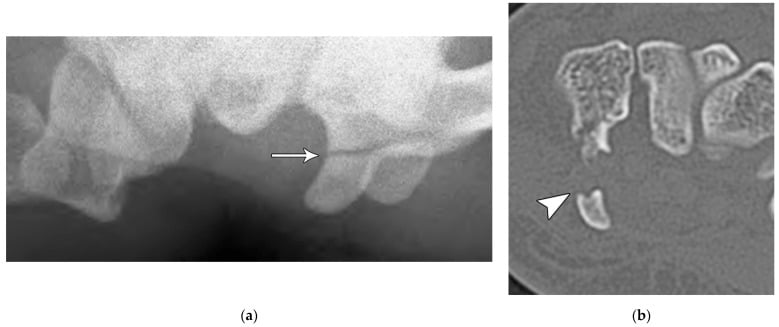
MRI. The sequence is chosen for the question, and the table pairs each indication with what it shows.
- Sequence
- T1 + STIR/T2 FS
- Key Findings
- Marrow edema, fracture line
- Sequence
- T2 FS coronal, MRA
- Key Findings
- Signal in triangular fibrocartilage
- Sequence
- T2 FS, MRA
- Key Findings
- Ligament disruption, gap, DISI
- Sequence
- T1 (low signal)
- Key Findings
- Proximal pole signal change
- Sequence
- T1, T2
- Key Findings
- Lunate signal change, collapse
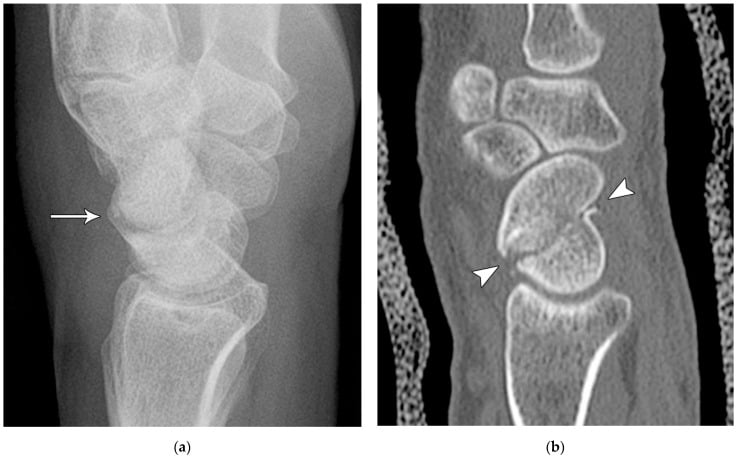
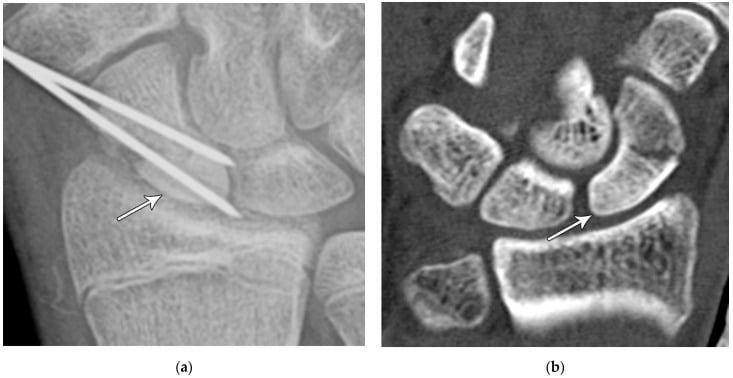
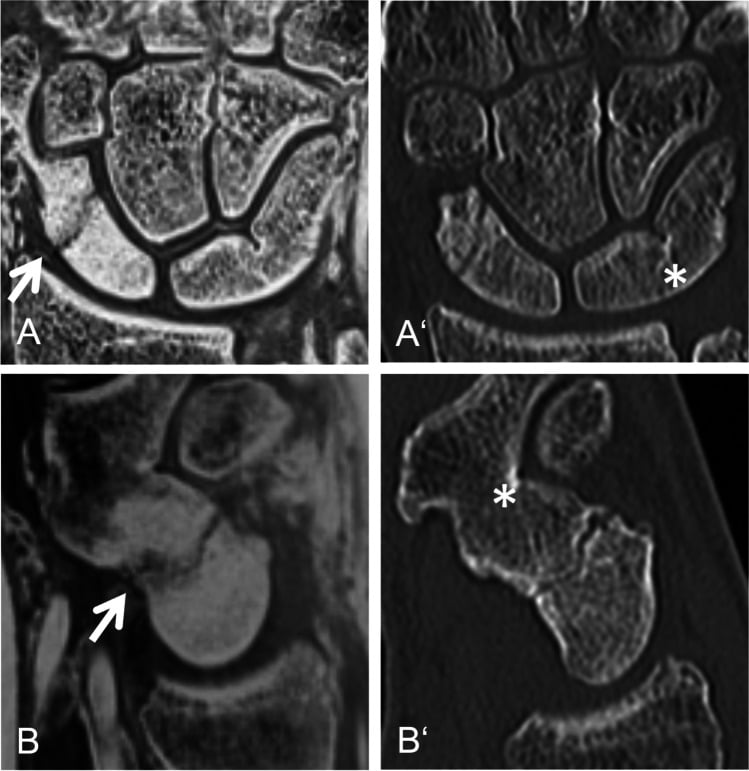
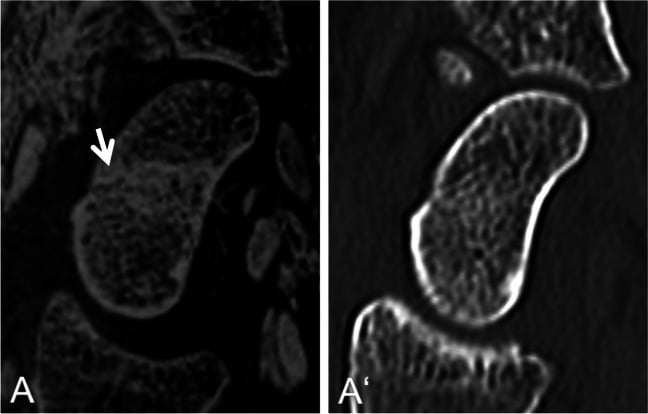
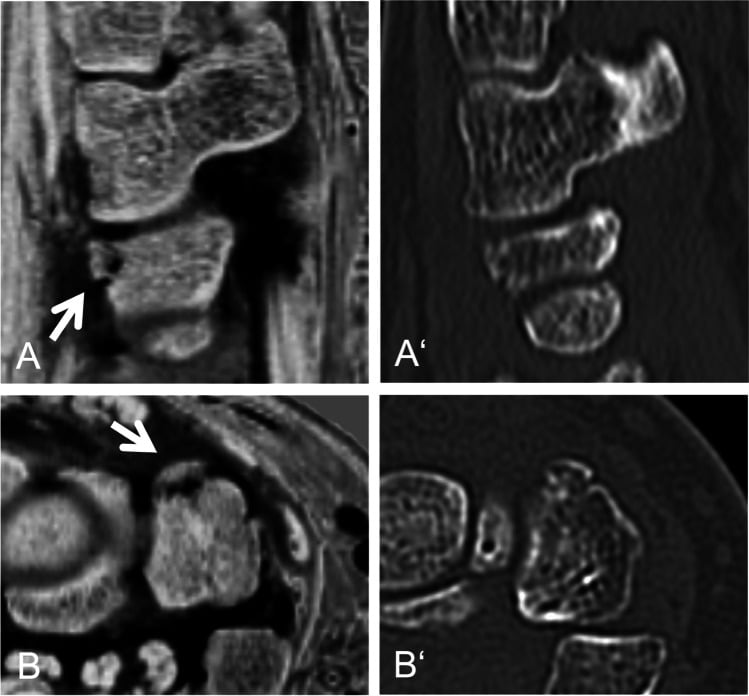
MRI beside CT. The three paired figures below come from one series that set inverted 3D T1 GRE MRI beside CT reconstructions of the same wrists. They show why MRI, not CT, is the rule-out test: CT can confirm a cortical break but cannot exclude an undisplaced trabecular fracture, whereas MRI also shows the surrounding marrow change that CT can miss in a purely trabecular injury. The dorsal triquetral avulsion is the commonest carpal avulsion missed on a PA film, which is why a true lateral is mandatory on every wrist trauma series.
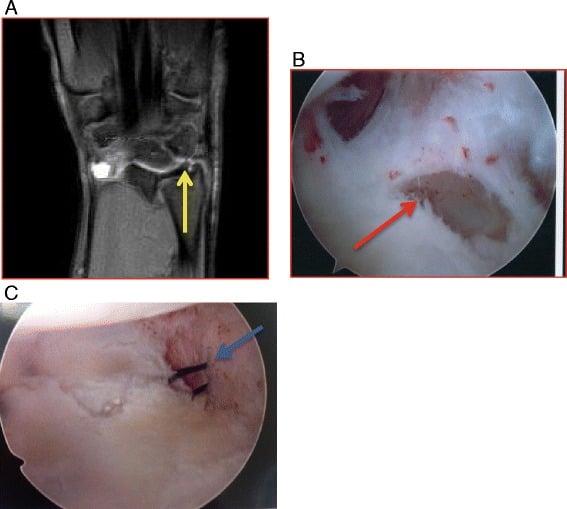
The TFCC. The normal triangular fibrocartilage complex is low signal on all sequences. A tear shows increased signal within the substance, discontinuity, fluid extending through the defect, or the signs of associated DRUJ instability. Tears are reported by the Palmer classification: Class 1 traumatic, subtyped 1A-1D by location; Class 2 degenerative, subtyped 2A-2E by severity. MR arthrography improves sensitivity. Conventional MRI is less sensitive for a peripheral tear than for a central perforation, which is why MR arthrography or arthroscopy is used when the clinical picture is strong. The MRI in the figure below is a coronal T2 image.
Ulnar Variance and Ulnar Impaction Syndrome
The measurement. Ulnar variance is the relative length of the distal ulna compared with the radius at the ulnar corner of the lunate fossa. It is measured on a standardised PA radiograph: shoulder abducted 90 degrees, elbow flexed 90 degrees, forearm in neutral rotation.
- Definition
- Ulna and radius level at the lunate fossa
- Association
- Normal
- Definition
- Ulna longer than the radius
- Association
- Ulnar impaction (ulnocarpal abutment); degenerative central Palmer Class 2 TFCC tears
- Definition
- Ulna shorter than the radius
- Association
- Associated with Kienbock disease
- Definition
- Variance increases with grip and pronation
- Association
- A pronated grip view reveals 'dynamic positive variance' not seen on the neutral film
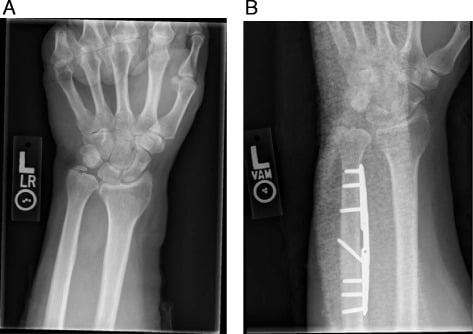
Ulnar impaction syndrome. Chronic ulnocarpal load transfer, driven by positive ulnar variance, produces a recognisable pattern: subchondral cysts and sclerosis in the ulnar aspect of the lunate and the triquetrum, central TFCC wear or perforation, and lunotriquetral ligament degeneration. The radiograph shows positive variance with ulnar-sided lunate and triquetral cysts; MRI shows the corresponding subchondral marrow oedema and cysts and the TFCC change. It is managed by unloading the ulnar column, with an ulnar shortening osteotomy or an arthroscopic wafer, which is why measuring variance changes management.
Differential Diagnosis: Radial-Sided Wrist Pain After a Fall
Snuffbox or radial-sided wrist tenderness with normal initial radiographs is one of the highest-stakes diagnostic moments in extremity imaging. The differential is wide, and the imaging strategy is driven by which diagnosis you most fear missing, the occult scaphoid fracture. The discriminating features direct targeted imaging rather than reflexively imaging everything.
- Key clinical clue
- Snuffbox + tubercle tenderness, axial thumb load pain
- Best imaging
- MRI (T1 + STIR)
- Discriminating imaging feature
- Linear marrow oedema crossing a cortex; T1 hypointense line
- Key clinical clue
- Dorsal SL tenderness, Watson shift test positive
- Best imaging
- PA + clenched-fist views, MRA
- Discriminating imaging feature
- SL gap over 3mm (Terry Thomas), DISI, cortical ring sign
- Key clinical clue
- Dorsal wrist pain, FOOSH
- Best imaging
- CT
- Discriminating imaging feature
- Cortical step or impaction not seen on plain film
- Key clinical clue
- Focal styloid tenderness
- Best imaging
- PA radiograph / CT
- Discriminating imaging feature
- Oblique intra-articular line through styloid; Mayfield avulsion
- Key clinical clue
- Pain over 1st extensor compartment, Finkelstein positive
- Best imaging
- Ultrasound / MRI
- Discriminating imaging feature
- Fluid and tendon sheath thickening, no marrow oedema
- Key clinical clue
- Older patient, grind test positive, chronic
- Best imaging
- PA radiograph
- Discriminating imaging feature
- Joint space loss, osteophytes, subchondral sclerosis
- Key clinical clue
- Diffuse tenderness, resolving pain
- Best imaging
- MRI (if done)
- Discriminating imaging feature
- Patchy marrow oedema WITHOUT a fracture line
Contusion or fracture. A bone contusion shows marrow oedema without a discrete fracture line, which is why MRI both rules in and rules out: it does not merely show that something is wrong.
Guidelines, Registries & Global Practice
Global Epidemiology
The scaphoid is the most commonly fractured carpal bone, accounting for roughly 79% of carpal fractures, and predominantly affects young active adults (peak in males aged 15-30). Initial radiographs miss an estimated 15-20% of true fractures, which is the central driver of every scaphoid imaging pathway.
Distal radius fractures are among the most common fractures worldwide, with a bimodal distribution (young high-energy and older osteoporotic/fragility). Metacarpal and phalangeal fractures together represent a large share of all hand injuries presenting to emergency departments globally, making the PA/oblique/lateral hand series a high-volume, high-yield study.
Side-by-Side Guideline Comparison
- First-line
- Dedicated scaphoid radiograph series
- If radiographs normal but clinically suspicious
- Early MRI favoured to confirm or exclude and avoid prolonged casting
- First-line
- Wrist + scaphoid radiographs
- If radiographs normal but clinically suspicious
- MRI usually most appropriate; CT acceptable alternative
- First-line
- Scaphoid series radiographs
- If radiographs normal but clinically suspicious
- MRI or CT depending on access; emphasis on definitive early diagnosis
- First-line
- Radiographs to classify and plan
- If radiographs normal but clinically suspicious
- Cross-sectional imaging (CT for bone detail) to guide fixation
The international convergence is striking: across UK, US and European guidance, the disagreement is no longer "image or wait" but "MRI or CT" for the radiographically occult scaphoid. Delayed-radiograph-only pathways are now the minority position, supported by cost-effectiveness and decision-analysis evidence.
High-Resource vs Limited-Resource Practice
- High-resource setting
- Immediate or early MRI (or CT) at first attendance
- Limited-resource setting
- Cast and repeat radiographs at 10-14 days; CT if available
- High-resource setting
- Stress fluoroscopy, MR arthrography, wrist arthroscopy
- Limited-resource setting
- Clenched-fist and stress radiographs, clinical examination
- High-resource setting
- 3T MRI / MR arthrography, arthroscopy
- Limited-resource setting
- Clinical tests, plain radiographs, ultrasound where skilled
- High-resource setting
- CT with thin slices and reconstructions
- Limited-resource setting
- Serial radiographs; bridging trabeculae as surrogate
Regardless of resource setting, the non-negotiable principle is the same worldwide: a patient with clinical signs of scaphoid fracture and normal radiographs must be immobilised and given a definitive follow-up imaging plan. The missed scaphoid fracture leading to nonunion and SNAC wrist is a recurrent medicolegal and exam theme on every continent.
Registry & Outcome Notes
Carpal and hand injuries are not tracked by the major arthroplasty registries (NJR, AJRR, AOANJRR, SHAR, NZJR), which focus on joint replacement. Evidence here therefore comes from trauma cohorts, diagnostic-accuracy meta-analyses and decision-analysis modelling rather than implant survivorship data. The practical consequence for the exam: quote diagnostic sensitivity/specificity and cost-effectiveness data, not registry revision rates, when justifying an imaging strategy for the wrist and hand.
Controversies & Areas of Uncertainty
Immediate MRI or a delayed strategy. Whether to obtain immediate MRI, immediate CT, early MRI at day 3, or delayed radiographs at 2 weeks remains debated. Decision analysis and a single-centre randomised trial favour immediate cross-sectional imaging because it shortens unnecessary immobilisation and lost productivity, but access, cost and out-of-hours availability still drive real-world pathways. Many centres run a hybrid pathway: clinical risk stratification, then MRI for high-suspicion cases.
CT or MRI for the occult scaphoid. CT has excellent specificity but can miss non-displaced trabecular fractures and bone bruising that MRI detects. MRI has higher sensitivity but may over-call bone oedema as a "fracture", potentially leading to overtreatment. The Cochrane analysis found CT and MRI broadly comparable, with bone scintigraphy most sensitive but least specific, so the choice of test depends on whether the priority is avoiding a missed fracture or avoiding overtreatment.
Static or dynamic carpal instability. Predynamic and dynamic scapholunate instability can have entirely normal static radiographs. Diagnosis then depends on stress (clenched-fist) views, fluoroscopy, MR arthrography or arthroscopy, the last still regarded as the reference standard for partial ligament tears. There is no universally agreed non-invasive test, and inter-observer reliability of scapholunate gap and angle measurements is only moderate.
MRI or arthroscopy for the TFCC and intrinsic ligaments. Conventional MRI has variable sensitivity for peripheral TFCC tears and partial intrinsic ligament tears. MR arthrography improves accuracy but is invasive, and wrist arthroscopy remains the diagnostic gold standard. The cut-off between a degenerative, often asymptomatic, Palmer Class 2 change and a clinically relevant tear is a recurring source of over-diagnosis.
Clinical Imaging: Plain Radiograph Interpretation
The wrist series. Each projection answers a different question.
- Technique
- Wrist pronated, shoulder abducted 90°
- Key Assessment
- Carpal alignment, Gilula arcs, joint spaces
- Technique
- True lateral, ulna superimposed
- Key Assessment
- Carpal alignment, SL angle, DISI/VISI
- Technique
- 45° pronation
- Key Assessment
- Carpometacarpal joints, trapezium
- Technique
- Wrist ulnar deviated
- Key Assessment
- Elongates scaphoid, shows waist
- Technique
- Angled view
- Key Assessment
- Alternative scaphoid profile
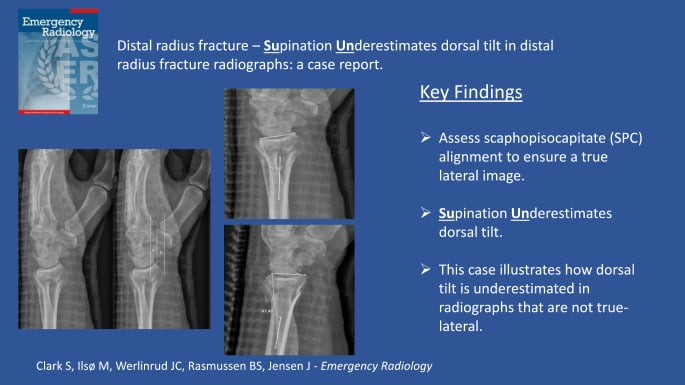
Recognising a true lateral. Only a true lateral is valid for measuring carpal angles and dorsal tilt. The check is scaphopisocapitate alignment: the palmar cortex of the pisiform sits over the central third of the interval between the palmar cortices of the distal scaphoid pole and the capitate head.
The numbers a report quotes. On the PA film: ulnar variance, radial inclination and radial height. On the true lateral: volar tilt and the radiolunate, lunocapitate and scapholunate angles. A systematic report quotes these before any advanced imaging is ordered.
- Normal
- Less than 3mm
- Abnormal Indicates
- Greater than 3mm = Terry Thomas sign (SL injury)
- Normal
- 30-60°
- Abnormal Indicates
- Greater than 70° = DISI, less than 30° = VISI
- Normal
- Less than 30°
- Abnormal Indicates
- Greater than 30° = carpal instability
- Normal
- 22-23°
- Abnormal Indicates
- Loss with distal radius fracture malunion
- Normal
- 11-12mm
- Abnormal Indicates
- Loss indicates radial shortening
- Normal
- 11-12° volar
- Abnormal Indicates
- Dorsal tilt with fracture malunion
Clinical Decision Scenarios
Practise clinical reasoning and management decisions out loud
“A patient has snuffbox tenderness after a fall on outstretched hand. X-rays are normal. How do you proceed?”
“Describe how you assess carpal alignment on plain radiographs and the features of DISI.”
“How do you differentiate a perilunate dislocation from a lunate dislocation on X-ray?”
“A patient presents with ulnar-sided wrist pain after a fall and on rotation. How do you investigate, and how do you classify TFCC pathology?”
Key Measurements
- Scapholunate interval: Less than 3mm (greater than 3mm = Terry Thomas)
- Scapholunate angle: 30-60° (greater than 70° = DISI)
- Capitolunate angle: Less than 30°
- Radial inclination: 22-23°, Volar tilt: 11-12°
Gilula Lines (PA view)
- Arc 1: Proximal surface of proximal row
- Arc 2: Distal surface of proximal row
- Arc 3: Proximal capitate/hamate
- Disruption = dislocation or ligament injury
Scaphoid Fracture
- 15-20% missed on initial X-ray
- MRI within 24-48h preferred (or CT)
- Immobilize pending investigation
- Waist 70%, Proximal pole 20% (highest AVN risk)
Carpal Instability
- DISI: SL angle greater than 70°, dorsal lunate tilt (SL injury)
- VISI: SL angle less than 30°, volar lunate tilt (LT injury)
- Perilunate: Capitate dorsal to lunate
- Lunate dislocation: 'Spilled teacup' sign
Evidence Base
CT vs MRI vs Bone Scintigraphy for Suspected Scaphoid Fracture (Cochrane)
- Pooled summary estimates from 11 studies: CT sensitivity 0.72 and specificity 0.99; MRI sensitivity 0.88 and specificity 1.00; bone scintigraphy sensitivity 0.99 and specificity 0.86.
- Bone scintigraphy was statistically the most sensitive but its lower specificity means more overtreatment — in a cohort of 1000, bone scan over-treats 112 patients versus only 8 with CT.
- CT and MRI had comparable diagnostic accuracy; confidence intervals were wide and well-designed direct head-to-head comparisons are still needed.
Diagnostic Accuracy of Examination and Imaging for Adult Scaphoid Fracture
- Across 75 studies, point-estimate pretest probability of fracture in an adult with concerning mechanism, radial tenderness and non-diagnostic radiographs was about 25%.
- Apart from absence of snuffbox tenderness (negative likelihood ratio 0.15), history and examination alone cannot rule scaphoid fracture in or out.
- MRI was the most accurate test to both rule in and rule out scaphoid fracture; where MRI is unavailable, CT can rule in but is inadequate to rule out.
Cost-Effectiveness of Immediate MRI for Suspected Scaphoid Fracture (RCT)
- Pragmatic single-centre randomised trial comparing immediate ED MRI with standard radiograph-only care for suspected scaphoid fracture.
- Immediate MRI dominated standard care — it cost less and produced more quality-adjusted life years at 6 months.
- Probability of cost-effectiveness was 100% at conventional willingness-to-pay thresholds, and the institution changed routine practice to adopt the pathway.
Decision-Analysis of Diagnostic Strategies for Suspected Scaphoid Fracture
- Decision-tree model comparing immediate CT, day-3 MRI, day-3 bone scan, 2-week radiograph strategies and immediate MRI from a societal perspective.
- Immediate CT and immediate MRI were the most cost-effective strategies for diagnosing suspected scaphoid fractures.
- Strategies relying on delayed 2-week radiographs were dominated or extendedly dominated by the cross-sectional imaging strategies.