Pars Defect | Spondylolysis | L5-S1 Slip
- PARS DEFECT (spondylolysis) distinguishes from degenerative type
- L5-S1 most common level (90%) vs L4-5 for degenerative
- Scottie dog collar sign on oblique X-ray shows pars defect
- 80% asymptomatic - most patients never need surgery
- CT is gold standard for pars defect visualization
- “Young athlete with extension-related back pain = think pars stress reaction
- “Hamstring tightness common in adolescents with spondylolisthesis
- “High-grade slips may have waddling gait and heart-shaped sacrum
- “SPECT-CT shows metabolic activity in acute/healing pars defect
Overview and Epidemiology
Definitions. Spondylolysis is a defect in the pars interarticularis, the bony bridge between the superior and inferior articular processes. Spondylolisthesis is forward displacement of one vertebra on another. Isthmic spondylolisthesis is the slip that follows when a defect or an elongation of the pars allows it, and it is the most common type of spondylolisthesis in patients under 50.
Who gets it. The defect is present in 6% of the general population, and only 20% of those become symptomatic. It sits at L5-S1 in 90% and at L4-L5 in 5-10%, peaks in adolescence at 15-25 years, and is male predominant at 3:1. The high-risk sports are the ones that load the pars in repeated extension: gymnastics, cricket fast bowling, diving, weightlifting and American football linemen.
Natural history. Most patients with pars defects remain asymptomatic throughout life. Progression of the slip is most likely in childhood and adolescence and typically stabilises after skeletal maturity.
Anatomy and Biomechanics
The pars interarticularis. The pars is the portion of the lamina between the superior and inferior articular processes, and it is the thinnest and weakest part of the neural arch.
- Relationship
- Inferior margin of superior articular facet
- Relationship
- Superior margin of inferior articular facet
- Relationship
- Lamina
- Relationship
- Transverse process
Why L5. L5 is predisposed because:
- Maximum lordosis and shear stress at L5-S1
- The orientation of the L5 facets resists forward slip less effectively
- The highest compressive and shear loads during extension
- The pars at L5 is anatomically thinner
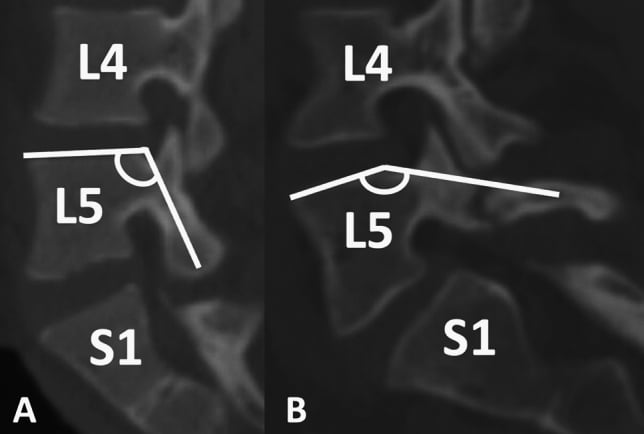
Load sharing. The posterior elements, the facets and pars, normally resist 25-30% of axial load. When the pars is deficient that load transfers to the disc, leading to degeneration and progressive slip.
Slip angle. The slip angle, or lumbosacral kyphosis, is the angle between L5 and S1. High slip angles indicate more kyphosis at the lumbosacral junction and correlate with worse outcomes.
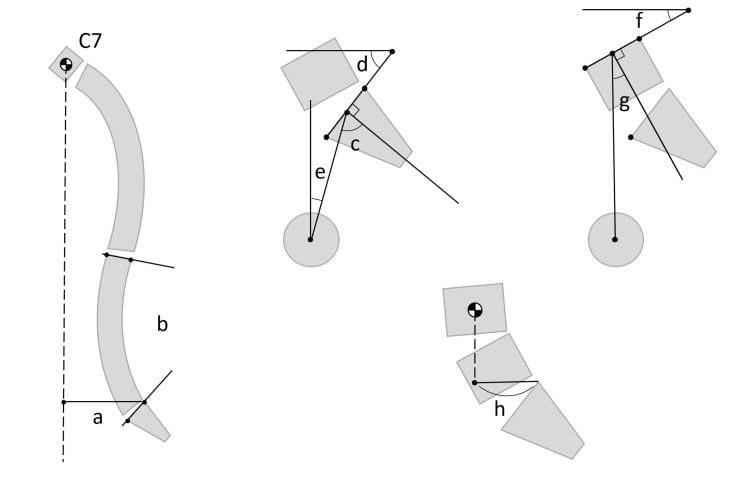
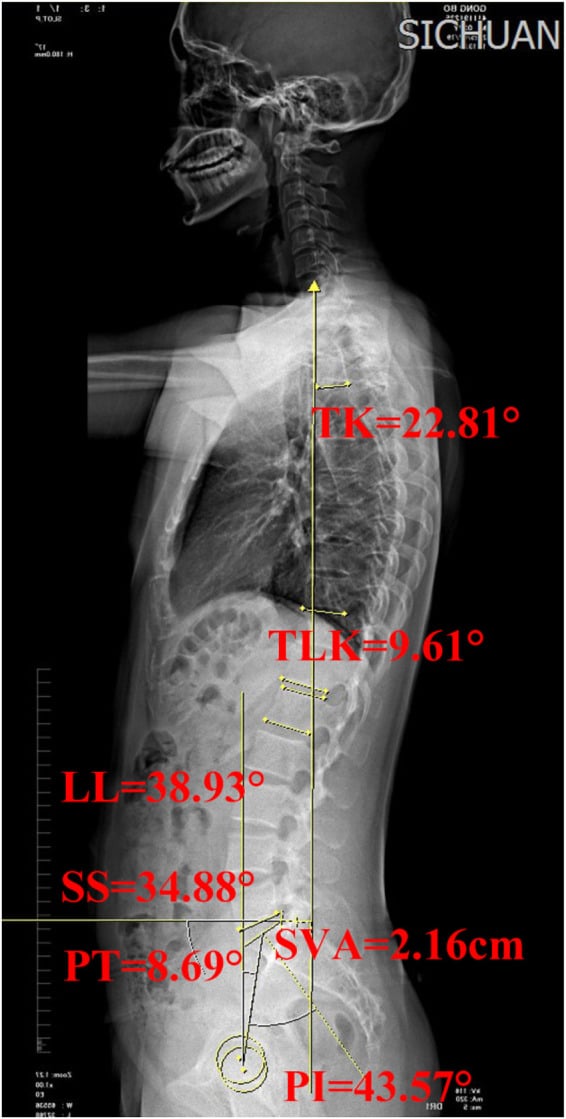
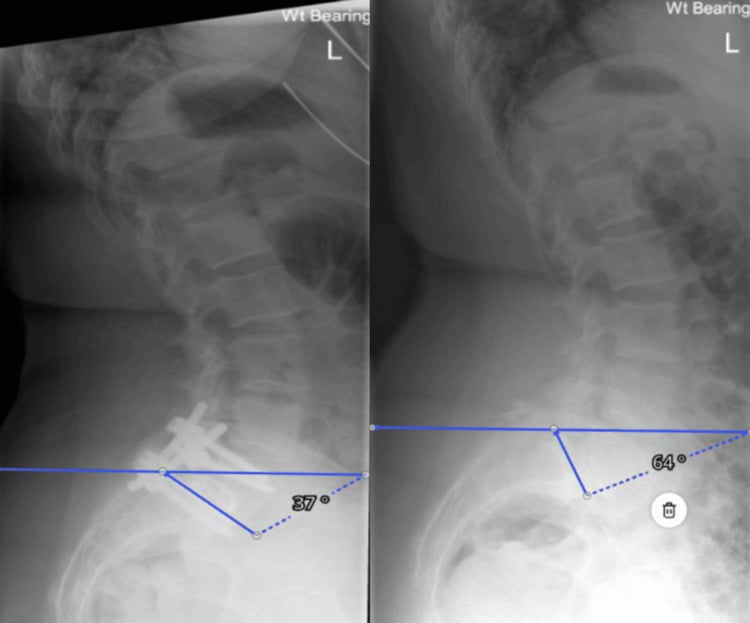
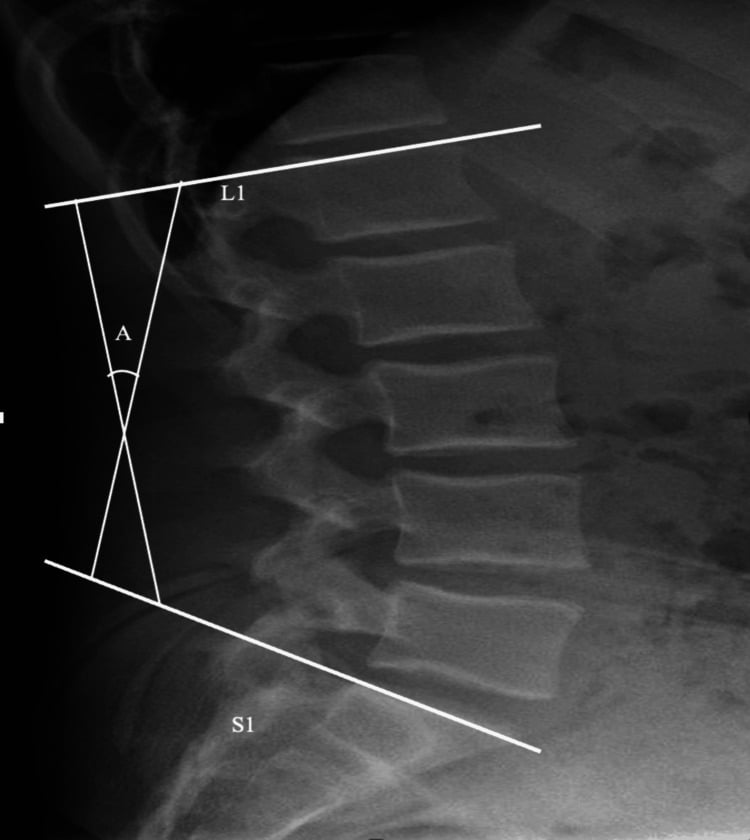
The spinopelvic parameters. Pelvic incidence is a fixed morphological constant and equals pelvic tilt plus sacral slope; sacral slope and pelvic tilt are position-dependent. Sacral slope is measured between the S1 endplate and the horizontal, and it rises with pelvic incidence. Lumbar lordosis is measured from L1 to S1, and the sagittal vertical axis, from the C7 plumb line to the posterosuperior corner of S1, describes the global sagittal balance of the trunk.
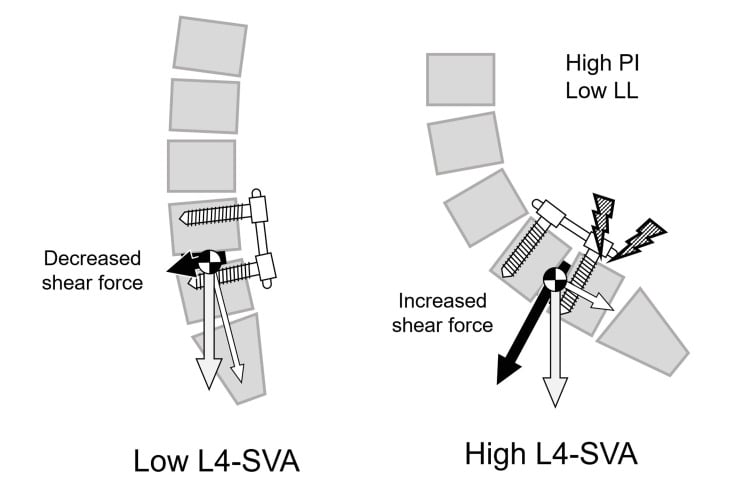
Why they matter. Isthmic slips occur in high-incidence pelvises, and a high pelvic incidence predisposes to development and progression (Labelle 2004): a high slope means a steep lumbosacral junction and a higher shear load. Shear across the lumbosacral junction rises steeply when lordosis is insufficient for the pelvic incidence, and a slip that outgrows its lordosis pushes the trunk forward. Restoring lordosis is therefore not cosmetic; it removes the force that caused the defect and that will otherwise break the fixation.
Measure them standing. Measure these on a standing full-length film, not a lumbar view, because compensation happens above and below the slip. A patient maintaining balance by retroverting the pelvis and flexing the knees has a decompensating slip even when the local radiograph looks unchanged.
Pathophysiology
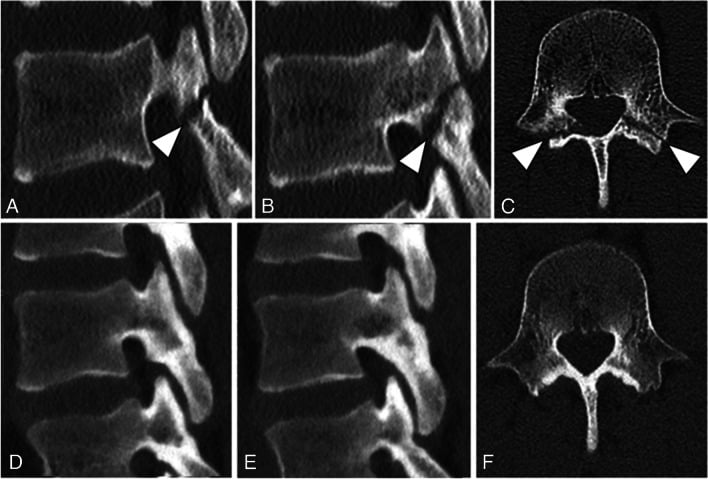
The fatigue fracture (Type IIA). Repetitive hyperextension loads the pars cyclically, with tensile stress on its inferior surface and compressive stress superiorly. Fatigue failure occurs when bone remodelling cannot keep pace with microdamage. This lytic type is the most common overall, and the lesion passes through four stages:
- Stage 1: pars stress reaction, with bone oedema on MRI
- Stage 2: incomplete fracture, a hairline on CT
- Stage 3: complete fracture with a visible defect
- Stage 4: established non-union with sclerotic margins
One side or both. A unilateral defect loads the contralateral pars and often becomes bilateral, so both sides must be imaged. The same unilateral load can fracture the pedicle itself, and unexplained persistent pain with a unilateral lysis warrants CT of the whole ring, not just the pars.
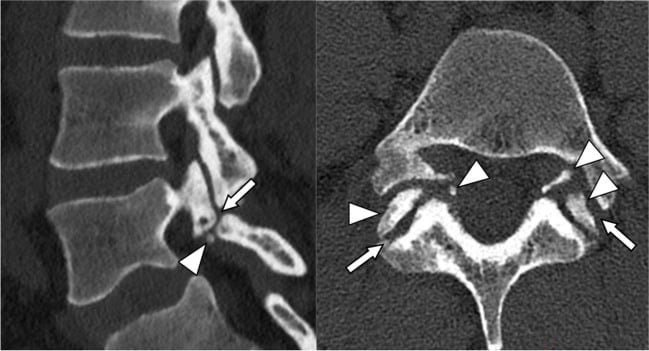
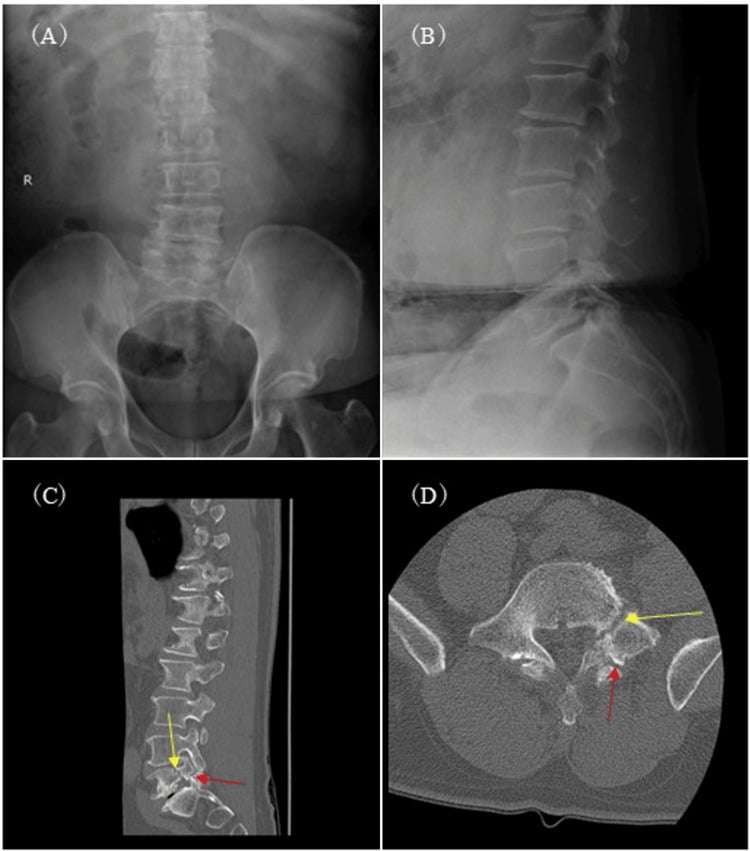
Elongation (Type IIB). Repeated stress fractures heal with callus formation, leaving a pars that is elongated but intact, stretched rather than frankly deficient. On CT the pars appears elongated, MRI may show a healed stress reaction, and no true discontinuity is present. It is considered a healed stress injury: the elongation allows some forward translation while maintaining structural continuity.
Acute fracture (Type IIC). A single high-energy event fractures the pars; this is less common than the fatigue fracture. The pain comes on suddenly during sporting activity, and SPECT-CT may be positive, indicating acute metabolic activity. Acute fractures have the best potential for healing with conservative treatment, bracing and activity modification.
Progression. The factors that promote it:
- Impact
- Growth remaining allows progression
- Impact
- Higher progression rates
- Impact
- More likely to progress further
- Impact
- Loss of disc height facilitates slip
- Impact
- Indicates unstable mechanics
The failing facet. As the pars gives way the inferior articular process rides down below the facet joint, and how far it has dropped can be quantified as a percentage of the joint height. Progressive subluxation marks a failing posterior restraint and precedes further translation; once the facet no longer captures the level, the disc and capsule alone resist the shear.
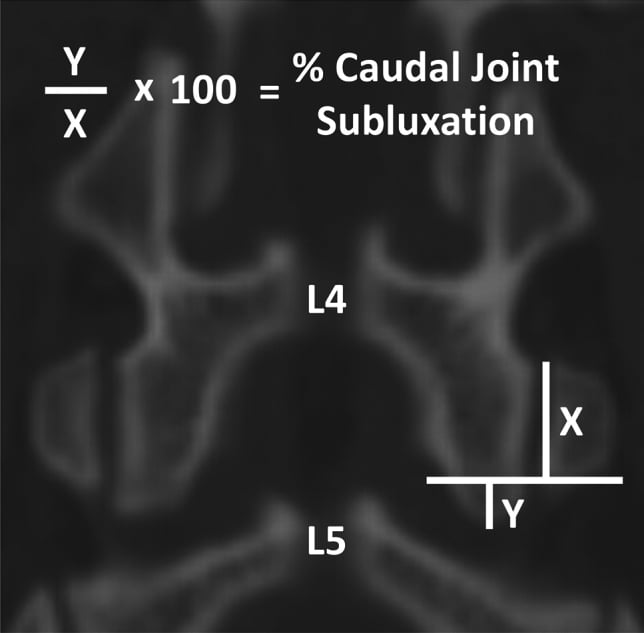
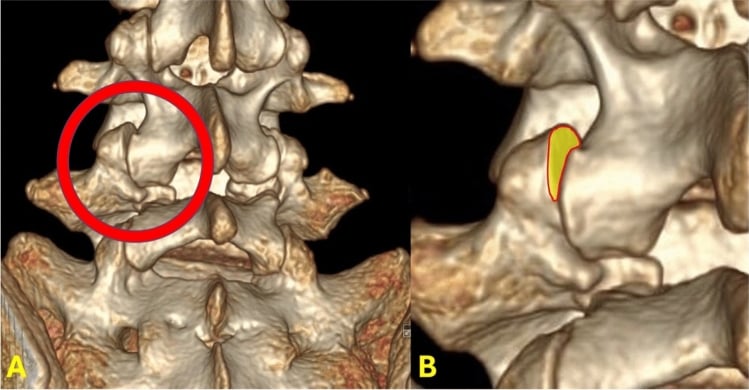
Neurological involvement. L5 radiculopathy arises by two mechanisms: fibrous tissue or callus at the pars defect compressing the L5 root, and foraminal narrowing as the L5 vertebra slides forward and the sacral dome rises posteriorly. In isthmic slips the root is compressed in the foramen by the fibrocartilaginous mass at the defect, not by the central canal.
Classification
Wiltse-Newman. The aetiological vocabulary. Five types, of which the isthmic is the most common:
- Name
- Dysplastic
- Mechanism
- Congenital abnormality of the upper sacrum or L5 arch, with hypoplastic or abnormally oriented facets that allow forward slip without a pars defect
- Key point
- Rare, 5-10% of spondylolisthesis. Higher risk of cauda equina compression, because the posterior elements remain attached and can impinge on the canal
- Name
- Isthmic
- Mechanism
- Pars defect: IIA lytic (stress or fatigue fracture, most common overall), IIB elongated but intact pars from healed stress injuries, IIC acute traumatic fracture
- Key point
- The most common type
- Name
- Degenerative
- Mechanism
- Facet arthropathy and disc degeneration; the pars is intact
- Key point
- Compared with the isthmic type below
- Name
- Traumatic
- Mechanism
- Acute fracture of the posterior elements other than the pars, such as the pedicle or lamina
- Key point
- Rare; treat the underlying injury as well as the slip
- Name
- Pathologic
- Mechanism
- Weakening of the posterior elements by tumour, infection or metabolic bone disease (e.g. Paget disease)
- Key point
- Rare; treat the underlying pathology as well as the slip
Isthmic versus degenerative. The pars is the discriminator, and everything else follows from it:
- Isthmic
- DEFECT present (spondylolysis)
- Degenerative
- Intact (no defect)
- Isthmic
- L5-S1 (90%)
- Degenerative
- L4-L5 (70%)
- Isthmic
- Adolescence/young adult
- Degenerative
- Over 50 years
- Isthmic
- Male predominant (3:1)
- Degenerative
- Female predominant (6:1)
- Isthmic
- Stress fracture of pars
- Degenerative
- Facet and disc degeneration (facet hypertrophy and disc collapse on imaging)
- Isthmic
- Any grade (up to spondyloptosis)
- Degenerative
- Usually Grade I-II only (the intact facets limit the slip)
- Isthmic
- Pars repair or fusion
- Degenerative
- Decompression with or without fusion
Meyerding. The slip is graded on the lateral view by the forward translation of the vertebra as a percentage of the width of the vertebra below: the sacral endplate is divided into quarters, and the slip percentage is how far the posterior corner of L5 has moved forward across them. Grades I and II are low-grade; III to V are high-grade and change the surgical decision.
- Slip Percentage
- Less than 25%
- Description
- Low-grade, usually asymptomatic
- Slip Percentage
- 25-50%
- Description
- Low-grade, may be symptomatic
- Slip Percentage
- 50-75%
- Description
- High-grade, often symptomatic
- Slip Percentage
- 75-100%
- Description
- High-grade, typically symptomatic
- Slip Percentage
- Greater than 100%
- Description
- Spondyloptosis (L5 anterior to S1)
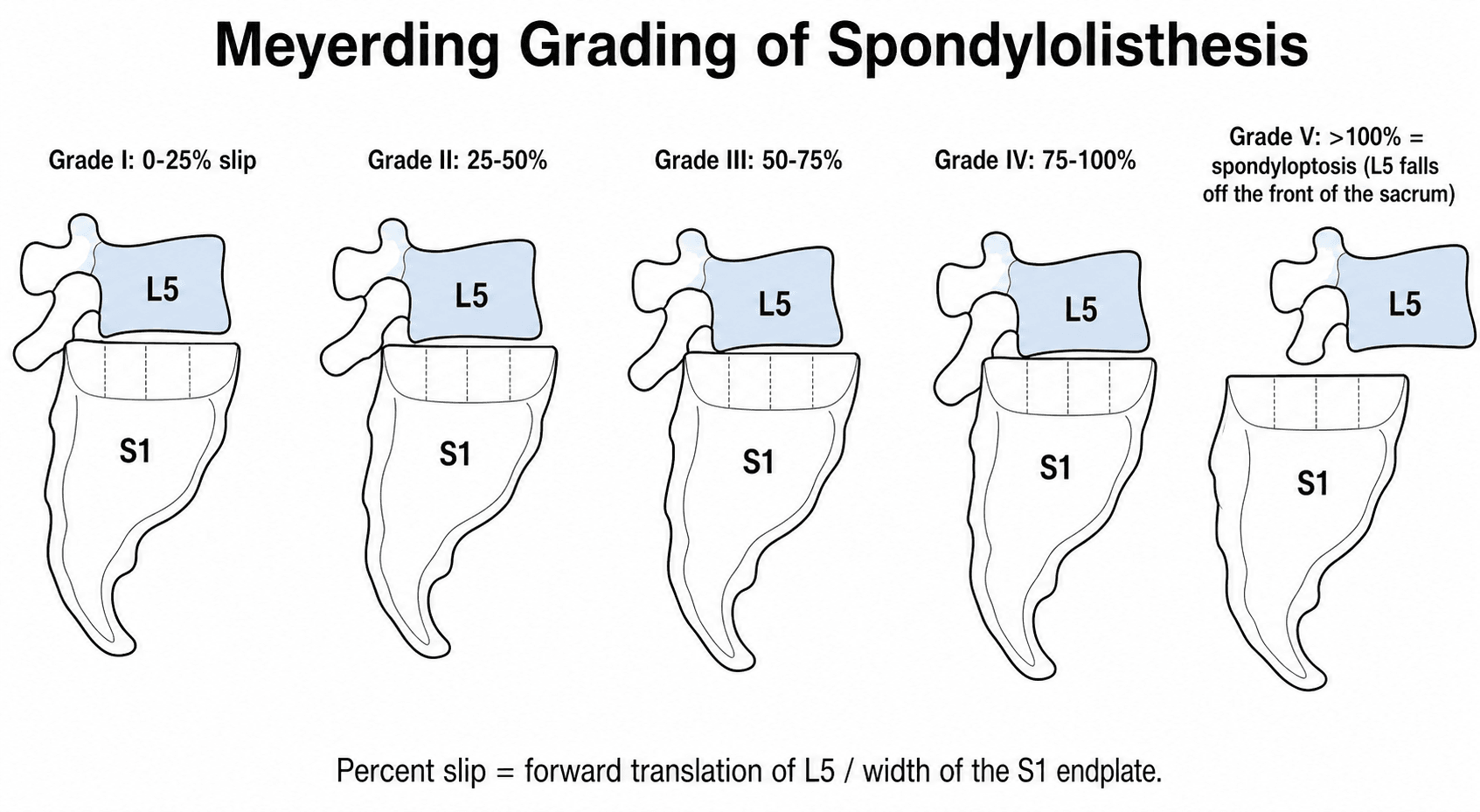
Marchetti-Bartolozzi. A simpler, prognostically useful scheme that separates the two mechanisms most relevant to treatment:
- Subtypes
- High-dysplastic and low-dysplastic
- Key point
- Abnormal sacropelvic morphology, often progressive, higher slip grades
- Subtypes
- Traumatic, post-surgical, pathological, degenerative
- Key point
- Normal anlage; slip results from a discrete insult or wear
Classic adolescent isthmic (lytic) spondylolisthesis is generally regarded as part of the developmental (low-dysplastic) spectrum because of its strong association with abnormal spinopelvic morphology.
Spinopelvic balance and the SDSG system. Modern decision-making, especially in high-grade slips, is driven by sagittal alignment rather than slip percentage alone. A high sacral slope with low pelvic tilt is a "balanced" pelvis; a low sacral slope with high pelvic tilt is a retroverted, "unbalanced" pelvis. The mismatch between pelvic incidence and lordosis, not the Meyerding grade alone, is what determines whether a slip is balanced, so grade and balance must both be reported.
The Spinal Deformity Study Group (SDSG) classification grades L5-S1 slips by (1) Meyerding grade, (2) pelvic incidence and (3) spinopelvic alignment, producing six types with significantly different quality-of-life profiles. Its main clinical message: an unbalanced (retroverted) high-grade pelvis is the subgroup most likely to benefit from reduction, whereas a balanced pelvis may be managed by in situ fusion.
Clinical Presentation
History. The pain is low back, aching and mechanical, and may radiate to the buttocks. It is aggravated by extension, standing and sport, relieved by flexion and rest, and becomes radicular in an L5 distribution if the root is compressed. A young athlete with extension-related back pain should make you think of a pars stress reaction.
Red flags.
- Bowel or bladder dysfunction: cauda equina (rare)
- Progressive weakness: neurological compromise
- Rapidly progressive slip: high-grade instability
Look. In a high-grade slip there is a palpable step-off at the lumbosacral junction, an increased lumbar lordosis and, in the spondyloptotic crisis, a vertical sacrum. Severe cases walk with a waddling gait. The named form is the Phalen-Dickson sign, a crouched, knee-flexed and hip-flexed gait produced by hamstring tightness and the compensatory posture of a high-grade slip; it is worth recognising by name because it is a bedside marker of severity rather than a separate pathology, and it usually resolves as the slip is corrected.
Feel and move. Tenderness over L5-S1. Lumbar flexion is limited, extension is painful, and hamstring spasm adds stiffness. Tight hamstrings, measured by the popliteal angle and straight leg raise, are the classic finding in adolescents with isthmic spondylolisthesis and correlate with the slip; the mechanism is debated but may relate to protective hamstring spasm and postural compensation for the lumbosacral kyphosis and anterior pelvic tilt produced by the slip.
Provoke. The single-leg hyperextension test: the patient stands on one leg and extends, and it is positive if it reproduces ipsilateral low back pain.
Neurology.
- Root
- L5
- Interpretation
- Stretched over sacral dome
- Root
- S1
- Interpretation
- Less common
- Root
- Cauda equina
- Interpretation
- Emergency
Differential diagnosis. Adolescent or young-adult mechanical back pain has several mimics that must be excluded before attributing symptoms to a pars lesion:
- Discriminating features
- Extension pain, single-leg hyperextension positive, hamstring tightness
- Key investigation
- CT / MRI: pars defect ± slip
- Discriminating features
- Older patient, intact pars, L4-5, neurogenic claudication
- Key investigation
- MRI: intact pars, facet arthrosis, stenosis
- Discriminating features
- Flexion-aggravated, positive SLR, dermatomal radiculopathy
- Key investigation
- MRI: focal disc protrusion
- Discriminating features
- Rigid kyphosis, anterior wedging ≥5° over 3 vertebrae
- Key investigation
- Lateral X-ray: endplate irregularity, Schmorl nodes
- Discriminating features
- Inflammatory pattern, morning stiffness, raised CRP, HLA-B27
- Key investigation
- MRI SIJ: bone-marrow oedema; inflammatory markers
- Discriminating features
- Constant night pain, fever, raised CRP/ESR
- Key investigation
- MRI with contrast; CRP, ESR, blood cultures
- Discriminating features
- Night pain relieved by NSAIDs (osteoid osteoma), painful scoliosis
- Key investigation
- CT (nidus) / MRI; bone scan
Investigations
Radiographs first. Four views, each answering a different question:
- Purpose
- Overall alignment, transitional vertebra
- Purpose
- Slip percentage (Meyerding grade), slip angle
- Purpose
- Scottie dog: pars defect (collar sign)
- Purpose
- Instability assessment
On the oblique view the posterior elements form a Scottie dog, and the pars defect appears as a collar across the dog's neck.
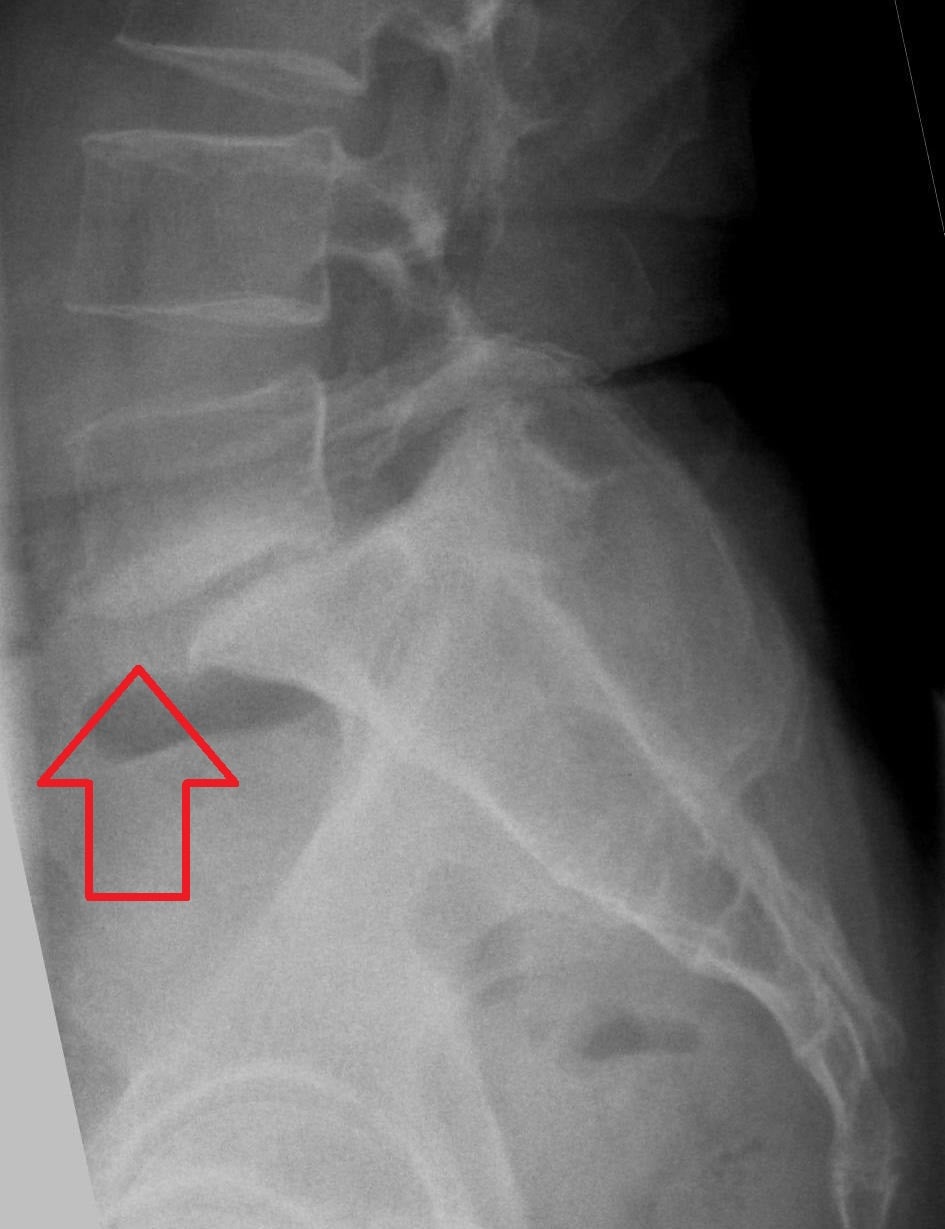
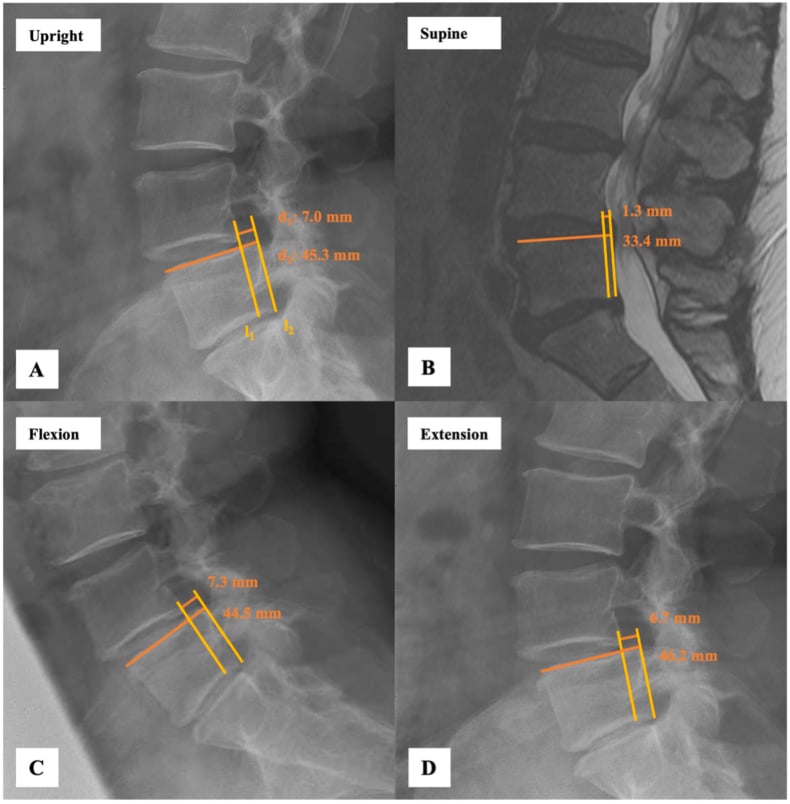
Position matters. A slip that reduces supine and reappears upright is dynamic, and a supine film alone will understate it. Take the standing lateral first, then flexion and extension, because the difference between positions is the instability that guides fusion.
CT. More sensitive and specific for pars visualisation, and the gold standard for it. It shows the pars status (defect, elongation, sclerosis), the healing potential (sclerotic margins mean low healing potential) and the bony anatomy (foraminal stenosis, facet arthrosis).
MRI. T2 sagittal images show disc degeneration and canal stenosis; T1 and T2 axial images show neural compression and foraminal narrowing; STIR shows the bone marrow oedema of an acute pars stress. MRI also grades the slip and shows what CT cannot: disc hydration, foraminal narrowing and the state of the exiting L5 root.
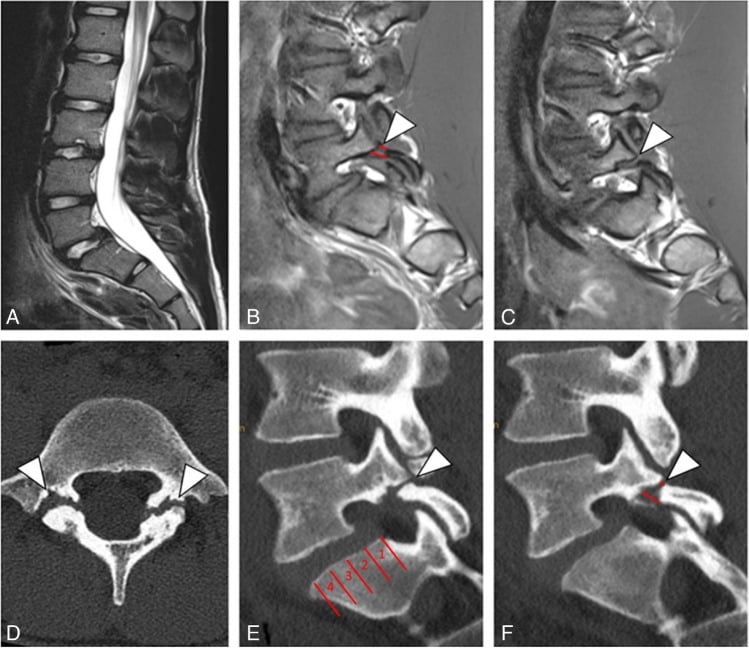
SPECT-CT. Combines CT anatomy with SPECT metabolic activity. A hot spot at the pars indicates an acute or healing lesion with potential for conservative healing; a cold defect indicates an established non-union.
Laboratory studies. Not routinely required. If there is concern for a pathological cause (Type V), check a full blood count, ESR, CRP, calcium, phosphate, ALP and, if indicated, tumour markers.
Management
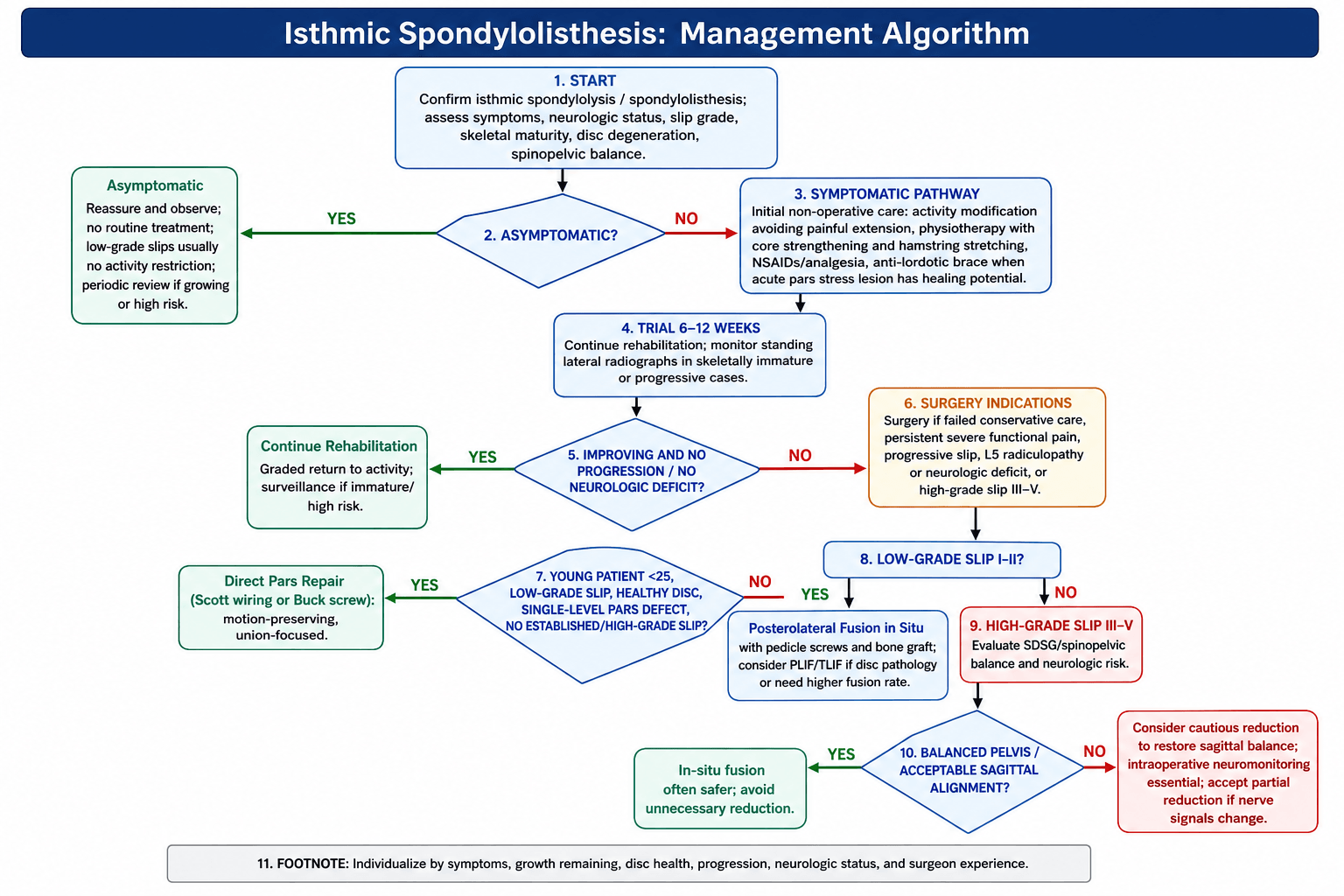
The asymptomatic patient. Most patients, 80%, remain asymptomatic and need no treatment. Activity restrictions are not routinely indicated for low-grade slips.
Conservative care first. For the symptomatic patient:
- Activity modification: avoid the aggravating extension activities
- Physiotherapy: core strengthening and hamstring stretching
- Bracing: an anti-lordotic brace for an acute pars stress with healing potential
- NSAIDs for symptom control
Give this a 6-12 week trial before surgery is considered; failure of conservative care after 6 or more months is the most common indication for operating.
Indications for surgery.
- Failed conservative treatment, the most common indication
- Progressive slip, especially in the skeletally immature
- Neurological deficit (L5 radiculopathy)
- High-grade slip (III-V), which often requires surgery
- Severe pain impacting function, a quality-of-life indication
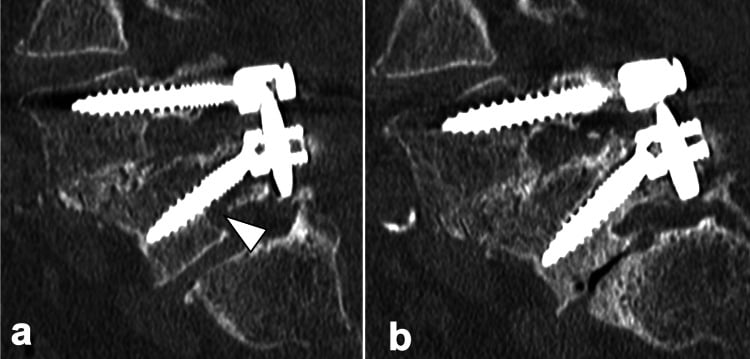
Direct pars repair (Scott, Buck). For the young patient (under 25) with a single-level defect, minimal or no disc degeneration and a low-grade slip at most. Scott wiring passes a figure-of-8 wire around the transverse process and spinous process; Buck's screw is a lag screw across the pars defect. Both preserve motion and avoid fusion. In carefully selected young patients with a healthy disc and no associated slip, radiological union is high and satisfactory functional outcomes are reported in roughly 80% (Rajasekaran, satisfactory in 7 of 9); an associated Grade 1 slip predicted a poor result, which is why an established slip is a contraindication, alongside significant disc degeneration, a high-grade slip, multilevel disease and sclerotic (terminal-stage) pars margins.
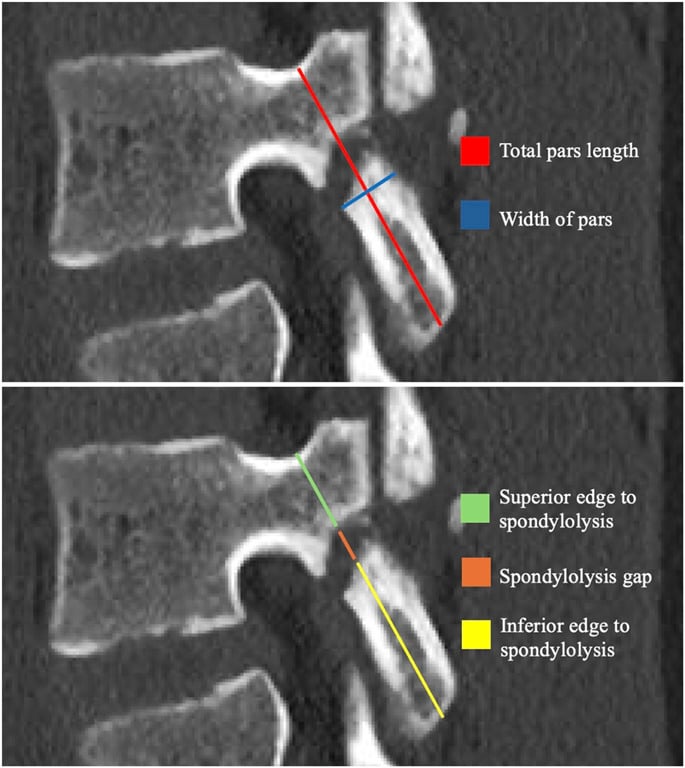
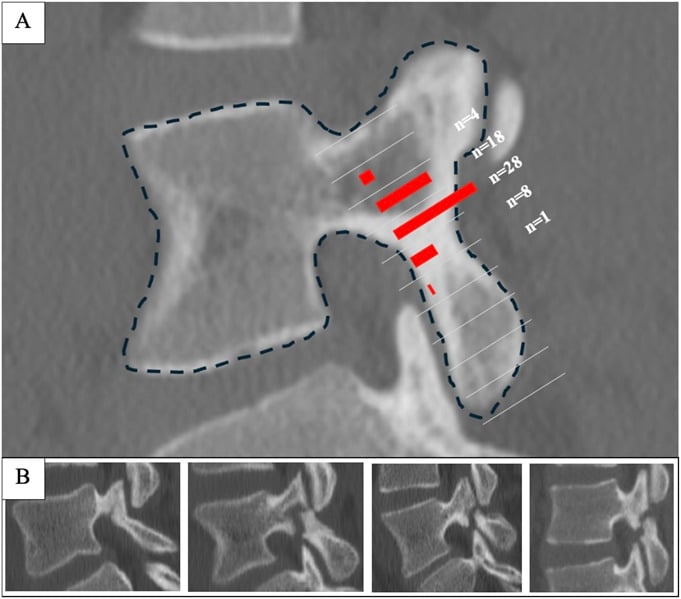
Planning the repair. Plan it off the CT. Total pars length and width determine whether a screw will fit, and the distance from each edge to the gap sets the trajectory; a pars too narrow for a screw needs a wiring or hook construct instead. The defect does not sit in the same place in every patient, and the screw must cross it perpendicular to be effective, so map the fracture position on the preoperative CT rather than assuming a standard trajectory.
Fusion for the low-grade slip (I-II). Posterolateral fusion in situ is the operation for symptomatic spondylolisthesis unsuitable for pars repair: a posterior approach, pedicle screw fixation, decortication of the transverse processes and bone graft, without reduction. Fusion rates are over 90% with excellent outcomes, and reduction is not required for Grade I-II. Interbody fusion (PLIF/TLIF) may be added for disc pathology or to increase the fusion rate.
Fusion for the high-grade slip (III-V). Reduction versus in situ fusion is controversial. In situ fusion is technically safer but maintains the deformity and may not correct sagittal imbalance; reduction provides better sagittal alignment but carries a 10-25% risk of L5 radiculopathy from nerve stretch. The modern answer uses the SDSG spinopelvic framework (Labelle, Mac-Thiong): reserve reduction for high-grade slips with an unbalanced (retroverted) pelvis to restore global sagittal balance, rather than reducing every high-grade slip, and always weigh patient factors and surgeon experience.
The technique options:
- Posterior-only, with reduction, pedicle screws and an interbody cage
- Combined anterior-posterior, with anterior discectomy and graft plus posterior instrumentation
- For spondyloptosis, the strategies in the section below
Neurological monitoring of motor and sensory evoked potentials is essential for any reduction procedure.
Return to Sport After Athletic Spondylolysis
- Goal
- Settle pain and protect the pars
- Key elements
- Stop the provocative activity; relative rest; anti-lordotic posture; brace if an early, healable defect
- Goal
- Restore control and flexibility
- Key elements
- Lumbopelvic/core stabilisation, hamstring and hip-flexor flexibility, neutral-spine motor control
- Goal
- Reintroduce load safely
- Key elements
- Graded sport-specific drills once pain-free with restored strength and a normal neurological exam
- Goal
- Prevent recurrence
- Key elements
- Full return when asymptomatic and functionally tested; correct the provocative technique (e.g. the cricket mixed bowling action)
Symptoms decide, not the scan. Return to sport is driven by symptoms and function, not by radiographic union. An early stress reaction is managed toward bony healing (Sairyo: early CT-stage defects with adjacent pedicle marrow oedema heal best), but many athletes return successfully with an established fibrous defect once they are pain-free with restored core and hamstring function, typically around 3 to 6 months. Whatever the imaging shows, the lesion recurs unless the causative load and technique are corrected.
Spondyloptosis and the Gaines Vertebrectomy
Spondyloptosis, Meyerding Grade V, a slip of more than 100%, is the extreme of the developmental spectrum: L5 has translated completely off the front of S1. It is always a surgical problem, and there are three broad strategies.
- Description
- Fuse without reducing the slip; a fibular or transsacral dowel can be passed from S1 up into the L5 body
- Note
- Lower neurological risk; accepts the deformity
- Description
- Partial or full reduction with L4-S1 instrumentation and interbody support
- Note
- Restores sagittal balance; higher L5 nerve-stretch risk
- Description
- Two-stage removal of the L5 body (anterior) then its posterior elements, reducing L4 onto S1
- Note
- Reserved for severe spondyloptosis; the highest neurological risk
The L5 root is the priority. In spondyloptosis the L5 nerve root is at greatest risk during any reduction or vertebrectomy, so intraoperative neuromonitoring is mandatory, and a partial reduction is accepted if the motor or sensory evoked potentials or the EMG deteriorate. The balanced-versus-unbalanced pelvis decision still applies: reserve aggressive reduction for the unbalanced (retroverted) pelvis, where restoring global sagittal balance justifies the added risk.
Complications
Of watching. The slip may progress, most likely in those with the progression factors listed under Pathophysiology, so monitor with standing lateral radiographs. Chronic pain may develop despite conservative measures; consider surgery if it is refractory.
Of surgery.
- Incidence
- 1-5%
- Prevention
- Careful dissection
- Incidence
- Rare
- Prevention
- Avoid anterior to sacrum
- Incidence
- 5-15%
- Management
- Revision fusion, bone graft
- Incidence
- 2-5%
- Management
- Revision fixation
- Incidence
- 5-10% long-term
- Management
- May need extension of fusion
- Incidence
- 1-3%
- Management
- Antibiotics, possible washout
Of reducing a high-grade slip. L5 nerve stretch injury is the most common reduction-related injury; cauda equina injury and vascular injury also occur. Prevention rests on staged reduction together with the neuromonitoring, and the willingness to accept a partial reduction, described under spondyloptosis.
Of fixing a level whose shear was never corrected. Pedicle fractures after fusion, in a spine left with insufficient lordosis for its pelvic incidence, are the bone failing where the shear was never corrected. That is the argument for restoring alignment rather than simply instrumenting the level.
Guidelines, Registries & Global Practice
Global Epidemiology: Spondylolysis affects roughly 6% of the adult population in unselected radiographic cohorts (Fredrickson/Beutler, USA), with a strong male predominance and an L5-S1 predilection. Prevalence is markedly higher in specific groups: certain Inuit populations report rates exceeding 25-50%, while it is uncommon in some sub-Saharan African populations, pointing to genetic as well as mechanical contributions. Athlete cohorts carry the highest acquired risk, particularly cricket fast bowlers, gymnasts, divers, weightlifters and American-football linemen, in whom repetitive lumbar hyperextension concentrates stress at the pars.
Side-by-Side Guidance (no single high-level guideline dominates this niche):
- Position on isthmic spondylolisthesis
- Non-specific; emphasises non-operative care, exercise and avoiding routine imaging unless surgery is contemplated. Surgery only for correlating radicular symptoms refractory to conservative care
- Evidence level
- Guideline (UK)
- Position on isthmic spondylolisthesis
- Trial of conservative care first; fusion (± decompression) for symptomatic slip with instability or radiculopathy; pars repair for select young patients without disc disease
- Evidence level
- Consensus / Level I-IV evidence
- Position on isthmic spondylolisthesis
- MDT assessment, conservative-first, tertiary referral for high-grade or progressive slips; neuromonitoring for reduction
- Evidence level
- Guideline / consensus
- Position on isthmic spondylolisthesis
- Spinopelvic (PI / balance) assessment central to high-grade decision-making; reduction for unbalanced pelvis
- Evidence level
- Classification / expert consensus
- Position on isthmic spondylolisthesis
- Standardised surgical principles, instrumented circumferential fusion for high-grade, emphasis on sagittal restoration
- Evidence level
- Educational / consensus
Dedicated isthmic-spondylolisthesis registries are limited; most national spine registries (e.g. Swespine, the British Spine Registry) pool degenerative and isthmic fusions. The strongest comparative evidence remains Möller & Hedlund's RCT (surgery superior to exercise in disabling adult isthmic slips) and the SPORT trial (degenerative slip — a frequently mis-cited comparator). High-grade paediatric outcome data come from single-centre prospective series (e.g. the Helenius/Turku group) rather than large registries.
There is genuine international variation in (1) whether to reduce high-grade slips (reduction favoured in North American and SDSG-influenced centres for unbalanced pelves; in situ fusion still widely used elsewhere), (2) use of interbody support versus posterolateral fusion alone for low-grade slips, and (3) the role of direct pars repair, which is offered selectively in younger patients.
MCQ Practice Points
Q: What is the pathological lesion in isthmic spondylolisthesis? A: Defect in the pars interarticularis (spondylolysis). This stress fracture typically occurs at L5 due to the oblique orientation of the pars at this level which concentrates shear forces during extension and rotation.
Q: What is the characteristic radiographic finding on oblique lumbar X-ray? A: "Collar on the Scotty dog" sign - the lucency through the pars appears as a collar on the dog-shaped vertebra on oblique views. The dog's nose is the transverse process, eye is the pedicle, ear is the superior facet, front leg is the inferior facet.
Q: What is the most common level for isthmic spondylolisthesis and why? A: L5-S1 (85-95% of cases). The L5 pars is thinner and more obliquely oriented, concentrating stress at this level. Additionally, L5 bears the maximum shear force at the lumbosacral junction due to sacral inclination.
Q: Which sports have the highest risk for developing spondylolysis? A: Gymnastics, cricket fast bowling, diving, and American football linemen. These activities involve repetitive hyperextension and rotation which concentrate stress at the pars interarticularis. Up to 40% of adolescent gymnasts have pars defects.
Viva Scenarios
Practise clinical reasoning and management decisions out loud
“A 15-year-old male gymnast presents with 6 months of low back pain worse with extension. Lateral X-ray shows Grade I L5-S1 slip. Oblique view shows bilateral pars defects (collar on Scottie dog).”
“An 18-year-old female presents with severe back pain and bilateral L5 radiculopathy. Standing lateral X-ray shows Grade III L5-S1 slip with high slip angle. She has tight hamstrings and a waddling gait.”
“A 16-year-old cricket fast bowler presents with 3 weeks of acute low back pain. No radiculopathy. X-rays are normal. MRI shows T2 hyperintensity in the left L5 pars. SPECT-CT shows increased uptake at L5.”
KEY DIFFERENTIATORS
- PARS DEFECT present = isthmic type
- L5-S1 level (90%) vs L4-5 for degenerative
- Young patients (adolescence) vs old (degenerative)
- Scottie dog collar sign on oblique X-ray
CLASSIFICATIONS
- Wiltse: Type II = isthmic (IIA lytic, IIB elongated, IIC acute)
- Meyerding: I (less than 25%) to V (spondyloptosis)
- Low-grade: I-II; High-grade: III-V
- CT is gold standard for pars visualization
CLINICAL FEATURES
- Extension-related back pain
- Hamstring tightness (classic finding)
- Step-off palpable in high-grade
- L5 radiculopathy if nerve stretch
MANAGEMENT PRINCIPLES
- 80% remain asymptomatic - observation
- Conservative first: PT, activity modification
- Pars repair: Young, no disc disease, single level
- Fusion: Failed conservative, high-grade, neurological
SURGICAL PEARLS
- In situ fusion is safer for high-grade
- Reduction improves alignment but 10-25% L5 neuropathy risk
- Always use neuromonitoring for reduction
- Pars repair: ~80% satisfactory in young patients with healthy disc and no slip
Evidence Base
Natural History (Original Cohort)
- Prospective radiographic study of 500 unselected first-grade children followed into adulthood
- Spondylolysis incidence 4.4% at age 6, rising to 6% in adulthood
- Maximum slip observed was 28%; progression of olisthesis was unusual
- Strong association with spina bifida occulta; slip never became symptomatic in this cohort
45-Year Natural History
- 45-year follow-up of the same population-based cohort (30 subjects with pars lesions)
- Subjects with UNILATERAL defects never experienced any slippage
- Slip progression slowed with each decade and no subject ever reached a 40% slip
- No association between slip progression and low back pain; SF-36 scores matched the general population
Wiltse-Newman-Macnab Classification
- Defined the five-type aetiological classification still in use: dysplastic, isthmic, degenerative, traumatic, pathological
- Isthmic (Type II) subdivided into IIA lytic/fatigue fracture, IIB elongated pars, IIC acute fracture
- Based on combined aetiological and anatomical factors
Surgery vs Exercise (Adult Isthmic)
- 111 adults (18-55 yr) with isthmic slip and ≥1 year of disabling symptoms randomised to posterolateral fusion (± instrumentation) or an exercise programme
- Function (Disability Rating Index) and pain were significantly better after surgery at both 1 and 2 years (P less than 0.01)
- The exercise group's disability did not change; pain decreased only slightly
- 93% two-year follow-up
Pelvic Incidence & Spinopelvic Balance
- 214 subjects with developmental L5-S1 spondylolisthesis vs 160 normal controls
- Pelvic incidence, sacral slope, pelvic tilt and lumbar lordosis were all significantly greater in spondylolisthesis (P less than 0.01)
- Differences widened linearly as slip severity increased
- High pelvic incidence appears to predispose to development and progression
SDSG Spinopelvic Classification
- Spinal Deformity Study Group classification of L5-S1 slips by (1) grade, (2) pelvic incidence, (3) spinopelvic alignment - six types
- Substantial intra- and inter-observer reliability; HRQOL differed significantly across types
- Distinguishes 'balanced' from 'unbalanced' high-grade pelvis to guide whether reduction is needed
Predictors of Pars Healing (Conservative)
- 23 children/adolescents (41 pars defects) treated with bracing and activity restriction, healing assessed by CT
- Early (hairline) defects healed in 87% (13/15); progressive defects only 32%; terminal (pseudarthrosis) defects 0%
- High signal change in the adjacent pedicle on T2 MRI: 77% healed; no T2-negative defect healed
Direct Pars Repair (Buck Technique)
- 9 young patients (mean age 24) with symptomatic spondylolysis and a normal disc, failing conservative care
- Radiological union achieved in all patients at mean 45-month follow-up
- Satisfactory functional outcome (MacNab) in 78% (7/9); both patients with associated Grade 1 slip did poorly (fair/poor)
Instrumented Reduction in Paediatric Slips
- 26 adolescents (11 low-grade, 15 high-grade) treated by instrumented reduction and circumferential fusion
- Mean slip reduced from 67% to 21% (high-grade) and 25% to 6% (low-grade); non-union in 12%, reoperation 27%
- No persistent neurological deficit; SRS-24 pain and activity improved but stayed below matched healthy controls
SPORT - Degenerative Spondylolisthesis (Comparator)
- 607 patients with DEGENERATIVE spondylolisthesis and stenosis (randomised + observational cohorts)
- THE INTENTION-TO-TREAT ANALYSIS SHOWED NO STATISTICALLY SIGNIFICANT EFFECT for any primary outcome. The substantial, durable surgical advantage at 2 years comes from the AS-TREATED analysis
- That distinction exists because crossover in the randomised arm ran at roughly 40% in EACH direction, which is what destroyed the ITT comparison; the trial applies to degenerative, NOT isthmic, disease