Avascular Necrosis of Lunate | Progressive Wrist Arthritis | Ulnar Variance Key
- Negative Ulnar Variance: Present in 78% - ulna shorter than radius increases lunate loading
- Lichtman Stage IIIB: Scaphoid rotation = critical prognostic divider - salvage surgery required
- MRI Gold Standard: Detects Stage I disease before X-ray changes appear
- Joint Levelling: Radial shortening or ulnar lengthening for Stage II-IIIA with negative variance
- PRC: Proximal row carpectomy - motion-preserving salvage for Stage IIIB without arthritis
- “Negative ulnar variance = lunate takes excessive load
- “Stage IIIB (scaphoid rotation) = point of no return
- “MRI shows bone marrow oedema before X-ray changes
- “Radial shortening decreases lunate loading by 45%
Overview and Epidemiology
Kienböck's disease is avascular necrosis (AVN) of the lunate, leading to progressive collapse, carpal instability and wrist arthritis. It is a rare but disabling condition, and it falls on young, active patients.
Who. The peak age is 20-40 years, with a male predominance of 2:1, in manual labourers and athletes. It typically affects the dominant hand of a young worker. Bilateral disease is rare, less than 5%.
Pathophysiology and Aetiology
The aetiology is multifactorial.
Negative ulnar variance. It is present in 78% of patients against only 23% of the normal population, the ulna sitting 2-4mm shorter than the radius. A short ulna transmits more force through the lunate. In a neutral wrist 60% of axial load passes through the radius and 40% through the ulna; with 2mm of negative variance the lunate bears 95% of the radiocarpal load. Radial shortening osteotomy redistributes that load to the ulna.
Repetitive load and trauma. Cumulative stress on the lunate comes from repetitive wrist use: manual labour and jackhammer use, gymnastics and racquet sports. A prior wrist fracture or injury is also a risk factor.
Vascular anatomy. The extraosseous supply is profuse, with 2-3 dorsal and 3-4 volar vessels, but only 1-2 nutrient vessels enter the bone at each of the dorsal and volar poles (Gelberman). Capsular stripping, or a fracture crossing the centre, separates the bone from its entry points; it is stripping that devascularises the lunate.
Systemic associations.
- Corticosteroid use
- Systemic lupus erythematosus and vasculitis
- Gout and sickle cell disease
- Hypothyroidism and diabetes
The intraosseous patterns (Stahl classification). These are described from cadaveric injection studies rather than clinical angiography. Gelberman's study (PMID 7400565, 35 fresh cadaver limbs) describes three consistent intraosseous patterns, conventionally lettered Y, I and X, and found a dorsal-volar anastomosis in every specimen. The I pattern is conventionally taught as the least redundant, which is a reasonable reading of a single dominant intraosseous channel, but with an anastomosis in every lunate, "single vessel with no anastomosis" overstates it.
The vulnerable minority. The better modern basis is micro-CT work from van Alphen (PMID 27782999). Of 14 specimens, 12 had both volar and dorsal nutrient vessels and 2 had none dorsally; volar vessels were the more numerous (2.3 versus 1.4 on average). The authors therefore warn that a volar approach risks localised ischaemia in the no-dorsal-vessel subset.
Gelberman's conclusion. Gelberman's own conclusion favoured repeated compression fracture over a primary vascular deficiency as the cause of Kienböck's disease.
The "80% Y-pattern / 20% single vessel" figures, and any "Type A / Type B" dichotomy, are in wide circulation but are not traceable to Gelberman, whose paper does not establish a solitary-vessel subgroup. The defensible statement is that intraosseous anatomy varies, that only 1-2 nutrient vessels enter each pole so stripping matters, and that a minority genuinely lack a dorsal vessel. Quote van Alphen with its denominator: 2 of 14, not a firm 20 per cent.
The cascade. From the first insult to end-stage wrist, the sequence runs:
- Vascular insult or repetitive trauma
- Ischaemia and bone marrow oedema
- Osteocyte death and sclerosis
- Structural collapse of the lunate
- Scaphoid rotation and carpal instability
- Progressive radiocarpal and midcarpal arthritis
Collapse. AVN weakens the subchondral bone. Repeated loading causes microfractures, progressive loss of height and eventually fragmentation. Once collapse begins (Stage III), progression is difficult to arrest, and early intervention aims to prevent it.
Classification Systems
Lichtman. The modified Lichtman classification (2010) is the gold standard staging system, based on radiographic appearance and tied to treatment.
- Radiographic Findings
- Normal X-ray; diagnosis requires MRI, which shows AVN
- Lunate Status
- Structurally intact
- Radiographic Findings
- Increased density (sclerosis); normal shape and height
- Lunate Status
- Intact, no collapse
- Radiographic Findings
- Collapse with height loss, no scaphoid rotation; scapholunate angle normal (less than 60°)
- Lunate Status
- Collapsed, some viability
- Radiographic Findings
- Collapse WITH scaphoid rotation; scapholunate angle over 60° (DISI pattern)
- Lunate Status
- Collapsed, carpal instability
- Radiographic Findings
- Generalised carpal arthritis: radiocarpal, midcarpal or both
- Lunate Status
- Fragmented, arthritic
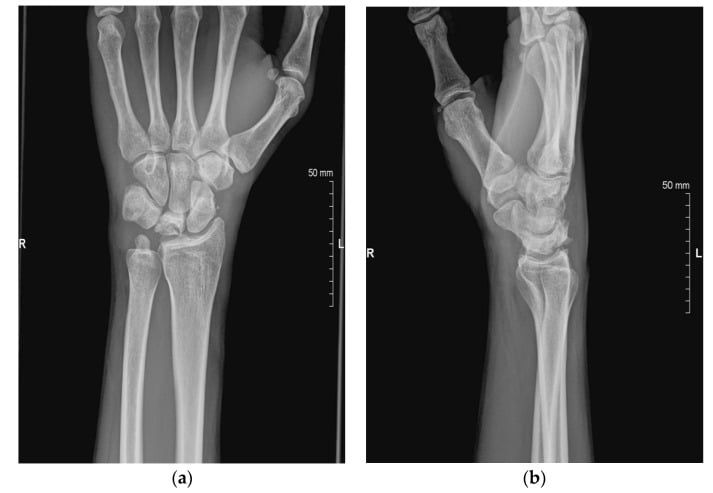
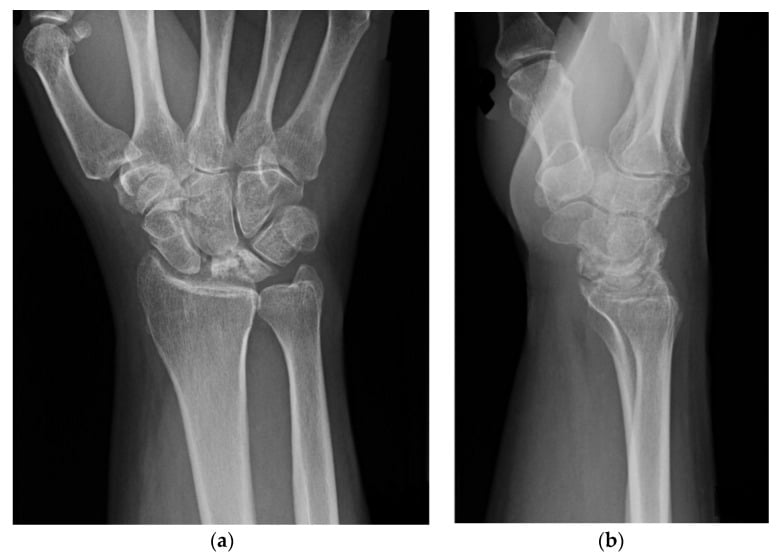
Stage IIIB is the critical prognostic divider. Scaphoid rotation means lunate collapse severe enough to destabilise the carpus, a fixed carpal collapse beyond salvage by joint-preserving techniques. Stages I-IIIA may benefit from joint levelling; IIIB-IV require salvage. That makes IIIA the last chance for joint-preserving surgery.
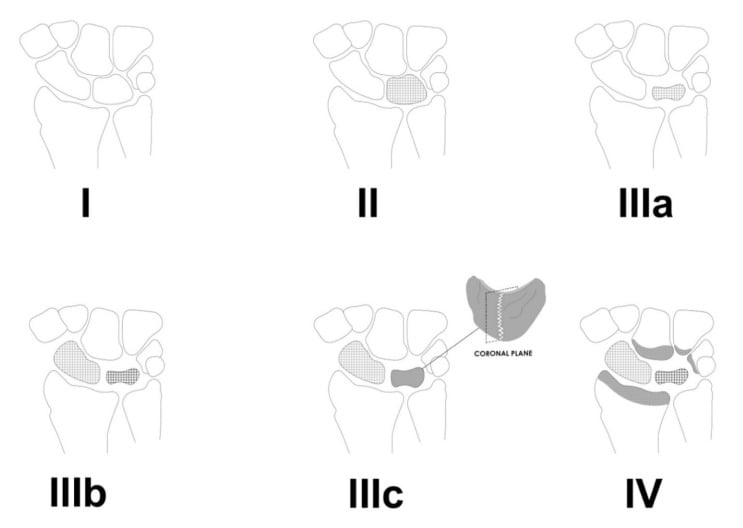
MRI staging. A five-stage MRI scheme is more sensitive than Lichtman for detecting early disease (its Stages 2-3) before X-ray changes, and it guides early intervention decisions.
- MRI Findings
- Normal
- Clinical Correlation
- No AVN
- MRI Findings
- Bone marrow oedema only
- Clinical Correlation
- Reversible ischaemia
- MRI Findings
- Subchondral fracture
- Clinical Correlation
- Early AVN
- MRI Findings
- Lunate collapse
- Clinical Correlation
- Established collapse
- MRI Findings
- Carpal arthritis
- Clinical Correlation
- End-stage
Bain and Begg. Their classification is arthroscopic rather than MRI-based: it grades how many articular surfaces of the lunate and its neighbours are non-functional, and matches a procedure to each grade.
Lunate Viability: The Schmitt Perfusion Classification
The Lichtman stage tells you how far the bone has collapsed; the Schmitt contrast-enhanced MRI grade tells you whether the marrow is still alive. A viable or reparable lunate can be unloaded or revascularised; a completely necrotic lunate with no repair zone will not respond to grafting and points toward salvage.
The zones. The 2017 integrated algorithm (Lichtman, Pientka and Bain) and several European centres pair the osseous Lichtman stage with the Schmitt perfusion/viability classification, which plain radiographs cannot show. Schmitt and Kalb described that a necrotic lunate remodels in band-shaped zones, demonstrable only on gadolinium-enhanced MRI:
- Proximal necrotic zone: dead marrow, no enhancement
- Intermediate reparative zone: hypervascular granulation or repair tissue that enhances avidly
- Distal viable zone: preserved marrow with normal perfusion
Intravenous gadolinium is mandatory, because only a perfusion study reliably separates the non-enhancing necrotic zone from the enhancing repair zone.
What it changes. The lunate with a substantial viable or reparative component is a candidate for radial shortening, a pedicled graft or a medial femoral condyle flap. The globally necrotic, non-enhancing lunate is effectively the "compromised lunate" of the 2017 "intact / compromised lunate / compromised wrist" framework, which this perfusion axis underlies. Reconstruction is unlikely to succeed, so PRC or fusion is the more honest choice.
Practical protocol. High-resolution CT best shows the osseous detail that stages the disease, the proximally located (stage IIIA) fractures and pancarpal arthritis (Stage IV), while contrast-enhanced MRI grades marrow viability. Used together, they classify Kienböck's disease by both morphology and perfusion, which plain films cannot do.
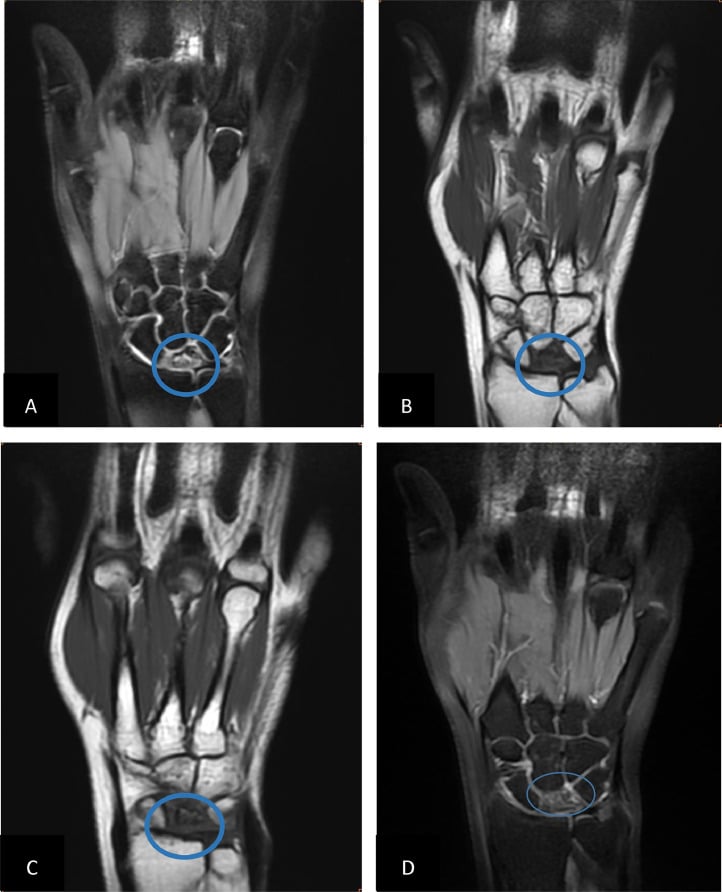
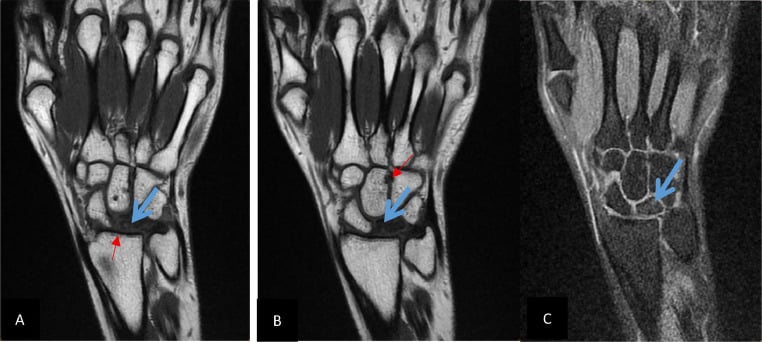
Schmitt & Kalb
- Contrast-enhanced MRI resolves the lunate into a proximal necrotic, middle reparative and distal viable zone
- Intravenous gadolinium is mandatory to separate necrotic from reparative tissue on perfusion imaging
- CT is more sensitive than radiographs for proximally located (stage IIIA) fractures and stage IV osteoarthritis
- Synoptic clinical, biomechanical and imaging assessment distinguishes Kienböck's from mimics in over 80% of cases
Schmitt, Kalb, Christopoulos & Grunz
- Contrast-enhanced MRI differentiates up to three band-shaped zones: necrotic (proximal), hypervascular repair (intermediate) and viable (distal)
- Intravenous gadolinium is recommended to distinguish necrotic from repair tissue
- High-resolution CT best depicts osteosclerosis, insufficiency fractures and advanced osteoarthritis
- Combined HRCT and contrast-enhanced MRI allow exact classification of osteonecrosis by morphology AND viability
Clinical Assessment
History. Onset is typically insidious over months. The patient describes dorsal wrist pain worse with activity, progressive stiffness and a weak grip, usually in the dominant hand of a manual labourer or someone whose work involves repetitive wrist use. 30% give a history of wrist injury.
Examination. Look for dorsal swelling over the lunate, tenderness over the lunate fossa and pain on axial loading of the third metacarpal. The Watson test may be positive (scaphoid instability). Flexion and extension fall to 50% of normal and grip by 30-50%, figures that depend on stage, as the table shows. The physical findings are non-specific, and imaging confirms the diagnosis.
- Pain
- Mild, activity-related
- Motion Loss
- Minimal (10-20%)
- Grip Strength
- Near normal
- Pain
- Moderate, constant
- Motion Loss
- Moderate (30-50%)
- Grip Strength
- Reduced 30-40%
- Pain
- Severe, rest pain
- Motion Loss
- Severe (over 50%)
- Grip Strength
- Reduced over 50%
Differential diagnosis. Dorsal or central wrist pain in a young adult has several mimics. MRI is the single best discriminator: AVN of the lunate shows diffuse low T1 marrow signal, whereas the alternatives have their own characteristic patterns.
- Typical features
- Insidious dorsal pain, young manual worker, grip loss
- Key imaging discriminator
- Diffuse low T1 signal throughout lunate; later collapse
- Distinguishing point from Kienböck's
- AVN is global to the lunate, not focal
- Typical features
- Trauma history, dorsal SL tenderness, positive Watson
- Key imaging discriminator
- SL gap (Terry-Thomas sign), DISI; lunate marrow normal
- Distinguishing point from Kienböck's
- Lunate signal is normal; instability is ligamentous
- Typical features
- Ulnar-sided pain, positive ulnar variance, click
- Key imaging discriminator
- Ulnar-positive variance, ulnar lunate/triquetral cysts
- Distinguishing point from Kienböck's
- Pain is ulnar-sided; usually ulnar-POSITIVE variance
- Typical features
- Ulnar pain on loading/grip
- Key imaging discriminator
- Subchondral cysts at ulnar lunate, positive variance
- Distinguishing point from Kienböck's
- Opposite ulnar variance to classic Kienböck's
- Typical features
- Acute trauma, focal tenderness
- Key imaging discriminator
- Discrete fracture line; focal not diffuse marrow change
- Distinguishing point from Kienböck's
- Single fracture line rather than diffuse AVN
- Typical features
- Localised swelling, dorsal lump
- Key imaging discriminator
- Cyst or osteophyte; lunate normal
- Distinguishing point from Kienböck's
- Structural lesion, normal lunate marrow
Investigations
Plain radiographs. First line: PA, lateral and clenched-fist views, read for the Lichtman findings above; scaphoid rotation (IIIB) is seen on the lateral. Measure ulnar variance on a neutral-rotation PA view.
MRI. The gold standard, and the only way to see Stage I disease. T1 shows low signal from marrow replacement, and T2 signal varies with stage. Bone marrow oedema and low T1 signal precede radiographic sclerosis by months, and early detection may allow non-operative treatment. MRI also assesses lunate viability and cartilage integrity.
CT. For surgical planning. It defines the extent of collapse, the fracture lines and articular involvement, and before salvage it assesses the capitate head (for PRC) or plans the fusion surfaces.
Bone scan. Rarely used, and of historical interest. It shows increased uptake in the lunate but is less specific than MRI, which has replaced it.
- Technique
- PA view, neutral rotation, difference in radial-ulnar heights
- Normal Value
- 0 to +2mm
- Kienböck's Finding
- Negative variance in 78%
- Technique
- Lateral view, capitate to radius distance / lunate to 3rd MC length
- Normal Value
- 0.54 ± 0.03
- Kienböck's Finding
- Decreased from Stage IIIB
- Technique
- Lateral view, angle between scaphoid and lunate
- Normal Value
- 30-60 degrees
- Kienböck's Finding
- Over 60° in Stage IIIB (DISI)
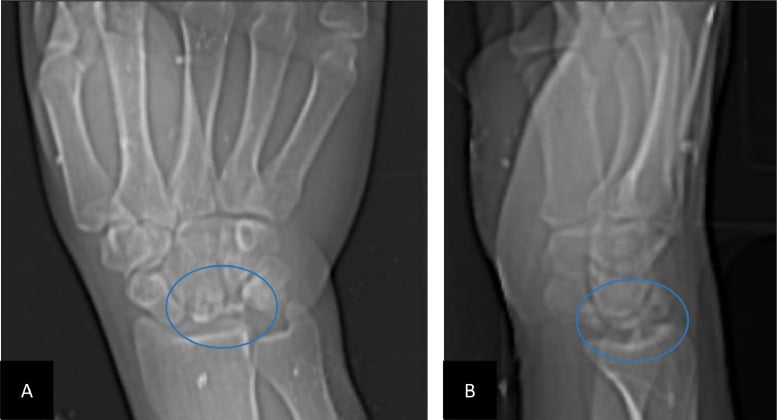
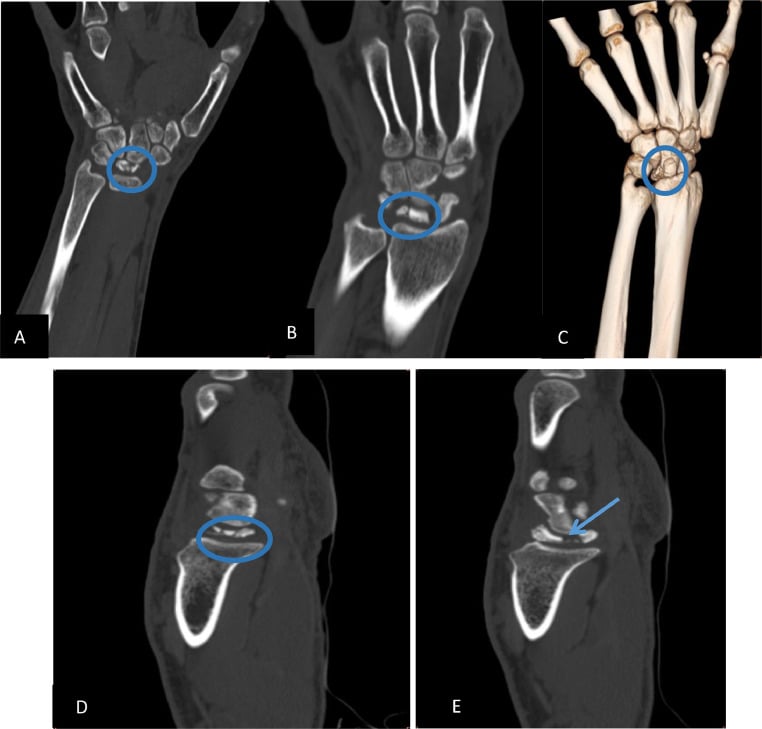
Management Algorithm
Conservative. Indicated for Stage I disease, for the patient who refuses surgery and for medical comorbidity. A short-arm cast or splint for 3-6 months aims to unload the lunate and allow revascularisation, with serial MRI every 3-4 months. The success rate in Stage I is 30-50%, although no series cited on this page quantifies arrest. Conservative treatment is rarely effective beyond Stage I and is temporising in most cases.
Adjuncts. Avoid heavy manual work and impact loading, with an ergonomic assessment and job modification or retraining where needed. NSAIDs control pain. Bisphosphonates are experimental with limited evidence, and iloprost (a prostacyclin analogue) may improve vascularity.
Joint levelling. Indicated for Stage II-IIIA with negative ulnar variance and a viable lunate. Radial shortening osteotomy is the most common: shortening the radius 2-4mm decreases lunate loading by 45% and redistributes load to the ulnocarpal joint. Pain relief is 60-80%, and it works best in Stage II. Ulnar lengthening is the alternative; it preserves radial length at the cost of a higher ulnar nonunion risk and DRUJ stiffness.
What levelling does not do. Progression is common without surgery, and radial shortening may slow it. The pooled long-term evidence (Shin et al) found Lichtman-stage progression no different after radial osteotomy than after non-operative care, although pain and motion were better.
Revascularisation. Indicated for Stage II-IIIA with a viable lunate on MRI, particularly in young patients. The most common graft is the 4+5 ECA pedicle graft: vascularised bone harvested from the dorsal distal radius on the 4th and 5th extensor compartment artery and inset into a drilled lunate core. It may restore lunate vascularity and does best in Stage II. Pain relief is 70% and success rates vary from 40-80% on moderate-quality evidence, though no series cited on this page quantifies it. The alternatives are a pisiform vascularised graft and the medial femoral condyle free flap (microsurgery). All are technically demanding with variable results.
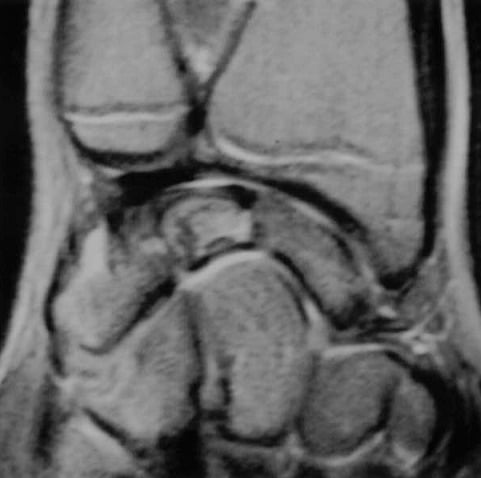
Salvage. Indicated for Stage IIIB-IV, failed joint-preserving surgery and the painful wrist. Salvage surgery trades motion for pain relief and stability.
Proximal row carpectomy. The motion-preserving salvage for Stage IIIB without arthritis. The scaphoid, lunate and triquetrum are excised so that the capitate head articulates with the lunate fossa of the radius. It gives 80% pain relief, preserves 50% of wrist motion and leaves grip at 70% of normal, with good 10-year results. It needs intact cartilage on the capitate head and in the lunate fossa, and no midcarpal arthritis, assessed before surgery on CT or MRI; capitate head, radiocarpal or inflammatory arthritis contraindicates it.
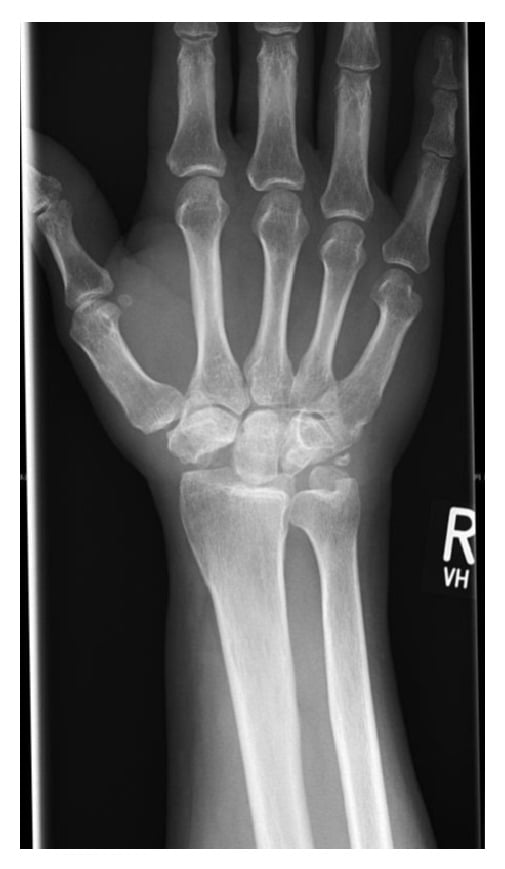
Limited intercarpal fusion. Four-corner fusion joins the capitate, hamate, lunate and triquetrum and excises the scaphoid; it gives reliable pain relief and preserves 50% of motion. Radiolunate fusion joins the radius to the lunate and preserves some motion, and capitolunate fusion joins the capitate to the lunate. STT and scaphocapitate fusion are covered below.
Total wrist fusion. For Stage IV with generalised arthritis, or salvage of a failed PRC or fusion. The radius, carpus and metacarpals are fused with a plate. Pain relief is excellent and grip strong, but there is no motion and a significant limitation of daily activities.
Wrist arthroplasty. Reserved for low-demand patients and bilateral disease, to preserve motion in one wrist. It preserves motion at the risk of loosening or instability, and the young, high-demand Kienböck's patient is not an ideal candidate.
- Preferred Treatment
- Immobilisation 3-6 months
- Alternative
- Observation
- Outcomes
- May arrest progression if caught early; no cited series here quantifies arrest, and pooled data show stage progression is no different with or without osteotomy
- Preferred Treatment
- Radial shortening (if -UV)
- Alternative
- Revascularisation
- Outcomes
- Less pain and more motion than non-operative care; does not halt radiographic progression
- Preferred Treatment
- Joint levelling or revascularisation if the lunate is viable
- Alternative
- Consider PRC
- Outcomes
- Variable; no cited series on this page quantifies it
- Preferred Treatment
- PRC or four-corner fusion
- Alternative
- STT fusion
- Outcomes
- Good pain relief, motion preserved not improved; 12-14% revision long-term
- Preferred Treatment
- Total wrist fusion
- Alternative
- Wrist arthroplasty (selected)
- Outcomes
- Reliable pain relief, no motion
Surgical Technique
Radial Shortening Osteotomy
Supine, arm table, tourniquet. Volar approach to the distal radius through a longitudinal incision between FCR and the radial artery. Protect the superficial radial nerve branches.
Retract FCR ulnarly and the radial artery radially. Expose pronator quadratus and incise it longitudinally, then elevate subperiosteally over the distal radius.
Mark the osteotomy 2-3cm proximal to the radial articular surface. Make a transverse osteotomy with an oscillating saw and remove a 2-4mm bone wedge, based on the preoperative ulnar variance, to shorten the radius.
Compress the osteotomy and apply a locking plate. Ensure stable fixation, then check DRUJ stability and rotation.
Repair pronator quadratus over the plate to protect it. Close the skin and splint in neutral.
Getting the length right. Measure the ulnar variance exactly before surgery and plan the shortening from it. Too little fails to unload the lunate. Excessive shortening, over 4mm, causes DRUJ pain and stiffness, and shortening greater than planned is a recognised complication. Compress the osteotomy fully to minimise the nonunion risk, and use a locking plate for secure fixation in osteopenic bone; nonunion follows inadequate fixation or bone contact.
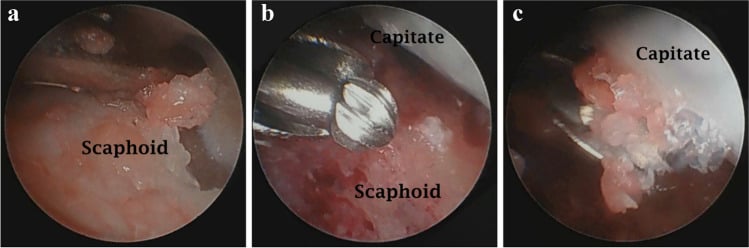
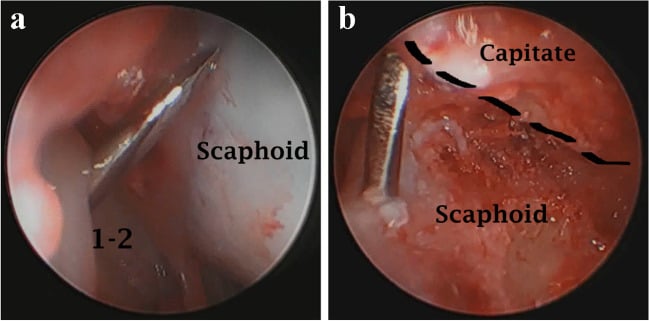
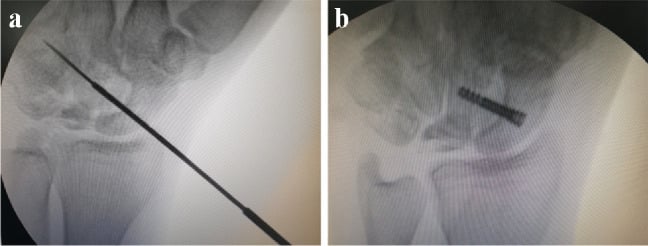
Arthroscopic scaphocapitate fusion. Scaphocapitate fusion is one limited intercarpal fusion used for stage III disease; the figures follow the arthroscopic technique from surface preparation to union.
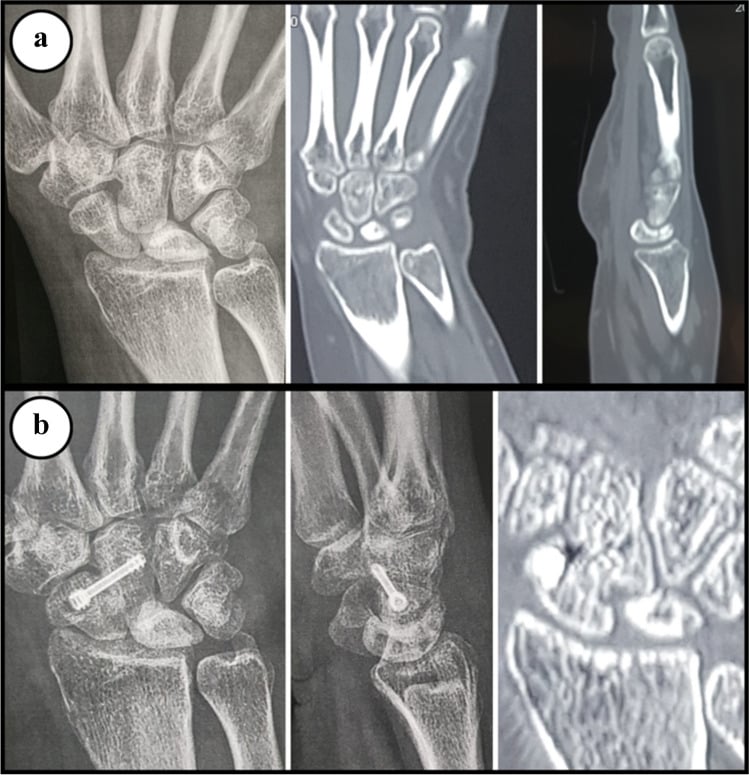
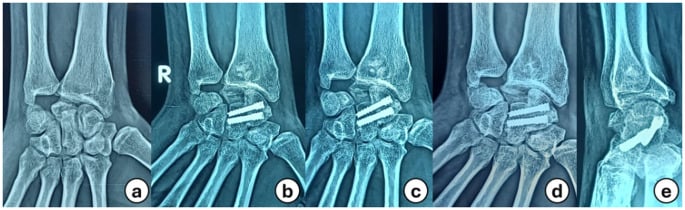
Scaphotrapeziotrapezoid (STT) Arthrodesis
STT (triscaphe) arthrodesis is an alternative limited intercarpal fusion for collapsing Kienböck's: fusing the scaphoid to the trapezium and trapezoid stabilises the radial column, holds the scaphoid extended and shifts axial load off the lunate onto the radioscaphoid column while maintaining carpal height. Popularised by Watson, its stated indication is Lichtman stage IIIA/IIIB.
Technique. The scaphoid, trapezium and trapezoid are fused with K-wires, staples, a circular plate or a memory-alloy concentrator, plus local bone graft, with the scaphoid fixed in a corrected, extended position. Unlike lunate excision alone, this preserves carpal height. In advanced disease it is frequently combined with debridement or excision of the necrotic lunate.
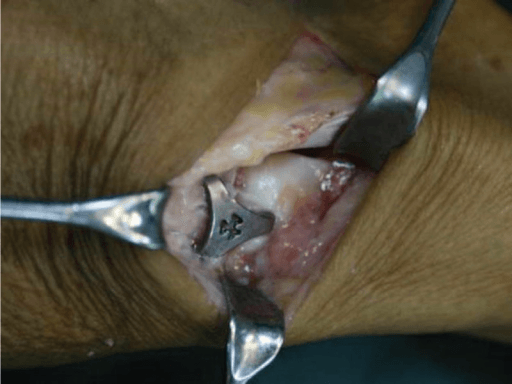
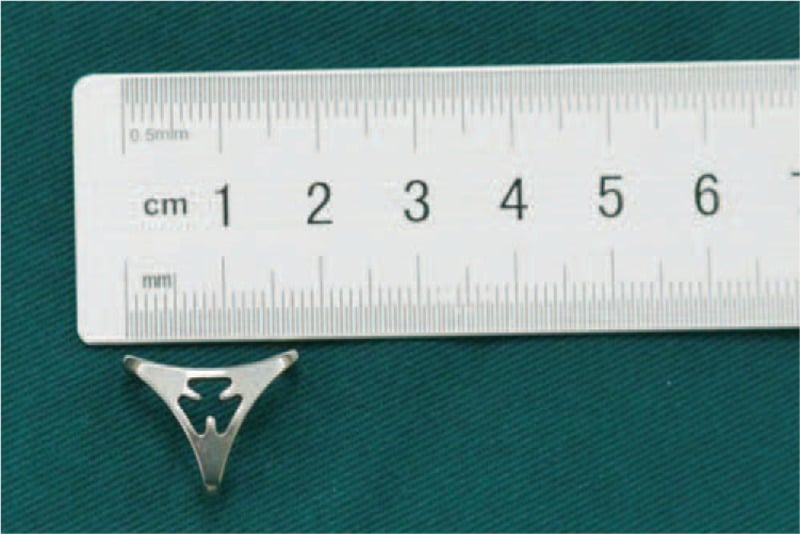
Results and the trade-off. Pain relief is reliable, grip recovers to roughly 60 to 65 percent of the opposite side, and most patients return to their original occupation. Wrist motion is reduced, radial and ulnar deviation especially, because the radial column is locked. Nonunion is the main early risk, and union typically takes about 7 to 11 weeks. Radioscaphoid arthrosis is the characteristic late complication, in around one quarter of cases at long follow-up.
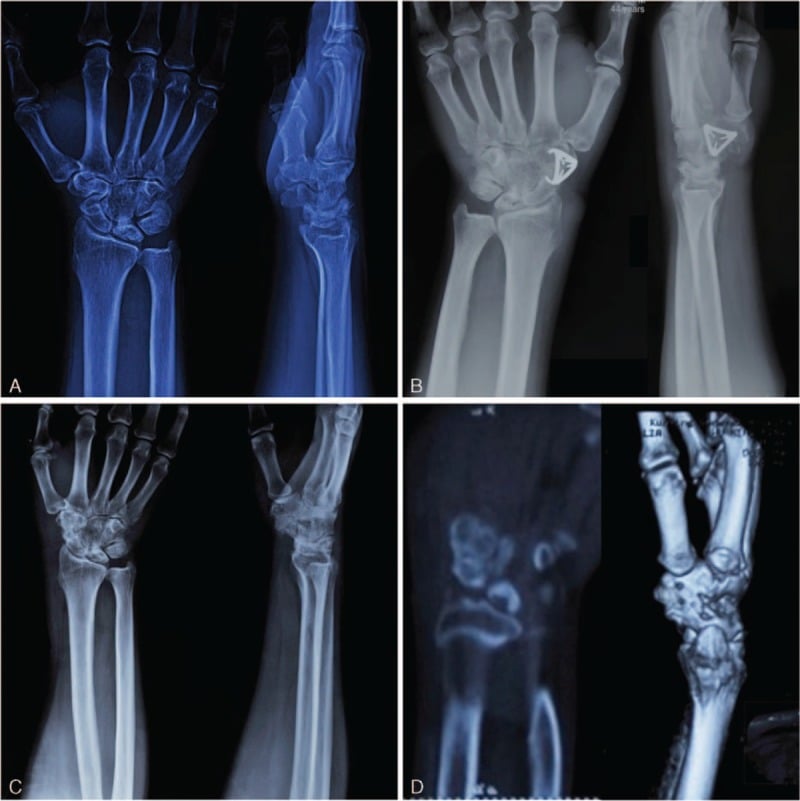
Where it fits. STT fusion competes with radial shortening (for negative variance) and with the salvage options, PRC and four-corner fusion. It is most attractive when a joint-preserving load-shift is still wanted, but candidates must accept the loss of deviation and the risk of later radioscaphoid wear. The four-corner-fusion and proximal-row-carpectomy topics cover the fusions it sits alongside.
Sauerbier, Tränkle, Erdmann, Menke & Germann
- 26 patients with Lichtman stage IIIA/IIIB Kienböck's treated by STT arthrodesis; union in 25, mean follow-up 35 months
- Pain reduced to 72% of preoperative value at rest and 60% under stress; grip recovered to 60% of the opposite hand
- 80% returned to their original occupation; 20 of 26 would undergo the operation again
- The procedure both decreases load to the lunate AND maintains carpal height
Minami, Kato, Suenaga & Iwasaki
- 30 STT fusions (23 for Kienböck's disease); all united at an average of 11.2 weeks, mean follow-up 84 months
- Radioscaphoid arthrosis developed in 23% (7 of 30) — the characteristic late complication of the procedure
- Grip strength improved from 18 kgf preoperatively to 27 kgf postoperatively
- 26 of 30 patients returned to their previous activities
Complications
- Early Complications
- Infection, CRPS
- Late Complications
- Nonunion (5%), DRUJ pain
- Management
- Bone graft, revision fixation
- Early Complications
- Pedicle injury, haematoma
- Late Complications
- Graft failure, lunate collapse
- Management
- Consider salvage procedure
- Early Complications
- Stiffness, CRPS
- Late Complications
- Capitate-radius arthritis (20% at 10 years)
- Management
- Convert to fusion
- Early Complications
- Nonunion (5-10%), hardware irritation or prominence
- Late Complications
- Adjacent joint arthritis
- Management
- Hardware removal, convert to total fusion
Arthritis after PRC. The table's 20% at 10 years sits beside Wagner's series of 144 carpectomies, which found radiocapitate arthrosis in 45% at a mean 13.4 years; it did not correlate with clinical outcome or revision.
CRPS. It follows 2-5% of wrist operations. Female sex and prolonged immobilisation are risk factors, early motion and vitamin C supplementation are the preventive measures, and management is by a multidisciplinary pain team.
Stiffness. Common after any wrist surgery, and worse with prolonged immobilisation. Prevent it with early therapy and by limiting postoperative casting to 6 weeks at most.
Postoperative Care
Postoperative Protocol by Procedure
Short-arm splint. Finger and elbow ROM immediately. X-ray at 2 and 6 weeks to assess union.
Wean the splint, begin wrist ROM. Therapy for strengthening. Full activities at 12 weeks if healed.
Short-arm cast. Strict immobilisation to allow graft incorporation, with no motion.
Removable splint, begin ROM. Protected strengthening. Full activities at 12-16 weeks.
Bulky dressing. Finger ROM immediately. Wound check, and transition to a removable splint at 2 weeks.
Removable splint, begin wrist ROM at week 3. Early motion prevents stiffness. Strengthen grip.
Wean the splint, progressive strengthening. Return to normal activities by 3 months.
Return to work depends on the procedure:
- Desk work: 2-4 weeks
- Light manual work: 8-12 weeks
- Heavy manual labour: 12-16 weeks, or job modification
Surveillance. Annual radiographs for the first 3 years detect progression, with MRI if symptoms worsen or new pain appears. If a joint-preserving procedure fails, plan salvage.
Outcomes and Prognosis
- Pain Relief
- In pooled long-term series 23.2% still had more than moderate pain
- Motion Preservation
- Arc 88.8° in those series
- Durability
- Lichtman-stage progression no different from osteotomy
- Pain Relief
- 5.7% with more than moderate pain at long-term follow-up (versus 23.2% non-operative)
- Motion Preservation
- Arc 107.4° versus 88.8°
- Durability
- Does NOT alter Lichtman-stage progression
- Pain Relief
- No cited series on this page quantifies it
- Motion Preservation
- Maintained if successful
- Durability
- Variable, graft-dependent
- Pain Relief
- Good pain relief with motion preserved but not improved (Wagner, 144 patients)
- Motion Preservation
- Preserved, not improved
- Durability
- 12% revision at mean 13.4 years; 14.3% failures in pooled 10-year series
- Pain Relief
- Comparable to PRC on DASH and Mayo scores in pooled series
- Motion Preservation
- Reduced
- Durability
- No cited head-to-head trial
- Pain Relief
- Reliable pain relief; no series cited on this page
- Motion Preservation
- None
- Durability
- Excellent long-term
Natural history. Untreated, the disease progresses over years to decades, and collapse and arthritis are the endpoint. Progression is inevitable without intervention in most cases: early disease (Stages I-II) may stabilise with treatment, progressive collapse is likely in IIIA, and by IIIB-IV the arthritis is irreversible. The timeline is 3-10 years from Stage I to IV, and a variable 3-15 years from onset to end-stage.
- Stage I: 50% progress to Stage II within 2 years
- Stage II: 80% progress to Stage III within 3-5 years
- Stage IIIB: 100% progress to Stage IV without treatment
Prognosis. Early diagnosis is critical to prevent collapse, and early diagnosis and intervention improve outcomes substantially.
- Better Outcome
- I-II
- Worse Outcome
- IIIB-IV
- Better Outcome
- Under 30
- Worse Outcome
- Over 50
- Better Outcome
- Sedentary
- Worse Outcome
- Heavy manual labour
- Better Outcome
- Negative (correctable)
- Worse Outcome
- Neutral/positive
Guidelines, Registries & Global Practice
Global epidemiology. Kienböck's disease is rare worldwide; most hand surgeons see only a handful of cases per year. It clusters in men aged 20-40, frequently in manual or vibration-exposed occupations (construction, drilling, mining). Negative ulnar variance is over-represented compared with the general population, though it is a predisposing rather than causal factor. There is no high-quality population incidence figure, and there is no implant registry for Kienböck's surgery because most procedures are osteotomies, fusions or carpectomies rather than arthroplasty.
No single global guideline — practice is built on cohort evidence and consensus. No society publishes a formal Kienböck's treatment guideline equivalent to a fracture protocol. Practice converges on staging-driven algorithms.
- Staging emphasis
- Lichtman radiographic + arthroscopic cartilage grading
- Early disease (Stage I-II)
- Unloading osteotomy or vascularized graft; MFC free flap in selected young patients
- Advanced (IIIB-IV)
- PRC favoured if capitate/lunate fossa intact
- Staging emphasis
- Lichtman plus Schmitt MRI perfusion grade
- Early disease (Stage I-II)
- Radial shortening for negative variance; conservative trial common in Stage I
- Advanced (IIIB-IV)
- PRC or four-corner fusion per surgeon preference
- Staging emphasis
- Strong interest in capitate shortening and combined revascularization
- Early disease (Stage I-II)
- Capitate shortening when variance is non-negative; vascularized pedicled graft
- Advanced (IIIB-IV)
- Limited carpal fusion; arthroplasty in low-demand only
- Staging emphasis
- Plain radiographs only (MRI often unavailable)
- Early disease (Stage I-II)
- Immobilization, activity modification; osteotomy where fixation available
- Advanced (IIIB-IV)
- Wrist fusion as reliable, low-cost salvage
Registry and high- vs limited-resource practice. Where MRI is freely available, Stage I disease is detected early and unloading or revascularization is offered before collapse. Where MRI is scarce, diagnosis is later and total wrist fusion becomes the dependable salvage because it needs no specialist implant and reliably abolishes pain. Vascularized bone grafting and medial femoral condyle free flaps are concentrated in microsurgical referral units. Documenting the neutral-rotation ulnar variance on every wrist radiograph remains a universal, resource-independent standard because it determines whether radial shortening or capitate shortening is the appropriate unloading procedure.
Consent essentials (universal). For salvage surgery, counsel explicitly on the motion-versus-pain-relief trade-off (PRC preserves roughly half of wrist motion; total fusion removes motion but most reliably relieves pain), and on progression risk if early-stage disease is managed non-operatively.
Controversies and Areas of Uncertainty
Kienböck's disease has no Level I evidence and no consensus guideline. A strong candidate acknowledges the uncertainty rather than overstating any single procedure.
The Shin et al systematic review (JBJS Am 2018) found radial osteotomy did not slow Lichtman-stage progression versus nonoperative care, despite better pain and motion. Whether we are modifying disease or only managing symptoms remains genuinely unsettled.
Negative ulnar variance, single-vessel supply and repetitive load are predisposing factors, not proven causes. Modern reviews reframe historic "causal" factors as markers of a pre-existing vulnerable lunate.
No reliable way to predict which MRI-only cases progress. Choice between immobilization with surveillance and early unloading/revascularization is shared decision-making, not protocol.
When variance is neutral or positive, radial shortening is biomechanically wrong. Capitate shortening osteotomy is the rational alternative (Motaghi et al 2025), but evidence is Level IV only.
Long-term outcomes are comparable (Chim & Moran). PRC is technically simpler with no nonunion risk; four-corner fusion may suit very heavy demand. No randomised comparison exists.
Medial femoral condyle free flap can reconstruct a compromised but salvageable lunate, but is confined to microsurgical units and lacks comparative trials against simpler unloading.
MCQ Practice Points
Q: What Lichtman stage represents the critical prognostic divider in Kienböck's disease? A: Stage IIIB - scaphoid rotation (scapholunate angle over 60°) indicates fixed carpal collapse and instability. Joint-preserving surgery (leveling, revascularization) is ineffective beyond this point; salvage procedures required.
Q: What percentage of Kienböck's disease patients have negative ulnar variance? A: 78% - compared to 23% in the general population. Negative variance increases lunate loading by shifting axial load away from the ulnocarpal joint.
Q: What is the investigation of choice for detecting Stage I Kienböck's disease? A: MRI - detects bone marrow edema and low T1 signal before radiographic changes appear. X-rays are normal in Stage I.
Q: By what percentage does radial shortening osteotomy decrease lunate loading? A: 45% - shortening the radius 2-4mm redistributes axial load from radiocarpal (lunate) to ulnocarpal articulation, unloading the lunate.
Q: What are the key requirements for successful proximal row carpectomy in Kienböck's disease? A: Intact capitate head cartilage AND intact lunate fossa (radiocarpal) cartilage. Any arthritis at these articulation sites is a contraindication; fusion would be preferred.
Q: What is the most common motion-preserving salvage procedure for Stage IIIB Kienböck's disease? A: Proximal row carpectomy (PRC) - provides 80% pain relief and preserves 50% wrist motion. Durable for 10+ years if cartilage is intact.
Exam Viva Scenarios
Practise clinical reasoning and management decisions out loud
“A 32-year-old male manual laborer presents with 6 months of wrist pain. X-rays show lunate sclerosis with no collapse. MRI confirms AVN with intact lunate architecture. Ulnar variance is negative 3mm.”
“A 45-year-old presents with chronic wrist pain and stiffness. X-rays show lunate collapse with scapholunate angle of 70 degrees. CT shows intact capitate head cartilage. What is your assessment and management?”
“A 28-year-old woman has wrist pain for 3 months. X-rays are normal but MRI shows low T1 signal in the lunate with bone marrow edema. Ulnar variance is neutral. How do you manage this Stage I disease, and what does the evidence say about early intervention?”
Key Anatomy
- Lunate = keystone of proximal carpal row
- Vascular supply: Gelberman described THREE intraosseous patterns (Y, I, X) with a dorsal-volar anastomosis in EVERY one of 35 specimens - the '80% / 20% single vessel' split is not traceable to him
- The real vulnerability: only 1-2 nutrient vessels enter each pole, so stripping devascularises; and 2 of 14 micro-CT specimens had NO dorsal vessel (van Alphen), the subset in whom a VOLAR approach risks ischaemia
- Ulnar variance: negative in 78% vs 23% normal population
Lichtman Staging (Modified)
- Stage I: Normal X-ray, MRI shows AVN
- Stage II: Sclerosis, no collapse
- Stage IIIA: Collapse, scaphoid angle less than 60°
- Stage IIIB: Collapse + scaphoid rotation over 60° (CRITICAL)
- Stage IV: Generalized carpal arthritis
Investigations
- MRI: Gold standard, detects Stage I before X-ray
- X-ray: Measure ulnar variance on neutral PA view
- CT: Surgical planning, assess capitate head for PRC
- Scapholunate angle: over 60° = Stage IIIB (DISI)
Treatment Algorithm
- Stage I: Immobilization 3-6 months, serial MRI
- Stage II: radial shortening if negative UV - expect better pain and motion, but the pooled long-term evidence shows it does NOT alter Lichtman-stage progression
- Stage IIIA: Joint leveling or consider PRC
- Stage IIIB: PRC (if intact cartilage) or four-corner fusion
- Stage IV: Total wrist fusion (gold standard for pain)
Surgical Pearls
- Radial shortening: Decrease lunate loading 45%
- 4+5 ECA graft: Vascularized from distal radius
- PRC: Requires intact capitate and radiocarpal cartilage
- PRC outcomes: 80% pain relief, 50% motion, durable 10+ years
Evidence Base
Lichtman, Lesley & Simmons
- Reviews the four-stage radiographic Lichtman classification and its treatment algorithm
- Stage IIIB (fixed scaphoid rotation) marks the transition from joint-preserving to salvage surgery
- Emphasises that a reproducible staging system underpins surgical decision-making
- Anticipates perfusion- and cartilage-based classifications as adjuncts to plain radiographs
Bain & Begg
- Arthroscopic classification grading the number of non-functional lunate and adjacent articular surfaces
- Disease typically begins at the proximal lunate surface before involving the radial lunate facet
- Procedure is matched to grade: synovectomy/radial shortening, PRC, radioscapholunate fusion, or wrist fusion
- Adds intra-articular cartilage assessment that plain radiographs cannot provide
Lichtman, Pientka & Bain
- Integrates the Lichtman (osseous), Schmitt (perfusion/viability) and Bain (cartilage) classifications into one algorithm
- Frames management around 'intact', 'compromised lunate', 'compromised wrist' and unreconstructable end-stage
- Compromised lunate may be reconstructed with medial femoral condyle graft or proximal row carpectomy
- Stresses that patient factors (age, demand, comorbidity) and surgeon factors modify the final decision
Shin, Kim, Han et al
- 17 long-term studies (mean follow-up at least 10 years): 12 radial osteotomy, 5 nonoperative
- Radial osteotomy did NOT slow Lichtman-stage progression compared with nonoperative care
- More-than-moderate pain at final follow-up: 5.7% after radial osteotomy vs 23.2% nonoperative
- Total wrist arc was greater after radial osteotomy (107° vs 89°)
Wagner, Bravo, Elhassan & Moran
- 144 consecutive proximal row carpectomies, mean follow-up 13.4 years
- Good pain relief with preservation (not improvement) of motion; 12% required revision
- A preoperative diagnosis of Kienböck's disease was associated with improved pain, function and survival
- Radiocapitate arthrosis developed in 45% but did not correlate with clinical outcome or revision
Chim & Moran
- Six studies, 147 patients with at least 10-year follow-up after proximal row carpectomy
- No significant change between pre- and long-term postoperative motion; mean grip 68.4% of contralateral
- Outcomes comparable to four-corner arthrodesis; 14.3% failure rate requiring re-operation
- Heavy manual labourers fare worse; trauma and early-stage Kienböck's fare better
Motaghi, Coffey & Elvey
- 13 studies, 293 patients with neutral or positive ulnar variance (radial shortening biomechanically inappropriate)
- Isolated capitate shortening osteotomy (125 patients) gave reliable relief: persistent pain 10.4%, revision 5.6%
- Combined decompression plus revascularization appeared most useful in Stage IIIA disease
- Evidence is predominantly Level IV case series with marked heterogeneity