Distraction Osteogenesis | Ilizarov Technique | Regenerate Formation
- Distraction rate: 1mm/day in 4 divided doses (0.25mm QID)
- Latency period: 5-7 days (longer in adults, smokers)
- Consolidation: Approximately 1 month per cm of lengthening
- Maximum safe lengthening: Generally 20% of original bone length
- Corticotomy vs osteotomy: Corticotomy preserves periosteum and medullary blood supply
- “Ilizarov discovered distraction osteogenesis principles in Kurgan, Russia
- “Faster distraction causes fibrous tissue; slower causes premature consolidation
- “Healing index = days in frame / cm lengthened (normal 30-45 days/cm)
- “Regenerate problems: Too fast = cyst/fibrous; Too slow = premature consolidation
Overview and Epidemiology
What it is. Limb lengthening uses the biological principle of distraction osteogenesis: new bone forms within a gradually widening gap created by controlled separation of the bone ends. First described by Codivilla in 1905 and refined by Ilizarov in the 1950s, it has revolutionised the treatment of limb length discrepancy and short stature conditions.
Where it came from. Gavriil Ilizarov developed the principles of distraction osteogenesis while treating World War II veterans in Kurgan, Siberia, and his work remained unknown in the West until Italian surgeons visited his institute in the 1980s. The "tension-stress effect" is his description of how gradual traction stimulates tissue regeneration.
Who is lengthened. The indications fall into four groups:
- Congenital: fibular hemimelia, congenital femoral deficiency, hemihypertrophy
- Developmental: achondroplasia, hypochondroplasia, other skeletal dysplasias
- Acquired: post-traumatic, post-infection, post-tumour resection
- Limb length discrepancy greater than 2.5 cm predicted at maturity
Who is not. Lengthening is contraindicated by:
- Active infection
- Poor soft tissue envelope
- Inadequate bone stock
- Poor patient compliance
- Uncontrolled vascular disease
- Severe psychological issues
Pathophysiology
The tension-stress effect. Gradual traction on living tissues creates a stress that stimulates regeneration, and the principle applies to bone, soft tissues, blood vessels, nerves and skin alike. Optimal tension maintains cellular viability while stimulating proliferation: too much tension gives ischaemia and tissue death, too little gives insufficient stimulation.
The four phases. Distraction osteogenesis runs through a fixed sequence, and the timings are the numbers the examiner wants:
- Latency: corticotomy to the start of distraction, 5-7 days in children and 7-14 days in adults, longer if bone quality is poor or the patient is a smoker, diabetic or has metabolic bone disease. Initial callus forms. A shorter latency risks poor regenerate; a longer one risks premature consolidation.
- Distraction: active lengthening at 1 mm/day until target length.
- Consolidation: the regenerate mineralises, roughly 1 month per cm of lengthening, while the frame neutralises load.
- Remodelling: cortical maturation continues after frame or nail removal.
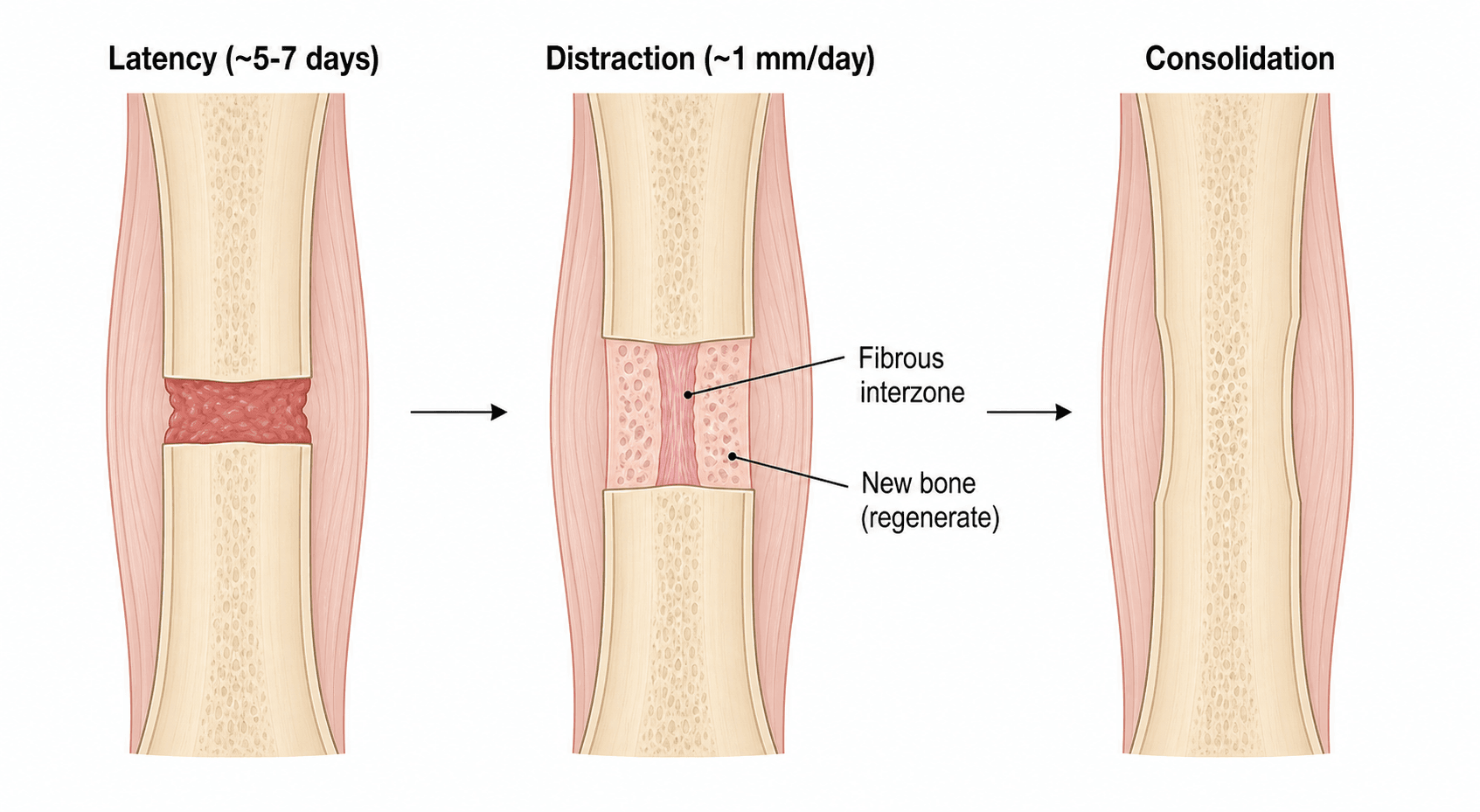
What the regenerate is made of. Histologically the regenerate has four zones:
- Fibrous interzone: the central region of collagen fibres aligned parallel to the direction of distraction
- Primary mineralisation front: active osteoid formation at the bone ends
- Microcolumn formation: longitudinal columns of bone
- Remodelling zone: mature lamellar bone
The cellular response. Periosteal and endosteal osteoprogenitor cells are activated and angiogenesis is critical to regenerate formation. Mechanical strain drives mesenchymal stem cell differentiation, and the growth factors BMP, VEGF and TGF-beta are upregulated.
Corticotomy, not osteotomy. A corticotomy is a low-energy cut that preserves the periosteum, the medullary blood supply and the marrow contents, all of which the regenerate depends on: multiple drill holes through the cortex are completed with an osteotome through a minimally invasive approach. The power saw causes thermal necrosis and the Gigli wire strips the periosteum circumferentially, so both are avoided. A metaphyseal corticotomy, with its richer vascularity and broader cross-section, regenerates better than a diaphyseal one.
Rate and rhythm. 1 mm/day is optimal for most situations, and dividing it into four increments of 0.25 mm (QID) is better than a single daily adjustment, because more frequent, smaller steps give a better regenerate. Faster distraction produces a fibrous or cystic regenerate; slower distraction produces premature consolidation. The rate is then adjusted to what the regenerate looks like on the radiographs.
Classification Systems
None of the classifications used in lengthening is a single staging system. The phases above describe the biology; Paley's classification grades the severity of adverse events; the healing index benchmarks the outcome.
Paley's problem, obstacle, complication. Every adverse event during lengthening is graded by what it took to resolve it:
- Problem: a difficulty that resolves without an operation (a pin-site infection settling with antibiotics)
- Obstacle: a difficulty needing an unplanned operation during treatment (regenerate bone graft, contracture release)
- Complication: an adverse event unresolved at the end of treatment, or an intra-operative ("true") complication
The healing index. Days in the frame per centimetre gained. 30-45 days/cm is a normal external-fixator course, and it is the universal outcome measure against which any lengthening is judged.
Clinical Presentation
History. Establish the aetiology of the discrepancy, the functional limitations and what the patient wants from treatment, previous surgery, and the medical comorbidities that affect healing (diabetes, smoking). Psychological readiness for a prolonged treatment is part of the history.
Examination. Measure the limb length accurately, record joint range of motion, muscle strength and soft tissue quality, neurovascular status, and the condition of the skin and any previous scars.
Measuring the discrepancy. Clinically the discrepancy is measured with blocks while standing, or with a tape from the ASIS to the medial malleolus. The Galeazzi test distinguishes a femoral from a tibial discrepancy.
Investigations
CT scanogram. The gold standard for measuring bone lengths, accurate to 1 mm, and it also assesses bone quality and supports deformity analysis.
Standing long-leg radiographs. These show the mechanical axis and the joint orientation angles, and they are the planning film for any concurrent deformity correction. Short segment films cannot diagnose the source of malalignment.
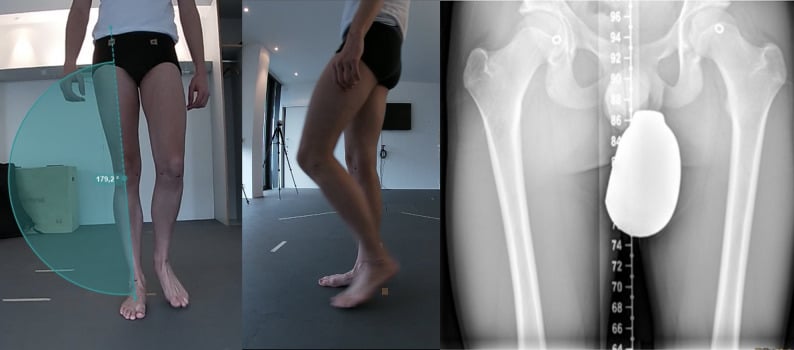
EOS imaging. Low-radiation, full-length imaging of the limb.
MRI. For soft tissue assessment, for physeal mapping if epiphysiodesis is being considered, and to assess the intramedullary canal for a nail.
Predicting the discrepancy at maturity. The decision rests on the projected discrepancy at maturity, so predict it before choosing a strategy. Three methods are in use:
- Moseley straight-line graph
- Multiplier method (Paley)
- Anderson-Green growth-remaining charts
Decision thresholds. The projected discrepancy sets the strategy:
- Under ~2 cm: shoe raise, observe
- 2-5 cm: contralateral epiphysiodesis (if growth remaining) or lengthening
- Over ~5 cm: lengthening, often staged; bone transport for segmental defects
Vascular assessment. Angiography is indicated for:
- Previous vascular injury
- Absent pulses
- Congenital limb deficiency, in which vessel anomalies are common
- A large lengthening planned (greater than 5 cm)
Psychological assessment. Important in cosmetic lengthening (achondroplasia), in adolescent patients, after multiple previous surgeries, and where family dynamics are complex.
Deformity Analysis: CORA, Joint Angles and the Osteotomy Rules
Lengthening frames also correct deformity, and the examiner expects the analytic framework behind that: the mechanical axis, the joint orientation angles, the CORA and Paley's osteotomy rules.
The mechanical axis and the malalignment test. The mechanical axis of the leg runs from the centre of the femoral head to the centre of the ankle, and normally it passes just medial to the knee centre. Mechanical axis deviation (MAD) is the perpendicular distance from that line to the knee centre; normal is about 8 to 10 mm medial (roughly 8 plus or minus 7 mm). An abnormal MAD is the malalignment test that tells you a deformity exists; the joint orientation angles then localise it.
The joint orientation angles. An abnormal angle pinpoints whether the deformity is femoral or tibial and on which side, which determines where to cut.
- Joint
- Mechanical lateral distal femoral angle
- Approximate normal
- About 85 to 90 degrees
- Joint
- Medial proximal tibial angle
- Approximate normal
- About 85 to 90 degrees
- Joint
- Lateral distal tibial angle
- Approximate normal
- About 86 to 92 degrees
- Joint
- Joint-line convergence angle
- Approximate normal
- About 0 to 2 degrees
The CORA. The centre of rotation of angulation is the point where the proximal and distal axis lines intersect, the true apex of the deformity. Paley's osteotomy rules follow from it:
- Rule 1: if the osteotomy and the angulation-correction axis both pass through the CORA, the result is pure angular correction with no translation
- Rules 2 and 3: if the osteotomy is made away from the CORA, correcting the angle introduces a secondary translation (a "Z" deformity), acceptable only when deliberately planned
The practical message is to find the CORA and base the correction there. A hexapod frame executes the correction in six axes simultaneously.
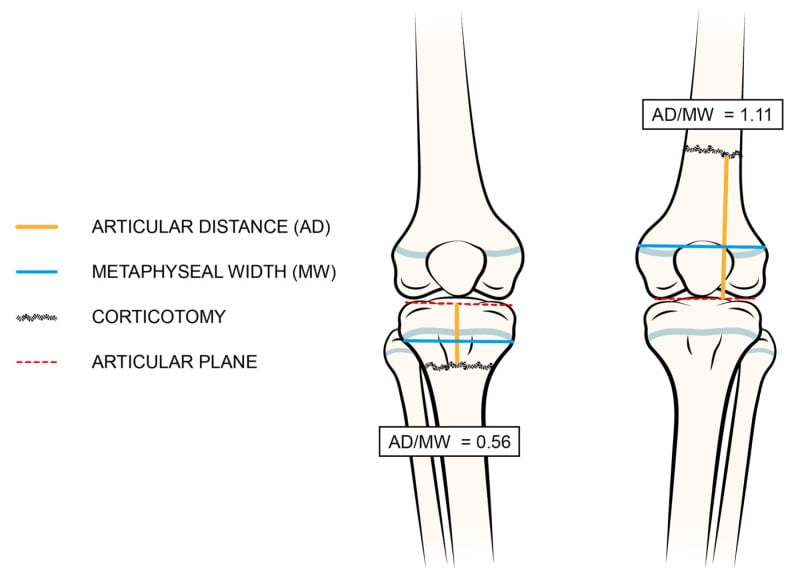
Choosing the corticotomy level. The planned cut is related to the joint line and the local bone width rather than described as simply "proximal". Dividing the articular distance (joint line to corticotomy) by the metaphyseal width gives a reproducible check on the level.
Differential of LLD Management Strategies
A common viva trap is to jump straight to lengthening. The first decision is whether to lengthen the short side, shorten the long side, or accept and accommodate the discrepancy; the projected discrepancy at maturity, skeletal age and the patient's goals drive the choice.
- Best suited to
- Under 2 cm projected
- Key advantage
- Non-operative, immediate
- Main limitation
- Cosmesis, ceiling near 2 cm
- Best suited to
- 2-5 cm, growth remaining
- Key advantage
- Single small operation, low morbidity
- Main limitation
- Sacrifices height; timing-dependent
- Best suited to
- Skeletally mature, small discrepancy
- Key advantage
- One stage, no frame
- Main limitation
- Loses height; limited to ~2-3 cm safely
- Best suited to
- Greater than 5 cm or deformity
- Key advantage
- Multiplanar correction, bone transport
- Main limitation
- Pin-site care, frame time, contractures
- Best suited to
- Isolated LLD, good bone/canal
- Key advantage
- No external device, no pin sites
- Main limitation
- Cost, minimal deformity correction
Management
The corticotomy. The technique that preserves the biology described above runs as follows:
- Small incision at the planned osteotomy site
- Apply the external fixator, or prepare for the nail
- Multiple drill holes circumferentially through the cortex
- Complete the osteotomy with an osteotome
- Confirm mobility of the bone ends
- Wound closure
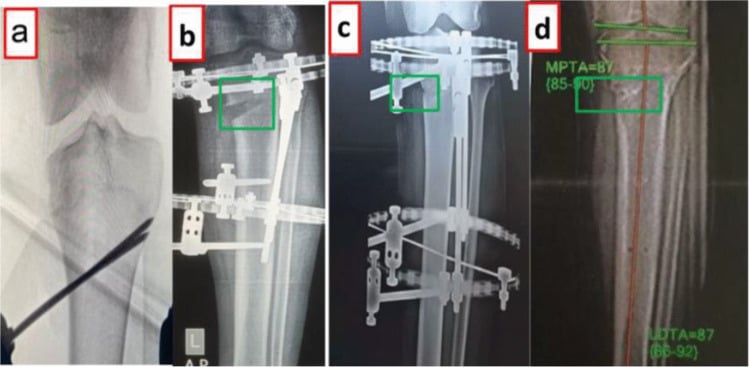
Frame application. The choice is between three constructs:
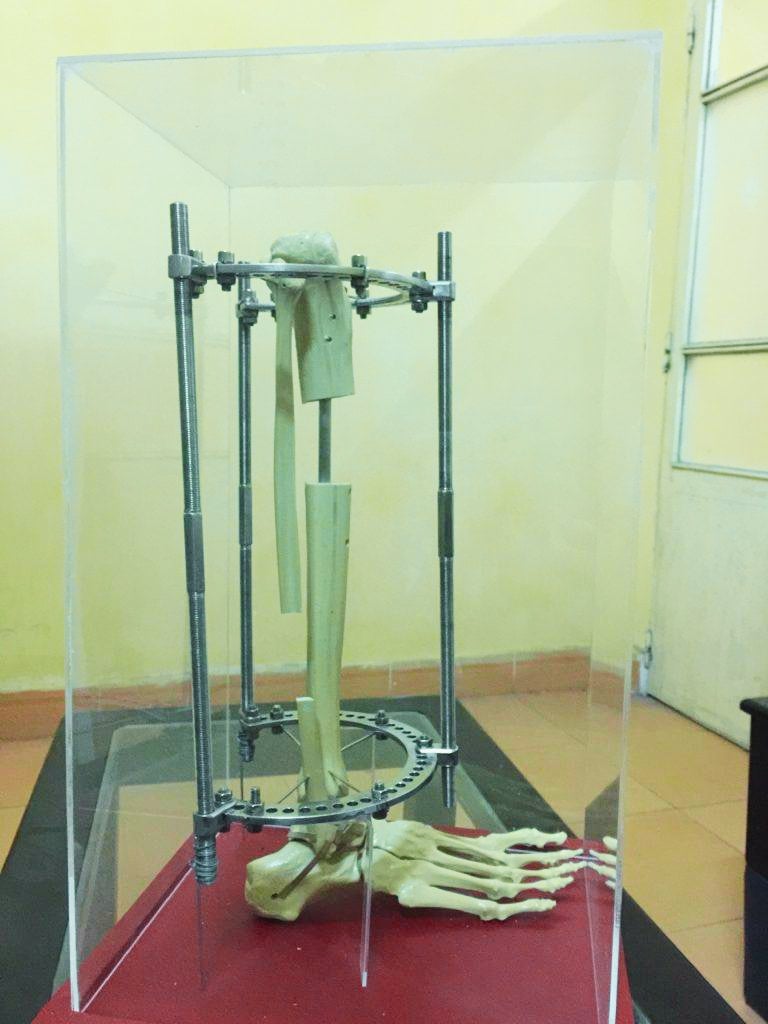
- Ilizarov: rings with tensioned wires and half-pins
- Taylor Spatial Frame (TSF): a hexapod system with struts for multiplanar correction
- Monolateral: a rail fixator, simpler but less versatile
For an internal lengthening nail. The corticotomy is made as above, then:
- Ream the canal
- Insert the lengthening nail (PRECICE or similar)
- Lock proximally and distally
- Confirm device activation
The distraction protocol. Distraction begins once the latency period has passed and continues at the standard rate and rhythm until the target length is reached; the patient turns the device against a written turning schedule and keeps a turning diary. During distraction the regenerate is assessed on weekly radiographs, alongside a clinical check of pain, range of motion and neurovascular status, and the rate is adjusted to what the regenerate shows.
Reading the regenerate. Judging the distraction-gap regenerate on serial orthogonal radiographs is a core viva skill: you must be able to look at a film and say whether the regenerate is healthy and what you would do. A healthy regenerate is:
- Homogeneous, increasing radiodensity filling the gap, continuous with both bone ends
- The classic "three-column" pattern: two denser peripheral columns and a central lucent growth zone that mineralises last
- Roughly the width of the parent bone (good cross-sectional area)
The warning patterns, and what to do. Confirm every finding on orthogonal views before acting:
- Lucent, thin or "candle-flame" attenuation in the mid-gap: distraction too fast for the biology. Slow the rate to 0.5-0.75 mm/day.
- Cystic lucency: poor osteogenesis. Slow down, check patient factors (smoking, vitamin D, nutrition), and consider the accordion manoeuvre (compress, then re-distract) or bone grafting.
- Premature mineralisation bridging the gap early: rate too slow or latency too long. Speed up to 1.5 mm/day or accordion; re-corticotomy if it has consolidated.
- Asymmetric or angulated regenerate: axial deviation. Adjust the frame or struts.
Regenerate shape. Described on the AP film, the shape ranges from the favourable fusiform or cylindrical column to the unfavourable concave ("waisted"), lateral or central (hourglass) patterns, which flag inadequate cross-sectional bone and a higher risk of regenerate fracture after frame removal.
Surgical Management
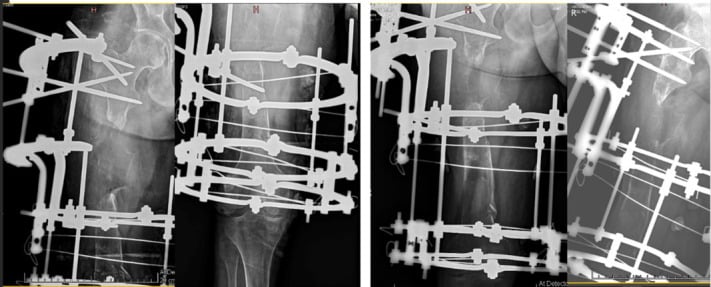
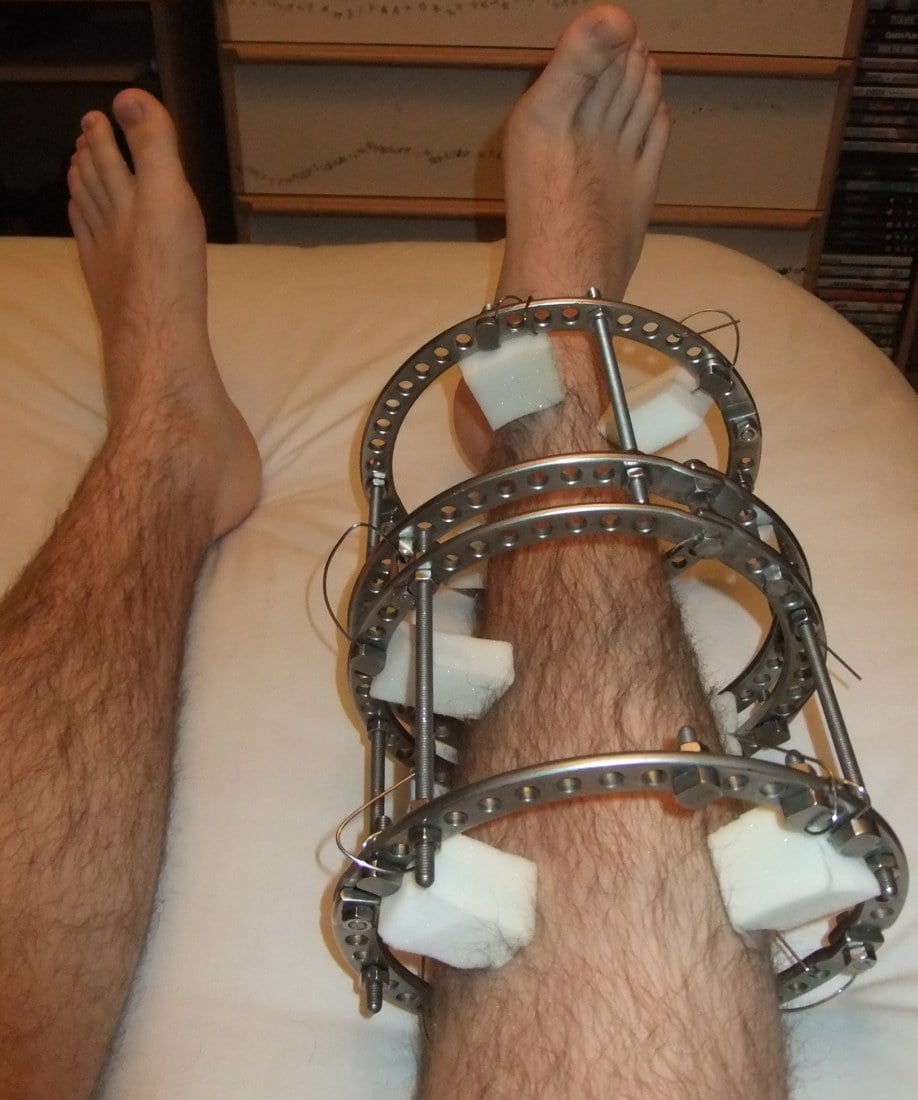
Ilizarov circular fixator. The classic ring fixator with tensioned wires: excellent stability, weight-bearing allowed, and a complex application with a steep learning curve.
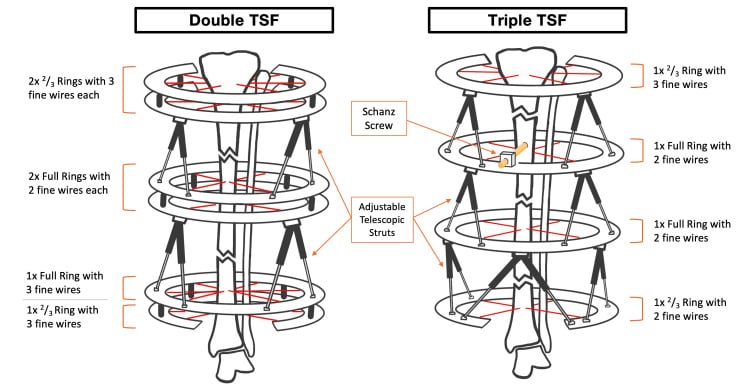
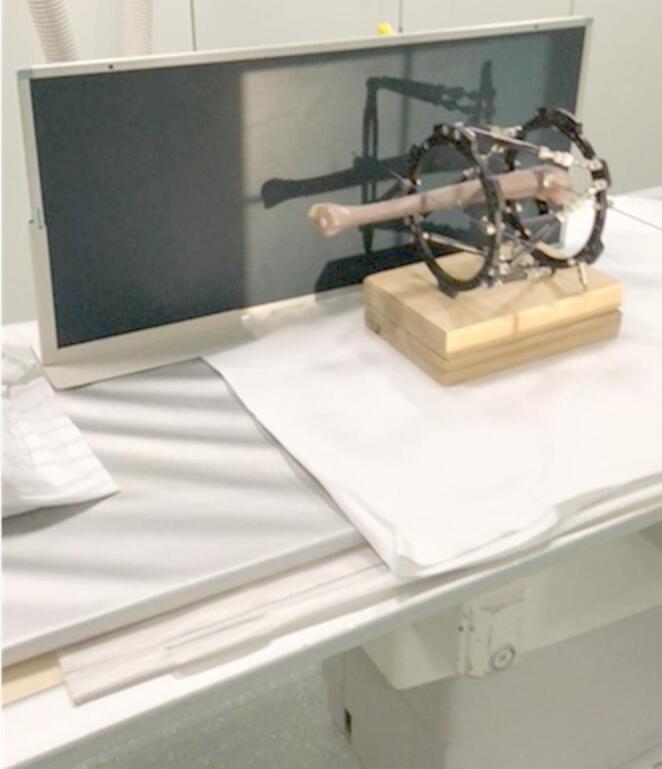
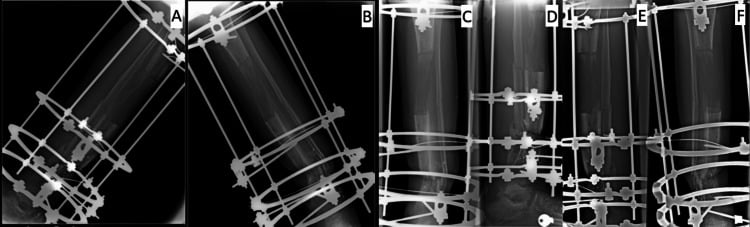
Taylor Spatial Frame. A hexapod based on the Stewart platform, with computer-assisted, six-axis deformity correction planned on web-based software. Each deformity or fracture level needs its own stable ring block and six-strut correction unit, so double- and triple-stacked constructs spanning two or three mobile bone levels grow complex quickly, and ring orientation and segment naming must be unambiguous before programming. The correction also depends on true, calibrated orthogonal imaging: centre the reference ring and bone on the detector, standardise the source-to-image distance, and take AP and lateral views perpendicular to the reference ring, because rotational or parallax error propagates directly into the correction programme.
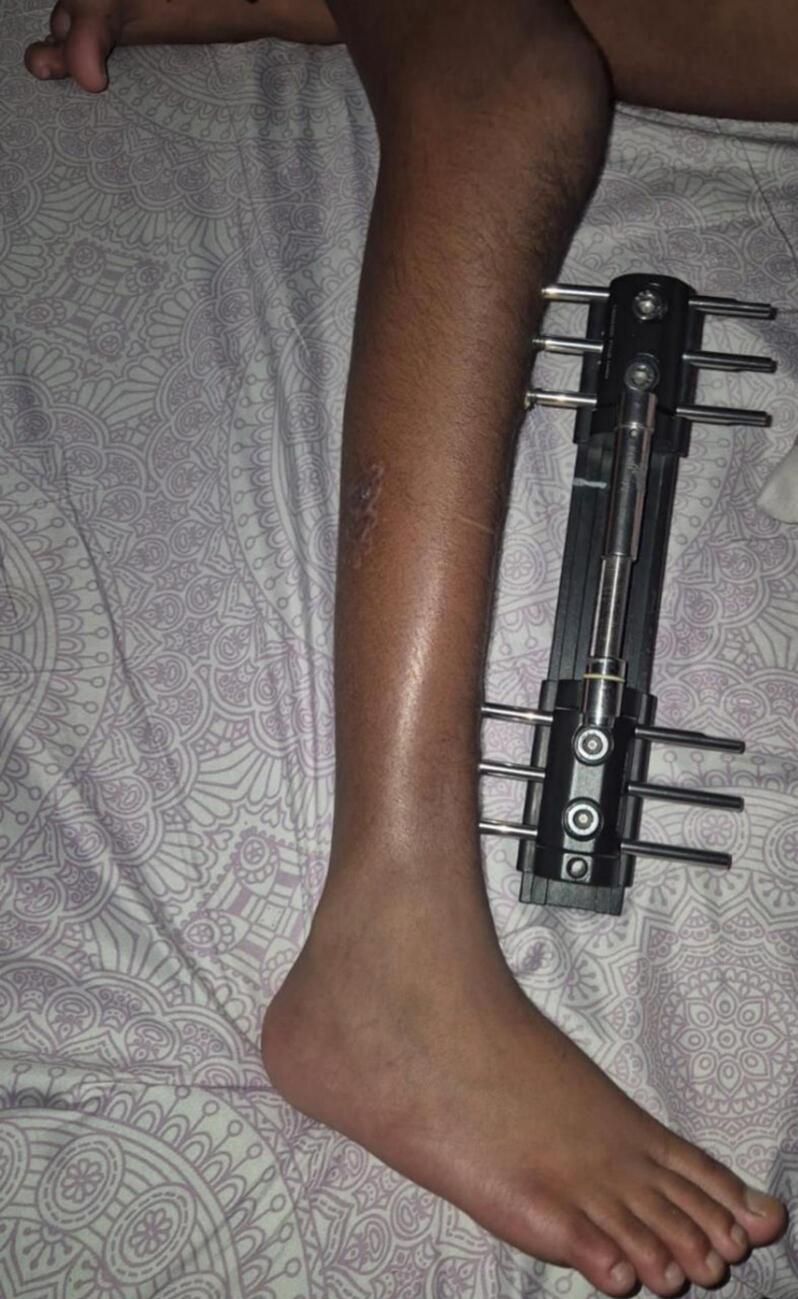
Monolateral fixators. Rail-based systems with half-pins above and below the corticotomy and a sliding carriage along a rigid rail. They are lighter and simpler to apply than a circular frame for a straight, single-plane problem, but less versatile for deformity correction, with fewer rescue options, and they may have higher complication rates.
External fixation as a whole. A frame corrects deformity at the same time as it lengthens, costs less in implants, can be adjusted postoperatively and suits complex cases. Against that stand the burden of pin-site care, the pin-site infections, the discomfort, and a device some patients find cosmetically unacceptable.
- External Fixator (Ilizarov/TSF)
- Required daily
- Internal Lengthening Nail (PRECICE)
- None
- External Fixator (Ilizarov/TSF)
- Lower - frame cumbersome
- Internal Lengthening Nail (PRECICE)
- Higher - no external device
- External Fixator (Ilizarov/TSF)
- Excellent (6 axes)
- Internal Lengthening Nail (PRECICE)
- Limited
- External Fixator (Ilizarov/TSF)
- Pin site infections common
- Internal Lengthening Nail (PRECICE)
- Lower
- External Fixator (Ilizarov/TSF)
- Lower
- Internal Lengthening Nail (PRECICE)
- Higher (implant cost)
- External Fixator (Ilizarov/TSF)
- Complex deformity + lengthening
- Internal Lengthening Nail (PRECICE)
- Isolated lengthening
The internal lengthening nail. The PRECICE nail (NuVasive) lengthens by a magnetic motor driven by an external remote controller (ERC), can lengthen up to 8 cm, and comes in retrograde and antegrade versions. There is no external device, no pin-site infection, better patient acceptance and easier physiotherapy. The cost is a high implant price, no correction of significant deformity, reported mechanical failures, and no way to adjust the device if problems arise. It is indicated for:
- Isolated limb length discrepancy
- Good bone quality
- Adequate canal diameter
- A compliant patient with access to the ERC
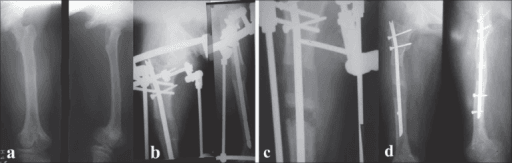
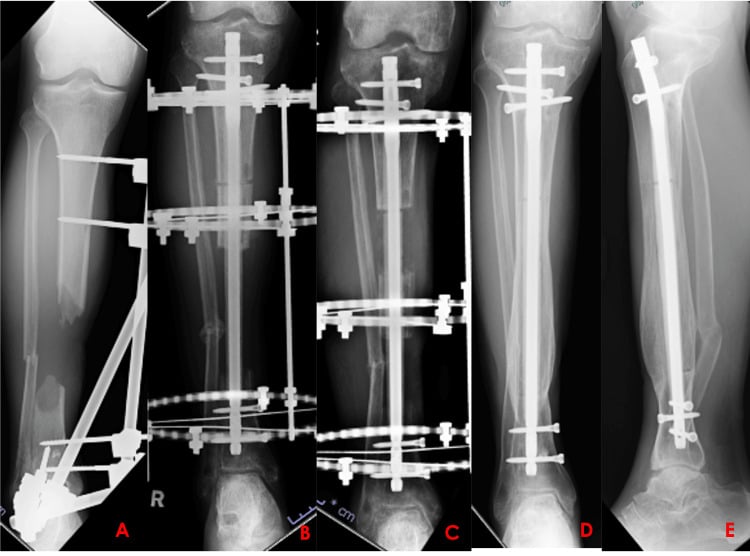
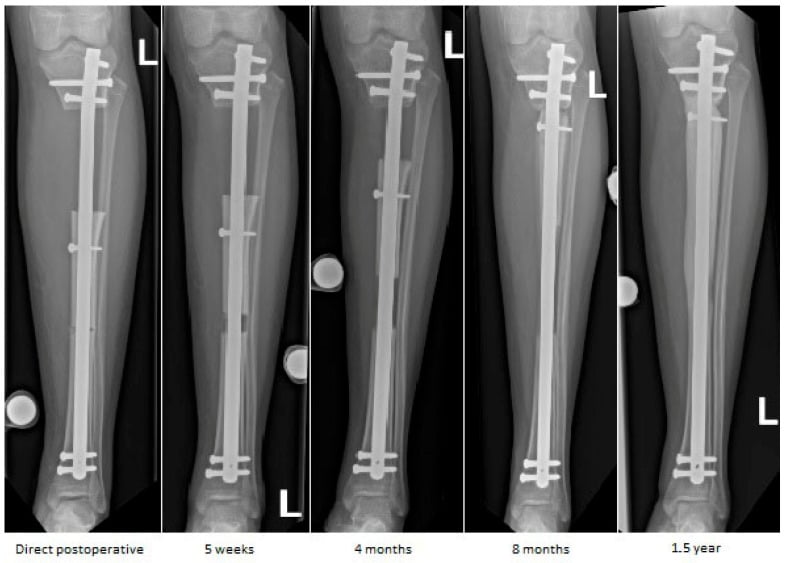
Lengthening and then nailing (LATN). An external fixator does the lengthening and is converted to a nail during consolidation, which reduces the time in the frame: the best of both worlds for some cases.
Complications
Bone. Premature consolidation means the rate was too slow and requires re-osteotomy; delayed consolidation means the rate was too fast, and bone grafting may be needed. Regenerate fracture occurs after frame removal and is guarded against with a cast or brace, and axial deviation, angulation during lengthening, is corrected by adjusting the fixator.
Soft tissue. Joint contracture is the most common soft-tissue complication, and aggressive physiotherapy is essential. Joint subluxation or dislocation follows over-lengthening and is treated by reducing the length; nerve injury is a stretch neuropathy, managed by slowing or stopping distraction; vascular compromise is rare and needs urgent assessment.
Pin site. Pin-site infection is the most common complication overall. Pin-tract osteomyelitis is rare but serious, and a loose pin may need replacing.
Device. Frame instability is a construct failure needing revision; a nail that fails mechanically is exchanged.
Preventing the one that matters. Joint contracture is the most significant functional complication. Aggressive physiotherapy from day one is essential, joint range of motion is checked at every visit, and prophylactic soft tissue releases (Achilles lengthening, knee capsulotomy) are considered for large lengthenings.
Pin-Site Infection: Checketts-Otterburn Grading
Pin-site infection is the commonest complication of external fixation, and the examiner wants a graded, structured answer rather than just "give antibiotics." The Checketts-Otterburn classification separates minor (soft-tissue) from major (bone-involving) infection and drives management.
- Features
- Slight redness, slight discharge
- Management
- Improve pin-site care
- Features
- Redness, discharge, soft-tissue pain and tenderness
- Management
- Pin care plus oral antibiotics
- Features
- Grade 2 not responding to antibiotics
- Management
- Remove or exchange the affected pin/wire
- Features
- Severe soft-tissue infection of several pins, sometimes with pin loosening
- Management
- Remove affected pins, reassess the construct, antibiotics
- Features
- Grade 4 plus radiographic bone involvement
- Management
- Pin removal, debridement, treat as osteomyelitis
- Features
- Occurs after frame removal - the pin track discharges and forms a ring sequestrum
- Management
- Curettage of the pin track / sequestrum
The split is the point. Grades 1 to 3 are minor and soft-tissue: pin care and antibiotics, escalating to pin removal. Grades 4 to 6 are major and involve bone: pin removal, debridement and treatment as deep infection. Most pin-site infections are Paley "problems" that settle without theatre, but a ring sequestrum after removal is a recognised, treatable cause of persistent discharge.
The classification is the right structured answer and you should be able to recite it. Be ready for the follow-up, though, because the scale has been formally tested exactly once and did poorly. Groenewoud 2023 (PMID 38033920) had 134 photographs of pin sites graded twice by limb reconstruction surgeons: inter-rater reliability was ICC 0.56 then 0.48, agreement on the resulting treatment was kappa 0.30 and 0.22, and surgeons rated their own confidence as low. Reliability was worse on dark skin than on light skin among the surgeons, though not among patients and carers.
Two practical consequences. Erythema is an unreliable sign on pigmented skin, so lean on warmth, tenderness, swelling, discharge, pin stability and the trajectory over days rather than on redness. And when a paper quotes a pin-site infection rate graded this way, treat it as soft — the published range across series runs from about 11 per cent to 100 per cent, and disagreement about what counts is a large part of why.
Structures at Risk & Safe Technique
The distraction-osteogenesis biology applies to nerves and vessels too, but they tolerate stretch less well than bone, so the soft tissues, not the bone, set the safe limit. Muscles, nerves and vessels all resist distraction, and the classic ceiling is about 20% of the original bone length in one session. Know the structure most at risk for each segment and how to protect it.
- Structure most at risk
- Common peroneal nerve (foot-drop), then tibial nerve; anterior tibial vessels
- Protective strategy
- Consider prophylactic peroneal nerve decompression at the fibular neck for large gains; ankle splint against equinus; slow rate if dorsiflexion weakens
- Structure most at risk
- Sciatic nerve stretch; quadriceps (knee flexion contracture, patellar subluxation)
- Protective strategy
- Knee ROM/extensor physio from day one; watch for patellar tracking; consider quadricepsplasty for refractory contracture
- Structure most at risk
- Radial nerve
- Protective strategy
- Identify/protect at corticotomy; monitor wrist/finger extension during distraction
- Structure most at risk
- Vascular compromise (rare) / compartment syndrome
- Protective strategy
- Urgent assessment; never ignore disproportionate pain or a tense compartment
Safe placement. Pre-tension the wires and place half-pins in safe corridors away from the neurovascular bundles, using the standard Ilizarov tibial safe zones.
Nerve symptoms during distraction. Paraesthesia or weakness means slow or pause distraction first; if the symptoms persist, decompress. A new foot-drop is an emergency, not a "problem."
Bone Transport & Segmental Defects
Distraction osteogenesis is not only for lengthening. The same biology reconstructs segmental bone loss (infected non-union, tumour resection, open-fracture bone loss) by bone transport: a corticotomy creates a mobile transport segment that is gradually moved across the defect on the frame, laying down regenerate behind it as it advances, until it meets (docks with) the far fragment.
The constructs. Three are described:
- Monofocal: simple lengthening or compression at one corticotomy, with no defect
- Bifocal: one corticotomy plus transport across a single defect, the standard bone-transport construct; regenerate forms at the corticotomy, and the docking site is where the transport segment meets the far fragment
- Trifocal: two corticotomies and two transport segments for very large defects; faster, and it halves the transport distance, at the price of two regenerate sites
Transport rate. It mirrors lengthening, about 1 mm/day in divided steps. The transported segment is moved rather than the limb lengthened, so overall length is preserved. Acute shortening followed by relengthening is an alternative for some defects: the gap is closed acutely and length restored elsewhere.
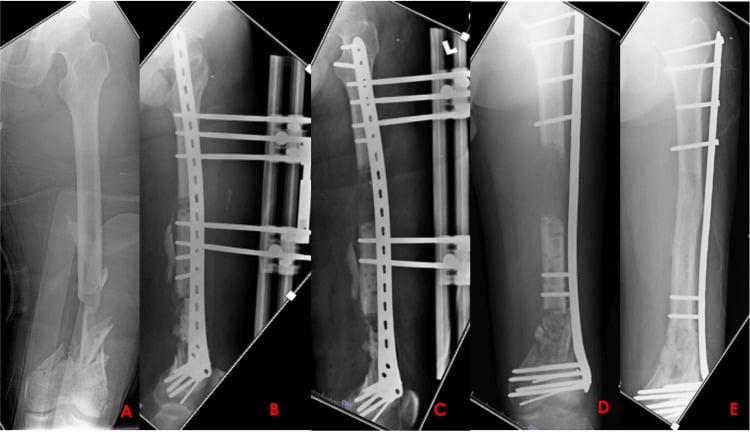
The docking site is the commonest reason for unplanned re-operation in bone transport: it frequently fails to unite because interposed fibrous tissue and bone-end atrophy prevent contact healing. Plan a docking procedure: freshen the bone ends, autograft (iliac crest) the docking site and apply compression. Some surgeons excise the docking soft tissue at the outset.
Two problems on one construct. The regenerate must form well, which needs protected biology and the correct rate; the docking site must unite, which needs contact, graft and compression. A docking-site nonunion is a union operation, not a change in distraction rate.
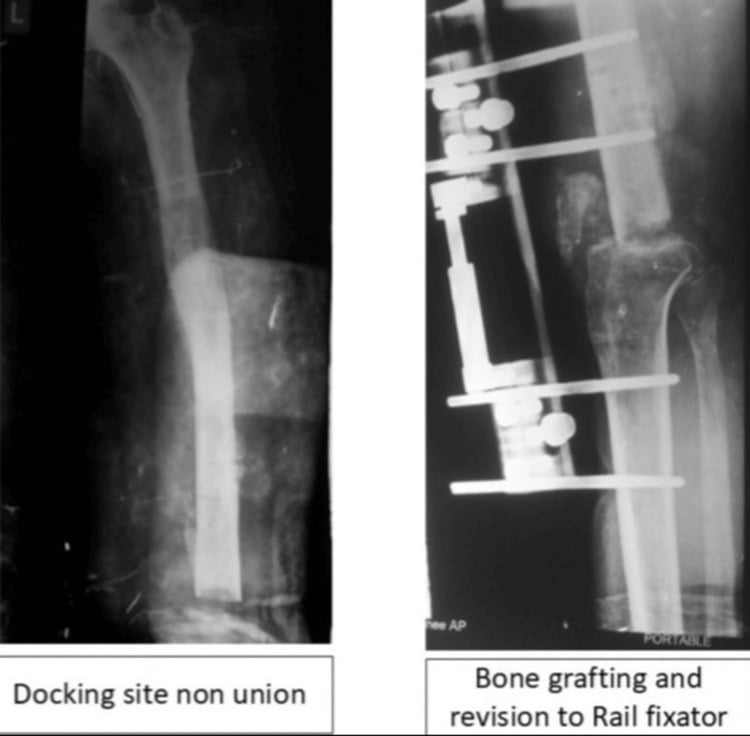
Adjuncts and outcomes. Bone transport over a nail or plate-assisted transport reduces external-fixator time and the high frame-time burden of large transports. For infected non-union, bone transport after radical debridement addresses defect, deformity and length at once and is the workhorse in limited-resource settings. Expect a high but manageable complication burden (pin-site issues, docking non-union, regenerate problems, re-fracture) and counsel the long treatment time.
Postoperative Care
Limb lengthening is unusual in that the postoperative phase is the treatment; the operation only sets it up, and structured aftercare determines the result.
Pin and wire sites. Daily cleaning to an agreed protocol, and the patient and family are taught to recognise infection (erythema, discharge, pain) and to treat it early with oral antibiotics.
Physiotherapy. Daily active and passive range of motion, with splints and orthoses holding the ankle and knee in a functional position and foot-drop and equinus prophylaxis during tibial lengthening.
Weight-bearing. Partial-to-full weight-bearing is encouraged with circular frames, which stimulates the regenerate; with an internal nail, weight-bearing is protected to the device's limits.
Consolidation. Physiotherapy continues, and radiographs every 2-4 weeks watch for axial deviation, regenerate quality and neurovascular symptoms.
Frame removal. The frame comes off when 3 of 4 cortices are consolidated on orthogonal films, and never before; premature removal risks regenerate fracture. Dynamise the frame first to confirm the regenerate can bear load, and protect the limb afterwards with a cast or brace and activity restriction.
Outcomes/Prognosis
The benchmark. Magnetic intramedullary nail series report healing indices around 30 days/cm without pin-site morbidity. Achieving the target length is reliable in experienced units: large internal-nail and frame cohorts reach within about 2.5 cm of goal in the high-80s-to-90s per cent of cases.
The complication burden is high and expected. Most segments have at least one Paley problem, obstacle or complication, and the burden rises steeply beyond that classic ceiling of a fifth of segment length, and especially beyond about 55%. Modern series show that greater gains are achievable but with a near-universal complication burden, which is the rationale for staging large lengthenings rather than a single session.
What decides the result. Functional outcome is generally good when joint motion is preserved, and the strongest determinant of a poor result is an uncorrected joint contracture or subluxation rather than the bone itself. Success is judged by alignment, cortical bridging, joint motion and function, not by centimetres gained alone. Younger age, good bone quality, a smaller percentage lengthening, non-smoking status, a metaphyseal corticotomy and reliable physiotherapy all favour a lower healing index and fewer complications.
Guidelines, Registries & Global Practice
Limb lengthening is a low-volume, high-complexity procedure concentrated in specialist limb-reconstruction units worldwide. There is no single randomised guideline; practice is built on the Ilizarov biological principles, the Paley classification of complications, and accumulating registry and cohort data on internal versus external devices.
Global Epidemiology
- Limb length discrepancy (LLD) is common: minor discrepancies (under 1 cm) occur in a large proportion of the population and are usually asymptomatic. Discrepancies projected to exceed 2-2.5 cm at maturity are the usual threshold for active management.
- Aetiology varies by region: congenital deficiency (fibular hemimelia, congenital femoral deficiency) and post-infective/post-physeal-arrest causes dominate paediatric practice; post-traumatic shortening and bone-defect reconstruction dominate adult practice. Post-infective growth arrest is proportionally more common in limited-resource settings.
- Cosmetic (stature) lengthening is a growing but ethically scrutinised indication, performed mainly in dedicated private centres.
Side-by-Side Society Positions
- Emphasis
- Distraction-osteogenesis biology, frame technique
- Practical recommendation
- 1 mm/day in 4 steps; low-energy corticotomy; report by Paley classification
- Emphasis
- Centralisation of paediatric reconstruction
- Practical recommendation
- Manage in specialist multidisciplinary units; MDT with physiotherapy and psychology
- Emphasis
- Device selection, internal nails
- Practical recommendation
- Magnetic intramedullary nails for isolated lengthening with good bone/canal; frames for deformity
- Emphasis
- Patient selection, complication reporting
- Practical recommendation
- Standardised outcome reporting (healing index, Paley grade); caution on cosmetic indications
There is broad consensus on the core protocol (latency, 1 mm/day rate, divided rhythm, healing index as outcome) and on managing patients in MDT units. The main divergence is device preference: increasing use of magnetic intramedullary nails (PRECICE/Fitbone) for isolated lengthening in high-resource settings, versus continued reliance on Ilizarov/hexapod frames where implant cost or deformity correction dominates.
Registry and Cohort Notes
- Unlike arthroplasty, there is no large national lengthening registry; evidence comes from high-volume single-centre and multicentre cohorts (e.g. Calder et al., Royal National Orthopaedic Hospital; Rozbruch/Fragomen, Hospital for Special Surgery).
- Magnetic-nail series consistently report healing indices around 30 days/cm with elimination of pin-site infection, at the cost of higher implant price and limited deformity correction.
- A voluntary withdrawal of the titanium PRECICE nail (2020-2021) over retrieval/biocompatibility concerns is an important exam-relevant safety event illustrating implant surveillance in this field.
High- vs Limited-Resource Practice
- High-resource centres: ready access to magnetic internal nails, hexapod frames with software planning, EOS imaging and intensive physiotherapy/psychology support.
- Limited-resource centres: Ilizarov circular frames remain the workhorse - durable, reusable, low implant cost, and capable of simultaneous lengthening, deformity correction and bone transport for infected non-unions. Pin-site care education and physiotherapy access are the main limiting factors.
Controversies & Areas of Uncertainty
Internal nail versus external fixator. Magnetic nails reduce pin-site morbidity and improve patient acceptance, but implant cost, weight-bearing limits during distraction and the inability to correct significant deformity keep frames relevant. The titanium PRECICE withdrawal over retrieval concerns underlines that long-term implant data are still maturing.
Cosmetic stature lengthening. Bilateral lengthening for short stature, including achondroplasia and constitutional short stature, remains ethically contested. The complication burden of large bilateral lengthenings must be weighed against a non-medical indication, and rigorous psychological assessment is mandatory.
Optimal rhythm. Animal data favour higher distraction frequency, and fully continuous (automated or motorised) distraction may produce a better regenerate than QID, but most clinical practice remains the QID rhythm for practicality.
Adjuncts to regenerate healing. BMP, PRP, bisphosphonates and low-intensity pulsed ultrasound have all been trialled to accelerate consolidation, but none is established as standard of care.
MCQ Practice Points
A: 1 mm/day, given as 0.25 mm four times daily (QID). Distraction that is too fast produces a fibrous or cystic regenerate; too slow leads to premature consolidation. More frequent, smaller steps give a better regenerate than a single daily turn.
A: A corticotomy is a low-energy cut that preserves the periosteum, endosteum and medullary (marrow) blood supply, all of which are essential for regenerate formation. Avoid the power saw (thermal necrosis) and circumferential periosteal stripping. Metaphyseal locations heal best because of their rich vascularity.
A: The healing index is the number of days in the frame per centimetre of length gained. 30-45 days/cm is the accepted benchmark for a normal external-fixator course; magnetic intramedullary nails achieve a similar index (~30 days/cm) without pin-site morbidity.
A: A cystic/poor regenerate means the distraction rate is too fast for that patient's biology. Slow the rate (to ~0.5-0.75 mm/day), check patient factors (smoking, nutrition, vitamin D), and if it persists consider the accordion manoeuvre (compress then re-distract) or bone grafting. Conversely, premature consolidation means the rate is too slow - speed up.
A: Problems resolve without an operation (e.g. pin-site infection settling on antibiotics); obstacles require an unplanned operation during treatment (e.g. contracture release, regenerate graft); complications are unresolved at the end of treatment or are intra-operative ("true") events. It is the universal language for reporting lengthening outcomes.
A: When 3 of 4 cortices are consolidated on orthogonal radiographs. Dynamise the frame first to confirm the regenerate bears load, and protect the limb (cast/brace, activity restriction) afterwards because regenerate fracture is a recognised early complication of premature removal.
Exam Viva Scenarios
Practise clinical reasoning and management decisions out loud
“A 10-year-old boy with left fibular hemimelia has a predicted limb length discrepancy of 6cm at maturity. His parents ask about treatment options.”
“You are 3 weeks into tibial lengthening on a 14-year-old with an Ilizarov frame. X-rays show a cystic regenerate with poor bone formation. The distraction rate has been 1mm/day.”
“A 16-year-old undergoing femoral lengthening for post-traumatic shortening develops a 30-degree knee flexion contracture at 4cm of lengthening. Target is 5cm.”
“A 15-year-old and his parents have agreed in principle to tibial lengthening with a circular frame. The examiner asks you to take consent. What do you tell them?”
“A 38-year-old has a 6 cm infected non-union of the tibia after an open fracture. After debridement you are left with a 6 cm segmental defect. How would you reconstruct it?”
Distraction Parameters
- Rate: 1mm/day standard
- Rhythm: 0.25mm QID (4 times daily)
- Latency: 5-7 days children, 7-14 days adults
- Maximum: 20% of bone length per session
Phases of Distraction Osteogenesis
- Latency: Initial callus formation (5-7 days)
- Distraction: Active lengthening
- Consolidation: 1 month per cm of lengthening
- Remodeling: Cortical maturation after frame removal
Regenerate Problems
- Cystic/poor regenerate: Too fast - slow down
- Premature consolidation: Too slow - speed up
- Accordion maneuver: Compress then re-distract
- Bone graft: For refractory poor regenerate
Corticotomy Technique
- Low-energy technique essential
- Preserve periosteum and endosteum
- Multiple drill holes + osteotome
- Metaphyseal location preferred
Device Selection
- External fixator: Complex deformity + lengthening
- Internal nail: Isolated lengthening, good bone
- TSF: Multiplanar correction needed
- LATN: Lengthening over nail then convert
Complications
- Pin site infection: Most common
- Joint contracture: Most significant functional
- Nerve injury: Stretch neuropathy - slow/stop
- Regenerate fracture: After frame removal
Evidence Base
Tension-Stress Effect Part II: Rate and Frequency of Distraction
- 0.5 mm/day frequently caused premature consolidation
- 2.0 mm/day produced ischaemic, undesirable changes in elongating tissues
- 1.0 mm/day was optimal; the greater the frequency of steps, the better the outcome
- Regenerate forms via a unique physis-like central growth zone
Tension-Stress Effect Part I: Stability and Soft-Tissue Preservation
- Stable fixation enhances osteogenesis
- Marrow element preservation is critical to regenerate formation
- New bone aligns parallel to the tension vector
- Damage to marrow inhibits osteogenesis
PRECICE Magnetic Femoral Lengthening: Antegrade vs Retrograde
- Mean healing index 31.6 days/cm (range 15-108)
- No deep infections; no nail failed to lengthen
- Antegrade nailing preserved hip/knee motion better than retrograde
- In FEMALE patients, loss of joint movement occurred both earlier and after less total length achieved - counsel women about closer motion surveillance during femoral lengthening
- Five patients needed surgery for joint contracture
Lengthening Beyond 20% of Bone Length
- Goals up to 55% of bone length had significantly better outcomes
- Mean gain 33% of original length; healing index 37 days/cm
- All segments had problems; mean 1.3 obstacles and 0.9 complications each
- Supports staging large lengthenings rather than a single session
Multiplier Method for Predicting Limb Length at Maturity
- Mean bone-length prediction error 1.1 cm (chronological age)
- Requires only one data point unlike serial-charting methods
- More accurate than Anderson-Green growth-remaining charts
- Underpins timing of epiphysiodesis vs lengthening decisions
Magnetic Lengthening Nail vs Lengthening Over a Nail: Cost and Outcomes
- MLN: fewer procedures (2.1 vs 3.1, p less than 0.001)
- MLN: shorter time to union (100 vs 137 days, p = 0.001)
- Total cost similar between groups (p = 0.482)
- No difference in amount of femoral distraction achieved
Motorized Intramedullary Lengthening (Fitbone) - Early Series
- Target lengthening achieved in 88% of cases
- Mean lengthening 45 mm; complication rate 15.4%
- Healing index 73 days/cm (femur), 83.5 days/cm (tibia)
- Reliable and well tolerated at short-term follow-up
Paley Classification of Lengthening Complications
- Problems: resolve with non-operative measures
- Obstacles: require a planned operative intervention during treatment
- Complications: true (intra-op) and persist beyond treatment
- Healing index 30-45 days/cm = normal external-fixator course