Proximal Fibula | Syndesmotic Disruption | Deltoid Injury | Unstable Ankle
- Proximal fibula fracture = must assess entire syndesmosis (membrane torn)
- Syndesmotic fixation is mandatory - unstable ankle mortise
- Weber C equivalent - proximal to syndesmosis
- Do NOT fix the fibula - it is proximal and stable, syndesmosis is the issue
- Always check full leg films if medial ankle injury with no lateral malleolus fracture
- “If medial malleolus fracture or deltoid tenderness with no fibula fracture seen - get full leg films
- “Syndesmosis must be fixed, fibula fracture does not need surgery
- “External rotation mechanism with forced pronation creates the pattern
- “Cotton test under fluoroscopy confirms syndesmotic instability
Overview and Epidemiology
A Maisonneuve fracture is a fracture of the proximal fibula with disruption of the distal tibiofibular syndesmosis and injury to the medial ankle structures, either a medial malleolus fracture or a deltoid ligament rupture. It is named after Jules Germain François Maisonneuve (1809-1897), the French surgeon who described the pattern in 1840.
Where the fibula breaks, because sources differ. English-language teaching usually says the proximal third, whereas the two dedicated series cited on this page, Kašper and Bartoníček, define the injury by a fracture of the proximal quarter of the fibula, and Bartoníček's definition further requires rupture of the anterior and interosseous tibiofibular ligaments with all other injuries variable. In Kašper's 70 patients the fracture was subcapital in 64 and involved the fibular head in 6. Nothing clinical turns on third versus quarter; what matters is that the fibular fracture is far enough proximal that the syndesmosis must be assumed disrupted and formally assessed.
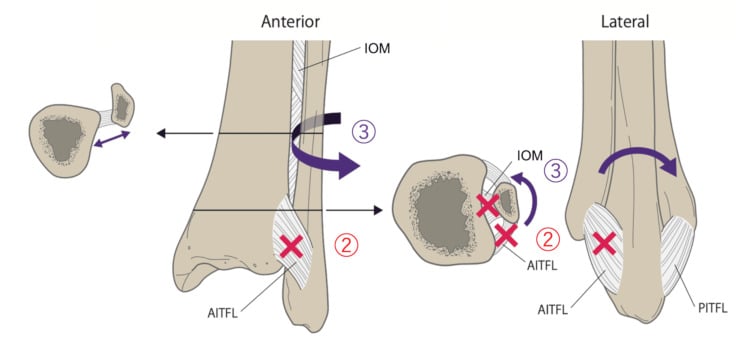
The key concept. The energy of the external rotation injury is transmitted through the interosseous membrane, so the fibula fractures proximally rather than at the ankle. What results is a Weber C equivalent: the syndesmosis is completely disrupted, the ankle mortise is unstable, and the injury requires surgical stabilisation. The proximal fibula fracture itself does not require fixation.
Epidemiology. About 5% of all ankle fractures, with a peak incidence at 20-50 years, an equal male-female distribution, and an association with sports injuries and falls. It is often missed initially, up to 20% in some series, and a missed Maisonneuve leads to chronic ankle instability.
Anatomy and Biomechanics
The syndesmosis. Four ligaments stabilise the distal tibiofibular joint:
- Anterior inferior tibiofibular ligament (AITFL) - runs obliquely from the anterolateral tibia to the anterior fibula and prevents anterior fibular translation. It is the first syndesmotic structure to fail in external rotation.
- Posterior inferior tibiofibular ligament (PITFL) - the strongest of the four, running from the posterolateral tibia to the posterior fibula, and including the posterior malleolus component.
- Interosseous ligament - the thickened distal portion of the interosseous membrane and the primary restraint to syndesmotic widening. In a Maisonneuve injury it is disrupted along its entire length.
- Transverse tibiofibular ligament - the deep component of the PITFL, its inferior continuation.
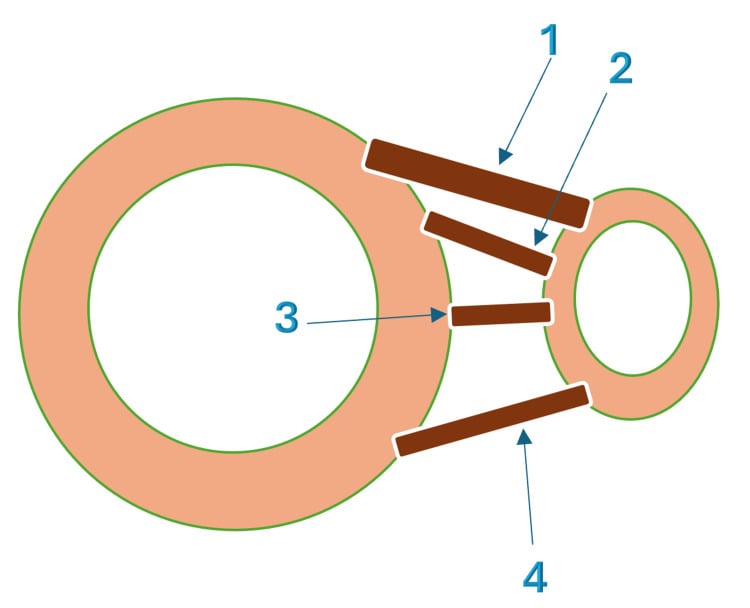
The interosseous membrane. It connects the tibia and fibula along their entire length and transfers 10-15% of axial load from tibia to fibula. In a Maisonneuve fracture it is torn from the ankle to the level of the fibula fracture, which is the route by which the injury energy migrates proximally. This is complete syndesmotic disruption, the most severe form of syndesmotic injury.
The medial side. For the ankle to become unstable the medial structures must fail as well, in one of two ways: the medial malleolus fractures, a transverse pattern visible on X-ray, or the deltoid ligament ruptures, which shows only as medial tenderness with no fracture visible.
Mechanism. The foot is planted and pronated (everted) and the body rotates externally, the same mechanism as a Weber C fracture; the talus rotates externally in the mortise. Pronation combined with external rotation puts maximum stress on the medial structures first, so the medial malleolus fractures or the deltoid ruptures, and the injury then spirals round to the lateral side. The AITFL tears, allowing the fibula to shift laterally, and instead of the fibula fracturing at ankle level the energy propagates up the interosseous membrane, which tears sequentially. The membrane injury stops when the fibula fractures proximally, usually at the junction of the proximal and middle thirds.
Why the fibula fails proximally. The interosseous membrane is more easily torn than the fibula, so the energy travels up the leg through membrane disruption until it finds a weak point in the bone, typically the proximal third where the fibula is thinnest.
Classification Systems
Maisonneuve fractures are classified as Weber C equivalent. Although the fibula fracture is very proximal, the syndesmotic implications are the same as any Weber C: complete disruption requiring fixation. The treatment is syndesmotic fixation, not fibula fixation.
- Fibula Fracture Level
- Below syndesmosis
- Syndesmotic Injury
- Intact
- Fibula Fracture Level
- At syndesmosis level
- Syndesmotic Injury
- Partial/Variable
- Fibula Fracture Level
- Above syndesmosis
- Syndesmotic Injury
- Complete disruption
- Fibula Fracture Level
- Proximal third (far above)
- Syndesmotic Injury
- Complete disruption
Clinical Presentation and Assessment
History. A fall, a twisting injury or a sports injury, with an external rotation force on the planted foot. The patient may describe a "pop" or "snap" at the time of injury, has pain at the ankle and may also have calf or proximal leg pain, and is unable to weight bear.
Examination. Swelling and ecchymosis reflect the energy of the injury; the diagnostic findings are where the leg is tender.
- Finding
- Tenderness over medial malleolus or deltoid
- Significance
- Confirms medial injury - essential component
- Finding
- May have minimal tenderness
- Significance
- No fibula fracture at ankle level
- Finding
- Tenderness at fibula head/neck
- Significance
- Key clinical finding - palpate entire fibula!
- Finding
- Tenderness along length of leg
- Significance
- Indicates membrane disruption
- Finding
- Marked swelling and ecchymosis
- Significance
- Energy of injury
- Finding
- Pain at ankle with calf squeeze
- Significance
- Positive indicates syndesmotic injury
The classic exam scenario is an isolated medial malleolus fracture or medial ankle tenderness without a fibula fracture. In any such patient palpate the entire fibula from ankle to knee: tenderness at the proximal fibula is a Maisonneuve fracture until proven otherwise, and full-length tibia/fibula films are mandatory.
Special tests. Three tests interrogate the syndesmosis:
- Squeeze test (Hopkinson test) - compress the tibia and fibula at mid-calf level; pain at the ankle is positive and indicates syndesmotic injury. Highly sensitive but not specific.
- External rotation stress test - stabilise the tibia and externally rotate the foot; pain at the syndesmosis is positive, and stress fluoroscopy may show widening.
- Cotton test under fluoroscopy - apply a lateral translation force to the talus; a visible lateral shift of the fibula from the tibia is positive, greater than 3-4mm compared with the contralateral side. This is the definitive test for syndesmotic instability.
The suspicion algorithm.
- Isolated medial malleolus fracture seen on ankle films
- OR medial tenderness without lateral fracture
- → Palpate proximal fibula
- → If tender, order full-length tibia/fibula films
- → If proximal fibula fracture seen = Maisonneuve fracture
The proximal-third fibula fracture sits close to where the common peroneal nerve winds around the fibular neck, so a neurological examination is mandatory and easily forgotten in the rush to spot the syndesmotic injury.
- Test and record before any intervention: ankle and great-toe dorsiflexion and eversion (motor), and sensation over the first dorsal web space (deep peroneal) and the dorsum of the foot (superficial peroneal). A foot drop or web-space numbness signals common peroneal nerve involvement.
- It is usually a traction/contusion neurapraxia from the same external-rotation energy rather than a transection, and most recover - but it must be documented at presentation so that a new post-operative deficit is not wrongly blamed on later care. A missed pre-operative palsy is a medicolegal trap.
- It is also a reason the proximal fibula is left alone: surgically approaching the proximal fibula or neck to "fix" the fracture needlessly puts this nerve at risk for no mechanical benefit.
Investigations
Imaging confirms the Maisonneuve pattern, assesses the medial malleolus fracture and the syndesmotic widening, and plans the surgery.
Ankle series. AP, lateral and mortise views:
- Key Findings
- Medial malleolus fracture, tibiofibular clear space widening, medial clear space widening
- Key Findings
- Tibiofibular overlap (normally greater than 1mm), tibiofibular clear space (normally under 5mm), medial clear space (normally under 4mm)
- Key Findings
- Posterior malleolus involvement, talar subluxation
Read the thresholds as conventions, and know their two weaknesses. They are measured 1 cm above the tibial plafond, published cut-offs vary between sources (tibiofibular clear space appears as under 5mm and under 6mm), and none has an established sensitivity or specificity, so a normal measurement does not exclude the injury. Do not confuse the two clear spaces: tibiofibular clear space under 5mm, medial clear space under 4mm. Most importantly, this page's own evidence shows how insensitive plain films are: in Kašper's series of 70 Maisonneuve fractures, tibiofibular clear space widening was demonstrated radiographically in only 40 of 70 cases. If the mechanism and examination suggest a Maisonneuve injury, normal measurements are a reason for CT rather than reassurance.
Order full-length films if: (1) Isolated medial malleolus fracture, (2) Tibiofibular clear space widened greater than 5mm, (3) Tibiofibular overlap under 1mm on mortise view, (4) Medial clear space greater than 4mm.
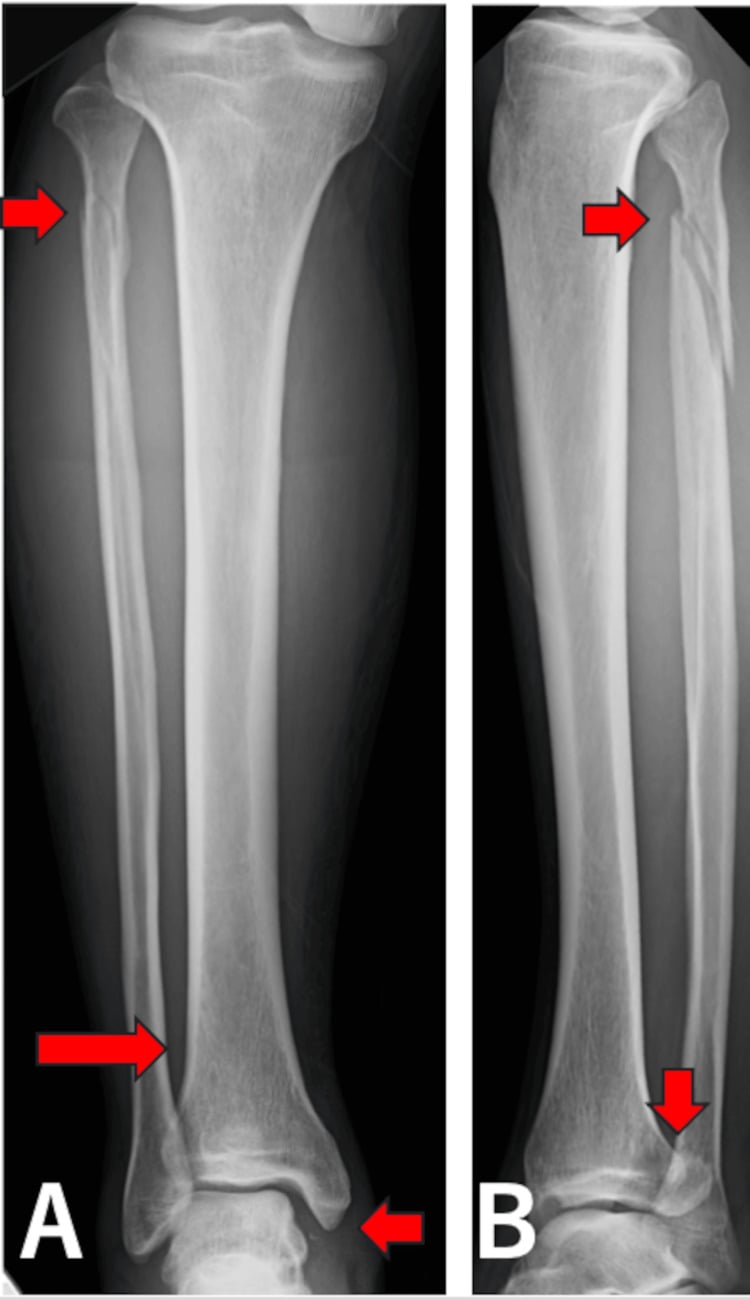
Full-length tibia/fibula films. Essential for the diagnosis. They show the proximal fibula fracture, usually a spiral pattern and typically at the junction of the proximal and middle thirds, and the extent of interosseous membrane disruption is inferred from its level. Ask for two views of the leg: in Kašper's series the fibular fracture was seen only on the lateral lower-leg radiograph in 24%.
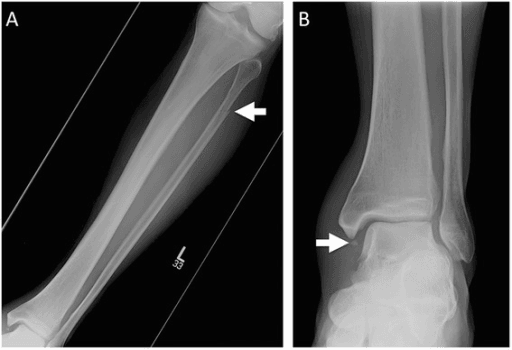
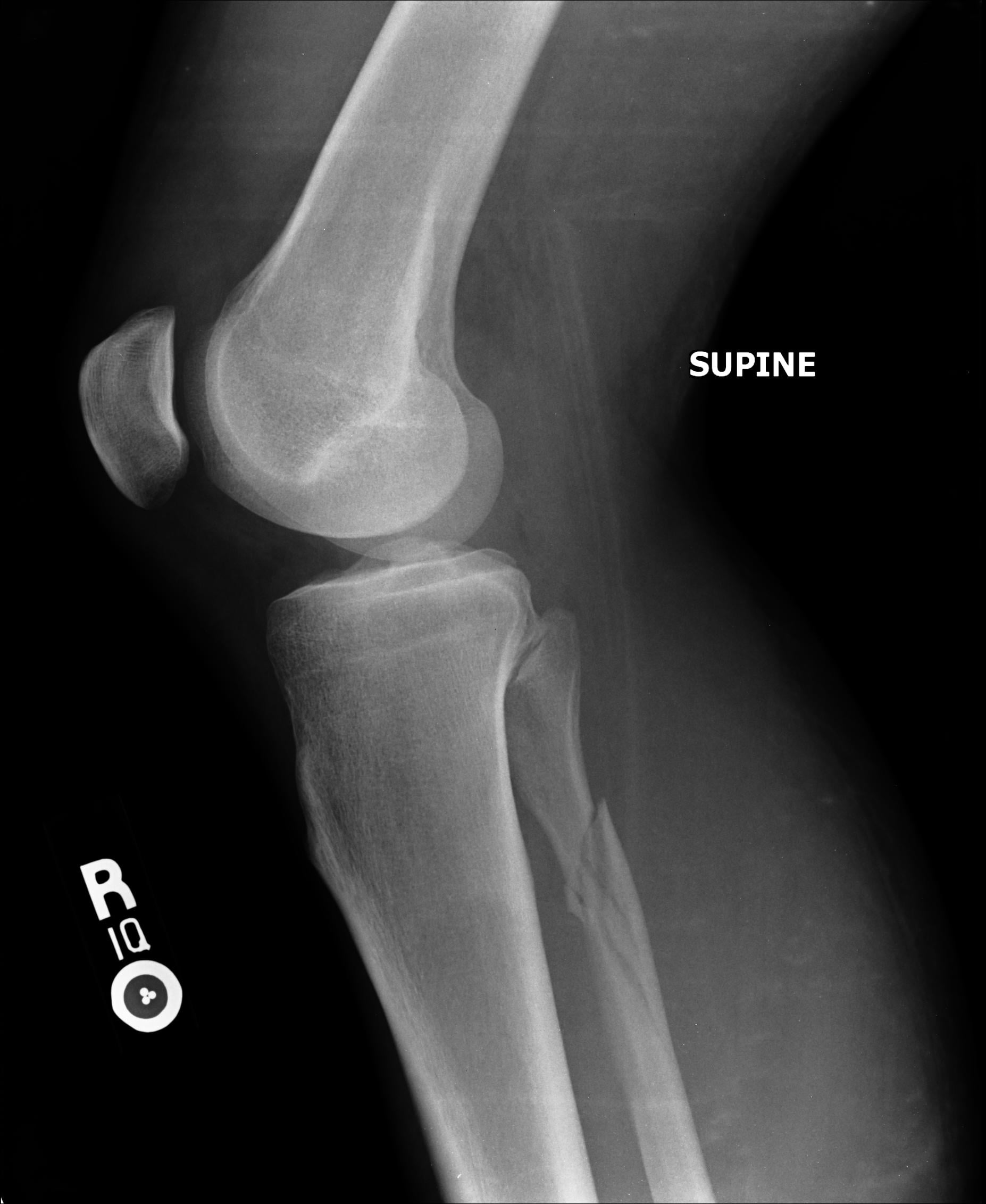
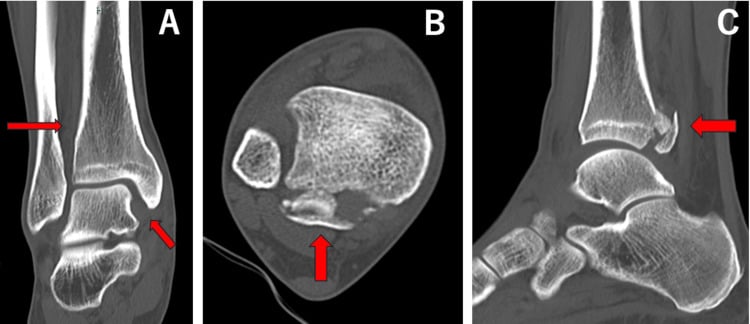
CT. It measures the tibiofibular distance precisely, shows fibular rotation (malreduction) and identifies osteochondral lesions of the talus, an associated injury. CT is often obtained but may not change management if the plain films already show the Maisonneuve pattern with a widened syndesmosis. The indications are:
- Posterior malleolus involvement (size, fragment pattern)
- Complex fracture patterns
- Subtle syndesmotic widening on plain films
- Post-reduction assessment of mortise congruity
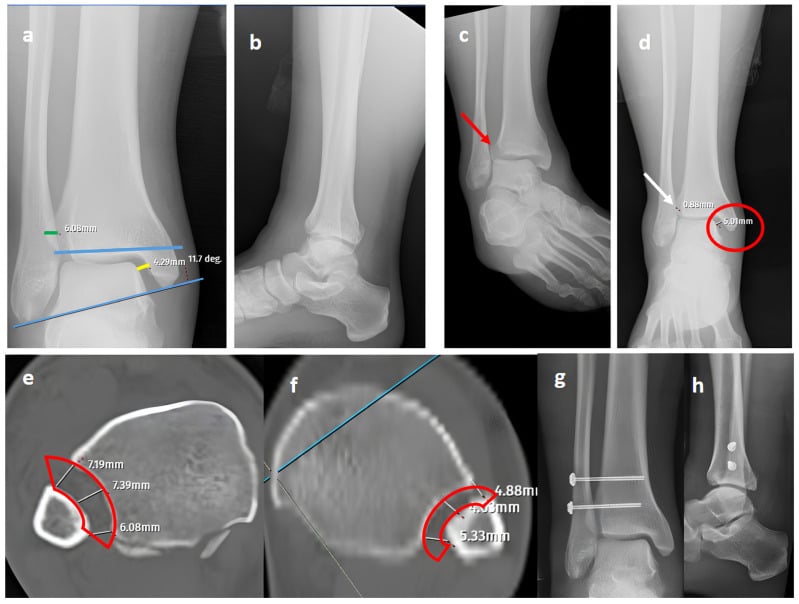
MRI. Not routinely needed: clinical and plain-film diagnosis is usually sufficient, and MRI adds cost and rarely changes the surgical plan once syndesmotic instability is confirmed clinically or radiographically. It earns its place in a few situations:
- Medial malleolus intact but the deltoid injury is in question (clinical examination, medial tenderness and stress views, is usually sufficient; MRI confirms an equivocal rupture)
- Planning a deltoid ligament repair
- Assessing the syndesmotic ligaments in detail or ruling out occult injury patterns
- Medicolegal documentation
- Research, mapping the extent of injury
Intraoperative stress testing. Stability is tested before and after fixation. The Cotton test is repeated after syndesmotic fixation to confirm stability, and a gravity stress test, a lateral view with the stress applied by gravity, assesses talar tilt and anterior drawer. Stress testing under anaesthesia is more reliable than awake examination because the awake patient guards.
Management Algorithm
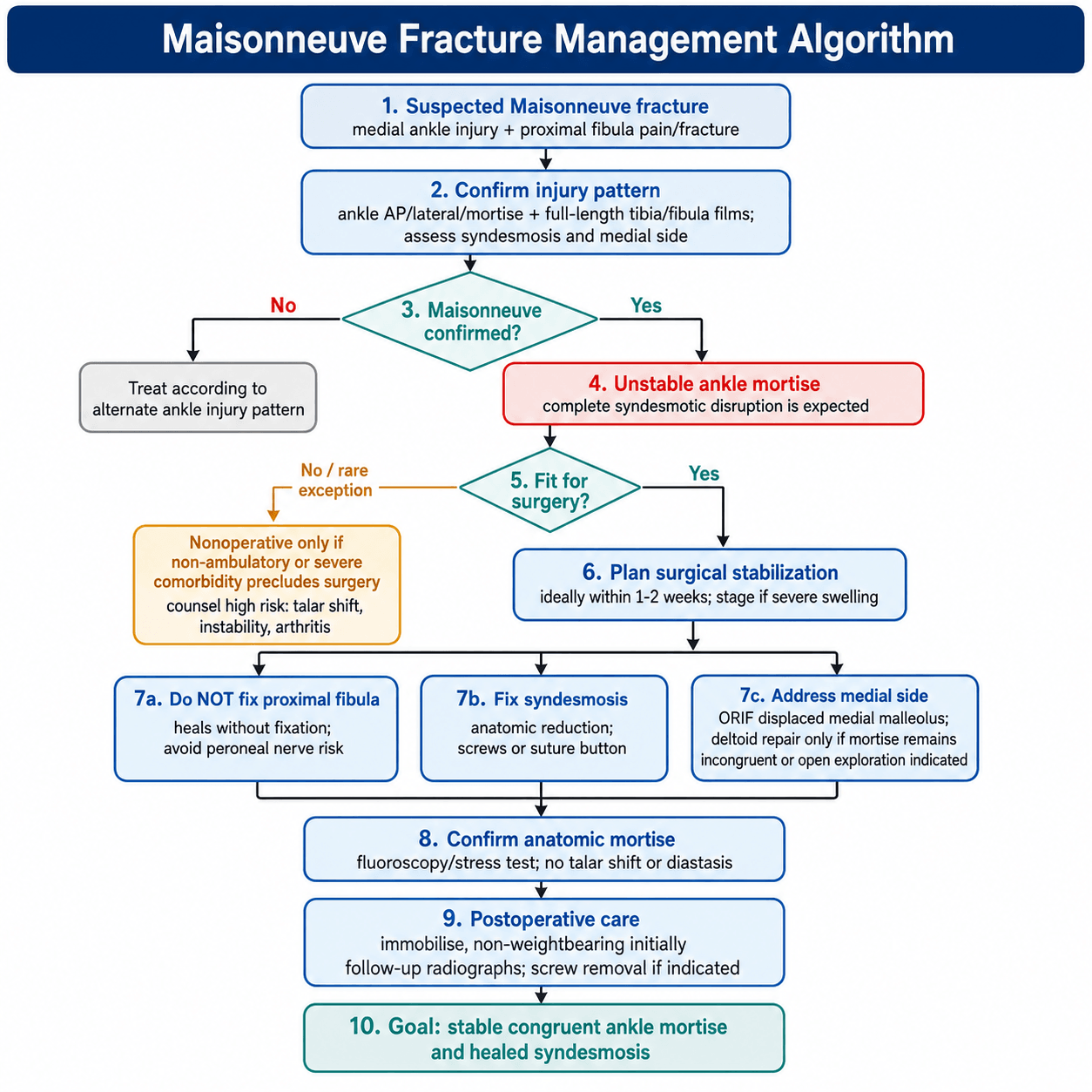
The principle that organises everything else. The problem is the syndesmosis, not the fibula. Four rules follow:
- The fibula fracture does not need fixation. The proximal fibula is far from the ankle joint and not intra-articular, it is usually stable, it has a good blood supply and heals well without surgery, and nonunion at this level is rare. Fixing it gives no mechanical advantage, adds morbidity, and would need an additional proximal incision with peroneal nerve risk.
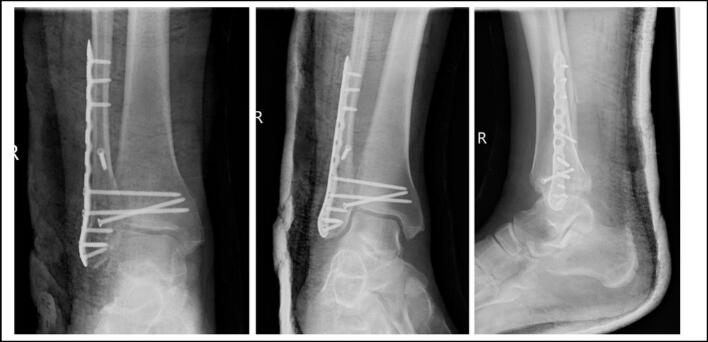
- Syndesmotic fixation is mandatory. Complete disruption means an unstable ankle mortise, and without fixation chronic instability and arthritis develop. The options are syndesmotic screws or a suture button.
- Fix the medial malleolus if displaced, by standard ORIF with screws or a plate through a separate medial incision.
- The deltoid ligament may not need repair if the syndesmosis is stabilised and the mortise congruent. Some surgeons explore and repair it, it is repaired directly if the mortise stays incongruent or if it is explored open, and the evidence on the benefit of routine repair is unclear.
Nonoperative management is not appropriate. Complete syndesmotic disruption creates an unstable mortise, and without fixation the result is chronic lateral talar shift, post-traumatic arthritis, chronic instability and poor functional outcomes. The only exception is a non-ambulatory patient or severe medical comorbidity precluding surgery, which is rare; every other patient is counselled for surgical stabilisation of the syndesmosis.
Surgical goals and timing. The operation restores an anatomic ankle mortise, stabilises the distal tibiofibular syndesmosis, fixes the medial malleolus if it is fractured and displaced, and allows the interosseous membrane to heal. Operate ideally within 1-2 weeks of injury; severe swelling may force a staged approach (wrinkle test), and delay increases the difficulty because of early callus and scarring.
Screws or suture button. Most surgeons use syndesmotic screws (1-2 screws) or a suture button device, and both produce good outcomes when properly positioned.
- Advantages
- Well-established, strong fixation
- Disadvantages
- May need removal at 3-4 months
- Advantages
- Dynamic fixation, no removal needed
- Disadvantages
- Higher cost, learning curve
What the randomised evidence adds is in the cards below. Andersen's trial against a single quadricortical screw found higher functional scores with the suture button and no symptomatic recurrent diastasis against 7 in the screw group, but the screws were routinely removed at a mean of 85.9 days and the screw arm carried more posterior malleolar injuries at baseline. Onggo's meta-analysis of five trials concluded that the two constructs give similar clinical outcomes, the suture button's clear advantage being fewer implant failures, so the choice rests on implant failure, cost, soft tissues and experience.
The classic teaching ("don't fix the fibula, fix the syndesmosis") is incomplete by modern CT-based standards: a posterior malleolus fracture accompanies roughly 80% of Maisonneuve injuries (Bartoníček/Rammelt), and it is frequently the missed component because attention is fixed on the proximal fibula and the medial side.
- The PITFL (the strongest syndesmotic ligament) inserts on the posterior malleolus, so the posterior fragment carries the posterior syndesmotic complex. Anatomically reducing and fixing a significant posterior malleolus fragment restores posterior syndesmotic stability and can reduce reliance on, or improve the reduction achieved by, trans-syndesmotic screws or buttons.
- Get a CT: the posterior malleolus is poorly characterised on plain films, and CT defines fragment size, displacement and the joint surface for surgical planning.
- Sequence matters: when a substantial posterior fragment is present, many surgeons address (reduce/fix) the posterior malleolus first, then reassess syndesmotic stability and reduce the fibula into the incisura, rather than reflexively placing a syndesmotic screw across a still-malpositioned mortise.
Surgical Technique
Set-up. Supine on a radiolucent table with a bump under the ipsilateral hip, which gives 10-15 degrees of internal rotation of the leg. A thigh tourniquet is optional. The fluoroscope must reach AP, lateral and mortise views.
Equipment
- Standard fracture set and reduction clamps
- 3.5mm or 4.5mm cortical screws for the syndesmosis, or a suture button device (TightRope and similar)
- Small fragment set if medial malleolus ORIF is needed
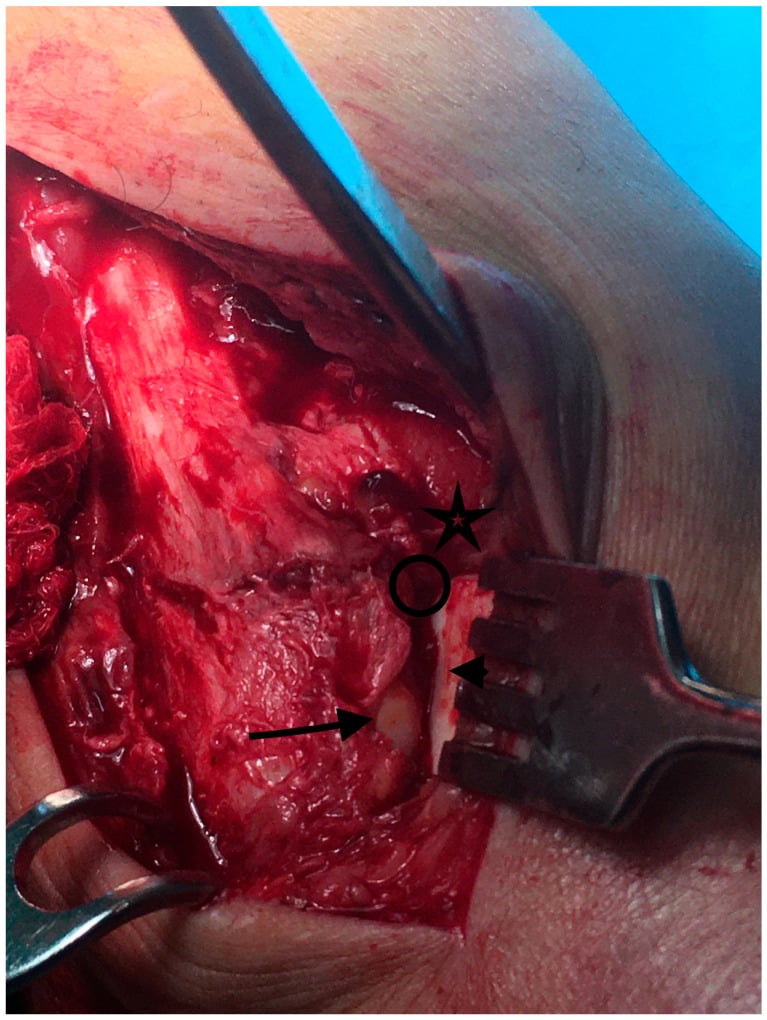
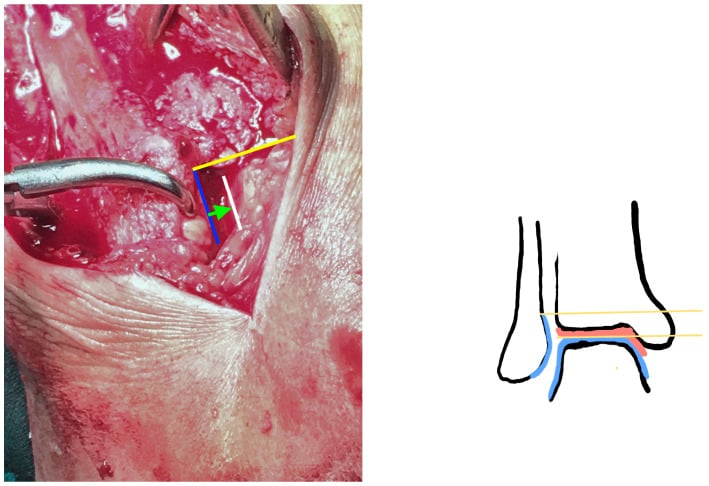
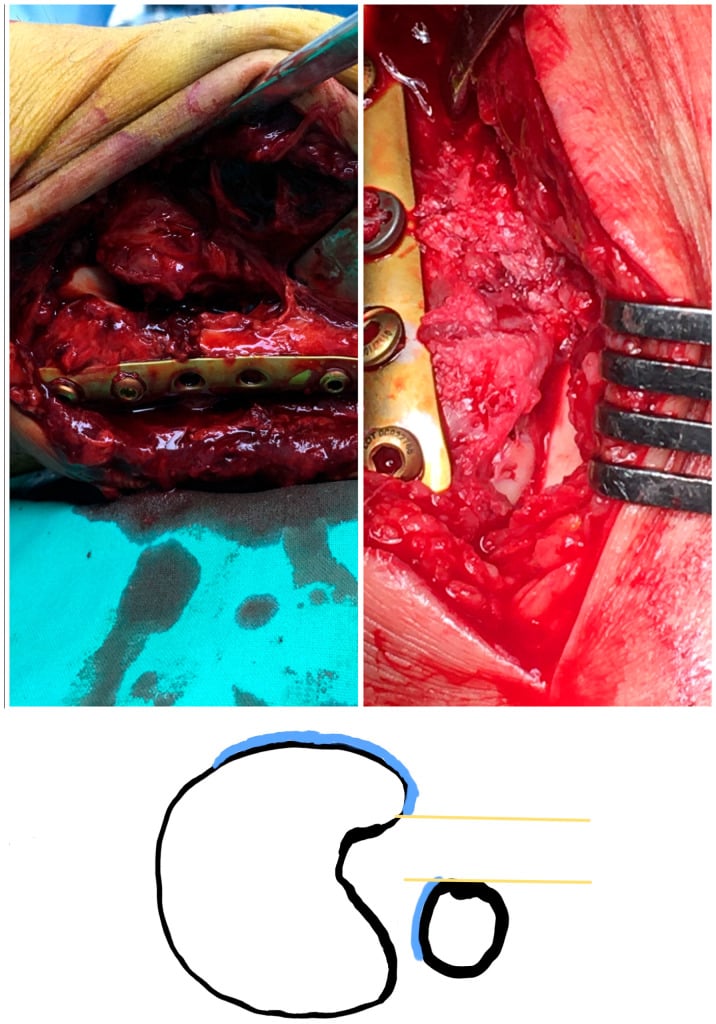
Incisions. A lateral approach over the distal fibula for the syndesmotic fixation, and a medial approach if the medial malleolus needs ORIF. The proximal fibula is not approached.
Complications
- Incidence
- ~39% on post-op CT (Sagi) - 44% after closed versus 15% after open reduction
- Prevention/Management
- Open direct visualisation of the fibula in the incisura, plus post-operative CT compared to the contralateral side; malreduction is the dominant predictor of poor outcome and warrants revision
- Incidence
- 5-15%
- Prevention/Management
- Consider early removal (3-4 months), or use suture button
- Incidence
- 10-30%
- Prevention/Management
- Anatomic reduction of mortise, address all injuries
- Incidence
- 5-10%
- Prevention/Management
- Adequate syndesmotic fixation, treat all components
- Incidence
- 5-10%
- Prevention/Management
- Occurs in interosseous membrane, rarely symptomatic
- Incidence
- 10-20%
- Prevention/Management
- Early motion when stable, aggressive physiotherapy
- Incidence
- 5%
- Prevention/Management
- Standard wound care, wait for wrinkle test if swollen
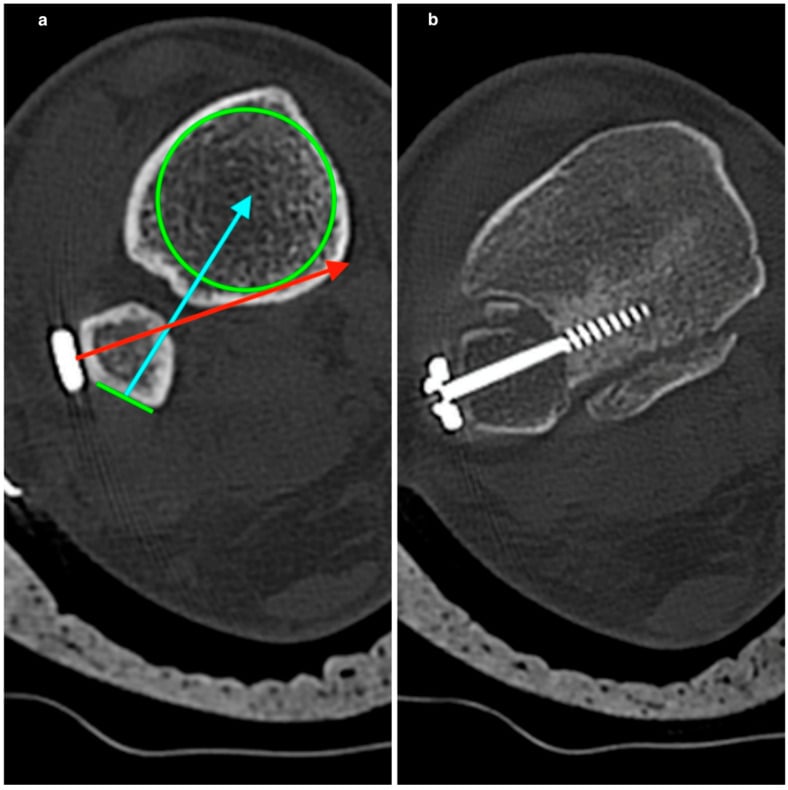
Syndesmotic malreduction. The most important complication to avoid. The fibula ends up externally rotated in the incisura, posteriorly translated, or over- or undercompressed, and even 1-2mm of malreduction increases contact pressures and leads to arthritis. Intraoperative CT may detect a subtle malreduction that fluoroscopy misses.
Use the figures from this page's own evidence rather than the commonly quoted 15-25%. Sagi's prospective bilateral-CT study found 39% of syndesmoses malreduced against the uninjured side - 44% after closed reduction and 15% after open (though note that open-versus-closed comparison did not reach significance, P = 0.11) - and Bartoníček's review quotes malposition after closed reduction in up to 50%. So the honest figure is that somewhere between a third and a half are malreduced, and the 15% number belongs specifically to open reduction rather than to practice generally. Malreduction matters: those patients had significantly worse SMFA and Olerud-Molander scores at two years. That is the argument for direct visualisation and for a post-operative CT compared with the other side.
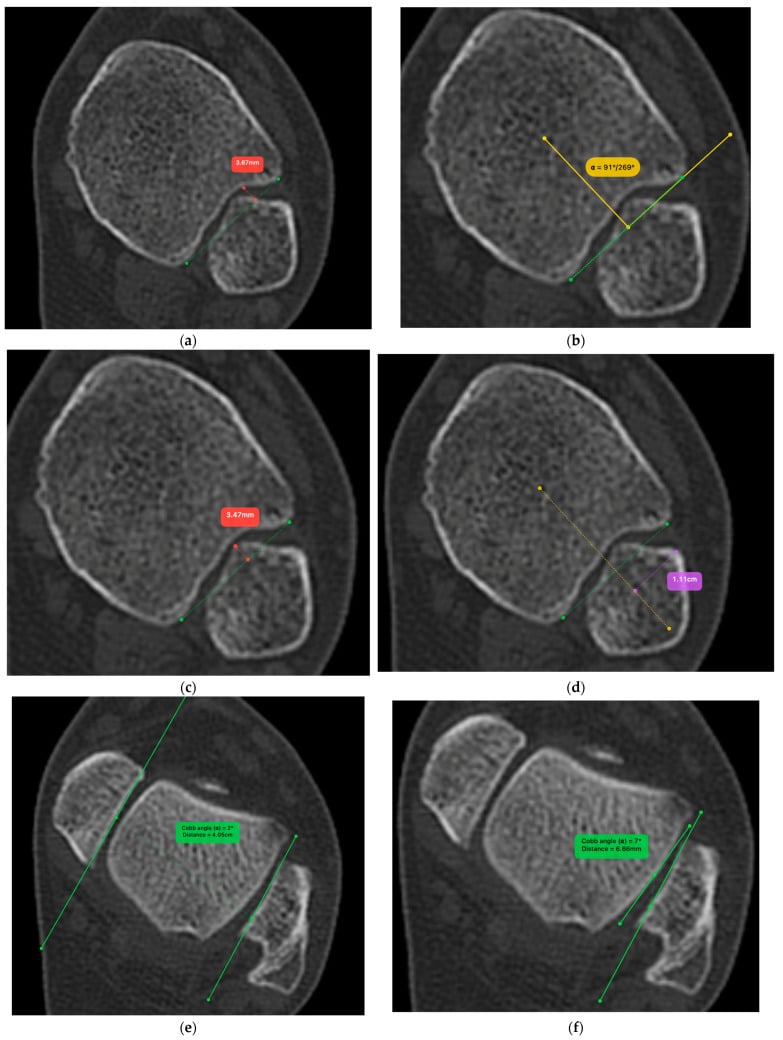
The proximal fibula. It typically heals without intervention and the problems are rare: delayed union (very rare), painful hardware if it was inadvertently fixed, and peroneal nerve injury if a surgical approach was attempted.
Postoperative Care
Most protocols keep the patient non-weightbearing for 6 weeks after syndesmotic fixation, which allows the membrane to heal; some surgeons allow earlier weightbearing with a suture button because of its dynamic fixation. Markolf's cadaveric data give the rationale for what is restrained: axial weight-bearing barely moved the fibula, whereas external foot torque produced ten to twenty times more displacement, so it is torsional loading rather than weight-bearing that should be restrained to limit screw bending and breakage.
- Posterior splint or cast
- Non-weightbearing with crutches/walker
- Elevation to control swelling
- Wound checks at 2 weeks
- Active toe movement encouraged
- Convert to removable boot
- Begin ROM exercises out of boot
- Dorsiflexion/plantarflexion exercises
- Continue non-weightbearing
- Physiotherapy referral
- Begin weight-bearing as tolerated in boot
- Progress to regular shoes with support
- Strengthening exercises (theraband, calf raises)
- Balance and proprioception work
- Radiographic check at 6-8 weeks
- Full weight-bearing in regular shoes
- Progressive activity increase
- If screws in place, consider removal at 3-4 months before full activity
- Sport-specific training
- Full recovery expected by 6 months
Screw removal. Many surgeons remove syndesmotic screws at 3-4 months, which allows a return to full activity without the risk of breakage; if a screw breaks after union the fragments can be left. A suture button avoids the question altogether.
- When
- 3-4 months
- Considerations
- Allows full activity without risk of breakage
- When
- If painful/stiff
- Considerations
- Some screws become prominent
- When
- If asymptomatic
- Considerations
- May break with full activity but often tolerated
- When
- No removal needed
- Considerations
- Dynamic fixation, no hardware removal surgery
Return to work and sport
- Sedentary work: 2-4 weeks (with limitations)
- Manual labour: 3-6 months
- Running/jogging: 4-6 months
- Contact sports: 6 months minimum
- Full recovery: 6-12 months
Outcomes and Prognosis
What decides the result. Anatomic reduction of the mortise is the single most important factor, and intraoperative vigilance is what secures it.
Favourable
- Accurate syndesmotic reduction
- Early surgical treatment
- Anatomic medial malleolus fixation
- Compliant patient with rehabilitation
Unfavourable
- Syndesmotic malreduction
- Delayed diagnosis/treatment
- Associated cartilage damage
- Persistent mortise widening
- Older age, obesity, smoking
- Result
- 85-90%
- Result
- 85-95 points (good to excellent)
- Result
- 10-30% radiographic changes, fewer symptomatic
- Result
- 80-90% at same level
In the long term. With proper treatment most patients achieve a good functional outcome. Some stiffness may persist, especially in dorsiflexion; radiographic arthritis may develop but is often asymptomatic; and chronic instability is rare with adequate fixation.
Guidelines, Registries & Global Practice
Global epidemiology. Maisonneuve fractures account for roughly 5 to 7% of all ankle fractures and represent the most proximal expression of a pronation-external-rotation injury. In the largest dedicated series (70 patients, mean age 48 years; PMID 32349489) men predominated, the female share rose after age 50, a posterior malleolus fracture accompanied 77% of cases, a medial malleolus fracture 39% and a complete deltoid rupture 51%, with intact medial structures in only 10%. Contemporary CT-based reviews report posterior malleolar involvement in about 80% of cases (PMID 37185026). The pattern is consistent worldwide; differences between centres reflect imaging access and reduction technique rather than true biological variation.
Major guidance, side by side. No society publishes a Maisonneuve-specific guideline; recommendations are extrapolated from syndesmotic and ankle-fracture guidance.
- Position relevant to Maisonneuve
- Unstable syndesmosis requires anatomic reduction of the fibula into the incisura and fixation; open reduction preferred when malreduction risk is high; proximal fibula fracture itself not fixed
- Basis / evidence level
- Expert consensus / principle-based
- Position relevant to Maisonneuve
- Ankle-fracture appropriate-use and clinical-practice work supports operative stabilisation of unstable syndesmotic injuries; emphasises confirmation of reduction
- Basis / evidence level
- Consensus informed by Level I-II data
- Position relevant to Maisonneuve
- Open ankle and ankle-fracture standards: prompt reduction of dislocation, soft-tissue-led timing of definitive fixation, senior decision-making, anatomic mortise restoration
- Basis / evidence level
- Standard of care (consensus)
- Position relevant to Maisonneuve
- Non-complex fracture guidance (NG38): operative fixation for unstable ankle fractures; no device mandated
- Basis / evidence level
- Consensus / health-economic review
- Position relevant to Maisonneuve
- Increasing preference for dynamic suture-button fixation and routine post-operative CT to detect malreduction
- Basis / evidence level
- Supported by Level I RCT and meta-analysis
Registry and high-level evidence. Joint registries do not track syndesmosis implants discretely, so the evidence base is randomised rather than registry-derived. A Level I RCT (PMID 29298255) and a meta-analysis of five RCTs (PMID 30503612) both show dynamic suture-button fixation gives equal-or-better function, less late tibiofibular widening and far fewer implant failures than a static screw, while a cadaveric study (PMID 23405026) shows screw diameter and number of cortices have little mechanical effect. Across all constructs, malreduction is the dominant driver of poor outcome (PMID 22357084).
Global practice variation. High-resource settings increasingly favour open reduction of the distal fibula, suture-button or screw fixation, and post-operative CT to confirm reduction. Limited-resource settings rely more on closed reduction and screw fixation under fluoroscopy; because closed reduction is malreduced in up to 50% of cases (PMID 37185026), low-cost screws remain widely used where suture-button devices or CT are unavailable. Hardware-removal practice also differs (routine versus selective screw removal) - an issue largely avoided by suture-button constructs.
- Distinguishing features
- Proximal-third fibula fracture, complete syndesmotic disruption, medial injury (malleolus or deltoid)
- Key discriminator
- Proximal fibula tenderness plus widened medial clear space; full-length films diagnostic
- Distinguishing features
- Fracture at the syndesmosis level, variable stability
- Key discriminator
- Fracture seen at the ankle on standard views; proximal fibula not tender
- Distinguishing features
- Suprasyndesmotic fibula fracture with syndesmotic disruption
- Key discriminator
- Fibula fracture is distal/mid, not in the proximal third; same management principle of syndesmotic fixation
- Distinguishing features
- Medial-side injury without syndesmotic widening
- Key discriminator
- Normal medial clear space, no proximal fibula tenderness, stable on stress views
- Distinguishing features
- Direct blow or avulsion, no ankle injury
- Key discriminator
- Ankle examination and mortise normal; no syndesmotic widening
- Distinguishing features
- Foot drop / sensory loss with proximal fibula injury
- Key discriminator
- Neurological deficit dominates; assess nerve in any proximal fibula fracture
The Maisonneuve fracture is an exam favourite because it tests:
- Recognition of the injury pattern (missed diagnosis scenario)
- Understanding of syndesmotic anatomy
- Knowledge that the fibula does not need fixation
- Syndesmotic fixation technique and the screw-versus-suture-button debate
- Postoperative management including hardware removal
Expect a scenario with isolated medial ankle injury where you must recognise the need for full-length films, then justify your fixation choice with the randomised evidence above.
MCQ Practice Points
Q: What is the mechanism of Maisonneuve fracture? A: External rotation with pronation (PER mechanism). The foot is everted, and external rotation force on the planted foot causes sequential failure of medial structures, syndesmosis, and proximal fibula.
Q: What imaging should be ordered for a patient with isolated medial malleolus fracture? A: Full-length tibia/fibula radiographs to exclude Maisonneuve fracture. The medial injury without lateral ankle fracture should prompt assessment for proximal fibula fracture.
Q: Should the proximal fibula fracture in Maisonneuve be surgically fixed? A: No. The proximal fibula heals well without intervention. The problem is the syndesmosis, which must be fixed. Attempting to fix the proximal fibula risks peroneal nerve injury without benefit.
Q: What is the optimal position for syndesmotic screw placement? A: 2cm proximal to the ankle joint, angled 25-30 degrees anterior to the coronal plane (parallel to the syndesmosis). The foot should be in neutral or slight dorsiflexion during fixation.
Q: How is Maisonneuve fracture classified in the Weber system? A: Weber C equivalent. Although the fibula fracture is proximal, the complete syndesmotic disruption makes it functionally equivalent to a Weber C injury requiring syndesmotic fixation.
Q: When should syndesmotic screws be removed? A: Typically 3-4 months post-fixation, before return to full activity. This prevents screw breakage. Alternatively, suture button devices provide dynamic fixation and do not require removal.
Clinical Decision Scenarios
Practise clinical reasoning and management decisions out loud
“A 35-year-old man presents to ED after twisting his ankle playing soccer. Ankle X-rays show an isolated medial malleolus fracture with no fibula fracture visible. There is 6mm medial clear space widening. What is your assessment and management?”
“You are in theatre fixing a Maisonneuve fracture. The medial malleolus has been fixed. You are now addressing the syndesmosis. Describe your technique for syndesmotic reduction and fixation. How do you confirm adequate reduction?”
“You have fixed a Maisonneuve fracture 3 months ago. The patient is doing well, walking in a boot, but is keen to return to running. The syndesmotic screws are intact on X-ray. What are your recommendations?”
DIAGNOSIS
- Proximal fibula fracture + syndesmotic disruption + medial injury
- Weber C equivalent - complete syndesmosis tear
- MISSED INJURY - always palpate entire fibula
- Order full-length films if isolated medial injury
MECHANISM
- External rotation with pronation (PER)
- Energy propagates through interosseous membrane
- Fibula fractures proximally where it's thinnest
- Medial malleolus or deltoid must fail for instability
SURGICAL PRINCIPLES
- DO NOT FIX the proximal fibula
- MUST FIX the syndesmosis (screws or suture button)
- ORIF medial malleolus if displaced
- Deltoid repair not mandatory if syndesmosis stable
SYNDESMOTIC FIXATION
- 2cm proximal to joint, angle 25-30 degrees anterior
- Tricortical or quadricortical (either acceptable)
- Foot in neutral/dorsiflexion during fixation
- Cotton test to confirm stability
RADIOGRAPHIC PARAMETERS
- Tibiofibular overlap greater than 1mm (mortise view)
- Tibiofibular clear space under 5mm (AP view)
- Medial clear space equal to superior clear space
- Any diastasis or talar shift = unacceptable
POSTOPERATIVE
- Non-weightbearing 6 weeks
- Protected weightbearing weeks 6-12
- Screw removal at 3-4 months if used
- Suture button: no removal needed
OUTCOMES
- 90%+ good/excellent outcomes
- Malreduction rate 39% on post-op CT (Sagi): 44% closed vs 15% open
- Malreduction = strongest predictor of poor outcome
- Full recovery 6 months
EXAM TRAPS
- Missing the diagnosis (not palpating proximal fibula)
- Recommending fibula fixation
- Not understanding syndesmosis is the key issue
- Allowing full activity with screws in place
Evidence Base
Sagi, Shah & Sanders. Functional Consequence of Syndesmotic Malreduction
- Prospective bilateral-CT study of 68 operatively treated syndesmotic injuries: 39% were malreduced versus the uninjured side, and malreduced patients had significantly worse SMFA and Olerud-Molander functional scores at minimum 2 years (P less than 0.05).
- Malreduction was numerically commoner after closed reduction (44%) than open reduction (15%) - but note this comparison was NOT statistically significant (P = 0.11), so the open-reduction recommendation is the authors' inference rather than a demonstrated difference.
- Only 68 of the original 107 syndesmotic injuries (63.5%) were available for follow-up.
Kašper, Bartoníček et al. Maisonneuve Fracture (70-patient series)
- Series of 70 Maisonneuve fractures (47 men, 23 women; mean age 48). Highest incidence in the 5th decade overall and in men, 6th decade in women, with the female share rising significantly after age 50.
- The injury is rarely isolated: posterior malleolus fracture in 54 (77%), medial malleolus fracture in 27 (39%), complete deltoid rupture in 36 (51%) - and medial structures were intact in only 7 (10%). Anterior AND posterior tibiofibular ligament injury was found in all 54 patients who had open reduction.
- RADIOGRAPHS ARE INSENSITIVE TO THE DIASTASIS: widening of the tibiofibular clear space was demonstrated on radiographs in only 40 of the 70 cases.
- In 24% the fibular fracture was seen ONLY on the lateral lower-leg radiograph - and the fracture was subcapital in 64 and involved the fibular head in 6.
- Posterior dislocation of the fibula (Bosworth) and frank tibiofibular diastasis each occurred in 2 cases.
Andersen et al. Suture Button vs Single Syndesmotic Screw (RCT)
- Randomised trial of 97 patients (48 suture button, 49 single QUADRICORTICAL screw), with 87 of 97 (90%) completing 2 years.
- At 2 years the suture-button group had higher median AOFAS (96, IQR 90-100 versus 86, IQR 80-96; p=0.001) and Olerud-Molander (100 versus 90; p<0.001), and a higher EQ-5D index (1.0 versus 0.88; p=0.005).
- Radiographic widening favoured the suture button: a tibiofibular distance difference of 2mm or more between injured and uninjured ankles occurred in 20 of 40 screw against 8 of 40 suture-button ankles (p=0.009), and 7 screw patients had symptomatic recurrent diastasis against none with suture button (p=0.005).
- Read the pain findings carefully: significant differences in pain on walking and at rest were tiny in absolute terms (median VAS 0 versus 1, and 0 versus 0), and there was NO difference in pain at night or during daily activities.
- TWO DESIGN FACTS THAT SHAPE THE RESULT: the screw group had MORE posterior malleolar injuries at baseline, and the screws were routinely removed at a mean of 85.9 days (range 39-132).
Markolf, Jackson & McAllister. Tricortical vs Quadricortical Syndesmotic Screws (biomechanical)
- Cadaveric study using TWO syndesmotic screws per specimen, in 3.5mm and 4.5mm diameters with tricortical and quadricortical purchase, after sectioning the distal tibiofibular ligaments.
- NO significant difference in distal fibular force or displacement between any combination of screw size and number of cortices engaged.
- External foot torque was overwhelmingly the destabilising load: fibular displacement was at most 0.15mm from 1000N axial weight-bearing and 0.43mm from 10 N-m forced dorsiflexion, against 1.7 to 2.7mm from 10 N-m external foot torque.
- The highest mean fibular force recorded was 110.2N, with external foot torque applied to a dorsiflexed, axially loaded ankle - and the fibula always displaced POSTERIORLY relative to the tibia.
Whitlock et al. Deltoid Repair vs Trans-syndesmotic Fixation
- Retrospective comparison of 108 unstable distal fibula fractures at one centre: trans-syndesmotic fixation (66), deltoid ligament repair (16) and combined fixation (26).
- AAOS Foot and Ankle Module scores did not differ between the three groups (P = 0.18) at a mean 4.6 plus or minus 3.1 years.
- NO patient in the deltoid-repair group underwent reoperation, against 17 (26%) in the trans-syndesmotic group and 6 (23%) in the COMBINED group - so the combined group behaved like the trans-syndesmotic one, not like deltoid repair.
- The commonest reason for reoperation was elective removal of hardware: 12 (18%) trans-syndesmotic and 3 (12%) combined.
Onggo et al. Suture Button vs Screw - Meta-analysis of RCTs
- Meta-analysis of 5 randomised trials, 280 patients (140 suture button, 140 screw).
- Suture button gave a statistically higher 1-year AOFAS score - mean difference 5.46 (95% CI 0.40 to 10.51, p=0.03) - but note the lower confidence bound of 0.40 and THE AUTHORS' OWN VERDICT: 'clinical significance is unlikely'.
- Markedly lower implant failure with the suture button: odds ratio 0.03 (95% CI 0.01 to 0.15, p<0.001).
- Infection and wound problems were marginally, non-significantly HIGHER with the suture button (OR 1.4, 95% CI 0.4 to 4.85, p=0.60).
- The authors' summary conclusion is that 'both constructs yielded similar clinical outcomes' with fewer implant failures for the suture button.
Bartoníček, Rammelt et al. Maisonneuve Ankle Fracture - Modern Concepts
- Contemporary CT-based review defining Maisonneuve fracture as an ankle fracture-dislocation ALWAYS involving a fracture of the proximal quarter of the fibula plus rupture of the anterior AND INTEROSSEOUS tibiofibular ligaments, with all other injuries variable.
- A posterior malleolus fracture accompanies about 80% of Maisonneuve injuries, and malposition of the distal fibula in the fibular notch is also usual.
- Closed reduction of the distal fibula is associated with malposition in up to 50% of cases - this is the review's rounding of the primary data (Sagi reports 44% after closed reduction), so quote 44% if you are citing a measurement.
- Sequence matters: a larger posterior malleolar fragment should be reduced and fixed FIRST from a posterolateral approach to restore the integrity of the notch, before addressing the fibula.
- Open reduction of the distal fibula through a short ANTEROLATERAL approach is preferred, with reduction accuracy always confirmed by postoperative CT.