The Silent Meniscectomy
- A root tear is biomechanically equivalent to a total meniscectomy.
- Hoop stress is lost, leading to peak contact pressure increase.
- Medial root tears are more common (degenerative/deep flexion).
- Lateral root tears are associated with ACL tears.
- The 'Ghost Sign' on Sagittal MRI is pathognomonic.
- “Always look for the root tear in patients with a 'pop' during deep squatting.
- “Extrusion greater than 3mm indicates incompetence of the meniscus.
- “Spontaneous Osteonecrosis of the Knee (SONK) is often secondary to a missed root tear.
Overview
What a root tear is. A meniscal root tear is an avulsion of the meniscal attachment, or a tear within 1cm of it. The meniscus loses its ability to withstand circumferential hoop tension and is rendered functionally incompetent, so the femur articulates directly with the tibia and the forces are bone-on-bone.
Why it was under-recognised. Historically the injury was treated as a simple meniscal tear. Modern biomechanical understanding has redefined it as a major structural failure requiring urgent attention, and a "silent" cause of rapid joint destruction.
The silent epidemic. Root tears are often missed in primary care. The patient presents with posterior knee pain after a minor event such as squatting, and the radiographs are often normal or show mild osteoarthritis. Without an MRI the diagnosis is missed, and the joint is destroyed rapidly (SONK).
Anatomy and Biomechanics
The posterior medial root. It inserts posterior to the medial tibial spine, on the downslope of the retro-eminence, about 1cm posterior to the ACL connection and in close proximity to the PCL insertion. Measured from the apex of the medial tibial eminence, the attachment lies approximately 9.6mm posterior and 0.7mm lateral. This root is most vulnerable to shear in deep flexion.
The posterior lateral root. It lies adjacent to, and partly interdigitates with, the ACL footprint, and is often torn with an ACL avulsion. It is reinforced by the meniscofemoral ligaments of Humphry and Wrisberg, which run from the lateral meniscus posterior horn to the medial femoral condyle.
Why the side matters. The meniscofemoral ligaments act as a secondary restraint to the lateral posterior horn, so a lateral root tear extrudes less and is better tolerated when it is an isolated injury. The medial root has no such backup: it extrudes freely and behaves like a meniscectomy.
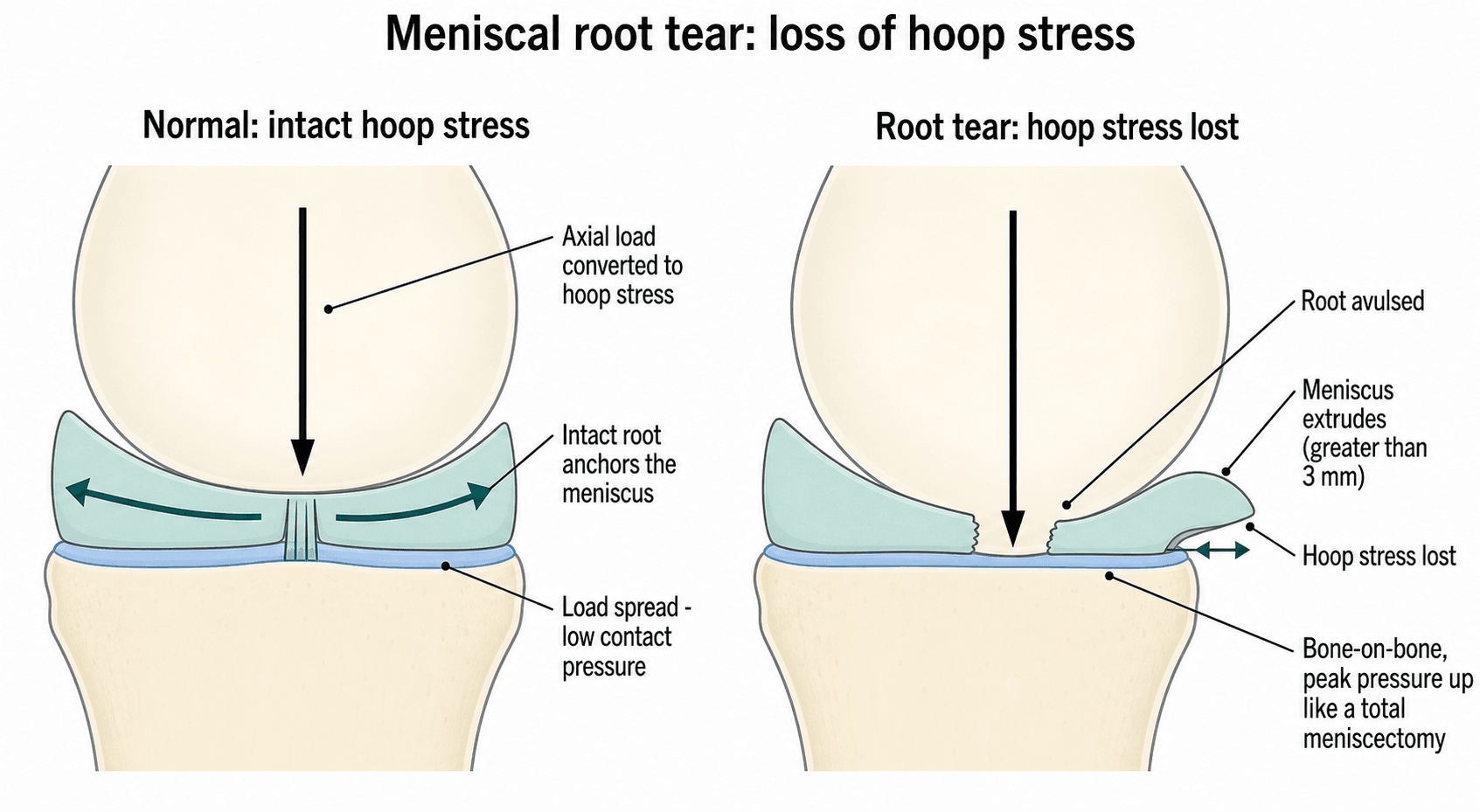
Hoop stress. Axial load compresses the meniscus, which expands radially; the roots anchor the circumferential collagen fibres and resist that expansion, which converts the axial load into circumferential (hoop) stress. When a root tears the fibres lose their anchor point, the load can no longer be converted, the meniscus extrudes radially and the load passes directly to the cartilage.
The numbers. Peak contact pressure rises by 25-300%, which is equivalent to a complete meniscectomy, and there is a 25% immediate loss of tibiofemoral contact area. This rise in pressure leads to rapid chondrolysis and rapid progression to medial compartment osteoarthritis.
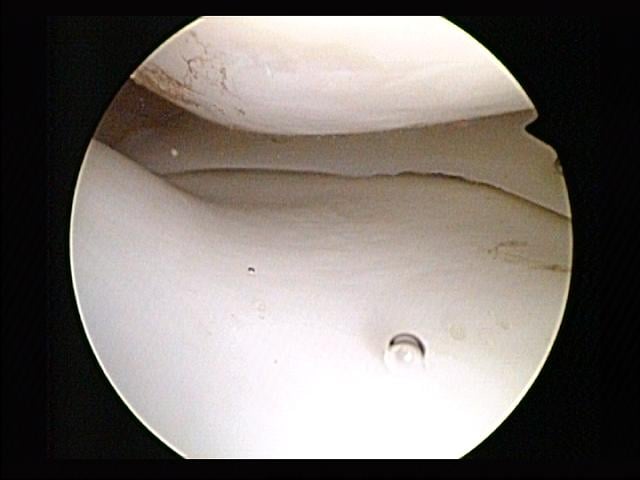
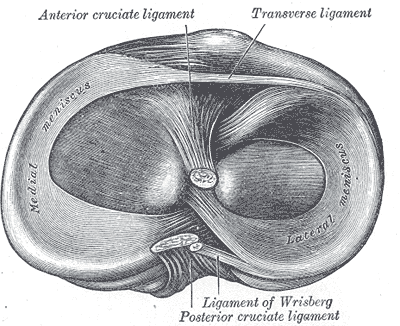
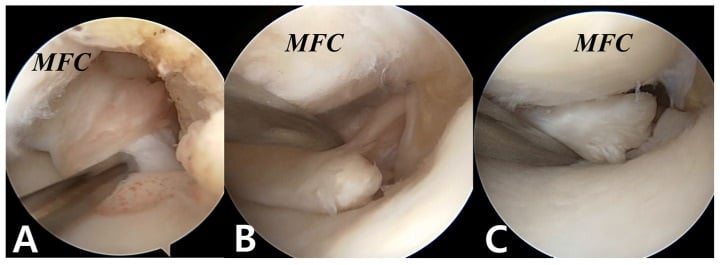
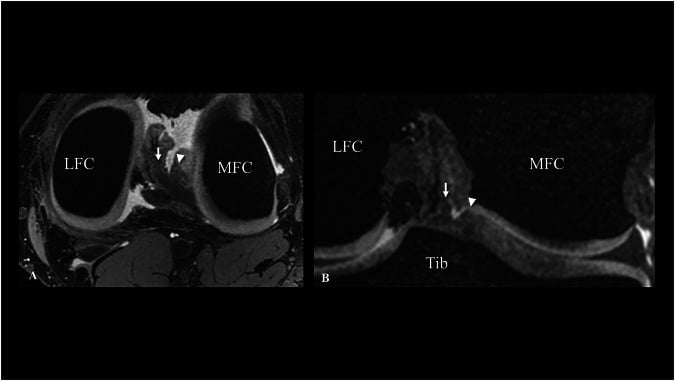
The four roots and iatrogenic injury. The menisci have four root attachments, anterior and posterior on each side. The posterior roots dominate clinical disease, but loss of an anterior root uncouples the meniscus and abolishes hoop-stress conversion just as a posterior root tear does, so iatrogenic detachment is not benign.
- Anterior medial root: the broadest, strongest attachment, inserting on the anterior intercondylar area. It is vulnerable during tibial intramedullary nailing, where a too-medial or too-anterior entry point can detach it, and during anteromedial tibial work.
- Anterior lateral root: inserts just anterior to the ACL footprint and can be injured during ACL tibial tunnel drilling if the tunnel is malpositioned.
Pathophysiology
Traumatic tears. Deep flexion during squatting or kneeling, or a pivot mechanism with axial loading, traps the posterior horn between the femoral condyle and the tibial plateau. These tears are more common in young active patients.
Degenerative tears. Chronic degeneration of the root attachment, often with existing osteoarthritis, and common in patients over 50. The tear may occur with minimal trauma, the "pop while getting up from a chair".
Natural history. Untreated medial meniscal root tears progress predictably:
- Meniscal extrusion of greater than 3mm within months
- Progressive cartilage degeneration
- Medial compartment osteoarthritis within 2-5 years
- Eventual need for knee arthroplasty
The Lateral Posterior Root and ACL Stability
A second job. Beyond hoop stress, the lateral meniscus posterior root is a secondary stabiliser of anterior tibial translation and internal rotation, which is why it matters so much in the ACL-injured knee. With the ACL deficient or reconstructed, an intact lateral posterior root acts as a posterolateral wedge resisting anterior translation and the pivot shift.
What leaving it costs. A torn lateral root increases anterior tibial translation and rotatory laxity, raising the force on an ACL graft and its risk of failure. A lateral root tear found during ACL reconstruction should therefore be repaired at the same sitting: left unaddressed it accelerates lateral-compartment wear and leaves residual rotatory instability that loads the graft.
The masking effect. Because the meniscofemoral ligaments tether the lateral posterior horn, a lateral root tear extrudes less and can look deceptively mobile-but-attached on arthroscopy. Probe it deliberately so it is not missed.
Classification Systems
LaPrade's morphological classification describes five types:
- Type 1: partial, stable root tear
- Type 2: complete radial tear within 9mm of the root, the most common operative type
- Type 3: bucket-handle tear extending into the root
- Type 4: complex oblique tear into the root
- Type 5: avulsion fracture of the root attachment
Types 2 and 4 are the classic "root tears" requiring repair.
Clinical Presentation
The classic patient. A middle-aged patient, typically a woman in her 50s-60s, feels a sudden "pop" or tearing sensation in the back of the knee during a low-energy deep-flexion activity: squatting, kneeling or rising from a low chair. Persistent posteromedial pain and an effusion follow, and the plain radiographs are normal or near-normal.
Onset. The mechanism is usually non-contact, a pop while squatting, kneeling or descending stairs, and often a discrete low-energy event. Up to half of degenerative medial root tears occur with trivial trauma, and many patients cannot recall a single event.
Pain. Deep, posteromedial and constant rather than purely mechanical, and reproducibly worse with deep flexion and weight-bearing rotation. Stairs (especially descending), squatting and rising from low seating are difficult, and night pain is common when an associated subchondral insufficiency fracture is present.
Mechanical symptoms. True locking is uncommon, in contrast to a displaced bucket-handle tear, and its absence often delays presentation. Patients may report giving way or a vague "instability" that comes from quadriceps inhibition rather than ligamentous laxity.
Examination. The effusion is small to moderate. Posteromedial joint-line tenderness is the most sensitive single sign for a medial root tear, supported by pain on a seated McMurray (external rotation, varus) and at terminal deep squat. No single physical test is specific, so MRI is mandatory for confirmation, and a high index of suspicion is required to avoid missing the diagnosis.
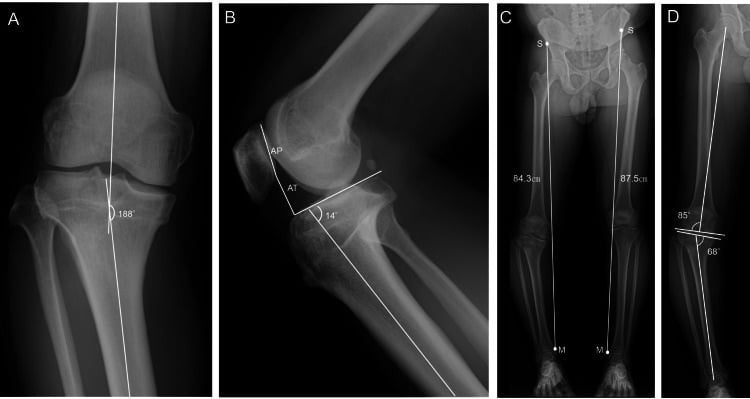
The rest of the limb. Always assess standing alignment, because varus loads the medial compartment; ligamentous stability, to rule out a concurrent ACL injury, especially with lateral root tears; and the contralateral knee for comparison.
Two phenotypes. Medial and lateral root tears present differently:
- Medial Root (Degenerative)
- Woman, 50-60s, raised BMI
- Lateral Root (Traumatic)
- Young athlete, often male, 20-30s
- Medial Root (Degenerative)
- Deep flexion / minor trauma
- Lateral Root (Traumatic)
- High-energy pivot, ACL rupture
- Medial Root (Degenerative)
- SONK / subchondral insufficiency fracture
- Lateral Root (Traumatic)
- ACL tear (8-15% of ACL ruptures)
- Medial Root (Degenerative)
- Posteromedial pain, slow onset
- Lateral Root (Traumatic)
- Acute haemarthrosis with instability
- Medial Root (Degenerative)
- High (rapid progression)
- Lateral Root (Traumatic)
- High (lateral OA)
- Medial Root (Degenerative)
- Semi-urgent (prevent OA)
- Lateral Root (Traumatic)
- Acute (with the ACL)
Imaging: MRI
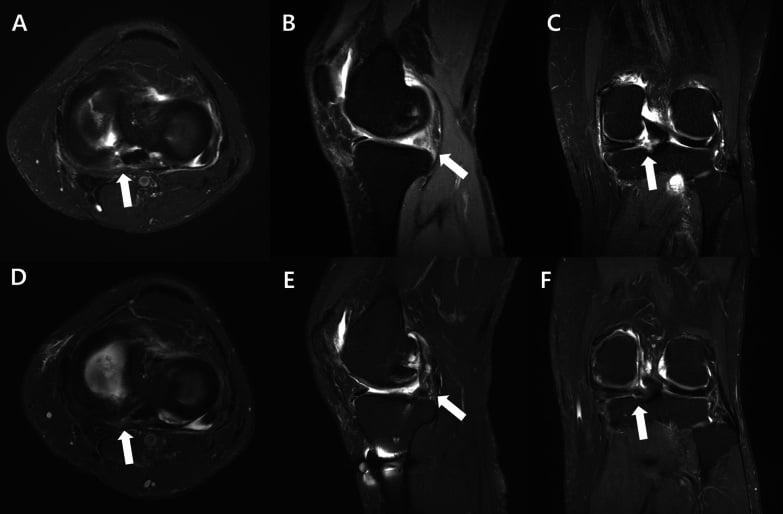
The ghost sign. The sagittal view is key. On sagittal sequences the posterior horn normally appears as a black triangle (the "bow tie"); in a root tear that triangle is absent or replaced by fluid signal. This is the ghost sign.
The signs to look for.
- Ghost sign: absence of the meniscus on the sagittal cut
- Cleft sign: a vertical line of fluid signal at the root on T2 coronal
- Radial extrusion: greater than 3mm extrusion of the medial meniscus body relative to the tibial plateau on the coronal view
- Giraffe neck sign: distortion of the meniscus
- High signal at the root and a truncated meniscus
- Subchondral oedema in the bone adjacent to the root, SONK-like
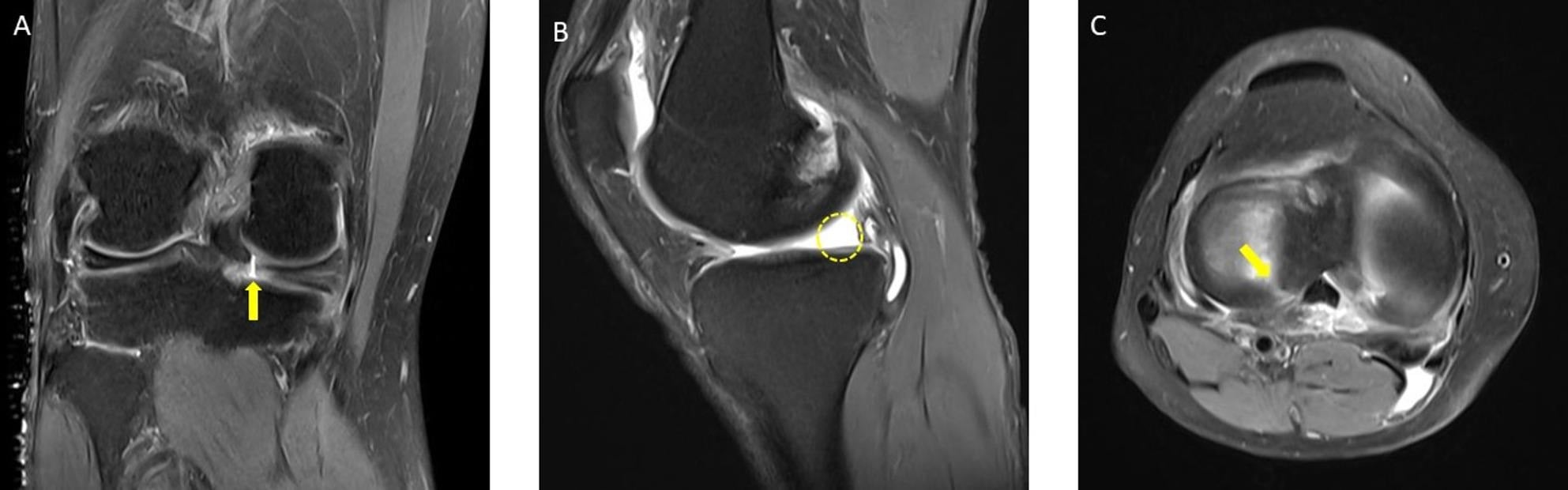
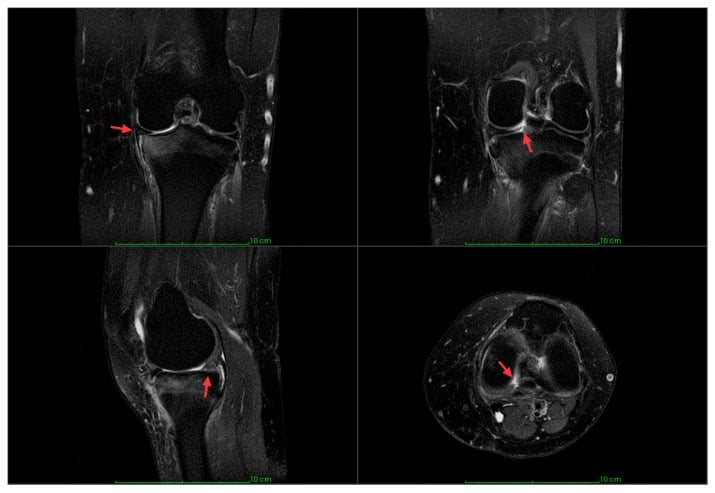
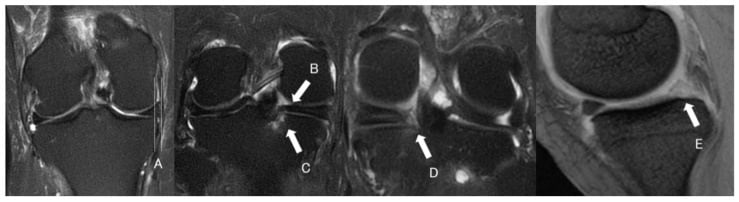
What extrusion means. Extrusion indicates failure of the hoop stress mechanism. It typically does not recover fully even after a successful repair, but repair prevents progression of extrusion and restores some contact mechanics, so early repair is the best chance to minimise it.
Management Algorithm
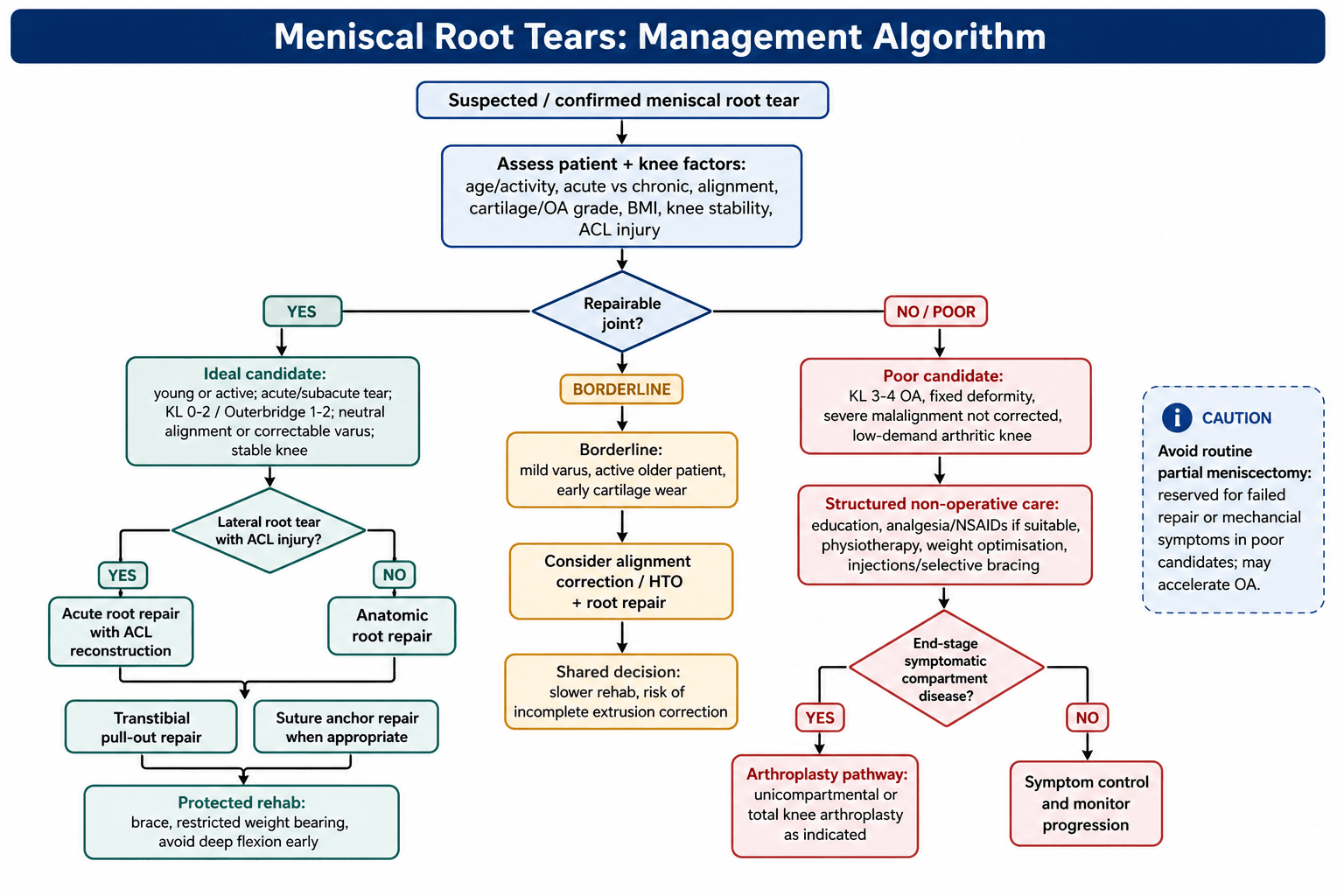
Who gets a repair. Three groups decide the operation:
- Group A, ideal: age less than 65, BMI less than 35, Kellgren-Lawrence grade 0-2, normal alignment. Repair.
- Group B, borderline: mild varus; age over 65 but active. Consider a high tibial osteotomy with the repair.
- Group C, poor: severe osteoarthritis (Kellgren-Lawrence 3-4), fixed flexion deformity. Non-operative treatment or a total knee replacement.
The knee that repays repair. Mild osteoarthritis (Kellgren-Lawrence less than 3) with Outerbridge 0-2 cartilage, an acute or subacute tear, and a stable, well-aligned knee, with varus corrected first. Repair is also indicated where rotational stability needs to be controlled, as with the lateral root in the ACL-injured knee.
Contraindications.
- BMI greater than 35 (relative)
- Severe osteoarthritis, Kellgren-Lawrence 3-4
- Severe malalignment left uncorrected
- An unstable knee, for example chronic ACL deficiency
Partial meniscectomy. Reserved for failed repairs or for symptomatic relief in poor candidates, because it accelerates osteoarthritis.
Non-operative treatment. For poor surgical candidates and asymptomatic extrusion: an unloader brace, NSAIDs and intra-articular injections. Progression of arthritis is almost inevitable without repair, and the rate of conversion to total knee replacement within 5 years is high.
Surgical Considerations
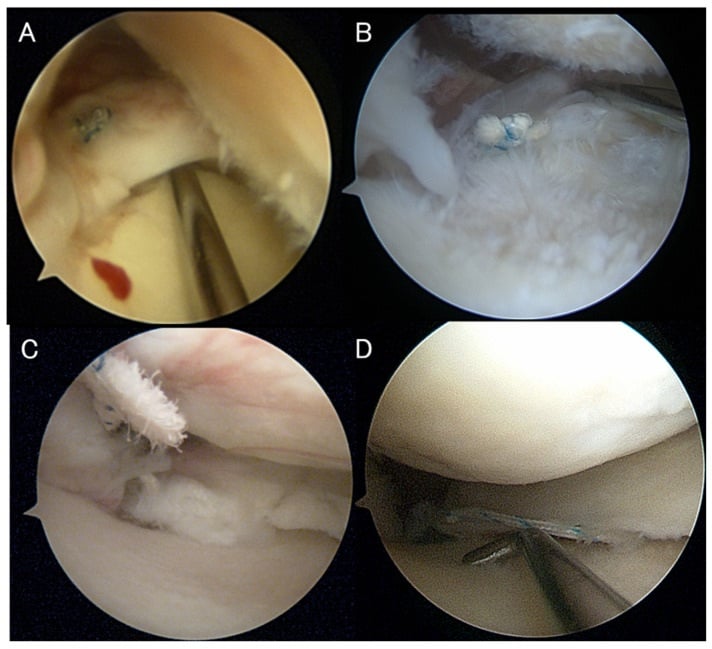
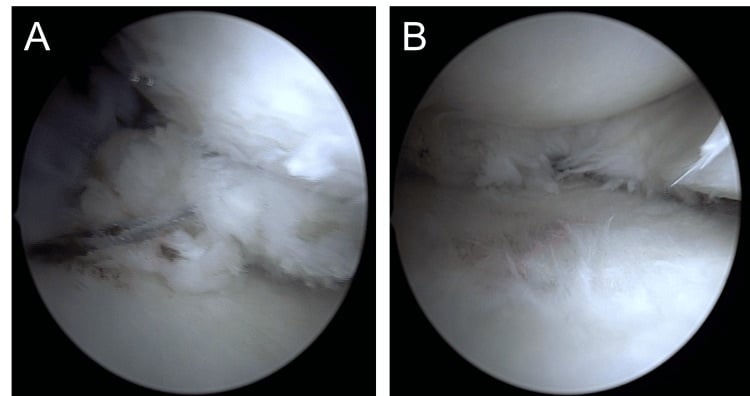
Transtibial pull-out repair. Sutures are passed through the root, pulled down a tibial tunnel and fixed on the anterior tibia over a button. It gives a strong restoration of the footprint; the costs are a "bungee cord" effect from suture elongation and a technically demanding procedure.
- Debride the root footprint to bleeding bone
- Pass sutures (luggage-tag or cinch) through the meniscus
- Drill the tibial tunnel with an ACL guide aimed at the footprint
- Pass the sutures down the tunnel
- Fix over a button on the anterior tibia
Ensure the tunnel exit point does not compromise the pes anserinus attachment.
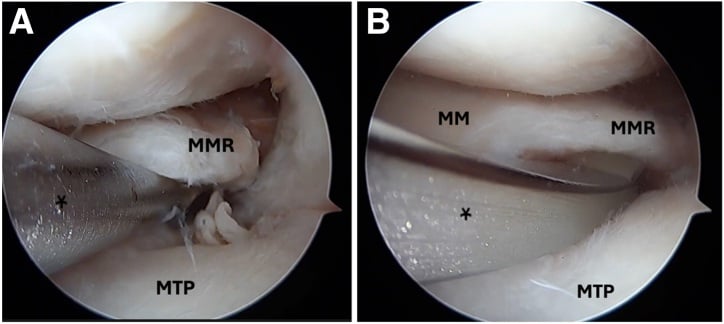
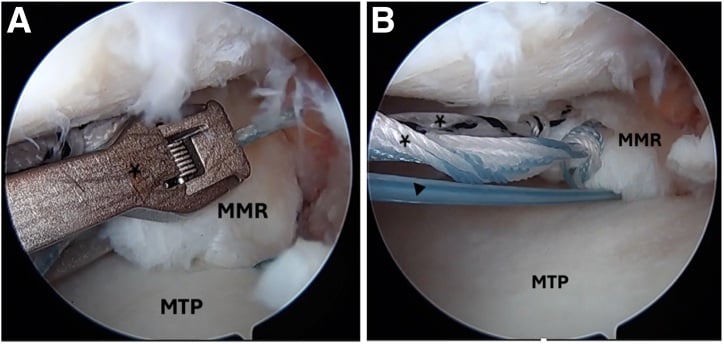
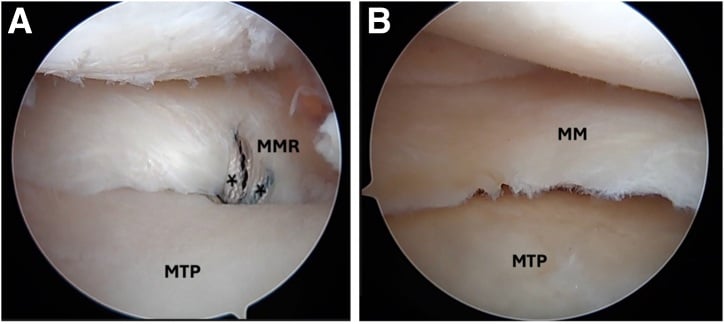
Suture anchor repair. An all-inside anchor is placed directly into the retro-eminence. There is no bungee effect and the fixation is stiffer, but access to the posterior compartment is difficult and an anchor that penetrates the cortex risks neurovascular injury: the popliteal artery lies immediately posterior. It suits good bone stock and easy access.
Complications
- Failure of repair: suture breakage or pull-through, 10-15%
- Progression of osteoarthritis: despite repair, some arthritis may progress
- Arthrofibrosis: stiffness from immobilisation
- Posterior neurovascular injury: during drilling or anchor placement, the popliteal vessels being directly posterior
- Saphenous nerve injury: during tibial tunnel drilling or button placement
- Meniscal cyst formation: at the repair site or from fluid leak
- Iatrogenic cartilage injury: during instrumentation in the tight posterior compartment
Rehabilitation
Why it is slow. The protocol is surprisingly slow compared with a meniscectomy because root healing takes time, and an early return leads to failure of the repair construct.
- Phase 1 (0-6 weeks): non-weight bearing or toe-touch in a brace in extension; passive range 0-90 degrees; avoid flexion beyond 90 degrees to protect the repair
- Phase 2 (6-12 weeks): progress to full weight bearing, full range of motion and closed-chain strengthening
- Phase 3 (3-6 months): return to running
- Phase 4 (over 6 months): return to sport and squatting
Return to sport. Usually 6-9 months post-operatively, once the patient has:
- Full pain-free range of motion
- No effusion
- Quadriceps and hamstring strength greater than 90% of the contralateral side
- Successful completion of functional hop tests
Prognosis
Outcomes by treatment. Repair survival is approximately 85% at 5 years in ideal candidates. Osteoarthritis after repair progresses significantly more slowly than after meniscectomy, but faster than in a normal knee; after meniscectomy most patients progress rapidly to osteoarthritis within 2-3 years.
Prognostic factors.
- Favourable
- Less than 50 years
- Unfavourable
- Greater than 65 years
- Favourable
- Less than 30
- Unfavourable
- Greater than 35
- Favourable
- Outerbridge 0-2
- Unfavourable
- Outerbridge 3-4
- Favourable
- Neutral
- Unfavourable
- Varus greater than 5 degrees
- Favourable
- Acute (less than 6 weeks)
- Unfavourable
- Chronic (greater than 3 months)
The long view.
- Conversion to total knee replacement: over 30% at 5 years with non-operative management against 10-15% with repair
- Function: significant improvement in IKDC and Lysholm scores with repair
- Activity: most patients return to recreational activities but may need to modify high-impact sports
Guidelines, Registries and Global Practice
Global Epidemiology
- Medial posterior root tears are predominantly degenerative, peaking in the 5th-7th decades, with a female predominance and an association with raised BMI and varus alignment.
- Lateral posterior root tears are predominantly traumatic and are reported in roughly 8-15% of ACL ruptures, typically in younger, more active patients.
- Root tears account for a meaningful minority of all meniscal tears and were historically under-recognised; MRI awareness has substantially increased detection over the last two decades.
Side-by-Side Guidance
- Emphasis on root tears
- Degenerative meniscal/OA guidance cautions against routine arthroscopic partial meniscectomy in osteoarthritic knees; favours structured non-operative care first in arthritic compartments
- Emphasis on root tears
- Consensus on degenerative meniscus lesions supports exhausting non-operative care for degenerative tears, while recognising root tears as a distinct, repair-amenable entity in suitable knees
- Emphasis on root tears
- Recognises root tears as biomechanically equivalent to meniscectomy and recommends repair in young/active patients and acute lateral root tears with ACL reconstruction
- Emphasis on root tears
- Stresses anatomic footprint restoration and protection of the posterior neurovascular structures during transtibial tunnel or anchor fixation
The common thread across societies: do not treat a root tear as a routine degenerative tear; either repair it in a biomechanically salvageable knee or manage the arthritic knee on its own merits, but avoid simple partial meniscectomy that accelerates arthritis.
Registry Perspective
- General arthroplasty registries (NJR, AJRR, AOANJRR, Swedish/Norwegian) do not track meniscal root repair as a discrete procedure, so survivorship data come from institutional cohorts and meta-analyses rather than registries.
- Registry data are nonetheless relevant downstream: untreated root tears feed the cohort progressing to unicompartmental or total knee arthroplasty, where registries show that younger arthroplasty recipients carry higher lifetime revision burden, reinforcing the value of joint-preserving repair when feasible.
High- versus Limited-Resource Practice
- High-resource settings: Routine MRI, arthroscopic transtibial pull-out or suture-anchor repair, and concomitant high tibial osteotomy for malalignment are widely available.
- Limited-resource settings: MRI access and arthroscopic root-repair capability may be constrained; management leans toward activity modification, unloader bracing, weight optimisation and, where indicated, arthroplasty. The diagnostic priority everywhere is to recognise the lesion clinically and on plain films/MRI so that it is not mislabelled as simple osteoarthritis.
Controversies and Areas of Uncertainty
Meniscal root repair is biomechanically compelling but the high-level clinical evidence base remains immature. Be ready to discuss these unresolved questions in a viva.
- Repair versus structured non-operative care: No adequately powered randomised controlled trial directly compares anatomic root repair with optimised non-operative management. Recommendations rest on cadaveric biomechanics, cohort studies and meta-analyses of mostly Level IV data.
- Persistent extrusion: Even successful repairs frequently fail to reverse meniscal extrusion, and the long-term chondroprotective benefit therefore remains debated. "Healed on second-look MRI" does not guarantee restored hoop-stress mechanics.
- Transtibial pull-out versus suture-anchor fixation: Both restore the footprint; the clinical superiority of one over the other (and the significance of the suture "bungee/creep" effect) is unproven.
- Centralisation techniques: Adjunctive meniscal centralisation (anchoring the mid-body to the tibial rim to limit extrusion) is an area of active investigation without mature outcome data.
- Degenerative tear in older patients: The boundary between a repairable root tear and an early-arthritic knee best served by non-operative care or arthroplasty is judgement-based; age alone is a weak discriminator if alignment, cartilage status and BMI are favourable.
- Role of biologics: Marrow venting, platelet-rich plasma and other augments are used variably without convincing comparative evidence.
MCQ Practice Points
Q: A meniscal root tear increases contact pressure equivalent to: A: Total Meniscectomy.
Q: The 'Ghost Sign' is seen on which MRI sequence? A: Sagittal T2.
Q: Which factor is a relative contraindication to root repair? A: Kellgren-Lawrence Grade 3-4 OA.
Q: Significant meniscal extrusion is defined as: A: Greater than 3mm.
Q: What is the relationship between SONK and meniscal root tears? A: 80% of SONK patients have associated medial root tears - SONK is likely secondary subchondral insufficiency fracture from root-tear overload.
Q: Why does a lateral meniscus root tear extrude less than a medial root tear? A: The lateral posterior horn has a secondary restraint - the meniscofemoral ligaments (Humphry and Wrisberg) - that limits extrusion. The medial root has no such backup, so it extrudes freely and behaves like a total meniscectomy.
Q: What is the most common surgical technique for meniscal root repair? A: Transtibial pull-out repair - sutures through root, passed down tibial tunnel, fixed over button.
Viva Scenarios
Practise clinical reasoning and management decisions out loud
“A 55-year-old female presents with acute posterior knee pain after squatting in the garden. She felt a pop. X-rays show mild OA. What is your differential?”
“You are performing an ACL reconstruction. You inspect the lateral meniscus posterior horn. It looks mobile. How do you assess for root tear?”
“A patient 6 months post-root repair returns with pain. MRI shows pull-through of sutures. She has Grade 3 OA. Management?”
Diagnosis
- Mechanism: Squatting 'pop'
- Sign: Joint line tenderness
- MRI: Ghost Sign
- MRI: Cleft Sign
- MRI: Extrusion over 3mm
Decision Making
- Ideal: Young, No OA, Normal alignment
- Contraindication: Severe OA (KL 3-4)
- Contraindication: BMI over 35
- Contraindication: Malalignment (unless corrected)
Surgical Steps
- Assessment: Probe root
- Debridement: Bleeding bone
- Suture: Cinch/Locking
- Tunnel: ACL guide aiming at footprint
- Fixation: Button on tibia
Evidence Base
Root Tear Is Biomechanically a Total Meniscectomy
- Nine fresh-frozen cadaver knees loaded to 1000 N at 0, 30, 60 and 90 degrees of flexion
- Medial root tear raised medial-compartment peak contact pressure by 25% versus intact (p less than 0.001)
- No detectable difference between root tear and total medial meniscectomy
- Root repair restored peak contact pressure and corrected the abnormal external rotation and lateral translation