Fibrocartilage | Load Distribution | Shock Absorption | Knee Stability
- Menisci transmit 50-70% of compressive load in extension, 85% in flexion
- Type I collagen arranged circumferentially provides hoop stress resistance
- Red-red zone (peripheral 3mm) has blood supply from perimeniscal capillary plexus
- Meniscectomy sharply increases contact stress - conventionally quoted as 235% - accelerating osteoarthritis
- Lateral meniscus more mobile (10-12mm) than medial (5mm) during knee flexion
- “Viva starter: 'Draw the meniscus showing fiber orientation and vascular zones'
- “Key biomechanical function is load transmission and shock absorption
- “Complete meniscectomy → 235% increase in contact stress → OA within 10-20 years
- “Meniscal extrusion (over 3mm) → loss of hoop stress function → degenerative changes
Gross Anatomy
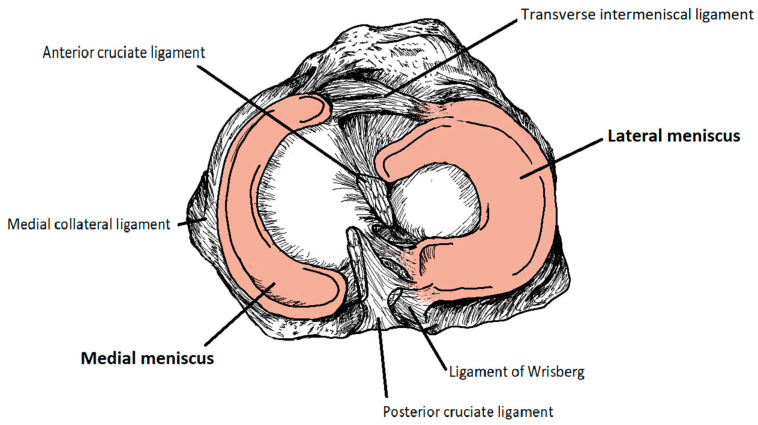
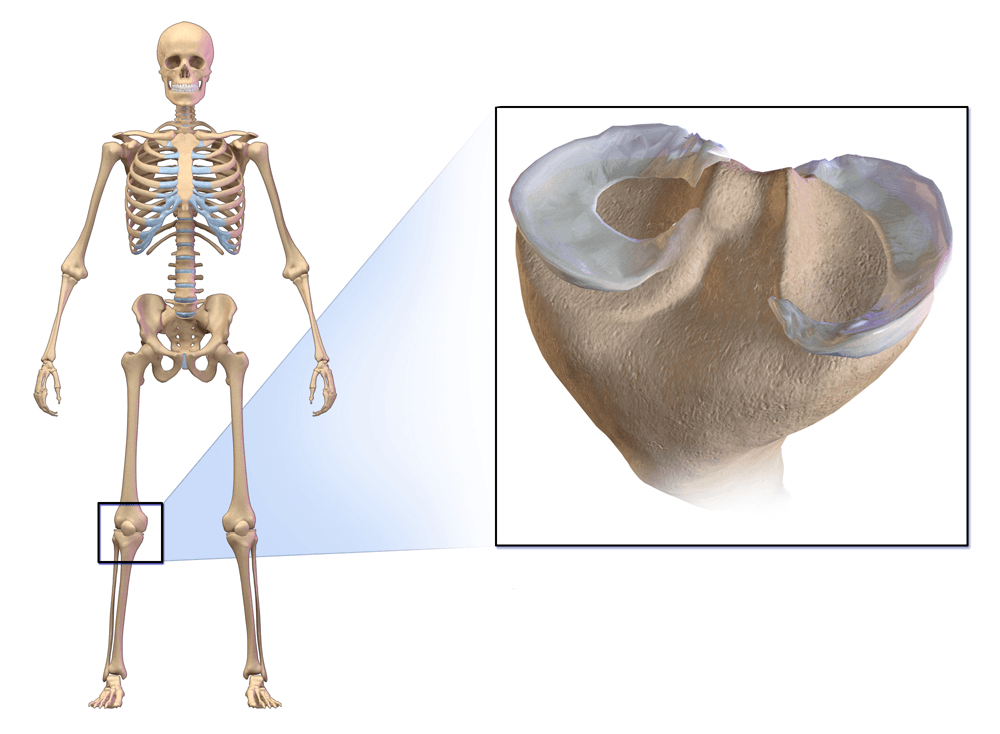
The menisci are two crescent-shaped fibrocartilaginous structures interposed between the femoral condyles and the tibial plateaus, one medial and one lateral. They differ in shape, attachment and mobility.
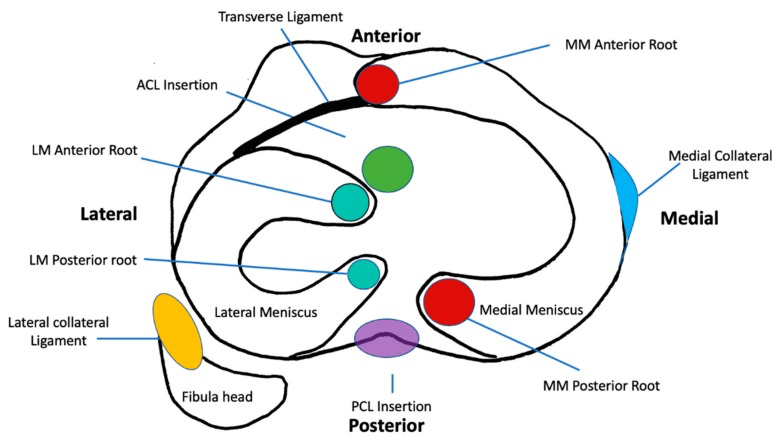
The medial meniscus is C-shaped and covers approximately 60% of the medial tibial plateau. Its anterior horn attaches to the plateau anterior to the ACL, and its posterior horn posterior to the ACL and anterior to the PCL. Peripherally it is attached to the joint capsule and the deep MCL, which makes it the less mobile of the two: it translates approximately 5mm during knee flexion.
The lateral meniscus is more circular and covers 80% of the lateral plateau. Its anterior horn attaches anterior to the tibial eminence, near the ACL, and its posterior horn posterior to the eminence. It has no attachment to the LCL, from which the popliteus tendon separates it, and it translates approximately 10-12mm during flexion.
Meniscofemoral Ligaments (Humphry and Wrisberg)
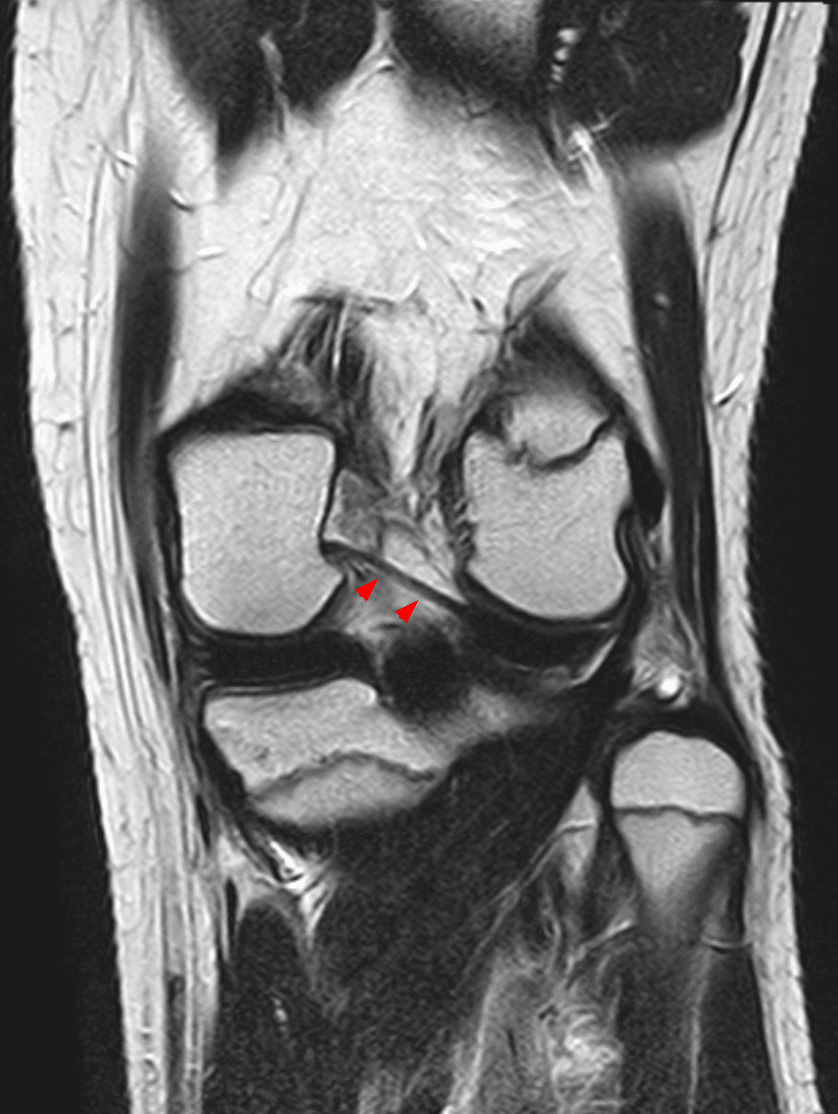
The two meniscofemoral ligaments run from the posterior horn of the lateral meniscus to the lateral aspect of the medial femoral condyle, straddling the posterior cruciate ligament. They arise only from the lateral meniscus, a key asymmetry between the two menisci, and are present in most knees: at least one in the large majority, both in a minority.
- Position relative to PCL
- Passes ANTERIOR to the PCL
- Mnemonic
- H comes before W = Humphry is in front (anterior)
- Position relative to PCL
- Passes POSTERIOR to the PCL
- Mnemonic
- Wrisberg = posterior; usually the larger/more constant of the two
What they do. They tether the posterior horn of the lateral meniscus and restrain its radial extrusion under load. That is why a lateral posterior root tear is not biomechanically equivalent to lateral meniscectomy (Bao): the ligaments keep the torn meniscus partly load-bearing. The medial side has no such backup, hence Allaire's finding that a medial root tear behaves like total meniscectomy (see Meniscal Root Tears below).
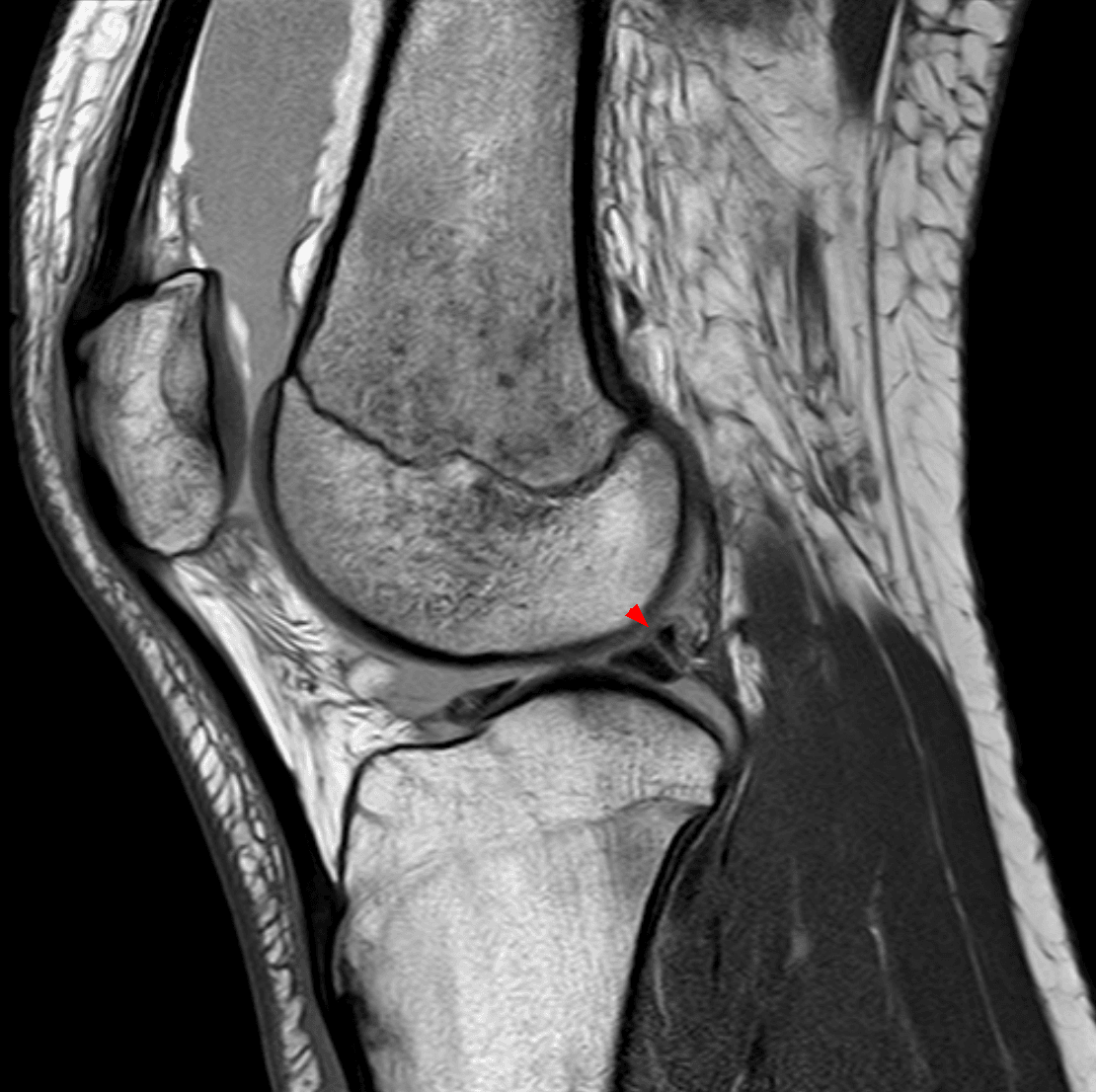
On imaging. On MRI or at arthroscopy a meniscofemoral ligament can be mistaken for a tear fragment of the posterior horn, or for the PCL.
Microstructure and Vascular Supply
Composition. The meniscus is made up of:
- Water: 70-75% of wet weight
- Collagen: 15-25% (predominantly type I)
- Proteoglycans: 1-2% (aggrecan, decorin)
- Cells: fibrochondrocytes (outer) and chondrocytes (inner)
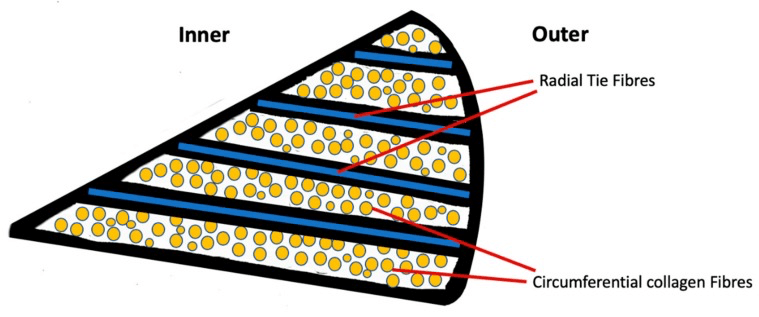
Collagen architecture. The key structural feature is the circumferential arrangement of type I collagen, whose bundles resist hoop stress. Radial tie fibres interconnect the circumferential bundles and prevent longitudinal splitting. At the articular surface the fibres form a randomly oriented mesh, and the organisation runs from structured in the outer meniscus to random in the inner.
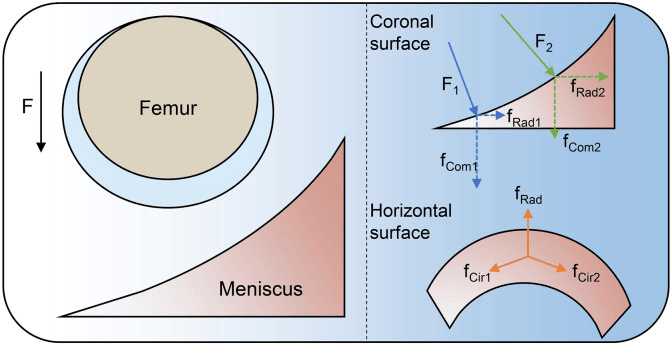
Hoop stress. When axial load is applied across the knee, the wedge-shaped meniscus is squeezed radially outward. The peripheral attachments prevent extrusion, so the circumferential fibres convert the compressive force into circumferential (hoop) tension, distributing load over a larger contact area and reducing peak stresses on the articular cartilage. The mechanism is lost if the meniscus is excised or extruded.
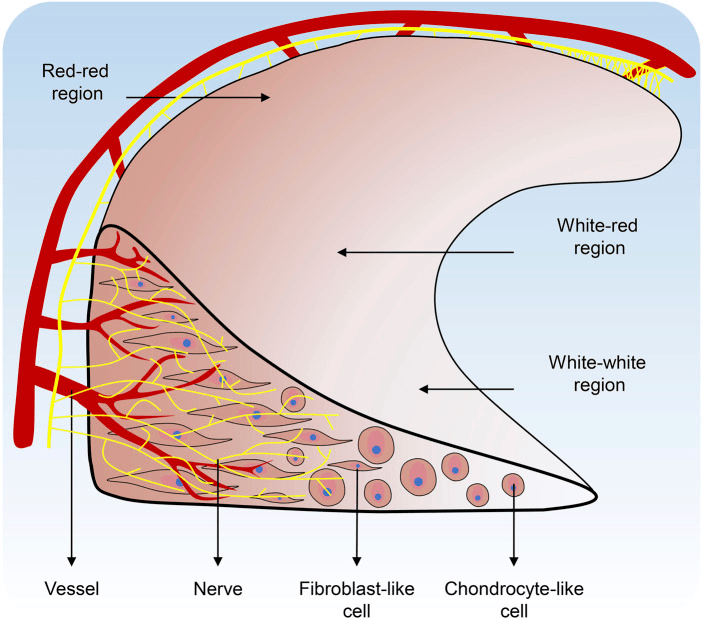
Vascular zones. Vascularity is zonal, and it determines healing potential. The periphery is supplied by the perimeniscal capillary plexus, from the superior and inferior geniculate arteries:
- Red-red (peripheral 0-3mm): vascularised from the perimeniscal plexus
- Red-white (middle 3-5mm): transitional, with a variable blood supply
- White-white (central, over 5mm from the periphery): avascular
With age. In children the entire meniscus is vascular. By skeletal maturity only the peripheral 10-25% retains vascularity (Arnoczky and Warren), and the central two-thirds is avascular, relying on synovial fluid diffusion.
Biomechanical Functions
Load transmission. This is the primary function. The menisci transmit 50-70% of the compressive load across the knee in extension and 85% in flexion. After total meniscectomy contact stress rises sharply: the conventionally quoted figure is 235%, credited to Ahmed and Burke, though their abstract gives no percentage. The directly verifiable comparator is Allaire's root-tear result, set out under Meniscal Root Tears below.
Partial loss. After partial meniscectomy, contact stress rises broadly in proportion to the amount of tissue removed.
- Contact Area
- 100% (baseline)
- Contact Stress
- 100% (baseline)
- Clinical Consequence
- Normal joint mechanics
- Contact Area
- Reduced 20-50%
- Contact Stress
- Increased 100-200%
- Clinical Consequence
- Accelerated cartilage wear
- Contact Area
- Reduced 50-70%
- Contact Stress
- Increased 235%
- Clinical Consequence
- OA in 10-20 years
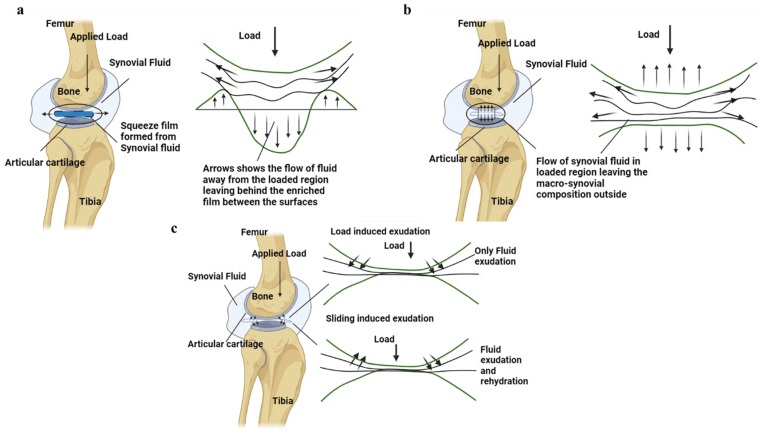
Shock absorption. The meniscus deforms under cyclic loading and dissipates energy, and intact menisci reduce peak impact forces during gait by approximately 20%. How it does so is its viscoelastic, biphasic behaviour, set out in the next section.
Joint stability. The menisci deepen the tibial plateaus, increasing their concavity, and their wedge resists anterior-posterior translation. In the ACL-deficient knee they are a secondary restraint to anterior tibial translation, the posterior horn of the medial meniscus especially.
After ACL rupture. The medial meniscus becomes a primary stabiliser, which is why combined ACL and medial meniscus injury has a particularly poor prognosis.
Lubrication and proprioception. The meniscus spreads synovial fluid across the articular cartilage surface. Mechanoreceptors in the meniscal tissue, especially in the anterior and posterior horns, contribute to joint position sense.
Viscoelastic and Biphasic Material Behaviour
Two phases. The meniscus is a biphasic (poroelastic) material. Its solid phase is the collagen-proteoglycan matrix; its fluid phase is the interstitial water, held by the negative charge of the proteoglycans. The general biphasic theory is developed for cartilage in Articular Cartilage Structure; here it is applied to the meniscus.
Fluid load support. Under load the matrix has low permeability, so the water cannot escape instantly. The pressurised interstitial fluid carries most of the load in the first moments and only flows out slowly through the matrix, and that fluid flow is the source of the time-dependent (viscoelastic) behaviour.
- What is held constant
- A constant LOAD is applied
- What happens over time
- The tissue keeps DEFORMING (strain rises) as fluid is slowly squeezed out
- Meaning
- Why a sustained load gradually flattens the meniscus
- What is held constant
- A constant DEFORMATION is held
- What happens over time
- The internal STRESS falls over time as fluid redistributes
- Meaning
- Why peak stress on cartilage drops after the initial impact
How it absorbs shock. Energy is dissipated through fluid flow and internal friction, and through the viscoelastic matrix, rather than being transmitted intact to the cartilage. On unloading the proteoglycans osmotically re-imbibe water and the meniscus recovers its shape, ready for the next cycle.
Why speed matters. Rapid (impulsive) loading is more dangerous than slow loading: there is no time for the fluid to redistribute, so peak stresses are higher.
Clinical Relevance and Applications
Vascular Zone and Healing
Zone decides repair. Only the red-red zone has consistent healing potential. Peripheral vertical tears can therefore be repaired, whereas central horizontal cleavage tears heal poorly and were traditionally resected.
- Blood Supply
- Excellent
- Healing Potential
- 90% healing rate
- Treatment Options
- Repair preferred
- Blood Supply
- Moderate
- Healing Potential
- 50-70% healing rate
- Treatment Options
- Repair with augmentation
- Blood Supply
- None
- Healing Potential
- Under 10% healing rate
- Treatment Options
- Resection/meniscectomy
The red-white zone is the genuine grey area, and the 50-70% success conventionally quoted for it with augmentation (fibrin clot, PRP) is a teaching figure rather than a measured rate - no study cited on this page reports healing stratified by vascular zone. Note also that this page uses "50-70%" for three unrelated quantities: the share of load the menisci transmit in extension, the contact area lost after total meniscectomy, and this healing rate. Say which one you mean.
Loss of Meniscal Function
Extrusion. A meniscus displaced over 3mm beyond the edge of the tibial plateau is extruded, through loss of the radial tie fibres or a root tear. It cannot generate hoop stress, so load transmission is lost and cartilage degeneration accelerates. The meniscus is physically present but biomechanically non-functional, functionally equivalent to meniscectomy, and meniscal root repair or transplantation should be considered.
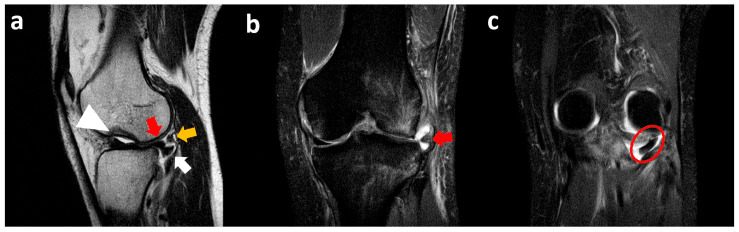
After meniscectomy. The degenerative sequence after meniscectomy runs:
- 6 months: cartilage fibrillation visible on MRI
- 5-10 years: radiographic osteoarthritis
- 10-20 years: symptomatic osteoarthritis requiring arthroplasty
Meniscal Root Tears
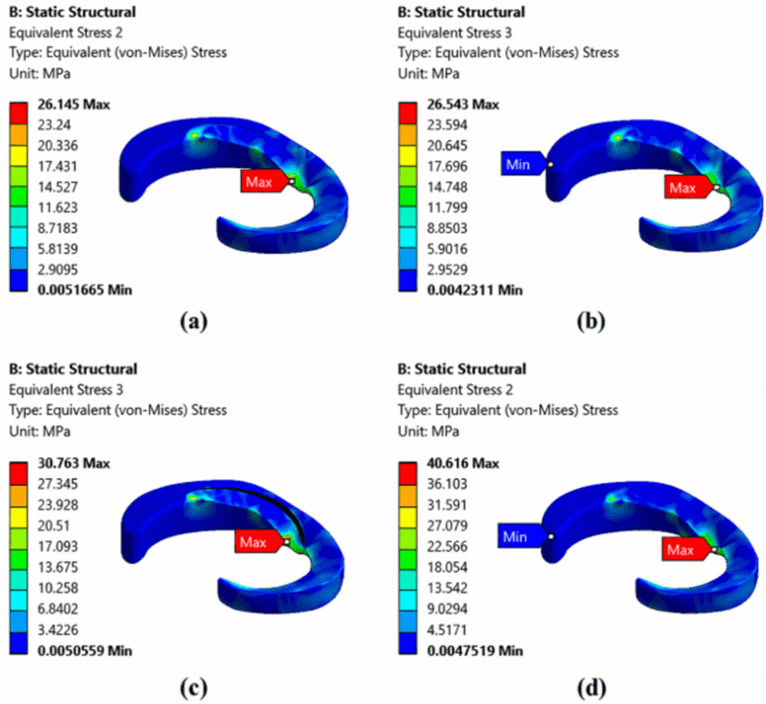
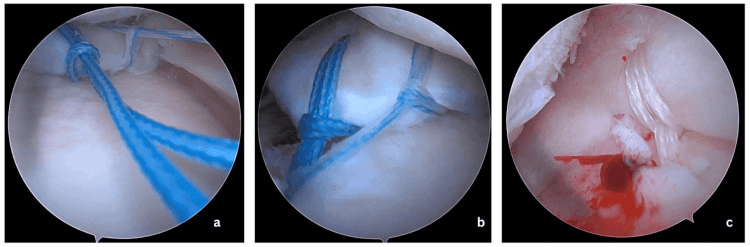
Why the roots matter. The root attachments of the anterior and posterior horns anchor the circumferential fibres and are essential for hoop-stress generation. A root avulsion lets the meniscus extrude under load, abolishing its biomechanical function.
The medial root. The posterior medial root tear is the most common, often degenerative in middle-aged knees. In cadaver knees it raised peak medial contact pressure by about 25%, not significantly different from total medial meniscectomy, and anatomic repair restored contact pressure and kinematics to normal (Allaire et al.).
The lateral root. Finite-element work (Bao et al.) suggests a lateral root tear is not fully equivalent to lateral meniscectomy, because the meniscofemoral ligaments restrain radial extrusion, one reason lateral root tears are repaired aggressively, especially alongside ACL reconstruction. The "root tear = total meniscectomy" rule is therefore robust for the medial posterior root but less absolute laterally, and side matters when counselling on the urgency of repair.
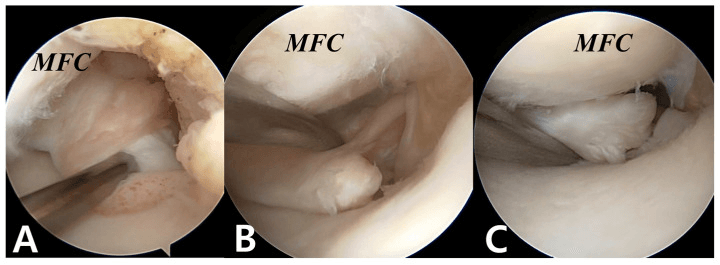
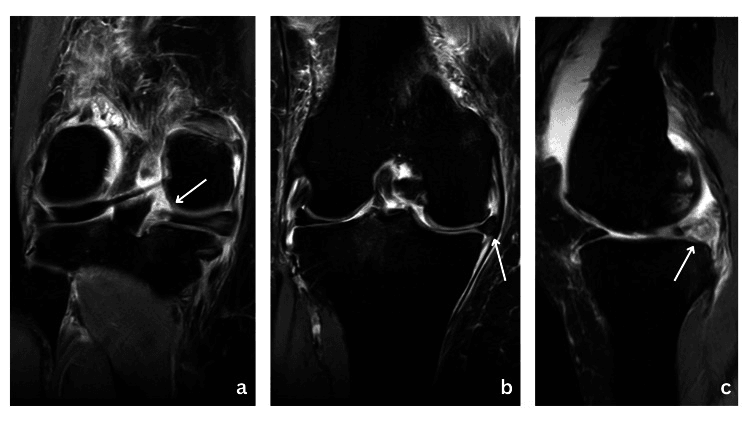
MRI signs. Look for three:
- Ghost meniscus: the root is not visualised on sagittal images
- Radial linear defect at the root
- Meniscal extrusion over 3mm on coronal images
Repair. Transtibial pull-out or suture-anchor root repair aims to restore hoop stress.
From Structure to Management
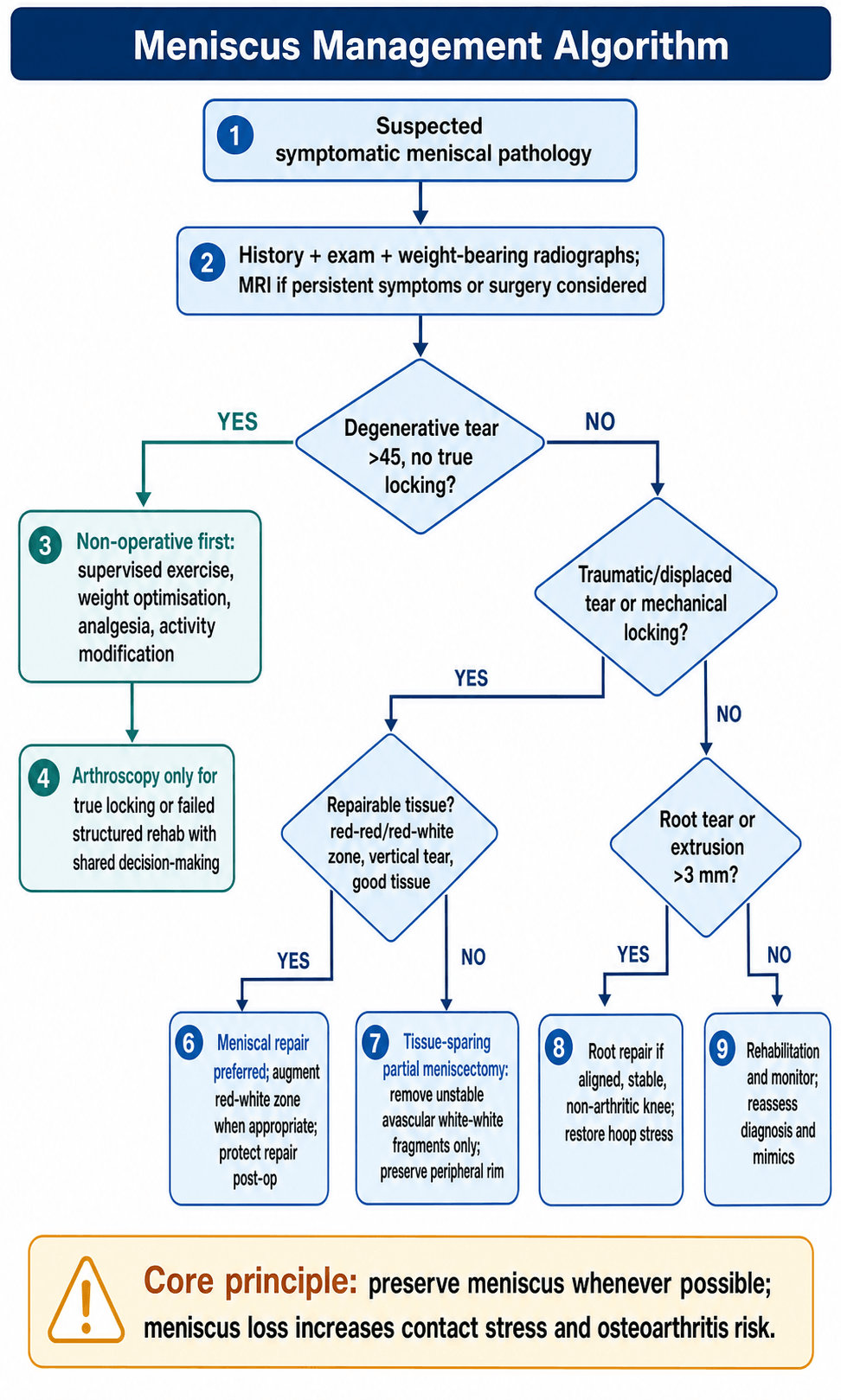
The principle. Preserve the meniscus whenever possible, because meniscus loss raises contact stress and osteoarthritis risk. The algorithm below applies the structure-function principles to a symptomatic knee.
Differential Diagnosis of the Painful, "Meniscus-Like" Knee
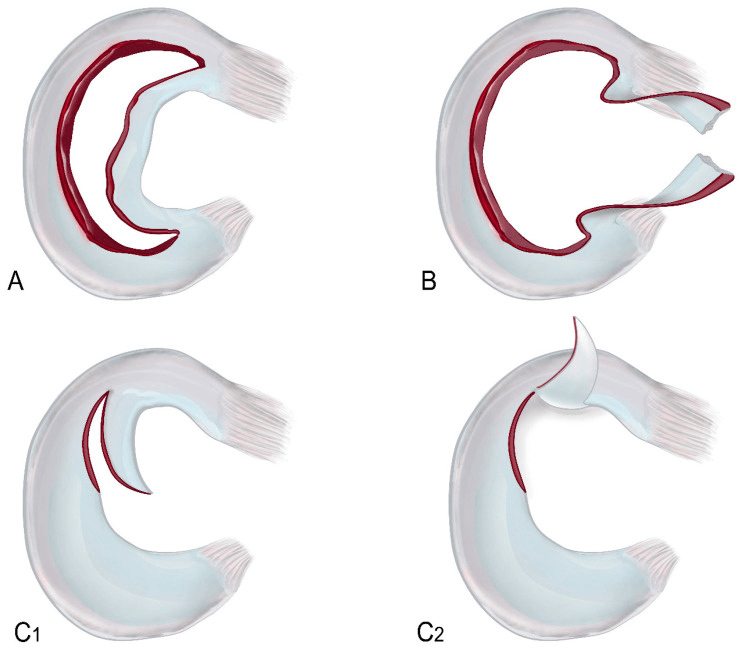
Several entities mimic a symptomatic meniscal tear or extrusion and are common viva discriminators.
- Typical patient / history
- Young, twisting injury, locking/catching
- Key examination / imaging
- Joint-line tenderness, positive Thessaly/McMurray; MRI line reaching surface
- Distinguishing feature
- Mechanical symptoms; vertical/bucket-handle pattern
- Typical patient / history
- Over 45, insidious, activity-related ache
- Key examination / imaging
- Often coexisting cartilage change; horizontal cleavage on MRI
- Distinguishing feature
- Frequently incidental; responds to physiotherapy (ESCAPE)
- Typical patient / history
- Middle-aged, sudden pop squatting, rapid pain
- Key examination / imaging
- Coronal extrusion over 3mm, ghost meniscus
- Distinguishing feature
- Behaves biomechanically like meniscectomy
- Typical patient / history
- Older, sudden severe pain, often after root tear
- Key examination / imaging
- Subchondral oedema and crescent on MRI
- Distinguishing feature
- Pain out of proportion; bone - not meniscal - source
- Typical patient / history
- Child/adolescent, audible snapping knee
- Key examination / imaging
- Wide meniscus over 3 consecutive sagittal slices ('bow-tie' sign)
- Distinguishing feature
- Congenital morphology, lateral symptoms
- Typical patient / history
- Lateral more than medial, localised swelling
- Key examination / imaging
- Para-meniscal fluid collection on MRI, linked to horizontal tear
- Distinguishing feature
- Palpable mass at joint line
Controversies and Areas of Uncertainty
Surgery for degenerative tears. Multiple RCTs, including the ESCAPE trial, show no clinically meaningful benefit of arthroscopic partial meniscectomy over structured exercise for degenerative tears without locking. Debate persists over the minority with true mechanical symptoms, who may still benefit.
How much resection is safe. No precise threshold defines a "safe" resection volume. The pragmatic principle is to preserve every fibre possible and protect the peripheral rim that carries hoop stress.
Biologic augmentation. Fibrin clot, PRP, marrow venting and scaffolds aim to extend repair into the red-white zone, but high-level evidence remains limited and outcomes are heterogeneous.
Meniscal allograft transplantation has a clear but narrow indication: a symptomatic meniscus-deficient compartment in an aligned, stable, non-arthritic knee.
Guidelines, Registries & Global Practice
Global Epidemiology
- Meniscal injury is among the most common knee pathologies, with surgical incidence reported around 60-70 per 100,000 person-years in high-income populations; arthroscopic meniscus procedures remain among the most frequently performed orthopaedic operations worldwide.
- Bimodal pattern: traumatic tears in young, active people (often sport- and pivot-related, frequently with ACL injury) versus degenerative tears in those over 45, where prevalence rises with age and obesity and tears are commonly incidental on MRI.
- Medial more than lateral in degenerative disease; lateral and root/discoid pathology feature more in younger and paediatric cohorts.
Side-by-Side Guideline Positions
- Core position
- Preserve meniscal tissue; limited role for arthroscopic surgery in degenerative tears with osteoarthritis
- Practical implication
- Favour repair over resection; non-operative first for degenerative knees
- Core position
- Arthroscopic lavage and debridement not recommended for osteoarthritis; surgery reserved for true mechanical locking
- Practical implication
- Structured exercise and weight management first-line
- Core position
- Consensus: degenerative tear is a feature of early OA - exercise-based therapy first; surgery only after failed rehab or with clear mechanical symptoms
- Practical implication
- Shared decision-making; avoid 'incidental tear' surgery
- Core position
- No clinically meaningful benefit of APM over physiotherapy/sham for degenerative tears
- Practical implication
- Underpins all of the above guidance
Registry and Practice Variation
- Large national datasets (e.g. UK and Scandinavian arthroscopy/knee registries) have tracked a decline in arthroscopic meniscectomy for degenerative tears following the landmark RCTs, alongside a rising share of meniscal repair - a measurable shift toward preservation.
- Resource-rich settings: ready access to MRI, arthroscopic repair implants, and allograft transplantation; greater use of root repair and biologic augmentation.
- Resource-limited settings: MRI and arthroscopy access may be constrained, so diagnosis leans on clinical tests (joint-line tenderness, McMurray, Thessaly) and treatment emphasises rehabilitation; when surgery is needed, repair capability and allograft availability are often limited, favouring tissue-sparing techniques and conservative care.
Related pages: Meniscus Tears for classification and management, Meniscal Repair for the operation this anatomy justifies, Meniscal Root Tears for the attachment failure that abolishes hoop stress, Meniscal Ramp Lesions for the peripheral posterior-horn tear, Meniscal Transplant for the salvage option, and Discoid Meniscus for the congenital variant.
MCQ Practice Points
Q: What is the predominant collagen type in the meniscus and how is it arranged?
A: Type I collagen arranged circumferentially with radial tie fibers. This architecture allows the meniscus to resist hoop stresses generated during weight-bearing, which is the mechanical basis for load transmission.
Q: What percentage of load is transmitted through the menisci in knee extension versus flexion?
A: 50-70% in extension, 85% in flexion. This increased load transmission in flexion explains why meniscal tears are more symptomatic with activities involving knee flexion under load (squatting, pivoting).
Q: A vertical longitudinal tear is identified 2mm from the peripheral edge. What is the expected healing potential with repair?
A: Excellent (approximately 90%). This tear is in the red-red zone (0-3mm from periphery) which has vascular supply from the perimeniscal capillary plexus and demonstrates excellent healing after repair.
Q: By how much does total meniscectomy increase peak contact stress in the knee?
A: A figure of 235% is conventionally quoted and conventionally credited to Ahmed and Burke (1983) - but that paper's indexed abstract gives no percentages at all, reporting only that a significant fraction of load passes through the menisci and that total meniscectomy causes a drastic alteration in pressure distribution. Quote it as the traditional figure and be ready to say so. The verifiable adjacent number on this page is Allaire's: a medial posterior root tear raised peak medial contact pressure by 25%, with no detectable difference from total medial meniscectomy. Either way the direction is not in doubt, and it explains the predictable development of osteoarthritis within 10-20 years.
Q: What is meniscal extrusion and why is it biomechanically significant?
A: Displacement of the meniscus over 3mm beyond the tibial plateau edge. This prevents the meniscus from generating hoop stress, making it biomechanically equivalent to total meniscectomy despite the tissue being physically present.
Exam Viva Scenarios
Practise clinical reasoning and management decisions out loud
“You are shown a diagram of the knee in cross-section. The examiner asks: 'Please describe the structure and function of the meniscus.'”
“A patient has undergone total medial meniscectomy 15 years ago and now presents with medial knee pain and early osteoarthritis. The examiner asks: 'Explain the biomechanical basis for this patient's degenerative changes.'”
“A 54-year-old presents with 3 months of medial knee ache, no locking, and an MRI showing a horizontal cleavage tear of the posterior medial meniscus with mild chondral wear. They ask whether they need keyhole surgery. The examiner asks: 'How would you counsel and manage this patient, and what is your evidence?'”
Key Microstructure
- Type I collagen arranged circumferentially = resists hoop stress
- Radial tie fibers prevent longitudinal splitting
- Fibrochondrocytes (outer) → chondrocytes (inner)
- 70-75% water, 15-25% collagen, 1-2% proteoglycans
Vascular Zones
- Red-Red (0-3mm) = vascular = 90% healing with repair
- Red-White (3-5mm) = transitional = 50-70% healing (a conventional figure, not measured by the studies cited here)
- White-White (over 5mm) = avascular = under 10% healing
- Vascularity decreases with age (full in children, peripheral 10-25% in adults)
Biomechanical Functions
- Load transmission: 50-70% (extension), 85% (flexion)
- Shock absorption via viscoelastic deformation
- Stability: Deepens plateau, resists translation
- Secondary ACL stabilizer (medial posterior horn)
Meniscectomy Consequences
- Total meniscectomy → 235% increase in contact stress
- Contact area reduced substantially after total meniscectomy - note the page uses 50-70% for three different quantities (load transmitted, contact area lost, red-white healing); say which one you mean
- Fairbank changes: Flattening, ridge, space narrowing
- OA develops in 10-20 years
Clinical Correlations
- Meniscal extrusion over 3mm = loss of hoop stress function
- Root tear = functionally equivalent to meniscectomy
- Lateral meniscus more mobile (10-12mm vs 5mm medial)
- Preserve tissue whenever possible
Evidence Base
Static Pressure Distribution on the Tibial Surface and the Effect of Meniscectomy
- Cadaveric pressure-mapping in 18 knees (8 also after medial meniscectomy) across flexion angles
- A significant fraction of the joint compressive load is transmitted through the menisci
- Total meniscectomy caused a drastic alteration of tibial-surface pressure distribution
- Provided the mechanical basis for post-meniscectomy degenerative change
Microvasculature of the Human Meniscus (Vascular Zones)
- 20 cadaver knees studied by histology and Spalteholz tissue clearing
- Perimeniscal capillary plexus (medial, lateral, middle genicular arteries) supplies only the peripheral 10-25%
- Posterolateral lateral meniscus (adjacent to popliteus) is avascular - no penetrating vessels
- Anterior and posterior horn attachments have a good blood supply
Arnoczky and Warren's clearing study found the posterolateral segment of the lateral meniscus, adjacent to the popliteal tendon, is devoid of penetrating peripheral vessels AND of the synovial fringe - so a tear at the popliteal hiatus sits in a peripheral location with central-zone biology, and should not be assumed repairable simply because it is peripheral. The same paper found the opposite at the horns: the anterior and posterior root attachments are covered in vascular synovial tissue with a good blood supply, which is part of why root repairs heal at all despite sitting where they do.
Biomechanical Consequences of a Posterior Root Tear of the Medial Meniscus: Similar to Total Meniscectomy
- Nine cadaver knees, 1000 N axial load at 0-90 degrees flexion (Fuji film + robotic kinematics)
- Posterior medial root tear raised peak medial contact pressure by 25% versus intact
- Root-tear contact pressure was not different from total medial meniscectomy
- Anatomic root repair restored contact pressure and kinematics to normal
Arthroscopic Partial Meniscectomy vs Physical Therapy for Degenerative Tears (ESCAPE RCT)
- Multicentre noninferiority RCT, 321 patients aged 45-70 with MRI-confirmed degenerative tear
- Both meniscectomy and a supervised exercise programme produced clinically meaningful improvement
- Between-group difference (Patient-Specific Functional Scale) was below the minimal important change
- No clinically meaningful advantage for surgery at any time point to 24 months
Finite-Element Analysis of Lateral Meniscus Posterior Root Tear
- Finite-element knee model under 1000 N comparing intact, lateral root tear, root tear + MFL deficiency, and lateral meniscectomy
- Lateral root tear reduced contact area and raised lateral contact pressure but less than total meniscectomy
- The meniscofemoral ligament restrained radial extrusion and preserved some load transfer
- Concluded a lateral root tear is NOT functionally equivalent to total meniscectomy
Knee Joint Changes After Meniscectomy (Fairbank Changes)
- Original description of radiographic changes after open meniscectomy
- Anterposterior ridge formation, femoral condyle flattening, joint space narrowing
- Established that meniscectomy is not a benign procedure
- These features are now eponymously termed Fairbank changes