Tarsometatarsal | Post-Traumatic Common | Midfoot Fusion
- Tarsometatarsal (TMT) joints most commonly affected
- Primary OA and post-traumatic (Lisfranc injury) are common causes
- Medial column (1st TMT) is most commonly symptomatic
- Stiff-soled shoe and orthotic are first-line treatment
- Midfoot fusion is definitive for refractory cases
- “Lateral column motion more important - preserve if possible
- “Dorsal osteophyte impingement is common pattern
- “Weight-bearing X-ray essential
- “Oblique view shows TMT joints well
Overview and Epidemiology
Midfoot arthritis affects the tarsometatarsal (Lisfranc) joints and/or the naviculocuneiform joints, and is an important cause of midfoot pain and disability.
Who. Symptomatic midfoot OA affects about 12% of adults over 50 (Thomas/Roddy 2015). It is mechanically driven: obesity, prior injury, female sex and age over 75 are the associations.
Causes. Primary osteoarthritis, an idiopathic degeneration, is the most common cause. Post-traumatic disease dominates in younger active patients: after surgically treated Lisfranc injuries, radiographic OA develops in roughly 70% and symptomatic OA in about half (Dubois-Ferriere 2016), and even a subtle ligamentous injury can lead to arthritis. Other causes are inflammatory arthritis (RA, psoriatic arthritis and gout, particularly at the 1st TMT) and neuropathic arthropathy: diabetic (Charcot) neuroarthropathy can affect the midfoot.
PAINCauses of Midfoot Arthritis
Hook:Midfoot arthritis is a PAIN: Post-traumatic, Aging, Inflammatory, Neuropathic.
Anatomy and Pathophysiology
The three columns. The midfoot is divided into three columns:
- Medial - 1st metatarsal and medial cuneiform. The most commonly symptomatic
- Middle - 2nd and 3rd metatarsals with the intermediate and lateral cuneiforms. The 2nd TMT is recessed in a mortise between the cuneiforms, the keystone that provides stability
- Lateral - 4th and 5th metatarsals and the cuboid
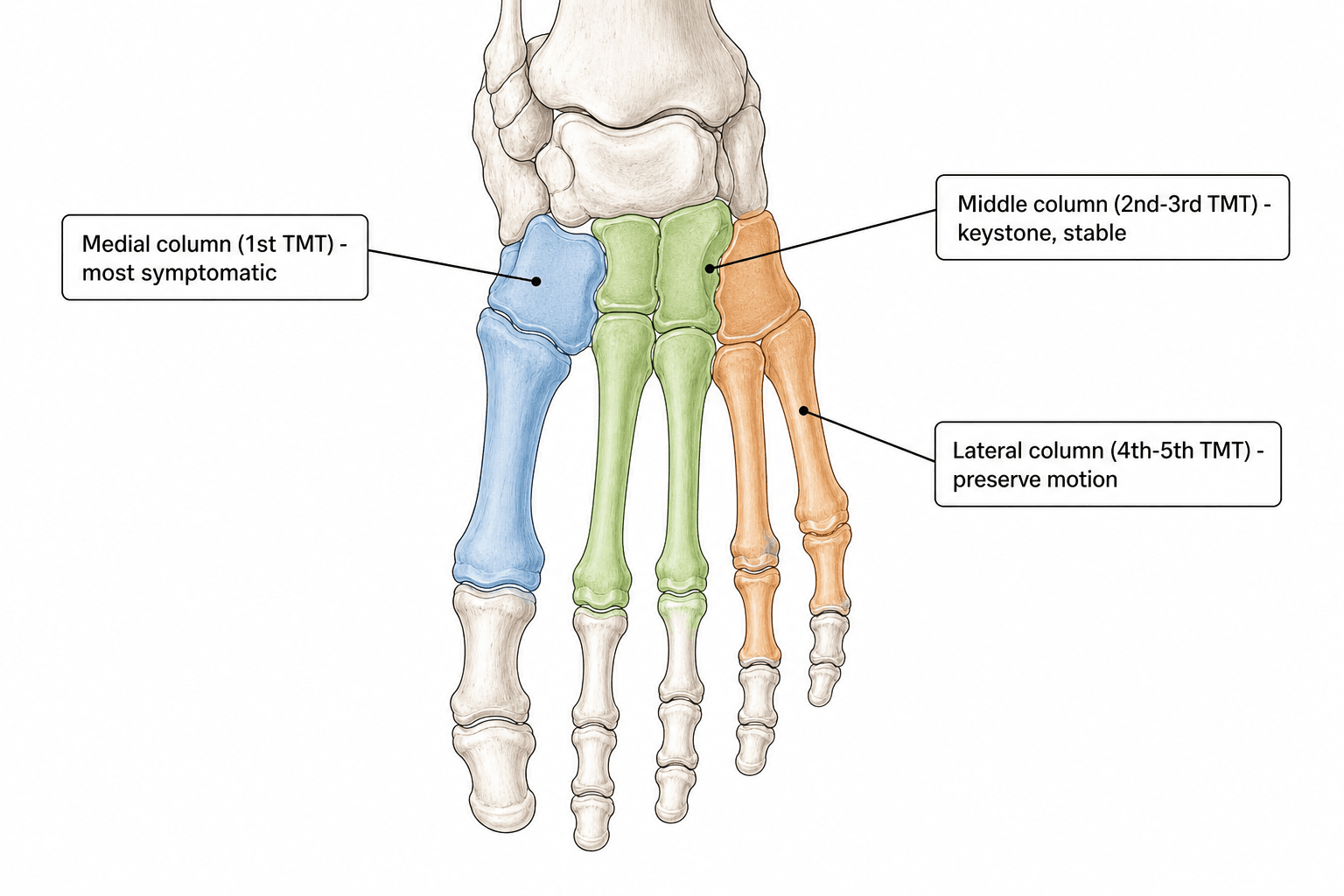
Rigid and mobile. The medial and middle columns are intrinsically rigid, with very little physiological motion. The lateral column is comparatively mobile, which allows the foot to accommodate uneven ground. Because the medial and middle columns normally move so little, fusing them sacrifices minimal function; that is the biomechanical reason arthrodesis is well tolerated there while lateral column motion is protected.
The ligaments. The dorsal, intermetatarsal and Lisfranc ligament complexes stabilise the three columns. The interosseous Lisfranc ligament links the medial cuneiform to the base of the second metatarsal and is the strongest restraint at the junction of the medial and middle columns. Instability at the Lisfranc complex predicts later column collapse and post-traumatic arthritis: chronic instability after injury concentrates load and accelerates that arthritis.
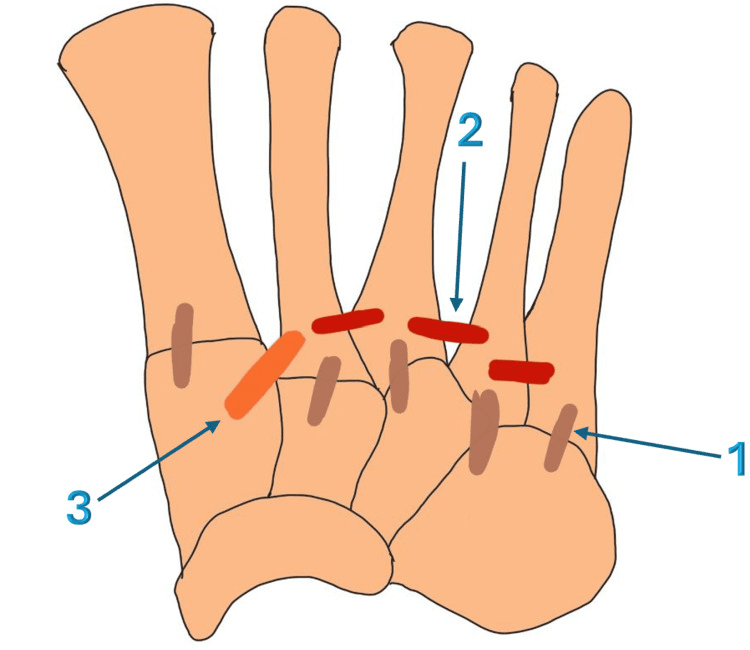
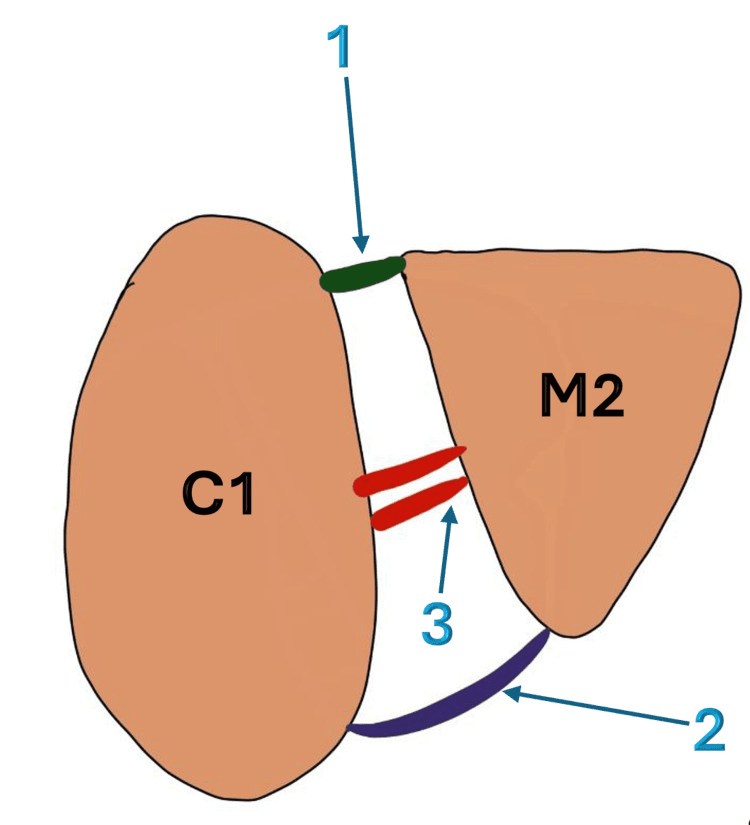
How the joints wear. Cartilage loss and incongruity at these load-bearing joints generate dorsal shear and osteophyte formation, the dorsal boss, which impinges on shoe wear and at push-off.
Clinical Presentation
History. The complaint is dorsal midfoot pain, worse with walking, running or standing, at push-off and on uneven ground. Shoes become difficult to wear because the dorsal osteophytes rub, and the patient may report a prominence on top of the foot.
Examination. Dorsal prominences may be visible, with swelling over the midfoot. The affected TMT joints are tender and the dorsal spurs palpable. Midfoot pronation and supination are painful, and naviculocuneiform motion is reduced if that joint is involved. The gait may be antalgic, or push-off limited.
Differential diagnosis. Dorsal midfoot pain is not specific. The key skill is distinguishing localised TMT or naviculocuneiform arthritis from mimics that change management entirely, especially Charcot arthropathy and stress fracture, where surgical fusion or weight-bearing through an arthritic joint can be catastrophic.
- Distinguishing Features
- Dorsal pain on push-off, palpable dorsal boss, prior Lisfranc injury
- Key Investigation
- Weight-bearing AP/lateral/oblique radiographs
- Why It Matters
- The diagnosis in question - fusion is definitive
- Distinguishing Features
- Diabetic/neuropathic, warm swollen foot, rocker-bottom deformity, often painless
- Key Investigation
- Compare skin temperature, sensory exam, MRI/bone scan to exclude osteomyelitis
- Why It Matters
- Acute Charcot needs offloading/total contact cast - operating into active disease risks disaster
- Distinguishing Features
- Focal bony tenderness, recent change in load, athletes/runners
- Key Investigation
- MRI (marrow oedema) - radiographs often normal early
- Why It Matters
- Navicular stress fracture risks non-union; managed with offloading, not fusion
- Distinguishing Features
- Polyarticular, morning stiffness, synovitis, systemic features
- Key Investigation
- Inflammatory markers, urate, autoantibodies, MRI synovitis
- Why It Matters
- DMARD optimisation first; surgery and DMARD timing coordinated with rheumatology
- Distinguishing Features
- Stiff hindfoot, recurrent ankle sprains, younger patient
- Key Investigation
- CT (osseous) / MRI (fibrocartilaginous bar)
- Why It Matters
- Different anatomical site and treatment pathway
Investigations
Radiographs. Weight-bearing radiographs are essential, and each view answers a different question:
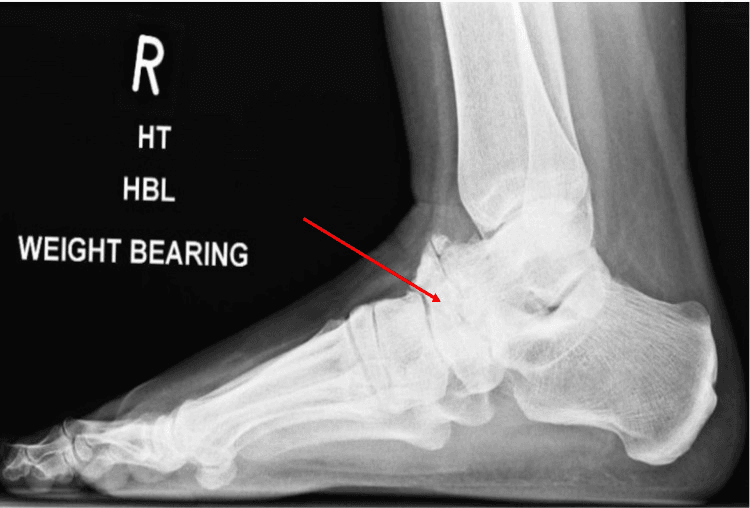
- AP - TMT joint space narrowing, osteophytes and any malalignment
- Lateral - dorsal osteophytes and any collapse
- Oblique - the best view of the TMT joints
The classic findings are joint space narrowing, subchondral sclerosis, dorsal osteophytes and subchondral cysts. Dorsal osteophyte impingement is a common source of symptoms.
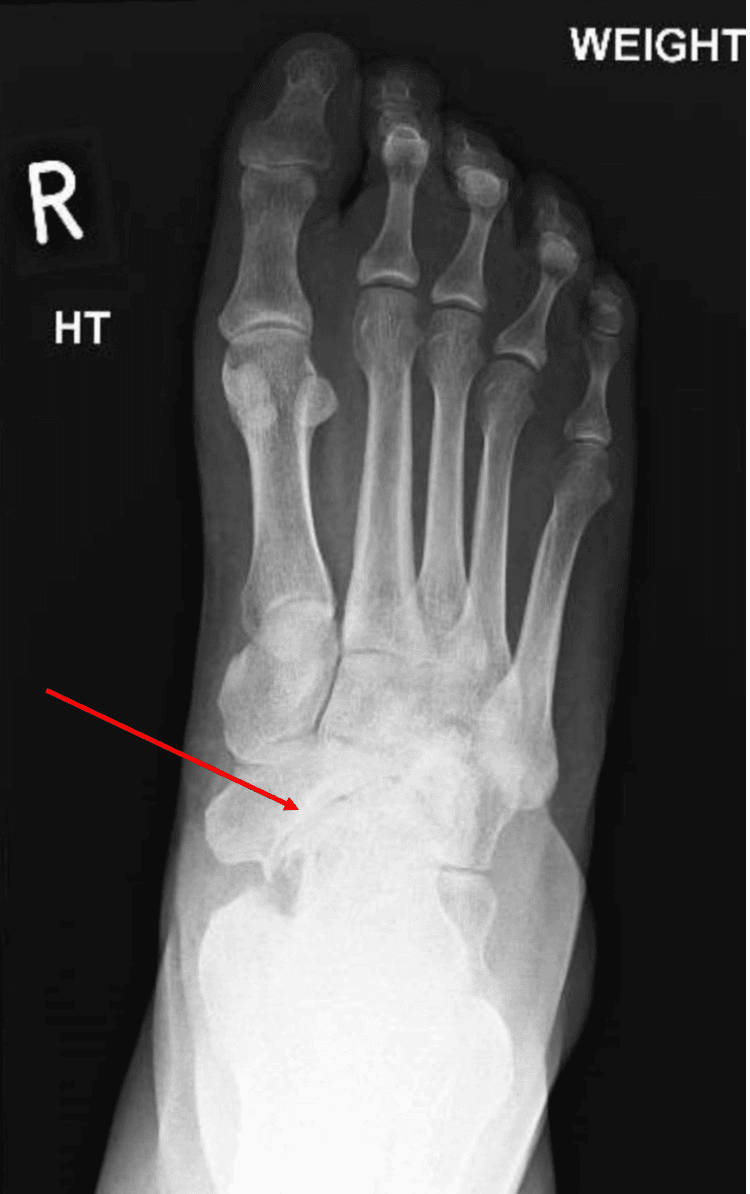
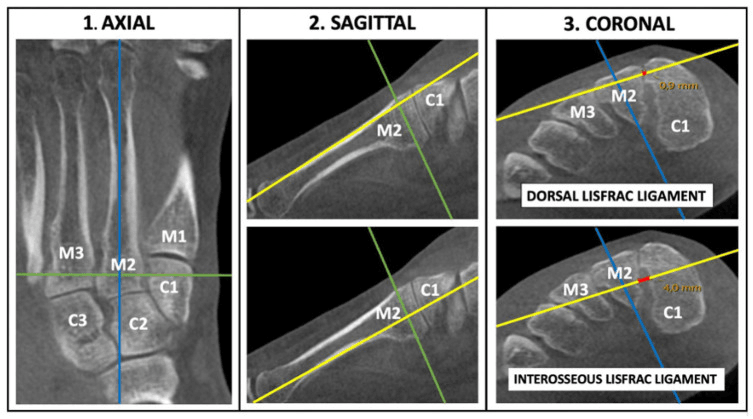
CT details joint involvement and the extent of arthritis, for surgical planning. MRI is for soft-tissue assessment or early disease, and shows bone marrow oedema.
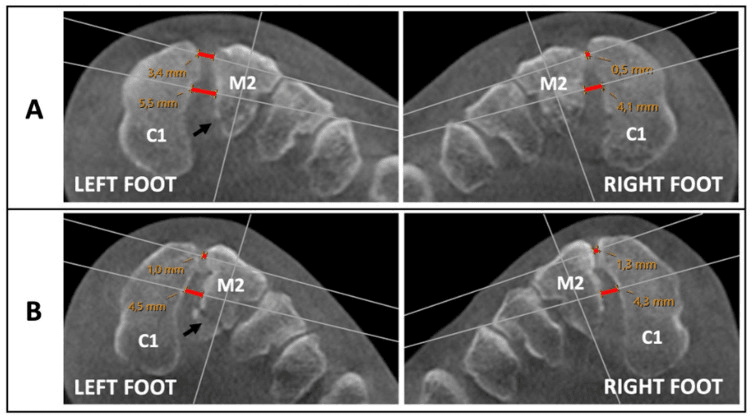
Weight-bearing CT quantifies the separation between the medial cuneiform and second metatarsal (C1-M2) under load, revealing instability that may be occult on non-weight-bearing imaging.
Management
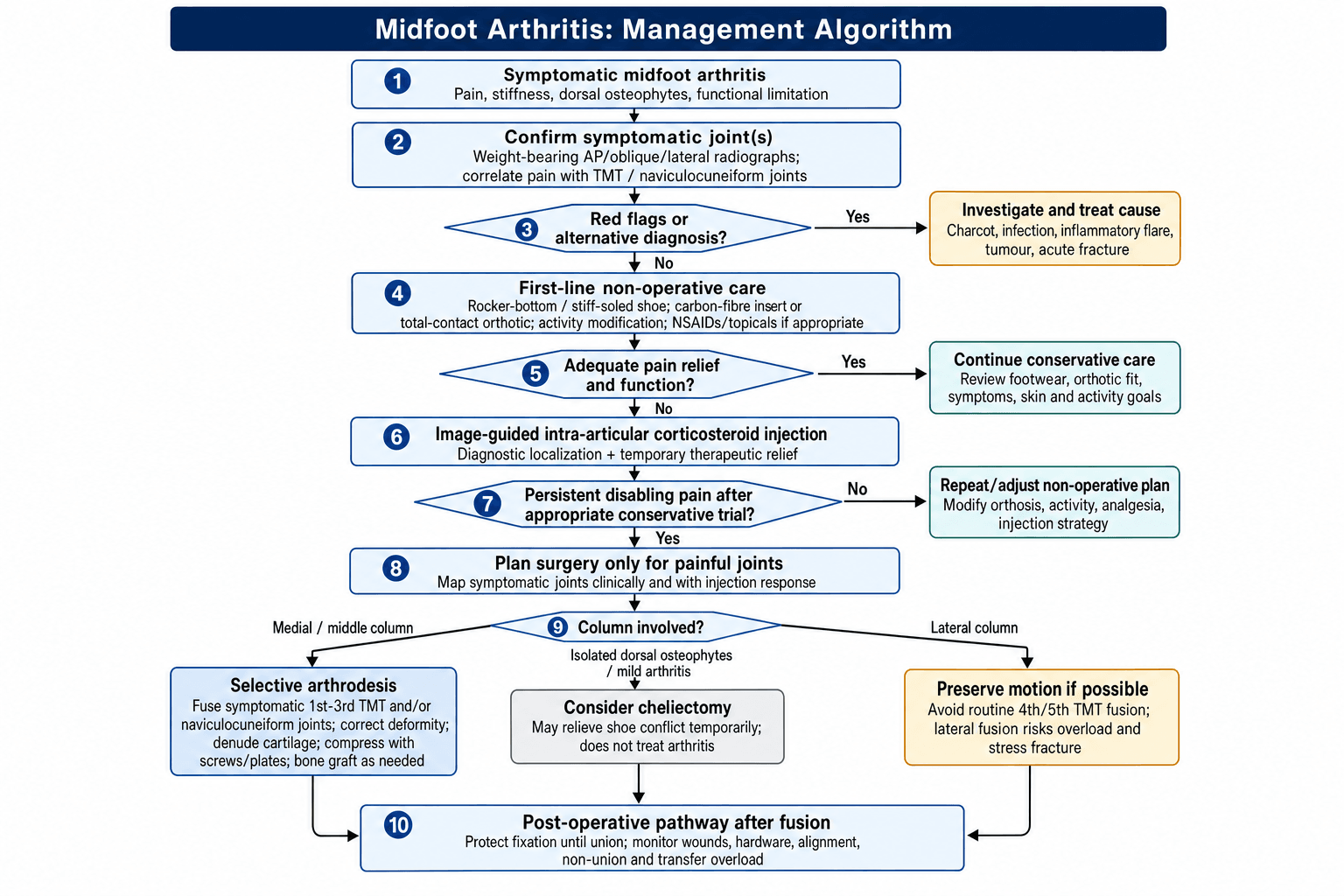
Non-operative care. Conservative measures are first-line and may be adequate for mild to moderate symptoms.
- Footwear - a stiff-soled (rocker-bottom) shoe reduces motion through the midfoot, and with it pain
- Orthotic - a stiff carbon-fibre insole or a total contact orthotic reduces midfoot motion and load
- Activity modification - avoid high-impact activities
- Medication - NSAIDs and topical agents
- Injection - intra-articular corticosteroid into the affected TMT joint may give temporary relief, and is diagnostic as well as therapeutic
The localising injection. Dorsal midfoot pain is diffuse and poorly localised, and radiographic OA is frequently multi-joint yet not uniformly symptomatic: radiographs over-call the pain source, as Dubois-Ferriere showed when radiographic OA outstripped symptoms. Fusing every arthritic-looking joint over-treats, stiffens more of the foot, and raises non-union risk, which climbs with the number of joints fused. The injection is how "fuse only the symptomatic joints" is put into practice.
How it is done. An image-guided (fluoroscopic or ultrasound) selective single-joint local-anaesthetic injection goes into each suspected joint, ideally on separate occasions. A positive test, transient near-complete abolition of the patient's typical pain, confirms that joint as a pain generator and includes it in the fusion; a joint whose injection does not relieve pain can be spared. A small dose of corticosteroid added gives concurrent therapeutic benefit.
What the response predicts. A good, if temporary, response to the diagnostic block predicts a good response to arthrodesis of that joint. A poor or absent response should prompt reconsideration of the diagnosis (Charcot, stress fracture, referred pain) before committing to fusion.
The pitfall. Contrast or anaesthetic can leak between communicating joints and give a false positive. Injecting the smallest effective volume under image guidance, and correlating with the patient's pain map, limits this.
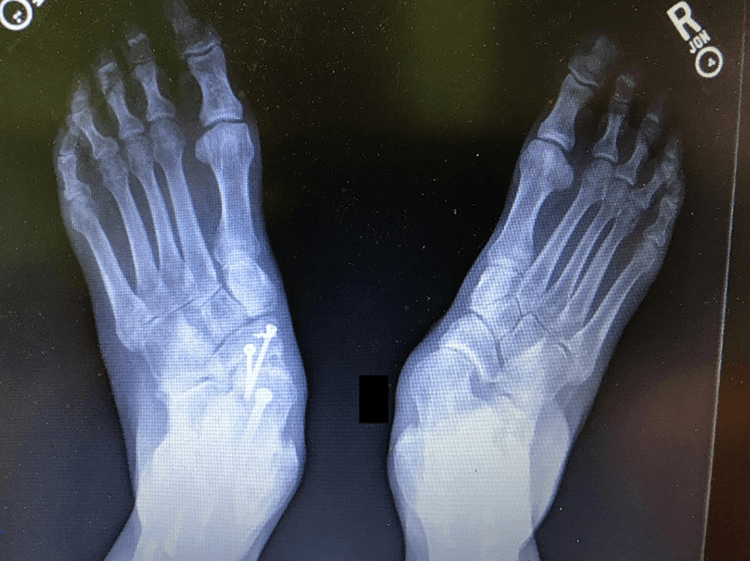
Surgery. The indications are failed conservative measures with significant pain and functional limitation. Midfoot fusion is the definitive treatment, and it fuses only the affected symptomatic joints.
Which columns. The medial and middle columns tolerate fusion well, since these joints have minimal motion normally. Lateral column motion is preserved if possible, because the 4th and 5th TMT joints contribute to gait adaptation. Fusing the lateral column can cause lateral column overload and stress fractures, and an inappropriate lateral fusion causes lateral foot pain.
Cheilectomy. Resection of the dorsal osteophytes alone may provide temporary relief and may buy time before fusion, but it does not address the underlying arthritis.
Outcome. Fusion is highly successful, with good pain relief. Some stiffness is accepted, but most patients are satisfied; the union rate to quote is set out under Complications.
Surgical Technique
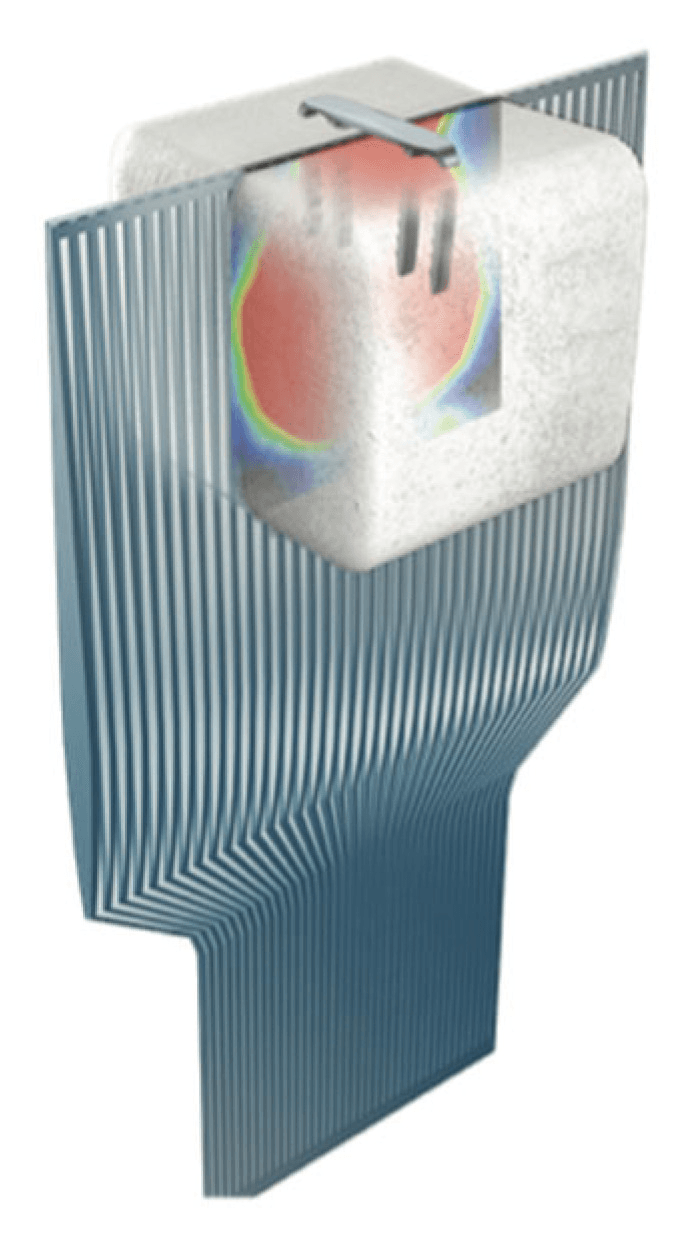
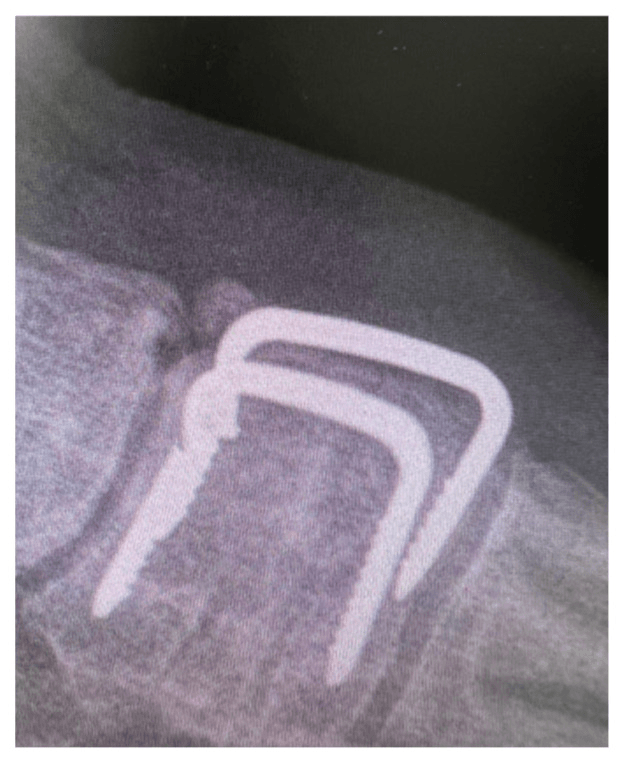
The fusion. Expose the affected joints, denude the cartilage and fix with screws and/or plates, adding bone graft as needed. With continuous compression staples the compressed zone extends beyond the staple tip, and implant spacing and orientation must generate compression across the entire prepared joint without crowding or cortical fracture.
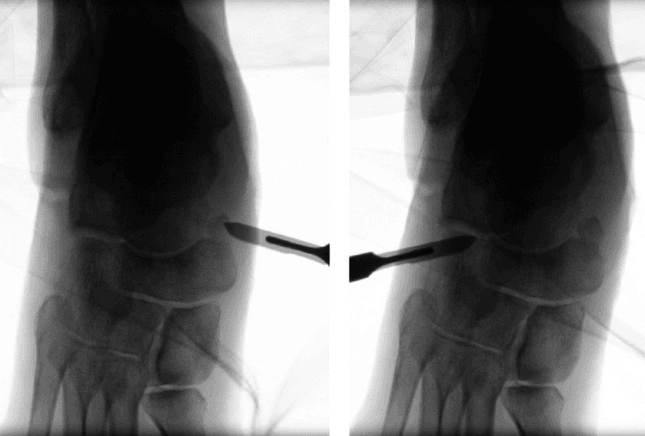
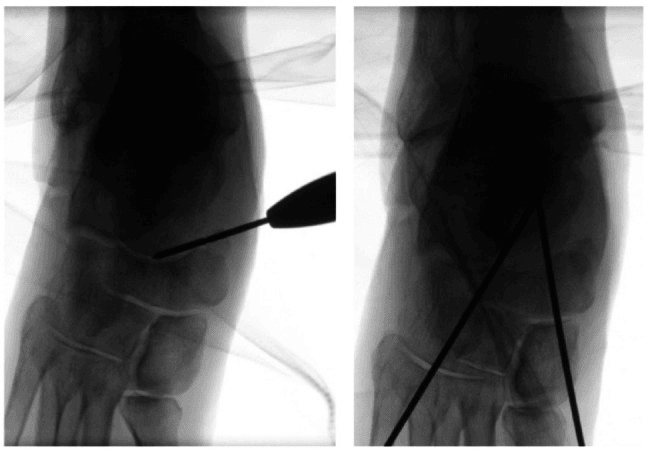
The fluoroscopic sequence below is from a minimally invasive talonavicular arthrodesis.
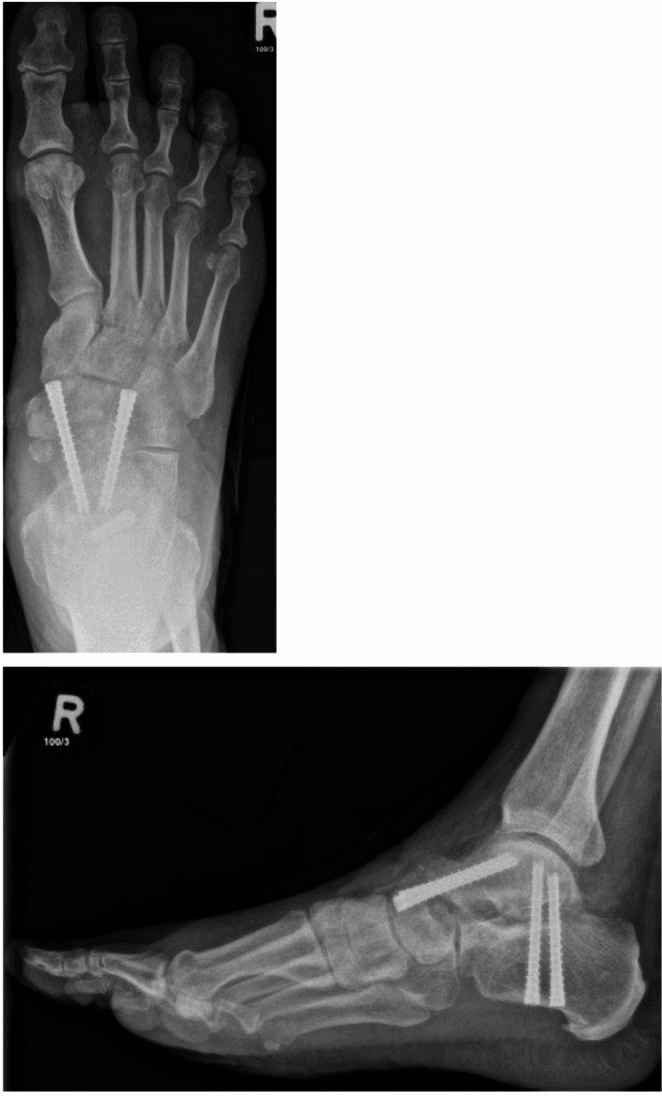
The medial column is a beam. Talus, navicular, medial cuneiform and first metatarsal act as a rigid beam, or lever, that must be held in slight plantarflexion so the first ray reaches the ground and shares load at push-off. The plantar fascia, spring ligament, tibialis posterior and peroneus longus tension it. Arthrodesis fixes that alignment permanently, so the joint must be set at the correct height and rotation, and navicular collapse and loss of medial-column height must be corrected rather than fused in the presenting deformity.
What malposition does. A fusion in a malaligned position shifts plantar pressure and adjacent-joint load, and technically solid union is not a good outcome if the medial column is dorsiflexed or abducted:
- Dorsal malunion (first ray left too dorsiflexed or elevated) shortens and elevates the medial column, flattening the arch and transferring load laterally and to the lesser metatarsal heads. The result is transfer metatarsalgia, lateral overload and lesser-ray stress fractures, the second-metatarsal stress fractures Mann reported
- Excessive plantarflexion overloads the first metatarsal head: sesamoid pain and intractable plantar keratosis
- Malrotation or residual forefoot abduction leaves a splayed, hard-to-shoe foot
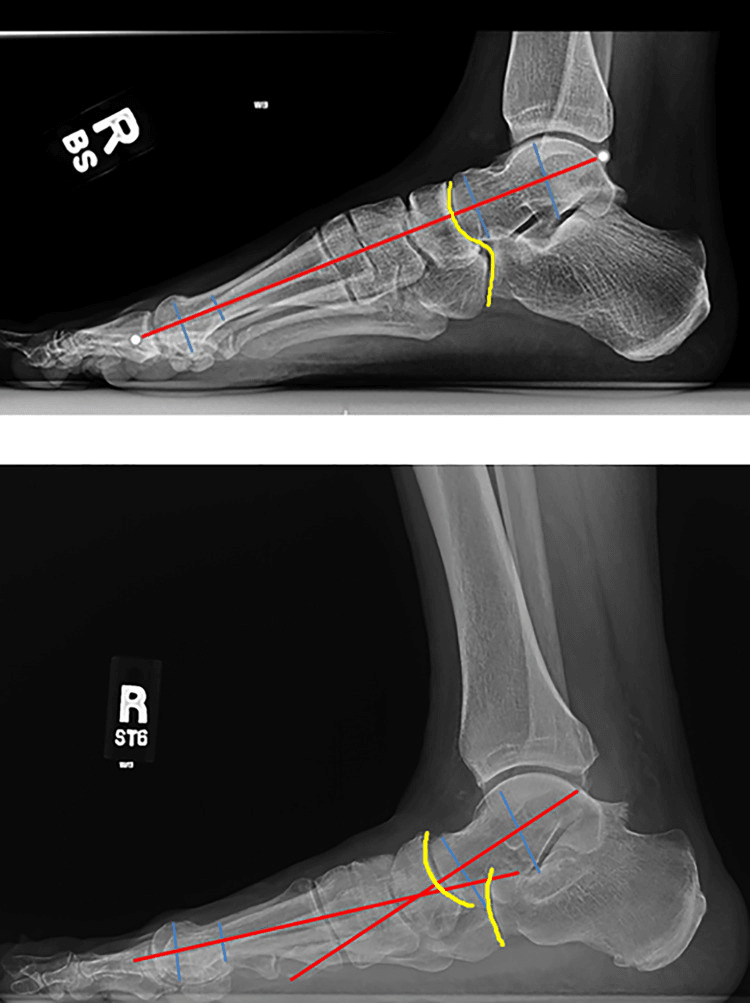
How it is set. Reduce the first ray to slight plantarflexion with the forefoot plantigrade. Before definitive fixation, confirm that the first and second metatarsal bases realign, restoring the normal first-second TMT relationship, and that medial arch height matches the contralateral side on the weight-bearing lateral. The fusion should restore a plantigrade axis rather than reproduce collapse. Meary's angle, the radiographic measure of medial-column sag, is developed in Meary's Angle.
Complications
Complications relate chiefly to arthrodesis; untreated arthritis itself causes progressive pain, deformity and disability.
Non-union: say which denominator you are using. The conventional counselling figure is 5-10% for medial and middle column constructs. That is a per-foot figure and traces to Mann et al (1996), whose 98% union is per joint (176/179) but whose three non-unions fall among 41 feet, about 7%. The only modern series here is worse on both counts: Dang et al (2020) report 81.5% fusion per joint (141/173) and non-union in 14 of 62 patients, 22.6%, and their locked compression plate, they conclude, "does not lend itself to improved fusion rates compared with prior reports". Quote the per-patient number when consenting.
Who fails to unite. The rate rises with:
- Smoking - the most modifiable factor; cessation is mandatory before elective fusion
- The number of joints fused (Dang 2020)
- Lateral column and extended, pan-midfoot constructs, which heal less reliably
- Diabetes and immunosuppression - biologics, methotrexate, poor glycaemic control
- Inflammatory arthropathy and poor bone - osteopenia from RA, steroids or inflammatory disease
Position and load. Malunion, with loss of arch height or dorsal malposition of the first ray, alters load and gait; slight plantarflexion of the first ray at fusion guards against it, as set out under Surgical Technique. Stiffening the midfoot transfers stress to neighbouring joints.
Wound and infection. Dorsal incisions risk skin slough and incisional neuroma (superficial and deep peroneal branches), with higher risk in diabetics, smokers and inflammatory disease. Infection is increased in diabetics, smokers and patients on biologics, a key reason for perioperative medication planning.
Metalwork. Dorsal plates and screws may be palpable and require removal, and hardware can fail before union. Broken metalwork is a radiographic warning of persistent motion or non-union, and needs correlation with pain, CT bridging and alignment.
Guidelines, Registries & Global Practice
Global Epidemiology
Symptomatic midfoot OA affects about 12% of community-dwelling adults aged 50 and over (UK Clinical Assessment Study of the Foot; Thomas, Roddy et al 2015), making it more common than often assumed. It is more frequent in women, those over 75, and people with obesity, prior foot/ankle injury or pain in other weight-bearing joints - a mechanically driven pattern. Post-traumatic disease is the dominant cause in younger active patients: radiographic OA develops in roughly 70% and symptomatic OA in about half after surgically treated Lisfranc injuries at long-term follow-up (Dubois-Ferriere et al 2016).
Guideline Comparison
There is no single dedicated international midfoot-arthritis surgical guideline; practice is principle-based and draws on adjacent society guidance.
- Relevant guidance
- OA care pathways emphasise stepwise non-operative management (footwear, orthoses, NSAIDs, injection) before arthrodesis; supports shared decision-making
- Relevant guidance
- NICE OA guidance prioritises core non-pharmacological care, weight management and topical/oral NSAIDs; BOFAS supports arthrodesis as the definitive procedure for refractory disease
- Relevant guidance
- Provides operative principles for TMT arthrodesis - rigid compression fixation, anatomic alignment with slight plantarflexion of the first ray to preserve arch height
- Relevant guidance
- Govern DMARD/biologic optimisation in inflammatory arthropathy and, with AAHKS, perioperative medication timing (Goodman et al 2017)
The consistent global thread: exhaust conservative care first; fuse only the symptomatic joints; preserve an uninvolved lateral column.
Registry Notes
Unlike arthroplasty, midfoot arthrodesis is not systematically captured by national joint registries (NJR, AJRR, AOANJRR, SHAR all focus on implant replacement), so robust population-level outcome data are lacking. Evidence rests on institutional case series, which is itself a driver of the uncertainties above.
High- versus Limited-Resource Practice
In well-resourced settings, custom carbon-fibre orthoses, image-guided injections, CT planning and locking-plate fixation are routine. In limited-resource settings, stiff-soled footwear, generic rigid insoles and screw-only fixation remain effective and cost-conscious alternatives, and weight-bearing radiographs (rather than CT) carry most diagnostic decisions. The core principles of selective fusion and lateral column preservation apply universally.
Controversies and Areas of Uncertainty
Midfoot arthritis surgery is governed more by principle than by high-level evidence. Several areas remain genuinely debated, and they are favourite examiner territory.
- Primary arthrodesis versus ORIF for ligamentous Lisfranc injuries. Ly & Coetzee's RCT (JBJS Am 2006) favours primary fusion for purely ligamentous patterns, but the trial is small (n=41), single-centre, and does not settle the question for bony or combined injuries, where ORIF (or flexible/suture-button fixation) remains common. Its relevance to established arthritis is indirect.
- How many joints to fuse. Fusing only symptomatic joints preserves function and lowers non-union risk (Dang et al 2020), but under-fusion risks persistent pain from joints that later decompensate. There is no validated threshold for including the naviculocuneiform or intercuneiform joints, and the decision is often made intraoperatively.
- Lateral column: fuse or preserve. The lateral (4th-5th TMT) column should usually be preserved for gait adaptation, yet in inflammatory or severely arthritic disease it may need fusion. Some advocate interposition arthroplasty or resection rather than rigid fusion of the lateral column to retain some motion; the evidence is limited.
- Cheilectomy or dorsal exostectomy alone. Removing a dorsal boss can relieve shoe-related impingement, but its durability is uncertain and many regard it as temporising.
- Fixation technology. Dorsal locked compression plates have not improved fusion rates over conventional screws and plates (Dang et al 2020), and the optimal construct (screws vs plate vs combined, lag vs neutralisation) is unsettled.
- Perioperative biologic management. The ACR/AAHKS guidance (Goodman et al 2017) is extrapolated from arthroplasty, conditional, and based on low-to-moderate quality evidence. The ideal timing of TNF-inhibitor withdrawal around foot and ankle fusion has not been directly studied.
Related pages: Lisfranc Injuries for the acute injury that produces most post-traumatic midfoot arthritis, and Metatarsal Fractures for the adjacent bony injuries; Charcot Neuroarthropathy for the neuropathic mimic that must be excluded before any fusion; Adult Flatfoot Deformity for the arch collapse that overloads the medial column; and Hallux Rigidus, Subtalar Arthritis and Ankle Arthritis for the neighbouring joints that share the differential and absorb transferred load after fusion.
MCQ Practice Points
Q: What is the most common cause of midfoot arthritis?
A: Post-traumatic arthritis following Lisfranc injuries - even subtle injuries can lead to progressive arthritis. Other causes: Primary osteoarthritis, inflammatory arthritis (RA, gout), neuropathic (Charcot). Tarsometatarsal (TMT) joints and naviculocuneiform (NC) joints most commonly affected. Medial column arthritis more symptomatic than lateral.
Q: What is the recommended surgical treatment for isolated medial column midfoot arthritis?
A: First TMT and NC fusion (medial column arthrodesis). The medial column is essential for weightbearing - tolerates fusion well. Typically fuse 1st TMT and NC joints together. Position: Slight plantarflexion of first ray to maintain arch. Union rates greater than 90%. Lateral column fusions have higher nonunion and stiffness.
Q: Why should the 4th and 5th TMT joints be preserved if possible?
A: The lateral column (4th-5th TMT) provides essential flexibility for adaptation to uneven ground. Fusion leads to transfer stress to adjacent joints and painful lateral foot. Only fuse lateral column if severely arthritic and symptomatic. Medial and middle columns tolerate fusion better due to inherent stability.
Q: What are the key radiographic findings in midfoot arthritis?
A: Joint space narrowing, osteophyte formation (dorsal most common - causes "dorsal boss"), subchondral sclerosis, malalignment (loss of normal first-second TMT alignment, loss of arch height). Weight-bearing radiographs essential - non-weightbearing underestimates severity. CT for surgical planning and identifying all involved joints.
Q: What non-operative treatments should be tried before midfoot fusion?
A: Activity modification, weight loss, stiff-soled shoes or rocker-bottom soles (reduce motion through midfoot), custom orthoses with medial arch support, NSAIDs, corticosteroid injections (diagnostic and therapeutic). Surgery indicated when conservative management fails after 3-6 months trial. Injection response predicts surgical outcome.
Exam Viva Scenarios
Practise clinical reasoning and management decisions out loud
“A 55-year-old woman has dorsal midfoot pain and a palpable prominence. Weight-bearing X-ray shows 1st TMT joint arthritis with dorsal osteophytes. How do you manage her?”
“You are seeing a 32-year-old male construction worker in your foot and ankle clinic who was referred by his GP for persistent right midfoot pain. He has a history of a Lisfranc injury sustained 4 years ago when he fell from scaffolding and twisted his foot. At that time, he was treated at another hospital with open reduction and internal fixation (ORIF) of a 1st and 2nd TMT joint dislocation using screws, which were removed 6 months post-operatively. He did well initially and returned to work after 9 months. However, over the past 12 months, he has developed progressive aching pain in the midfoot, particularly with prolonged standing at work, walking on uneven ground, and at the end of a long day. He describes the pain as a deep ache across the dorsum of the midfoot, worse with push-off. He has tried over-the-counter NSAIDs and supportive work boots with limited relief. He is very motivated to avoid surgery if possible as he cannot afford to take time off work (self-employed). On examination, he has a well-healed dorsal midfoot surgical scar. There is tenderness to palpation over the 1st, 2nd, and 3rd TMT joints. You can palpate small osteophytes dorsally. His foot alignment appears normal with a well-maintained medial longitudinal arch. There is no significant swelling. Passive range of motion through the midfoot is stiff and reproduces his pain. The lateral column (4th and 5th TMT) is non-tender with good mobility. Ankle and subtalar joint motion are normal and pain-free. You order weight-bearing radiographs (AP, lateral, oblique views) which show: 'Post-surgical changes with previous screw tracks visible in 1st and 2nd TMT joints. Moderate to severe osteoarthritis of 1st, 2nd, and 3rd TMT joints with joint space narrowing, subchondral sclerosis, and small dorsal osteophytes. The naviculocuneiform joints appear mildly arthritic. 4th and 5th TMT joints appear preserved. Alignment is maintained with no collapse of the medial longitudinal arch.' The patient asks: (1) Can I avoid surgery with the right footwear and supports? (2) If I need surgery, what exactly would you fuse? (3) Will fusing my foot affect my ability to work on scaffolding and uneven surfaces? (4) What are the risks that the fusion won't heal given I had hardware removed before?”
“You are reviewing a 48-year-old female office administrator in your complex foot and ankle reconstruction clinic. She was referred by a colleague for a second opinion regarding management of severe pan-midfoot arthritis. She has a 15-year history of rheumatoid arthritis (RA) affecting multiple joints including her hands, feet, and knees. Her RA is currently reasonably controlled on methotrexate and adalimumab (Humira), but she has developed progressive destructive arthropathy in her right midfoot over the past 3-4 years. She describes constant aching pain across the entire dorsum and plantar aspect of her right midfoot, significantly worse with any weight-bearing activity. The pain is now affecting her ability to work (she sits most of the day but needs to walk between offices and to the parking lot). She has failed comprehensive conservative management including: custom orthotics with rigid carbon fiber plate, rocker-bottom shoes, regular NSAIDs, and three sets of corticosteroid injections over 18 months (into multiple TMT joints under fluoroscopy) which provided progressively less relief (initial injection helped for 4 months, subsequent injections only 4-6 weeks). She is very keen for definitive surgical treatment. On examination, she has swan-neck deformities in her fingers and bilateral hallux valgus deformities with claw toes. Her right midfoot is diffusely swollen and tender to palpation across all TMT joints and naviculocuneiform joints. There is palpable synovitis. Passive motion through the midfoot is globally stiff and painful. Her medial longitudinal arch is somewhat collapsed (mild planovalgus alignment). There is NO significant forefoot abduction or hindfoot valgus. Her ankle and subtalar joints have reasonable range of motion and are not significantly symptomatic. You review the weight-bearing radiographs she brought from the referring surgeon: 'Severe pan-midfoot arthritis involving ALL tarsometatarsal joints (1st through 5th TMT) and naviculocuneiform joints. Diffuse joint space loss, erosive changes, subchondral cysts, and sclerosis throughout the midfoot. There is some collapse of the medial longitudinal arch with mild dorsal subluxation at multiple TMT joints. The 4th and 5th TMT joints show advanced arthritis with near-complete joint space loss, similar severity to the medial/middle columns. Ankle and subtalar joints appear preserved.' You also review a recent MRI (ordered by the referring surgeon): 'Extensive synovitis throughout all midfoot joints with large joint effusions. Diffuse bone marrow edema in all cuneiforms, navicular, cuboid, and metatarsal bases. Advanced articular cartilage loss in all TMT and NC joints. No osteomyelitis. Findings consistent with severe inflammatory arthropathy (rheumatoid arthritis).' The referring surgeon has suggested pan-midfoot fusion (1st through 5th TMT joints plus naviculocuneiform joints) and wants your opinion. The patient has done her own research and has several questions: (1) Do you agree that I need all my midfoot joints fused, including the lateral ones? I read online that the lateral joints should be preserved if possible. (2) What are the risks of such a big fusion? (3) Will the fusion heal given I'm on methotrexate and Humira for my RA? (4) What happens if the fusion doesn't heal - would I need another operation? Your rheumatology colleague has sent a letter stating: 'Patient has active inflammatory arthropathy affecting midfoot. Would recommend continuing current DMARD therapy perioperatively. Suggest stopping methotrexate 2 weeks pre-op and restarting 2 weeks post-op. Continue adalimumab perioperatively as withholding biologics increases flare risk. Please liaise regarding timing.'”
Columns
- Medial (1st): Most symptomatic
- Middle (2nd, 3rd): Keystone
- Lateral (4th, 5th): Preserve motion
Causes
- Primary OA (most common)
- Post-traumatic (Lisfranc)
- Inflammatory (RA, gout)
- Neuropathic (Charcot)
Conservative
- Stiff-soled shoe (rocker bottom)
- Carbon fiber insole
- NSAIDs
- Injection (diagnostic and therapeutic)
Surgical
- Midfoot fusion is definitive
- Fuse symptomatic joints only
- Medial/middle column fuse well
- Preserve lateral column motion
Evidence Base
Mann, Prieskorn & Sobel
- Landmark long-term series: 40 patients (41 feet) undergoing mid-tarsal and/or TMT arthrodesis for primary degenerative or post-traumatic osteoarthrosis
- 37 of 40 patients (93%) satisfied at mean 6-year follow-up (range 2 to 17 years)
- Union achieved in 176 of 179 attempted arthrodeses (98%); only 1 of 3 non-unions required operative repair
- Complications included second metatarsal stress fracture (3 patients) and incisional neuroma (3 patients)
Dang, Coughlin & Hirose et al
- 62 patients (173 joints) undergoing midfoot arthrodesis with locked dorsal compression plates over 7 years
- Overall joint fusion rate 81.5% (141 of 173 joints); 14 patients developed non-union
- Significantly more joints were spanned in non-union (mean 3.6) than in union (mean 2.5) cases (p = 0.02)
- Novel compression-plate technology did not improve fusion rates over prior fixation reports