Intermetatarsal Nerve Entrapment
- 3rd Web Space: Most common location (65%), followed by 2nd web (30%).
- NOT a True Neuroma: Perineural fibrosis from compression, not nerve tumour.
- Mulder's Click: The rule-IN test (specificity ~0.96) - palpable/audible click with lateral metatarsal squeeze. The rule-OUT test is the web space squeeze (sensitivity 0.96).
- Conservative First: Wide shoes, metatarsal pad, corticosteroid injection (30-40% response).
- Surgical Neurectomy: Dorsal (most common) or plantar approach; expect permanent numbness.
- “3rd web space most common (not 2nd)
- “Mulder's click rules IN (specificity ~0.96, LR+ 13) but is not pathognomonic
- “Not a true neuroma - it's perineural fibrosis
- “Conservative fails in 60-70% - surgery indicated
- “Warn patient: numbness is EXPECTED after surgery
Overview and Epidemiology
Morton's neuroma (interdigital neuroma, Morton's metatarsalgia) is a compression neuropathy of the common digital nerve and a common cause of forefoot pain. The name is a misnomer: the lesion is not neoplastic, and interdigital nerve compression or perineural fibrosis is the more accurate term. It is named after Thomas Morton (1876), although Durlacher described it earlier, in 1845.
Who. Morton's neuroma accounts for 30% of patients with forefoot pain. Women outnumber men 8:1 (high heels, narrow shoes), the 4th to 6th decades are most commonly affected, and 15-20% of patients have bilateral involvement.
Where. The third web space is the usual site, not the second:
- 3rd web (between the 3rd and 4th metatarsals) - 65%
- 2nd web (between the 2nd and 3rd metatarsals) - 30%
- 4th web - 3%, rare
- 1st web - 2%, very rare
More than one web space is involved in 2-3%.
Pathophysiology and Anatomy
The nerve. The common digital nerves are branches of the medial and lateral plantar nerves. Each passes beneath the transverse metatarsal ligament and divides into proper digital nerves to the adjacent toes.
Why the third web. The nerve to the third web space receives branches from both the medial and the lateral plantar nerves. At this junction the nerve is thicker and more tethered, so it is less mobile and more susceptible to compression.
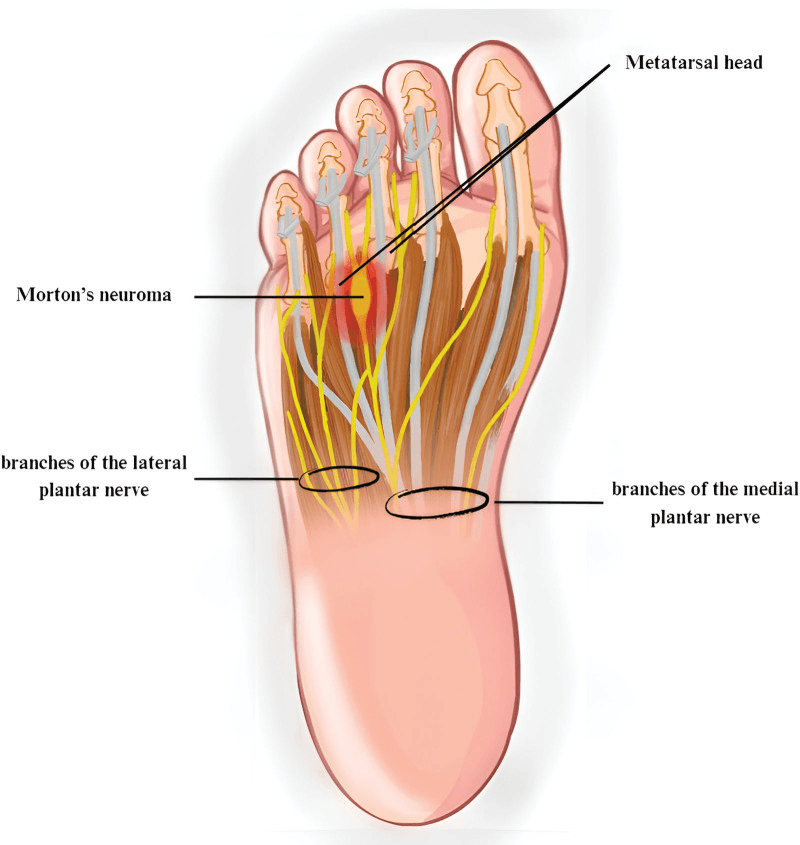
Compression. The nerve passes between the metatarsal heads, where it is compressed against the transverse metatarsal ligament above it and squeezed from the sides by the metatarsal heads. Toe extension stretches it.
Histology. The excised nerve shows:
- Perineural fibrosis
- Demyelination and axonal degeneration
- Renaut bodies (subperineurial fibrosis)
- Endoneurial and epineurial fibrosis
- Small vessel thrombosis and arteriolar thickening
Risk factors.
- Footwear - high heels, which transfer weight forward, and a narrow toe box
- Foot type - pes planus, a hypermobile first ray
- Activities with repetitive forefoot loading - running, ballet
- Anatomy - long metatarsals, a tight intermetatarsal space
Clinical Features
The pain. Burning, shooting or electric-shock-like pain in the plantar aspect of the web space, radiating to the adjacent toes (the 3rd and 4th in a third-web neuroma), with tingling or numbness in those toes. Tight shoes, high heels, walking and prolonged standing aggravate it; removing the shoes, massaging the forefoot and rest relieve it.
How much the history is worth. In the diagnostic systematic review by Pitcher et al, the classic "walking on a pebble" sensation and burning pain performed poorly, both close to a coin toss, and should not be leaned on.
Red flags for another diagnosis.
- Night pain - consider tumour or infection
- Swelling - synovitis, gout
- Constitutional symptoms
- Multiple toe involvement - peripheral neuropathy
Mulder's test is the key examination.
- Hold the foot with one hand around the metatarsal heads
- Apply lateral compression, squeezing the metatarsals together
- With the other hand, press the affected web space from plantar to dorsal
- Positive: a palpable or audible click with reproduction of the symptoms
Reading the click. Mulder's test is highly specific with variable sensitivity: reported sensitivity is 62-98% and specificity 95%. A click is the rule-in finding, with specificity about 0.96 and a positive likelihood ratio of 13 in the Pitcher review; that is powerful when present, but it is not pathognomonic, and a negative click does not exclude the diagnosis. The 0.96 came from clicking reported by the patient, which is not interchangeable with the click the examiner elicits.
What the click is. Transverse compression displaces the hypoechoic web-space lesion superficially between the adjacent metatarsal heads, and that movement is the palpable click. It is also why symptom reproduction, not sound alone, makes the test meaningful.
The rule-out test. The web space compression test, direct pressure on the affected web space from plantar and dorsal, reproduces the symptoms and is less specific than Mulder's. The best rule-out test in the Pitcher review was the modified web space tenderness test, a thumb-index web space squeeze: sensitivity 0.96 and a negative likelihood ratio of 0.04, so a negative squeeze makes Morton's neuroma unlikely.
Sensation. The adjacent toes may have reduced sensation and two-point discrimination may be abnormal, but sensation is often normal early in the disease.
Differential diagnosis. Against metatarsalgia and MTP synovitis:
- Morton's Neuroma
- Web space (plantar)
- Metatarsalgia
- Under MT heads
- MTP Synovitis
- MTP joint
- Morton's Neuroma
- Burning, shooting
- Metatarsalgia
- Aching, pressure
- MTP Synovitis
- Aching, swelling
- Morton's Neuroma
- To adjacent toes
- Metatarsalgia
- Local
- MTP Synovitis
- Local
- Morton's Neuroma
- Mulder's click +ve
- Metatarsalgia
- Callus under MT
- MTP Synovitis
- Drawer test +ve
- Morton's Neuroma
- Removing shoes
- Metatarsalgia
- Rest
- MTP Synovitis
- Splinting
Other causes of forefoot pain to exclude:
- Stress fracture - point tenderness over bone, swelling
- Freiberg's disease - AVN of the 2nd metatarsal head, adolescent female
- Plantar plate injury - MTP instability, positive drawer test
- Peripheral neuropathy - multiple toes, bilateral
Investigations
A clinical diagnosis. A positive Mulder's click with classic symptoms is often sufficient to make the diagnosis and start conservative treatment. Imaging is not always required when the presentation is classic; it confirms the diagnosis or excludes other pathology.
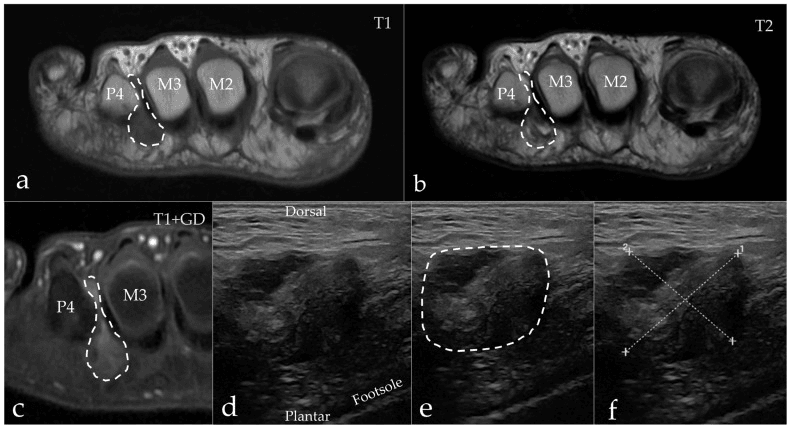
Ultrasound. The neuroma is a hypoechoic, ovoid mass in the web space, often at the level of the metatarsal heads, and dynamic compression may demonstrate it. The typical sonographic appearance of fibrotic interdigital nerve enlargement is a well-defined, homogeneous hypoechoic nodule without Doppler flow. Ultrasound is widely available, low cost, radiation-free and dynamic, but operator-dependent. On pooled data it detects neuromas as well as MRI does and is the more cost-effective first-line test (Bignotti et al).
Size. Lesions more than 5mm are significant, and correlation with symptoms improves with size.
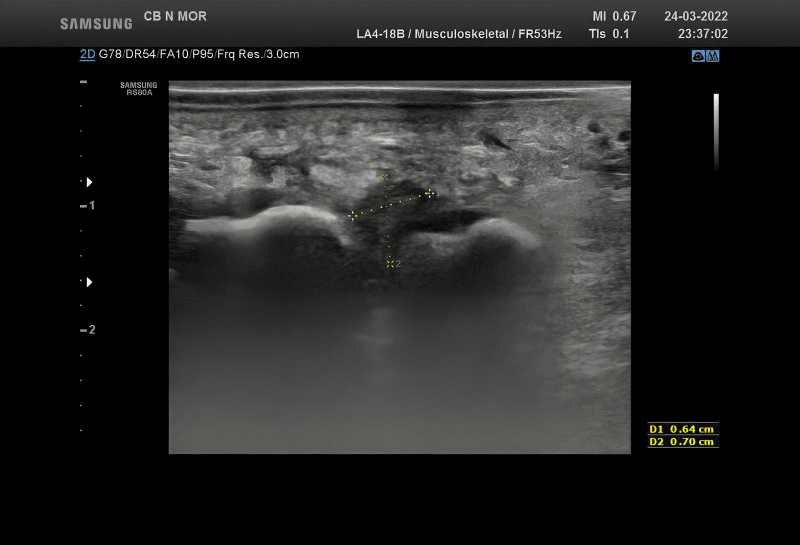
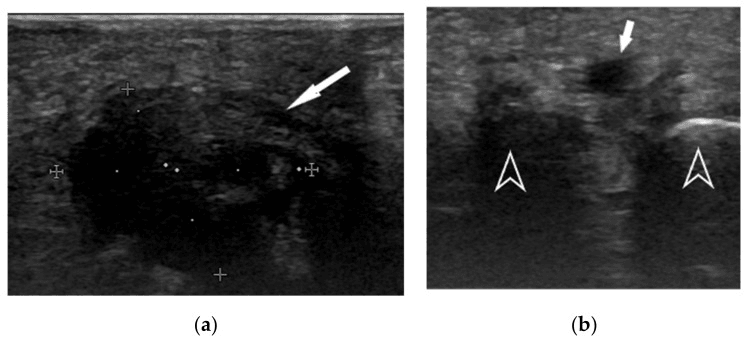
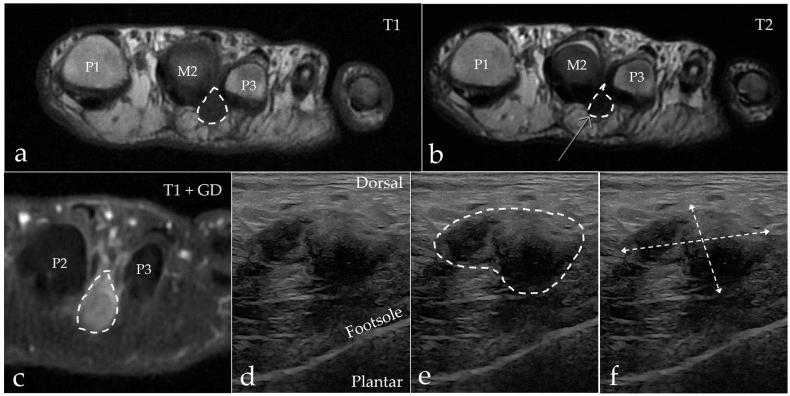
MRI. Indicated for an atypical presentation, after failed treatment to exclude other pathology, and for preoperative planning of large or recurrent neuromas. The lesion lies between the metatarsal heads and is low to intermediate signal on T1 and low signal on T2, from the fibrosis.
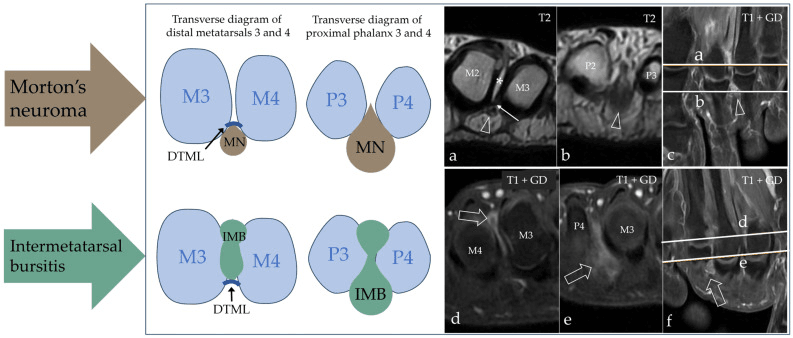
Neuroma or bursitis. The deep transverse metatarsal ligament is the landmark. A Morton's neuroma is centred plantar to it, stays low signal on T1 and T2 and enhances after contrast. Intermetatarsal bursal distension occupies the dorsal side and may extend around the narrow interval, so bursitis extends both dorsally and plantarly; it is predominantly T2 hyperintense with peripheral enhancement and looks fluid-like on ultrasound.
Diagnostic injection. Local anaesthetic injected into the web space: relief confirms the diagnosis, and it can be combined with corticosteroid as treatment.
Management
The ladder. Footwear, a metatarsal pad, then injection, with a conservative trial of 3-6 months before surgery. Overall, 30-40% achieve adequate relief with conservative treatment and 60-70% eventually need surgery.
Shoes. A wide toe box is the most important change, with a low heel (under 2.5cm), a soft cushioned sole and no pointed shoes.
Metatarsal pad. Placed proximal to the metatarsal heads, the pad spreads the metatarsals apart and reduces nerve compression. Shoe modification with a pad gives improvement in 50-60%.
NSAIDs give short-term symptom relief and do not modify the disease.
Corticosteroid injection. Injected into the web space from dorsal, it gives long-term relief in 30-40%, and a temporary response is common. Multiple injections increase the risk of fat pad atrophy; a maximum of 3 is recommended.
What the steroid adds. The two randomised trials disagree: Thomson found benefit over local anaesthetic at three months, Lizano-Diez found none. The 2024 Cochrane review pools both and finds little to no difference in pain from adding corticosteroid, which brings skin atrophy, hypopigmentation and fat pad atrophy with it. What does improve the injection, at moderate certainty, is ultrasound guidance.
Complications
Neurectomy excises the nerve, so permanent numbness between the affected toes is an expected outcome. Patients must be counselled about it preoperatively to avoid dissatisfaction.
How much the numbness matters. In Kasparek's 15-year series it was present in 72% of feet and did not influence satisfaction, but 2 of 13 patients in Lee's 10-year series found it disabling.
- Incidence
- 10-15%
- Risk Factors
- Insufficient proximal resection, traction
- Prevention/Management
- Adequate proximal cut, avoid tension
- Incidence
- Expected (72% of feet at 15 years, Kasparek)
- Risk Factors
- Expected outcome (not complication)
- Prevention/Management
- Warn all patients preoperatively
- Incidence
- 5-10%
- Risk Factors
- Incomplete excision, adjacent web neuroma
- Prevention/Management
- Confirm diagnosis, adequate resection
- Incidence
- 5-8%
- Risk Factors
- Plantar approach, hypertrophic scar
- Prevention/Management
- Prefer dorsal approach when possible
- Incidence
- 2-3%
- Risk Factors
- Diabetes, poor sterility
- Prevention/Management
- Standard perioperative antibiotics
- Incidence
- 3-5%
- Risk Factors
- Altered gait mechanics
- Prevention/Management
- Address forefoot mechanics, orthotics
Stump neuroma is the most common surgical complication: symptomatic regrowth at the cut nerve end, presenting as recurrent or persistent symptoms. Every poor result in the largest long-term series had one. Management is revision excision with more proximal resection into the plantar fat pad.
Plantar scar. Specific to the plantar approach, the scar is painful with weight-bearing and difficult to treat. Quoted rates vary, from the 5-8% in the table to 10-15%.
Wound problems and CRPS. Infection, dehiscence and delayed healing. Complex regional pain syndrome is rare but serious, with disproportionate pain post-operatively.
Guidelines, Registries & Global Practice
Global Epidemiology
- One of the commonest causes of forefoot neuralgia worldwide; strongly associated with constrictive footwear and elevated heels
- Marked female predominance (commonly quoted around 8:1) across populations; peak in the 4th-6th decades
- 3rd web space dominates, followed by the 2nd; multiple/bilateral involvement in a minority
- Lower reported prevalence in habitually barefoot or wide-footwear populations, supporting a footwear-driven mechanical aetiology
Guidelines & Society Positions (Side by Side)
- AAOS / AOFAS (US)
- Clinical first; Mulder's sign
- BOFAS / NICE (UK)
- Clinical; ultrasound as first imaging
- EFORT / European consensus
- Clinical with imaging confirmation
- AAOS / AOFAS (US)
- Ultrasound (cost-effective)
- BOFAS / NICE (UK)
- Ultrasound preferred; MRI if atypical
- EFORT / European consensus
- Ultrasound or MRI (equivalent sensitivity)
- AAOS / AOFAS (US)
- Footwear/orthoses, then injection
- BOFAS / NICE (UK)
- Footwear/metatarsal dome, then injection
- EFORT / European consensus
- Footwear, padding, injection trial
- AAOS / AOFAS (US)
- After failed conservative trial
- BOFAS / NICE (UK)
- After failed conservative trial
- EFORT / European consensus
- After failed conservative trial
- AAOS / AOFAS (US)
- Expected numbness, stump neuroma
- BOFAS / NICE (UK)
- Expected numbness, recurrence
- EFORT / European consensus
- Expected numbness, scar/recurrence
Registry & Evidence Notes
- No dedicated implant registry applies (no implant is used); evidence is driven by RCTs (steroid injection) and surgical case series rather than arthroplasty-style registries
- Imaging meta-analysis confirms ultrasound is equivalent to MRI for detection and is the more cost-effective first-line test
- Economic modelling supports an injection-first pathway (steroid then alcohol) before surgery when conservative measures fail
High- vs Limited-Resource Practice Variation
- Well-resourced settings: ultrasound-guided diagnosis and injection, day-case dorsal neurectomy, MRI for atypical/recurrent cases
- Limited-resource settings: clinical diagnosis with Mulder's sign and footwear/padding emphasised; diagnostic local-anaesthetic injection substitutes for advanced imaging; surgery reserved for refractory disease
- Workforce: depending on jurisdiction, surgery is performed by orthopaedic foot-and-ankle surgeons or, where licensed, podiatric surgeons; complex/revision cases are typically referred to specialist foot-and-ankle units
Special Considerations
Multiple neuromas. MRI helps preoperative planning, surgery may need to be staged, and the risk of complications is higher.
Recurrent neuroma. Causes of recurrent symptoms after excision:
- Stump neuroma, the most common
- Incomplete excision
- A missed neuroma in the adjacent web space
Confirm the diagnosis with MRI or a diagnostic injection, and try conservative measures first. Revision surgery resects the nerve more proximally, and a plantar approach can be considered for better visualisation.
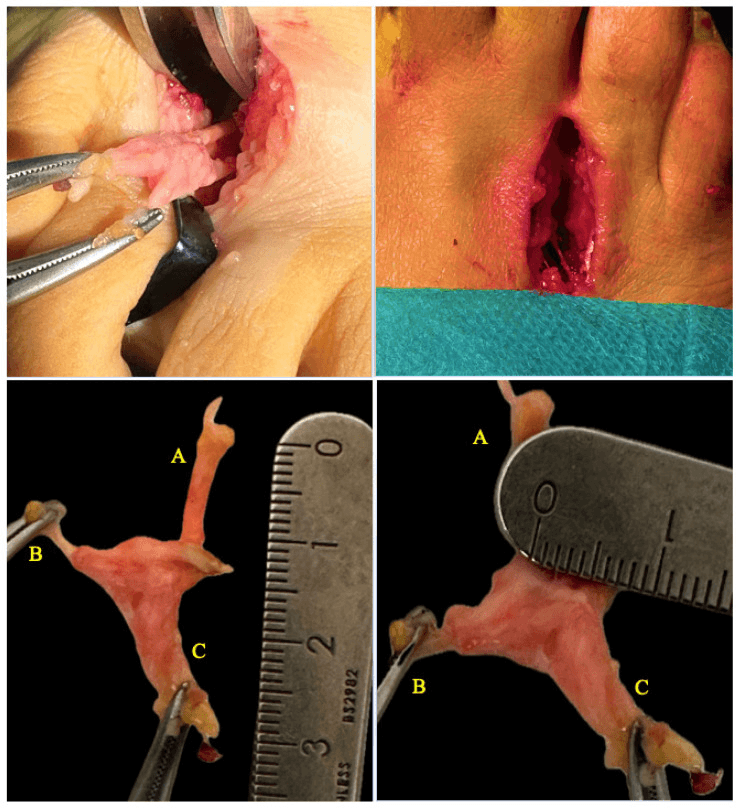
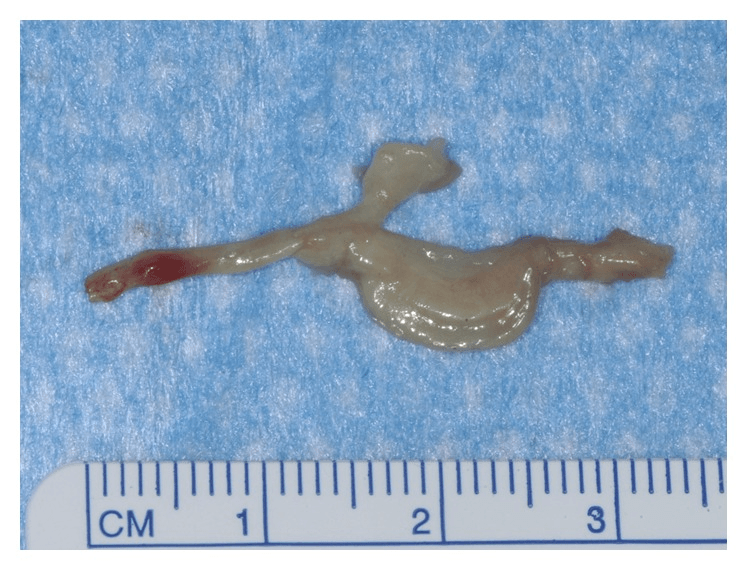
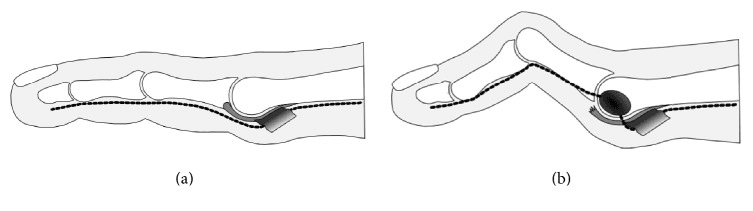
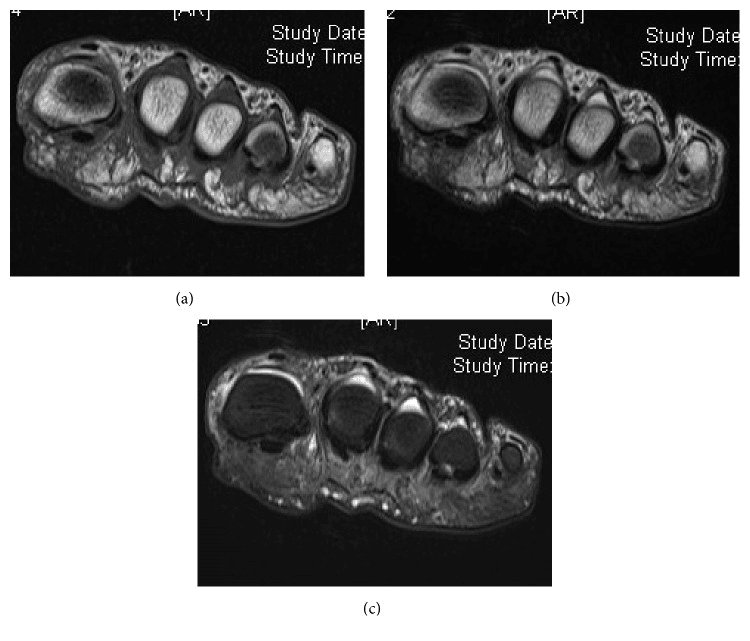
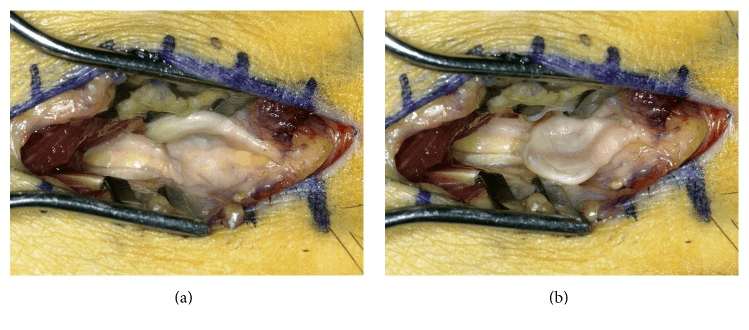
MTP instability and the atypical neuroma. MTP instability can deviate the interdigital nerve and bend it against the distal edge of the deep transverse metatarsal ligament, adding focal traction and compression. The nerve then takes a non-standard course, which changes both the exposure and the differential diagnosis. In the reported case shown below, the nerve and neuroma were displaced dorsally and bore a central impression from the adjacent metatarsal heads. A neuroma in an atypical position should prompt assessment for MTP instability rather than automatic attribution to a routine plantar lesion.
Alcohol Sclerosing Injection & Minimally Invasive Ablation
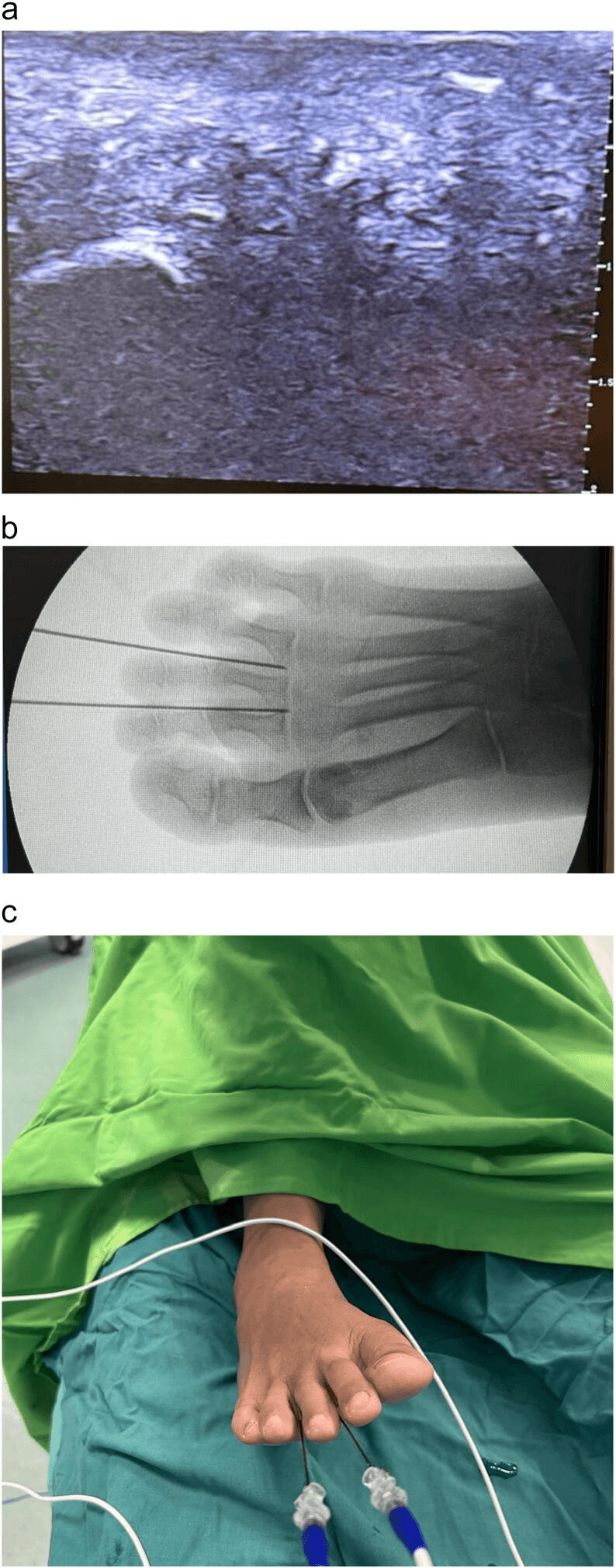
Alcohol sclerosing injection. Dilute ethanol is neurotoxic: it produces chemical (Wallerian) degeneration of the common digital nerve, in effect a "chemical neurectomy" without an incision. Under ultrasound guidance, dilute ethanol (commonly around 20-30%, mixed with local anaesthetic) is injected into the web space around the neuroma as a series, often several injections at one-to-two-week intervals.
How well it works. Case series report widely varying success, roughly 60-90% symptom relief, but the systematic review by Matthews et al judged sclerosing-injection studies to be of limited methodological quality, and durable high-level RCT evidence is lacking. Skin and fat-pad injury from extravasation is the key hazard: extravasated alcohol can cause skin necrosis, plantar fat-pad injury or local reactions. Incomplete response and recurrence are common.
Radiofrequency ablation and cryoneurolysis. Radiofrequency ablation lesions the nerve thermally under image guidance and has been reported in small case series with promising short-term relief. Cryoneurolysis freezes the nerve to interrupt conduction, and its evidence is also limited to case series. Both are minimally invasive, sensation-preserving in intent and repeatable, but neither has robust randomised support, so they remain second-line options where surgery is declined or high-risk.
Guidance and coverage. Image guidance is essential to avoid intravascular or digital-artery injury. Ex vivo, the thermal injury after radiofrequency was focal and concentrated near the electrode, with incomplete depth and circumferential coverage, which is why radiofrequency can reduce pain without reliably ablating the whole neuroma. An ex vivo setup demonstrates the target geometry but cannot substitute for confirming complete in-vivo thermal coverage.
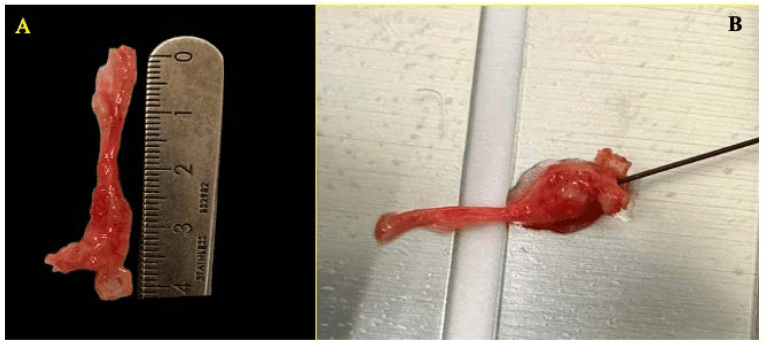
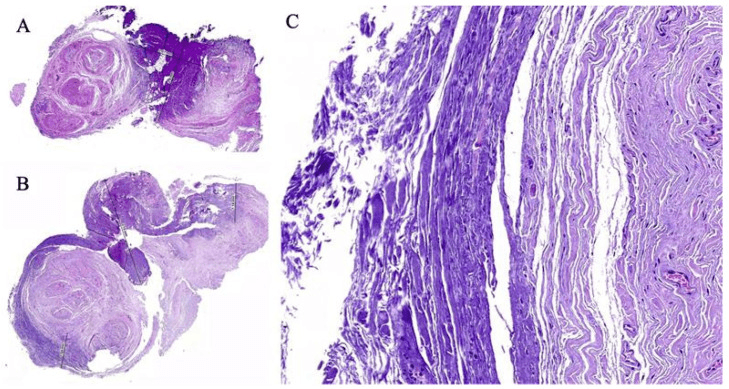
Where they fit. A reasonable trial after failed footwear, pad and steroid, before open surgery: cost-effectiveness modelling (Ross et al) shows that a sequential steroid-then-alcohol injection pathway can be the dominant strategy. They do not replace an accurate diagnosis, so confirm the lesion on ultrasound and exclude adjacent-space or alternative pathology first.
Nerve-Preserving Surgery: Intermetatarsal Ligament Decompression
The idea. Decompression (neurolysis) treats Morton's neuroma as an entrapment rather than a mass. Because the condition is fundamentally a compressive neuropathy beneath the transverse metatarsal ligament, dividing that ligament addresses the cause without sacrificing the nerve, which is left in continuity. Gauthier popularised isolated division of the transverse intermetatarsal ligament as a nerve-sparing alternative to excision.
Techniques.
- Open decompression / neurolysis - dorsal incision, division of the transverse intermetatarsal ligament and external neurolysis of the common digital nerve, which is preserved
- Endoscopic decompression of the intermetatarsal nerve (EDIN) - a minimally invasive endoscopic release of the ligament, aiming for quicker recovery and a smaller scar
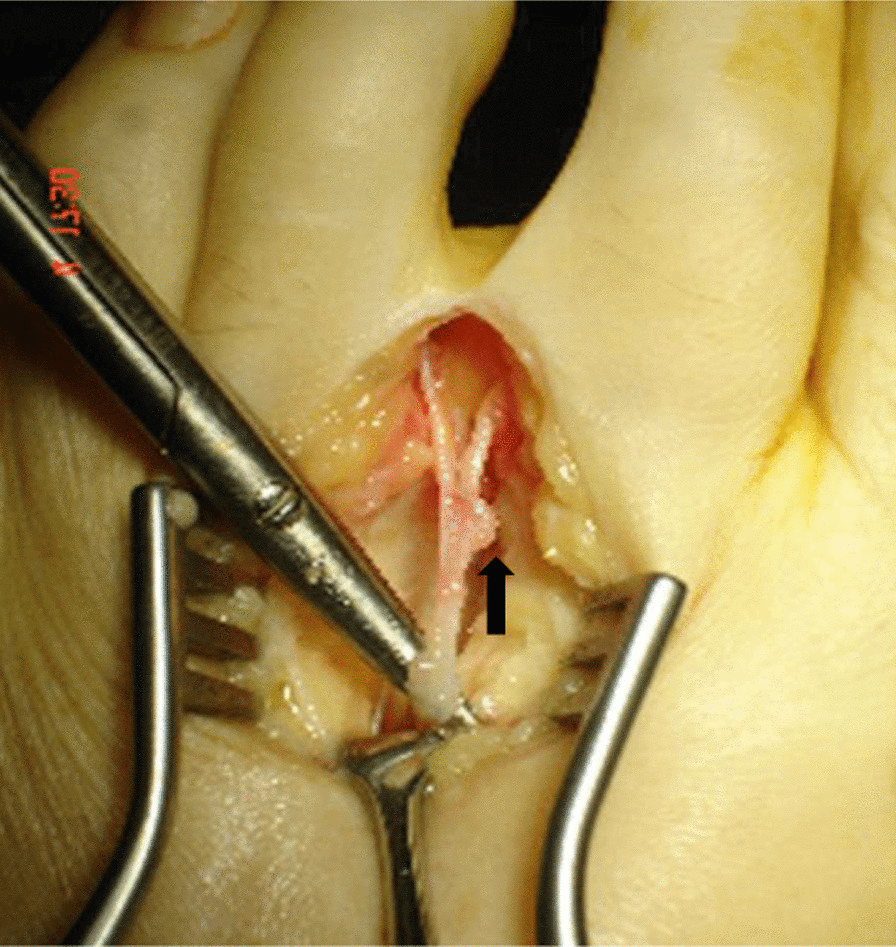
Against neurectomy. Decompression preserves toe sensation, so there is no expected numbness, avoids a stump neuroma, and if it fails, neurectomy remains available as salvage. Because the pathological nerve is left in situ, the risk of incomplete relief and recurrence is higher, and it is best suited to earlier disease or smaller lesions where fibrosis is limited. Larger, chronically fibrotic neuromas and clear mass lesions are generally better served by excision; decompression is attractive when preserving sensation is the priority.
Controversies & Areas of Uncertainty
- Does corticosteroid add anything over local anaesthetic? The 2013 Edinburgh RCT (Thomson, n=131) showed benefit over anaesthetic at three months; the 2017 double-blind RCT (Lizano-Diez, n=41) found no difference. The 2024 Cochrane review pools both and settles it in the negative — corticosteroid added to local anaesthetic gives little to no difference in pain (MD −6.31 mm, 95% CI −14.23 to 1.61, low certainty) while adding skin atrophy, hypopigmentation and fat pad atrophy. What the same review does support, at moderate certainty, is ultrasound guidance: guided injection beat unguided by −15.01 mm (95% CI −27.88 to −2.14). The live question is therefore not which drug but who holds the probe.
- Neurectomy vs nerve-preserving surgery. Decompression (transverse intermetatarsal ligament release) avoids permanent numbness and stump neuroma but carries a higher recurrence risk; excision sacrifices sensation but is more definitive. The optimal choice is unsettled and patient-specific.
- Dorsal vs plantar incision. The dorsal approach avoids a weight-bearing scar and allows earlier mobilisation; the plantar approach gives superior exposure and, when correctly placed, a low scar-problem rate. There is now one randomised comparison, pooled in the 2024 Cochrane review: at a mean of 34 months it found little to no difference in satisfaction or adverse events (75 participants, low certainty). The complication profiles differ rather than the totals — hypertrophic scarring after plantar incisions, and missed nerve, wound problems and reoperation after dorsal ones. Largely still surgeon preference, but no longer for want of any evidence.
- Size threshold for significance. A commonly cited cut-off is greater than 5mm, but symptoms correlate imperfectly with size and asymptomatic lesions are seen on imaging — imaging should confirm, not drive, the diagnosis.
- Minimally invasive alternatives. Alcohol sclerosing injection, radiofrequency ablation and cryoneurolysis show promise in case series but lack robust RCT support; reported success rates vary widely and reflect heterogeneous protocols.
- Bursa vs nerve. Whether the dominant pain generator is perineural fibrosis or an associated intermetatarsal bursitis is debated, which partly explains variable response to injection placement.
Related pages: Metatarsalgia for the umbrella presentation this sits inside, with Plantar Plate Insufficiency and Lesser MTP Arthritis for the two differentials most often mistaken for it; Metatarsal Stress Fractures and Freiberg Disease for the bony causes of forefoot pain; Tarsal Tunnel Syndrome for the proximal entrapment that can mimic or coexist; and Hallux Valgus for the deformity that crowds the lesser web spaces.
MCQ Practice Points
Q: Which intermetatarsal space is MOST commonly affected by Morton's neuroma?
A: 3rd web space (65%) - NOT the 2nd. This is a common exam trap. The 3rd common digital nerve receives branches from both medial and lateral plantar nerves, creating a larger and more susceptible nerve.
Q: What is the histological nature of Morton's neuroma?
A: Perineural fibrosis - NOT a true neuroma. The pathology shows fibrosis around the digital nerve, not proliferation of nerve tissue. This is why it's more accurately called "interdigital neuritis" or "intermetatarsal bursal swelling."
Q: What is Mulder's test and how is it performed?
A: Squeeze the metatarsal heads together with one hand while applying pressure in the interspace from plantar aspect. Positive test: Painful click (Mulder's click) as the neuroma subluxes between metatarsal heads. Sensitivity 60-80%.
Q: What is the advantage of the dorsal approach over the plantar approach for neurectomy?
A: Dorsal approach avoids a plantar scar (weight-bearing surface) and allows immediate weight-bearing. The plantar approach has better direct visualization but requires non-weight-bearing for 3 weeks and risks painful plantar scarring.
Self-Assessment Quiz
Viva Scenarios
Practise clinical reasoning and management decisions out loud
“A 48-year-old woman presents with burning pain in the forefoot radiating to the 3rd and 4th toes. The pain is worse with high heels and relieved by removing her shoes. Mulder's click is positive.”
“A 52-year-old woman has had Morton's neuroma symptoms for 9 months despite shoe modifications, metatarsal pad, and two corticosteroid injections. She wants to discuss surgical options.”
“A patient returns 6 months after Morton's neuroma excision with recurrent burning pain in the same web space. They are unhappy with the result.”
KEY FACTS
- 3rd web space MOST COMMON (65%) - not 2nd!
- NOT a true neuroma - perineural fibrosis
- Female 8:1, 4th-6th decade
- Burning pain radiating to adjacent toes
MULDER'S TEST
- Squeeze metatarsals laterally
- Press affected web space plantar to dorsal
- Positive = CLICK + symptom reproduction
- Specificity ~0.96, LR+ 13.14 - rules IN, not pathognomonic
CONSERVATIVE
- Wide toe box shoes (MOST IMPORTANT)
- Metatarsal pad PROXIMAL to MT heads
- Corticosteroid injection (30-40% relief)
- Trial 3-6 months before surgery
SURGERY
- Neurectomy - dorsal approach (most common)
- Divide transverse MT ligament, excise nerve
- 76.5% good/excellent at 15 years (Kasparek)
- Plantar approach: better view but scar risk
COMPLICATIONS
- NUMBNESS is EXPECTED - warn patient
- Stump neuroma 10-15% (most common complication)
- Plantar scar pain if plantar approach
- Recurrence 10-20%
EXAM TIPS
- Always say '3rd web most common'
- Call it 'perineural fibrosis' not 'neuroma'
- Emphasize post-op numbness is EXPECTED
- Know Mulder's technique
Evidence Base
Thomson et al - Methylprednisolone Injection RCT
- 131 patients (85% female, mean age 53), ultrasound-guided injection
- Corticosteroid + anaesthetic vs anaesthetic alone (placebo)
- Global foot-health 14.1 VAS points better at 3 months (p=0.002)
- Neuroma size on ultrasound did not influence treatment effect
Lizano-Diez et al - Steroid vs Local Anaesthetic RCT
- 41 patients, double-blind, 3 injections each arm
- Corticosteroid + anaesthetic NOT superior to anaesthetic alone at 3 and 6 months
- 48.5% requested surgical excision by study end (44% vs 53%, p=1.0)
- Tempers expectations of durable benefit from steroid
Matthews et al - Non-Surgical Interventions Meta-Analysis
- 25 studies (7 RCTs, 18 case series); 8 interventions
- Corticosteroid injection reduced VAS pain vs control (WMD -5.3, 95% CI -7.5 to -3.2)
- Steroid superior to footwear/padding (OR 6.0, 95% CI 1.9 to 19.2)
- No single gold-standard non-surgical intervention identified
Bignotti et al - Ultrasound vs MRI Meta-Analysis
- 14 studies, surgery as reference standard
- Ultrasound sensitivity 0.91 vs MRI 0.90 (no significant difference, p=0.88)
- MRI pooled specificity 1.00; ultrasound 0.85
- Ultrasound is the most cost-effective first-line imaging
Lee et al - Neurectomy 10-Year Follow-up
- 13 feet, mean 10.5-year follow-up after interdigital neurectomy
- VAS improved 8.6 to 2.4; good satisfaction in 61%
- 11/13 reported plantar numbness; 2 found it disabling
- Long-term results modestly worse than short/mid-term
Kundert et al - Plantar Longitudinal Approach
- 51 feet / 56 neuromas, mean 54-month follow-up
- VAS pain fell from 8 to 0.4 after plantar excision
- Complications 7.1%, scar problems 5.2%
- Plantar scar not bothersome if correctly positioned
Ettehadi et al - Revision Neurectomy (Dorsal)
- 25 feet, recurrent interdigital neuroma, mean 75-month follow-up
- Primary excision success quoted at ~74% in literature
- Revision via dorsal approach: 78% excellent/good (SEFAS)
- All re-excised masses confirmed neuroma histologically
Ross et al - Injection vs Surgery Cost-Effectiveness
- Decision-analytic model after failed conservative care
- Sequential steroid then alcohol injection was the dominant strategy
- ICER $4402/QALY vs no treatment; favoured in 74% of simulations
- If alcohol success fell under 40%, steroid-only became most cost-effective
AAOS / BOFAS Consensus - Diagnosis & Management
- Diagnosis is primarily clinical (web-space pain, Mulder's sign)
- Imaging (ultrasound first-line) to confirm or exclude alternatives
- Stepwise care: footwear/orthoses then injection then surgery
- Counsel expected post-neurectomy numbness and stump-neuroma risk
Matthews et al - Cochrane Review of All Treatments
- Only SIX randomised trials with 373 participants exist for the whole condition; no study had low risk of bias across all domains
- RESOLVES THE CONFLICT ABOVE: pooling both steroid RCTs on this page, corticosteroid added to local anaesthetic gives little to no difference in pain (MD -6.31 mm, 95% CI -14.23 to 1.61; low certainty)
- What DOES help is the guidance, not the drug: ultrasound-guided injection reduces pain versus non-guided (MD -15.01 mm, 95% CI -27.88 to -2.14) and improves function - both moderate certainty
- Steroid carried adverse events absent from the anaesthetic arm: skin atrophy 3.9%, hypopigmentation 3.9%, plantar fat pad atrophy 2.6%
- Plantar versus dorsal incision showed little to no difference in satisfaction or adverse events at a mean of 34 months
Pitcher et al - Diagnostic Accuracy of History and Examination
- MULDER-TYPE CLICKING IS NOT PATHOGNOMONIC: clicking reported by the patient had specificity 0.96 with a positive likelihood ratio of 13.14 - very good for ruling IN, but not diagnostic on its own
- The best RULE-OUT test is different and is often omitted: the modified web space tenderness test (thumb-index squeeze) had sensitivity 0.96 and a negative likelihood ratio of 0.04
- The classic symptoms perform poorly: 'walking on a pebble' sensitivity 43-57% with specificity 52%, burning pain sensitivity 54-57% with specificity 48% - both close to a coin toss
- Nine studies met inclusion; only ONE was at low risk of bias
Kasparek & Schneider - Open Excision at 15 Years
- The largest long-term series here: 81 patients, 98 feet, 111 neuromas, at a mean of 15.3 years after excision
- Excellent in 44 feet (44.9%) and good in 31 (31.6%) - so 76.5% good or excellent, with fair in 15.3% and poor in 8.2%
- EVERY ONE of the 8 poor results had an amputation (stump) neuroma - stump neuroma is not merely a complication, it is the failure mode
- Numbness in 72% of feet, but sensory deficit did NOT influence satisfaction (p = 0.646)
- Third web space neuromas did best; multiple neuromas did significantly worse than single (p = 0.038)