Surface Bone Tumour | Hands and Feet | High Local Recurrence | Benign but Mimics Malignancy
- Nora lesion is a benign surface-based osteocartilaginous proliferation most common in the hands and feet
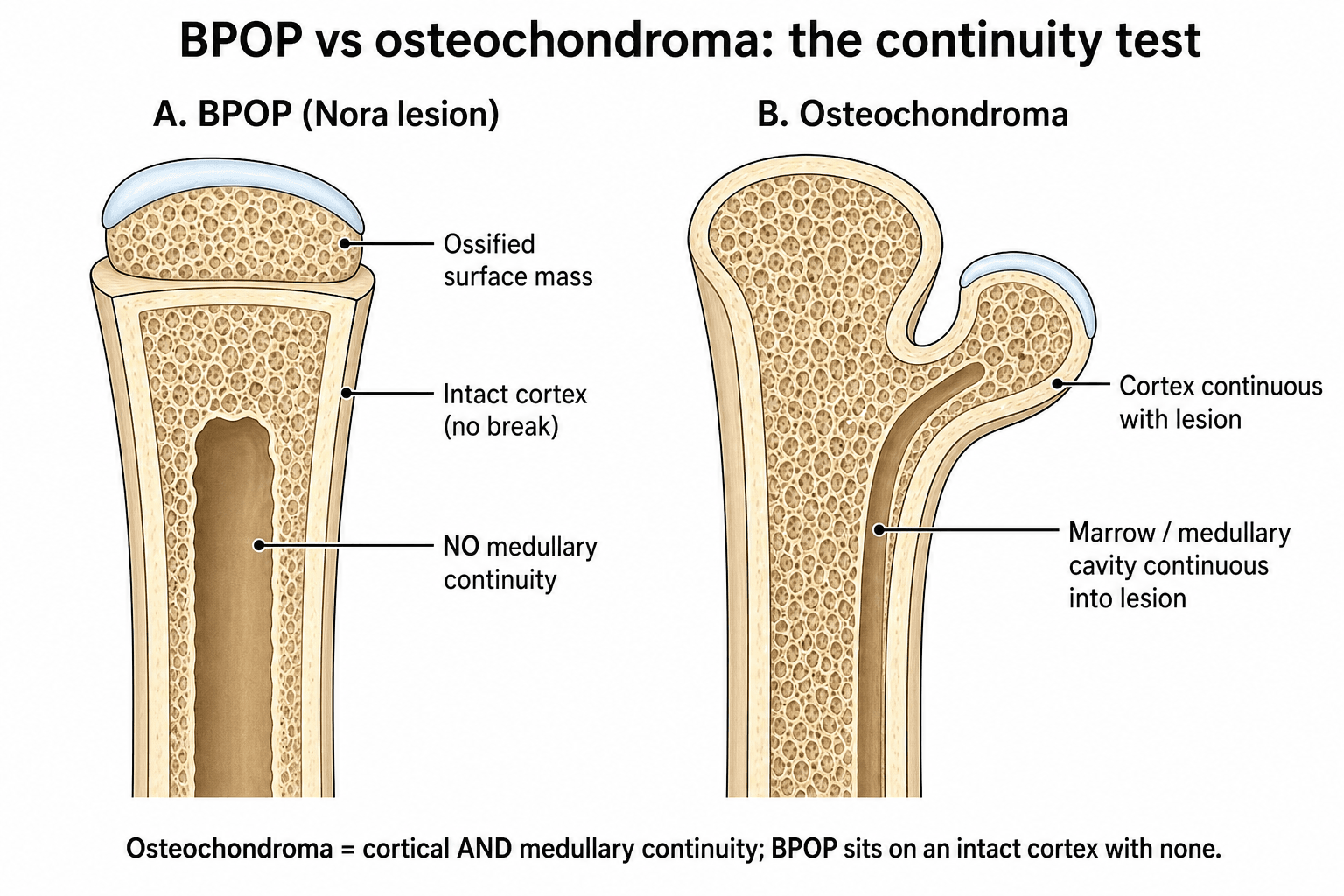
- No medullary continuity with the host bone (unlike osteochondroma) — the single most discriminating feature
- Cartilage appears bizarre and hypercellular on histology, frequently mistaken for chondrosarcoma — overdiagnosis is a well-known pitfall
- Local recurrence in roughly half after marginal excision - 18 of 35 in Nora's original series and about 55 percent of the 40 followed by Meneses - with no malignant transformation reported
- Treatment is marginal excision. Re-excision controls most recurrences, but do not promise it is curative: Nora recorded at least 8 lesions that recurred more than once, so a second operation reduces the risk rather than ending it
- “BPOP = no medullary continuity (unlike osteochondroma)
- “Hands and feet = think Nora lesion before parosteal osteosarcoma
- “Bizarre cartilage does NOT mean malignancy in this context
- “High recurrence is expected; counsel patients preoperatively
Overview and Epidemiology
The lesion. Bizarre parosteal osteochondromatous proliferation, BPOP, is a benign surface lesion of bone that produces a well-circumscribed mass of bone and cartilage attached to the cortex. Nora and colleagues described it in 1983, and the name that stuck is theirs.
Why it matters. The lesion is rare, but it has a striking tendency to be misdiagnosed as chondrosarcoma or parosteal osteosarcoma on histology alone. The cartilage is bizarre and hypercellular and looks malignant, yet the lesion is entirely benign; knowing it exists is what prevents an unnecessary wide resection or amputation, and the hands and feet are exactly where preserving function matters most.
Who. The peak is usually given as the second and third decades, though the pooled review in the evidence section places it in the third and fourth; the range runs from childhood to the elderly (8 to 73 in Meneses's series, 14 to 74 in Nora's). There is no strong sex predilection, with a slight female predominance in some series. The exact incidence is unknown; BPOP accounts for a minority of surface bone lesions.
Where. Hands and feet predominate, but not overwhelmingly:
- Hands 55%: phalanges most often, then metacarpals
- Feet 15%: metatarsals and phalanges
- Long bones 25%: one BPOP in four is not acral
That last figure is the one to remember. An acral site is the strongest clinical clue and raises the prior for BPOP; it does not define the lesion, and the long-bone BPOP is the one that gets resected as a sarcoma.
How it presents. A painless or mildly tender swelling on the surface of a hand or foot bone, enlarging slowly over months to years. It may cause mechanical irritation, deformity of the adjacent digit or limited motion. A preceding injury is often not identified, although trauma has been proposed as a trigger.
Pathophysiology
Reactive or neoplastic. BPOP has been classified as a reactive or pseudoneoplastic proliferation rather than a true neoplasm, within the spectrum of florid reactive periostitis. The aetiology is unknown; the proposed mechanisms are reactive change after trauma or chronic irritation. Molecular studies have since demonstrated rearrangements of the type I collagen genes COL1A1 and COL1A2, often as fusions with the non-coding RNA genes LINC-PINT and MIR29B2CHG, which supports a clonal but benign process and suggests it may be a benign neoplasm. The distinction has no practical impact on management.
What it makes. Mature bone and cartilage growing on the cortical surface, the cartilage cap hypercellular with enlarged chondrocytes and bizarre nuclei that mimic chondrosarcoma. There is no evidence of true malignant transformation. The mass sits on the cortex without any connection to the medullary canal, and that is the feature everything else on this page comes back to.
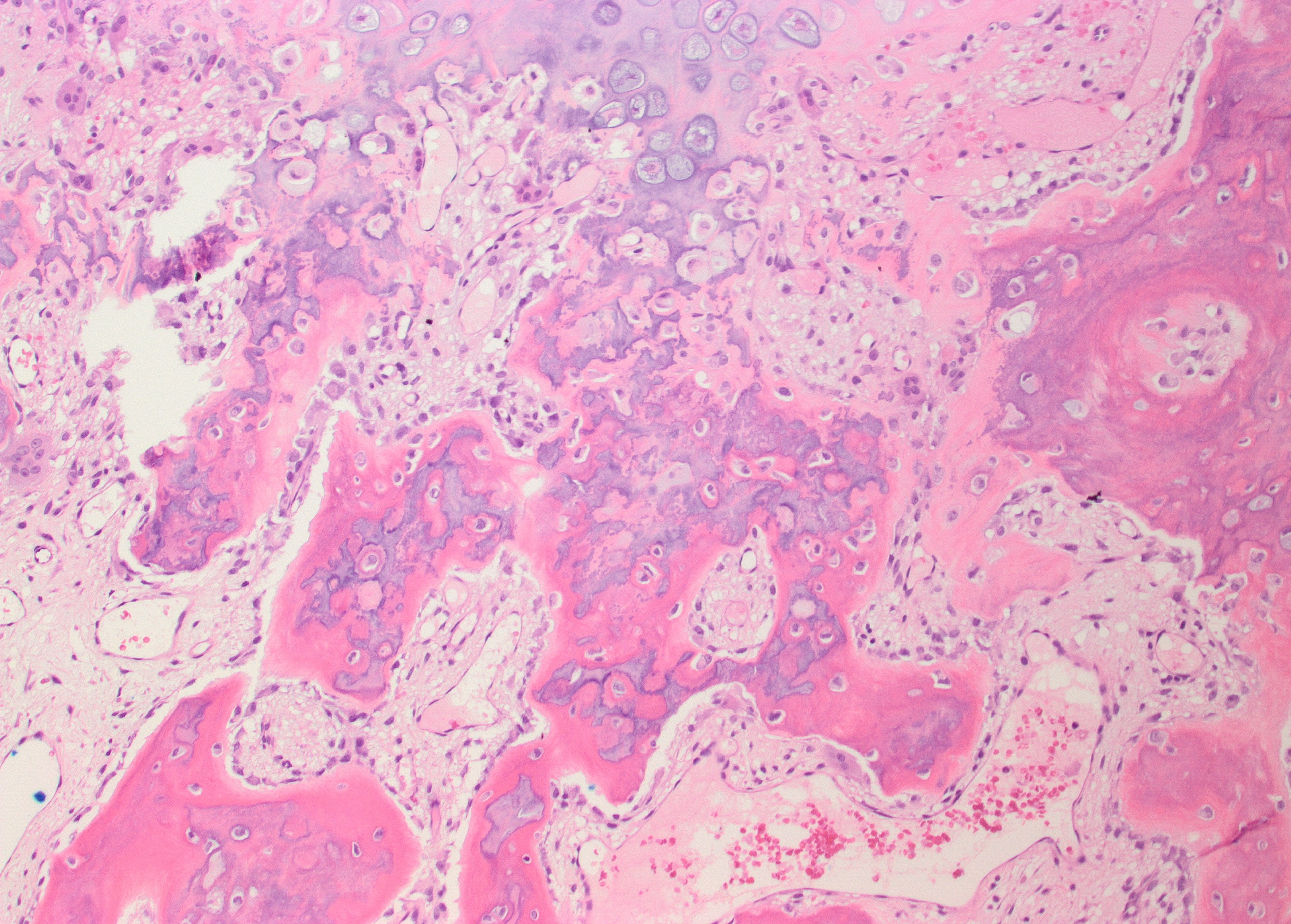
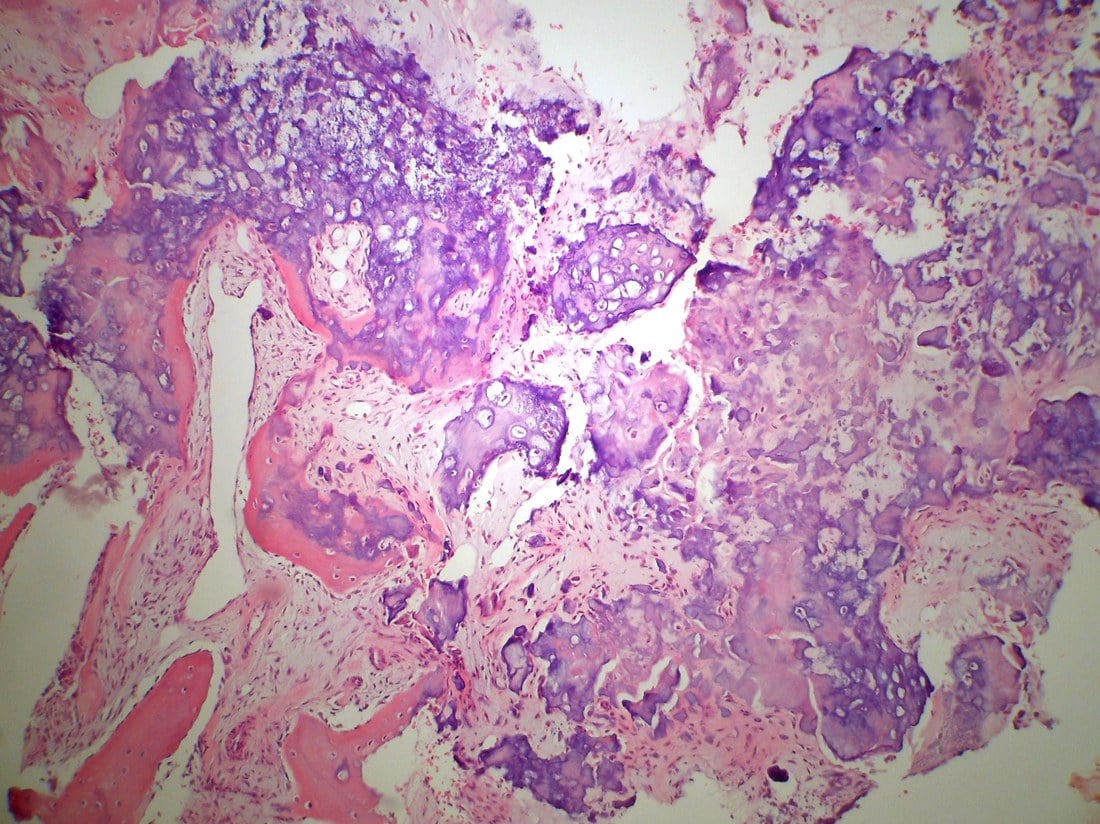
Histopathology. The bone component is mature, well-formed trabecular bone with osteoblastic rimming, capped by cartilage. The cartilage is hypercellular with enlarged, bizarre chondrocytes and may show binucleated cells and myxoid change. Meneses drew attention to a distinctive blue (basophilic) tinctorial quality of the lesional bone, a helpful diagnostic clue.
What is absent. Despite the alarming appearance there are no mitoses, no true cytologic atypia and no infiltrative growth. The border is pushing and well circumscribed, and unlike chondrosarcoma there is no permeation of pre-existing bone trabeculae. Those absences, together with the clinical and radiological setting, are what separate BPOP from its malignant mimics:
- Nora Lesion
- Hypercellular cartilage (bizarre but orderly)
- Chondrosarcoma
- Hypercellular with atypia and permeation
- Parosteal Osteosarcoma
- Low-grade osteoid in fibrous stroma
- Nora Lesion
- Enlarged, hyperchromatic but no pleomorphism or mitoses
- Chondrosarcoma
- Pleomorphic, hyperchromatic, mitoses present
- Parosteal Osteosarcoma
- Mild atypia in low-grade forms
- Nora Lesion
- Pushing, well-circumscribed border
- Chondrosarcoma
- Infiltrative, permeative into native bone
- Parosteal Osteosarcoma
- Surface-based with wrapping (tail sign on imaging)
- Nora Lesion
- Mature trabecular bone with osteoblastic rimming
- Chondrosarcoma
- No organised bone formation
- Parosteal Osteosarcoma
- Osteoid production within spindle cell stroma
The molecular story. Older texts teach two recurrent chromosomal abnormalities in BPOP, t(1;17)(q32-42;q21-23) and inv(7)(q21.1-22q31.3-32), described long before the genes at the breakpoints were known. They are still correct, and they are the same finding as the fusions: COL1A1 sits at 17q21.33 and MIR29B2CHG at 1q32.2, giving the t(1;17); COL1A2 sits at 7q21.3 and LINC-PINT at 7q32.3, giving the inv(7). Karyotype and fusion are one event seen at two resolutions.
What that means in practice. BPOP is not associated with hereditary multiple exostoses (EXT1/EXT2) or any other hereditary syndrome. Molecular testing can help separate BPOP from osteochondroma and parosteal osteosarcoma in difficult cases, though it is not routinely available and changes practice only in selected referral cases.
The Reactive Surface-Lesion Spectrum and Turret Exostosis
BPOP sits within a family of reactive surface lesions of the small bones. One classic member, turret exostosis, is worth knowing because it shares the same reactive pathogenesis and acral site. The others have pages of their own: subungual exostosis, myositis ossificans and, on the neoplastic side of the differential, osteochondroma, the lesion BPOP is separated from by the absence of cortico-medullary continuity.
Turret exostosis. A smooth, dome- or turret-shaped subperiosteal ossification on the dorsum (extensor surface) of a proximal or middle phalanx, arising from a post-traumatic subperiosteal haematoma that ossifies. Compared with BPOP it is a more mature, organised excrescence, and it often limits extensor tendon gliding and finger extension. Excise it once it has matured, since early excision raises recurrence.
- Typical site
- Phalanges
- Key feature
- Fasciitis-like spindle-cell proliferation with reactive new bone (least organised)
- Behaviour
- Reactive; may recur
- Typical site
- Dorsum of proximal/middle phalanx
- Key feature
- Smooth dome of mature subperiosteal bone after a haematoma; limits extension
- Behaviour
- Reactive; lower recurrence than BPOP
- Typical site
- Phalanges, metacarpals, metatarsals
- Key feature
- Organised mature bone with a bizarre cartilage cap; no medullary continuity
- Behaviour
- Benign but recurs in about half
- Typical site
- Distal phalanx (great toe, thumb)
- Key feature
- Mature bone under the nail
- Behaviour
- Benign; excise once mature
One process or several. Some authors propose that these are stages of a single reactive process, florid reactive periostitis evolving through turret exostosis to BPOP, which would explain their shared site, trauma association and overlapping histology. Whatever the precise relationship, the practical message is the same: an acral surface lesion in this spectrum is benign and treated by excision once mature, not as a sarcoma.
Telling the members apart on imaging. Subungual exostosis may lack medullary continuity just as BPOP does; its subungual location, fibrocartilaginous cap and distal-phalanx origin place it in a different pattern. Florid reactive periostitis starts as a soft-tissue mass with peripheral calcification and mild periosteal thickening over an intact cortex, evolves toward more organised mineralisation, and can mimic an aggressive surface tumour while it matures. Myositis ossificans is intramuscular and separate from the parent cortex, with mature peripheral mineralisation around a central lucency, the reverse zonation of many malignant ossifying lesions.
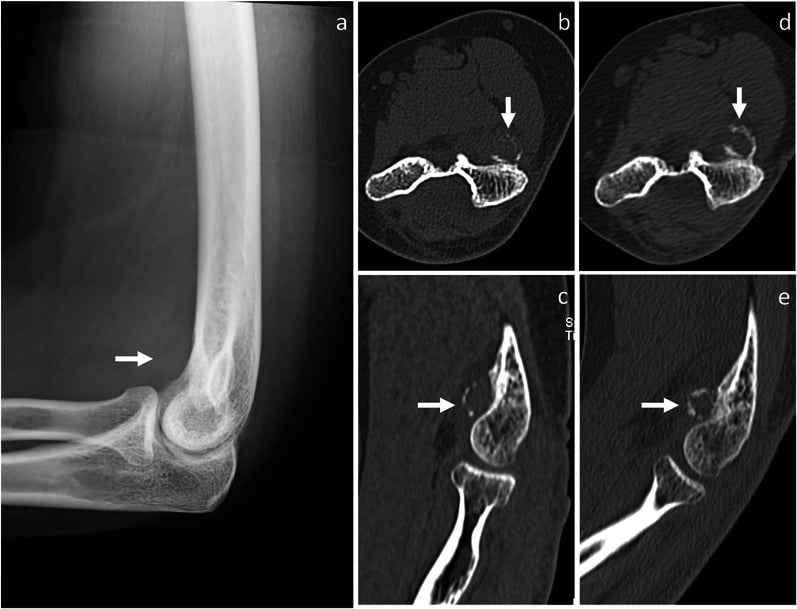
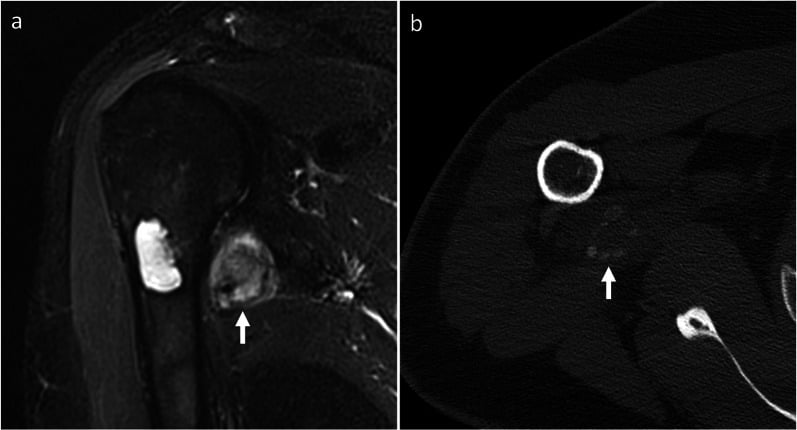
Clinical Assessment
History. A slowly growing mass over months to years, usually painless or mildly tender. The patient may or may not recall a preceding injury, and may have noticed progressive deformity or a limited range of motion in the digit.
Examination. A firm, non-mobile mass on the surface of a phalanx, metacarpal or metatarsal: bony hard, fixed to the underlying bone, non-tender or mildly tender. The overlying skin is typically normal, without erythema or warmth. Confirm the digit is neurovascularly intact distally and, with a large lesion, check for nerve compression.
The diagnosis requires correlation of all three domains. Biopsy interpretation without knowledge of the radiologic appearance and the clinical setting (young patient, hand or foot, surface-based lesion) is the primary cause of misdiagnosis as sarcoma. Make sure the pathologist has the imaging and the clinical details before a final diagnosis is rendered.
Investigations
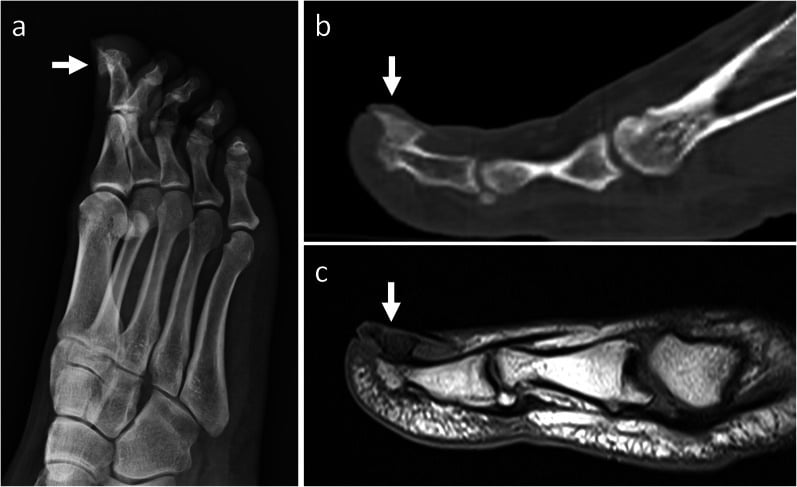
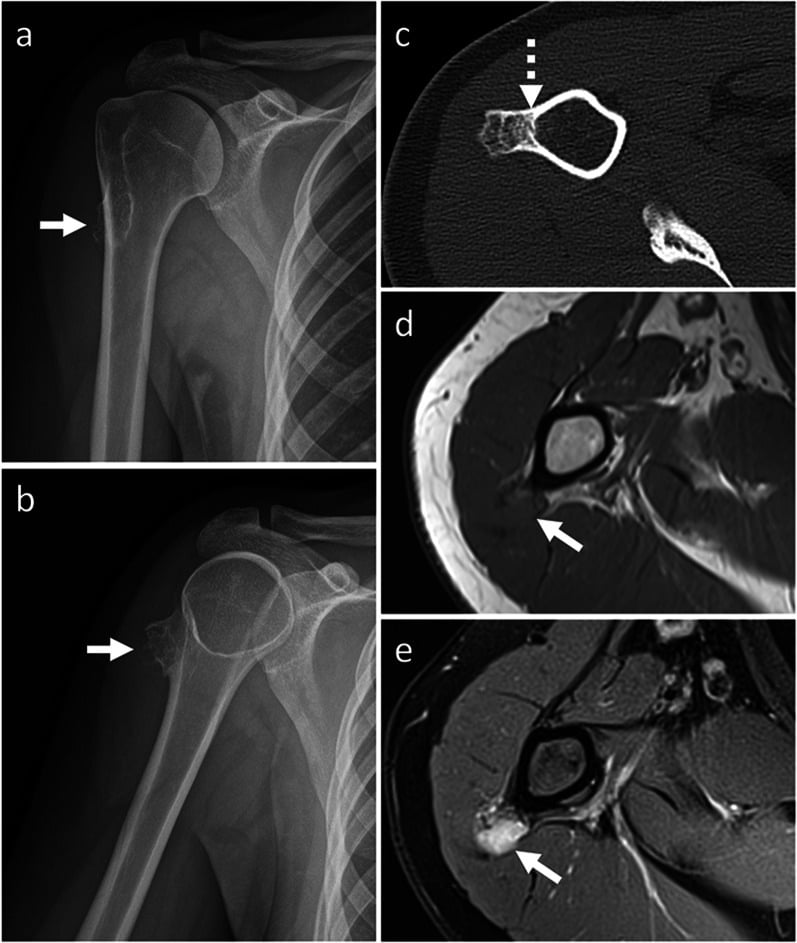
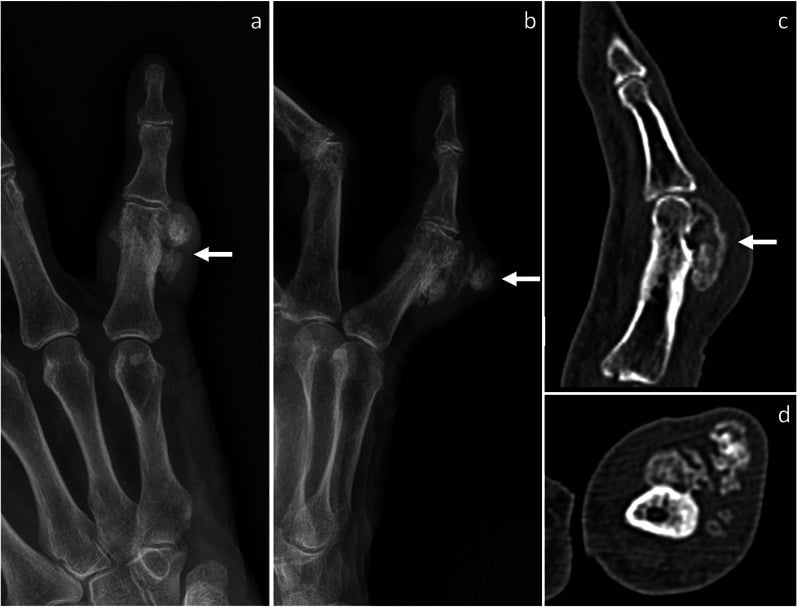
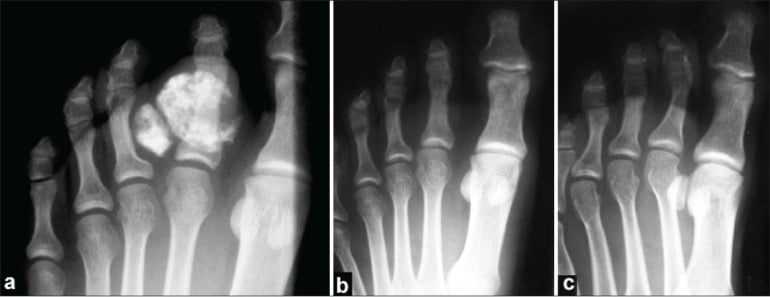
Radiographs. PA, lateral and oblique views of the affected digit or foot. The hallmark is a well-circumscribed surface mass of mature bone on the cortex of a short tubular bone with no medullary continuity, and well-defined borders suggest benignity. The rest of the picture:
- The underlying cortex is intact, though it may show slight thinning or scalloping
- The cartilage cap may be visible as a radiolucent zone at the periphery, and the cartilage is typically more prominent than expected for the size of the lesion
- There is no soft-tissue mass and no aggressive feature
Cortical destruction would raise concern for malignancy. Read that with one caveat from the evidence section: Gitto's review records cortical interruption and medullary involvement in BPOP, rarely, so their presence does not by itself exclude the diagnosis.
CT. The best modality for confirming the absence of medullary continuity and for defining the interface between lesion and cortex. It shows the mature bone mass on the cortical surface, no connection to the medullary canal and an intact underlying cortex, and it defines the extent of the lesion for planning the excision.
MRI. Requested when there is concern about soft-tissue extension or nerve or vessel involvement, or to help separate the lesion from a sarcoma. BPOP is a well-defined surface lesion with the signal characteristics of a cartilage cap, without marrow oedema or a soft-tissue mass; MRI helps exclude the aggressive features expected in parosteal osteosarcoma.
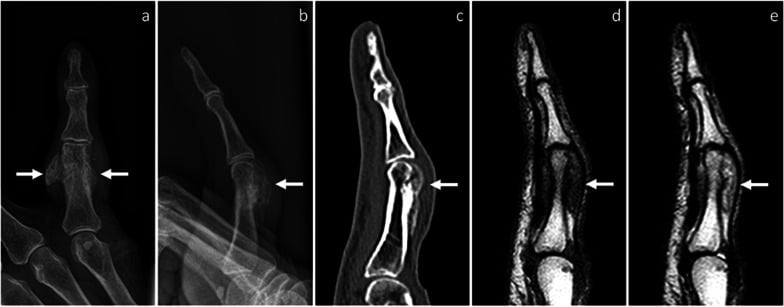
If the medullary canal of the host bone is continuous with the lesion, it is an osteochondroma. If continuity is absent and the lesion is on a hand or foot bone, BPOP is the leading diagnosis.
Differential Diagnosis
The differential is the other surface lesions of bone, and the first question for every one of them is whether the medullary canal runs into the mass.
- Location
- Phalanges, MC/MT (hands and feet)
- Medullary Continuity
- Absent
- Discriminating Feature
- Bizarre cartilage, high recurrence, benign behaviour
- Location
- Long bone metaphyses (knee, humerus)
- Medullary Continuity
- Present
- Discriminating Feature
- Continuous medullary canal; normal cartilage cap
- Location
- Distal femur posterior (long bones)
- Medullary Continuity
- Absent
- Discriminating Feature
- Low-grade osteoid in fibrous stroma; radiologic wrapping/tail sign
- Location
- Surface of long bones (humerus, femur)
- Medullary Continuity
- Absent
- Discriminating Feature
- Purely cartilaginous; no bone formation within the mass
- Location
- Phalanges, hands
- Medullary Continuity
- N/A
- Discriminating Feature
- More spindle cell component; less organised bone
- Location
- Distal phalanx (great toe, thumb)
- Medullary Continuity
- Absent
- Discriminating Feature
- Subungual location; clinically distinct presentation
Osteochondroma. The continuity-positive mimic: it flares out of the parent bone, whose cortex and medullary canal run on into it, and that continuity is diagnostic. It arises from the metaphysis of a long bone (knee, proximal humerus) in adolescents with an active growth plate, sessile or pedunculated, under a normal-appearing cartilage cap that is thin and uniform on MRI. Both lesions are benign, but BPOP recurs far more often after excision; osteochondroma is excised if symptomatic.
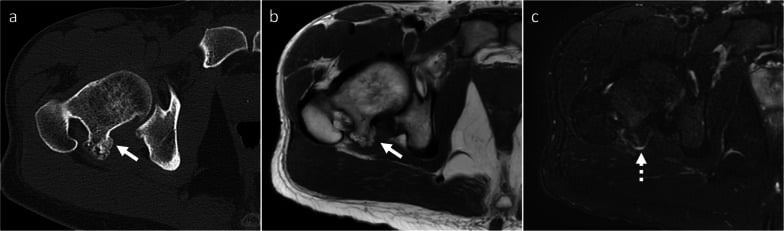
The cartilage lesions of long bones. Periosteal chondroma is purely cartilaginous, with no bone formation within the mass, on the surface of the humerus or femur. Periosteal chondrosarcoma is the malignant surface cartilage lesion: a long-bone site, cortical destruction and chondroid MRI signal are warning features against BPOP, and biopsy planning belongs in a sarcoma unit.
Parosteal Osteosarcoma: The Dangerous Mimic
Parosteal osteosarcoma is the malignant surface lesion BPOP must never be confused with. It is the commonest surface (juxtacortical) osteosarcoma, a low-grade tumour of slightly older patients (third to fourth decade), arising classically on the posterior metaphysis of the distal femur and other long bones rather than the hands and feet. Both it and BPOP are surface lesions without medullary continuity, so continuity does not separate them; site, the radiological signs and the histology do. Full detail is on parosteal osteosarcoma.
- Parosteal osteosarcoma
- Long bones (posterior distal femur)
- Nora lesion (BPOP)
- Hands and feet (phalanges, MC/MT)
- Parosteal osteosarcoma
- Heavily ossified lobulated mass 'stuck on' the cortex with a radiolucent string/cleft sign between tumour and cortex
- Nora lesion (BPOP)
- Well-circumscribed acral surface mass, no medullary continuity
- Parosteal osteosarcoma
- Low-grade well-formed parallel bony trabeculae in a bland fibrous (spindle) stroma
- Nora lesion (BPOP)
- Mature bone with a bizarre hypercellular cartilage cap
- Parosteal osteosarcoma
- Low-grade malignant; can dedifferentiate to high-grade if neglected
- Nora lesion (BPOP)
- Benign; recurs but never metastasises
- Parosteal osteosarcoma
- Wide (limb-sparing) resection plus oncology MDT
- Nora lesion (BPOP)
- Marginal excision
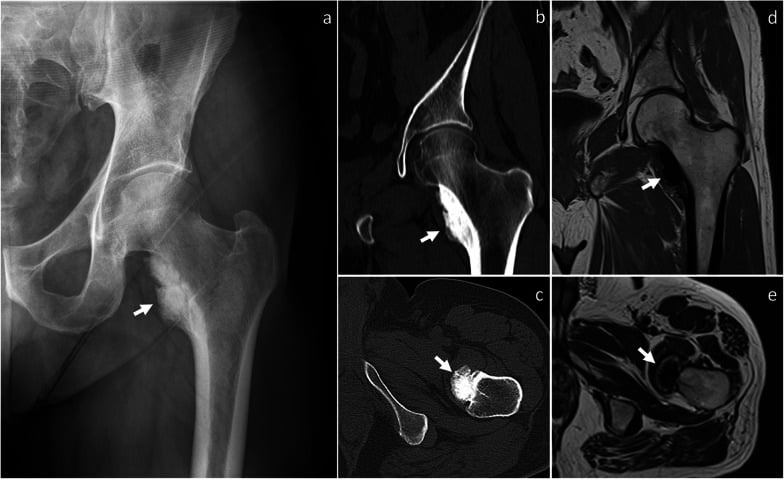
A surface lesion on a long bone should raise parosteal osteosarcoma immediately, and the reasoning is asymmetric. A surface lesion on a hand or foot phalanx is far more likely to be BPOP, and that direction is safe. The reverse is not: 25% of BPOPs arise in long bones, so "it is on a femur, therefore it is not BPOP" is wrong one time in four, and wrong in the direction that costs the patient a limb segment. A long-bone surface lesion is the situation in which the radiological features (cortico-medullary continuity, the string/cleft sign, the tail) and the histology carry the decision, not the postcode. Cortical destruction, medullary extension, aggressive morphology or an atypical site must override a casual BPOP label and prompt sarcoma referral; this is the setting that earns a biopsy and specialist pathology review rather than a resection based on location.
Management Algorithm
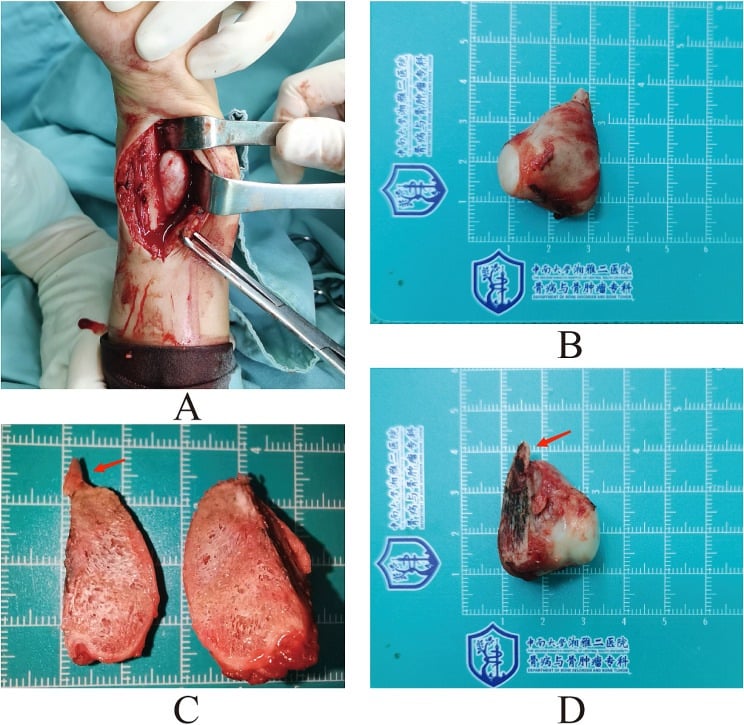
The operation. Marginal excision: complete removal of the surface mass with a narrow margin of normal tissue, preserving the adjacent neurovascular structures and joint function. Wide resection or amputation is never indicated for a Nora lesion; the high recurrence rate is expected and is managed by re-excision, and over-treatment after a misdiagnosis of sarcoma is the greatest iatrogenic harm this lesion causes.
Before surgery. Review the CT to confirm the surface location and plan the approach. A pre-operative core needle biopsy is considered only if the diagnosis is uncertain; when the radiological appearance is classic for BPOP in a characteristic location, excision may proceed without a prior biopsy.
Consent. Roughly half of these lesions recur, typically within 2 years: 18 of 35 (51%) in Nora's original series and about 55% of the 40 patients Meneses could follow. A further excision may then be needed, and it makes recurrence much less likely rather than certainly ending it, because at least 8 of Nora's lesions recurred more than once. No distant metastasis and no malignant transformation has been reported in either series.
The one modifiable factor. Michelsen's hand series had 1 recurrence in 10 cases, which he attributed to excising the pseudocapsule and the periosteum beneath the lesion and decorticating any abnormal host cortex. Ten patients and no control group, so treat that as a reason to operate meticulously rather than as the rate to quote at consent.
Surgical Protocol
- Direct approach over the mass, protecting the neurovascular structures
- Marginal excision: remove the mass with a thin cuff of surrounding tissue
- Smooth the underlying cortex and remove all visible lesion
- Standard soft-tissue closure; local tissue rearrangement if the defect is large
- Brief splinting for soft-tissue healing (1-2 weeks for digits)
- Early range-of-motion exercises once the wound has healed
- Specimen reviewed by a musculoskeletal pathologist with the clinical and radiological details
- Clinical and radiographic review at 3, 6 and 12 months, then annually
- Most recurrences appear within 2 years, but late recurrences have been reported
- Compare each film with the baseline imaging, and reassess the diagnosis if growth is rapid or destructive
When it comes back. Recurrence does not indicate malignancy or a need for more aggressive surgery; each recurrence is treated by repeat marginal excision, with the diagnosis confirmed again on pathology review.
- Approach
- Repeat marginal excision
- Prognosis
- Excellent — most are cured after re-excision
- Key Points
- Confirm diagnosis again with pathology review
- Approach
- Repeat marginal excision
- Prognosis
- Good — most are controlled, though some lesions recur more than once
- Key Points
- Consider en bloc excision if persistent
- Approach
- En bloc cortical excision or curettage
- Prognosis
- Good — no malignant transformation reported
- Key Points
- Never wide resection or amputation
NORANora Lesion Key Features
Hook:NORA: No medullary continuity, Osteocartilaginous, Recurs a lot, Acral sites!
Complications
The greatest risk is misdiagnosis, not the lesion itself. Multiple case reports document unnecessary wide resection or amputation for a BPOP misread as chondrosarcoma or parosteal osteosarcoma, which is why the clinical-radiologic-pathologic correlation above is mandatory before any aggressive plan for a surface lesion of the hand or foot. The rest of the complications come from recurrence and from the surgery itself.
- Incidence
- About half
- Risk Factors
- Incomplete excision, location at joint-adjacent site
- Management
- Repeat marginal excision; curettage of the cortical base
- Incidence
- Reported in multiple case series
- Risk Factors
- Pathologist unfamiliar with BPOP, inadequate clinical info
- Management
- Always request expert musculoskeletal pathology review
- Incidence
- Variable, dependent on approach
- Risk Factors
- Multiple excisions, dorsal approach to digit
- Management
- Hand therapy, early mobilisation, splinting
- Incidence
- Rare
- Risk Factors
- Large lesion, revision surgery, poor anatomy
- Management
- Careful dissection; loupe magnification for digital surgery
- Incidence
- Rare
- Risk Factors
- Large lesion weakening the cortex
- Management
- Protect digit during healing; internal fixation rarely needed
Outcomes and Prognosis
Nora lesion is universally benign. No case of malignant transformation has been reported in either of the two large series, and the prognosis for function is excellent when it is managed correctly. After a single marginal excision without recurrence the patient keeps full hand or digital function; after a re-excision function is good, with minor stiffness possible; after multiple excisions the lesion is eventually cured, though there may be cumulative stiffness from the repeated surgery. Unnecessary functional loss follows a wide resection or amputation for a lesion misdiagnosed as sarcoma, and that is preventable with expert pathology review.
Guidelines, Registries & Global Practice
- Rare worldwide: No population-based incidence data; reported across all continents
- No ethnic predilection: Cases reported in diverse populations
- Age distribution: Most common in 2nd and 3rd decades but ranges from adolescents to the elderly
- Acral predilection: The hand and foot predominance is consistent across all reported series globally
- High-resource: CT or MRI for characterization, musculoskeletal pathology review, hand/foot surgeon excision
- Limited-resource: Plain radiographs often sufficient for diagnosis; excision by any trained orthopaedic surgeon
- Universal principle: The diagnosis is primarily clinical-radiologic; pathology review confirms but should not be interpreted in isolation
- Key message: In any resource setting, avoid misdiagnosis as sarcoma by correlating clinical, radiographic, and histologic findings
- Diagnostic Emphasis
- Intermediate/benign surface lesion; bizarre cartilage is characteristic
- Treatment
- Marginal excision; re-excision for recurrence
- Key Message
- BPOP is a recognized entity; do not confuse with osteochondroma or parosteal osteosarcoma
- Diagnostic Emphasis
- Clinical-radiologic-pathologic correlation essential; biopsy if uncertain
- Treatment
- Marginal excision by tumour-trained surgeon
- Key Message
- Surface lesions of hands/feet warrant specialist path review
- Diagnostic Emphasis
- CT to confirm no medullary continuity; MRI if sarcoma concern
- Treatment
- Marginal excision; MDT discussion if diagnosis uncertain
- Key Message
- Do not overtreat; BPOP recurs but never metastasizes
- Diagnostic Emphasis
- Histology mimics chondrosarcoma; clinical context essential
- Treatment
- Excision with narrow margins; never wide resection
- Key Message
- Misdiagnosis is the greatest risk — educate pathologists
The evidence for BPOP is derived entirely from case series, case reports, and review articles. There are no randomized trials and no prospectively validated diagnostic criteria. The diagnosis rests on the combination of characteristic acral location, absence of medullary continuity on imaging, and typical (though alarming-appearing) histology with benign clinical behaviour.
Every orthopaedic surgeon and pathologist should know Nora lesion because:
- It is the most commonly overdiagnosed as sarcoma among surface bone lesions
- Unnecessary amputations and wide resections have been reported due to this misdiagnosis
- The single most discriminating feature is no medullary continuity on CT
- A surface bone mass on a hand or foot in a young patient with no medullary continuity should prompt consideration of BPOP before sarcoma
Controversies & Areas of Uncertainty
BPOP has historically been considered a reactive process, but molecular studies showing clonal gene rearrangements (COL1A1, COL1A2) suggest it may be a benign neoplasm. The distinction has no practical impact on management but is of academic interest.
Some authors recommend biopsy before excision if there is diagnostic uncertainty; others argue that classic radiologic features are sufficient to proceed directly to excision. No consensus exists, and practice varies by institution and surgeon experience.
Marginal excision is universally recommended, but the extent of cortical curettage or smoothing at the base is variable. Some surgeons advocate more aggressive local treatment of the cortical bed to reduce recurrence, but evidence is anecdotal.
Most recurrences occur within 2 years, but late recurrences have been reported. There is no consensus on the optimal duration of follow-up. Most authors recommend clinical and radiographic review for at least 2-3 years post-operatively.
Exam Viva Scenarios
Practise clinical reasoning and management decisions out loud
“A 24-year-old woman presents with a slowly enlarging, painless firm mass on the radial aspect of the proximal phalanx of her right middle finger. It has been present for 18 months. Plain radiographs show a well-circumscribed bony mass arising from the cortical surface of the proximal phalanx. There is no connection between the lesion and the medullary canal. The underlying cortex is intact. What is your diagnosis and management?”
“A 30-year-old man underwent excision of a surface bone lesion from his third metatarsal 14 months ago. The original pathology report described 'bizarre parosteal osteochondromatous proliferation consistent with Nora lesion.' He now presents with a recurrent mass at the same site. Radiographs show a similar-appearing surface bone mass. The patient is anxious that the lesion may be malignant. How do you manage this?”
Definition & Key Features
- Benign surface osteocartilaginous proliferation of hands and feet
- No medullary continuity with host bone (vs osteochondroma)
- Bizarre hypercellular cartilage on histology mimics chondrosarcoma
- First described by Nora et al. in 1983
Diagnosis
- Clinical: young patient, painless surface mass on a digit/hand/foot bone
- Radiologic: well-circumscribed surface mass, no medullary continuity on CT
- Pathologic: mature bone with bizarre cartilage cap, no mitoses or permeation
- Mandatory clinical-radiologic-pathologic correlation
Differential Diagnosis
- Osteochondroma: has medullary continuity (the key difference)
- Parosteal osteosarcoma: long bones, tail/wrapping sign, low-grade osteoid
- Periosteal chondroma: purely cartilaginous, no bone in the mass
- Florid reactive periostitis: more spindle cell, less organized bone
Treatment & Recurrence
- Marginal excision is the definitive treatment — never wide resection
- Recurrence in about half - 51% (18/35) Nora, 55% Meneses - typically within 2 years
- Re-excision controls most recurrences, but at least 8 of Nora's lesions recurred more than once - say 'much less likely', not 'cured'
- No malignant transformation has ever been reported
Critical Exam Pitfalls
- Do not misdiagnose as chondrosarcoma based on histology alone
- Do not perform wide resection or amputation for BPOP
- Always check for medullary continuity — present = osteochondroma, absent = BPOP
- Hands and feet + surface mass + young patient = think BPOP first
Evidence Base and Key Trials
Bizarre parosteal osteochondromatous proliferations of the hands and feet
- Original description of 35 cases (ages 14-74) of a distinct clinicopathologic entity
- Surface-based osteocartilaginous lesions confined to proximal phalanges, metacarpals and metatarsals, with bizarre, binucleate chondrocytes mimicking chondrosarcoma
- Local recurrence in roughly half the series (18 of 35), with at least 8 lesions recurring more than once
- Behaviour as a malignant tumour is very rare or non-existent despite the concerning histologic appearance
Bizarre parosteal osteochondromatous proliferation of bone (Nora's lesion)
- Largest early series — 65 cases (ages 8-73, mean 33.9): 36 hand, 10 foot and 17 long-bone, establishing that BPOP also affects long bones
- Distinctive blue (basophilic) tinctorial quality of the lesional bone is a helpful diagnostic clue
- Recurrence in approximately 55 percent (of the 40 with follow-up); no metastasis in any case
- Hypercellular cartilage with bizarre chondrocytes can be mistaken for parosteal osteosarcoma — regarded as a form of heterotopic ossification