Medial Knee Pain | Sartorius-Gracilis-Semitendinosus | Common in Obese and OA
- SGS mnemonic - Sartorius, Gracilis, Semitendinosus form the pes anserinus (goose foot)
- Location 5-6cm below joint line - distinguishes from medial compartment OA or MCL pathology
- Associated with obesity and knee OA - treat underlying conditions for lasting relief
- Injection technique - target 2cm distal and 2cm medial to tibial tuberosity
- Often misdiagnosed as medial meniscal tear or MCL injury - key differentiating feature is tenderness location
- “Pes anserine tendons insert on anteromedial tibia 5-6cm below joint line
- “All three muscles cross both hip and knee joints (except short head biceps)
- “Saphenous nerve runs posterior to pes anserinus - at risk with injection
- “Bursa lies between MCL and conjoined tendon insertion
Overview and Epidemiology
Pes anserine bursitis is inflammation of the anserine bursa on the anteromedial aspect of the proximal tibia. "Pes anserinus" is Latin for "goose foot", after the fan-shaped appearance of the three tendons that insert there. It is a common but often underdiagnosed cause of medial knee pain, particularly in middle-aged obese women with concurrent knee osteoarthritis.
Who. Incidence peaks between 40 and 60 years, with a marked female predominance of 4:1 and a strong association with obesity (BMI greater than 30). It is also common in runners and athletes whose activities involve repetitive knee flexion.
How common. It was found on 2.5% of knee MRI scans requested for suspected internal derangement (Rennie 2005). That is a radiology-report prevalence in a referred population, not a rate among patients with knee osteoarthritis or with medial knee pain generally.
Associations. Obesity, knee osteoarthritis and valgus malalignment are strong associations and a common triad, knee osteoarthritis being the most common. Diabetes mellitus carries a strong, independent association, with about 36% of type 2 diabetics affected in Cohen's 1997 series. Others:
- Metabolic syndrome
- Type II collagen disorders
- Pes planus (flat foot)
- Tight hamstrings
Pes anserine bursitis frequently coexists with medial compartment knee osteoarthritis. In patients with knee OA presenting with medial knee pain, always examine the pes anserinus region - the bursitis may be the primary pain generator and is more amenable to treatment than the underlying OA.
Mechanism. The bursa becomes inflamed through repetitive friction between the pes anserine tendons and the underlying tibial bone or MCL. The causes:
- Overuse from running and training errors, especially increasing distance rapidly
- Repetitive knee flexion activities (cycling, breaststroke swimming)
- Direct trauma to the medial knee
- Chronic mechanical irritation from valgus malalignment
Pathophysiology and Anatomy
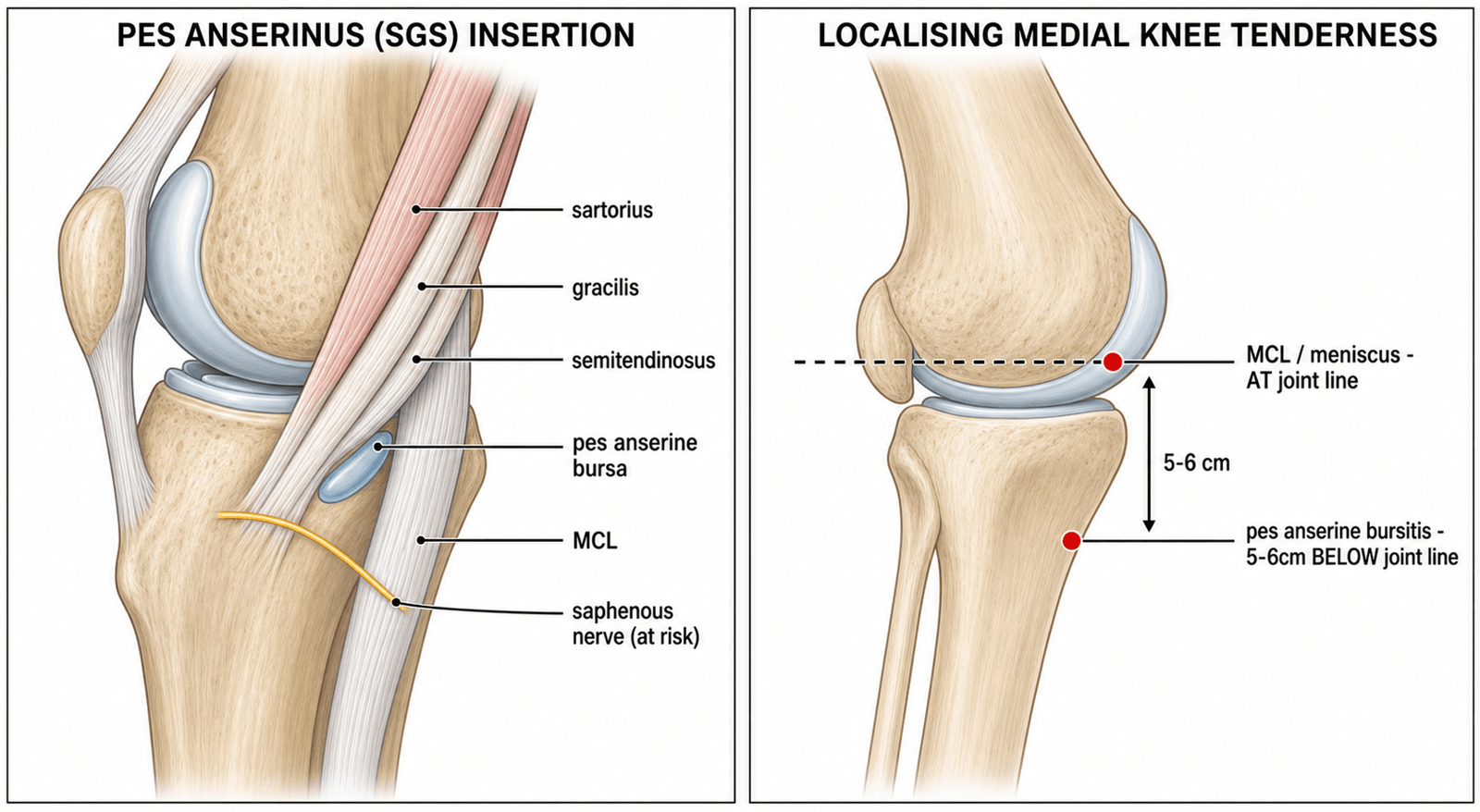
The pes anserinus. The conjoined tendons of three muscles insert on the anteromedial surface of the proximal tibia, approximately 5-6 cm distal to the medial joint line, fanning out like a goose's foot. From superficial to deep they are sartorius, gracilis and semitendinosus (SGS): "Say Grace before Semitendinosus".
- Origin
- ASIS
- Innervation
- Femoral nerve (L2-3)
- Primary Action
- Hip flexion and external rotation, knee flexion, tibial internal rotation
- Origin
- Inferior pubic ramus
- Innervation
- Obturator nerve (L2-3)
- Primary Action
- Hip adduction, knee flexion, internal rotation
- Origin
- Ischial tuberosity
- Innervation
- Sciatic nerve (tibial division L5-S2)
- Primary Action
- Hip extension, knee flexion, internal rotation
Two-joint muscles. All three cross both the hip and the knee, which makes them prone to strain with activities involving simultaneous hip and knee motion.
The bursa. The anserine bursa lies deep to the pes anserine tendon insertion and superficial to the tibial attachment of the MCL, on the anteromedial proximal tibia. It lets the tendons glide over the underlying MCL and tibial periosteum, and in some individuals a separate bursa may exist between each tendon.
The MCL. The superficial MCL inserts on the tibial metaphysis, deep to the pes anserine insertion, so the bursa lies between the two structures. MCL pathology can cause similar medial knee pain, but the tenderness is at the joint line.
The saphenous nerve. The saphenous nerve runs posterior to the pes anserinus. Its infrapatellar branch runs in close proximity, passing anterior to the sartorius tendon before crossing medially, and is at risk during:
- Corticosteroid injection of the bursa
- Medial knee arthroscopy portals
- Harvesting of hamstring grafts for ACL reconstruction
Pathophysiology. Repetitive movement causes friction and mechanical irritation, and valgus alignment adds compression by increasing load on the medial structures. Age-related degeneration decreases bursal resilience. Among systemic factors, diabetes is thought to impair tissue healing and predispose to inflammation, although the mechanism behind its association with the condition remains unexplained (see Controversies).
Dynamic Medial Stabilisation by the Pes Anserinus
Beyond being a source of medial pain, the pes anserine group is a functionally important dynamic stabiliser of the medial knee. Sartorius, gracilis and semitendinosus all cross the knee posteromedially and insert anterior to the tibial axis of rotation. Their conjoined pull therefore flexes the knee and internally rotates the tibia, opposing the obligate external rotation of terminal extension (the screw-home mechanism).
Secondary restraint. The pes anserinus acts as a secondary dynamic restraint to valgus load and to anteromedial rotatory instability. It supplements the superficial MCL, which remains the primary static valgus restraint (see the MCL injuries topic).
The hamstring graft. Semitendinosus and gracilis, acting as tibial internal rotators, help resist the anterolateral rotatory subluxation that characterises anterior cruciate ligament deficiency; this dynamic contribution is one reason the semitendinosus-gracilis (hamstring) tendons are a mainstay ACL graft. Harvesting them removes part of this dynamic medial support, a consideration when a patient with a previous hamstring-graft ACL reconstruction later presents with medial knee symptoms.
Why the hip matters. Valgus malalignment and weak frontal-plane control (weak gluteus medius, valgus thrust) chronically overload the medial soft tissues and the pes anserine complex. That is why hip-abductor and gluteus medius strengthening, not just local treatment of the bursa, is central to durable rehabilitation and to preventing recurrence. Examiners look for this point when you discuss rehabilitation strategy.
Clinical Presentation
The pain. Medial knee pain, specifically below the joint line, described as aching, burning or sharp. Onset is usually gradual and may follow an increase in activity. Stairs (especially descending), rising from a chair and pivoting aggravate it, and morning stiffness is common but lasts less than 30 minutes.
Night pain when lying on the affected side is characteristic: patients often report it, from direct pressure on the inflamed bursa. This distinguishes it from OA pain, which typically improves with rest. Asking about sleeping position is a valuable history question.
Associated symptoms. Localised swelling over the medial tibia, stiffness of the knee, difficulty with activities requiring knee flexion, and pain-limited weakness of knee flexion.
Inspection. Look for localised swelling over the anteromedial proximal tibia, which may be subtle, and for valgus malalignment, which may be present. Watch the gait for a valgus thrust. There is no knee joint effusion.
Palpation. The finding is point tenderness 5-6 cm below the medial joint line, over the anteromedial tibial surface, and a distended bursa may feel boggy. There is no joint-line tenderness unless there is concurrent meniscal pathology, but read the caution on joint-line pain under Differential Diagnosis before relying on that.
Provocative tests. A positive test reproduces pain at the pes anserine region or the anteromedial tibia.
- Technique
- Patient supine, examiner resists knee flexion from 90 degrees
- Positive Finding
- Pain at pes anserine region
- Technique
- Patient seated, knee at 90 degrees, resist tibial internal rotation
- Positive Finding
- Pain at anteromedial tibia
- Technique
- Valgus stress to extended knee
- Positive Finding
- Pain over pes anserinus (not joint line)
- Technique
- Passive knee extension with hip flexed to 90 degrees
- Positive Finding
- Pain at anteromedial tibia
The following findings suggest alternative diagnosis and require further investigation:
- Joint line tenderness (meniscal injury, OA)
- Knee joint effusion (intra-articular pathology)
- Instability on valgus stress (MCL injury)
- Mechanical symptoms - locking, giving way (meniscal tear)
- Systemic symptoms - fever, weight loss (infection, malignancy)
Investigations
Pes anserine bursitis is primarily a clinical diagnosis. Investigations are used to exclude other pathology and to confirm the diagnosis in unclear cases.
Radiographs. AP, lateral and skyline views are usually normal in isolated pes anserine bursitis. They may show concurrent medial compartment osteoarthritis and exclude other bony pathology such as stress fracture or tumour.
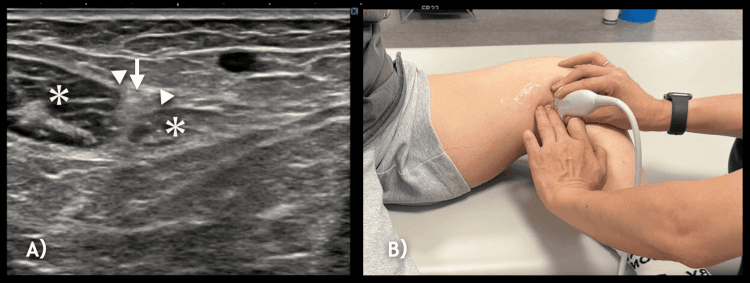
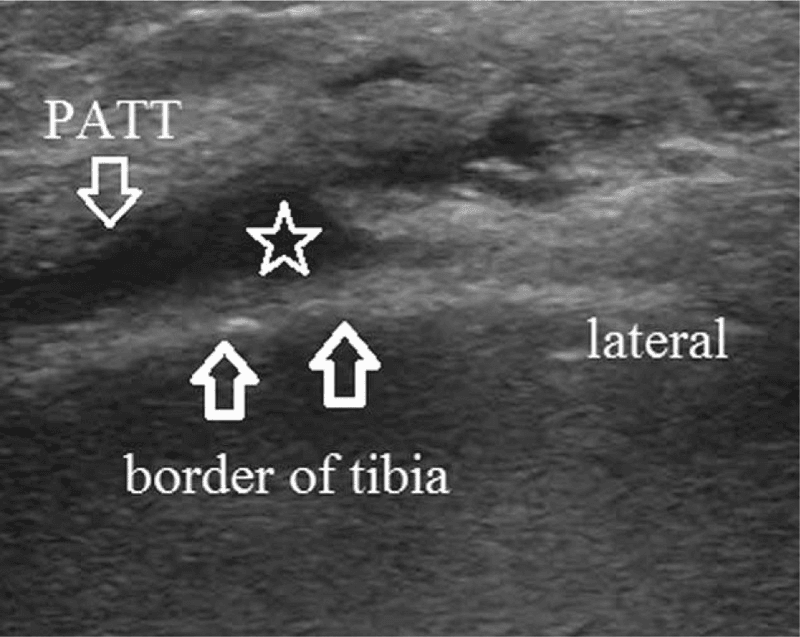
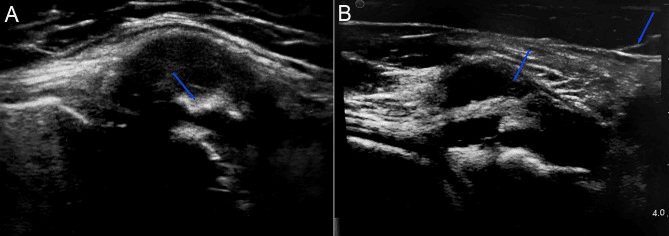
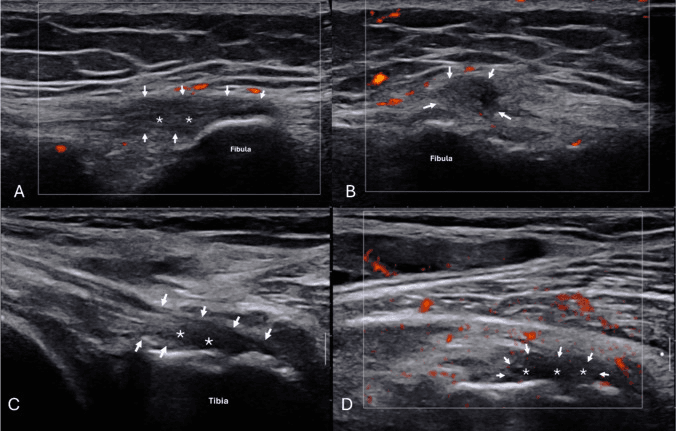
Ultrasound is the investigation of choice for confirming the diagnosis and is useful for guiding injection. The diagnosis is supported by an anechoic or hypoechoic fluid collection at the bursa with bursal thickness greater than 2 mm. The examination should include the pes anserine tendons, for concurrent tendinopathy, and the MCL, for associated pathology. How often it finds no bursa at all in a clinically diagnosed case is taken up under Controversies.
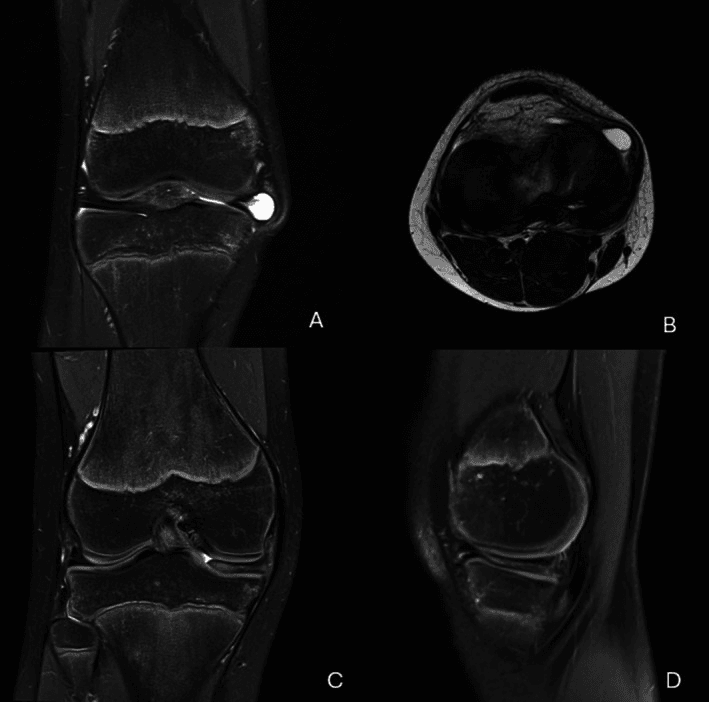
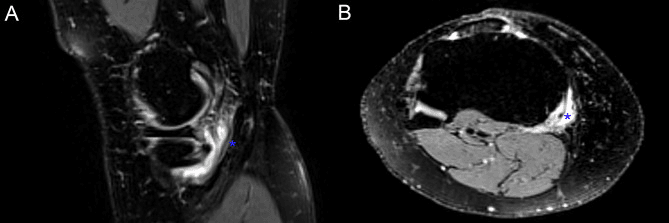
MRI is reserved for diagnostic uncertainty or suspected concurrent pathology. It shows high T2 signal in the bursal region and the extent of bursal distension, may reveal concurrent tendinopathy of the pes anserine tendons, and assesses the menisci, ligaments and articular cartilage.
Laboratory tests are not routinely required. Consider them in atypical presentations:
- ESR and CRP if infection is suspected
- Uric acid if gout is suspected
- Rheumatoid factor and anti-CCP if inflammatory arthritis is suspected
- HbA1c to screen for diabetes in recurrent cases
Medial Periarticular Fluid Collections that Mimic the Anserine Bursa
Rennie's MRI series (Rennie 2005) emphasised that anserine bursal fluid must be distinguished on axial imaging from other medial periarticular fluid collections. Several of them produce medial knee pain or a palpable medial swelling and are routinely mislabelled as anserine bursitis.
- Location
- Deep to conjoined tendons, superficial to distal MCL, anteromedial tibia
- Distinguishing feature
- Fluid below the joint line at the tendon insertion
- Location
- Between semimembranosus tendon and superficial MCL, posteromedially at or above the joint line
- Distinguishing feature
- Sits more posterior and higher than the anserine bursa
- Location
- Between the superficial and deep layers of the MCL
- Distinguishing feature
- Vertically orientated fluid within the ligament complex
- Location
- Adjacent to the medial joint line, communicating with a meniscal tear
- Distinguishing feature
- Traced to a horizontal meniscal tear (see the meniscus tears topic)
- Location
- Variable, may be intratendinous or periarticular
- Distinguishing feature
- Well defined, often septated, no communication with the bursa
Localise before you label. The rule is anatomical: the anserine bursa lies below the joint line at the conjoined tendon insertion, whereas the semimembranosus-TCL bursa, the MCL bursa and parameniscal cysts sit at or just above it. Axial MRI is the sequence that reliably separates them, with coronal sequences helping to localise the collection.
When the fluid is not anserine. A fluid track to a meniscal tear reclassifies the lesion as a parameniscal cyst, managed as meniscal pathology. A collection at the joint line should prompt review of the MCL and menisci rather than an anserine label.
Differential Diagnosis
Medial knee pain has multiple potential causes, and accurate diagnosis depends on the precise location of tenderness and the associated clinical features.
- Location of Tenderness
- 5-6cm below medial joint line
- Key Features
- Night pain, worse on stairs, no effusion
- Location of Tenderness
- Medial joint line
- Key Features
- Mechanical symptoms, effusion, McMurray positive
- Location of Tenderness
- At medial joint line, along MCL
- Key Features
- History of valgus injury, instability on testing
- Location of Tenderness
- Medial joint line
- Key Features
- Crepitus, bony enlargement, X-ray changes
- Location of Tenderness
- Medial patellofemoral joint
- Key Features
- Snapping, anterior knee pain, tender band
- Location of Tenderness
- Along saphenous nerve distribution
- Key Features
- Burning pain, paraesthesia, Tinel positive
The classic distinguishing feature is the location of maximum tenderness - 5-6cm below the medial joint line - whereas MCL injuries, meniscal pathology and medial compartment osteoarthritis are tender at the joint line. Know it, and know that it fails more often than the textbook admits: in the only MRI series of symptomatic knees on this page, the commonest presentation of MRI-proven anserine bursitis was pain along the medial joint line, mimicking a meniscal tear (Rennie 2005). Distal tenderness therefore rules the diagnosis in; joint-line pain does not rule it out, which is exactly why these patients reach arthroscopy.
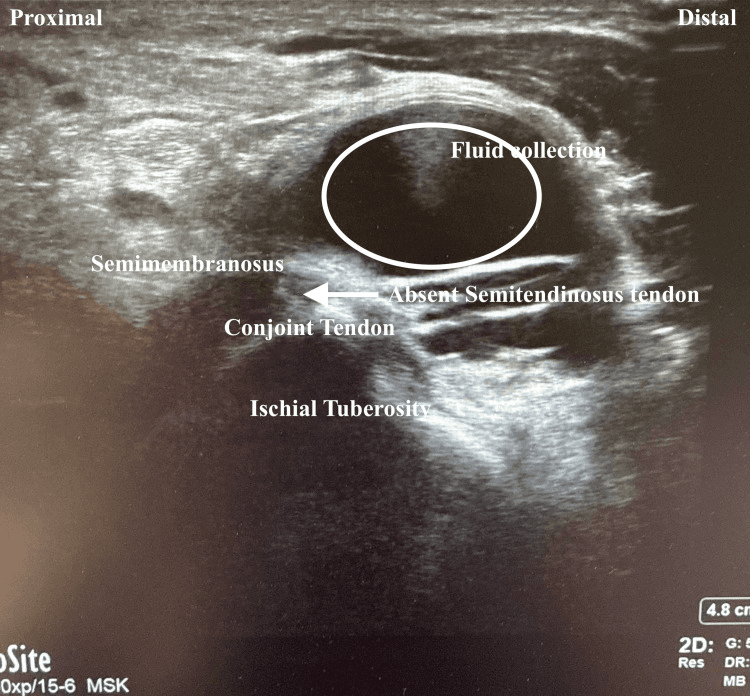
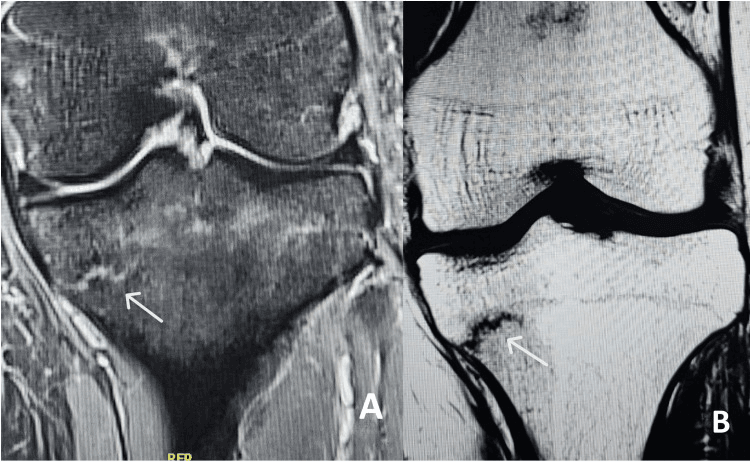
Soft-tissue mimics. Semimembranosus insertional tendinopathy is posteromedial tendon disease, whereas the pes anserine bursa lies more anterior and distal. A distal semitendinosus rupture is a traumatic medial-knee mimic that should not be labelled bursitis. A grade-one MCL sprain shows ligament thickening and T2 hyperintensity without fibre discontinuity, which places the abnormality at the joint-line ligament rather than within the distal anserine bursa.
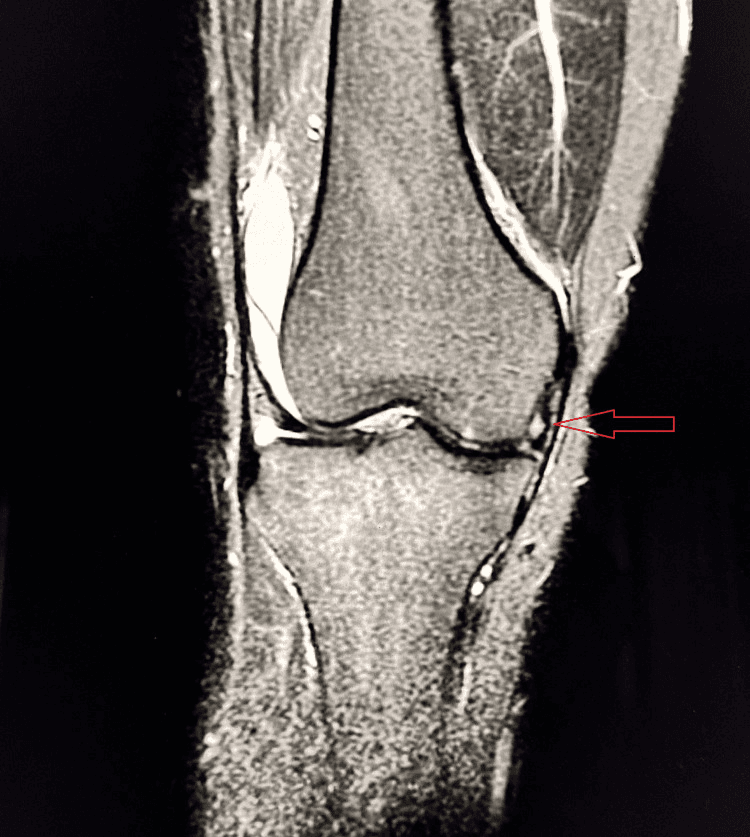
Bony mimic. A stress fracture at the medial tibial plateau shows STIR hyperintensity with a low-signal fracture line. It provides a bony explanation for focal pain below the joint line when radiographs are initially unrevealing.
Management
Treatment is primarily conservative, with corticosteroid injection reserved for cases not responding to initial measures. Addressing the underlying risk factors (obesity, OA, biomechanics) is essential for lasting relief.
Conservative management. Relative rest and symptom control come first, physiotherapy follows, and the maintenance phase returns the patient to activity.
- Relative rest from aggravating activities
- Ice application 15-20 minutes, 3-4 times daily
- NSAIDs (topical or oral) for 2 weeks
- Activity modification - avoid stairs, squatting
- Night splint or pillow between knees for sleeping
- Physiotherapy referral for the programme below
- Core stability exercises
- Address biomechanical factors
- Graduated return to activity
- Continue stretching and strengthening
- Weight loss, footwear or orthotics, and treatment of underlying OA, as below
Physiotherapy works on flexibility, strength, proprioception and movement pattern.
- Exercises
- Hamstring stretch, ITB stretch, quadriceps stretch
- Rationale
- Reduce tension on pes anserine complex
- Exercises
- Hip abductors, VMO, gluteus medius
- Rationale
- Improve frontal plane control, reduce valgus
- Exercises
- Single leg stance, wobble board
- Rationale
- Improve neuromuscular control
- Exercises
- Gait retraining, squat technique
- Rationale
- Address underlying movement dysfunction
Corticosteroid injection is indicated when conservative measures fail after 4-6 weeks. Local corticosteroid injection is the intervention with the strongest historical trial evidence (Alvarez-Nemegyei 2004), but reported response is variable and best in patients with an ultrasound-confirmed bursa (Yoon 2005).
Position and target. The patient lies supine with the knee slightly flexed (20-30 degrees) on a pillow. The target point overlying the bursa is 2 cm distal and 2 cm medial to the tibial tuberosity.
The steps:
- Mark the injection site
- Clean the skin with antiseptic
- Insert a 25G needle perpendicular to the skin
- Advance until periosteum is contacted, then withdraw 2-3 mm
- Aspirate to exclude vascular puncture
- Inject 1 ml of corticosteroid (e.g. triamcinolone 40 mg) with 2 ml of local anaesthetic
Aftercare. Rest for 24-48 hours with ice, avoid strenuous activity for 2 weeks, and review at 4-6 weeks.
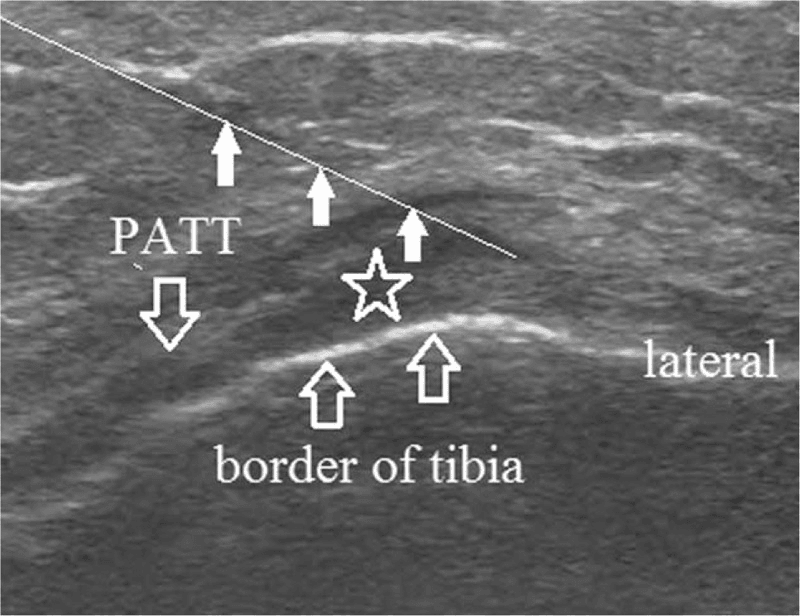
- Saphenous nerve: direct the needle away from the posterior aspect of the knee; numbness over the anteromedial tibia after injection suggests nerve irritation
- Infection: maintain strict aseptic technique
- Skin atrophy: inject deep and avoid subcutaneous deposition
- Tendon rupture: avoid injecting into the tendon substance
- Diabetes: warn about potential blood glucose elevation
- Maximum 3 injections: repeated injections risk soft tissue atrophy
Weight. The most important modifiable risk factor: every 1 kg of weight lost reduces knee load by 4 kg. Refer to a dietitian and a weight management programme.
Osteoarthritis. Treat medial compartment OA if present, consider viscosupplementation for concurrent OA, and use unloader bracing if there is significant valgus.
Biomechanics. Orthotics for pes planus, footwear advice (supportive shoes), gait retraining for valgus thrust, and hip strengthening for frontal-plane control.
Surgery is rarely required. Consider it only after failure of comprehensive conservative management including multiple injection attempts; outcomes are variable and it is a last resort. The options:
- Arthroscopic bursectomy
- Open bursectomy with release of MCL
- Excision of concurrent pathology (medial plica, loose bodies)
Prognosis and Outcomes
Pes anserine bursitis generally has a good prognosis with appropriate management. Recurrence is common, however, particularly if the underlying risk factors are not addressed.
After conservative treatment. Most patients improve, and symptoms often improve within 4-6 weeks. Recovery is variable, reported from 10 days to 36 months, and full resolution may take several months.
After injection. The duration of relief is variable, from weeks to months, and a repeat injection may be required. Combine injection with physiotherapy for durable benefit; how injection compares with physiotherapy is taken up under Controversies.
- Unfavorable
- Chronic symptoms greater than 6 months
- Unfavorable
- Obesity (BMI greater than 30)
- Unfavorable
- Severe medial compartment OA
- Unfavorable
- Poor engagement with rehabilitation
- Unfavorable
- Ongoing contributing factors
The key to preventing recurrence is addressing modifiable risk factors: weight loss, correction of biomechanical abnormalities, and maintenance of flexibility and strength. Patients should be counselled that injection provides symptomatic relief but does not address the underlying cause.
Guidelines, Registries & Global Practice
Pes anserine bursitis (or "anserine syndrome") is a clinical diagnosis managed predominantly in primary care, sports medicine and rheumatology worldwide; there is no dedicated implant or device registry. Orthopaedic referral is reserved for diagnostic uncertainty or refractory disease. The most useful evidence comes from epidemiology and small treatment trials, and from major knee osteoarthritis (OA) guidelines, because the bursitis frequently coexists with — and is overshadowed by — medial compartment OA.
Global epidemiology:
- Finding
- 2.5% (509 MRI studies, 488 patients, UK)
- Source
- Rennie 2005
- Finding
- 36% on clinical exam (94 patients, Israel)
- Source
- Cohen 1997
- Finding
- Strong female predominance (91% of diabetic cases)
- Source
- Cohen 1997
- Finding
- Only 8.7% (26 patients, Korea)
- Source
- Yoon 2005
Side-by-side guideline framing (no society publishes a dedicated pes anserine guideline; relevant guidance comes from knee OA and soft-tissue injection standards):
- Relevant position
- OA CPG supports exercise, weight loss and NSAIDs; intra-articular corticosteroid for OA is limited/inconclusive — extra-articular pes anserine injection is off that scope and used pragmatically
- Relevant position
- OA guidance prioritises exercise and weight management as core treatment; injections are adjuncts, not first-line; supports conservative-first pathways
- Relevant position
- Emphasises addressing biomechanics and OA; image-guided injection where a true bursa is demonstrated
- Relevant position
- Of NSAIDs, physiotherapy and glucocorticoid injection, only injection had trial-proven efficacy at review
Practice variation by resource setting:
- High-resource settings: Ready access to diagnostic ultrasound and image-guided injection; ultrasound increasingly used to confirm a true fluid bursa before injecting and to avoid the saphenous nerve.
- Limited-resource settings: Diagnosis and landmark-guided injection performed on clinical grounds alone; emphasis on low-cost, high-value measures — activity modification, hamstring and hip-abductor rehabilitation, weight loss and generic NSAIDs.
- Universal principle: Outcomes depend more on addressing modifiable drivers (obesity, OA, valgus malalignment, diabetes, training error) than on any single injection, regardless of healthcare system.
Related pages: MCL Injuries and Meniscus Tears for the two diagnoses this is mistaken for and, on Rennie's evidence, mistaken as - joint-line pain does not exclude an anserine bursa; Knee Osteoarthritis for the disease that coexists with this so often that every treatment study on this page was performed in an osteoarthritic cohort, which is the single biggest limit on their transferability; Semitendinosus Anatomy, Gracilis Anatomy and Sartorius Anatomy for the three tendons whose conjoined insertion gives the structure its name and its dynamic valgus-restraining function; Hamstring Injuries for the proximal pathology in the same muscle group that alters loading here; Prepatellar Bursitis and Septic Bursitis for the bursal pathology that genuinely does distend and for the infection that must be excluded before any injection; and Tibial Stress Fractures for the proximal medial tibial stress injury that produces tenderness in the same place and must not be injected.
Controversies and Areas of Uncertainty
The condition is more contested than its textbook simplicity suggests.
Is it actually a bursitis? Imaging frequently fails to demonstrate a fluid-filled bursa. In one ultrasound cohort only 8.7% of clinically diagnosed cases had US-confirmed bursitis (Yoon 2005), and reviews argue for the broader term "anserine syndrome" because the symptomatic structure (bursa, tendon enthesis, or both) is undefined (Helfenstein 2010; Alvarez-Nemegyei 2004).
Pain generator or bystander? Because it coexists with medial compartment OA so often, debate persists over whether the pes anserine region is the true source of pain or a tender accompaniment of OA. This matters: treating the bursitis may give incomplete relief if OA is the driver.
Injection or physiotherapy first? A randomised comparison found no significant difference between corticosteroid injection and physiotherapy at 8 weeks (Sarifakioglu 2016), while older evidence-based appraisal credited only injection with trial-proven efficacy (Alvarez-Nemegyei 2004). The pragmatic position is shared decision-making, with injection offering speed and physiotherapy addressing cause.
Does ultrasound guidance matter? Guidance reliably confirms whether a true bursa is present and helps avoid the saphenous nerve. A clear, consistently quantified accuracy or outcome advantage over landmark injection for this specific target is not well established in high-quality trials, and claims of precise accuracy percentages should be treated with caution.
Biologics and the diabetes link. Platelet-rich plasma and other biologics lack robust topic-specific evidence and remain experimental here. The mechanism behind the strong diabetes association, independent of BMI and glycaemic control, is unexplained.
Show the examiner you know the term "anserine syndrome" and that the lesion is often a soft-tissue enthesopathy rather than a true bursitis. State that you would confirm the diagnosis clinically (point tenderness below the joint line), exclude OA and meniscal pathology, treat conservatively first, and reserve image-guided injection for confirmed or refractory cases.
MCQ Practice Points
Q: What is the order of tendons in the pes anserinus from superficial to deep?
A: Sartorius, Gracilis, Semitendinosus (SGS). Remember "Say Grace before Semitendinosus" - the sartorius is most superficial (from ASIS), gracilis is middle (from pubis), and semitendinosus is deepest (from ischial tuberosity). All three are knee flexors and tibial internal rotators.
Q: What is the key anatomical landmark distinguishing pes anserine bursitis from medial meniscus or MCL pathology?
A: Tenderness 5-6cm BELOW the medial joint line. MCL injuries and meniscal tears cause tenderness AT the joint line. The pes anserine bursa lies on the anteromedial proximal tibia, between the conjoined tendon insertion and the tibial attachment of the MCL.
Q: What nerve is at risk during corticosteroid injection for pes anserine bursitis?
A: The infrapatellar branch of the saphenous nerve. This nerve runs in close proximity to the pes anserinus, anterior to the sartorius tendon. To minimize risk, direct the needle away from the posterior aspect of the knee. Ultrasound guidance improves placement accuracy over the blind landmark technique and confirms whether a true fluid-filled bursa is present.
Q: A 55-year-old obese woman with knee OA presents with medial knee pain worse at night lying on the affected side. What is the most likely diagnosis?
A: Pes anserine bursitis. The classic triad is obesity, knee OA, and female gender (marked female predominance). Night pain when lying on the affected side is characteristic of bursal inflammation from direct pressure. Diabetes is a strong, independent risk factor (around 36% of type 2 diabetics affected in Cohen's series). Pain is also worse on stairs and rising from chairs.
Q: What is the correct injection target for pes anserine bursa injection using landmarks?
A: 2cm distal AND 2cm medial to the tibial tuberosity. Insert a 25G needle perpendicular to skin, advance to periosteum then withdraw 2-3mm. Inject triamcinolone 40mg with 2ml local anaesthetic. Maximum 3 injections due to soft tissue atrophy risk.
Clinical Decision Scenarios
Practise clinical reasoning and management decisions out loud
“In pes anserine bursitis, tenderness is located 5-6cm BELOW the medial joint line on the anteromedial proximal tibia - this is the key distinguishing feature. Other causes of medial knee pain have different sites of maximum tenderness.”
“The examiner is testing anatomical knowledge relevant to injection technique and understanding of the pathology.”
“This tests understanding of the multifactorial nature of the condition and comprehensive management approach.”
“The examiner wants you to demonstrate clinical reasoning and examination skills.”
“The examiner is assessing injection technique safety awareness.”
ANATOMY
- SGS = Sartorius, Gracilis, Semitendinosus (superficial to deep)
- Location: anteromedial proximal tibia, 5-6cm below medial joint line
- Bursa lies between pes anserine tendons and MCL insertion
- Saphenous nerve at risk - runs anterior to sartorius
CLINICAL FEATURES
- Tenderness 5-6cm below medial joint line - KEY distinguishing feature
- Night pain worse lying on affected side
- Pain on stairs, rising from chair, pivoting
- No joint effusion (unlike meniscal/ligament injury)
- Positive resisted knee flexion and internal rotation
RISK FACTORS
- Obesity and Osteoarthritis
- Women (4:1) and Wrong biomechanics (valgus, pes planus)
- Loading errors (training mistakes, sudden increase in activity)
- Also diabetes (strong independent association, ~36% of type 2 diabetics)
DIFFERENTIAL
- MCL injury - tenderness AT joint line, history of valgus injury
- Medial meniscus tear - joint line tender, mechanical symptoms, effusion
- Medial compartment OA - joint line, crepitus, X-ray changes
- Saphenous neuritis - burning pain, Tinel positive
IMAGING
- X-ray: usually normal, exclude OA and bony pathology
- Ultrasound: investigation of choice, bursa greater than 2mm thickness
- MRI: reserved for diagnostic uncertainty, shows high T2 signal
- Clinical diagnosis primarily - imaging for confirmation or differential
INJECTION TECHNIQUE
- Target: 2cm distal AND 2cm medial to tibial tuberosity
- Triamcinolone 40mg + 2ml local anaesthetic
- Direct needle AWAY from posterior knee (saphenous nerve)
- Maximum 3 injections - risk of soft tissue atrophy
- Ultrasound guidance improves placement and confirms a true bursa
MANAGEMENT PEARLS
- Address underlying factors: obesity, OA, biomechanics
- Physiotherapy: hamstring stretch, hip abductor strengthening
- Most respond to conservative measures (recovery variable)
- Injection for refractory cases - fastest relief, comparable medium-term outcome
- Surgery rarely indicated - last resort only
Evidence Base
Sarifakioglu B, Afsar SI, Yalbuzdag SA, et al. Comparison of physical therapy and corticosteroid injection in pes anserine tendino-bursitis. J Phys Ther Sci. 2016
- Randomised: physiotherapy vs corticosteroid injection (n=60 with PATB)
- Both effective; no significant difference at 8 weeks
- Bursitis worsens pain and function over OA alone
- Injection a fast, inexpensive option
Rennie WJ, Saifuddin A. Pes anserine bursitis: incidence in symptomatic knees and clinical presentation. Skeletal Radiol. 2005
- 509 MRI studies, 488 patients with knee pain
- Prevalence on MRI 2.5%
- Often mimics medial meniscal tear clinically
- Axial MRI distinguishes bursa from other fluid
Cohen SE, Mahul O, Meir R, Rubinow A. Anserine bursitis and non-insulin dependent diabetes mellitus. J Rheumatol. 1997
- 36% of type 2 diabetics had anserine bursitis
- 91% of affected patients were women
- Independent of age, BMI and glycaemic control
- Strong female predominance confirmed
Yoon HS, Kim SE, Suh YR, et al. Correlation between ultrasonographic findings and response to corticosteroid injection in pes anserinus tendinobursitis. J Korean Med Sci. 2005
- Only 8.7% had US-confirmed bursitis despite clinical diagnosis
- Corticosteroid injection improved VAS and WOMAC
- US-positive patients had the best response
- Many clinically diagnosed cases lack a true bursa lesion
Helfenstein M Jr, Kuromoto J. Anserine syndrome. Rev Bras Reumatol. 2010
- Imaging frequently cannot confirm true bursitis
- Diabetes is the best-established risk factor
- Recovery highly variable (10 days to 36 months)
- Pathoanatomy remains uncertain
Alvarez-Nemegyei J, Canoso JJ. Evidence-Based Soft Tissue Rheumatology IV: Anserine Bursitis. J Clin Rheumatol. 2004
- Only glucocorticoid injection had trial-proven efficacy at the time
- NSAID and physiotherapy evidence was weak
- Diagnosis is clinical (inferomedial tenderness)
- Significant knowledge gaps in pathogenesis
Suggested Reading
- Helfenstein M Jr, Kuromoto J. Anserine syndrome. Rev Bras Reumatol. 2010;50(3):313-327. doi:10.1590/S0482-50042010000300011
- Sarifakioglu B, Afsar SI, Yalbuzdag SA, et al. Comparison of the efficacy of physical therapy and corticosteroid injection in the treatment of pes anserine tendino-bursitis. J Phys Ther Sci. 2016;28(7):1993-1997. doi:10.1589/jpts.28.1993
- Yoon HS, Kim SE, Suh YR, et al. Correlation between ultrasonographic findings and the response to corticosteroid injection in pes anserinus tendinobursitis syndrome in knee osteoarthritis patients. J Korean Med Sci. 2005;20(1):109-112. doi:10.3346/jkms.2005.20.1.109
- Draghi F, Ferrozzi G, Urciuoli L, et al. Ultrasound of the knee bursae. J Ultrasound. 2015;18(4):293-303. doi:10.1007/s40477-015-0168-7
- Rennie WJ, Saifuddin A. Pes anserine bursitis: incidence in symptomatic knees and clinical presentation. Skeletal Radiol. 2005;34(7):395-398. doi:10.1007/s00256-005-0918-7
- Cohen SE, Mahul O, Meir R, Rubinow A. Anserine bursitis and non-insulin dependent diabetes mellitus. J Rheumatol. 1997;24(11):2162-2165.
- Alvarez-Nemegyei J, Canoso JJ. Evidence-based soft tissue rheumatology IV: anserine bursitis. J Clin Rheumatol. 2004;10(4):205-206. doi:10.1097/01.rhu.0000135561.41660.b0
- Nguyen US, Zhang Y, Zhu Y, et al. Increasing prevalence of knee pain and symptomatic knee osteoarthritis. Ann Intern Med. 2011;155(11):725-732. doi:10.7326/0003-4819-155-11-201112060-00004
Key Guidelines
- AAOS Clinical Practice Guideline: Management of Osteoarthritis of the Knee (Non-Arthroplasty), 3rd ed (2021)
- NICE NG226 / BOA guidance on osteoarthritis: assessment and management (UK)
- EFORT / European consensus statements on non-operative knee OA management
Additional Reading
- Uson J, Aguado P, Bernad M, et al. Pes anserinus tendino-bursitis: what are we talking about? Scand J Rheumatol. 2000;29(3):184-186.
- Abeles M. Anserine bursitis: a cause of knee pain in patients with osteoarthritis. Prim Care. 2004;31(4):905-912.