Proximal and middle phalanx fractures of the digits
- Rotational malunion is the most functionally limiting deformity
- Check for scissoring - all fingers should point to scaphoid tubercle when flexed
- PP apex volar angulation from intrinsic pull on proximal fragment
- MP angulation varies - proximal to the FDS insertion apex dorsal (central slip), distal to it apex volar (FDS)
- “Stable fractures: buddy tape + early motion
- “Unstable: K-wires, screws, or plate fixation
- “Unicondylar fractures often need ORIF to prevent angular deformity
- “Stiffness is the enemy - mobilize early when fixation stable
Overview
Phalangeal fractures are among the most common upper extremity injuries; together with metacarpal fractures they make up approximately 10% of all fractures. The proximal phalanx (PP) and middle phalanx (MP) each present distinct management challenges because of the complex interplay of tendons, ligaments and muscles around them, and understanding the deforming forces they exert is essential for appropriate reduction and stable fixation.
The goal. Restore anatomic alignment, rotation above all, while moving the finger early enough to prevent stiffness, which is the major cause of poor outcomes in these injuries. Even minor rotational malalignment causes significant functional impairment, with the digits scissoring during grip and pinch. The hand surgeon's mantra, "stable fracture, mobile joint", is the whole philosophy.
Anatomy and Biomechanics
The proximal phalanx. Broadest at its base and tapering distally, with a biconcave base that articulates with the metacarpal head and a bicondylar head that articulates with the base of the middle phalanx. Its rectangular cross-section makes plating easier.
What surrounds it. The extensor mechanism, as the conjoined lateral bands, lies dorsally and the FDP tendon lies volarly in its sheath. The interossei insert on the base, volar to the axis, and the lumbricals cross volar to the MCP joint.
Deforming forces in the proximal phalanx. The interossei flex the proximal fragment while the central slip and lateral bands extend the distal fragment. The two opposing pulls produce the characteristic apex volar angulation, a predictable deformity that tells you what the reduction must undo and what the fixation must hold against.
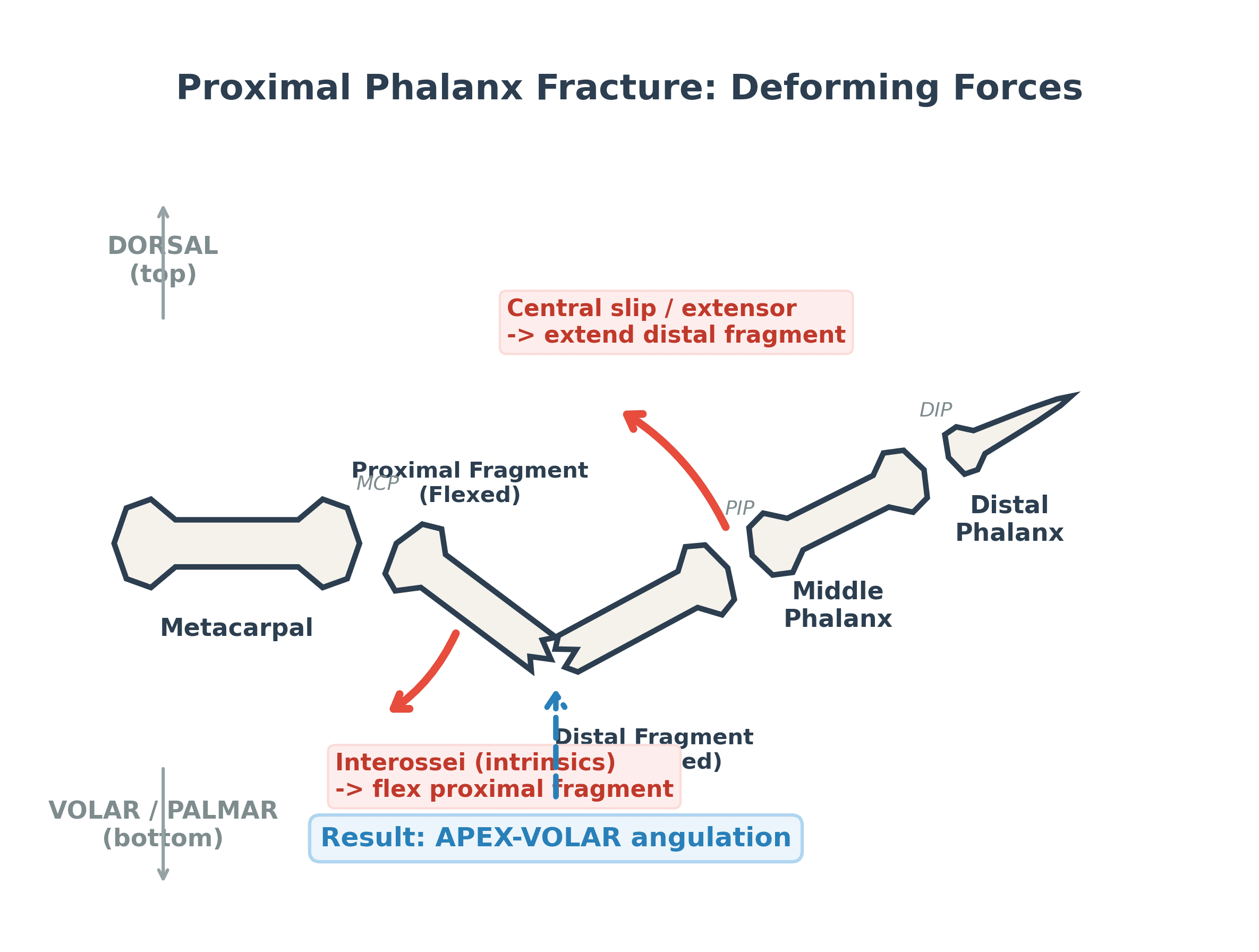
The middle phalanx. The shortest phalanx, more tubular than the proximal, with a biconcave base and a bicondylar head. The central slip inserts on its dorsal base and the FDS splits to insert on the volar-lateral shaft, with the FDP passing between the FDS slips. The lateral bands converge to form the terminal tendon.
Deforming forces in the middle phalanx. Angulation here is variable: its direction depends on whether the fracture lies proximal or distal to the FDS insertion. A fracture at the exact middle of the shaft shows minimal deformity, the forces balanced.
- Proximal Pull
- Central slip (extension)
- Distal Pull
- FDS (flexion)
- Apex Direction
- Apex dorsal
- Proximal Pull
- FDS (flexion)
- Distal Pull
- Terminal tendon (extension)
- Apex Direction
- Apex volar
Blood supply. The proper digital arteries run along the volar-lateral aspect of the phalanx and nutrient arteries enter the volar cortex. Periosteal stripping affects the blood supply.
Wire entry. K-wires enter dorsally, between the extensor and the lateral bands. Volarly the vincular system is to be avoided, and laterally the digital nerves need protecting.
Classification
Every fracture is described by the bone (proximal or middle phalanx), the location (base, shaft, neck, head) and the pattern (transverse, oblique, spiral, comminuted). Each combination has its own biomechanical implications, and those guide treatment.
Proximal phalanx
- Characteristics
- Often intra-articular
- Treatment Considerations
- May need ORIF for articular
- Characteristics
- Strong deforming forces
- Treatment Considerations
- K-wire or plate
- Characteristics
- Condylar fractures
- Treatment Considerations
- Often need ORIF
- Characteristics
- Unicondylar/bicondylar
- Treatment Considerations
- ORIF for congruency
Middle phalanx
- Characteristics
- Often pilon-type
- Treatment Considerations
- May need external fixation
- Characteristics
- FDS insertion affects apex
- Treatment Considerations
- Variable angulation
- Characteristics
- Rare
- Treatment Considerations
- Reduction important
- Characteristics
- Often associated with DIP injury
- Treatment Considerations
- Rare
The pilon fracture of the middle phalanx base is an impaction pattern with a central depression. These challenging fractures often benefit from ligamentotaxis using distraction techniques, and may need external fixation to deliver it.
The AO/OTA overview divides fractures into A extra-articular, B partial articular and C complete articular.
PIP Fracture-Dislocations and Condylar Fracture Stability
Two intra-articular patterns are tested far more often than their frequency would suggest, because the management decision hinges on a single principle of articular stability. They deserve separate treatment from the diaphyseal fractures.
The dorsal PIP fracture-dislocation is the commonest. A hyperextension or axial-load injury fractures the volar lip of the middle phalanx base, the volar plate attachment, and the head of the proximal phalanx rides dorsally. The volar lip and the collateral ligament origins are what keep the joint reduced, so stability, and therefore treatment, is decided by how much of the middle phalanx base articular surface is involved.
- Stability
- Stable - reduces and stays congruent in modest flexion
- Management
- Closed reduction + dorsal extension-block splinting, progressively extending; early motion
- Stability
- Tenuous / potentially unstable - may subluxate as the joint extends
- Management
- Extension-block splinting if congruent through useful arc; otherwise ORIF (screws / fragment fixation)
- Stability
- Unstable - cannot hold a congruent reduction
- Management
- Reconstruction: hemi-hamate (osteochondral) autograft arthroplasty, volar plate arthroplasty, or dynamic/force-couple external fixation
On the true lateral, look for loss of the smooth congruent PIP joint line - a dorsal "V" sign (the dorsal joint space gaps open while the volar space narrows) signals dorsal subluxation and an unstable fracture-dislocation, even when the AP looks acceptable. A truly concentric reduction must be confirmed on a lateral, not an oblique.
The volar PIP fracture-dislocation is much rarer but matters because it is associated with central slip disruption, and so with the risk of a boutonnière deformity. It is often irreducible if the head buttonholes through the extensor mechanism.
Condylar fractures. In a unicondylar fracture a single condyle is avulsed with its collateral ligament still attached; in a bicondylar fracture both condyles separate, and articular comminution is common. Both are intra-articular and inherently unstable, because the collateral ligament pulls continuously on the fragment, and an untreated unicondylar fracture goes on to angular deformity.
The trap is the "nondisplaced" unicondylar fracture, which is deceptively dangerous: a high proportion displace late if splinted. In the classic series the majority of nondisplaced fractures treated by splinting alone displaced.
Treat unicondylar fractures as unstable. Even genuinely nondisplaced fractures need either fixation or, if managed closed, very close (e.g. weekly) radiographic surveillance so late displacement is caught early. Displaced unicondylar fractures need ORIF with multiple K-wires or interfragmentary screws - a single K-wire gives poor rotational control and commonly redisplaces. Bicondylar fractures require restoration of the articular surface with a mini-condylar plate, accepting the higher stiffness cost of that exposure.
Clinical Presentation
Mechanism. The recognised mechanisms are:
- Direct blow (crush injury)
- Axial load (ball-handling sports)
- Twisting injury (spiral fractures)
- Fall on the outstretched hand
- Industrial accidents
History. Ask about hand dominance, occupation, sports and activities, previous hand injuries and the time since injury.
Inspection. Look for swelling (localised or diffuse), deformity (angulation, shortening), rotational malalignment, the state of the skin in case the fracture is open, and nail bed alignment.
Rotation. Rotational malunion is functionally devastating, and a small error at the fracture becomes a large one at the fingertip: 5° of rotation gives 1.5cm of overlap. Examine each finger individually in flexion, and compare side to side:
- Semiflexion cascade - all fingertips should converge toward the scaphoid tubercle
- Full flexion - check for scissoring or overlap
- Finger extension - assess nail plate alignment
- Compare with the contralateral hand
Angulation. Less angulation is tolerated in the index and long fingers, where it is more visible, and more in the ring and small fingers, where there is compensatory CMC motion.
Palpation. Point tenderness localises the fracture. Assess crepitus gently, and assess stability.
Neurovascular and tendon examination. Test digital sensation on both radial and ulnar aspects, capillary refill and an Allen test for the digital arteries. Test FDP (DIP flexion), FDS (isolated PIP flexion) and extensor function, and note whether pain is limiting the assessment.
Associated injuries. Examine for:
- Tendon avulsions (mallet, jersey finger)
- Ligament injuries (collateral, volar plate)
- Nerve injuries (digital nerve laceration)
- Vascular injuries (in open fractures)
- Nail bed injuries
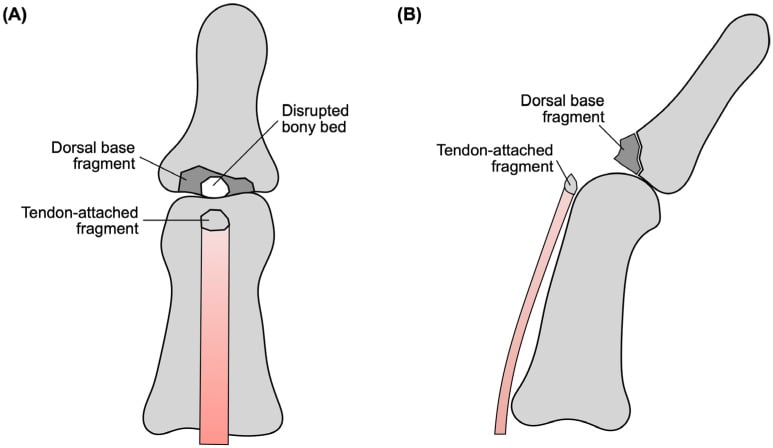
Differential diagnosis. The painful, swollen, deformed finger has several mimics. The discriminators are a cortical break on the radiographs, the site of maximal tenderness, and whether the deformity is correctable.
- Typical History
- Axial load, twist or crush
- Key Examination
- Point tenderness over shaft, possible scissoring
- Radiograph / Discriminator
- Cortical break; assess rotation and angulation
- Typical History
- Hyperextension or axial load
- Key Examination
- Visible joint deformity, springy block to motion
- Radiograph / Discriminator
- Loss of joint congruity without a shaft fracture
- Typical History
- Forced hyperextension (ball sport)
- Key Examination
- Volar PIP tenderness, dorsal instability
- Radiograph / Discriminator
- Small volar lip fragment at middle phalanx base
- Typical History
- Forced flexion (mallet) or hyperextension on grip (jersey)
- Key Examination
- Loss of active DIP extension or FDP flexion
- Radiograph / Discriminator
- Bony avulsion at distal phalanx base or none
- Typical History
- Lateral stress to finger
- Key Examination
- Tenderness over collateral, pain on lateral stress
- Radiograph / Discriminator
- Normal or small avulsion fleck; no shaft break
- Typical History
- Low-energy injury, may be trivial
- Key Examination
- Often little soft-tissue reaction
- Radiograph / Discriminator
- Lytic expansile lesion, typically proximal phalanx
Investigations
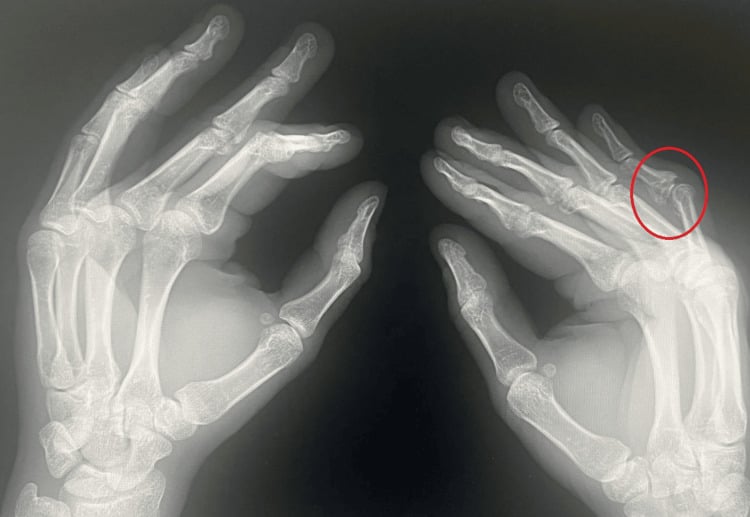
Radiographs. Three views, each answering a different question:
- PA - fracture pattern and shortening
- True lateral - angulation and displacement
- Oblique - rotational assessment and condylar fractures
From them, define the location (base, shaft, neck, head), the pattern, the angulation with its degree and apex direction, any shortening, articular involvement and bone quality.
CT is for articular fractures (condylar, pilon), complex comminuted patterns, surgical planning, and patterns that are unclear on plain films. Its 3D reconstructions show the number and size of the fragments and the articular surface, and they guide the surgical approach.
MRI has a limited role and is not routine for fractures. It is used for a suspected ligament injury, an occult fracture or tendon pathology.
Ultrasound offers dynamic tendon assessment, evaluation of soft-tissue masses and guided injections.
Management Algorithm
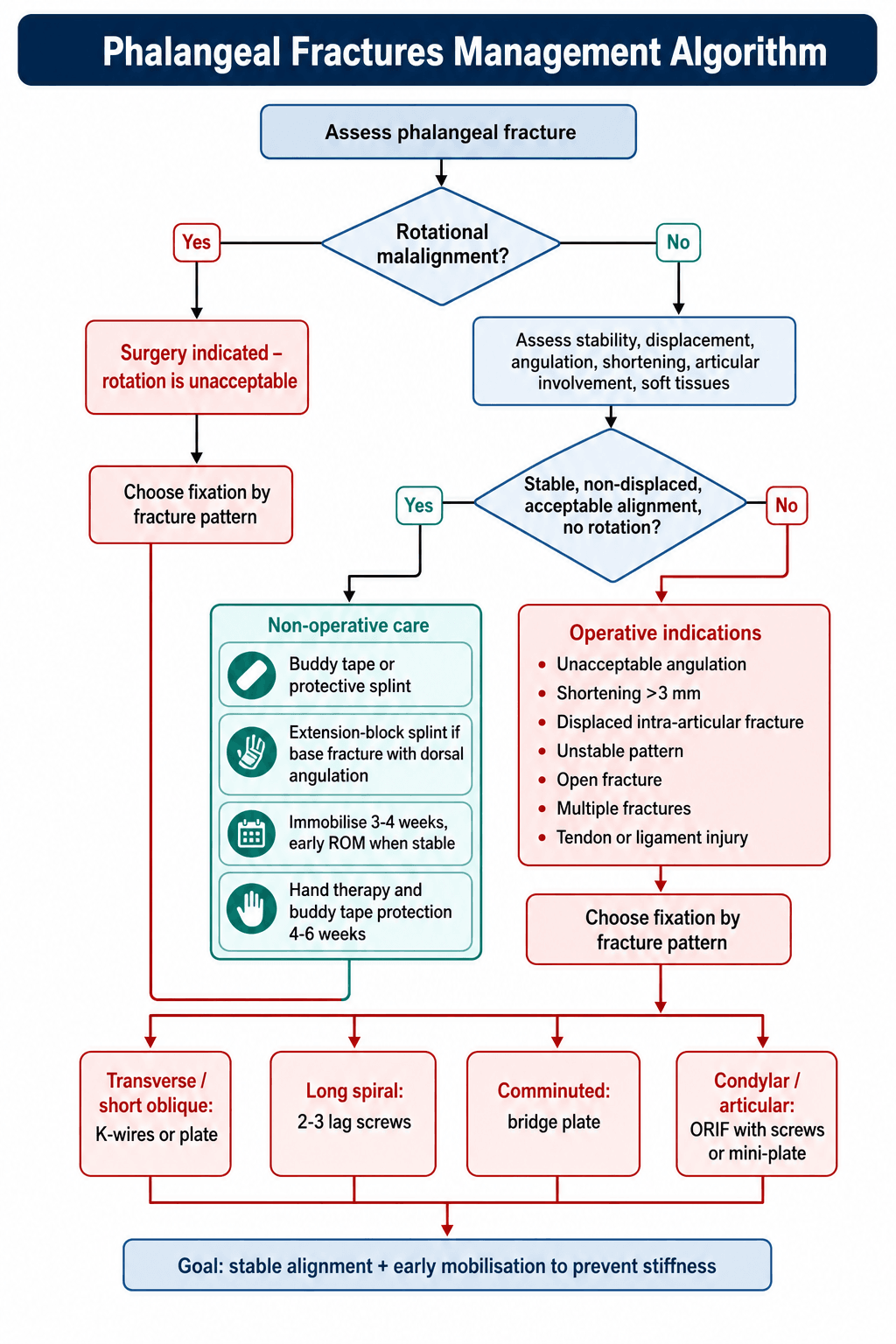
Rotation first. Any rotational malalignment mandates surgical intervention regardless of the fracture pattern: closed reduction, or open reduction and internal fixation if it cannot be corrected closed. Without rotation, stability, displacement, angulation, shortening, articular involvement and the soft tissues decide between non-operative care and fixation, and the pattern of the fracture then chooses the implant.
- Decision
- Buddy tape + early motion
- Rationale
- Low risk of displacement
- Decision
- Closed reduction or ORIF
- Rationale
- Cannot accept rotation
- Decision
- K-wires or plate
- Rationale
- High intrinsic deforming force
- Decision
- K-wires (cross-pattern)
- Rationale
- Lag screws won't hold
- Decision
- Lag screws
- Rationale
- Ideal screw purchase
- Decision
- Plate +/- bone graft
- Rationale
- Need to span comminution
- Decision
- ORIF with screws
- Rationale
- Prevent angular deformity
- Decision
- ORIF with mini-condylar plate
- Rationale
- Restore articular surface
- Decision
- Irrigation, debridement, stabilisation
- Rationale
- Prevent infection
- Decision
- Consider external fixation
- Rationale
- Joint distraction helpful
Who. A stable, non-displaced fracture whose alignment is acceptable and stays so, with no rotational deformity, in a patient who can be expected to comply.
How. Three methods:
- Buddy taping - the finger is taped to its neighbour, which lends it stability while allowing early motion. Ideal for stable fractures
- Extension-block splinting - for base fractures with dorsal angulation. The MCP is held in 70-90° of flexion, which prevents dorsal displacement
- Alumifoam splint - custom moulded, immobilising the fracture while the unaffected joints move
For how long. Immobilise for 3-4 weeks, starting range-of-motion exercises early once the fracture is stable, with buddy tape for protection for 4-6 weeks in total. Refer to hand therapy. Early mobilisation of a stable fracture is what prevents stiffness.
Surgical Technique
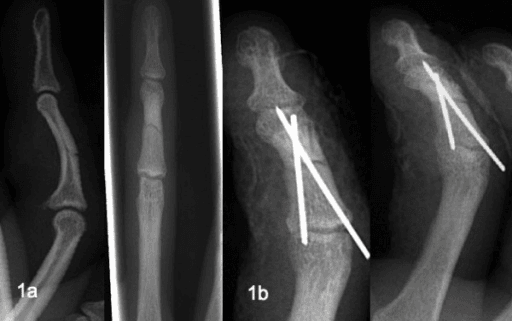
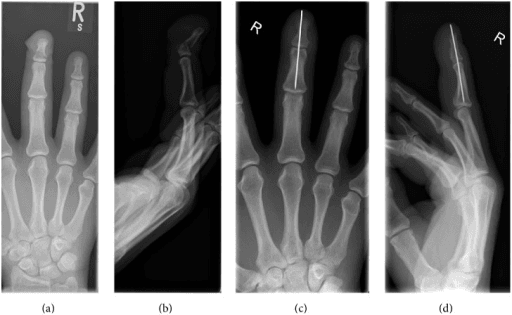
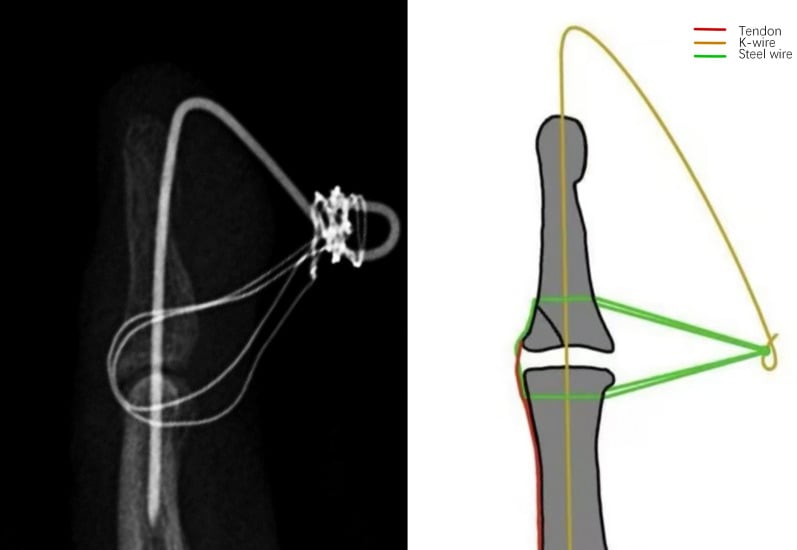
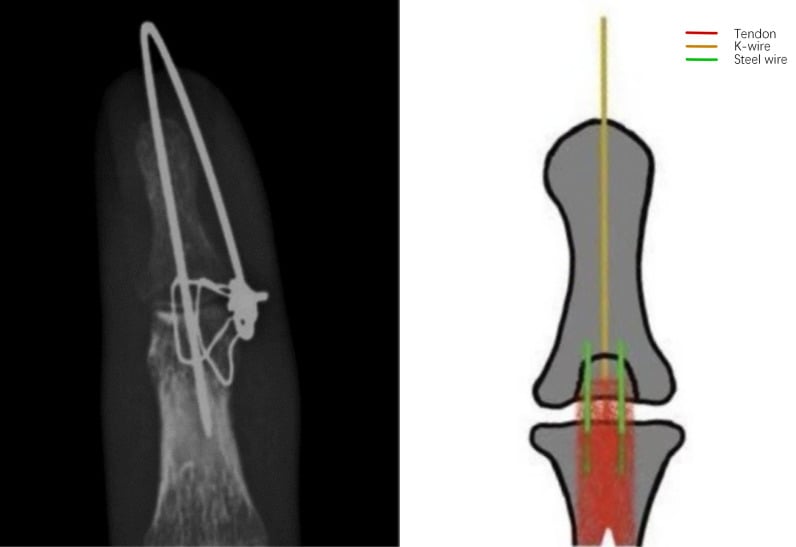
Lateral approach, preferred for most plating. A mid-lateral incision, with the neurovascular bundle identified and retracted volarly and the lateral band identified and retracted dorsally, gives access to the lateral cortex between them. It needs less extensor tendon dissection, and so minimises trauma to the extensor mechanism and the risk of adhesions.
Dorsal approach. A longitudinal incision over the phalanx exposes the extensor mechanism, which is split centrally or between the central slip and the lateral bands (in the proximal phalanx) to reach the dorsal cortex directly. A plate placed here lies beneath the extensor, and extensor tendon adhesion is the risk.
Volar approach. Avoided for plating, because of tendon adhesions.
Whatever the route, preserve the extensor mechanism where possible and protect the digital nerves.
Complications
Early. Malreduction matters most when it is rotational; it may require revision fixation, and prevention is better than treatment. Infection risk is higher with open fractures and pin site infection comes with K-wires, while deep infection is rare with proper technique. The digital nerve is at risk during the approach, and vascular compromise is rare. Fixation fails by screw loosening, K-wire migration, or plate failure in comminuted fractures.
Stiffness is the most common complication, and it mainly affects the PIP joint. It results from prolonged immobilisation, tendon adhesions and capsular contracture, and it is prevented by early motion.
Malunion. Rotational malunion is the most functionally significant; angulation may be tolerated. Corrective osteotomy may be required.
Nonunion is uncommon in the phalanges. The risk factors are comminution, infection and motion at the fracture, and treatment is bone graft with rigid fixation.
Post-traumatic arthritis follows articular fractures, with a risk proportional to the articular incongruity, and may need arthrodesis.
Tendon adhesions are common after dorsal surgery and present as an extensor lag or loss of flexion; tenolysis may be needed.
Cold intolerance is common in the first year and usually improves.
- K-wire
- High
- Screw
- N/A
- Plate
- N/A
- K-wire
- Low-Mod
- Screw
- Low
- Plate
- Moderate
- K-wire
- Low
- Screw
- Low
- Plate
- Higher
- K-wire
- Common
- Screw
- Rare
- Plate
- Sometimes
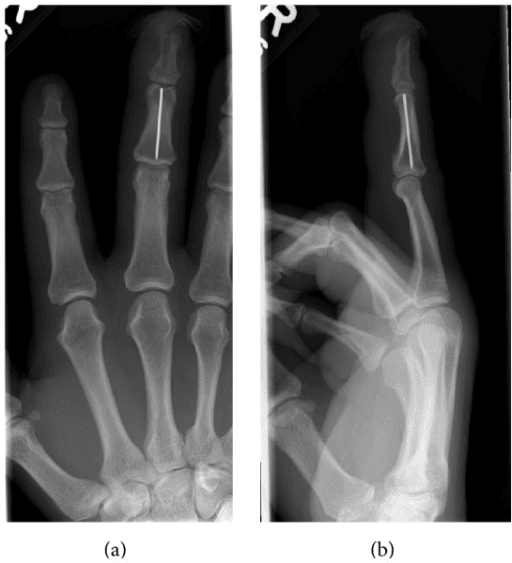
Postoperative Care
Week 0-1: protection. The aims are wound healing, oedema control and protection of the fixation.
- Splint protection: volar slab with the MCP in flexion
- Hand elevation above heart level; ice for 20 minutes every 2 hours
- Digital range-of-motion exercises if the fixation is rigid (plate or screws); splint immobilisation for K-wire cases
- Monitor for infection: increasing pain, erythema, drainage
- Dressing change at 2-3 days, suture removal at 10-14 days, and daily chlorhexidine cleaning of K-wire pin sites
Week 1-3: early motion. The aims are to prevent stiffness, maintain the reduction and progress range of motion. Refer to hand therapy.
- Active range of motion: MCP, PIP and DIP flexion and extension, tendon gliding, place-and-hold exercises
- Avoid passive stretching initially, and splint between exercises
- Oedema control: compression glove, elevation, retrograde massage
- With K-wires, continue splint protection, move the adjacent joints actively and monitor the pin sites
Week 3-6: progressive motion. The aims are more range of motion, light functional use and removal of any K-wires, which come out at 3-4 weeks, when the fracture is sticky. A radiograph at wire removal confirms that alignment has been maintained and checks for callus formation.
- Increase the frequency of range-of-motion exercises and begin gentle passive range of motion
- Dynamic splinting if stiffness is developing: an extension turnbuckle for a PIP flexion contracture, a flexion strap for an extension lag
- Light functional activities, with buddy taping for protection
Week 6-12: strengthening. The aims are to restore grip strength, return to function and maximise range of motion.
- Progressive strengthening: putty (soft to firm), gripper exercises, functional activities
- Sport-specific training and a work conditioning programme
- Continue range-of-motion exercises until they plateau
Hardware removal. K-wires are removed routinely. Plates and screws are generally removed only if symptomatic (prominence, pain) or at the patient's request, after consolidation at 12+ weeks.
Red flags. Any of these requires review:
- Increasing pain after initial improvement
- Loss of reduction on radiographs
- Signs of infection (erythema, purulent drainage, fever)
- Worsening stiffness despite therapy
- Neurovascular compromise
- Pin migration or loosening
Outcomes and Prognosis
Prognostic factors. A simple pattern, anatomic reduction (especially of rotation), early motion, a young patient and a single digit predict a good result. The poor-prognosis factors are:
- Comminuted fracture
- Residual rotation
- Prolonged immobilisation
- Index or long finger (less CMC compensation)
- Multiple digit involvement
- Associated soft-tissue injury
Results by treatment. Conservative treatment of stable fractures gives 90% good or excellent results, with range of motion typically 80-90% of the other side and minimal loss of grip strength. K-wire fixation gives 80-85% good or excellent, with stiffness the main complication and a slight reduction in grip strength. Screw or plate fixation gives 85-90%, with the best preservation of range of motion, although hardware problems may require removal.
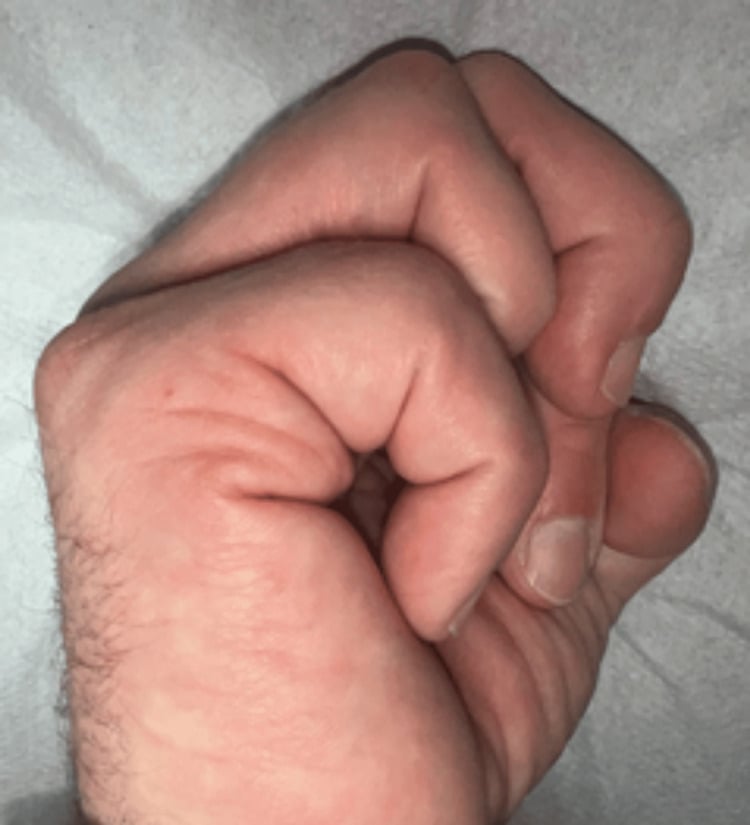
Return to activity
- Timeframe
- 1-2 weeks (with splint)
- Timeframe
- 6-8 weeks
- Timeframe
- 10-12 weeks
- Timeframe
- 10-12 weeks (with protection initially)
- Timeframe
- 3-6 months
Guidelines, Registries & Global Practice
Guidelines, Registries and Global Practice
Global Epidemiology
Phalangeal and metacarpal fractures are among the commonest skeletal injuries, accounting for approximately 10% of all fractures, with roughly a quarter occurring during sport. [Cotterell & Richard 2015; PMID 25455397] Prospective population data from a single trauma unit reported a hand fracture incidence of 3.7 per 1000 per year in men and 1.3 per 1000 per year in women, with a marked young-male predominance and gender-specific mechanisms (assault and sport in men; falls in older women). [Anakwe et al. 2011; PMID 20709710]
- Figure
- ~10%
- Source population
- Mixed (review)
- Figure
- ~25%
- Source population
- Mixed (review)
- Figure
- 3.7 per 1000 per year
- Source population
- Edinburgh trauma unit
- Figure
- 1.3 per 1000 per year
- Source population
- Edinburgh trauma unit
- Figure
- Young men; second peak in older women
- Source population
- Edinburgh trauma unit
Major Guidance, Side by Side
There is no single high-level international guideline dedicated to phalangeal fractures; practice is driven by hand-surgery society teaching, the AO Foundation principles and consistent themes across narrative reviews and one randomised trial. The areas of genuine consensus and the few areas of variation are summarised below.
- Position
- Stable fixation tailored to pattern (lag screws for long oblique/spiral, plates for transverse/comminuted), preserve soft tissue, enable early motion
- Evidence level
- Expert consensus / biomechanical
- Position
- Most extra-articular fractures with acceptable alignment and no malrotation are treated non-operatively with buddy strapping and early movement
- Evidence level
- Expert consensus
- Position
- Same principles; midlateral plating or screws where unstable; early protected motion
- Evidence level
- Expert consensus
- Position
- Anatomic reduction (rotation least tolerated), stability adequate for early mobilisation; complication rates after fixation remain variable
- Evidence level
- Level V [PMID 37704026, 24486016]
- Position
- Lateral plate-and-screw fixation gave higher total active motion and fewer complications than K-wires in unstable diaphyseal fractures
- Evidence level
- Level II [PMID 30803743]
Registry Evidence
Unlike arthroplasty, phalangeal fractures are not tracked by national joint registries (NJR, AJRR, AOANJRR, SHAR), so high-volume implant-survival data do not exist for this topic. The best comparative evidence is therefore the single randomised controlled trial above plus prospective and retrospective hand-surgery series, rather than registry output. This is an important point to make explicitly in a viva: the evidence base is dominated by Level II–IV studies.
Global Practice Variation
- Resource setting: K-wires are inexpensive, universally available and remain the workhorse in limited-resource settings; plate-and-screw systems and image intensifiers concentrate the cost and are more variably available.
- Specialty delivery: hand trauma is delivered by orthopaedic, plastic or dedicated hand surgeons depending on region, which influences thresholds for operative fixation.
- Rehabilitation access: outcomes hinge on early hand therapy; access to specialist hand therapists varies widely between and within countries and is a key determinant of the stiffness that dominates poor results.
- Consistent worldwide principle: regardless of system, malrotation is never accepted, and the goal is a stable fracture with an early-moving joint.
Viva Questions
Viva Scenarios
Clinical Decision Scenarios
Practise clinical reasoning and management decisions out loud
“A 35-year-old carpenter presents with a spiral fracture of the proximal phalanx of his ring finger sustained while using a power tool. There is 20 degrees of apex volar angulation and you suspect rotational malalignment. Describe your assessment and management.”
“Explain the deforming forces acting on proximal phalanx fractures and why the apex of angulation is volar.”
“A patient presents 3 weeks after injury with a stiff PIP joint following a middle phalanx shaft fracture that was treated in a splint. The fracture is uniting. What are the causes of stiffness and how would you manage this?”
MCQ Practice Points
MCQ Practice Points
High-Yield Facts
Q: Why is rotational malalignment the most critical assessment? A: 5° rotation = 1.5cm fingertip overlap - Even minor rotation causes functional scissoring. Unlike angulation, rotation does not remodel and causes permanent impairment. All fingertips must point to the scaphoid tubercle.
Q: What is the typical deformity of a proximal phalanx fracture? A: Apex Volar - The interossei flex the proximal fragment, while the central slip extends the distal fragment. Reduction requires flexing the MCP joint to relax the intrinsics.
Q: When is lag screw fixation indicated? A: Long spiral fractures (greater than 2x bone diameter) - Requires sufficient length for 2-3 screws. Short oblique or transverse fractures require K-wires or plating as screws won't hold.
Q: what is the most common complication of phalangeal fractures? A: PIP Joint Stiffness - Risk increases significantly with immobilization greater than 3 weeks. The goal of fixation is "stable fracture, mobile joint" to allow immediate motion.
Q: Why is the volar approach avoided for phalangeal plating? A: Tendon Adhesions - The flexor tendons (FDS/FDP) are prone to adherence to the plate, causing stiffness. Lateral (preferred) or dorsal approaches are safer.
Q: How must displaced unicondylar fractures be treated? A: ORIF - These are unstable intra-articular fractures. Without fixation, the condyle displaces proximally, causing angular deformity and arthritis.
Common Exam Traps
Accepting small rotational deformity
- WRONG: "5 degrees is minor"
- RIGHT: NO rotation acceptable (5° = 1.5cm overlap)
Using lag screws for short oblique fractures
- WRONG: Screws for all oblique fractures
- RIGHT: Need length at least 2x diameter for screw purchase
Volar approach for plating
- WRONG: Direct access to fracture
- RIGHT: NEVER volar (massive tendon adhesions)
Prolonged immobilization
- WRONG: "Immobilize 6 weeks for healing"
- RIGHT: Maximum 3 weeks if possible, early motion critical
Ignoring deforming forces
- WRONG: Just reduce the fracture
- RIGHT: Must understand apex direction (PP = volar, MP = variable)
Exam Cheat Sheet
Exam Day Cheat Sheet
Critical Assessment
- ROTATION - most important (check scissoring)
- All fingertips point to scaphoid tubercle in flexion
- 5 degrees rotation = 1.5cm fingertip overlap
- No rotation is acceptable
Deforming Forces
- PP: apex VOLAR (intrinsics flex proximal fragment)
- MP proximal to FDS: apex dorsal (central slip)
- MP distal to FDS: apex volar (FDS pulls)
- MCP flexion relaxes intrinsics for reduction
Fixation Selection
- Stable: buddy tape + early motion
- Transverse/short oblique: K-wires or plate
- Long spiral: lag screws (2-3 minimum)
- Comminuted: plate to bridge
Complications
- Stiffness - MOST COMMON complication
- Prevention: early motion when stable
- Malunion - rotational most significant
- Adhesions - avoid volar plating
Quick Reference: Key Numbers
- Value
- 10-15°
- Value
- 15-20°
- Value
- NONE (0°)
- Value
- 1.5cm at tip
- Value
- 3 weeks ideal
- Value
- 2 (prefer 3)
- Value
- at least 2x diameter
- Value
- 10-12 weeks
Evidence and Guidelines
Epidemiology of Hand Fractures
- Prospective single-unit data on 1382 patients (1569 metacarpal and phalangeal fractures) gave a hand fracture incidence of 3.7 per 1000 per year in men and 1.3 per 1000 per year in women, with gender-specific mechanisms
Comprehensive Review - Principles of Phalangeal Fracture Care
- Across phalangeal fracture patterns the guiding principles are anatomic reduction (particularly rotation, the least-tolerated deformity), stable fixation and early postoperative mobilisation; reported complication rates after internal fixation remain variable and represent an unsolved problem