Comminuted Intra-Articular | Thumb MC Base | 3+ Fragments | Worse Prognosis
- Rolando = COMMINUTED (3+ fragments) vs Bennett = 2-part - classic exam distinction
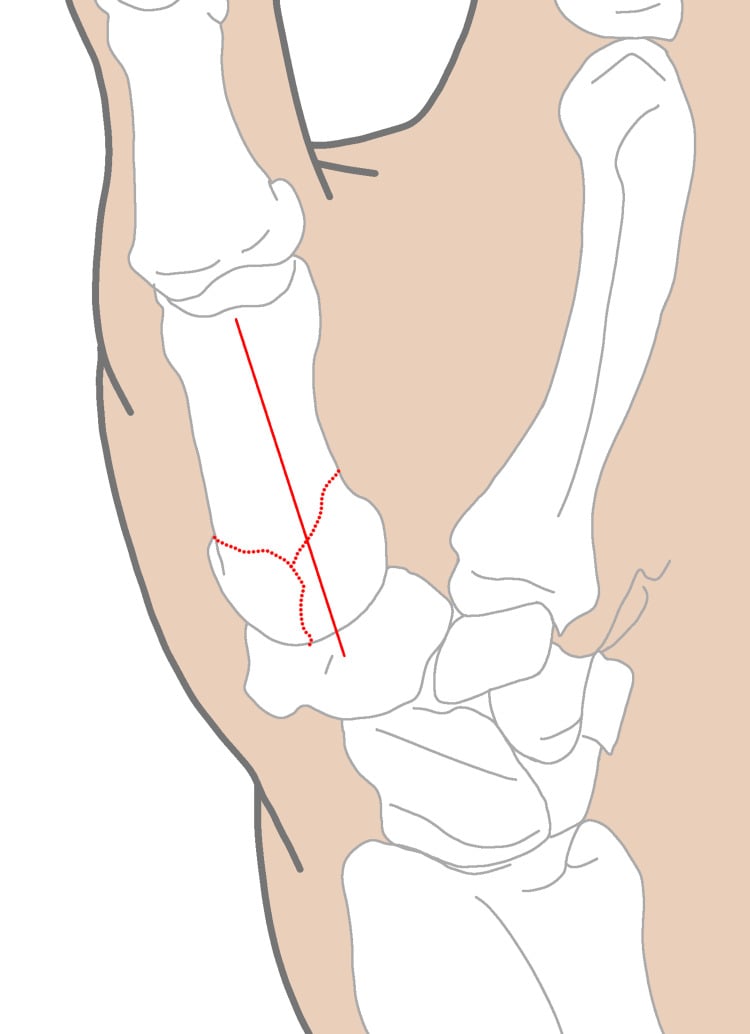
- Y-shaped or T-shaped pattern with dorsal and volar fragments
- WORSE prognosis than Bennett's due to greater articular cartilage damage
- Treatment depends on fragment size: ORIF for large, external fixation for small
- “Bennett = 2-part (Binary), Rolando = 3+ parts (comminuted) - know this cold
- “CT scan ESSENTIAL for surgical planning - count fragments, assess impaction
- “High arthritis rate (40-50%) even with anatomic reduction
- “CMC arthrodesis is the ultimate salvage procedure for post-traumatic arthritis
Rolando's Fractures
Overview and Epidemiology
Rolando's fracture, first described by Silvio Rolando in 1910, is a comminuted intra-articular fracture of the first metacarpal base involving the carpometacarpal (CMC) joint. It has three or more fragments, typically in a Y-shaped or T-shaped pattern, and represents approximately 15-20% of thumb metacarpal base fractures.
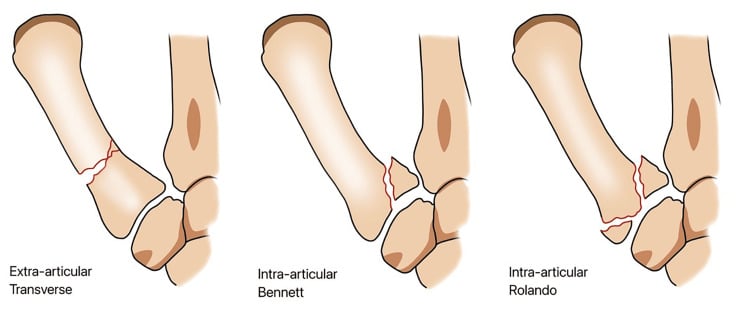
Rolando or Bennett. The distinction is a classic exam comparison, and it turns on the number of fragments. Bennett's is a two-part fracture-subluxation: the volar-ulnar fragment stays in place because the anterior oblique ligament is intact, the shaft subluxates dorsally under the pull of abductor pollicis longus, and the prognosis is generally good if it is reduced. Rolando's is comminuted, with more articular damage and impaction, and has a worse prognosis despite treatment.
Why the prognosis is guarded. The comminution means greater disruption of the articular surface, and the cartilage damage is sustained at the time of injury. Post-traumatic arthritis is therefore more common than after Bennett's despite optimal treatment, and even an anatomic reduction leaves the prognosis guarded. The comminuted pattern also makes surgical reconstruction challenging.
Anatomy and Biomechanics
The joint. The anatomy of the thumb CMC joint is identical to that described for Bennett's fractures; what matters for Rolando's is how the joint is loaded. It is a saddle-shaped (biconcave-biconvex) articulation that allows flexion-extension, abduction-adduction and opposition, under high functional demands in pinch and grip. The articular cartilage is approximately 1-2mm thick, and 40% of hand function depends on the thumb.
The ligaments. The stabilisers of the joint fare differently when the base breaks into several pieces:
- Role in Rolando's
- Often disrupted with volar fragment
- Role in Rolando's
- May be attached to dorsal fragment
- Role in Rolando's
- Contributes to instability
- Role in Rolando's
- Usually intact
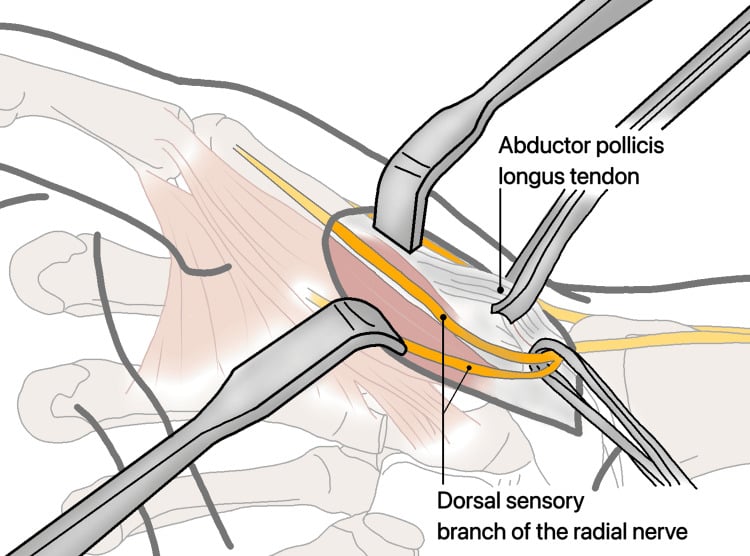
The vessels. The princeps pollicis artery, from the radial artery, and the first dorsal metacarpal artery supply the region, and both are at risk during the surgical approach.
Mechanism. A high-energy axial load on a partially flexed thumb drives the metacarpal into the trapezium. The force is greater than in a Bennett's fracture, and it exceeds what the articular surface can tolerate, so the base comminutes. It happens in:
- Punching, often a missed punch
- A fall onto the extended thumb
- Sporting injuries, such as skiing and contact sports
- Motor vehicle accidents
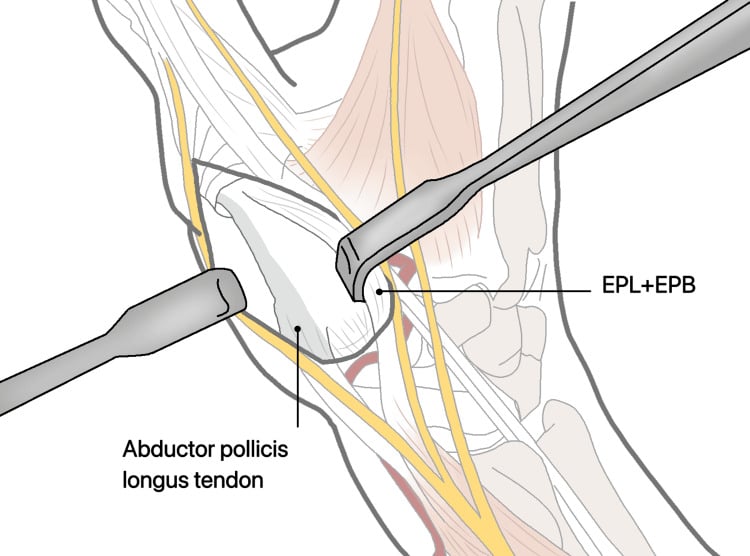
Deforming forces. They are the same as in Bennett's. Abductor pollicis longus inserts on the dorsal base of the first metacarpal and is the major deforming force, pulling the shaft proximally, radially and dorsally. Adductor pollicis pulls the shaft ulnarly and contributes to shortening, and EPL and EPB add an extension and radial deviation force.
Classification Systems
The classification is morphological; CT then determines fragment size, impaction and reconstructability. The Y-shaped pattern with large fragments offers the best opportunity for anatomic reconstruction; comminuted patterns favour fixation that relies on ligamentotaxis.
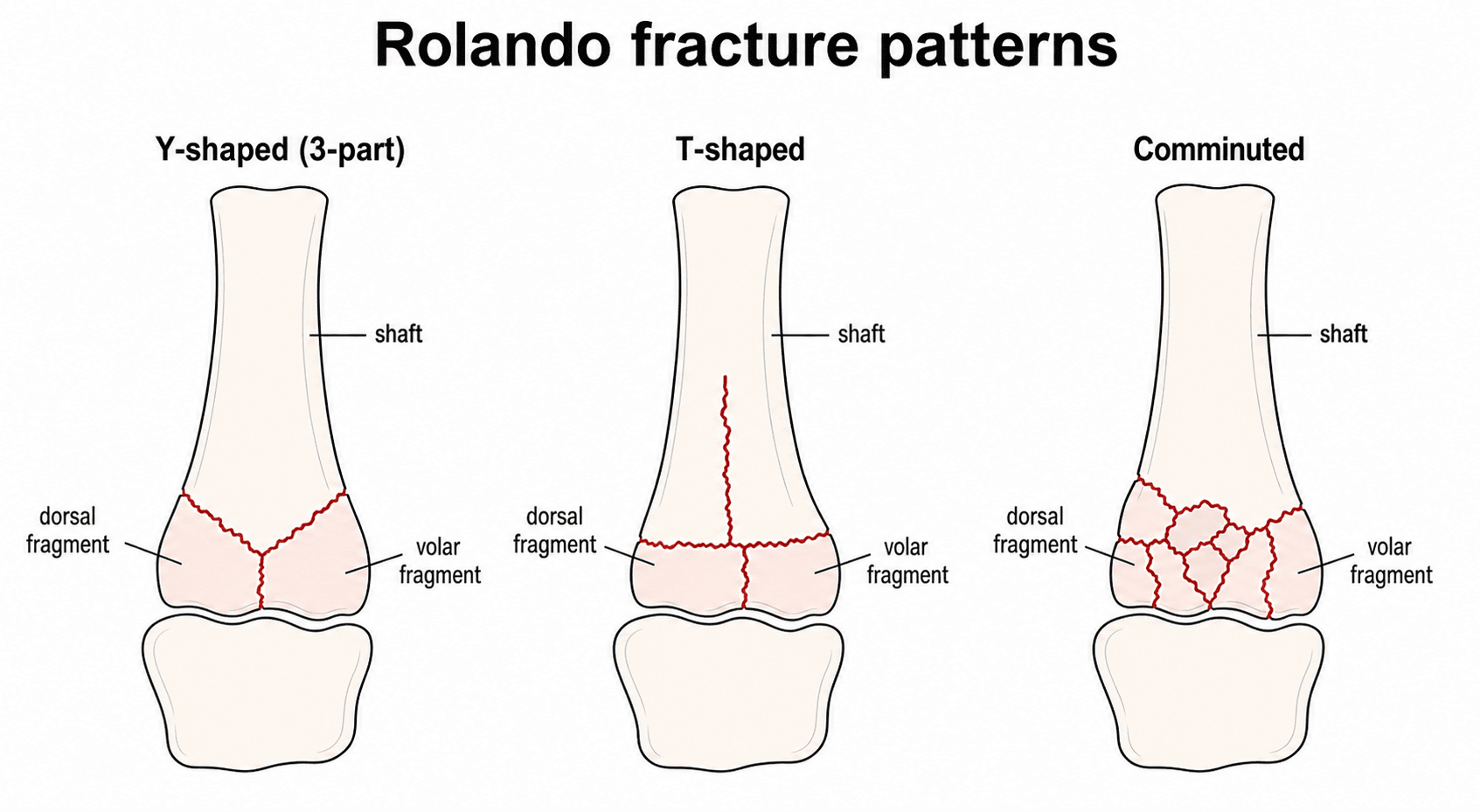
- Y-shaped (three-part) - the most common pattern. A volar-ulnar fragment (as in Bennett's), a dorsal-radial fragment and the metacarpal shaft, which may subluxate. It is amenable to ORIF if the fragments are an adequate size.
- T-shaped - a transverse articular split with a vertical fracture into the shaft. The fixation principles are similar.
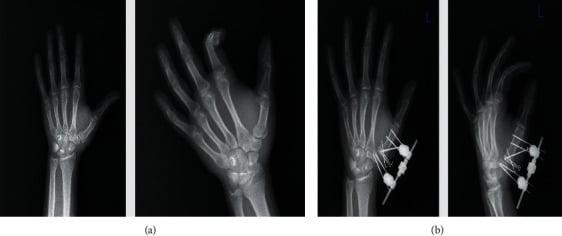
- Comminuted - multiple small articular fragments, often with central impaction. The most challenging pattern, and it may require external fixation.
Clinical Presentation
History. The injury is of higher energy than a typical Bennett's. The patient has severe pain and significant swelling at the thumb base and cannot use the thumb; there may be obvious deformity, and some describe a "crunching" at the moment of injury.
Examination. Marked swelling at the thenar eminence, with ecchymosis extending into the palm. The thumb appears shortened and may be angulated, and the skin must be checked for an open fracture. The CMC joint is exquisitely tender, and gentle manipulation produces crepitus.
Neurovascular and associated injuries. Record digital sensation on both the radial and ulnar sides of the thumb, capillary refill, and the radial artery pulse at the snuffbox. Look for other metacarpal fractures, carpal bone injuries and ligamentous injuries.
Telling it from Bennett's. The higher energy shows in the examination and on the film:
- Bennett's
- Lower
- Rolando's
- Higher
- Bennett's
- Moderate
- Rolando's
- Severe
- Bennett's
- Minimal
- Rolando's
- Marked
- Bennett's
- Subtle
- Rolando's
- Often obvious
- Bennett's
- 2 fragments
- Rolando's
- 3+ fragments
- Key Distinguishing Feature
- Comminuted intra-articular base fracture, 3+ fragments, Y/T pattern with articular impaction
- Confirming Investigation
- PA/lateral/Roberts XR; CT to count fragments
- Key Distinguishing Feature
- Two-part intra-articular fracture; volar-ulnar fragment retained, shaft subluxates dorsally
- Confirming Investigation
- XR (true lateral shows subluxation)
- Key Distinguishing Feature
- Transverse/oblique fracture that spares the CMC joint
- Confirming Investigation
- XR - fracture line proximal but extra-articular
- Key Distinguishing Feature
- Tenderness over trapezium, pain on axial thumb load; base of MC1 intact
- Confirming Investigation
- Roberts/Bett views; CT for occult fracture
- Key Distinguishing Feature
- Gross instability without fracture fragment; AOL/dorsoradial ligament rupture
- Confirming Investigation
- Stress XR; little or no bony fragment
- Key Distinguishing Feature
- Older patient, chronic symptoms, positive grind test, joint-space narrowing not acute fracture
- Confirming Investigation
- XR shows degenerative change, not acute fragments
- Key Distinguishing Feature
- Anatomical snuffbox tenderness, pain on axial thumb load referred radially
- Confirming Investigation
- Scaphoid-series XR; MRI/CT if occult
Investigations
Radiographs. Four views:
- PA - shows the Y or T pattern
- True lateral - assesses subluxation
- Roberts view - a hyperpronated AP of the thumb
- Obliques - additional fragment detail
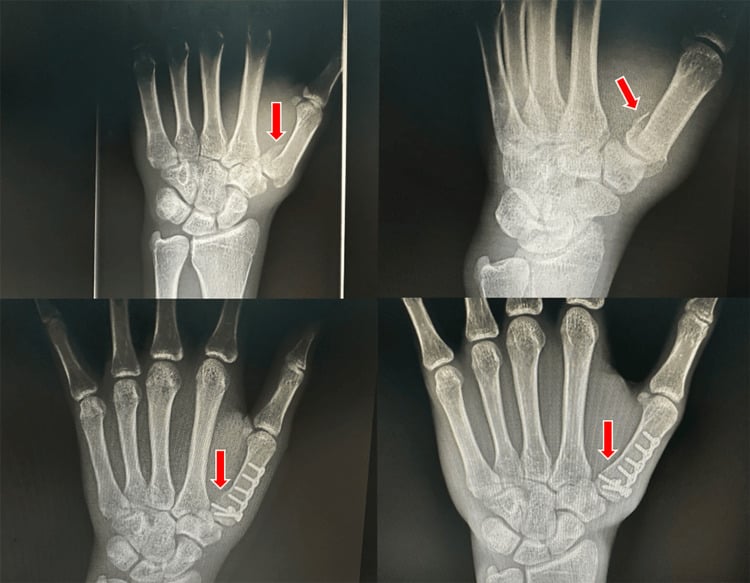
Expect multiple fracture lines through the articular surface in a Y-shaped or T-shaped configuration, shortening of the metacarpal shaft, and widening or subluxation of the CMC joint; central impaction may be visible. Read the frontal and lateral films together, because subluxation and dorsal displacement can be incompletely characterised on the AP view, and loss of joint congruity drives treatment even when individual articular fragments overlap.
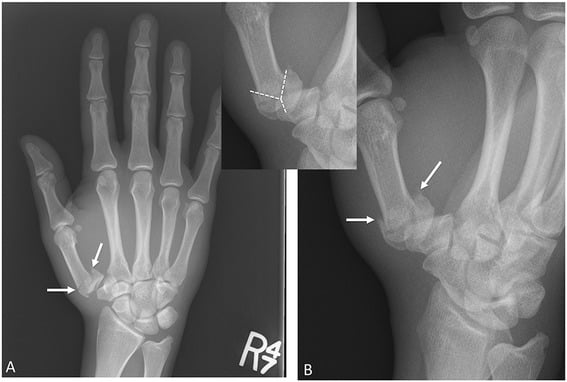
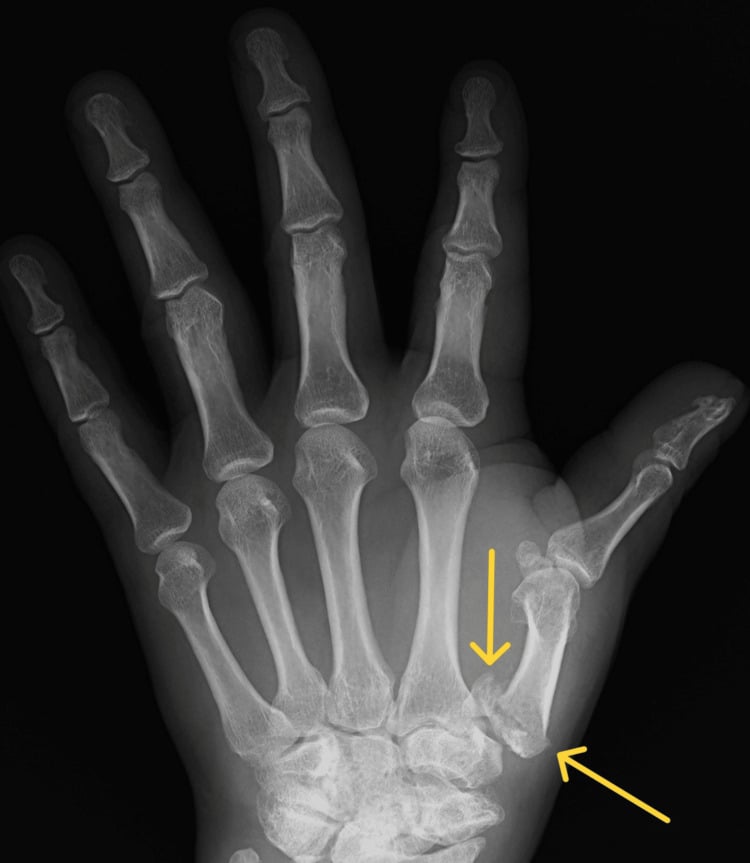
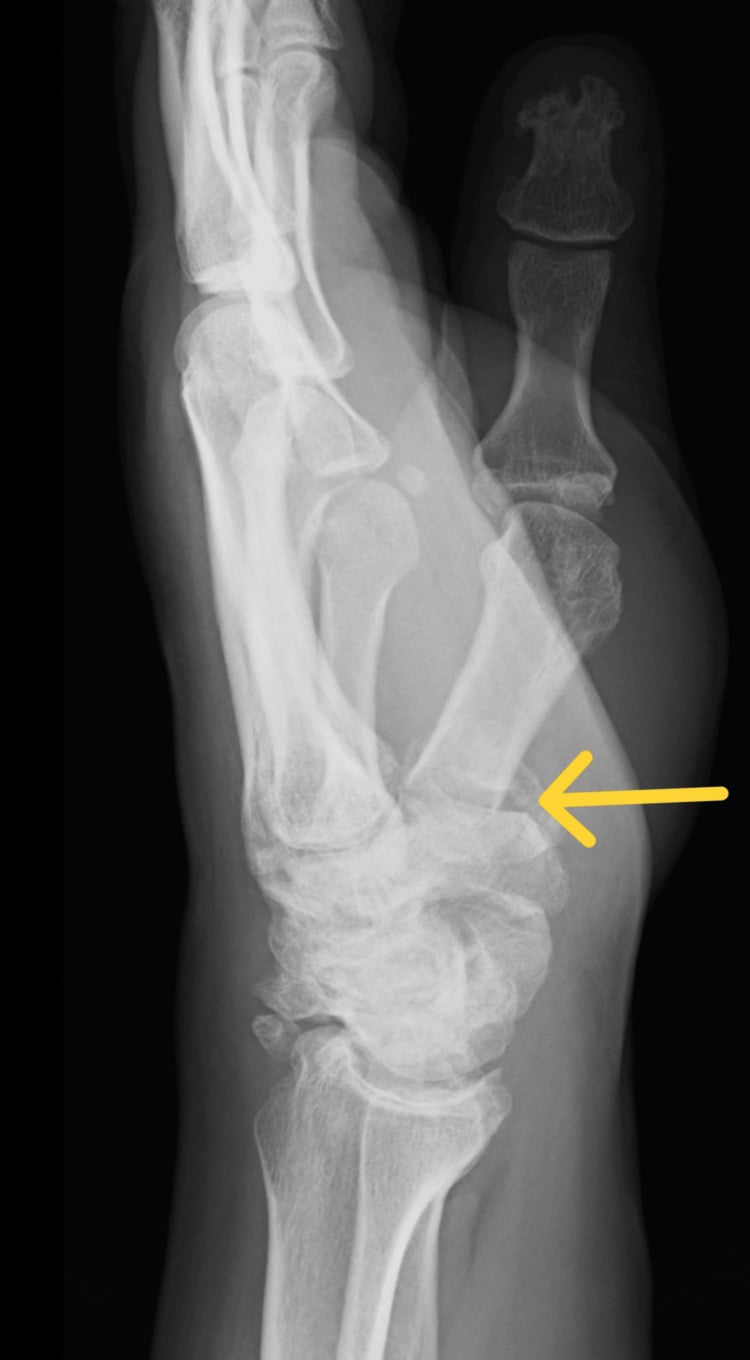
Getting the true lateral. Pronate the hand approximately 20 degrees, then angle the beam 15-20 degrees distally to separate the thumb metacarpal base from the other metacarpals. A poorly positioned lateral can conceal CMC subluxation and articular step-off.
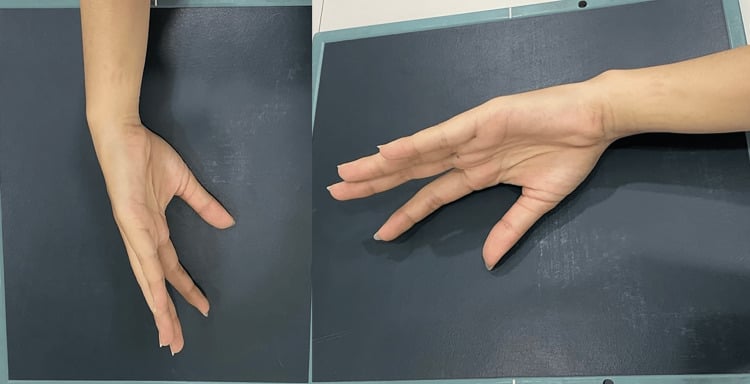
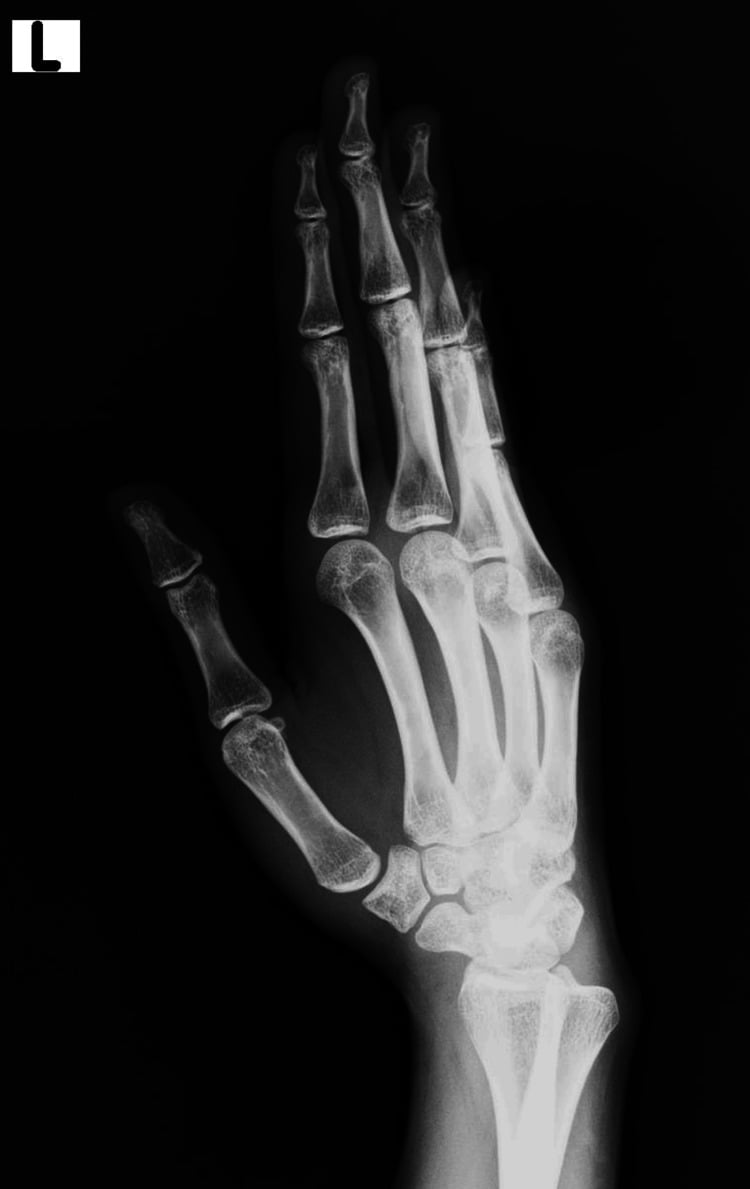
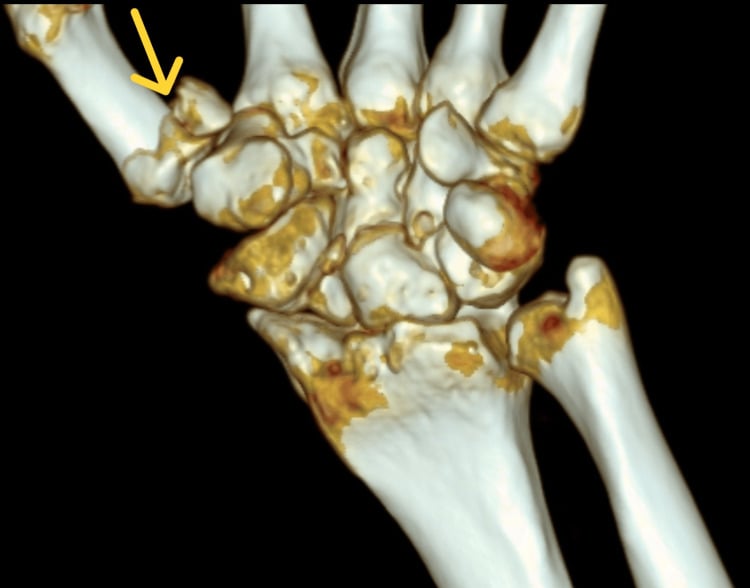
CT. Essential for surgical planning, and indicated in every Rolando's fracture being considered for surgery. Document:
- Number of fragments
- Size of each fragment
- Degree of articular impaction
- Metaphyseal bone loss
- Fragment displacement
3D reconstruction shows the fracture pattern and the orientation of each fragment, which plans the approach, guides implant selection and determines whether ORIF is feasible or whether external fixation or arthroplasty should be considered.
MRI is rarely indicated and is not routine for the acute fracture. It assesses associated ligament injury and may help assess chronic instability.
Management Algorithm
The treatment goals:
- Anatomic articular reduction when possible
- Stable fixation allowing early motion
- Restore thumb length and alignment
- Preserve CMC joint motion
- Minimise post-traumatic arthritis
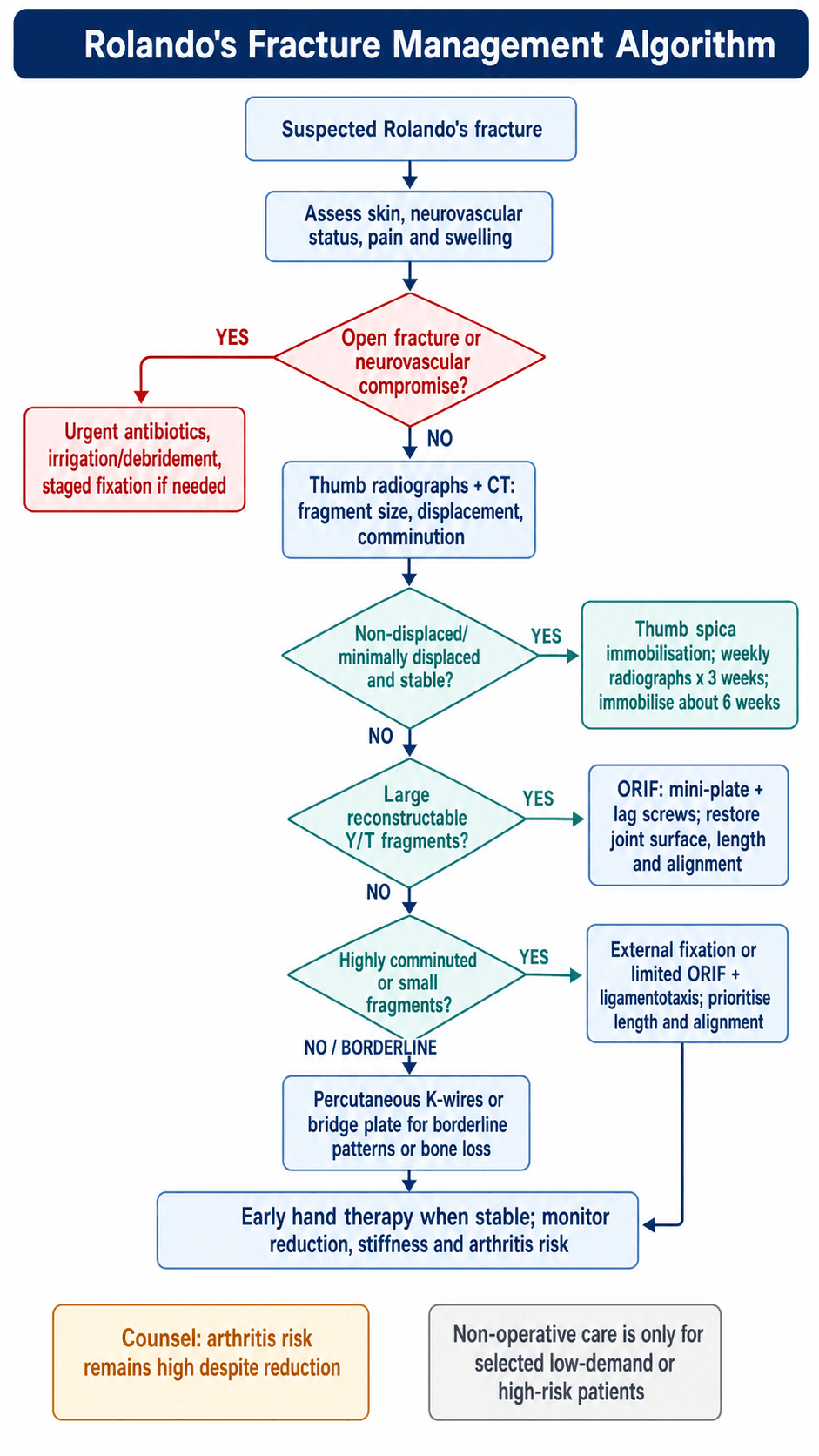
Rarely successful. Non-operative treatment seldom works for a true Rolando's fracture because of the comminuted pattern. Reduction is difficult to maintain, the rate of displacement is high, the results are poor when an articular step remains, and most go on to need surgery.
Indications. They are limited:
- Non-displaced or minimally displaced fracture
- Elderly, low-demand patient
- Severe comorbidities precluding surgery
- Patient preference after informed consent
Technique. Closed reduction under fluoroscopy and a thumb spica cast or splint. Serial radiographs weekly for 3 weeks, and total immobilisation of 6 weeks.
Surgical Technique
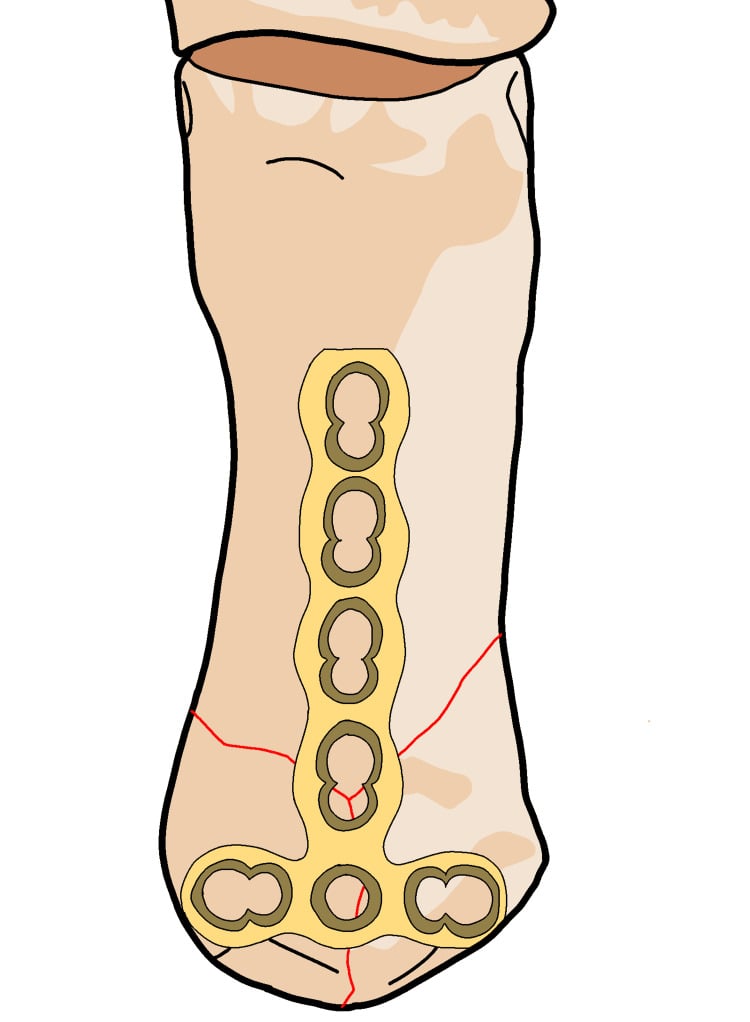
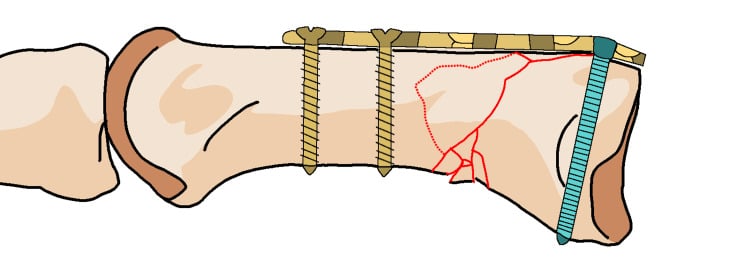
ORIF with mini-plate and screws is for the Y-shaped or T-shaped fracture with adequate fragment size. The steps:
- Volar-radial or dorsal exposure, chosen by fragment location
- Identify and protect the neurovascular structures
- Reduce the articular fragments under direct vision
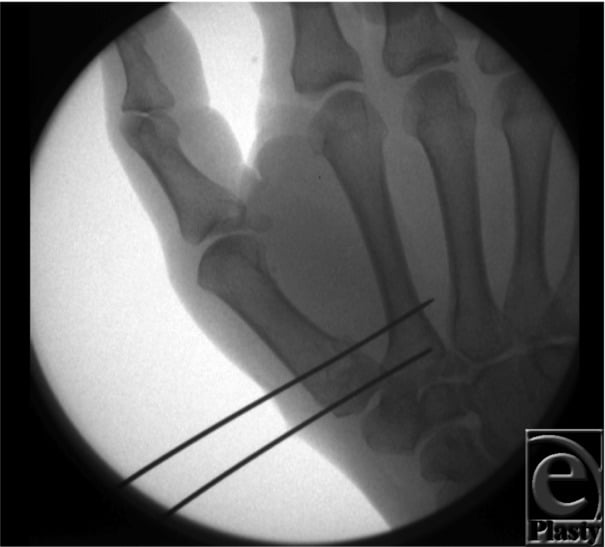
- Hold the reduction provisionally with K-wires
- Apply a mini-plate (T-plate, L-plate or straight)
- Lag screws for the articular fragments if possible
- Confirm the reduction fluoroscopically in multiple planes
Implants. Mini-fragment plates of 2.0mm or 2.4mm, screws of 1.5mm or 2.0mm, or a combination of plate and K-wires. A low-profile 2.0mm T-shaped locking plate can buttress reconstructable articular fragments while the stem spans the metacarpal shaft. Mini-screws suit the larger fragments, and a neutralisation plate may be needed.
Plate length. Contour the implant to capture the metacarpal base fragments and leave enough distal plate length for at least two shaft screws. Restore length and rotation before locking the construct.
Anatomic articular reduction is the primary goal. Final fluoroscopy must confirm CMC congruity and that no screw enters the joint.
Complications
Malreduction. The most significant early complication: an articular step leads to arthritis, and revision surgery may be required.
Loss of reduction. Common without stable fixation, which is why close radiographic follow-up is essential; it too may need revision.
Infection. Pin-site infection occurs in 5-10% of external fixators; deep infection is rare after ORIF. Treat early and consider hardware removal.
Hardware failure. Small screws may strip, K-wires may migrate, and a plate can loosen.
Post-traumatic arthritis. The most significant long-term complication, at a rate higher than after Bennett's. It occurs even with anatomic reduction, because the cartilage is damaged at the time of injury, and it may require CMC arthrodesis.
Stiffness. Common, especially after prolonged immobilisation, and it may limit opposition and grip. Hand therapy is essential, and some patients need a capsular release.
Chronic instability. Follows the ligament damage and may contribute to arthritis. Ligament reconstruction is rarely successful.
Malunion. The result of inadequate reduction. It alters the mechanics of the thumb and accelerates degenerative change.
Weakness. Pinch and grip strength are reduced. The weakness usually improves over 12 months but may be permanent.
Compared with Bennett's:
- Bennett's
- 20-30%
- Rolando's
- 40-50%
- Bennett's
- Common
- Rolando's
- More common
- Bennett's
- Moderate
- Rolando's
- Higher
- Bennett's
- Rare
- Rolando's
- More common
Postoperative Care
Immobilisation. A thumb spica splint initially, converted to a removable splint at 2-4 weeks if the fixation is stable. K-wires come out at 4-6 weeks, and an external fixator typically stays for 6 weeks.
Pin-site care for the external fixator:
- Daily cleaning with normal saline
- Monitor for signs of infection
- No submersion in water
- Educate the patient on the warning signs
Rehabilitation. Hand therapy supervision is essential for optimal functional recovery:
- Weeks 0-2, protection: strict immobilisation, elevation and oedema control, motion of the unaffected fingers
- Weeks 2-4: gentle active motion if the fixation is stable; continue the splint if stability is borderline
- Weeks 4-6: progressive range-of-motion exercises
- Weeks 6-12, strengthening: progressive strengthening, putty exercises for pinch and grip, functional activities, scar mobilisation
- Week 12 onwards: full activity as tolerated and sport-specific conditioning; therapy may need to be prolonged
Return to work and sport. It depends on healing, strength recovery and the functional demands, and recovery typically takes longer than after Bennett's. Some stiffness often persists, and there may be weather-related discomfort.
- Timeframe
- 2-4 weeks
- Timeframe
- 10-12 weeks
- Timeframe
- 14-16 weeks
- Timeframe
- 16+ weeks
Outcomes and Prognosis
Prognostic factors. A good result is more likely with:
- Y-shaped pattern rather than a highly comminuted one
- Anatomic reduction achieved
- Large fragments amenable to fixation
- Young patient
- Early surgical treatment
- Compliance with rehabilitation
and less likely with:
- Highly comminuted pattern
- Central articular impaction
- Multiple small fragments
- Cartilage damage visible at surgery
- Delayed treatment
- Open fracture
- Associated soft-tissue injury
By pattern. The Y-shaped (three-part) fracture achieves 60-70% good or excellent results, but anatomic reduction is critical and early arthritis develops in 30-40%. The comminuted pattern achieves 40-50% satisfactory results; some articular incongruity should be expected, and the rate of eventual fusion is higher.
Strength and motion. Grip recovers to 70-80% of the other side at 1 year and may continue to improve to 2 years, but rarely returns to 100%. Pinch is more affected, at 60-75% of the other side, which impacts fine motor tasks. Loss of motion is variable: opposition is usually preserved, though terminal extension or flexion may be lost.
Long-term follow-up. Annual radiographs for 5 years to monitor arthritis progression, with assessment of functional limitations and of the timing of any salvage procedure.
Salvage. The indications:
- Symptomatic post-traumatic arthritis
- Failed conservative measures
- Limitation of function and quality of life
The options:
- CMC arthrodesis - the most common
- Trapezium excision arthroplasty
- Total joint arthroplasty - a limited role
Guidelines, Registries & Global Practice
Guidelines, Registries & Global Practice
Thumb metacarpal base fractures are uncommon but functionally important. Metacarpal and phalangeal fractures together account for a large share of all hand fractures, yet the thumb accounts for only a small minority of tubular-bone hand fractures in large epidemiological series. Stanton, Dias and Burke reviewed 701 such fractures: the thumb was rarely involved in children and young adults, although thumb involvement rose among patients over 65 (a group in which 40% were injured on the road and fractures were more often oblique, intra-articular or multiple), and only 10% of the 70 intra-articular fractures were completely undisplaced. Rolando fractures are the comminuted, three-or-more-fragment subset of intra-articular thumb base fractures and are the least common but most difficult of the recognised patterns.
Global Epidemiology
- Evidence
- Rarely involved in children and young adults; involvement rises after age 65; only 10% of the 70 intra-articular fractures were completely undisplaced
- Source
- Stanton et al., 701 fractures
- Evidence
- CMC fractures and dislocations are the commonest motorcycle-crash thumb injury: of 59 thumbs treated acutely, 27 were CMC injuries and 19 of those were fracture-dislocations, attributed to force driven into the palm while gripping the handlebar
- Source
- Alexander et al. 2016, 128 motorcyclists
- Evidence
- Least common but most comminuted intra-articular base pattern
- Source
- Younis et al. review
- Evidence
- Young males predominate after axial-load/punch and fall mechanisms
- Source
- Pooled series
Guideline & Consensus Positions (Side by Side)
No single national society publishes a Rolando-specific guideline; recommendations are drawn from AO Foundation principles, society reviews, and trauma standards. The recommendations converge internationally.
- Position on intra-articular thumb base fractures
- Articular step greater than 1mm warrants reduction; stable fixation to allow early motion; lag-screw/plate for large fragments, bridging/external fixation for comminution
- Evidence level
- Expert consensus / principle-based
- Position on intra-articular thumb base fractures
- Displaced intra-articular hand fractures should be referred to a hand/specialist service; CT where surgical planning needed
- Evidence level
- Standard of care (consensus)
- Position on intra-articular thumb base fractures
- No dedicated guideline; supports anatomic reduction of displaced intra-articular fractures and early therapy referral
- Evidence level
- Consensus / expert opinion
- Position on intra-articular thumb base fractures
- Surgery for displaced patterns; ligamentotaxis-based fixation for comminution; counsel on arthritis risk
- Evidence level
- Level IV-V evidence
Registry & Comparative Evidence
There is no dedicated joint registry for thumb-base fractures (registries cover arthroplasty, not fracture fixation). The strongest comparative evidence is therefore from cohort series:
- Reduction quality, not implant choice, drives outcome. In Bennett fractures, ORIF and closed transarticular pinning gave equivalent clinical and radiographic results at a mean 7-year follow-up (Lutz et al.) — the principle generalises to Rolando fixation selection.
- Ligamentotaxis works for comminution. Dynamic external fixation restored joint space and motion in small Rolando series (El-Sharkawy et al.).
- Salvage is reliable. Trapeziometacarpal arthrodesis achieves ~96% fusion with improved pinch/grip in the post-traumatic setting (Talsania et al.).
Practice Variation
- High-resource settings: routine CT/3D planning, locking mini-fragment systems, and arthroscopic-assisted reduction in selected centres.
- Limited-resource settings: closed reduction with percutaneous K-wire or simple external fixation predominates; outcomes remain acceptable where length and alignment are restored.
- Threshold for surgery is broadly consistent worldwide (articular step greater than 1-2mm, instability, or displacement), reflecting shared AO-derived principles rather than divergent national policy.
Viva Questions
Viva Scenarios
Clinical Decision Scenarios
Practise clinical reasoning and management decisions out loud
“A 35-year-old male punches a wall and presents with severe thumb base pain. X-rays show a Y-shaped fracture of the first metacarpal base with 3mm articular step. How do you differentiate this from Bennett's fracture and what is your management?”
“Describe the surgical options for a highly comminuted Rolando's fracture where the fragments are too small to fix with screws.”
“A patient returns 18 months after ORIF of a Rolando's fracture with progressive thumb pain, stiffness, and weakness. X-rays show joint space narrowing. What are your options?”
MCQ Practice Points
MCQ Practice Points
Q: What is the key distinguishing feature between a Bennett's fracture and a Rolando's fracture?
A: Number of fragments - Bennett's is a two-part fracture-subluxation, while Rolando's is a comminuted fracture with 3 or more fragments. Both are intra-articular thumb metacarpal base fractures, but Rolando's has a worse prognosis due to greater articular damage.
Q: What is the typical fracture pattern seen in a Rolando's fracture on radiograph?
A: Y-shaped or T-shaped pattern with three main fragments: a volar fragment, a dorsal fragment, and the metacarpal shaft. Central articular impaction may also be present. The Y-shaped pattern is most common and offers the best opportunity for anatomic reconstruction.
Q: What is the most important imaging study for surgical planning in Rolando's fracture?
A: CT scan with 3D reconstruction is essential for surgical planning. It allows accurate assessment of fragment number, fragment size, degree of articular impaction, and helps guide fixation strategy. Plain radiographs are insufficient for surgical planning.
Q: A patient has a highly comminuted Rolando's fracture with multiple small articular fragments. What is the preferred treatment?
A: External fixation with ligamentotaxis is preferred when fragments are too small for screw fixation. Pins are placed in MC1 shaft and trapezium/MC2, then distraction is applied to restore length and achieve indirect reduction through ligamentotaxis. Limited percutaneous K-wires may supplement.
Q: What is the expected arthritis rate following a Rolando's fracture, even with anatomic reduction?
A: 40-50% develop post-traumatic arthritis (compared to 20-30% for Bennett's fractures). This higher rate occurs because the cartilage damage at the time of injury cannot be reversed, even with perfect reduction. Patients should be counseled about this expected outcome.
Q: What is the gold standard salvage procedure for symptomatic post-traumatic arthritis following a Rolando's fracture?
A: CMC arthrodesis (fusion) is the gold standard salvage, particularly for young, active patients. The thumb is fused in functional position: 40° palmar abduction, 20° radial abduction, and 15° pronation. This provides reliable pain relief with acceptable functional outcome.
Exam Cheat Sheet
Exam Day Cheat Sheet
Definition
- COMMINUTED intra-articular fracture of thumb MC base
- 3 or more fragments (vs Bennett's = 2 parts)
- Y-shaped or T-shaped pattern typically
- Described by Silvio Rolando in 1910
Key Differences from Bennetts
- Bennett = 2-part, Rolando = comminuted (3+)
- Higher energy injury mechanism
- More articular cartilage damage
- Worse prognosis (40-50% vs 20-30% arthritis)
Imaging
- XR: Y-shaped or T-shaped pattern
- CT essential for surgical planning
- Count fragments, assess impaction
- 3D reconstruction helpful
Treatment Options
- Y-shaped (large fragments): ORIF with plate/screws
- Comminuted (small fragments): External fixation
- Combined approach for complex patterns
- K-wires for intermediate patterns
Surgical Approach
- Wagner (volar-radial) for volar fragments
- Dorsal for dorsal fragments
- Mini-plates: 2.0mm or 2.4mm
- External fixator: MC1 to trapezium/MC2
Outcomes
- Y-shaped: 60-70% good/excellent
- Comminuted: 40-50% satisfactory
- Arthritis rate: 40-50%
- Salvage: CMC arthrodesis
Quick Reference: Key Numbers
- Value
- 15-20%
- Value
- 3 (vs 2 for Bennett's)
- Value
- 40-50%
- Value
- 60-70%
- Value
- 70-80%
- Value
- 6 weeks
- Value
- 12-16 weeks
Bennett's vs Rolando's Summary
- Bennett's
- 2
- Rolando's
- 3+
- Bennett's
- Volar-ulnar + shaft
- Rolando's
- Y or T-shaped
- Bennett's
- Lower
- Rolando's
- Higher
- Bennett's
- K-wires usually
- Rolando's
- Plate/Ex-fix often
- Bennett's
- 20-30%
- Rolando's
- 40-50%
- Bennett's
- Better
- Rolando's
- Worse
- Bennett's
- Rare
- Rolando's
- More common
Evidence Base
Evidence Base
Contemporary Review: Anatomy, Classification and Management of Thumb Base Fractures
- Narrative review confirming that stable extra-articular fractures respond to closed reduction and casting, whereas displaced intra-articular Bennett, Rolando and highly comminuted fractures generally require surgery
- Rolando and comminuted patterns are inherently unstable and often need advanced techniques such as locking plates, external fixation or arthroscopic-assisted reduction
- Anatomical reduction is emphasised as paramount to limit joint incongruity, instability and post-traumatic arthritis
Dynamic External Fixation for Rolando Fracture
- Small case series (7 patients) treating the Y- or T-shaped Rolando fracture with a modified dynamic external fixator restoring joint space through ligamentotaxis
- Reported excellent range of motion and power grip with restoration of joint space and patients pain-free by 3 months
- No patient developed arthritic changes over the (short) follow-up period
Closed Reduction and Intermetacarpal K-wire Fixation
- Series of 25 unstable first metacarpal base fractures (including 3 Rolando and 7 Bennett) treated by closed reduction and percutaneous intermetacarpal Kirschner wires
- Fixation was stable with no secondary displacement and union at a mean of 32 days
- One of three Rolando patients had grip loss greater than 20 percent, illustrating the comminuted pattern's poorer functional reserve
ORIF versus Closed Pinning for Bennett Fracture (Reduction-Quality Principle)
- Comparative study of 32 Bennett fractures - by definition a SINGLE large volar-ulnar fragment, not the three-part Rolando pattern - treated by ORIF versus closed transarticular K-wiring at a mean 7-year follow-up (range 3-18 years)
- Treatment method did not influence clinical outcome or the prevalence of radiological post-traumatic arthritis
- The percutaneous group had a significantly higher incidence of first metacarpal ADDUCTION DEFORMITY, which the authors attributed to Kirschner wire placement near the fracture line - a technical point, not an inherent failing of percutaneous fixation
- Patients with an articular step-off greater than 1 mm were EXCLUDED from the study
Trapeziometacarpal Arthrodesis as Salvage
- Series of 72 thumbs undergoing trapeziometacarpal arthrodesis, a procedure classically favoured for young active males in the post-traumatic setting
- Fusion rate 95.8 percent using continuous-compression nitinol staples and autograft
- Key pinch improved from 6.7 to 9.3 kg and grip from 33.7 to 41.1 kg, with 94 percent patient satisfaction