The Salter-Harris Classification
- SALTR Mnemonic: Slip, Above, Lower, Through, Ruin/Ram (crush).
- Type II is Most Common: Fracture through physis with metaphyseal fragment (Thurston-Holland).
- Type III/IV are Intra-Articular: Require anatomical reduction.
- Type V is a Crush Injury: Often diagnosed retrospectively by growth arrest.
- Distal Femur is High Risk: Accounts for 60-70% of leg length discrepancy from growth arrest.
- “Know the Salter-Harris classification perfectly
- “Understand which types require ORIF
- “Know the high-risk physes (Distal Femur, Proximal Tibia)
- “Recognise growth arrest patterns (Bar, Complete)
Overview/Epidemiology
Physeal injuries are fractures involving the growth plate (physis), and they are unique to children. They account for 15-30% of all paediatric fractures, boys are affected twice as often as girls (2:1), and the incidence peaks during the adolescent growth spurt: closing physes are vulnerable physes.
The weakest link. In a child the physis is weaker than bone, ligaments and tendons. The mechanism that gives an adult a ligament sprain or a dislocation gives a child a physeal fracture, and an injury to the physis can lead to growth disturbance.
Anatomy and Pathomechanics
The zones. From epiphysis to metaphysis, the physis has distinct zones:
- Reserve (resting) zone - germinal cells; storage of nutrients
- Proliferative zone - chondrocytes replicate in columns
- Hypertrophic zone - chondrocytes enlarge; the weakest zone
- Zone of provisional calcification - chondrocytes undergo apoptosis and the matrix calcifies
- Primary spongiosa - new woven bone forms
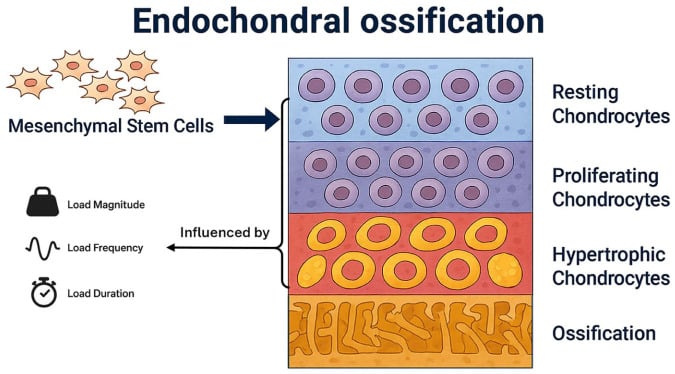
Where the fracture runs. Type I and II fractures typically propagate through the hypertrophic zone, which is weak because its chondrocytes are dying and its matrix is in transition. The germinal cells of the reserve and proliferative zones are typically preserved, so growth continues. In Type III, IV and V injuries the germinal layers are disrupted, leading to growth arrest.
The periphery. The ring of LaCroix and the perichondral ring provide peripheral stability to the physis. Injury to them, as in a severe Type I, can contribute to instability and arrest.
Classification Systems
The Salter-Harris classification (1963) is the gold standard. It sorts physeal fractures by the path of the fracture line, and the higher types carry a worse prognosis.
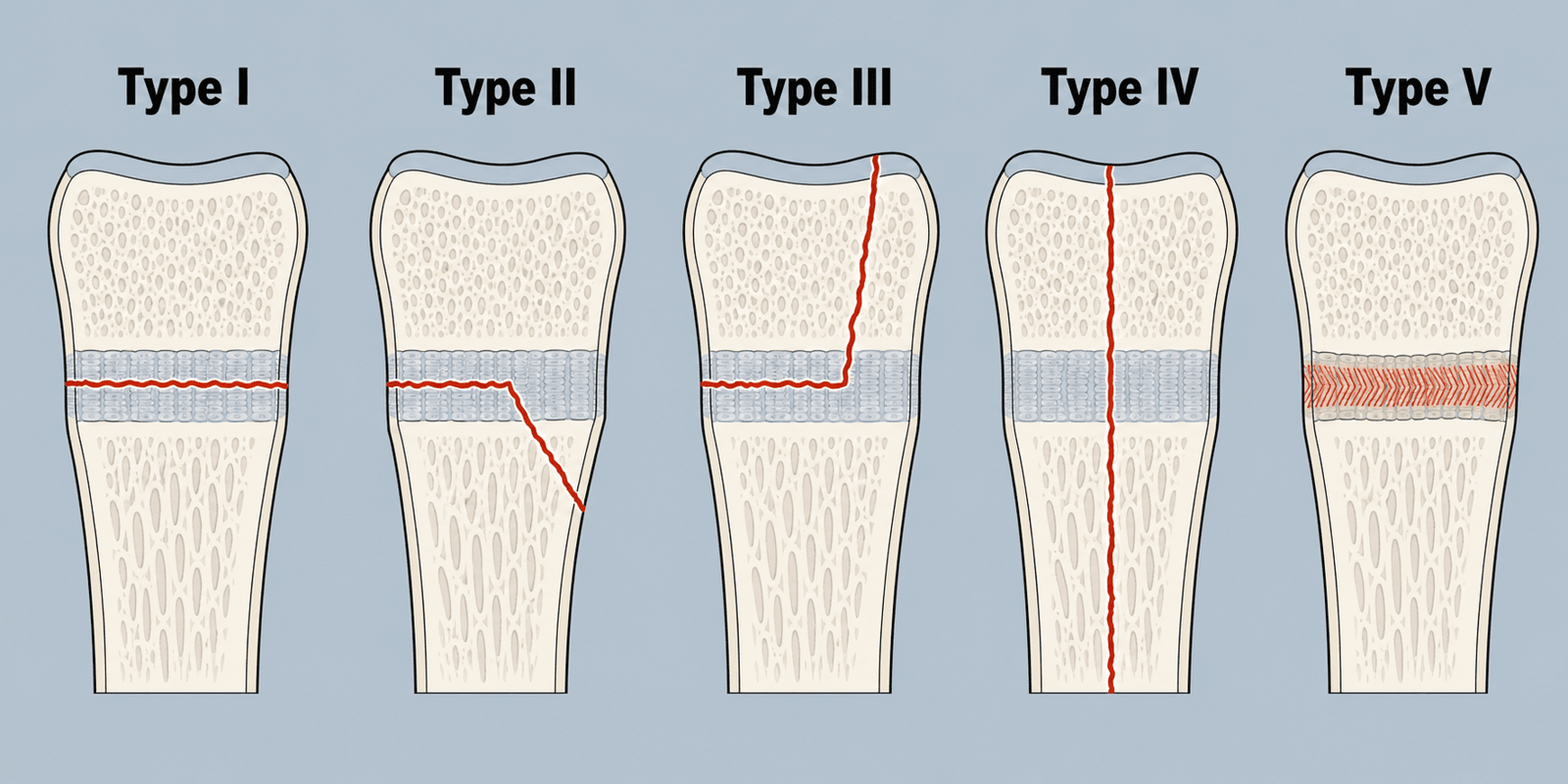
- Type I - through the physis only, with no metaphyseal or epiphyseal fragment. Often occult on radiographs; the diagnosis rests on the examination. Prognosis good.
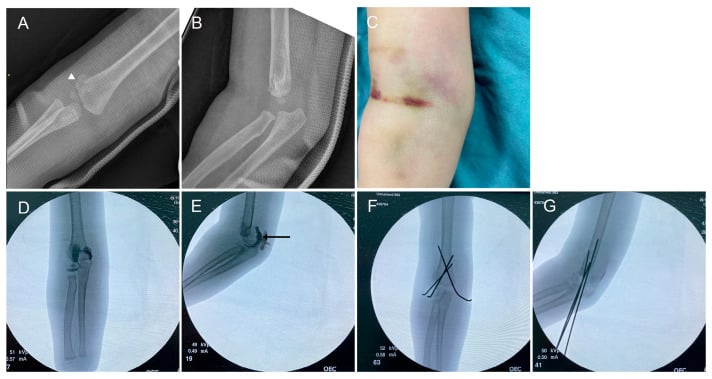
- Type II - through the physis with extension into the metaphysis. The metaphyseal fragment is the Thurston-Holland fragment. The most common type, quoted at 75%; in the Olmsted County population study (Peterson) it was 54%. Prognosis good.
- Type III - through the physis with extension into the epiphysis, and intra-articular. Prognosis fair.
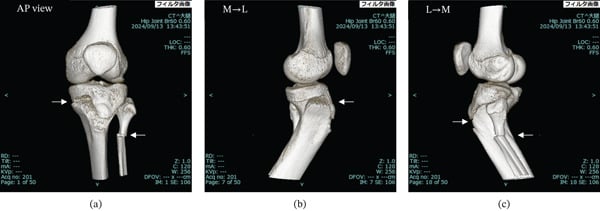
- Type IV - crosses all three layers: metaphysis, physis and epiphysis. Prognosis poor, with a high arrest risk.
- Type V - a crush injury to the physis. Often missed on initial radiographs and diagnosed retrospectively when growth arrest is identified. Prognosis very poor.
Types IV and V carry the highest risk of growth arrest.
SALTRSALTR Mnemonic
Hook:SALTR - The classic mnemonic.
Clinical Assessment
History. Establish the mechanism: a fall, a twist or a direct blow. Swelling may be minimal in a Type I injury.
Examination. Point tenderness over the physis is the key finding, and it means a physeal injury until proven otherwise, even if the radiograph is negative. Look for swelling, deformity and ecchymosis; range of motion may be limited by pain. Document the neurovascular status, especially in displaced fractures.
Investigations
Radiographs. AP and lateral views are standard, but they may be normal in a Type I or Type V injury. Comparison views of the contralateral (uninjured) side can be helpful for subtle widening.
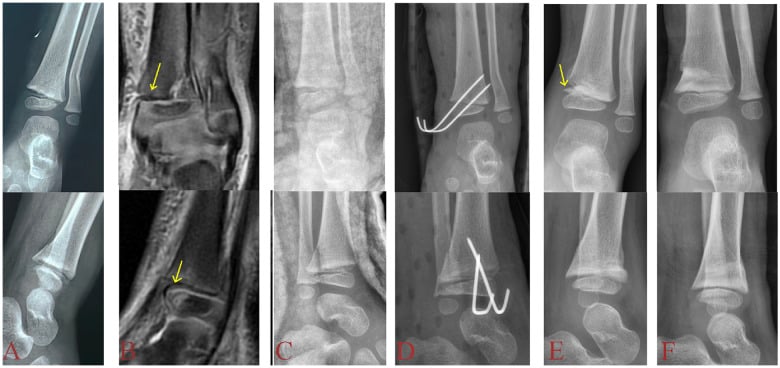
MRI is for the child whose radiograph is negative but in whom clinical suspicion is high. It shows physeal oedema.
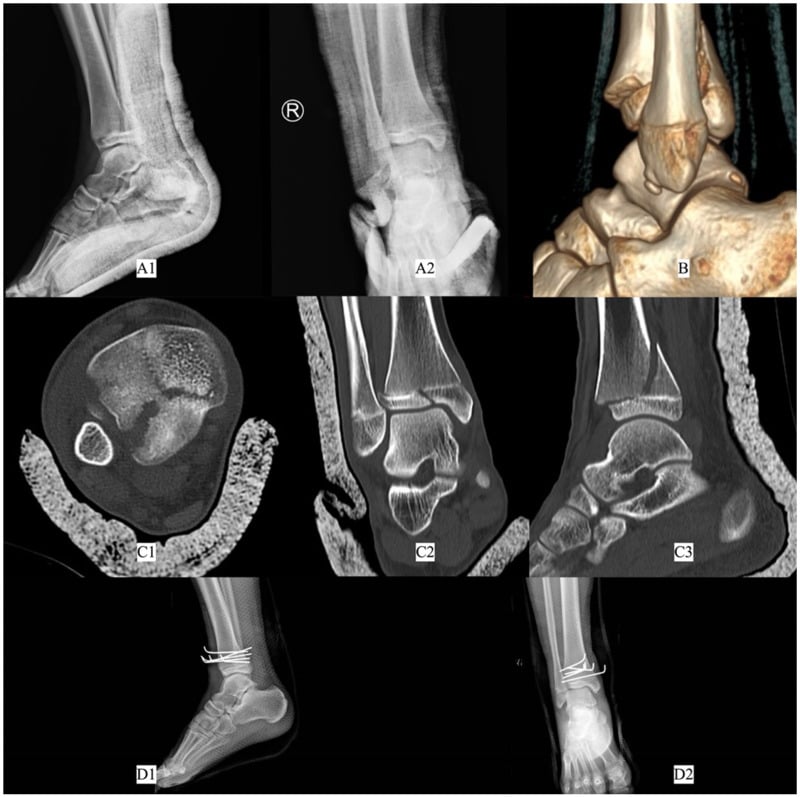
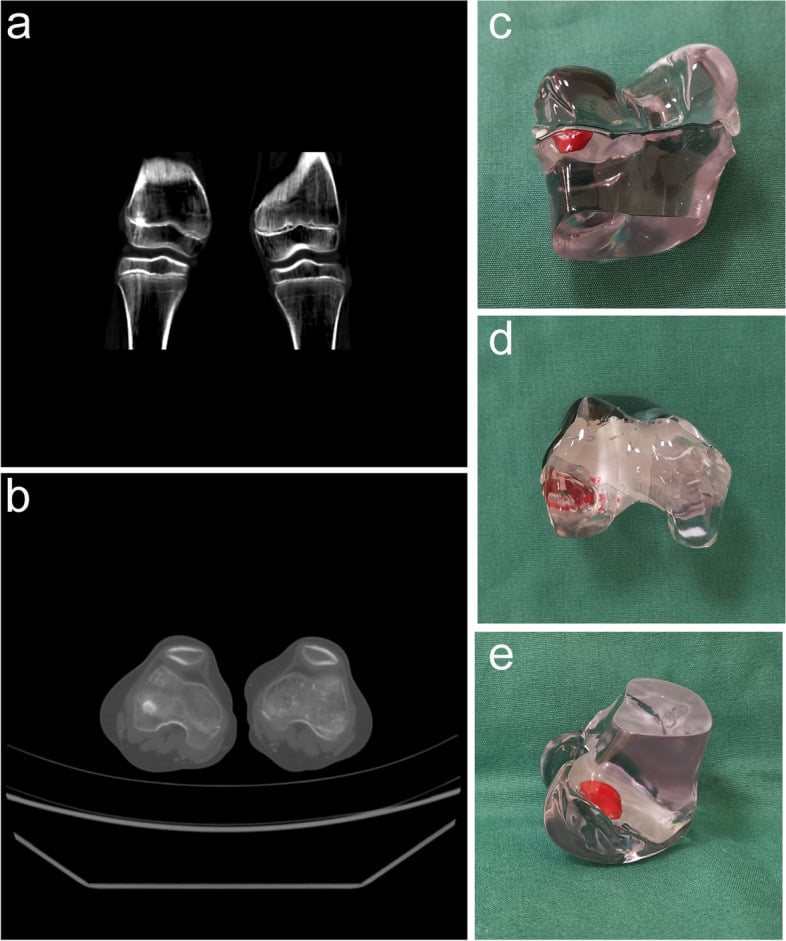
CT maps complex intra-articular (Type III and IV) fractures and plans the surgery, and 3D reconstruction is helpful. It is reserved for complex anatomy and operative planning rather than routine Salter-Harris grading.
Differential Diagnosis
The key clinical scenario is a skeletally immature child with periarticular pain and a normal or equivocal radiograph. Because the physis is the weakest link, what would be a sprain in an adult is usually a Type I physeal fracture in a child.
- Discriminating Feature
- Point tenderness exactly over the physis after acute injury
- Confirmatory Test
- Clinical; MRI if doubt
- Action
- Immobilise and treat as a fracture
- Discriminating Feature
- Tenderness over the ligament, not the physis; uncommon pre-maturity
- Confirmatory Test
- MRI / stress views
- Action
- Functional rehab once fracture excluded
- Discriminating Feature
- Insidious overuse pain, no single trauma
- Confirmatory Test
- MRI or bone scan
- Action
- Activity modification
- Discriminating Feature
- Fever, refusal to bear weight, raised CRP/ESR
- Confirmatory Test
- Bloods, aspiration, MRI
- Action
- Urgent — antibiotics +/- washout
- Discriminating Feature
- Night pain, mass, systemic symptoms, metaphyseal lesion
- Confirmatory Test
- Radiograph + MRI, refer
- Action
- Do not biopsy — refer to tumour unit
Management Algorithm
Extra-articular. Closed reduction and casting is the mainstay. Manipulate gently and avoid repeated reduction attempts, which damage the physis; a stable reduction is held in a cast.
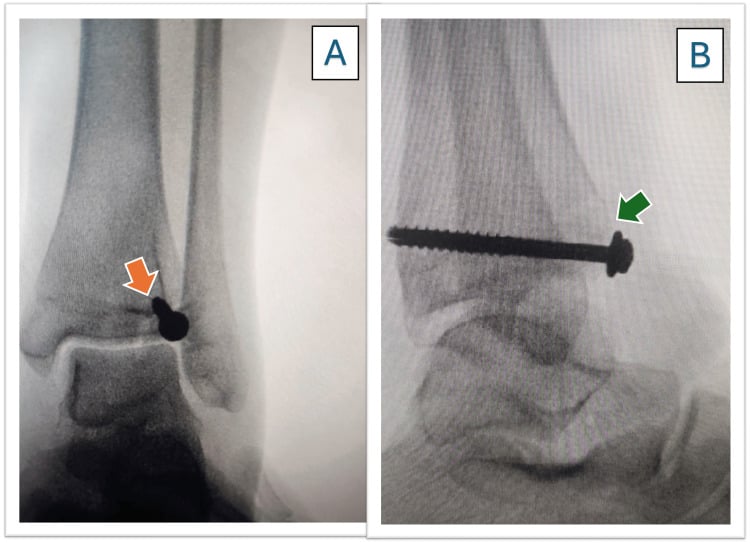
Unstable after reduction. Consider percutaneous pinning with smooth K-wires, avoiding the physis if possible. Do not cross the physis with threaded hardware. The exception is a very localised Type IV with the screw well away from the rest of the physis (see Surgical Techniques).
Surgical Techniques
The balance. Physeal fixation weighs the need for rigid fixation against the risk of iatrogenic physeal damage. The principles that guide the choice:
- Use the smallest effective implants
- Place hardware parallel to the physis when possible
- If screws must cross the physis, use a small diameter (less than 4.0mm) and remove them early
- Minimise soft-tissue stripping to preserve the blood supply
Pinning is for an unstable Type I or II after reduction, or a Type III or IV after open reduction. Reduce closed or open under fluoroscopic guidance and pass smooth K-wires, avoiding the physis if possible; in a Type III or IV, place the pins through the epiphysis, parallel to the physis. Bury the wires or leave them percutaneous, immobilise in a cast, and remove the pins at 3-4 weeks.
Reduction by type.
- Type I - gentle traction and reduction; avoid aggressive manipulation
- Type II - reverse the mechanism (for an apex-posterior deformity, flex and apply a posterior force), using the Thurston-Holland fragment as a guide
- Type III and IV - open reduction to visualise the articular surface, because the physis cannot be adequately assessed closed
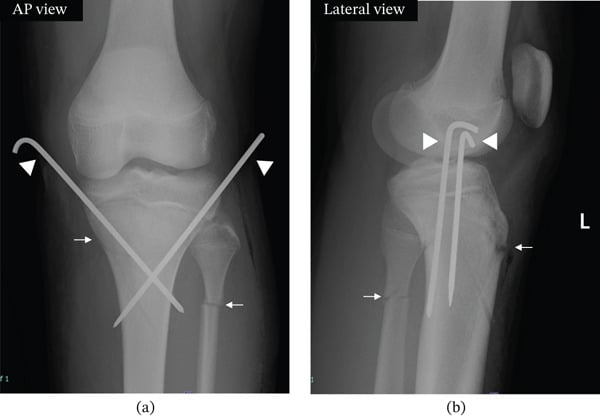
Crossing the physis with hardware. Smooth K-wires may cross it: they cause minimal localised damage and are removed early. Threaded screws should be avoided if possible, because they create a tether that can cause asymmetric growth and angular deformity. The exception is the Type IV fracture: a single 4.0mm screw placed perpendicular to the fracture line, crossing the physis, may be acceptable if it is placed centrally and only one or two small holes are made. The risk is lower than leaving a malreduced fracture. The bigger the physis (the younger the child, the more growth remaining), the more cautious you must be about crossing it.
Complications
- Rate
- Highly site-dependent (rates under Outcomes/Prognosis)
- Prevention/Management
- Anatomical reduction of intra-articular types; surveillance driven by SITE and initial displacement, not SH type alone
- Rate
- Common with partial arrest
- Prevention/Management
- Bar excision if less than 50% physis affected, osteotomy if complete.
- Rate
- Depends on site and age
- Prevention/Management
- Epiphysiodesis or lengthening depending on discrepancy.
- Rate
- Rare (except specific sites like femoral head)
- Prevention/Management
- Gentle reduction. Minimise soft tissue stripping.
- Rate
- Very Rare
- Prevention/Management
- Good blood supply in children.
Harris (Park-Harris) Growth-Arrest Lines
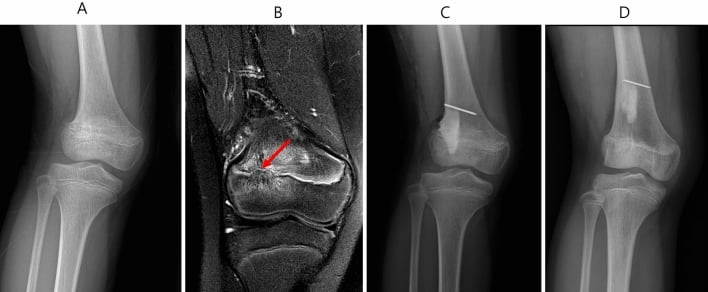
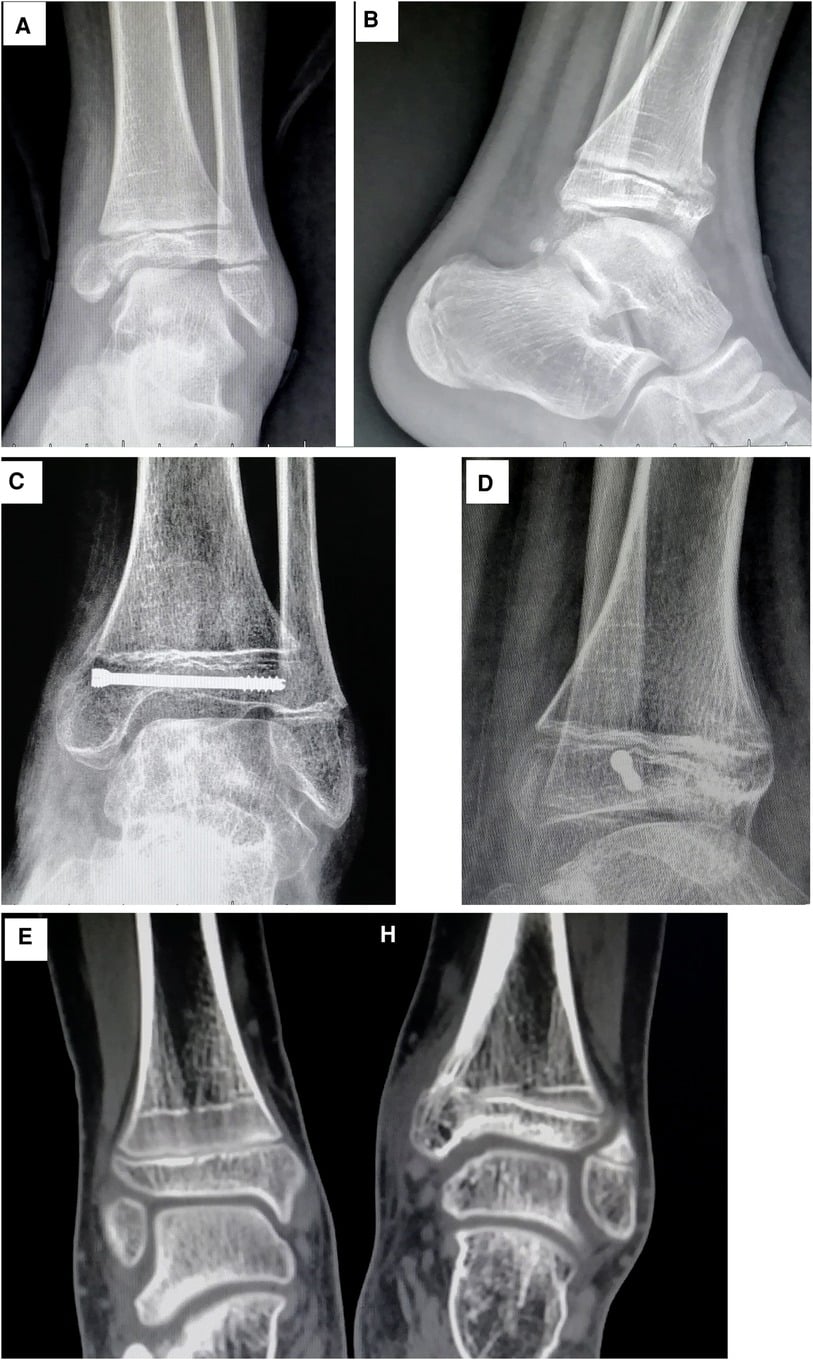
What it is. After any insult that transiently slows the physis (a fracture, serious illness, chemotherapy), growth briefly stops and then resumes. That lays down a transverse dense (sclerotic) line in the metaphysis, parallel to the physis: a footprint of where the physis sat at the time of the insult.
Reading it for arrest. The line's relationship to the physis on follow-up films is what matters:
- A symmetric line, parallel to the physis and moving away from it with subsequent growth, means the physis has resumed normal, even growth. Reassuring: no bar.
- A line that is not parallel, converging on or tethered to one point of the physis, means that point has stopped growing while the rest continues. The line points toward the physeal bar. This is the earliest radiographic signature of a partial arrest, often visible before any clinical angulation.
Why it matters. The Harris line puts into practice the surveillance to maturity recommended throughout this page. A line converging on a focal area flags a forming bar and prompts MRI mapping and early intervention, while the discrepancy or angulation is still small and correctable.
Postoperative Care
Immobilisation. A cast or splint for 3-6 weeks depending on location: 4-6 weeks for most injuries, longer for the distal femur. Lower-limb injuries go in a long-leg cast and are usually non-weight-bearing at first; upper-limb injuries go in an above-elbow cast.
Follow-up. Radiographs at 1-2 weeks confirm alignment, and radiographs at 6-12 months screen for growth disturbance. Any SH III or IV, or an injury at a high-risk location such as the distal femur, should be followed for at least 1 year for growth arrest.
Rehabilitation Protocol
Phase 1: Immobilization (0-4 weeks)
- Cast or splint immobilization.
- Non-weight bearing for lower limb injuries.
- Gentle ROM of uninvolved joints.
Phase 2: Early Mobilization (4-6 weeks)
- Cast removal if healed.
- Progressive weight bearing.
- Gentle ROM exercises.
Phase 3: Strengthening (6-12 weeks)
- Progressive strengthening.
- Proprioception and balance.
- Return to activities.
Long-Term
- Follow-up X-rays at 6-12 months to screen for growth disturbance.
Why Physeal Shape Modifies the Prognosis (Beyond the SH Type)
The Salter-Harris type predicts prognosis because a fracture through the flat hypertrophic zone spares the germinal (reserve and proliferative) cells. Yet the distal femur is worst regardless of type, with even a Type II there carrying a 30-50% arrest risk. The SH type is not the whole story: the three-dimensional shape of the physis matters.
A flat physis. The distal radius fractures cleanly and transversely through the hypertrophic zone in a Type I or II, leaving the germinal layers intact. Hence the excellent prognosis and rare arrest.
An undulating physis. The distal femur is the extreme: prominent mamillary processes and a wavy, interdigitated contour anchor it to the epiphysis, so it cannot fail through a single clean plane. A shear injury tears across the germinal layers even in a nominally "safe" Type I or II. That is why the distal femur behaves worse than its SH type predicts, and why even a non-displaced Type II there is followed to maturity.
The practical corollary. Counsel and follow up by site as well as SH type. A Type II distal radius is benign; an identical Type II at the distal femur is a high-arrest injury. The distal-femur-specific management is developed in the distal-femoral-physeal-injuries topic.
The other sites to know. The proximal tibia also carries a high arrest risk. The distal tibia is where Tillaux and triplane fractures are common, and the distal radius is very commonly injured and usually benign.
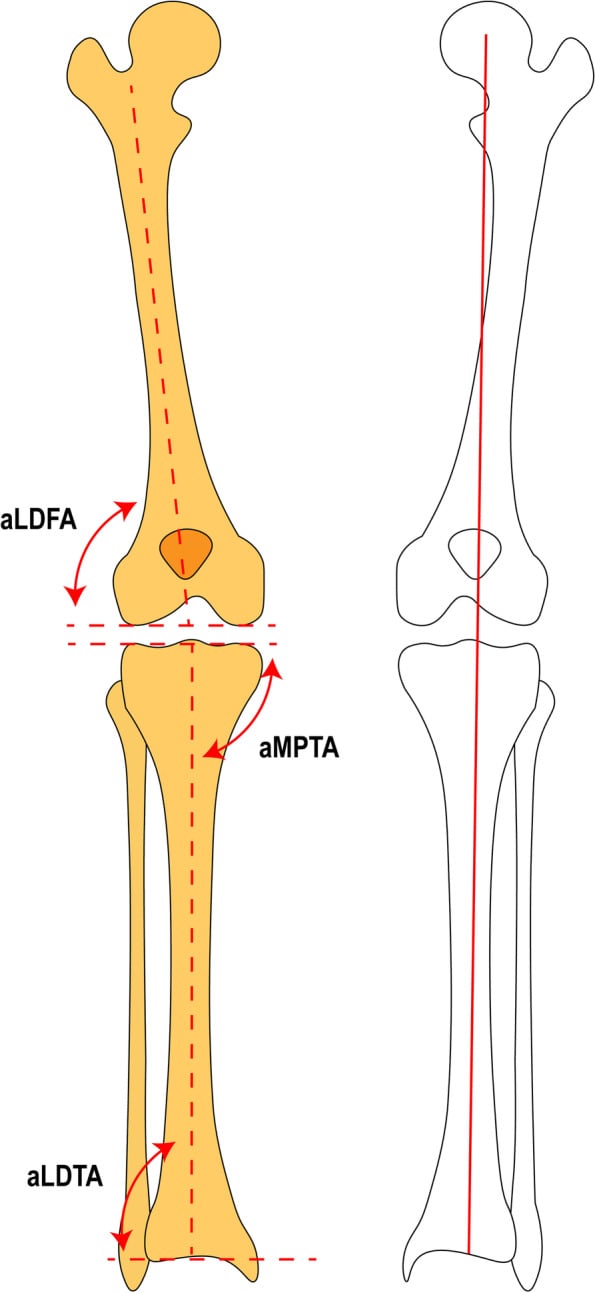
The distal femoral physis contributes 70% of femoral length and 35% of total leg length. Even minor physeal damage can cause significant leg length discrepancy, and angular deformity (varus or valgus) is also common. Any Salter-Harris injury to the distal femur should be treated with respect and followed long-term for growth disturbance.
Outcomes/Prognosis
By type and site. Site matters more than the type does:
- Type I and II - generally excellent at forgiving sites, with arrest well under 5% for a Type II distal radius. Do not carry that figure to other physes.
- Type III and IV - fair to poor if malreduced, good if anatomically reduced. Arrest rate 10-50%, up to 50% in Type IV.
- Type V - poor. Often missed initially, and growth arrest is common.
- Distal tibia - about 12% overall.
- Distal femur - the worst outcomes regardless of type, for the reasons set out under physeal shape.
What sets the prognosis. Prognosis turns on the child's age, since a younger child has more growth remaining and so more consequence; on the site, the distal femur being worst; on the type, IV and V being worst; and on the quality of reduction.
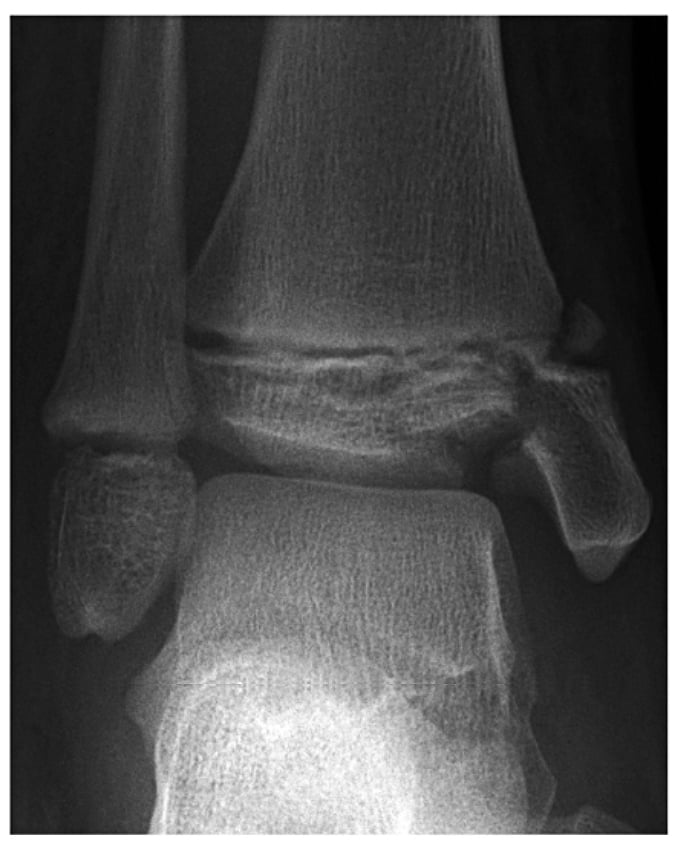
At the distal tibia, most arrests happen in Type II. The Salter-Harris ladder is taught as though risk climbs monotonically from I to V, and the higher types certainly do damage the germinal layers directly. But the ladder describes a mechanism, not an epidemiology, and at some sites the two come apart completely. In 124 children with distal tibial physeal fractures, followed until symmetric growth was confirmed on Harris lines or the physis had closed, premature physeal closure occurred in 15 (12.1%) (DOI, level III). Of those arrests, 67% were in Salter-Harris II fractures, with 13% in type III, 13% in type IV and 7% in triplane injuries; no arrest occurred in any Type I or Tillaux fracture.
Two explanations, both examinable. First, base rates: type II is by far the commonest pattern, so even a modest per-fracture risk generates most of the absolute arrests. Second, and more useful, the study found that the amount of initial displacement predicted arrest, a relative risk of 1.15 for every millimetre, while residual displacement after reduction and the number of reduction attempts showed only non-significant trends. The energy that displaced the fragment has already injured the physis; how neatly it is subsequently reduced matters less than the injury itself. Barmada's distal tibial series, in the Evidence Base, found the reverse: quality of reduction, not initial displacement, predicted closure. The two studies disagree on this point.
What survives. Anatomical reduction of an intra-articular Type III or IV remains mandatory, for the joint surface as much as the physis. The mechanistic ladder is still the right way to understand why higher types threaten growth, and prognosis follows site and physeal geometry at least as much as SH type.
Both errors are real, and under-warning is the commoner one. Telling the parents of a child with a displaced Type II distal tibial fracture that this is the benign type and discharging them at six weeks is how an arrest is discovered late, as an established bar and deformity. The opposite error, alarming every family with a Type II, is needless, since most do well. The discriminator is displacement and site: follow a significantly displaced Type II, and any distal femoral physeal injury, to skeletal maturity with Harris line surveillance, rather than by SH type alone.
Guidelines, Registries & Global Practice
Global epidemiology
- Physeal fractures account for 15-30% of all paediatric fractures; the Olmsted County population study (Peterson 1994) gives an incidence of ~279/100,000 person-years, male:female 2:1, peaking in 11-12-year-old girls and 14-year-old boys.
- Salter-Harris Type II is the commonest type (about half of cases); the distal radius and phalanges are the commonest sites.
Where society guidance converges (no major disagreement)
- AAOS / POSNA (US)
- Anatomical reduction, fixation parallel to physis
- BOA-BOAST / NICE (UK)
- Anatomical reduction; specialist paediatric input
- AO Foundation / EFORT (Europe)
- Anatomical joint and physis restoration
- AAOS / POSNA (US)
- Smooth wires preferred; remove early
- BOA-BOAST / NICE (UK)
- Avoid threaded transphyseal fixation in young children
- AO Foundation / EFORT (Europe)
- Epiphyseal/metaphyseal fixation; spare the physis
- AAOS / POSNA (US)
- Until growth disturbance excluded / maturity for high-risk
- BOA-BOAST / NICE (UK)
- Safeguard against missed arrest; clear follow-up pathway
- AO Foundation / EFORT (Europe)
- Follow high-risk physes to maturity
- There is no Salter-Harris-specific national clinical guideline from AAOS, NICE or AO; practice is consensus- and evidence-based rather than protocolised, and the principles above are essentially universal.
Registry note
- Paediatric physeal injuries are not tracked by the major arthroplasty registries (NJR, AJRR, AOANJRR, SHAR). Outcome data derive from institutional series (e.g. Arkader for the distal femur, Barmada for the distal tibia) rather than registries.
High- vs limited-resource practice variation
- Well-resourced settings: ready MRI/CT for occult or complex injuries, low-dose EOS for limb-length surveillance, navigation/fluoroscopy for bar excision, and tension-band (guided-growth) plating for angular correction.
- Limited-resource settings: reliance on plain radiographs and clinical follow-up, closed reduction and casting as the default, and later presentation of established deformity managed by osteotomy. The core principle — gentle anatomical reduction and avoidance of physeal injury — is achievable anywhere.
- Surveillance: any child with an SH III/IV, a high-risk physis (distal femur, proximal tibia) or a suspected Type V should be followed for at least 1-2 years, or to maturity for the highest-risk injuries.
Deep Dive: Physeal Bar Excision
What is a Physeal Bar?
- A bridge of bone that forms across the injured physis, tethering growth.
- Can be central (causes shortening only) or peripheral (causes angular deformity).
Indications for Bar Excision
- Bar less than 50% of physis width.
- At least 2 years (or 2cm) of growth remaining.
- Angular deformity that is progressive.
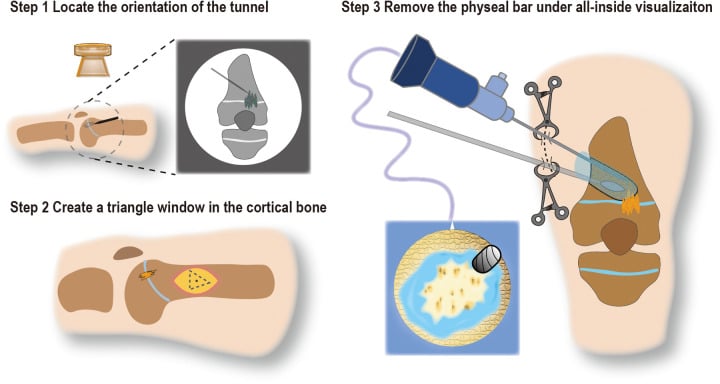
Technique
- Preoperative MRI to map the bar.
- Approach based on bar location.
- Excise the bar under fluoroscopy and direct vision.
- Interpose fat graft or PMMA (to prevent bar reformation).
- Consider concurrent osteotomy if significant angular deformity.
Outcomes
- Restoration of growth in 50-80% of cases.
- Better results with smaller bars and more growth remaining.
Parent's Guide: Understanding Physeal Injuries
What is a Growth Plate? A growth plate is a layer of cartilage near the end of a bone where growth occurs. Children's bones grow from these areas until they reach skeletal maturity (around age 14-16 for girls, 16-18 for boys).
What happens if the growth plate is injured? Most growth plate injuries heal completely without any problems. However, in some cases, the injury can damage the cells responsible for growth, leading to:
- Shorter limb: If growth slows or stops.
- Crooked limb: If one part of the growth plate is damaged but the rest keeps growing.
How is it treated?
- Most injuries are treated with a cast.
- Some injuries (especially those that go into the joint) may require surgery to realign the bones.
What are the warning signs? Your doctor will want to see your child for follow-up X-rays. Call them if you notice:
- One leg looking shorter than the other.
- A limb that seems to be growing crooked.
Long-term outlook Most children do very well. Your doctor may want to monitor your child with X-rays over the next 1-2 years to ensure the growth plate is healing normally.
Controversies & Areas of Uncertainty
- Open vs closed reduction of gapped SH I/II fractures. Barmada showed a residual physeal gap (over 3 mm) is associated with a 60% closure rate and entrapped periosteum. Whether routine open removal of interposed periosteum actually lowers arrest remains unproven — it is biologically logical but not supported by randomised data.
- Crossing the physis with hardware. It is widely taught that smooth wires are safe and threaded screws are not, yet small (under 7% of physeal area), centrally placed, briefly retained screws are used routinely without measurable arrest. The true safe threshold is extrapolated from animal work, not human trials.
- Routine MRI/CT after closed reduction. Advanced imaging detects gaps and early bars earlier, but Thawrani showed CT does not improve classification reliability and rarely changes the decision. Cost, radiation (CT) and sedation needs argue against routine use; reserve for surgical planning.
- Prophylactic contralateral epiphysiodesis timing. For an established distal-femoral arrest, the trade-off between accepting limb-length discrepancy, contralateral epiphysiodesis, bar excision and lengthening is individualised; multiplier-method timing carries inherent prediction error.
- The "transitional" distal tibia. Whether a 2 mm step-off threshold for Tillaux/triplane fractures (derived from adult articular data) is the correct cut-off in a near-closed physis with little remaining growth is debated; some accept slightly more in the oldest adolescents.
MCQ Practice Points
Q: Which Salter-Harris type is most common? A: Type II (75% of physeal fractures). Fracture through physis with a metaphyseal (Thurston-Holland) fragment.
Q: Which Salter-Harris type has the worst prognosis for growth arrest? A: Type IV and V. Type IV crosses all layers. Type V is a crush injury.
Q: Which zone of the physis is the weakest? A: Hypertrophic zone. This is where Type I and II fractures propagate.
Q: What is the maximum acceptable step-off for a Salter-Harris Type III or IV fracture? A: 2mm. Greater than 2mm requires ORIF.
Q: Can threaded screws be placed across the physis? A: Avoid if possible. Threaded hardware creates a tether causing asymmetric growth. Use smooth K-wires and remove early (3-4 weeks).
Q: What is the significance of the distal femoral physis? A: High risk location. Contributes 70% of femoral growth and 35% of leg length. Even Type II injuries have 30-50% arrest risk.
Self-Assessment Quiz
Additional Self-Assessment Questions
Specific Physeal Injuries by Location
Distal Radius
- Most common pediatric physeal injury.
- Usually Type I or II. Excellent prognosis.
- Growth arrest is rare (less than 5%).
- Treatment: Closed reduction and casting.
Distal Femur
- High-risk injury. 70% of femoral growth from this physis.
- Growth disturbance in 30-50% of cases.
- Even Type II can lead to significant LLD or angular deformity.
- Requires close long-term follow-up.
Proximal Tibia
- Also high-risk. Contributes 55% of tibial growth.
- Risk of popliteal artery injury (tethered by genicular branches).
- Always perform thorough vascular examination.
Distal Tibia
- Transitional fractures (Tillaux, Triplane) occur as physis is closing.
- Type III (Tillaux) and Type IV (Triplane) are common patterns.
- Require anatomical reduction if displaced.
Viva Scenarios
Practise clinical reasoning and management decisions out loud
“9-year-old with ankle pain after a twisting injury. X-ray is normal. Point tenderness over the distal fibular physis.”
“12-year-old with a Salter-Harris Type IV fracture of the distal tibia. 3mm of articular step-off on CT.”
“8-year-old presents 1 year after a Salter-Harris II distal femur fracture. Now has 2cm of LLD and progressive valgus.”
“5-year-old with a lawnmower injury to the foot. Significant soft tissue loss over the lateral malleolus and visible physis.”
CLASSIFICATION
- I: Physis only
- II: + Metaphysis (Most Common)
- III: + Epiphysis (Intra-art)
- IV: All Three (Worst)
ANATOMY
- Hypertrophic Zone (Weakest)
- Reserve Zone (Germinal)
- Perichondral Ring (Stability)
- Thurston-Holland (Type II)
HIGH RISK SITES
- Distal Femur (70% growth)
- Proximal Tibia
- Distal Tibia (Tillaux)
- Type IV Anywhere
TREATMENT
- I/II: Cast
- III/IV: ORIF (greater than 2mm)
- V: Monitor
- Avoid crossing physis
Evidence Base
Salter & Harris — Injuries Involving the Epiphyseal Plate
- Original five-type classification based on the anatomy of the fracture line and its relation to the germinal layers
- Prognosis worsens from Type I to Type V as the proliferative/reserve zones become involved
- Established that crushing injury (Type V) carries the worst prognosis
Peterson et al — Physeal Fractures, Part 1: Epidemiology (Olmsted County)
- 850 children sustained 951 physeal fractures over 10 years; incidence 279/100,000 person-years
- Male:female ratio 2:1; peak in 11-12-year-old girls and 14-year-old boys
- Phalanges of the fingers were the commonest site (37%); Salter-Harris II was the commonest type (54%)
Peterson — Physeal Fractures, Part 3: Classification
- Proposed a classification with anatomic, epidemiologic and prognostic basis after review of all prior systems
- Added previously unclassified patterns including metaphyseal-only and transverse-physis injuries
- Type VI (perichondral/periosteal ring injury, e.g. lawnmower) carries high peripheral-bar risk
Barmada et al — Premature Physeal Closure after Distal Tibia Fractures
- 27% of 92 distal tibial physeal fractures developed premature physeal closure
- A residual physeal gap over 3 mm after reduction raised closure to 60% vs 17% with no gap
- Quality of reduction — not initial displacement, attempts or method — predicted closure; entrapped periosteum was found in gapped SH I/II fractures
Thawrani et al — Reliability and Necessity of CT in Distal Tibial Physeal Injuries
- Adding CT to radiographs did NOT improve interobserver reliability of Salter-Harris classification (kappa fell from 0.67 to 0.57)
- Surgeons rated CT most useful for planning screw placement (56%), not for the treatment decision
- CT changed the management plan in only about one fifth of complex cases
Langenskiold — Surgical Treatment of Partial Closure of the Growth Plate
- 43 bar excisions in 35 patients; bone bridge replaced with a free fat transplant
- Most operations restored growth and corrected or prevented deformity; benefit was questionable in 7
- Age, bar location and bar size determined both the indication and the result
Additional Evidence
Arkader et al — Predicting the Outcome of Physeal Fractures of the Distal Femur
- 73 distal femoral physeal fractures across 2 Level I centres; overall complication rate 40%, growth arrest most frequent
- Salter-Harris grade and displacement (48.8% vs 26.6% complications) were significant predictors of outcome
- Complications were higher when hardware violated the physis (65% vs 30%)
Thawrani et al — see Evidence Base (CT in distal tibial physeal injury)
- Reinforces that CT is for operative planning of Type III/IV patterns, not routine grading
- Interobserver reliability of SH grading remained only moderate even with CT
- Displacement measurement was highly reproducible on both radiograph and CT