Wells Score | CTPA Gold Standard | Risk Stratify | Anticoagulate or Thrombolyse
- Wells score estimates PE probability - guides need for CTPA
- CTPA is gold standard (95% sensitive) - VQ scan if contrast contraindicated
- Risk stratification determines treatment: Massive = thrombolysis, Low-risk = anticoagulation only
- Thrombolysis saves lives in massive PE but 1-5% intracranial bleed risk
- IVC filters ONLY if anticoagulation absolutely contraindicated - NOT routine
- “PERC rule: If ALL 8 criteria negative AND low clinical suspicion, PE excluded (no D-dimer needed)
- “Massive PE = haemodynamic instability (SBP less than 90) - thrombolyse immediately
- “D-dimer negative with low Wells score excludes PE (99% NPV)
- “Postop PE is provoked - anticoagulate 3 months, NOT indefinite
Overview and Clinical Significance
Pulmonary embolism is the leading cause of preventable perioperative death in orthopaedic surgery. Early recognition and treatment are life-saving.
The risk. Without prophylaxis, THA and TKA carry a 10-20% risk of PE. Modern prophylaxis brings the risk after major orthopaedic surgery down to 0.5-2%, which is still significant. Events peak on postoperative days 3-7.
The burden. The annual incidence is 60-100 per 100,000 population and overall mortality is 2-8%. Fatal PE is often the first presentation.
Pathophysiology
Where the clot comes from. About 95% of pulmonary emboli come from lower-limb DVT. The thrombus breaks off, usually from the proximal leg veins, travels through the IVC and the right heart, and lodges in the lobar, segmental or subsegmental pulmonary arteries.
Why it forms. Virchow's triad:
- Venous stasis - immobility, surgery
- Endothelial injury - surgical trauma, central lines
- Hypercoagulability - the inflammatory response, cancer, thrombophilia
What it does depends on its size.
- Small PE - minimal effect, may be asymptomatic
- Moderate PE - ventilation-perfusion mismatch, hypoxia, tachycardia
- Massive PE - acute RV failure from a sudden increase in afterload, and cardiogenic shock
Why massive PE kills. The thin-walled right ventricle cannot generate enough pressure to overcome a sudden increase in pulmonary vascular resistance, and it fails. The dilated RV impairs left ventricular filling (ventricular interdependence), cardiac output falls, and the patient goes into cardiogenic shock.
Gas exchange. Lung that is ventilated but no longer perfused becomes dead space, and the V/Q mismatch causes hypoxaemia. The patient hyperventilates and is hypocapnic, at least initially, and surfactant depletion adds atelectasis.
Why orthopaedic surgery is very high risk. Each of these contributes:
- Prolonged immobility - before, during (anaesthesia) and after surgery
- Direct vascular trauma - hip and knee surgery is close to large veins
- Bone marrow embolisation - fat and marrow emboli activate coagulation
- Cement polymerisation - thermal injury, microemboli
- Tourniquet use - ischaemia-reperfusion injury, endothelial damage
- The inflammatory response - massive cytokine release activates the coagulation cascade
Risk by procedure, without prophylaxis. The symptomatic rate after THA and TKA is the 10-20% given above; the fatal rates and the other procedures are these:
- THA - fatal PE 0.5-1%
- TKA - fatal PE 0.3-0.7%
- Hip fracture surgery - PE 10-15%
- Spine surgery - PE 2-5%
- Arthroscopy - PE under 1%, but it still occurs
Classification
Haemodynamic classification. This is the primary classification, and it drives treatment:
- Massive (high-risk) - sustained hypotension (SBP below 90 mmHg for 15 minutes or more), a need for inotropes, cardiac arrest or cardiogenic shock
- Submassive (intermediate-risk) - normotensive (SBP above 90 mmHg) but with RV dysfunction on echo or CT, or myocardial injury shown by an elevated troponin or BNP
- Low-risk - normotensive, no RV dysfunction, normal biomarkers
Anatomical classification. Where the clot sits:
- Saddle PE - thrombus at the bifurcation of the main pulmonary artery
- Central PE - main or lobar pulmonary arteries
- Segmental or subsegmental PE - peripheral branches
Temporal classification. Acute PE is new, fresh thrombus. Chronic thromboembolic disease is organised thrombus, and it may lead to CTEPH.
ESC 2019. The European classification integrates haemodynamics, markers of RV dysfunction and clinical risk scores such as PESI, and uses them to guide the intensity of treatment and monitoring.
Clinical Presentation
25% of fatal PE present with sudden death without prior symptoms. Symptoms range from none (an incidental finding) to sudden cardiovascular collapse. Maintain a high index of suspicion in postoperative orthopaedic patients.
Symptoms and signs. The symptoms are nonspecific, and the classic triad of dyspnoea, pleuritic pain and haemoptysis occurs in fewer than 20% of cases.
- Frequency
- 80-90%
- Clinical Notes
- Most common - often pleuritic
- Frequency
- 50-70%
- Clinical Notes
- Sharp, worse with inspiration (pleural irritation)
- Frequency
- 40-50%
- Clinical Notes
- Dry or productive
- Frequency
- 10-20%
- Clinical Notes
- Blood-streaked sputum (pulmonary infarction)
- Frequency
- 10-15%
- Clinical Notes
- Suggests massive PE with hypotension
- Frequency
- 30-40%
- Clinical Notes
- Concurrent DVT
- Frequency
- 70-80%
- Significance
- Most sensitive sign
- Frequency
- 40-60%
- Significance
- Compensatory response to hypoxia
- Frequency
- 50-70%
- Significance
- V/Q mismatch
- Frequency
- 5-10%
- Significance
- MASSIVE PE - RV failure
- Frequency
- 20-30%
- Significance
- RV dysfunction
- Frequency
- 30-40%
- Significance
- Source of embolus
Massive PE is a medical emergency requiring immediate action. The patient is severely dyspnoeic and often unable to speak, hypotensive with cold peripheries, cyanosed, and confused from poor perfusion. There is an elevated JVP and an RV gallop, and the ECG shows sinus tachycardia and may show the S1Q3T3 pattern.
Submassive PE presents with dyspnoea, pleuritic pain, tachycardia and tachypnoea, but a normal blood pressure, the key difference from massive PE. There may be an elevated JVP or an RV heave. 10-15% deteriorate to massive PE.
Low-risk PE produces mild dyspnoea or pleuritic pain with normal vital signs, although there may be a mild tachycardia. There is no RV dysfunction on echo, troponin and BNP are normal, and mortality is under 1% with anticoagulation.
Differential diagnosis. Postoperative breathlessness and pleuritic pain have several causes, and the discriminating features and first investigation separate them:
- Discriminating Features
- Sudden dyspnoea, pleuritic pain, hypoxia, tachycardia, often DVT signs; peak postop days 3-7
- Key Investigation
- CTPA (filling defect); risk-stratify with echo, troponin, BNP
- Discriminating Features
- Crushing central/retrosternal pain, diaphoresis, radiation to arm/jaw; cardiac risk factors
- Key Investigation
- ECG (ST changes), serial troponin, coronary angiography
- Discriminating Features
- Fever, productive cough, focal crepitations, leucocytosis; later postop onset
- Key Investigation
- Chest X-ray (consolidation), inflammatory markers, cultures
- Discriminating Features
- Long-bone/pelvic fracture or IM nailing; petechial rash, hypoxia, confusion 24-72h postop
- Key Investigation
- Clinical (Gurd criteria), hypoxia on ABG, CT chest
- Discriminating Features
- Sudden unilateral pleuritic pain, reduced breath sounds; CVC insertion or barotrauma
- Key Investigation
- Chest X-ray / point-of-care ultrasound
- Discriminating Features
- Orthopnoea, bilateral crepitations, raised JVP, fluid overload postop
- Key Investigation
- Chest X-ray, BNP, echocardiography
- Discriminating Features
- Diagnosis of exclusion; normal SpO2, paraesthesiae, respiratory alkalosis
- Key Investigation
- Normal CTPA/D-dimer once PE excluded
Diagnostic Approach
Probability comes first. Never order a CTPA without first assessing pretest probability. The PERC rule is for very low suspicion and the Wells score for low to high suspicion, and together they decide who needs a D-dimer and who goes straight to CTPA, which reduces unnecessary radiation and contrast exposure.
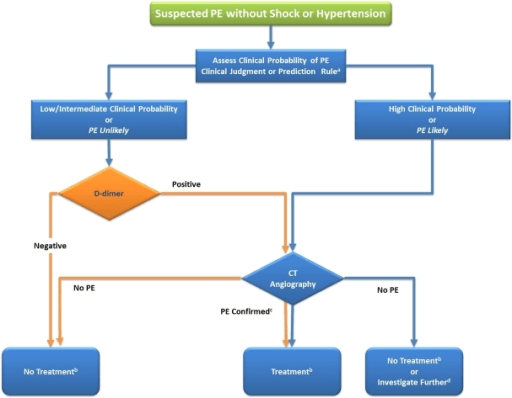
The algorithm in the stable patient.
- Assess clinical probability. With very low suspicion and every PERC criterion negative, PE is excluded and testing stops. Otherwise calculate the Wells score.
- Wells below 4 (PE unlikely, 15% prevalence). Check a D-dimer. A negative result excludes PE (99% NPV); a positive one proceeds to CTPA.
- Wells 4 or more (PE likely, 40% prevalence). Skip the D-dimer, which has low utility when pretest probability is high, and go directly to CTPA.
- Image. CTPA, or a V/Q scan if contrast is contraindicated. If positive, risk-stratify.
- Risk-stratify. Blood pressure, echo for RV function, troponin and BNP classify the PE as massive (thrombolyse), submassive (anticoagulate and monitor) or low-risk (anticoagulate, with or without outpatient care).
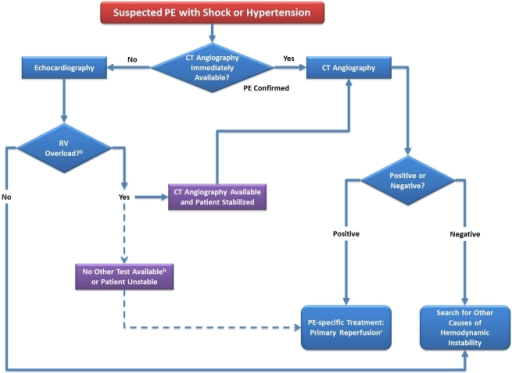
The unstable patient. In suspected massive PE (SBP below 90, shock) the Wells score is not needed. Obtain a CTPA if the patient is stable enough, or give empiric thrombolysis if they are crashing.
PERC rule (PE Rule-out Criteria). If all eight are negative and clinical suspicion is low, PE is excluded without a D-dimer:
- Age under 50 years
- Heart rate under 100 bpm
- Oxygen saturation 95% or more on room air
- No haemoptysis
- No oestrogen use (OCP, HRT)
- No prior DVT or PE
- No unilateral leg swelling
- No surgery or trauma requiring hospitalisation in the past 4 weeks
Use PERC only when suspicion is low. If any criterion is positive, or suspicion is moderate or high, go to the Wells score.
Wells score for PE. The points are summed and the total is read against the cut-off of 4 in the algorithm above.
- Points
- +3
- Points
- +3
- Points
- +1.5
- Points
- +1.5
- Points
- +1.5
- Points
- +1
- Points
- +1
Investigations
D-dimer. A fibrin degradation product that is elevated in VTE, highly sensitive (95-98%) but poorly specific (40-60%). A negative result with a low Wells score avoids an unnecessary CTPA, with its radiation and contrast; a positive result does not diagnose PE.
Where D-dimer does not help. It is often elevated after surgery, in cancer, in pregnancy and in the elderly. In the postoperative orthopaedic patient it is often falsely raised, so CTPA may be needed regardless.
Age-adjusted D-dimer. In patients aged 50 or over, a cut-off of age x 10 in place of 500 ng/mL improves specificity.
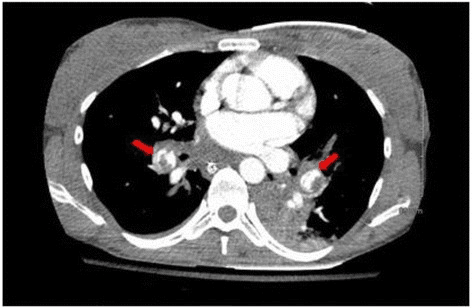
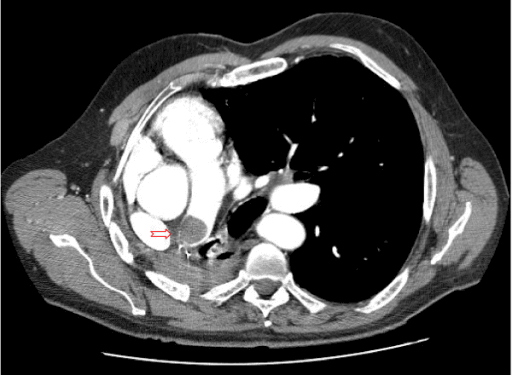
CTPA is the gold standard. IV contrast is timed for pulmonary artery opacification, and thrombus is seen directly as a filling defect. Sensitivity is 95% and specificity 98%. It is fast, widely available and shows alternative diagnoses, at the cost of radiation, contrast nephropathy and allergic reactions.
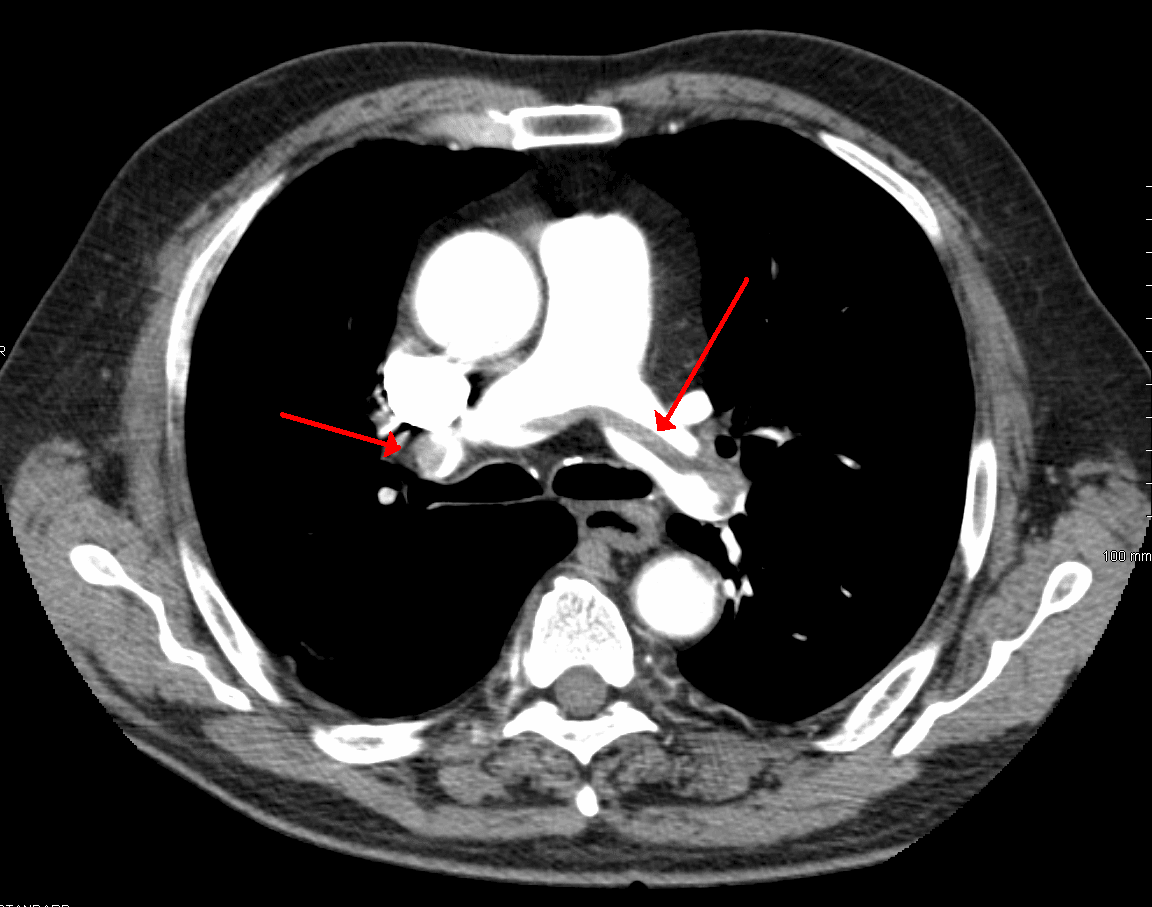
What CTPA shows beyond the diagnosis.
- Central PE (main or lobar arteries) - high mortality risk
- Segmental or subsegmental PE - lower risk
- Reflux of contrast into the IVC - severe RV dysfunction
When contrast is contraindicated.
- Severe renal impairment (CrCl below 30) - V/Q scan
- Contrast allergy - V/Q scan or MR angiography
- Pregnancy - V/Q scan preferred, for its lower fetal radiation
V/Q scan. The alternative when contrast is contraindicated (renal failure, severe allergy, pregnancy). An IV radiotracer shows pulmonary blood flow and an inhaled one shows air distribution; PE produces a perfusion defect with normal ventilation, the V/Q mismatch. It needs no contrast, but 30-50% of scans are non-diagnostic, it is less accurate in pre-existing lung disease (COPD, pneumonia), and it gives no anatomical detail.
Reading a V/Q scan (PIOPED II).
- Normal - PE excluded
- High probability - 2 or more large mismatched defects, PE very likely, treat
- Low probability - small defects, matched defects
- Intermediate - non-diagnostic, needs further imaging (CTPA if possible)
ECG. Non-specific, but it helps rule out MI. Sinus tachycardia is the most common finding (70%); the S1Q3T3 pattern (S wave in lead I, Q wave and inverted T wave in lead III) appears in 25% of PE. Right bundle branch block and T-wave inversion in V1-V4 reflect acute RV strain.
Chest X-ray. Normal in 30%, and it helps rule out alternative diagnoses. The named signs:
- Westermark sign - oligaemia (decreased vascular markings) distal to the embolus
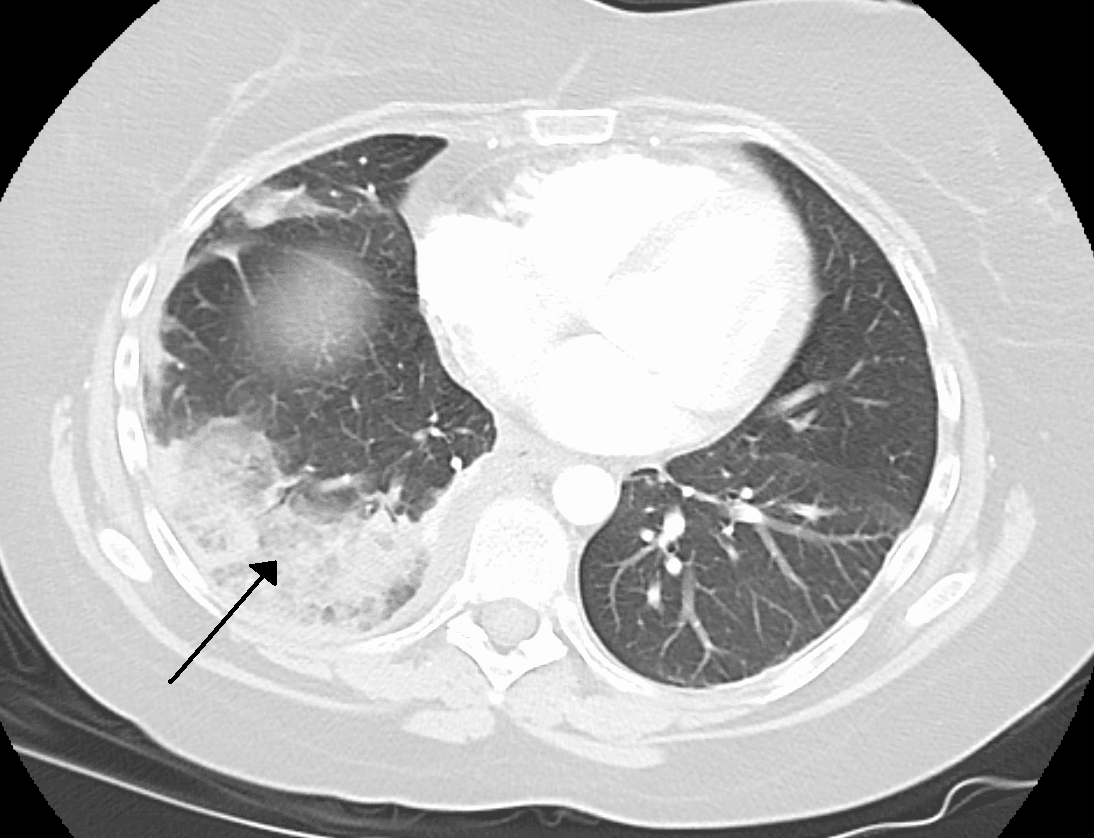
- Hampton hump - wedge-shaped, pleural-based opacity (pulmonary infarction)
- Palla sign - enlarged right descending pulmonary artery
Arterial blood gas. Non-specific: hypoxaemia (PaO2 below 80 mmHg), hypocapnia (PaCO2 below 35 mmHg) from hyperventilation, respiratory alkalosis and a raised A-a gradient.
Echocardiography. Not diagnostic, but it assesses RV function: RV dilatation and hypokinesis (thresholds under Risk Stratification), tricuspid regurgitation and a raised RV systolic pressure. Rarely it shows thrombus directly in the right heart or pulmonary arteries.
Biomarkers. Troponin is elevated in 30-50% of PE from myocardial strain and carries a worse prognosis, and BNP or NT-proBNP rises with RV dysfunction. Both stratify submassive PE rather than diagnose it.
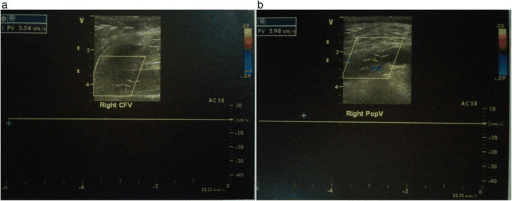
Finding the source. A lower-limb venous duplex is not required for the diagnosis of PE, but it identifies the source. Concurrent DVT is present in 30-40% of PE patients; finding it confirms the VTE diagnosis and may guide the duration of anticoagulation, and the scan is useful with bilateral leg symptoms or recurrent VTE.
Compression ultrasound is the gold standard for DVT (sensitivity 95%, specificity 96%). Two-point compression examines the common femoral and popliteal veins; a non-compressible vein is DVT, because thrombus prevents it collapsing, and colour Doppler shows absent or reduced flow.
Risk Stratification
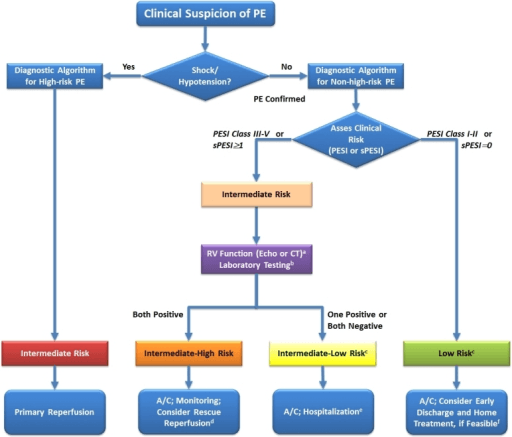
Every confirmed PE is risk-stratified. The category decides whether the patient needs thrombolysis (massive), close monitoring (submassive) or standard anticoagulation (low-risk). It is not just prognosis; it directly determines treatment.
- Haemodynamics
- SBP below 90 mmHg or shock or arrest
- RV Dysfunction
- Usually present
- Biomarkers
- Usually elevated
- Mortality
- 30% untreated
- Treatment
- Thrombolysis + anticoagulation
- Haemodynamics
- SBP above 90 mmHg (normotensive)
- RV Dysfunction
- Present (echo or CT)
- Biomarkers
- Troponin or BNP elevated
- Mortality
- 10-15% deterioration
- Treatment
- Anticoagulation + close monitoring, rescue thrombolysis if deteriorates
- Haemodynamics
- SBP above 90 mmHg (stable)
- RV Dysfunction
- Absent
- Biomarkers
- Normal
- Mortality
- Less than 1%
- Treatment
- Anticoagulation, consider outpatient if PESI low
RV dysfunction in a normotensive patient makes the PE submassive. Any one of these is enough:
- Echo - RV/LV diameter ratio above 0.9 (apical four-chamber view), RV hypokinesis, or the McConnell sign (RV free-wall hypokinesis with apical sparing, specific for PE)
- CT - RV/LV diameter ratio above 1.0 on axial images
- BNP above 90 pg/mL or NT-proBNP above 500 pg/mL
- Troponin I above 0.4 ng/mL
PESI and Simplified PESI (sPESI)
The Pulmonary Embolism Severity Index predicts 30-day mortality from clinical variables, and it is what picks out low-risk patients for outpatient care. The simplified version (sPESI) is easier to apply at the bedside.
- Threshold for a Point
- Over 80 years
- Threshold for a Point
- Present
- Threshold for a Point
- Chronic heart failure or chronic lung disease
- Threshold for a Point
- 110 bpm or higher
- Threshold for a Point
- Below 100 mmHg
- Threshold for a Point
- Below 90%
sPESI 0. A score of 0, none of the six present, identifies a low-risk PE with roughly 1% 30-day mortality. With no RV dysfunction and adequate social support, these patients are candidates for early discharge or outpatient treatment on a DOAC. Any single point (sPESI 1 or more) marks higher risk warranting admission.
The original PESI adds further weighted variables (male sex, respiratory rate 30 or higher, temperature below 36 C and altered mental status) and scores age per year. The total places the patient in one of five classes:
- Class I (65 points or fewer) - very low risk, under 1% 30-day mortality
- Class II (66-85 points) - low risk
- Class III (86-105 points) - intermediate risk
- Class IV (106-125 points) - high risk
- Class V (over 125 points) - very high risk, 10-25% 30-day mortality
Classes I-II (85 points or fewer) correspond to low risk, suitable for outpatient management if there are no other contraindications.
Isolated Subsegmental PE: Anticoagulate or Observe?
Modern multidetector CTPA increasingly detects isolated subsegmental PE: clot confined to subsegmental arteries with no more proximal thrombus. Some of these are false positives or clinically trivial, so whether to anticoagulate is a genuine decision rather than automatic, and it is a recognised modern controversy that the evidence base (CHEST) addresses directly.
Confirm it is real. Isolated subsegmental PE has poor interobserver reliability on CTPA, so first satisfy yourself that the finding is genuine: check scan quality and, ideally, obtain a second read.
Then individualise. Guidelines (ACCP/CHEST, ESC) suggest clinical surveillance with bilateral leg ultrasound over anticoagulation when there is no proximal DVT and recurrence risk is low. Anticoagulate if there is proximal DVT, active cancer, immobility, limited cardiopulmonary reserve, or strong patient preference. A post-operative orthopaedic patient with reduced mobility often falls into the higher-risk group despite the transient provocation.
- Favours Anticoagulation
- Multiple subsegmental defects
- Favours Anticoagulation
- Concurrent proximal DVT
- Favours Anticoagulation
- Cancer, hospitalised or immobile, poor cardiopulmonary reserve
- Favours Anticoagulation
- Unprovoked or ongoing risk; markedly raised D-dimer
Management Algorithm
Once PE is diagnosed, or strongly suspected while awaiting CTPA, start anticoagulation immediately. Delays increase mortality. The choice of agent depends on haemodynamic status, bleeding risk and renal function.
Immediate care for every PE. Oxygen to maintain SpO2 above 94%, IV access and cardiac monitoring, then assess haemodynamic status and risk-stratify.
Treatment follows the risk category.
- Massive PE - thrombolysis (alteplase) with heparin anticoagulation
- Submassive PE - anticoagulation with close monitoring, and rescue thrombolysis if it deteriorates
- Low-risk PE - anticoagulation alone, considering outpatient care if PESI Class I-II
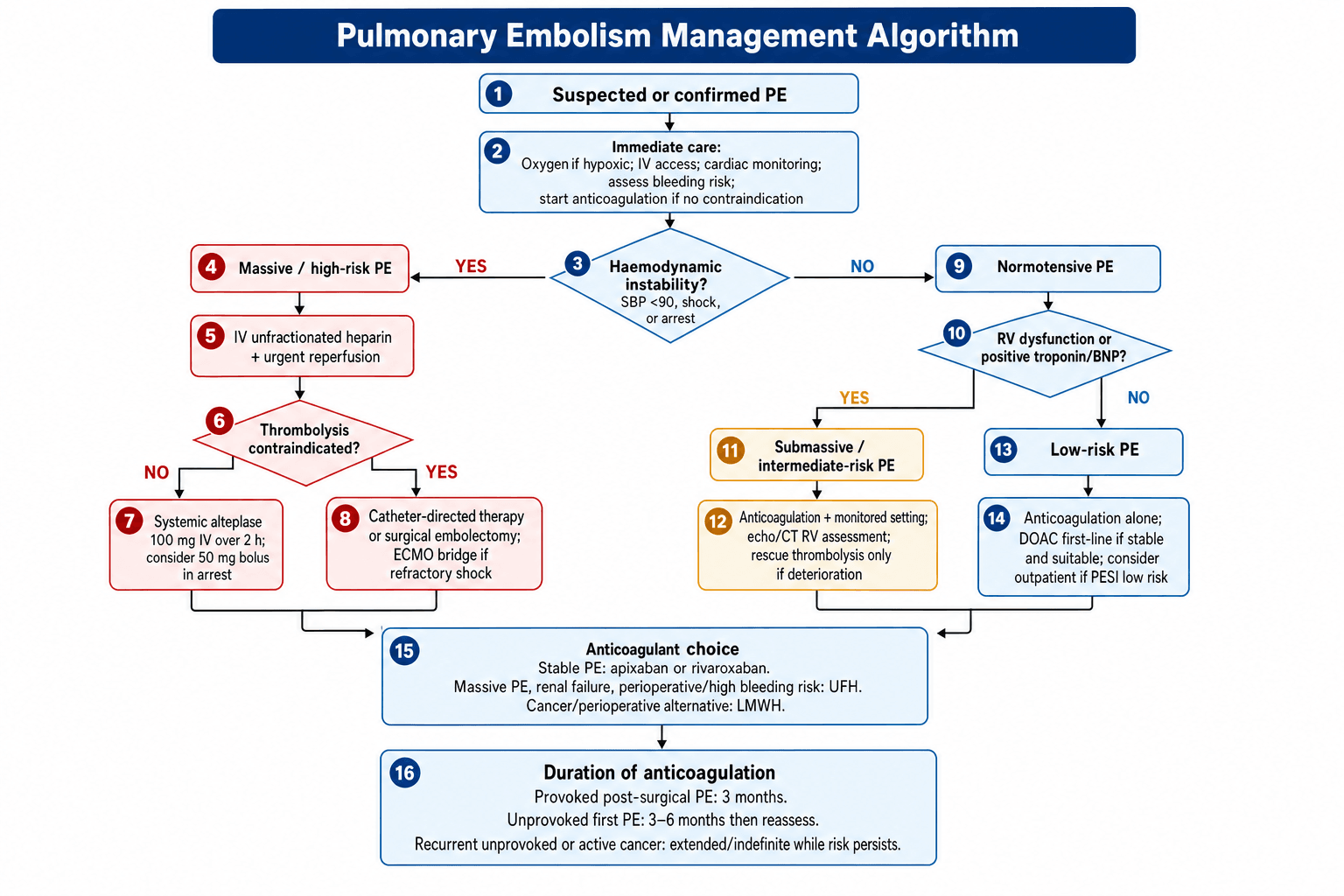
Choosing the anticoagulant. DOACs are first-line for stable PE. Unfractionated heparin is used in massive PE, being easily reversible, and LMWH in perioperative patients and cancer.
- Advantages
- Oral from day 1, no monitoring, no LMWH lead-in
- Disadvantages
- Cost, renal impairment, limited reversal
- Typical Use
- First-line for stable PE
- Advantages
- Cheap, reversible, familiar
- Disadvantages
- LMWH injections, INR monitoring, drug interactions
- Typical Use
- Traditional approach, still used
- Advantages
- Reversible (short half-life), can use in renal failure
- Disadvantages
- IV access needed, monitoring (aPTT), HIT risk
- Typical Use
- Used in massive PE, perioperatively
- Advantages
- No monitoring, predictable
- Disadvantages
- Injections, expensive long-term
- Typical Use
- Cancer-associated PE
DOACs. Oral from day 1 with no LMWH lead-in, predictable, no monitoring, easier than warfarin, with similar efficacy and a lower bleeding risk. They are used for low-risk and submassive PE once the need for thrombolysis has been ruled out.
- Rivaroxaban - 15mg BD for 21 days, then 20mg daily; reduce to 15mg daily if CrCl 30-50
- Apixaban - 10mg BD for 7 days, then 5mg BD; reduce to 2.5mg BD if two of age over 80, weight under 60kg, creatinine over 133
Avoid both if CrCl is below 30. Do not use a DOAC in massive PE (use IV heparin initially), active bleeding, a mechanical valve or antiphospholipid syndrome.
Unfractionated heparin. For massive PE, the perioperative period, renal failure (CrCl below 30) and high bleeding risk, where reversibility is needed: the short half-life is reversible with protamine, and it can be used in renal failure. The price is IV access, frequent monitoring and a heparin-induced thrombocytopenia (HIT) risk of 1-5%.
- Bolus 80 units/kg IV (max 10,000 units)
- Infusion 18 units/kg/hour (max 1,800 units/hour)
- Target aPTT 1.5-2.5 times control (60-80 seconds)
- Check aPTT every 6 hours until stable, then daily
LMWH. The subcutaneous alternative to UFH, with no monitoring and a lower HIT risk. It cannot be used if CrCl is below 30, because it accumulates. Enoxaparin 1mg/kg SC every 12 hours or 1.5mg/kg daily; dalteparin 200 units/kg SC daily (max 18,000 units).
Warfarin with LMWH bridging. For when a DOAC is contraindicated. It is not first-line because it is more complicated than a DOAC, requires monitoring and has many drug and food interactions.
Warfarin Initiation
Start LMWH (enoxaparin 1mg/kg BD) AND warfarin 5-10mg daily. Check baseline INR.
Check INR daily. Adjust warfarin to target INR 2-3. Continue LMWH until INR is above 2 for 2 consecutive days.
Once INR is therapeutic (2-3) for 2 days, stop LMWH. Continue warfarin long-term with regular INR monitoring.
Once warfarin is established, check the INR weekly until stable, then monthly.
How long to treat. PE after orthopaedic surgery is provoked by a transient risk factor: treat for 3 months and do not anticoagulate indefinitely. Extended anticoagulation reduces recurrence but increases bleeding.
- Duration
- 3 months
- Rationale
- Transient risk factor removed; low recurrence risk (1-3% annually after stopping)
- Duration
- 3-6 months minimum
- Rationale
- Assess bleeding vs recurrence risk (10-15% annually if stopped). May extend if low bleeding risk
- Duration
- Indefinite
- Rationale
- High recurrence risk (15% annually if stopped; 30%+ if stopped)
- Duration
- Indefinite (while active)
- Rationale
- Ongoing hypercoagulable state, very high recurrence
Thrombolysis for Massive PE
Thrombolysis saves lives in massive PE. Untreated, or treated with anticoagulation alone, massive PE carries 30% mortality; with thrombolysis it is 10%, an absolute reduction of 20%. With sustained hypotension (SBP below 90 mmHg) or cardiogenic shock, give alteplase immediately once CTPA has confirmed the PE.
Massive PE is the absolute indication.
- Sustained hypotension (SBP below 90 mmHg for 15 minutes or more) with confirmed PE
- Cardiac arrest due to PE
- Cardiogenic shock
Submassive PE is controversial. The relative indication is the normotensive patient with severe RV dysfunction who is deteriorating clinically. The PEITHO trial showed that routine thrombolysis in submassive PE reduced death or haemodynamic decompensation (2.6% vs 5.6%) but increased major bleeding (11.5% vs 2.4%) and stroke (2.4% vs 0.2%). The current recommendation is anticoagulation for submassive PE, with rescue thrombolysis only if it deteriorates.
- Dose
- 100mg IV over 2 hours OR 50mg bolus (if arrest)
- Notes
- First-line, most evidence
- Dose
- 30-50mg IV bolus (weight-based)
- Notes
- Single bolus, easier administration
- Dose
- 1.5 million units over 2 hours
- Notes
- Rarely used (antigenic, allergic reactions)
Give heparin concurrently, as a bolus and infusion per protocol.
Contraindications. With an absolute contraindication, consider surgical embolectomy or catheter-directed thrombolysis instead.
- Relative
- Recent minor bleeding (less than 10 days)
- Relative
- Recent major surgery (10-14 days)
- Relative
- Ischaemic stroke more than 3 months ago
- Relative
- Major trauma
- Relative
- CPR longer than 10 minutes
- Relative
- Pregnancy, first week postpartum
- Relative
- Uncontrolled hypertension (SBP above 180)
Complications. Intracranial haemorrhage is the most feared. Its risk is higher in the elderly, with uncontrolled hypertension and after a prior stroke.
- Incidence
- 10-15%
- Management
- Stop thrombolytic, transfuse, consider reversal (cryoprecipitate, TXA)
- Incidence
- 1-5%
- Management
- STOP thrombolytic, reverse, neurosurgical consultation
- Incidence
- 20-30%
- Management
- Local pressure, monitor
- Incidence
- 5-10%
- Management
- Antihistamines, steroids, switch to alteplase
Surgical and Interventional Options
Surgical pulmonary embolectomy. For massive PE with an absolute contraindication to thrombolysis, or when thrombolysis has failed. Through a median sternotomy and on cardiopulmonary bypass, the thrombus is removed directly from the pulmonary arteries through a pulmonary arteriotomy.
Its outcomes. Mortality is 30-50% in these very sick patients, and success depends on the speed of intervention. It is reserved as a last resort and available only at tertiary cardiac surgery centres.
Catheter-directed therapy. Catheter-directed thrombolysis delivers tPA locally into the pulmonary arteries, so the systemic dose is lower and there is less bleeding than with systemic tPA. Catheter thrombectomy extracts the thrombus mechanically (AngioVac, FlowTriever devices). The indications:
- Massive PE with high bleeding risk (a relative contraindication to systemic thrombolysis)
- Submassive PE deteriorating despite anticoagulation
Its limits. It requires interventional radiology expertise and is not widely available. It is an emerging modality with limited RCT data, although case series show promise.
ECMO. A bridge to definitive therapy (thrombolysis or embolectomy) in massive PE with cardiac arrest or refractory shock, giving temporary cardiopulmonary support while the clot resolves. Case series show survival of 30-50% in PE arrest, and it is available only at ECMO-capable centres.
VTE Prophylaxis in Orthopaedic Surgery
Prophylaxis is mandatory. All orthopaedic surgery patients require VTE prophylaxis unless there is an absolute contraindication, to bring the risk down to the protected rate given in the overview. Use mechanical and chemical prophylaxis together unless one is contraindicated.
High-risk procedures need extended prophylaxis:
- Total hip arthroplasty - 28-35 days
- Total knee arthroplasty - 10-14 days
- Hip fracture surgery - 28-35 days
- Spine surgery (multilevel, malignancy) - 10-14 days
Moderate-risk procedures. Arthroscopy needs 7-10 days only if there are other risk factors (age over 40, obesity, prior VTE). Upper limb surgery is generally low risk, and prophylaxis is used only with additional risk factors.
- Dose
- 40mg SC daily (20mg if weight below 50kg or CrCl below 30)
- Duration
- 28-35d THA, 10-14d TKA
- Role / Notes
- Widely used
- Dose
- 10mg PO daily
- Duration
- 28-35d THA, 10-14d TKA
- Role / Notes
- Oral convenience
- Dose
- 2.5mg PO BD
- Duration
- 28-35d THA, 10-14d TKA
- Role / Notes
- Oral
- Dose
- 2.5mg SC daily
- Duration
- 28-35d
- Role / Notes
- Synthetic pentasaccharide
- Dose
- 100mg PO daily
- Duration
- 28-35d (after initial LMWH)
- Role / Notes
- Cheaper, ASA trial showed non-inferiority after initial LMWH
- Dose
- Target INR 2-3
- Duration
- Rarely used now
- Role / Notes
- Replaced by DOACs
Mechanical prophylaxis. TED (graduated compression) stockings, intermittent pneumatic compression (IPC) devices and early mobilisation.
Timing of the first dose.
- LMWH or fondaparinux - 12 hours post-op, and NOT pre-op if neuraxial anaesthesia is planned (epidural haematoma risk)
- Rivaroxaban or apixaban - 6-10 hours post-op, once haemostasis is achieved
- Aspirin - post-op day 1
Neuraxial anaesthesia (spinal or epidural).
- LMWH given pre-op requires a 12-24 hour gap before the neuraxial block
- LMWH given post-op requires a 12 hour gap before catheter removal
- DOACs require a 24 hour gap before the neuraxial block
Contraindications to chemical prophylaxis. The absolute ones:
- Active bleeding
- Severe bleeding risk (e.g. bleeding peptic ulcer, recent intracranial haemorrhage)
- HIT with thrombosis (no heparin-based agents)
The relative ones:
- Recent neurosurgery or ophthalmic surgery - balance risk against benefit
- Platelets below 50,000 - depends on bleeding risk
- Severe renal impairment - avoid LMWH and fondaparinux; use UFH or reduce the dose
With a contraindication, use mechanical prophylaxis alone. Consider an IVC filter only if the risk is very high, and not routinely.
Complications and Long-Term Sequelae
Acute complications. Death from massive PE is covered under thrombolysis; the others:
- Incidence
- 5-10%
- Management
- Thrombolysis, inotropes, consider ECMO
- Incidence
- 2-5%
- Management
- CPR, thrombolysis, consider ECMO
- Incidence
- 5-10% if inadequate anticoagulation
- Management
- Ensure therapeutic anticoagulation, consider IVC filter if recurrent despite therapy
- Incidence
- 1-3% major bleed annually
- Management
- Reversal agents, transfusion
Chronic thromboembolic pulmonary hypertension (CTEPH). Affects 2-4% of PE survivors. Unresolved thrombus causes chronic pulmonary artery obstruction and pulmonary hypertension, which presents as progressive dyspnoea, exercise intolerance and right heart failure.
Diagnosing and treating CTEPH. Screen for it if dyspnoea persists 3-6 months after the PE. An RV systolic pressure above 25 mmHg on echo suggests it, and right heart catheterisation with a V/Q scan showing perfusion defects confirms it. It is treatable, by pulmonary thromboendarterectomy (surgical removal of organised thrombus), balloon pulmonary angioplasty, or pulmonary vasodilators (sildenafil, riociguat).
Post-PE syndrome. Chronic dyspnoea without pulmonary hypertension, present in 50% at 1 year. It results from deconditioning, anxiety and subclinical RV dysfunction, and it is managed with pulmonary rehabilitation and exercise training.
Recurrent VTE. 10-30% over 5 years if inadequately treated, and 10% in the first year after an unprovoked PE. Appropriate duration of anticoagulation prevents it; the risk factors are unprovoked PE, residual thrombus, thrombophilia and cancer.
Postoperative Care
Where to monitor. The level of care follows the risk category:
- Massive PE - ICU admission, continuous monitoring
- Submassive PE - HDU or step-down for 24-48 hours
- Low-risk PE - ward care, or outpatient if PESI Class I-II
Clinical monitoring. Vital signs every 4-6 hours, watching for deterioration: a dropping blood pressure or worsening dyspnoea.
Anticoagulation monitoring. DOACs need no routine monitoring. Warfarin is kept to an INR of 2-3, and LMWH needs anti-Xa levels in renal impairment or at extremes of weight.
Follow-up runs to three outpatient reviews:
- Assessment
- Compliance, bleeding
- Action
- Adjust anticoagulation if needed
- Assessment
- Symptoms, decision point
- Action
- Stop if provoked, continue if unprovoked
- Assessment
- Persistent symptoms
- Action
- Screen for CTEPH
Outcomes
Short-term mortality follows the risk category set out under Risk Stratification. Submassive PE carries a short-term mortality of 3-15%.
Prognostic factors. Provoked PE, young age, no RV dysfunction and a low PESI are favourable, and provoked PE after surgery has an excellent prognosis. Massive PE, cancer, recurrent VTE and an elevated troponin are unfavourable.
Guidelines, Registries & Global Practice
Side-by-Side Guideline Guidance
- PE diagnosis
- Probability then D-dimer then CTPA; age-adjusted D-dimer (Class I)
- High-risk (massive) PE
- Immediate systemic thrombolysis; embolectomy/catheter therapy if contraindicated (Class I)
- Intermediate (submassive) PE
- Anticoagulate + monitor; rescue reperfusion if decompensation (Class I)
- Anticoagulant of choice
- DOAC first-line (Class I)
- Ortho VTE prophylaxis
- Risk-adapted; defers to surgical guidelines
- PE diagnosis
- Endorses validated algorithms
- High-risk (massive) PE
- Systemic thrombolysis for PE with hypotension (Grade 2B)
- Intermediate (submassive) PE
- Anticoagulation, NOT routine thrombolysis (Grade 2C)
- Anticoagulant of choice
- DOAC over VKA for non-cancer (Grade 2B)
- Ortho VTE prophylaxis
- Covered in AT9/AT10 orthopaedic chapters
- PE diagnosis
- Two-level Wells then D-dimer/CTPA; V/Q-SPECT alternative
- High-risk (massive) PE
- Continuous IV UFH + thrombolysis if haemodynamic instability
- Intermediate (submassive) PE
- Anticoagulate, individualise; no routine thrombolysis
- Anticoagulant of choice
- Apixaban or rivaroxaban first-line
- Ortho VTE prophylaxis
- NG89: mechanical + pharmacological prophylaxis, risk-assessed
- PE diagnosis
- Not a diagnostic guideline
- High-risk (massive) PE
- Per medical/ICU guidance
- Intermediate (submassive) PE
- Per medical/ICU guidance
- Anticoagulant of choice
- Pharmacological agent at surgeon discretion
- Ortho VTE prophylaxis
- Pharmacological +/- mechanical prophylaxis; against routine post-discharge duplex screening
All major bodies (ESC/ERS, ACCP/CHEST, NICE) agree on three points: (1) risk-stratify every confirmed PE; (2) systemic thrombolysis only for high-risk/haemodynamically unstable PE, NOT routinely for intermediate-risk; and (3) DOACs are first-line anticoagulation for most haemodynamically stable patients. Divergence is mainly in prophylaxis duration and agent selection for orthopaedic surgery.
MCQ Practice Points
Q: A patient has Wells score of 2 for PE. What is the next step? A: D-dimer. Wells less than 4 = PE unlikely, check D-dimer. If negative, PE excluded. If positive, CTPA.
Q: What defines massive PE? A: Sustained hypotension (SBP less than 90 mmHg for 15+ minutes) OR cardiac arrest OR cardiogenic shock. Massive PE requires thrombolysis. Submassive PE is normotensive BUT has RV dysfunction.
Q: What is the indication for thrombolysis in PE? A: Massive PE (hemodynamic instability). PEITHO trial showed NO benefit for routine thrombolysis in submassive PE, only increased bleeding.
Q: What did the PREPIC trial show about IVC filters? A: Filters reduce early PE but increase DVT and do NOT reduce mortality. Only use if absolute contraindication to anticoagulation.
Exam Viva Scenarios
Practise clinical reasoning and management decisions out loud
“A 70-year-old woman develops sudden onset dyspnea and pleuritic chest pain on day 5 after total hip arthroplasty. Vitals: BP 130/80, HR 110, RR 24, SpO2 92% on room air. How would you assess and manage?”
“A 65-year-old man collapses 3 days after hip fracture surgery. On arrival to ED, BP 75/40, HR 130, RR 30, SpO2 85% on high-flow oxygen. CTPA shows large bilateral PE with RV/LV ratio of 1.5. He had neurosurgery for subdural hematoma 6 weeks ago. What is your management?”
“A 55-year-old woman has confirmed PE on CTPA 1 week after TKA. She is normotensive (BP 125/75) but echo shows RV/LV ratio 1.1 and troponin is elevated. She was on rivaroxaban 10mg daily for prophylaxis but admits she stopped taking it 3 days ago. How do you manage? Also, what prophylaxis protocol should have been used?”
Wells Score for PE
- Prior DVT/PE +1.5, Elevated HR (greater than 100) +1.5
- Alternative diagnosis unlikely +3, Cancer active +1, Hemoptysis +1
- Clinical DVT signs +3, Surgery/immobilization (4 weeks) +1.5
- Score less than 4 = PE unlikely (D-dimer), score 4+ = PE likely (CTPA)
Diagnostic Algorithm
- PERC rule: If ALL 8 negative + low suspicion, PE excluded (no D-dimer)
- Low Wells (less than 4): D-dimer - if negative stop, if positive CTPA
- High Wells (4+): Skip D-dimer, go to CTPA
- CTPA gold standard (95% sensitive), VQ scan if contrast contraindicated
Risk Stratification
- Massive (High-Risk): SBP less than 90 or shock or arrest - THROMBOLYSE
- Submassive (Intermediate): Normotensive BUT RV dysfunction (echo/CT) or elevated troponin/BNP - Anticoagulate + monitor
- Low-Risk: Normotensive, no RV dysfunction - Anticoagulate, consider outpatient if PESI low
- RV dysfunction: RV/LV ratio greater than 0.9 (echo) or greater than 1.0 (CT)
Treatment - Anticoagulation
- First-line: DOACs (rivaroxaban 15mg BD x21d then 20mg OR apixaban 10mg BD x7d then 5mg BD)
- No LMWH lead-in with rivaroxaban/apixaban
- Massive PE: IV heparin initially (UFH bolus 80 units/kg, infusion 18 units/kg/h)
- Duration: Provoked (surgery) = 3 months, Unprovoked = 3-6 months minimum
Thrombolysis
- Indication: Massive PE ONLY (SBP less than 90 or shock)
- Agent: Alteplase 100mg IV over 2h (or 50mg bolus if arrest)
- Reduces mortality from 30% to 10% in massive PE
- Complications: Major bleed 10-15%, intracranial hemorrhage 1-5%
- PEITHO trial: Do NOT routinely thrombolyse submassive PE (more bleeding, no mortality benefit)
IVC Filters and VTE Prophylaxis
- IVC filter ONLY if absolute contraindication to anticoagulation (NOT routine)
- PREPIC trial: Filters reduce early PE but increase DVT, NO mortality benefit
- THA prophylaxis: Rivaroxaban 10mg daily OR enoxaparin 40mg daily for 28-35 days
- TKA prophylaxis: Rivaroxaban 10mg daily OR enoxaparin 40mg daily for 10-14 days
IVC Filters - Evidence and Indications
What PREPIC showed. The trial randomised DVT patients to an IVC filter plus anticoagulation or anticoagulation alone. The filter lowered PE at 12 days (1.1% vs 4.8%) but increased DVT at 2 years (21% vs 12%), and there was no difference in mortality at 2 years or 8 years.
What that means. Filters prevent early PE but cause more DVT, and they do not reduce PE mortality: the net benefit is nil. Use one only when the patient cannot be anticoagulated at all.
Absolute indications. These are very narrow:
- Acute VTE with an absolute contraindication to anticoagulation (active bleeding, recent intracranial haemorrhage, recent neurosurgery)
- Recurrent VTE despite therapeutic anticoagulation, with documented compliance and therapeutic levels
Relative indications are controversial and generally not recommended: a free-floating IVC or iliofemoral thrombus (no good evidence), and very limited cardiopulmonary reserve where any PE would be fatal (debated).
Not indicated. A filter is not primary prophylaxis in high-risk patients (orthopaedic surgery, trauma), where chemical prophylaxis is used instead. Nor is it indicated for PE with a contraindication to thrombolysis, because the patient can still be anticoagulated.
- Indication
- Temporary contraindication to anticoagulation
- Notes
- Should be removed within 2-4 weeks once anticoagulation starts
- Indication
- Permanent contraindication to anticoagulation
- Notes
- Rarely needed
Always use a retrievable filter and set a removal date. Many are left in permanently by mistake.
Evidence Base
PEITHO Trial - Thrombolysis in Intermediate-Risk PE
- Double-blind RCT of 1005 normotensive intermediate-risk PE patients (RV dysfunction PLUS positive troponin)
- Tenecteplase plus heparin vs placebo plus heparin
- Death or haemodynamic decompensation by day 7: 2.6% vs 5.6% (OR 0.44, 95% CI 0.23-0.87, P=0.02)
- BUT extracranial major bleeding 6.3% vs 1.2% (P less than 0.001) and stroke 2.4% vs 0.2% (P=0.003, mostly haemorrhagic)
- No difference in 7-day or 30-day mortality (2.4% vs 3.2% at day 30)
PREPIC Trial - IVC Filters in Proximal DVT
- RCT of 400 proximal-DVT patients at risk of PE: IVC filter plus anticoagulation vs anticoagulation alone
- Filter reduced symptomatic or asymptomatic PE at day 12 (1.1% vs 4.8%, OR 0.22, 95% CI 0.05-0.90)
- BUT increased recurrent DVT at 2 years (20.8% vs 11.6%, OR 1.87, 95% CI 1.10-3.20)
- NO significant difference in mortality at 2 years
- (NEJM 1998;338:409-15; long-term PREPIC follow-up confirmed no mortality benefit)
EINSTEIN-PE Trial - Rivaroxaban vs Enoxaparin/VKA
- Open-label noninferiority RCT of 4832 patients with acute symptomatic PE
- Single-drug rivaroxaban (15mg BD for 3 weeks then 20mg daily) vs enoxaparin followed by a vitamin K antagonist
- Noninferior for recurrent VTE (2.1% vs 1.8%, HR 1.12, 95% CI 0.75-1.68, P=0.003 for noninferiority)
- Major bleeding halved with rivaroxaban (1.1% vs 2.2%, HR 0.49, 95% CI 0.31-0.79, P=0.003)
- Effective oral therapy from day 1 without parenteral lead-in