Classic Radiological Signs: Arthritis
Overview & Principles
Read the pattern, not the sign. No single radiographic feature is diagnostic in isolation. Arthritis is diagnosed on plain film from the combination of distribution, bone density, joint-space change, erosion morphology and soft-tissue change, and the classic signs below are memorable shorthand for these combinations.
The same finding means different things. An erosion, for example, carries a different meaning depending on its site, its margins and the surrounding bone.
Five questions, in order. Answer them before committing to a diagnosis:
- Distribution - which joints, and symmetric or asymmetric?
- Bone density - periarticular osteopenia favours RA; preserved density favours crystal or seronegative disease
- Erosions - marginal, central, or punched-out with an overhanging edge?
- Bone production - osteophytes, periostitis, enthesophytes, ankylosis?
- Soft tissue - fusiform swelling, tophi, dactylitis?
Distribution first, density second. These two alone separate most arthropathies, and naming the distribution first and the bone density second is the single most discriminating step in the viva. Alignment (subluxation, deformity, fusion) and cartilage and calcification (the joint space, chondrocalcinosis, tophi) complete the review.
Four patterns. Four patterns cover most cases: degenerative (osteoarthritis), inflammatory (rheumatoid arthritis), crystal (gout and CPPD) and seronegative (the spondyloarthropathies). Each has its own section below, and the table in the systematic approach sets the main patterns side by side.
Osteoarthritis Signs
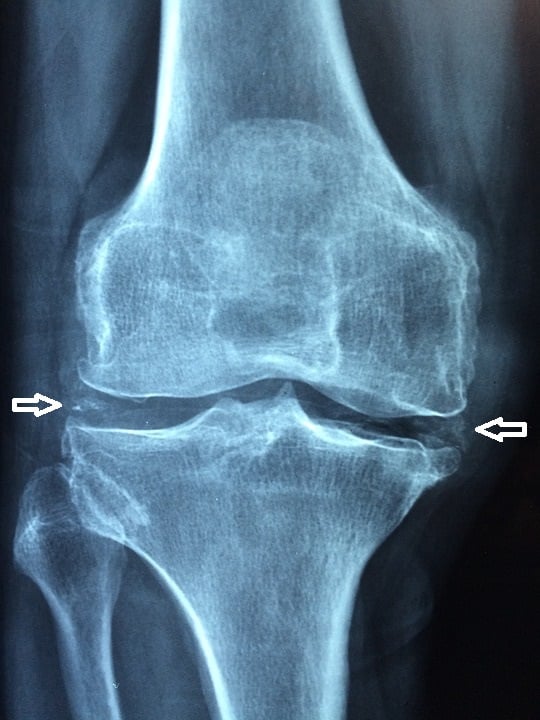
The degenerative pattern. Osteoarthritis affects the weight-bearing joints, asymmetrically. Bone density is preserved or increased (sclerotic), the joint space is lost non-uniformly and osteophytes form. There are no erosions, except in erosive OA, where they are central.
Weight-bearing views. Request weight-bearing films for lower-limb OA. Non-weight-bearing films underestimate joint-space loss.
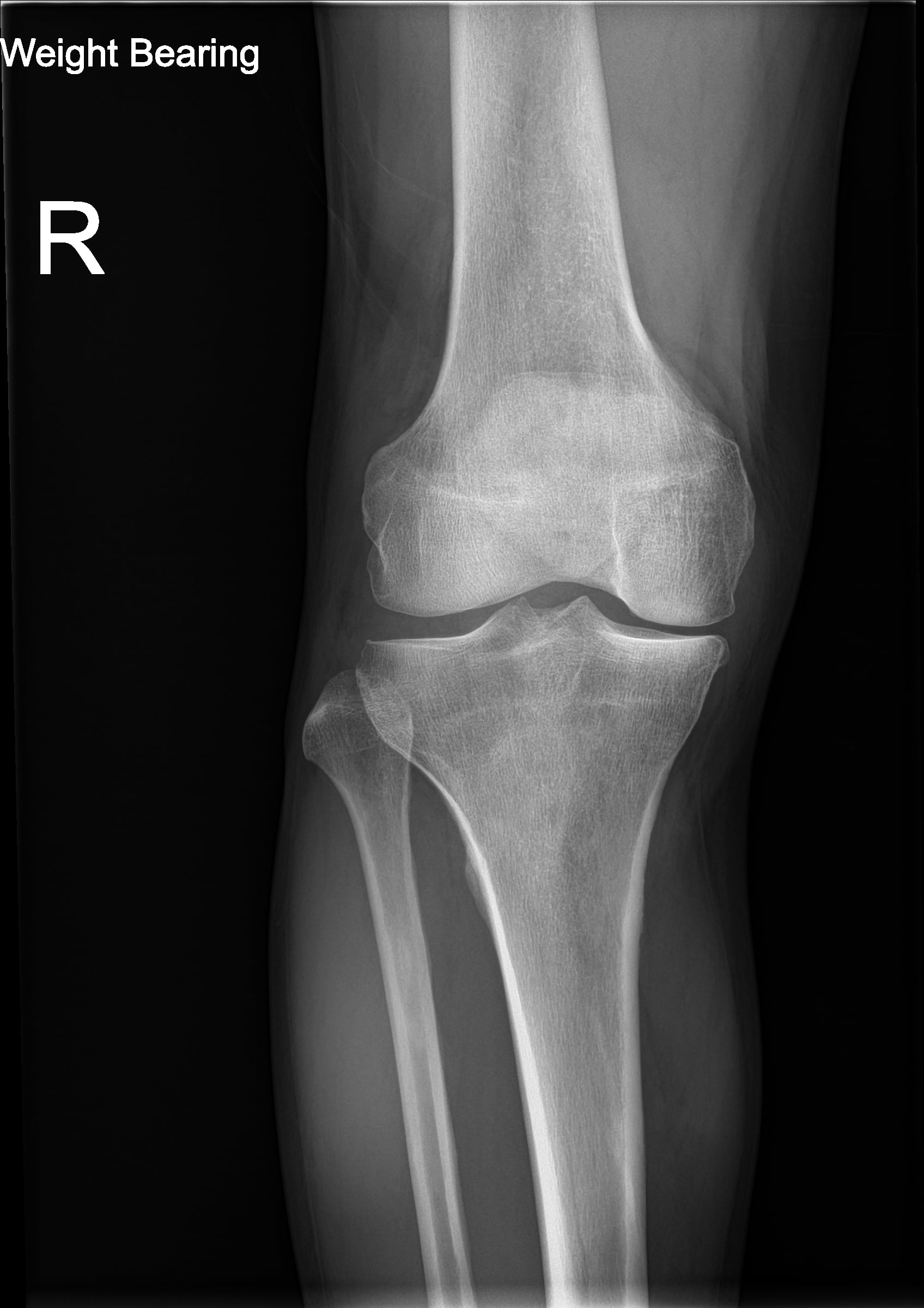
LOSSOA Cardinal Signs
Hook:Joint space narrowing is the hallmark; the other features develop as the disease progresses
- Distribution
- Superior (weight-bearing)
- Specific Signs
- Superior migration, osteophyte ring
- Distribution
- Medial greater than lateral usually
- Specific Signs
- Bone-on-bone, varus/valgus deformity
- Distribution
- Heberden's/Bouchard's nodes
- Specific Signs
- Osteophytes at DIP/PIP
- Distribution
- Thumb base arthritis
- Specific Signs
- Radial subluxation, squaring
- Distribution
- Facet, uncovertebral
- Specific Signs
- Disc space narrowing, osteophytes
Erosive OA. An aggressive form of OA affecting the DIP and PIP joints. Its central erosions create the gull-wing or seagull appearance. DIP involvement and the lack of periarticular osteopenia distinguish it from inflammatory arthritis.
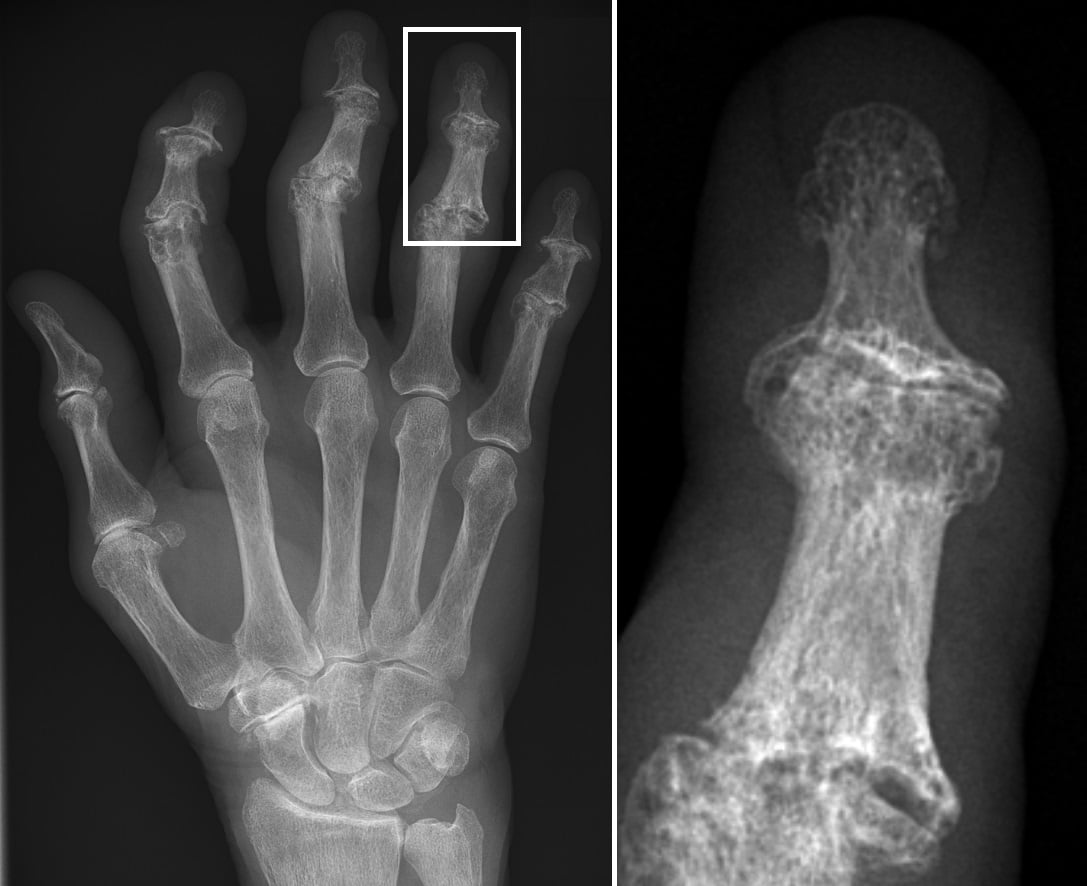
Rheumatoid Arthritis Signs
The inflammatory pattern. Classic RA affects the MCP and PIP joints and spares the DIP joints; OA, by contrast, affects the DIP and the 1st CMC. Wrist involvement is common in RA, and the distribution is typically symmetric between the hands.
- Description
- Reduced density around joints
- Location
- Early sign, juxta-articular
- Description
- Uniform narrowing (not just weight-bearing)
- Location
- All compartments affected
- Description
- 'Rat-bite' erosions at bare areas
- Location
- MCP, PIP, MTP joints
- Description
- Fusiform swelling around joints
- Location
- Early sign
- Description
- Ulnar drift, swan neck, boutonniere
- Location
- Late disease
- Description
- AADI greater than 3mm
- Location
- Cervical spine involvement
Crystal Arthropathy Signs
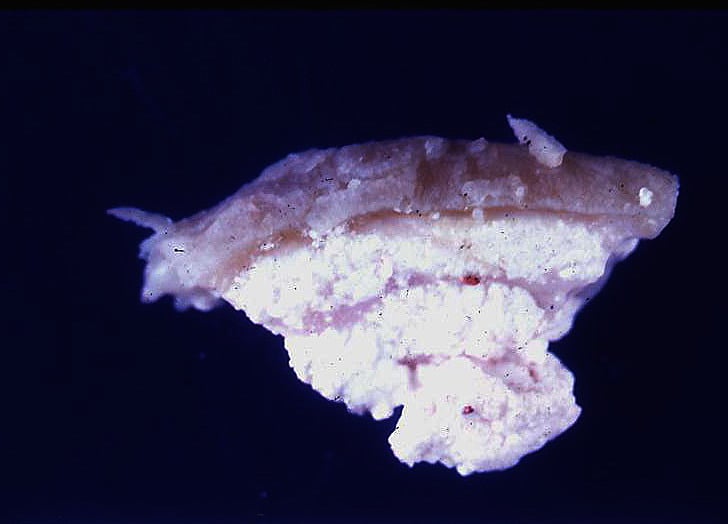
- Description
- Well-defined erosions with sclerotic margins
- Significance
- Tophaceous deposits
- Description
- Erosion edge overhangs (Martel sign)
- Significance
- Pathognomonic for gout
- Description
- No periarticular osteopenia
- Significance
- Unlike RA
- Description
- Dense soft tissue masses
- Significance
- May calcify
- Description
- 1st MTP, midfoot, ankle
- Significance
- Podagra classic
- Description
- Until late disease
- Significance
- Unlike OA/RA
How specific is the overhanging edge? The Martel sign is taught as pathognomonic, but it is highly suggestive rather than 100% specific for gout. Similar para-articular erosions can rarely occur in other tophaceous or aggressive crystal or erosive processes. Crystal confirmation (polarised microscopy) or dual-energy CT remains the reference standard.
Seronegative Arthropathy Signs
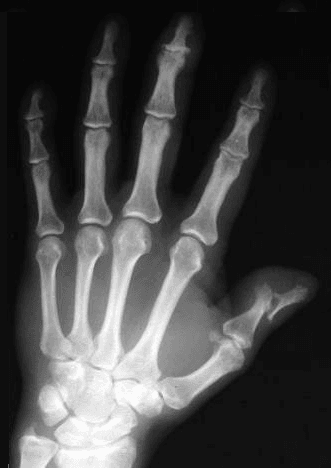
The seronegative pattern. The spondyloarthropathies are asymmetric and favour the DIP joints and the entheseal and axial sites. Their signature is bone proliferation (periostitis, enthesophytes, ankylosis) alongside erosion, with dactylitis and sacroiliitis. The symmetric sacroiliac involvement of ankylosing spondylitis in the table below is the exception to the asymmetry.
- Classic Signs
- Pencil-in-cup, ivory phalanx, periostitis
- Distribution
- DIP, asymmetric, dactylitis
- Classic Signs
- Bamboo spine, SI fusion, squaring
- Distribution
- Axial, symmetric SI joints
- Classic Signs
- Asymmetric oligoarthritis, calcaneal spurs
- Distribution
- Lower limb, entheses
- Classic Signs
- Similar to AS, less severe
- Distribution
- Axial, peripheral can occur
Pencil-in-cup. Pathognomonic for psoriatic arthritis. Central erosion of the proximal phalanx forms the cup, and the pointed distal phalanx of the adjacent bone forms the pencil. In severe cases it is associated with arthritis mutilans.
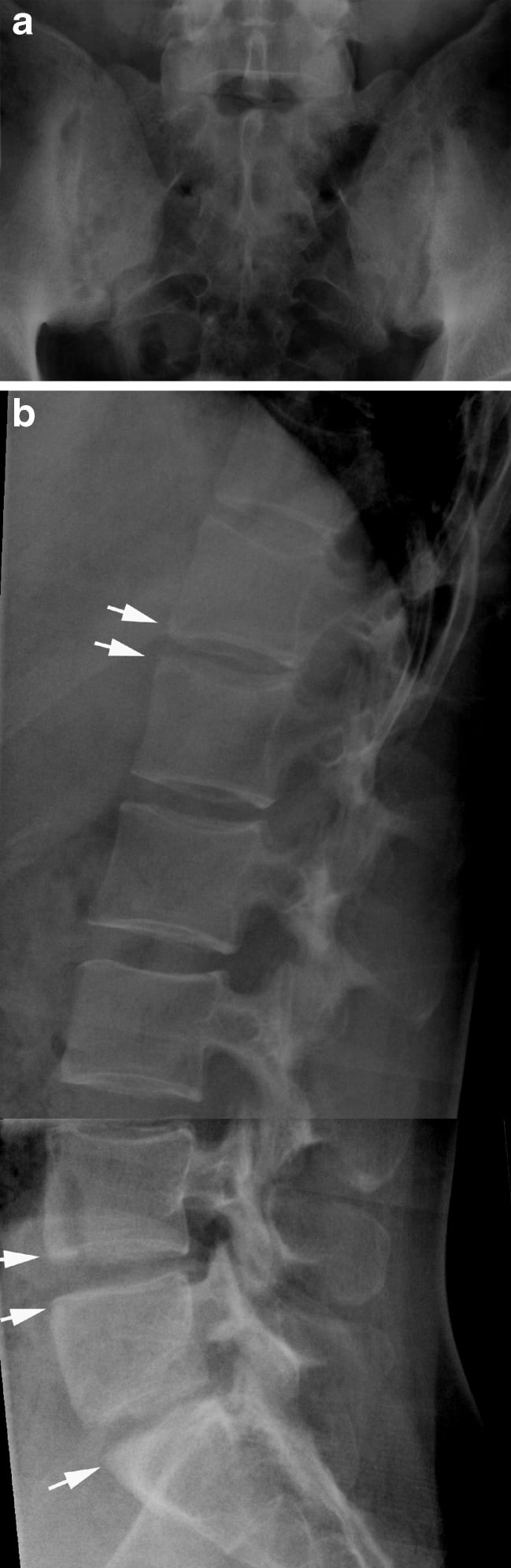
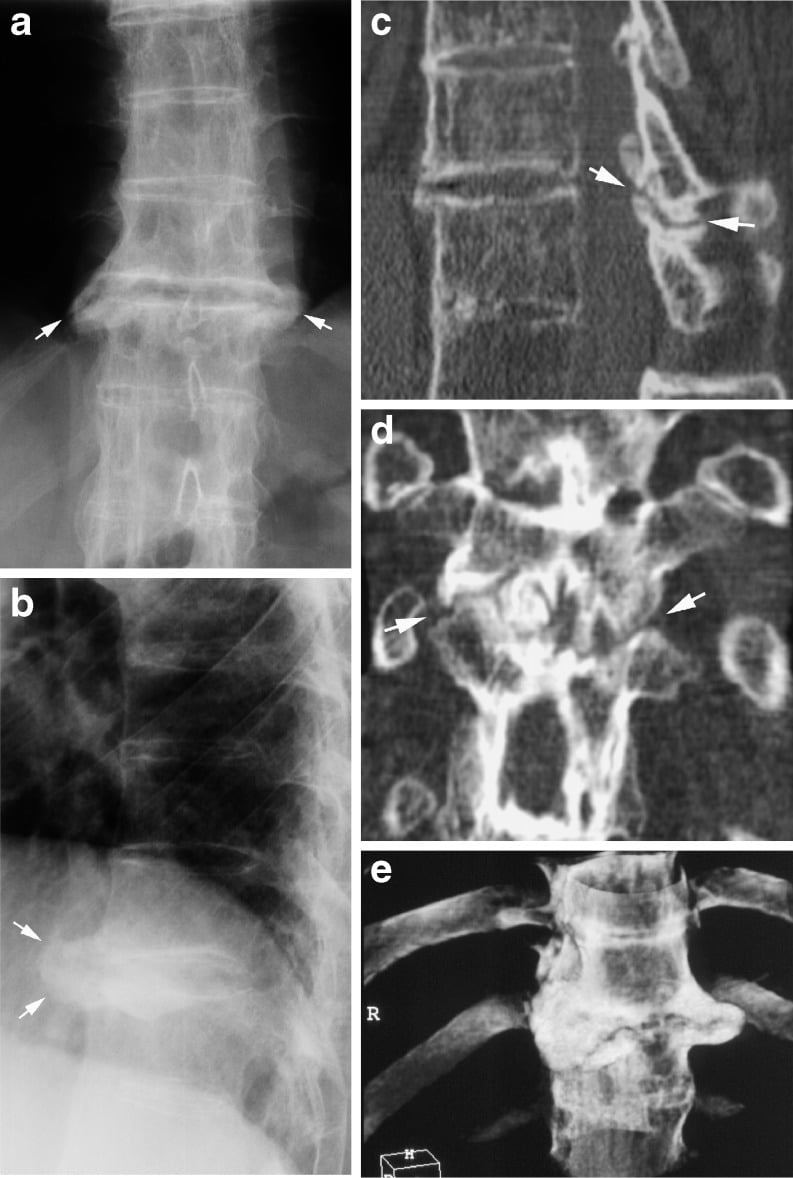
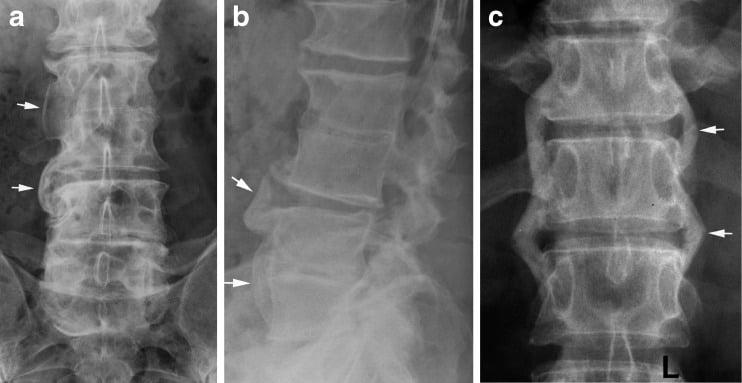
The spine. The figures below set the marginal syndesmophytes of ankylosing spondylitis against the coarse, non-marginal paravertebral ossification of psoriatic spondyloarthropathy.
Septic Arthritis Signs
The don't-miss monoarthritis. Septic arthritis is the critical differential for an acute monoarthritis, and the main alternative to gout. Its hallmark is rapid progression, over days to weeks rather than the months to years of the other arthropathies.
A normal film does not exclude it. As with the inflammatory pattern, the early radiograph can be normal. Septic arthritis is a clinical and aspiration diagnosis, never excluded by a normal film.
- Sign
- Soft-tissue swelling, joint effusion / capsular distension, sometimes a widened joint space
- Note
- Radiograph often otherwise normal — do not be reassured
- Sign
- Periarticular osteopenia (hyperaemia)
- Note
- Same hyperaemic mechanism as RA but far faster
- Sign
- RAPID, uniform joint-space loss (chondrolysis)
- Note
- Bacterial and host enzymes destroy cartilage quickly — the key discriminator
- Sign
- Marginal AND central erosions, subchondral bone destruction
- Note
- More aggressive and quicker than RA
- Sign
- Periosteal reaction
- Note
- Suggests associated osteomyelitis
- Sign
- Fibrous or bony ankylosis
- Note
- End-stage of an untreated joint
Aspirate. Any suspected septic joint must be aspirated. Ultrasound or MRI confirms an effusion and guides urgent washout.
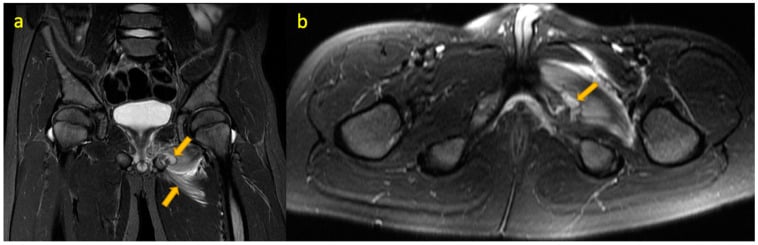
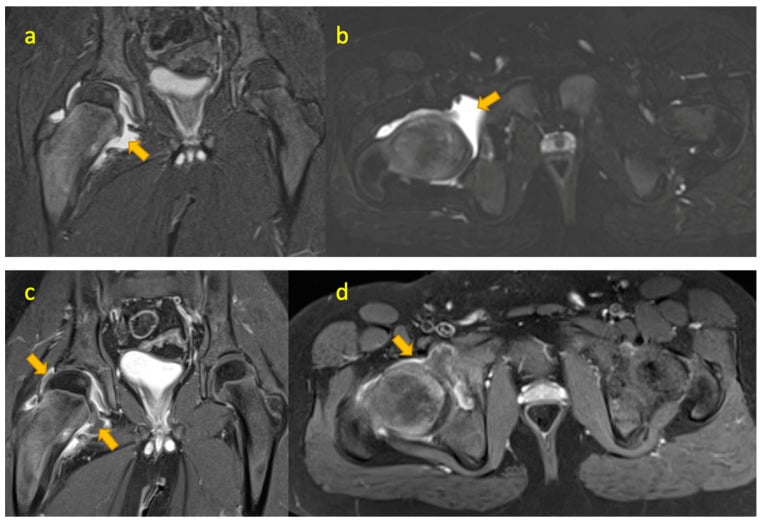
Tuberculous versus pyogenic. Tuberculous arthritis is more indolent and classically gives the Phemister triad:
- Juxta-articular osteoporosis
- Peripherally located bony erosions
- Gradual joint-space narrowing
Because the narrowing is gradual, the joint space is relatively preserved for longer than in rapidly destructive pyogenic infection.
Neuropathic (Charcot) Arthropathy Signs
The painless, destroyed joint. A neuropathic (Charcot) joint is strikingly destroyed yet relatively painless, with bone density preserved or increased. That combination of gross destruction, maintained density and little pain separates it from septic arthritis, where the joint is painful and osteopenic.
Causes. It follows loss of protective sensation:
-
Diabetes mellitus, the commonest - the foot and midfoot, and the Lisfranc (tarsometatarsal) joints
-
Tabes dorsalis - knee and hip
-
Syringomyelia - shoulder and upper limb
-
Spinal cord injury
Mnemonic6 D'sNeuropathic Joint — the 6 D's
DDensity preserved or increased (not osteopenic)DDestruction of the articular surfacesDDislocation / subluxationDDebris (intra-articular loose bodies and fragments)DDisorganisation (deranged, jumbled joint architecture)DDistension (effusion) — with gross Deformity
Atrophic and hypertrophic forms. Two forms are described:
- Atrophic (resorptive) - non-weight-bearing and upper-limb joints, with bone resorption and a tapered 'licked candy-stick' or 'surgical amputation' appearance
- Hypertrophic (productive) - weight-bearing and lower-limb joints, with sclerosis, osteophytes, fragmentation and debris
Mixed patterns are common in the diabetic foot.
Systematic Approach & Differential Diagnosis
- OA
- Weight-bearing, asymmetric
- RA
- Symmetric, MCP/PIP
- Gout
- Asymmetric, 1st MTP
- Psoriatic
- Asymmetric, DIP, ray pattern
- OA
- Normal/sclerotic
- RA
- Periarticular osteopenia
- Gout
- Preserved
- Psoriatic
- Preserved or proliferative
- OA
- No (except erosive OA)
- RA
- Marginal, rat-bite
- Gout
- Punched-out, overhanging edge
- Psoriatic
- Marginal + central
- OA
- Yes
- RA
- Uncommon
- Gout
- Uncommon
- Psoriatic
- Uncommon
- OA
- No
- RA
- No
- Gout
- No
- Psoriatic
- Yes
- OA
- Minimal
- RA
- Fusiform swelling
- Gout
- Tophi
- Psoriatic
- Dactylitis (sausage digit)
Erosion morphology decides the diagnosis. Where the erosion starts and what surrounds it points to the disease:
- Marginal erosions begin at the bare area, the intracapsular bone not covered by cartilage, and are typical of RA
- Central erosions arise within the subchondral plate and suggest erosive OA
- Periarticular punched-out erosions with sclerotic margins and an overhanging edge of cortex (Martel sign) are characteristic of gout
- Erosion with adjacent fluffy bone proliferation favours a seronegative spondyloarthropathy
Guidelines, Registries & Global Practice
- Approximate global burden
- Leading cause of disability in older adults worldwide; knee/hip OA among the highest-ranked musculoskeletal contributors to global years lived with disability
- Demographics
- Prevalence rises sharply after age 50; knee OA more common in women
- Approximate global burden
- Roughly 0.5-1% of adults across most populations
- Demographics
- Female predominance (around 3:1); peak onset 30-50 years
- Approximate global burden
- Most common inflammatory arthritis in men; prevalence rising with metabolic syndrome and ageing
- Demographics
- Male predominance; increases with age, renal impairment and diuretic use
- Approximate global burden
- Develops in roughly a fifth to a third of people with psoriasis
- Demographics
- Equal sex distribution; typically 30-50 years
- Position on radiographs vs advanced imaging
- Radiography for baseline structural damage; ultrasound and MRI recommended for early diagnosis and detecting subclinical synovitis/erosions
- Position on radiographs vs advanced imaging
- Supports advanced imaging (US/MRI) where plain films are normal but inflammatory arthritis is suspected; DECT endorsed as an option to confirm urate deposition in gout
- Position on radiographs vs advanced imaging
- Emphasise early referral and treat-to-target in RA; baseline hand/foot radiographs at diagnosis with imaging to support early treatment decisions
- Position on radiographs vs advanced imaging
- Validated classification incorporates imaging evidence of urate (ultrasound double-contour sign or DECT) and radiographic gout-related erosion as weighted items
Areas of Uncertainty & Controversies
How far to trust crystal imaging. Against crystal confirmation, the ultrasound double-contour sign pools at 0.83 sensitivity and 0.76 specificity, and an ultrasound tophus at 0.65 and 0.80, so a negative scan is weak evidence. Pooled DECT sensitivity is 87-88% and specificity 84-90% (summary ROC 0.96) against crystal-confirmed gout. That is good, but it is the sensitivity that matters here, because a negative DECT does not exclude gout.
Two caveats compound it. Nearly all of the DECT studies enrolled longstanding disease (mean duration over 7 years), so the published accuracy overstates performance in the early presentation, where the diagnosis is genuinely difficult and the urate burden is low. DECT also generates artefact (nail-bed, beam-hardening, submillimetre vascular) that can be misread as urate. It does not replace aspiration in early or diagnostically uncertain cases.
Kellgren-Lawrence limitations. The KL grade emphasises osteophytes and weights joint-space narrowing inconsistently, correlates only moderately with symptoms, and has limited responsiveness for tracking progression. Quantitative joint-space width and MRI-based scores (e.g. semi-quantitative cartilage/BML scoring) are preferred for OA trials, though KL remains the pragmatic clinical standard.
Clinical Imaging & Modality Selection
- Strengths
- Cheap, available, documents structural damage, weight-bearing views possible
- Best role in arthritis
- First-line and baseline; pattern recognition and progression tracking
- Strengths
- Detects synovitis (power Doppler), early erosions, crystal deposition
- Best role in arthritis
- Early inflammatory arthritis; crystal disease at the bedside
- Strengths
- Most sensitive for synovitis, early erosion and bone marrow oedema (predicts future erosion)
- Best role in arthritis
- Early RA, axial spondyloarthropathy (sacroiliitis), pre-radiographic disease
- Strengths
- Colour-codes monosodium urate deposition; quantifies tophus burden
- Best role in arthritis
- Confirming and mapping gout, especially when aspiration is difficult
- Strengths
- Bony detail, complex/axial joints
- Best role in arthritis
- Erosion characterisation, surgical planning, sacroiliac joints
Image both hands and both feet. In suspected inflammatory arthritis the feet often show the earliest erosions, at the 5th MTP, even when the hands look normal. Compare with prior films to detect progression and possible repair.
The radiograph is a late marker. Radiographic erosions reflect cumulative, often irreversible damage and appear late. In early inflammatory arthritis, ultrasound and MRI are far more sensitive.
A normal plain radiograph does NOT exclude early inflammatory arthritis. If the clinical suspicion is high and films are normal, proceed to ultrasound or MRI rather than reassuring the patient.
Clinical Decision Scenarios
Practise clinical reasoning and management decisions out loud
“A patient presents with a painful, swollen 1st MTP joint. X-ray shows well-defined erosions with overhanging edges and preserved bone density.”
“A patient with long-standing psoriasis has hand pain. X-ray shows DIP joint erosions with a 'pencil-in-cup' appearance and periostitis along the phalanges.”
“An elderly patient has hand X-rays showing joint space narrowing, osteophytes, and central erosions at the DIP joints with a 'gull-wing' appearance.”
OA Signs (LOSS)
- L = Loss of joint space
- O = Osteophytes
- S = Subchondral sclerosis
- S = Subchondral cysts
RA Signs
- Periarticular osteopenia
- Marginal erosions (rat-bite)
- Symmetric MCP/PIP involvement
- Soft tissue swelling
Gout Signs
- Overhanging edges (Martel sign)
- Punched-out erosions
- Preserved bone density
- Soft tissue tophi
Psoriatic Signs
- Pencil-in-cup deformity
- Periostitis
- DIP involvement
- Dactylitis (sausage digit)
Evidence Base
Kellgren & Lawrence - Radiological assessment of osteo-arthrosis
- The original description of the five-point (grade 0-4) radiographic grading scale for osteoarthritis, based on osteophytes, joint-space narrowing, subchondral sclerosis and bone-end deformity. It became the global reference standard adopted by the WHO for epidemiological definition of radiographic OA (commonly grade 2 or greater).
Taylor et al. - CASPAR classification criteria for psoriatic arthritis
- Prospective international study of 588 PsA cases and 536 controls. The CASPAR criteria (inflammatory articular disease plus 3 or more points) include the radiographic feature 'juxta-articular new bone formation' alongside psoriasis, dactylitis, nail dystrophy and rheumatoid-factor negativity. Specificity 0.987 and sensitivity 0.914.
Ogdie et al. - Imaging modalities for the classification of gout (SLR & meta-analysis)
- Systematic review against monosodium-urate crystal confirmation as gold standard. Ultrasound double-contour sign pooled sensitivity 0.83 and specificity 0.76; ultrasound tophus sensitivity 0.65 and specificity 0.80; dual-energy CT sensitivity 0.87 and specificity 0.84. Most studies involved longstanding disease (mean duration over 7 years).
Yu et al. - Diagnostic accuracy of dual-energy CT in gout (meta-analysis)
- Meta-analysis of seven studies of DECT against the diagnosis of gout. Pooled sensitivity 88% (95% CI 84-90) and specificity 90% (95% CI 85-93), with area under the summary ROC curve of 0.96.
van der Heijde - Plain X-rays in RA: overview of scoring methods
- Comparative review of the major radiographic damage scoring systems in rheumatoid arthritis - the Larsen method, the Rau-Herborn modification, the Sharp method and the van der Heijde-modified Sharp method - which separately quantify erosions and joint-space narrowing across selected hand and foot joints. The modified Sharp method is the most sensitive for detecting change in clinical trials; the Larsen method is faster for large datasets.
EULAR recommendations for the use of imaging of the joints in the clinical management of rheumatoid arthritis
- Ten evidence-based EULAR recommendations (199 studies reviewed) positioning conventional radiography as the baseline for documenting structural damage, while recommending ultrasound and MRI for earlier detection of synovitis and erosions and, on MRI, bone-marrow oedema that predicts subsequent radiographic erosion.