DDH, SUFE, Perthes & Growth Plate Assessment
DDH: Hilgenreiner + Perkins lines, acetabular index, Shenton line, Graf USS
SUFE: Klein line, frog lateral (best view), Southwick angle
Perthes: Catterall classification, Herring lateral pillar, Gage sign, head-at-risk
Growth plate: Salter-Harris I-V (SALTR mnemonic)
NAI: Metaphyseal corner fractures, multiple fractures of different ages
Key: The Klein line for SUFE and Perkins/Hilgenreiner for DDH are the most tested paediatric signs - but quote the classic Klein line WITH its 40% sensitivity, not as a rule-out
- Klein line: a line along the superior femoral neck should intersect the lateral epiphysis. Failure strongly suggests SUFE - but a NORMAL line excludes little, because the classic sign is only about 40% sensitive. Use the modified 2mm side-to-side comparison (79%) and the frog-leg lateral.
- DDH assessment: Perkins line (vertical from lateral acetabular edge) and Hilgenreiner line (horizontal through triradiate cartilage) create four quadrants — femoral head should be in the inferomedial quadrant.
- Salter-Harris classification (SALTR): Slip (I), Above (II), Lower (III), Through (IV), Rammed (V) — describes growth plate fracture pattern.
- Perthes disease staging: Catterall classification (4 groups by extent of head involvement) and Herring lateral pillar classification (A, B, C by lateral pillar height preservation).
- Ultrasound is the primary imaging modality for DDH screening before 6 months (Graf classification). AP pelvis radiograph after 6 months.
- “The Klein line is specific but INSENSITIVE - the classic version identifies only 40.3% of slips. Treating a normal Klein line as reassurance is a recognised cause of delayed SUFE diagnosis; compare epiphyseal width lateral to the line on both sides (2mm difference) and get the frog-leg lateral. In one subgroup the line does not just perform poorly, it CANNOT work: the valgus slip displaces the epiphysis SUPEROLATERALLY rather than posteromedially, so Klein's line will always be normal (Loder, PMID 16932097) and the affected hip may look better than the normal one. It is rare and predominantly in girls - but it is the reason the lateral view is not optional.
- “SUFE can present as knee pain (referred via the obturator nerve) — always examine and image the hip when a child presents with knee pain.
- “Perthes: the Herring lateral pillar classification is the best prognostic indicator. Group A (full height) = good prognosis. Group C (less than 50% height) = poor prognosis.
- “Salter-Harris Type II is the MOST COMMON growth plate fracture (commonly quoted as ~75%; 54% in the population-based Olmsted County series). Type V may be radiographically occult — diagnosed retrospectively by growth arrest.
- “The metaphyseal corner fracture (bucket-handle) in an infant is highly specific for non-accidental injury (NAI).
Overview
Paediatric radiological signs are among the most frequently tested topics. They test pattern recognition, an understanding of growth plate anatomy and knowledge of specific paediatric conditions. You should be able to draw and interpret the Klein line for SUFE, construct Perkins and Hilgenreiner lines for DDH, classify growth plate injuries by Salter-Harris, stage Perthes disease and recognise the radiographic features of non-accidental injury.
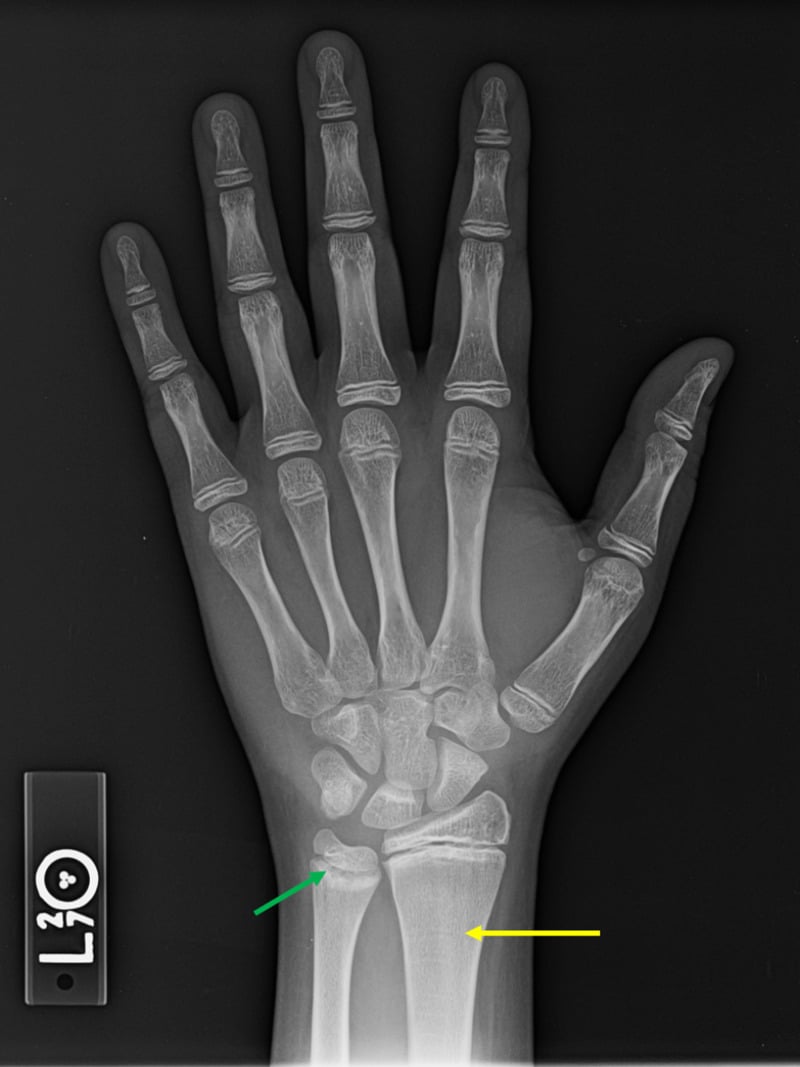
Why the child is different. The developing skeleton has growth plates, ossification centres and developing joint morphology. These create both diagnostic challenges and pathological patterns not seen in adults.
- Physes are cartilaginous and radiolucent, so fractures through them may be invisible on radiographs (Salter-Harris I and V)
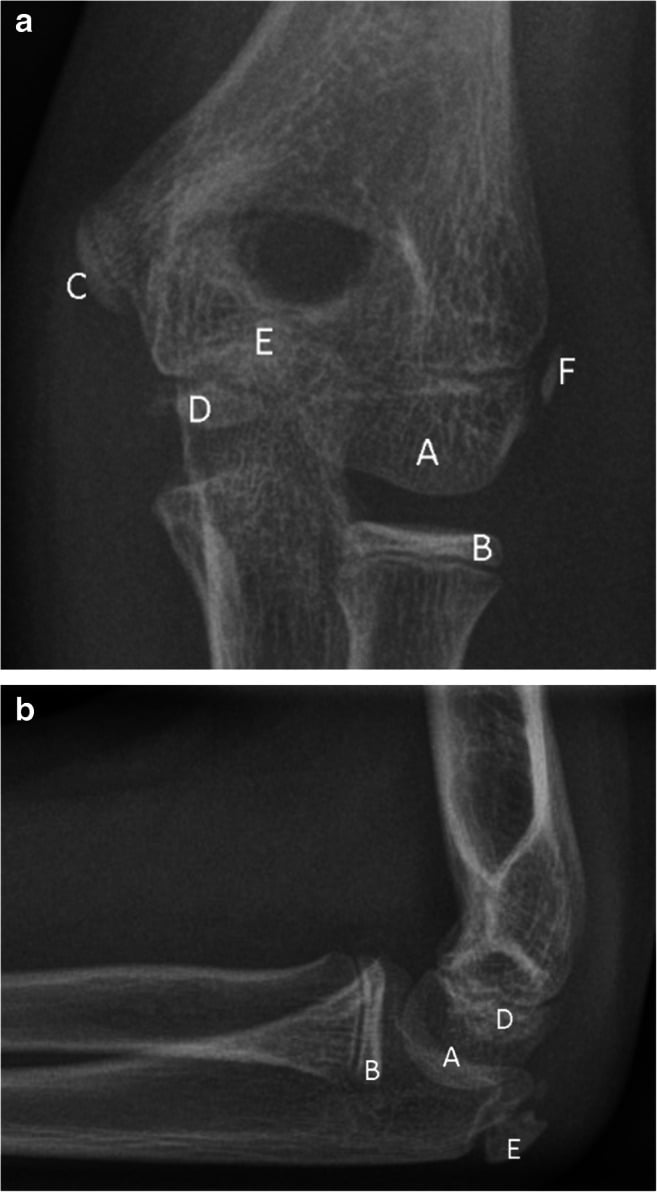
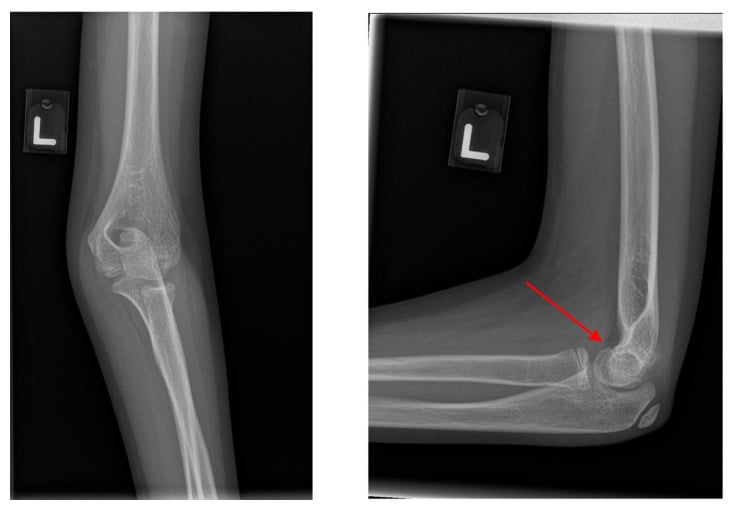
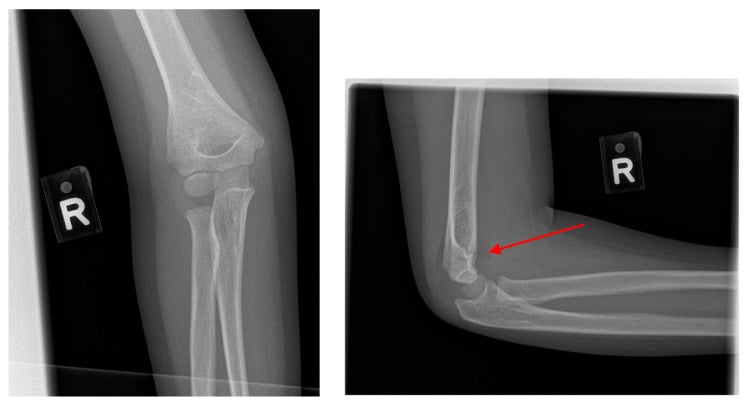
- Ossification centres appear sequentially and can be confused with fractures (CRITOE at the elbow)
- The periosteum is thicker and more metabolically active; greenstick and torus (buckle) fractures are unique to children
- Joints are more cartilaginous, so ultrasound is needed before ossification occurs (DDH screening)
- Remodelling potential is greater, but depends on the direction of angulation and proximity to the growth plate
Systematic Approach
The differential for the limping or painful paediatric hip is stratified by age, with a discriminating radiological or clinical clue for each diagnosis.
- Most likely diagnoses
- DDH, septic arthritis/osteomyelitis, toddler's fracture, NAI
- Discriminating radiological / clinical clue
- DDH: disrupted Shenton line, head superolateral. Septic: effusion on USS, raised inflammatory markers. NAI: metaphyseal corner fracture, fractures of different ages
- Most likely diagnoses
- Transient synovitis, Perthes disease, septic arthritis, JIA
- Discriminating radiological / clinical clue
- Perthes: sclerotic/fragmented epiphysis, lateral pillar collapse. Transient synovitis: normal radiograph, small effusion, well child. Septic: Kocher criteria positive
- Most likely diagnoses
- SUFE, septic arthritis, apophyseal avulsion, JIA, tumour
- Discriminating radiological / clinical clue
- SUFE: positive (modified) Klein line, posterior slip on frog lateral. Avulsion: displaced apophysis (AIIS, ischium). Tumour: aggressive periosteal reaction, soft-tissue mass
- Most likely diagnoses
- Septic arthritis, malignancy (leukaemia, osteosarcoma, Ewing), NAI
- Discriminating radiological / clinical clue
- Fever, night pain, systemic upset, weight loss, refusal to bear weight, raised CRP/ESR — escalate urgently, do not assume benign cause
The two most dangerous misses are SEPTIC ARTHRITIS (a surgical emergency — use the Kocher criteria: non-weight-bearing, a HISTORY of fever, ESR of at least 40, WCC over 12) and SUFE presenting as knee pain. Transient synovitis is a diagnosis of EXCLUSION in a well child with a normal radiograph — never apply it to an unwell or febrile child.
Detailed Condition Assessment
Developmental dysplasia of the hip
Before 6 months: ultrasound. The femoral head has not yet ossified, which makes radiographs unreliable, so hip ultrasound is the primary modality. The Graf classification uses the alpha angle (bony acetabular coverage) and the beta angle (cartilaginous coverage).
- Hip
- Normal
- Alpha angle
- more than 60 degrees
- Hip
- Physiologically immature, under 3 months
- Alpha angle
- 50-59 degrees
- Hip
- Delayed ossification, over 3 months: treat
- Alpha angle
- 50-59 degrees
- Hip
- Subluxation
- Alpha angle
- less than 43 degrees
- Hip
- Dislocation
- Alpha angle
- less than 43 degrees, femoral head displaced
After 6 months: the AP pelvis. Four assessments, remembered as PHAS:
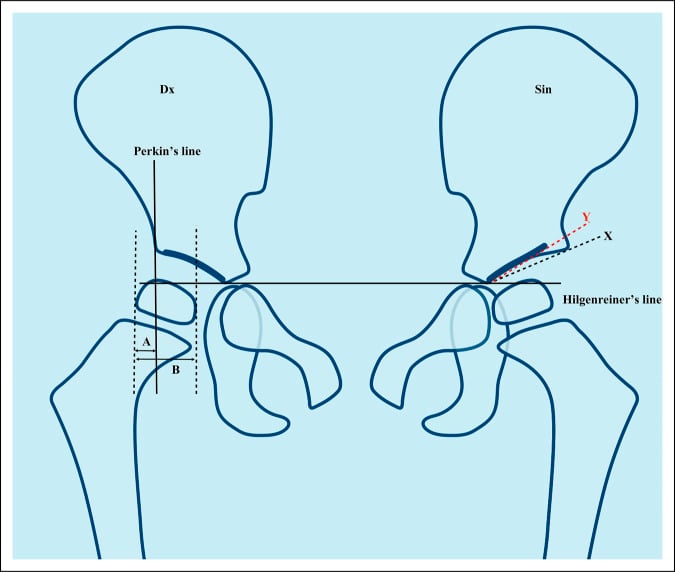
- Perkins line: vertical from the lateral edge of the acetabulum, perpendicular to Hilgenreiner's line. The femoral head ossification centre should lie medial to it.
- Hilgenreiner line: horizontal through both triradiate cartilages, the Y-cartilage at the base of each acetabulum. The femoral head should lie below it.
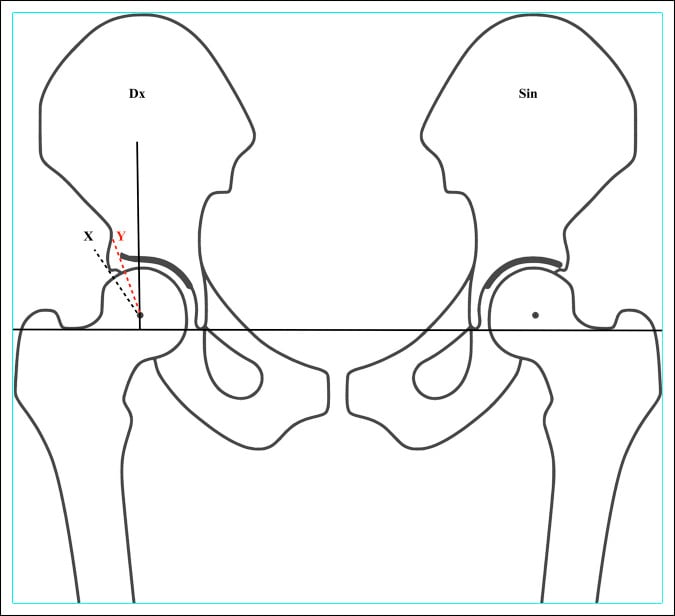
- Acetabular index: the angle between Hilgenreiner's line and the acetabular roof line, drawn from the triradiate cartilage to the lateral acetabular edge. Normal is less than 30 degrees at birth, decreasing with age; more than 30 degrees is dysplastic.
- Shenton line: a smooth arc along the inferior border of the superior pubic ramus and the medial femoral neck. It is disrupted by subluxation or dislocation, and by femoral neck fractures.
The quadrants. Perkins and Hilgenreiner lines together divide the hip into four quadrants, and the femoral head belongs in the inferomedial quadrant. Any other position is abnormal; a head in the superolateral quadrant is subluxed or dislocated.
Older children and adolescents. The centre-edge angle of Wiberg is normally more than 25 degrees, and less than 20 degrees is dysplasia. The Tonnis classification grades acetabular coverage and subluxation in older patients.
Slipped upper femoral epiphysis
Drawing Klein's line. On the AP pelvis or hip radiograph, draw a line along the superior cortex of the femoral neck and extend it laterally. In a normal hip it intersects the lateral portion of the femoral head epiphysis. In SUFE the epiphysis has slipped posteriorly, and often inferiorly, so the line passes above or tangential to the epiphysis without intersecting it: the Trethowan sign.
What a normal line is worth. The classic all-or-nothing sign is highly specific but insensitive, identifying only 40.3% of slips in one reliability study and missing roughly three in five. A line that fails to cut the epiphysis is close to diagnostic; a line that still cuts it excludes almost nothing. Treating a normal Klein line as reassurance is a recognised route to a missed or delayed SUFE, and slip severity drives the AVN risk that follows.
The modified method. Measure the width of epiphysis lying lateral to Klein's line on each side and compare them. A side-to-side difference of 2 mm or more indicates a slip, which raises sensitivity to 79%.
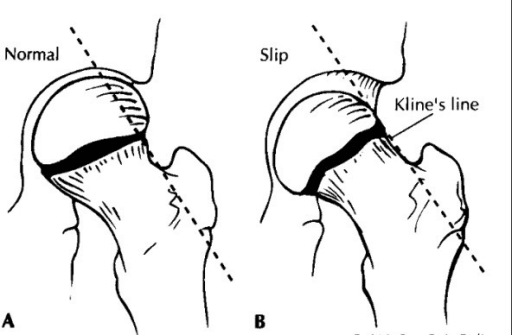
The rest of the AP. Beyond Klein's line, look for physeal widening, blurring or irregularity of the growth plate, and decreased epiphyseal height.
The frog lateral. This is the key view, and it shows the posterior slip far better than any AP sign; the frog lateral and the Southwick angle must always supplement the AP. The slipped epiphysis gives the classic 'ice cream falling off the cone' appearance: the metaphysis is the cone, visible above the displaced epiphysis, the ice cream.
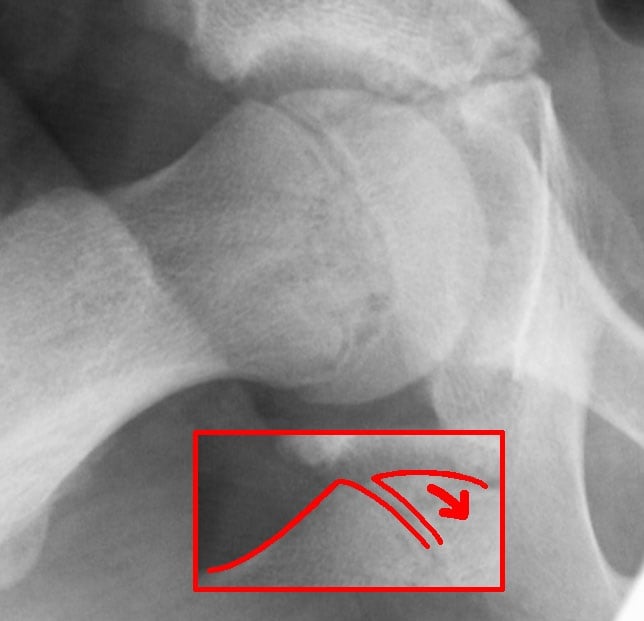
Grading severity. The Southwick angle is measured on the frog lateral and is normally about 12 degrees. A slip is mild at less than 30 degrees, moderate at 30-50 degrees and severe at more than 50 degrees.
Stability. Loder's classification calls a slip stable if the child can weight-bear, with or without crutches, and unstable if not. It is the classification that determines prognosis: in Loder's original series unstable slips had an AVN rate of 47%, stable slips 0%. The child stays non-weight-bearing until surgical fixation.
Both hips, and the knee. Always compare with the contralateral hip and assess the Klein line on both sides, because SUFE is bilateral in 20-40%. SUFE can present with isolated knee pain, referred via the obturator nerve, so always image the hips in a child with atraumatic knee pain.
Perthes disease
Staging. The radiographic stages of Legg-Calvé-Perthes disease reflect the pathological process:
- Initial (necrosis): subtle sclerosis of the femoral head, with a possible subchondral fracture line (the crescent sign)
- Fragmentation: the head appears fragmented, with mixed lytic and sclerotic areas
- Reossification: new bone progressively replaces the necrotic bone
- Healed: the head reconstitutes but may be aspherical (coxa magna, coxa plana)
Prognosis in active disease. Catterall grades the extent of head involvement in four groups (I-IV). The Herring lateral pillar classification grades how well lateral pillar height is preserved (A, B, C) and is the best prognostic indicator: group A carries a good prognosis, group C a poor one.
Head-at-risk signs. Their presence indicates a worse prognosis and may indicate the need for containment treatment.
- Gage sign: a radiolucent V-shaped defect in the lateral epiphysis
- Lateral subluxation: uncovering of the femoral head
- Lateral calcification: calcification lateral to the epiphysis
- Horizontal growth plate: horizontal rather than its normal oblique orientation
- Metaphyseal cysts: radiolucent areas in the metaphysis
Outcome at maturity. Catterall and Herring stage the active disease; the Stulberg classification grades the final healed femoral head by sphericity and congruency at skeletal maturity, and is the best predictor of later osteoarthritis. The grouping is the high-yield part.
- Healed femoral head
- Normal, spherical
- Group
- Spherical congruency
- Osteoarthritis
- Essentially no increased risk
- Healed femoral head
- Spherical with abnormal features (coxa magna, short broad neck or steep acetabulum), but still round
- Group
- Spherical congruency
- Osteoarthritis
- Essentially no increased risk
- Healed femoral head
- Ovoid or non-spherical, still congruent
- Group
- Aspherical congruency
- Osteoarthritis
- Moderate, later onset
- Healed femoral head
- Flat, still congruent (flat-on-flat)
- Group
- Aspherical congruency
- Osteoarthritis
- Moderate, later onset
- Healed femoral head
- Flat and incongruent
- Group
- Aspherical incongruency
- Osteoarthritis
- Severe, early
The governing principle from the same data is head-neck-acetabulum congruency: a congruent joint, even a non-spherical one, fares far better than an incongruent one.
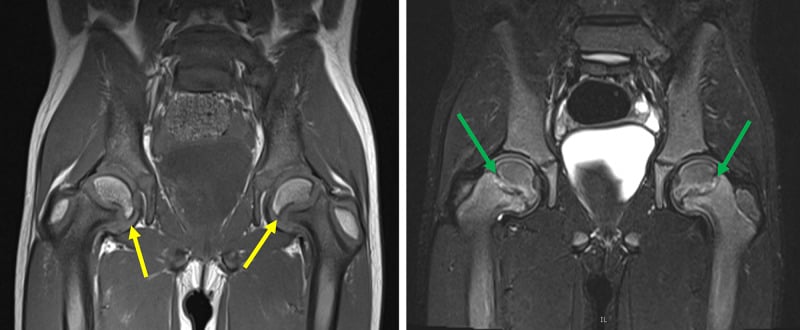
Physeal injuries: Salter-Harris
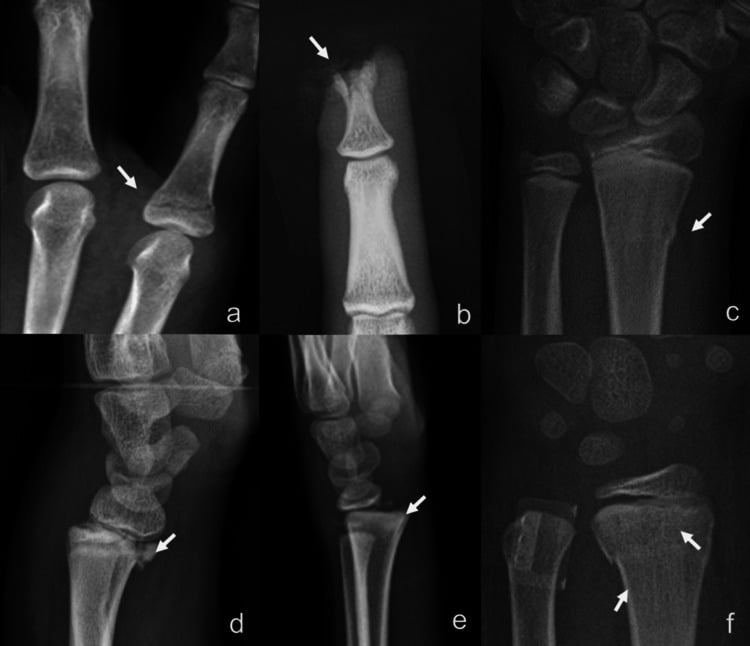
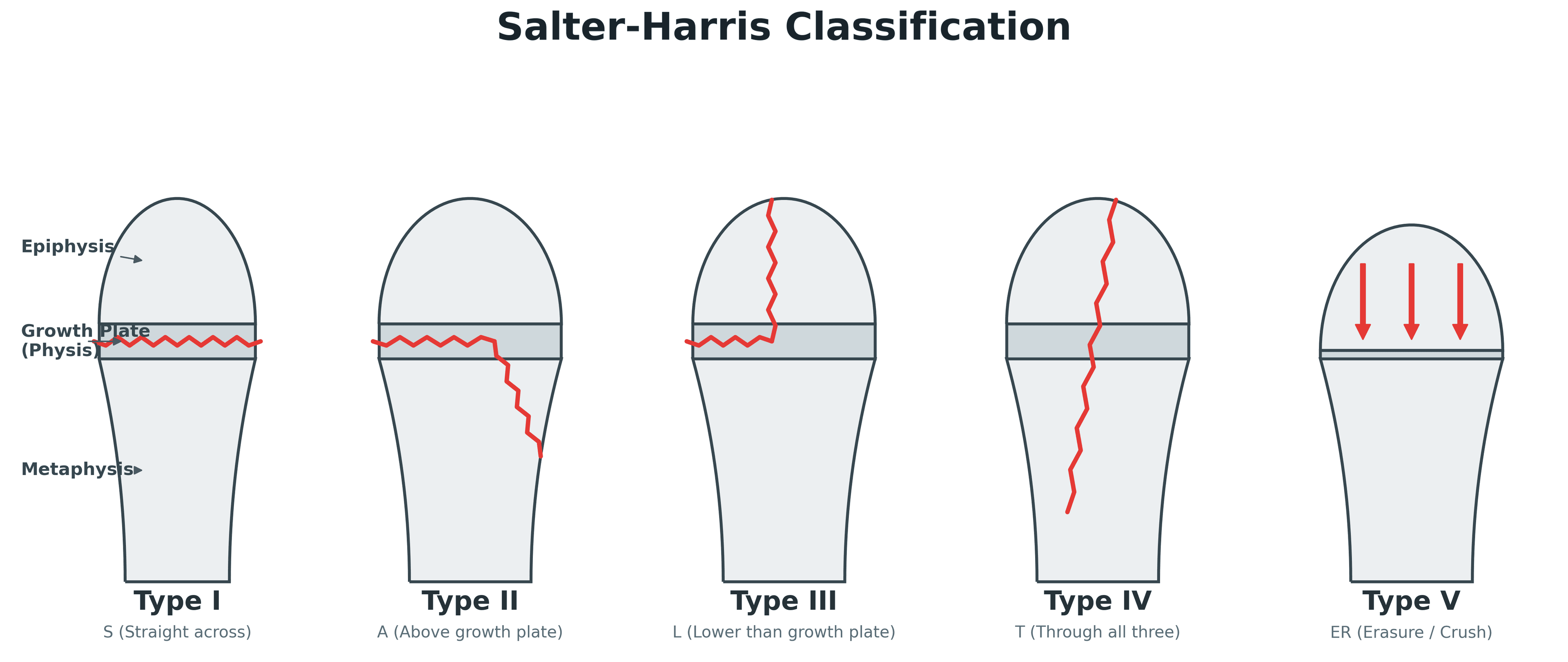
The five types. Salter-Harris describes the pattern of a growth plate fracture.
- Type I: through the physis only. The radiograph may appear normal, a widened physis being the only sign, so the diagnosis is clinical: tenderness at the physis.
- Type II: through the physis with a metaphyseal fragment, the Thurston-Holland fragment. Usually an excellent prognosis.
- Type III: through the physis into the epiphysis, and so intra-articular. Needs anatomical reduction (ORIF) to restore the articular surface and growth plate alignment.
- Type IV: crosses metaphysis, physis and epiphysis. Most prone to growth disturbance through bone bridge formation, and requires ORIF for anatomical reduction.
- Type V: a crush of the physis without a visible fracture. It may be radiographically occult and is often diagnosed retrospectively, when growth arrest becomes apparent; the worst prognosis for growth.
How common Type II is. Type II is the most common growth plate fracture, commonly quoted as about 75%, and 54% in the population-based Olmsted County series.
Which types threaten growth. Types III to V are intra-articular or growth-arresting and carry the highest risk of premature physeal closure and deformity.
SALTRSalter-Harris Classification
Hook:SALTR: Slip, Above, Lower, Through, Rammed — the five Salter-Harris types in order of increasing severity.
Non-accidental injury
The signs. The metaphyseal corner fracture (bucket-handle) in an infant is highly specific for non-accidental injury. The other signs are multiple fractures of different ages, posterior rib fractures and complex skull fractures. A skeletal survey is mandatory.
Congenital limb anomalies
What is imaged. Proximal femoral focal deficiency (PFFD), fibular hemimelia and limb length discrepancy. PFFD is classified by Aitken, limb length is measured on a scanogram, and the assessment feeds planning for reconstruction or amputation.
CRITOE: Elbow Ossification Order
The paediatric elbow has six secondary ossification centres that appear in a predictable order, and knowing it is essential to avoid mistaking a normal centre for a fracture (or a fracture for a normal centre). The mnemonic is CRITOE, and the centres appear roughly at the odd ages 1, 3, 5, 7, 9, 11 (the "rule of odds"; girls ossify earlier than boys, so the ages are approximate).
- Centre
- Capitellum
- Approximate age (years)
- ~1
- Centre
- Radial head
- Approximate age (years)
- ~3
- Centre
- Internal (medial) epicondyle
- Approximate age (years)
- ~5
- Centre
- Trochlea
- Approximate age (years)
- ~7
- Centre
- Olecranon
- Approximate age (years)
- ~9
- Centre
- External (lateral) epicondyle
- Approximate age (years)
- ~11
The order itself is the exam trap. Because the internal (medial) epicondyle (I) always ossifies BEFORE the trochlea (T), you should never see a trochlear ossification centre without first seeing the medial epicondyle. If an ossific centre appears to be in the trochlear position but no medial epicondyle centre is visible in its normal location, suspect an avulsed and entrapped medial epicondyle that has been pulled into the joint (e.g. after an elbow dislocation) and is masquerading as the trochlea. Always confirm the medial epicondyle is present and correctly sited before accepting any later centre as normal.
Guidelines, Registries & Global Practice
Paediatric radiological signs are interpreted within national screening and child-protection frameworks that differ in detail but share the same imaging principles worldwide.
Global Epidemiology
- DDH: clinically significant dysplasia in roughly 1-3 per 1,000 live births, but sonographic immaturity/instability is far more common (Graf type IIa in ~14% of neonates). Risk factors: female sex, breech presentation, family history, firstborn, oligohydramnios, swaddling practices.
- SUFE: incidence ~10 per 100,000 children, rising with the global increase in childhood obesity; peak age 10-16 years; more common in boys and in some Pacific Islander, African and Hispanic populations; bilateral in 20-40%.
- Perthes: incidence varies markedly by region (roughly 1-20 per 100,000 children under 15), higher in Northern Europe and lower in some Asian and Black populations; boys affected 4-5 times more than girls.
- Physeal fractures: account for ~18-30% of paediatric long-bone fractures, peaking around the adolescent growth spurt (Olmsted County incidence 279/100,000 person-years).
Side-by-Side Guideline Comparison
- DDH screening stance
- Clinical exam for all newborns; selective ultrasound (6 weeks to 6 months) for risk factors or abnormal exam, rather than universal USS
- Imaging emphasis
- USS before femoral head ossifies; AP pelvis once ossific nucleus present
- DDH screening stance
- Universal newborn and 6-8 week clinical examination; selective USS by ~6 weeks for risk factors (breech, family history) or abnormal exam
- Imaging emphasis
- Graf/Harcke USS; radiograph reserved for older infants
- DDH screening stance
- Universal sonographic screening of all newborns (Graf method)
- Imaging emphasis
- Static Graf alpha/beta angles in a standardised coronal plane
- DDH screening stance
- Concludes evidence is insufficient to recommend FOR or AGAINST routine screening (I statement) — reflecting over-treatment concern
- Imaging emphasis
- Highlights high spontaneous resolution of immature hips
- DDH screening stance
- Not a screening body; standardises physeal fracture description and management
- Imaging emphasis
- Salter-Harris classification; CRITOE for elbow ossification
Registry and Practice Variation
- Registries: dedicated paediatric registries are fewer than adult arthroplasty registries, but regional DDH and Perthes datasets (e.g. UK BSCOS studies and Nordic/Australasian DDH cohorts) inform screening policy and late-presentation rates. The debate between universal (Graf, German-speaking Europe) and selective (US/UK) ultrasound screening turns on cost, over-treatment of self-resolving immature hips, and late-diagnosis rates.
- High-resource settings: ready access to ultrasound, MRI for occult physeal/Perthes assessment, and arthrography-guided reduction.
- Limited-resource settings: reliance on clinical examination and plain radiographs; DDH and SUFE often present late, increasing rates of open reduction, osteotomy, and established avascular necrosis. The same radiographic signs (Klein, Perkins/Hilgenreiner, Shenton, Salter-Harris) remain the diagnostic backbone everywhere because they require only a plain film.
- Child protection: suspected non-accidental injury triggers a standardised skeletal survey worldwide; mandatory reporting and exact survey protocols vary by jurisdiction, but the metaphyseal corner fracture, posterior rib fractures and fractures of differing ages are universally recognised red flags.
Controversies & Areas of Uncertainty
The biggest unresolved debate. Universal sonographic screening (Graf model, German-speaking Europe) detects more dysplasia but treats many hips that would resolve spontaneously (~89% of type IIa hips mature without intervention), risking over-treatment and Pavlik-related AVN. Selective screening (US/UK) targets risk factors but misses some late-presenting dysplasia. The USPSTF issued an "insufficient evidence" (I) statement. There is no internationally agreed gold-standard policy.
The classic Klein line misses up to 60% of slips (sensitivity ~40%). Over-reliance on a single AP sign is a recognised cause of missed/delayed SUFE diagnosis. The modified Klein line (interhip epiphyseal-width comparison) and routine frog-leg lateral views improve detection, but no single radiographic measurement is both highly sensitive and specific for mild slips.
Whether to pin the asymptomatic contralateral hip is contested. Arguments for: 20-40% become bilateral, sequential slip can be silent, and second slips can be unstable. Arguments against: morbidity of a second procedure in hips that may never slip. Prophylactic fixation is more widely favoured in younger children, those with open triradiate cartilage, and underlying endocrine/metabolic disease.
The Herring multicentre data show benefit from containment surgery only in a specific subgroup (lateral pillar B/B-C border, onset over 8 years); group A does well regardless and group C does poorly regardless. The optimal procedure (femoral varus vs innominate osteotomy) showed no significant difference, leaving surgeon and patient preference to guide choice.
Clinical Decision Scenarios
Practise clinical reasoning and management decisions out loud
“A 12-year-old obese boy presents with a 3-week history of left knee pain. He walks with an antalgic gait. There is no history of trauma.”
“A 6-month-old infant is brought for DDH assessment. The paediatrician has noted asymmetric skin folds and limited left hip abduction.”
“An examiner asks you to describe the Salter-Harris classification and its clinical implications.”
“A 7-year-old boy presents with a 4-month history of a painless limp and reduced left hip abduction and internal rotation. Radiographs show a fragmented, partially flattened left femoral head.”
DDH Assessment (PHAS)
- Perkins: vertical line from lateral acetabular edge
- Hilgenreiner: horizontal line through triradiate cartilages
- Together create 4 quadrants — femoral head should be INFEROMEDIAL
- Acetabular index: normal less than 30 degrees. More = dysplasia
- USS: before 6 months (Graf). Radiograph: after 6 months
SUFE Assessment
- Klein line: fails to intersect lateral epiphysis = SUFE. Classic sensitivity only ~40%; modified 2mm side-to-side method 79%; frog lateral shows the posterior slip best
- Frog lateral: best view. Ice cream falling off cone appearance
- Southwick: mild (less than 30), mod (30-50), severe (more than 50 degrees)
- ALWAYS image hips for isolated knee pain in children
- Bilateral in 20-40%. Unstable = 47% AVN risk
Salter-Harris (SALTR)
- I (Slip): physis only — may be normal radiograph. Clinical diagnosis
- II (Above): physis + metaphysis — MOST COMMON (75%). Thurston-Holland fragment
- III (Lower): physis + epiphysis — intra-articular. ORIF for anatomical reduction
- IV (Through): all three zones — highest bone bridge risk. ORIF essential
- V (Rammed): crush — WORST prognosis. Diagnosed RETROSPECTIVELY
Perthes and NAI
- Herring lateral pillar: A (good), B (moderate), C (poor prognosis)
- Head-at-risk signs: Gage sign, lateral subluxation, lateral calcification
- NAI: metaphyseal corner fractures, posterior ribs, multiple ages
- NAI: skeletal survey MANDATORY. Mandatory reporting
Evidence Base
Herring Lateral Pillar Classification for Perthes
- Prospective multicentre study of 438 patients (451 hips), 345 hips followed to skeletal maturity across five treatment groups.
- The modified lateral pillar classification and age at onset were both strong, independent predictors of outcome (p less than 0.0001 and p = 0.0001).
- Lateral pillar group B (and B/C border) hips in children over 8 years at onset did significantly better with surgery than non-operative care; group C hips did poorly regardless of treatment.
- Group B hips in children 8 years or younger did equally well with operative and non-operative treatment.
Loder Stability Classification for SUFE
- 55 hips (in 54 patients) that would classically be labelled 'acute' were reclassified by physeal stability: 30 unstable, 25 stable.
- Avascular necrosis developed in 14 of 30 unstable hips (47%) and in NONE of the 25 stable hips (0%).
- Satisfactory outcome was reached in 47% of unstable versus 96% of stable hips.
- No association could be demonstrated between early reduction and the development of AVN.
Graf Sonographic Hip Screening — Prospective Validation
- Prospective study of 6,548 neonates examined both clinically and sonographically using Graf's technique.
- 84.6% of hips were mature (Graf type I), 14.3% physiologically immature (type IIa), and 1.1% dysplastic; 63% of sonographically dysplastic hips were clinically normal.
- 89% of type IIa hips matured spontaneously, while 11% required abduction treatment.
- All 68 dysplastic hips normalised (alpha and acetabular index angles) after a maximum of 80 days of abduction, though six hips deteriorated again by 1 year.
Modified Klein Line Improves SCFE Sensitivity
- Five observers assessed 30 AP and 30 frog-leg lateral radiographs of unilateral SCFE on two occasions.
- The CLASSIC Klein line (failure of the line to intersect the epiphysis) identified only 40.3% of slips — missing roughly 60%.
- A MODIFIED method (measuring the width of epiphysis lateral to Klein's line, with a 2 mm side-to-side difference indicating a slip) improved sensitivity to 79%.
- Head/shaft (Southwick) angle and percent epiphyseal displacement on the frog-leg lateral were reliable and reproducible, clearly separating slipped from control hips (p less than 0.001).
Physeal Fracture Epidemiology (Olmsted County)
- Population-based study identifying every physeal fracture in Olmsted County, Minnesota over 1979-1988: 850 children sustained 951 physeal fractures.
- Age- and sex-adjusted incidence was 279 per 100,000 person-years; boys outnumbered girls 2:1, with peaks at 11-12 years (girls) and 14 years (boys).
- The phalanges of the fingers were the most common site (37% of all physeal fractures).
- Salter-Harris type II was the commonest pattern (54%), but 16% of fractures did not fit the Salter-Harris scheme, prompting Peterson's expanded classification.
Metaphyseal Corner Fractures in NAI — Radiologic-Histopathologic Basis
- Combined pre- and post-mortem radiographs with histology of metaphyses from four abused infants explained the classic metaphyseal lesion.
- The underlying injury is a subepiphyseal planar series of microfractures through the most immature metaphyseal bone, isolating a mineralised disc.
- Depending on size, peripheral involvement and projection, the SAME lesion appears as a 'bucket-handle' fracture, a 'corner' fracture, or a metaphyseal lucency.
- Some radiographs were normal despite significant histologic injury, and the germinal cartilage layers were spared in the specimens examined.