Rotator Cuff Arthropathy | Grammont Principles | Deltoid-Powered | Implant Survival Outlasts Function
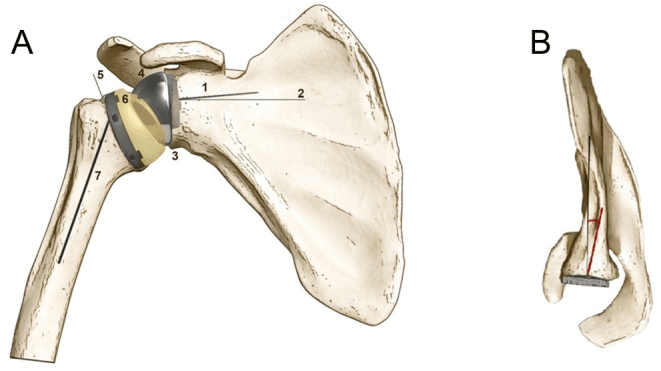
- Grammont Principle: Medialize center of rotation to glenoid surface. Distalize humerus to tension deltoid.
- Cuff Tear Arthropathy: Superior migration of humeral head. Femoralization. Acetabularization.
- Deltoid Function: RTSA converts deltoid from a short muscle with poor mechanical advantage to efficient arm elevator.
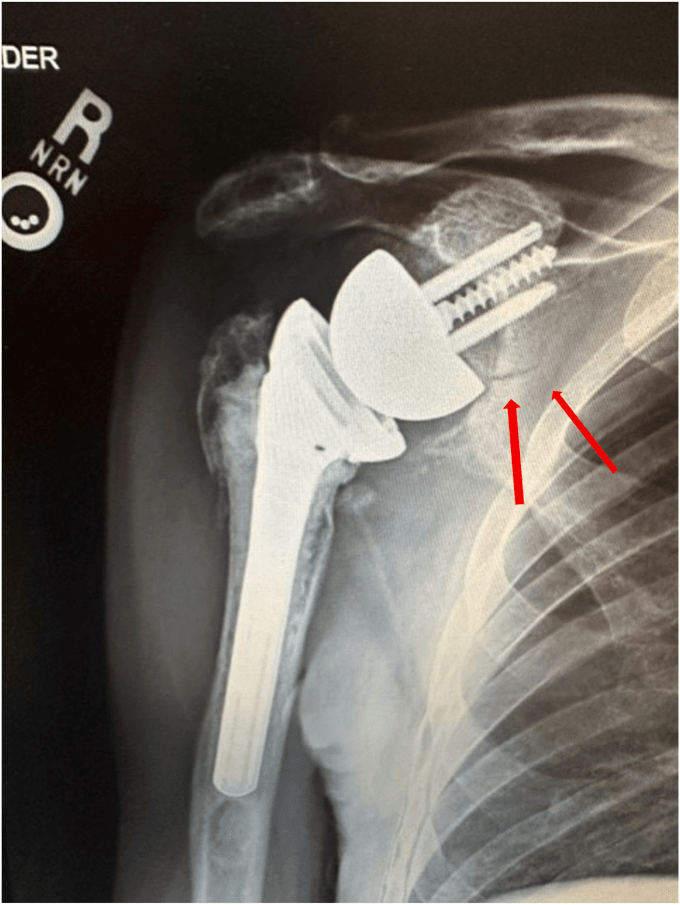
- Scapular Notching: Most common complication (around 68 percent in Grammont medialized series). Inferior baseplate tilt and lateralization help prevent.
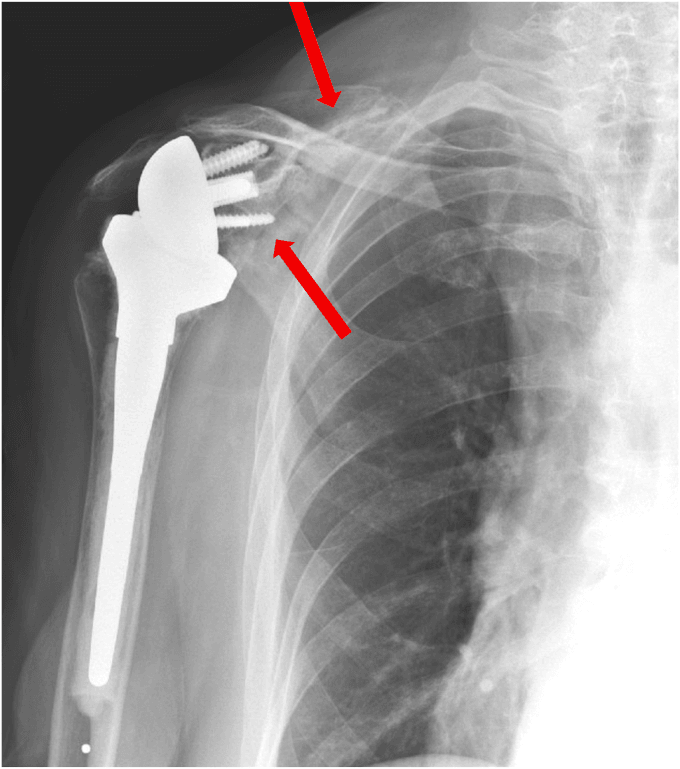
- Acromial Fractures: Risk 2-7 percent. Increased deltoid tension. May be stress or traumatic.
- “RTSA increases deltoid moment arm by 30-40 percent through medialization of center of rotation
- “Scapular notching reduced by inferior tilt of baseplate and larger glenosphere
- “Intact deltoid is ABSOLUTE requirement - check axillary nerve function preoperatively
- “Active external rotation preserved if teres minor intact (often limited postoperatively)
Overview and Epidemiology
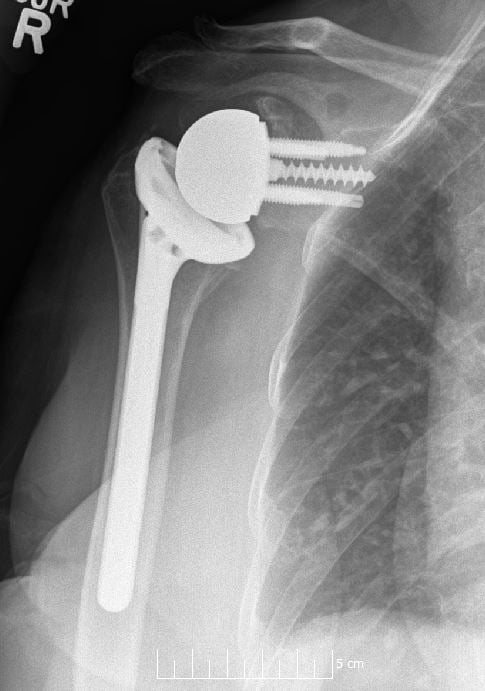
Reverse total shoulder arthroplasty (RTSA) has transformed the management of complex shoulder conditions, particularly rotator cuff arthropathy. It reverses the ball-and-socket: a convex glenosphere is fixed to the glenoid and a concave socket to the humerus, and the deltoid becomes the primary arm elevator.
Who. Use has grown exponentially over the past decade, an increase of over 300 percent, and RTSA now represents over 60 percent of all shoulder arthroplasties in some series. Mean age is 65-75 years, though indications are expanding to younger patients. The female predominance of 60-65 percent reflects the demographics of rotator cuff arthropathy.
History. The earlier reverse designs, Neer's Mark I and II, failed through glenoid loosening from eccentric loading. Professor Paul Grammont (Lyon, France) developed the modern design in 1985, and his key innovation was medialisation of the centre of rotation. Modern semi-constrained designs achieve over 90 percent ten-year survivorship with revision as the endpoint, a figure about the implant rather than the shoulder (see Outcomes and Prognosis).
Anatomy and Pathophysiology
Cuff tear arthropathy. Cuff tear arthropathy (CTA) is the end stage of a massive rotator cuff tear with secondary degenerative change, and it is the most common indication for RTSA. It develops as a cascade:
- A massive rotator cuff tear, usually of supraspinatus and infraspinatus
- Loss of the force couple, so the deltoid pulls the humeral head superiorly unopposed
- Superior migration, with the head articulating with the undersurface of the acromion
- Mechanical change: increased joint reaction forces and altered synovial fluid
- Cartilage destruction on both the glenoid and the humeral head
- Bony remodelling: femoralisation of the humeral head and acetabularisation of the glenoid
The Grammont principles. Grammont answered the failures of the earlier reverse designs with two moves. Moving the centre of rotation from the lateral humeral head to the glenoid surface (medialisation) eliminates the moment arm that caused glenoid loosening, reducing eccentric loading on the glenoid fixation by over 90 percent, and increases the deltoid moment arm by 30-40 percent. Lengthening the arm by 1-3cm (distalisation) tensions the deltoid and converts it from a short, relatively weak elevator into an efficient one.
What it restores. Elevation is deltoid-powered and is restored reliably. Most patients have limited active external rotation afterwards, because the posterior cuff, infraspinatus and teres minor, is deficient; if the teres minor is intact, external rotation is preserved, and a latissimus dorsi transfer can improve it in select cases (see Restoring Active External Rotation).
Classification Systems
Hamada Classification of Rotator Cuff Tear Arthropathy
Hamada grades the severity of cuff tear arthropathy on the radiograph, by the acromiohumeral interval and the remodelling that follows it. The normal interval is 7-14mm; less than 7mm indicates a massive cuff tear.
- Acromiohumeral Interval
- Greater than 6mm
- Findings
- Minimal changes
- Treatment
- Conservative or cuff repair
- Acromiohumeral Interval
- 5-6mm
- Findings
- Early narrowing
- Treatment
- Maximum conservative, monitor progression, consider repair
- Acromiohumeral Interval
- Under 5mm
- Findings
- Acetabularisation (acromion remodelling)
- Treatment
- RTSA candidate if symptomatic
- Acromiohumeral Interval
- Under 5mm
- Findings
- Glenohumeral narrowing without acetabularisation
- Treatment
- RTSA (primary indication)
- Acromiohumeral Interval
- Under 5mm
- Findings
- Glenohumeral narrowing with acetabularisation of the acromion
- Treatment
- RTSA (primary indication)
- Acromiohumeral Interval
- Not applicable
- Findings
- Humeral head collapse
- Treatment
- RTSA (salvage)
Clinical Assessment
History. Pain is anterolateral and may radiate to the deltoid. Night pain is common, with difficulty sleeping on the affected side, and overhead activity and reaching hurt; the course is often chronic and progressive over years. Active elevation is severely limited (pseudoparalysis), so the patient cannot comb their hair or reach overhead. Ask what has already failed: injections, physiotherapy, cuff repair.
Examination. The findings in cuff tear arthropathy:
- Inspection: deltoid atrophy is rare, and if present reconsider RTSA; anterior prominence from superior humeral migration
- Palpation: anterior shoulder tenderness; the AC joint is often arthritic
- Active range: severely limited elevation, pseudoparalysis below 90 degrees
- Passive range: preserved, which excludes frozen shoulder
- Strength: positive Hornblower's sign and external rotation lag
Pseudoparalysis: Inability to actively elevate the arm above 90 degrees with preserved passive motion. This indicates a massive, irreparable rotator cuff tear with loss of the force couple. Pseudoparalysis is a key indication for RTSA over anatomic TSA.
Differential diagnosis. The table sorts the painful, weak, elevation-limited shoulder by active against passive range and by the feature that distinguishes each cause.
- Active vs Passive ROM
- Active limited, passive preserved
- Key Distinguishing Feature
- Superior migration, acromiohumeral interval under 7mm, arthritis
- Implication for RTSA
- Primary RTSA indication
- Active vs Passive ROM
- Active limited, passive preserved
- Key Distinguishing Feature
- Pseudoparalysis without joint-space loss
- Implication for RTSA
- RTSA if pseudoparalytic and irreparable
- Active vs Passive ROM
- Both active AND passive limited
- Key Distinguishing Feature
- Global loss of passive motion, no superior migration
- Implication for RTSA
- Not an arthroplasty problem - treat the stiffness
- Active vs Passive ROM
- Active limited, passive preserved
- Key Distinguishing Feature
- Deltoid wasting, sensory loss over badge area, EMG abnormal
- Implication for RTSA
- Contraindication - deltoid non-functional
- Active vs Passive ROM
- Active and passive reduced by pain/osteophytes
- Key Distinguishing Feature
- Cuff intact on imaging, posterior glenoid wear
- Implication for RTSA
- Anatomic TSA preferred
- Active vs Passive ROM
- Variable, often bilateral
- Key Distinguishing Feature
- Symmetrical erosions, soft-tissue and cuff involvement
- Implication for RTSA
- RTSA if cuff deficient, anatomic if cuff intact
- Active vs Passive ROM
- Limited with systemic signs
- Key Distinguishing Feature
- Raised inflammatory markers, effusion, fever
- Implication for RTSA
- Exclude before any arthroplasty
The deltoid before anything else. RTSA is deltoid-powered, so inspect deltoid bulk for atrophy, test sensation over the lateral shoulder and deltoid strength against resisted abduction, and read the old incisions for a previous deltoid detachment. Obtain EMG and nerve conduction studies if any of this is concerning, and document the findings preoperatively, which carries medicolegal importance.
Intact deltoid and axillary nerve function are ABSOLUTE requirements for RTSA. The entire design depends on deltoid function for arm elevation; RTSA is contraindicated if it is deficient.
- What to Check
- Bulk, strength, axillary nerve (regimental badge area)
- Significance
- ABSOLUTE requirement for RTSA
- What to Check
- Deltopectoral vs lateral approach, cuff repairs
- Significance
- Deltoid detachment is relative contraindication
- What to Check
- Horn blower sign negative indicates intact
- Significance
- Predicts postoperative ER
- What to Check
- CT scan for morphology and version
- Significance
- May need bone graft if eroded
- What to Check
- Tenderness, cross-body adduction pain
- Significance
- Consider distal clavicle excision
Investigations
Radiographs. A standard shoulder series is first line: AP in neutral, internal and external rotation, a scapular Y and an axillary lateral. Assess:
- The acromiohumeral interval and superior migration of the humeral head
- Femoralisation (rounding) of the humeral head
- Acetabularisation of the acromion and glenoid
- Severity of glenohumeral arthritis
- Acromioclavicular joint arthritis
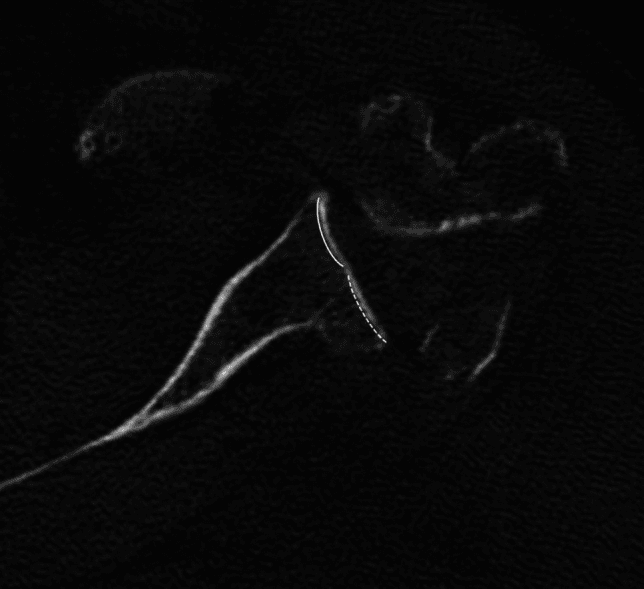
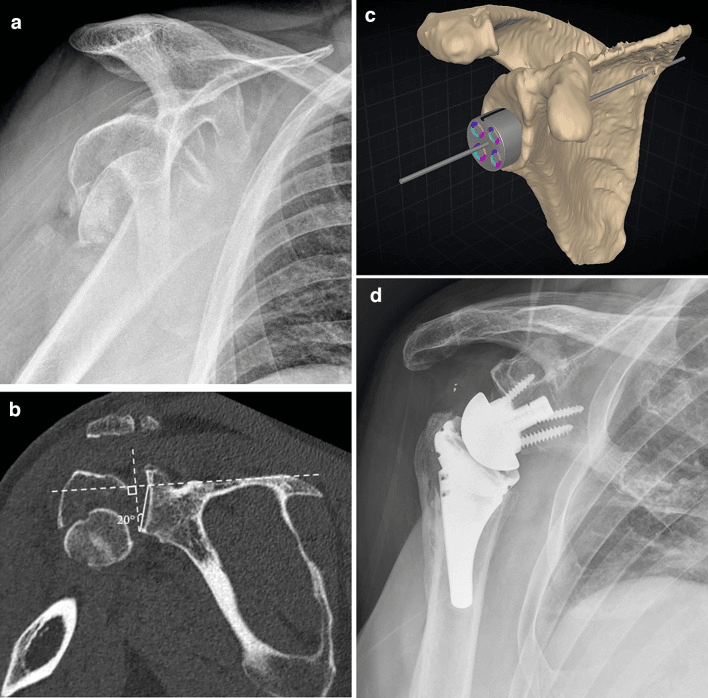
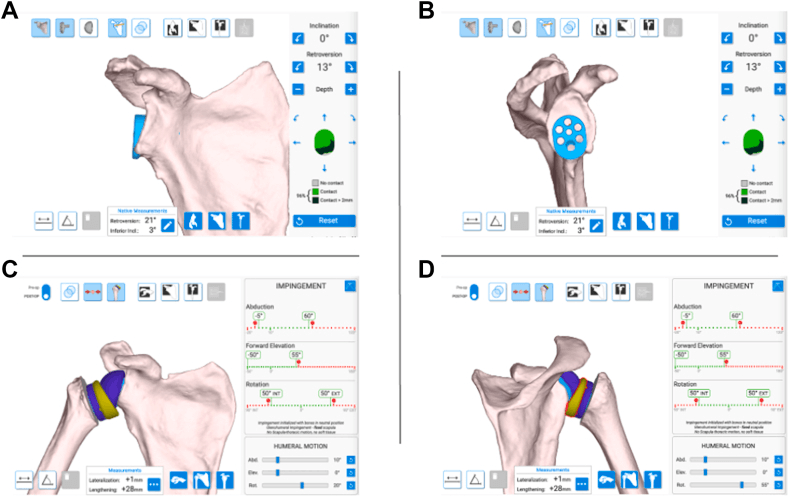
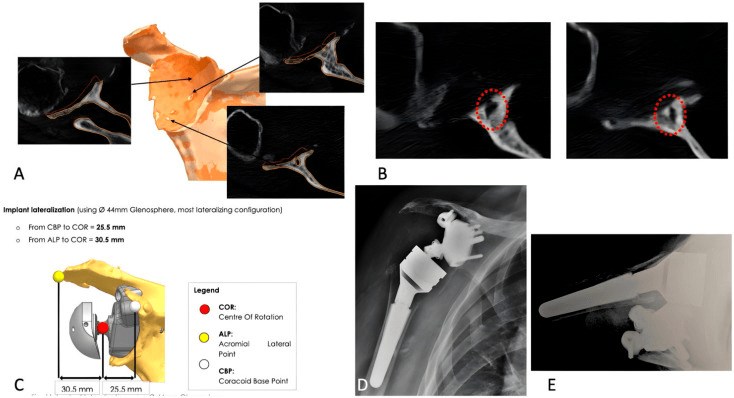
CT with 3D reconstruction. CT is essential for RTSA planning, because it shows the glenoid version, bone stock and the best baseplate trajectory. Look at:
- Bone stock anteriorly, posteriorly and inferiorly
- Version: excessive retroversion, over 15 degrees, may need bony increased offset (BIO) augmentation or a posteriorly augmented baseplate
- Erosion pattern, centred or decentred (Seebauer)
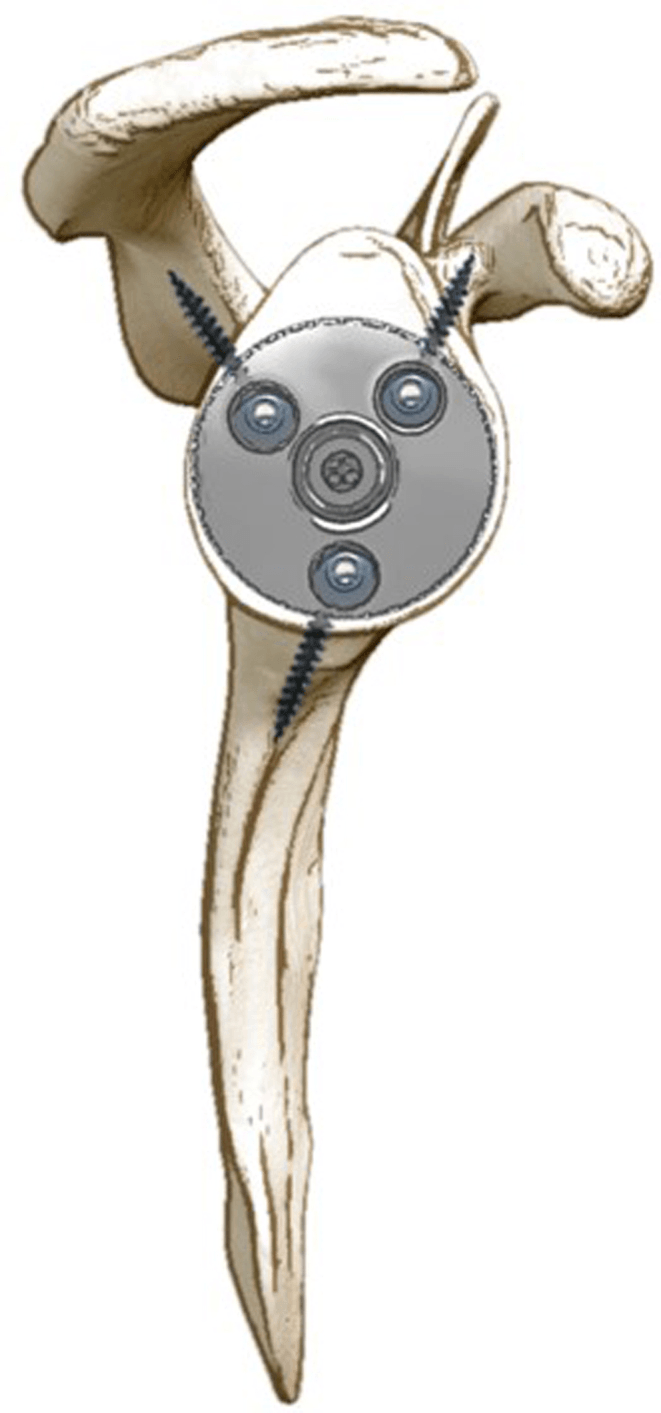
- Vault depth and screw trajectory; the inferior screw trajectory must be planned to avoid the scapular spine
- Prior hardware at revision
MRI. Not essential if the diagnosis is clear, but useful for teres minor integrity, which predicts postoperative external rotation, for Goutallier grading of fatty infiltration, for subscapularis status (repair or leave), for biceps pathology, and to exclude infection at revision.
Management Algorithm
The decision. The core indication is cuff tear arthropathy with pseudoparalysis, and every indication requires intact deltoid function; this is non-negotiable. The established indications:
- Cuff tear arthropathy with pseudoparalysis: Hamada 4 and 5 are the primary indication, and grade 3 is a candidate if symptomatic
- Massive irreparable rotator cuff tear with pseudoparalysis, without arthritis
- Proximal humerus fracture in the elderly (over 70), comminuted, with poor bone quality
- Failed hemiarthroplasty with cuff deficiency or tuberosity non-union
Indications have expanded to:
- Revision of a failed anatomic TSA with cuff deficiency
- Rheumatoid or other inflammatory arthritis with a massive cuff tear or cuff deficiency
- Tumour reconstruction of the proximal humerus
- Fracture sequelae (malunion, nonunion)
Contraindications. Absolute:
- Deltoid dysfunction (paralysis, severe atrophy)
- Axillary nerve palsy
- Active infection
- Significant medical comorbidities precluding surgery
Relative:
- Young age (under 60), because of high revision risk over a lifetime; weigh risk and benefit carefully
- Prior deltoid detachment (lateral approach with poor repair)
- Severe glenoid bone loss, which may need bone graft or a custom implant
- Charcot arthropathy
- Non-compliance with postoperative restrictions
Conservative management first. Activity modification and analgesia, physiotherapy for the remaining muscles (deltoid and periscapular), and subacromial, glenohumeral or AC joint injections for symptomatic relief. Its role is limited in cuff tear arthropathy with pseudoparalysis.
When to operate. After at least 3-6 months of failed conservative management, with significant functional impairment (pseudoparalysis) or uncontrolled pain affecting quality of life, in an elderly patient willing to accept activity restrictions. In appropriately selected patients RTSA provides reliable pain relief and functional improvement.
- Anatomic TSA
- Intact or repairable
- Reverse TSA
- Deficient or irreparable
- Key Pearl
- RTSA does not require rotator cuff
- Anatomic TSA
- Rotator cuff
- Reverse TSA
- Deltoid
- Key Pearl
- Deltoid MUST be intact for RTSA
- Anatomic TSA
- Native (lateral to glenoid)
- Reverse TSA
- Medialized to glenoid surface
- Key Pearl
- Grammont principle
- Anatomic TSA
- Contraindicated
- Reverse TSA
- Primary indication
- Key Pearl
- Superior migration means cuff deficient
- Anatomic TSA
- Preserved
- Reverse TSA
- Often limited
- Key Pearl
- Posterior cuff deficiency limits ER
- Anatomic TSA
- Major concern (rocking horse)
- Reverse TSA
- Less eccentric loading
- Key Pearl
- Medialization reduces glenoid torque
Surgical Technique
Positioning. Beach chair, upright 60-70 degrees with the head secured, on a radiolucent table for intraoperative imaging. Free-drape the arm, and make sure it can be maximally extended for humeral preparation.
Approach. The deltopectoral approach is the most common and is preferred for RTSA because it preserves the deltoid origin.
Deltopectoral Approach Steps
Start from the coracoid and extend distally over the deltopectoral groove, approximately 15cm. Identify the cephalic vein and retract it laterally, which protects the deltoid blood supply.
Develop the deltopectoral interval. Identify the conjoint tendon (medial) and coracoid, release the clavipectoral fascia lateral to the conjoint tendon, and identify subscapularis and biceps.
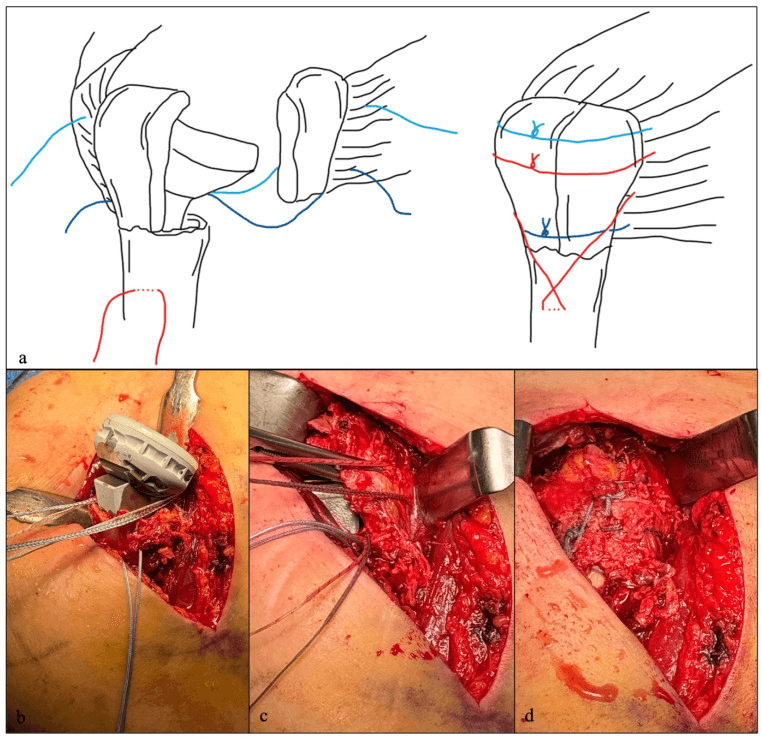
Tenotomy, lesser tuberosity osteotomy or peel. Lesser tuberosity osteotomy provides the best healing in RTSA; tenotomy is also acceptable, given that the cuff is already deficient.
Dislocate the shoulder anteriorly and resect with a cutting guide or freehand. Resection level and version are critical. Preserve the deltoid attachment.
Complications
- Incidence
- 20-50 percent
- Prevention
- Inferior tilt, large glenosphere, lateralized design
- Management
- Observation unless symptomatic/progressive
- Incidence
- 2-10 percent
- Prevention
- Appropriate tensioning, avoid excessive retroversion
- Management
- Revision with larger glenosphere, humeral insert
- Incidence
- 0.8-11.2 percent reported; around 5 percent in large series
- Prevention
- Avoid excessive lateralisation, preserve distalisation, protect the spine base from long superior screws
- Management
- Usually non-operative; ORIF for displaced scapular spine (Levy III)
- Incidence
- 1-4 percent
- Prevention
- Antibiotics, sterile technique
- Management
- Debridement or staged revision
- Incidence
- 1-2 percent (usually neurapraxia)
- Prevention
- Careful retraction, avoid overtensioning
- Management
- Observation, usually recovers
- Incidence
- 1-3 percent
- Prevention
- Careful technique, assess bone quality
- Management
- ORIF or revision
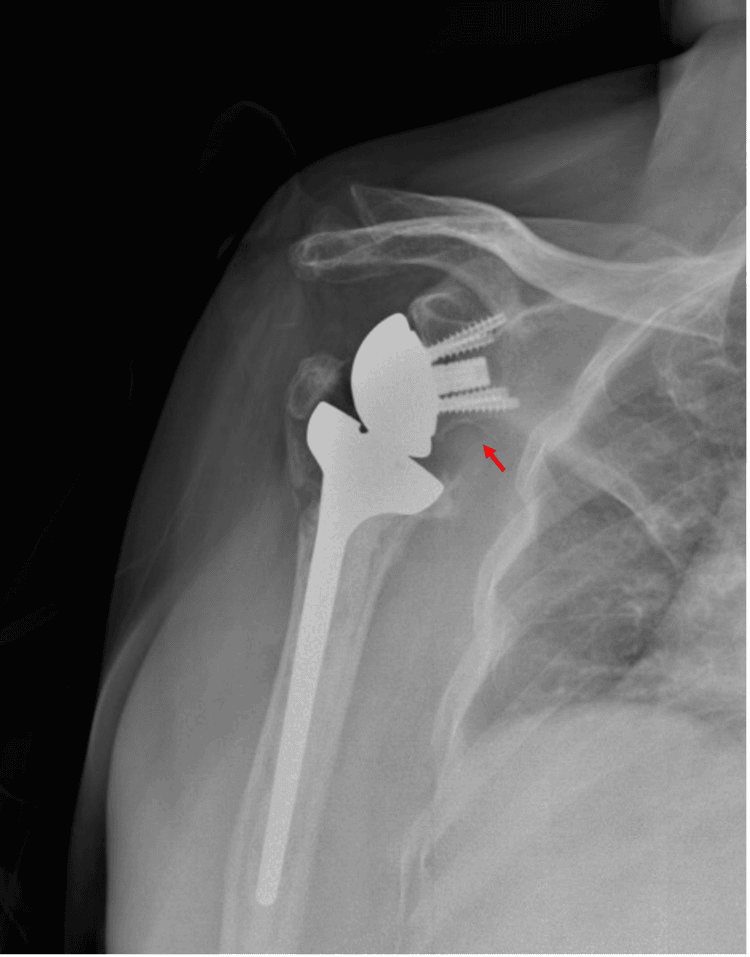
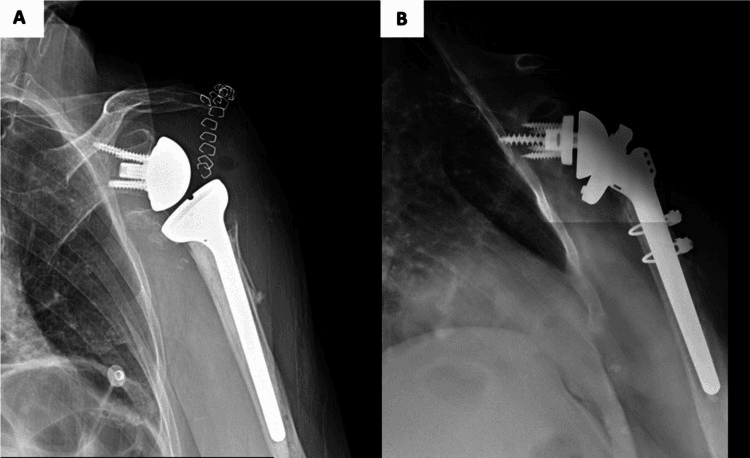
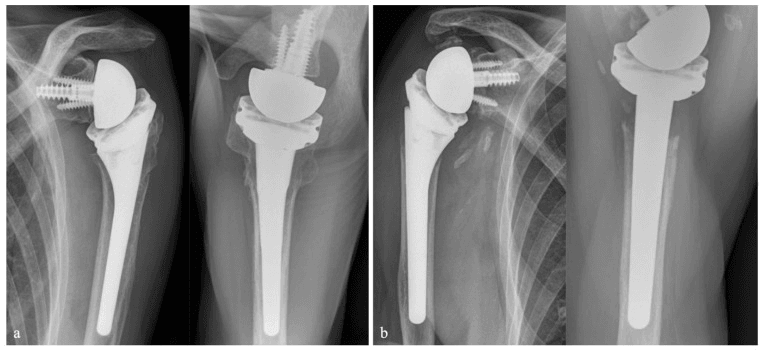
Scapular notching. Notching is mechanical impingement of the humeral component on the inferior glenoid rim. Sirveaux grades it (see Classification Systems), and it is prevented at the baseplate (see Surgical Technique and Baseplate Inclination).
Instability. Anterior instability is the most common, associated with excessive retroversion or subscapularis failure. Posterior instability is rare and associated with excessive anteversion; superior instability is very rare and associated with deltoid dysfunction.
Postoperative Care
RTSA Rehabilitation Protocol
- Sling immobilisation for 4-6 weeks, arm at the side, to allow soft tissue healing
- No active shoulder motion
- Elbow, wrist, hand exercises permitted
- Pendulum exercises (gravity-assisted) from week 2
- Avoid combined abduction and external rotation (instability position)
- Begin active-assisted ROM exercises
- Progress to active ROM as tolerated
- Forward flexion and abduction focus
- Gentle external rotation (often limited, do not force)
- Periscapular strengthening
- Progressive deltoid strengthening
- Isometric to isotonic exercises
- Functional activities as tolerated
- Avoid heavy lifting (greater than 10kg) long-term
- Full activities of daily living expected
- Ongoing home exercise program
- Annual follow-up with radiographs
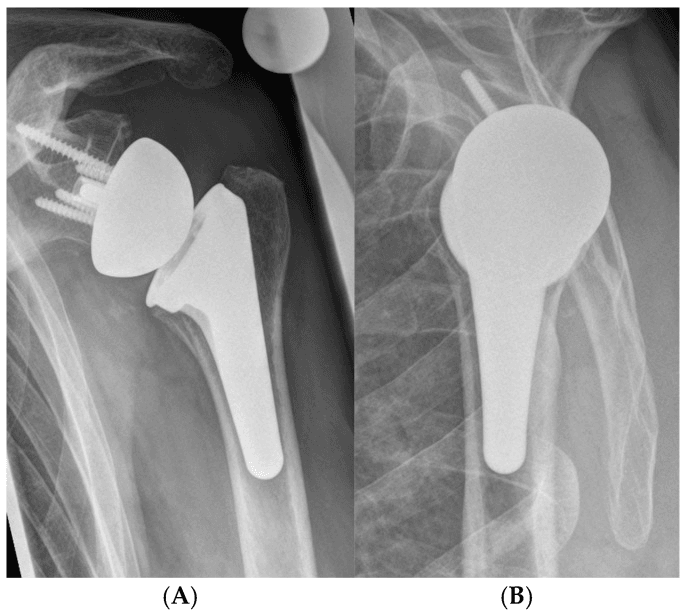
Lifelong restrictions. Avoid lifting greater than 10-15kg, because of the risk of acromial stress fracture and instability, and avoid contact sports and high-impact activity. Swimming, golf and tennis are often possible at low demand.
Outcomes and Prognosis
Function. Forward elevation improves from a mean of 50 degrees to 120-140 degrees. External rotation is often limited, 0-30 degrees on average, and internal rotation is variable, often reaching the sacrum or buttock. Strength improves on the preoperative pseudoparalysis, and pain relief is excellent in over 90 percent of patients.
Survivorship depends on the endpoint. In Guery's cohort of 80 prostheses, implant survival with revision as the endpoint was 91 percent at 120 months, and 84 percent with glenoid loosening as the endpoint.
Function fails first. With an absolute Constant score under 30 as the endpoint, survival in the same cohort was 58 percent at 120 months, a figure that did not differ by aetiology.
Quote both or neither. Roughly two in five shoulders had failed functionally by ten years while the prosthesis was still in situ. A survivorship figure over 90 percent describes a prosthesis that has not been taken out, not a working shoulder, and the gap between the two curves is the honest long-term result of this operation. Guery's curve had two inflections: one at about three years from early loosening, and a second from about six years reflecting progressive functional deterioration.
The long term. Revision rates are higher in younger patients (under 60). Glenoid loosening is a long-term concern with medialised designs, and lateralised designs may have improved long-term outcomes, which remains under investigation.
Predictors of a good outcome.
- Intact teres minor (better external rotation)
- Adequate deltoid function preoperatively
- Patient understanding of activity restrictions
- Primary indication (CTA) rather than complex revision
- Surgeon experience with the RTSA technique
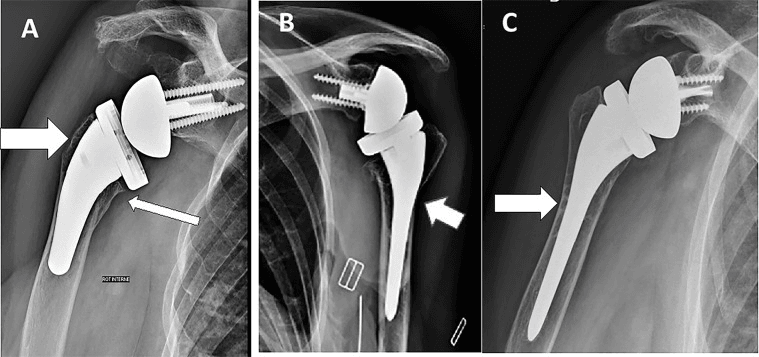
Restoring Active External Rotation: Combined Reverse and Tendon Transfer
The gap a reverse leaves. A reverse restores elevation but not external rotation. The established solution is to combine it with a modified L'Episcopo transfer: the latissimus dorsi and teres major are detached, rerouted around the humerus and reattached posterolaterally, converting these internal rotators into active external rotators. Boileau popularised performing both the reverse and the transfer through a single deltopectoral approach in the beach-chair position, avoiding the classic two-incision posterior dissection.
Choosing the operation. The two patterns are named for what has been lost:
- CLEER, combined loss of active elevation and external rotation (an irreparable postero-superior cuff plus loss of teres minor, in cuff tear arthropathy or tumour reconstruction), is the indication for the combined reverse plus transfer. Clinically it is the patient with a positive Hornblower and a dropping arm from an absent teres minor.
- ILER, isolated loss of external rotation with preserved elevation, can be treated by the transfer alone, without a reverse.
What the patient gains. The transfer restores the ability to control the spatial position of the arm, external rotation with the arm at the side, which is the main driver of patient satisfaction, rather than adding elevation.
Modified L'Episcopo Transfer With or Without Reverse (Boileau)
- 15 patients (mean age 63) had a combined latissimus dorsi and teres major transfer through a single deltopectoral approach, minimum 1-year follow-up
- Transfer alone in 7 with isolated loss of external rotation (ILER); combined with a reverse prosthesis in 8 with combined loss of active elevation and external rotation (CLEER)
- Active external rotation gained 27 degrees (ILER) and 28 degrees (CLEER); mean active elevation gained 34.7 degrees; Constant score reached 65.6
- Subjective Shoulder Value improved from 34 to 72 percent; benefit was control of arm position, not extra elevation
Baseplate Inclination: The RSA Angle and Prosthesis-Scapular Neck Angle
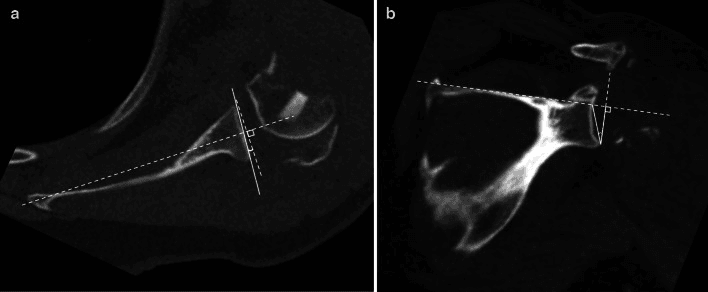
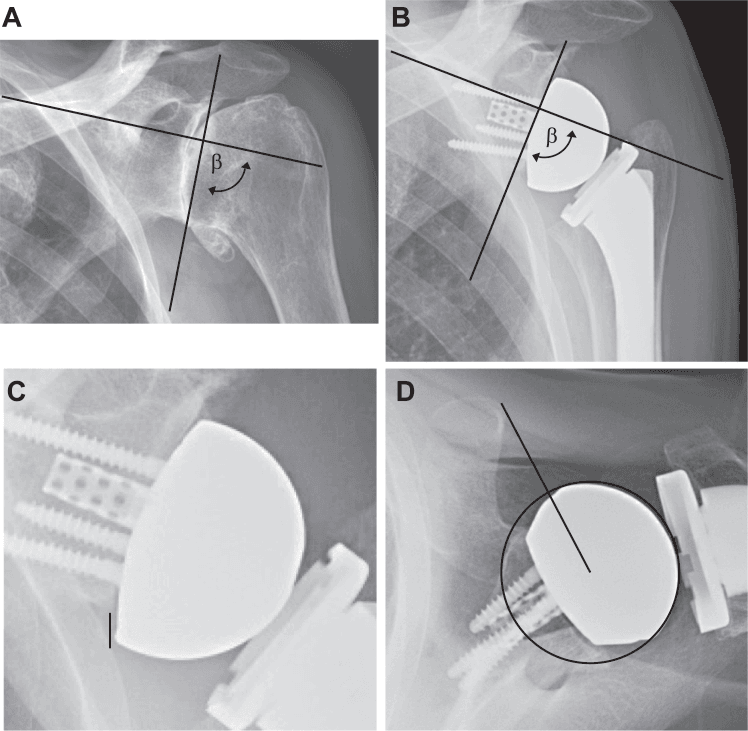
Measuring the tilt. Inferior tilt of the baseplate and a low glenosphere are measured, and two radiographic parameters quantify them:
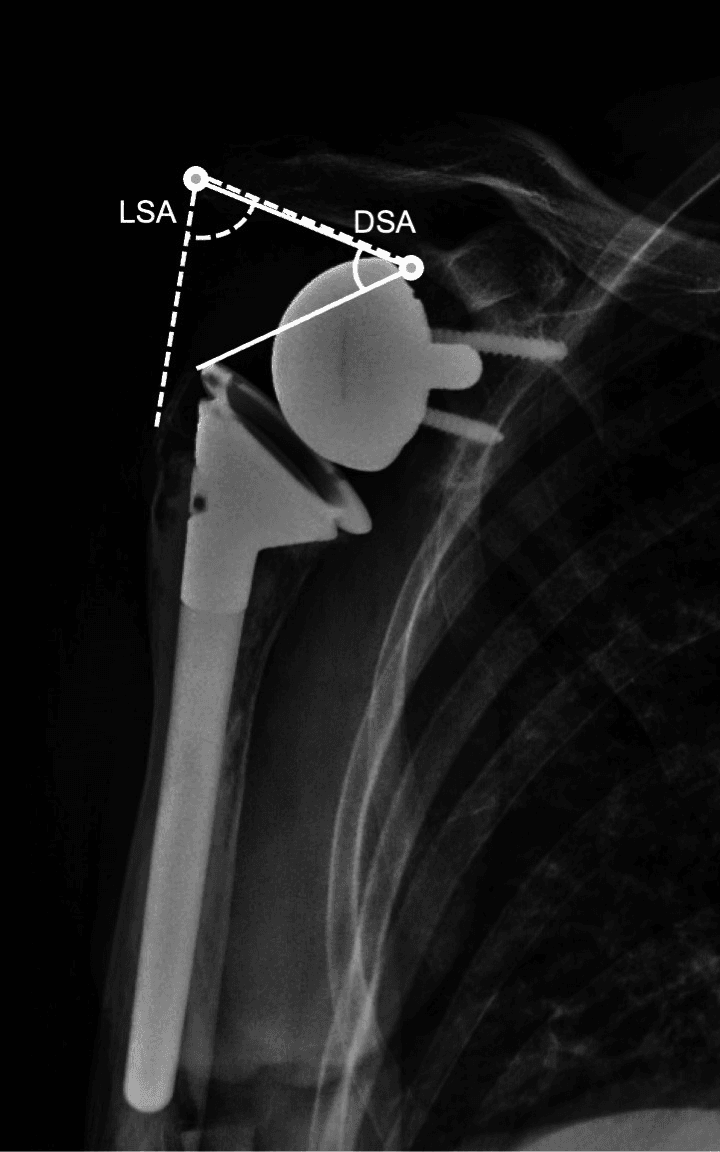
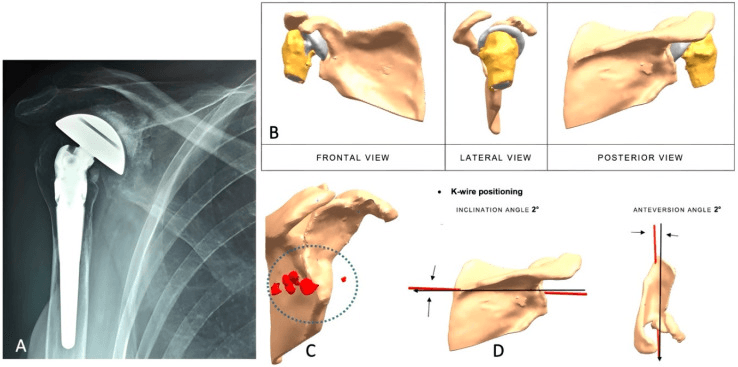
- RSA angle (Boileau): the inclination of the glenoid baseplate relative to the floor of the supraspinatus fossa (the scapular reference line). Cuff tear arthropathy glenoids are frequently superiorly inclined, and leaving that superior tilt is a leading driver of notching. The target is a neutral inclination, an RSA angle under 5 degrees, obtained by inferior reaming, an inferiorly tilted or augmented baseplate, and lowering the baseplate on the glenoid.
- Prosthesis-scapular neck angle (PSNA) (Simovitch): the angle between the glenosphere and the scapular neck. Together with the height of glenosphere implantation it predicts inferior notching, and glenosphere height carries roughly eight times more influence than the neck angle.
The targets. Combine neutral or inferior inclination with inferior glenosphere overhang of more than 5 mm and a low baseplate position. Lowering the sphere is the single most powerful preventive step; persistent superior inclination and a high or flush glenosphere are the malpositions most strongly linked to notching in long-term data.
Baseplate Inclination and Notching - Long-Term BIO-RSA (Boileau)
- 143 shoulders treated with bony increased-offset RSA, mean 75-month (5 to 10 year) follow-up; revision-free survival 96 percent
- Severe (grade 3 to 4) inferior scapular notching in 18 percent; graft incorporated fully in 96 percent
- Notching correlated with superior glenosphere inclination, high or flush glenosphere position, and low body mass index
- Authors confirm implanting the baseplate at neutral inclination (RSA angle under 5 degrees) with inferior glenosphere overhang over 5 mm to prevent notching
Guidelines, Registries & Global Practice
Global Epidemiology and Utilization:
- RTSA utilization has grown several-fold over the past two decades and is now the most common shoulder arthroplasty in many high-income health systems
- It overtook anatomic TSA in the US around the late 2010s and continues to expand into fracture and revision indications
- Mean age at surgery is typically 70-75 years with a female predominance (around 60-65 percent), mirroring cuff tear arthropathy demographics
- Position on RTSA
- RTSA for cuff tear arthropathy with pseudoparalysis and intact deltoid
- Notable Emphasis
- Strongest evidence for pain relief and elevation; cautious in young patients
- Position on RTSA
- RTSA for cuff-deficient arthritis and selected complex fractures
- Notable Emphasis
- Emphasis on shared decision-making and surgeon volume
- Position on RTSA
- RTSA preferred over hemiarthroplasty for non-reconstructable PHF in older patients
- Notable Emphasis
- Removes dependence on tuberosity healing
- Position on RTSA
- Supports expanding indications with appropriate selection
- Notable Emphasis
- Highlights design choice (lateralization) and notching avoidance
- National registries (AOANJRR in Australia, NJR in the UK, the Nordic registries and emerging US data via AJRR) consistently confirm rising RTSA volumes and document higher revision rates in younger patients
- Registries show that fracture and revision indications carry higher early revision than primary cuff tear arthropathy
- Implant survival around 90 percent at 10 years is reproduced across registry and cohort data, matching the revision-endpoint arm of Guery/Favard. Note what a registry structurally cannot see: its endpoint is revision, so a shoulder that is stiff, weak and scoring under 30 on the Constant scale counts as a survivor for as long as nobody takes the implant out. Registry survivorship therefore cannot corroborate or refute the 58 percent functional figure - the two measure different things, and no registry currently captures the second.
- In well-resourced systems, preoperative CT (often with 3D planning or patient-specific guides) and a wide range of lateralized implants are standard
- In limited-resource settings, plain radiographs may guide planning, implant choice is narrower, and hemiarthroplasty or non-operative management remains more common for fractures and cuff arthropathy
- Access, surgeon volume and implant availability - not biology - drive much of the global variation in who receives an RTSA
Related pages: Rotator Cuff Arthropathy is the disease this operation was invented for and the page that carries the Hamada staging in full; Rotator Cuff Tears for the reparable end of the spectrum, and the judgement about reparability that decides whether a patient reaches this page at all; Total Shoulder Arthroplasty (Anatomic) for the alternative that requires a competent cuff and fails by rocking-horse glenoid loosening without one; Shoulder Arthroplasty Complications and Revision Shoulder Arthroplasty for instability, infection and the revision setting in which Boileau found complications ran at 47 percent rather than 5; Proximal Humerus Fractures for the acute fracture indication tested in the Sebastia-Forcada trial carded above; and Latissimus Dorsi Anatomy for the muscle transferred in the modified L'Episcopo procedure described here.
Controversies and Areas of Uncertainty
RTSA is a young procedure with rapidly evolving design philosophy. Examiners reward candidates who can discuss genuine controversy rather than recite dogma.
Classic Grammont medialization minimizes glenoid torque but causes high notching, poor rotation and loss of shoulder contour. Lateralized designs (bony BIO-RSA, metallic lateral glenosphere, lateralized/onlay humerus) reduce notching and improve rotation but theoretically increase baseplate stress. No design is proven superior in long-term survivorship; bony lateralization is currently favoured to balance the two.
Early survivorship data led to advice restricting RTSA to low-demand patients over 70. Indications have since expanded to patients in their 50s-60s, but lifetime revision burden, the difficulty of revising a failed reverse, and limited long-term data remain real concerns. Shared decision-making is essential.
Whether to repair the subscapularis in RTSA is unsettled. Repair may reduce anterior instability in medialized designs but can limit rotation; lateralized designs may tolerate non-repair. Practice varies by implant and surgeon.
For irreparable cuff tears without arthritis in younger, active patients, RTSA competes with superior capsular reconstruction, tendon transfers (lower trapezius, latissimus dorsi) and balloon spacers. The optimal first-line strategy in this group is not yet defined.
The mechanism, true incidence and best management of acromial and scapular spine stress fractures after RTSA remain debated. Reported rates vary widely (around 1-10 percent), they are more common with greater deltoid lengthening, and there is no consensus on operative versus non-operative treatment - outcomes are often disappointing whichever route is chosen.
MCQ Practice Points
Q: What is the key biomechanical principle of the Grammont design? A: Medialization of the center of rotation to the glenoid surface, which eliminates eccentric loading on the glenoid component and increases the deltoid moment arm by 30-40 percent.
Q: How do you prevent scapular notching in RTSA? A: Inferior tilt of baseplate (10-15 degrees), larger glenosphere diameter (38-42mm), inferior glenosphere overhang, and consider lateralized (BIO-RSA) designs.
Q: What is the absolute requirement for RTSA? A: Intact deltoid function and axillary nerve. RTSA is deltoid-powered and cannot function without it.
Q: What Hamada grade indicates RTSA is the appropriate treatment? A: Hamada Grade 4 or 5 with pseudoparalysis. Grade 4a/4b show acromiohumeral interval under 5mm with glenohumeral arthritis. Grade 5 shows humeral head collapse.
Q: What predicts external rotation after RTSA? A: Teres minor integrity. If Hornblower's sign is negative (teres minor intact), expect better postoperative external rotation (mean 30 degrees). If positive, expect limited ER (mean 10 degrees).
Q: What complication is unique to RTSA compared to anatomic TSA? A: Acromial stress fractures (2-7 percent) due to increased deltoid tension from arm lengthening. Usually managed conservatively unless displaced.
Exam Viva Scenarios
Practise clinical reasoning and management decisions out loud
“A 72-year-old female presents with a 2-year history of right shoulder pain and progressive weakness. She cannot lift her arm above 90 degrees. X-ray shows superior migration of the humeral head with acromiohumeral distance of 4mm.”
“You are discussing consent for RTSA. The patient asks about the main complications.”
“A 68-year-old male is 6 weeks post-RTSA and presents with sudden pain and inability to lift his arm. He denies trauma. X-ray shows an acromial fracture.”
Grammont Principles
- Medialize center of rotation to glenoid surface
- Distalize humerus to tension deltoid (increase moment arm 30-40 percent)
- Eliminates eccentric glenoid loading
- Deltoid becomes primary arm elevator
Indications
- Rotator cuff tear arthropathy (Hamada 4-5) is primary indication
- Massive irreparable RC tear with pseudoparalysis
- Complex proximal humerus fracture in elderly (over 70)
- Failed anatomic TSA or hemiarthroplasty with cuff deficiency
Complications
- Scapular notching (20-50 percent) - prevent with inferior tilt and larger glenosphere
- Acromial fractures (2-7 percent) - unique to RTSA
- Instability (2-10 percent) - anterior most common
- Limited external rotation - expected with posterior cuff deficiency
Exam Traps
- Deltoid MUST be intact - absolute requirement for RTSA
- Anatomic TSA contraindicated in CTA (cuff deficient)
- Teres minor integrity predicts postoperative ER
- Counsel on lifelong activity restrictions
Evidence Base
Reverse Prosthesis for Cuff-Deficient Arthritis (Frankle)
- 60 shoulders with glenohumeral arthritis and severe cuff deficiency, mean follow-up 33 months
- Mean ASES score improved from 34.3 to 68.2; forward flexion 55 to 105 degrees, abduction 41 to 102 degrees
- 13 complications in 10 patients (17 percent); 12 percent required revision
- Established the lateralized-glenoid reverse prosthesis as a viable option in North America
Grammont Reverse Prosthesis - Neer Award (Boileau)
- 45 Grammont reverse prostheses for cuff tear arthritis, fracture sequelae and revision arthroplasty
- Active elevation improved 55 to 121 degrees and Constant score 17 to 58, but active external rotation essentially unchanged (7 to 11 degrees)
- Scapular notching in 68 percent; complications far higher in revision (47 percent) than in CTA (5 percent)
- Atrophy or fatty infiltration of teres minor predicted worse external rotation (0 vs 15 degrees) and lower Constant score (46 vs 66)
Ten-Year Survivorship of RTSA (Guery / Favard)
- Multicentre survivorship of 80 reverse prostheses, minimum 5-year (mean 70-month) follow-up
- Survival 91 percent at 120 months with revision as endpoint, 84 percent with glenoid loosening as endpoint
- Survival fell to 58 percent when an absolute Constant score under 30 was used as endpoint (progressive functional decline after ~6 years)
- Cuff tear arthropathy fared significantly better than other aetiologies
Scapular Notching - Incidence and Consequences (Levigne)
- 461 Grammont-type reverse shoulders, mean follow-up 51 months
- Notching occurred in 68 percent, appeared early and generally progressed
- Notching was associated with lower strength, lower elevation and with humeral and glenoid radiolucent lines
- Preoperative superior glenoid erosion predicted notching - avoid cranial baseplate position and superior tilt
Predictors of Scapular Notching (Simovitch)
- 77 Delta III reverse shoulders, minimum 24-month follow-up; inferior notching in 44 percent
- Craniocaudal glenosphere height and the prosthesis-scapular neck angle were strongly correlated with notching
- Glenosphere height had roughly eight times more influence than the neck angle
- Notching was associated with significantly poorer clinical outcome
BIO-RSA: Bony Increased-Offset (Boileau)
- 42 patients with an autologous humeral-head bone graft between glenoid and baseplate, minimum 2-year follow-up
- Graft incorporated in 98 percent; no graft resorption, glenoid loosening or instability
- Inferior scapular notching in only 19 percent; Constant score improved 31 to 67
- Bony lateralization keeps the centre of rotation at the bone-implant interface, avoiding the extra torque of metallic lateralization
RTSA vs Hemiarthroplasty for Acute PHF - RCT (Sebastia-Forcada)
- Blinded RCT of 62 patients over 70 with acute proximal humeral fracture: RTSA vs hemiarthroplasty
- RTSA superior at mean 28 months: Constant 56.1 vs 40.0, UCLA 29.1 vs 21.1, forward elevation 120 vs 80 degrees
- RTSA function was independent of tuberosity healing; 6 hemiarthroplasties required revision to RTSA for proximal migration
- Notching seen in only 1 RTSA patient at short follow-up
AAOS / Society Guidance - Cuff Tear Arthropathy
- RTSA is the recommended arthroplasty for symptomatic cuff tear arthropathy with pseudoparalysis and an intact deltoid
- Anatomic TSA is contraindicated when the rotator cuff is irreparable (eccentric glenoid loading, rocking-horse loosening)
- Deltoid and axillary nerve integrity must be confirmed before surgery; preoperative CT for glenoid version and bone stock is advised
- Society guidance increasingly endorses RTSA over hemiarthroplasty for complex fractures in physiologically older patients