Proximal Humerus Fracture | Tuberosity Reconstruction | Alternative to TSA
- Tuberosity healing dictates outcome in fracture hemiarthroplasty - only about 57% heal anatomically, and around 30% resorb altogether
- Height and version: Stem proud 5-8mm above greater tuberosity, 20-30° retroversion critical for function
- Biological vs anatomic: Reverse shoulder has largely replaced hemiarthroplasty for elderly fracture patients
- Glenoid erosion: Common late complication - superior migration from rotator cuff dysfunction
- Global trend: National registries (AOANJRR, NJR, AJRR) show hemiarthroplasty declining - reverse arthroplasty preferred for fractures
- “Sebastia-Forcada RCT: reverse arthroplasty beats hemiarthroplasty for elderly fractures (Constant 56 vs 40) - reverse function is independent of tuberosity healing
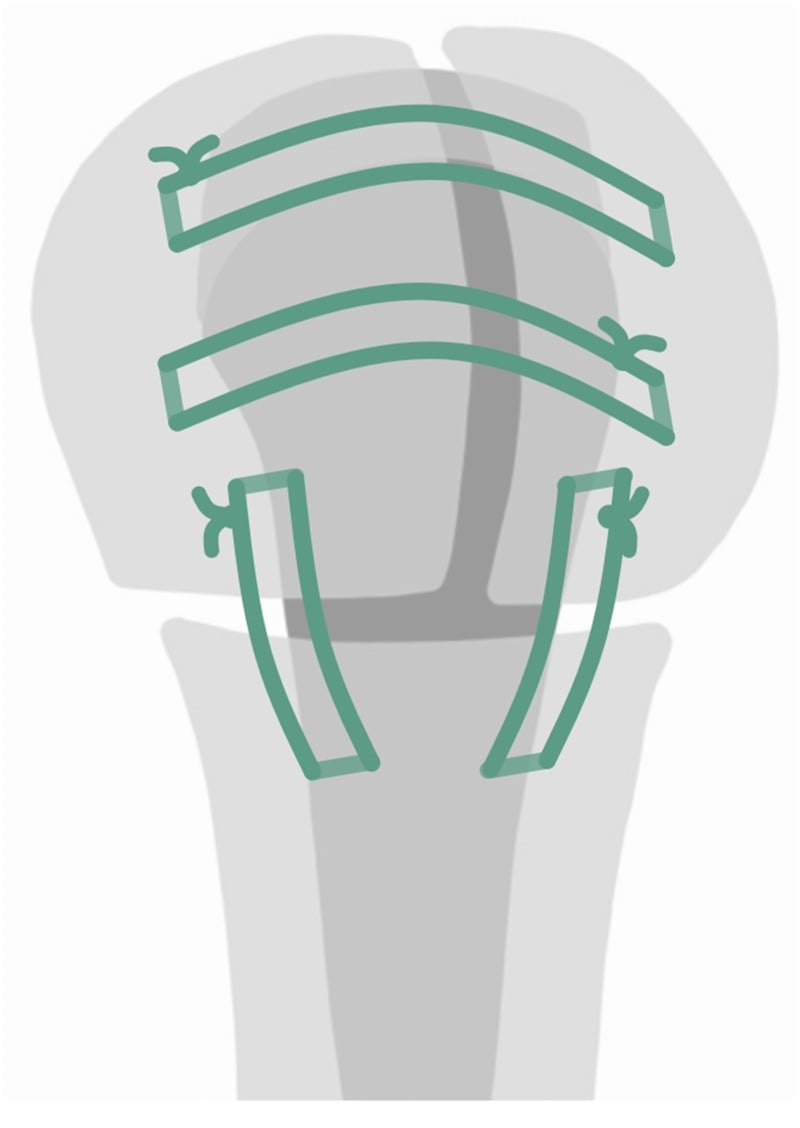
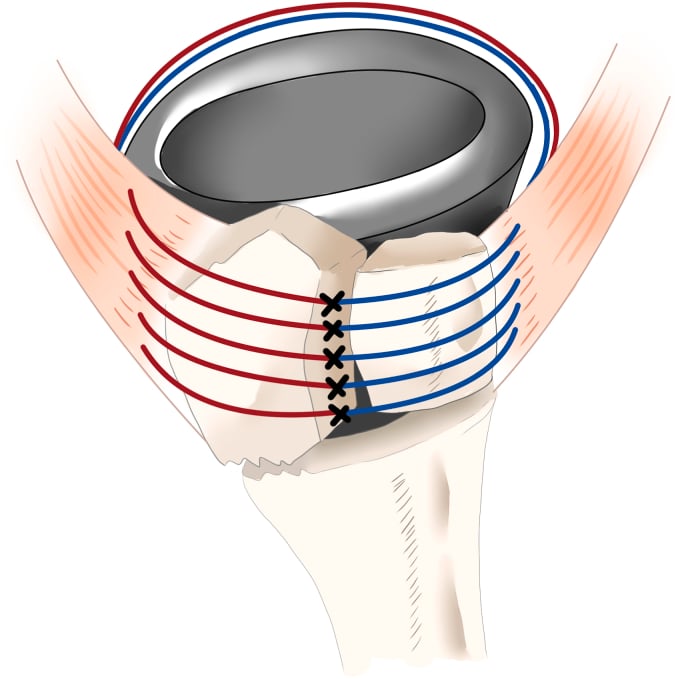
- “Tuberosity fixation: Heavy non-absorbable sutures through bone-tendon interface, figure-of-8 pattern
- “Ream-and-run: Modern alternative preserving glenoid bone stock in young patients
- “Instability risk: Anterior instability if under 20° retroversion, posterior if over 40°
Overview and Epidemiology
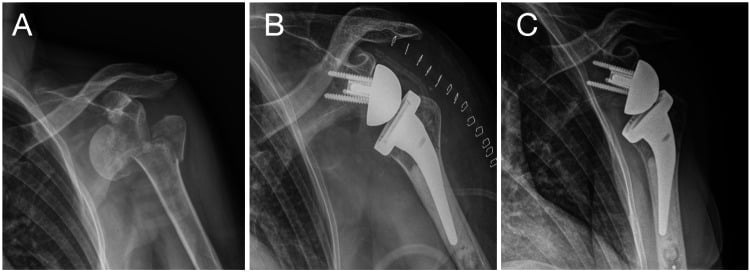
What it is. Shoulder hemiarthroplasty replaces the humeral head and leaves the native glenoid in place. It was historically the gold standard for complex proximal humeral fractures in the elderly, a role now largely taken by reverse shoulder arthroplasty, which offers superior outcomes regardless of tuberosity healing.
Where it still fits. The indications have narrowed to:
- Young patients (under 65) with 3- or 4-part fractures and an intact rotator cuff
- Avascular necrosis without glenoid arthritis
- Severe glenoid bone loss, where a glenoid component cannot be fixed adequately
- High-demand patients, as biological resurfacing (ream-and-run)
Who. The age distribution is bimodal, young trauma or the elderly fracture, and women outnumber men 3:1 among fractures. Bone quality is critical for stem fixation, and activity level determines implant selection.
What to expect. Pain relief is good to excellent in 80-85%. Elevation averages 100-120° and depends on the cuff; external rotation is often limited, because it depends on the tuberosities healing. Revision runs at 15-20% by 10 years.
The Sebastia-Forcada blinded randomised controlled trial (2014) showed that reverse shoulder arthroplasty gives superior outcomes to hemiarthroplasty for elderly displaced proximal humeral fractures: at a mean of 2 years, mean Constant score 56 vs 40 and forward elevation 120° vs 80°. Reverse function was independent of tuberosity healing, because the deltoid provides the power, whereas hemiarthroplasty function depended on it. Hemiarthroplasty is now reserved for young, high-demand patients with an intact cuff in whom anatomic tuberosity reconstruction is achievable.
Classification and Indications
The Neer pattern, the patient's age and the state of the cuff guide the surgical decision.
- Age/Cuff Status
- Young (under 65), intact cuff
- Treatment
- Hemiarthroplasty + tuberosity repair
- Rationale
- Potential for tuberosity healing and good function
- Age/Cuff Status
- Young (under 65), intact cuff
- Treatment
- Hemiarthroplasty + tuberosity repair
- Rationale
- Head AVN inevitable; preserve glenoid if possible
- Age/Cuff Status
- Elderly (over 70)
- Treatment
- Reverse shoulder arthroplasty
- Rationale
- Superior outcomes; tuberosity healing not critical
- Age/Cuff Status
- Any age, articular comminution
- Treatment
- Hemiarthroplasty or reverse
- Rationale
- Head reconstruction impossible
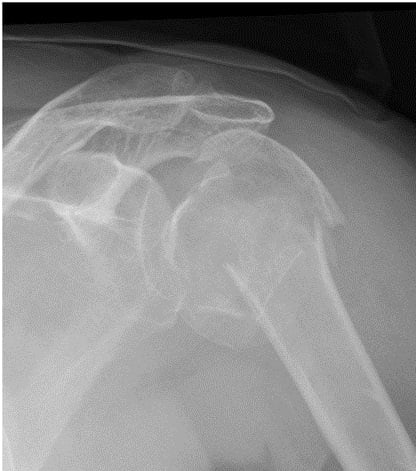
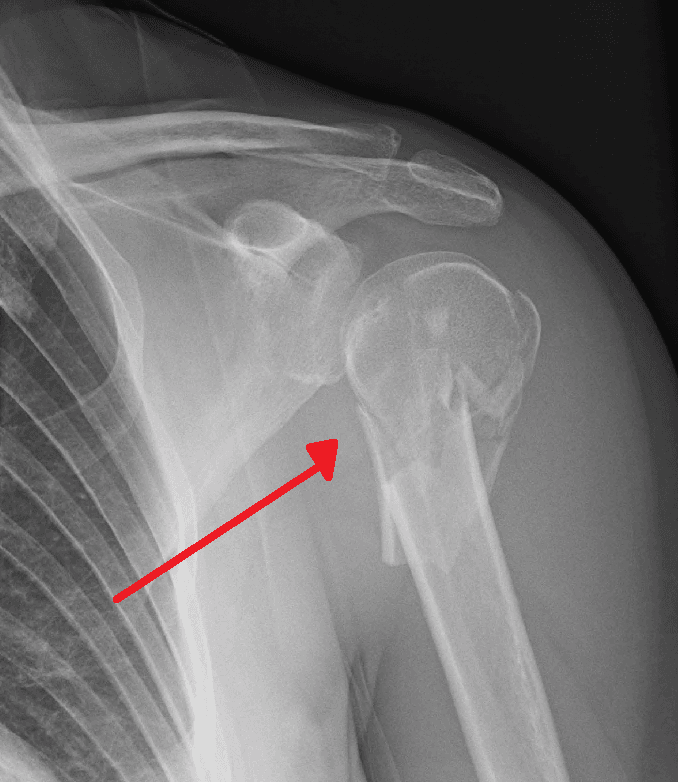
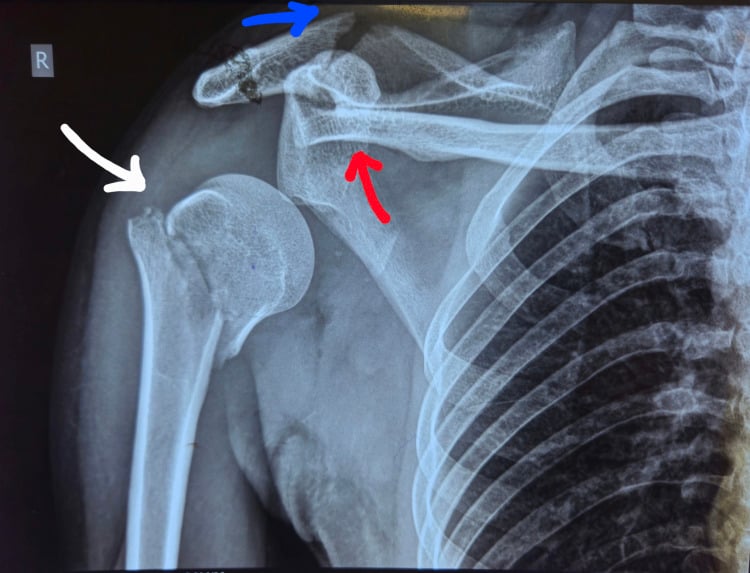
Anatomy and Biomechanics
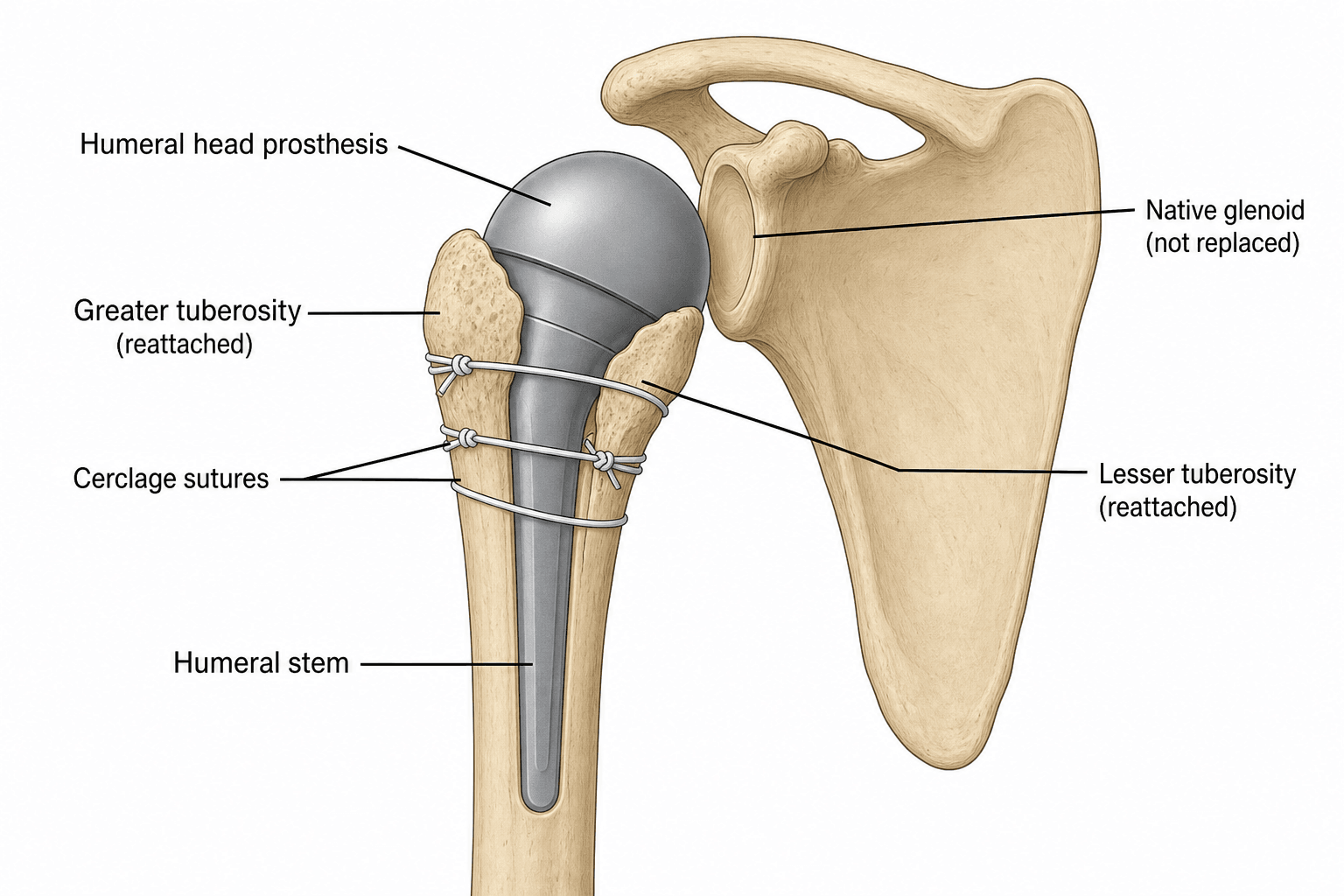
The tuberosities carry the cuff. The greater tuberosity receives supraspinatus, infraspinatus and teres minor and controls elevation and external rotation. The lesser tuberosity receives subscapularis and controls internal rotation and stability. The bicipital groove, the landmark of the long head of biceps, lies between them and is the intraoperative version reference: 30° posterior to the groove approximates 30° of retroversion.
The axillary nerve runs 5-7cm distal to the acromion on the undersurface of the deltoid, in the field of the anterior deltopectoral approach, and is at risk from inferior retractor placement, traction and dissection. The anterior humeral circumflex artery lies at the inferior border of subscapularis and is ligated carefully so that the nerve is not injured during mobilisation.
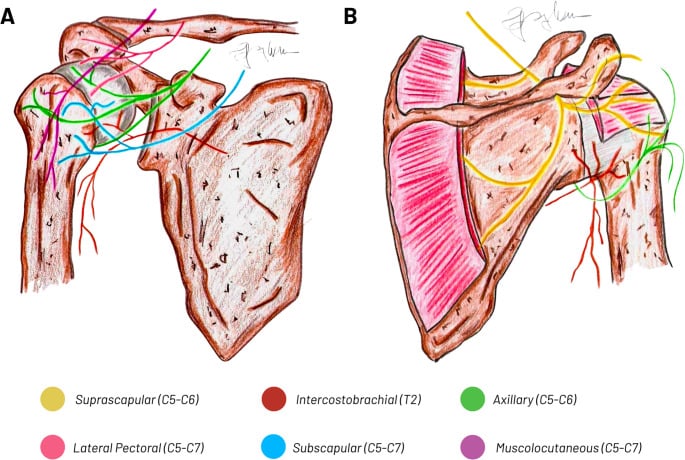
The three targets. Version, height and offset are set at operation:
- Version: 20-30° of retroversion relative to the epicondylar axis. Under 20° risks anterior instability; over 40° causes posterior instability and limits internal rotation.
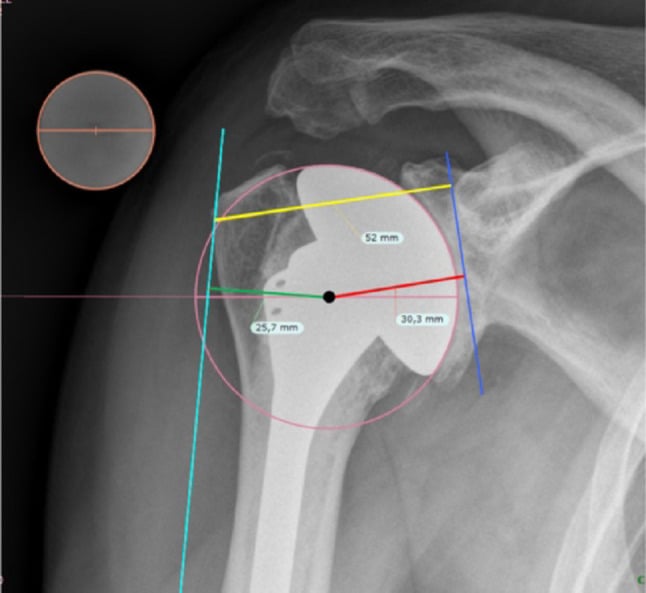
- Height: the stem 5-8mm proud of the greater tuberosity, which equates to anatomic head height, so the reconstructed tuberosity sits 5-8mm below the top of the stem. Too high causes impingement. Too low reduces deltoid tension and cuff function, with cuff dysfunction, superior migration and instability.
- Offset: medial offset preserves deltoid tension, while excessive lateral offset overstuffs the joint and limits motion.
Clinical Assessment
History. The mechanism is a fall onto the shoulder in fracture, or chronic pain in arthritis or AVN. Establish the pain pattern (night, rest and activity pain), which activities are limited (dressing, reaching, lifting), any prior surgery (previous fixation attempts, infection), and comorbidities, diabetes for infection risk and smoking for healing. Check that the patient's expectations of recovery, and of its limitations, are realistic.
Examination. Look for swelling, bruising (fracture), deformity and muscle wasting; feel for tenderness, crepitus and tuberosity prominence; and record active and passive range in all planes. Test the cuff, the axillary nerve (deltoid sensation) and the distal pulses. Cross-body adduction examines the AC joint, and the Neer and Hawkins tests look for impingement.
The cuff decides the implant. Rotator cuff assessment is critical, and each test has its own implication:
- Muscle Tested
- Supraspinatus
- Interpretation
- Weakness = poor outcome for hemiarthroplasty
- Muscle Tested
- Infraspinatus, teres minor
- Interpretation
- Essential for ER after tuberosity repair
- Muscle Tested
- Subscapularis
- Interpretation
- Critical for anterior stability
- Muscle Tested
- Chronic massive tear
- Interpretation
- Consider reverse TSA instead of hemi
Active elevation less than 90° with full passive range indicates a massive rotator cuff tear or cuff arthropathy. This is a contraindication to hemiarthroplasty, and the patient requires a reverse TSA. Hemiarthroplasty without a functioning cuff leads to superior migration, glenoid erosion and poor outcomes.
Differential diagnosis. The painful, dysfunctional shoulder being considered for arthroplasty has several mimics. Distinguishing them changes whether arthroplasty is indicated at all, and if so, which type.
- Distinguishing features
- Acute trauma, bruising, crepitus, fracture pattern on plain films
- Key investigation
- CT with 3D reconstruction
- Implication
- Arthroplasty (hemiarthroplasty or reverse) if unreconstructable
- Distinguishing features
- Chronic stiffness, posterior glenoid wear, intact cuff
- Key investigation
- Plain films, CT for glenoid morphology (Walch)
- Implication
- Anatomic TSA preferred over hemiarthroplasty for function
- Distinguishing features
- Pseudoparalysis, superior migration, acromiohumeral interval reduced
- Key investigation
- Plain films plus MRI/ultrasound for cuff
- Implication
- Reverse arthroplasty - hemiarthroplasty will fail
- Distinguishing features
- Steroid/alcohol history, crescent sign, preserved glenoid early
- Key investigation
- MRI (subchondral oedema, extent)
- Implication
- Hemiarthroplasty/resurfacing if glenoid spared
- Distinguishing features
- Polyarthritis, erosions, poor bone/soft tissue quality
- Key investigation
- Serology plus radiographs
- Implication
- Often TSA or reverse depending on cuff and bone stock
- Distinguishing features
- Fever, raised inflammatory markers, effusion
- Key investigation
- Aspiration, CRP/ESR, cultures
- Implication
- Absolute contraindication to primary arthroplasty
Investigations
Radiographs first. An AP, a scapular Y and an axillary view show:
- The fracture pattern (2-, 3- or 4-part), the head-shaft angle and any impaction
- Greater tuberosity displacement and comminution
- Glenoid morphology and version
- Inferior subluxation (deltoid failure)
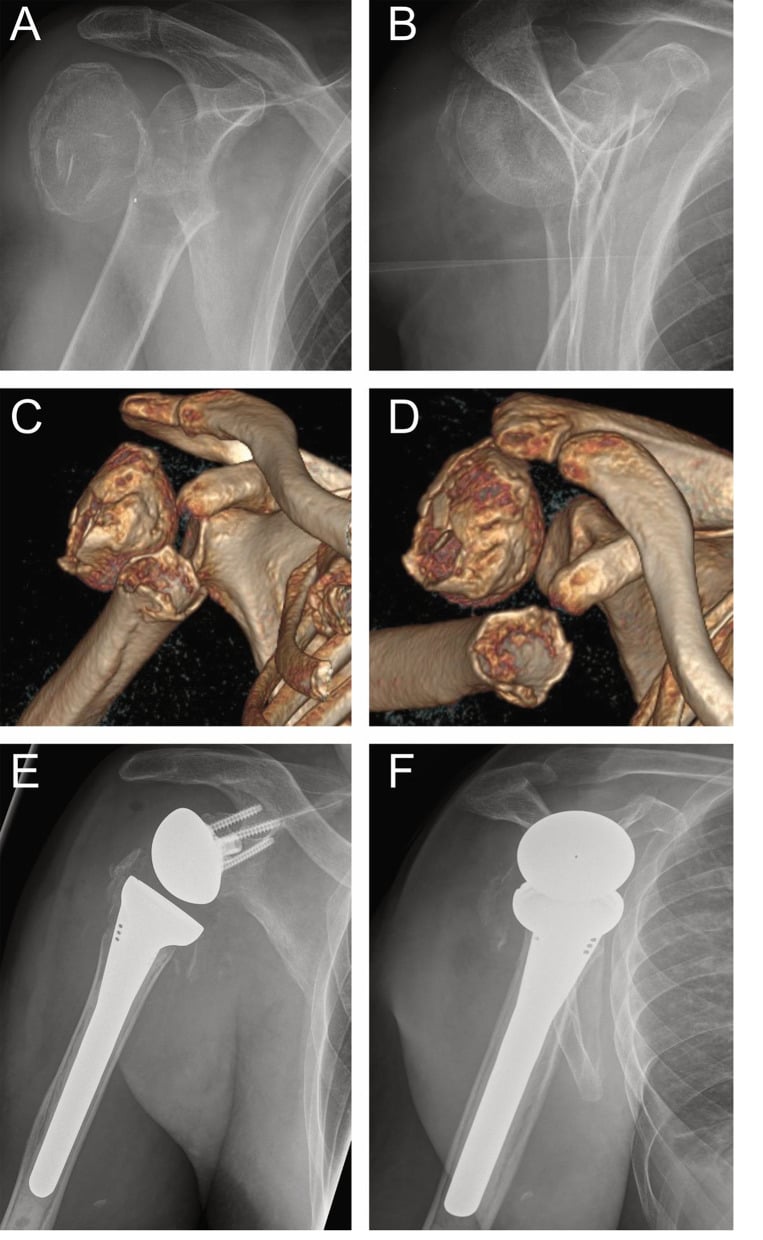
CT with 3D reconstruction is essential for surgical planning. It defines the fracture pattern and fragment size, a head split or impaction, glenoid bone loss and version, and the canal size for stem templating. Scan the contralateral side as the version reference.
MRI assesses the soft tissues in AVN and OA. It shows rotator cuff integrity and quality, muscle atrophy (Goutallier grade of fatty infiltration), labral pathology and the extent of the AVN from its oedema pattern.
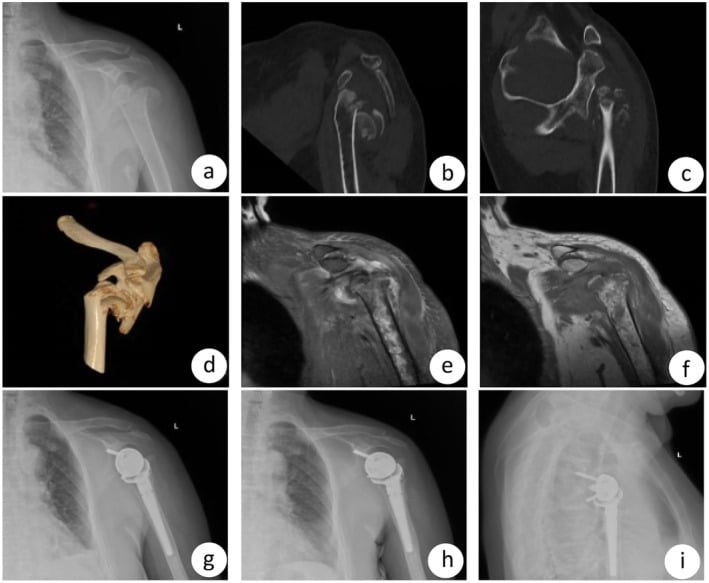
Templating. Take the head size from the contralateral side or the best-fit template, and size the stem by canal fill at the isthmus (metaphyseal stems). Offset is matched to the native anatomy by restoring the medial calcar.
Bone stock. Four questions go into the plan:
- Is the metaphyseal bone sufficient for press-fit, or is cement needed?
- Is the calcar intact to give the stem medial support?
- Is tuberosity bone quality good enough for suture fixation?
- Is glenoid wear eccentric or concentric? Consider TSA.
Management Algorithm
Select the patient. Age, cuff status, medical fitness and expectations come first. A young patient (under 65) with an intact cuff is a hemiarthroplasty candidate; in the elderly (over 70), or with cuff dysfunction, reverse TSA is preferred; the medically unfit are managed conservatively.
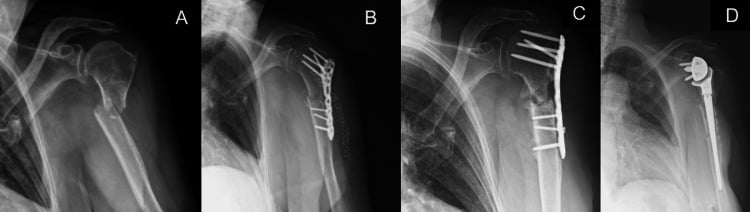
Confirm the pattern. The CT with 3D reconstruction confirms a 3- or 4-part pattern, a head split or severe impaction, the size and displacement of the tuberosity fragments, and glenoid integrity.
Plan the operation. If hemiarthroplasty is chosen, template the stem and head, plan tuberosity fixation with sutures through the stem, make sure heavy Number 5 non-absorbable sutures are available, and decide cemented or uncemented on bone quality.
Operate within 2-3 weeks for the best tuberosity healing potential: earlier surgery means easier dissection and reduction. Delay beyond 3 weeks leads to soft-tissue contracture, tuberosity retraction and scarring. Beyond 6 weeks, consider reverse TSA, as the tuberosities may be atrophic and non-viable for reconstruction.
Surgical Technique
Consent. The discussion covers:
- Infection: 1-2% superficial, 0.5-1% deep
- Nerve injury: axillary nerve, and musculocutaneous
- Instability, anterior if under 20° of retroversion
- Tuberosity failure (non-union, malunion or resorption) in the fracture setting
- Glenoid erosion, which may need revision to TSA
- Stiffness, which requires aggressive physiotherapy
- The need for revision
Equipment. A stemmed hemiarthroplasty system (cemented if fracture) with heads in the 38-52mm range; heavy non-absorbable sutures (Number 5 Ethibond or FiberWire) for the tuberosities; cement for osteoporotic bone or fracture; a drill for stem preparation and a glenoid reamer for ream-and-run; and a C-arm for version and height.
Position. Beach chair on a specialised shoulder table, body 60-80° upright, head secured in neutral with slight extension. The affected arm is left free to move across the body, with adequate posterior access for the axillary view.
Padding protects the nerves at risk:
- Brachial plexus: avoid head tilt away from the surgical side
- Ulnar nerve: pad the elbow if an arm board is used
- Peroneal nerve: pad at the fibular head
- Sacrum: padded to prevent a pressure sore
Draping leaves exposed the sternoclavicular joint medially, the AC joint and acromion superiorly, the anterior and posterior shoulder, and the proximal humerus to mid-shaft. Ensure C-arm access for AP and axillary views.
Beach chair is preferred for shoulder arthroplasty (90% of surgeons): easier conversion to open deltopectoral, better C-arm access, less brachial plexus traction. Some use the lateral position for better posterior access and to avoid hypotension, but it requires an assistant to hold the arm and more complex draping.
Intraoperative troubleshooting. Four problems, their causes and their fixes:
- Cause
- Soft tissue contracture, incorrect height
- Solution
- Check stem height (may be too proud); mobilise soft tissues; use traction sutures
- Cause
- Version under 20° retroversion
- Solution
- Remove stem, cement in more retroversion (25-30°)
- Cause
- Version over 40° retroversion, posterior cuff deficiency
- Solution
- Reduce retroversion; check posterior cuff intact; may need reverse if cuff deficient
- Cause
- Osteoporotic bone, eccentric reaming
- Solution
- Extend stem distally; cerclage cables; consider long-stem implant
Optimising Tuberosity Healing Beyond Sutures
Because tuberosity union dictates the result, the answer to "how do you maximise healing?" goes beyond heavy figure-of-8 sutures. The construct and the biology both count:
- Rationale
- Lets the tuberosities appose living bone rather than a bulky metal shoulder; built-in holes carry the figure-of-8 sutures and the roughened/coated surface encourages bone ongrowth
- Rationale
- Tuberosities heal to living bone and graft, not to an interposed cement mantle
- Rationale
- Packed around the stem fin and beneath the tuberosities to bridge tuberosity-to-shaft and tuberosity-to-tuberosity
- Rationale
- A too-proud stem blocks tuberosity reduction and over-tensions the cuff; correct height lets the tuberosities sit and heal
When it cannot be done. Combine these with protected, passive-only rehabilitation for six weeks. When they cannot be achieved, with poor bone, atrophic tuberosities or in the elderly, reverse arthroplasty is more reliable because its function does not depend on tuberosity healing.
Complications
- Incidence
- Around 40% in fractures
- Risk Factors
- Osteoporosis, poor fixation, early motion
- Management
- Observation if minimal symptoms; revision if painful with poor function
- Incidence
- 50% by 10 years
- Risk Factors
- Cuff dysfunction, superior migration, high activity
- Management
- Convert to TSA or reverse TSA if painful
- Incidence
- 2-5%
- Risk Factors
- Malversion (under 20° or over 40°), subscapularis failure
- Management
- Anterior: Repair subscapularis, consider glenoid component. Posterior: Revision to correct version
- Incidence
- 1-2% overall
- Risk Factors
- Diabetes, smoking, prolonged surgery
- Management
- Early (under 3 weeks): I&D, retain implant. Late: Explant, spacer, reimplant
- Incidence
- 2-5%
- Risk Factors
- Inferior retractor, traction, dissection
- Management
- Usually neurapraxia - recovers 3-6 months. EMG at 6 weeks if no recovery
- Incidence
- 2-3%
- Risk Factors
- Trauma, osteoporosis, uncemented stems
- Management
- Above stem: ORIF. At stem: Revision to long stem. Below stem: ORIF with cables
- Incidence
- 10-15%
- Risk Factors
- Inadequate therapy, capsular contracture
- Management
- Aggressive PT; manipulation under anaesthesia if under 6 months; arthroscopic release if chronic
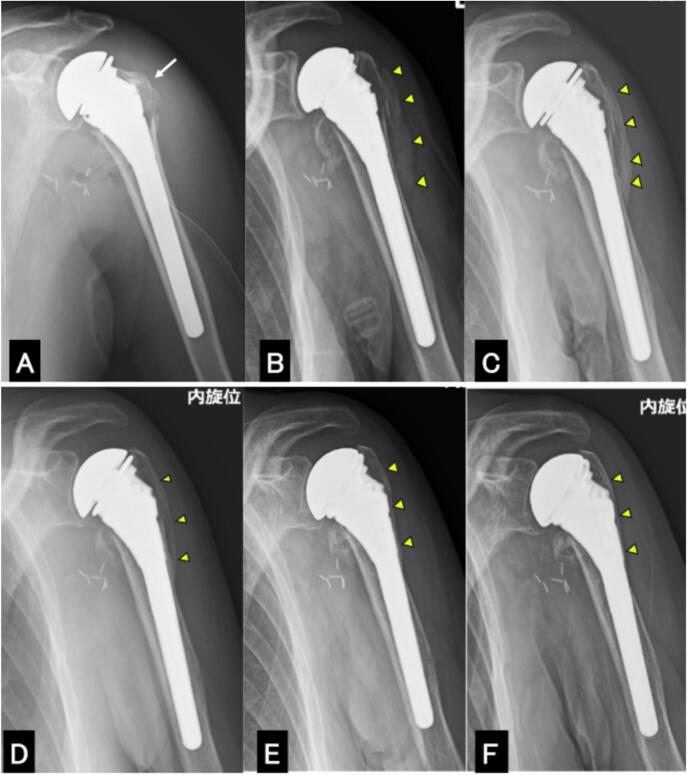
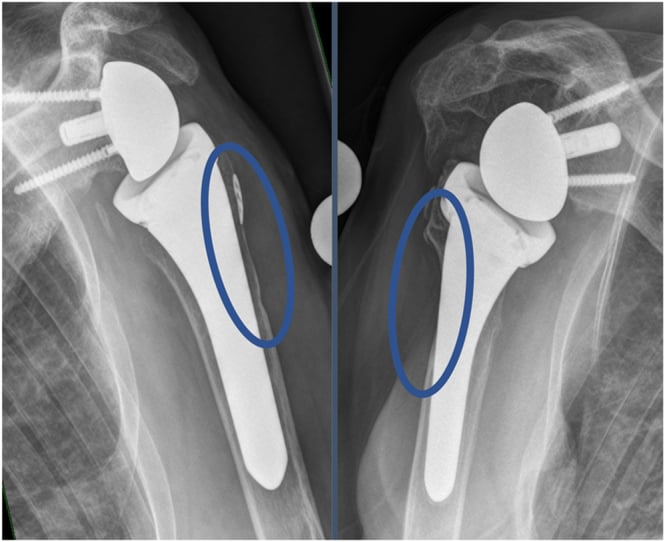
Tuberosity failure is the Achilles heel. Prevention is anatomic position, solid fixation with heavy sutures and 6 weeks of protection. Once it has happened, an asymptomatic patient is observed; revision is for pain with functional limitation, and it is very challenging surgery with poor outcomes. This is why reverse TSA has largely replaced hemiarthroplasty for elderly fractures.
Glenoid Erosion: Recognition and Conversion Decision
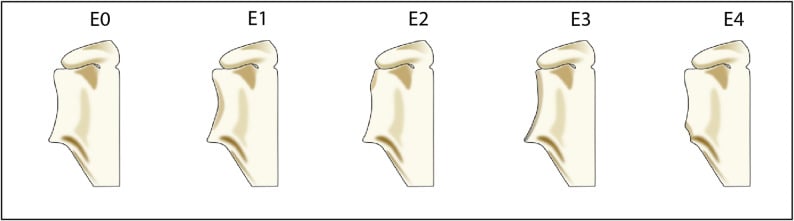
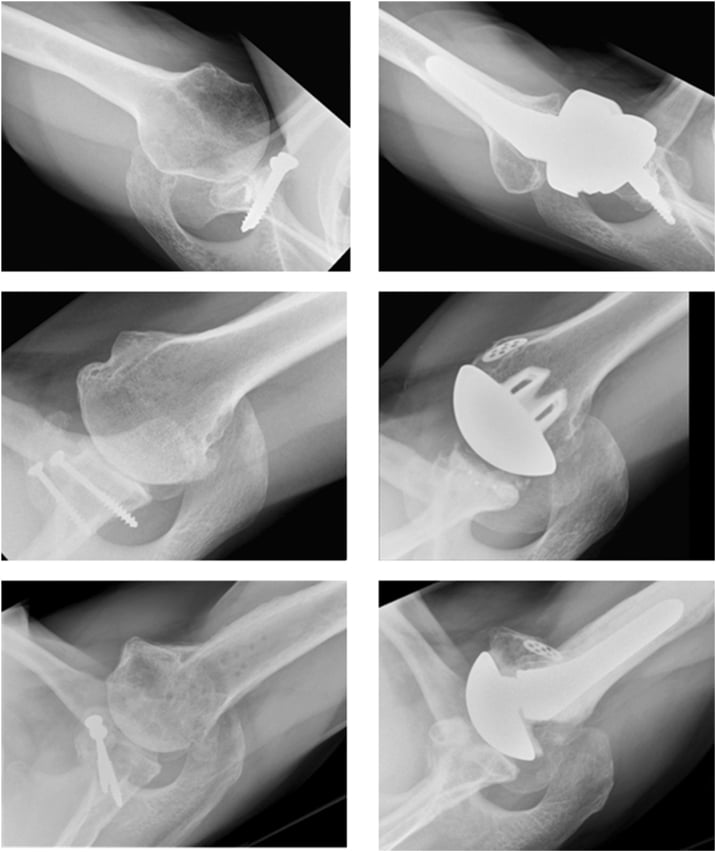
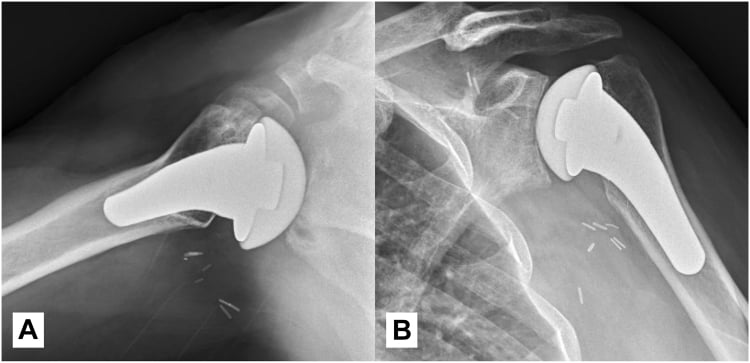
The characteristic late failure. Glenoid erosion is intrinsic to every hemiarthroplasty and is the leading registry reason for revision. The table sets out why it happens, how to follow it and when to convert.
- Detail
- Metal head on native glenoid cartilage/bone; accelerated by rotator-cuff insufficiency (superior migration) and by performing hemiarthroplasty on an already-arthritic glenoid
- Detail
- Serial AP (joint-space loss; reduced acromiohumeral interval signals cuff failure) and axillary views (posterior/central wear, medialisation); pain lags behind radiographic erosion; CT to quantify glenoid bone stock before any revision
- Detail
- Convert to anatomic total shoulder arthroplasty if glenoid bone stock is adequate
- Detail
- Convert to reverse total shoulder arthroplasty
- Detail
- Observe with serial imaging - pain and function, not radiographs alone, drive revision
Postoperative Care and Rehabilitation
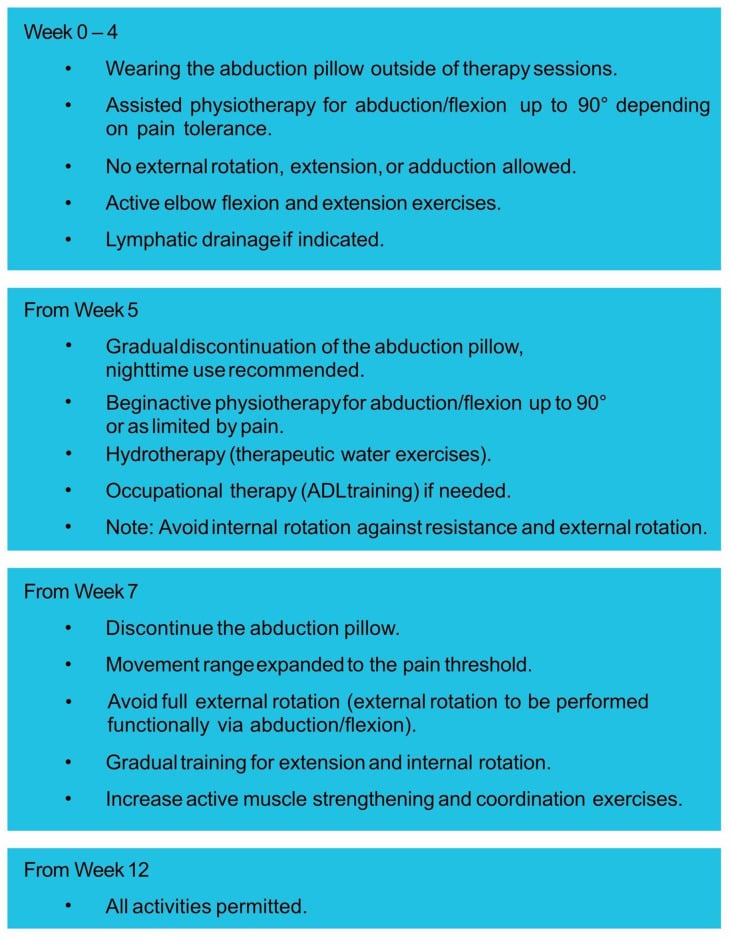
After fracture hemiarthroplasty, rehabilitation is built around tuberosity healing. The tuberosities need 6-8 weeks of protection before active movement.
Weeks 0-6: protection. The sling is worn continuously. Motion is passive only (pendulums, table slides, pulley-assisted), with no active muscle contraction, while elbow, wrist and hand exercises prevent stiffness. Opioids are used in week 1, then non-opioids; DVT prophylaxis is aspirin 325mg or LMWH (high risk).
Weeks 6-12: active-assisted, if the tuberosities are healing. A radiograph at 6 weeks assesses tuberosity position and healing. Active-assisted range follows with gentle pulleys and wand exercises, submaximal isometric strengthening in neutral, and continued passive range to hold the gains. The sling is weaned during the day and kept at night.
Weeks 12-16: strengthening. Active range in all planes, theraband resistance for external and internal rotation and elevation, and scapular stabilisation exercises, progressing gradually to functional activities. The sling is discontinued.
Months 4-12: functional recovery. Strengthening continues to a plateau, typically at 9-12 months, with goals set by daily living and work tasks. Overhead impact activities are avoided (tuberosity stress), and an annual radiograph monitors glenoid erosion and tuberosity position.
Critical: no active muscle contraction for 6 weeks after fracture hemiarthroplasty, passive range only, to prevent tuberosity displacement. Patient education is essential: the therapist or the opposite arm moves the shoulder. Early active motion is the most common cause of tuberosity failure.
Follow-up. The schedule after either operation:
- Assessment
- Wound check, begin PT
- Key Points
- Remove sutures/staples; confirm PT started; pain control adequate
- Assessment
- X-ray, advance therapy
- Key Points
- Fracture: Tuberosity healing? If yes, start active-assisted. Non-fracture: Check component position, advance strengthening
- Assessment
- ROM and function assessment
- Key Points
- Expected 100-120° elevation, 30-40° ER. If plateau, consider manipulation
- Assessment
- Outcome scores, imaging
- Key Points
- ASES or Constant score. X-ray: Tuberosity position, glenoid erosion, stem stability
- Assessment
- Monitor for complications
- Key Points
- Glenoid erosion progression? Superior migration? Symptoms warrant revision?
Outcomes and Prognosis
Outcome follows the indication. Pain relief, motion and revision differ by what the operation was done for:
- Pain Relief
- Excellent (85-90%)
- ROM
- Good (130-150° elevation)
- Revision Rate
- Low (under 10% at 10y)
- Notes
- Best indication for hemiarthroplasty
- Pain Relief
- Good (75-80%)
- ROM
- Fair (100-120° elevation)
- Revision Rate
- Moderate (15-20% at 10y)
- Notes
- Outcome dependent on tuberosity healing
- Pain Relief
- Fair (60-70%)
- ROM
- Poor (under 90° elevation)
- Revision Rate
- High (30-40% at 10y)
- Notes
- Consider revision to reverse TSA
- Pain Relief
- Poor (50-60%)
- ROM
- Fair (90-110° elevation)
- Revision Rate
- High (40-50% at 5y)
- Notes
- Hemiarthroplasty alone inadequate - need TSA
Prognostic factors. The good ones:
- AVN with an intact glenoid (best indication)
- Anatomic tuberosity healing (fracture cases)
- An intact rotator cuff preoperatively
- Correct version and height
- Young age (under 65 years)
- Compliance with therapy (critical for range)
The poor ones:
- Tuberosity non-union or malunion (fracture)
- Pre-existing cuff dysfunction (fatty infiltration)
- Glenoid arthritis present at the time of surgery
- Malversion (under 20° or over 40° of retroversion)
- Incorrect height (too proud or too low)
- The elderly patient with osteoporosis (healing issues)
Healed tuberosities: Constant score 65-70, elevation 120°, 80% good-excellent. Non-union: Constant score under 50, elevation under 90°, only 40% good-excellent. Malunion with a superior greater tuberosity gives impingement and pain. Reverse does not depend on tuberosity healing for function, and in the Sebastia-Forcada trial its outcome was independent of whether the tuberosities united.
Guidelines, Registries & Global Practice
Global Epidemiology
Proximal humeral fractures are among the most common osteoporotic fractures, rising steeply with age and female sex, and most occur in patients over 60 from a low-energy fall. Across high-income healthcare systems the majority are managed non-operatively, with only a minority (broadly in the order of 15-30% in published series) treated surgically; arthroplasty is reserved for complex three- and four-part and head-splitting patterns where reconstruction or fixation is unreliable.
Major Guidelines Side by Side
- Position
- Most proximal humeral fractures are managed non-operatively with early rehabilitation; surgery is individualised. When arthroplasty is chosen for fracture, reverse arthroplasty is increasingly preferred in older patients
- Evidence basis
- Trial evidence (including PROFHER) showing no benefit of routine surgery over non-operative care
- Position
- Acknowledges limited high-level evidence; supports shared decision-making. For arthritic shoulders with an intact cuff, total shoulder arthroplasty is favoured over hemiarthroplasty for function
- Evidence basis
- Systematic-review based guidance; RCT and Cochrane data on TSA vs hemiarthroplasty
- Position
- Defines fracture morphology and arthroplasty indications; emphasises anatomic tuberosity reconstruction when hemiarthroplasty is used and recognises the shift to reverse for elderly fracture
- Evidence basis
- Expert consensus plus comparative cohort/RCT data
- Position
- Reverse arthroplasty is the preferred arthroplasty for displaced fractures in the elderly; hemiarthroplasty retained for younger patients with reconstructable tuberosities and intact cuff
- Evidence basis
- European registry and comparative trial data
Registry Evidence
- AOANJRR, NJR, AJRR all show stemmed hemiarthroplasty declining as a share of shoulder replacement
- Reverse arthroplasty has become the dominant arthroplasty for acute fracture across these registries
- Cumulative revision is consistently higher after hemiarthroplasty than after reverse or anatomic TSA
- Late failure mode: painful glenoid erosion and rotator cuff failure dominate revision reasons
- Safe surgery: WHO Surgical Safety Checklist used internationally
- Antibiotic prophylaxis: first-generation cephalosporin (e.g. cefazolin) within 60 minutes of incision per international consensus
- VTE prophylaxis: risk-stratified mechanical and/or pharmacological prophylaxis (upper-limb arthroplasty is comparatively low VTE risk)
- Consent: document the reverse arthroplasty alternative, tuberosity-healing risk and glenoid-erosion risk
Global Practice Variation
Implant choice is strongly resource- and cost-dependent. In well-resourced systems reverse arthroplasty has largely displaced hemiarthroplasty for elderly fracture; in lower-resource settings hemiarthroplasty (or non-operative management and locking-plate fixation) remains more common because reverse implants are costlier and require revision-capable infrastructure. For younger patients with reconstructable anatomy and an intact cuff, hemiarthroplasty and ream-and-run retain a defined role worldwide because they preserve glenoid bone stock.
Medicolegal and Consent Considerations
Critical consent points to document:
- Tuberosity healing: only around half achieve anatomic healing in fractures; discuss the functional implications of non-union
- Glenoid erosion risk: a recognised long-term complication that may require conversion to TSA or reverse arthroplasty
- Reverse arthroplasty alternative: discuss the randomised evidence showing reverse gives superior outcomes for elderly fractures
- Functional expectations: realistic motion (around 100-120° elevation), with limited external rotation if the tuberosity fails
- Nerve injury risk: axillary nerve injury in a small percentage, usually transient
- Infection risk: low single-figure percentage, higher with diabetes and smoking
- Revision possibility: a meaningful minority require revision within 10 years for glenoid erosion or tuberosity failure
Failure to offer reverse arthroplasty: in elderly patients with complex fractures, not discussing reverse arthroplasty as an alternative may be considered substandard given current evidence - document the discussion.
Hemiarthroplasty for an arthritic glenoid: performing hemiarthroplasty alone for osteoarthritis with established glenoid wear gives inferior function to total shoulder arthroplasty and is a recognised source of dissatisfaction and litigation.
MCQ Practice Points
Q: What is the target retroversion for the humeral component in shoulder hemiarthroplasty? A: 20-30 degrees retroversion relative to the epicondylar axis. Less than 20 degrees causes anterior instability, greater than 40 degrees causes posterior instability and limited internal rotation. The bicipital groove is approximately 30 degrees posterior to the epicondyles, providing a rough intraoperative reference.
Q: What is the optimal height of the humeral stem relative to the greater tuberosity in shoulder hemiarthroplasty? A: 5-8mm proud of the greater tuberosity apex. This restores anatomic head height and proper deltoid/cuff tension. Too high (over 10mm) causes subacromial impingement; too low (under 5mm) reduces deltoid tension and increases superior migration risk with cuff dysfunction.
Q: What is the tuberosity healing rate in hemiarthroplasty for proximal humerus fractures, and what determines outcome? A: Around 57% achieve anatomic tuberosity healing, with roughly 30% resorbing entirely - the figures from the Sebastia-Forcada blinded RCT, which is the best prospective data on the question. Healed tuberosities result in good-excellent outcomes (Constant score 65-70, elevation 120 degrees) in 80%. Non-union leads to poor outcomes (Constant under 50, elevation under 90 degrees) in 60%. This is why reverse shoulder arthroplasty has largely replaced hemiarthroplasty - it does not depend on tuberosity healing.
Q: What does the Sebastia-Forcada randomised trial show about reverse arthroplasty versus hemiarthroplasty for elderly proximal humerus fractures? A: Reverse arthroplasty superior outcomes: in this blinded RCT of patients over 70, mean Constant score was 56 vs 40 and forward elevation 120° vs 80° favouring reverse. In the hemiarthroplasty group only 56.6% of tuberosities healed and function depended on healing, whereas reverse function was independent of tuberosity healing - making reverse the preferred option for elderly patients with complex fractures.
Q: What is the best indication for hemiarthroplasty in current practice? A: Avascular necrosis with intact glenoid cartilage in a young patient. This preserves glenoid bone stock for potential future TSA and provides excellent pain relief (85-90%) and function. Fracture indications now favor reverse TSA in elderly; OA with glenoid arthritis requires TSA not hemiarthroplasty alone.
Q: What do national joint registries show about hemiarthroplasty trends? A: Declining use worldwide: across the AOANJRR (Australia), NJR (UK) and AJRR (USA), stemmed hemiarthroplasty has fallen substantially as a proportion of shoulder replacement and reverse arthroplasty has become the dominant choice for acute fracture. Registries consistently report higher cumulative revision after hemiarthroplasty than after reverse or anatomic total shoulder arthroplasty, with painful glenoid erosion and cuff failure the characteristic late failure modes.
Exam Viva Scenarios
Practise clinical reasoning and management decisions out loud
“A 62-year-old active male presents 10 days after fall with a displaced 4-part proximal humerus fracture. CT shows head split with varus angulation and GT displacement. He is medically fit. How would you assess and manage this patient?”
“You are performing hemiarthroplasty for a 3-part fracture. Walk me through your technique for achieving correct version and height. The trial reduction shows tendency to anterior subluxation with the arm at the side. What is the problem and how do you fix it?”
“A 58-year-old patient is 9 months post hemiarthroplasty for a 4-part fracture. He has persistent pain and can only elevate to 70 degrees. Radiographs show superior migration of the greater tuberosity with 15mm displacement from the anatomic position. The stem position and version appear satisfactory. How do you manage this complication?”
Key Anatomy
- GT position: 5-8mm below stem apex for anatomic head height
- Version: 20-30° retroversion to epicondylar axis prevents instability
- Axillary nerve: 5-7cm inferior to acromion, at risk with inferior retraction
- Bicipital groove: 30° posterior to groove approximates 30° retroversion
- Subscapularis: Critical for anterior stability, repair to LT with heavy sutures
Indications
- Best: AVN with intact glenoid in young patient (preserves bone stock)
- Fracture: 3-4 part in young (under 65) with intact cuff - BUT reverse TSA increasingly preferred
- OA: Ream-and-run in high-demand young patients (biological glenoid resurfacing)
- Contraindication: Glenoid arthritis (TSA needed), cuff arthropathy (reverse TSA needed)
Surgical Technique
- Approach: Deltopectoral, preserve cephalic vein, release subscapularis
- Version: 20-30° retroversion, use epicondylar axis, confirm with C-arm
- Height: 5-8mm proud of GT, measure on trials before cementing
- Tuberosity fixation: Heavy sutures (Number 5), figure-of-8 through stem, vertical mattress to shaft
- Cement in fractures: Immediate stability for tuberosity healing
Surgical Pearls
- Anterior instability = insufficient retroversion (under 20°), increase to 25-30°
- Posterior instability = excessive retroversion (over 40°) or cuff deficiency
- Tuberosity healing: Anatomic position, solid fixation, protect 6 weeks passive only
- Trial extensively: Check ROM, stability, impingement before final implant
Complications
- Tuberosity failure: around 40% in fractures (only ~57% heal anatomically), determines outcome - salvage with reverse TSA
- Glenoid erosion: 50% by 10 years, superior migration, convert to TSA or reverse
- Instability: 2-5%, anterior if under 20° version, posterior if over 40°
- Nerve injury: Axillary 2-5% (mostly transient neurapraxia)
- Infection: 1-2%, DVT prophylaxis essential
Key Evidence and Global Practice
- Sebastia-Forcada RCT: reverse arthroplasty superior to hemi for elderly fractures (Constant 56 vs 40, elevation 120° vs 80°)
- Kontakis systematic review: tuberosity complications ~11%, proximal migration ~7%, mean Constant ~57
- Singh Cochrane: TSA gives better function than hemiarthroplasty for arthritic shoulders
- Registries (AOANJRR/NJR/AJRR): hemiarthroplasty declining, reverse now dominant for fracture
- Glenoid erosion and cuff failure are the characteristic late reasons for revision
Evidence Base and Key Trials
Sebastia-Forcada RCT: Reverse vs Hemiarthroplasty for Acute Fractures
- Blinded RCT: 62 patients over 70 with acute complex proximal humeral fractures, randomised to reverse (RSA) or hemiarthroplasty (HA)
- Mean Constant score 56.1 (RSA) vs 40.0 (HA), p = 0.001
- Forward elevation 120° (RSA) vs 80° (HA); abduction 113° vs 79°
- In the HA group only 56.6% of tuberosities healed and 30% resorbed; failure of tuberosity healing predicted worse function
- Six HA patients needed revision to RSA for proximal migration; functional outcome of RSA was independent of tuberosity healing
- The trial's second conclusion is the one usually left out and it is the one that should govern the primary decision: revision from HA to RSA did NOT appear to improve outcomes - a failed hemiarthroplasty is not reliably rescued by converting it later
Systematic Review: Hemiarthroplasty for Proximal Humeral Fractures
- Systematic review of 16 studies, 810 hemiarthroplasties (mean age 67.7 years, mean follow-up 3.7 years), mostly four-part fractures
- Mean active anterior elevation 105.7° and abduction 92.4° — function modest even in pooled data
- Tuberosity fixation/healing complications in 86 of 771 cases (11.15%); proximal migration of the humeral head in 6.8%; estimated heterotopic ossification in 8.8%
- Superficial infection 1.55%, deep infection 0.64%
- Mean Constant score 56.6; most patients had little or no pain but marked persistent functional limitation
Cochrane Review: Total Shoulder Arthroplasty vs Hemiarthroplasty for OA
- Cochrane review of 7 RCTs (238 patients) on surgery for shoulder osteoarthritis
- Two RCTs (88 patients) directly compared hemiarthroplasty with total shoulder arthroplasty
- Hemiarthroplasty gave significantly worse ASES function at 24-34 months (mean difference -10.05, 95% CI -18.97 to -1.13)
- No significant difference in pain, quality of life or adverse events between hemiarthroplasty and TSA
- Non-significant trend toward higher revision after hemiarthroplasty (risk ratio 6.18, 95% CI 0.77 to 49.52)
Ream-and-Run vs Total Shoulder Arthroplasty for Glenohumeral Arthritis
- Case-matched study: 35 ream-and-run (nonprosthetic glenoid arthroplasty with hemiarthroplasty) patients vs matched TSA controls
- Cohort predominantly young active men (mean age 56 years)
- Simple Shoulder Test scores converged by 2-3 years (8.9 vs 9.4 at 24 months; 9.5 vs 10.0 at 36 months)
- TSA recovered faster early; ream-and-run reached comparable function but more slowly
- Ream-and-run avoids a polyethylene glenoid component and preserves glenoid bone stock
National Joint Registry Evidence: Decline of Shoulder Hemiarthroplasty
- Across the AOANJRR, NJR and AJRR, stemmed hemiarthroplasty has fallen sharply as a share of shoulder replacement, displaced by reverse arthroplasty
- For acute proximal humeral fracture, reverse arthroplasty is now the dominant arthroplasty choice in all three registries
- Registries consistently report higher cumulative revision after hemiarthroplasty than after reverse or anatomic total shoulder arthroplasty
- Painful glenoid erosion and rotator cuff failure are leading recorded reasons for revision of hemiarthroplasty
Reaming Retroverted Glenoids: Limits of Glenoid-Preserving Surgery
- Computer-simulation study of 71 CT-scanned B2 (biconcave, retroverted) glenoids
- Correcting version by anterior reaming required about 5 mm of reaming to reach 15° and 8 mm to reach 10° of retroversion
- Glenoids with native retroversion greater than 25° had a much higher peripheral peg perforation rate (56% vs 23%; relative risk 2.4)
- Severe retroversion correction left more glenoid face on poor-quality cancellous bone (37% versus 9% when correcting to 15 degrees; relative risk 4.1)
- Two negative findings matter as much as the positive ones: there was NO difference in perforation with KEELED components, and correcting further - to 10 degrees rather than 15 - did not itself increase the perforation risk. The risk tracks the NATIVE retroversion, not the ambition of the correction
- Authors advise considering alternatives to corrective reaming when native version exceeds 25°