Scapular Motion Impairment | Potential Contributor, Not a Stand-Alone Diagnosis
- Scapular dyskinesis is a potential impairment, not a diagnosis or proven cause of pain
- Historical Kibler Type I–III patterns have poor interrater reliability and should not be mapped directly to one muscle
- Observe both elevation and lowering, compare sides and use load/repetition appropriate to the task
- SAT/SRT are symptom- or performance-modification manoeuvres; they do not confirm a unique diagnosis
- Exclude neurologic, bony, glenohumeral, clavicular and scapulothoracic structural causes
- “Describe dynamic present/absent dyskinesis before discussing historical subtypes
- “A positive SAT/SRT means the manoeuvre changed pain or force in that task—not that dyskinesis caused the disorder
- “True winging patterns and nerve examination require diagnosis-specific testing
- “Rehabilitation follows the modifiable impairment and functional task
Overview and Epidemiology
Definition. Scapular dyskinesis is an alteration of the normal position and motion of the scapula during scapulohumeral movements.
What the scapula does. It serves the shoulder in three ways:
- A stable base for the origin of the rotator cuff
- Glenohumeral alignment: the glenoid tracks the humeral head, maintaining ball-and-socket congruency
- Force transfer: an integral link in the kinetic chain, carrying energy from the trunk to the arm
Cause or compensation. Dyskinesis is often a secondary phenomenon, reacting to glenohumeral pathology such as instability, a cuff tear or a SLAP lesion. It then serves as a compensatory mechanism, much as a limp does. Treating the dyskinesis is essential, but the primary pathology must be addressed as well.
Normal Scapulohumeral Rhythm
Loss of the normal rhythm of scapular motion, seen as dysrhythmia or shuddering, defines dyskinesis, and the topic turns on abnormal scapular movement during elevation. The normal rhythm it departs from is therefore worth stating.
The rhythm varies. Arm elevation combines glenohumeral, scapulothoracic, clavicular and trunk motion, and the contribution of each changes continuously with plane, load, speed, anatomy, fatigue and measurement method. The classic 2:1 ratio is a historical simplification of the whole arc, not a normal threshold.
Coupled scapular motion. Upward rotation, posterior tilt and external rotation usually accompany elevation, coordinated by the trapezius, serratus anterior and other muscles. Pain, glenohumeral pathology, clavicular, rib or scapular structure, neurologic disease and motor adaptation can alter this pattern without establishing a single weak or tight muscle.
Observe the quality and timing of scapular contribution across the task. Do not diagnose dyskinesis from failure to achieve 120/60 degrees or a fixed 2:1 ratio.
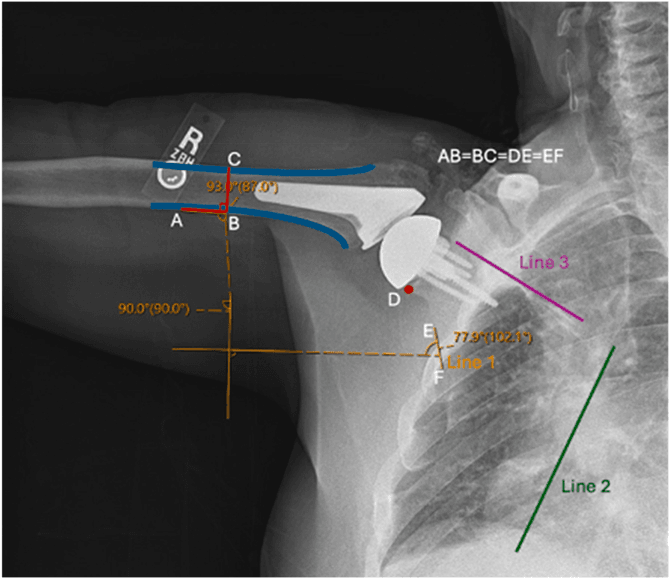
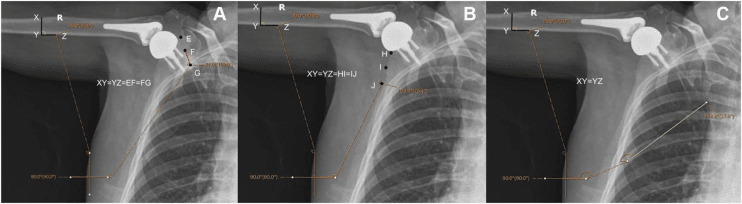
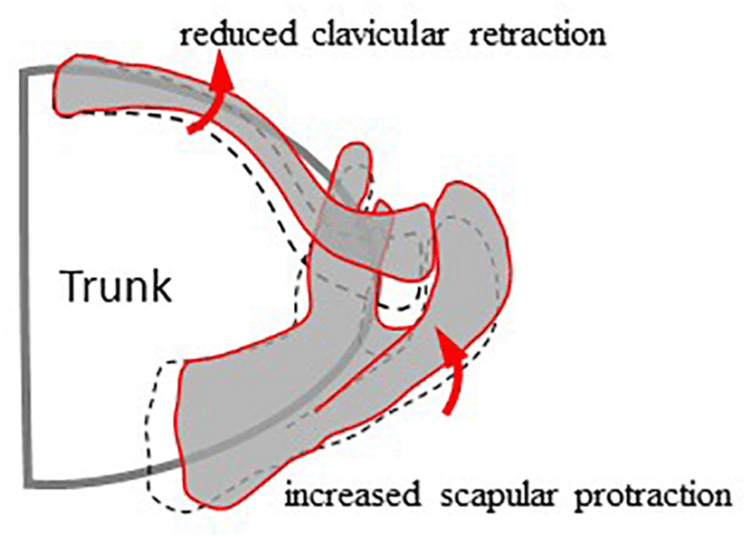
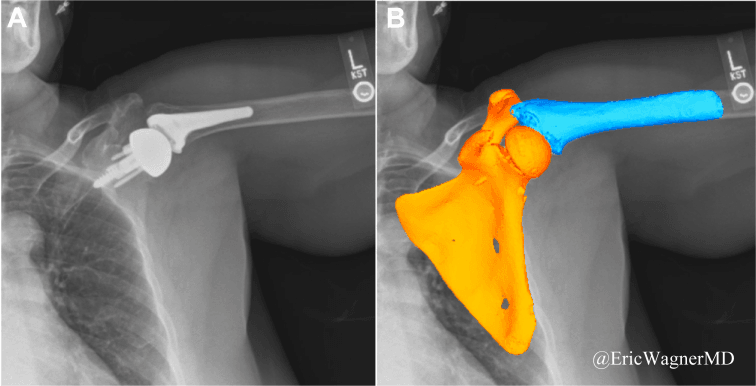
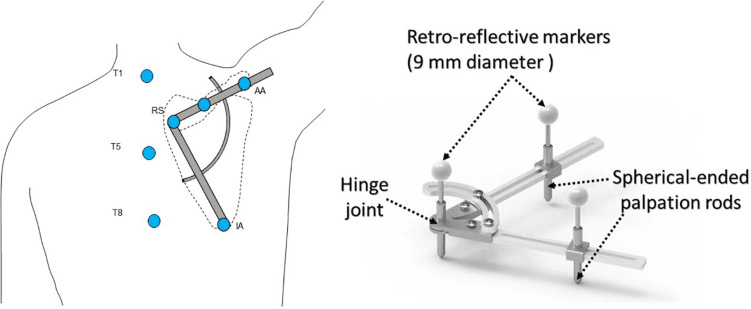
Pathophysiology and Mechanisms
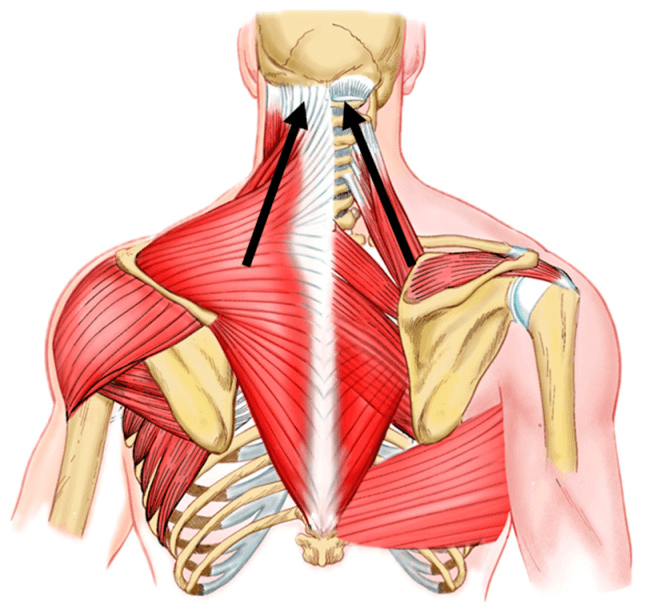
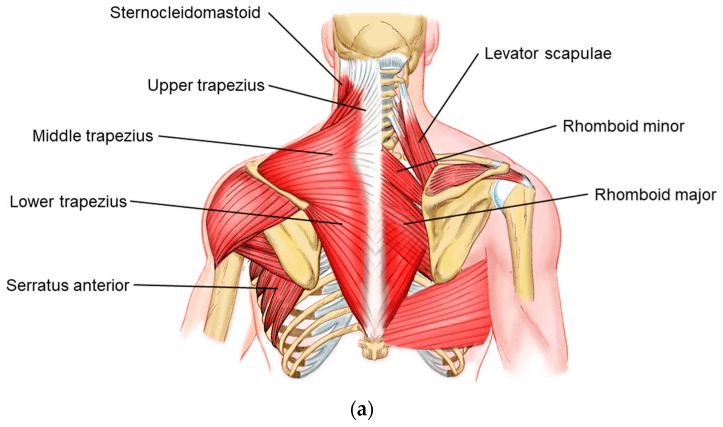
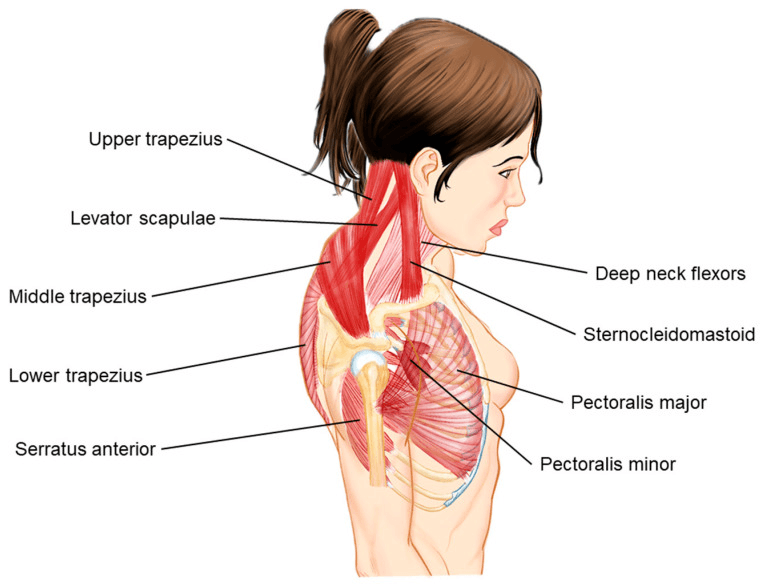
Force couples. Scapular stability relies on balanced force couples, and in dyskinesis these are disrupted. The upper, middle and lower trapezius and serratus anterior coordinate upward rotation, tilt, rotation and thoracic contact; their roles overlap and change with the task.
Soft-tissue restriction. Shortening or stiffness of pectoralis minor or of the posterior shoulder may influence scapular position, but a visual pattern does not prove which tissue is causal.
Neuromuscular adaptation. Pain, fatigue, instability and cuff or clavicle pathology can modify activation and motion as compensation rather than primary disease.
The SICK scapula. Burkhart described this in overhead athletes. SICK is historical language: it describes a proposed throwing-athlete phenotype, not a validated syndrome with reliable diagnostic criteria. Its four elements:
- Scapular malposition at rest, typically depressed and downwardly rotated
- Inferior medial border prominence (winging), due to anterior tilting
- Coracoid pain and tenderness at the pectoralis minor attachment, from traction on the tight pectoralis minor insertion
- DysKinesis, an abnormal movement pattern
Classification Systems
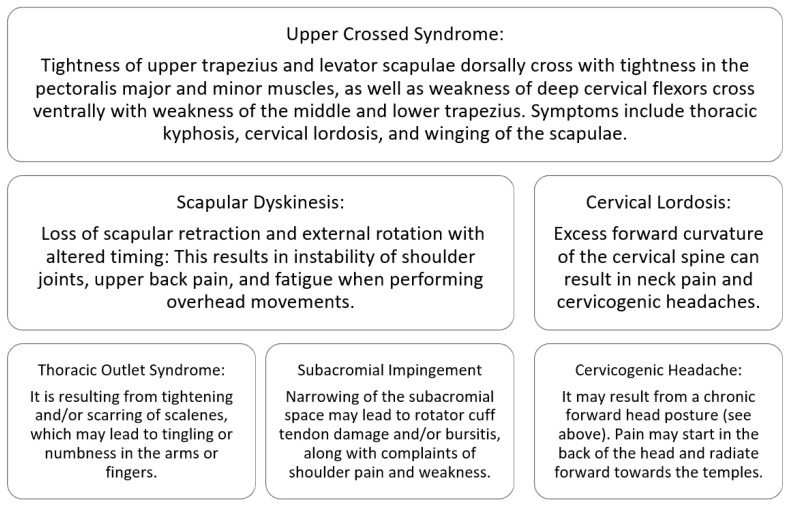
Kibler's patterns. Kibler's classification is a qualitative visual assessment made during elevation. Type I (inferior-angle prominence), Type II (medial-border prominence), Type III (early superior translation) and Type IV (symmetric) are descriptive teaching labels. Their reliability is insufficient for treatment routing, and each pattern can arise from several structures or compensations, so a pattern should not be mapped directly to one muscle.
What to describe instead. For each clinical task, record what you see rather than force a subtype:
- Preferred description
- Obvious dyskinesis present or absent; side, phase and load
- Avoid
- Forcing Type I/II/III
- Preferred description
- Direction and task-specific winging plus strength/nerve findings
- Avoid
- Calling all medial border prominence serratus palsy
- Preferred description
- Describe and investigate if clinically relevant
- Avoid
- Diagnosing dynamic dyskinesis from posture alone
Clinical Assessment
At rest. Inspect from behind for asymmetry in resting height and in distance from the spine. Look for pectoralis minor tightness, which shows as a forward shoulder posture, and palpate the coracoid for tenderness.
Push and wall tasks. Use these selectively, to accentuate a suspected neurologic or strength deficit, and interpret them with the nerve and muscle examination.
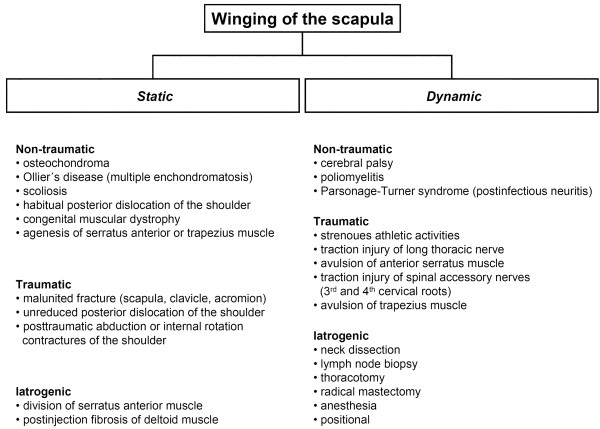
The winging differential. Long thoracic, spinal accessory and dorsal scapular neuropathy, osteochondroma, rib or clavicle pathology and glenohumeral disorders can create winging or asymmetry, and laterality alone does not distinguish them. Long thoracic palsy is a structural nerve injury that produces medial winging. A snapping scapula, from bursitis or an osteochondroma, presents with crepitus.
- Scapular Dyskinesis
- Muscle Imbalance / Inhibition
- True Winging (Nerve Palsy)
- Neurological Injury
- Scapular Dyskinesis
- Subtle, often a historical Type I–III pattern
- True Winging (Nerve Palsy)
- Gross deformity
- Scapular Dyskinesis
- Pain / Impingement
- True Winging (Nerve Palsy)
- Weakness / Deformity
- Scapular Dyskinesis
- Physiotherapy (Scapula Setting)
- True Winging (Nerve Palsy)
- Observation / Nerve Transfer / Fusion
The Scapular Dyskinesis Test: The Reliable Yes/No Method
Performing it. View from behind, with clothing adjusted only as necessary and consistent with the patient's dignity. Use unloaded or lightly loaded bilateral elevation and lowering, with several repetitions, enough to reveal the patient's task-specific abnormality, in a plane, at a speed and under a load appropriate to their symptoms and sport or work. Watch the entire concentric and eccentric cycle and the response to fatigue.
Reporting it. Record the side, task and phase; any border or angle prominence, early elevation or shuddering; the fatigue response; and whether the finding is obvious. The preferred report is obvious dyskinesis present or absent. Historical subtypes are optional descriptive language, not reliable categories.
First describe whether obvious dynamic dyskinesis is present in the tested task. Then ask whether modifying scapular motion changes pain or force and whether a primary shoulder, neurologic or structural diagnosis explains it.
Symptom and performance modification. A positive result on either manoeuvre shows only that manual modification changed the selected symptom or performance measure. It suggests modifiability, not a confirmed diagnosis.
- Scapular assistance test (SAT): assist upward rotation and posterior tilt during the painful task, and record the change in pain or arc
- Scapular retraction test (SRT): stabilise or retract the scapula during the chosen strength or pain task, and record the change without inferring a single weak muscle
Investigations
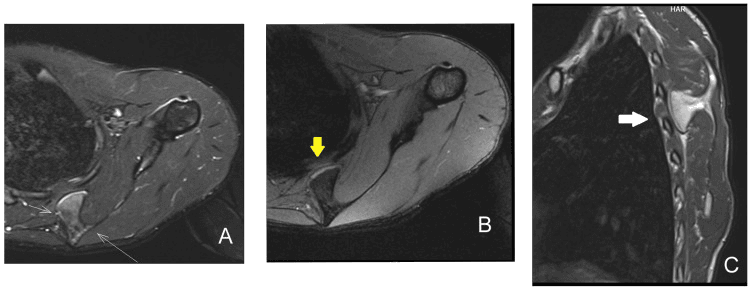
Scapular dyskinesis is identified clinically. Imaging is used to rule out other causes, not to verify dyskinesis.
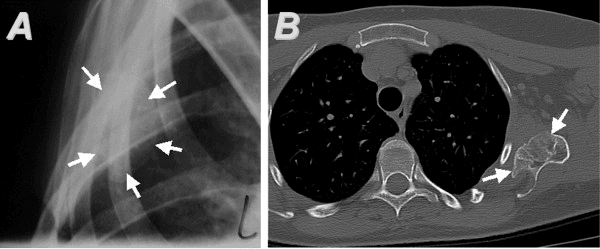
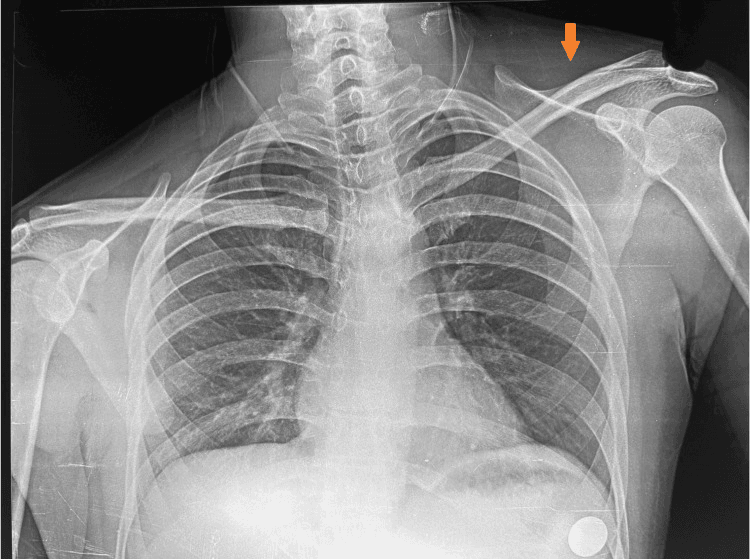
Radiographs. A shoulder series of AP, axillary and outlet views checks for structural causes: an osteochondroma (snapping scapula), fracture malunion or AC joint pathology.
MRI. It looks for the primary cause, such as a rotator cuff tear or a labral (SLAP) tear, and assesses the periscapular muscles for denervation atrophy, seen as oedema or fatty infiltration.
CT. Indicated for a snapping scapula, to visualise rib-cage incongruity or Luschka's tubercle.
Electromyography. EMG is the gold standard if nerve palsy (long thoracic or spinal accessory) is suspected, and differentiates neuropathic weakness from functional inhibition. Performed at an appropriate time, it supports the nerve diagnosis, but it is not infallible.
Management Algorithm
Management starts by identifying what the motion finding represents. Functional dyskinesis is treated within rehabilitation of the whole shoulder and kinetic chain; surgery treats a diagnosed structural lesion, not a visual motion label.
Impairment-led rehabilitation. Treat the primary shoulder or neck diagnosis and the pain irritability, then the deficits the examination has found:
- Mobility work only for measured pectoral, posterior shoulder or thoracic restrictions
- Scapular control trained in positions where the patient can succeed, then increased in load, range, speed and kinetic-chain demand
- Serratus, trapezius, cuff, trunk and hip strengthening according to tested deficits, not the historical Kibler subtype
- Return to work or sport when task capacity, symptoms and confidence are restored
The kinetic chain is individual. Screen trunk, hip and task mechanics when relevant, but do not assume a fixed percentage of throwing force or prescribe the same sequence to every patient.
Structural or neurologic cause. Long thoracic or spinal accessory palsy, osteochondroma, rib or clavicle deformity, scapulothoracic bursitis and glenohumeral disease follow their own diagnostic and treatment pathways. Observation, nerve studies, decompression, tumour excision, bursectomy, transfer or fusion are treatments for those diagnoses, not for functional dyskinesis.
- 1Describe
Dynamic present/absent finding in a defined task
Avoid subtype diagnosis
- 2Explain
Primary shoulder, neurologic, bony or motor-control assessment
Name the driver
- 3Modify
SAT/SRT or task change
Identify modifiable contribution
- 4Rehabilitate
Mobility, control, capacity and kinetic chain to deficit
Task-specific return
Surgical Technique
There is no operation for scapular dyskinesis itself. Technique, position, fixation and aftercare belong to the named structural procedure and cannot be prescribed from a dyskinesis classification.
- Osteochondroma or other bony prominence: image the ventral scapula and ribs, plan a tumour-safe excision and address the associated bursa when indicated
- Snapping scapula or bursitis: management runs from injection to bursectomy; bursectomy or superomedial-angle resection is reserved for a confirmed structural pain generator after targeted non-operative care
- Nerve palsy: the choice of decompression, nerve or tendon transfer or scapulothoracic fusion depends on the nerve, chronicity, recoverability and disability
- Pectoralis minor release: evidence is limited; reserve it for a clearly diagnosed, refractory structural or tissue problem rather than visual anterior tilt alone
Complications
Common harms arise from misclassification: treating compensation as a cause, missing neuropathy or bony pseudo-winging, over-cueing rigid retraction, provoking pain with excessive loading, or performing surgery for a visual sign.
Rehabilitation Protocols
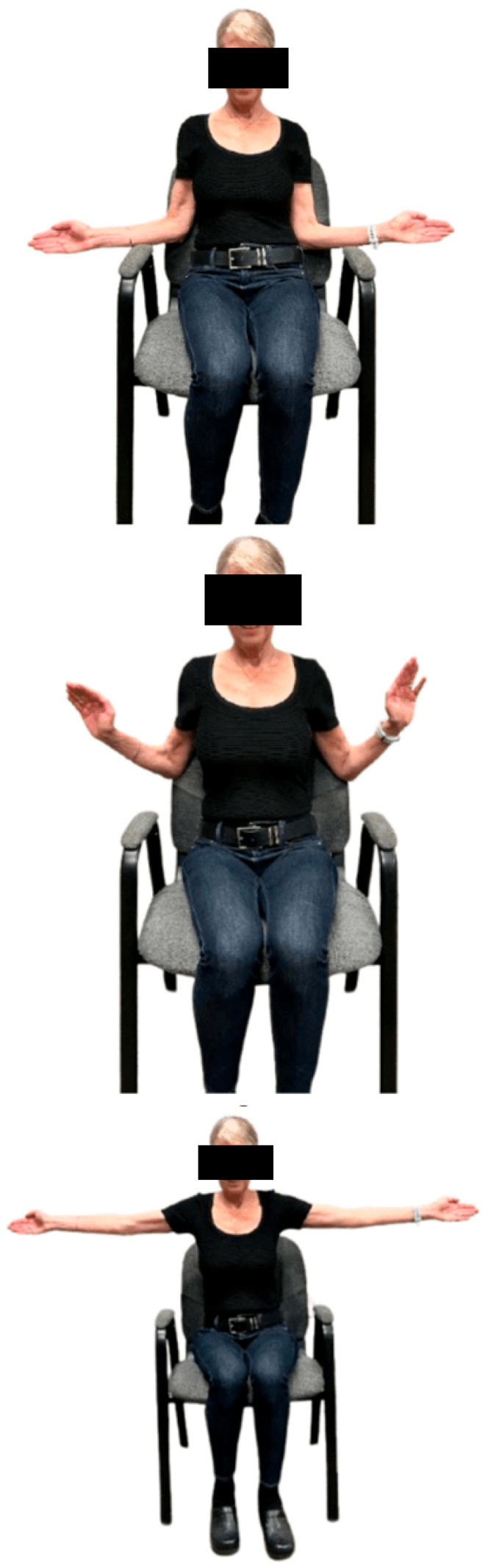
Closed or open chain. Supported and closed-chain options are useful when compression, external support or a reduced lever arm improves control or confidence; they are not inherently safer, nor always the first phase. Open-chain and task options are used when the patient can control the scapula through the required range, load and speed. Progression is criterion-based, and the two can coexist.
Control and endurance. Conscious control can be trained with biofeedback or mirrors, and endurance with low load and high repetition.
Matching exercise to deficit. The observed deficit chooses the exercise category and sets the criterion for progression:
- Exercise Category
- Targeted mobility
- Progression Criterion
- Range improves without symptom flare
- Exercise Category
- Supported reach, wall/serratus or scapular orientation practice
- Progression Criterion
- Smooth task-specific motion
- Exercise Category
- Serratus, trapezius and cuff resistance
- Progression Criterion
- Load/repetition symmetry and tolerance
- Exercise Category
- Integrated trunk/hip/arm speed and energy-transfer tasks
- Progression Criterion
- Required volume and quality without next-day flare
Postoperative Care
Postoperative care applies only when a structural diagnosis has been operated on. Wound care, protection, motion and loading follow the actual tumour excision, bursectomy, nerve or tendon transfer or fusion construct. Do not use a generic pectoralis-minor-release calendar for every scapular procedure.
Outcomes and Prognosis
Scapular dyskinesis is a modifiable impairment in some patients and an adaptive or incidental finding in others. Outcome should be the patient's pain, function, strength and endurance, and sport or work capacity, not normalisation of a visual subtype.
Rehabilitation evidence is heterogeneous and usually embedded within broader shoulder programmes, and no defensible universal 80–90% success rate or 3–6 month duration exists. Structural winging outcomes follow the underlying nerve, tumour, bursa or fusion diagnosis.
Guidelines, Registries & Global Practice
The Scapular Summit position remains the most transferable: dyskinesis is a potential impairment rather than a discrete diagnosis, and its causal role is not clearly defined. No registry or society algorithm establishes subtype-specific surgery or exercise.
- Evidence-aware position
- Dynamic present/absent observation in a defined task
- Resource adaptation
- Visual examination needs no equipment
- Evidence-aware position
- SAT/SRT can test modifiability alongside the primary diagnosis
- Resource adaptation
- Record pain/force change rather than a binary diagnosis
- Evidence-aware position
- Treat measured mobility, control, capacity and kinetic-chain deficits
- Resource adaptation
- Home programmes can use walls, bands and task practice
- Evidence-aware position
- Use nerve studies and imaging according to suspected cause
- Resource adaptation
- Refer when advanced imaging/nerve surgery is unavailable
Instrumented 3D or dynamic-radiographic analysis is primarily a research/specialist tool. Access does not replace clinical localization, and asymptomatic athletes frequently show scapular asymmetry.
Related pages: Rotator Cuff Tears, Subacromial Impingement, Anterior Shoulder Instability, and Scapular Winging.
Controversies & Areas of Uncertainty
Whether dyskinesis is a primary driver of shoulder pathology or a secondary adaptation remains unresolved. The 2013 Scapular Summit concluded it is best regarded as a potential impairment rather than a discrete diagnosis, and its exact causal role is not clearly defined.
Historical Kibler subtypes have poor/fair interrater reliability (kappa about 0.4). Prefer a binary present/absent judgement and use SAT/SRT only as symptom/performance modification tests.
Meta-analysis shows a real but modest 43% relative increase in future shoulder pain. However, a large mixed-sex handball cohort could NOT confirm dyskinesis as an independent risk factor, so it should not be used in isolation to predict injury.
Visual observation is practical but imperfect; 3D motion capture and scapular dyskinesis test scoring improve objectivity but are largely research tools. There is no agreed gold-standard quantitative bedside measure.
MCQ Practice Points
Q: Is scapular dyskinesis a diagnosis? A: No. It is a visual motion impairment that may be causal, compensatory or incidental. Name the primary shoulder, neurologic or structural diagnosis and the task tested.
Q: How should it be reported clinically? A: Prefer obvious dynamic dyskinesis present/absent, recording side, movement phase, task/load and fatigue. Historical Type I–III labels have poor reliability.
Q: What does a positive SAT or SRT mean? A: Manual scapular modification changed pain, range or force in that task. It suggests modifiability but does not prove a diagnosis or predict one specific muscle treatment.
Q: Is normal scapulohumeral rhythm always 2:1? A: No. The ratio varies across the arc, plane, speed, load, anatomy and measurement method; 2:1 is a historical whole-arc simplification.
Exam Viva Scenarios
Practise clinical reasoning and management decisions out loud
“An overhead athlete has shoulder pain and visible scapular asymmetry. How do you assess whether scapular motion is relevant?”
“A patient has prominent scapular winging. How do you distinguish motor-control dyskinesis from neurologic or structural winging?”
“A swimmer has obvious task-specific scapular dyskinesis that changes with manual assistance. Build rehabilitation.”
Describe
- Potential impairment, not a diagnosis
- Observe elevation and lowering dynamically
- Record side, task, phase, load and fatigue
- Prefer obvious present/absent over subtype
Establish Relevance
- Diagnose primary shoulder/neck pathology
- SAT modifies pain/arc
- SRT modifies force/pain
- A response suggests modifiability, not causation
Exclude
- Long thoracic, spinal accessory and dorsal scapular neuropathy
- Osteochondroma, rib or clavicle lesion
- Scapulothoracic bursa/snapping
- Cuff, instability and cervical causes
Rehabilitate
- Treat measured mobility deficits
- Build scapular/cuff control and endurance
- Integrate trunk/hip only when task-relevant
- Progress by functional criteria, not fixed phases
Evidence Base
SICK Scapula / Disabled Throwing Shoulder Part III
- Defined the SICK scapula syndrome (Scapular malposition, Inferior medial border prominence, Coracoid pain, dysKinesis)
- Linked scapular dysfunction to glenohumeral injury in overhead throwers
- Established the kinetic-chain rehabilitation framework
2013 Scapular Summit Consensus
- Dyskinesis is present in a high percentage of shoulder injuries but is an impairment, not a stand-alone diagnosis
- Impingement symptoms are particularly affected by dyskinesis
- A reliable observational (yes/no) clinical method is available, and scapular rehabilitation is effective within a comprehensive programme
Reliability of Qualitative Classification
- Tested the four-pattern visual classification of scapular dysfunction
- Interrater reliability kappa = 0.4 (moderate); intrarater kappa = 0.5
- Modest reliability later led to a Yes/No (present-absent) observational method
Scapular Dyskinesis and Future Shoulder Pain
- Pooled 5 prospective studies (419 athletes)
- Baseline dyskinesis carried a 43% greater risk of future shoulder pain (RR 1.43, 95% CI 1.05-1.93)
- 35% of athletes with dyskinesis vs 25% without developed pain at 9-24 months
Kinetic Chain Rehabilitation
- Described the proximal-to-distal kinetic-link model for shoulder rehabilitation
- Energy and force are generated in the legs and trunk and transmitted through the scapula to the arm
- Closed-chain and integrated movement patterns activate weakened shoulder musculature
Pectoralis Minor Length and Scapular Kinematics
- 50 asymptomatic volunteers grouped by pectoralis minor resting length
- Short pectoralis minor was associated with persistent anterior tipping and increased internal rotation of the scapula
- These kinematics mirror those seen in subacromial impingement