Tension vs Compression | MRI Gold Standard | Surgical Emergency if Tension Side
- Tension side (superior cortex) requires prophylactic surgical fixation - high displacement risk
- Compression side (inferior cortex) can be managed conservatively with non-weight bearing
- MRI is gold standard - X-rays often negative initially
- Female athlete triad - amenorrhoea, low energy availability, low BMD
- Military recruits and runners are highest risk populations
- “Groin pain in young athlete/military recruit = stress fracture until proven otherwise
- “X-rays often negative for 2-4 weeks - MRI for early diagnosis
- “Superior cortex involvement = surgical emergency (high displacement risk)
- “Return to sport requires MRI evidence of healing
Overview and Epidemiology
Femoral neck stress fractures are overuse injuries caused by repetitive submaximal loading, most common in endurance athletes and military recruits. The femoral neck is a high-risk stress fracture site because a fracture here can displace, and displacement brings AVN and nonunion. It is managed more aggressively than low-risk stress fractures such as those of the tibial shaft or metatarsals.
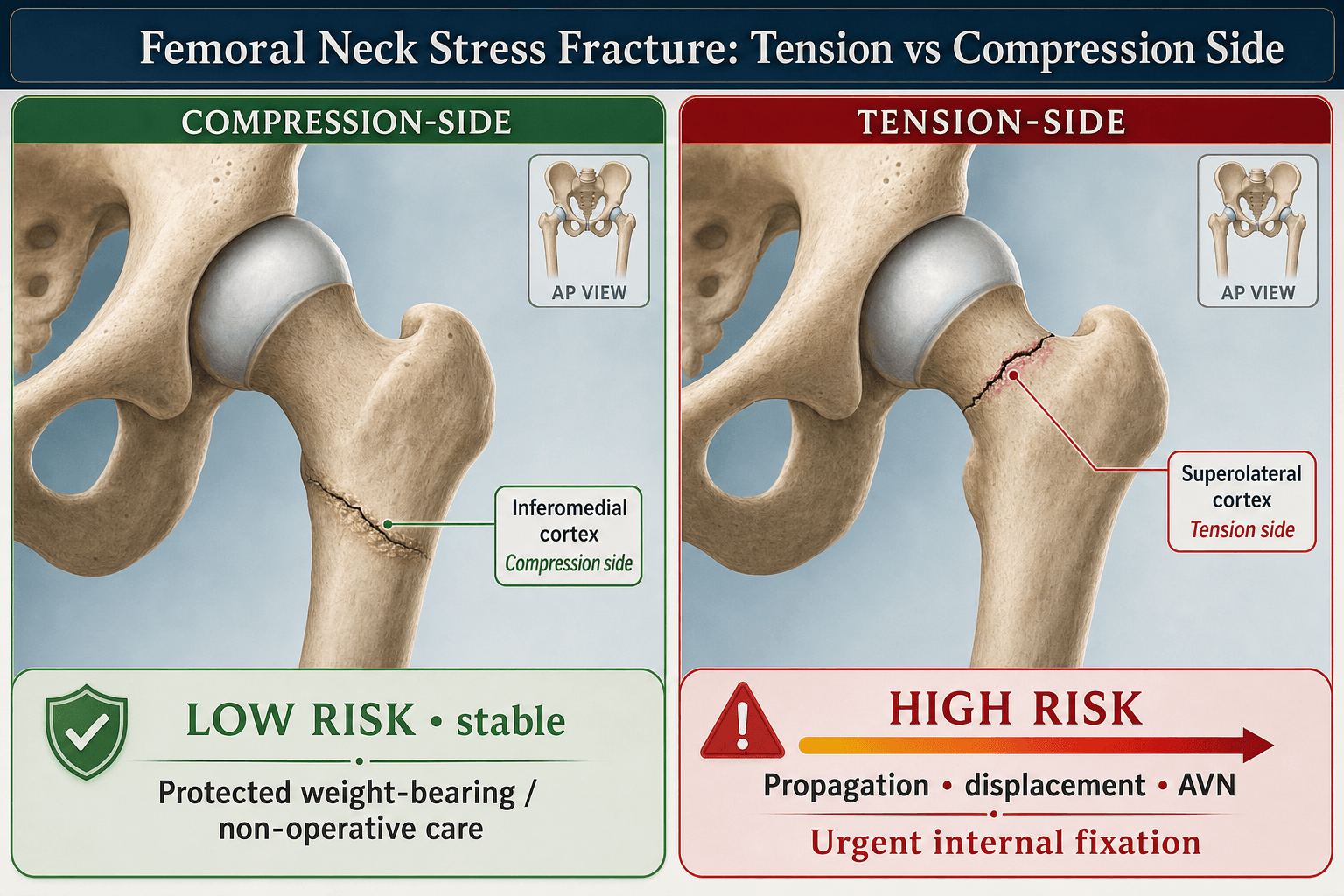
Management turns on which cortex is involved, tension or compression. That is the exam question, and it is set out under Pathophysiology and Classification below.
History. The injury was first described in military populations. Since then the distinction between the tension and compression sides has become critical, and the female athlete triad has been identified as a major risk factor.
Who. Femoral neck stress fractures account for approximately 3% of all sport-related stress fractures (Robertson & Wood 2017).
- Distance and marathon runners are the commonest athletic population affected
- Military recruits in basic training are the other key high-risk group. Across basic training the baseline incidence of stress fracture of any site is several percent over an 8-week cycle (5.9% per 8 weeks in the female Navy recruit RCT; Lappe 2008), and the femoral neck is a small but high-consequence subset
- Women predominate, strongly linked to the female athlete triad and RED-S; in mixed surgical military cohorts roughly half of operatively treated cases are women (Shaw 2022)
- Ballet dancers and other high-volume, leanness-emphasis athletes are also over-represented
Risk factors. The recognised risk factors are these:
- Training errors: too much, too soon, or a rapid increase in activity
- The female athlete triad: low energy availability, amenorrhoea and low BMD
- Low vitamin D
- Smoking
- A previous stress fracture
Pathophysiology and Mechanisms
Why the femoral neck. It takes high bending loads during weight-bearing activity, its cortical bone is thin, especially superiorly, and its limited blood supply carries the risk of AVN.
How a stress fracture develops. The injury progresses through stages:
- Remodelling imbalance: resorption exceeds formation
- Microdamage accumulation with repetitive loading
- Stress reaction: bone oedema without a fracture line
- Stress fracture: a fracture line develops
- Complete fracture: full-thickness propagation
Detected at the stress-reaction stage, the injury can be managed conservatively.
Bending in single-leg stance. During single-leg stance the femoral neck is subjected to a bending moment. The superior cortex is under tension, pulled apart, and the inferior cortex under compression, pushed together.
The tension side. Tension makes a crack in the superior cortex propagate rather than close. The risk of a complete fracture is higher and the fracture can displace suddenly, which is why a tension-side stress fracture is a surgical emergency.
The compression side. Compression tends to close a crack in the inferior cortex rather than propagate it, so the risk of complete fracture is lower. These fractures are more stable, less likely to displace, and can often be managed conservatively, but some progress, and close monitoring is essential.
The abductors. The tension on the superior neck is not fixed; it is modulated by the hip abductors. Body weight in single-leg stance creates a bending moment that tenses the superior cortex, but a contracting gluteus medius and minimus pull on the proximal femur and add a compressive, offsetting load across the neck, lowering the net superior tensile strain.
Why late in the race. Late in a marathon or a long march the tiring abductors stop neutralising the bending moment, superior tensile strain rises and the fatigue fracture propagates. That explains the classic onset late in an endurance event, and the same idea has practical consequences:
- Hip-abductor and core conditioning are part of prevention and of graded return to sport
- Gait retraining that reduces excessive hip adduction (and contralateral pelvic drop) unloads the superior neck
- It reinforces the tension-side rule: once the protective muscle force is overwhelmed, the superior crack only ever sees distraction, so it cannot be trusted to heal without fixation
Blood supply. The femoral head is supplied mainly by the medial femoral circumflex artery, with the lateral femoral circumflex artery and a minor contribution from the artery of the ligamentum teres. A displaced fracture can disrupt the retinacular vessels and lead to AVN, which is why preventing displacement is critical.
Classification Systems
Location is the key factor in management decisions: always determine whether the fracture involves the superior (tension) or the inferior (compression) cortex. Fullerton and Snowdy's classification is built on that split, dividing femoral neck stress fractures into tension-side, compression-side and displaced types. The imaging gradings stage the injury from stress reaction to complete fracture.
- Location
- Superior cortex
- Risk
- High: displacement risk
- Treatment
- Surgical fixation
- Location
- Inferior cortex
- Risk
- Lower
- Treatment
- Conservative possible
- Location
- Both cortices
- Risk
- Highest
- Treatment
- Surgical, urgent
A stress fracture is either a fatigue fracture - abnormal (excessive/repetitive) load on normal bone (the runner/recruit picture this topic centres on) - or an insufficiency fracture - normal physiological load on abnormal (weakened) bone. The distinction reframes the whole work-up. In a young athlete or recruit with a femoral neck stress fracture, the driver is training error plus RED-S, and you screen energy availability, menses, vitamin D and BMD. In a middle-aged or older patient (or any atypical host), an "insufficiency" FNSF should trigger a search for osteoporosis, osteomalacia (low vitamin D, raised ALP), coxa vara, prolonged corticosteroid use, inflammatory arthritis and bisphosphonate-related bone changes, because the bone - not the load - is the problem. Both occur on the tension or compression side and both follow the same fix-the-tension-side rule, but fatigue fractures need load and energy correction while insufficiency fractures need the underlying metabolic bone disease treated or they recur and fixation fails.
Clinical Assessment
History. The typical patient is a young athlete or military recruit with groin pain of insidious onset, related to activity and worse with impact; there may be a preceding prodromal ache. The questions that matter:
- Training history, and any recent increase
- Menstrual history in women
- Dietary intake, screening for RED-S
- Previous stress fractures
- Medications, particularly steroids and bisphosphonates
RED-S. Relative Energy Deficiency in Sport is the updated term for the female athlete triad. Screen every athlete with a stress fracture for it, female athletes without exception, and refer to endocrinology if the triad is suspected.
Examination. The key tests, each with its finding:
- Technique
- Observe walking
- Finding
- Antalgic gait
- Technique
- Passive rotation in extension
- Finding
- Groin pain
- Technique
- Single-leg hop
- Finding
- Pain reproduction
- Technique
- Femur over forearm as fulcrum
- Finding
- Pain with loading
- Technique
- Hip ROM tests
- Finding
- Groin pain, reduced ROM
The single-leg hop test can reproduce pain but risks displacing an incomplete fracture. It should not be performed if clinical suspicion is high: proceed directly to imaging rather than provocative testing, and use clinical judgement.
Differential diagnosis. The differential of activity-related groin or hip pain in the young athlete:
- Discriminating features
- Insidious load-related groin pain, worse with impact; pain on log roll/axial loading; high-risk population
- Key investigation
- MRI (bone marrow oedema, fracture line, tension vs compression)
- Discriminating features
- Sharp anterior groin pain with flexion-rotation; positive FADIR; clicking/catching
- Key investigation
- MRI arthrogram; X-ray for cam/pincer morphology
- Discriminating features
- Pain on resisted adduction or hip flexion; localised tenderness; acute onset
- Key investigation
- Clinical; ultrasound/MRI if persistent
- Discriminating features
- Lower abdominal and adductor-origin pain; pain on resisted sit-up and Valsalva
- Key investigation
- MRI of pubic symphysis and rectus/adductor aponeurosis
- Discriminating features
- Groin or buttock pain in runner; tender pubic ramus or sacrum
- Key investigation
- MRI of pelvis
- Discriminating features
- Groin pain, steroid/alcohol history; pain on extremes of rotation
- Key investigation
- MRI (subchondral crescent, double-line sign)
- Discriminating features
- Rest pain, fever, marked ROM restriction, raised inflammatory markers
- Key investigation
- Bloods, aspiration; MRI/US for effusion
Investigations
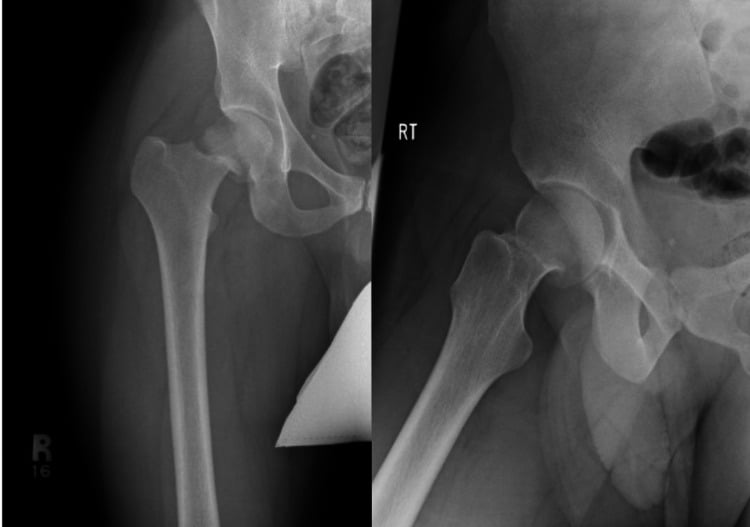
Radiographs. Plain films are often negative for 2-4 weeks, so a normal radiograph does not exclude the diagnosis. When positive they may show a sclerotic line or periosteal reaction. Full-length views are recommended, with comparison against the contralateral side.
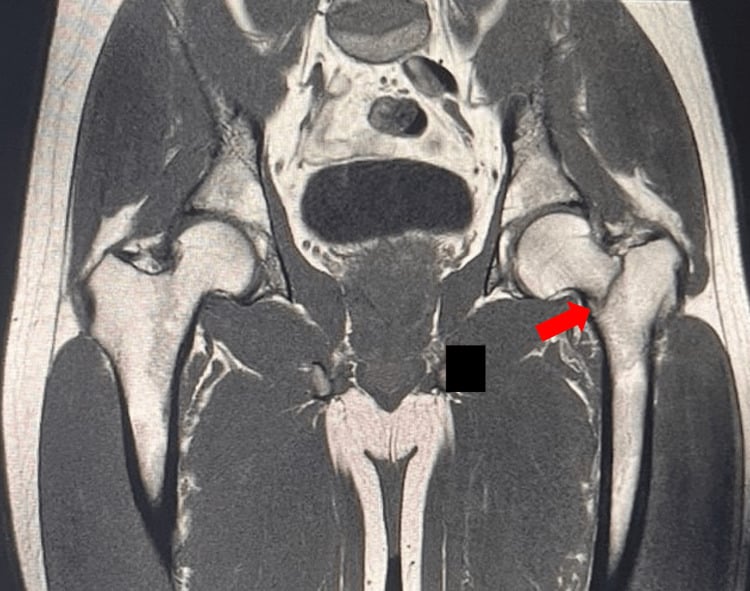
MRI. The gold standard. It detects the stress reaction before a fracture line is visible and identifies a fracture line if one is present. Order it:
- Always, when clinical suspicion is high and radiographs are negative
- When early diagnosis is critical, as in the athlete in season
- To determine the extent and location of the injury
- To monitor healing
MRI shows bone marrow oedema (bright on T2/STIR, dark on T1) in stress reactions. A fracture line appears as low signal on all sequences. The location of the findings determines whether the tension or compression side is involved.
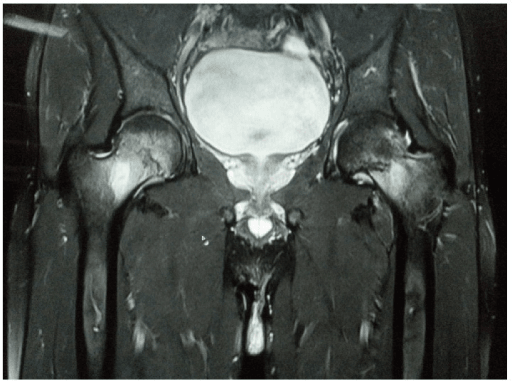
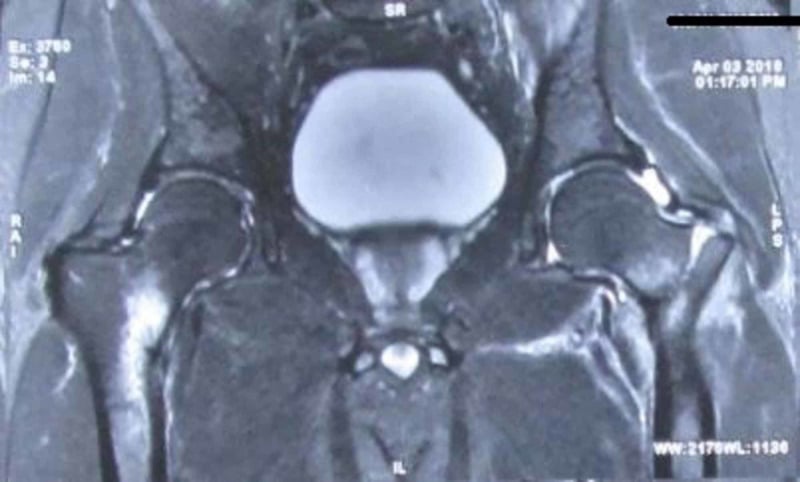
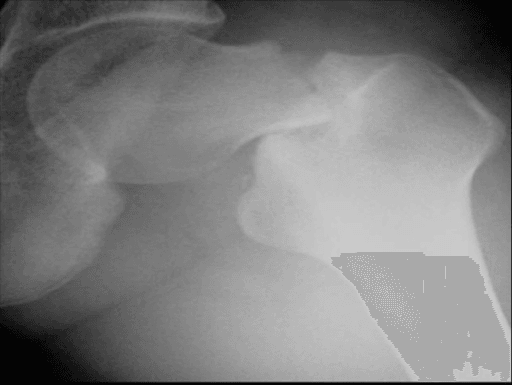
CT. Better for visualising cortical fracture lines, but less sensitive for the early stress reaction. It is useful if MRI is contraindicated or equivocal.
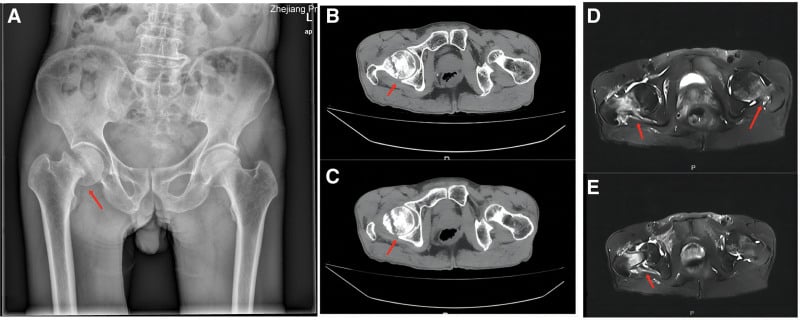
Bone scan. Highly sensitive but less specific, showing focal uptake at the fracture site. It cannot distinguish tension from compression and is less commonly used now that MRI is available, so it is a fallback when MRI is unavailable or contraindicated, not the preferred test for classifying cortical-side risk.
Laboratory tests. Look for the metabolic contributors:
- Vitamin D level
- Calcium
- TSH, if RED-S is suspected
- DEXA for BMD, to be considered in the triad or RED-S
Abnormal results should trigger correction of the metabolic deficit and, where appropriate, sports-medicine, dietetic or endocrinology review before return to impact loading.
Management
The decision. The side of the fracture, and whether it has displaced, decide the treatment.
- Location
- Superior cortex involvement
- Treatment
- SURGICAL - prophylactic screw fixation
- Location
- Inferior cortex only
- Treatment
- Non-weight bearing 6-8 weeks, serial imaging
- Location
- Complete with displacement
- Treatment
- Urgent surgical fixation (cannulated screws or DHS)
- Location
- Progressive symptoms at 6 weeks
- Treatment
- Convert to surgical fixation
- Location
- Both hips affected
- Treatment
- Address underlying cause, extended rest
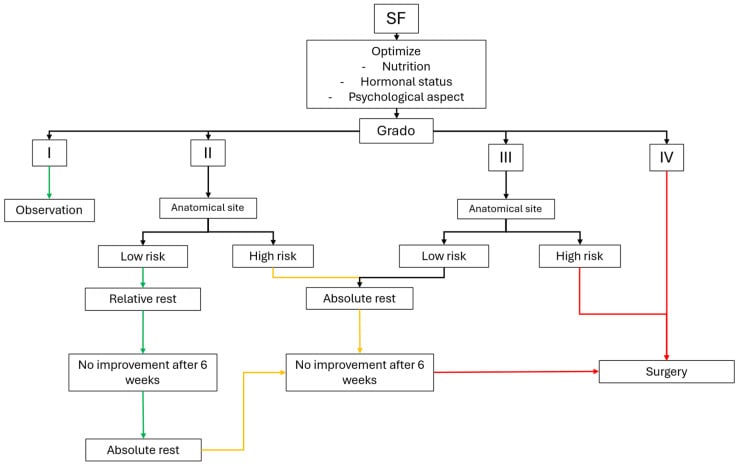
Fix it, without delay. A tension-side (superior cortex) stress fracture has a high displacement risk and needs prophylactic fixation. Keep the patient non-weight bearing while awaiting surgery to prevent displacement. The implant choice matters:
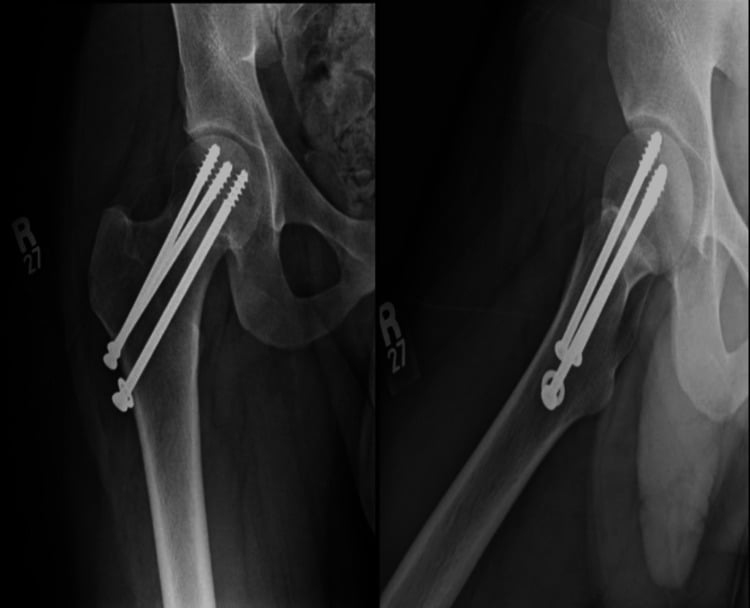
- Multiple cannulated screws, typically three in an inverted triangle: historically standard in young athletes with good bone
- Sliding hip screw (SHS) or cephalomedullary nail: increasingly favoured, especially in poorer bone, larger fractures or non-compliant patients. A fixed-angle device better resists varus, and the implant choice may reduce the subtrochanteric stress-riser risk seen after isolated cannulated screws (Hwang 2022)
- Valgus osteotomy or arthroplasty: reserved for salvage of nonunion or AVN
Surgical Technique
The technique below is for cannulated screw fixation; the fixed-angle alternatives are covered under Management.
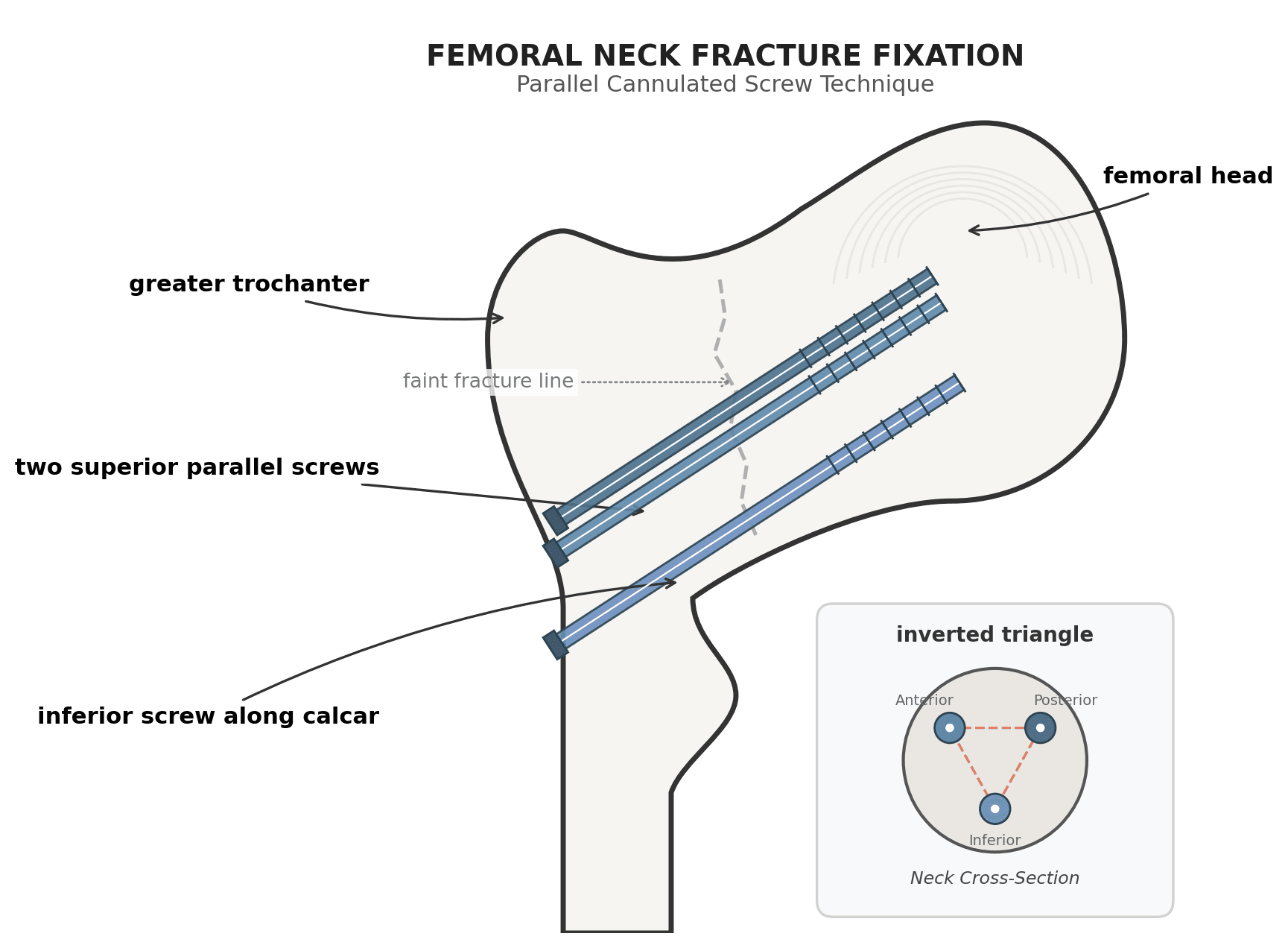
Set-up. The patient lies supine on a fracture table or radiolucent table, with image-intensifier access for AP and lateral views, the leg in slight internal rotation and the unaffected leg in the lithotomy position. Confirm the fracture location on imaging, mark the skin incision, make sure the fluoroscopy images are adequate and be prepared for a closed or open approach. Most cases can be done percutaneously under fluoroscopic guidance.
Screw placement.
- Guide wires: start on the lateral femur below the greater trochanter and aim for the inferior femoral neck first. Place the wires for the inverted triangle, one inferior and two superior, and verify each on AP and lateral views
- Drilling: measure screw length and drill over the guide wires
- Screws: insert the screws, typically 6.5-7.3mm, and tighten them sequentially
Configuration. The inverted triangle puts one inferior screw along the calcar and two superior screws parallel to each other, with all the threads across the fracture site. Posterior cortex engagement is important. No screw should enter the weight-bearing dome or penetrate the weight-bearing articular surface.
Starting point. Below the greater trochanter, which allows the optimal trajectory. A starting point that is too distal creates a subtrochanteric stress riser; too proximal is also wrong.
Imaging confirmation. AP and lateral views are mandatory, to check for joint penetration and to confirm that the screws cover the fracture site.
Pitfalls. The intraoperative errors to avoid:
- Joint penetration: check on fluoroscopy
- Over-compression, which can cause shortening
- Inadequate fixation: add screws if needed
If reduction is needed. A limited open approach may be required. Use gentle reduction manoeuvres and avoid devascularising the fragments.
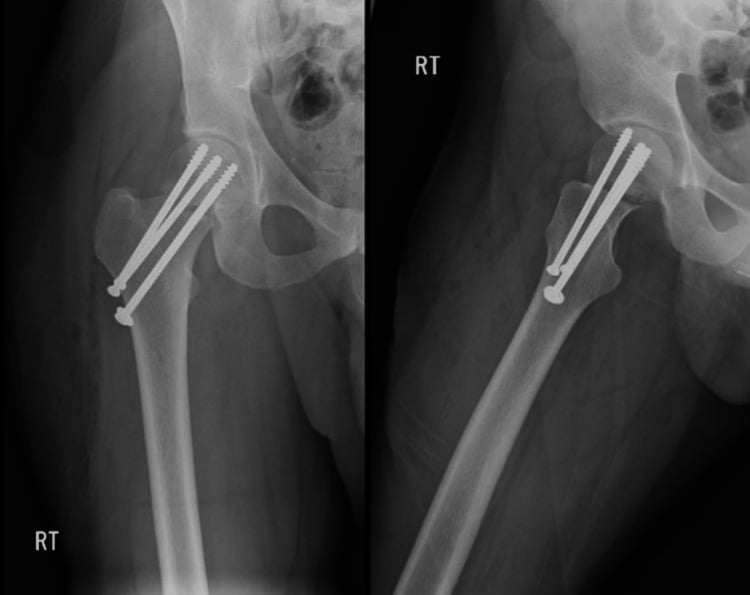
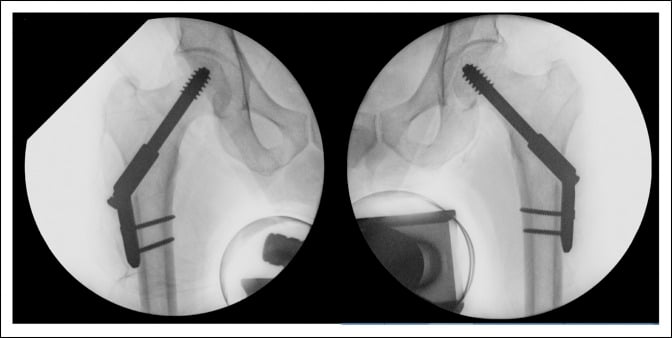
Complications
- Risk Factors
- Tension side, delayed diagnosis
- Prevention/Management
- Early surgery for tension side, non-weight bearing
- Risk Factors
- Displacement, delayed fixation
- Prevention/Management
- Urgent treatment, anatomic reduction
- Risk Factors
- Displacement, inadequate fixation, metabolic factors
- Prevention/Management
- Revision surgery, bone grafting
- Risk Factors
- Inadequate fixation, early loading
- Prevention/Management
- Proper technique, protected weight bearing
- Risk Factors
- Failure to address risk factors
- Prevention/Management
- Treat underlying causes, gradual return
- Risk Factors
- Metabolic factors, inadequate rest
- Prevention/Management
- Extended non-weight bearing, optimise bone health
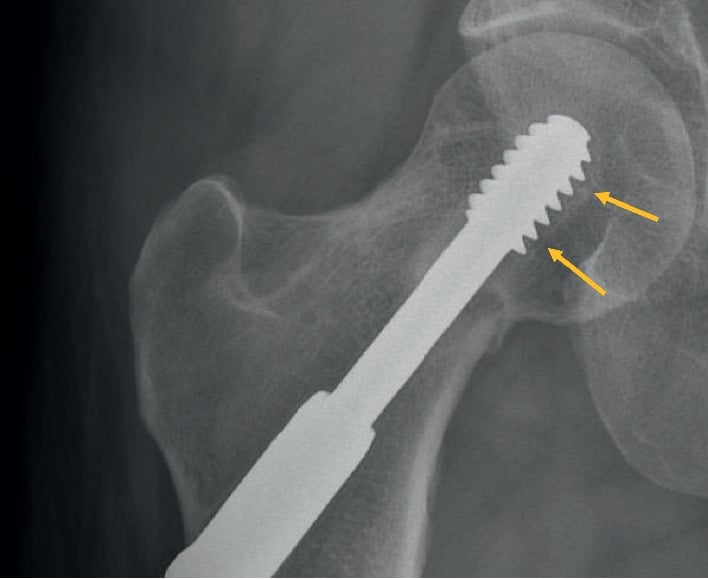
Avascular necrosis. The most feared complication. Its risk is directly related to the degree of displacement and the time to treatment, so tension-side fractures, being the more likely to displace, carry the higher AVN risk, and urgent surgical fixation minimises it. AVN may occur despite optimal care, and needs long-term monitoring.
Nonunion. More common in displaced fractures. Smoking, metabolic bone disease and poor fixation are risk factors, and treatment is revision with bone graft, valgus osteotomy or arthroplasty.
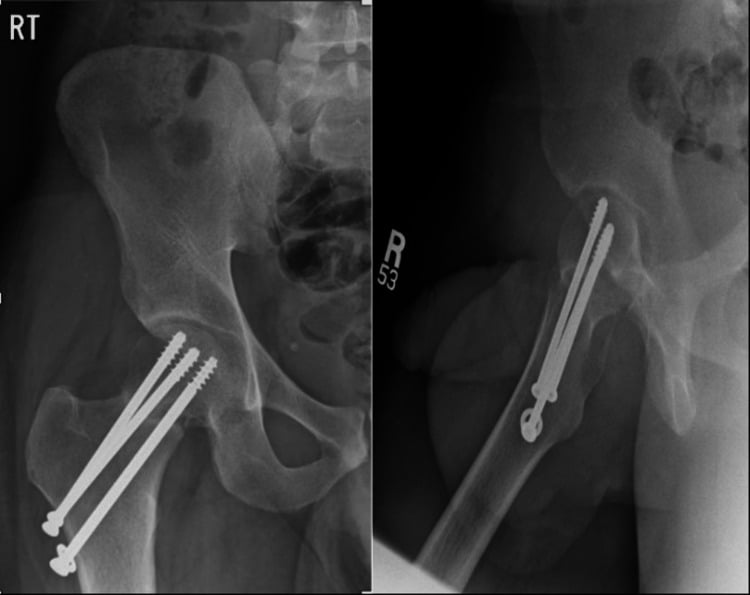
Postoperative Care and Rehabilitation
Weight bearing is protected at first and progressed as healing is confirmed.
- Protected weight bearing (toe-touch or partial)
- Hip ROM exercises
- Core and upper body conditioning
- Aquatic therapy when wound healed
- Serial X-rays at 2 and 6 weeks
- Progress weight bearing as healing allows
- X-ray to confirm early union
- Stationary bike
- Progressive hip strengthening
- Continue cross-training
- Full weight bearing when united
- Progress to impact activities
- Running progression (if athlete)
- Sport-specific training
- Final MRI to confirm healing
Return to sport. Return when united and pain-free, judged against these criteria:
- Union confirmed on imaging
- Full, pain-free ROM
- Strength symmetry
- Functional testing passed
- Underlying risk factors addressed
How long. The timeline is approximate and depends on the fracture:
- Compression side, treated conservatively: 3-4 months
- Tension side, treated surgically: 4-6 months
- Displaced fracture: 6-12 months, depending on AVN
Outcomes and Prognosis
Prognostic factors. Five factors separate the better outcomes from the worse:
- Better Prognosis
- Compression side
- Worse Prognosis
- Tension side
- Better Prognosis
- Early (stress reaction)
- Worse Prognosis
- Late (complete fracture)
- Better Prognosis
- Non-displaced
- Worse Prognosis
- Displaced
- Better Prognosis
- Urgent appropriate care
- Worse Prognosis
- Delayed treatment
- Better Prognosis
- Addressed
- Worse Prognosis
- Unaddressed
Outcome is dominated by displacement and time to diagnosis.
Compression side, non-operative. A high union rate with compliant non-weight bearing and serial imaging. The long-term prognosis is excellent once healed, provided the RED-S or metabolic drivers are corrected.
Tension side, operative. Union is good with timely fixation.
Displaced fractures. Markedly worse, with a high AVN and nonunion risk and sporting outcomes considerably worse once displaced (Robertson & Wood 2017). Outcomes are worse than for prophylactically fixed fractures, and arthroplasty may be required if AVN develops.
Athletic case series report encouraging return-to-sport rates when FNSF is caught early. However, in operatively treated military trainees, 58% were ultimately separated from service despite surgery, and 39% showed fracture-line progression (Shaw 2022). The lesson for the viva: outcome hinges on early diagnosis before displacement, the demand of the population, and correcting the underlying cause — not on the operation alone.
Prevention and Return to Sport
Training. The principles of primary prevention:
- Gradual load progression (the 10% rule)
- Adequate rest days
- Cross-training to reduce impact
- Proper footwear
- Appropriate running surfaces
Nutrition. Adequate caloric intake avoids relative energy deficiency. Calcium intake should be 1000-1500mg daily, and vitamin D maintained above the target given under Management.
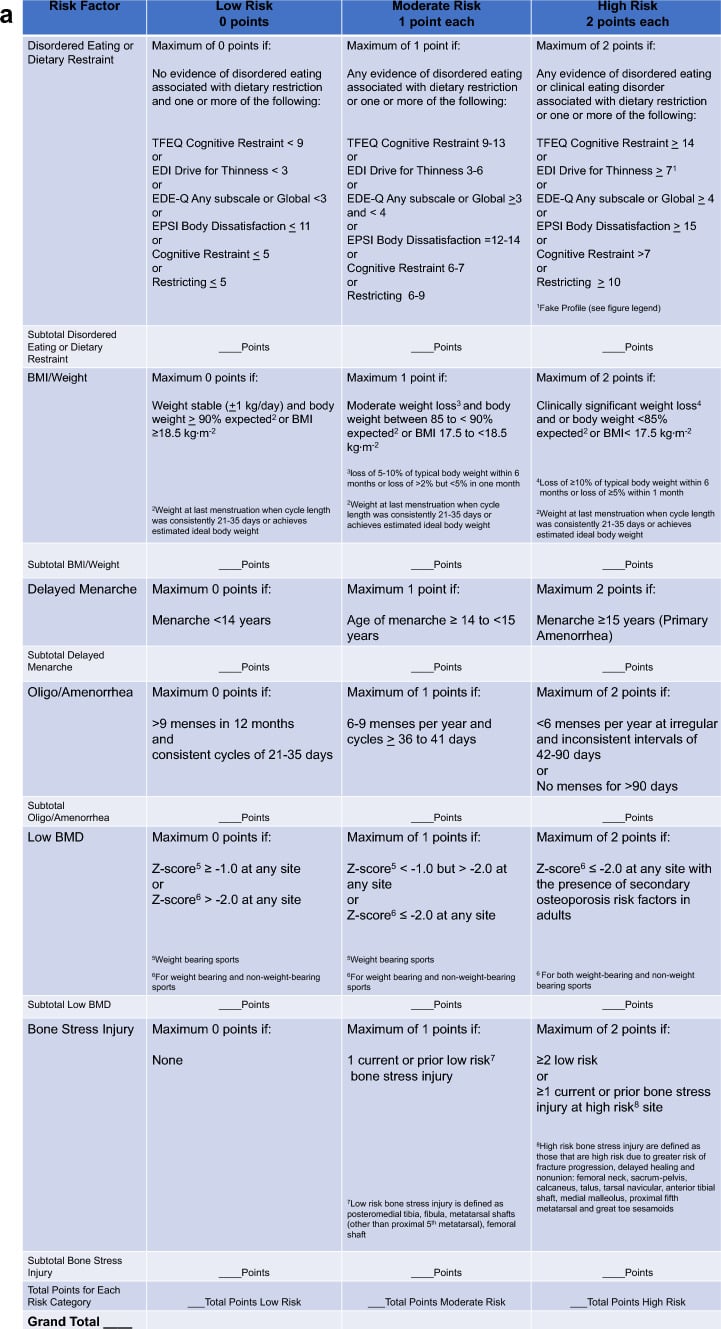
Screening female athletes. Take a menstrual history from every female athlete; absent periods are a red flag. Use a RED-S screening questionnaire, keep a low threshold for endocrine referral, and assess bone health if anything is abnormal.
Secondary prevention. After a fracture, address every modifiable risk factor as set out under Management, and monitor bone health over the long term.
Guidelines, Registries & Global Practice
Femoral neck stress fracture (FNSF) is a globally consistent diagnosis with a single overriding management principle — location (tension vs compression) and displacement drive treatment — that holds across every major board and health system.
Global epidemiology:
- Setting
- Athletic
- Relative risk / notes
- Commonest civilian group; FNSF approximately 3% of sport-related stress fractures (Robertson & Wood 2017)
- Setting
- Occupational
- Relative risk / notes
- High-volume new loading; baseline all-site stress fracture ~5-6% per training cycle (Lappe 2008); FNSF a high-consequence subset
- Setting
- Athletic
- Relative risk / notes
- Risk rises with cumulative triad factors; high-risk runners ~4.4x trabecular-rich BSI (Roche 2023, Barrack 2014)
- Setting
- Athletic
- Relative risk / notes
- Over-represented via low energy availability
- Setting
- General
- Relative risk / notes
- Insufficiency-type FNSF; consider osteomalacia, osteoporosis, coxa vara (Tomar 2020)
Major guidance, side by side:
- Position on FNSF
- Femoral neck (tension side) classed as a HIGH-RISK stress fracture: image early, low threshold for fixation; tension-sided and displaced → surgery
- Evidence basis
- Expert consensus + cohort data (Level III-IV)
- Position on FNSF
- Treat as fragility/at-risk presentation where relevant; urgent senior review and theatre for displaced neck fractures; metabolic work-up
- Evidence basis
- Consensus / standards
- Position on FNSF
- Fixation principles: stable internal fixation for unstable/tension or displaced patterns; fixed-angle implants where bone quality is poor
- Evidence basis
- Mechanistic + cohort
- Position on FNSF
- Mandatory screening and treatment of low energy availability in any athlete with a bone stress injury
- Evidence basis
- Consensus (Level II-III supporting data)
There is no genuine international disagreement on the core algorithm: the tension/compression split and the imperative to fix tension-sided and displaced injuries are universal. Practice variation lies mainly in implant choice (cannulated screws vs sliding hip screw / cephalomedullary nail) and in the surgical threshold for compression-sided injuries — a commonly cited operative trigger is involvement of more than ~50% of the neck width or any fracture-line progression (Shaw 2022).
FNSF is not separately tracked in arthroplasty registries (NJR, AJRR, AOANJRR, SHAR), but those registries do inform salvage outcomes when AVN or non-union leads to arthroplasty in a young patient — generally good implant survival but a high revision burden over a long expected lifespan, reinforcing the priority of joint-preserving early fixation.
- High-resource settings: ready MRI access enables early diagnosis at the stress-reaction stage; multidisciplinary RED-S pathways (sports physician, dietitian, endocrinologist).
- Limited-resource settings: reliance on radiographs and bone scan delays diagnosis, increasing displacement and AVN; a higher index of suspicion and earlier protected weight-bearing partly offset limited cross-sectional imaging.
sports/orthopaedic assessment → urgent MRI → operative vs protected non-operative care by location → metabolic and RED-S work-up → staged return to load with bone-health optimisation.
MCQ Practice Points
Q: Which side of the femoral neck requires prophylactic fixation? A: The tension side (superior cortex). It carries a high risk of progression and displacement with subsequent AVN, so prophylactic fixation is advised even when minimally displaced. Compression side (inferior cortex) fractures are more stable and can often be managed conservatively with close imaging follow-up.
Q: What is the gold standard imaging for suspected stress fracture with negative X-rays? A: MRI. It has 100 percent sensitivity and detects bone marrow edema weeks before a fracture line is visible on X-ray (which has only 10-40 percent sensitivity early on).
Q: What are the components of the Female Athlete Triad? A: Low energy availability, menstrual dysfunction, and low bone mineral density. This increases stress fracture risk by 2-4x and must be screened for in all female athletes.
Q: What is the recommended screw configuration for femoral neck fixation? A: Three cannulated screws in an inverted triangle pattern. This provides optimal stability. Screws must assume a position along the calcar and avoid the weight-bearing dome.
Q: What is the target Vitamin D level for stress fracture healing? A: Greater than 75 nmol/L. Levels below this impair bone healing and increase recurrence risk. Supplementation is part of standard management.
Q: which factor most strongly correlates with AVN risk? A: Displacement. The degree of displacement and time to reduction/fixation determines the risk of vascular disruption to the femoral head.
Exam Cheat Sheet
Key Decision - Tension vs Compression
- TENSION (superior cortex) = SURGERY
- COMPRESSION (inferior cortex) = Conservative possible
- Tension side: high progression/displacement risk - fix even if minimally displaced
- Compression side: more stable - non-weight bearing with serial imaging
- Surgical threshold for compression side: progression or involvement of more than half the neck width
- This is THE exam question - get it right!
Diagnosis
- MRI is gold standard (X-rays often negative)
- Bone marrow edema on T2/STIR (early sign)
- Fracture line visible in higher grades
- Full-length femur X-ray to rule out shaft involvement
- Determine tension vs compression involvement
Surgical Technique
- Three cannulated screws (6.5-7.3mm)
- Inverted triangle configuration
- Fluoroscopic guidance (AP and Lateral)
- No screw in weight-bearing dome
- Posterior cortex engagement essential
Female Athlete Triad/RED-S
- Low energy availability (dietary)
- Menstrual dysfunction (amenorrhea)
- Low bone mineral density (osteopenia)
- Screen ALL female athletes with stress fractures
- involve sports dietitian and endocrinologist
Complications
- AVN - related to displacement degree
- Nonunion - metabolic factors/smoking
- Recurrence - if risk factors not addressed
- Hardware failure if early weight bearing
- Coxa vara deformity if reduction lost
Return to Sport
- Union confirmed on imaging (MRI/CT)
- Pain-free with activity and hop test
- Underlying causes addressed (Vitamin D)
- Gradual return with cross-training
- Typically 3-6 months depending on severity
Exam Viva Scenarios
Practise clinical reasoning and management decisions out loud
“A 22-year-old female marathon runner presents with 4 weeks of activity-related groin pain. She has increased her training significantly in the past 2 months. X-rays are negative. How do you proceed?”
“MRI shows bone marrow edema involving the superior cortex with a fracture line. How do you manage this?”
“A 25-year-old male military recruit was diagnosed with compression-side femoral neck stress fracture and has been non-weight bearing for 6 weeks. Follow-up imaging shows fracture line progression. What do you do?”
Evidence Base
Fullerton & Snowdy — Original Classification and Treatment Series
- 54 femoral neck stress fractures in 49 patients, identified prospectively over 4 years among 1,049 stress fractures of all types
- Generated the tension / compression / displaced treatment classification
- Notably reported NON-progression of tension-side fractures under careful protocols, but displacement remains the catastrophic risk that justifies fixation
Robertson & Wood — Current Concepts Review (Sport)
- FNSF ~3% of sport-related stress fractures
- MRI is the key second-line investigation when radiographs are normal
- Delayed diagnosis drives displacement; sporting outcomes are considerably worse once displaced
- Early detection yields good return-to-sport rates
Shaw et al. — Operative FNSF in Military Trainees (CORR)
- Surgical threshold used: complete, tension-sided, or compression-sided involving more than 50% of neck width
- 39% showed fracture-line progression on repeat imaging
- COUNTER-INTUITIVE HEADLINE: those managed non-operatively who then PROGRESSED to surgery were MORE likely to stay in service (58% [14 of 24] retained versus 30% [10 of 33]; odds ratio 0.3, 95% CI 0.1-0.9; p=0.03) - the authors read this as early diagnosis, not progression itself, driving recovery
- T1 oedema extent plus effusion predicted final fracture size (r=0.62)
- 58% (33 of 57) separated from military service despite surgery
- No other patient or fracture variable reached significance; the sex comparison was underpowered (61% of those separated were women versus 38% retained; OR 2.6, 95% CI 0.9-7.56; p=0.09)
Hwang et al. — Implant Choice and Stress-Riser Risk
- Cannulated screws can create a subtrochanteric stress riser, particularly with low starting points or poor bone
- Sliding hip screw or cephalomedullary nail recommended over cannulated screws in many cases
- Mandatory metabolic work-up for all FNSF patients
Lappe et al. — Calcium and Vitamin D RCT (Stress-Fracture Prevention)
- Large double-blind RCT (n=5,201)
- 20% lower incidence on intention-to-treat (5.3% versus 6.6%, p=0.0026), and 21% lower per protocol among the 3,700 who completed (6.8% versus 8.6%, p=0.02) - note both arms fracture MORE in the per-protocol analysis, so the completers were the more heavily trained
- Supports nutritional optimisation in high-risk loading populations
Barrack et al. — Cumulative Female Athlete Triad Risk (AJSM)
- 28 of 259 participants (10.8%) sustained a bone stress injury overall - that is the baseline the risk multiples below are built on
- BSI incidence scales with the NUMBER of Triad risk factors
- Single factor ~15-20%; combined factors 30-50%
- Low BMD + high training volume: OR 5.1
- Cumulative-risk model underpins the Triad Cumulative Risk Assessment
Roche/Nattiv et al. — Triad Risk and Trabecular-Rich BSI
- High Triad risk: 4.40x trabecular-rich BSI (e.g. femoral neck)
- Each 1-point Triad CRA increase: +26% trabecular-rich BSI risk
- Trabecular-rich sites are especially sensitive to biological/energy risk factors
- But note the ABSOLUTE rates run the other way: cortical-rich BSIs were commoner at 0.32 versus 0.13 events per person-year, so the Triad association is stronger for trabecular sites while trabecular injuries remain the rarer event
- This was not an observational cohort alone - runners received team nutrition presentations and individualised sessions aimed at energy availability, so the observed rates sit on top of an active intervention
AAOS / BOA / consensus guidance on high-risk stress fractures
- Femoral neck (tension side) is a recognised HIGH-RISK stress-fracture site
- High-risk sites warrant earlier imaging, protected weight-bearing and a lower surgical threshold
- Guidance is consistent across major societies on the tension/compression operative split