Shoulder Pain | Rotator Cuff Pathology | Conservative First | Surgery for Refractory Cases
- Primary impingement = structural narrowing (acromion, AC joint) vs Secondary impingement = rotator cuff weakness/instability
- Neer test (passive forward flexion) and Hawkins-Kennedy test (IR at 90° flexion) - highest sensitivity when combined
- Conservative treatment for 3-6 months before considering surgery - includes NSAIDs, physiotherapy, subacromial injection
- Subacromial decompression = arthroscopic acromioplasty + bursectomy - controversial efficacy vs sham surgery
- Imaging - X-ray for bone abnormalities (acromion shape, spurs), MRI for rotator cuff tears and inflammation
- “Most common cause of shoulder pain in adults over 40 years
- “Neer and Hawkins-Kennedy are only moderately accurate (sensitivity ~72-79%) - combine tests and confirm with an injection test
- “CSAW (2018, Lancet) and FIMPACT (2018, BMJ) showed no benefit of arthroscopic decompression over placebo surgery
- “Bigliani classification of acromion shape (Type I flat, II curved, III hooked) - Type III highest impingement risk
Overview and Epidemiology
Subacromial impingement syndrome (SIS) is the most common cause of shoulder pain in adults, accounting for 44-65% of all shoulder pain complaints. It results from mechanical compression of the rotator cuff tendons and subacromial bursa within the subacromial space during shoulder elevation.
A spectrum of disease. SIS runs from acute, reversible inflammation to chronic, irreversible tendon degeneration and tears. Telling primary (structural) from secondary (functional) impingement is critical to choosing the treatment, and recent high-quality randomised trials have challenged the traditional operation, which makes this a high-yield topic for evidence-based discussion.
Who. Peak incidence is at 40-60 years, and it is slightly more common in women (1.2:1). It affects overhead workers and athletes such as swimmers and throwers, and the dominant arm is more commonly involved (60%).
What it costs. The condition causes significant disability in activities of daily living and in sleep. Manual labourers lose on average 6-12 weeks of work, and US data put annual healthcare costs at $3 billion.
Anatomy
The space. The subacromial space measures approximately 7-14mm in height, and any reduction below 7mm significantly increases the risk of impingement. Within that narrow corridor lie the supraspinatus tendon, the long head of biceps, the subacromial bursa and the rotator cuff interval. The confinement is why even small changes, a 1-2mm bone spur or a thickened bursa, cause significant symptoms.
The boundaries. The roof is the coracoacromial arch, formed by the acromion and the coracoacromial ligament. The floor is the supraspinatus tendon, the structure most commonly affected. The acromioclavicular joint lies anterosuperiorly, where its osteophytes can narrow the space, and the subacromial bursa cushions the space between roof and floor, becoming inflamed and thickened in impingement.
Pathophysiology
Primary (extrinsic) impingement is structural narrowing of the subacromial space. These are the factors responsible, and this is the group that may benefit from surgical decompression or acromioplasty:
- Mechanism
- Hooked acromion reduces clearance by 3-5mm
- Prevalence
- See Bigliani classification
- Clinical Significance
- Highest impingement risk - often requires acromioplasty
- Mechanism
- Osteophyte formation narrows outlet
- Prevalence
- 30-40% over age 50
- Clinical Significance
- Common in Stage III disease - visible on X-ray
- Mechanism
- Inferior osteophytes encroach on space
- Prevalence
- 25-35% over age 60
- Clinical Significance
- May require AC joint excision (Mumford procedure)
- Mechanism
- Mobile anterior acromion segment
- Prevalence
- 3-8% of population
- Clinical Significance
- Can be unstable - may need open fixation or excision
Read the last column alongside the placebo-controlled trials set out under Surgical Management.
Secondary (intrinsic) impingement is functional, with no structural narrowing. Its features are rotator cuff weakness, instability and scapular dyskinesis, and the weakness or instability causes superior migration of the humeral head. Surgery fails here: the underlying cause must be addressed.
Cuff weakness. A weak cuff cannot depress the humeral head during elevation, and the head translates upwards 2-4mm. Impingement causes pain, pain causes disuse, and disuse causes further weakness. The treatment is to address the weakness, not surgical decompression.
Glenohumeral instability. Subtle instability (microinstability) causes abnormal kinematics, and it is a problem of young athletes, especially in overhead sports. Positive apprehension and relocation tests sit alongside the impingement signs, and the treatment is stability rehabilitation, not acromioplasty.
Not all "impingement" is subacromial. Internal impingement is impingement of the undersurface (articular side) of the rotator cuff, posterior supraspinatus and anterior infraspinatus, against the posterosuperior glenoid rim and labrum in the abduction-external rotation (ABER), or "late cocking", position. It is a problem of the overhead or throwing athlete, not the older degenerate shoulder.
A degree of contact here is physiologically normal at extremes of motion. It becomes pathological when repetitive throwing, with glenohumeral internal rotation deficit (GIRD), posterior capsular tightness and subtle anterior microinstability, shifts the contact. The associated lesions are therefore articular-sided (undersurface) partial cuff tears, posterosuperior labral fraying and SLAP tears, quite different from the bursal-side disease of subacromial impingement.
The critical exam point: an acromioplasty does not treat internal impingement, and can make a thrower worse. Management is posterior-capsule stretching and GIRD correction, scapular and cuff rehabilitation and throwing-mechanics modification, with arthroscopic debridement or labral/SLAP repair only selectively.
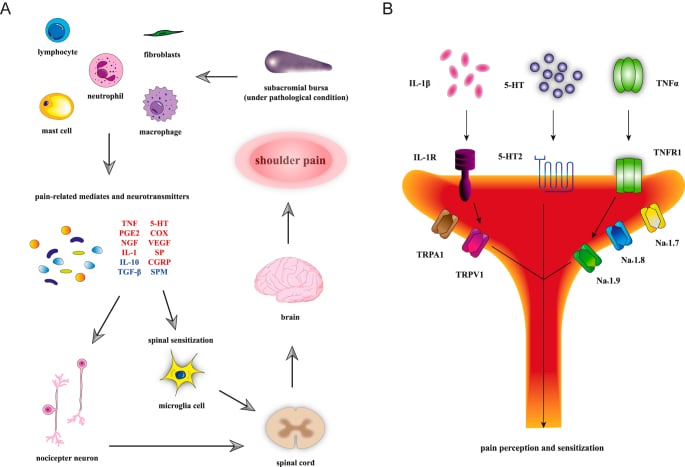
The bursa as a pain generator. An inflamed subacromial bursa produces pain in its own right. Activated immune cells and fibroblasts release mediators that stimulate peripheral nociceptors, and spinal sensitisation amplifies the signal.
Classification Systems
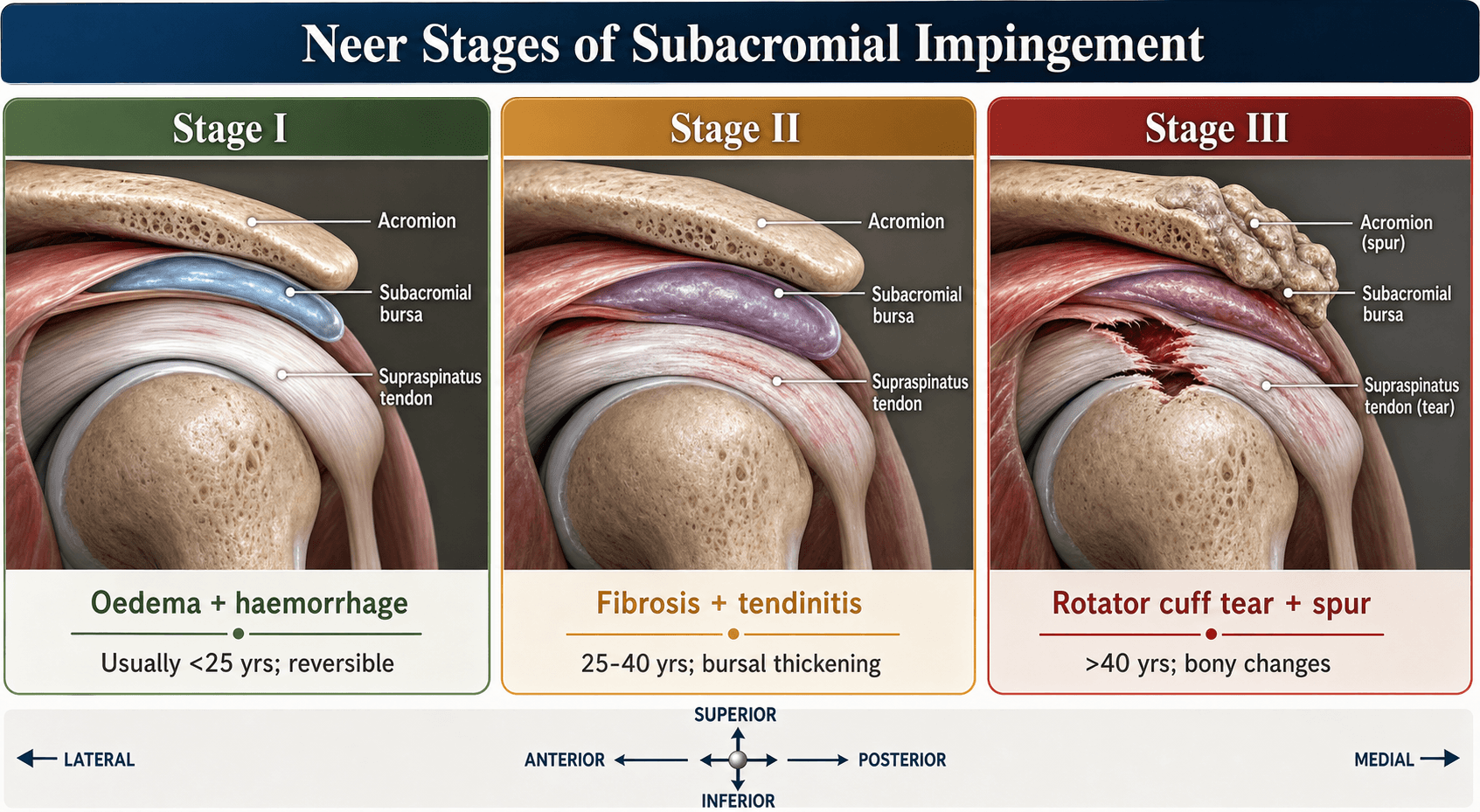
Neer stages. Neer's staging is historical but still clinically relevant. It rests on pathological change and age, and it guides prognosis and treatment.
- Typical Age
- Under 25 years
- Pathology
- Acute inflammatory response to mechanical irritation: bursal oedema, microhaemorrhage in the supraspinatus tendon. Completely reversible with rest and conservative treatment
- Clinical Picture
- Acute-onset pain, positive impingement tests, full strength initially
- Treatment Approach
- Conservative only - rest, NSAIDs, physio
- Typical Age
- 25-40 years
- Pathology
- Chronic inflammation: bursal thickening (3-5mm), tendon fibrosis, early degeneration. Partially reversible - fibrosis persists but symptoms can resolve
- Clinical Picture
- Chronic pain, night pain common, weakness developing, positive impingement tests
- Treatment Approach
- Conservative first; surgery if failed 6 months
- Typical Age
- Over 40 years
- Pathology
- Anterior-inferior acromial spurs, greater tuberosity changes, partial or full-thickness rotator cuff tears. Irreversible - symptom management only
- Clinical Picture
- Chronic pain, weakness, limited ROM, crepitus, positive impingement and cuff tear tests
- Treatment Approach
- Often surgical - may need cuff repair not just decompression
The age ranges are guidelines; the pathological stage matters more than chronological age. A 30-year-old overhead athlete may have Stage III disease while a 50-year-old office worker has Stage I, so MRI and clinical examination determine the stage, not age alone.
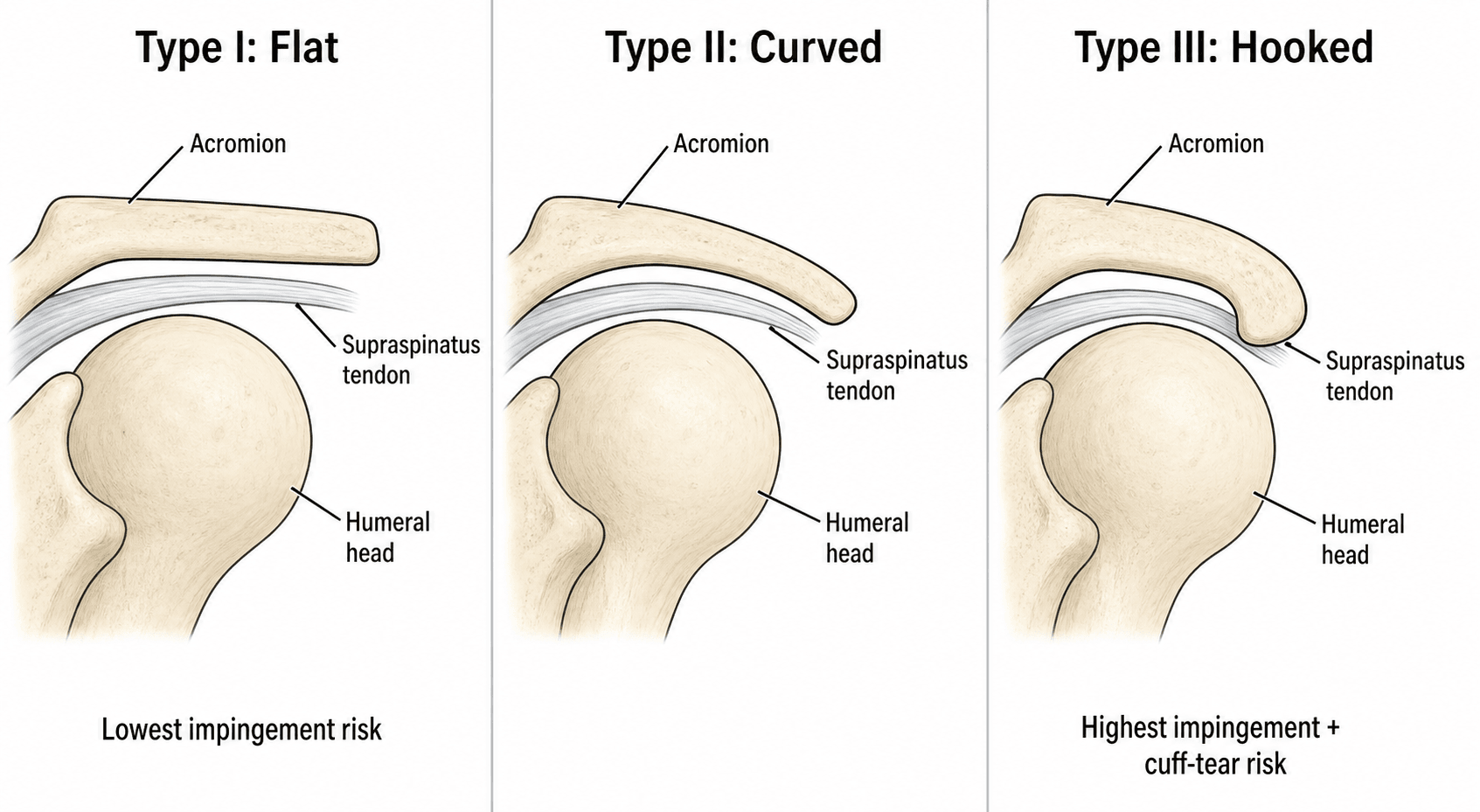
Bigliani acromial morphology. Bigliani described the shape of the acromial undersurface on the outlet view, a scapular Y lateral with 10° of caudal tilt.
- Description
- Flat undersurface, maximum clearance
- Prevalence
- 17% of population
- Impingement Risk
- Low risk (13% develop impingement)
- Description
- Smooth curved undersurface
- Prevalence
- 43% of population
- Impingement Risk
- Moderate risk (24% develop impingement)
- Description
- Anterior hooked/beaked projection
- Prevalence
- 40% of population
- Impingement Risk
- High risk (70% develop impingement)
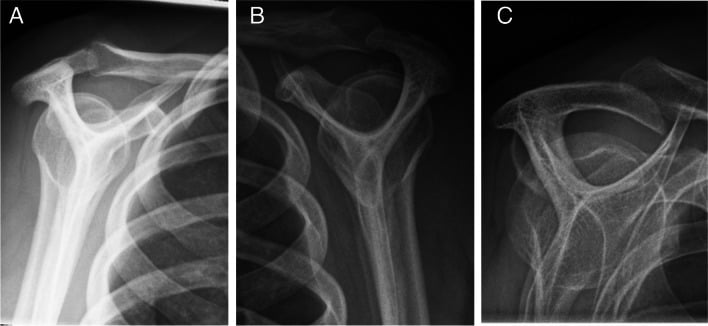
Is a Type III acromion the cause or the effect of impingement? Some evidence suggests that chronic traction on the coracoacromial ligament forms the spur, secondary to impingement. In the exam, acknowledge both possibilities: "Type III acromion is associated with higher impingement rates, though whether this is causative or reactive remains debated."
Clinical Assessment
History. The pain is anterolateral and radiates to the deltoid insertion. Overhead activity, reaching behind the back and sleeping on the affected side aggravate it. Onset may be gradual (chronic) or acute after injury or overuse. Ask about occupation and sport: overhead work (painters, carpenters), swimming, tennis, throwing.
Night pain and weakness. Night pain is common and suggests more advanced disease (Stage II-III). Weakness, difficulty lifting and reaching, suggests the cuff is involved.
Examination.
- Look - muscle atrophy (supraspinatus and infraspinatus wasting), asymmetry
- Feel - tenderness over the anterolateral acromion, AC joint and greater tuberosity
- Move - painful arc, loss of active elevation
- Special tests - impingement tests (Neer, Hawkins-Kennedy) and cuff tests (Jobe, external rotation)
- Neurovascular - exclude cervical radiculopathy and thoracic outlet syndrome
The Neer test. The examiner stabilises the scapula to prevent compensation, then passively elevates the internally rotated arm to maximum forward flexion. The movement forces the greater tuberosity under the acromion, and pain at terminal flexion is positive.
The Hawkins-Kennedy test. With the arm in 90° of forward flexion, the examiner rotates it passively inwards. Pain with the internal rotation is positive.
The Neer injection test. Inject 10ml of lidocaine into the subacromial space and repeat the Neer test. Complete pain relief confirms impingement.
- Positive Finding
- Pain at terminal flexion
- Sensitivity
- 72% (pooled, Hegedus 2012)
- Specificity
- 60% (pooled, Hegedus 2012)
- Positive Finding
- Pain with internal rotation
- Sensitivity
- 79% (pooled, Hegedus 2012)
- Specificity
- 59% (pooled, Hegedus 2012)
- Positive Finding
- Complete pain relief after lidocaine
- Sensitivity
- 75-95%
- Specificity
- 40-70%
- Positive Finding
- Pain between 60-120° of active abduction through 0-180° (most 70-110°)
- Sensitivity
- 33-98% (pooled 53%)
- Specificity
- 10-81% (pooled 76%)
Single-test specificity is poor. Neer and Hawkins-Kennedy are moderately sensitive screening tests, not confirmatory ones, and on their own they produce many false positives; combining tests adds accuracy only marginally. Cluster the tests within a full history and examination, and confirm with the subacromial injection test: complete pain relief is the best diagnostic confirmation and predicts a good response to treatment.
C5 radiculopathy can present with shoulder pain, weakness and positive impingement tests. Always check the Spurling test (cervical compression), the biceps and brachioradialis reflexes and dermatomal sensation. The key distinction is that cervical pathology causes pain with neck movement, not just shoulder movement. Obtain an MRI of the cervical spine if there is diagnostic doubt.
- Pain / History
- Weakness predominates; difficulty initiating abduction; age over 60
- Discriminating Examination
- Positive drop-arm / external-rotation lag sign; weakness not abolished by injection
- Key Investigation
- MRI or ultrasound shows full-thickness defect
- Pain / History
- Global stiffness, diabetic, insidious; night pain
- Discriminating Examination
- Loss of PASSIVE external rotation - the hallmark distinguishing feature
- Key Investigation
- Clinical; X-ray normal, arthrogram shows reduced capsular volume
- Pain / History
- Pain localised to the top of the shoulder
- Discriminating Examination
- Tenderness over AC joint; positive cross-body adduction (scarf) test
- Key Investigation
- X-ray AC views; pain relieved by AC joint injection
- Pain / History
- Deep, activity-related pain; crepitus; older patient
- Discriminating Examination
- Restricted painful rotation; grinding on movement
- Key Investigation
- X-ray shows joint-space loss, osteophytes
- Pain / History
- Neck and radiating arm pain, paraesthesia
- Discriminating Examination
- Positive Spurling test; altered reflexes/dermatomes; neck-driven pain
- Key Investigation
- MRI cervical spine; normal subacromial injection test
- Pain / History
- Acute severe pain, may be self-limiting
- Discriminating Examination
- Marked tenderness, guarding; signs overlap with impingement
- Key Investigation
- X-ray/ultrasound shows calcium deposit in cuff
Investigations
Plain radiographs come first. The series is an AP, an axillary lateral and an outlet view. Radiographs cannot show the cuff or bursa, so a normal film does not rule out impingement. What they can show:
- Acromion shape - Bigliani type on the outlet view
- Acromial spurs on the anterior-inferior undersurface
- AC joint arthritis, inferior osteophytes, distal clavicle hypertrophy
- Greater tuberosity sclerosis, cysts and cortical irregularity (chronic impingement)
- Os acromiale, the unfused acromial apophysis, best seen on the axillary view
- Calcium deposits in the rotator cuff (calcific tendinitis)
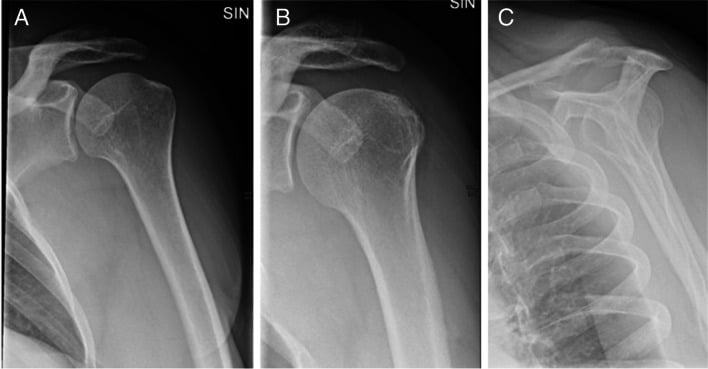
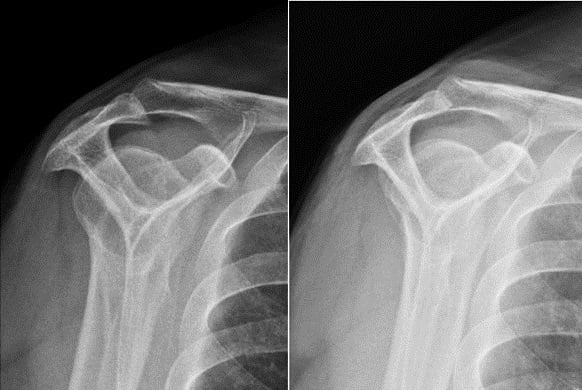
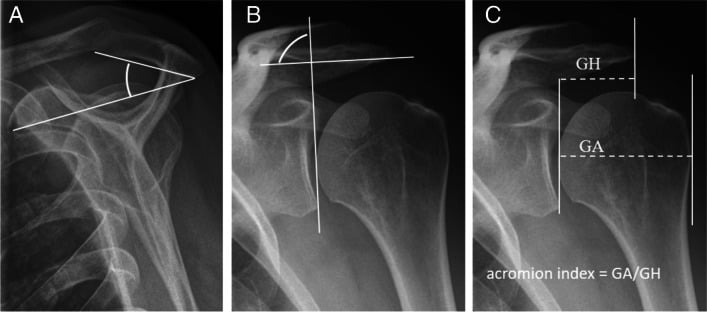
Bigliani acromial shape is subjective and poorly reproducible, so modern practice favours two quantitative measurements of lateral acromial coverage on a true AP radiograph.
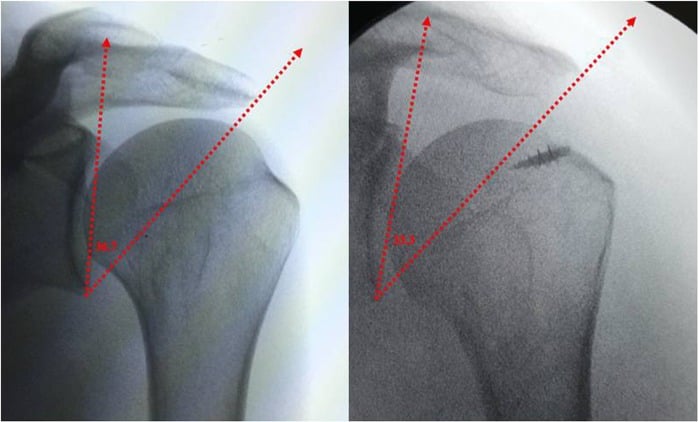
The critical shoulder angle (CSA) is the angle between the line joining the superior and inferior bony margins of the glenoid and the line from the inferior glenoid to the most lateral point of the acromion; normal is roughly 30-35°. A high CSA, more than about 35°, increases the superior shear force the deltoid applies to the humeral head and is associated with degenerative rotator cuff tears. A low CSA, less than about 30°, is associated with primary glenohumeral osteoarthritis. The related acromion index (lateral extent of the acromion relative to the glenoid) carries the same message: a more laterally extending acromion correlates with cuff disease.
A live debate: because the CSA is partly acromial, some advocate lateral acromioplasty to reduce a high CSA, but the evidence that altering the CSA changes outcomes is unproven, so it remains investigational rather than standard practice.
Ultrasound is second line. It shows the shoulder in real time during movement at low cost, and it is operator-dependent, with a sensitivity and specificity for cuff tears of 67-98%. It can show:
- Bursal thickening - normal under 2mm, pathological greater than 3mm
- The subacromial space, measured during abduction (normal 6-14mm)
- Partial and full-thickness cuff tears and tendinosis
- Impingement itself, observed dynamically during active elevation
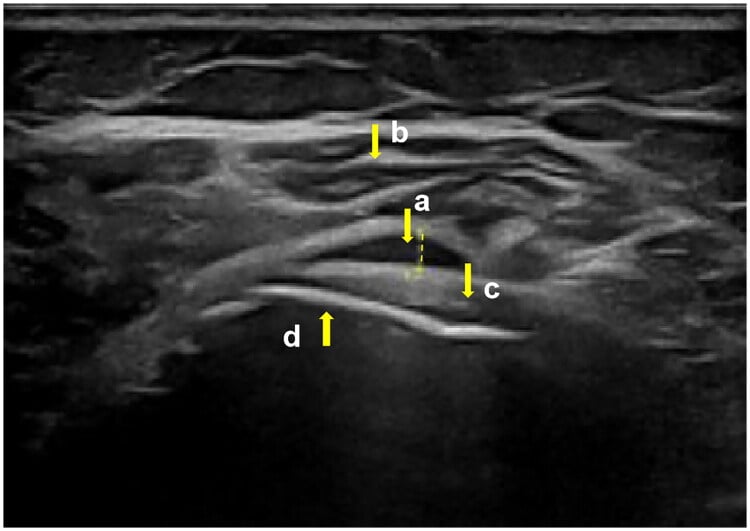
MRI is the gold standard. It is indicated for a suspected cuff tear, after failed conservative treatment and for preoperative planning. Sensitivity is 84-100% for full-thickness tears but 44-91% for partial tears. It shows:
- Subacromial space - fluid, bursal thickening (bright on T2), fibrosis
- Rotator cuff - partial and full-thickness tears, tendinosis, muscle atrophy
- Acromion - bone marrow oedema adjacent to the cuff (chronic impingement)
- AC joint - cartilage loss, osteophytes, effusion
- Labrum and capsule - associated instability (secondary impingement)
- Under 40, acute onset, normal strength - radiographs only, and a trial of conservative treatment
- Over 40, chronic pain, weakness - radiographs and MRI to exclude a cuff tear
- Before any operation - always MRI to assess cuff integrity; do not offer isolated acromioplasty if there is a significant cuff tear, which may need repair
Management Algorithm
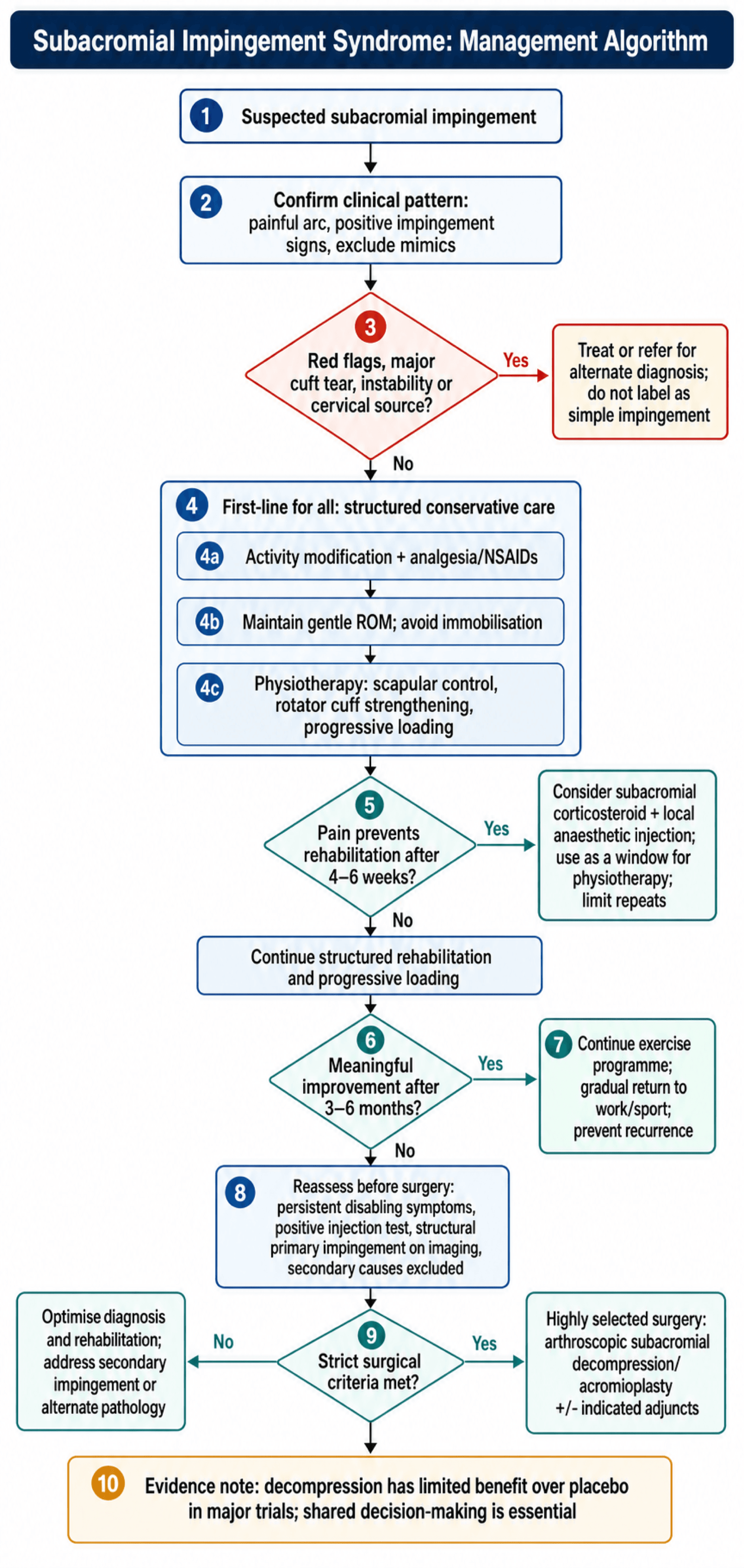
Conservative care first, for everyone. Conservative treatment is first line for all patients. The widely quoted 80-90% response rate is a conventional teaching figure rather than a trial result; what the randomised evidence on this page shows is that structured exercise matches acromioplasty (Ketola, at two and five years) and that surgery does not beat placebo (CSAW, FIMPACT). Allow a minimum 3-6 month trial before considering surgery.
- Stage
- Stage I - Acute inflammation
- First-Line Treatment
- Rest, NSAIDs, early physio
- Key Pearl
- Rule out instability - may be secondary impingement
- Stage
- Stage II - Fibrosis/tendinitis
- First-Line Treatment
- Subacromial steroid injection + structured rehab
- Key Pearl
- Need 3-6 months total conservative trial before surgery
- Stage
- Stage III - Structural changes
- First-Line Treatment
- Consider surgery if failed conservative
- Key Pearl
- Manage cuff tear if present - may need repair not just decompression
The aims are to reduce pain and inflammation, maintain range of motion and prevent stiffness.
Activity modification, from the outset. Avoid overhead activity, repetitive reaching and heavy lifting, and adjust work ergonomics such as desk height and computer position. The patient should avoid lying on the affected side and use a pillow for support. Strict avoidance lasts 2-4 weeks, followed by a gradual return.
Pain control, days 0-14.
- NSAIDs - ibuprofen 400mg TDS or naproxen 500mg BD for 10-14 days
- Paracetamol 1g QID for additional pain relief
- Ice for 15-20 minutes TDS-QID in the acute inflammatory phase
Early physiotherapy, weeks 1-6. Pendulum exercises (passive range of motion) in days 1-7 prevent stiffness, followed by gentle pulley and wand exercises in weeks 1-3 and an early focus on the periscapular muscles for scapular stabilisation. Keep out of the painful range and do not start overhead strengthening too early.
Avoid prolonged immobilisation: over-aggressive rest (complete immobilisation) increases the risk of frozen shoulder (adhesive capsulitis) 2-3 fold. Maintain gentle range of motion from week 1. If passive range is restricted, with external rotation less than 50% of normal, suspect early capsulitis and intensify stretching.
Surgical Management
Where surgery stands. The 2019 BMJ Rapid Recommendation, built on the placebo-controlled CSAW and FIMPACT trials, makes a strong recommendation against subacromial decompression for subacromial pain syndrome. Current practice is highly selective surgery, only after genuine failure of prolonged conservative care, and the criteria below define that patient.
Every one of these is required before surgery is considered:
- Failed conservative treatment for a minimum of 3-6 months (optimal 6 months)
- Persistent symptoms significantly affecting quality of life
- Positive impingement signs on clinical examination
- Positive impingement injection test, confirming subacromial pathology
- Structural abnormality on imaging (Type III acromion, spurs) - primary impingement
- Secondary causes excluded (instability, cuff weakness without a structural lesion)
Contraindications. Secondary impingement, poor rehabilitation compliance, cervical pathology and significant cuff tears, which may need repair.
The operation. Arthroscopic acromioplasty and bursectomy removes the anterior-inferior acromion (5-7mm) and the subacromial bursa.
- Set-up. Beach-chair or lateral decubitus position, with posterior viewing, lateral working and anterior accessory portals. Arthroscope the glenohumeral joint first to exclude labral pathology and articular-side cuff tears.
- Bursectomy. The scope enters the subacromial space through the posterior portal and a shaver debrides the thickened, inflamed bursa. Clearing the space exposes the undersurface of the acromion, the coracoacromial ligament and the rotator cuff.
- Acromioplasty. Identify the anterior-inferior acromion, the impinging prominence, and remove it with a burr to create a flat undersurface. Check that it is smooth with no residual spur. Partial or complete release of the coracoacromial ligament is controversial, because it can cause instability.
- Closure. Check for bleeding and irrigate, then close the portals simply. Postoperative care is set out under rehabilitation.
CSAW (2018, Lancet, n=313) randomised patients to arthroscopic subacromial decompression, investigational arthroscopy only (placebo) or no treatment, and found no clinically important difference between decompression and placebo at 6 months. FIMPACT (2018, BMJ, n=210) compared decompression, diagnostic arthroscopy (placebo) and exercise, and found no benefit of decompression over placebo at 24 months. In the exam, acknowledge this Level 1 evidence.
Complications
- Incidence
- 2-5%
- Risk Factors
- Prolonged immobilisation, diabetic patients
- Management
- Maintain ROM exercises from onset, aggressive stretching if develops
- Incidence
- Rare with under 3 injections/year
- Risk Factors
- Greater than 3 steroid injections annually
- Management
- Limit to 3 injections maximum per year, space 3 months apart
- Incidence
- 5-10% annually
- Risk Factors
- Age over 50, chronic impingement, partial tear
- Management
- Regular review, MRI if worsening weakness
- Incidence
- 10-15%
- Risk Factors
- Secondary impingement, missed cuff tear, inadequate rehab
- Prevention/Management
- Exclude at outset - don't operate on secondary impingement
- Incidence
- 3-8%
- Risk Factors
- Prolonged immobilisation and poor compliance with physiotherapy
- Prevention/Management
- Early ROM from day 1, supervised physiotherapy
- Incidence
- 2-5%
- Risk Factors
- Axillary nerve injury (open), detachment (open)
- Prevention/Management
- Limit deltoid split to less than 5cm from acromion, careful dissection
- Incidence
- Less than 1%
- Risk Factors
- Diabetes, immunosuppression, steroid injection pre-op
- Prevention/Management
- Antibiotic prophylaxis, aseptic technique, delay surgery 3 months post-injection
- Incidence
- 1-3%
- Risk Factors
- Excessive CA ligament release, over-resection of acromion
- Prevention/Management
- Preserve CA arch integrity, limit resection to 5-7mm
Postoperative frozen shoulder. Do not treat it purely as a rehabilitation failure. The BMJ Rapid Recommendation names frozen shoulder as a harm that may be more common with surgery, and it is the harm side of the calculation that produced the strong recommendation against operating. In CSAW the only study-related complications were six frozen shoulders, two in each of the three arms including the no-treatment arm; the signal is modest, but a modest harm with no offsetting benefit still decides the question.
The most common cause of failed acromioplasty is operating on secondary impingement (rotator cuff weakness, instability). These patients have positive impingement signs, but surgery does not address the underlying functional problem. A 25-year-old swimmer with positive impingement tests and subtle instability does not need acromioplasty; they need stability rehabilitation. Young athletes with instability signs should not have acromioplasty. Distinguish primary (structural) from secondary (functional) impingement with a thorough preoperative assessment, and always ask "Why is this patient impinging?" before recommending surgery.
Postoperative Care and Rehabilitation
Rehabilitation Timeline
- Immobilisation: Sling for comfort only (not mandatory)
- Pain control: Ice, analgesics, limit opioids
- Early ROM: Pendulum exercises day 1, passive forward flexion to tolerance
- Goal: Prevent stiffness, control pain
- ROM: Active-assisted ROM all planes, wand exercises
- Sling: Discontinue when comfortable (usually 3-5 days)
- Avoid: Resisted exercises, heavy lifting
- Goal: Full passive ROM by week 2
- Strengthening: Begin rotator cuff and scapular exercises (isometric, then theraband)
- ROM: Full active ROM by week 4-6
- Functional: Light ADLs, desk work
- Goal: Restore muscle balance, endurance
- Advanced strengthening: Progressive resistance, sport-specific exercises
- Return to work: Manual labour by week 8-12 (depending on demands)
- Return to sport: Overhead athletes week 12-16
- Goal: Full function, return to activities
Missed milestones. Failure to reach these milestones suggests a complication, frozen shoulder or re-impingement: investigate, and intensify the physiotherapy.
Outcomes and Prognosis
- Short-term (3-6 months)
- 60-70% improvement
- Long-term (1-2 years)
- 50-60% sustained
- Notes
- Best for Stage I, younger patients
- Short-term (3-6 months)
- 70-80% improvement
- Long-term (1-2 years)
- 60-70% sustained
- Notes
- Standard first-line approach
- Short-term (3-6 months)
- 75-85% improvement
- Long-term (1-2 years)
- 65-75% sustained
- Notes
- Injection benefits mainly short-term (under 12 weeks)
- Traditional Series
- 75-85% significant improvement
- CSAW Trial (2018)
- No difference vs sham surgery
- Interpretation
- Questions whether improvement is due to surgery or placebo/natural history
- Traditional Series
- 70-80% return to work/sport
- CSAW Trial (2018)
- Similar improvement in all 3 groups (surgery, sham, conservative)
- Interpretation
- Suggests natural improvement over time regardless of treatment
- Traditional Series
- 80-85% satisfied
- CSAW Trial (2018)
- High satisfaction in all groups including sham
- Interpretation
- Highlights powerful placebo effect of surgery
"Similar improvement" in CSAW needs one qualification, which the trial's evidence card gives: both surgical arms did beat no treatment, but by less than the pre-specified clinically important difference.
What predicts a good result.
- Age under 50 - better outcomes with both conservative and surgical treatment
- Short symptom duration (less than 6 months) - responds better to conservative treatment
- Positive injection test - predicts a good surgical outcome, if the impingement is structural
- Type III acromion with a spur - a clear structural abnormality, if the impingement is primary
- Good rehabilitation compliance - critical for both conservative and surgical success
What predicts a poor result.
- Secondary impingement - surgery fails, because the instability or cuff weakness is not addressed
- Workers' compensation claims - associated with worse outcomes (psychological factors)
- Chronic symptoms over 2 years - lower success rates
- Significant cuff tear - needs cuff repair, not just decompression
- Smoking and diabetes - delayed healing, higher complication rates
The 75-85% good to excellent results of the traditional case series predate 2018; CSAW's placebo-controlled result challenged them. Surgery may still benefit highly selected patients (failed prolonged conservative treatment, clear structural abnormality, positive injection test), but expectations should be moderated given the trial evidence. Quote realistic outcomes: "50-75% chance of significant improvement, but this may occur with continued conservative treatment as well."
Guidelines, Registries & Global Practice
Global Epidemiology
Shoulder pain is one of the three most common musculoskeletal presentations in primary care worldwide, and subacromial pain syndrome (the umbrella term now preferred over "impingement") accounts for the largest share of these complaints. Reported point prevalence of shoulder pain in adults ranges widely (roughly 7-26%) depending on case definition and population, with rotator-cuff related pain rising steeply with age and overhead occupational or sporting load. The condition is a leading driver of musculoskeletal disability and work absence globally, which is why the marginal effectiveness of surgery (CSAW, FIMPACT) carries such large system-level cost implications.
Major Guidelines Side by Side
- Position on Surgery
- Strong recommendation AGAINST subacromial decompression for atraumatic SAPS
- First-Line Care
- Education, analgesia, exercise therapy, selective injection
- Evidence Level
- GRADE - high-certainty evidence from CSAW + FIMPACT
- Position on Surgery
- Surgery not routine; reserve for failure of prolonged structured non-operative care
- First-Line Care
- Structured physiotherapy first; injection as adjunct
- Evidence Level
- Aligned with Level 1 RCT evidence
- Position on Surgery
- No strong endorsement of routine acromioplasty for isolated SAPS
- First-Line Care
- Exercise-based rehabilitation, activity modification
- Evidence Level
- Moderate / limited strength recommendations
- Position on Surgery
- Emphasises conservative care; surgery individualised for clear structural pathology
- First-Line Care
- Supervised exercise, scapular and cuff rehabilitation
- Evidence Level
- Consensus informed by RCT evidence
Registry and Practice Variation
There is no dedicated arthroplasty-style registry for soft-tissue shoulder procedures, but national hospital-episode datasets show that publication of CSAW and FIMPACT was followed by a documented fall in subacromial decompression rates in several high-income health systems. Substantial practice variation persists: decompression remains comparatively common where it is bundled with diagnostic arthroscopy or driven by procedure-based remuneration, while it is increasingly deprescribed in systems that have adopted the GRADE recommendation against it. In limited-resource settings the emphasis is overwhelmingly on exercise and analgesia, with arthroscopy reserved for the few centres with the equipment and expertise.
- Frame as subacromial pain syndrome (SAPS), not a purely mechanical "impingement" requiring decompression
- Discuss CSAW and FIMPACT - decompression no better than placebo surgery
- Offer a structured, supervised exercise programme as the primary treatment
- Reserve referral for surgery for clear structural pathology after genuine failure of prolonged non-operative care
- Informed consent: explicitly convey the placebo-controlled trial evidence and the GRADE recommendation against surgery
- Documentation: record non-operative treatment timeline, injection response and patient expectations
- Failure to improve: an expected outcome if adequately counselled, not necessarily a complication
- Alternative options: document discussion of continued conservative management versus surgery
Specific points to document in consent discussion:
- Success rate: 75-85% good-excellent results, but 10-15% no improvement (based on older data; CSAW suggests lower benefit)
- Recent evidence: CSAW and FIMPACT trials showed no benefit over placebo surgery, and the 2019 BMJ Rapid Recommendation advises against surgery - explain why still considering it in this individual (clear structural factors, failed prolonged conservative treatment)
- Complications: Infection (less than 1%), stiffness (3-8%), persistent pain (10-15%), nerve injury (rare, less than 1%)
- Recovery: 3-6 months to full function, early physiotherapy critical
- Alternative: Continued conservative treatment is a valid option even after failed initial trial
Medicolegal claims often arise from failure to discuss realistic expectations and recent evidence.
MCQ Practice Points
Q: The subacromial space is bounded superiorly by which structure? A: Coracoacromial arch (anterior acromion, coracoid process, and coracoacromial ligament). The inferior boundary is the superior surface of the rotator cuff (supraspinatus primarily). Normal subacromial space height is 7-14mm.
Q: According to Bigliani classification, which acromion type has the highest association with rotator cuff tears? A: Type III (hooked acromion) - 70% association with rotator cuff tears vs 24% for Type II (curved) and 13% for Type I (flat). Type III represents 40% of the population.
Q: What is the most specific test for diagnosing subacromial impingement syndrome? A: Neer impingement injection test - 10ml lidocaine injected into subacromial space. Complete pain relief (greater than 50% reduction) on repeat provocative tests confirms subacromial pathology. Sensitivity 75-95%, specificity 40-70%. Also predicts response to surgical decompression.
Q: The CSAW trial (2018) compared arthroscopic subacromial decompression to what control? A: Sham surgery (arthroscopic portal incisions without decompression) and active monitoring. Result: No significant difference in outcomes at 6-12 months. This Level 1 evidence challenged routine use of acromioplasty and emphasized conservative treatment.
Q: What is the minimum duration of conservative treatment recommended before considering surgery for subacromial impingement? A: 3-6 months of structured conservative treatment (physiotherapy, NSAIDs, ± steroid injection). 6 months is optimal. The 80-90% figure usually quoted for conservative response is conventional teaching rather than a trial endpoint; the defensible statement is that structured exercise performs as well as surgery in the randomised trials. Premature surgery (less than 3 months) is a common cause of poor outcomes.
Q: What is the most common cause of failed arthroscopic subacromial decompression? A: Operating on secondary impingement (functional impingement due to rotator cuff weakness or instability). These patients have positive impingement signs but no structural narrowing - surgery does not address the underlying problem. Always distinguish primary (structural) from secondary (functional) impingement before recommending surgery.
Exam Viva Scenarios
Practise clinical reasoning and management decisions out loud
“A 52-year-old painter presents with 6 months of progressive right shoulder pain. He has difficulty working overhead and has night pain. Examination shows positive Neer and Hawkins-Kennedy tests, painful arc 70-110°, full strength on rotator cuff testing. X-ray shows a Type III acromion with small anterior-inferior spur. How would you assess and manage this patient?”
“A 28-year-old competitive swimmer presents with 4 months of shoulder pain during training. She has positive impingement signs. You also note positive apprehension and relocation tests. MRI shows subacromial bursal fluid but no cuff tear, normal labrum. How would you approach this case?”
“A 58-year-old manual laborer has failed 9 months of conservative treatment for subacromial impingement. He's had physiotherapy, 2 steroid injections with temporary relief only. X-ray shows Type III acromion with prominent spur. MRI shows bursal thickening, no rotator cuff tear. He's requesting surgery. How do you counsel him about surgical options and evidence?”
Key Anatomy
- Subacromial space = 7-14mm height (under 7mm = impingement risk)
- Boundaries: Superior = coracoacromial arch, Inferior = rotator cuff (supraspinatus)
- Bigliani Type III (hooked) acromion = 70% cuff tear association (vs 13% Type I flat)
- Structures at risk: Supraspinatus tendon, long head biceps, subacromial bursa
Classification
- Neer Stage I (under 25) = edema/hemorrhage = reversible = conservative only
- Neer Stage II (25-40) = fibrosis/tendinitis = conservative first, surgery if failed 6 months
- Neer Stage III (over 40) = spurs/tears = often surgical
- Primary (structural: acromion, spurs, AC joint) vs Secondary (functional: cuff weakness, instability)
Clinical Tests
- Neer test (passive forward flexion) = pooled sensitivity 72%, specificity 60% (Hegedus 2012)
- Hawkins-Kennedy (IR at 90° flexion) = pooled sensitivity 79%, specificity 59%
- Painful arc more specific (76%) - cluster tests rather than rely on one
- Neer injection test (10ml lidocaine subacromial) = abolition of pain confirms subacromial source = BEST diagnostic confirmation
Treatment Algorithm
- ALL patients: Conservative first - NSAIDs, physio (cuff/scapular strengthening), activity modification
- Failed 4-6 weeks: Add subacromial steroid injection (short-term benefit only, max 3/year)
- Failed 3-6 months (optimal 6): Consider surgery IF positive injection test + structural abnormality
- Surgery: Arthroscopic decompression (acromioplasty + bursectomy) - 75-85% success but CSAW trial showed no benefit over sham
Surgical Pearls
- Resect 5-7mm anterior-inferior acromion (excessive = instability risk)
- Complete bursectomy for visualization
- Assess cuff from articular side first (exclude tears needing repair)
- Early ROM day 1 postop (prevent stiffness), strengthen from week 2
Evidence Base and Key Trials
CSAW Trial - Arthroscopic Subacromial Decompression vs Placebo Surgery
- Multicentre placebo-controlled RCT across 32 UK hospitals: 313 patients with at least 3 months of subacromial pain and intact cuff, randomised to arthroscopic decompression (n=106) vs investigational arthroscopy only / placebo (n=103) vs no treatment (n=104)
- Primary outcome Oxford Shoulder Score at 6 months: decompression 32.7 vs arthroscopy-only 34.2, mean difference -1.3 points (95% CI -3.9 to 1.3) - not significant
- Both surgical groups beat no treatment but below the pre-specified clinically important difference of 4.5 points: decompression versus no treatment 2.8 points (95% CI 0.5-5.2, p=0.0186) and arthroscopy-only versus no treatment 4.2 points (1.8-6.6, p=0.0014)
- ELIGIBILITY MATTERS WHEN QUOTING THIS TRIAL: every participant had already completed a non-operative programme including exercise therapy AND at least one steroid injection, so these are treatment-refractory patients, not an unselected clinic population
- All six study-related complications were frozen shoulder (two per group)
FIMPACT Trial - Decompression vs Placebo Arthroscopy vs Exercise
- Finnish three-group, double-blind, sham-controlled RCT: 210 patients with shoulder impingement randomised to arthroscopic decompression vs diagnostic arthroscopy (placebo) vs exercise therapy
- At 24 months, no clinically relevant difference between decompression and placebo arthroscopy: pain at rest -4.6 points (95% CI -11.3 to 2.1, P=0.18) and on activity -9.0 points (-18.1 to 0.2, P=0.054). The activity comparison came close to statistical significance and was still nowhere near the 15-point MCID - a clean illustration that a nearly significant result can be clinically meaningless
- Decompression did beat exercise therapy on both primary outcomes with statistical significance (-7.5 at rest, P=0.023; -12.0 on activity, P=0.008), but neither reached the 15-point MCID - and the authors disown the comparison themselves, noting it is unblinded and biased in favour of surgery by the selective removal of patients likely to do badly from the decompression arm, with no comparable exclusions from the exercise arm
- Reinforces CSAW: decompression provides no benefit over placebo arthroscopy
Acromial Morphology and Subacromial Enthesophytes (Bigliani classification)
- Anatomical study of 423 dried scapulae applying the Bigliani classification (originally described in Orthop Trans 1986) plus a fourth convex type
- Distribution: type I flat 12.1%, type II curved 56.5%, type III hooked 28.8%, type IV convex 2.6%
- Coracoacromial-ligament enthesophytes were present in 46 of 122 type III acromions (37.7%) versus 19 of 239 type II (7.9%), 1 of 51 type I (2%) and NONE of the 11 type IV (p less than 0.05); 66 of 423 scapulae (15.6%) overall
- In every case the enthesophyte sat at the coracoacromial ligament insertion on the acromion
- Type III morphology with an enthesophyte is the combination most strongly associated with impingement and cuff tears
Corticosteroid Injections for Shoulder Pain - Cochrane Review
- Systematic review of 26 RCTs of corticosteroid injection for shoulder pain
- For rotator cuff disease, subacromial steroid showed a small benefit over placebo in some trials
- Pooled results of three trials showed no benefit of subacromial steroid over NSAID
- Any effect was small and not well maintained; methodological quality was variable