Hindfoot Degeneration | Loss of Inversion/Eversion | Posttraumatic Most Common
- Subtalar motion is coupled with ankle, talonavicular, calcaneocuboid and midfoot mechanics; a single normal arc is not universal
- Post-traumatic arthritis may include calcaneal height loss, width/translation, varus/valgus, peroneal/subfibular impingement and avascular bone
- Map weight-bearing alignment and every adjacent joint before choosing an isolated, double, triple or tibiotalocalcaneal procedure
- Image-guided injection can support pain localisation but percentage relief is not a validated fusion gate
- Arthrodesis technique and loading follow biology, deformity, contact and fixation rather than one screw count or calendar
- “Distinguish isolated arthritis from malunion and multi-joint disease
- “CT maps morphology and union/contact; MRI answers selected marrow/soft-tissue questions
- “Broden and Harris views are adjuncts, not universal gold standards
- “Correct only the deformity components demonstrated and functionally relevant
Overview and Epidemiology
Subtalar arthritis is degenerative disease of the subtalar joint, most commonly after an intra-articular calcaneal fracture. The joint is a complex of three facets, anterior, middle and posterior, between the talus and the calcaneus, and it supplies the hindfoot inversion and eversion that let the foot walk on uneven ground.
Who. Most cases follow a calcaneal or talar fracture. Post-traumatic disease peaks at 40-60 years, and men outnumber women 3:1, which reflects the trauma pattern. Primary osteoarthritis, the inflammatory arthropathies (rheumatoid, psoriatic, seronegative) and tarsal coalition make up the rest of the aetiological classification below.
What it costs. Subtalar motion is essential to normal gait mechanics. Without it the hindfoot is stiff and shock absorption is reduced. Loss of this motion also causes compensatory stress at the adjacent joints, the ankle and midfoot, with a risk of secondary arthritis there over time. It significantly impairs function on slopes and irregular surfaces.
Pathophysiology and Mechanisms
The three facets. The posterior facet is the largest, the middle facet sits medially on the sustentaculum tali, and the anterior facet, the smallest, lies on the talar head as part of the talocalcaneonavicular complex. This anatomy governs surgical planning and the choice of approach; the table gives each facet's share of the load and its clinical significance.
- Location
- Large facet on posterior calcaneus
- Load Bearing
- 70-80% of subtalar load
- Clinical Significance
- Most commonly arthritic - primary surgical target
- Location
- Sustentaculum tali (medial)
- Load Bearing
- 15-20% of subtalar load
- Clinical Significance
- Support structure - involved in coalition and inflammatory disease
- Location
- Talar head (shares with TN joint)
- Load Bearing
- 5-10% of subtalar load
- Clinical Significance
- Continuous with talonavicular joint - may have combined pathology
Motion. The joint provides mainly inversion and eversion, an arc of 20-30° in total. That arc and the load shares in the table are single figures for a joint that does not behave singly: the facets contribute differently across stance, and inversion and eversion are coupled with talonavicular, calcaneocuboid, ankle and midfoot motion. Compare the two sides and the patient's function rather than quote one arc or load percentage. What the motion does:
- With ankle dorsiflexion, subtalar eversion unlocks the midfoot
- With ankle plantarflexion, subtalar inversion locks the midfoot
- It dampens impact forces at heel strike
- It lets the foot conform to uneven surfaces
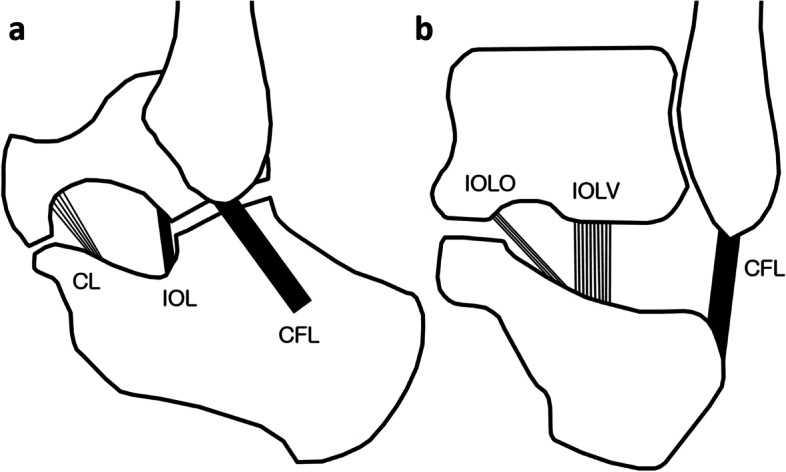
The post-traumatic pathway. An intra-articular calcaneal fracture leaves an incongruous joint surface. The cartilage is damaged both directly at injury and by abnormal loading, and a malunion alters the mechanics further and accelerates degeneration. A Bohler angle below 20° correlates with arthritis risk, and symptoms typically develop 1-5 years after injury.
What the fracture leaves behind. Prior calcaneal or talar injury can add height loss, widening, translation, varus or valgus malalignment, a bone void or avascular bone, and adjacent-joint disease to the arthritis itself. These features, not the trauma label alone, drive the reconstruction. Posterior-facet collapse in particular can leave compromised perfusion and a subchondral void after reduction, which influences the biology of any later fusion.
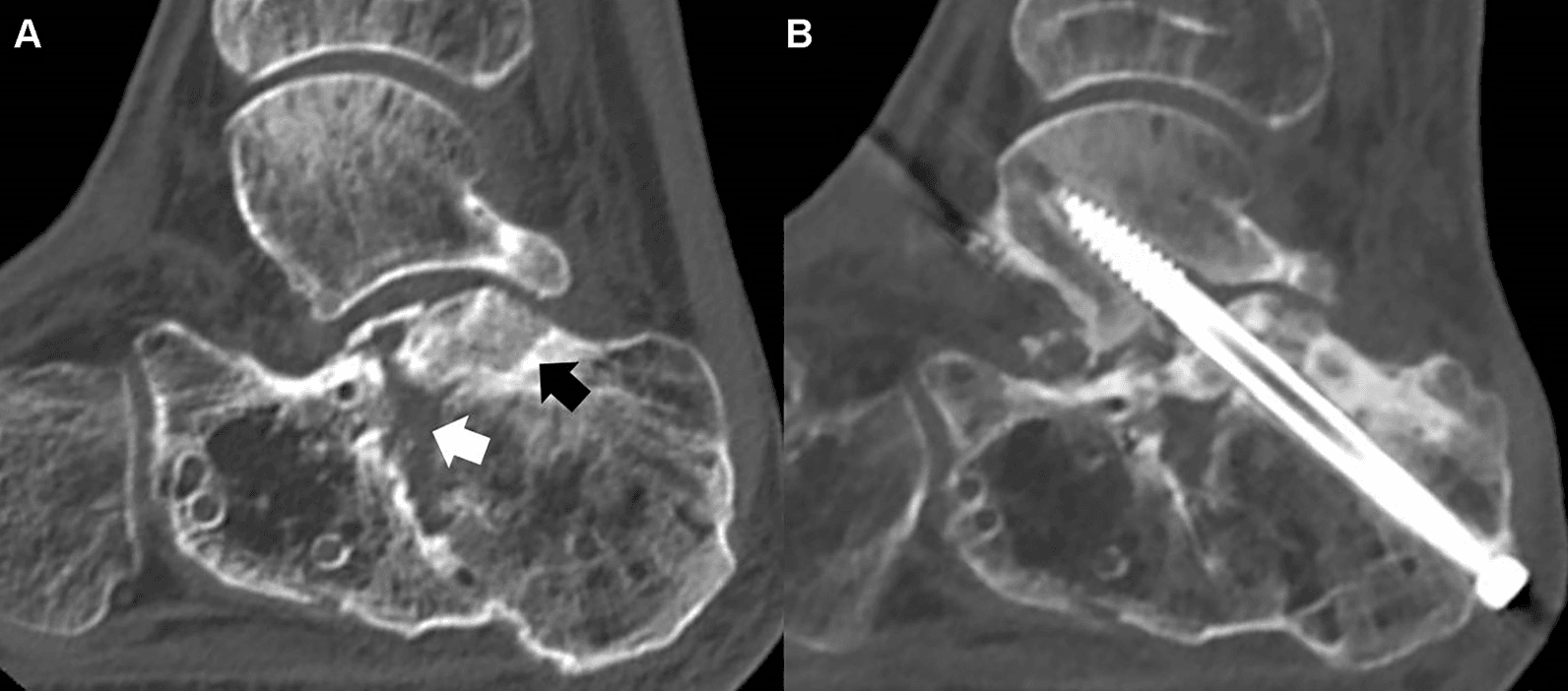
Primary, inflammatory and other pathways. Primary osteoarthritis is rare in isolation and usually associated with hindfoot malalignment or other hindfoot pathology. Inflammatory disease includes rheumatoid, psoriatic and ankylosing spondylitis arthropathy. A tarsal coalition imposes chronic abnormal stress, and a cavus or planovalgus foot overloads the joint mechanically. Their progression often involves multiple hindfoot joints.
Classification and Grading
- Aetiology
- Prior calcaneal or talar fracture
- Percentage
- 70-80%
- Treatment Considerations
- Most common - address malunion, correct alignment
- Aetiology
- Idiopathic degeneration
- Percentage
- 10-15%
- Treatment Considerations
- Rare - rule out biomechanical causes
- Aetiology
- Rheumatoid, psoriatic, seronegative
- Percentage
- 5-10%
- Treatment Considerations
- Systemic disease management essential
- Aetiology
- Tarsal coalition with secondary changes
- Percentage
- 5%
- Treatment Considerations
- Consider coalition resection if appropriate age
The Rammelt-Zwipp Calcaneal-Malunion Classification
Rammelt-Zwipp Types I–V are a descriptive framework for escalating calcaneal-malunion components:
- Type I: arthritis without material malalignment.
- Type II: adds hindfoot varus/valgus.
- Type III: adds height loss and altered talar inclination.
- Type IV: adds lateral calcaneal translation/fibular abutment.
- Type V: adds talar/ankle-mortise malalignment.
- Bone status can be described separately as malunion, nonunion or osteonecrosis/infection.
The classification prompts a checklist; it does not prescribe one operation per number. Fusion, bone block, osteotomy, lateral-wall/peroneal work, ankle procedure and staging follow measured deformity, symptoms, biology and reconstructability.
Higher types describe additional components, not mandatory procedures. State what you must correct and why rather than reciting a fixed operation.
Clinical Presentation
History. Pain sits in the sinus tarsi, over the lateral hindfoot, or deep in the heel, and is worse on uneven ground, on stairs and with prolonged walking. Morning stiffness improves with activity at first. Descending stairs hurts because it loads the foot in plantarflexion. Ask about a previous calcaneal or talar fracture.
Function. Patients report difficulty with:
- Walking on slopes and uneven surfaces
- Running, significantly limited or impossible
- Work that demands prolonged standing or manual labour
- Hiking and sport
- An antalgic limp that avoids inversion and eversion
Inspection. Stand the patient and assess hindfoot alignment (varus, valgus or neutral), then watch the gait for stiffness and an antalgic pattern. Look for the scars of calcaneal fracture fixation. Fullness over the sinus tarsi and lateral hindfoot oedema are common.
Palpation. Tenderness is focal in the sinus tarsi, lateral to the talus and anterior to the lateral malleolus. The subtalar joint line is palpable posteriorly and tender on deep palpation. A healed fracture may leave the calcaneus widened, with a lateral prominence.
Motion. Compare inversion, eversion and the hindfoot response with the opposite side and with the adjacent joints; the normal arc varies, and pain or guarding can mimic rigidity. Test the ankle and the midfoot, including Chopart joint mobility, separately, because combined pathology changes the procedure and the prognosis. Then the special tests:
- Subtalar stress test - stabilise the talus and move the calcaneus into inversion and eversion; pain and restriction indicate pathology
- Anterior drawer - rules out ankle instability as the pain source
- Talonavicular stress - looks for combined pathology, which bears on whether a triple fusion is needed
Hindfoot pain can arise from ankle, subtalar, talonavicular, calcaneocuboid, sinus-tarsi, peroneal, impingement, nerve or infection pathology.
Investigations
Radiographs. Weight-bearing films come first, and the views are tailored to the deformity:
- AP, lateral and oblique foot - subtalar joint space, calcaneal morphology and the adjacent joints
- AP ankle and hindfoot-alignment views - alignment
- Broden views - profile the posterior facet
- Harris axial - helps with width and alignment
Neither the Broden nor the Harris view is universally definitive; both are adjuncts.
- Significance
- Cartilage loss - grade severity (mild, moderate, severe)
- Best View
- Broden views (posterior facet), lateral foot
- Significance
- Chronic stress and bone remodelling
- Best View
- CT scan shows best detail
- Significance
- Marginal bone formation - present from grade 1, graded with severity
- Best View
- Lateral foot, CT coronal views
- Significance
- Posttraumatic loss of calcaneal height
- Best View
- Lateral foot radiograph
- Significance
- Clinically relevant malalignment is corrected during fusion
- Best View
- Harris axial view, weight-bearing AP ankle
CT. Multiplanar weight-bearing or conventional CT maps the joint surfaces, calcaneal height, width and translation, bone void and avascularity, coalition, osteophytes, impingement, the adjacent joints and, after surgery, fusion contact and union.
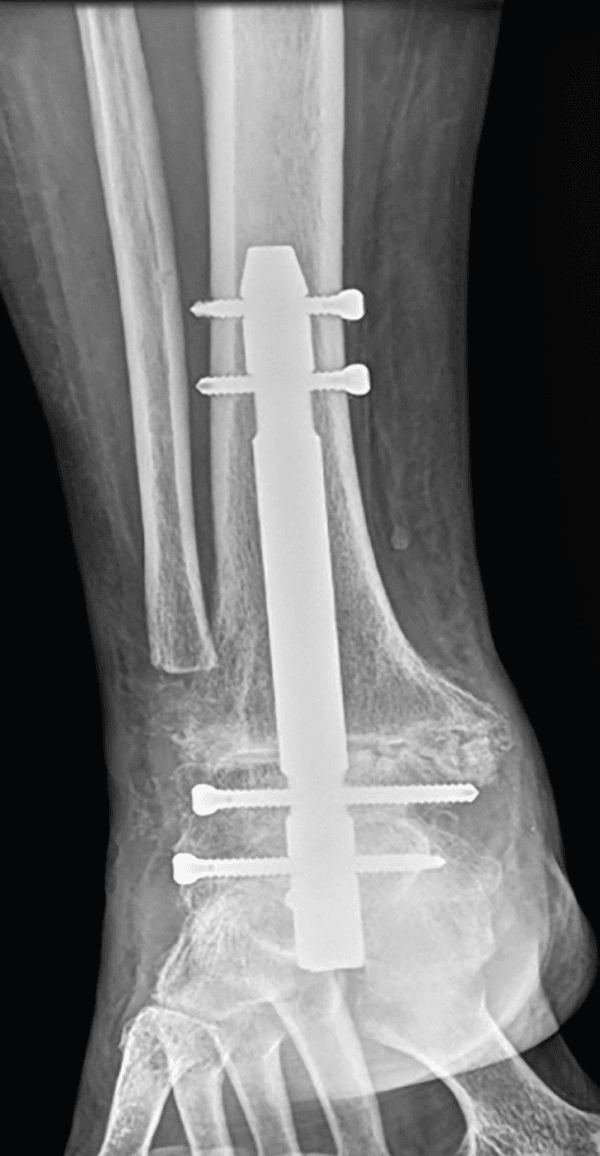
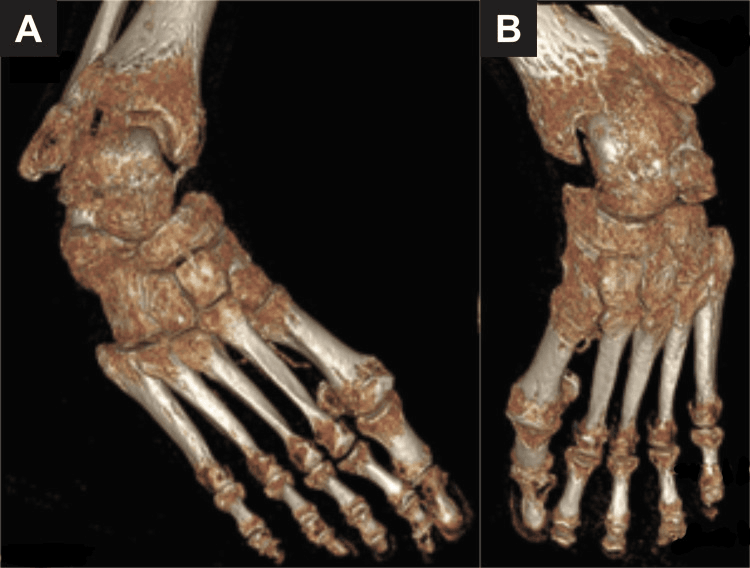
MRI. Reserve it for a question it can answer and that changes care: marrow oedema, an occult stress injury, sinus-tarsi, ligament or tendon pathology, infection, or another soft-tissue differential.
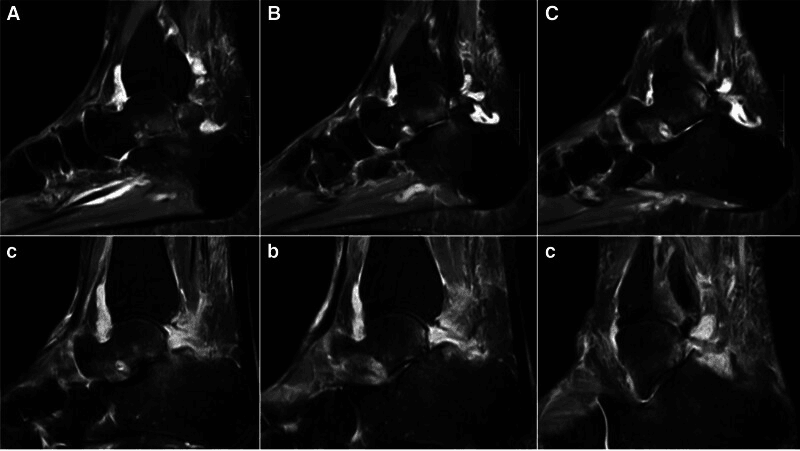
Diagnostic injection. An image-guided local anaesthetic injection can modify pain and help localise the source in a complex hindfoot. Confirm intra-articular placement with fluoroscopy or ultrasound as appropriate, and record the immediate change in a specific painful task. Contrast and anaesthetic spread, and mixed or multi-joint disease, limit its specificity, so a partial or absent response is informative but does not prove or exclude the joint. There is no universal relief threshold: 75% relief does not confirm the diagnosis.
Differential Diagnosis
Lateral/posterior hindfoot pain is non-specific. Build concordance across history, examination, weight-bearing alignment and targeted CT/MRI; use image-guided block only when it adds useful localization.
- Distinguishing Features
- Sinus tarsi pain, worse on uneven ground, restricted inversion/eversion
- Key Test
- Weight-bearing views/CT plus optional task-linked injection
- Pitfall
- Mild radiographic change can still be symptomatic
- Distinguishing Features
- Focal sinus tarsi tenderness, often after sprain, joint space preserved
- Key Test
- MRI (synovitis/fibrosis), sinus tarsi block
- Pitfall
- Mislabelled as arthritis - no joint-space loss on CT
- Distinguishing Features
- Anterior ankle pain, worse with dorsi/plantarflexion arc
- Key Test
- Weight-bearing ankle films, ankle block
- Pitfall
- Fusing the subtalar joint will not relieve ankle pain
- Distinguishing Features
- Retromalleolar pain/swelling, pain on resisted eversion
- Key Test
- MRI/dynamic ultrasound
- Pitfall
- Tendon tear coexists with calcaneal malunion (lateral wall)
- Distinguishing Features
- Diffuse deep pain, history of steroid/trauma
- Key Test
- MRI bone marrow oedema
- Pitfall
- Plain films often normal early
- Distinguishing Features
- Younger patient, rigid flatfoot, recurrent sprains
- Key Test
- CT/MRI (talocalcaneal middle facet)
- Pitfall
- May be the underlying cause, not a separate diagnosis
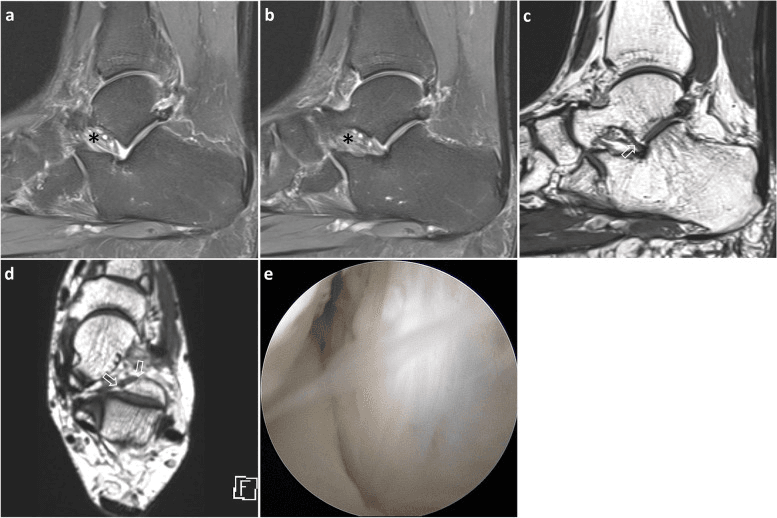
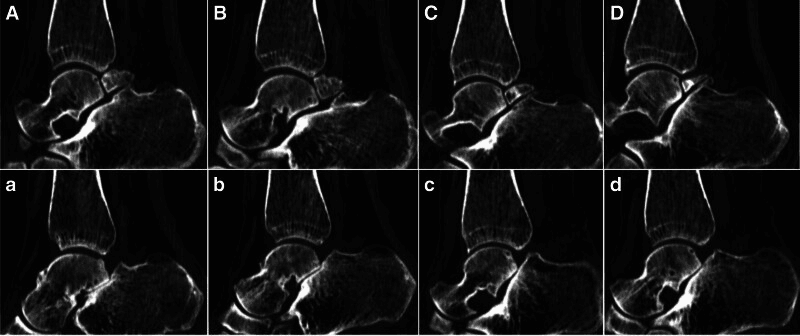
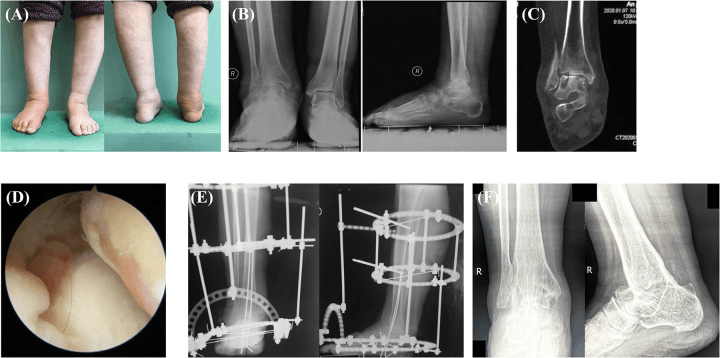
Calcaneal Malunion: the Sequelae That Make In-Situ Fusion Insufficient
Calcaneal malunion may combine subtalar cartilage loss with height loss/talar dorsiflexion, widening/lateral-wall or peroneal impingement, translation, varus/valgus and shoe-fit problems.
- Height/talar declination: distraction bone block is considered when restoring height is expected to relieve anterior ankle mechanics and improve alignment—not whenever height is reduced.
- Lateral wall/translation: decompression, peroneal treatment and/or osteotomy follow demonstrated impingement and translation.
- Alignment: correct clinically meaningful varus/valgus while avoiding overcorrection.
- Biology: avascular posterior-facet fragments, voids, infection/nonunion and soft tissue change graft/fixation/staging.
In-situ fusion may remain appropriate when these extra-articular/deformity components are absent or clinically unimportant.
Map height, width, translation, alignment, anterior/subfibular/peroneal impingement and bone viability. Add bone block, osteotomy or decompression only for the components that need correction.
Management Algorithm
Non-operative care. Match activity, footwear or a rocker sole, a brace or orthosis, analgesia and rehabilitation to the patient's pain, alignment, motion and comorbidity. Weight reduction and control of systemic inflammatory disease may matter.
Injection as treatment. Beyond localisation, an image-guided injection is an option for temporary symptom relief. Choose the local anaesthetic and steroid appropriately, and counsel about spread, transient response and risks. Neither one injection nor six months of treatment is mandatory before surgery is discussed.
- Required Map
- Subtalar morphology, alignment, ankle and midfoot
- Possible Pathway
- Continued non-operative care or isolated fusion
- Avoid
- Automatic triple fusion
- Required Map
- Talonavicular, calcaneocuboid, ankle and deformity
- Possible Pathway
- Selective double/triple/TTC strategy
- Avoid
- Fusing an asymptomatic joint by name
- Required Map
- Height, width, translation, varus/valgus, impingement and bone biology
- Possible Pathway
- Fusion plus selected bone block/osteotomy/decompression
- Avoid
- In-situ fusion without deformity assessment
- Required Map
- Organism/source, perfusion, skin and protective sensation
- Possible Pathway
- Staged source control or modified/salvage plan
- Avoid
- Routine elective fusion pathway
Surgical Technique
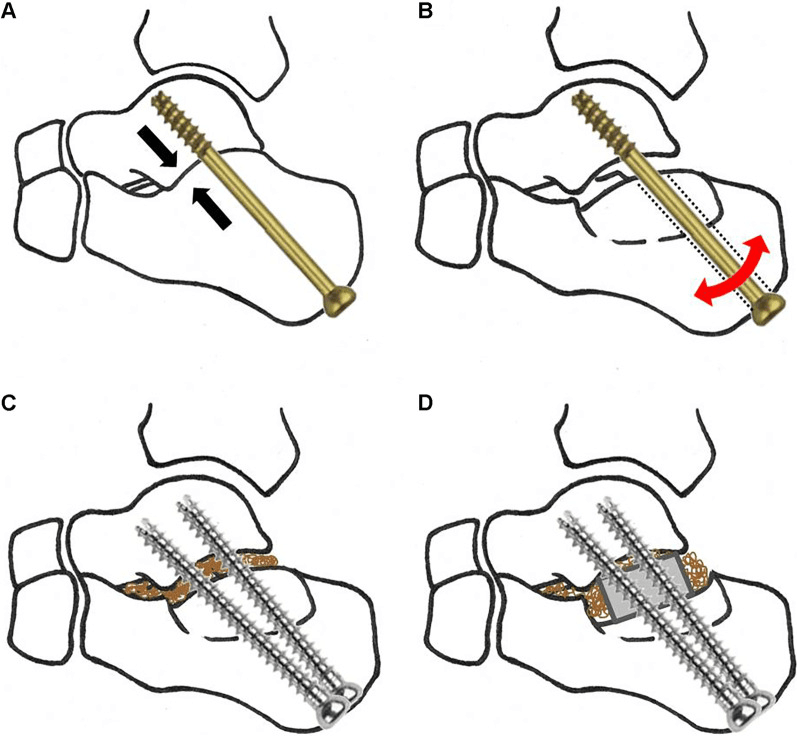
The operation, step by step:
- Choose the position and approach (open sinus tarsi, posterior arthroscopic or other) from the deformity, the skin, prior scars and the compartments that must be reached.
- Protect the sural nerve at the lateral incision by staying posterior to the peroneal tendons, protect the peroneal tendons and the medial neurovascular structures, and avoid drill penetration medially.
- Remove cartilage and nonviable tissue while preserving healthy height and vascular bone, and prepare broad, congruent cancellous surfaces. Inadequate cartilage removal prevents fusion.
- Correct clinically relevant varus or valgus, translation and the talocalcaneal relationship under fluoroscopic control, to the weight-bearing plan.
- Choose partially or fully threaded screws, a plate or other fixation from the contact, gap, bone quality and whether compression or position maintenance is wanted. One or two screws are not universal.
- Add local bone, autograft, allograft or structural graft only for a defined biological or structural deficit.
- Confirm the joint position, implant safety and ankle and midfoot motion before closure.
The position. The target follows the contralateral limb, the mechanical axis and the deformity plan, not a fixed 5° of valgus.
The screw. A partially threaded lag screw needs talus and calcaneus in contact to compress them. Across a residual gap, fully threaded fixation can bridge the gap without collapsing it.
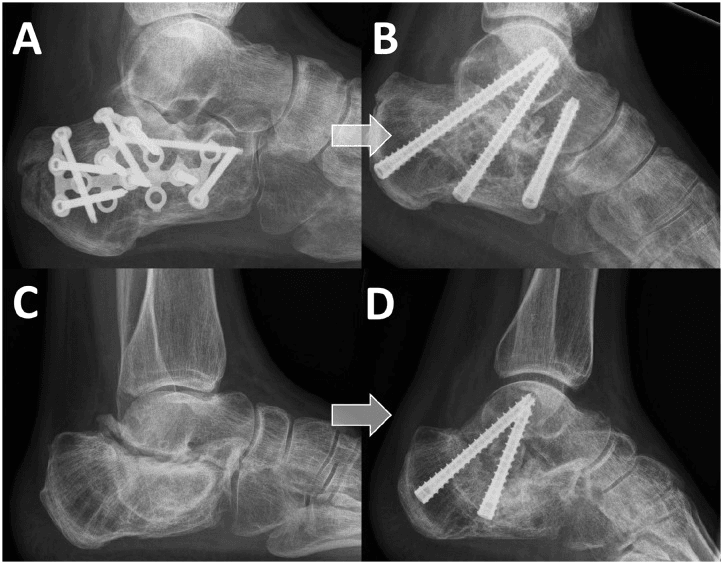
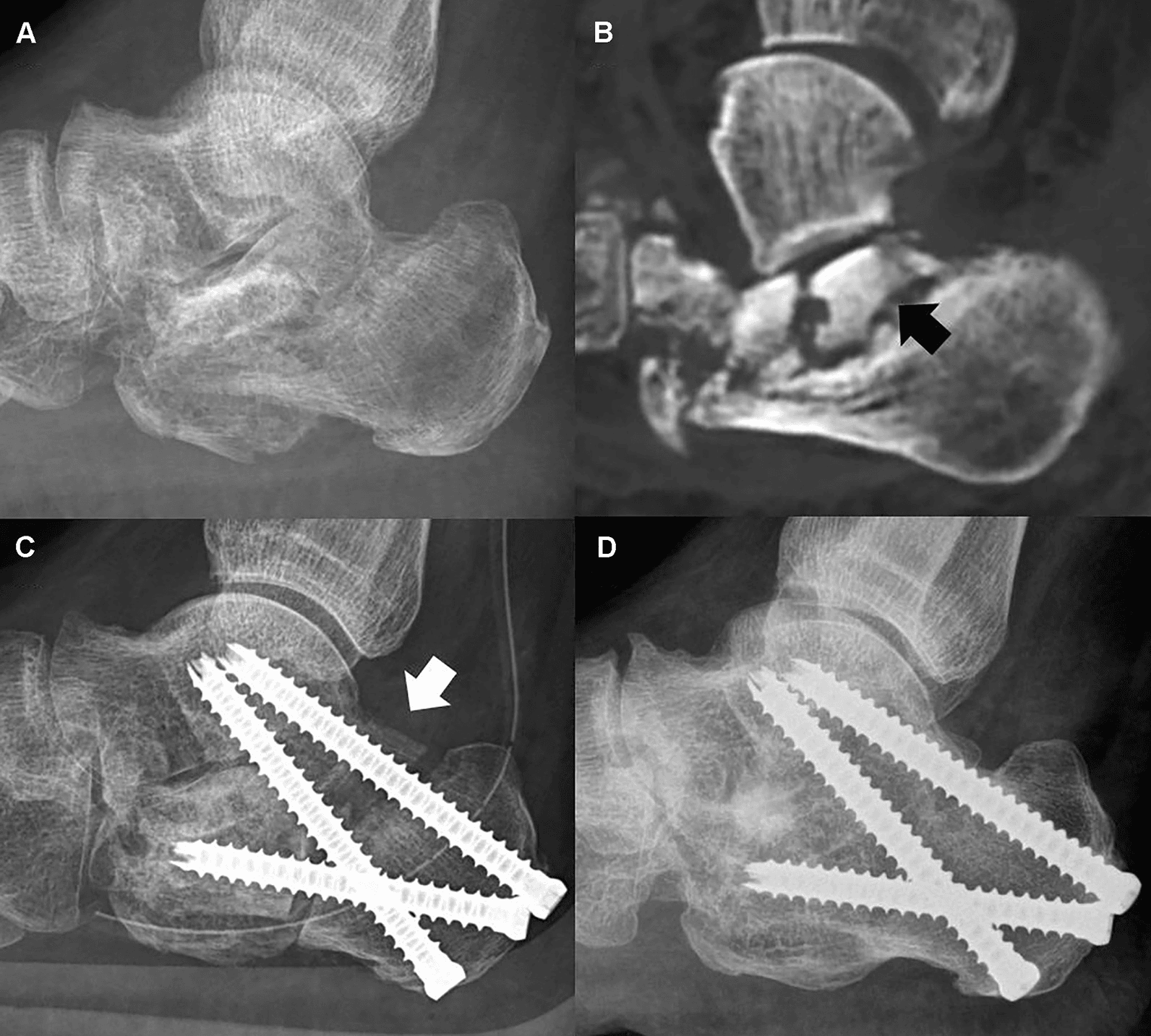
Complications
Infection is reported at 1-3% superficial and less than 1% deep. Ongoing pain after fusion may come from adjacent-joint arthritis through ankle or midfoot overload, and a varus or valgus malunion adds to that stress.
- Incidence
- 5-10%
- Risk Factors
- Smoking, diabetes, inadequate preparation, inflammatory arthritis
- Management
- Revision fusion with bone graft, optimise biology, smoking cessation essential
- Incidence
- 3-5%
- Risk Factors
- Inadequate intraoperative positioning, loss of fixation
- Management
- If symptomatic, revision osteotomy plus fusion. Prevention is key.
- Incidence
- 2-5%
- Risk Factors
- Lateral approach traction, direct injury
- Management
- Paraesthesia common, permanent numbness rare. Prevention: careful retraction
- Incidence
- 2-3%
- Risk Factors
- Diabetes, smoking, lateral approach
- Management
- Wound care, antibiotics if infected. Delay weight-bearing until healed
- Incidence
- 10-15% at 10 years
- Risk Factors
- Pre-existing disease, malalignment, high activity
- Management
- Monitor clinically, may require future ankle or midfoot fusion
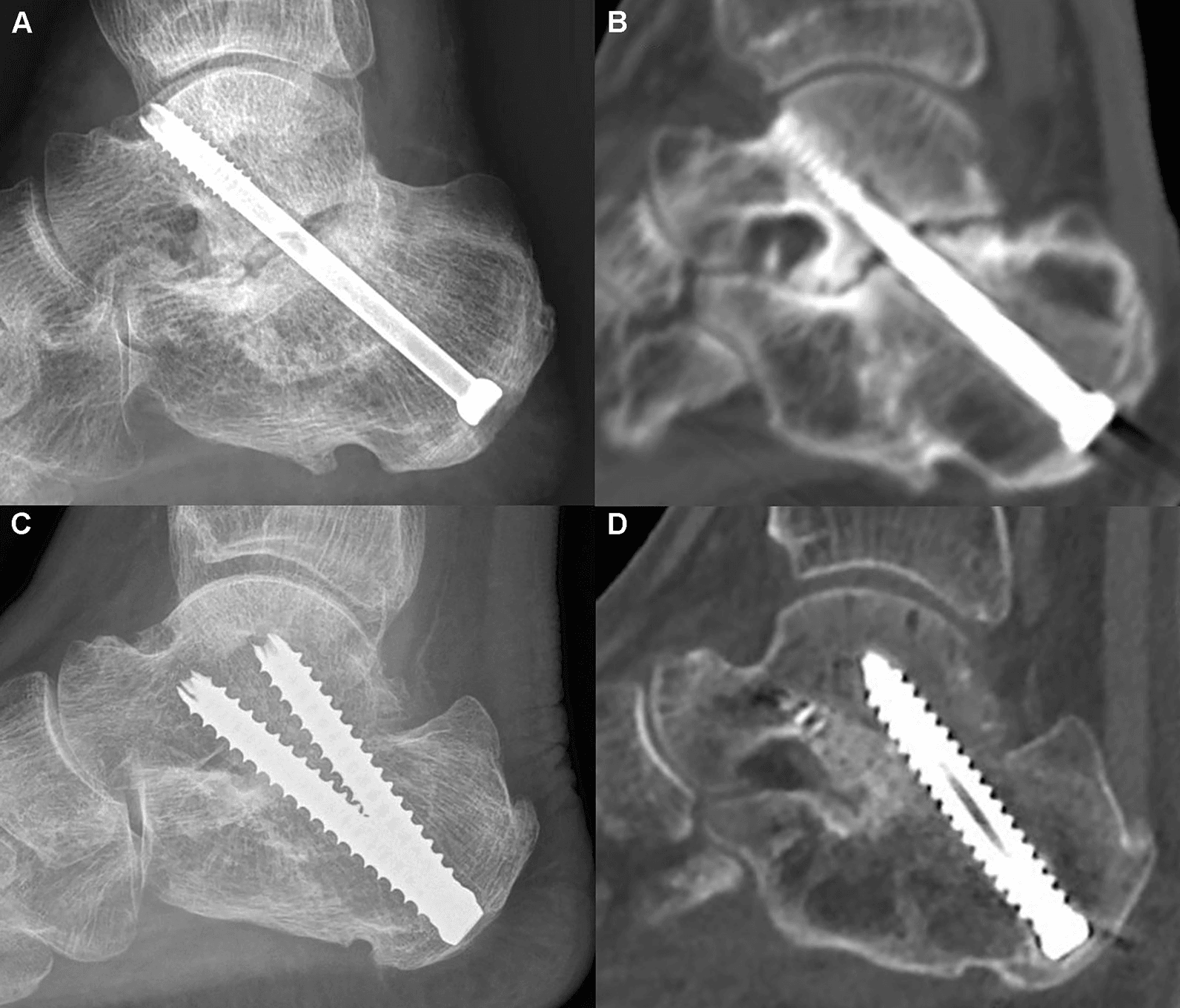
Optimise perfusion, infection, smoking/metabolic/nutritional biology; prepare viable congruent surfaces; choose fixation/graft from contact and bone quality; and protect loading until there is sufficient clinical/radiographic evidence. No fixed cessation period or six-to-eight-week non-weight-bearing rule fits every fusion.
Postoperative Care and Rehabilitation
Aftercare follows the operation, the biology and the fixation:
- Protect the wound and soft tissue, manage swelling and pain, and individualise VTE prophylaxis
- Set immobilisation and weight-bearing from bone contact, structural graft, fixation, neuropathy, revision or infection, and the patient's reliability
- Use weight-bearing radiographs and CT selectively when clinical or radiographic union is uncertain; do not schedule CT solely by week number
- Progress loading when pain, swelling, alignment, fixation and bridging bone support it
- Preserve ankle, midfoot, toe, strength and gait capacity while the subtalar joint is protected
- Continue smoking, metabolic, nutritional and infection optimisation through fusion
Return to work and sport depends on union, footwear, terrain and the demands of the task. There is no universal three- or six-month date.
Outcomes and Prognosis
Pain and function usually improve after successful fusion in appropriately selected patients, but reported union and pain percentages vary with aetiology, deformity, technique, definition and follow-up. Triple fusion cannot be assumed to relieve more pain, or to unite less reliably, than isolated fusion without comparable populations.
- Potential Benefit
- Remove painful subtalar motion and improve plantigrade support
- Persistent Trade-off / Risk
- Residual pain if source, impingement or adjacent disease was missed
- Potential Benefit
- Stable osseous bridge with suitable biology/contact/fixation
- Persistent Trade-off / Risk
- Delayed/nonunion, hardware symptoms or revision
- Potential Benefit
- Stable hindfoot for level walking
- Persistent Trade-off / Risk
- Loss of subtalar adaptation and variable adjacent compensation
- Potential Benefit
- Correct selected height, width, translation or varus/valgus
- Persistent Trade-off / Risk
- Malposition or incomplete deformity correction
- Potential Benefit
- Durable symptom relief in many patients
- Persistent Trade-off / Risk
- Adjacent-joint symptoms may reflect pre-existing disease or altered loading
Measuring the result. Record patient-reported pain and function, footwear, capacity on uneven ground, alignment, union and contact, and the adjacent joints. Workers' compensation status should not be presented as a biological predictor without contextual evidence.
Guidelines, Registries & Global Practice
No dedicated registry or global guideline establishes subtalar-fusion indications, injection thresholds, constructs or rehabilitation. Evidence is mainly retrospective series plus calcaneal-fracture/malunion literature.
- Principle
- Concordant clinical, weight-bearing and cross-sectional assessment
- Resource adaptation
- Plain standing views plus selective referral can define many cases
- Principle
- Injection is optional supportive evidence
- Resource adaptation
- Avoid making advanced image guidance a mandatory gate
- Principle
- Fuse/correct only symptomatic irreparable joints/deformity components
- Resource adaptation
- Open in-situ fusion may be reasonable when deformity/bone loss are absent
- Principle
- Optimise biology, contact, alignment, fixation and loading
- Resource adaptation
- Graft/construct choice follows locally available safe options
Consent is individualized: residual pain, motion/terrain trade-off, union/nonunion, malposition, nerve/wound/infection/hardware, adjacent-joint symptoms, VTE plan and possible revision. Do not quote ankle-fusion odds or fixed subtalar percentages as personal certainty, and do not require six months or a positive block as documentation rituals.
Related pages: Calcaneal Fractures, Talus Fractures, Talar Body Fractures, Lateral Process Talus Fractures, Posterior Process Talus Fractures, and Subtalar Dislocations.
Controversies and Areas of Uncertainty
The Buckley RCT (Sanders IV) showed no functional difference between ORIF and ORIF plus primary subtalar arthrodesis. Whether to fuse the subtalar joint up front in the highest-grade fractures - accepting motion loss to avoid a likely second operation - remains surgeon- and patient-specific rather than evidence-mandated.
Arthroscopic subtalar fusion reports union rates around 95% with less wound morbidity, but no RCT compares it with open fusion, and it is unsuitable for significant deformity requiring realignment or bone block. Open surgery remains the default where alignment must be corrected.
For calcaneal malunion with lost height and talar dorsiflexion, distraction bone-block arthrodesis restores hindfoot geometry but carries higher nonunion and wound risk than simple in-situ fusion. The threshold of height loss that justifies a bone block is not standardised.
Autograft, allograft, BMP and external/implanted bone stimulators are used to reduce nonunion, especially in revision or high-risk (smoker, diabetic) patients, but high-level evidence specific to subtalar fusion is lacking and use is largely extrapolated.
MCQ Practice Points
Q: Does a subtalar injection confirm the pain source? A: It can support localization when accurately placed and linked to a provocative task, but spread and multi-joint disease limit specificity. No universal percentage confirms or excludes the joint.
Q: What is the role of CT? A: CT maps posterior-facet morphology, contact, coalition, calcaneal height/width/translation, bone void/avascularity, impingement, adjacent joints and fusion/nonunion. Weight-bearing alignment still requires appropriate standing imaging.
Q: When is isolated subtalar arthrodesis reasonable? A: When symptoms and irreversible disease are truly isolated to the subtalar joint and alignment/height/biology are acceptable or correctable without including other joints.
Q: Which modifiable factors matter? A: Smoking, diabetes/metabolic/nutritional status, infection, perfusion, contact, fixation, loading and adherence all require assessment; no single factor or cessation duration guarantees union.
Exam Viva Scenarios
Practise clinical reasoning and management decisions out loud
“A patient has persistent lateral hindfoot pain years after an intra-articular calcaneal fracture. How do you assess and plan?”
“A patient has lateral hindfoot and ankle pain with mild subtalar imaging change. How do you localize the source?”
“A patient has persistent pain after subtalar fusion with CT evidence of incomplete union and hardware loosening. How do you manage?”
Map
- Pain source and uneven-ground function
- Weight-bearing hindfoot alignment
- Ankle, talonavicular, calcaneocuboid and peroneal/sinus-tarsi sources
- CT: height, width, translation, void, impingement and contact
Localize
- History and examination lead
- Injection is optional and affected by spread
- No 75% confirmation threshold
- MRI answers selected tissue/infection questions
Choose Procedure
- Isolated fusion only for isolated disease
- Add joints only when symptomatic/irreparable
- Bone block for selected height deficit
- Osteotomy/decompression for selected translation/alignment/impingement
Fusion Safety
- Viable congruent surfaces and appropriate contact
- Fixation matches gap and bone quality
- Optimize smoking metabolic nutrition perfusion and infection
- Loading follows construct and union evidence
Counsel
- Pain relief and union are not guaranteed percentages
- Uneven-ground adaptation is reduced
- Residual/adjacent-joint pain may persist
- Malposition, nonunion, nerve, wound and hardware risks
Evidence Base and Key Studies
Arthroscopic Subtalar Arthrodesis for Subtalar Arthritis - Systematic Review
- Ten studies, 234 patients (240 feet) - posttraumatic arthritis the commonest indication
- Weighted mean fusion rate 95%, average time to fusion 10.2 weeks
- AOFAS hindfoot score improved from a weighted 47 pre-op to 80.7 post-op
- Nonunion and pain from prominent hardware were the most common complications
- Posterior approach trended toward better function; lateral approach toward higher union
Subtalar Distraction Bone-Block Arthrodesis for Calcaneal Malunion
- Prospective series of 31 patients with malunited calcaneal fractures (mean age 38.5y)
- No nonunions; one bone-block dislocation requiring revision and one soft-tissue infection
- AOFAS hindfoot score improved from 23.5 pre-op to 73.2 at mean 33-month follow-up
- Talocalcaneal height restored by ~62%, with normalised pedobarographic load transfer
- Degree of heel-height correction correlated with a normal heel loading pattern
ORIF vs ORIF plus Primary Subtalar Arthrodesis - Sanders IV RCT
- Randomised multicentre trial, 31 Sanders type IV displaced intra-articular calcaneal fractures
- ORIF (n=17) vs ORIF plus primary subtalar arthrodesis (n=14); 26 followed minimum 2 years
- No significant difference in SF-36, MFA, AOFAS hindfoot or VAS scores between groups
- AOFAS hindfoot 62.5 (ORIF) vs 65.8 (ORIF+PSTA), p=0.68
- Primary arthrodesis may avoid delayed secondary fusion - the authors' inference in discussion, not an outcome the trial measured