Midfoot Pain | Progressive Deformity | Surgical Reconstruction
- TMT arthritis most commonly follows Lisfranc injury (missed or inadequate treatment)
- Second TMT joint is recessed - keystone preventing dorsal subluxation
- Fusion gold standard - motion at TMT 1-3 minimal (2-3 degrees), unlike TMT 4-5 (10-15 degrees)
- Selective fusion - fuse stiff medial column (TMT 1-3), preserve mobile lateral column (TMT 4-5)
- Non-union rate 5-15% with TMT arthrodesis - requires rigid fixation
- “Distinguish primary vs post-traumatic (most common after Lisfranc injury)
- “Piano key sign on exam - dorsal subluxation of metatarsal bases
- “Weight-bearing radiographs essential - reveal instability not seen non-WB
- “Fusion extends proximally if involves naviculocuneiform or intercuneiform joints
Overview and Epidemiology
Tarsometatarsal (TMT) arthritis affects the joints between the metatarsal bases and the three cuneiforms (medial, intermediate and lateral) and the cuboid. This complex of five joints is the anatomic and functional transition between the midfoot and the forefoot.
Two diseases. About 80% of TMT arthritis is post-traumatic, most of it following a Lisfranc injury that was inadequately treated or missed, and a missed subtle injury progresses to arthritis within 2-5 years. Primary osteoarthritis is less common and typically affects the first TMT joint in isolation.
Who gets it. The two groups differ in age, sex and the joints involved:
- Post-traumatic arthritis: equal sex distribution, age 30-50, involving TMT 1-3
- Primary osteoarthritis: female predominance of 2:1, age 50-70, with TMT 1 the joint most commonly affected
What it costs. TMT arthritis is a chronic disability: 60% are unable to return to their previous activity level, and 40% change occupation or reduce their hours. Untreated, the deformity progresses to forefoot abduction and arch collapse. By 5 years, 30% develop naviculocuneiform (NC) or intercuneiform (IC) joint involvement.
Anatomy and Biomechanics
Two columns. TMT 1-3 form the rigid medial column, the base of the longitudinal arch and the primary weight-bearing structure during stance and push-off, held by dense plantar ligaments. TMT 4-5 form the mobile lateral column, with less ligamentous constraint, which lets the forefoot accommodate to uneven terrain. Throughout this topic TMT 1-3 are grouped as the medial column; in the three-column description TMT 1 alone is the medial column and TMT 2-3 the middle column, with TMT 4-5 the lateral column in both.
- Native Motion
- 2-3° sagittal
- Role
- Push-off stability
- Fusion Impact
- Minimal - stiff joint
- Native Motion
- 1-2° (least mobile)
- Role
- Keystone stability
- Fusion Impact
- No functional loss
- Native Motion
- 2-3° sagittal
- Role
- Completes medial arch
- Fusion Impact
- Minimal functional loss
- Native Motion
- 10-12° sagittal
- Role
- Forefoot flexibility
- Fusion Impact
- Significant loss if fused
- Native Motion
- 12-15° sagittal
- Role
- Ground adaptation
- Fusion Impact
- Significant loss if fused
Why the columns decide the operation. The medial joints barely move, so fusing them costs little function. The lateral joints are where the forefoot adapts to the ground, and fusing them significantly impairs it.
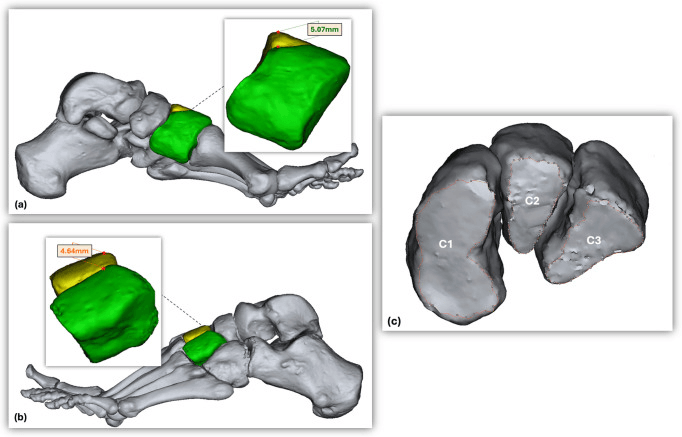
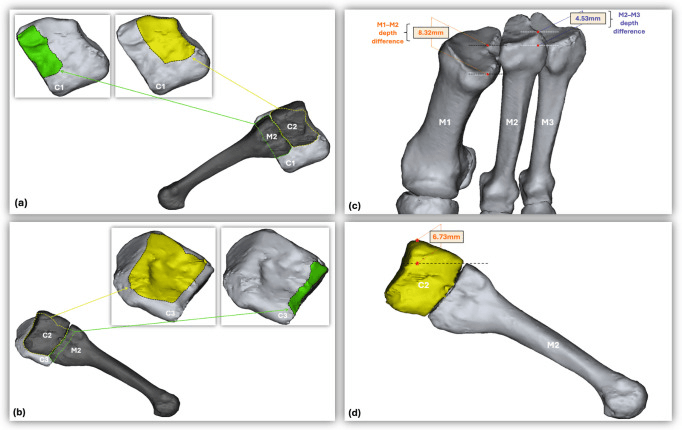
The second TMT joint is recessed 2-3mm dorsally between the intermediate cuneiform and the bases of metatarsals 1 and 3, set between the cuneiforms like a keystone. The configuration provides inherent stability, preventing dorsal or plantar translation. Loss of this architecture, in Lisfranc injuries or arthritis, causes progressive midfoot collapse.
The ligaments. The Lisfranc ligament, the strongest of them, runs on the plantar side from the medial cuneiform to the base of the second metatarsal. Strong dorsal and plantar intermetatarsal ligaments bind the bases of metatarsals 2-5, but there is no intermetatarsal ligament between the first and second, which explains the common Lisfranc injury pattern.
When the architecture fails. Loss of the keystone lets TMT 2 subluxate dorsally and produces forefoot abduction. Medial column collapse flattens the longitudinal arch into a planovalgus foot. Fusion has a cost of its own: fusing TMT 1-3 increases the stress on TMT 4-5.
Pathophysiology
Post-traumatic arthritis (80%). The commonest pathway begins with a Lisfranc injury that was missed or inadequately treated. The risk factors are the ways that happens:
- Missed injury - subtle injuries are often missed on initial radiographs if weight-bearing views are not obtained
- Inadequate reduction - residual subluxation greater than 2mm leads to degenerative change
- Delayed treatment - beyond 6 weeks, soft-tissue contracture prevents anatomic reduction
- Articular comminution - intra-articular fractures heal with a step-off that causes focal overload
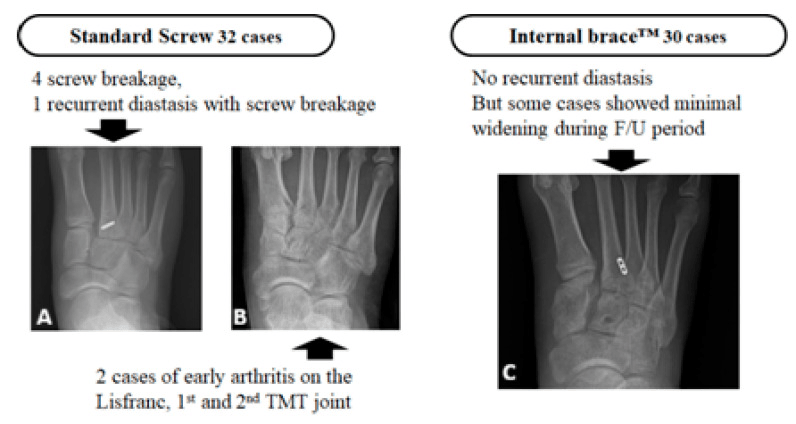
- Persistent subluxation - hardware failure or insufficient fixation allows recurrent instability
Post-Traumatic Arthritis Progression
Lisfranc injury with ligamentous disruption or fracture-dislocation.
Inadequate reduction or hardware failure leaves the joint malaligned, and abnormal joint loading begins.
Cartilage breaks down at areas of abnormal contact stress. Joint space narrowing is visible on radiographs, with intermittent activity-related pain.
Progressive joint space loss, subchondral sclerosis and osteophytes. Daily pain and limited walking; deformity may be visible.
Complete joint space loss, subchondral cysts and collapse deformity, with constant pain. The adjacent naviculocuneiform and intercuneiform joints are often involved.
Primary osteoarthritis (20%). Its mechanics are covered with first-ray hypermobility in the section on isolated first-TMT arthritis below. Rheumatoid and psoriatic arthritis can also involve the TMT joints.
Classification
No universally accepted classification exists for TMT arthritis severity. It is described by the radiographic changes, and each grade carries a typical clinical picture and treatment.
- Radiographic Features
- Joint space narrowing (under 50% loss), minimal osteophytes, no subchondral cysts, preserved alignment
- Clinical Picture
- Activity-related pain, minimal deformity, minimal functional limitation
- Treatment
- Conservative, often successful: orthoses, activity modification, NSAIDs. Surgery only if conservative care fails after 6 months
- Radiographic Features
- Definite joint space loss (50-75%), osteophytes, subchondral sclerosis, mild subluxation may be present
- Clinical Picture
- Daily pain with walking, functional limitation
- Treatment
- Trial of conservative measures (variable response), then arthrodesis if it fails; the injection test helps confirm the pain source
- Radiographic Features
- Complete joint space loss, large osteophytes, subchondral cysts, deformity (forefoot abduction, arch collapse), adjacent joint involvement common
- Clinical Picture
- Constant pain at rest and with walking, significant functional impairment, visible deformity
- Treatment
- Arthrodesis of TMT 1-3 +/- NC/IC joints; extend the fusion to involved adjacent joints and correct deformity at the time of fusion
Clinical Presentation
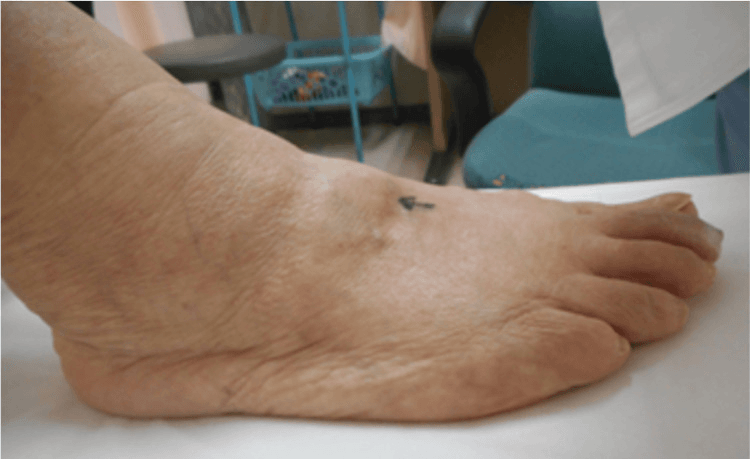
History. Dorsal midfoot pain, worse with weight-bearing, that worsens gradually over months to years. Ask about a previous Lisfranc injury or high-energy foot trauma. Walking on uneven ground and stairs is difficult, and shoes feel tight dorsally, with pressure over the prominences.
Examination. Look for a dorsal prominence, forefoot abduction and arch collapse, and palpate for tenderness over the TMT joints and palpable osteophytes. Single-limb stance is impossible or significantly painful, and dorsiflexion at the TMT joints is limited or painful.
Piano key test. Grasp the metatarsal shaft and attempt dorsal-plantar translation at the TMT joint. Increased motion and pain compared with the contralateral foot is positive, and indicates instability or advanced arthritis.
Midfoot break sign. Watch from behind as the patient stands on tiptoe. A normal foot keeps a smooth arch contour; an arthritic foot shows a break, or collapse, at the TMT level.
Differential diagnosis. TMT arthritis has to be separated from naviculocuneiform arthritis, posterior tibial tendon dysfunction and plantar fasciitis. Tenderness localised to the TMT joints, with pain on manipulating the metatarsals, suggests TMT arthritis.
- Distinguishing Features
- Dorsal midfoot pain over TMT joints, often post-traumatic, positive piano-key/instability
- Best Discriminating Test
- Weight-bearing radiographs; fluoroscopic intra-articular anaesthetic relieves pain
- Distinguishing Features
- Pain more proximal/medial, sag at NC joint on lateral view
- Best Discriminating Test
- Lateral weight-bearing radiograph; selective NC injection
- Distinguishing Features
- Medial pain, progressive flatfoot, weak single-heel-rise, too-many-toes sign
- Best Discriminating Test
- Single-heel-rise test; MRI/ultrasound of PTT
- Distinguishing Features
- Focal bony tenderness, activity-related, athletes/military
- Best Discriminating Test
- MRI or CT; bone scan if early
- Distinguishing Features
- Acute red hot swollen joint or polyarticular pattern, raised inflammatory markers
- Best Discriminating Test
- Joint aspirate (crystals), serology
- Distinguishing Features
- Plantar heel pain worst on first steps, not dorsal midfoot
- Best Discriminating Test
- Clinical - tenderness at calcaneal origin
Investigations
Weight-bearing radiographs are the first line: AP, lateral and oblique views of the foot, with weight-bearing mandatory because it reveals instability not seen on non-weight-bearing films. Assess joint space narrowing, osteophytes, subluxation and alignment, and compare with the contralateral foot.
- Significance
- Early arthritis
- Treatment Implication
- Consider conservative trial first
- Significance
- Established arthritis
- Treatment Implication
- Fusion likely needed if symptomatic
- Significance
- Chronic arthritis
- Treatment Implication
- May require dorsal cheilectomy at fusion
- Significance
- Post-traumatic
- Treatment Implication
- Fusion with deformity correction
- Significance
- Advanced disease
- Treatment Implication
- Extend fusion proximally
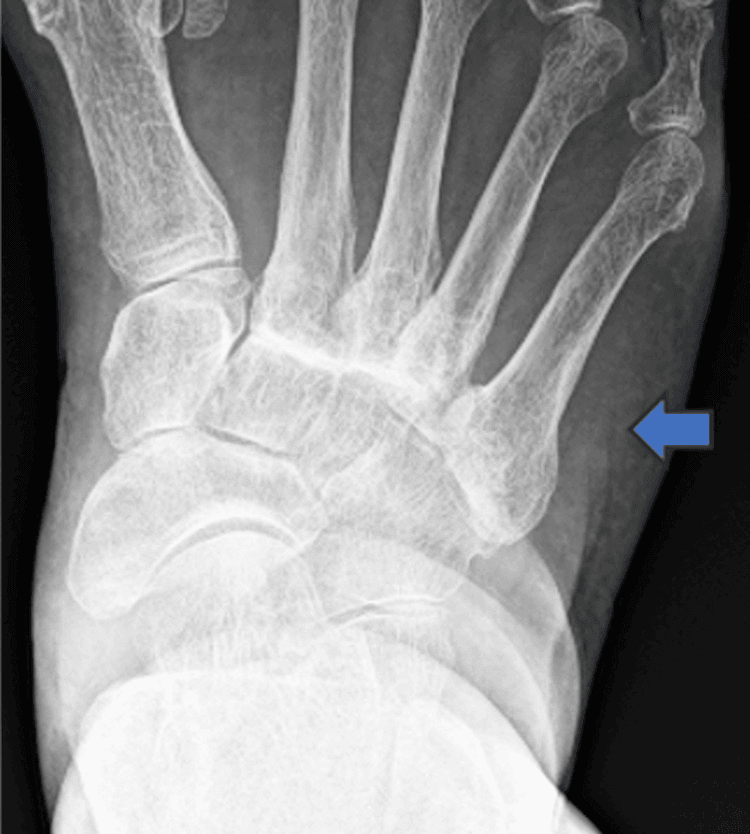
Weight-bearing CT is the gold standard for pre-operative planning and the next step if the radiographs leave uncertainty. It shows the extent of the arthritis, whether the adjacent NC and IC joints are involved and whether the deformity is reducible, and 3D reconstruction helps.
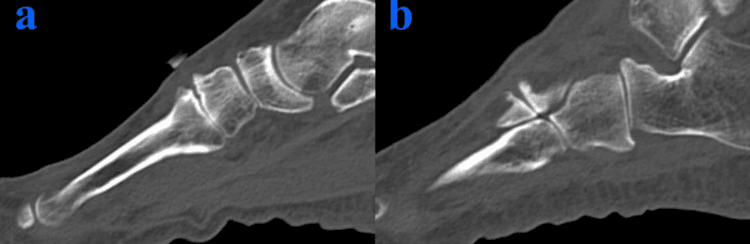
MRI is the alternative when the diagnosis is uncertain or soft-tissue pathology (tendon, ligament) is suspected. Bone marrow oedema indicates active arthritis, but MRI is less useful than CT for bony architecture.
Dynamic ultrasound identifies dorsal osteophytes and can demonstrate joint-space opening from neutral to plantar flexion at TMT2-3, which supports symptomatic instability when it correlates with focal pain.
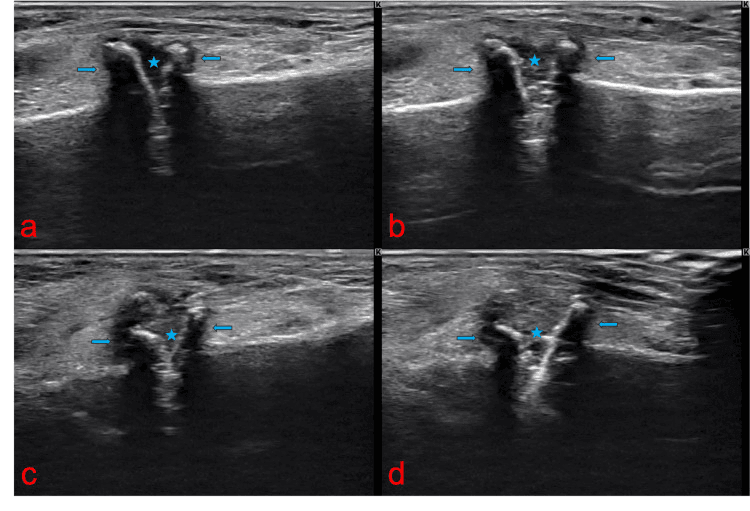
The injection test. Local anaesthetic and steroid are injected into the TMT joints under fluoroscopic guidance. Complete pain relief confirms the TMT joints as the pain source and predicts fusion success. If there is no improvement, consider an alternative diagnosis or adjacent joint pathology.
Management
Conservative first. Conservative management is first-line for mild to moderate TMT arthritis without significant deformity, and in mild disease 80% respond to orthotics in the first 2 years.
Orthoses and footwear. Rigid custom orthoses control midfoot motion and redistribute pressure, and full-length carbon-fibre inserts give maximum rigidity for severe symptoms. A rocker-bottom shoe modification reduces force through the TMT joints; accommodative padding offloads prominent osteophytes.
Medical measures. Regular NSAIDs are trialled for 2-3 months if there are no contraindications. Avoid impact activities and prolonged walking. Weight loss reduces midfoot loading, and a loss of 5-10kg significantly helps; physiotherapy strengthens the intrinsic foot muscles and retrains gait.
Therapeutic injection. The injection test above is therapeutic as well as diagnostic. Local anaesthetic with triamcinolone 40mg or equivalent, placed accurately under fluoroscopy, typically relieves pain for 3-6 months and can be repeated up to 3 times.
Indications for surgery. The absolute indications are failed conservative management after an adequate 6-month trial, significant functional limitation affecting daily life, progressive deformity, and severe pain limiting walking. The relative ones are failed multiple injections, high functional demand requiring a return to activity, patient preference after informed consent, and developing adjacent joint involvement.
The principle. Arthrodesis is the gold standard and the most reliable procedure for symptomatic TMT arthritis. It fuses the affected TMT joints to eliminate painful motion while preserving adjacent joint function.
Selective fusion. Fuse only the symptomatic arthritic joints, commonly TMT 1-3, and preserve TMT 4-5 to keep the forefoot flexible for ground adaptation. Extend proximally to include the NC or IC joints if they are arthritic on pre-operative imaging; check the pre-operative weight-bearing CT for them.
Operative Steps
Dual dorsal longitudinal incisions over the TMT 1-2 and TMT 2-3 intervals, protecting the superficial peroneal nerve branches. Expose the joints and debride them to bleeding bone.
Remove all cartilage to bleeding subchondral bone with osteotomes and curettes; cartilage islands left behind cause non-union. Fashion flat apposing surfaces and preserve metatarsal length, because excessive bone resection causes shortening and transfer metatarsalgia.
Correct the deformity and restore longitudinal arch height, with the metatarsals aligned in the coronal plane (no forefoot abduction). Check arch height and forefoot alignment with intraoperative fluoroscopy in multiple planes.
Compression with 4.0mm cannulated lag screws across each TMT joint, or low-profile 2.7-3.5mm dorsal plates; direct compression is essential. Consider bone graft if gaps remain after reduction. Avoid crossing the unfused TMT 4-5 with hardware, which causes pain and breakage.
Layered closure; consider a drain if there is significant oozing. Bulky compressive dressing and a below-knee non-weight-bearing cast.
Choosing the fixation. Compression screws are preferred in good bone quality for maximal compression. Dorsal plates are better for poor, osteoporotic bone and for deformity correction, and plates and screws are combined for severe deformity or revision.
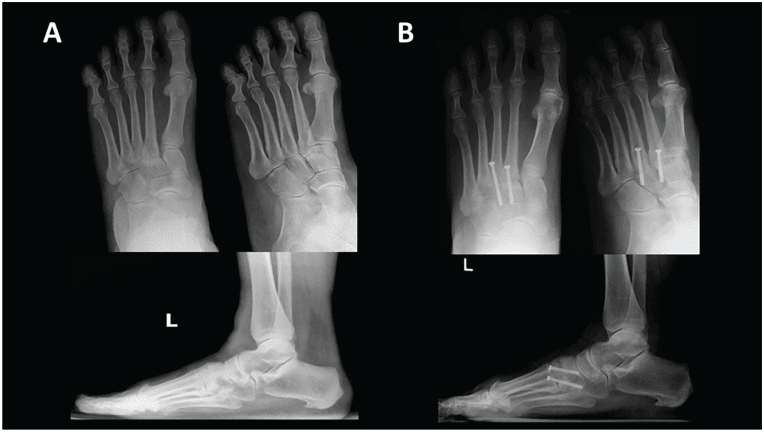
Complications
- Incidence
- 5-15%
- Risk Factors
- Smoking, diabetes, inadequate fixation
- Management
- Revision fusion with bone graft, rigid fixation
- Incidence
- 5-10%
- Risk Factors
- Inadequate reduction, hardware failure
- Management
- May require revision if symptomatic deformity
- Incidence
- 10-15%
- Risk Factors
- Excessive bone resection, malposition
- Management
- Orthotic management, rarely revision surgery
- Incidence
- 15-20% at 5y
- Risk Factors
- Altered biomechanics
- Management
- Extend fusion if symptomatic and severe
- Incidence
- 2-5%
- Risk Factors
- Diabetes, poor wound healing
- Management
- Antibiotics, debridement, may need hardware removal
- Incidence
- 10-20%
- Risk Factors
- Prominent dorsal hardware
- Management
- Remove after fusion (1 year post-op)
Non-union is the most common major complication of TMT arthrodesis. Prevention rests on the technique (cartilage debrided to bleeding bone, rigid fixation with compression, bone graft for gaps), a minimum of 6-8 weeks non-weight-bearing, which is mandatory, and smoking cessation before surgery. If non-union occurs, revision with iliac crest bone graft and revised fixation is typically successful.
Postoperative Care and Rehabilitation
The prolonged non-weight-bearing period is critical for fusion success.
Rehabilitation Timeline
Below-knee cast, strict non-weight-bearing, and the limb elevated above heart level. DVT prophylaxis (aspirin or LMWH). Remove the drain, if placed, at 48 hours; first dressing change at 2 weeks.
New cast or CAM boot, still non-weight-bearing; sutures out at 2-3 weeks. Repeat radiographs at 6 weeks looking for early healing (callus), and stay non-weight-bearing until it is seen.
If radiographs show healing callus, start progressive weight-bearing in a CAM boot, from toe-touch to full over 4-6 weeks. Physiotherapy for gait training and oedema management. CT if healing is uncertain at 12 weeks.
Transition to shoes (3-4 months) once full weight-bearing is comfortable and radiographs confirm solid fusion, with custom orthoses for support. Gradual return to activities, avoiding high impact until 6 months. Prominent hardware may be removed once the fusion is solid (1 year).
Annual follow-up to monitor the adjacent joints and watch for transfer metatarsalgia; orthoses indefinitely, and activities modified as needed.
Outcomes and Prognosis
TMT arthrodesis provides reliable pain relief and functional improvement for appropriately selected patients. Return to walking takes 3-4 months and full recovery 6-12 months.
- Key Outcomes
- 60-80% initial success, 40% eventually require surgery
- Notes
- Best for mild arthritis, patient must accept activity limitations
- Key Outcomes
- 85-95% fusion rate, 80-90% good-excellent results
- Notes
- Gold standard - selective fusion preserves lateral column
- Key Outcomes
- Similar fusion rates (85-90%) but longer time to fusion and longer recovery; more postoperative stiffness (expected)
- Notes
- Indicated if adjacent joints involved - check pre-op CT; function remains good if lateral column preserved
What predicts a good result. A non-smoker of normal BMI with good bone quality and isolated TMT 1-3 arthritis, without adjacent joint involvement, who is compliant and able to remain non-weight-bearing for 6-8 weeks, with adequate surgical technique and rigid fixation with compression.
What predicts a poor one. Smoking, which doubles the non-union risk, diabetes, obesity, poor bone quality (osteoporosis), extensive adjacent joint arthritis, inadequate fixation or poor surgical technique, and non-compliance with the weight-bearing restrictions.
Isolated First-TMT Arthritis, First-Ray Hypermobility and the Lapidus Connection
A different disease. Isolated first-tarsometatarsal (medial cuneiform-MT1) osteoarthritis is the commonest primary midfoot arthritis, with a female predominance in the fifth to seventh decades. It presents as dorso-medial pain over the first TMT joint with a dorsal osteophyte or bump, which can cause dorsal cutaneous nerve irritation and shoe conflict, rather than the diffuse dorsal midfoot pain of the post-traumatic TMT 1-3 pattern.
The mechanical driver. The cause is likely mechanical: first-ray instability from ligamentous laxity, and the lateral thrust force of a hallux valgus deformity. Excess sagittal (and rotational) motion at the first TMT joint, first-ray hypermobility, overloads the joint and is strongly associated with hallux valgus.
The link to hallux valgus. The unstable, dorsiflexed, everted first ray fails to bear its share of load, transferring it to the lesser rays as metatarsalgia, and lets the first metatarsal drift into varus, driving the bunion. First-TMT arthritis, first-ray hypermobility and hallux valgus therefore form an interlinked triad.
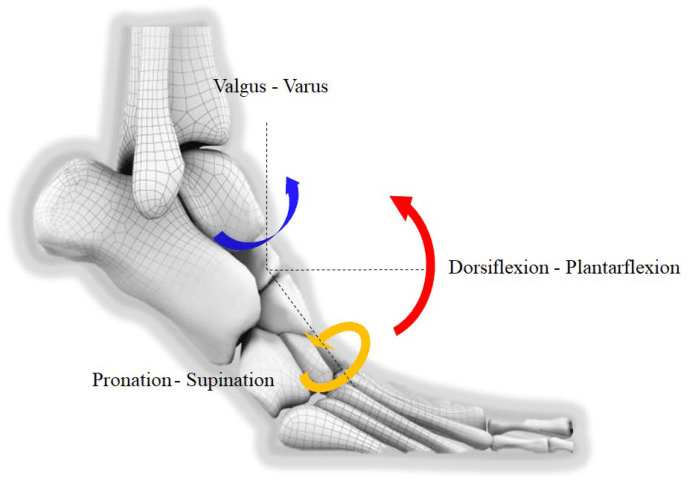
The Lapidus procedure treats both. A first-TMT arthrodesis, the Lapidus procedure, fuses the painful arthritic joint and, at the same time, corrects the deforming force by stabilising the hypermobile first ray and correcting first-metatarsal varus. That is why it is a workhorse for hallux valgus with demonstrable first-ray hypermobility or coexisting first-TMT arthritis, and the definitive treatment for symptomatic isolated first-TMT osteoarthritis.
Technical caveats. They mirror the medial-column fusion above. Set the correct first-metatarsal length and plantarflexion, because a dorsal malunion causes transfer metatarsalgia; use rigid compression fixation; and keep the usual non-union caution.
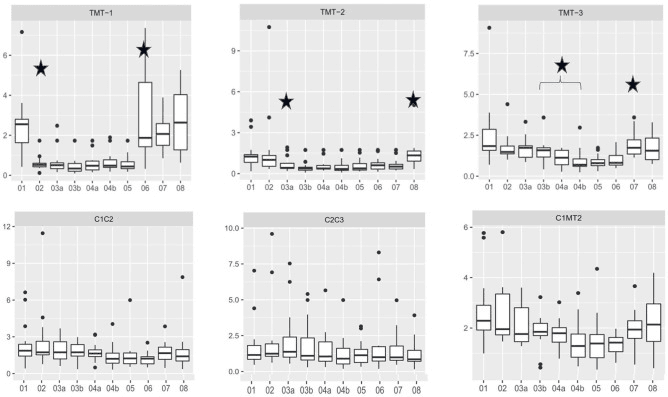
Is it Arthritis or Charcot? The Lisfranc Joint as the Classic Neuroarthropathy Site
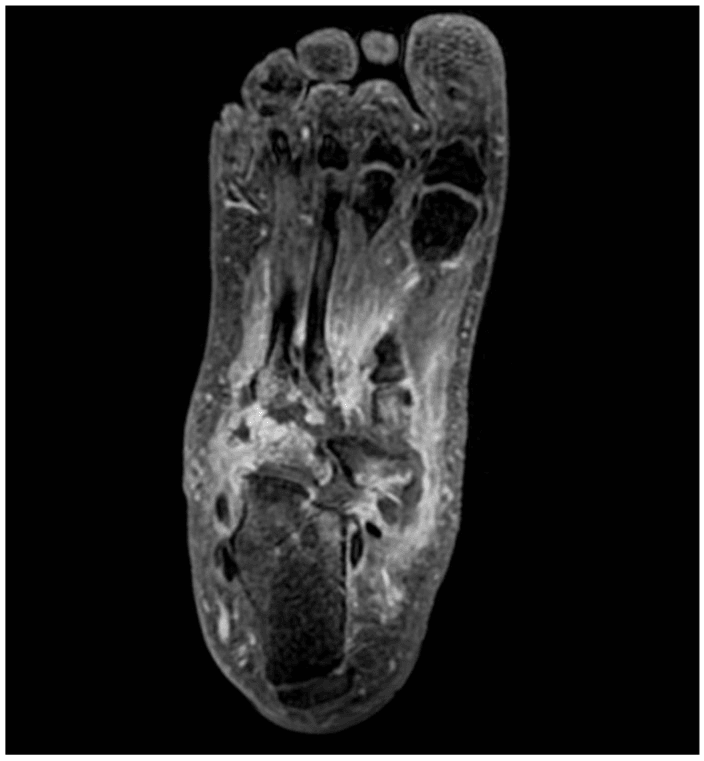
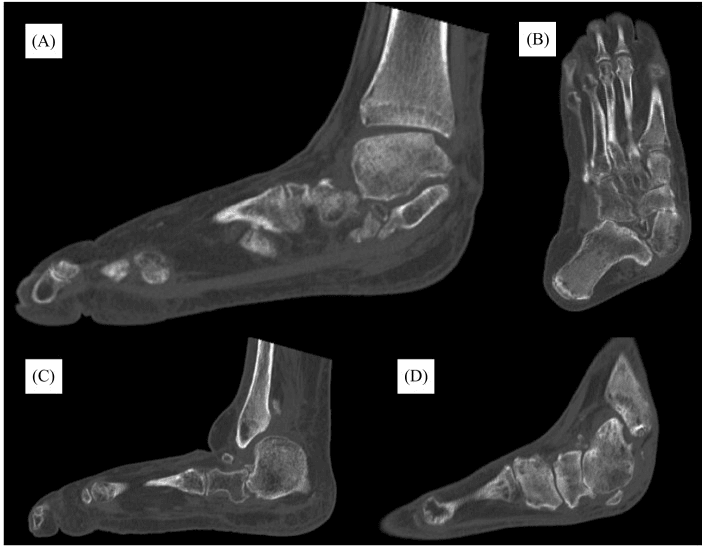
Why it matters at the TMT joint. The tarsometatarsal (Lisfranc) joint is the classic site of midfoot Charcot (Eichenholtz/Brodsky pattern I), typically in a diabetic with peripheral neuropathy. Untreated, it collapses into the pathognomonic rocker-bottom (plantar-convex) foot, with a plantar-medial bony prominence that ulcerates: a limb-threatening problem, not just a painful joint.
Telling them apart. Charcot classically presents as a warm, swollen, erythematous, often relatively painless foot in a neuropathic patient, the pain disproportionately low for the destruction. Degenerative TMT arthritis is painful in a sensate foot, without the florid inflammatory signs. The acute Charcot foot mimics infection or cellulitis; the dependent-rundown test (elevation settles the erythema of Charcot but not of infection) and the neuropathy help. Radiographs in Charcot show fragmentation, debris, dislocation and disorganisation far exceeding the patient's pain.
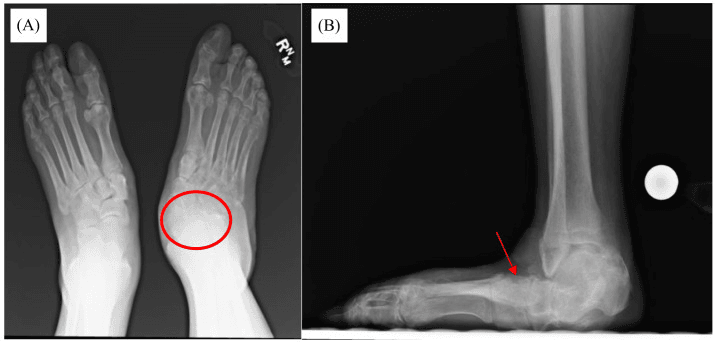
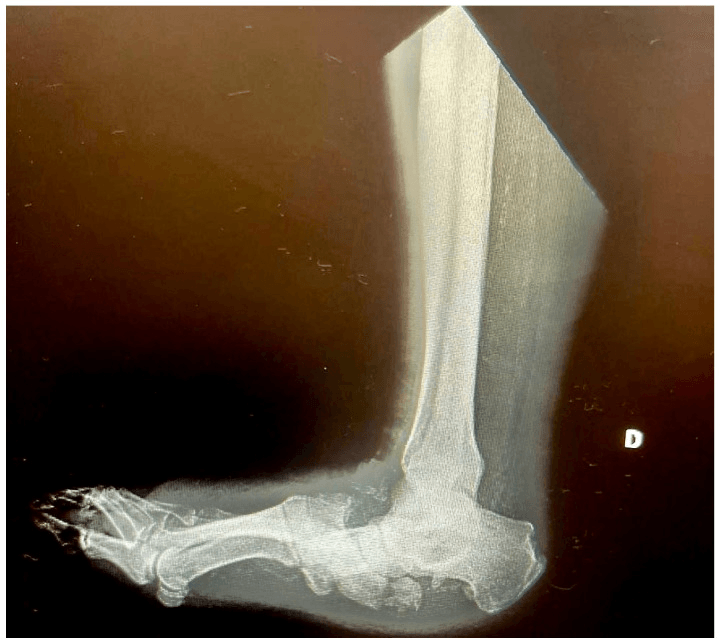
Why they are not treated the same. In active (acute) Charcot the cornerstone is offloading and immobilisation in a total-contact cast until the process consolidates. Operating on, or simply fusing, an actively inflamed Charcot joint as if it were degenerative arthritis courts hardware failure, non-union and catastrophic wound problems. Surgical reconstruction, with far more robust "superconstruct" fixation than a standard TMT fusion, is reserved for unstable deformity, recurrent ulceration or instability once the Charcot has consolidated. The general Charcot work-up and management belong to the dedicated neuroarthropathy topic.
Guidelines, Registries & Global Practice
Global Epidemiology
- Midfoot (Lisfranc) injuries account for roughly 0.2% of all fractures, with an incidence around 1 per 55,000 person-years; up to 20-40% of low-energy injuries are missed at first presentation.
- Post-traumatic arthritis is the dominant pathway to symptomatic TMT arthritis worldwide; the strongest modifiable predictor is the quality of initial reduction.
- Primary (atraumatic) TMT osteoarthritis is less common, has a female predominance, and most often isolates to the first TMT joint, frequently in association with hallux valgus or first-ray hypermobility.
Side-by-Side Society Guidance
- Position on midfoot injury / TMT arthritis
- Anatomic reduction and stable fixation of Lisfranc injuries; primary arthrodesis favoured for comminuted or purely ligamentous patterns
- Practical message
- Restore the medial-column keystone to prevent later arthritis
- Position on midfoot injury / TMT arthritis
- Weight-bearing and stress imaging to detect subtle instability; arthrodesis is the standard salvage for established arthritis
- Practical message
- Do not rely on non-weight-bearing films
- Position on midfoot injury / TMT arthritis
- Early senior review of suspected midfoot injuries, weight-bearing radiographs, prompt definitive management
- Practical message
- Minimise diagnostic delay
- Position on midfoot injury / TMT arthritis
- Stability-based (not classification-based) treatment; primary arthrodesis for ligamentous instability
- Practical message
- Stability drives the decision
The unresolved controversy across all societies is bony unstable Lisfranc injuries: ORIF vs primary arthrodesis. For purely ligamentous instability the evidence (Ly and Coetzee RCT) favours primary arthrodesis; for bony injuries there is no Level 1 consensus and practice varies by surgeon and region.
Registry and Outcome Notes
- TMT arthritis and Lisfranc injuries are not implant-registry tracked the way hip/knee arthroplasty is (no NJR/AJRR/AOANJRR equivalent), so the evidence base rests on RCTs and case series rather than national registries.
- Across published series, medial-column arthrodesis achieves union in roughly 85-95% with good-to-excellent results in 80-90%; non-union (5-15%) is driven mainly by smoking, diabetes, and inadequate fixation.
High- vs Limited-Resource Practice
- Well-resourced settings: weight-bearing CT for planning, low-profile locking plates and lag screws, fluoroscopy, and protected non-weight-bearing with formal physiotherapy.
- Limited-resource settings: weight-bearing plain radiographs and clinical examination guide treatment; transarticular screws or K-wires substitute for plates; emphasis on accurate primary reduction is even greater because salvage surgery and imaging are less available.
- Universal principle regardless of resources: anatomic reduction of the medial-column keystone and early definitive management are the single most important determinants of avoiding post-traumatic arthritis.
Related pages: Lisfranc Injuries is where most of this arthritis comes from and carries the acute management in full - the two randomised trials carded above belong there as much as here, and the single most important preventable cause of TMT arthritis is a Lisfranc injury missed on a non-weight-bearing radiograph; Midfoot Arthritis for the wider degenerative picture including the naviculocuneiform joints, which are frequently involved and are the commonest reason a tarsometatarsal fusion fails to relieve pain; Charcot Neuroarthropathy is the diagnosis this page's own section warns must be excluded before any elective fusion - the Lisfranc joint is the classic site, and operating on an active Charcot midfoot in the belief it is arthritis is the worst error available here; Diabetic Foot and Diabetic Foot Ulcers for the rocker-bottom deformity and plantar-medial prominence that turn a painful joint into a limb-threatening one; Hallux Valgus for the first-ray hypermobility argument and the Lapidus procedure this page connects to isolated first-TMT arthritis; Posterior Tibial Tendon Dysfunction, Adult Flatfoot Deformity and Talonavicular Arthritis for the medial-column collapse that loads the tarsometatarsal joints abnormally, and for the Ouzounian motion data in its wider context; Calcaneocuboid Arthritis for the lateral column that must be preserved rather than fused; Metatarsalgia for the transfer lesions that follow a malaligned fusion; Navicular Fractures and Cuboid Fractures for the adjacent injuries that produce the same endpoint; and Nonunion Management for the commonest complication of this operation.
Controversies and Areas of Uncertainty
ORIF or primary arthrodesis for bony injuries. Level 1 evidence favours primary arthrodesis for purely ligamentous Lisfranc injuries. For bony fracture-dislocations the question is unresolved: no RCT shows clear superiority, and many surgeons still favour anatomic ORIF to preserve the native joints.
Extent of fusion. How far to extend the fusion, TMT 1-3 alone or including the NC/IC joints, is judgement-based. Over-fusion sacrifices motion and under-fusion risks residual painful arthritis, though Komenda found that the extent of fusion did not significantly affect outcome.
Fixation construct. Transarticular lag screws versus dorsal locking plates, which spare articular cartilage, is debated. No construct has proven superior union rates in high-quality trials, so the choice in the operative technique follows bone quality and deformity rather than a proven union benefit.
Lateral column fusion. Whether the mobile lateral column (TMT 4-5) should ever be fused remains contentious because of the functional loss. Interposition arthroplasty and resection are described alternatives, but the evidence is limited to small series.
The classic viva trap is to over-generalise the Ly and Coetzee RCT to all Lisfranc injuries. State clearly that its conclusion (primary arthrodesis superior) is established only for isolated, primarily ligamentous injuries.
MCQ Practice Points
Q: Which TMT joint is the keystone of the midfoot, recessed dorsally between adjacent metatarsals to provide stability? A: TMT 2 (second tarsometatarsal joint). The second metatarsal base is recessed 2-3mm dorsally between the intermediate cuneiform and the bases of MT1 and MT3. This keystone architecture provides inherent stability preventing dorsal or plantar translation.
Q: What is the rationale for selective fusion of TMT 1-3 while preserving TMT 4-5 in TMT arthrodesis? A: TMT 1-3 have minimal native motion (2-3 degrees each) forming the rigid medial column, so fusion causes minimal functional loss. TMT 4-5 have significantly more motion (10-15 degrees) forming the mobile lateral column which allows forefoot adaptation to uneven terrain. Fusing the lateral column causes significant functional impairment.
Q: What percentage of TMT arthritis is post-traumatic, and what is the most common preceding injury? A: 80% of TMT arthritis is post-traumatic, most commonly following inadequately treated Lisfranc injuries. Missed subtle injuries or residual subluxation greater than 2mm progresses to arthritis within 2-5 years. Anatomic reduction of Lisfranc injuries is critical to prevent arthritis.
Q: What is the fusion rate for TMT 1-3 arthrodesis and what is the most common major complication? A: Fusion rate is 85-95% with good-excellent results in 80-90% of patients. The most common major complication is non-union (5-15% incidence). Risk factors include smoking, diabetes, inadequate fixation, and insufficient post-operative non-weight-bearing period.
Q: What is the critical technical principle to prevent non-union in TMT arthrodesis? A: Complete cartilage removal to bleeding subchondral bone is the most critical factor. All cartilage must be debrided with osteotomes and curettes, leaving no cartilage islands. Other important factors include rigid compression fixation, bone grafting for gaps, and minimum 6-8 weeks non-weight-bearing post-operatively.
Q: What complication occurs in 10-15% of TMT arthrodesis patients due to excessive bone resection at the fusion site? A: Transfer metatarsalgia. Excessive bone resection during joint preparation causes metatarsal shortening, which alters weight distribution and causes overload of adjacent metatarsals. Prevention requires preserving metatarsal length by avoiding over-resection of bone.
Exam Viva Scenarios
Practise clinical reasoning and management decisions out loud
“A 45-year-old manual laborer presents with 2 years of progressive midfoot pain following a crush injury. He has tried orthotics and NSAIDs without benefit. Examination shows dorsal tenderness over TMT joints and positive piano key test at TMT 2-3. Weight-bearing radiographs show joint space loss at TMT 1-3 with subchondral sclerosis. How would you manage this patient?”
“You are performing TMT 1-3 arthrodesis for post-traumatic arthritis. Walk me through your surgical approach, joint preparation, and fixation technique. What are the key technical points to ensure fusion success?”
“A 52-year-old patient had TMT 1-3 arthrodesis 9 months ago. She followed weight-bearing restrictions but now complains of persistent midfoot pain with walking. Radiographs show lucency at TMT 2 fusion site with no bridging bone. CT confirms non-union at TMT 2. How would you manage this complication?”
Key Anatomy
- TMT 2 = Keystone - recessed 2-3mm dorsally between cuneiforms prevents translation
- Medial column (TMT 1-3) = Rigid, minimal motion (2-3° each) - safe to fuse
- Lateral column (TMT 4-5) = Mobile (10-15° motion) - preserve function
- Lisfranc ligament = Strongest ligament from medial cuneiform to MT2 base plantar
Classification
- Mild = Joint space narrowing under 50%, minimal osteophytes → Conservative trial
- Moderate = 50-75% joint space loss, sclerosis → Trial conservative, then fuse if fails
- Severe = Complete joint space loss, cysts, deformity → Arthrodesis indicated
- Post-traumatic = 80% of cases - follows inadequately treated Lisfranc injury (residual displacement greater than 2mm)
Treatment Algorithm
- First-line: Custom rigid orthoses + NSAIDs + activity modification (6 months trial)
- Diagnostic injection: Confirms diagnosis, predicts fusion success if complete relief
- Surgery: TMT 1-3 arthrodesis with compression screws or dorsal plates
- Extend fusion: Include NC/IC joints if arthritic on pre-op CT
Surgical Pearls
- Dual dorsal incisions protecting superficial peroneal nerve branches
- Complete cartilage removal to bleeding bone - leave no islands
- Preserve metatarsal length - avoid over-resection (causes transfer metatarsalgia)
- Rigid compression fixation - 4.0mm screws preferred, plates if poor bone
- NEVER cross unfused TMT 4-5 with hardware - causes pain and breakage
Complications
- Non-union 5-15% - smoking, diabetes, inadequate fixation - revise with bone graft
- Transfer metatarsalgia 10-15% - from excessive bone resection/shortening
- Adjacent joint arthritis 15-20% at 5y - altered biomechanics - extend fusion if severe
- Hardware irritation 10-20% - remove after fusion solid (1 year post-op)
Evidence Base and Key Studies
Primary Arthrodesis vs ORIF for Ligamentous Lisfranc Injury (Landmark RCT)
- Prospective randomised trial of 41 isolated primarily ligamentous Lisfranc injuries
- Primary arthrodesis of the medial two-to-three rays vs open reduction and screw fixation
- At 2 years, mean AOFAS Midfoot score 88 (arthrodesis) vs 68.6 (ORIF), p less than 0.005
- 5 of 20 ORIF patients developed deformity or arthrosis and were salvaged with fusion
Primary Arthrodesis vs ORIF - Reoperation Burden (RCT)
- 40 acute tarsometatarsal fracture/fracture-dislocations randomised to ORIF or primary arthrodesis
- Secondary surgery (including routine hardware removal) 78.6% after ORIF vs 16.7% after arthrodesis
- No significant difference in SF-36 or SMFA functional scores between groups
- Satisfaction comparable at mean 53 months