Complete pelvic ring disruption with vertical/cephalad hemipelvic displacement
- VERTICAL displacement distinguishes VS from LC/APC patterns
- Always Tile C - completely unstable rotationally AND vertically
- Highest energy mechanism - fall from height or MVA with axial load
- ALL ligaments disrupted - no inherent stability remains
- Both anterior AND posterior fixation MANDATORY
- “Limb length discrepancy is pathognomonic (hemipelvis migrates cephalad)
- “Look for 'Destot sign' - perineal/scrotal haematoma from hemorrhage
- “Neurological injury common - L5, lumbosacral plexus
- “Combined patterns exist (VS + LC, VS + APC) - look for rotation too
- “Often associated with acetabular fractures
Overview
A vertical shear (VS) injury is the most severe form of pelvic ring disruption. Lateral compression (LC) and anteroposterior compression (APC) injuries have components of rotational instability; in a VS injury every stabilising structure is disrupted, and the hemipelvis migrates vertically (cephalad) relative to the sacrum. The name describes both the direction of the displacing force and the displacement it produces.
The load is a high-energy axial one, and the result is complete loss of the weight-bearing function of the pelvic ring.
Incidence. VS accounts for 5-10% of all pelvic ring injuries, the least common of the major patterns and the most severe subtype.
Mechanism. A fall from height landing on an extended leg is the most common. The others:
- Motor vehicle collision with axial load
- Motorcycle ejection
- Pedestrian struck
Who. Young adults predominate, and occupational falls from scaffolding and construction work are among the mechanisms. Polytrauma is almost universal and the ISS is often high.
Why it is the most severe pattern. No ligamentous support remains, so the ring can no longer transmit load. The energy that produced it brings greater associated injuries, and traction on the lumbosacral plexus brings neurological injury. Haemorrhage is significant but typically less than in APC injuries, so severity here is a matter of instability and nerve injury rather than lethality (see Mortality, under Outcomes).
Anatomy and Pathophysiology
The ring. The pelvis functions as a ring, so it cannot be disrupted at a single location. There must be a second break in the ring, or a combination of bone and ligament injuries.
What holds it together. The posterior tension band provides the primary stability and the anterior structures complete the ring.
- Posterior tension band - posterior SI ligaments (the strongest), interosseous SI ligaments, sacrotuberous, sacrospinous and iliolumbar ligaments
- Anterior structures - pubic symphysis, pubic rami, anterior SI ligaments
What fails in VS. Both the anterior and the posterior structures fail completely. Anteriorly the break is a symphysis diastasis, ipsilateral pubic rami fractures, or both. Posteriorly it is a sacral fracture (Denis zone I-III), a complete SI joint diastasis, or an iliac wing fracture in the crescent pattern, and of these sacral fractures are the most common.
The force. An axial load through the extended lower limb is transmitted through the femur to the acetabulum and drives the hemipelvis cephalad. The ring fails in sequence, anterior then posterior or the reverse. The result is vertical (cephalad) translation and shortening of the affected limb; a rotational component may be present as well, which makes it a combined injury.
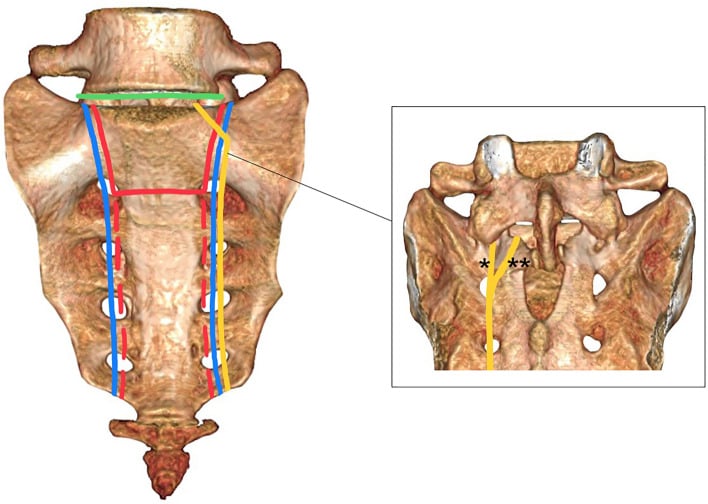
The vessels. The superior gluteal artery, the internal iliac branches and the presacral venous plexus are at risk. Bleeding is less severe than in APC injuries (the closed-ring effect).
The nerves. The L5 root, which exits under the ala, the lumbosacral trunk, and the S1-S4 roots in sacral fractures. The overall neurological injury rate is usually given as 30-50%; that is a conventional teaching range for VS patterns, and the Denis zone figures in the classification are the sourced anchor.
Classification
Vertical shear (VS). Complete anterior and posterior pelvic ring disruption with vertical (cephalad) displacement of the hemipelvis, which is pathognomonic, from an axial load, with complete posterior ligamentous disruption. The displacement has no rotational component, which distinguishes it from LC-III and APC-III. It is the Tile C equivalent and is always treated surgically.
Combined mechanical injury (CMI). A VS pattern combined with an LC or APC component, also known as a "complex" pelvic injury:
- VS + LC - vertical displacement with internal rotation
- VS + APC - vertical displacement with external rotation
These need more complex preoperative planning and may need combined or multiple surgical approaches, and they carry higher complication rates.
- LC-III
- Rotational
- APC-III
- Rotational
- VS
- Vertical (cephalad)
- LC-III
- Internal rotation
- APC-III
- External rotation
- VS
- Axial load
- LC-III
- Variable
- APC-III
- Variable
- VS
- Always present
- LC-III
- Yes
- APC-III
- Yes
- VS
- May be minimal
- LC-III
- Minimal
- APC-III
- Minimal
- VS
- Significant
- LC-III
- C1
- APC-III
- C1
- VS
- C1-C3
- LC-III
- Moderate
- APC-III
- Highest
- VS
- Moderate (less than APC)
- LC-III
- Lower
- APC-III
- Moderate
- VS
- Highest
The crescent fracture. When the posterior injury runs through the ilium rather than the sacrum or a pure SI joint, the pattern is the crescent fracture, a posterior iliac wing fracture-dislocation of the SI joint. The posterior SI ligaments stay attached to a crescent-shaped postero-superior iliac fragment while the anteroinferior SI joint dislocates. Because the strong posterior tension band remains with the crescent fragment, reducing and fixing the iliac fracture restores stability.
The Day classification grades the crescent fracture by how much of the SI joint the intact crescent fragment still covers, and the fragment size chooses between iliac fixation and an SI screw:
- Type I - a large crescent with only the anteroinferior third of the SI joint dislocated; fix the iliac fracture, e.g. with anterior-column/iliac screws or a plate
- Type II - an intermediate fragment with one-third to two-thirds of the joint involved; combined iliosacral screw plus iliac fixation
- Type III - a small crescent with most of the SI joint dislocated; behaves like a pure SI dislocation and is fixed with an iliosacral screw
Clinical Assessment
Context. VS injuries occur in the setting of major trauma, and the primary survey follows ATLS principles.
The history. The high-risk mechanisms:
- Fall from height greater than 3 metres
- Motorcycle ejection
- Pedestrian versus vehicle
- Industrial crush injury
- Landing on an extended leg
Inspection. The leg on the affected side is short and the iliac crests sit at different heights. Look for Destot's sign, a scrotal or labial haematoma, for perineal ecchymosis, and for an external or internal rotation component.
TRUE LIMB LENGTH DISCREPANCY with a pelvic fracture indicates VERTICAL SHEAR until proven otherwise. The affected limb appears shortened because the hemipelvis has migrated cephalad. This is NOT the same as apparent shortening from hip pathology.
Palpation and measurement. Palpate the iliac crests for height asymmetry, the SI joints for tenderness and the symphysis for a gap or step-off, and perform the pelvic spring test once only. Measure from the ASIS to the medial malleolus on both sides: true shortening indicates vertical displacement, and the amount of discrepancy is documented.
The neurological examination. This is the critical part of the assessment, and L5 is the most vulnerable root.
- Motor - hip flexion (L1-2), knee extension (L3-4), ankle dorsiflexion (L4-5), great toe extension (L5), ankle plantarflexion (S1-2)
- Sensory - L5 on the dorsum of the foot, S1 on the lateral foot, S2-S4 in the perineum
- Reflexes and special tests - ankle jerk (S1), bulbocavernosus reflex (sacral roots), rectal tone
Record motor and sensory findings in detail, with an ASIA score if the injury is complete. Repeat the examination serially, because the deficit may evolve.
Associated injuries. Acetabular fractures, proximal femoral fractures, lumbar spine fractures, intra-abdominal injuries and head injuries are the common associations.
Differential diagnosis. True limb shortening with a pelvic injury is highly suggestive of vertical shear, but several conditions mimic the presentation and must be distinguished.
- Displacement pattern
- True cephalad migration of hemipelvis
- Key distinguishing feature
- Asymmetric iliac crest heights, true ASIS-to-malleolus shortening, complete ring disruption
- Confirming investigation
- AP/inlet/outlet pelvis + CT showing anterior AND posterior disruption
- Displacement pattern
- Rotational external rotation, ring widening
- Key distinguishing feature
- Symphysis and SI widening with SYMMETRIC iliac crest heights, no true shortening
- Confirming investigation
- AP pelvis showing symphyseal diastasis without cephalad migration
- Displacement pattern
- Internal rotation one side, external rotation other
- Key distinguishing feature
- Rotational deformity, minimal vertical translation
- Confirming investigation
- CT showing impaction/overlap pattern
- Displacement pattern
- Limb shortened, flexed, adducted, internally rotated
- Key distinguishing feature
- Hip held in fixed flexion/adduction; intact pelvic ring
- Confirming investigation
- AP pelvis: femoral head out of acetabulum, ring intact
- Displacement pattern
- Shortened, externally rotated limb
- Key distinguishing feature
- Tenderness localised to hip, intact pelvic ring
- Confirming investigation
- AP pelvis and lateral hip radiographs
- Displacement pattern
- Limb may appear shortened
- Key distinguishing feature
- Femoral head protrusion into pelvis; posterior ring often intact
- Confirming investigation
- Judet views and CT of acetabulum
Investigations
The AP pelvis. The first-line film in the trauma bay, read for vertical displacement. The hemipelvis has migrated cephalad, and the signs are:
- Asymmetric iliac crest heights
- Obturator foramina of different sizes, the smaller on the elevated side
- Superior displacement of the ischial tuberosity
Inlet and outlet views. The inlet view shows posterior displacement, SI joint widening and any rotational component. The outlet view shows vertical displacement best, along with the sacral fracture and any foraminal involvement.
Two avulsions that mean the tension band has failed. Both are small findings on the AP film, and both are easy to scroll past.
- The L5 transverse process. The iliolumbar ligament runs from the L5 transverse process to the posterior iliac crest and is one of the restraints holding the hemipelvis to the axial skeleton. A vertically displacing hemipelvis pulls it off, taking a fragment of transverse process with it. The fracture is trivial; it marks lost vertical restraint, and it should stop you calling a subtle pelvis "stable".
- The ischial spine or the sacral margin, where the sacrotuberous and sacrospinous ligaments attach. An avulsed fleck where a posterior ligament inserts is a failed ligament, and these ligaments are the vertical and rotational restraints of the ring.
Look for both deliberately, and treat either as an instruction to obtain CT rather than as an incidental finding.
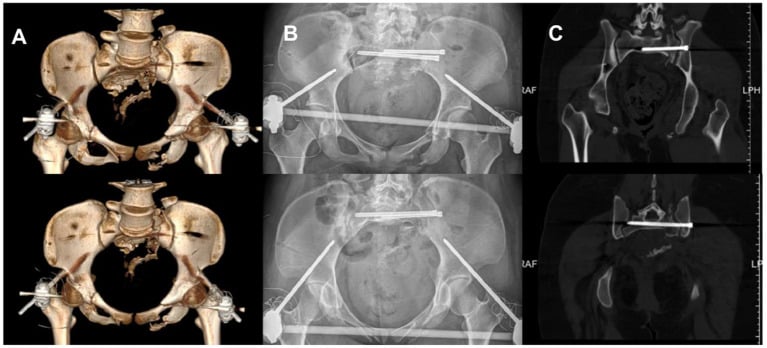
CT. Essential in every VS injury, because it defines the posterior injury precisely: the location and comminution of a sacral fracture and its Denis zone, and the morphology, widening and displacement of an SI joint injury. It also shows the anterior injury pattern, any associated acetabular injury and the soft-tissue haematoma, and it measures the vertical displacement. 3D reconstruction demonstrates the displacement clearly and serves surgical planning and communication with the patient and the team.
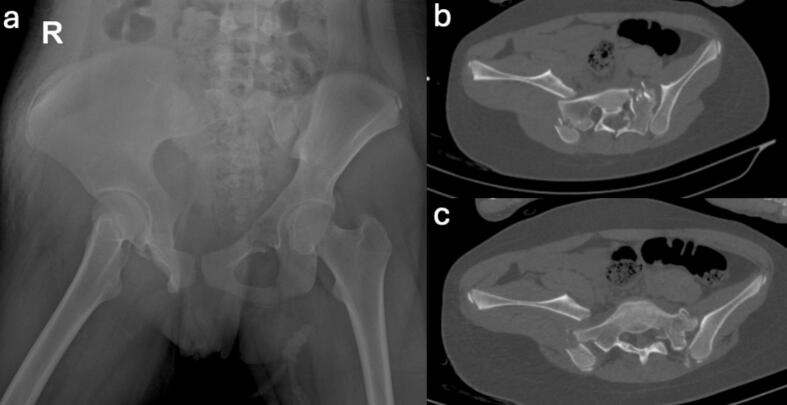
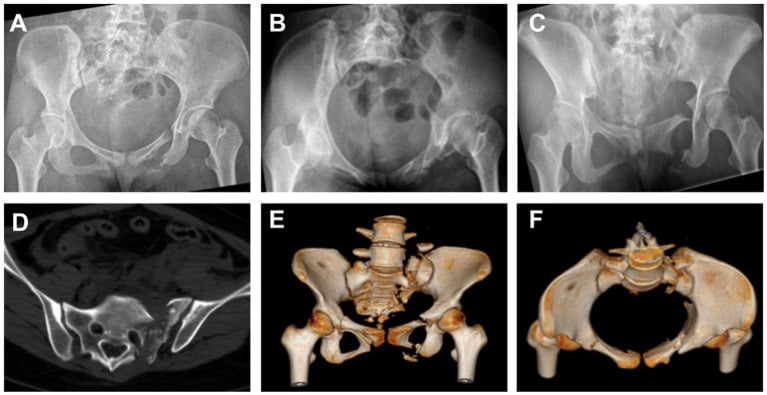
MRI is selective. It is indicated for a neurological deficit, a suspected cauda equina injury, or soft-tissue planning before complex reconstruction, and it shows nerve root compression, traumatic disc herniation and ligament integrity.
Management Algorithm
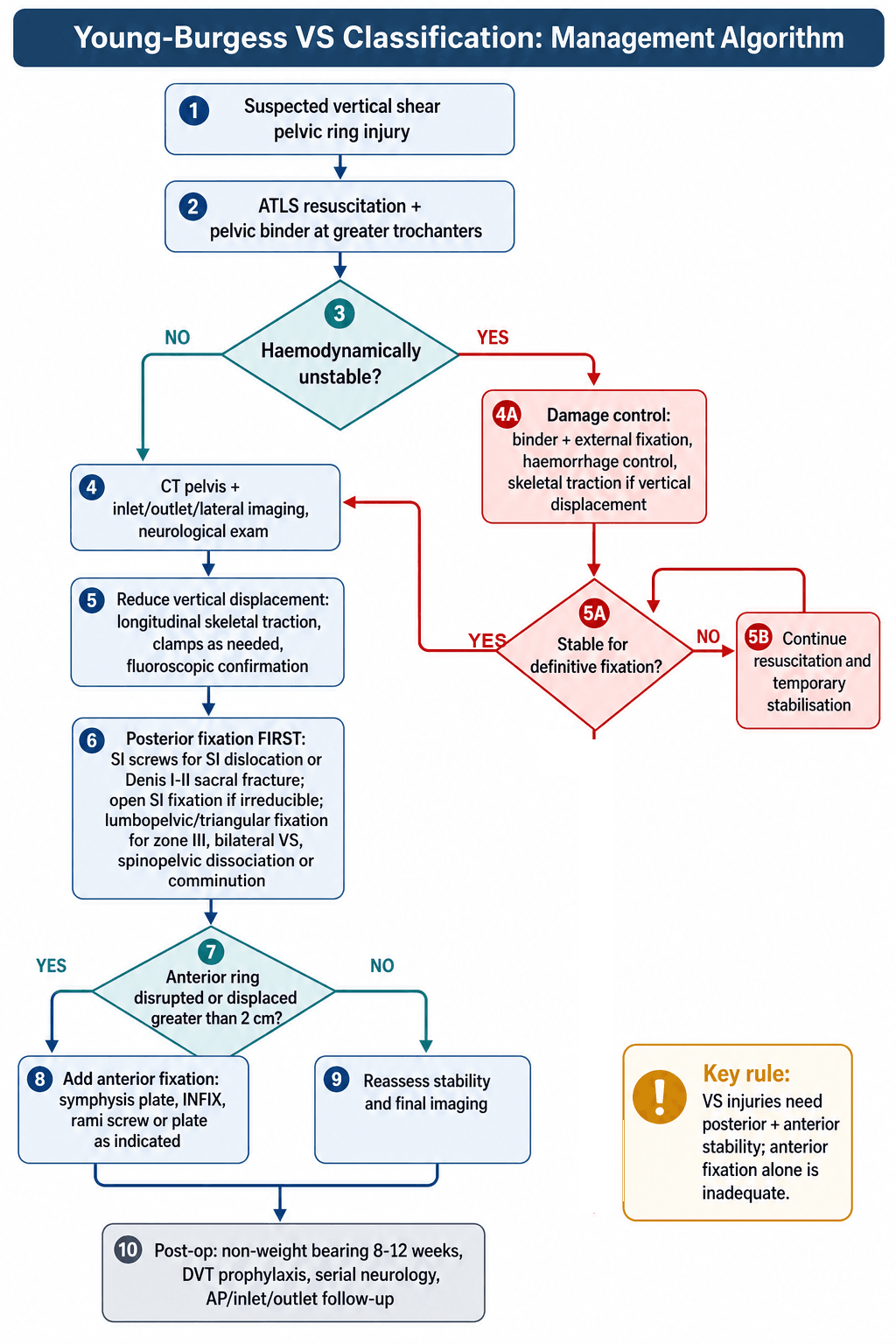
The binder. Apply it as per protocol. It is less effective in VS than in APC injuries because the displacement is vertical, not rotational: it still provides some stabilisation, but it does not reduce vertical displacement.
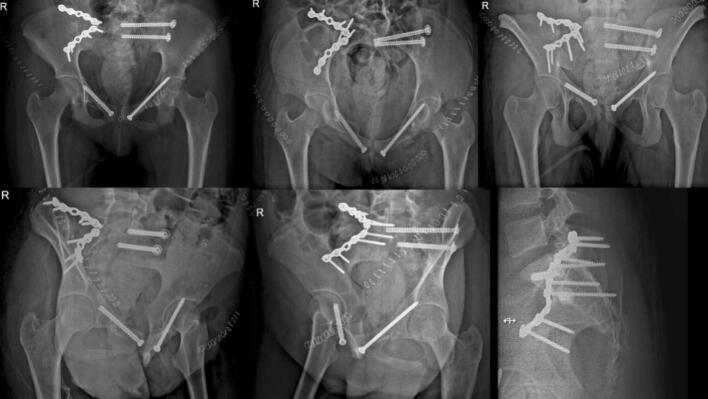
Skeletal traction may help with vertical reduction. A distal femoral pin is preferred, with an initial weight of 10-15 kg, and it is a temporising measure.
Damage control. External fixation if the patient is haemodynamically unstable. It does not address vertical displacement and may need skeletal traction in addition; it is a bridge, and definitive fixation is required once the patient is stable.
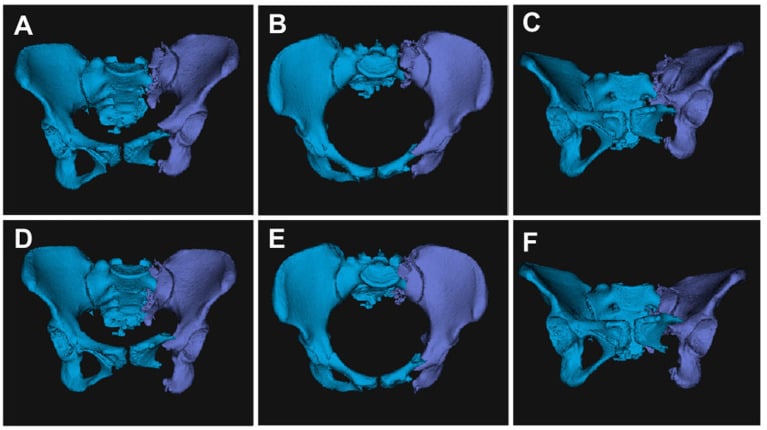
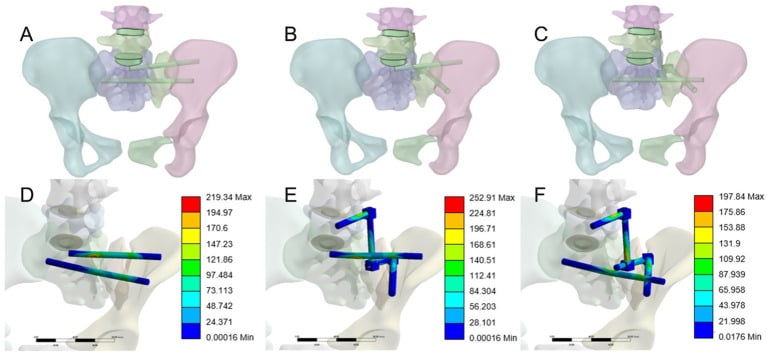
Surgical Technique
Percutaneous iliosacral screw fixation is the most common posterior fixation method, for the indications under Management.
Positioning. Supine on a radiolucent table, which allows anterior access if needed; prone or lateral decubitus are the alternatives. The C-arm is positioned for inlet, outlet and lateral sacral views.
The safe corridor. The target is the S1 body, the widest safe corridor, with the screw parallel to the S1 superior endplate. Knowing this corridor is essential to placing the screw safely. Around it lie:
- Anterior - iliac vessels, L5 nerve root
- Lateral - L5 nerve in the ala
- Superior - L5-S1 disc
- Inferior - S1 foramen
The steps.
- Reduce - longitudinal traction through the skeletal pin, confirmed on inlet and outlet views, with clamps if more control is needed
- Entry point - the posterior iliac cortex, between the PSIS and PIIS, lateral to the SI joint
- Guidewire - aimed at the centre of the S1 body, parallel to the superior endplate, checking all three views continuously
- Confirm - on the inlet view the wire is within the S1 body and not anterior to the sacrum; on the outlet view it is parallel to the endplate and not in the foramen; on the lateral sacral view it is in the centre of the S1 body
- Screw - drill over the wire, measure the depth, and insert a 7.3 mm cannulated partially threaded screw; a washer is optional
- Final check - position on all views and reduction maintained; VS injuries may need a second screw for added stability
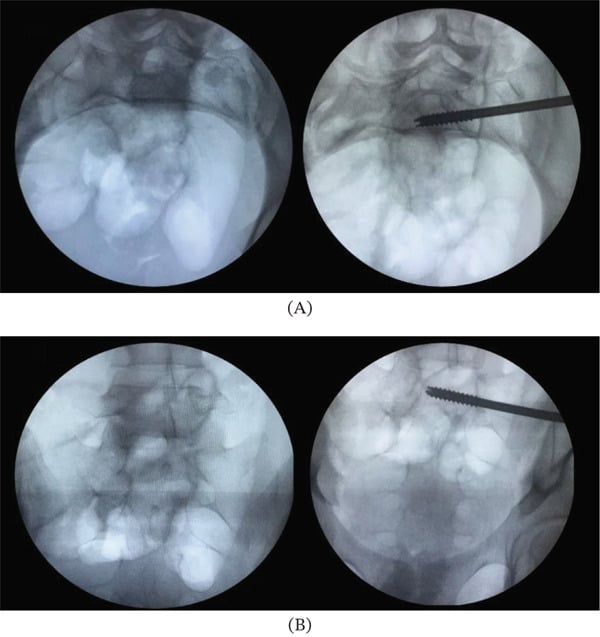
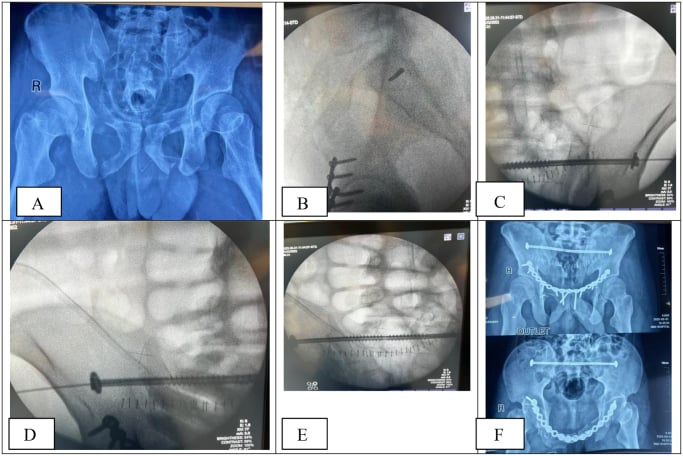
Pitfalls. The most serious complication is L5 nerve injury from a screw placed through the sacral ala: stay within the S1 body, avoid an alar trajectory, and use all three views. Vessel injury follows a breach of the anterior sacral cortex, and the inlet view is the critical guard against it. Malreduction follows using the screw as a reduction tool, so reduce before the screw goes in.
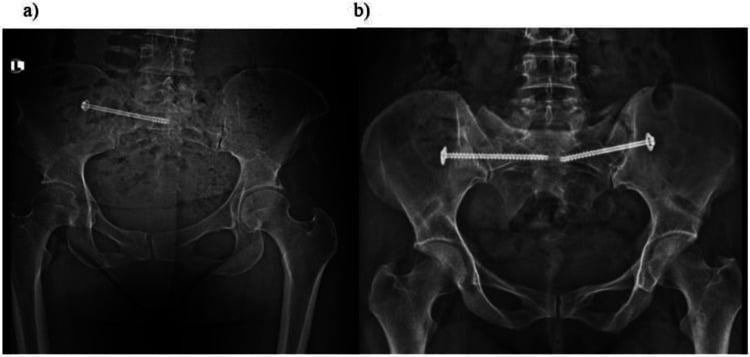
Complications
Early complications.
- Haemorrhage - significant but typically less than APC; retroperitoneal haemorrhage, presacral venous plexus
- Neurological injury - the most common complication; sacral root injuries with sacral fractures, and cauda equina syndrome with zone III
- Thromboembolism - very high DVT risk; early prophylaxis is essential, and an IVC filter may be needed if anticoagulation is contraindicated
- Infection - high risk in open fractures; surgical site infection is higher with extensive approaches
The open pelvic fracture. A pelvic ring injury communicating with a perineal, rectal, vaginal, groin or buttock wound, or with a degloving/Morel-Lavallée injury, is a distinct and far more lethal entity. Historically quoted mortality is up to 30-50%, driven by uncontrolled haemorrhage and later pelvic sepsis. Recognising the wound is the whole point: a "closed" vertical shear injury and an open one are managed very differently.
Finding the wound. In any high-energy pelvic injury, always perform a rectal and (in females) vaginal examination and inspect the perineum and the gluteal and sacral skin. An occult rectal or vaginal laceration makes the fracture open.
Managing it. The standard ring algorithm is supplemented by:
- Early broad-spectrum antibiotics and tetanus cover
- Aggressive haemorrhage control (binder, packing, angioembolisation)
- Repeated wound debridement
- For a rectal or perineal wound contaminating the fracture, a diverting (defunctioning) colostomy with distal rectal washout to prevent faecal soiling and pelvic sepsis
The Faringer anatomical zones (anterior perineum, posterior perineum/buttock, iliac wing) help predict which wounds mandate diversion.
Late complications.
- Malunion - residual vertical displacement, limb length discrepancy, gait abnormality, painful weight-bearing
- Nonunion - sacral (more common with the vertical pattern) or of the SI joint; may need revision fixation or fusion
- Permanent neurological deficit - foot drop (L5), bladder and bowel dysfunction (sacral roots), sexual dysfunction; may require long-term management
- Hardware - SI screw loosening, screw migration, symptomatic hardware
- Chronic pain - SI joint arthritis, sacral pain, low back pain
Postoperative Care
Weight-bearing. Non-weight-bearing for 8-12 weeks at minimum, and bilateral VS injuries may need 12-16 weeks. Progression is gradual and based on healing.
Mobilisation. Bed to chair with a walker, upper limb strengthening, and core stability exercises done non-weight-bearing.
Thromboprophylaxis. Essential given the immobility: LMWH or a direct oral anticoagulant, with sequential compression devices, continued until the patient is mobile.
Analgesia. Multimodal, with regional techniques if available, minimising opioids when possible.
Monitoring. Examine the nerves daily for the first week and document any change, because deficits may appear late. Radiographs are an AP pelvis at 2, 6 and 12 weeks, with inlet and outlet views as needed and CT if there is concern for loss of reduction. Percutaneous wounds typically heal quickly; open approaches need standard wound care, and every wound is watched for infection.
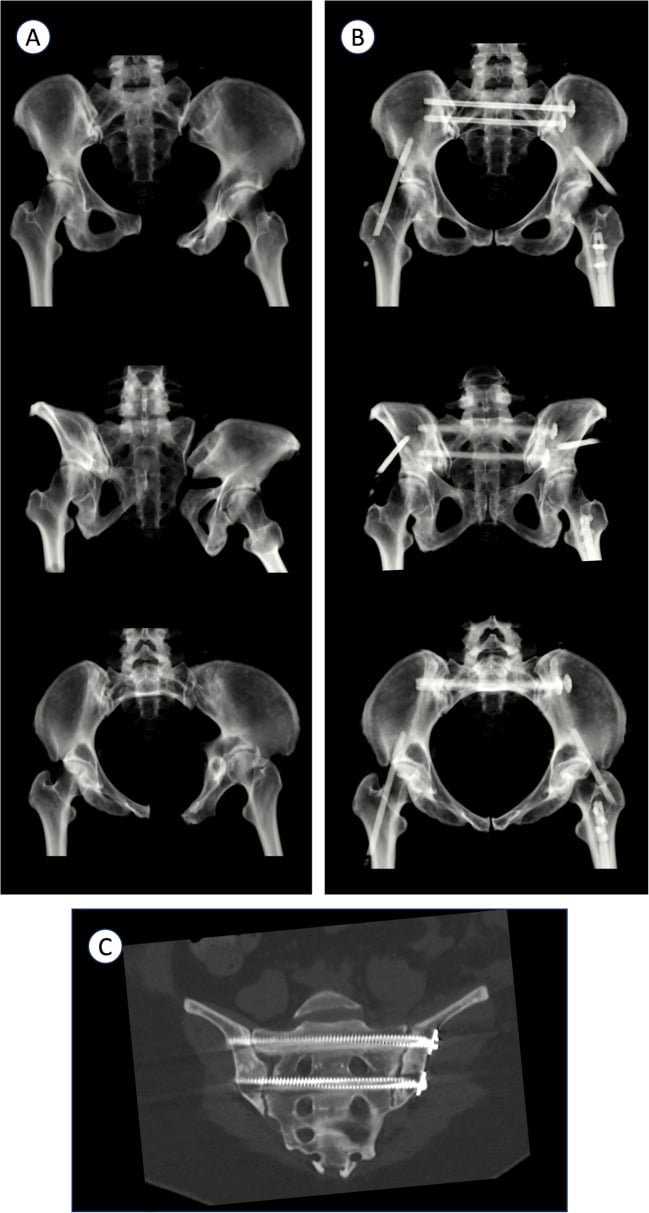
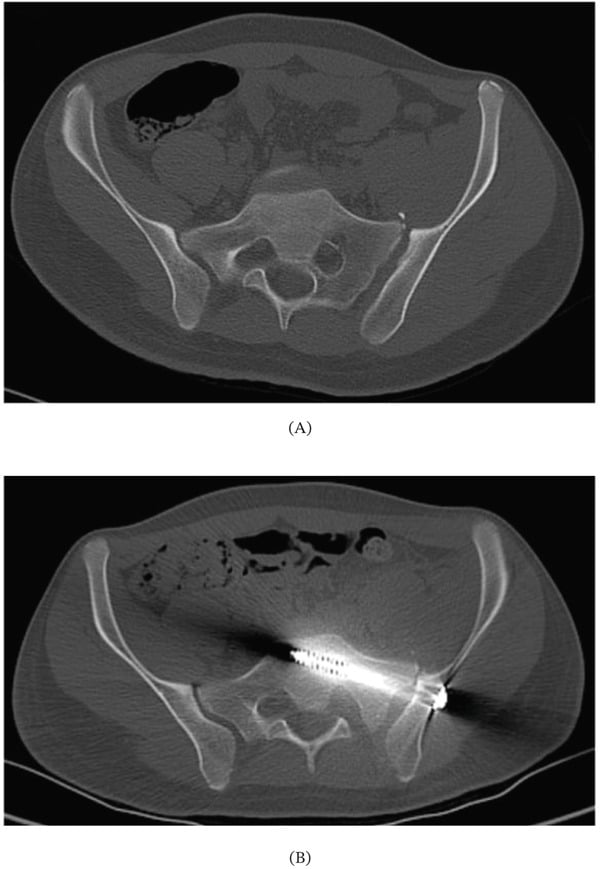
Rehabilitation.
- Phase 1 (0-6 weeks) - non-weight-bearing; upper body conditioning, hip isometrics, core strengthening
- Phase 2 (6-12 weeks) - progressive weight-bearing if healing is confirmed; gait training with assistive devices, hip strengthening, balance exercises
- Phase 3 (12+ weeks) - full weight-bearing; advanced strengthening, proprioceptive training, return to activities
Long-term follow-up. Review gait, any persistent leg length discrepancy, neurological status and pain, and watch for SI joint arthritis, hardware symptoms and chronic pain. The functional goals are independent walking, return to work on a variable timeline, and independence in activities of daily living.
Outcomes/Prognosis
The percentages in this section (good-to-excellent outcome rates, nerve-recovery rates, union rates, hardware-removal rates) are conventional teaching ranges drawn from retrospective pelvic-trauma series, not measurements from a single cited cohort. The sourced population figures on this page are the Mann 2018 and Whitbeck 1997 numbers in the Evidence section.
Function. With appropriate treatment 60-70% have good to excellent outcomes. The result depends heavily on neurological injury, associated injuries, the quality of reduction and the stability of fixation. The poor prognostic factors:
- Neurological injury
- Bilateral injuries
- Zone III sacral fractures
- Delayed fixation
- Malunion or nonunion
Neurological recovery. Complete recovery occurs in 50-60% of L5 injuries and 60-70% of S1 injuries; sacral root recovery is variable and often partial. Improvement may continue for 12-24 months, with peak recovery typically at 6-12 months. Permanent deficits include foot drop requiring an AFO in 15-20%, bladder dysfunction in 5-10% (zone III injuries), and sexual dysfunction to a variable degree.
Return to activities.
- Walking - independent at 3-6 months, a normal gait at 6-12 months; a limp may be permanent
- Work - sedentary at 3-6 months, physical labour at 6-12 months; modifications may be needed
- Sport - low-impact at 6-9 months, high-impact at 9-12+ months; some activities may be permanently limited
Mortality. Around 11% at 30 days for high-energy pelvic ring fractures in population data, with reported ranges of 6-35% depending on injury severity (Mann et al., Injury 2018). Mortality is driven by associated injuries and total injury burden (ISS), not by the ring fracture pattern alone. In complete ring disruption the APC (open-book) mechanism carries a higher haemorrhage and mortality risk than VS (Whitbeck/Burgess, JOT 1997), so the long-held view that VS is the most lethal pattern is not supported.
Long-term. Most survivors achieve independent function and chronic pain is common. Quality of life depends on neurological recovery and is measurably reduced versus the general population after pelvic ring injury (Banierink et al., Arch Orthop Trauma Surg 2019).
Radiographic outcome. Union rates are 85-90% for the SI joint, 80-85% for sacral fractures and greater than 95% for the symphysis. Residual displacement is common, affects long-term outcomes and may need corrective surgery. SI screws are typically well tolerated, and removal is rarely needed (10-15%).
Guidelines, Registries & Global Practice
Global Epidemiology
- Figure
- 2-3%
- Source
- Mann et al., Injury 2018
- Figure
- 7-20%
- Source
- Mann et al., Injury 2018
- Figure
- approx 4.6 per 100,000 per year
- Source
- Mann et al., Ontario Trauma Registry 2018
- Figure
- 5-10% (least common major pattern)
- Source
- Young-Burgess literature
- Figure
- approx 11% (range 6-35%, ISS-driven)
- Source
- Mann et al., Injury 2018
VS injuries arise from high-energy axial loading - falls from height onto an extended limb, motorcycle ejection, pedestrian-versus-vehicle and crush mechanisms - and so cluster in young men in polytrauma worldwide. The mechanism is universal and not region-specific.
Major Guidance, Side by Side
- Region
- International
- Position on unstable pelvic ring / VS
- Tile/AO and Young-Burgess classifications; vertically unstable (Tile C) patterns require posterior reduction and fixation; reduce before fixing; SI screws into the S1 body
- Region
- UK
- Position on unstable pelvic ring / VS
- Suspected pelvic ring injury managed in a network with early non-invasive binder, CT, and transfer to a specialist pelvic unit for definitive fixation
- Region
- US / International
- Position on unstable pelvic ring / VS
- Algorithmic haemorrhage control in haemodynamically unstable pelvic fracture: binder, then preperitoneal packing and/or angioembolisation, with external fixation as adjunct
- Region
- US
- Position on unstable pelvic ring / VS
- Trauma evidence summaries emphasise early definitive stabilisation of unstable patterns; no VS-specific clinical practice guideline
Evidence level: the operative principles above rest largely on Level III-IV evidence (retrospective series such as Matta 1989, Routt 1997, Schildhauer 1998); there is no randomised trial defining VS fixation strategy, which is a genuine area of uncertainty.
Registry and Cohort Evidence
- Population trauma registries (e.g. Ontario Trauma Registry) show stable incidence and stable approx 11% 30-day mortality despite rising injury severity, indicating improving systems of care (Mann et al., Injury 2018).
- Long-term patient-reported outcomes after pelvic ring injury (SMFA, EQ-5D) remain significantly worse than the general population regardless of operative versus non-operative treatment, reflecting the burden of associated and neurological injury (Banierink et al., 2019).
- There is no dedicated implant/joint registry for pelvic fixation comparable to arthroplasty registries; evidence is from trauma registries and surgical series.
Global Practice Variation
- Typical practice
- Early CT, percutaneous SI screw fixation under triplanar fluoroscopy or navigation, combined anterior + posterior fixation, angioembolisation available
- Typical practice
- Greater reliance on traction, external fixation and open techniques; navigation and embolisation often unavailable; longer immobilisation
Across all settings the non-negotiable principle is the same: a vertically unstable injury needs both anterior and posterior stabilisation, and the posterior lesion is the primary problem.
Thromboprophylaxis and Rehabilitation (global principles)
- Pelvic ring trauma carries high venous thromboembolism risk from immobility and vascular injury; mechanical prophylaxis plus pharmacological prophylaxis (low-molecular-weight heparin, or a direct oral anticoagulant where appropriate) once haemostasis is secured is standard, continued until mobile.
- Rehabilitation follows protected weight-bearing with graduated progression; persistent L5 foot-drop may require an ankle-foot orthosis, and neurological recovery determines long-term function.
Exam Focus Points
High-Yield Concepts
The KEY distinguishing feature of VS injuries is VERTICAL (cephalad) displacement of the hemipelvis. This causes TRUE leg length discrepancy - measure ASIS to medial malleolus bilaterally. LC-III and APC-III have rotational instability but minimal vertical displacement.
Quick Differentiation
- VS: Vertical displacement, axial mechanism, high neuro risk
- LC-III: Internal rotation, lateral mechanism, windswept pelvis
- VS: Vertical displacement, limb shortened
- APC-III: External rotation, open book, highest hemorrhage
Surgical Principles
Non-Negotiables:
- BOTH anterior AND posterior fixation
- Reduce vertical displacement first (traction)
- Posterior fixation is primary stabilization
- SI screws into S1 BODY (not ala)
- Document neurology before and after surgery
Denis Zone Significance
- Zone I: L5 at risk, 5-10% neuro injury
- Zone II: S1 at risk, 25-30% neuro injury
- Zone III: Cauda equina, up to 60%, often permanent
Viva Scenarios
Clinical Decision Scenarios
Practise clinical reasoning and management decisions out loud
“A 32-year-old construction worker fell 8 meters from scaffolding, landing on his feet. He has a shortened right leg and cannot bear weight. AP pelvis shows right hemipelvic cephalad displacement with symphysis diastasis and right sacral fracture. Describe your assessment and management.”
“Explain the difference between vertical shear injuries and APC-III injuries. Why is this distinction important for management?”
“Describe your technique for percutaneous iliosacral screw fixation. What are the key anatomical considerations and how do you avoid complications?”
MCQ Practice Points
Q: What is the KEY distinguishing feature of vertical shear pelvic injuries compared to LC-III and APC-III injuries?
A: VERTICAL (cephalad) displacement of the hemipelvis causing TRUE limb length discrepancy (shortened limb on affected side). Compare iliac crest heights which are asymmetric in VS. LC-III and APC-III have rotational instability but minimal vertical displacement.
Q: What is the neurological injury rate in vertical shear injuries and which nerve root is most vulnerable?
A: 30-50% neurological injury rate (highest of all pelvic patterns). L5 nerve root is MOST vulnerable, running anteriorly through the sacral ala. Denis Zone III (central) has highest risk at 60%, Zone II (transforaminal) has 25-30%, and Zone I (alar) has 5-10% risk.
Q: A patient with a vertical shear pelvic injury has good reduction achieved with external fixation anteriorly. Can you leave the posterior pelvis untreated if the reduction is maintained?
A: NO - this is a critical exam trap. VS injuries ALWAYS require BOTH anterior AND posterior fixation. Anterior fixation alone is inadequate. The posterior injury is the PRIMARY stability problem. Never leave a VS injury with only anterior stabilization - no exceptions.
Q: Where should the iliosacral screw be placed in VS injuries and what is the most serious complication of improper placement?
A: Target the S1 BODY (not the ala), placing the screw parallel to the S1 superior endplate. Three fluoroscopic views required: inlet, outlet, and lateral. L5 nerve injury is the most serious complication from screw placement through the sacral ala. Stay within S1 body to avoid the L5 nerve.
Q: A patient fell 10 meters and presents with a shortened right leg and pelvic fracture. What classification is this and what treatment is required?
A: This is a vertical shear injury (Young-Burgess VS, Tile C). Treatment requires BOTH anterior AND posterior fixation. Next steps: detailed neurological exam (especially L5 and sacral roots), CT pelvis with 3D reconstruction to define fracture pattern, and surgical planning for combined fixation.
Q: What is the role of pelvic binders in vertical shear injuries compared to APC injuries?
A: Pelvic binders are LESS effective for VS than APC injuries. While binders help with hemorrhage control, they do NOT reduce vertical displacement effectively. VS injuries primarily displace vertically (cephalad), whereas binders work by closing the pelvic ring rotationally. Skeletal traction is more useful for vertical reduction in VS.
Quick Facts
- Mechanism: Axial load on extended leg (fall from height)
- Key finding: VERTICAL hemipelvic displacement
- Clinical sign: True limb length discrepancy (shortening)
- Destot sign: Scrotal/labial hematoma
- Neuro risk: 30-50% (highest of all patterns)
- Tile equivalent: Always Tile C (complete instability)
- Treatment: BOTH anterior AND posterior fixation
- SI screw target: S1 BODY (not ala - L5 nerve risk)
Critical Actions
- VS injury identified → Detailed neuro exam, skeletal traction, plan both anterior and posterior fixation
- Denis Zone III sacral fracture → High neurological risk, may need lumbopelvic fixation
- Bilateral VS injury → Consider lumbopelvic fixation (triangular osteosynthesis)
- SI screw placement → Target S1 body, confirm on inlet/outlet/lateral views, avoid ala
Exam Day Tips
- VS = VERTICAL displacement = TRUE limb shortening = Tile C
- 30-50% neurological injury rate - document before surgery
- BOTH anterior AND posterior fixation is mandatory
- SI screw goes in S1 BODY - ala is danger zone (L5)
- Denis Zone III = cauda equina risk = may need lumbopelvic fixation
Common Pitfalls
- Treating with anterior fixation alone (must fix posterior)
- Missing vertical displacement (compare iliac crest heights)
- SI screw in ala instead of S1 body (L5 nerve injury)
- Not documenting neurology preoperatively
- Relying on binder alone (doesn't address vertical displacement)
Evidence and Guidelines
Mechanism Predicts Resuscitation, Morbidity and Mortality (Landmark VS vs APC Study)
- In 38 patients with complete anterior and posterior ring disruption (innominosacral dissociation), outcome was driven by mechanism. The anteroposterior compression (APC) group had significantly greater transfusion requirement, multiorgan failure (11/18 versus 2/14) and mortality (39 percent versus 0 percent) than the vertical shear (VS) group. VS patients were more likely to receive fewer than 10 units of blood.
Posterior Fixation is Mandatory for Vertically Unstable Patterns
- Comparison of skeletal traction/sling, anterior external fixation and internal fixation for unstable pelvic ring fractures showed that anterior frame fixation alone failed to control the posterior injury in vertically unstable patterns. Reduction and stable fixation, addressing the posterior ring, were required to achieve union in a satisfactory position.
Percutaneous Iliosacral Screw Fixation: Early Complications
- In 177 consecutive unstable pelvic ring injuries treated with percutaneous iliosacral screws, only 5 screws were misplaced (surgeon error) and just one produced a transient L5 neurapraxia. There were no posterior pelvic infections and minimal blood loss. Adequate triplanar fluoroscopy of an accurately reduced posterior ring is essential; reduction must precede fixation.
Denis Sacral Fracture Classification (Landmark, 236 cases)
- Retrospective analysis of 236 sacral fractures defined three zones with characteristic neurological risk: Zone I (ala) occasionally damages the L5 root; Zone II (transforaminal) commonly causes sciatica but rarely bladder dysfunction; Zone III (central canal) frequently produces saddle anaesthesia and loss of sphincter function. Plain radiographs were almost useless; CT was crucial.
Triangular (Lumbopelvic) Osteosynthesis for Vertically Unstable Sacral Fractures
- In 34 patients (28 polytraumatised) with vertically unstable sacral fractures, triangular osteosynthesis (vertical vertebro-pelvic distraction plus transverse iliosacral or trans-sacral fixation) allowed early progressive weight-bearing (mean full weight-bearing at 23 days). Hardware loosening occurred in 3 of 34 (9 percent), with 2 (6 percent) needing reintervention.
Population Epidemiology and Mortality of High-Energy Pelvic Fractures
- In a 10-year Ontario Trauma Registry cohort of 3915 high-energy pelvic fractures, incidence was stable at about 4.6 per 100,000 population per year and 30-day mortality remained constant at 11 percent despite rising injury severity. Pelvic ring fractures account for 2-3 percent of all fractures but are present in 7-20 percent of high-energy polytrauma; reported mortality for high-energy patterns ranges 6-35 percent and is driven mainly by associated injuries (ISS).