OrthoVellum
Knowledge Hub

Study

  • Topics
  • MCQs
  • ISAWE
  • Operative Surgery
  • Flashcards

Company

  • About Us
  • Editorial Policy
  • Contact
  • FAQ
  • Blog

Legal

  • Terms of Service
  • Privacy Policy
  • Cookie Policy
  • Medical Disclaimer
  • Copyright & DMCA
  • Refund Policy

Support

  • Help Center
  • Accessibility
  • Report an Issue
OrthoVellum

© 2026 OrthoVellum. For educational purposes only.

Not affiliated with the Royal Australasian College of Surgeons.

Back to ISAWE Scenarios
Contents
0%
trauma

Morel-Lavallée Lesion
advanced
6 min
28 marks
6 questions
Clinical Scenario
A 17-year-old male presents to the Emergency Department with right thigh swelling 12 days after a motorbike accident. He was initially treated conservatively for minor pelvic injuries. On examination, there is a large, fluctuant swelling over the lateral thigh with skin that appears mobile over the underlying fascia. The overlying skin has some abrasions but no open wounds.
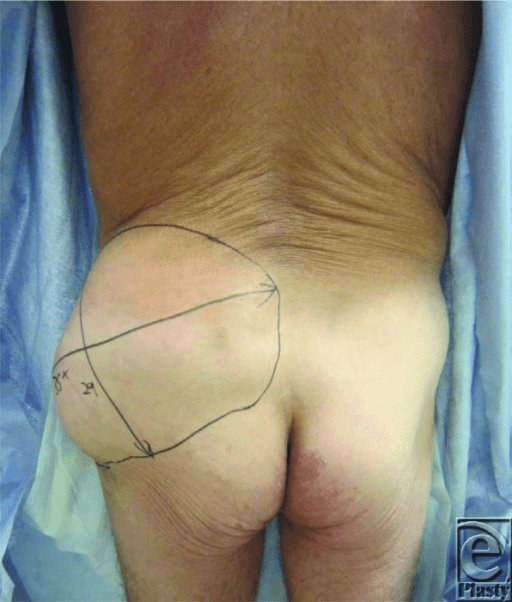
MRI T2-weighted image demonstrating large fluid collection between subcutaneous tissue and fascia over the lateral thigh. The collection shows heterogeneous signal indicating hemolymphatic contents. Clinical photograph shows fluctuant swelling with skin degloving pattern. This represents a significant soft tissue injury requiring careful management prior to any fracture surgery.
Open Full Size

MRI T2-weighted image demonstrating large fluid collection between subcutaneous tissue and fascia over the lateral thigh. The collection shows heterogeneous signal indicating hemolymphatic contents. Clinical photograph shows fluctuant swelling with skin degloving pattern. This represents a significant soft tissue injury requiring careful management prior to any fracture surgery.

Source: Morel-Lavallée Lesion: Closed Degloving Injury • PMC4005421 • CC-BY

Questions

Question 1 (4 marks)

What is the diagnosis and describe the pathophysiology of this injury.

Question 2 (5 marks)

What is the clinical and radiological assessment of this condition?

Question 3 (6 marks)

What are the management options and how do you select the appropriate approach?

Question 4 (5 marks)

Describe your surgical technique for debridement of this lesion.

Question 5 (4 marks)

What are the complications and how do they affect fracture management?

Question 6 (4 marks)

How do you manage this lesion when associated with acetabular or pelvic fractures requiring ORIF?

Exam Day Cheat Sheet

Must Mention

  • •Morel-Lavallée = closed internal degloving
  • •Hemolymphatic fluid between subcutaneous tissue and fascia
  • •~50% culture positive
  • •Common over greater trochanter
  • •MRI best for extent
  • •Dead space management critical (quilting sutures)
  • •Address before overlapping fracture surgery

Common Pitfalls

  • •Missing diagnosis (presents as bruising)
  • •Operating through lesion without debridement
  • •Not sending cultures
  • •Inadequate dead space closure
  • •Not delaying surgery when indicated
  • •Recurrent lesion after aspiration alone
Scenario Info
Answers Revealed0/6
Difficulty
advanced
Time Allowed6 min
Total Marks28
Questions6
Related Scenarios

Acetabular Fracture

trauma•26 marks

Atypical Femoral Fracture

trauma•26 marks

Calcaneal Fracture

trauma•24 marks

Chronic Elbow Dislocation

trauma•28 marks

Compartment Syndrome - Leg

trauma•26 marks