Rare Aggressive Vascular Malignancy | Poor Prognosis | Multimodal Treatment Required
- Extremely rare and highly aggressive - 1-2% of soft tissue sarcomas with 20-35% 5-year survival
- Three major associations: chronic lymphedema (Stewart-Treves), radiation therapy, and foreign bodies
- Multifocal disease common - 50% have multiple sites at presentation or develop additional lesions
- Early metastases - lung most common, occur early and frequently (50% of patients)
- Wide excision with negative margins mandatory - intralesional surgery leads to rapid recurrence
- “Stewart-Treves syndrome: angiosarcoma arising in chronic lymphedema (classically post-mastectomy)
- “Radiation-induced angiosarcoma has 5-10 year latency after breast cancer treatment
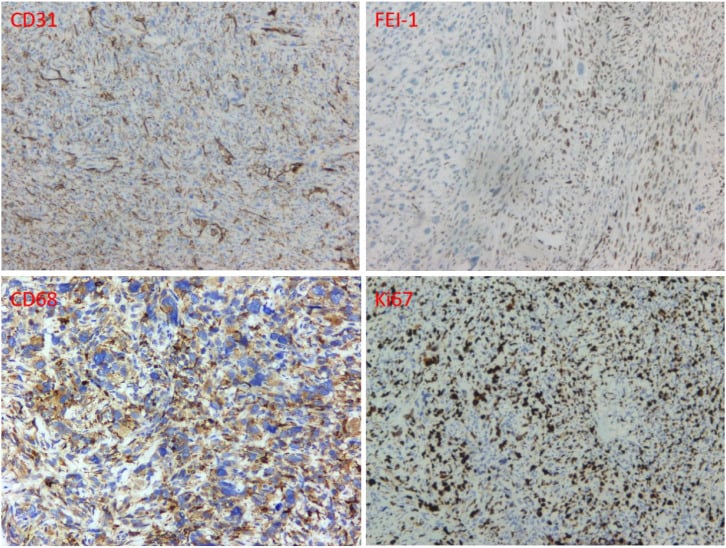
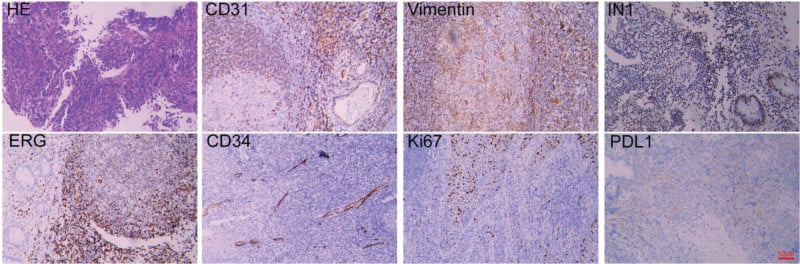
- “ERG is the most SENSITIVE endothelial marker and is retained where CD31 goes patchy - but no single marker is specific, so use a panel
- “Scalp angiosarcoma in elderly has worst prognosis - multifocal, infiltrative, high recurrence
Overview and Epidemiology
Angiosarcoma is a malignant tumour of endothelial cells that can arise in skin, soft tissue, breast, liver, spleen, heart, and bone. It is among the most aggressive of all sarcomas: it metastasises early by the haematogenous route, especially to the lung, it is multifocal locally, and it recurs locally at a high rate even after complete excision.
Who gets it. Angiosarcoma accounts for 1-2% of all soft tissue sarcomas. The age distribution is bimodal: young adults with deep soft tissue or visceral disease, and the elderly with cutaneous head and neck disease, where the scalp and face are the most common sites, typically in patients over 60. There is a slight overall male predominance, although breast and Stewart-Treves disease occur in women. Median 5-year survival across all sites is approximately 20-35%.
Established associations. The recognised causes are:
- Therapeutic radiation - breast most commonly
- Chronic lymphoedema - Stewart-Treves syndrome
- Chemical carcinogens - vinyl chloride, arsenic, thorotrast, classically hepatic angiosarcoma
- Chronic foreign bodies - vascular grafts, retained surgical material
- Ultraviolet exposure - a driver of the high mutational burden in cutaneous head and neck disease
Pathophysiology
Angiosarcoma arises from malignant transformation of vascular or lymphatic endothelial cells, producing irregular, anastomosing vascular channels lined by atypical endothelium that dissect through tissue planes. This infiltrative, channel-forming growth underlies two defining clinical problems: tumour extent is consistently underestimated at the margins, and disease is frequently multifocal, with "skip" lesions, which is why recurrence is high even after apparently complete resection. The same vasoformative phenotype accounts for the propensity to bleed and for the bruise-like appearance of cutaneous disease.
Secondary angiosarcoma. Post-radiation and lymphoedema-associated tumours carry high-level MYC (8q24) amplification in essentially 100% of cases, with FLT4 (VEGFR3) co-amplification in a subset. MYC amplification is absent in benign atypical vascular lesions, which makes it the key diagnostic discriminator in an irradiated field.
Primary angiosarcoma. These tumours generally lack MYC amplification and show other alterations: KDR/VEGFR2 mutations, PTPRB and PLCG1 mutations, and a high UV-signature mutational burden in cutaneous head and neck disease. Upregulation of the vascular receptor tyrosine kinases TIE1, KDR, TEK and FLT1 is the rationale for anti-angiogenic and tyrosine-kinase-directed treatment.
Classification
Angiosarcoma is staged with the AJCC 8th edition soft tissue sarcoma system. Most tumours are high-grade and present as Stage III or IV, because multifocal disease and early metastases have already put them there by the time of diagnosis.
- T
- T1 (under 5cm)
- Grade
- High (G3)
- Metastases
- M0
- 5-Year Survival
- 40-50%
- T
- T2-4 (over 5cm or deep)
- Grade
- High (G3)
- Metastases
- M0
- 5-Year Survival
- 30-40%
- T
- Any T
- Grade
- Any G
- Metastases
- M1 (metastatic)
- 5-Year Survival
- Under 10%
Clinical Presentation
Cutaneous angiosarcoma of the head and neck. The classic patient is elderly and the lesion is on the scalp, the most common site. It looks like a bruise, purple or red, it enlarges rapidly over weeks to months, it is often multifocal with several areas of involvement, and there is no history of trauma, which is what separates it from a haematoma.
The single most common cause of delayed angiosarcoma diagnosis is mistaking a bruise-like scalp lesion for benign ecchymosis. Any non-traumatic, persistent or enlarging purple scalp lesion in an older patient must be biopsied. By the time the diagnosis is clinically obvious, multifocal infiltrative disease has usually rendered cure impossible.
Radiation-induced angiosarcoma. It arises within the radiation field 5-10 years after radiotherapy, classically on the irradiated breast, as skin changes: redness, ecchymosis and palpable nodules. The differential is radiation dermatitis and inflammatory breast cancer.
Stewart-Treves syndrome. Angiosarcoma arising in chronic lymphoedema, classically the arm after mastectomy, with a latency that is usually greater than 10 years. It presents as purple nodules or plaques in the chronically oedematous arm, is rapidly progressive and is often multifocal.
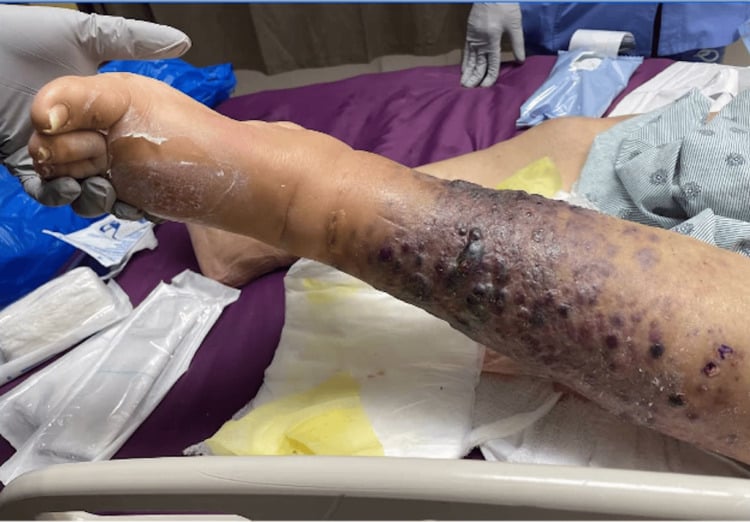
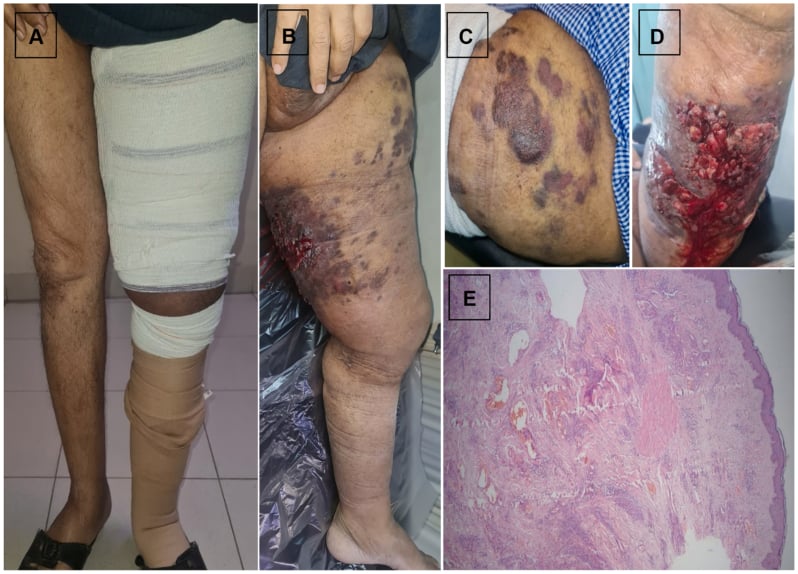
Deep soft tissue angiosarcoma. A large mass in the extremity or trunk, often painless until late and growing rapidly. With bone involvement it may present with a pathological fracture.
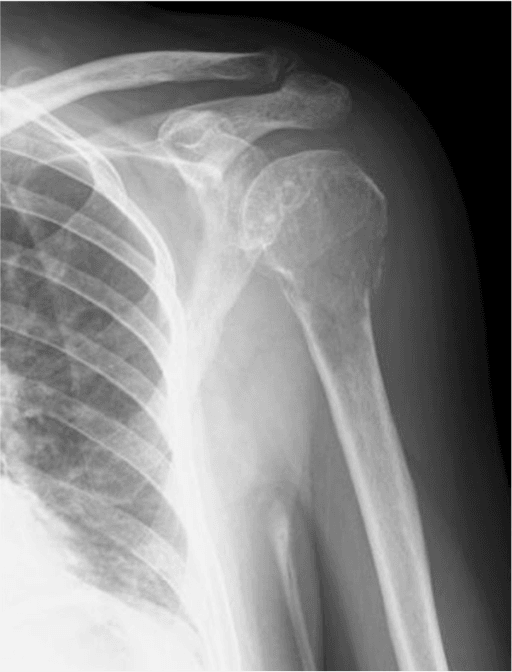
Primary angiosarcoma of bone. This is rare, but it is the form most likely to present to the orthopaedic surgeon. Multifocality is characteristic: it is classically multicentric, with several lesions within one bone or clustered in a single limb or anatomical region, which is a recognised diagnostic clue, although solitary lesions occur.
What the radiograph shows. A permeative, lytic, destructive lesion with cortical breach and frequently a pathological fracture. Matrix is absent; the lesion is purely lytic.
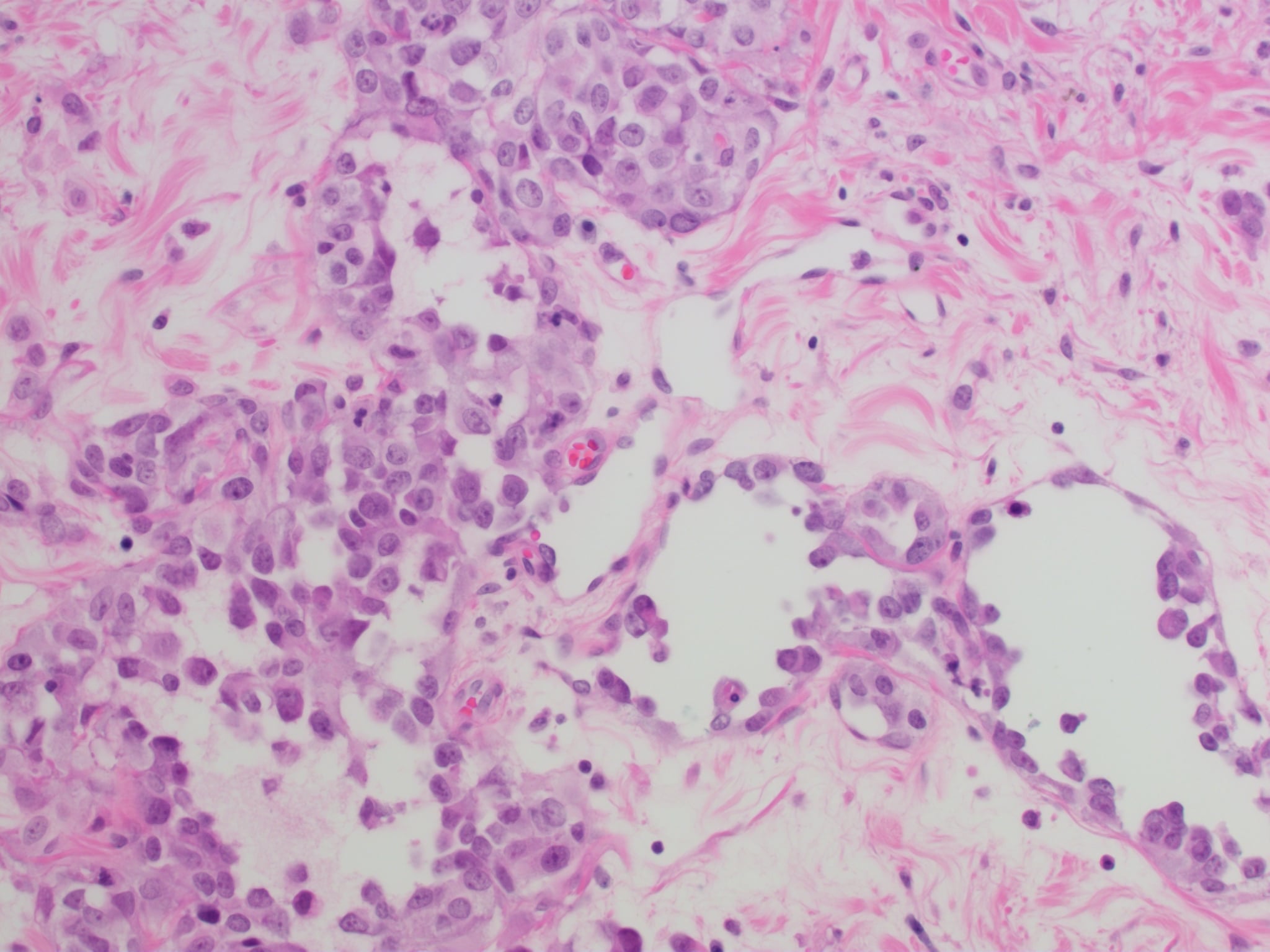
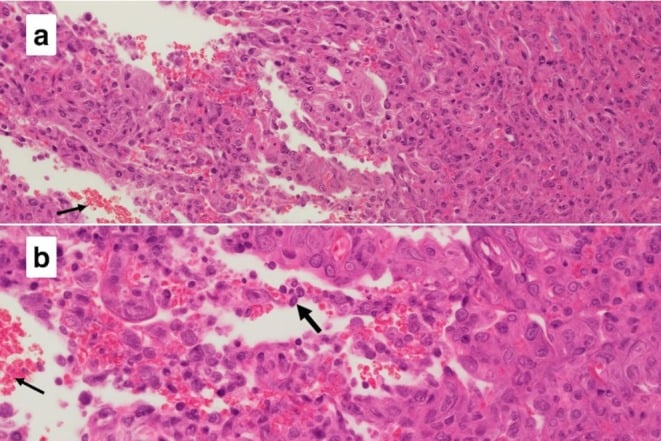
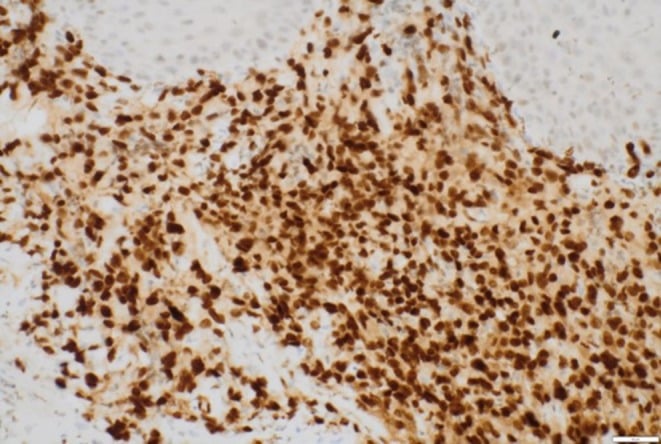
What the histology shows. It is often epithelioid, which can mimic metastatic carcinoma; the endothelial markers CD31 and ERG are decisive. The differential of a destructive lytic bone lesion is:
- Epithelioid haemangioendothelioma - a lower-grade vascular tumour that can also be multifocal
- Haemangioma
- Metastatic carcinoma
- Myeloma
A multifocal lytic pattern in one region should prompt biopsy plus immunohistochemistry rather than the assumption of metastasis.
How it is treated. Management mirrors high-grade bone sarcoma: biopsy and full staging, including the lungs, before any intervention, then wide resection where feasible with or without radiotherapy and chemotherapy. High-grade disease carries a poor prognosis, and multifocality often precludes a curative resection. The registry survival data, and why the site of the lesion is the first thing to establish, are set out under Outcomes and Prognosis.
Investigations
Diagnostic Imaging and Biopsy Protocol
The gold standard for local staging. Look for heterogeneous signal, prominent enhancement from a vascular tumour, infiltrative margins and multifocal areas.
Essential for the metastatic work-up. Lung metastases are present in 30-40% at diagnosis; check the liver and bone as well.
Mandatory for diagnosis, and planned as set out below so that the tract can be excised and the pathologist receives what the panel needs.
Consider for extent of disease. Angiosarcoma is typically FDG-avid, and PET-CT is useful for detecting occult metastases and multifocal disease.
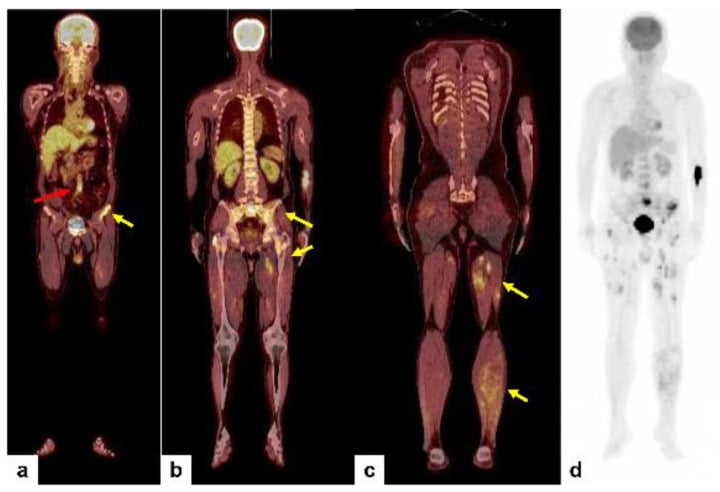
Image before you biopsy. Biopsy through an unimaged mass loses the information the radiologist needs, which is the pre-biopsy signal characteristics, the true extent and the sites of viable rather than necrotic tumour, and the haematoma from a vascular tumour will distort every subsequent scan.
Who does the biopsy. For a deep soft-tissue or bone lesion the biopsy is planned by, and ideally performed at, the unit that will carry out the definitive resection. This is not a courtesy referral. In the Musculoskeletal Tumor Society's multicentre review of 597 biopsies of primary musculoskeletal sarcomas, the diagnosis was wrong in 17.8%, and a problem with the biopsy forced a different and often more complex operation, or the addition of radiotherapy or chemotherapy, in 19.3%. The outcome itself was changed, meaning a more disabling resection, loss of function, local recurrence or death, in 10.1%, and 18 patients underwent an unnecessary amputation because of the biopsy. Errors, complications and changes in the course of treatment were two to twelve times more frequent when the biopsy was performed at the referring institution rather than at the treating centre (p less than 0.001).
The mechanics that follow from this are the examinable part:
- Place the tract where the resection will take it out. Longitudinal on a limb, in line with the planned incision, through one compartment only. A transverse or badly sited tract contaminates tissue that would otherwise have been spared and can convert a limb-sparing resection into an amputation.
- Mark and record the tract so the resecting surgeon can excise it en bloc, and use the shortest route to the lesion that does not cross an uninvolved compartment or a neurovascular bundle.
- Angiosarcoma bleeds. It is a vasoformative tumour, so achieve meticulous haemostasis and avoid a drain; where a drain is unavoidable it exits in line with the incision so that it too can be excised.
- Send fresh tissue as well as formalin-fixed, and request the endothelial markers up front, with MYC FISH whenever the lesion sits in a previously irradiated field.
The general principles are set out in biopsy principles and techniques.
Management
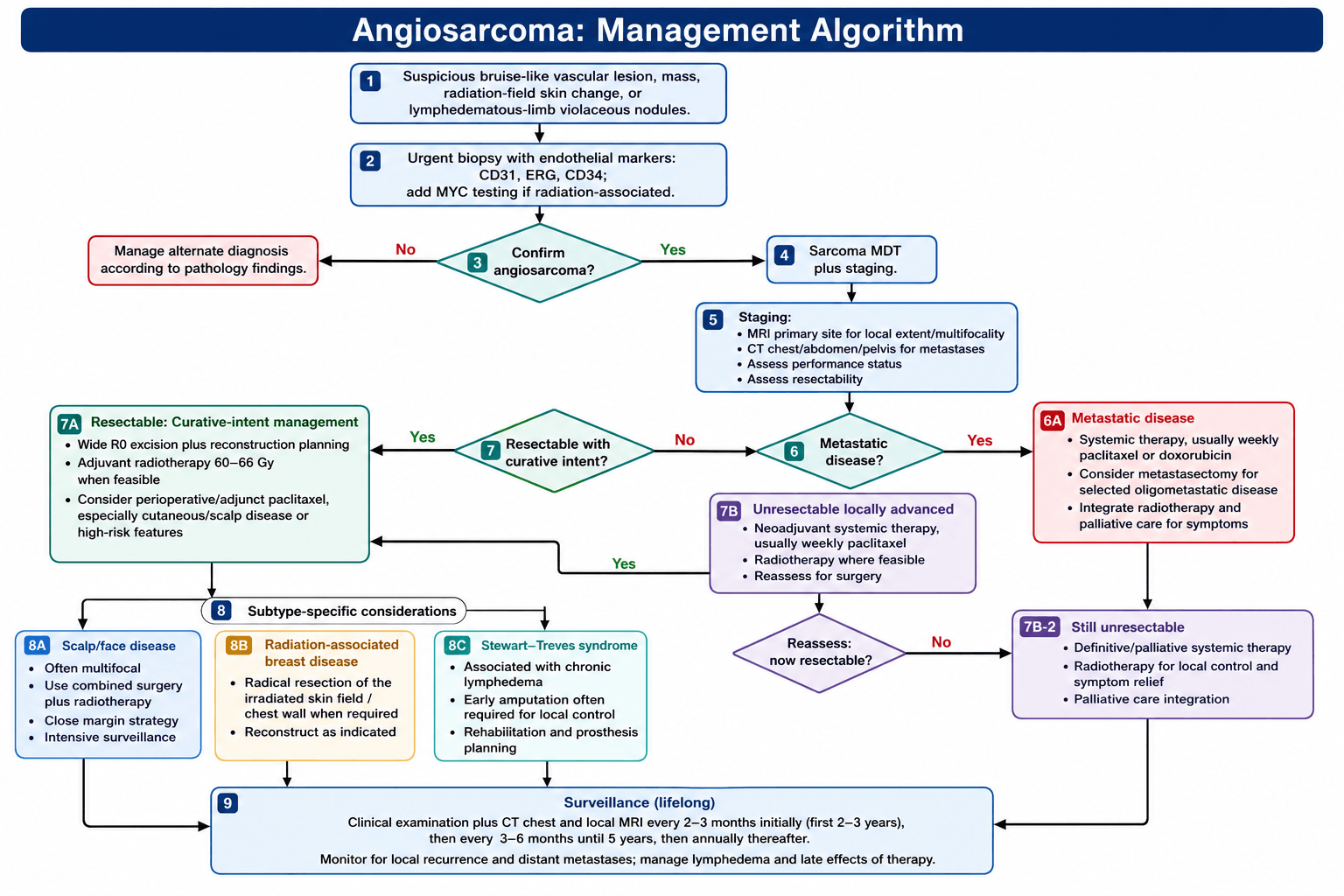
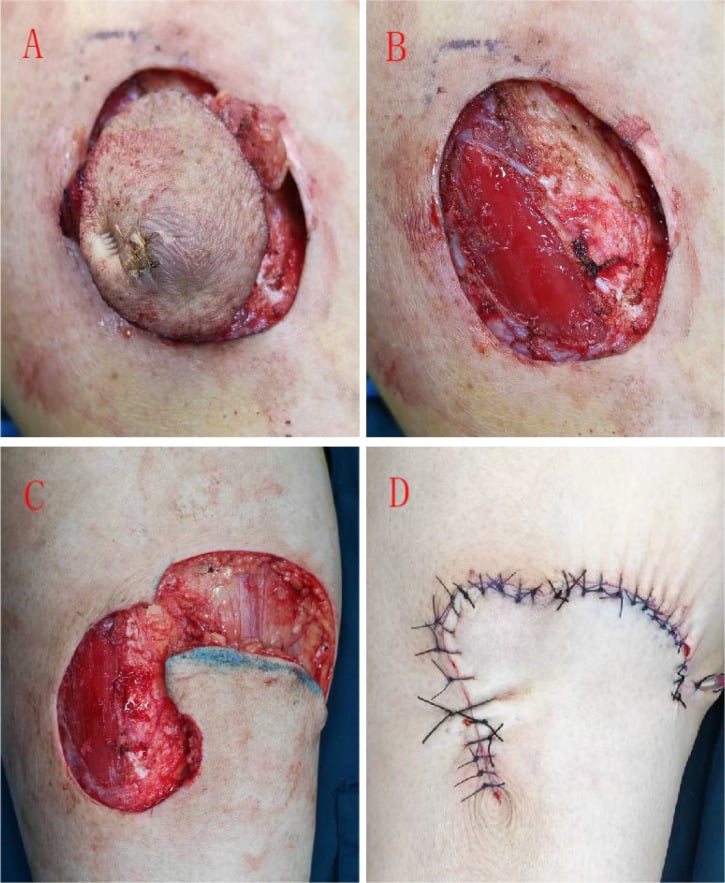
Surgery is the cornerstone of curative treatment. Wide excision with negative margins (R0 resection) is essential, and positive margins substantially increase local recurrence. But do not promise that a clear margin secures local control, because in secondary angiosarcoma it does not: in a population-based cohort of radiation-associated breast angiosarcoma, R0 resection was achieved in 23 of 31 patients and two-thirds still recurred locally. What separated the outcomes was not the microscopic margin but how much of the field at risk was taken: resecting all or nearly all of the irradiated skin gave 5-year local recurrence of 23% against 76% for a conservative resection aimed at the tumour alone.
The goal. Wide excision with 2-3cm margins where feasible, en bloc resection of all involved areas, and reconstruction as needed. What that means in practice differs by site:
- Surgical Approach
- Wide local excision, often requires skin grafting
- Challenges
- Multifocal disease makes complete excision difficult
- Surgical Approach
- Mastectomy + chest wall resection
- Challenges
- Extensive resection needed, often positive margins
- Surgical Approach
- Amputation (often required)
- Challenges
- Limb salvage rarely achievable due to extent
- Surgical Approach
- Wide excision + reconstruction
- Challenges
- Best chance of negative margins
When to amputate. Amputation is often necessary in Stewart-Treves syndrome to achieve local control, and the indications are:
- Stewart-Treves syndrome with extensive involvement
- Neurovascular encasement precluding limb salvage
- Recurrent disease after prior limb-sparing surgery
- Patient choice for local control
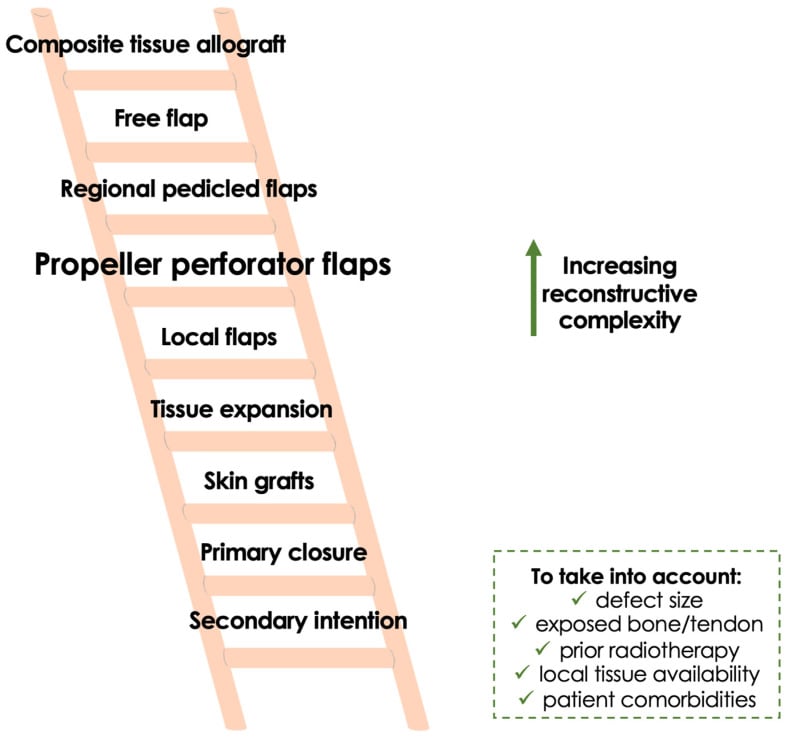
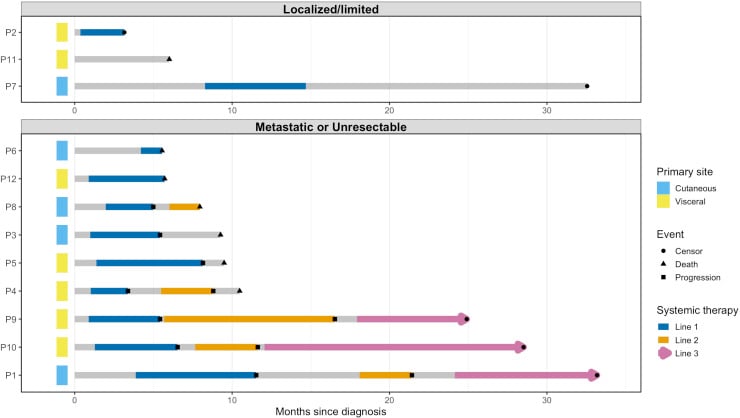
Putting it together by subtype. The three modalities are combined differently for each clinical subtype:
- Surgery
- Wide excision (often incomplete)
- Radiation
- Adjuvant 60-66 Gy
- Chemotherapy
- Paclitaxel neoadjuvant or adjuvant
- Surgery
- Mastectomy + chest wall
- Radiation
- Consider (in previously irradiated field)
- Chemotherapy
- Adjuvant paclitaxel
- Surgery
- Amputation
- Radiation
- Adjuvant if residual limb
- Chemotherapy
- Palliative if metastatic
- Surgery
- Wide excision
- Radiation
- Adjuvant 60-66 Gy
- Chemotherapy
- Consider neoadjuvant + adjuvant
Complications
Disease-related. Local recurrence, lung metastasis, haemorrhage from the tumour and post-resection lymphoedema are the disease-related complications; their incidence and management are in the table.
- Incidence
- 30-60%
- Management
- Re-excision, radiation, systemic therapy
- Incidence
- 50%
- Management
- Chemotherapy (paclitaxel), consider metastasectomy if oligometastatic
- Incidence
- 10-20% (vascular tumour)
- Management
- Embolisation, surgical haemostasis
- Incidence
- Variable
- Management
- Compression, physiotherapy
Treatment-related. Wound complications, meaning infection, dehiscence and flap necrosis, occur in 15-25%. Radiation toxicity is fibrosis and chronic pain, especially when re-irradiating; chemotherapy toxicity is neuropathy with paclitaxel and myelosuppression.
Postoperative Care and Surveillance
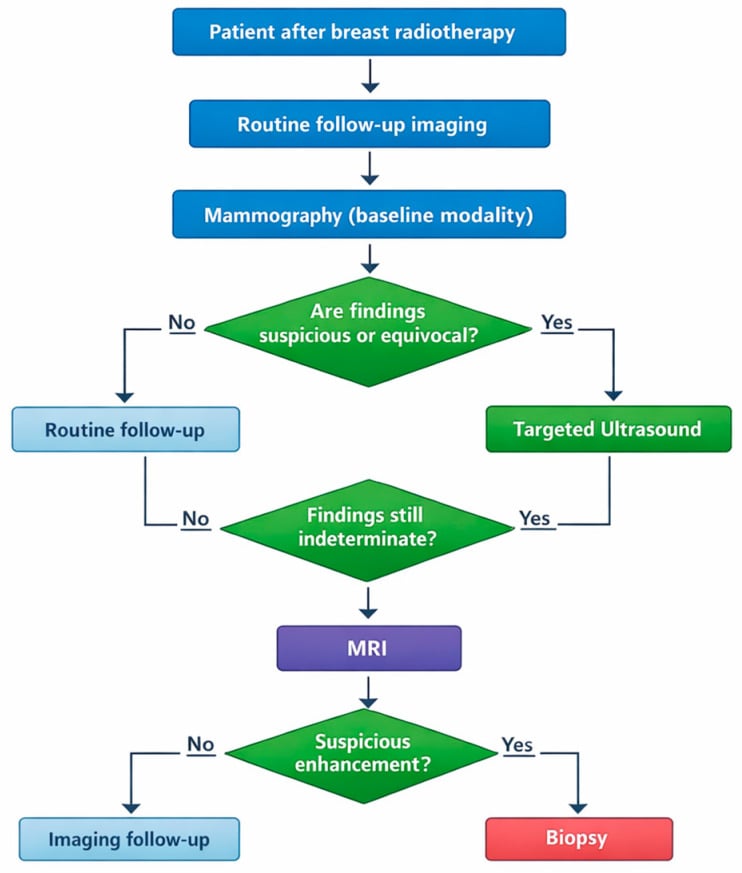
Surveillance is intensive because of the metastatic rate, and it continues indefinitely because late recurrences and metastases are possible.
Follow-Up Protocol
- Clinical examination
- CT chest every 3-4 months (high metastatic rate)
- MRI primary site every 4-6 months
- Clinical examination
- CT chest every 6 months
- MRI primary site every 6-12 months
- Clinical examination
- Imaging as clinically indicated
Outcomes and Prognosis
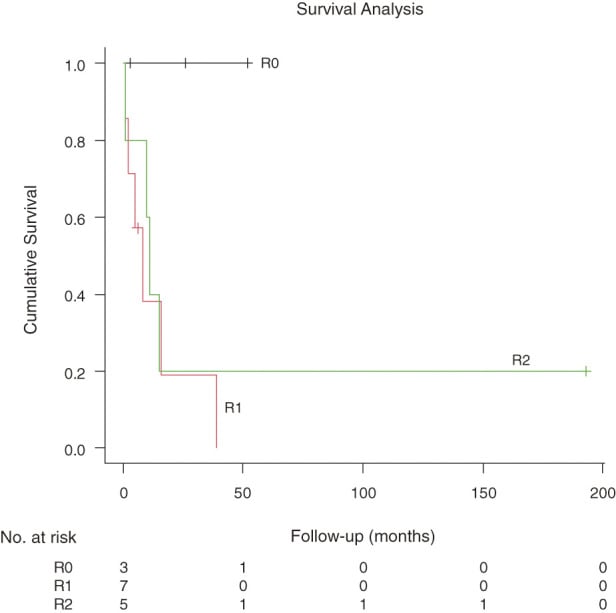
Clinical subtype is the most important prognostic factor. Within a subtype, size, margin status, metastases and multifocality move the figure in the directions the table shows.
- Favourable
- Deep soft tissue
- Unfavourable
- Head/neck, radiation-induced, lymphoedema
- Favourable
- Under 5cm
- Unfavourable
- Over 10cm
- Favourable
- Negative (R0)
- Unfavourable
- Positive (R1/R2)
- Favourable
- Localised (M0)
- Unfavourable
- Metastatic (M1)
- Favourable
- Unifocal
- Unfavourable
- Multifocal
- 5-Year Survival
- 30-40%
- Key Factors
- Best prognosis, margins achievable
- 5-Year Survival
- 20-30%
- Key Factors
- Aggressive disease, prior radiation limits re-irradiation
- 5-Year Survival
- 10-20% unselected; 43-56% if non-metastatic and treated with surgery plus radiotherapy
- Key Factors
- Worst prognosis, multifocal, elderly
- 5-Year Survival
- 15-25%
- Key Factors
- Extensive disease, requires amputation
- 5-Year Survival
- 38% appendicular; 17% axial
- Key Factors
- Axial tumours older, more often metastatic at diagnosis, far less often resectable
Why the scalp has the worst prognosis. Cutaneous angiosarcoma of the scalp does worst of all the subtypes because of multifocal disease at presentation, an infiltrative growth pattern, the difficulty of achieving negative margins, and an elderly patient population.
Why the scalp survival figure depends on who is counted. The two figures a candidate is likely to meet for face and scalp angiosarcoma differ by a factor of three, and both are correct for the population they describe. Unselected and older series, which include patients who were metastatic at diagnosis, frail, or never offered curative treatment, cluster around 10-20% at 5 years. Cohorts restricted to non-metastatic disease treated with curative intent report 5-year overall survival 43% and disease-specific survival 46% (Guadagnolo, n=70) and 5-year disease-specific survival 56% with local control 51% (Yoder, n=143, the largest series available). Both are level 3 retrospective evidence from a single tertiary sarcoma centre.
The practical consequence is a counselling error in the making. A patient in front of you with a resectable, non-metastatic scalp lesion who is fit for surgery plus radiotherapy has odds far closer to one in two than one in six, and quoting the unselected figure to them understates what treatment can achieve. The reverse error matters too: the better figures are achieved by combined-modality therapy, and in both cohorts single-modality treatment, tumours over 5 cm and multifocal disease were the factors that pulled survival back down.
Primary angiosarcoma of bone, and why the site of the lesion is the first thing to establish. Registry data on 458 patients separate the skeleton into two very different diseases. Appendicular tumours have a 5-year overall survival of 38%; axial tumours (spine, pelvis, ribs, skull) only 17%, and axial location remained an independent predictor of cancer-specific death after adjustment (subdistribution hazard ratio 1.62, 95% CI 1.25-2.10).
The gap is largely explained by three things that travel together: axial patients were markedly older (median 63 versus 46 years), were more often metastatic at diagnosis (43% versus 29%), and, the modifiable one, underwent surgery in only 37% of cases against 81% of appendicular tumours. A pelvic or spinal angiosarcoma is therefore not simply a worse tumour; it is frequently one that could not be resected, which is the argument for referring it to a centre that can attempt resection rather than assuming it is unresectable.
Guidelines, Registries & Global Practice
Global Epidemiology
Angiosarcoma accounts for under 2% of all soft tissue sarcomas and roughly 1-2% of cutaneous sarcomas, making it one of the rarest yet most lethal sarcoma subtypes worldwide. It shows a slight male predominance overall, with a median age of 60-70 years for the common cutaneous head/neck form. Geographic and historical variation reflects exposure patterns: thorotrast-associated hepatic angiosarcoma (now historical), occupational vinyl chloride exposure (hepatic angiosarcoma, industrialised regions), and the rising incidence of radiation-associated breast angiosarcoma in high-income settings as breast-conserving therapy with radiotherapy has become standard.
Side-by-Side Guideline Comparison
- Region
- US
- Key Recommendation for Soft Tissue Sarcoma / Angiosarcoma
- Manage at sarcoma centres; core/incisional biopsy before resection; wide R0 excision; consider neoadjuvant/adjuvant chemo (paclitaxel or doxorubicin) and radiotherapy for high-grade disease
- Region
- Europe
- Key Recommendation for Soft Tissue Sarcoma / Angiosarcoma
- MDT at reference centre mandatory; biopsy planned so tract is excised; angiosarcoma treated as high-grade; taxanes recognised as active first-line, especially cutaneous/scalp
- Region
- UK
- Key Recommendation for Soft Tissue Sarcoma / Angiosarcoma
- Suspected sarcoma referred to specialist MDT before intervention; image-guided core biopsy; surgery plus radiotherapy for limb/trunk high-grade tumours
- Region
- Global pathology
- Key Recommendation for Soft Tissue Sarcoma / Angiosarcoma
- Diagnosis requires endothelial markers (CD31, ERG); MYC FISH/IHC to distinguish secondary angiosarcoma from atypical vascular lesions in irradiated fields
Population data sources:
- SEER (US) and national cancer registries provide the bulk of incidence and survival data given the rarity of the disease
- Rare-sarcoma networks (e.g. EURACAN, French Sarcoma Group, RARECARE) pool cases across centres
- No dedicated implant/arthroplasty registry applies; survival data derive from sarcoma-centre cohorts
Centralised reference-centre management is associated with better outcomes in soft tissue sarcoma generally.
Variation in care:
- High-resource: MRI staging, MYC molecular testing, MDT review, taxane/anthracycline access, reconstructive surgery and radiotherapy
- Limited-resource: Diagnosis often delayed; molecular testing unavailable; amputation or palliative care may be the only realistic options
- Universal principle: early biopsy of suspicious lesions and referral to the highest-capability centre available
Clinical trial enrolment is encouraged everywhere given the absence of curative systemic therapy in advanced disease.
Key documentation:
- Biopsy any persistent scalp bruising in elderly (delay common)
- Radiation-induced angiosarcoma: counsel breast cancer patients about late risk
- Stewart-Treves: document discussion of amputation vs palliative options
- Informed consent: include poor prognosis, high recurrence, multimodal treatment needs
- Surveillance protocol documented (intensive due to metastatic risk)
Controversies and Areas of Uncertainty
Angiosarcoma is rare enough that almost all evidence is retrospective; few questions are settled.
- Current Position
- Radical resection of the whole irradiated skin field improves survival (Li 2017)
- Uncertainty
- Multifocal field-effect biology means even R0 margins do not guarantee local control
- Current Position
- Weekly paclitaxel and doxorubicin appear equivalent (Penel 2012)
- Uncertainty
- No randomised head-to-head trial; choice driven by site, fitness and toxicity profile
- Current Position
- Can downstage locally advanced/unresectable disease (ANGIOTAX)
- Uncertainty
- No survival benefit proven; sequencing of surgery, radiotherapy and chemotherapy not standardised
- Current Position
- Used selectively for positive margins
- Uncertainty
- Cumulative toxicity in an already-irradiated field limits dose and benefit is unproven
- Current Position
- VEGF/VEGFR biology and high mutational burden (UV/cutaneous) are rationales
- Uncertainty
- Bevacizumab, pazopanib and checkpoint inhibitors remain investigational without level-1 evidence
- Current Position
- Commonly given because the tumour is high-grade, extrapolating from soft tissue sarcoma as a whole
- Uncertainty
- The taxane and anthracycline evidence is all from metastatic or unresectable disease; the demonstrated survival gain in localised face/scalp disease came from adding radiotherapy, not chemotherapy
MCQ Practice Points
Q: What is the most common site for cutaneous angiosarcoma? A: Scalp - Cutaneous angiosarcoma has predilection for the scalp in elderly patients, presenting as bruise-like lesions without trauma. This subtype has the worst prognosis of the angiosarcoma subtypes, because of its multifocal nature and infiltrative growth. Attach the population to the number: 10-20% 5-year survival in unselected series, but 43-56% in non-metastatic patients treated with surgery plus radiotherapy.
Q: What is Stewart-Treves syndrome? A: Angiosarcoma arising in chronic lymphedema, classically in the arm after mastectomy with axillary dissection. Latency is usually over 10 years. Presentation: violaceous nodules in lymphedematous limb. Prognosis extremely poor (15-25% 5-year survival). Treatment often requires amputation.
Q: What immunohistochemical markers confirm vascular origin in angiosarcoma? A: Use a panel - no single marker is both sensitive and specific. ERG (nuclear) is the most sensitive and stays positive in poorly differentiated and epithelioid tumours where CD31 (membranous, the workhorse, ~90% positive) becomes patchy. CD34 is ~80% positive but is also expressed in fibroblastic tumours and GIST; Factor VIII/von Willebrand factor is only ~60% positive and largely superseded. The catch to state in a viva: ERG and FLI-1 are also positive in prostate adenocarcinoma and Ewing sarcoma, and CD31 stains macrophages and leukocytes - so lineage comes from the panel plus morphology, and MYC amplification is what separates secondary angiosarcoma from a benign atypical vascular lesion in an irradiated field.
Q: What is the preferred first-line chemotherapy for angiosarcoma? A: Weekly paclitaxel (80 mg/m²) is a standard first-line option, validated by the ANGIOTAX phase II study (non-progression 74% at 2 months). French Sarcoma Group data show doxorubicin-based regimens give comparable survival, so either is acceptable first-line; taxanes are particularly favoured for cutaneous/scalp disease.
Q: What is the 5-year survival for angiosarcoma overall? A: 20-35% for all sites combined. Prognosis varies by subtype: deep soft tissue (30-40%), radiation-induced (20-30%), scalp (10-20% unselected, 43-56% if non-metastatic and treated with surgery plus radiotherapy), Stewart-Treves (15-25%), primary angiosarcoma of bone (38% appendicular, 17% axial). Poor prognosis due to early metastases, multifocal disease, and high local recurrence rates.
Exam Viva Scenarios
Practise clinical reasoning and management decisions out loud
“A 75-year-old man presents with a persistent purple discoloration on his scalp that has enlarged over 3 months. He denies trauma. On examination, there is a 5cm bruise-like lesion on the vertex. What is your differential diagnosis and management?”
“A 58-year-old woman treated with lumpectomy and radiation for breast cancer 8 years ago presents with skin changes on her treated breast - ecchymosis and a palpable 3cm mass. What is your assessment and management?”
“A 65-year-old woman with history of left mastectomy and axillary dissection 15 years ago presents with violaceous nodules on her chronically swollen left arm. Biopsy shows angiosarcoma. How do you manage this?”
Key Epidemiology
- Extremely rare: 1-2% of soft tissue sarcomas
- Bimodal age: young adults (deep) and elderly (cutaneous)
- Scalp most common site for cutaneous type (40% of cases)
- Highly aggressive with poor prognosis (20-35% 5-year survival)
Classic Associations
- Radiation therapy (5-10 year latency, 0.1-0.2% of irradiated patients)
- Arsenic and other chemicals (vinyl chloride, arsenic, thorotrast)
- Lymphedema chronic (Stewart-Treves syndrome)
- Foreign bodies (synthetic grafts, surgical materials)
Clinical Features
- Vascular markers positive (CD31 90%, CD34 80%, Factor VIII 60%)
- Aggressive behavior (early metastases, multifocal, rapid growth)
- Multifocal disease (50% at presentation or develop multiple lesions)
- Poor prognosis (20-35% overall; scalp 10-20% unselected but 43-56% if non-metastatic and treated; 15-25% Stewart-Treves)
Diagnostic Workup
- Biopsy: core needle with an endothelial PANEL - ERG (most sensitive) + CD31 (workhorse) + CD34; MYC FISH if irradiated field
- MRI primary site: Assess extent and multifocality
- CT chest/abdomen/pelvis: Metastases in 30-40% at diagnosis (lung most common)
- PET-CT: Consider for extent and occult disease (angiosarcoma FDG-avid)
Treatment Principles
- Surgery: Wide excision 2-3cm margins, R0 resection critical
- Radiation: Adjuvant 60-66 Gy (all high-grade cases)
- Chemotherapy: Weekly paclitaxel 80 mg/m² first-line - progression-free 74% at 2 months, 45% at 4 months (ANGIOTAX; these are non-progression rates, not response rates)
- Scalp: Often unresectable, multimodal therapy
- Stewart-Treves: Amputation often required for local control
Prognosis by Subtype
- Deep soft tissue: 30-40% 5-year survival (best of poor options)
- Radiation-induced breast: 20-30% 5-year survival
- Cutaneous scalp: 10-20% unselected, 43-56% if non-metastatic and treated with surgery plus radiotherapy
- Stewart-Treves: 15-25% 5-year survival
- Primary angiosarcoma of bone: 38% appendicular vs 17% axial (SEER, n=458)
- Metastatic disease: under 10% 5-year survival
Complications and Surveillance
- Local recurrence: 30-60% despite multimodal therapy
- Distant metastases: 50% (lung most common)
- Follow-up: Q2-3mo years 1-2, Q4-6mo years 3-5, then Q6-12mo
- CT chest Q3-4mo first 2 years (high metastatic rate)
- Late recurrences possible - indefinite surveillance
Evidence Base
Cutaneous Angiosarcoma of the Face and Scalp: Outcomes After Definitive Treatment
- 70 patients with non-metastatic face/scalp angiosarcoma treated curatively
- 5-year overall survival 43%, disease-specific survival 46%
- Tumour size over 5 cm and satellitosis predicted inferior survival
- Combined surgery plus radiotherapy improved local control and survival versus single-modality therapy
Cutaneous Angiosarcoma of the Face/Scalp: Reevaluating Surgery and Radiotherapy
- 143 patients treated 1962-2019; median follow-up 33 months
- 5-year local control 51%; 5-year disease-specific survival 56%
- Worse outcomes with tumours over 5 cm, multifocal disease, and single-modality therapy
- Combined surgery plus radiotherapy (S-XRT) improved local control and disease-specific survival on multivariable analysis