Preoperative Optimization & Risk Stratification for Arthroplasty
Overview
The core principle. Hip and knee arthroplasty are highly successful but elective procedures, so the threshold for accepting preventable risk is low. Many of the strongest predictors of complications, particularly prosthetic joint infection (PJI), are modifiable. Preoperative optimisation systematically identifies and improves those factors, and in doing so shifts care from a one-off "clearance" sign-off to an active risk-reduction programme.
Clearance versus optimisation. The old model was a binary sign-off, "fit or not fit for anaesthesia". It is passive, treats risk as fixed, and misses the opportunity to lower the patient's risk before an elective operation. The modern model identifies and improves the modifiable risk factors (glycaemia, nutrition, anaemia, smoking, weight, Staph carriage) before surgery, and because arthroplasty is elective, surgery can be deferred until the patient is in the best achievable state.
Why PJI drives it. The case for optimisation is strongest for PJI, the most feared complication: devastating, costly, and with its risk concentrated in patients with controllable comorbidities. The same factors also drive wound complications, transfusion, medical complications, readmission and mortality.
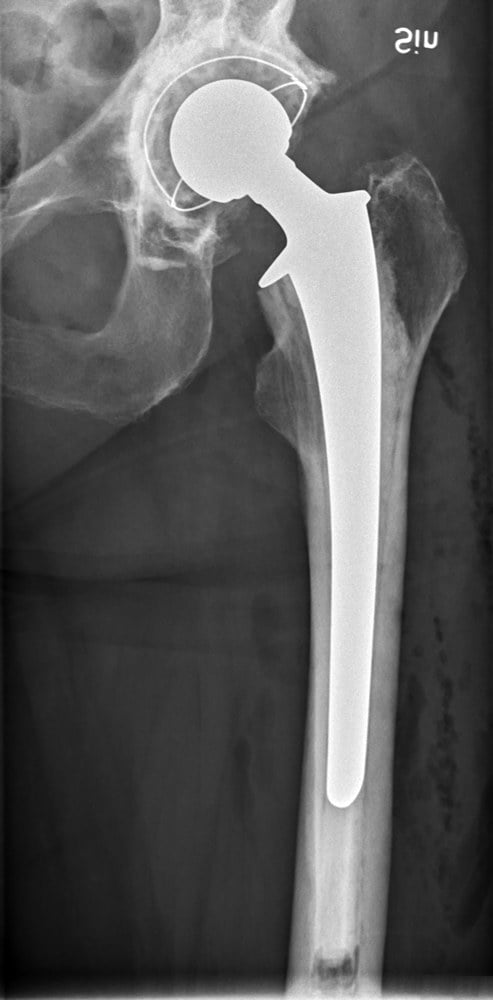
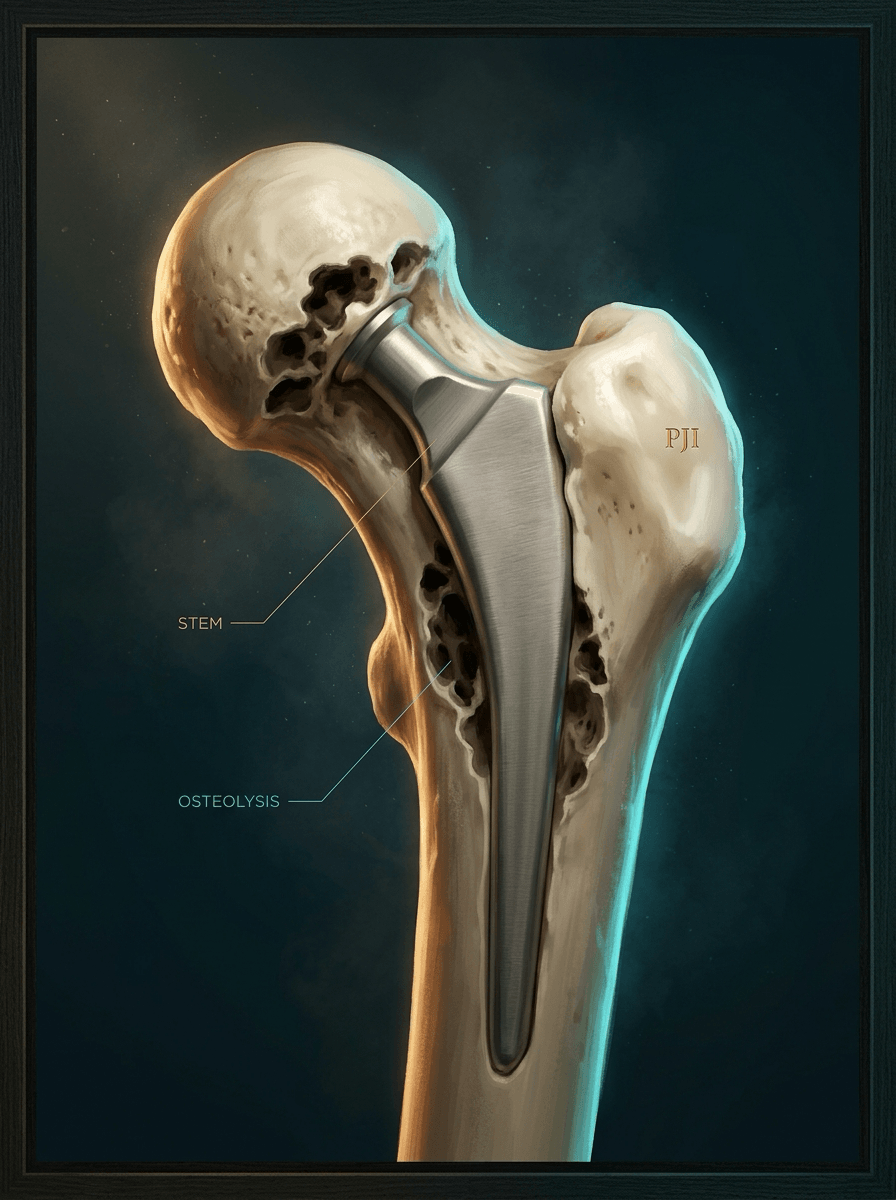
The effect size. Across 8 cohorts and 9,915 patients, implementing a formal preoperative optimisation protocol was associated with surgical site infection falling from 2.60% to 0.56%, a relative risk of 0.21 (95% CI 0.12-0.37), alongside shorter length of stay, lower cost and fewer readmissions. The authors' own closing condition travels with the number: protocols should be refined "without compromising patients' access to surgery", which is the counterweight to using thresholds as bars rather than targets.
The surgeon's role. Screen, set evidence-based targets, coordinate optimisation with primary care and the relevant specialists, and be willing to delay elective surgery until modifiable risk is improved. The single most important principle is that this is elective surgery, so time is on your side: a short delay to correct anaemia, improve glycaemic control, achieve smoking cessation, decolonise Staph carriage and address nutrition can meaningfully reduce the risk of a catastrophic complication.
The Modifiable Risk Factors
Metabolic
Obesity. A high BMI is associated with more wound and infection complications and with technical difficulty. Where feasible, supported weight optimisation before surgery is reasonable; very high BMI thresholds for proceeding remain debated and should be individualised rather than applied as rigid cut-offs.
Diabetes and glycaemic control. Poor glycaemic control, whether an elevated HbA1c or perioperative hyperglycaemia, is consistently linked to increased PJI. Aim to improve glycaemic control before elective surgery and to control perioperative glucose; fructosamine may add information when HbA1c is unreliable.
Malnutrition and hypoalbuminaemia. Serum albumin less than 3.5 g/dL is the classic marker of malnutrition and independently predicts infection and complications. Screen and correct nutrition, remembering that malnutrition can coexist with obesity.
Haematological and lifestyle
Anaemia. Preoperative anaemia increases transfusion and complications. Identify and treat the cause, commonly iron deficiency, before surgery as part of a patient-blood-management pathway.
Smoking. Strongly associated with wound and infection complications and impaired healing. Cessation before surgery reduces complications and is one of the highest-yield interventions.
Opioids. Preoperative opioid use is linked to worse pain, function and satisfaction after arthroplasty, so weaning before elective surgery is advised where possible.
Alcohol. Excess alcohol increases perioperative and infection risk, and reduction is advised.
Infective
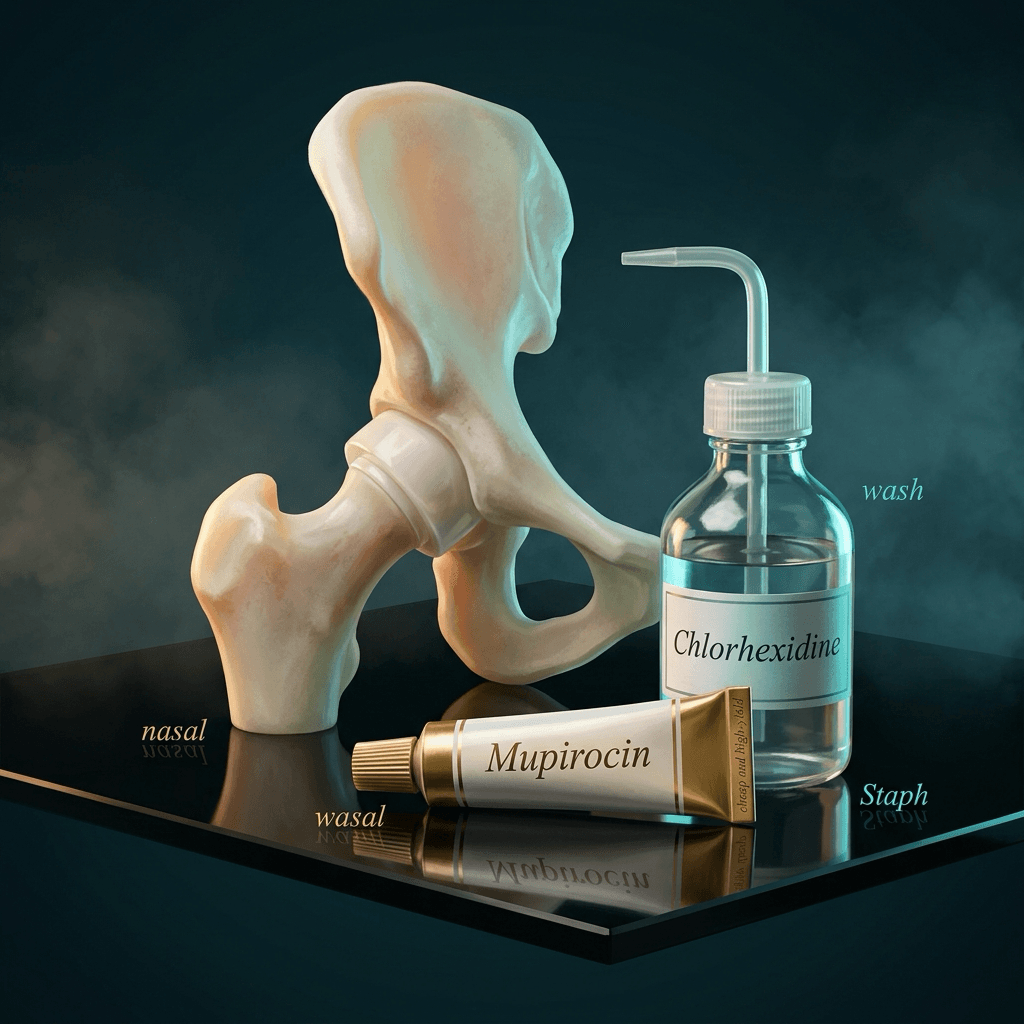
Staphylococcus aureus carriage. Screening carriers and decolonising them (nasal mupirocin and an antiseptic body wash) is a cheap, high-yield intervention to reduce surgical site infection and PJI. The protocol is set out in the next section.
Active infection elsewhere. Treat urinary, skin, chest and other active infections before elective implantation, and address active dental sepsis and skin breakdown, especially in the operative limb, before surgery.
Immunosuppression and inflammatory disease. Coordinate perioperative management of immunosuppressive and biologic therapy with the prescribing specialist. The drug-by-drug rules are in the next section.

The targets. A widely-cited synthesis (MacMahon 2022) proposes the thresholds to reach before elective arthroplasty, deferring surgery until they are met:
- BMI under 40 kg/m²
- Serum albumin at least 3.5 g/dL
- HbA1c at or below 7.5%, with good perioperative glucose control
- Haemoglobin above 12.0 g/dL in women and 13.0 g/dL in men
- Smoking ceased, and opioid use reduced by at least 50%, by about 4 weeks before surgery
- Staph aureus carriers decolonised, and active dental, urinary or skin infection treated
These are pragmatic targets, not absolute bars: individualise, especially BMI, within a shared decision.

Specific Optimisation Protocols and Pitfalls
Perioperative antirheumatic medication
The question. The patient with inflammatory arthritis (rheumatoid arthritis, spondyloarthritis, SLE) is a classic viva: how do you manage their immunosuppression around a hip or knee replacement? The framework is the ACR/AAHKS guideline (2017, updated 2022), and the principle is to balance the risk of a disease flare against infection and wound risk.
- Perioperative action
- CONTINUE through surgery
- Detail
- Continuing does not increase infection/wound complications and avoids a disease flare
- Perioperative action
- WITHHOLD
- Detail
- Schedule surgery at the END of the dosing cycle (when the next dose would be due); resume about 14 days post-op once the wound is healing and there is no infection
- Perioperative action
- WITHHOLD
- Detail
- Stop before surgery (2017 guidance: at least 7 days prior)
- Perioperative action
- CONTINUE usual daily dose
- Detail
- Give the current daily dose rather than supraphysiologic 'stress-dose' steroids
- Perioperative action
- Depends on disease severity
- Detail
- CONTINUE in severe/active SLE; withhold about 1 week pre-op in non-severe SLE

Asymptomatic bacteriuria
The rule. Do not routinely screen urine or treat asymptomatic bacteriuria (ASB) before elective arthroplasty. Treat only a symptomatic urinary tract infection.
Why. ASB is associated with a higher PJI rate (meta-analysis OR about 3.6), but the urinary organism rarely matches the eventual PJI organism, and preoperative antibiotics for ASB do not reduce PJI risk (OR about 1.0). Treating it adds antibiotic resistance without benefit. Routine urinary screening before elective TJA is not recommended.

The anaemia pathway
Investigate, then replace iron. Investigate with iron studies (ferritin, transferrin saturation). Treat iron deficiency with oral iron if there is time, or IV iron when surgery is near or oral iron is not tolerated.
Do not transfuse to "clear". A stable, asymptomatic patient is not transfused simply to clear them: allogeneic transfusion is itself associated with infection and is not a preoperative optimisation tool.
Staphylococcus aureus decolonisation
The protocol. Screen carriers with a nasal swab and decolonise with intranasal mupirocin (typically 5 days) plus chlorhexidine body washes in the days before surgery.
Anticoagulants and antiplatelets
A distinct preoperative task, separate from post-op VTE prophylaxis, is safely stopping chronic anticoagulants and antiplatelets and deciding who needs bridging.
Warfarin. Stop about 5 days before surgery and check the INR on the day, aiming near normal (about under 1.5). Bridge with LMWH only for high thrombotic risk (a mechanical mitral valve, recent VTE within about 3 months, high-risk AF); routine bridging of low-risk AF adds bleeding without benefit.
DOACs. Stop about 2-3 days pre-op. The interval depends on the agent, the bleeding risk and renal function (dabigatran, for example, needs longer with a low creatinine clearance). No bridging is needed because of their short half-life.
Antiplatelets. Continue or stop aspirin according to its indication; clopidogrel and the other P2Y12 inhibitors are usually held about 5-7 days.
The coronary-stent trap. A patient on dual antiplatelet therapy after a drug-eluting stent should generally have elective surgery deferred (commonly about 6 months), and DAPT must not be stopped prematurely: early cessation risks catastrophic stent thrombosis. Coordinate with cardiology.
Always weigh the thrombotic risk of stopping against the bleeding and transfusion (and thus infection) risk of continuing, and document the plan.
Risk Stratification and the Pathway
The pathway. Optimisation sits within a structured elective pathway of four steps, which replaces the one-off clearance sign-off.
- Screen at listing, with a history and examination for comorbidities plus targeted investigations (glycaemic markers, an albumin or nutrition screen, a full blood count for anaemia, and Staph screening per local protocol)
- Stratify risk by combining the comorbidity burden with the modifiable-factor profile to estimate complication and PJI risk; validated risk calculators can support shared decision-making
- Optimise by setting targets, referring and coordinating (primary care, endocrinology, dietetics, the anaemia or iron service, smoking cessation, the pain service), and deferring elective surgery until improved where the risk-benefit balance favours waiting
- Consent, documenting the individualised risk and the optimisation undertaken

"Validated risk calculators" should be named in a viva. The examinable tools:
- ASA physical status (I-V), the simplest global descriptor of perioperative fitness
- ACS-NSQIP Surgical Risk Calculator, a procedure-specific, multi-variable estimate of complication and mortality risk for shared decision-making
- Comorbidity indices, the Charlson (and Elixhauser) comorbidity index for cumulative comorbidity burden
- Cardiac risk, the Revised Cardiac Risk Index (RCRI / Lee index) plus functional capacity: a patient who can achieve roughly 4 METs (climb two flights of stairs, for example) without symptoms rarely needs further cardiac testing before intermediate-risk surgery
Frailty. Beyond comorbidity counts, frailty independently predicts complications and mortality more than chronological age. Assess it with the modified frailty index (mFI-5), gait speed or grip strength, and use a positive screen to trigger prehabilitation (exercise, nutrition, anaemia and glycaemic optimisation) rather than to deny surgery. Frailty is partly modifiable, and it is the bridge between risk stratification and the optimisation pathway.
Guidelines, Registries & Global Practice
Global Consensus Direction
Internationally, preoperative care for arthroplasty has shifted from anaesthetic "clearance" toward structured optimization of modifiable risk factors, reflected in society guidance and enhanced-recovery pathways across North America, the UK/Europe and Australasia. The consistent themes are glycaemic control, nutrition, anaemia management (patient blood management), smoking cessation, weight optimization, and Staph decolonisation, all directed at reducing PJI and complications.
Side-by-Side Synthesis
- Optimization goal
- Improve glycaemic control pre-op
- Why it matters
- Hyperglycaemia raises PJI risk
- Optimization goal
- Correct albumin less than 3.5 g/dL
- Why it matters
- Malnutrition predicts infection/complications
- Optimization goal
- Treat (iron) before surgery
- Why it matters
- Reduces transfusion and complications
- Optimization goal
- Cessation before surgery
- Why it matters
- Fewer wound/infection complications
- Optimization goal
- Screen + decolonise
- Why it matters
- Cheap, high-yield SSI/PJI reduction
- Optimization goal
- Wean pre-op
- Why it matters
- Better pain, function, satisfaction
Practice Variation
Resource-rich systems run dedicated optimization or "joint school" clinics with multidisciplinary input; lower-resource settings achieve much of the benefit with simple, low-cost measures - smoking cessation advice, glycaemic and nutritional screening, treatment of active infection, and Staph decolonisation. The common, universally applicable lever is that arthroplasty is elective: there is time to optimise.
Viva Scenarios
Practise clinical reasoning and management decisions out loud
“A 64-year-old with a BMI of 41, type 2 diabetes (HbA1c 9.2%), and a 20-pack-year smoking history is referred for a total knee replacement. How do you proceed?”
“A 58-year-old with disabling knee osteoarthritis and a BMI of 43 is frustrated by repeated delays and demands his knee replacement now. He is otherwise well. How do you handle the conversation and the decision?”
“A 60-year-old with seropositive rheumatoid arthritis on methotrexate, adalimumab and 7.5 mg prednisolone daily is listed for a total knee replacement. How do you manage her medications around surgery?”
Paradigm
- Optimization, not 'clearance'
- Elective - you can defer to optimise
- Goal: reduce PJI & complications
- Screen → stratify → optimise → consent
Modifiable Factors
- Diabetes / glycaemic control
- Malnutrition (albumin under 3.5 g/dL)
- Obesity, anaemia, smoking, opioids
- Staph decolonisation; treat active infection
High-Yield Interventions
- Smoking cessation
- Pre-op anaemia correction (iron); don't transfuse to 'clear'
- Staph nasal/skin decolonisation
- Glycaemic + nutritional optimization
Specifics / Pitfalls
- Continue DMARDs (methotrexate); withhold biologics around dosing cycle (ACR/AAHKS)
- Continue usual daily steroid - no routine stress-dose
- Don't screen/treat asymptomatic bacteriuria (no PJI benefit) - treat only symptomatic UTI
Evidence Base
The conceptual anchor is the MacMahon narrative review (69 studies), which both reframes care as optimization and gives the concrete, exam-quotable thresholds (BMI under 40, albumin at least 3.5, HbA1c at or below 7.5%, Hb over 12/13, smoking cessation + 50% opioid reduction by 4 weeks). The Johns systematic review supplies the hard outcome justifying the effort — protocolised optimization roughly quartered surgical-site infection (0.56% vs 2.60%, RR 0.21) and cut length of stay, cost and readmissions. Chan ties it to the purpose: preventing PJI. The ACR/AAHKS guideline gives the antirheumatic-drug specifics (continue traditional DMARDs, withhold biologics around the dosing cycle), and the Sousa meta-analysis underpins the asymptomatic-bacteriuria rule (don't screen/treat — antibiotics don't lower PJI). All are review/guideline/observational (no RCT of a whole optimization pathway exists), so the honest framing is "strongly supported by consistent observational and consensus evidence," and the targets are pragmatic, individualised goals — not absolute bars.
Preoperative Patient Optimization in Total Joint Arthroplasty—The Paradigm Shift from Preoperative Clearance: A Narrative Review
- Narrative review reframing preoperative care as optimization of modifiable risk factors rather than a binary 'clearance'
- Focuses on seven modifiable factors: obesity, malnutrition, hypoalbuminaemia, diabetes, anaemia, smoking, and opioid use
- Each factor is independently associated with worse outcomes after total joint arthroplasty
- Develops recommendations for optimising each before elective surgery
Preoperative Risk Factor Screening Protocols in Total Joint Arthroplasty: A Systematic Review
- Systematic review of 8 cohort studies (9,915 patients) of preoperative optimization protocols targeting modifiable risk factors in lower-extremity total joint arthroplasty
- Protocols target factors such as glycaemic control, nutrition, obesity, smoking and Staph carriage
- Protocol implementation was associated with a markedly lower surgical site infection rate (0.56% vs 2.60%; RR 0.21, 95% CI 0.12-0.37) plus shorter length of stay, lower cost and fewer readmissions
- Supports formalised, protocolised preoperative optimization pathways over ad hoc assessment
Preoperative optimization to prevent periprosthetic joint infection in at-risk patients
- Review focused on preoperative assessment and optimization of risk factors to prevent prosthetic joint infection
- The preoperative phase is a unique opportunity to screen, diagnose and optimise modifiable comorbidities
- Addresses glycaemic control, nutrition, Staph decolonisation, and treatment of active infection
- Optimising modifiable risk is central to PJI prevention given its devastating consequences